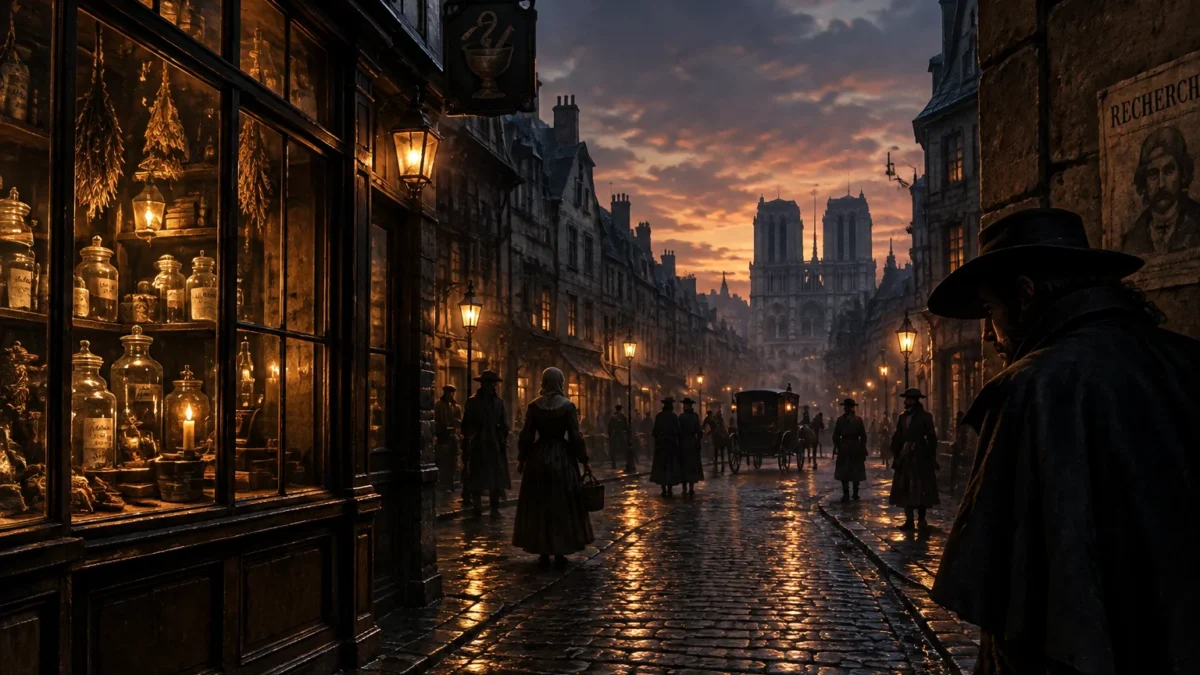
In the 1670s, Paris lived in fear of a poisoner lurking in every shadow. A series of sensational trials exposed a black market in lethal powders, love charms, and abortion drugs that reached from the city's slums to the royal court at Versailles. This is the story of the Affair of Poisons, a scandal that made France believe murder by poison was everywhere.
The panic began with a few suspicious deaths and grew into a sprawling investigation ordered by King Louis XIV himself. Fortunetellers, midwives, and self-styled sorceresses were dragged before a special court, and the confessions they gave under torture implicated nobles, army officers, and even the king's mistress. The affair became one of the darkest chapters of the Sun King's reign — a French poison panic that blurred the line between crime, magic, and public hysteria.
TL;DR: The Affair of Poisons was a 17th-century French panic over a real black market in poisons that spiraled into a secret royal court and the execution of notorious poisoners like La Voisin.
What Was the Affair of Poisons?
The Affair of Poisons (often called the "affair of poisons" or simply "the affair of the poisons") was a major criminal investigation and moral panic that unfolded in France between roughly 1675 and 1682. It began after a string of poisoning deaths in Paris drew the attention of the crown, and it quickly expanded into a hunt for an underground network of poison sellers and sorcerers. At its heart was a grim truth: a real market for lethal substances existed in Paris, and it served both commoners and aristocrats.
Louis XIV established a special commission to hear the cases, later known as the Chambre Ardente, or "burning chamber." The court operated in secret and often relied on torture to extract confessions. Over the course of the investigation, hundreds of people were arrested, dozens were executed, and some were sentenced to the galleys or exile. The affair was not merely superstition; investigators genuinely uncovered poisons, arsenical compounds, and love potions in the possession of the accused.
The panic fed on genuine fears. Parisians had heard stories of Italian poisoners and court intrigues for generations, and the idea that a French poisoner could be a neighbor or your own spouse was terrifying. The investigations of 1675–1682 turned those fears into a legal crusade. By the time it ended, the affair had tarnished the reputations of many noble families and left a permanent mark on French law and culture.
The Real Poison Black Market in Paris
Poisons were disturbingly easy to obtain in 17th-century Paris. Apothecaries sold arsenic for legitimate uses like pest control, and the line between medicine and murder could be thin. Some sellers, like the woman known as La Voisin, operated openly enough that clients felt safe seeking their services. This was the world that the affair of poisons exposed.
Common poisons included arsenic, mercury sublimate, and plant-based toxins such as henbane and monkshood. They could be disguised in food, wine, or even cosmetics. The symptoms of poisoning — vomiting, convulsions, and sudden collapse — were often mistaken for disease, which made poison an especially insidious weapon. That ambiguity is part of why the panic grew so large; almost any sudden death could start a rumor.
Clients sought out poison for several reasons. Some wanted to eliminate a husband, a rival, or a relative in the way of an inheritance. Others wanted love charms or abortions, which were often sold alongside poisons by the same people. The market was sustained by demand from both rich and poor, though only the rich could afford the most discreet services.
The crown's investigators believed they were uncovering a vast web of crime, and in some cases they were right. But they also inflated the conspiracy, treating fortunetellers and herbalists as members of a coordinated poison ring. Fear of a hidden French poison network drove the court to cast an increasingly wide net.
Who Was Marie Bosse?
Marie Bosse was one of the first major figures caught up in the affair, and her arrest helped ignite the panic. She was a fortune-teller and seller of poisons who operated in Paris and reportedly sold arsenic and other lethal substances to clients. Her downfall came after a client's relative died under suspicious circumstances, leading investigators to her door.
Bosse's trial became a public sensation because she talked. Under interrogation, she named names and described a network of other sellers, including La Voisin. That testimony gave the authorities the thread they needed to pull apart the wider market. Marie Bosse's confessions turned a local poisoning case into a national scandal.
Her story also illustrates how the panic worked. Once one accused person began naming others, the investigation snowballed. The line between the guilty and the merely unfortunate blurred, and many people were swept up simply because they had consulted a fortune-teller or bought a harmless remedy.
Marie Bosse was convicted and executed in 1679. Her case remains one of the clearest examples of how a single French poisoner could trigger a cascade of accusations that reached far beyond her own crimes.
Who Was La Voisin?
La Voisin, born Catherine Monvoisin, was the most notorious figure of the affair and arguably the most famous French poisoner in history. She ran a thriving business as a fortune-teller and provider of love potions, poisons, and abortion services from her home in the Paris suburbs. Her clients included aristocrats, which is why her arrest terrified the upper classes.
Like Marie Bosse, La Voisin was accused of selling lethal substances and of involvement in dark rituals. The most explosive allegation was that she had been involved in a plot to poison Louis XIV himself, an accusation that turned the case into a matter of royal survival. Whether that plot was real or manufactured under torture remains debated by historians.
La Voisin was arrested in 1679 and executed in 1680. Before her death, she reportedly named several high-born clients, including individuals close to the king. Those names included the king's mistress, Madame de Montespan, though the evidence against her was never conclusive. The accusation alone was enough to shake the court.
The scandal surrounding La Voisin also popularized the spelling "la voison" in many later retellings, though the standard historical spelling is La Voisin or Catherine Monvoisin. Her name became a byword for the poison panic, and she remains a central figure in any account of the affair of poisons.
The Chambre Ardente: France's Secret Poison Court
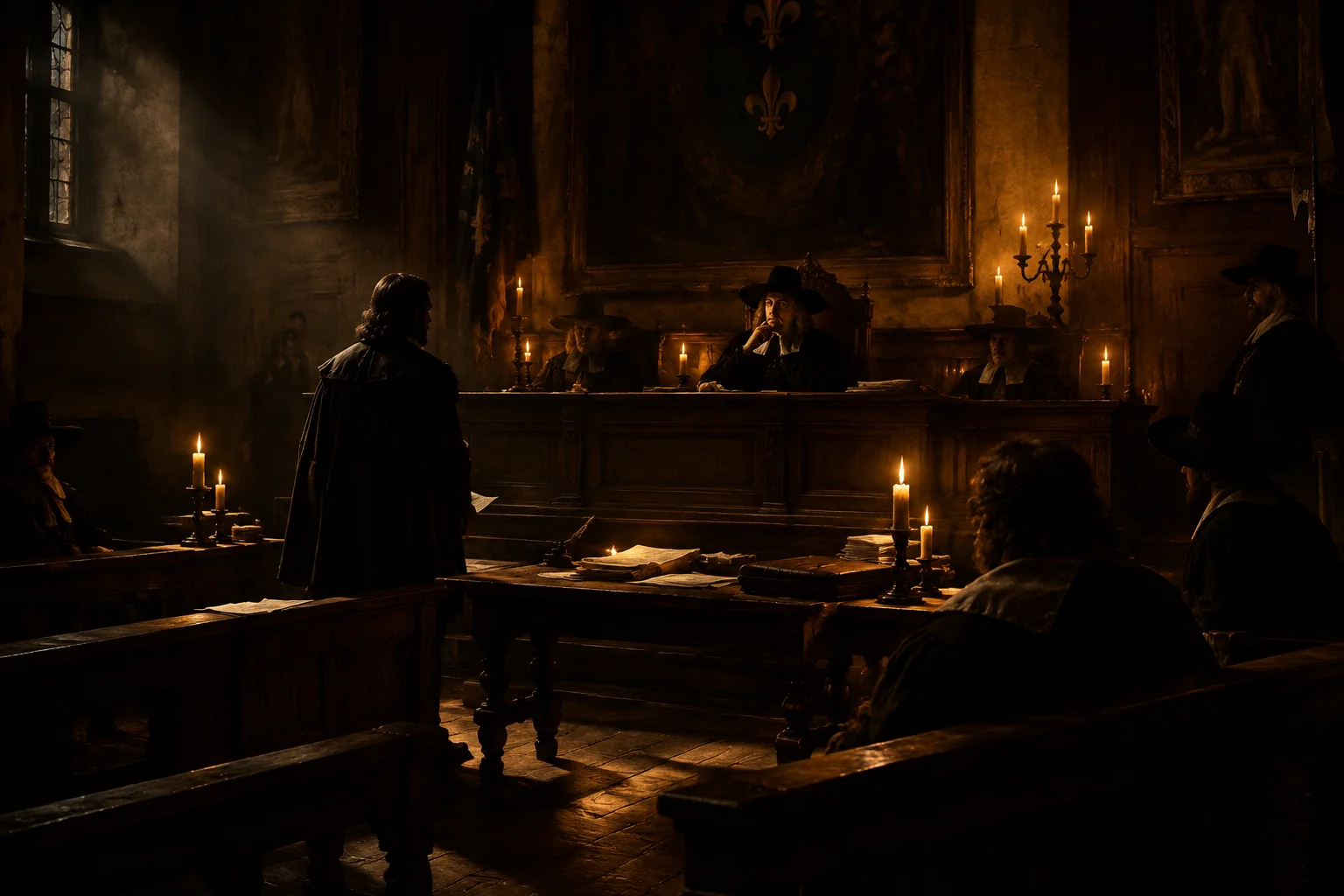
The Chambre Ardente was the special tribunal created to investigate the poison cases, and its very name reflected its fearsome reputation. It was established in 1679 under the authority of Louis XIV, with the magistrate Gabriel Nicolas de La Reynie playing a leading role. The court met in secrecy, which fueled rumors and public anxiety.
The Chambre Ardente handled both poison cases and accusations of sorcery and sacrilege. Its procedures were harsh. Torture was used to extract testimony, and suspects were often encouraged to name accomplices in exchange for leniency. That system could produce reliable information, but it also produced false accusations and self-serving confessions.
La Reynie, a seasoned police official, tried to keep the investigation grounded in evidence. Yet even he could not entirely control the panic, which grew as more names surfaced. The court eventually became a political liability because its inquiries were reaching too close to the throne.
In 1682, Louis XIV shut the Chambre Ardente down. The king had grown uncomfortable with the escalating accusations and the risk to his court. The closure did not erase the scandal, but it marked the end of the official panic.
The Royal Court and the Poison Rumors
The most dangerous element of the affair was its proximity to power. Rumors spread that nobles at Versailles had used poison to remove rivals or inconvenient spouses. Some of those rumors were backed by genuine evidence; others were inflated by gossip and political rivalry.
The name most closely tied to the royal scandal is that of Madame de Montespan, Louis XIV's mistress. Testimony linked her to La Voisin and to supposed love charms and poison plots, but the evidence was contradictory and likely extracted under duress. Louis XIV reportedly protected her from formal prosecution, and she was never tried for the alleged crimes.
Still, the mere suggestion that the king's inner circle was involved changed the affair's character. It was no longer just a hunt for criminals among the poor; it was a threat to the monarchy itself. The crown had to balance a genuine desire for justice against the danger of scandal.
That tension explains why the investigation was eventually curtailed. A full public reckoning might have implicated too many powerful people. The affair of the poisons ended in part because the truth, in all its messy detail, was too politically explosive to pursue.
Real Poisons and Deadly Methods
The poisons sold in Paris were not folk legends; they were real chemical and plant-based substances. Arsenic, often called "inheritance powder," was colorless, nearly tasteless, and easy to slip into food or drink. Mercury sublimate was another deadly option, capable of causing severe internal damage.
Plant toxins were equally dangerous. Henbane, monkshood, and belladonna could be used to poison a victim, and some were also used in small doses as medicines. The same substances that cured could also kill, which made apothecaries and herbalists suspect figures during the panic.
The symptoms of poisoning could easily be mistaken for illness. Vomiting, diarrhea, convulsions, and organ failure were common in deadly doses, but they also resembled the symptoms of infections and other diseases. That uncertainty let poisoners escape detection and let rumors flourish.
Investigators relied on physical evidence when they could find it. Searches of suspects' homes uncovered powders, vials, and books of charms and recipes. These finds gave the Chambre Ardente concrete grounds for prosecution, even as the broader conspiracy remained difficult to prove.
How the Panic Spread Through Society
The panic spread through every level of French society. Servants feared their employers; employers feared their servants. Fortunetellers and midwives, often on the margins of respectability, became scapegoats for the fears of the powerful.
Gossip played a central role. Court rumors about poisonings circulated widely, and once a person was suspected, almost any connection to the occult could be treated as proof of guilt. The distinction between superstition and evidence blurred under the pressure of public fear.
Women were disproportionately targeted by the investigations. Many of the accused worked in professions that were already viewed with suspicion, such as midwifery, healing, and fortune-telling. The panic reflected not only a real crime wave but also broader anxieties about women's roles and influence.
The affair also revealed the deep social divisions of the age. The rich could purchase discretion, while the poor were far more likely to be arrested and punished. Justice during the poison panic was not always even-handed, and the historical record shows a system inclined to protect the powerful.
The End of the Chambre Ardente
By the early 1680s, the Chambre Ardente had produced a flood of accusations and convictions, but it was also creating serious problems for the crown. The trial of La Voisin had exposed a network of clients reaching into the aristocracy, and further investigations risked implicating more of Louis XIV's inner circle.
Frustration with the court's methods also grew. The use of torture and the reliance on denunciations made the process controversial, and some officials doubted the reliability of the evidence. The royal prosecutor's office faced pressure to bring the investigation to a close.
In 1682, the king ordered the Chambre Ardente dissolved. Many suspects were released, exiled, or sentenced quietly, and the most sensitive cases were buried. The official panic ended, but the memory of the affair lingered.
The closure was as political as it was practical. Louis XIV wanted to protect the monarchy's reputation and to prevent further scandal. The result was an abrupt end to a legal crusade that had once seemed unstoppable.
How Accurate Was the Fear?

The fear of poison in 1670s Paris was not pure fantasy. There was a real market for poisons, and some nobles and commoners did use them to kill. Theaffair of poisons uncovered genuine crimes, which is why it cannot be dismissed as mass hysteria alone.
At the same time, the panic exaggerated the scale of the threat. Under torture, suspects named accomplices and confessed to crimes they may not have committed. The Chambre Ardente's reliance on such evidence means many details in the surviving records must be treated with caution.
Historians continue to debate how many alleged poisonings were real and how many were invented during interrogation. The truth lies somewhere between a genuine crime wave and a political scare, with elements of both woven together. That ambiguity is what makes the affair so fascinating.
The panic also had lasting effects. It hardened French attitudes toward poisoning, strengthened the state's investigative powers, and left a cultural legacy of suspicion and sensationalism. The fear that a French poisoner was everywhere did not vanish overnight.
Key Figures of the Affair
The affair involved a large cast of characters, from notorious poison sellers to royal officials and nobles. La Voisin and Marie Bosse stand out as the most famous accused women, while Gabriel Nicolas de La Reynie emerges as the diligent investigator trying to manage the crisis.
Madame de Montespan remains the most politically sensitive name linked to the scandal, though she was never convicted. Louis XIV looms over the whole story as the monarch who both ordered the investigation and then shut it down. Each of these figures illustrates a different dimension of the panic.
Other accused figures included fortune-tellers, apothecaries, and servants whose names are less well known but who formed the backbone of the alleged network. Their testimony, often given under duress, shaped the course of the investigation.
Together, they show that the affair was not the work of a single French poisoner or a single villain. It was a complex web of crime, rumor, and power, and that is what made it so destabilizing.
Legacy in Law, Literature, and Myth
The affair of poisons left a lasting legal legacy. It pushed French authorities to tighten controls on poisons and to punish their sale and use more severely. It also demonstrated the dangers of secret tribunals and torture-based evidence, lessons that critics of the system would cite for generations.
The scandal also fed the popular imagination. Poison became a staple of French crime stories, and the phrase "affair of poisons" came to symbolize a specific kind of court intrigue and moral terror. Later writers and historians returned to the case again and again.
The myth of the poisoner was reinforced by the affair. La Voisin in particular became a cultural archetype of the sinister woman who sold death and charms from a shadowy Paris parlor. That image is dramatic, but it also obscures the real social and economic pressures that drove the market.
Modern historians try to separate fact from legend. They emphasize that the surviving sources are skewed by torture and political interest, and that the true scale of poisoning in 17th-century France remains uncertain. The affair is best understood as both a real crime story and a cautionary tale about panic.
Why the Affair Still Matters
The Affair of Poisons matters because it shows how quickly a society can turn fear into a system of accusation and punishment. A genuine problem — the sale of poisons — became a sweeping panic that threatened the stability of the state. That pattern feels disturbingly familiar in any era.
The affair also offers a window into 17th-century France. It reveals the period's beliefs about magic, medicine, and morality, and it shows how vulnerable even the powerful could be to rumor. Louis XIV's court was the center of European culture, yet it was also a place where whispers of poison could shake the throne.
For anyone interested in true crime, the case is a goldmine. It has poisoners, secret courts, aristocratic scandal, and a cast of characters whose stories still grip readers today. The fact that so much remains disputed only adds to its appeal.
The Affair of Poisons is not just a morbid curiosity. It is a case study in how fear, evidence, and power interact when a society decides that danger is everywhere. That is why the French poison panic of the 1670s continues to be told and retold.
A Lasting Warning From History
The panic that made France think poison was everywhere began with real crimes but ended as a political firestorm. The Chambre Ardente, Marie Bosse, and La Voisin all played their parts in a drama that exposed the dark side of the Sun King's court.
What remains is a cautionary tale. It reminds us that fear can uncover genuine wrongdoing, but it can also distort justice and endanger the innocent. The affair of poisons is history's reminder that the line between vigilance and hysteria is thin.
For modern readers, the story is both thrilling and sobering. It has all the ingredients of a great mystery, yet it also raises enduring questions about evidence, power, and the human tendency to see poison in every cup.
Frequently Asked Questions
What was the affair of poisons?
The affair of poisons was a major criminal investigation and panic in France between about 1675 and 1682. It followed the discovery of a real black market in poisons and love charms in Paris, leading to a special royal court called the Chambre Ardente, which tried hundreds of people and executed several, including La Voisin.
Who was Marie Bosse and why was she important?
Marie Bosse was a Parisian fortune-teller and seller of poisons whose arrest in 1679 helped spark the wider investigation. Her confession named other poison sellers, including La Voisin, turning a local case into a nationwide scandal.
Who was La Voisin?
La Voisin, born Catherine Monvoisin, was the most notorious figure of the affair. She ran a business selling poisons, love potions, and abortion services, and her clients included aristocrats. She was arrested in 1679 and executed in 1680 after being accused of plotting to poison Louis XIV.
What was the Chambre Ardente?
The Chambre Ardente was a special secret court established in 1679 by Louis XIV to investigate poison and sorcery cases. It used torture to extract testimony and eventually grew so politically dangerous that the king dissolved it in 1682.
Were the poisons used in the affair real?
Yes. Investigators found genuine substances such as arsenic and mercury sublimate, as well as plant toxins like henbane and monkshood. However, the scale of the conspiracy was exaggerated by torture-based confessions and political fear.
Why did the panic end?
The panic ended because the investigation began to threaten the royal court, including Louis XIV's mistress Madame de Montespan. To protect the monarchy from further scandal, the king shut down the Chambre Ardente in 1682 and quietly concluded the remaining cases.

Alex Warren
Related Articles