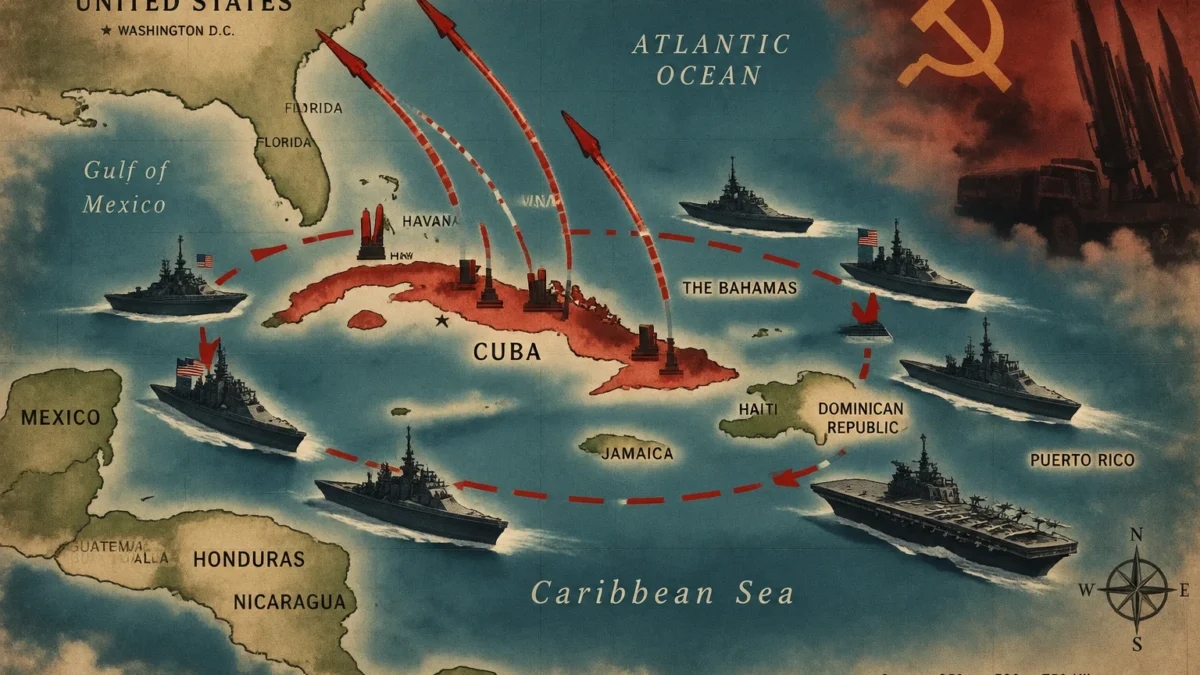
TL;DR: From the Cuban Missile Crisis to a 2020 pandemic that shut down the planet, humanity has stared down annihilation more often than most people realize — and every time, we pulled back from the brink.
When people ask how many times has the world ended, the honest answer is zero. Yet the number of times it almost ended is startling, and those near misses are worth remembering. Some were natural, like the volcano that almost ended humanity; others were entirely our own doing.
The phrase "the world ending" usually describes total human catastrophe, not the planet physically vanishing. It covers supervolcanoes, nuclear close calls, pandemics, and even the 2012 Mayan calendar scare. Below are 22 genuine close calls, ranked roughly by how close they came to real catastrophe.
1. The Cuban Missile Crisis (1962)
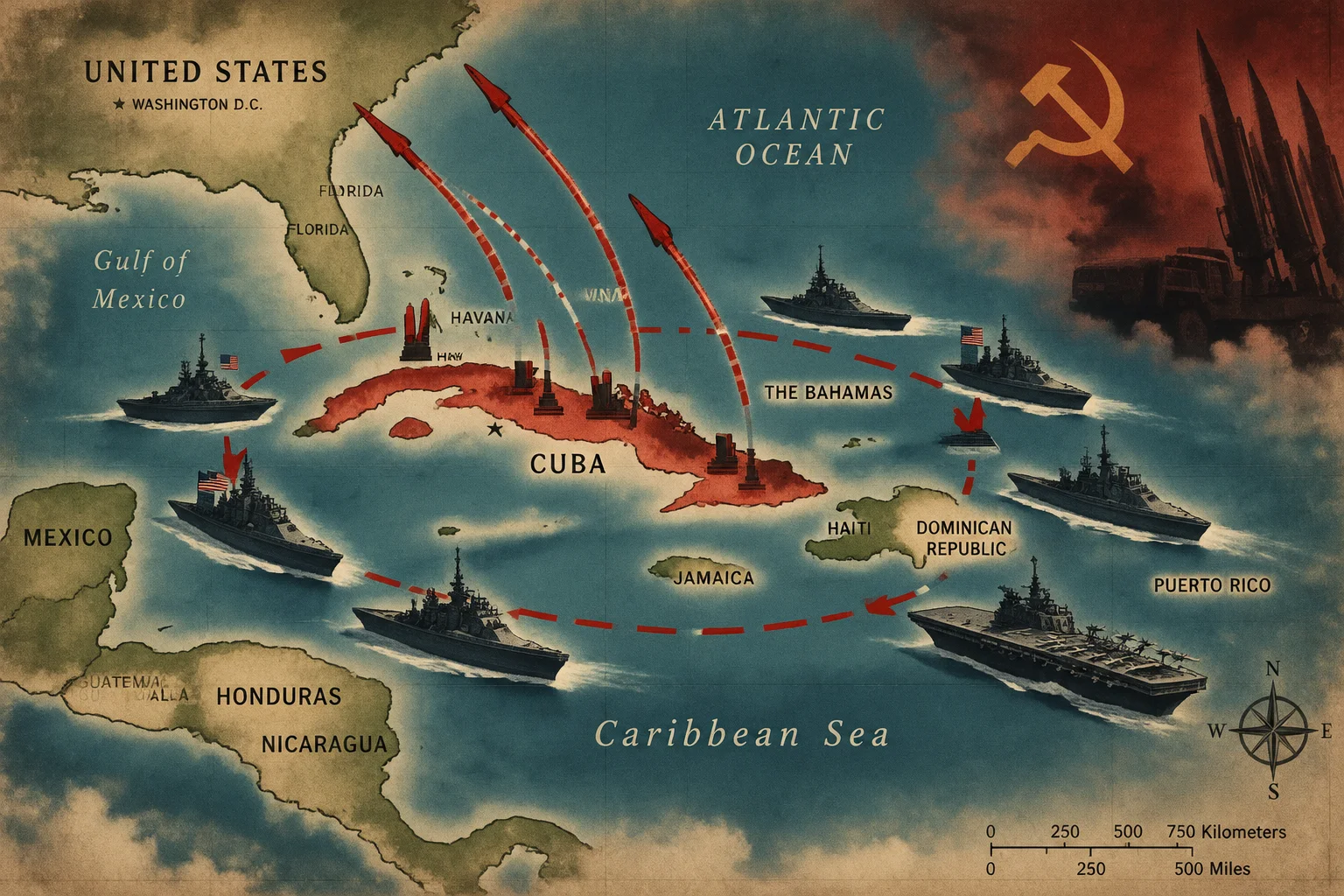
For thirteen days in October 1962, the United States and Soviet Union stood on the edge of nuclear war. Soviet missiles in Cuba, a U.S. naval blockade, and a series of miscommunications pushed the two superpowers to DEFCON 2 — the highest alert short of war.
What makes this so chilling is how many points were beyond anyone's control. A Soviet submarine officer, Vasili Arkhipov, refused to authorize a nuclear torpedo launch when his crew believed war had already begun. Historians widely credit his single decision with preventing a nuclear exchange that could have killed millions instantly and many millions more through fallout.
2. The 1983 Soviet Nuclear False Alarm
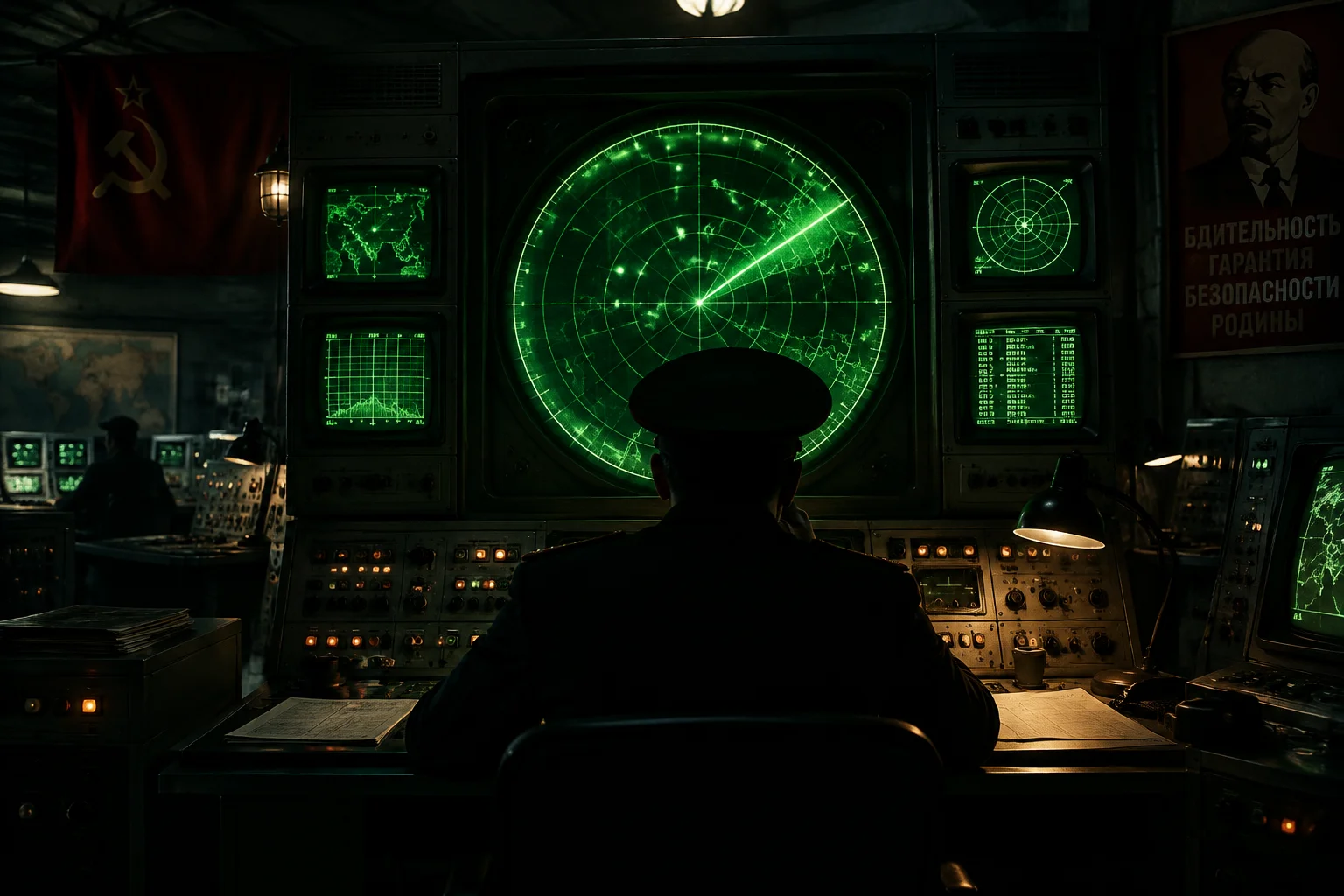
On September 26, 1983, Soviet early-warning systems reported five incoming U.S. intercontinental ballistic missiles. The officer on duty, Stanislav Petrov, had minutes to decide whether to report the attack — which would likely have triggered retaliation.
Petrov suspected the system was malfunctioning, partly because a real U.S. first strike would have involved far more than five missiles. He was right: the satellite had misread sunlight reflecting off high-altitude clouds. A single skeptical officer prevented what could have been an accidental world-ending exchange.
3. The Toba Supereruption (c. 74,000 BCE)
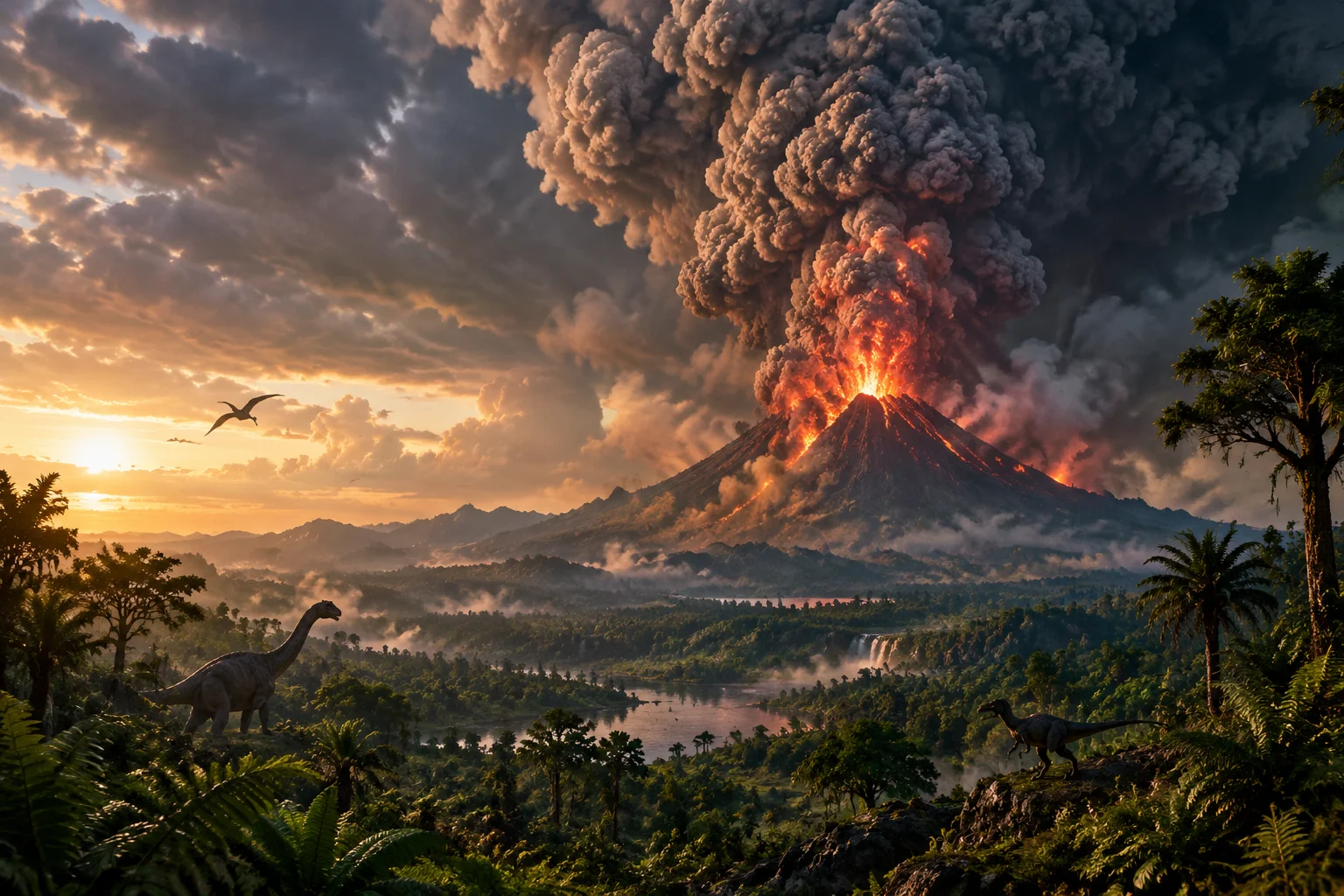
About 74,000 years ago, the Toba volcano in modern-day Indonesia erupted with staggering force. Ash blanketed South Asia, and global temperatures likely dropped for years as sunlight was reflected away.
Some researchers once argued that Toba reduced the human population to just a few thousand individuals — a genetic bottleneck. That claim is debated, and some evidence suggests humans in India and Africa survived and recovered fairly quickly. Still, it remains the strongest candidate for a natural event that nearly wiped out early humanity.
4. The Younger Dryas Cooling (c. 10,900 BCE)
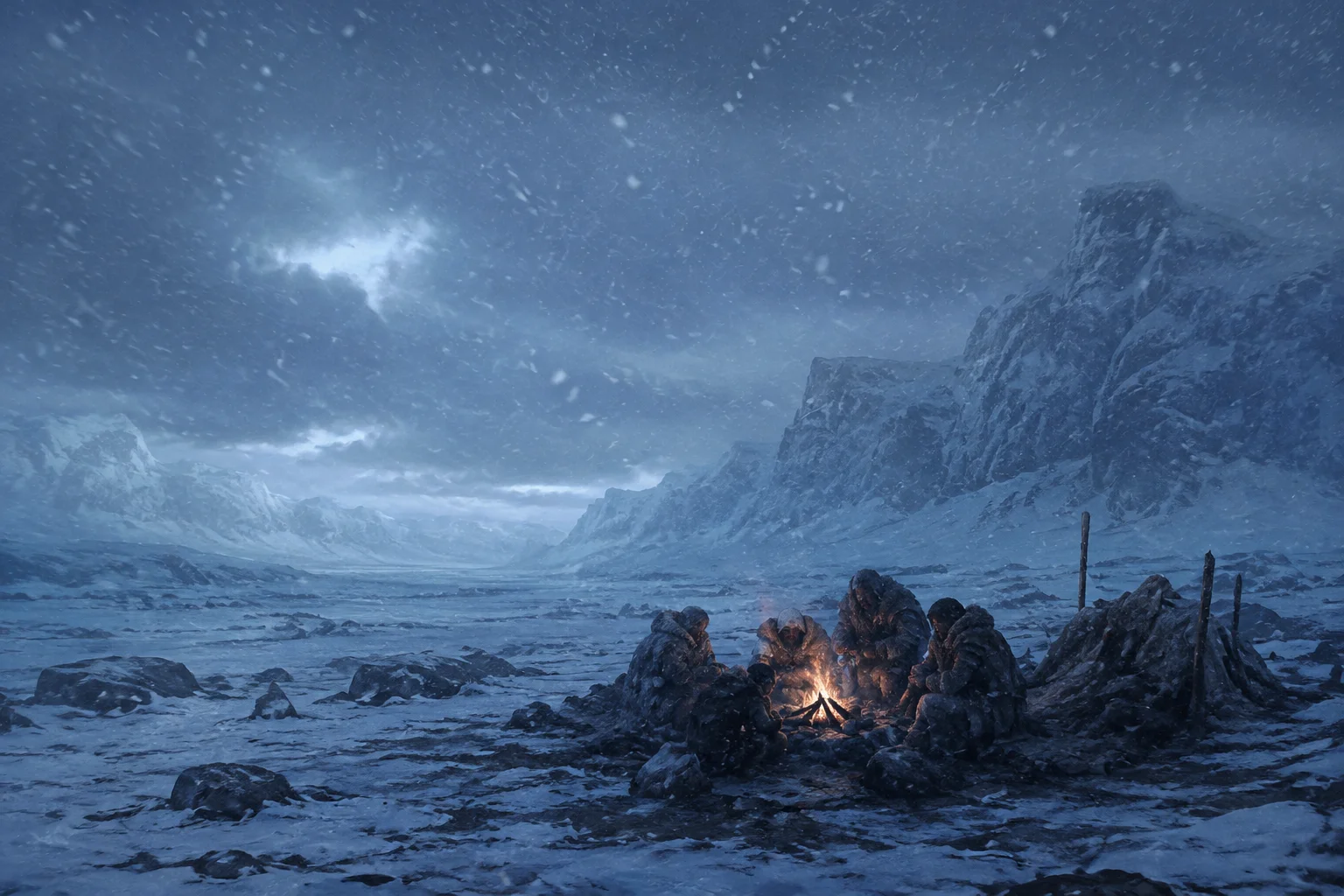
The Younger Dryas was a sudden return to near-glacial conditions that gripped the Northern Hemisphere for roughly 1,200 years. Temperatures plunged within decades, disrupting the plants and animals that early human communities depended on.
Debate continues over its cause. Some scientists link it to a collapse of the North Atlantic circulation; others have proposed a comet or asteroid impact, though that evidence is contested. Whatever the trigger, it shows how abruptly Earth's climate can shift.
5. The Black Death (1347–1351)

The bubonic plague pandemic killed an estimated 30 to 60 percent of Europe's population in just a few years. It is one of the deadliest events in recorded history.
For perspective, some estimates place global deaths around 75 to 200 million. Because understanding of disease transmission was centuries away, communities had little defense beyond quarantine and flight. The plague didn't end the world, but it reshaped economies, faith, and social structures for generations.
6. The 1918 Influenza Pandemic
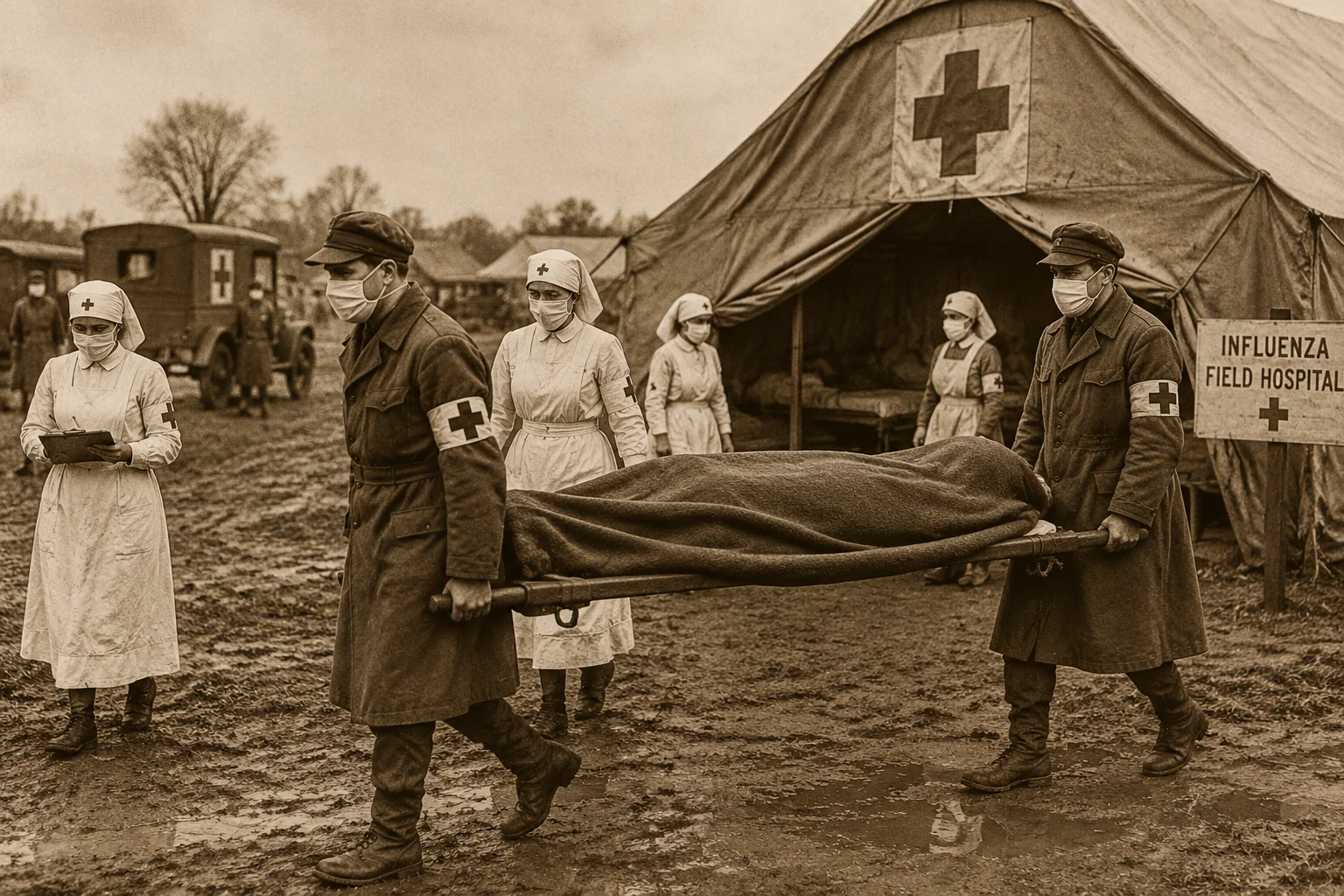
The so-called Spanish flu infected roughly a third of the world's population and killed somewhere between 20 and 50 million people. It spread violently during the final months of World War I, aided by troop movements and crowded conditions.
Unlike typical flu, it killed many young, healthy adults, which made it especially devastating. It remains the deadliest pandemic in modern history and a grim preview of how quickly a novel virus can circle the globe.
7. The 2020 COVID-19 Pandemic

When people ask how did the world almost end in 2020, they're usually thinking of the moment COVID-19 was declared a pandemic and countries locked down within weeks of each other. Borders closed, hospitals filled, and global supply chains seized up in a way most living people had never seen.
The World Health Organization declared COVID-19 a pandemic on March 11, 2020, and within a month much of the planet was under stay-at-home orders. Why did the world almost end in 2020, in the public imagination? Because a new virus with no vaccine, no proven treatment, and airborne spread triggered fears of an uncontrolled global outbreak. The world didn't end, but the disruption was historic.
8. The 2012 Mayan Calendar Date
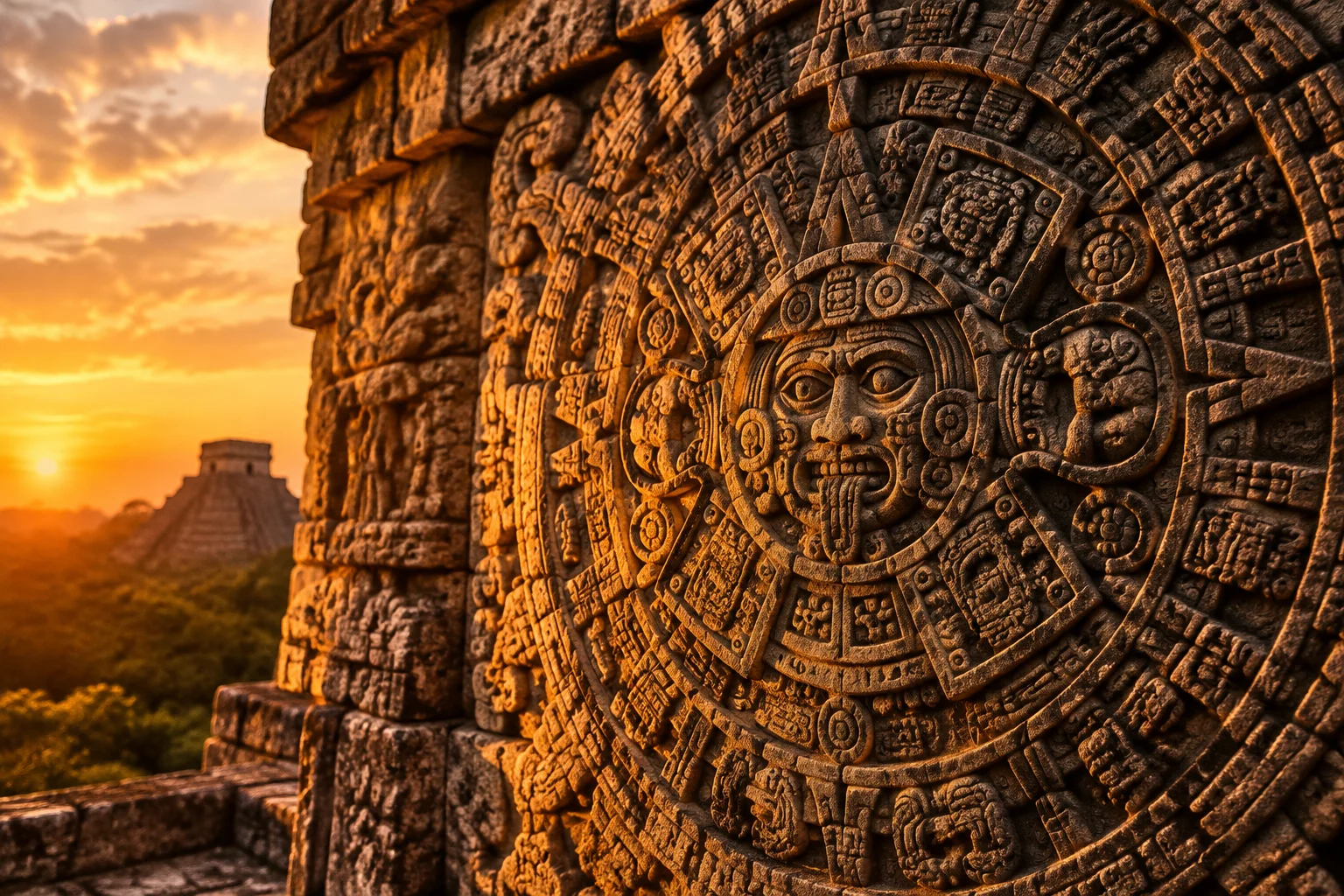
Did the world almost end in 2012? No — the date simply marked the end of a long cycle in the Mayan Long Count calendar, which reset like an odometer. There is no credible Mayan prophecy predicting the apocalypse on December 21, 2012.
The hype came largely from pop culture, documentaries, and the internet, not from ancient sources. When the date passed without incident, it became a textbook example of how apocalyptic events get manufactured by media and fear rather than evidence.
9. The Great Dying (Permian-Triassic Extinction, c. 252 Million Years Ago)
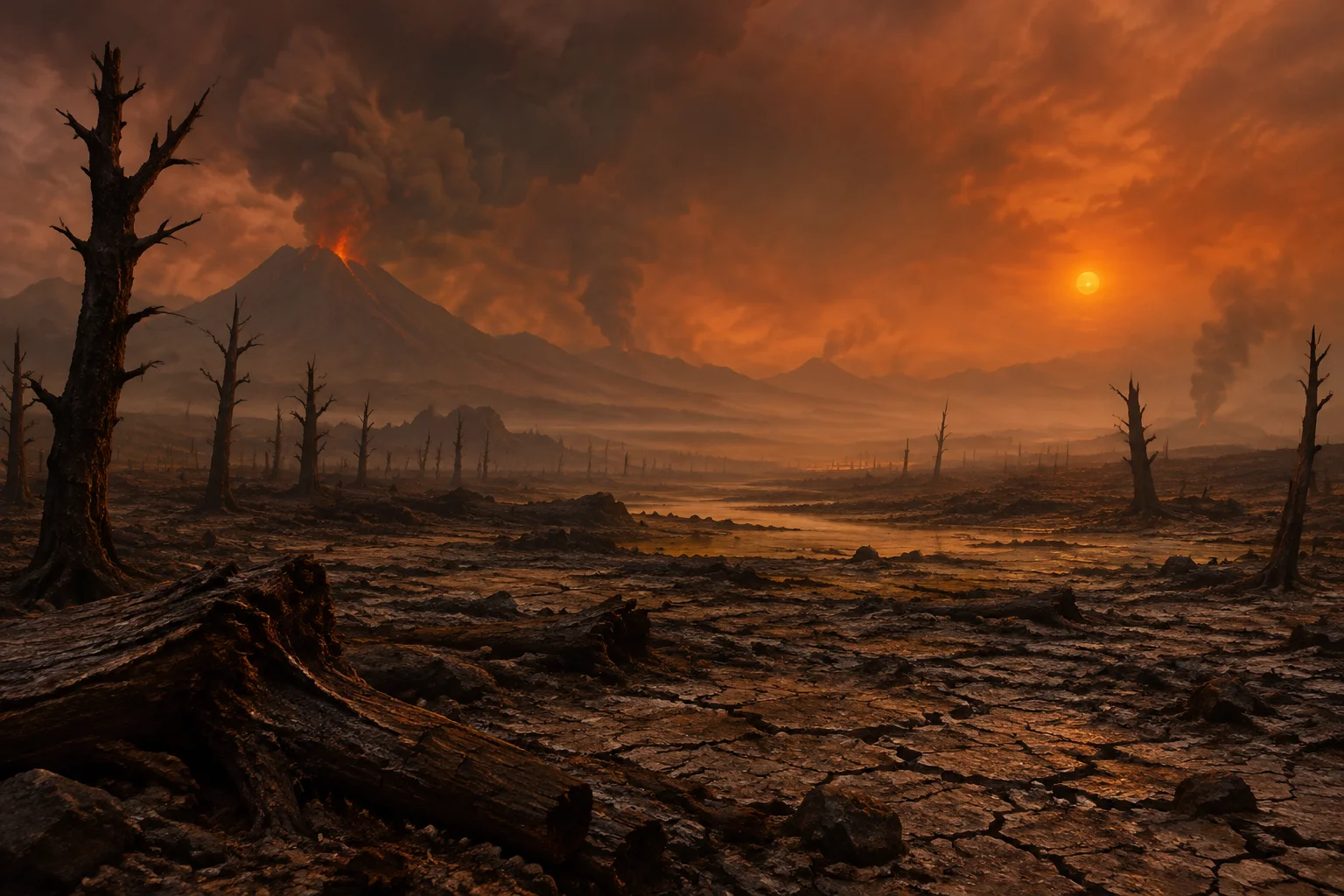
Roughly 252 million years ago, around 90 percent of all species vanished in the largest extinction event in Earth's history. It dwarfed the asteroid impact that killed the dinosaurs.
The likely cause was massive volcanic activity in what is now Siberia, releasing greenhouse gases that warmed the planet and acidified the oceans. Recovery took millions of years. If anything qualifies as a world ending event in the deep past, the Great Dying is it — though life, stubbornly, survived.
10. The Chicxulub Asteroid Impact (c. 66 Million Years Ago)
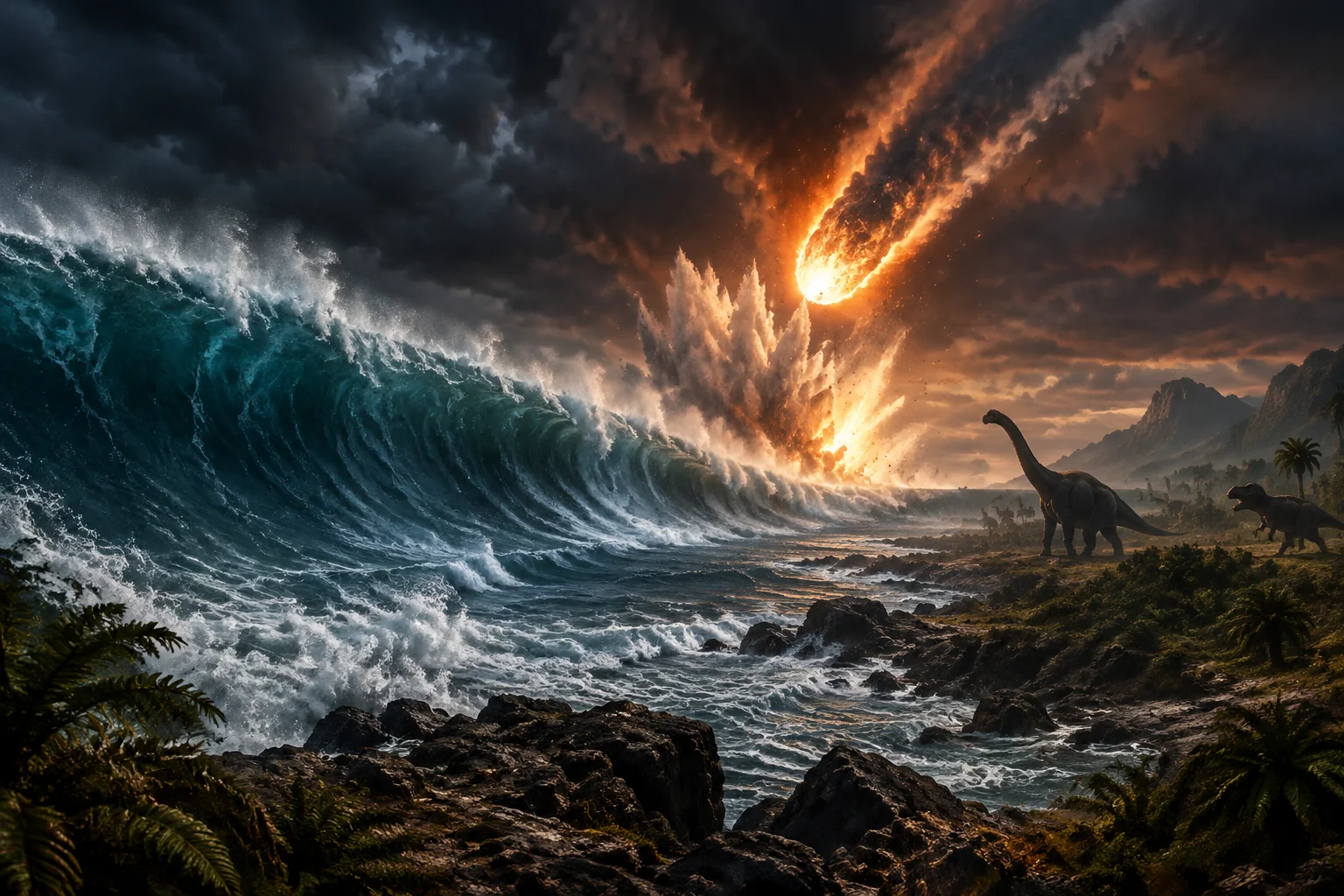
A roughly 10-kilometer asteroid struck near modern Chicxulub, Mexico, ending the Cretaceous period and wiping out the non-avian dinosaurs. The impact triggered wildfires, tsunamis, and a global winter that darkened the skies for years.
Small mammals, birds, and many marine species survived, which is why humans exist today. But for the dominant land animals of the time, the world genuinely ended in a matter of hours and years. It is the gold standard for asteroid-related end of world scenarios.
11. The Carrington Event (1859)
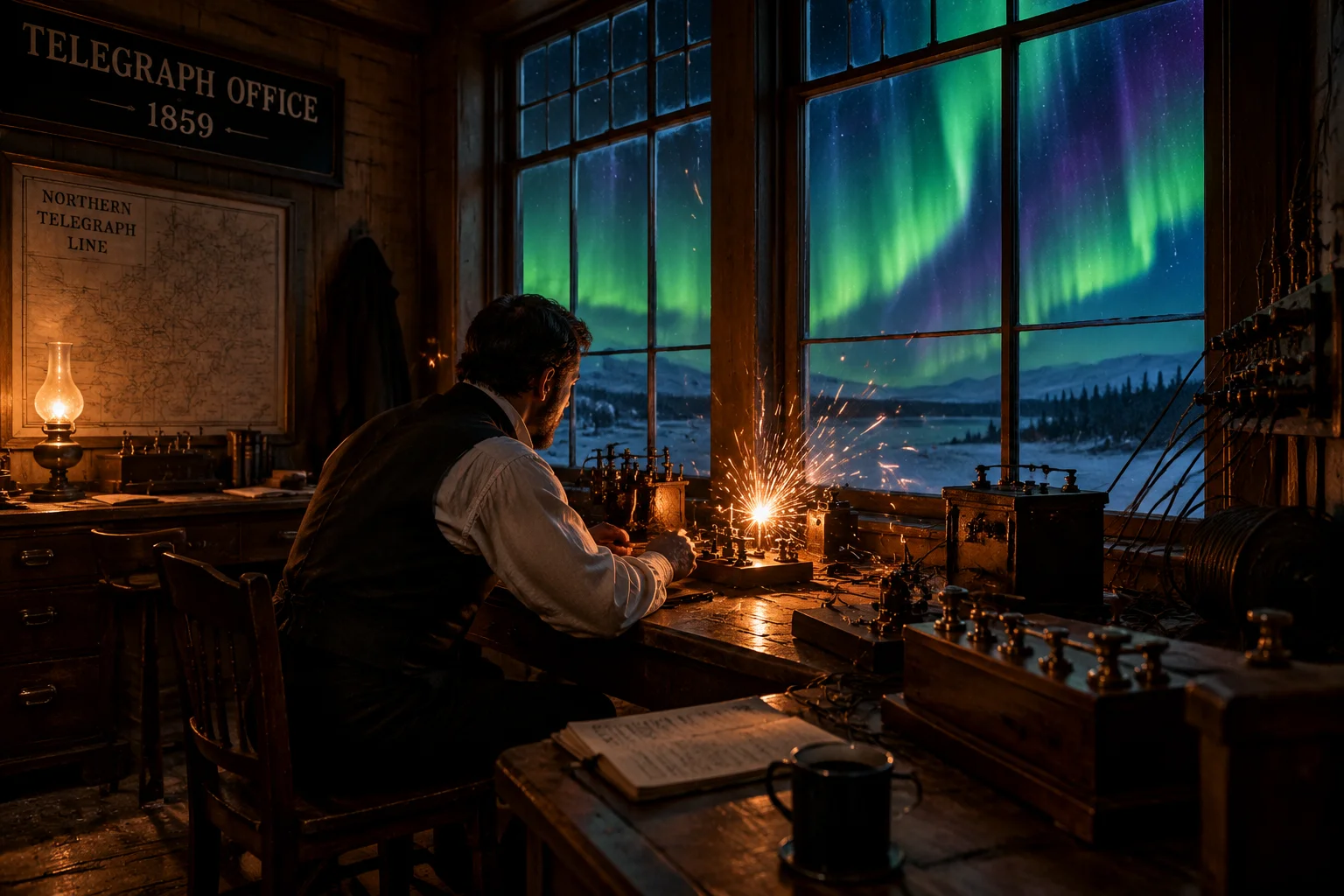
In 1859, a massive solar storm slammed into Earth's magnetic field, sending auroras as far south as the Caribbean. Telegraph systems sparked, shocked operators, and in some cases kept working without a power source.
A storm of that magnitude today would be far more damaging, potentially frying satellites, power grids, and communications. The Carrington Event wasn't apocalyptic in 1859 because technology was limited. A repeat in the modern world could cause months of infrastructure chaos.
12. The 1972 Solar Storm
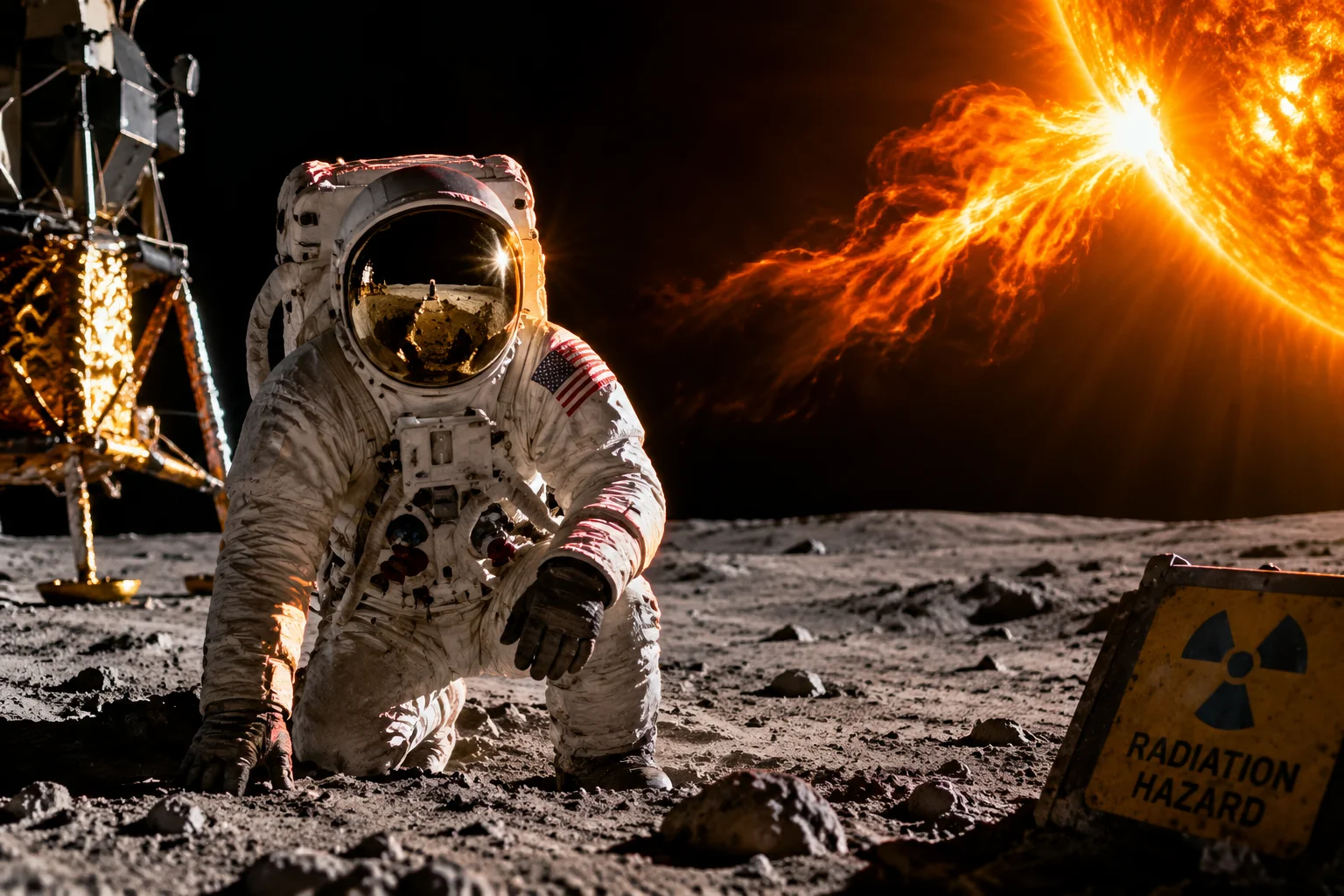
In August 1972, a powerful solar flare and coronal mass ejection occurred between the Apollo 16 and Apollo 17 missions. Had astronauts been in transit or on the lunar surface during the peak radiation, they could have received dangerous doses.
NASA later cited the event as motivation for better space weather monitoring. It is a reminder that the sun remains a genuinely unpredictable source of existential risk, even if it rarely threatens the whole planet at once.
13. The 2003 Halloween Solar Storms
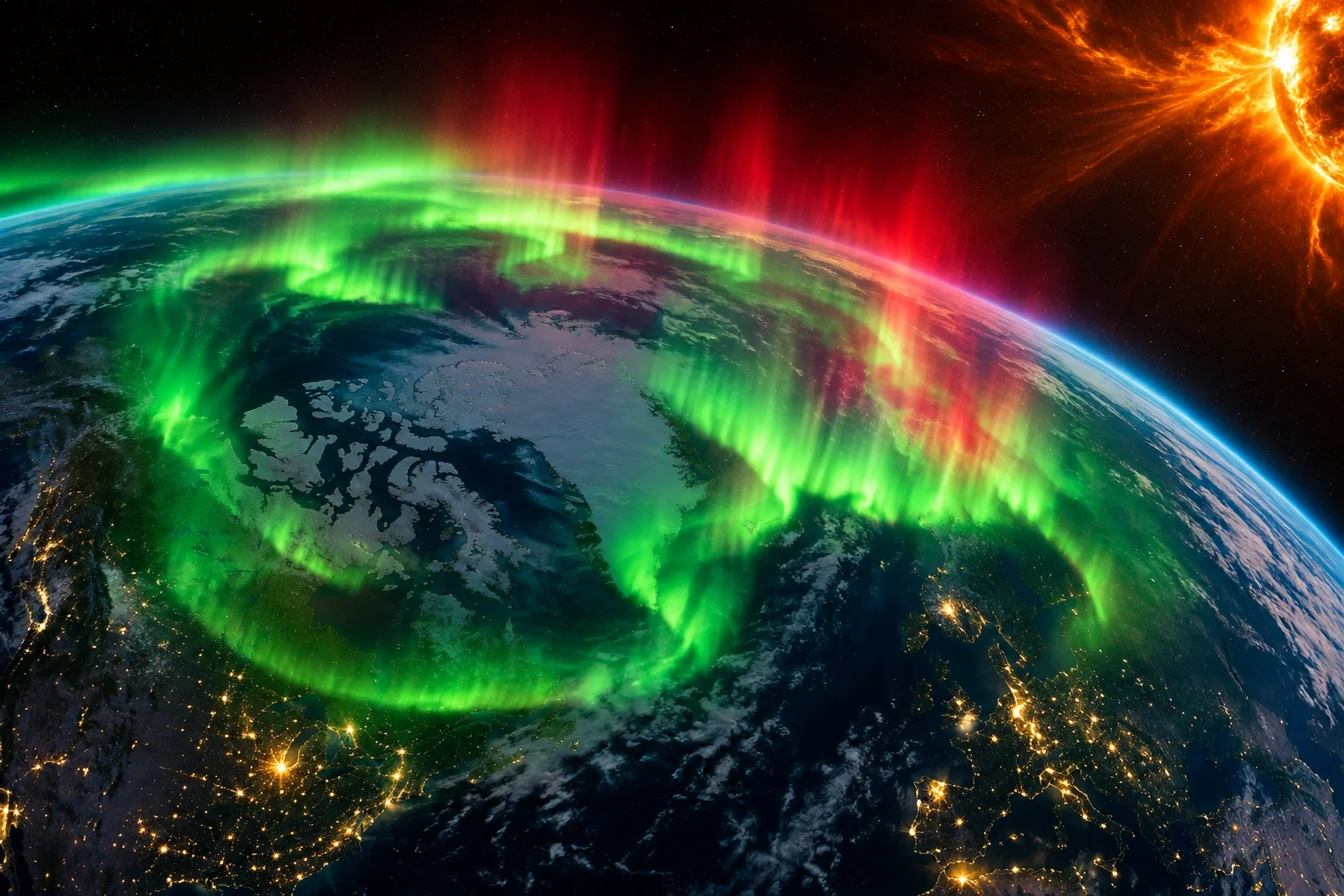
The October–November 2003 solar storms were among the most intense ever recorded. They damaged satellites, disrupted GPS and communications, and caused power outages in Sweden.
Although Earth's magnetosphere and atmosphere protected people on the ground, the storms showed how dependent modern civilization has become on satellites and electrical grids. A stronger event could trigger cascading failures across multiple systems at once.
14. The Tunguska Event (1908)
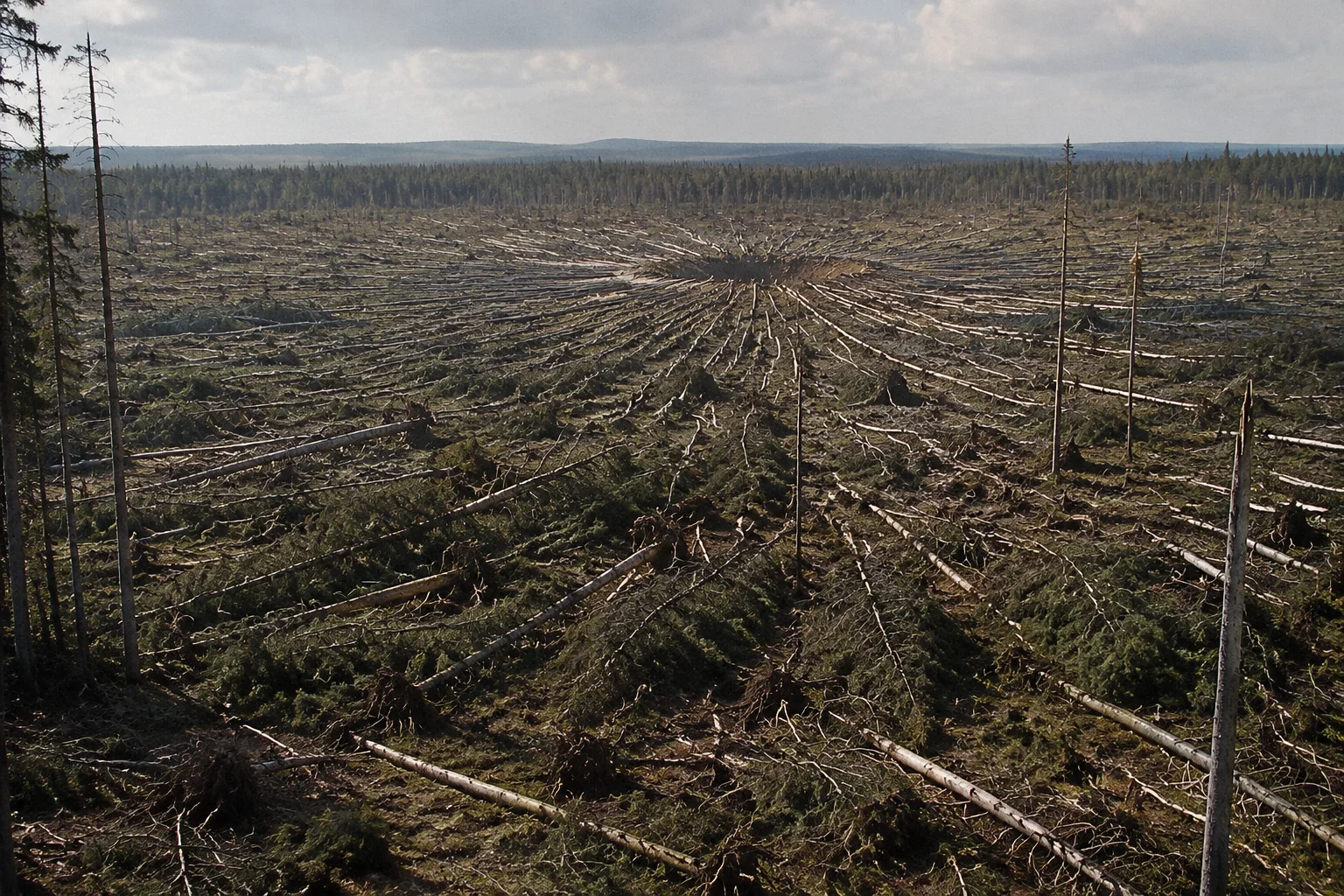
In 1908, a large object — likely a meteoroid or comet fragment — exploded over remote Siberia, flattening an estimated 80 million trees across some 2,000 square kilometers. No credible deaths were reported because the area was sparsely populated.
Had the same object struck a major city, the casualty count would have been enormous. Tunguska is a sobering example of how much damage a relatively small impactor can inflict, and a reminder that Earth's atmosphere does most of the protective work.
15. The 2013 Chelyabinsk Meteor
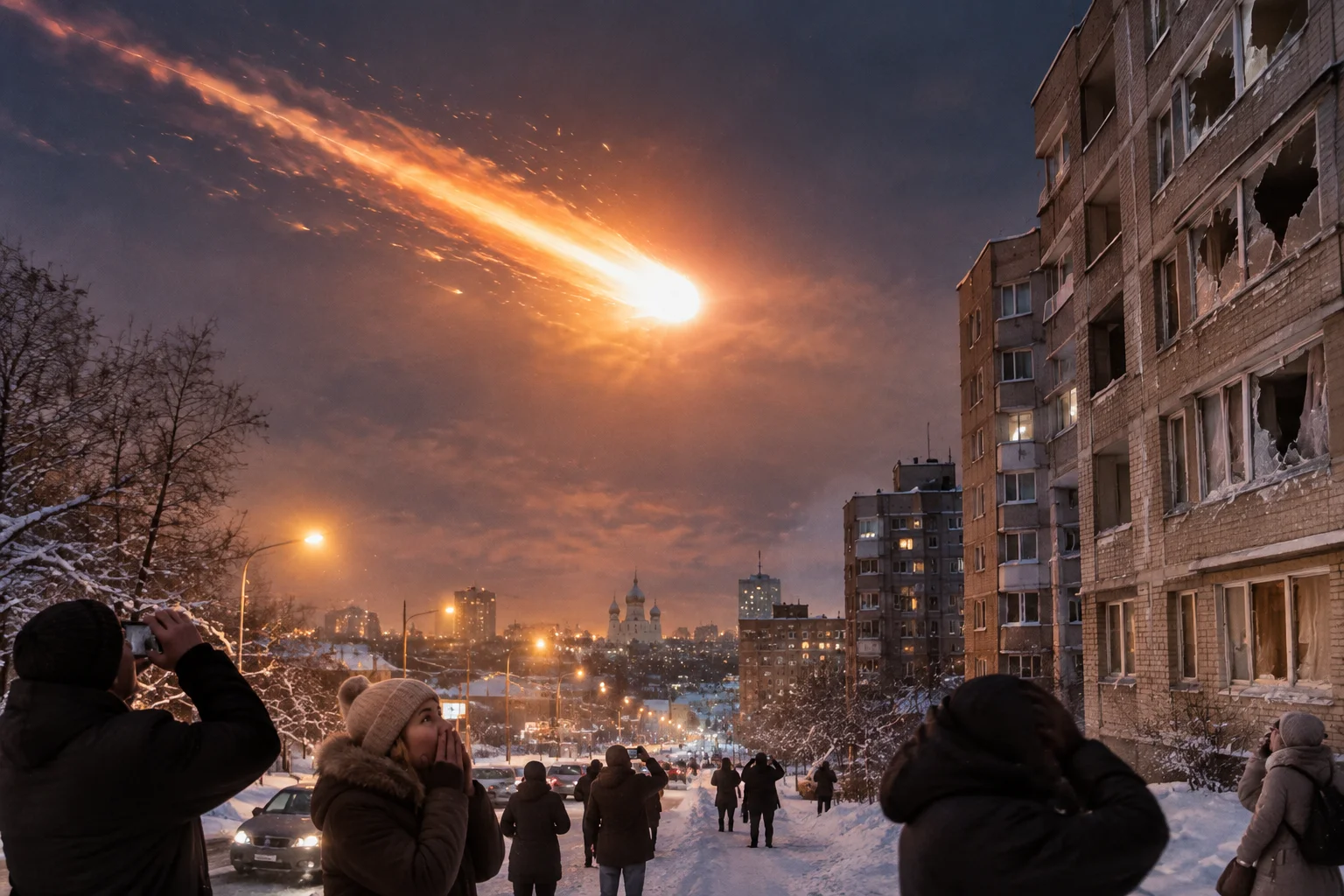
In February 2013, a roughly 20-meter asteroid entered the atmosphere over Chelyabinsk, Russia, and exploded about 30 kilometers above the ground. The shockwave shattered windows and injured over 1,000 people, mostly from flying glass.
Astronomers detected the object only after the fact, because it approached from the direction of the sun. Chelyabinsk underscored both the real risk from small asteroids and the progress being made in tracking larger, more dangerous ones.
16. The Laki Eruption (1783–1784)
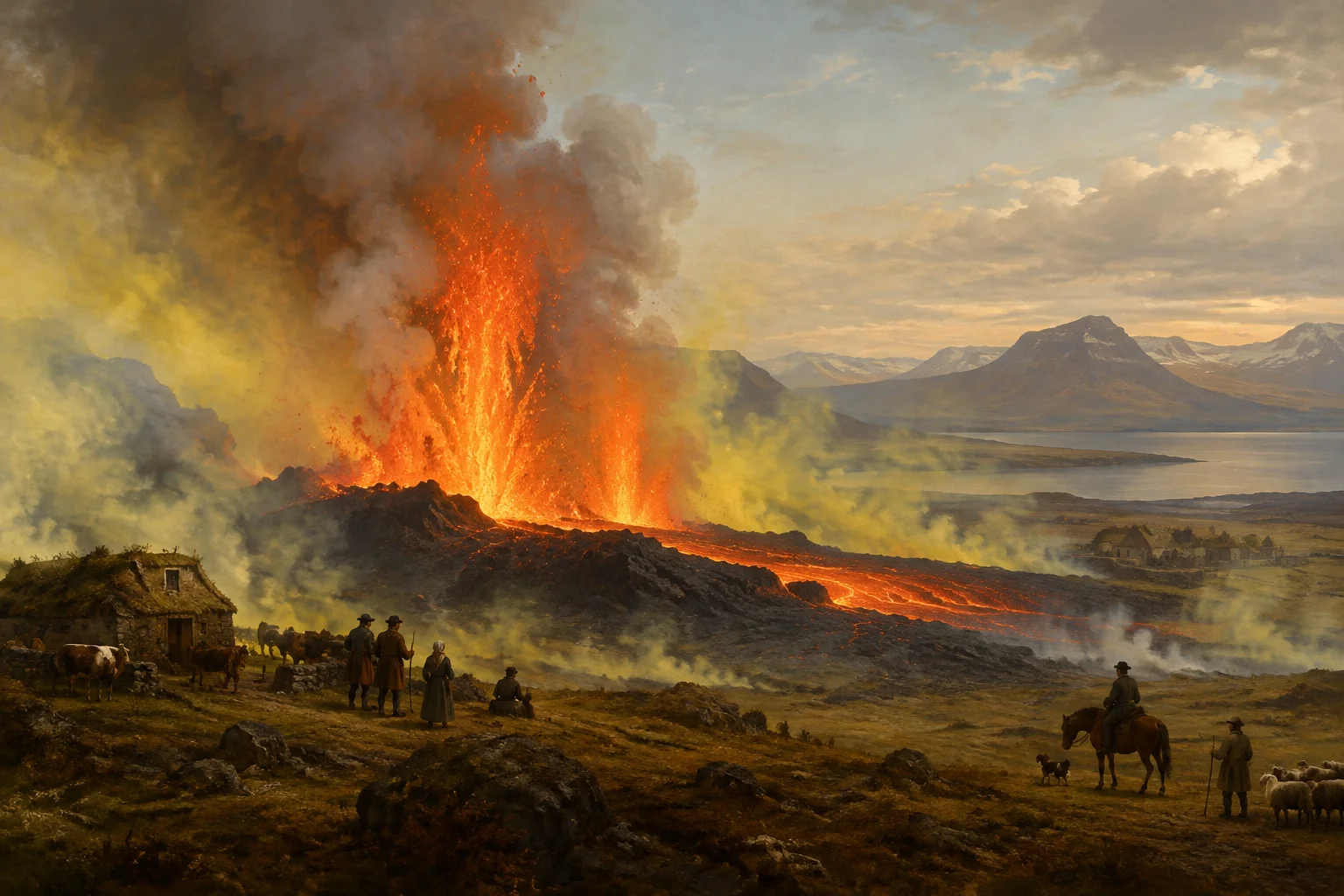
In Iceland, the Laki fissure erupted for eight months, releasing enormous quantities of sulfur dioxide and fluoride. The resulting haze spread across Europe, causing crop failures, livestock deaths, and thousands of human deaths from respiratory and other illnesses.
The eruption also contributed to unusual climate patterns, including a cooler winter and failed harvests as far away as Egypt. It is a reminder that volcanic activity can destabilize food systems on a continental scale.
17. The Year Without a Summer (1816)

Following the 1815 eruption of Mount Tambora in Indonesia, global temperatures dropped noticeably. In 1816, snow fell in New England in June, and harvests failed across Europe and North America.
Food prices soared, riots broke out, and many families migrated westward in search of farmland. The event shows how a single volcanic eruption can reshape economies — and it inspired gloomy literature like Mary Shelley's Frankenstein.
18. The Spanish Flu and World War I Overlap
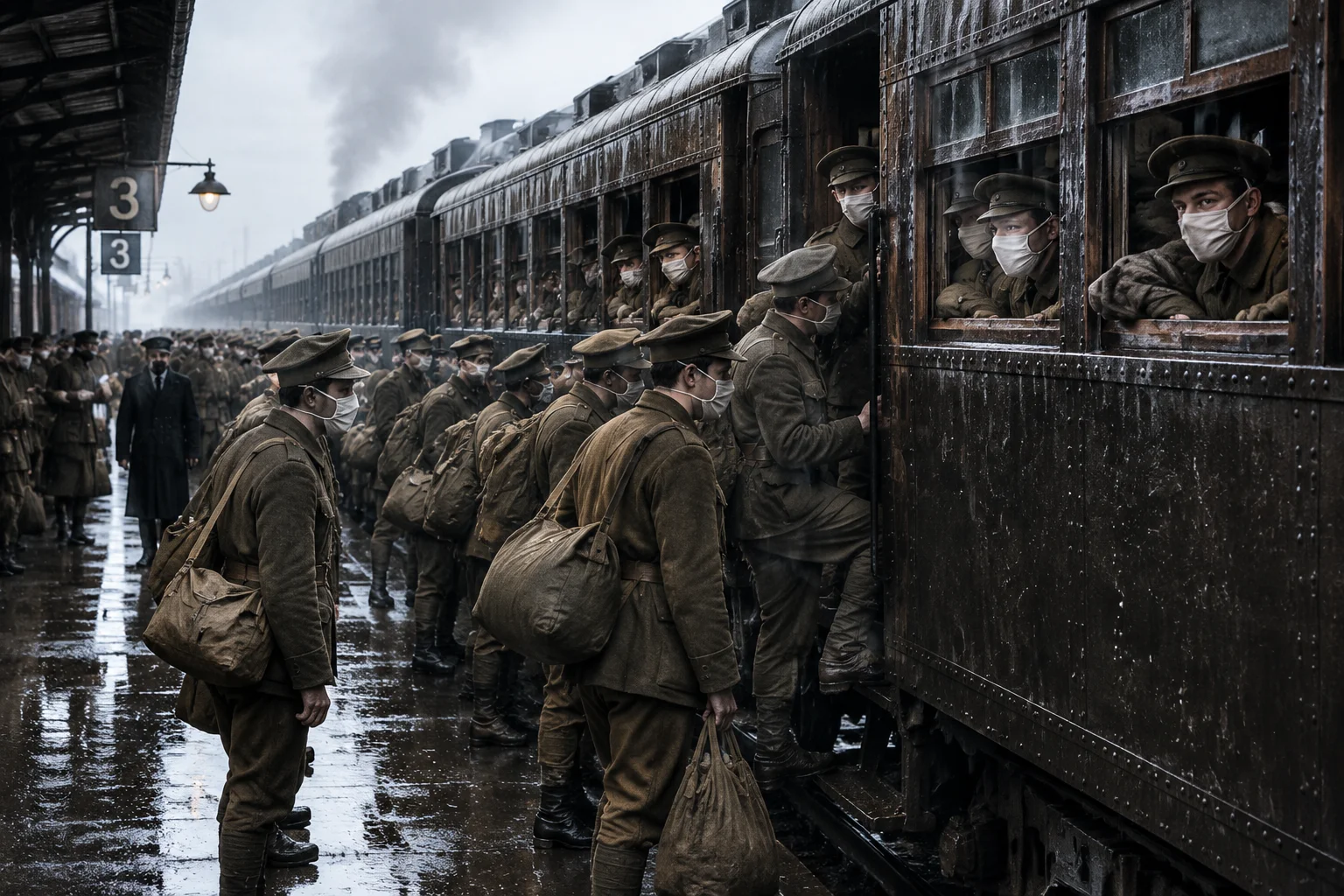
The 1918 flu pandemic is sometimes described as the storm that almost ended the world in terms of human toll, though it was a pandemic rather than a weather event. The close overlap with World War I worsened both crises.
Troop transports and crowded camps helped the virus spread, while wartime censorship limited accurate reporting. The combined death toll from the war and the flu reshaped the 20th century and left deep demographic scars.
19. The Cold War Close Calls of the 1960s
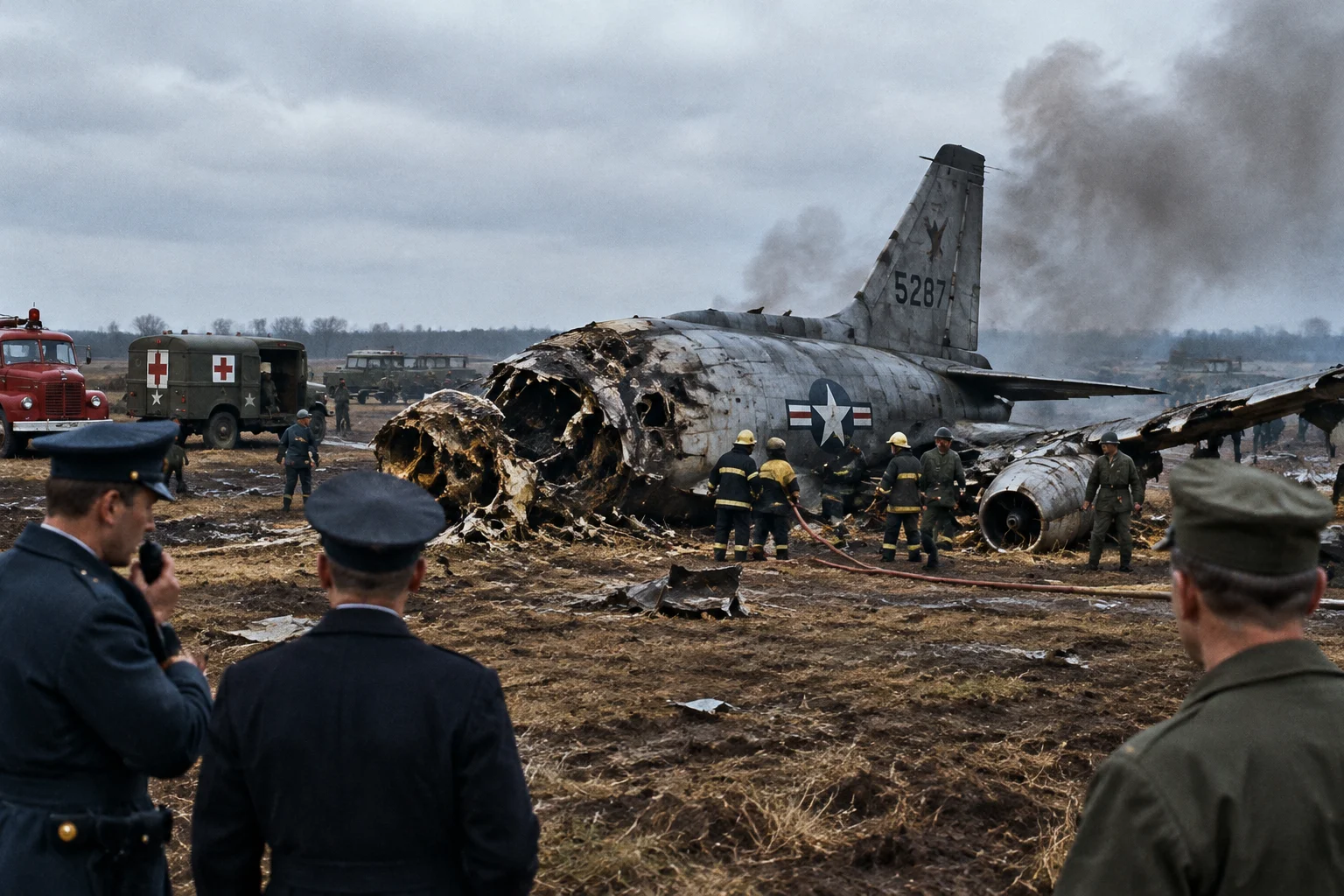
Beyond Cuba, there were multiple nuclear scares in the 1960s. In 1961, a B-52 bomber carrying nuclear weapons crashed near Goldsboro, North Carolina; one bomb's safety mechanisms came dangerously close to failing.
In 1968, a B-52 crash near Thule Air Base in Greenland scattered radioactive material. These incidents never became the obvious catastrophe, but they reveal how often machinery and human error combined to create near-disasters.
20. The 1979 NORAD Computer Error
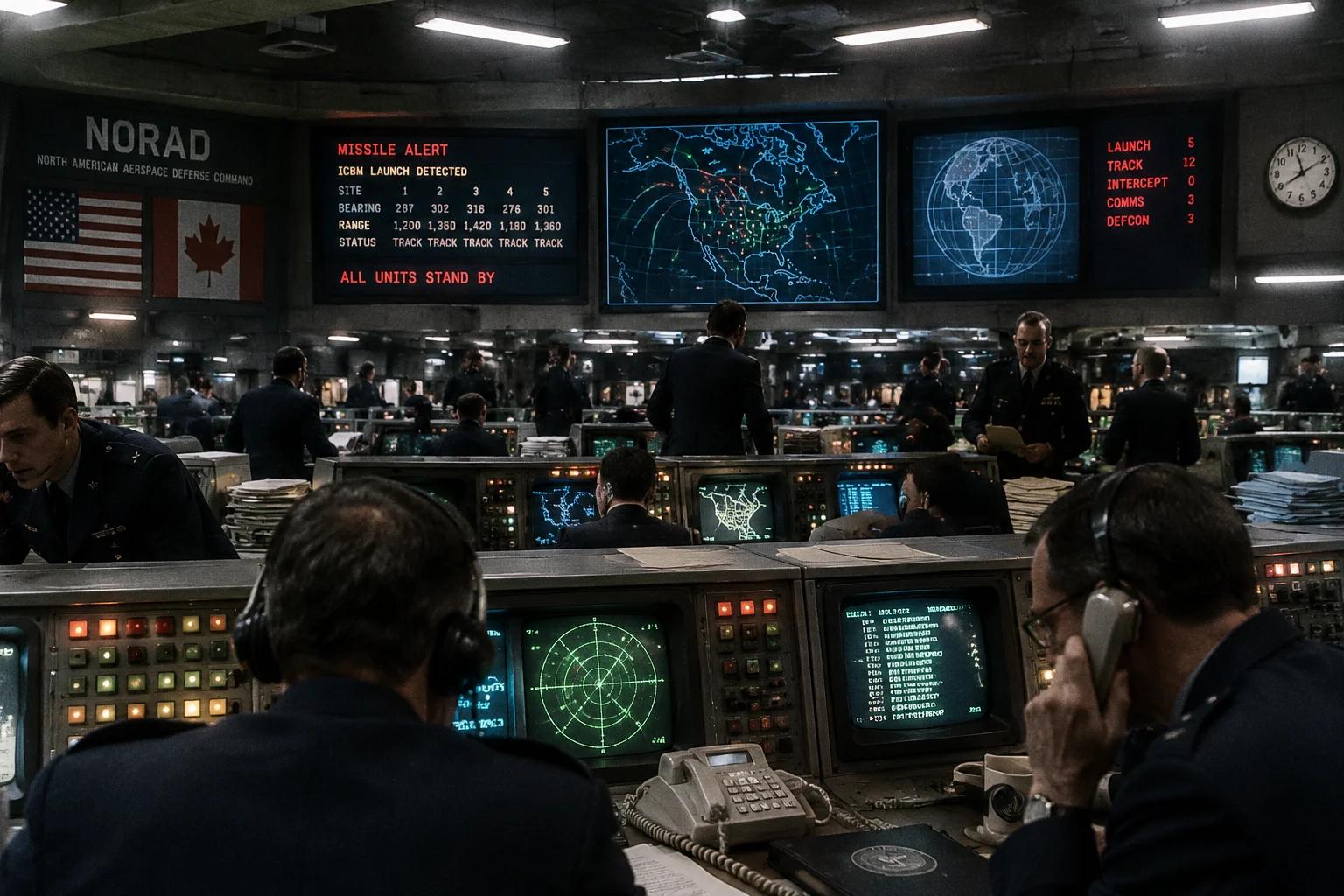
In November 1979, a training tape was accidentally loaded into NORAD's early-warning system, making it appear that a massive Soviet missile attack was underway. U.S. interceptor crews scrambled before the error was identified.
Within minutes, officials realized the scenario didn't match realistic attack patterns. The incident highlighted how a single software or procedural mistake could trigger a chain reaction of irreversible decisions.
21. The Doomsday Clock and Modern Risks
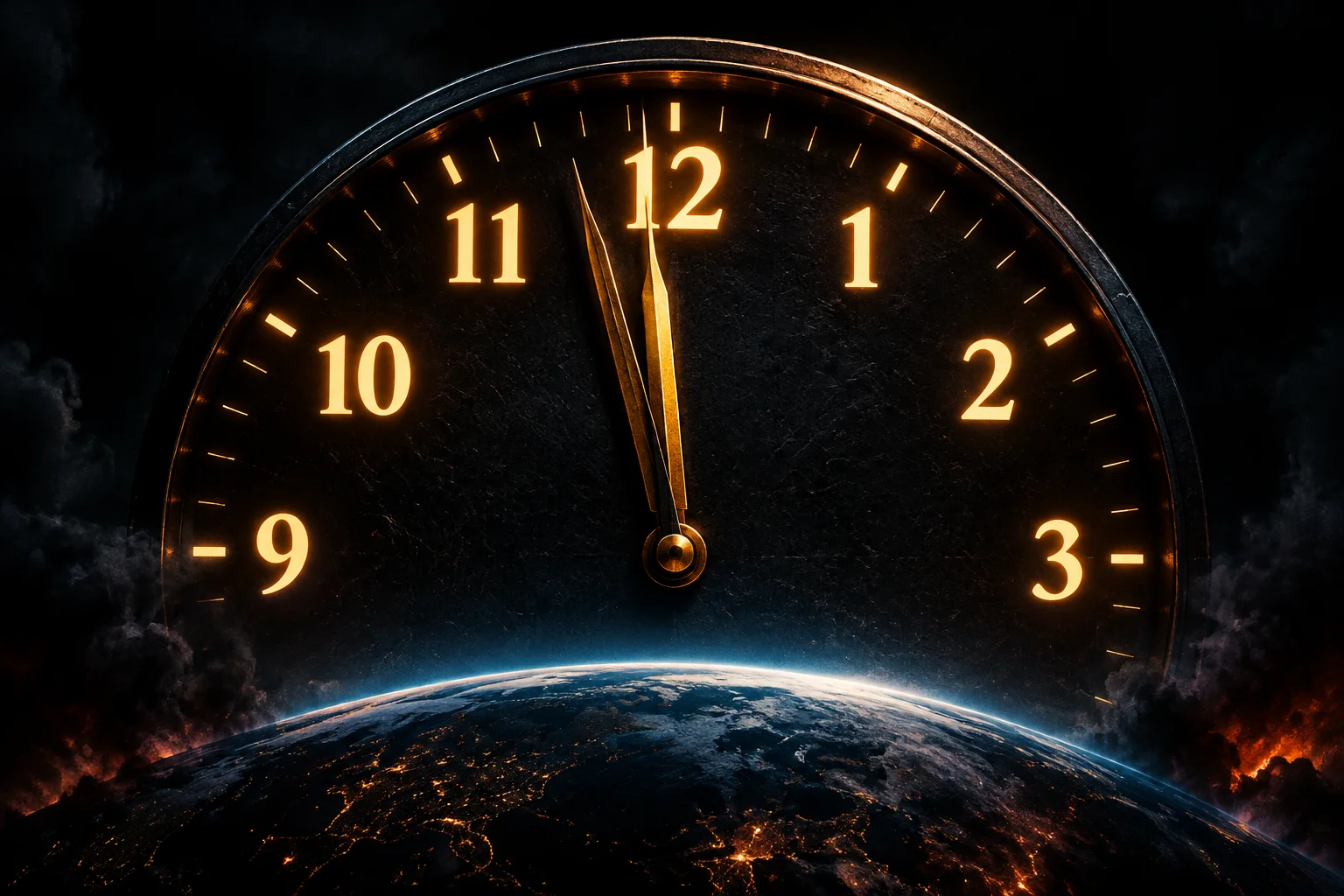
Since 1947, the Bulletin of the Atomic Scientists has maintained the Doomsday Clock as a rough measure of existential risk. In recent years, it has hovered around 90 seconds to midnight — the closest it has ever been.
The clock isn't a prediction, but a communication tool highlighting nuclear weapons, climate change, and emerging technologies like AI. It keeps the idea of world ending events in the public conversation without pretending to know the future.
22. What Ended Up Happening — And Why It Matters
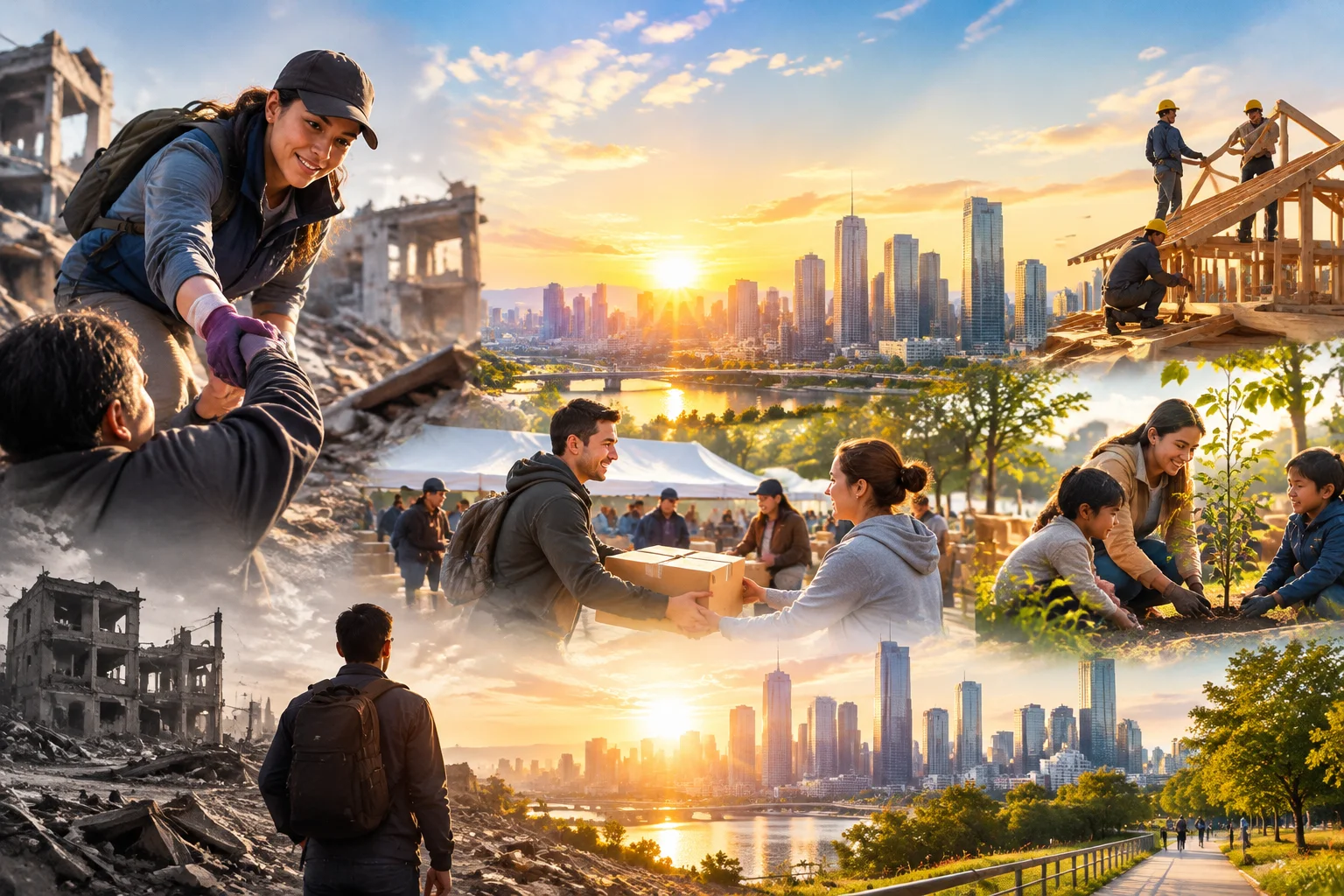
Across all these episodes, one pattern stands out: humanity survived not by luck alone, but because individuals made cautious choices. Arkhipov, Petrov, and countless unnamed officials chose restraint over retaliation.
The question when was the last time this happened is almost impossible to answer, because near misses happen constantly and often go unnoticed. What ended up happening in nearly every case was a return to normal life, with lessons only partially learned.
The greatest thing that almost happened was never a single disaster. It was the collapse that so many people prevented, often without ever knowing how much depended on their judgment.
FAQ
(This section is generated separately.)
Frequently Asked Questions
How did the world almost end in 2020?
In 2020, the COVID-19 pandemic spread worldwide, prompting the World Health Organization to declare a pandemic on March 11. With no vaccine or proven treatment at first, countries closed borders and imposed lockdowns to prevent health systems from collapsing. The world didn't end, but the disruption to daily life, economies, and travel was the most severe global crisis many people had ever experienced.
How many times has the world ended?
Zero times, in the literal sense. The Earth and humanity have survived every event we know about, from asteroid impacts to pandemics to nuclear close calls. When people talk about how many times the world ended, they usually mean near-catastrophic events that could have ended civilization as we know it.
Did the world almost end in 2012?
No. The 2012 phenomenon centered on the end of a cycle in the Mayan Long Count calendar on December 21, 2012. There is no authentic Mayan text predicting an apocalypse on that date; the hype came almost entirely from modern pop culture, documentaries, and internet speculation.
What was the volcano that almost ended humanity?
The Toba supereruption in Indonesia, around 74,000 years ago, is the most commonly cited candidate. Some researchers believe it caused a severe population bottleneck, though this is debated. Other eruptions, like Mount Tambora in 1815, caused serious global climate disruption but did not threaten human extinction.
What is the Doomsday Clock?
The Doomsday Clock is a symbolic measure maintained by the Bulletin of the Atomic Scientists since 1947. It estimates how close humanity is to self-annihilation from nuclear weapons, climate change, and other threats. In recent years, it has stood around 90 seconds to midnight, the closest it has ever been.
When was the last time the world almost ended?
The COVID-19 pandemic in 2020 is often cited as the most recent global near-catastrophe, though it didn't threaten human extinction. Before that, events like the 1983 Soviet false alarm and the 1962 Cuban Missile Crisis are frequently described as the closest the world came to nuclear war.

Alex Warren
Related Articles