

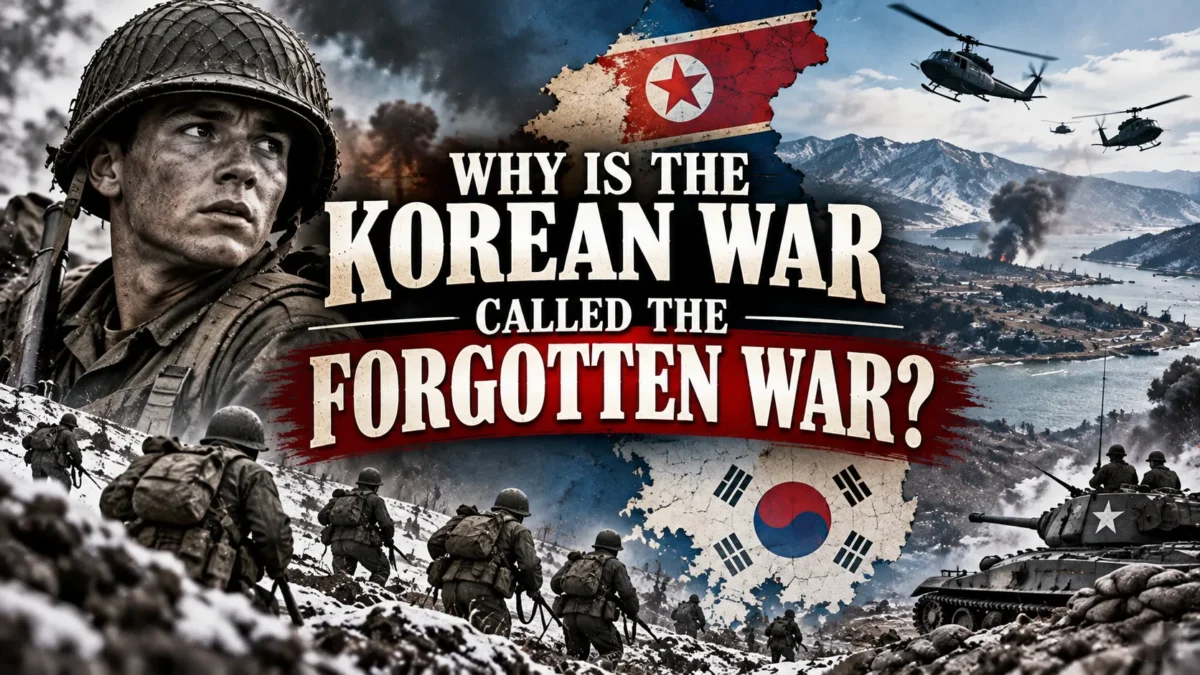
Ask most people to name a major American war from the 20th century, and you’ll likely hear World War II or Vietnam before anyone mentions Korea.
Yet the Korean War, fought from 1950 to 1953, involved millions of troops, claimed hundreds of thousands of lives, and helped define the Cold War for the next four decades. So why does it so often slip through the cracks of popular memory?
TL;DR: The Korean War earned its nickname “the Forgotten War” because it was sandwiched between two more culturally dominant conflicts, ended without a clear victory, received far less media and cultural attention, and was often downplayed by the very government that fought it.
A Quick Refresher: What Was the Korean War?
The Korean War began on June 25, 1950, when communist North Korea invaded South Korea, quickly overwhelming southern forces. The United Nations, led largely by the United States, intervened to push back the invasion, while China entered the war later that year to support the North.
The Soviet Union also backed North Korea, mostly through arms, air support, and strategic guidance, making the conflict a major flashpoint of the emerging Cold War.
The fighting see-sawed up and down the Korean peninsula for three brutal years, including the famous UN landing at Incheon and the harrowing retreat from the Chosin Reservoir.
An armistice was signed on July 27, 1953, but no peace treaty ever followed. Technically, North and South Korea remain in a state of war to this day, separated by the heavily fortified Demilitarized Zone (DMZ).
Why Is the Korean War Known as the “Forgotten War”?
The phrase “Forgotten War” isn’t just a catchy nickname invented by historians looking for a dramatic label. It reflects a real and well-documented pattern in how the conflict was covered, discussed, and remembered compared to the wars that came before and after it. Several overlapping factors explain why the Korean War earned this reputation, and understanding them helps answer the question so many people search for: why is the Korean War known as the Forgotten War?
At its core, the answer comes down to timing, ambiguity, and a lack of sustained public storytelling. Each of these threads deserves its own closer look.
The War Sandwiched Between Two Bigger Cultural Moments
One of the simplest explanations is also one of the most powerful: timing. The Korean War came just five years after the triumphant end of World War II, a conflict that Americans and much of the world had rallied around as an unambiguous fight against fascism. That war produced clear villains, clear heroes, and a clear ending with total victory.
Then, less than a decade after Korea ended, the United States became deeply entangled in Vietnam, a war that dominated television screens, campus protests, and national politics for over a decade. Korea was squeezed into a relatively brief window between these two much more culturally resonant conflicts. It simply didn’t get the same amount of time in the spotlight before public attention moved elsewhere.
No Parades, No Clear Victory
World War II ended with unconditional surrenders and jubilant homecoming parades. The Korean War ended with an armistice, a ceasefire agreement rather than a formal peace treaty, leaving the peninsula divided along roughly the same lines as before the fighting began. There was no dramatic surrender ceremony and no clean sense of triumph to celebrate.
This ambiguous ending made it harder for the public to process the war as a clear success story. Without a tidy narrative of victory, the war didn’t lend itself to the kind of national celebration that helps cement a conflict in collective memory. It’s a big part of why the Korean War was forgotten by so much of the public relatively soon after it ended.
Limited Media Coverage Compared to Later Wars
Television was still in its infancy in the early 1950s, and relatively few American households owned a TV set when the Korean War began. Newsreels and print media covered the war, but nowhere near the saturation level that television would later bring to Vietnam in the 1960s and 1970s. Vietnam has often been called the first “television war” for a reason.
Without vivid, widely broadcast imagery reaching living rooms across the country, the Korean War simply didn’t imprint itself on the public consciousness in the same visceral way. Fewer photographs, less combat footage, and less sustained news coverage all contributed to a thinner cultural record for later generations to draw on.
A Government That Downplayed the Conflict
President Harry Truman never asked Congress for a formal declaration of war. Instead, the United States entered the conflict under the banner of a United Nations “police action,” a term that intentionally minimized the scale of what was actually a massive, high-casualty war. This framing shaped how the war was discussed publicly from the very beginning.
By avoiding the language of full-scale war, American leaders arguably set the tone for how seriously the conflict would be remembered afterward. If the government itself was calling it a limited police action rather than a war, it’s little wonder the public didn’t always treat it with the same weight as other major conflicts.
Overshadowed by Cold War Politics and McCarthyism
The early 1950s in the United States were dominated by domestic anxieties, particularly the Red Scare and the rise of McCarthyism. Fears of communist infiltration at home often competed with news from the Korean front for public attention. Political scandals, loyalty hearings, and anti-communist crusades filled headlines alongside war reporting.
This meant the war was often discussed through the lens of the broader Cold War struggle against communism rather than as its own distinct, memorable event. It became one piece of a much larger ideological battle rather than a singular national moment the way World War II had been.
Fewer Books, Films, and Cultural Touchstones
World War II inspired countless films, novels, and later prestige television, from “The Longest Day” to “Band of Brothers.” Vietnam produced an entire genre of searing, influential cinema, including “Apocalypse Now,” “Platoon,” and “Full Metal Jacket.” Korea, by contrast, produced comparatively few widely known cultural touchstones.
The most famous pop-culture connection to Korea is arguably the TV series “M*A*S*H,” which ran from 1972 to 1983. Ironically, many viewers watched it as commentary on Vietnam rather than as a serious exploration of the Korean War itself, since it aired mostly during and after the Vietnam era. This mismatch further blurred the war’s distinct identity in popular memory.
The Human Cost Deserves More Recognition
Part of what makes the “Forgotten War” label so troubling is the sheer scale of what’s being overlooked. Approximately 36,000 American service members died during the Korean War, alongside hundreds of thousands of South Korean, North Korean, Chinese, and other UN coalition casualties. Estimates for total military and civilian deaths across all sides range into the millions when the full scope of the conflict is considered.
The war also produced intense, harrowing combat, including brutal winter fighting during the retreat from the Chosin Reservoir, where American and UN forces endured subzero temperatures alongside overwhelming Chinese troop numbers. These are not minor historical footnotes. They represent immense sacrifice that many historians argue has never received the recognition it deserves.
Veterans Who Felt Overlooked Coming Home
Many Korean War veterans have spoken about returning home to relatively muted receptions compared to the celebrations that greeted World War II veterans. There was no dramatic V-Day equivalent to mark the war’s end, and public interest had already begun shifting toward other concerns by the mid-1950s. Some veterans reported feeling as though their service was met with confusion or indifference rather than gratitude or curiosity.
This is part of why veterans’ groups and historians began using the term “Forgotten War” themselves in the decades that followed. It wasn’t just an outside observation; it was a lived experience for many of the men who fought there and felt their service had been overlooked.
Has the Korean War Really Been Forgotten? Signs It’s Changing
Despite everything above, it’s worth being careful not to overstate the case. The Korean War hasn’t vanished from historical memory entirely, and in recent decades there’s been a notable effort to correct the imbalance. Historians, documentary filmmakers, and veterans’ organizations have increasingly pushed to bring the war’s story back into public view.
The ongoing political relevance of the Korean peninsula has also kept the war’s legacy alive in a practical sense. Tensions between North and South Korea, along with North Korea’s nuclear ambitions, regularly bring the region back into international headlines. This modern context has, in some ways, forced renewed public interest in how the divided peninsula came to be.
The Korean War Veterans Memorial and Other Tributes
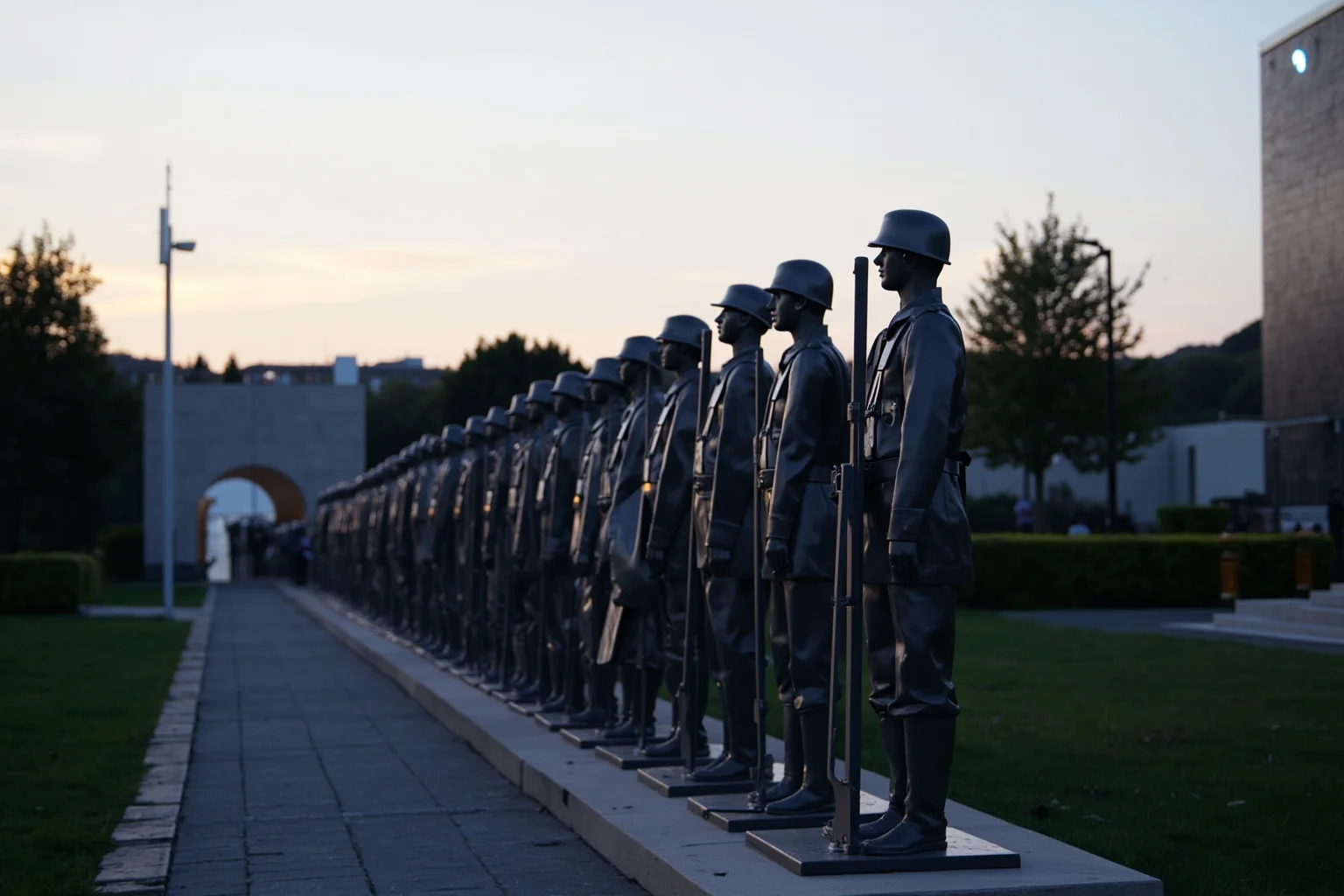
The Korean War Veterans Memorial was dedicated in Washington, D.C., in 1995, more than four decades after the armistice was signed. Featuring 19 stainless steel statues of soldiers moving through rugged terrain, it stands as a powerful, if belated, national acknowledgment of the war’s significance. The memorial’s relatively late arrival compared to World War II tributes is itself a small illustration of the “forgotten” pattern.
Since then, additional memorials, museum exhibits, and educational initiatives have worked to fill in the gaps. South Korea has also actively worked with the United States and other allied nations to honor veterans and preserve war history, including repatriation efforts for remains of fallen soldiers that continue into the present day.
Education Gaps in Schools
Another contributing factor to the war’s reduced visibility is how it’s taught, or not taught, in many school curricula. World War II and Vietnam often receive substantial classroom time due to their clearer narratives and cultural resonance. Korea, sandwiched awkwardly between them, sometimes gets reduced to a brief mention connecting the two.
This educational gap means each new generation may grow up with only a vague sense of what happened on the Korean peninsula between 1950 and 1953. Without deliberate curriculum attention, the cycle of limited awareness can continue well beyond the generation that actually lived through the war.
Why the Ongoing Division of Korea Matters Today
It’s easy to think of the Korean War as a closed chapter, but the absence of a formal peace treaty means the conflict is technically still unresolved. North and South Korea remain divided by the DMZ, one of the most heavily militarized borders in the world. This unfinished ending is a direct, ongoing legacy of the war that many people don’t fully realize when they think of Korea only in terms of modern headlines.
Understanding this context adds weight to why remembering the war accurately matters. The current political and humanitarian realities on the Korean peninsula trace directly back to decisions made and battles fought more than seventy years ago.
Why Remembering the Korean War Still Matters
Remembering the Korean War isn’t just an academic exercise; it’s a matter of honoring the people who served and died, and understanding a conflict that ranks among the biggest events in American history. The war set major precedents for how the United States would engage in future limited conflicts, including Vietnam, without formal declarations of war. It also cemented the division of a nation whose people continue to live with the consequences today.
Giving the Korean War its due doesn’t mean ranking it above other conflicts in importance. It simply means recognizing that its comparative obscurity was shaped by circumstance and timing, not by a lack of significance or sacrifice.
Final Thoughts: A War Worth Remembering
The Korean War earned its “Forgotten War” nickname through a combination of bad timing, an ambiguous ending, limited media coverage, and a government reluctant to call it what it truly was. None of these factors reflect the scale of sacrifice made by the millions of soldiers and civilians who lived through it. As memorials expand, documentaries multiply, and history curricula slowly adapt, there’s real hope that the Korean War’s place in public memory will continue to grow.
The next time someone asks why the Korean War is sometimes overlooked, the answer isn’t that it didn’t matter. It’s that a unique set of historical circumstances pushed it into the shadows of two louder, more visually documented wars, even though its consequences still shape the world today.
Frequently Asked Questions
Why is Korean War known as Forgotten War?
The Korean War is known as the Forgotten War because it was overshadowed by World War II before it and the Vietnam War after it, ended in an ambiguous armistice rather than a clear victory, received far less media coverage than later conflicts, and was officially downplayed by the U.S. government as a 'police action' rather than a declared war.
Why was the Korean War forgotten?
The Korean War was largely forgotten due to a combination of factors: it fell in a narrow window between two more culturally dominant wars, lacked a decisive, celebratory ending, received limited television and print coverage compared to Vietnam, and was frequently overshadowed by domestic Cold War politics like the Red Scare.
Why is the Korean War sometimes called the Forgotten War?
It's called the Forgotten War because, despite claiming roughly 36,000 American lives and hundreds of thousands more across other nations, it never achieved the same lasting place in popular memory, education, and media as World War II or Vietnam.
When did the Korean War start and end?
The Korean War began on June 25, 1950, when North Korea invaded South Korea, and it ended with an armistice signed on July 27, 1953. No formal peace treaty was ever signed, so the conflict remains technically unresolved to this day.
How many people died in the Korean War?
Approximately 36,000 American service members died during the Korean War, while total military and civilian casualties across North Korea, South Korea, China, and other involved nations are estimated to be in the millions when combining deaths, injuries, and displacement.
Is there a memorial for the Korean War?
Yes, the Korean War Veterans Memorial in Washington, D.C., was dedicated in 1995 and features 19 stainless steel statues representing soldiers on patrol, along with a Pool of Remembrance honoring those who died, were wounded, or remain missing.

Alex Warren
Related Articles





