

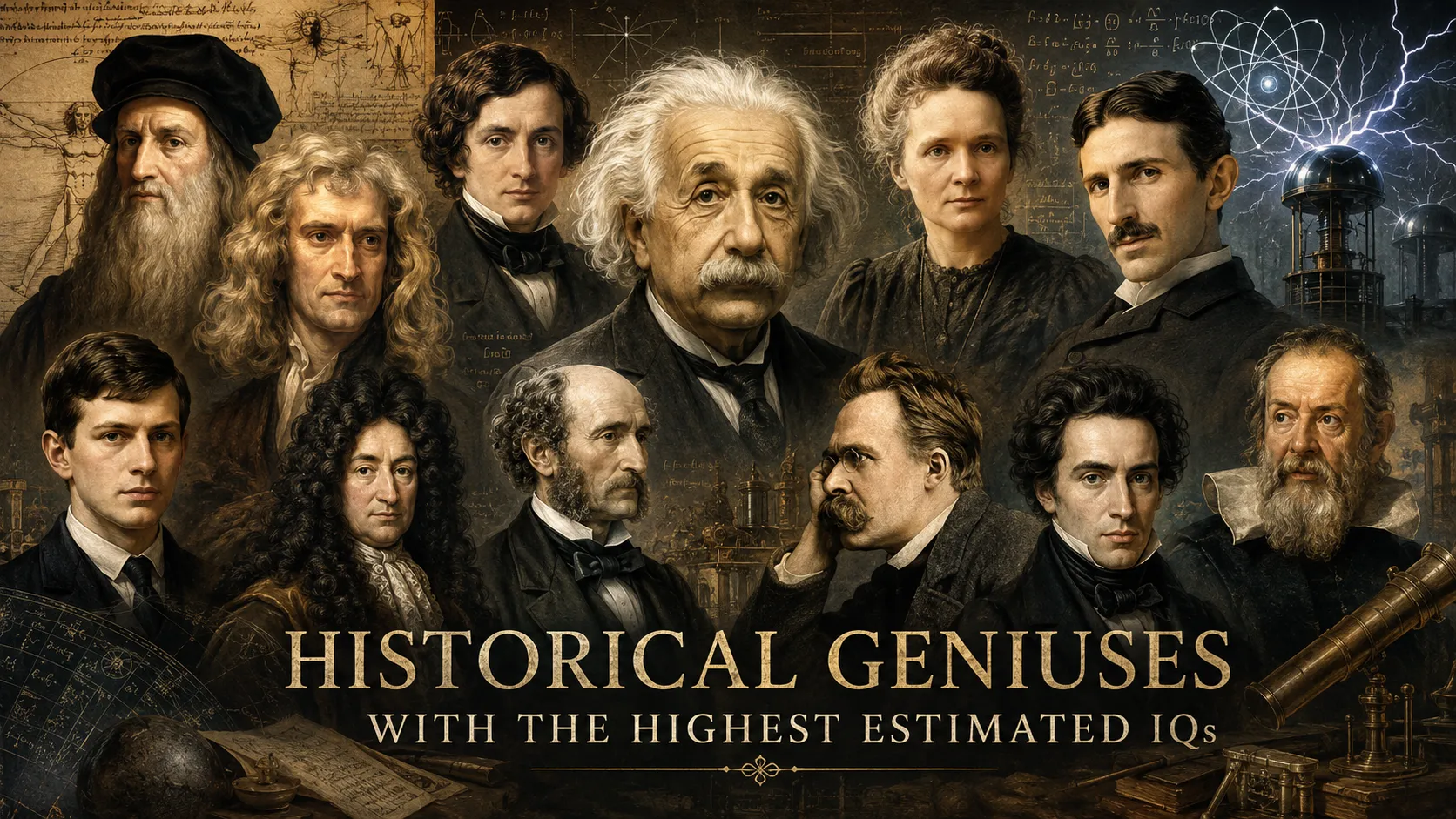
Type “who has the highest IQ in the world” into a search bar and you’ll get a confident-sounding answer within seconds. Usually it’s a name like William James Sidis, Isaac Newton, or Leonardo da Vinci, paired with a suspiciously precise number like 250 or 300. The problem is that almost none of these numbers come from an actual IQ test.
This post digs into where these famous “highest IQ ever” claims actually come from, which historical figures are most often cited, and why serious psychologists treat most of these numbers with a healthy dose of skepticism. We’ll look at Newton, da Vinci, Einstein, Marie Curie, and a long list of other minds, plus the modern child prodigies whose scores keep showing up in search results.
TL;DR: There is no verified, universally agreed “highest IQ ever recorded” — the huge numbers attached to Newton, da Vinci, Sidis, and others are retrospective estimates and media claims, not documented test scores.
Why “Highest IQ Ever” Isn’t as Simple as One Number
Standardized IQ testing didn’t exist until the early 1900s, starting with Alfred Binet’s work in France and later the Stanford-Binet and Wechsler scales. That means anyone who lived before roughly 1900 — including Newton, Leonardo da Vinci, Galileo, and Shakespeare — never sat down and took an IQ test in the way we understand one today.
Any IQ figure attached to a historical genius is therefore a modern estimate, built by looking at biographical evidence like early reading age, academic achievements, or recorded accomplishments. These estimates can be interesting, but they are not the same thing as a documented, standardized score.
Even for people who did take real tests, comparing scores across different eras is messy. Older “ratio IQ” scores (mental age divided by chronological age, times 100) behave very differently from the “deviation IQ” scores used on modern tests like the Wechsler Adult Intelligence Scale, which compare a person only to others in their own age group.
That mismatch is a big reason there’s no single, agreed-upon answer to “what is the highest IQ ever recorded.” Different tests, different eras, and different scoring systems all produce different ceilings, and psychologists today generally caution against treating any single number above roughly 160–200 as meaningful.
How Do You “Estimate” the IQ of Someone Who Never Took a Test?

Most of the huge historical IQ numbers you see online trace back, directly or indirectly, to a 1926 study by psychologist Catharine Cox called “The Early Mental Traits of Three Hundred Geniuses.” Cox and her team tried to estimate childhood intelligence for historical figures by studying biographical records of what they achieved and when.
This method is called retrospective or historiometric estimation. It looks at things like the age a person started reading, learned languages, or produced original work, then compares that pace of development to typical childhood milestones.
It’s a genuinely clever research approach, but it has real limits. Biographical records are often incomplete, exaggerated, or written long after the fact by admirers, and the whole method assumes childhood precocity maps neatly onto adult intelligence, which isn’t always true.
So when you see a claim like “Isaac Newton’s IQ was 190–200,” what you’re really seeing is a decades-old academic estimate, filtered through generations of pop-science retellings, not a number from an actual answer sheet. Keep that caveat in mind as we go through the list below.
Historical Geniuses With the Highest Estimated IQs
The following names are the ones most commonly cited across popular science lists, trivia sites, and rankings of the smartest people in history when people ask about the world’s highest IQ people. Estimated ranges vary a lot between sources, and we’ve noted that variation rather than presenting a single false-precision number.
1. William James Sidis (Estimated 250–300)

Sidis, an early 20th-century American prodigy, is the name that shows up most often for “the highest IQ ever.” He reportedly enrolled at Harvard around age 11 and showed remarkable early linguistic and mathematical ability.
The eye-popping 250–300 figure traces back to secondhand claims and later biographical write-ups rather than a documented test score. Sidis himself avoided publicity as an adult, so there’s no reliable primary-source IQ test to confirm any specific number.
2. Johann Wolfgang von Goethe (Estimated ~210–225)
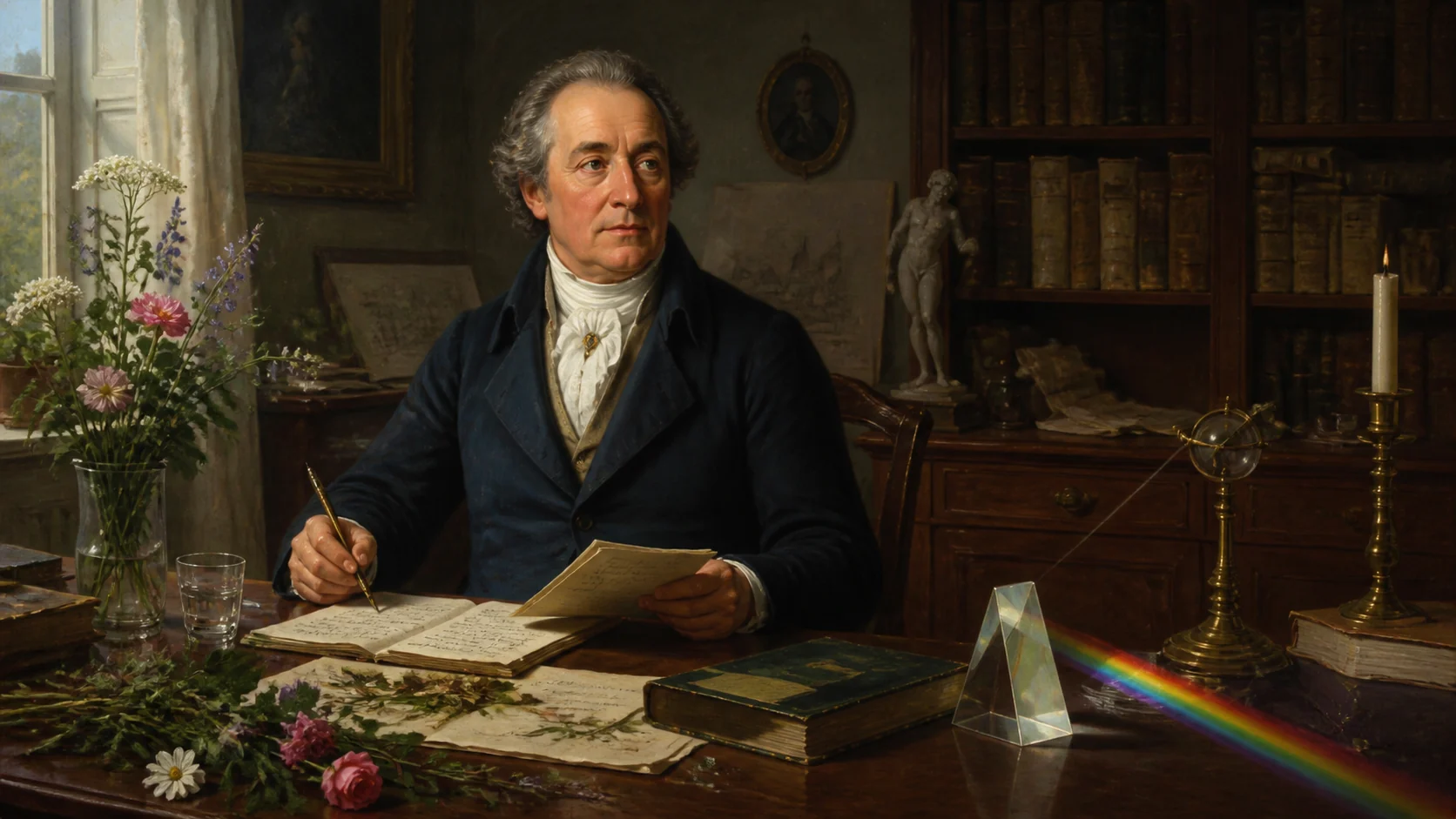
The German writer, scientist, and polymath behind “Faust” is a regular fixture on historical-genius lists. His estimate comes from Cox-style retrospective analysis of his precocious early writing and wide-ranging scientific interests.
3. Gottfried Wilhelm Leibniz (Estimated ~190–205)

Leibniz co-invented calculus, contributed to logic and philosophy, and worked across multiple fields simultaneously. His high estimated score reflects the sheer breadth of his intellectual output rather than any test result.
4. John Stuart Mill (Estimated ~190–200)

Mill was famously taught Greek starting around age three by his father, and was writing serious philosophical work in his teens. His unusually documented childhood curriculum makes him one of the more frequently cited Cox-study subjects.
5. Isaac Newton (Estimated ~190)
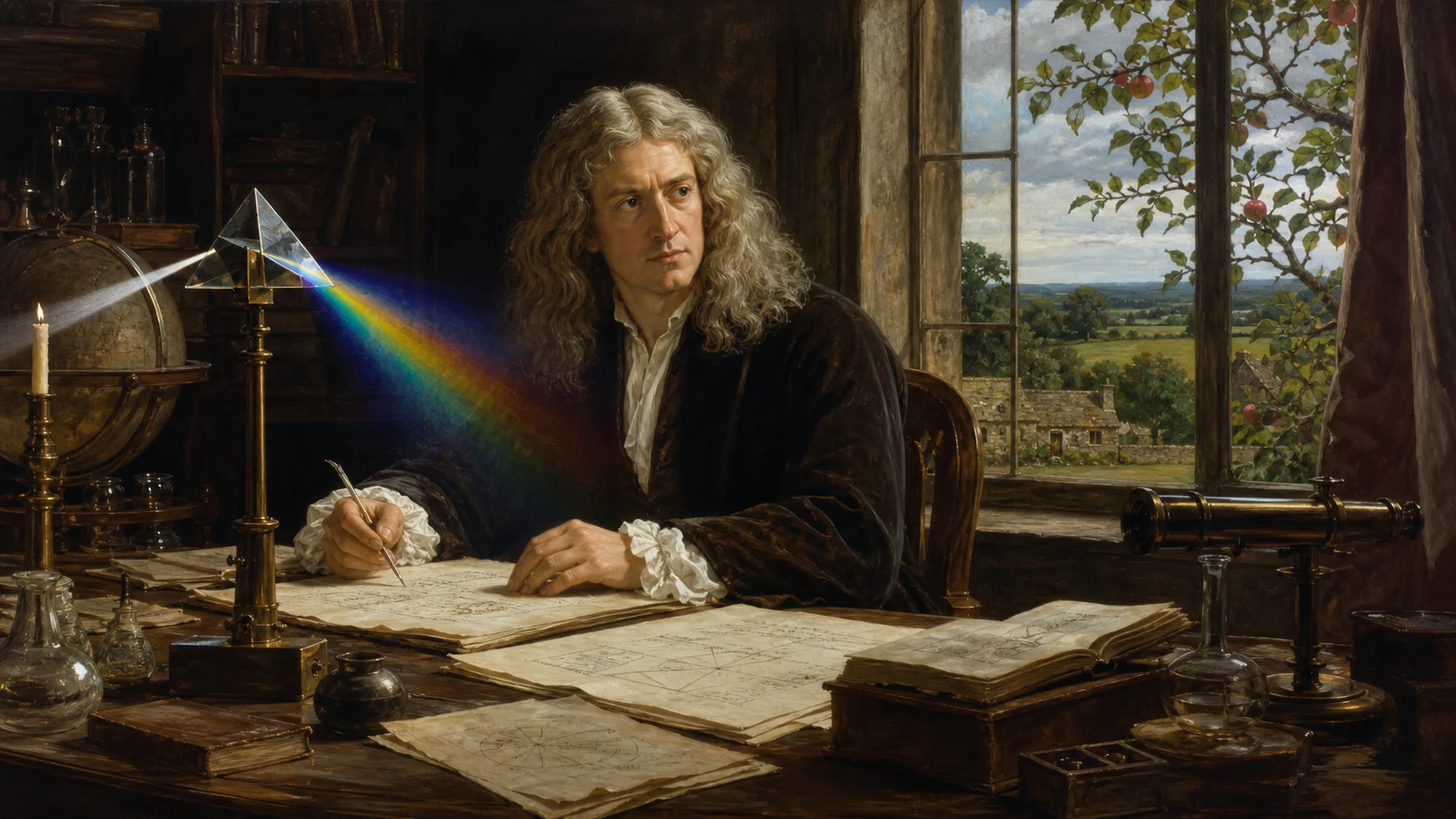
Newton developed calculus, formulated the laws of motion and universal gravitation, and made major contributions to optics. We’ll go deeper on the Newton IQ question in its own section below, because it’s one of the most-searched names in this entire topic.
6. Blaise Pascal (Estimated ~195)

Pascal contributed to probability theory, geometry, and physics, and reportedly worked out geometric proofs as a child without formal instruction. His estimate again comes from historiometric analysis of his early output.
7. Leonardo da Vinci (Estimated ~180–220, depending on the source)

Da Vinci’s estimated IQ varies wildly between different lists, which is itself a clue that it’s not based on hard data. We’ll look closer at why in a dedicated section below.
8. Thomas Young (Estimated ~185–200)
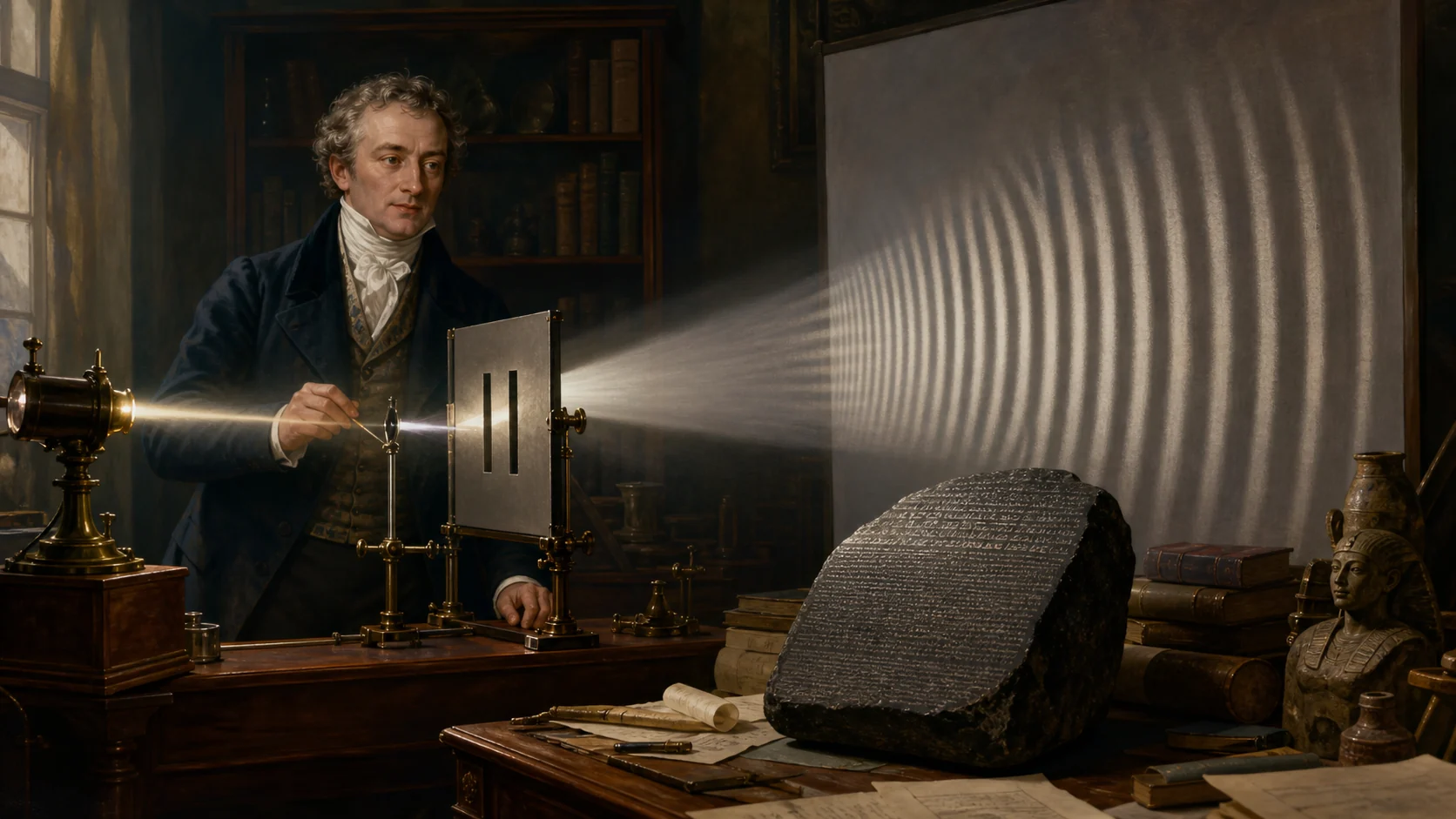
Young was a physician and physicist who helped decipher Egyptian hieroglyphics and contributed to the wave theory of light. Like many polymaths on this list, his estimate rests on the range of unrelated fields he mastered.
9. Hugo Grotius (Estimated ~200)

The Dutch jurist and “father of international law” reportedly wrote Latin verse as a young child and entered university in his early teens. This early academic pace is the basis for his high estimate.
10. Emanuel Swedenborg (Estimated ~205)

Swedenborg was a scientist, inventor, and philosopher whose broad body of work across engineering, anatomy, and theology places him high on most historiometric rankings.
11. Carl Friedrich Gauss (Estimated ~190–250, heavily disputed)
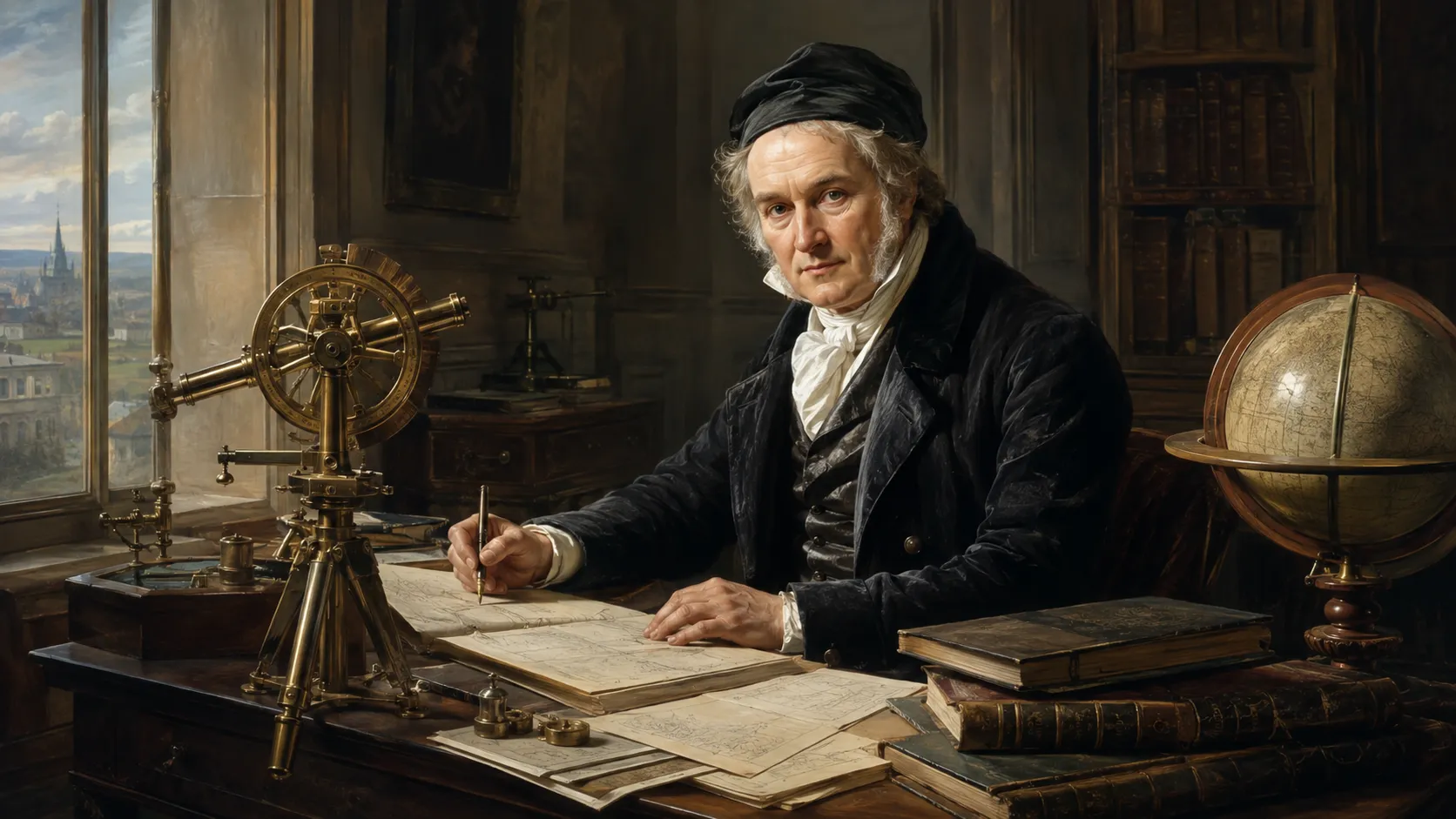
Gauss is sometimes credited with one of the highest IQs ever due to legendary (and partly apocryphal) stories about correcting his father’s arithmetic as a toddler. Mathematicians generally regard him as one of history’s greatest, but the specific number attached to his name varies enormously between sources, which is a red flag for reliability.
12. Leonhard Euler (Estimated ~190)

Euler produced an enormous volume of foundational mathematics, much of it after losing most of his eyesight. His estimate again reflects lifetime output rather than a test score.
13. Voltaire (Estimated ~190)

The French writer and philosopher is included on many historical-genius lists for his prolific and wide-ranging output across literature, history, and political thought.
14. René Descartes (Estimated ~185)

Descartes’ contributions to philosophy and analytic geometry earn him a regular spot on these rankings, again based on retrospective assessment of his work rather than any documented score.
15. Galileo Galilei (Estimated ~185)

Galileo’s early astronomical observations and challenges to accepted physics make him a common inclusion, though as with the others, no actual test exists.
16. Marie Curie (Estimated ~180–200)

Curie remains one of the only women regularly featured on these historical lists, and for good reason. She won Nobel Prizes in two different sciences (Physics and Chemistry), a feat that still hasn’t been repeated, and her estimated IQ reflects that singular achievement.
17. Nikola Tesla (Estimated anywhere from 160 to 310, depending on the source)

Tesla is a great example of how unreliable these numbers get. Different websites cite wildly different figures for him, from a fairly modest 160 up to an implausible 310, which suggests most of these numbers are recycled guesses rather than anything measured.
18. Albert Einstein (Commonly cited as ~160)
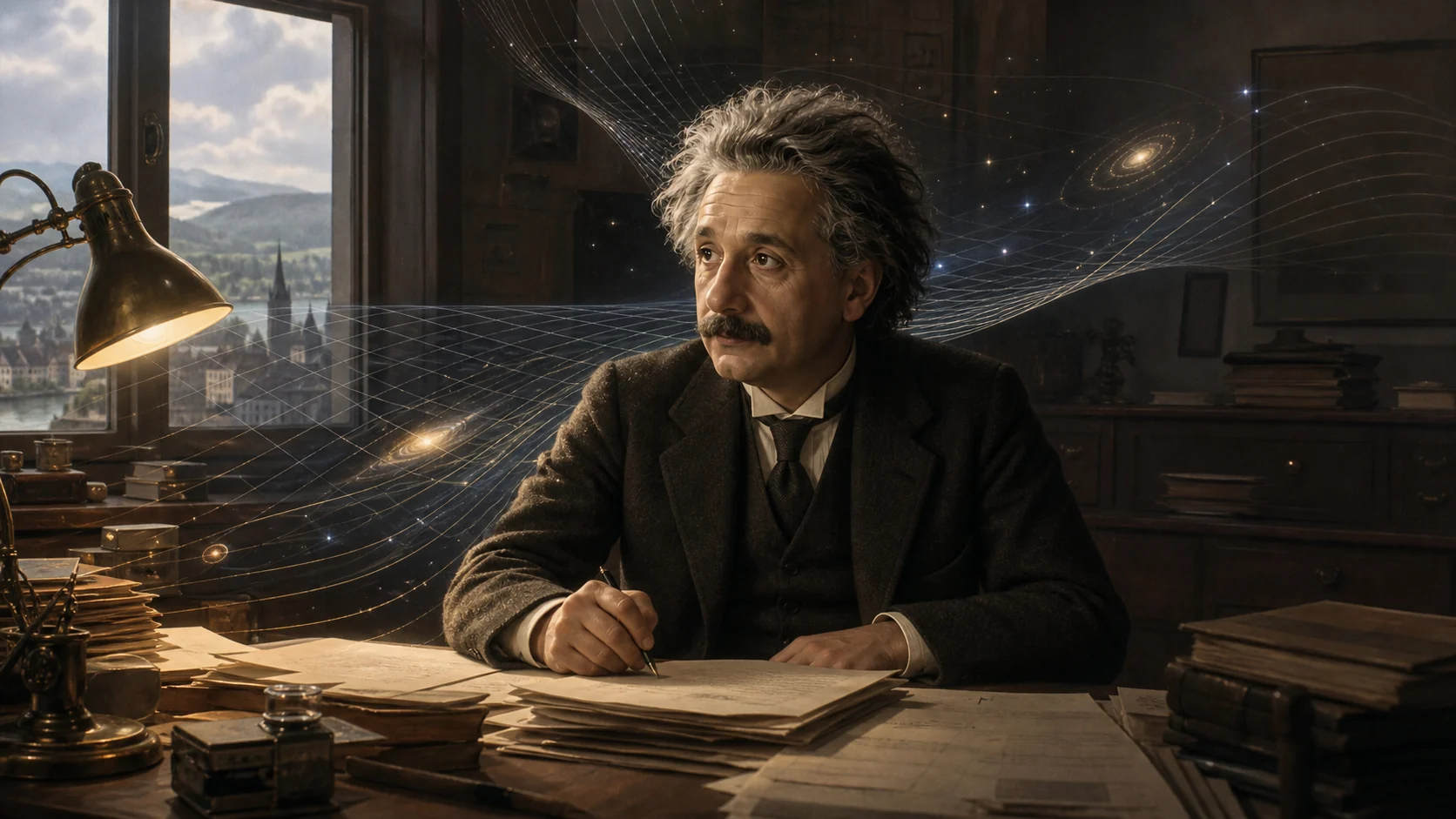
Einstein never took a formal, documented IQ test either, despite being the go-to shorthand for genius. We cover the origin of the “160” figure in more detail further down.
19. William Shakespeare (Speculative, no reliable estimate)
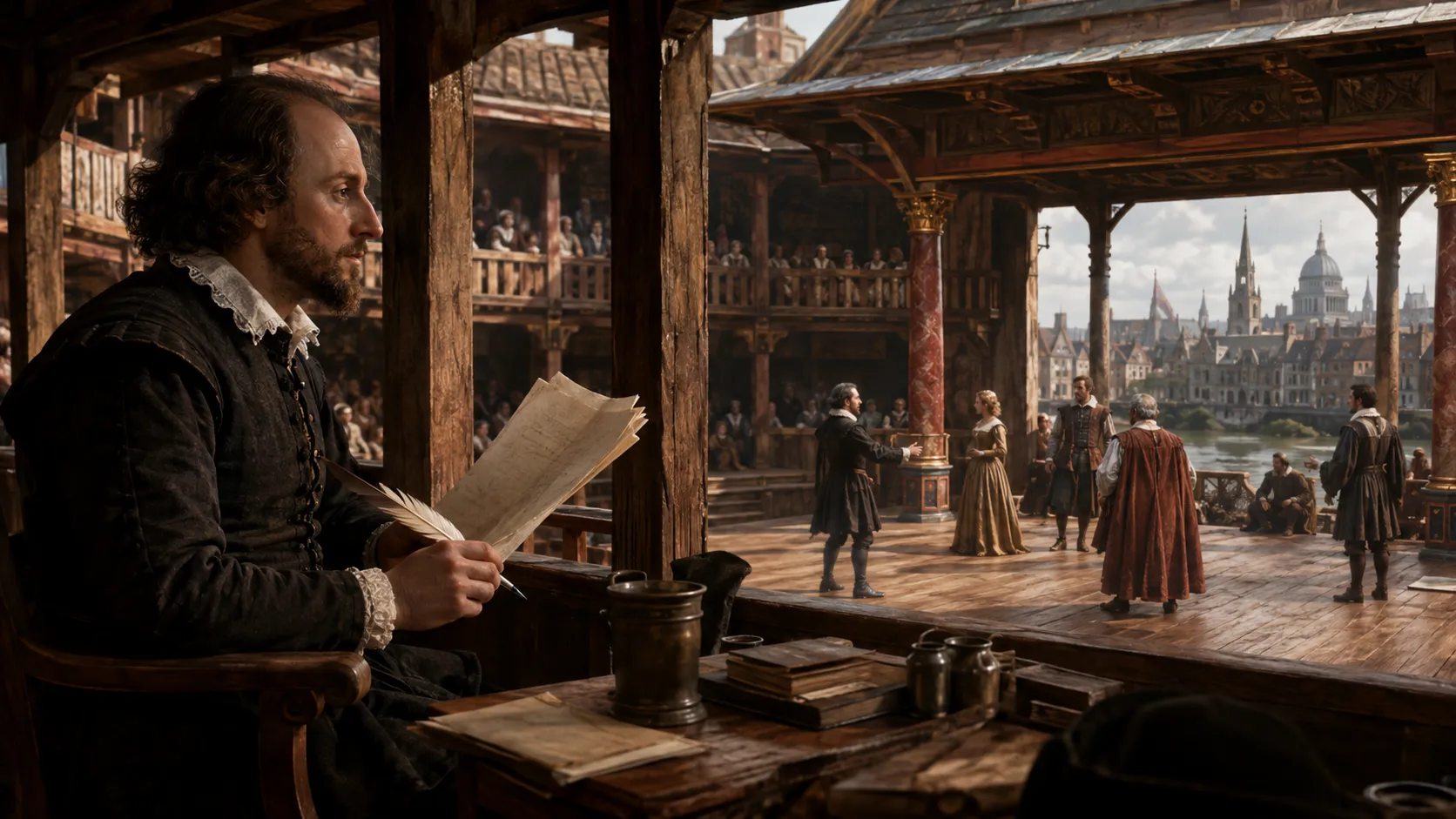
Shakespeare occasionally appears on “highest IQ in history” lists, but there is essentially no reliable biographical detail about his early development to base an estimate on. Any number attached to his name should be treated as pure speculation.
20. Marilyn vos Savant (Reported ~186–228 depending on the test)

Vos Savant isn’t a historical figure in the classical sense, but she’s central to this topic because she actually held a real Guinness World Record for “Highest IQ” from 1986 to 1989. Her scores came from childhood tests using ratio-IQ methods that Guinness itself later deemed unreliable for record-keeping, and we explain that story in the next section.
21. Kim Ung-Yong (Reported ~210)

The South Korean child prodigy was listed in Guinness World Records during the 1980s with a reported IQ around 210, based on tests taken as a young child. He later spoke publicly about the pressures of early prodigy status, and went on to have a respected but relatively conventional academic career.
22. Adragon De Mello and Marnen Laibow-Koser (Media-reported, unverifiable)

These two American child prodigies from the late 20th century were both reported in the press with extraordinarily high IQ figures, in De Mello’s case sometimes cited above 400. Numbers like this are a strong signal of a methodological problem: ratio IQ scoring breaks down at very young ages, because dividing a small child’s “mental age” by their tiny chronological age can generate mathematically huge but practically meaningless results.
Isaac Newton’s IQ: Separating the Legend From the Number

Because “Isaac Newton IQ” is one of the most-searched phrases on this whole topic, it deserves its own closer look. Newton lived from 1642 to 1727, roughly two centuries before the first standardized intelligence tests were developed.
There is no Newton IQ test result anywhere in the historical record, because the concept of an IQ test simply didn’t exist yet. The commonly cited figure of around 190 for Newton’s IQ comes from later historiometric estimates, most tracing back to the Cox tradition described earlier.
What we can say with confidence is that Newton’s actual body of work — the Principia Mathematica, the development of calculus alongside Leibniz, his work on optics and the nature of light — represents one of the most significant individual contributions to science in human history. That legacy speaks for itself far more reliably than any invented score.
What Was Leonardo da Vinci’s IQ, Really?
Da Vinci is another name people constantly search for alongside a specific number, and the honest answer is that no one knows, because no test exists. Da Vinci lived from 1452 to 1519, centuries before intelligence testing was invented.
The wide variation you’ll see across websites — anywhere from about 180 to over 220 — is itself the giveaway that these are not consistent, sourced figures. They’re estimates built on his famously broad body of work in art, anatomy, engineering, and science.
What’s genuinely remarkable about da Vinci isn’t a hypothetical score, but his documented range: notebooks full of anatomical studies, engineering designs, and artistic masterworks — including the story behind how the Mona Lisa became the world’s most famous painting — produced by one person in an era with no formal scientific training available to him. That’s a more meaningful measure of his abilities than any retrofitted IQ number.
Einstein’s “160”: How a Myth Became “Common Knowledge”
Albert Einstein is the default answer many people give to “who is the smartest person in the world,” and the number 160 gets repeated so often it’s treated as fact. In reality, there is no documented record of Einstein ever taking a formal IQ test during his lifetime.
The 160 figure appears to be a rough, popularized estimate that emerged well after his death, likely because it sits at a level associated with “genius” on some older test scales without being so extreme that it seems implausible. Einstein’s actual, well-documented legacy — general and special relativity, the photoelectric effect work that won him the Nobel Prize in Physics, and his broader contributions to theoretical physics — doesn’t need a borrowed number to be impressive.
IQs Often (Wrongly) Attached to Historical and Political Figures
A lot of high-volume searches ask about the IQs of specific non-scientist historical figures, from ancient philosophers to 20th-century political leaders. It’s worth addressing these directly, because the honest answer is almost always “there’s no reliable data.”
Socrates, Aristotle, and Archimedes lived in ancient Greece, long before any concept of standardized testing existed, and no meaningful biographical data survives to even attempt a Cox-style estimate. Any IQ number attached to these names is essentially invented for entertainment purposes.
Hitler’s IQ is a frequently searched question, and the real history here is actually documented: Hitler died in 1945 and was never tested. Several senior Nazi officials who stood trial at Nuremberg, however, were given Wechsler-Bellevue intelligence tests by prison psychologists as part of psychological evaluations, and those results are matters of historical record for those specific individuals, not for Hitler himself.
Claims about Napoleon’s IQ, Stalin’s IQ, Martin Luther King Jr.’s IQ, and Jesus’s IQ fall into the same category as the ancient philosophers: interesting to speculate about, but completely unsupported by any actual test data. These figures are worth remembering for their real historical impact, not for a number nobody ever measured.
It’s also worth flagging a related myth directly: claims that entire races or nationalities have a fixed “highest IQ” are not supported by mainstream psychology. Population-level score differences that show up in some studies are widely attributed by researchers to differences in education access, test familiarity, socioeconomic factors, and testing bias, not fixed biological differences, and this area of research has a long history of being misused to support discredited ideas.
Is There an Official “Highest IQ Ever Recorded”? The Guinness World Records Story

Here’s a genuinely useful, factual answer buried in all this speculation: Guinness World Records did have a “Highest IQ” category, and Marilyn vos Savant held it from 1986 to 1989, based on scores from tests she’d taken as a child using older ratio-based scoring methods.
Guinness eventually retired the category altogether, citing concerns that IQ tests aren’t precise or standardized enough at the extreme upper end to reliably crown a single “world record holder.” That’s not unlike the rigorous verification standards Guinness applies to other record categories, such as the tallest people in history, where a single agreed-upon number is far harder to pin down than it seems. That single decision is a big part of why there’s no current, agreed-upon answer to “who has the highest IQ in the world” today.
Since then, no globally recognized authority maintains an official “world’s highest IQ” leaderboard. Any list you see online ranking currently living people by IQ is based on self-reported scores, marketing claims from private societies, or informal media claims, not verified, independent testing.
What Is the Highest Possible IQ Score?
Modern deviation-based IQ tests, like the Wechsler scales, are built around a bell curve where 100 is the statistical average and roughly 95% of people score between about 70 and 130. Scores above 160 are already extremely rare, and most reputable psychologists consider reported scores above roughly 200 to be effectively meaningless, since standard tests aren’t designed or normed to distinguish reliably at that extreme.
That’s why you’ll never see a credible psychologist confirm claims like “1,000 IQ” — there’s no test in existence with a scale that goes that high, and even a genuine score of 250 would fall outside what any standard instrument can actually measure with precision. When you see numbers that large attached to a real person, they’re almost always either a joke, a media exaggeration, or a ratio-score artifact from early childhood testing.
It’s also worth mentioning the Flynn effect here, since it explains why comparing IQ across generations is inherently tricky. Average raw performance on IQ-style tests has risen across the 20th century in many countries, which is why tests are periodically “re-normed” so that 100 always represents the current average — meaning a top score from one decade isn’t automatically comparable to a top score from another.
Where Today’s Reported High-IQ Figures Fit In
A handful of contemporary names come up constantly alongside this historical list, and they deserve a brief, honest mention. Fields medal-winning mathematician Terence Tao and astrophysicist Christopher Hirata were both noted as exceptionally gifted children with very high reported test scores, and both went on to genuinely distinguished academic careers, which makes their early testing at least somewhat corroborated by real achievement.
Other names, like chess world champion Magnus Carlsen or television astrophysicist Neil deGrasse Tyson, frequently get an IQ number attached to them online, but neither has a publicly documented, independently verified test score behind the widely repeated figures. The same caution applies to any viral claim about a modern public figure’s IQ, including recent chatter about newly prominent public figures such as a sitting pope: without a cited, verifiable source, treat the number as speculation.
The Real Takeaway From History’s “Highest IQ” Claims
The honest, myth-busting answer to “what is the highest IQ ever recorded” is that there isn’t a single, verified record everyone agrees on. What we have instead is a patchwork of retrospective academic estimates for historical figures, a retired Guinness World Records category, and a lot of recycled internet trivia with the decimal-point precision of hard data but none of the sourcing.
That doesn’t make figures like Newton, da Vinci, Curie, and Sidis any less remarkable. Their actual, documented accomplishments — laws of physics, anatomical notebooks, Nobel Prizes, record-breaking university admission — are far more meaningful than any three-digit number attached to their names after the fact.
The next time a list promises to reveal “the person with the highest IQ in the world,” it’s worth asking a simple question: where does that number actually come from? In almost every historical case, the honest answer is an estimate, not a test.
Frequently Asked Questions
What is the highest IQ?
There's no single, universally agreed answer, because most reputable psychologists consider standard IQ tests unreliable above roughly 160-200. Numbers you see quoted above that range, especially for historical figures, are typically rough estimates or media claims rather than verified test scores.
What is the highest IQ ever recorded?
Guinness World Records once listed Marilyn vos Savant's childhood test results (reported in the 180-230 range depending on the source) as the highest IQ on record between 1986 and 1989. Guinness later retired the category entirely, citing concerns about the reliability of IQ tests at extreme scores.
Who has the highest IQ in the world?
No current, independently verified record exists, since Guinness discontinued its 'Highest IQ' category. Popular claims about living people holding the world's highest IQ are almost always self-reported or unverified rather than confirmed by standardized, independent testing.
What was Isaac Newton’s IQ?
Newton never took an IQ test, since standardized intelligence testing wasn't invented until roughly two centuries after his death in 1727. The commonly cited figure of around 190 is a modern retrospective estimate, not a documented score.
What was Leonardo da Vinci’s IQ?
There is no reliable IQ figure for da Vinci, who lived from 1452 to 1519, long before intelligence testing existed. Estimates online range from about 180 to over 220, and that wide variation itself shows these numbers are speculative rather than measured.
Is a 250 IQ possible?
On standard, modern deviation-based IQ tests, a genuine score of 250 isn't considered meaningful, because these tests aren't normed or designed to measure reliably that far above average. Historical claims of 250+ IQs, such as the one often attached to William James Sidis, are unverified estimates rather than documented results.
What is the highest possible IQ score?
There's no fixed theoretical ceiling, but practically speaking, standard tests like the Wechsler scales lose statistical reliability above roughly 160-200. Claims of scores in the hundreds or thousands beyond that range are not meaningful under any recognized testing standard.
What was Albert Einstein’s IQ?
Einstein never took a documented, formal IQ test. The figure of 160 that's commonly repeated online is a popular estimate with no verified source, not a number from an actual test record.
Who has the highest IQ in history?
There's no verified answer, since virtually every pre-20th-century figure lived before IQ testing existed. Names like William James Sidis, Johann Wolfgang von Goethe, and Isaac Newton are the most commonly cited in popular rankings, but all of their scores are retrospective estimates rather than recorded test results.
What is Neil deGrasse Tyson’s IQ?
There is no publicly documented, independently verified IQ score for Neil deGrasse Tyson. Numbers occasionally shared online for him are unsourced and should be treated as unverified claims rather than fact.

Alex Warren
Related Articles