
TL;DR: Ancient Roman naming was a structured system, not a random collection of cool-sounding words — and the most popular names were reused for centuries across emperors, soldiers, and ordinary citizens.
When people today look for cool Roman names, they usually picture emperors and gladiators. The reality is that ancient Roman naming was a precise, rule-bound system that changed over time. This guide covers the best Roman names from the Republic and Empire, explains what made them popular, and shows how Roman common names became classic Roman names that still echo in modern languages.
Roman society used a three-part name for freeborn male citizens: the praenomen (personal name), nomen (family name), and cognomen (nickname or branch name). That structure is why so many popular Roman names repeat across generations. Understanding the system is the key to understanding which Roman names actually mattered.
What Made a Roman Name "Popular" in the First Place?
Roman naming was less about individual choice and more about family tradition. A firstborn son typically inherited his father's praenomen, nomen, and cognomen, which is why the same names appear endlessly in Roman records. Only a limited pool of personal names was routinely used, so Roman common names were genuinely common.
Women's names followed a different logic. A daughter usually took the feminine form of her father's nomen, so a daughter of the Julii might simply be called Julia. If a family had multiple daughters, they could be distinguished by numbers or adjectives like Major and Minor. This is why fewer classical Roman names for women survive as distinct personal names.
Freedom and citizenship also shaped naming. Enslaved people and freedmen often took the name of the person who freed them, which added names to the Roman pool over time. This is a key reason the best Roman names spread across the Mediterranean world.
23 Best Roman Names from Ancient Rome
Below are 23 names that were genuinely popular, historically attested, or culturally influential in ancient Rome. Each entry explains what the name meant, who used it, and why it lasted.
1. Lucius
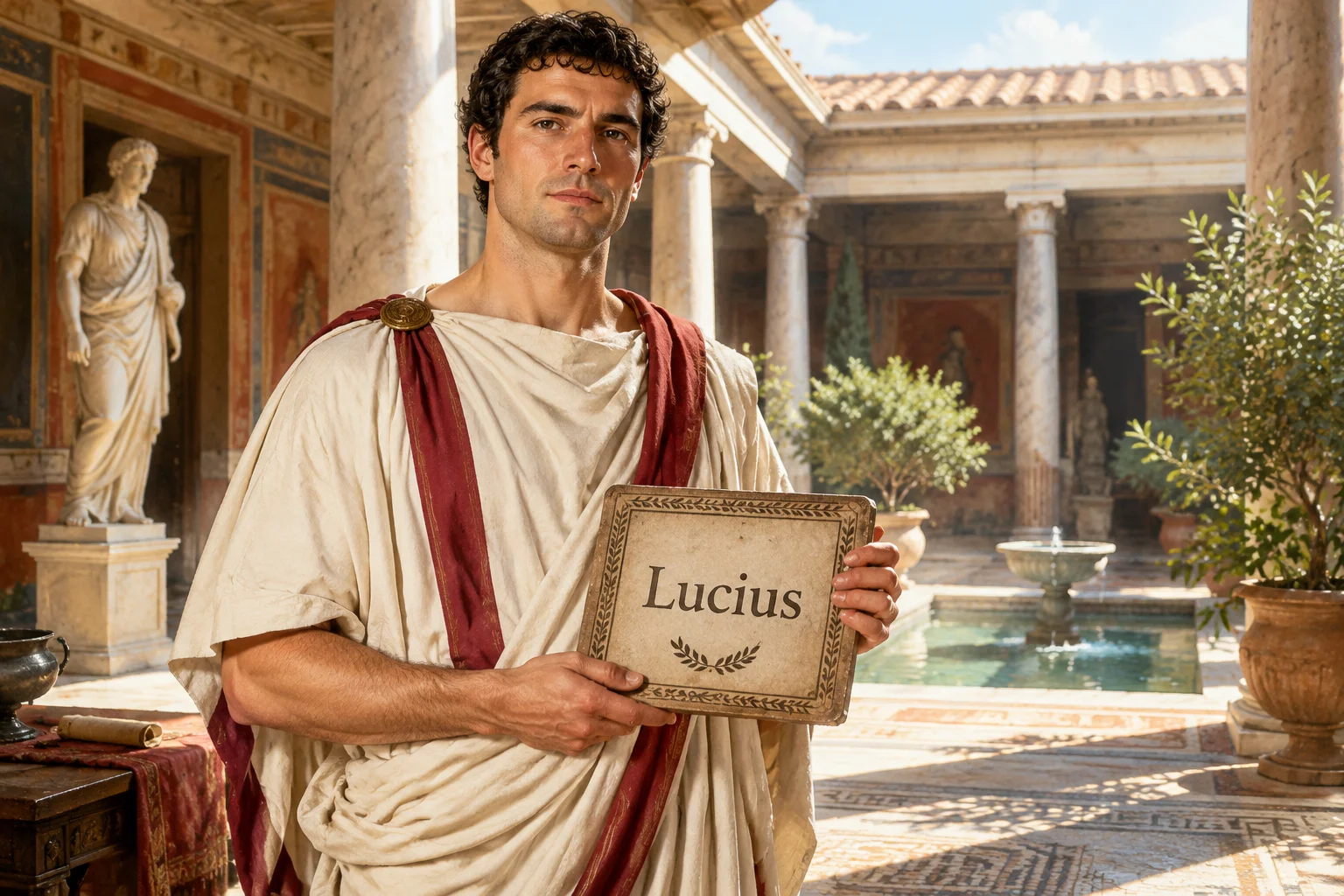
Lucius was one of the most common Roman praenomina, traditionally linked to the Latin word for light, lux. It was used by patrician families for centuries and appears on countless inscriptions and tombstones. Lucius is a classic Roman name that survived into modern Italian, Spanish, and Portuguese as Lucio or Luís.
2. Gaius

Gaius was another of the most widespread Roman common names, often abbreviated as C on inscriptions. The abbreviation is a common source of confusion, because C stood for Gaius rather than starting with G. The name belonged to several prominent figures, including the reformer Gaius Gracchus and the emperor Gaius, better known as Caligula.
3. Marcus

Marcus may be the single most recognizable popular Roman name outside academic circles. It was common throughout the Republic and Empire and appears in the full name of the orator Cicero, Marcus Tullius Cicero. Its endurance in modern languages makes it one of the best Roman names for anyone seeking a historically grounded choice.
4. Titus

Titus was a respected praenomen used by the Flavians, including the emperor Titus. It likely carried connotations of honor or respect, though the precise origin is debated among linguists. Titus remains a familiar classical Roman name because of its biblical and imperial associations.
5. Quintus

Quintus literally means "fifth," a naming convention once used for later-born sons. Even after the numerical meaning faded, Quintus stayed in use as a traditional praenomen. It is a strong example of how Roman names often began as practical labels rather than poetic ones.
6. Publius

Publius is another ancient praenomen with a debated meaning, sometimes connected to ideas of public life or the people. It appears in the full name of the poet Ovid, Publius Ovidius Naso. As a cool Roman name, it carries a distinctly civic, republican feel.
7. Aulus
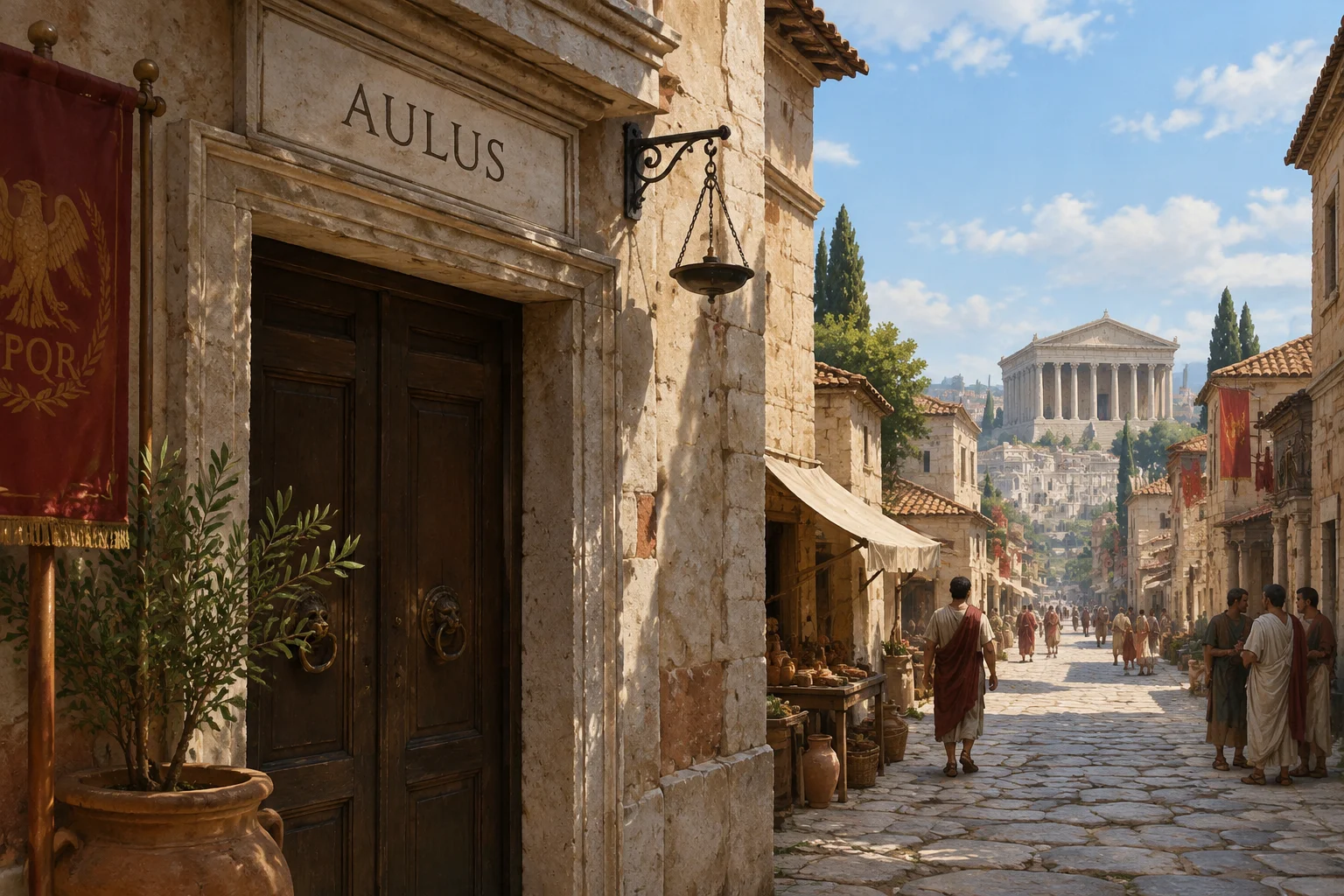
Aulus was a traditional praenomen used by several Republican families, often abbreviated as A. It was never as widespread as Lucius or Gaius, but it remained respectable and recurring. Aulus suits readers looking for classic Roman names that feel slightly less familiar than Marcus or Julius.
8. Decimus

Decimus means "tenth," following the same numerical logic as Quintus. It belonged to Decimus Junius Brutus, a figure connected to the assassination of Julius Caesar. The name has a sharp, distinctive sound that makes it appealing among cool Roman names today.
9. Julius

Julius began as a family name, the nomen of the Julian clan, and became world-famous through Gaius Julius Caesar. After Caesar's death and the rise of Augustus, "Caesar" transformed from a family name into an imperial title. Julius remains one of the most famous Roman names and a classic classical Roman name in the modern imagination.
10. Augustus

Augustus was originally a religiously charged word meaning "venerable" or "majestic." It became the title of Rome's first emperor and was adopted by his successors, so it functioned almost like a name for imperial authority. Among popular Roman names, Augustus carries unmatched political weight.
11. Claudius

Claudius was the nomen of the Claudian family, one of Rome's oldest and most powerful clans. The emperor Claudius made the name synonymous with imperial administration and reform. Its feminine form, Claudia, is also well attested and remains a widely used classical Roman name.
12. Flavius

Flavius was the family name of the Flavian dynasty, which built the Colosseum. Over time it became extraordinarily widespread as an imperial family name, eventually appearing on countless later Roman citizens. That spread makes Flavius a genuine example of a popular Roman name rather than merely a famous one.
13. Marcus Aurelius is sometimes treated as one name, but he was Marcus Aurelius Antoninus. Marcus and Aurelius each demonstrate how Roman names stacked family, adoption, and honorific elements. Aurelius is a classic Roman family name that later became common across the empire.

14. Valerius

Valerius was one of the great Republican nomina and was associated with prominent patrician families. The name probably relates to the Latin verb valere, meaning "to be strong" or "to be well." That strong, positive meaning helps explain why Valerius endured as a classical Roman name.
15. Cornelius

Cornelius belonged to a major patrician clan that produced generals, statesmen, and the historian Tacitus, whose full name was Publius Cornelius Tacitus. The name appears frequently in inscriptions and literature. It is a top-tier choice among best Roman names for those who want gravitas over glamour.
16. Octavius

Octavius was the family name of the young man who became Augustus, born Gaius Octavius. In later Latin, Octavius also became associated with the number eight, octo, although the original link is debated. The name is inseparable from the transition from Republic to Empire.
17. Marcus Licinius Crassus is best remembered as the richest man in Rome. Licinius was a plebeian family name that produced many consuls and a reformer named Gaius Licinius Stolo. It is a less common but genuinely attested Roman name with a strong historical resume.

18. Antonius

Antonius is the family name of Mark Antony, whose full name was Marcus Antonius. The name remained prominent in imperial families and later became widespread across the Roman world. Its feminine form, Antonia, is a familiar classical Roman name for women.
19. Domitius

Domitius was the nomen of a prominent plebeian family that included the emperor Nero, born Lucius Domitius Ahenobarbus. The name means something like "master of the house," derived from domus. It is a strong, historically rich choice among popular Roman names.
20. Junius

Junius was a major Roman family name, possibly connected to the goddess Juno. It belonged to the legendary founder of the Republic, Lucius Junius Brutus, and to many later statesmen. The feminine Junia is also well attested in Roman history.
21. Marcus Tullius Cicero shows how a full Roman name works in practice. Tullius was a plebeian nomen, and Cicero was a cognomen likely derived from the word for chickpea, which Romans once used as a nickname. Cognomina often began as humorous or descriptive labels before becoming hereditary.

22. Julia

Julia was the standard feminine form of the Julian nomen and is one of the most famous classical Roman names for women. Several prominent women bore it, including the daughter and sister of Augustus. Its simplicity and imperial associations keep it popular today.
23. Livia

Livia was the feminine form of the Livian nomen and the name of Augustus's wife, Livia Drusilla. She became a central dynastic figure and was later honored with the name Julia Augusta. Livia is a respected classical Roman name that represents female influence at the highest level of Roman society.
More Classic Roman Names Worth Knowing
Beyond the top 23, several other names deserve attention for their historical staying power. These fill out the category of classic Roman names and help explain why Roman common names feel so familiar to modern readers.
The praenomen Titus Flavius Vespasianus combines three of the names above into one imperial formula. This shows that Roman names were modular, layering personal, family, and branch identifiers. Once you learn the parts, ancient Roman names stop looking random and start looking systematic.
For women, names like Claudia, Antonia, Junia, and Octavia follow the same family-nomen pattern. They are historically accurate classical Roman names, not modern inventions. That accuracy is part of what makes them appealing for contemporary use.
Why Cool Roman Names Still Appeal Today
Cool Roman names appeal partly because they sound authoritative and partly because they are historically grounded. Names like Marcus, Lucius, and Julius carry centuries of documented use. That combination of sound and substance is hard to match.
Video games, films, and novels have boosted interest in Roman famous names such as Augustus, Titus, and Aurelius. Pop culture may distort history, but it often introduces audiences to genuinely attested names. The key is to check each name against historical sources rather than assuming every fictional Roman name is real.
Modern languages preserve these names in altered forms. Spanish and Portuguese Luis, Italian Marco, and French Jules all descend ultimately from Latin names on this list. That continuity is one of the best arguments for how enduring popular Roman names really are.
How Roman Naming Changed Over Time
The three-part name system was standard for freeborn male citizens in the late Republic, but it was not static. In the early Republic, many Romans used only two names. By the late Empire, the system expanded so much that some elites stacked multiple family names and honorifics.
Roman citizenship spread across the empire after 212 CE, when the emperor Caracalla extended it widely. As citizenship expanded, so did the use of Roman name formulas. This is one reason so many people across Europe, North Africa, and the Near East carried Roman names.
Onomastics, the study of names, gives historians a powerful tool for understanding Roman society. Inscriptions, tombstones, and legal documents let researchers see which names were common in which regions. This evidence is why we can speak confidently about Roman common names rather than guessing.
Tips for Choosing a Historically Accurate Roman Name
If you want a name that is genuinely historical, look for attested praenomina such as Lucius, Gaius, Marcus, Titus, and Quintus. Check the nomen and cognomen separately, because each part had a different function. Combining parts carelessly can create a name no Roman would have used.
Pay attention to gender and family structure. A woman's name was normally the feminine form of her family nomen, so Julia and Livia make sense while a feminine praenomen like Lucius does not. This consistency is what separates accurate classical Roman names from invented ones.
Finally, decide whether you want a famous name or simply a common one. Roman famous names like Augustus and Julius carry strong associations, while quieter choices like Aulus or Decimus feel more understated. Both are historically legitimate, so the choice is about tone rather than accuracy.
Final Thoughts: The Enduring Power of Roman Names
The best Roman names are not just cool-sounding labels, they are windows into a structured society that valued family, tradition, and public identity. Names like Marcus, Lucius, Julia, and Livia survived because they were useful, meaningful, and passed down through generations.
Whether you are writing historical fiction or exploring classical Roman names for personal use, accuracy matters. Check names against Roman naming conventions, and you will find a pool of popular Roman names that is both historically real and genuinely appealing.
Frequently Asked Questions
What were the most popular Roman names?
The most common Roman praenomina included Lucius, Gaius, Marcus, Titus, Quintus, Publius, and Aulus. Family names like Julius, Claudius, Flavius, and Cornelius were also extremely widespread across the Roman world.
What makes a Roman name historically accurate?
A historically accurate Roman name follows the Roman naming system: a praenomen, nomen, and often a cognomen. For women, the name was usually the feminine form of the family nomen, such as Julia or Livia.
Are cool Roman names still used today?
Yes. Names like Marcus, Julius, Julia, and Livia remain recognizable and used in modern languages. Many contemporary European names, such as Luis and Marco, descend from Latin Roman names.
What is the difference between a praenomen, nomen, and cognomen?
The praenomen was the personal first name, the nomen was the family or clan name, and the cognomen was a branch or nickname that often became hereditary. Together they formed the three-part Roman male citizen name.
Were Roman women’s names different from men’s?
Yes. Roman women usually did not use a praenomen in the same way men did. Instead, a woman took the feminine form of her father's nomen, so a daughter of the Julii would be called Julia.
What are some famous Roman names?
Famous Roman names include Gaius Julius Caesar, Marcus Tullius Cicero, Augustus, Titus, and Marcus Aurelius. These names are well attested in historical sources and literature.

Alex Warren
Related Articles