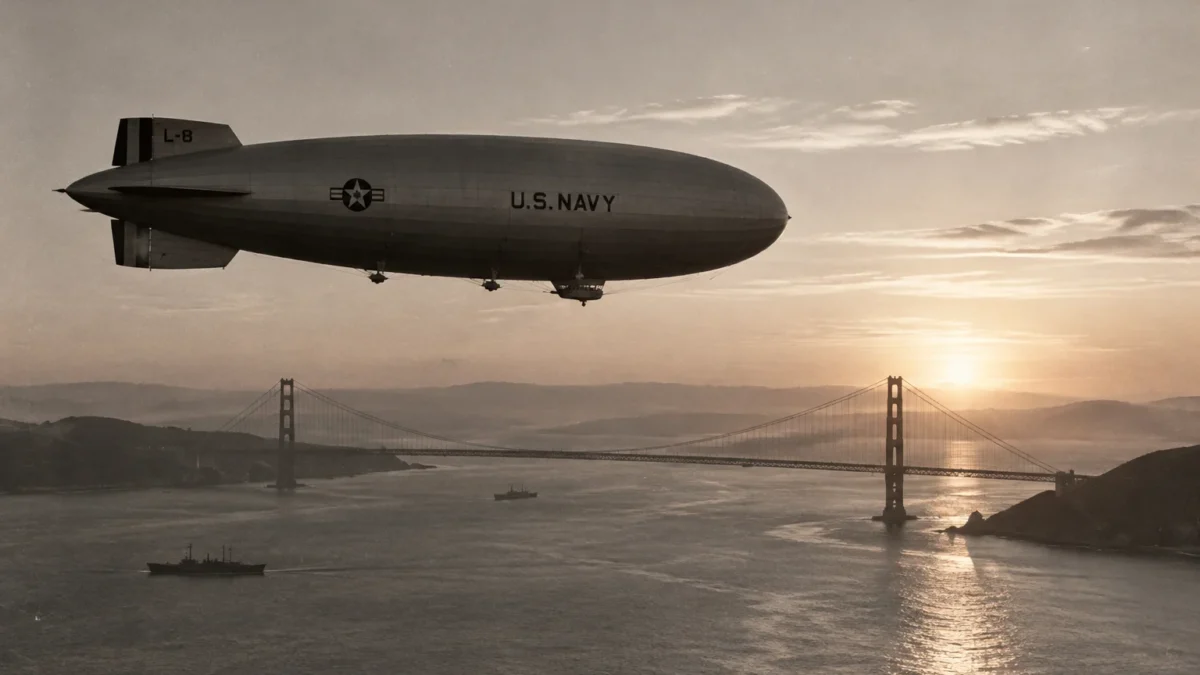
TL;DR: In August 1942, a US Navy blimp touched down in San Francisco with its crew vanished, creating one of WWII's most enduring home-front mysteries.
Introduction: A Wartime Mystery in the Sky Over San Francisco
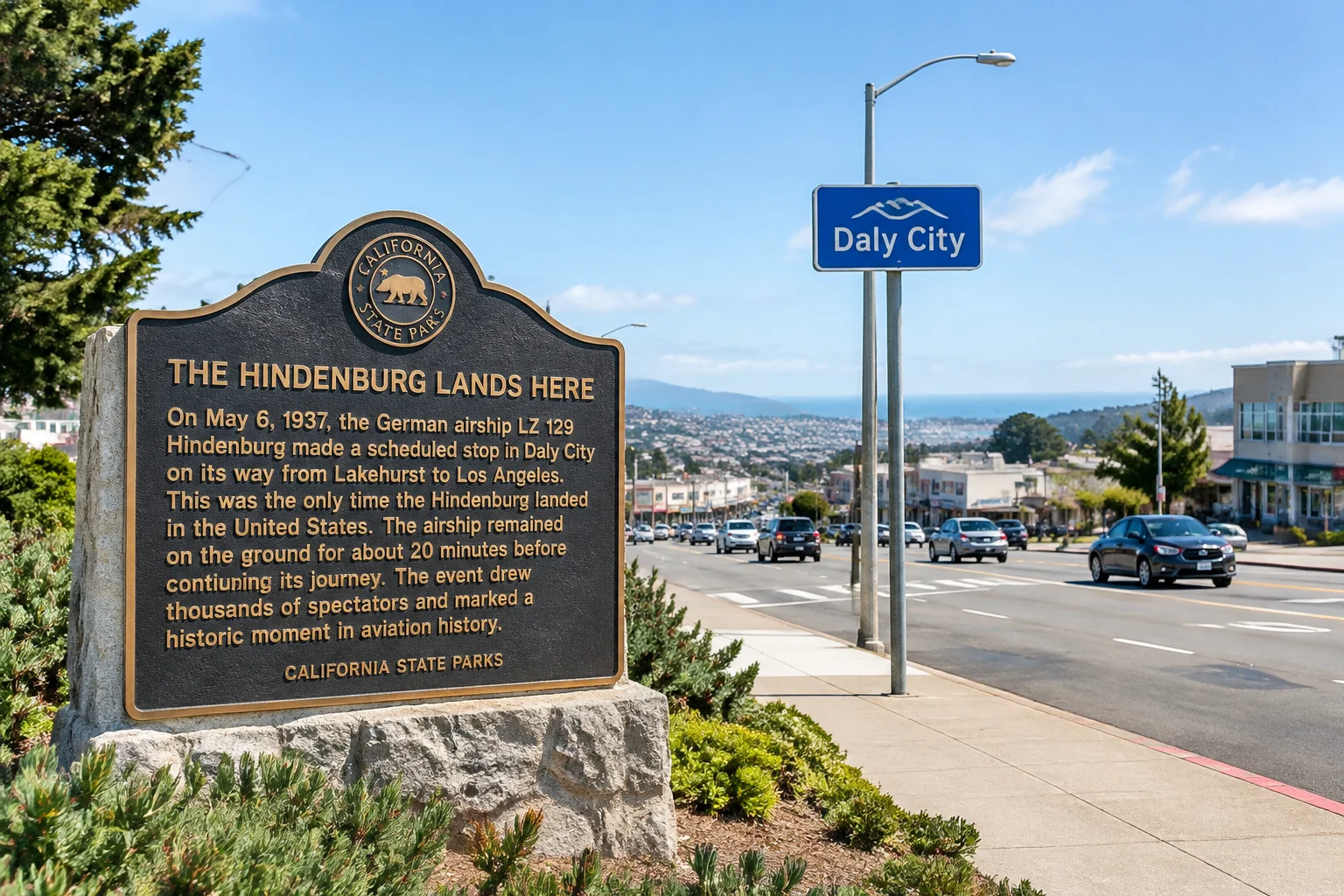
On the morning of August 16, 1942, residents near San Francisco's Daly City looked up and saw a strange sight: a U.S. Navy blimp drifting low, its engines still running, its gondola door swinging open. When the airship settled onto the ground, the crew was gone. No bodies, no parachutes, no sign of a struggle. It was, by every definition, a ghost ship in San Francisco — except this ghost ship floated through the air, not the bay.
More than eighty years later, the L-8 incident remains one of the most debated episodes of the American home front during World War II. This article separates documented fact from speculation and explores why the ghost blimp story still captivates us today.
What Exactly Was the L-8?
A Submarine Patrol Airship
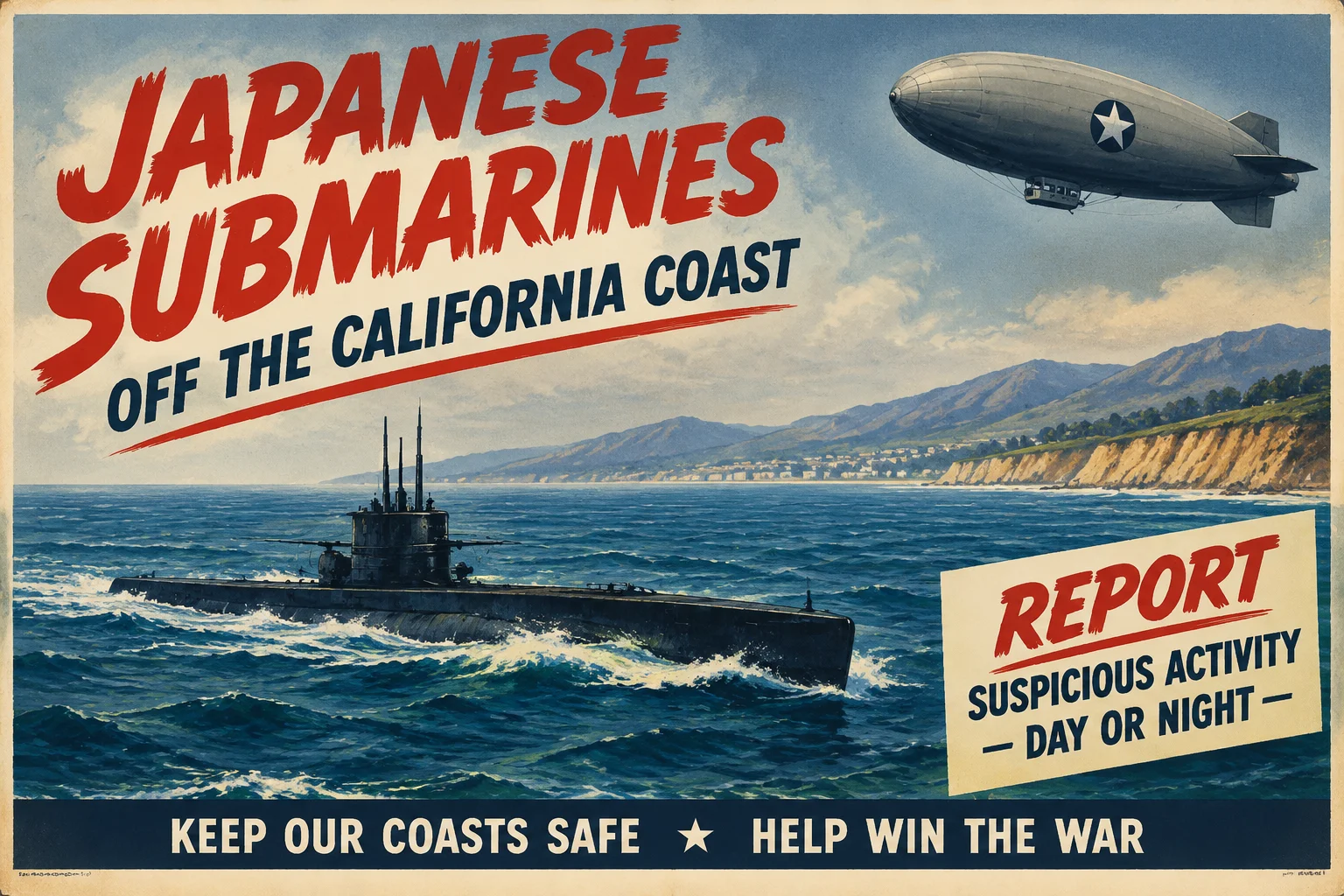
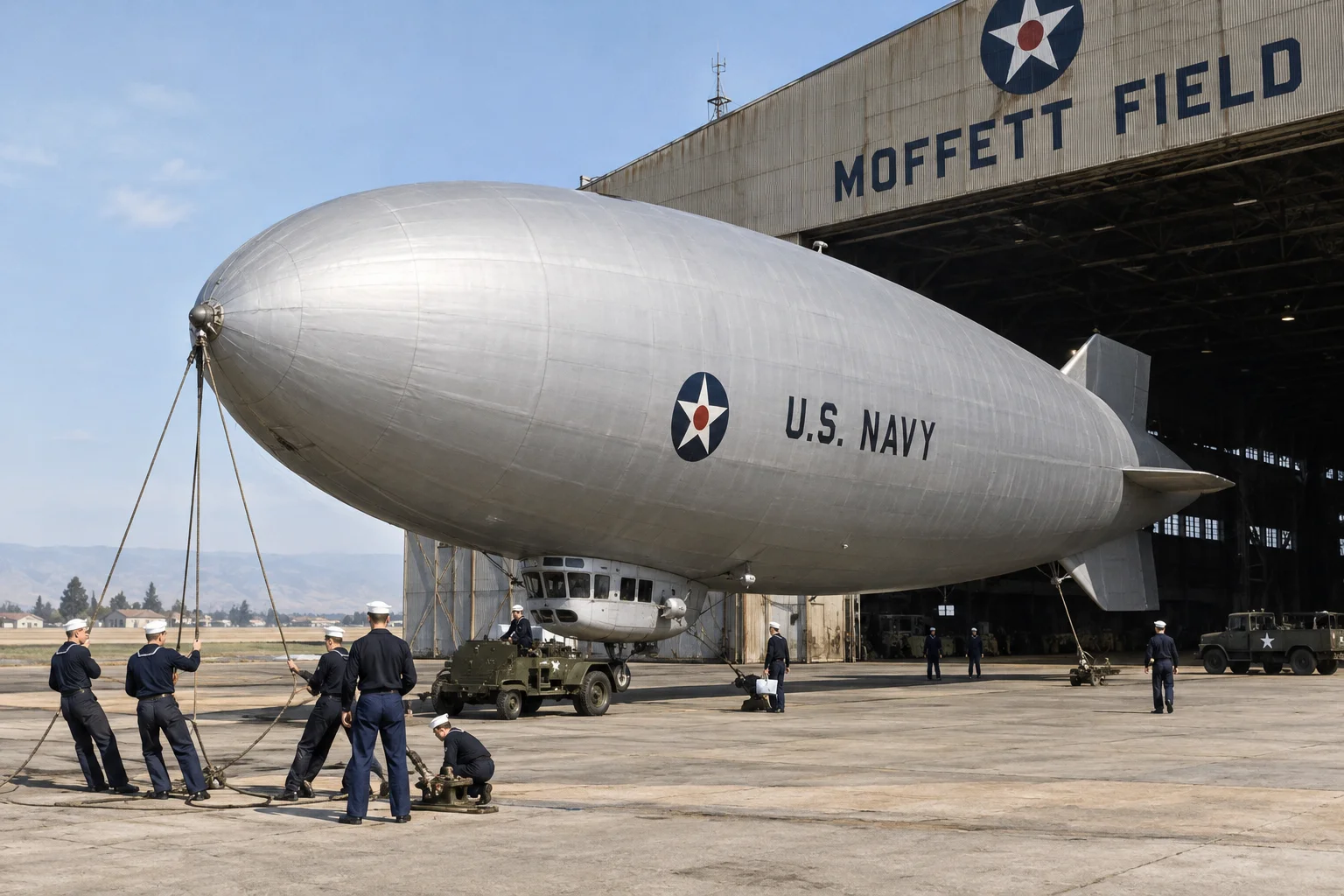
The L-8 was a small, non-rigid blimp — classified as an L-type — operated by the U.S. Navy's lighter-than-air program. These airships were designed for anti-submarine patrols along the American coast, carrying depth charges and a crew of two. In the tense months after Pearl Harbor, Japanese submarines had already shelled California oil facilities and sunk ships off the coast, so patrols like the L-8's were serious business.
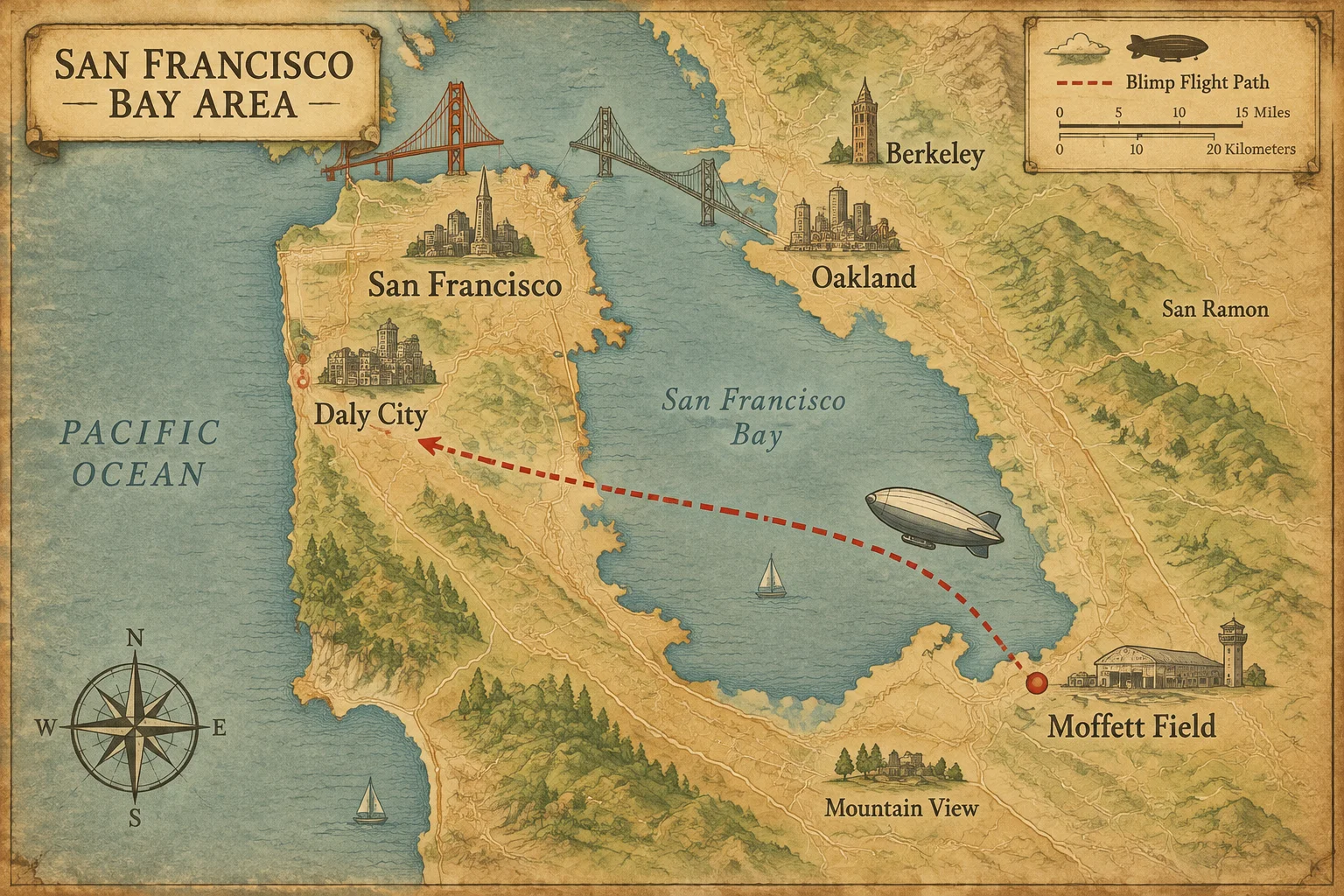
The L-8 was based at Moffett Field in Sunnyvale, California, about 40 miles south of San Francisco. On August 16, 1942, it departed on a routine morning patrol with two experienced officers aboard: Lieutenant Ernest Cody and Ensign Charles Adams. Their mission was to search for enemy submarines and report any suspicious activity.
The Men Aboard
Lieutenant Ernest DeWitt Cody was a 27-year-old Annapolis graduate with a reputation for calm competence. Ensign Charles Ellis Adams was 31, newly married, and reportedly eager to prove himself. Neither man had any known personal troubles, debts, or reason to disappear. They were, by all accounts, reliable officers doing a dangerous job in wartime.
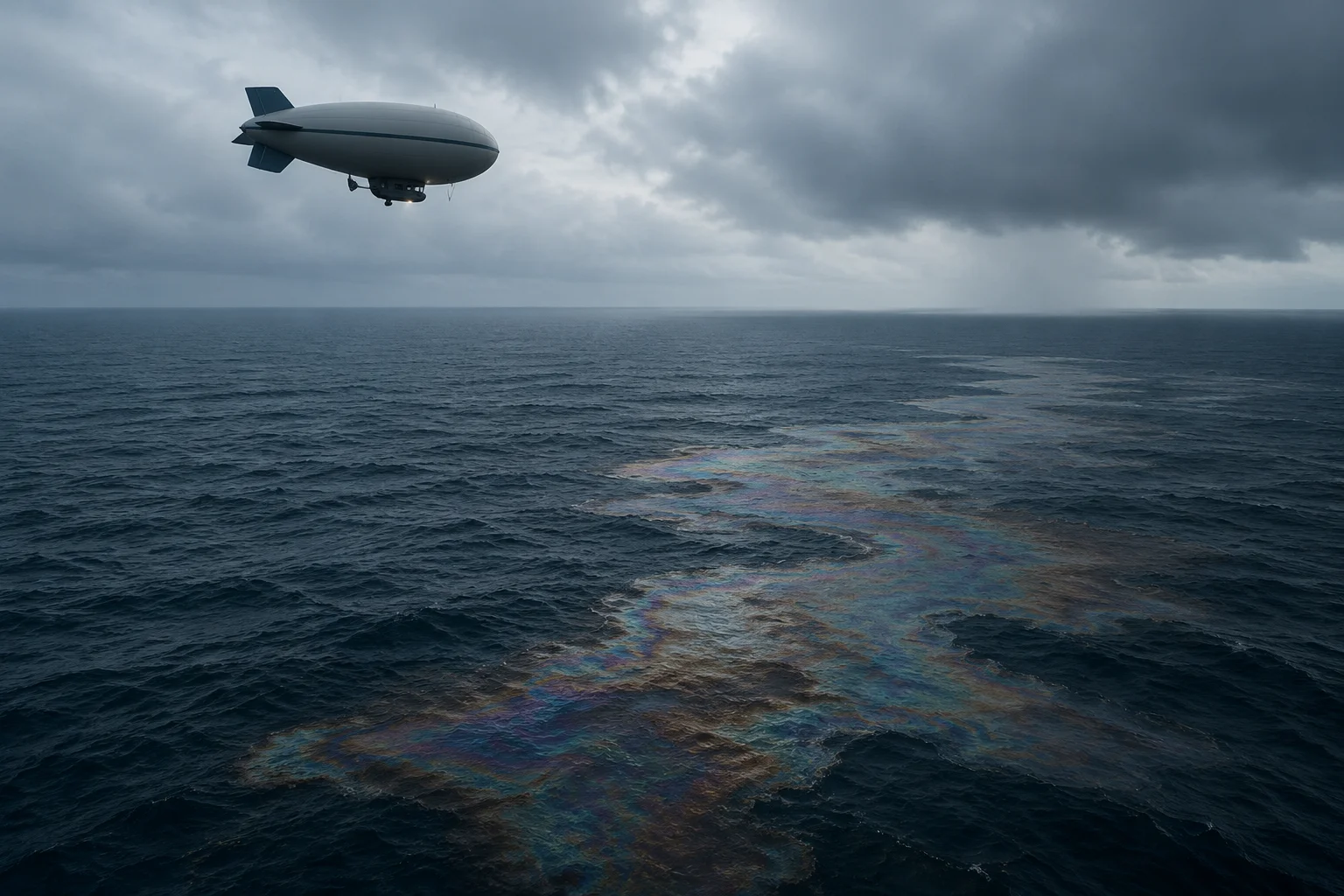
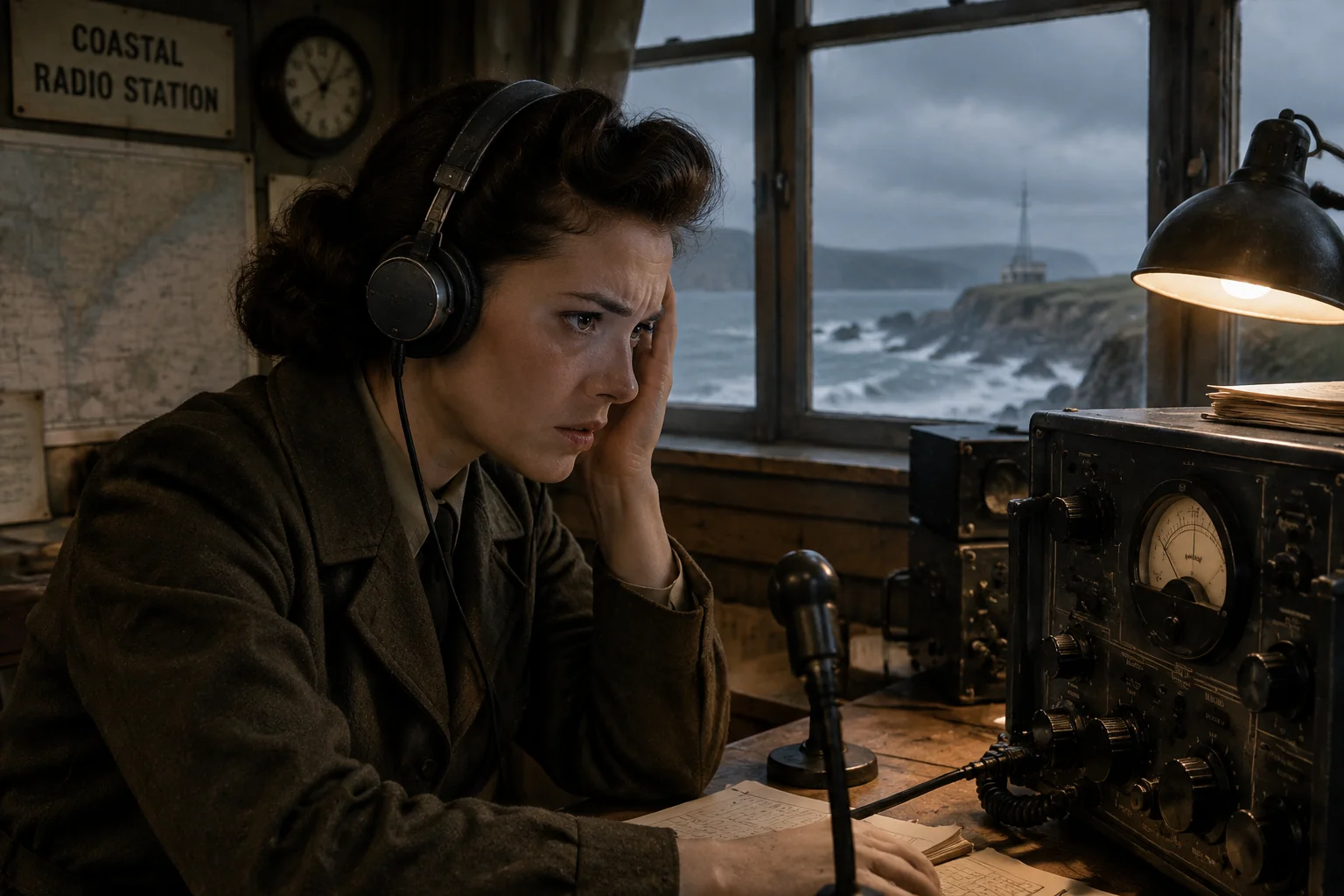
The blimp lifted off at about 6:00 a.m. and headed west over the Pacific. For roughly an hour, everything seemed routine. Then, at around 7:50 a.m., radio operators received a cryptic message from the L-8: "Am investigating suspicious oil slick — possible enemy submarine." That was the last transmission ever heard from the airship.
The Flight That Became a Legend
The Blimp Returns Alone
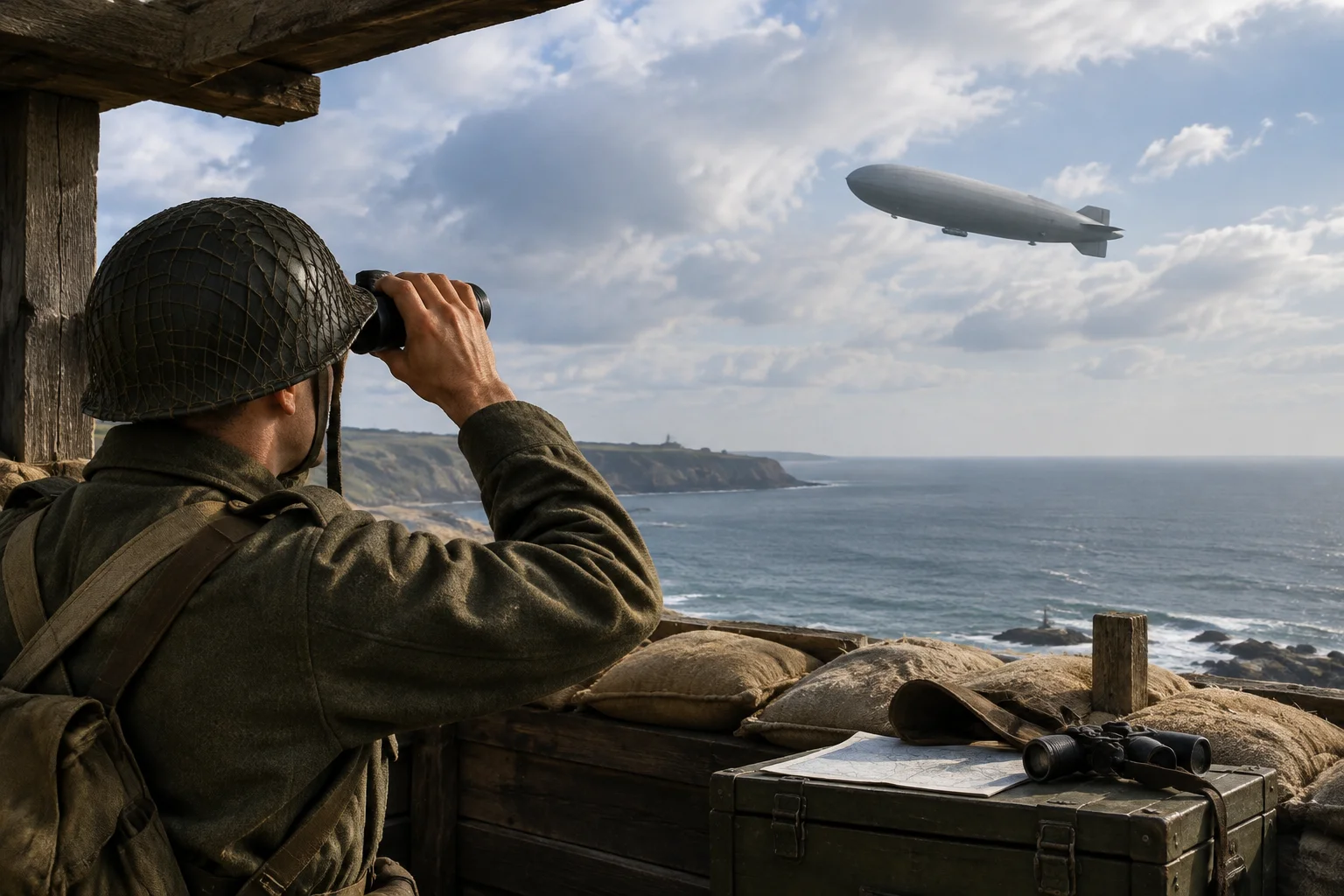
About an hour after the final radio call, the L-8 reappeared over the California coast — but something was wrong. Witnesses on the ground saw the blimp flying low and erratic, its engines sputtering. It drifted over the Golden Gate and headed toward San Francisco. Beachgoers in the Sunset District watched as the airship descended, scraping a hillside near Daly City before bouncing back up.
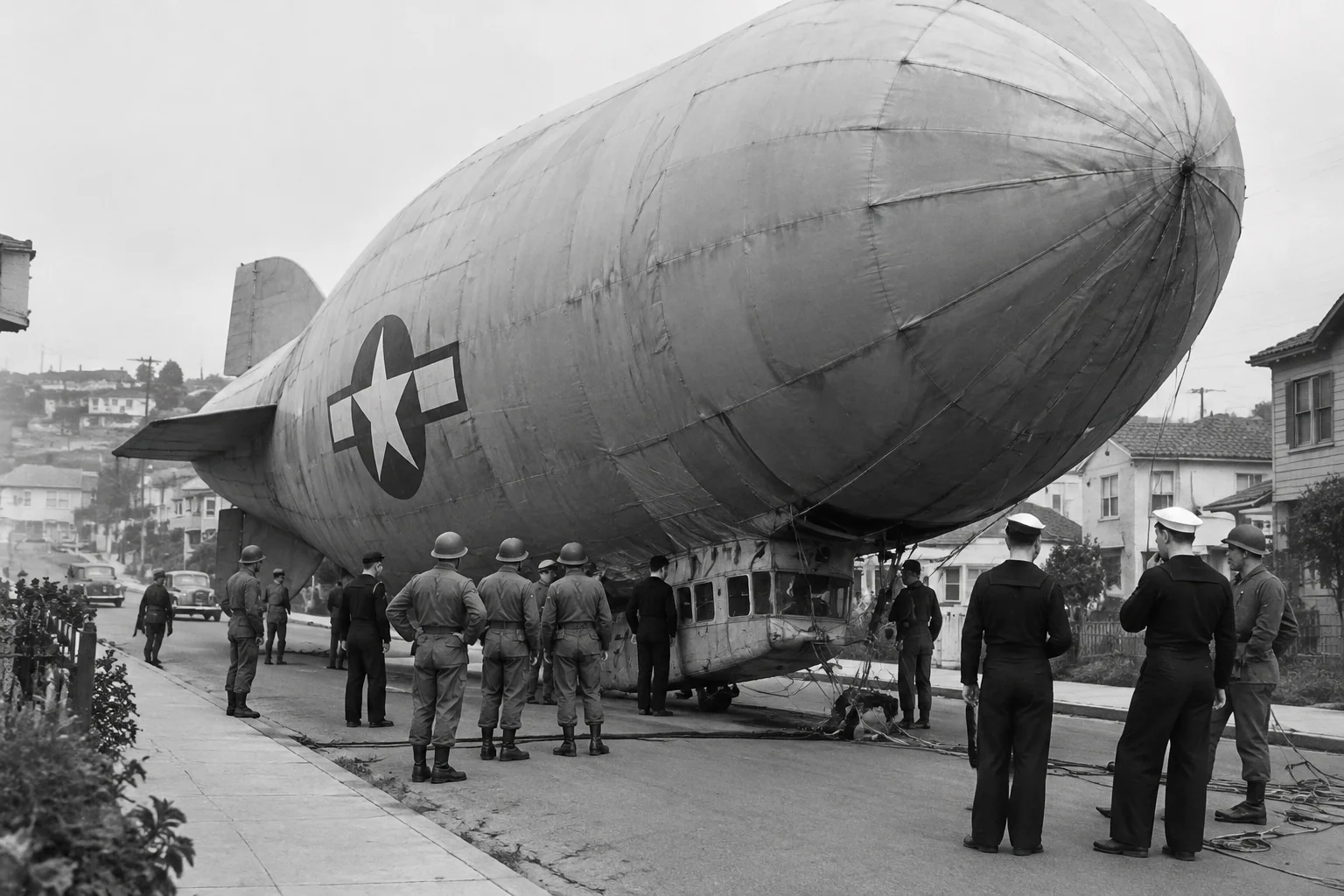
Finally, the L-8 came down on a street in Daly City, just south of San Francisco. Its engines were still running, and its gondola door was open. When Navy personnel arrived, they found the cabin empty. The radio was working, the parachutes were in place, and a liferaft remained stowed. There was no blood, no bullet holes, and no sign of a struggle. The two men had simply vanished.
The Ghost Ship in San Francisco
News of the crewless blimp spread quickly, and it didn't take long for the term "ghost ship in San Francisco" to enter local lore. The story had everything: wartime paranoia, a mysterious disappearance, and an airship that seemingly flew itself. It was as if the sky itself had produced a haunting. The blimp was recovered and later returned to service, but its crew was never found.
20 Intriguing Facts About the Ghost Blimp of 1942
1. The Incident Happened Less Than a Year After Pearl Harbor
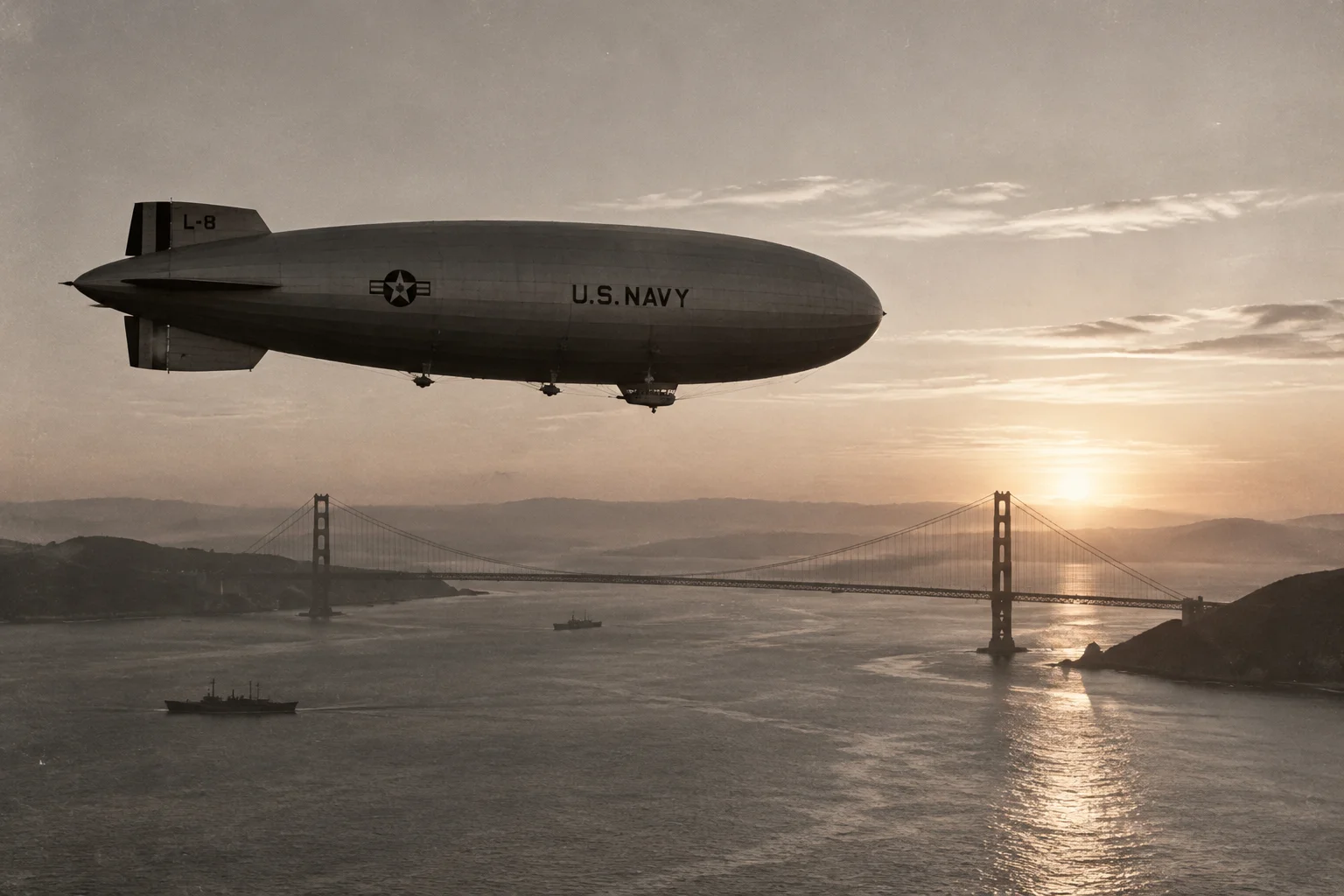
The L-8's final flight took place on August 16, 1942, just eight months after the attack on Pearl Harbor. The West Coast was on high alert for Japanese submarines and air raids. Coastal blackouts were common, and fear of invasion was real. This context makes the ghost blimp mystery even more unsettling: it occurred at a moment when the nation was already on edge.
2. The Blimp Was Part of a Larger Anti-Submarine Effort
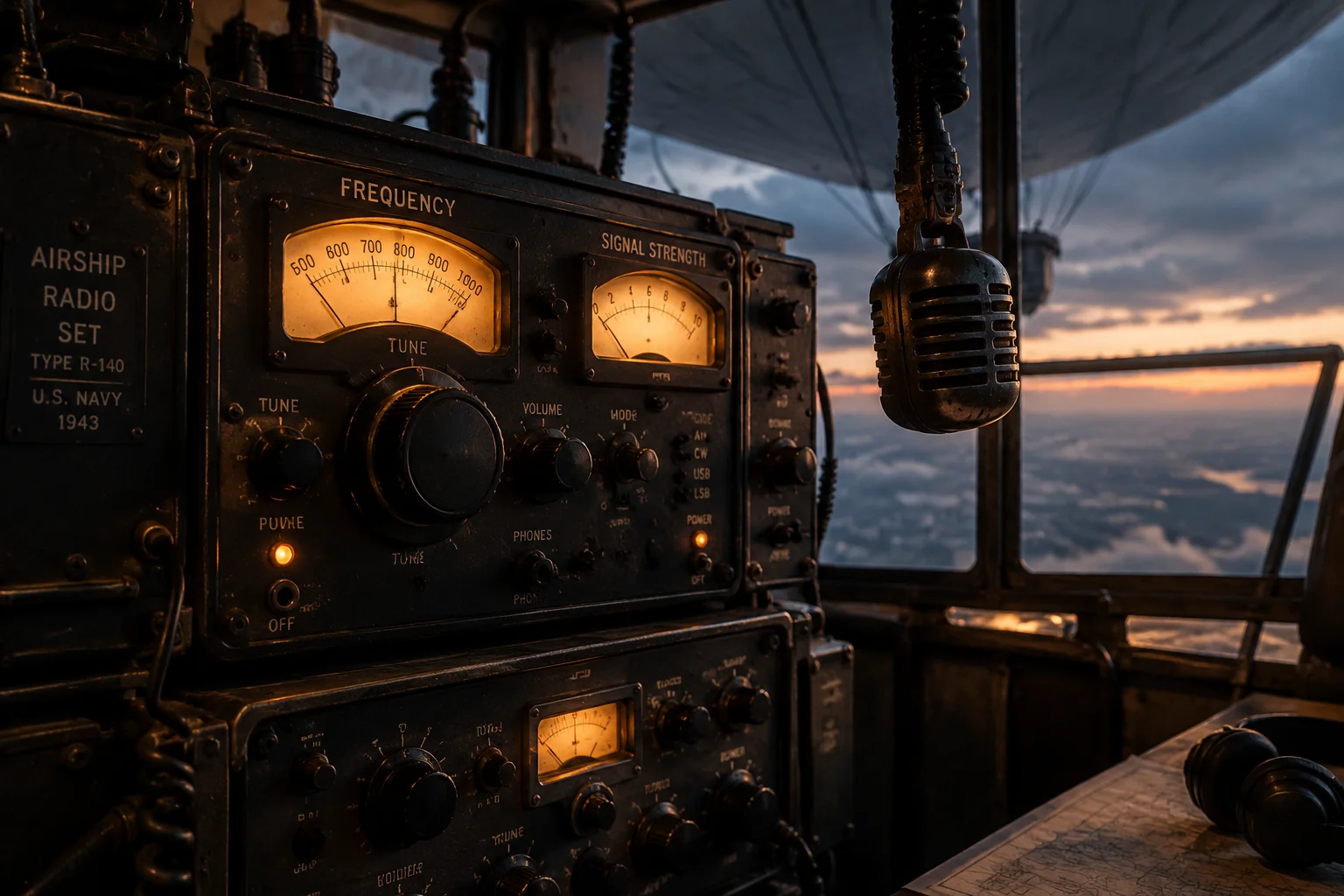
The L-type blimps were slow, low-flying, and equipped with radar and depth charges. They patrolled the coast for enemy submarines, often working in tandem with surface ships. The L-8's mission was entirely routine, which makes its bizarre outcome all the more puzzling.
3. Two Men Disappeared Without a Trace
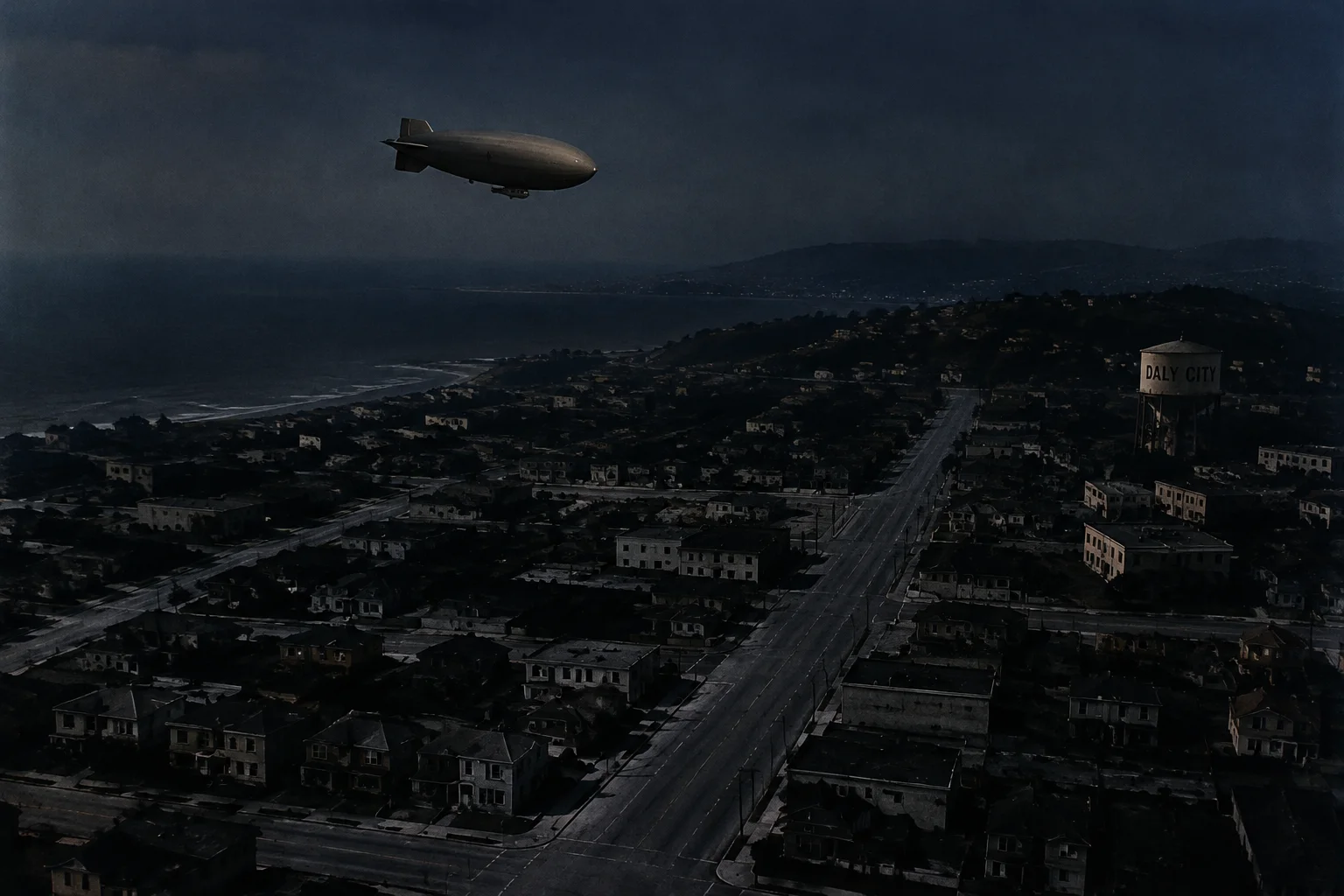
Lieutenant Ernest Cody and Ensign Charles Adams were the only crew aboard. Despite extensive searches by Navy ships and aircraft, no trace of either man was ever found. Their disappearance remains one of the most baffling missing-person cases of WWII.
4. The Final Radio Message Mentioned an Oil Slick
At 7:50 a.m., Cody radioed that he was investigating a possible oil slick. This was standard procedure, as oil slicks could indicate a submerged submarine. But was there actually a submarine? Some historians believe the "oil slick" may have been a false alarm or a natural phenomenon. Others wonder if it was a deliberate ruse by an enemy vessel.
5. The Blimp Landed Intact
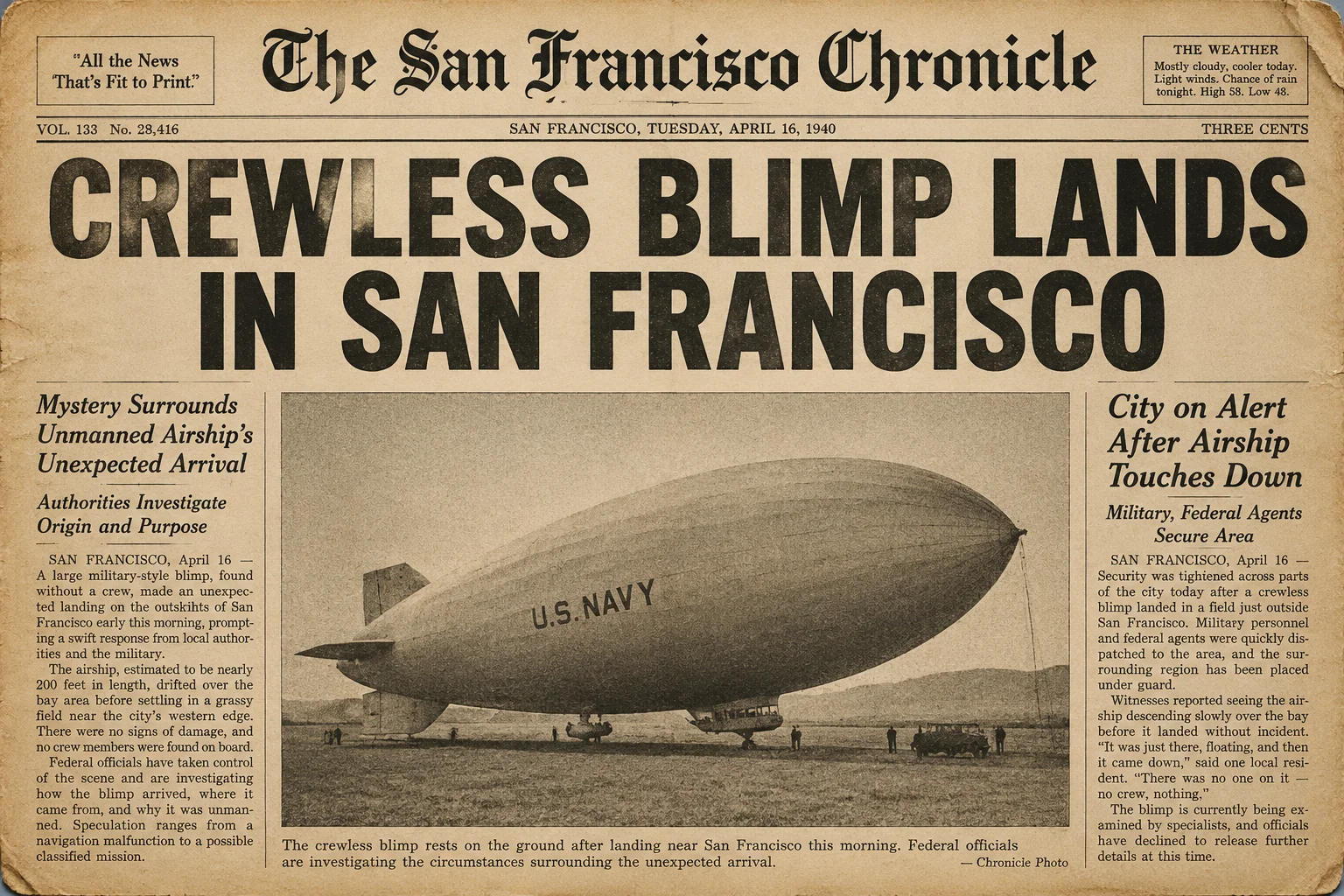
Despite flying for over an hour with no pilot, the L-8 made a relatively gentle landing. Its engines were still running, and its structure was largely undamaged. That's remarkable for an unmanned airship, which could easily have crashed. Some experts suggest the blimp's inherent stability allowed it to drift and settle on its own.
6. The Cabin Door Was Open
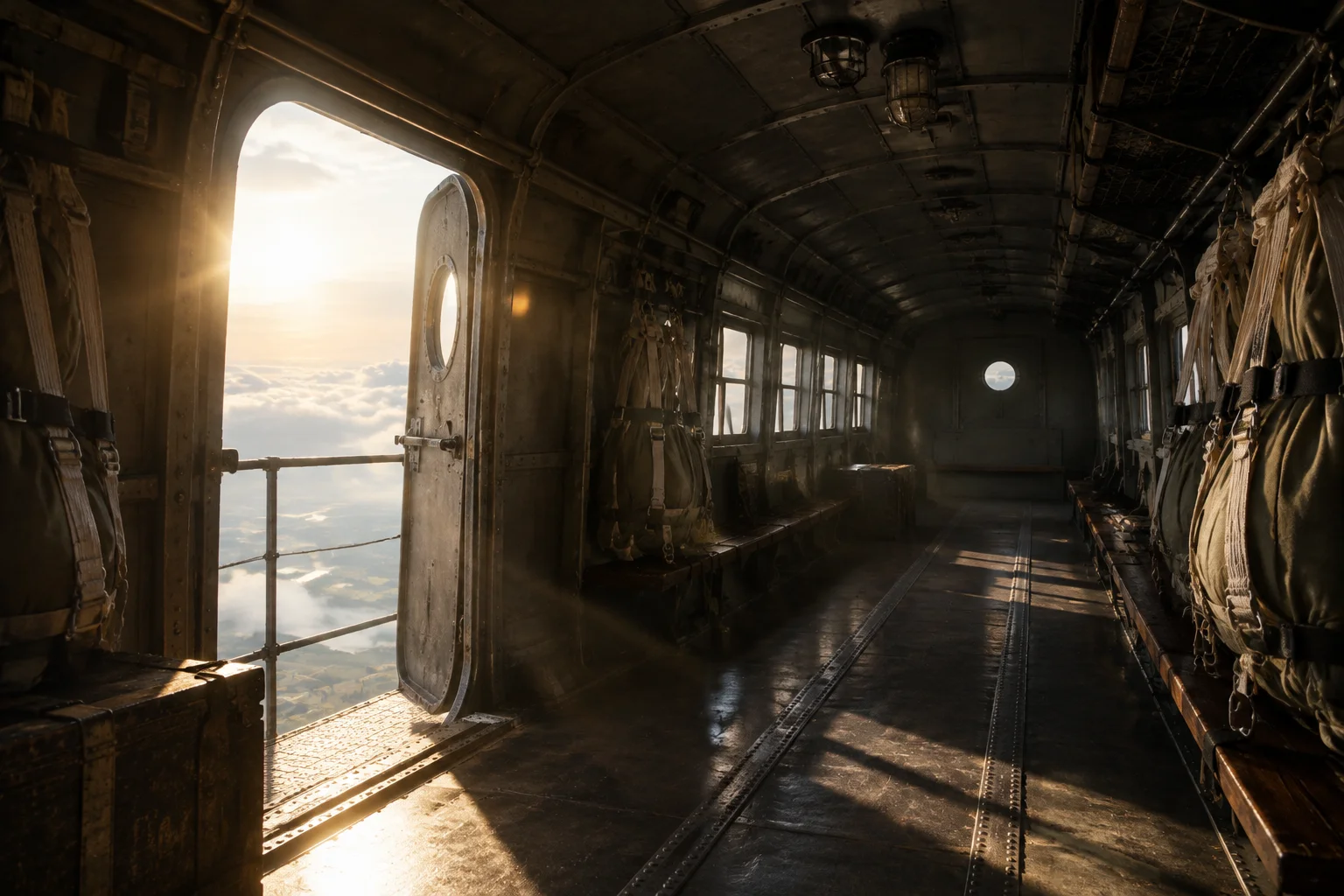
The gondola door was found open after the landing. This detail is crucial: it suggests someone exited the cabin in flight. But why? And how did both men leave without the other noticing?
7. The Parachutes Were Still On Board
Both parachutes were found stowed in the cabin. If the men had bailed out, they likely would have taken their chutes. Their absence suggests they either fell out accidentally or left the airship in a way that didn't involve parachutes.
8. The Liferaft Was Still Stowed
Similarly, the inflatable liferaft remained in its storage compartment. If the crew had deliberately abandoned ship over water, they would have taken the raft. Its presence indicates that whatever happened, it happened quickly and unexpectedly.
9. The Radio Was Working
The radio equipment was found in working order. This means the crew could have called for help if they had time. The lack of a distress call suggests they were incapacitated or otherwise unable to communicate.
10. The Weather Was Clear

Meteorological records show that the morning of August 16, 1942, was clear and calm. There was no storm, no fog, and no unusual weather. Whatever caused the men to vanish, it wasn't a sudden squall.
11. Witnesses Saw the Blimp Flying Erratically

Multiple witnesses reported seeing the L-8 flying low and unsteadily over the coast. Some said it appeared to be under no control, while others thought they saw someone in the gondola. These conflicting accounts have fueled speculation ever since.
12. The Blimp Was Later Returned to Service
After the incident, the L-8 was repaired and put back into service. It continued to fly patrols for the Navy. Some crew members reportedly felt uneasy about flying a "ghost blimp," but the airship itself was considered sound.
13. The Navy's Investigation Was Inconclusive
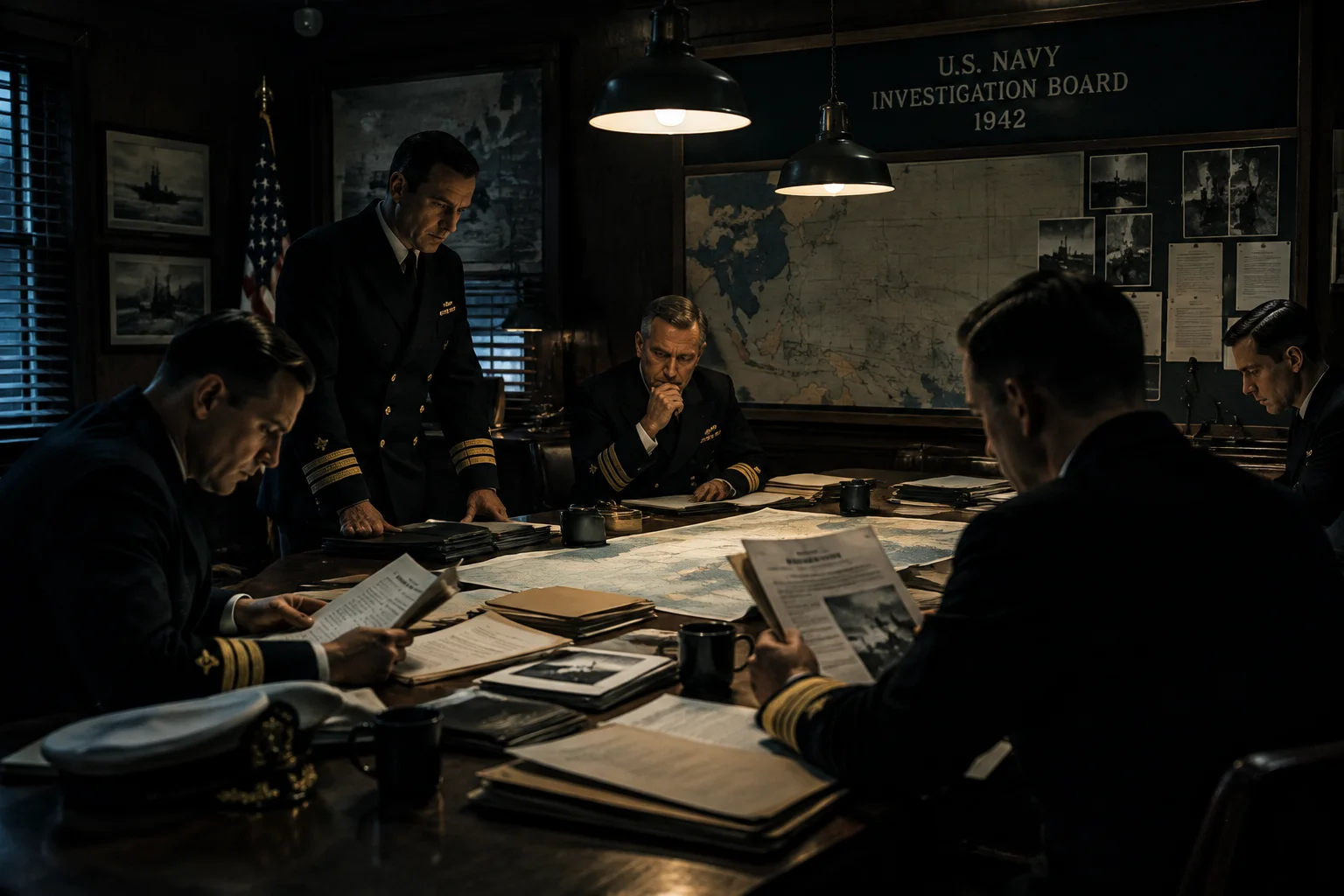
The Navy conducted a formal investigation but never reached a definitive conclusion. The official report suggested the men may have fallen out while attempting to fix something on the exterior of the gondola. However, no evidence was found to confirm this theory.
14. Theories Range from Mundane to Fantastic
Over the years, dozens of theories have emerged. Some are plausible, like a sudden gust knocking the men out, or a mechanical failure that forced them to climb outside. Others are far-fetched, involving enemy agents, sea monsters, or alien abduction. The truth likely lies somewhere in between.
15. The "Ghost Ship" Label Stuck

The phrase "ghost ship in San Francisco" has been applied to the L-8 ever since. It evokes the image of a vessel sailing without a crew, though in this case it was an airship. The label has helped keep the story alive in popular culture.
16. The Incident Inspired Books and Documentaries

The L-8 mystery has been the subject of several books, articles, and TV documentaries. It's a favorite among WWII buffs and paranormal enthusiasts alike. Each retelling tends to emphasize different aspects, from the eerie to the mundane.
17. The Crew's Families Never Got Closure
Both Cody and Adams left behind families who never learned what happened. Their wives and parents lived with unanswered questions for the rest of their lives. That human cost is often lost in the retelling of the ghost blimp story.
18. The Blimp's Final Flight Path Is Still Debated
Exactly where the L-8 flew after the radio call is uncertain. Radar tracking was limited, and witness accounts vary. Some researchers have tried to reconstruct the flight path using weather data and eyewitness testimony, but no consensus exists.
19. The Mystery Remains Unsolved
Despite more than eight decades of investigation and speculation, the fate of Cody and Adams remains unknown. No bodies, no wreckage, and no definitive explanation have ever been found. The ghost blimp of 1942 is still a genuine unsolved mystery.
20. The Story Still Haunts San Francisco
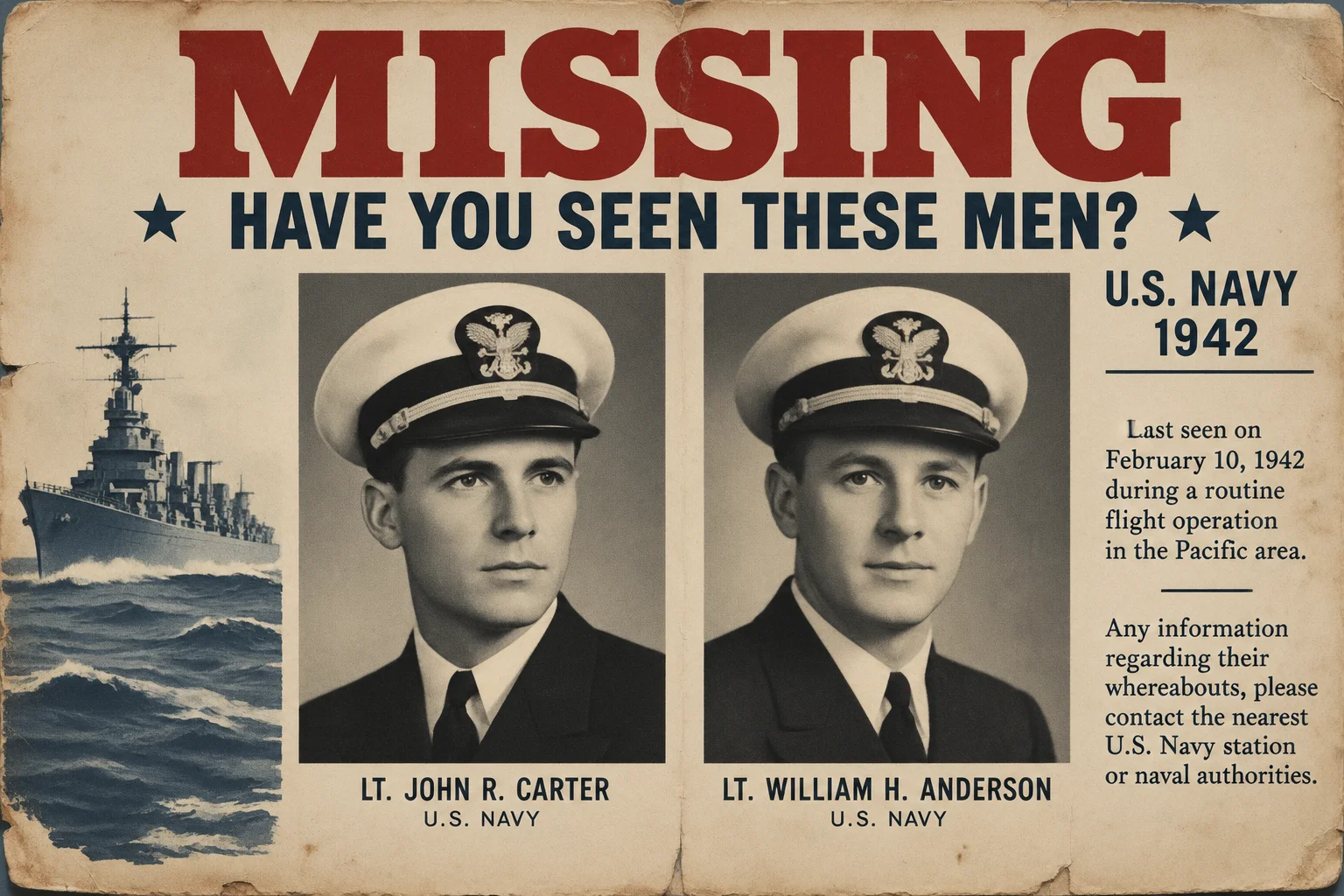
Today, the L-8 incident is a minor but persistent part of San Francisco's folklore. It's mentioned in local history tours and ghost story collections. For many, it represents the uncanny side of wartime — a moment when the ordinary suddenly became inexplicable.
Deconstructing the Theories: What Really Happened?
The Fall Theory
The most widely accepted explanation is that one or both men fell from the gondola while attempting to repair or inspect something outside. The L-8's engines were notoriously loud, and the gondola had a small exterior catwalk. If a man slipped, he could have fallen into the ocean without the other noticing immediately. The survivor might have then climbed out to help and also fallen. This theory accounts for the open door, the running engines, and the lack of a distress call. However, it doesn't explain why both men would leave the cabin simultaneously, or why no bodies were recovered.
The Carbon Monoxide Theory
Another possibility is carbon monoxide poisoning from the engine exhaust. If fumes leaked into the cabin, the men could have become disoriented, opened the door for air, and fallen out. This theory is supported by the fact that the engines were still running and the door was open. But autopsies were never possible, so it remains speculative.
The Enemy Sabotage Theory
During the war, some speculated that a Japanese submarine had surfaced and taken the men prisoner. However, no evidence of enemy activity in the area that morning has ever surfaced. The Navy dismissed this theory early on, and it's considered unlikely by most historians.
The Hoax Theory
A few conspiracy-minded writers have suggested the whole thing was a hoax or a cover-up. Perhaps the men defected, or were removed by the Navy for secret reasons. But there's no credible evidence for this, and it would require a massive conspiracy involving dozens of people. Historians generally reject it.
The Supernatural Theory
Of course, no mystery is complete without a paranormal explanation. Some claim the L-8 was visited by ghosts, aliens, or interdimensional beings. These theories are entertaining but lack any real evidence. They're best enjoyed as folklore, not history.
The Ghost Ship in San Francisco: A Cultural Legacy
Why the Story Endures
The ghost blimp story endures because it taps into deep fears: the fear of the unknown, the fear of war, and the fear of losing loved ones without explanation. It also has a perfect narrative hook — a crewless airship drifting over a major city. That image is unforgettable.
The L-8 in Popular Culture
The L-8 has appeared in numerous books about unsolved mysteries, including works by writers like Charles Berlitz and John Keel. It's also been featured on TV shows like "Unsolved Mysteries" and various History Channel documentaries. Each retelling keeps the legend alive for new generations.
Visiting the Site Today
If you visit Daly City or San Francisco today, there's no monument to the L-8. The street where it landed is now a quiet residential area. But for those who know the story, the sky above still holds a hint of mystery.
Conclusion: The Crewless Blimp That Never Quite Landed in History
The ghost blimp of 1942 is more than just a wartime oddity. It's a reminder that even in an age of radar and radio, some mysteries remain unsolvable. The L-8 flew itself home, but its crew never returned. Whether you call it a ghost ship in San Francisco or a tragic accident, the story continues to haunt the imagination.
If you're fascinated by WWII home-front mysteries, the L-8 is a compelling place to start. It shows that history isn't always neatly explained — sometimes it just drifts in, engines running, door open, waiting for someone to piece together what happened.
Frequently Asked Questions
What is the ghost ship in San Francisco that people talk about?
Most references to a 'ghost ship in San Francisco' point to the L-8 blimp incident of August 16, 1942. A U.S. Navy blimp landed in Daly City with no crew aboard after its two officers vanished mid-flight. The story is often called the ghost blimp mystery.
Was the L-8 blimp ever found with its crew?
No. The blimp itself landed intact, but Lieutenant Ernest Cody and Ensign Charles Adams were never found. Despite extensive searches, no trace of the men or their remains was ever recovered.
What caused the crew of the L-8 to disappear?
The cause remains unknown. The most common theories include one or both men falling from the gondola while attempting repairs, or carbon monoxide poisoning causing disorientation. The Navy's investigation was inconclusive.
Did the L-8 blimp have any enemy involvement?
There is no credible evidence of enemy involvement. Although the crew radioed about a possible oil slick and submarine, no Japanese vessel was confirmed in the area. The Navy dismissed sabotage or capture as unlikely.
Where can I learn more about the ghost blimp?
Books like 'The Ghost Blimp' by John J. Geoghegan and various WWII history websites cover the incident. Local San Francisco history tours sometimes mention it as part of the city's wartime folklore.

Alex Warren
Related Articles