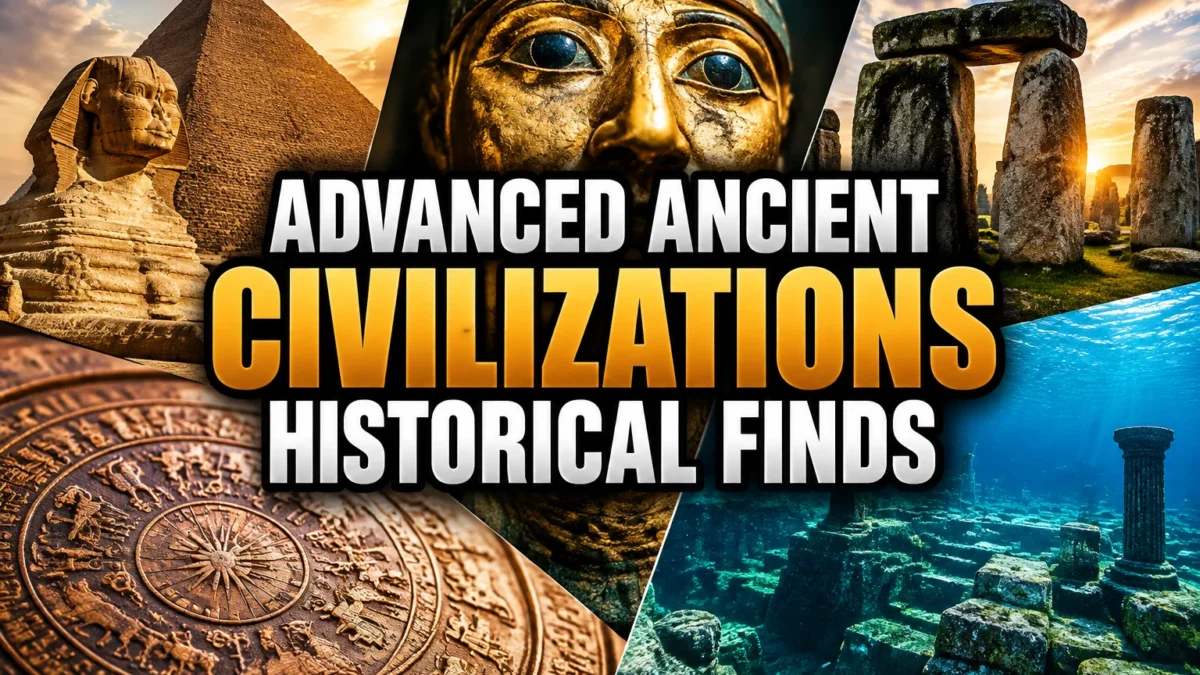
Every few years a headline promises that a new discovery has “rewritten history” and proves some forgotten super-civilization once ruled the planet. The reality is stranger and more impressive, because real ancient societies solved problems in ways that still stop engineers and astronomers in their tracks.
This list covers 23 historical finds, from an 11,000-year-old ritual complex in Turkey to a brass-casting guild in West Africa, that show how genuinely advanced ancient civilizations could be. Along the way, we’ll separate hard evidence from the myths that keep circulating online.
TL;DR: Ancient advanced civilizations didn’t need lost technologies or outside help — the finds below show real people solving real problems with remarkable skill, thousands of years before modern industry.
What Does “Advanced” Actually Mean?

Archaeologists rarely use the word “advanced” on its own, because it implies a single ladder of progress that every society is climbing. They prefer terms like social complexity, urbanism, and state formation, which can be measured from evidence rather than assumed.
The usual markers include planned cities, a division of labour, writing or another record-keeping system, monumental architecture, standardized weights and measures, and long-distance trade. An advanced society usually shows several of these at once, sustained across generations.
That definition explains why Göbekli Tepe, however spectacular, isn’t normally called a civilization. Monumental building alone doesn’t make a state; cities, administration, and economic scale do.
How Archaeologists Separate Real Finds From Hype
A find only becomes evidence when it has context: which layer it came from, what lay beside it, and how it can be dated. Radiocarbon dating, dendrochronology, and stratigraphy give researchers independent ways to test a claim rather than trusting how impressive an object looks.
Peer review and replication do the rest. When a claim about a lost advanced civilization appears, the first questions are usually simple — where exactly is the site, who excavated it, and why hasn’t the evidence been published in a journal?
Pseudoarchaeology tends to skip those steps. It treats gaps in the record as proof of a cover-up, cherry-picks objects, and ignores the ordinary explanations that fit the surrounding evidence.
What Civilization Is Considered the First Advanced?
Ask most historians and the answer is Sumer, in southern Mesopotamia, where cities such as Uruk, Ur, and Lagash emerged between roughly 4000 and 3100 BCE. Cuneiform writing appears there around 3200 BCE, alongside irrigation canals, wheeled transport, and the first true city-states.
Egypt is the other standard answer, with a unified state forming around 3100 BCE and producing monumental architecture almost immediately. Which one you name first often depends on whether you weight writing, cities, or centralized rule most heavily.
It’s worth remembering that “first advanced” is a modern framing, not an ancient one. Older complex societies like Göbekli Tepe and Çatalhöyük show impressive organization without the full package of cities, writing, and bureaucracy.
Engineering and Urban Planning: Finds 1–8
1. Göbekli Tepe: Monumental Architecture Before Farming
In southeastern Turkey, hunter-gatherers raised T-shaped limestone pillars, some weighing several tonnes, inside circular enclosures around 9500 to 8000 BCE. The pillars are carved with foxes, boars, cranes, and scorpions, and the enclosures were eventually deliberately buried.
This predates pottery, metalworking, writing, and farming in the region. It upended the old assumption that people had to settle into agriculture before they could organize large-scale building projects.
The tools were flint and bone, not lost technology. Göbekli Tepe shows that complex ritual organization came earlier than anyone expected, not that a hidden civilization built it.
2. The Great Pyramid and the Wadi al-Jarf Papyri
Built around 2560 BCE for the pharaoh Khufu, the Great Pyramid contains roughly 2.3 million limestone blocks and is aligned to true north within a fraction of a degree. It stayed the tallest structure on Earth for almost 3,800 years.
In 2013, archaeologists working at Wadi al-Jarf on the Red Sea recovered papyri including the logbook of an official named Merer, recording limestone deliveries from Tura to Giza. Combined with the workers’ village at Heit el-Ghurab — complete with bakeries and fish-processing yards — the evidence points to a fed, paid workforce rather than enslaved builders.
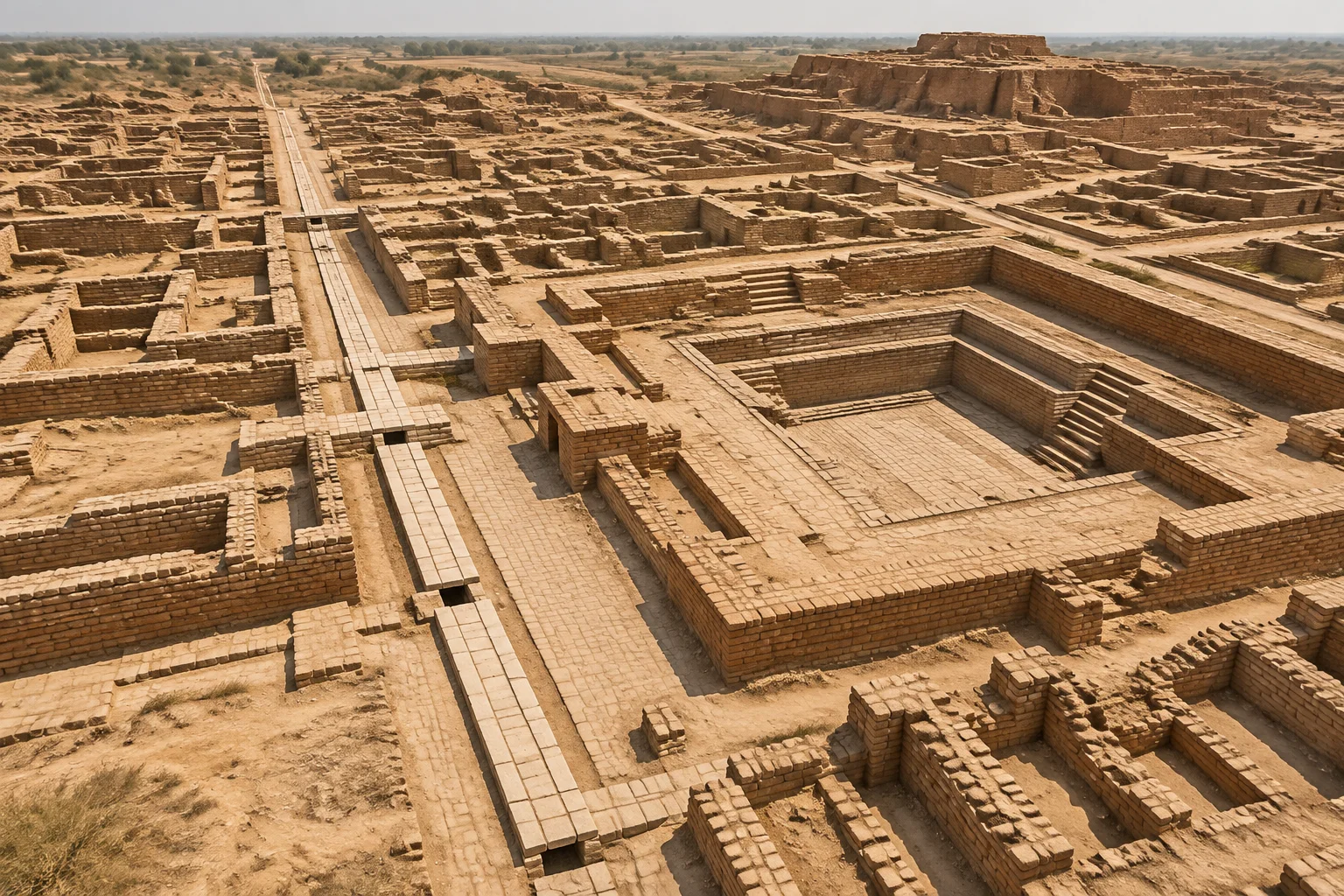
3. Mohenjo-daro’s Grid, Drains, and Standard Bricks
The Indus Valley city of Mohenjo-daro, in modern Pakistan, was laid out around 2500 BCE on a grid of streets with covered municipal drains. Many houses had private wells and bathrooms connected to the public system, sanitation that plenty of 19th-century cities lacked.
Bricks were standardized at roughly 1:2:4 proportions across hundreds of kilometres, which implies shared regulation and measurement. The Indus script is still undeciphered, so we understand their plumbing better than their politics.
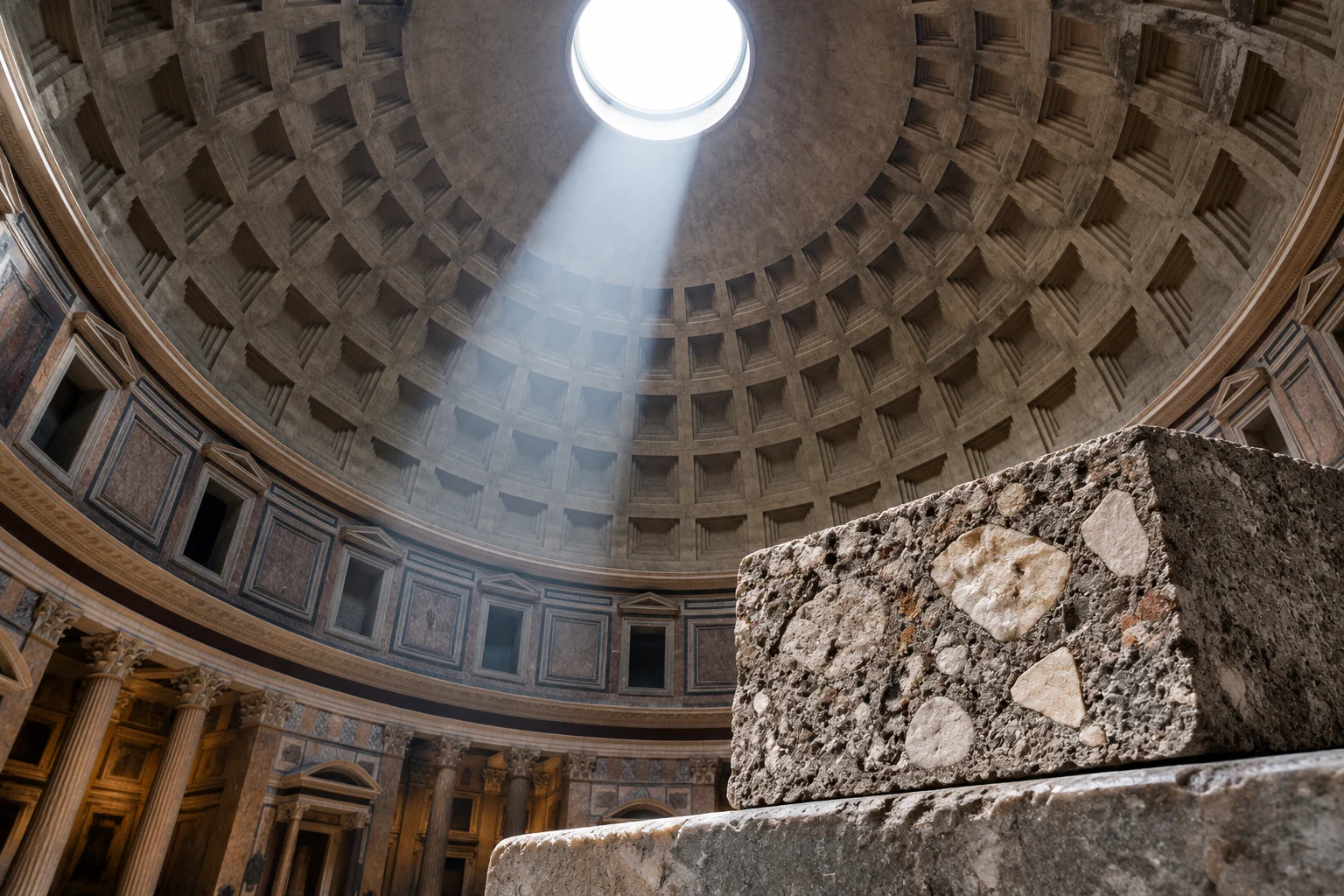
4. Roman Concrete That Outlasted the Empire
Roman builders mixed lime with volcanic ash, known as pozzolana, to create concrete that could set underwater and harden over centuries. The Pantheon’s unreinforced dome, about 43 metres across, has stood for roughly 1,900 years.
A 2023 study from MIT suggested that lime clasts in the mix could react with water and recrystallize, effectively sealing cracks. Modern marine concrete typically lasts decades in the same conditions, which is why Roman harbours are still being studied.
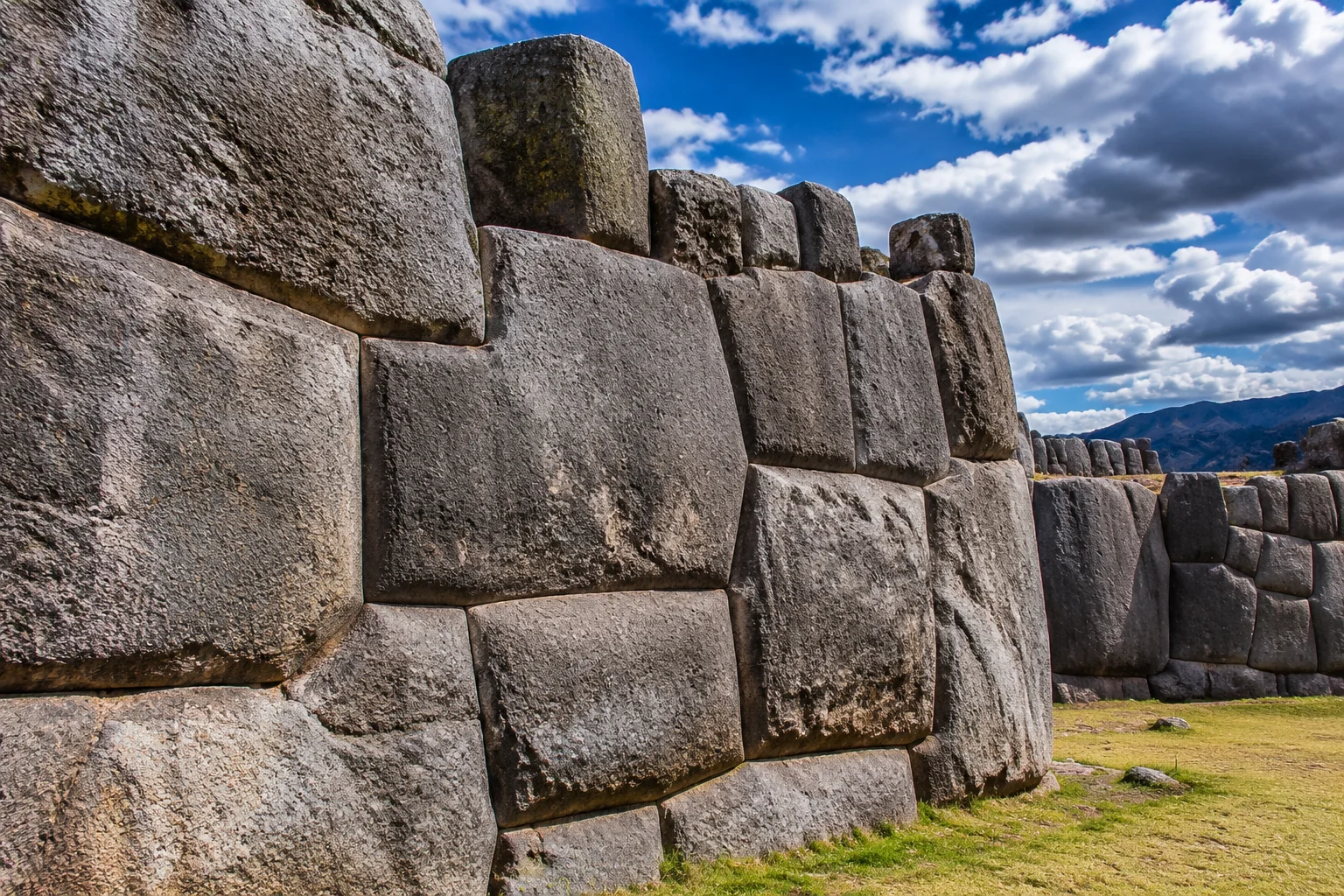
5. Sacsayhuamán and the Inca Road Network
At Sacsayhuamán above Cusco, Inca masons fitted irregular limestone blocks, some over 100 tonnes, so precisely that a knife blade will not pass between them — and they used no mortar. The walls have shrugged off centuries of earthquakes.
The Qhapaq Ñan road system ran roughly 40,000 kilometres across the Andes, complete with suspension bridges, waystations, and relay runners. The state also recorded obligations on knotted cords called quipu, which some researchers believe encoded more than numbers.
6. Petra and Nabataean Water Engineering
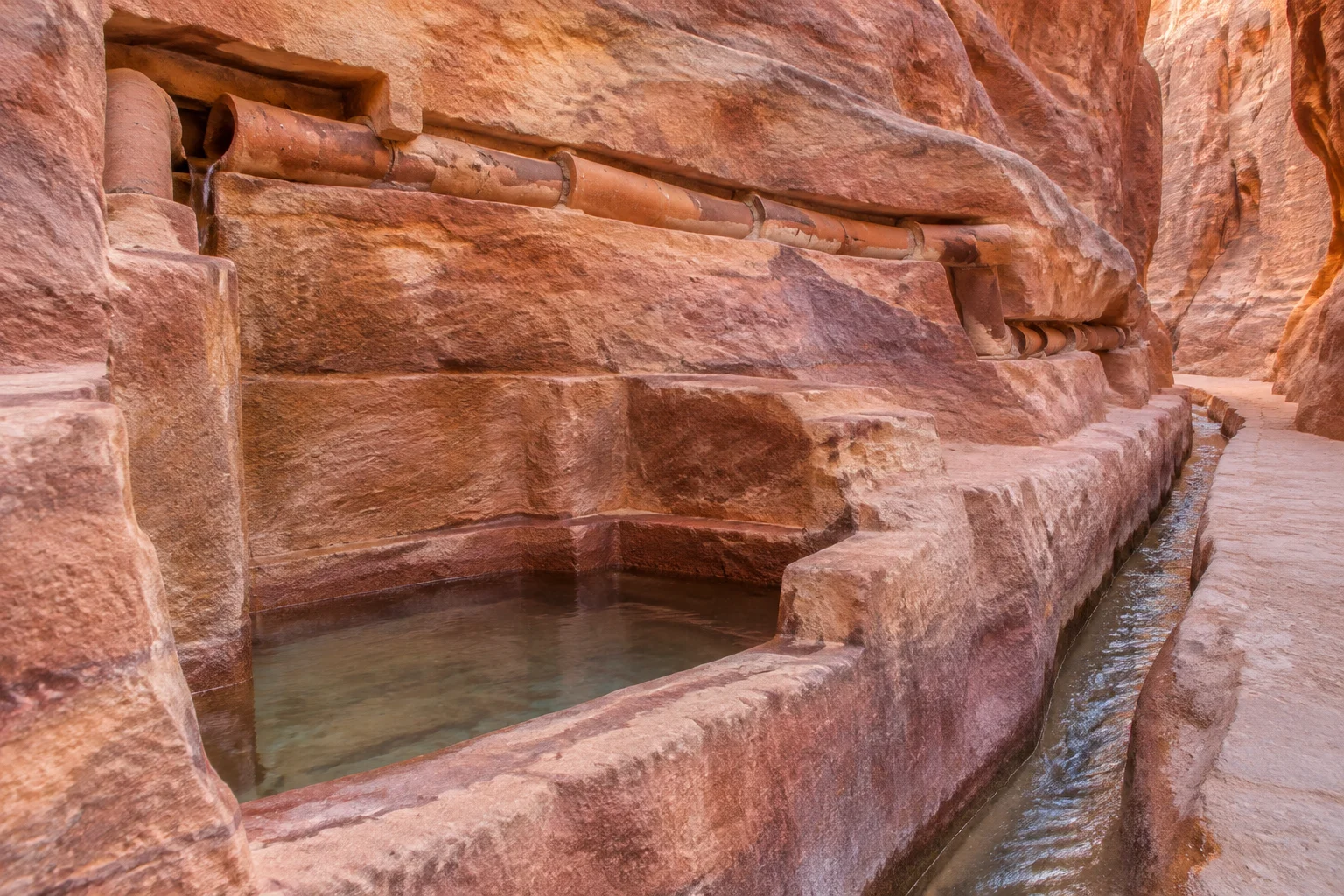
Petra, carved into sandstone in modern Jordan, flourished as a Nabataean trade hub between roughly the 1st century BCE and the 1st century CE. Its engineers dammed the Siq gorge, diverted flash floods, and lined the city with cisterns, reservoirs, and ceramic pipelines.
In a desert receiving very little rainfall, that hydraulic system supported a large permanent population. The waterworks, more than the famous façades, are what made Petra rich.
7. The Pyramids of Meroë
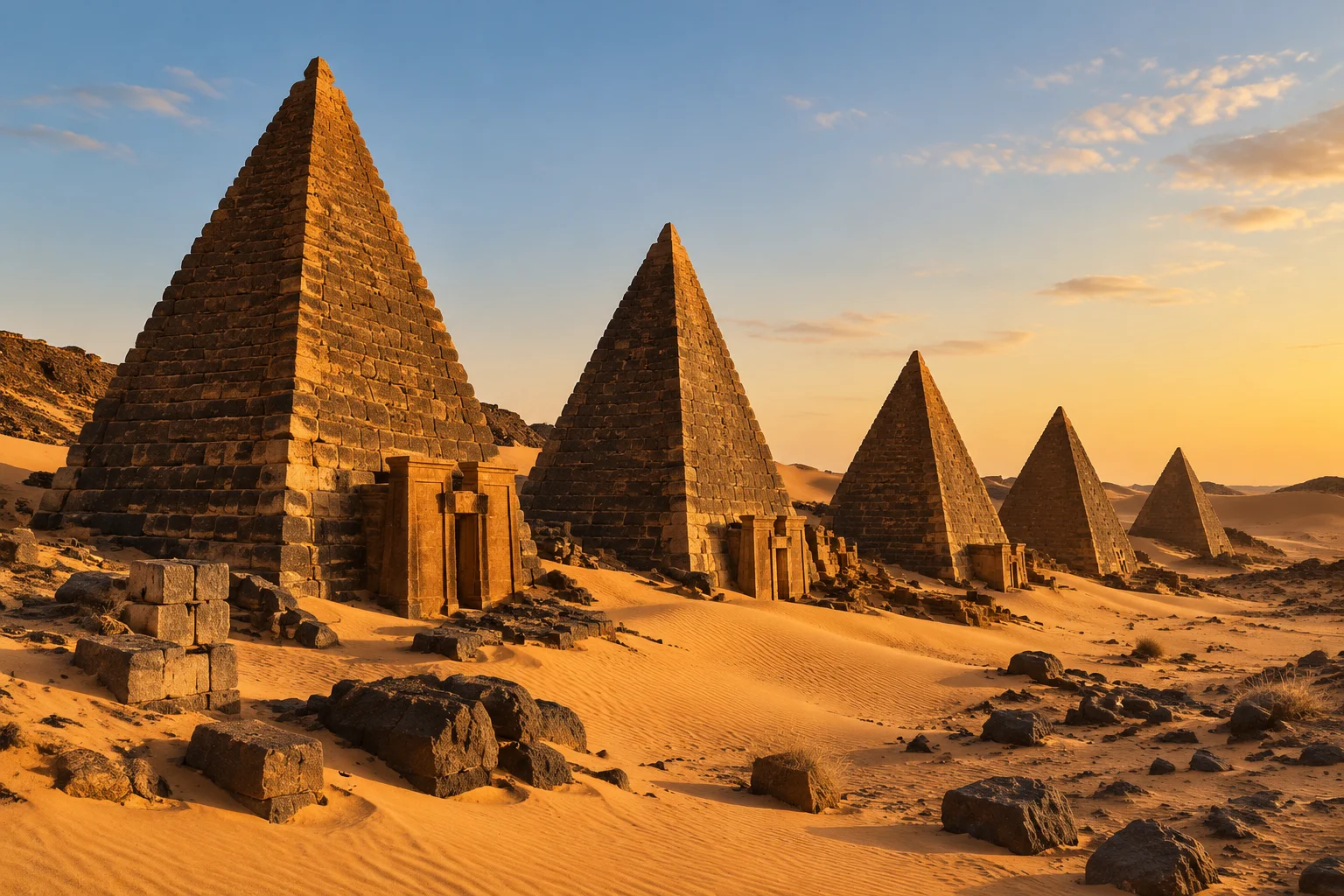
In what is now Sudan, the Kingdom of Kush built roughly 200 royal pyramids between about 300 BCE and 350 CE — more than Egypt has. They are smaller and steeper than their Egyptian counterparts, with narrow offering chapels attached.
Kushite kings conquered Egypt in the 8th century BCE and ruled as the 25th Dynasty before being pushed back south. Meroë also produced iron and left inscriptions in a script that remains only partly deciphered.
8. Persian Qanats: Underground Rivers That Still Flow
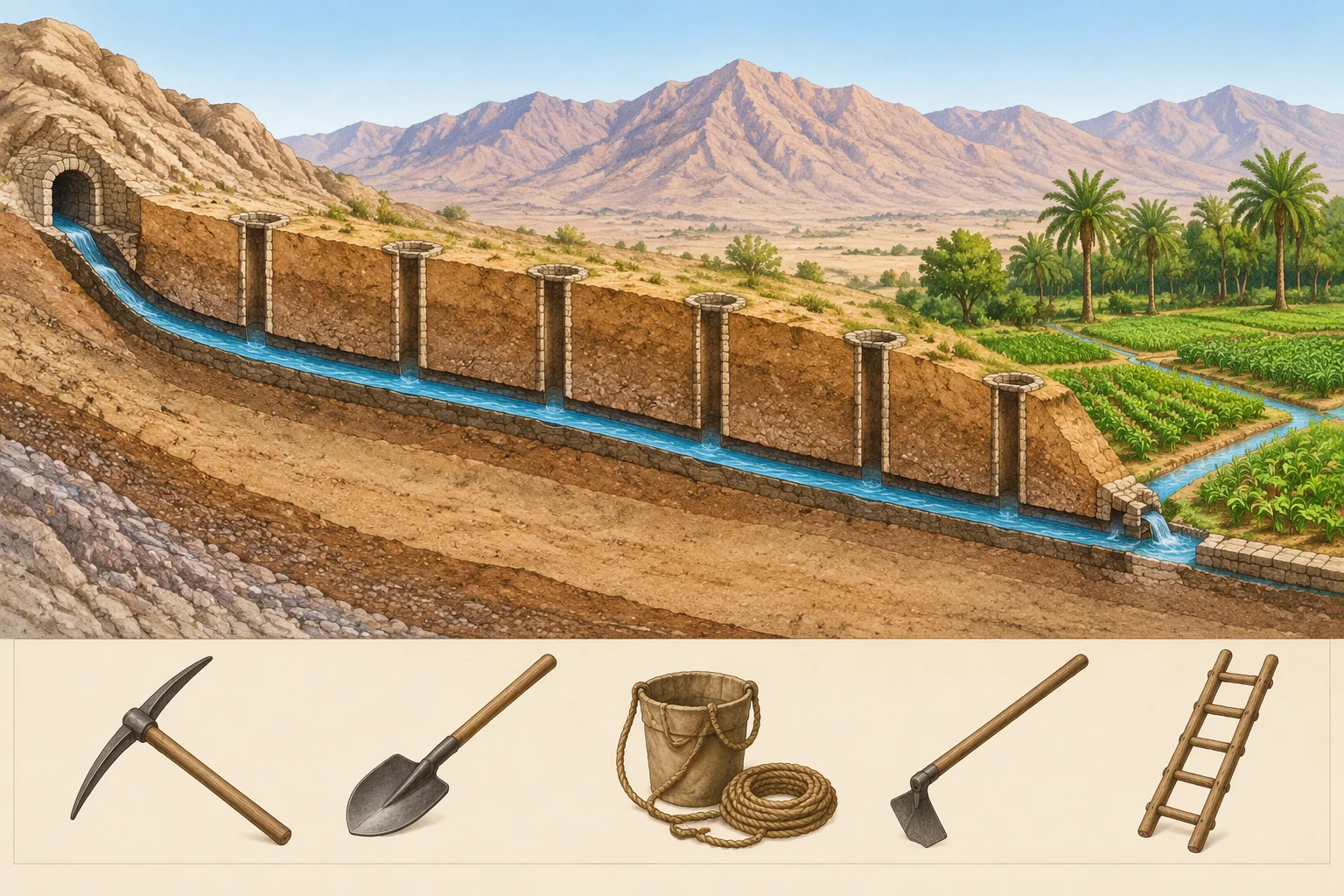
Qanats are gently sloping tunnels that tap groundwater at the base of hills and carry it by gravity to fields, sometimes across tens of kilometres. The Gonabad qanat in Iran is about 2,700 years old and roughly 33 kilometres long.
Because the water travels underground, it doesn’t evaporate in desert heat, and the system needs no pumps. The technique spread from Iran across Central Asia and North Africa, and some qanats are still in use today.
Science, Mathematics, and Medicine: Finds 9–16
9. The Antikythera Mechanism
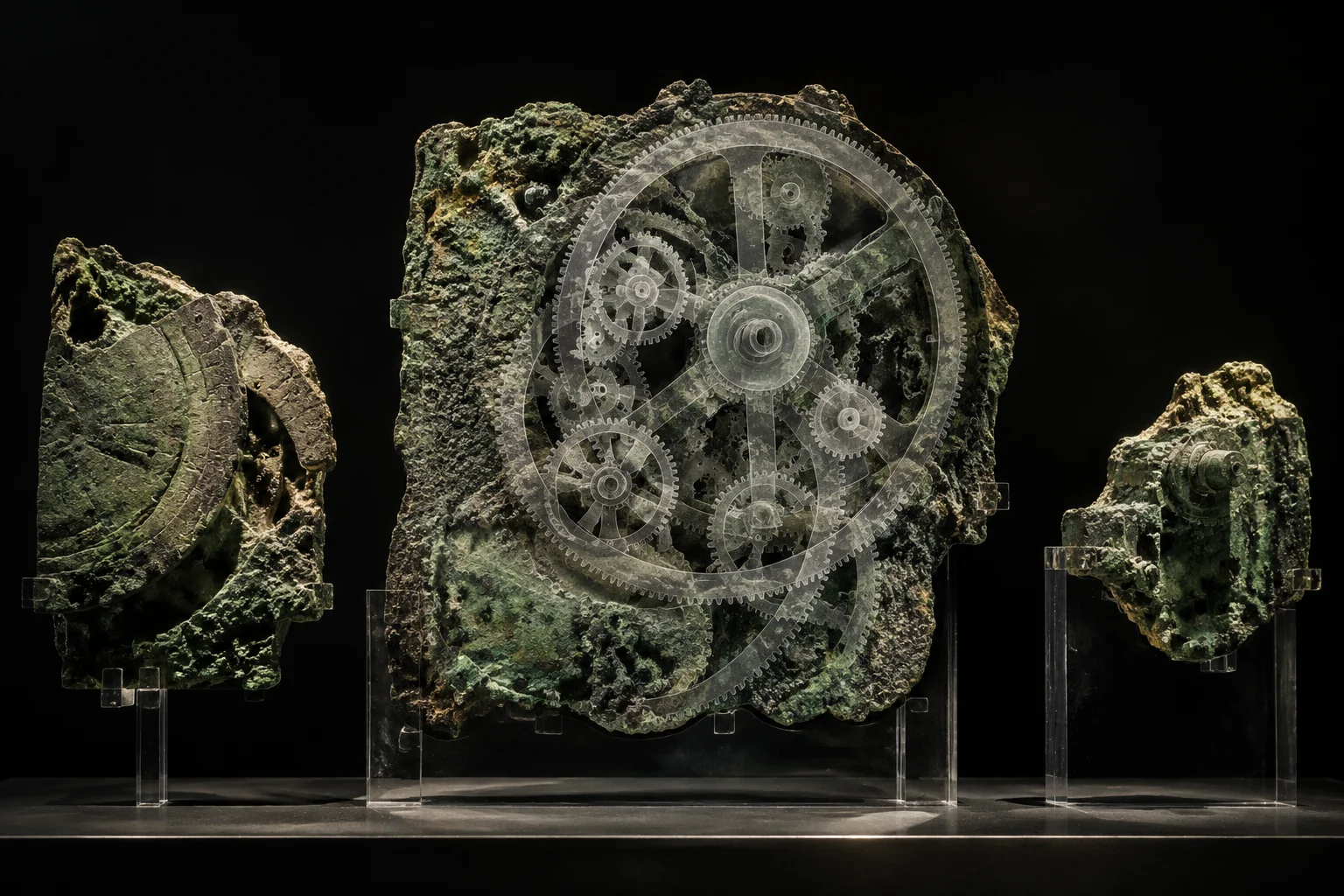
Greek sponge divers found this corroded bronze device in a shipwreck in 1901. Dating to roughly 150–100 BCE, it used at least 30 interlocking gears to model the movements of the sun and moon and to predict eclipses.
CT scans published in 2006 revealed thousands of characters of inscriptions hidden inside the fragments. Nothing of comparable mechanical complexity appears again for more than a thousand years.
10. Babylonian Tablets: Square Roots and Base 60
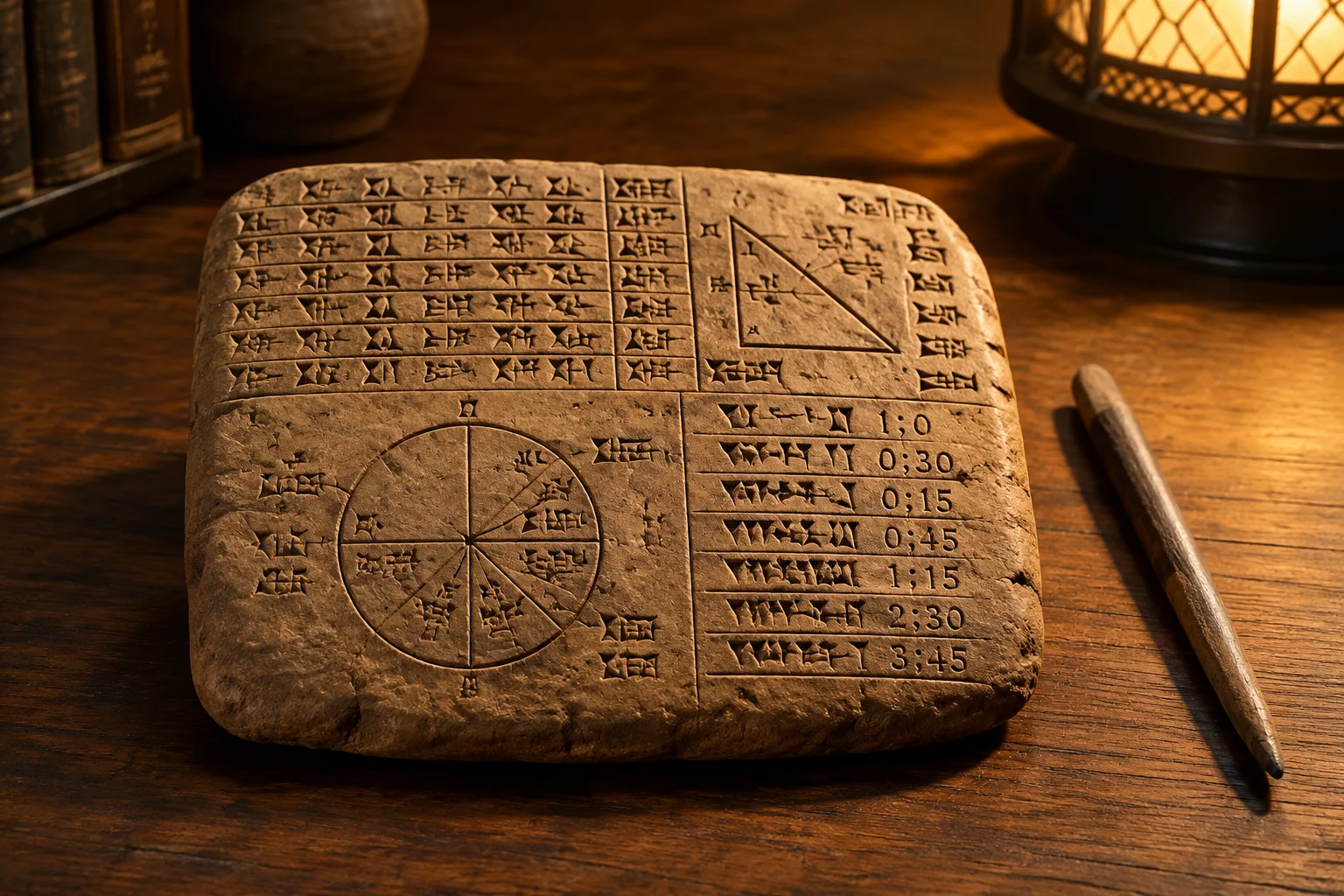
Mesopotamian scribes worked mathematics at a level that still surprises people. A tablet known as YBC 7289 gives the square root of 2 as approximately 1.41421296, accurate to about six decimal places, around 1800 BCE.
Another tablet, Plimpton 322, lists Pythagorean triples more than a millennium before Pythagoras. The Babylonian base-60 system is the reason we still divide hours into 60 minutes and circles into 360 degrees.
11. The Bakhshali Manuscript and the Story of Zero
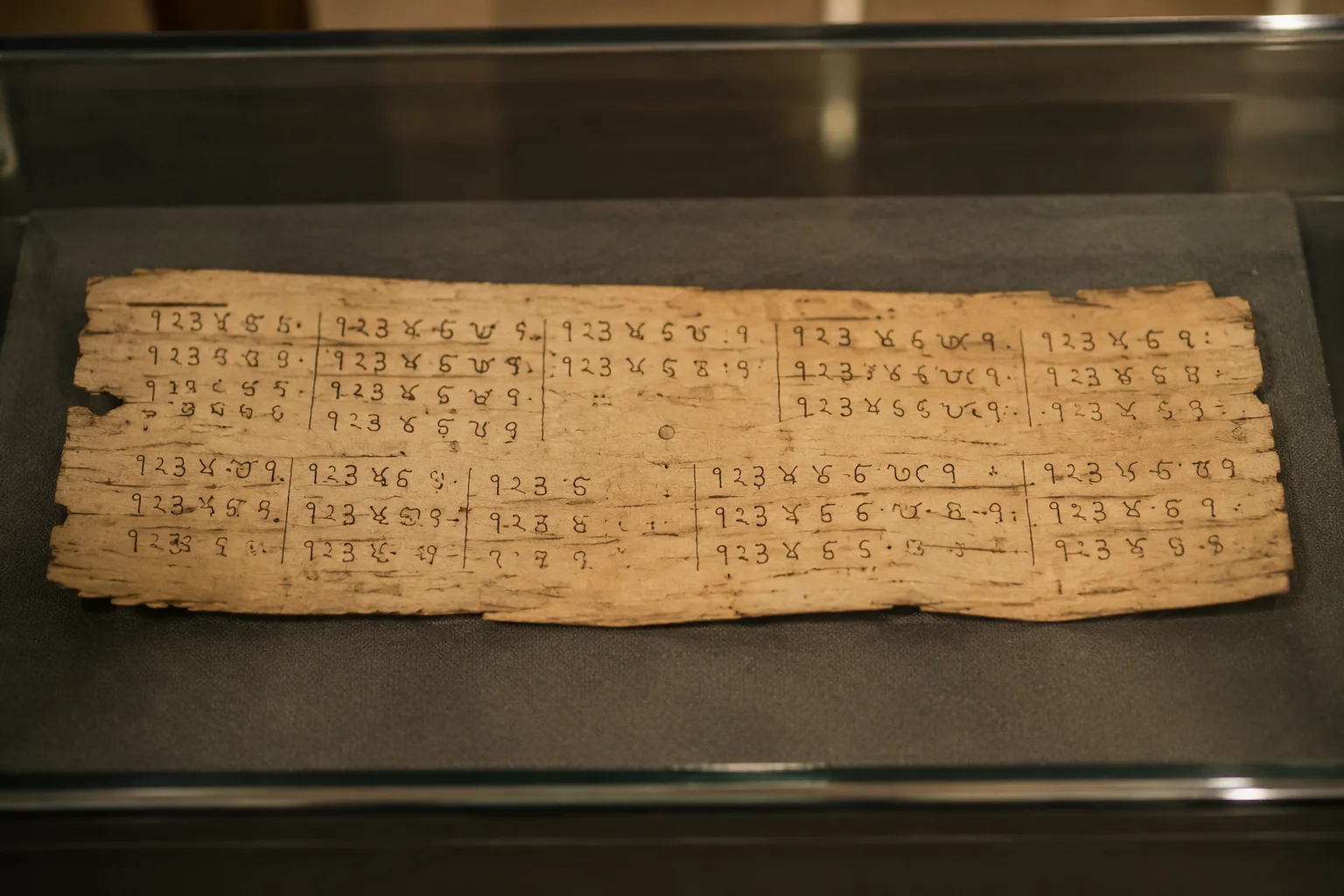
Found in 1881 near the village of Bakhshali in modern Pakistan, this birch-bark text is a composite of several periods. Radiocarbon dating published in 2017 placed one portion in the 3rd or 4th century CE.
It contains a dot used as a placeholder, an early step toward treating zero as a number in its own right. Indian mathematicians later formalized rules for zero, and the idea travelled through the Islamic world into Europe.
12. Maya Astronomy and the Dresden Codex
The Dresden Codex, one of only four surviving pre-Columbian Maya books, was probably written in the 11th or 12th century CE. Its Venus tables track that planet’s cycle with errors of only a few hours across decades.
Maya scribes used a shell glyph for zero inside a place-value system, and their Long Count calendar could name days millions of years apart. They also built observatories, including El Caracol at Chichén Itzá.
13. Zhang Heng’s Bronze Seismoscope
In 132 CE the Han astronomer Zhang Heng presented a bronze vessel ringed by eight dragon heads, each holding a ball above a toad. According to court records, a mechanism released the ball from the dragon facing the direction of an earthquake.
The account claims it registered a quake hundreds of kilometres away before anyone at court felt the shaking. No original survives and its internal design is still debated, though Zhang Heng also built a water-powered armillary sphere.
14. The Edwin Smith Surgical Papyrus
Copied around 1600 BCE from a much older text, this Egyptian papyrus describes 48 cases of trauma in careful anatomical order, from head wounds to spinal injuries. It recommends examination, diagnosis, and prognosis, and even notes the brain’s folded surface.
Unlike many Egyptian medical texts, it leans on observation rather than incantation, though spells do appear alongside some treatments. It reads like an early surgical manual.
15. Sushruta Samhita: Surgery in Ancient India
The Sushruta Samhita is a Sanskrit medical compendium compiled over centuries, with core material possibly dating to the mid-1st millennium BCE. It describes hundreds of procedures and roughly 120 instruments, including cataract surgery and reconstructive rhinoplasty using a skin flap.
Because the text is layered, it is best treated as a tradition rather than the work of a single author. Even so, its surgical detail is remarkable for its era.
16. Ibn al-Haytham and the House of Wisdom
Working in Cairo and Baghdad in the 11th century, Ibn al-Haytham argued that vision happens when light enters the eye, not when rays leave it. His Book of Optics, written around 1021, relied on controlled experiments and described a dark room that worked like a camera obscura.
The House of Wisdom in Baghdad, where scholars translated Greek, Persian, and Indian works, also produced al-Khwarizmi’s algebra — the source of the word “algorithm”. This was a research culture, not a lone genius working in isolation.
Trade, Writing, Law, and Art: Finds 17–23
17. The Library of Ashurbanipal at Nineveh
The Assyrian king Ashurbanipal assembled roughly 30,000 clay tablets at Nineveh in the 7th century BCE, organized by subject and copied by trained scribes. It is one of the earliest systematically collected libraries known.
Among the tablets was the Standard Babylonian Epic of Gilgamesh, which includes a flood narrative older than the biblical version. Excavators recovered much of the collection in the 1850s, and most of it now sits in the British Museum.
18. The Uluburun Shipwreck: A Bronze Age Cargo Manifest
Off the coast of southern Turkey, divers found a merchant ship that sank around 1300 BCE. Its cargo included about ten tonnes of copper ingots, a tonne of tin, Canaanite jars, gold jewellery, ebony, and ivory.
The mix of Mycenaean, Cypriot, Egyptian, and Levantine goods is physical proof of a connected Mediterranean trading network. Some of the tin came from Central Asia, which shows how far Bronze Age supply chains reached.
19. The Code of Hammurabi
Carved on a 2.25-metre basalt stele around 1750 BCE, Hammurabi’s code lists 282 laws covering loans, property, family matters, and professional liability. It is famous for “an eye for an eye”, though penalties varied sharply by social class.
It is not the oldest law code — the Code of Ur-Nammu predates it by centuries — but its public display set a model for later legal traditions. French excavators found the stele at Susa in 1901, and it now lives in the Louvre.
20. Linear B Tablets and Mycenaean Bureaucracy
Mycenaean palace scribes kept records on clay tablets in a script called Linear B, listing sheep, oil, grain, chariot wheels, and rations. When the palaces burned around 1200 BCE, the fires baked the tablets and preserved them.
Michael Ventris deciphered the script in 1952 and demonstrated that it recorded an early form of Greek. The tablets reveal a heavily administered economy in which scribes tracked almost everything.
21. The Benin Bronzes and Lost-Wax Casting
The Kingdom of Benin, in what is now Nigeria, produced brass plaques and sculptures from around the 13th century onward. Craftsmen used lost-wax casting, building a clay mould around a wax model that melted away when molten metal was poured in.
The plaques record court ceremonies, warriors, and the oba, functioning as royal documentation as much as art. British troops looted thousands of pieces in 1897, and repatriation debates continue today.
22. Great Zimbabwe’s Mortarless Walls
Between roughly 1100 and 1450 CE, Shona builders raised granite walls up to 11 metres high without a drop of mortar, fitting the stones so precisely that they have stood for centuries. The Great Enclosure is the largest ancient stone structure in sub-Saharan Africa.
Archaeologists have found Chinese celadon, Persian pottery, and glass beads at the site, evidence of trade with the Swahili coast and beyond. Colonial-era writers wrongly credited the ruins to outsiders, a claim later dismantled by professional excavation.
23. Cahokia and Monks Mound
Near modern St. Louis, the Mississippian city of Cahokia peaked between about 1050 and 1350 CE. Its Monks Mound covers more ground at its base than the Great Pyramid and rises roughly 30 metres.
At its height Cahokia may have housed 10,000 to 20,000 people, with a central plaza, wooden palisades, and a circle of posts aligned to the solstices. It was the largest pre-Columbian settlement north of Mexico.
Common Myths About Advanced Ancient Civilizations, Debunked
Ancient alien theories usually rest on the idea that ancient people could not have built what they built. In practice, the explanations involve generations of accumulated skill, huge labour forces, and simple machines — not lost power tools.
The “Baghdad Battery” is a clay jar with a copper cylinder and an iron rod, most likely used to store scrolls. There are no wires, no residues of electrolyte use, and no ancient text describing electricity.
Dendera’s famous “light bulb” relief shows a lotus flower and a djed pillar, standard Egyptian motifs that appear elsewhere. Crystal skulls, once claimed to be ancient Mesoamerican relics, show tool marks from 19th-century European workshops.
The claim that enslaved people built the Egyptian pyramids ignores the workers’ village, the bread and beer rations, and Merer’s logbook. None of this makes the achievements less extraordinary; it makes them human.
Atlantis is another recurring favourite, but it appears in Plato’s dialogues as a moral allegory. No excavation has ever produced a site, an artefact, or a text that matches the story.
Why “How to Get Ancient Civilization Core” Leads to Video Games
If that phrase brought you here, you are probably looking for an in-game resource rather than an archaeological one. “Ancient Civilization Core” turns up in video game guides, usually in strategy and city-building titles, where it works as a crafting or upgrade material.
The reliable answer depends entirely on which game you are playing, since drop rates and sources change with every patch. Your best bet is the official wiki for that specific title rather than a general history article.
What the Most Advanced Ancient Civilizations Still Teach Us
There is no single winner in the contest for the most advanced ancient civilization, because the criteria keep shifting. Sumer gave us writing, Egypt gave us monumental statecraft, the Indus Valley gave us urban sanitation, and China gave us bureaucracy and paper.
The Maya pushed astronomy further than anyone else in the Americas, while Rome’s law and engineering still shape modern infrastructure and legal codes. The Inca ran an empire of millions without a written language, using roads, quipu, and a highly organized labour system.
The common thread is not secret technology but standardization, record-keeping, water management, and long-term investment in knowledge. The most advanced civilization in history, judged by those measures, is less a place than a set of habits that societies keep rediscovering.
Frequently Asked Questions
What civilization is considered the first advanced?
Sumer, in southern Mesopotamia, is the standard answer. Cities such as Uruk, Ur, and Lagash appeared there between roughly 4000 and 3100 BCE, and cuneiform writing emerged around 3200 BCE. Egypt is usually named second, with a unified state forming around 3100 BCE.
What is the most advanced ancient civilization?
It depends entirely on which criteria you use, which is why historians rarely crown a single winner. Sumer led in writing, Egypt in monumental statecraft, the Indus Valley in urban planning, China in administration, and the Maya in astronomy. Rome and the Inca are strong contenders for engineering and large-scale organization.
Are there advanced ancient civilizations older than Sumer?
There are older complex societies, but they are not usually classified as civilizations. Göbekli Tepe in Turkey was built by hunter-gatherers around 9500 BCE, and settlements such as Çatalhöyük and Jericho predate Sumer by thousands of years. They show impressive organization without cities, writing, and bureaucracy.
How do archaeologists know these finds are genuine?
Evidence is tested through stratigraphy, radiocarbon dating, and dendrochronology, which place objects in a dated context rather than relying on appearance. Claims are then checked through peer review and replication by independent teams. Objects presented without excavation context or publication are treated with caution.
Did ancient civilizations have technology we cannot reproduce today?
Some techniques are difficult to match, such as Roman marine concrete, Inca mortarless masonry, and certain historical metalworking methods. That reflects different materials, labour systems, and centuries of local trial and error rather than lost power sources. Researchers are actively reverse-engineering several of these methods today.
What does advanced society mean in history?
In archaeology, an advanced society usually means one showing several measurable features at once: cities, a division of labour, record-keeping, monumental architecture, standardized measures, and long-distance trade. The term is comparative, not absolute, and every society is complex in its own environment.
How do you get an ancient civilization core?
That phrase belongs to video games rather than archaeology, where it usually names a crafting or upgrade material in strategy and city-building titles. Sources and drop rates change between patches, so the official wiki for your specific game is the dependable answer. There is no archaeological artefact by that name.

Alex Warren
Related Articles