If you've ever wondered whether there's ever been peace in the world, the data offer a surprising answer. By several major measures—from battle deaths to homicide rates—the modern era is arguably the most peaceful time in human history, even while headlines suggest the opposite.
The tension between statistics and lived experience is real. This post builds a two-part case: ten reasons to think we live in a peaceful time, then ten reasons that peace time rarely feels peaceful at all.
TL;DR: The long-term data show this is the most peaceful era in recorded history, but human psychology, media incentives, and the sheer scale of modern violence make it feel like the opposite.
Why the Numbers Say We're in the Most Peaceful Time
Before examining the reasons it doesn't feel that way, it's worth understanding why researchers make such a bold claim at all. The case rests on measurable shifts in how often humans kill each other across eras.
One widely cited source is Steven Pinker's 2011 book The Better Angels of Our Nature, which compiled centuries of homicide data from Europe and elsewhere. Pinker's claim is not that violence has vanished, but that per-capita rates have declined dramatically over long stretches of history.
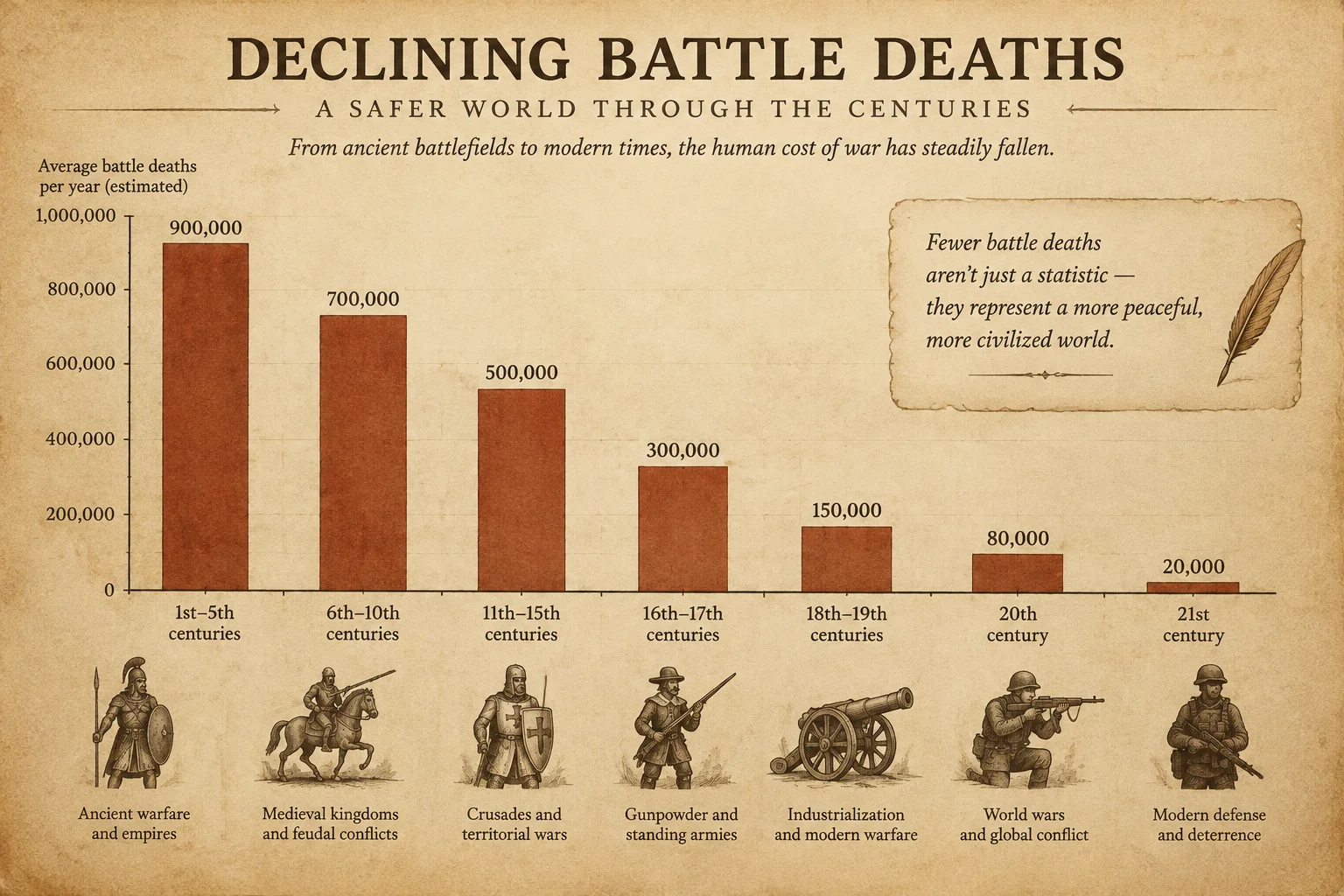
Other datasets, like the Uppsala Conflict Data Program and the Correlates of War project, also track combat deaths over time. These show that despite horrific wars in the twentieth century, annual battle deaths as a share of population have trended down since the mid-twentieth century.
That's the basic picture. What follows are ten distinct reasons this era deserves the most peaceful label—followed by ten explanations for why that label still feels so wrong.
Part One: 10 Reasons We Really Are Living in the Most Peaceful Time in History
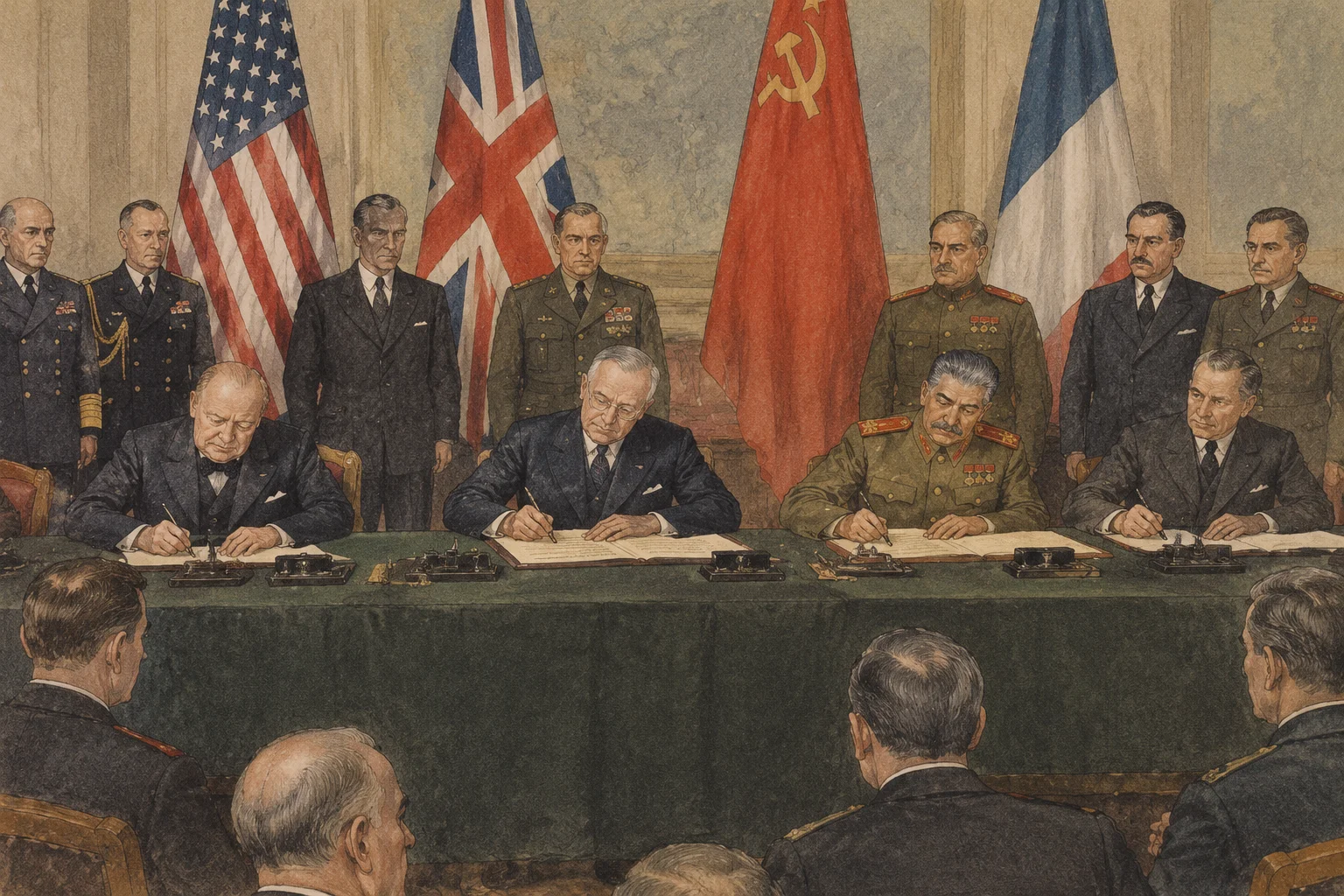
1. Great Power War Has Nearly Vanished Since 1945
Historically, the most destructive conflicts were wars between great powers—think the Thirty Years' War or World Wars I and II. Since 1945, major powers have fought through proxies and skirmishes but never directly against each other on a world-war scale.
That seventy-plus-year window is historically unusual. Scholars call it the "Long Peace," though the name oversells the calm for people living in proxy-conflict zones.
This tenuous restraint among nuclear-armed states is one of the strongest arguments for calling our era a peace time, relative to what came before.
2. Global Battle Deaths Have Fallen Sharply Since the Cold War
Battle deaths per conflict increased temporarily during the Cold War's proxy wars in Korea, Vietnam, and Afghanistan. But the post-Cold War trend has generally been downward, with spikes in Syria and Ukraine complicating the picture.
Uppsala Conflict Data Program figures suggest that global battle-related deaths peaked in the 1970s and 1980s and then declined. There have been reversals, which we'll discuss later, but the long arc still leans toward fewer combat casualties overall.
This doesn't erase the horror of any single conflict. It just means that, proportionally, fewer people die from war today than in many past centuries.
3. Homicide Rates in Europe Fell by Orders of Magnitude
Medieval Europe was exceptionally violent by modern standards. Homicide rates in some regions of England and Italy reached 20 to 50 per 100,000 people, compared to roughly 1 to 2 per 100,000 in most of Western Europe today.
Manuel Eisner's historical homicide database documents this centuries-long slide. Explanations include stronger states, formal legal systems, and shifting cultural norms around honor killings and dueling.
So while crime still makes headlines, the odds of being murdered are far lower for most people than for their medieval ancestors.
4. Colonial and Interstate Conquest Wars Have Been Largely Outlawed
Before the twentieth century, conquest was considered a legitimate tool of statecraft. Monarchs and empires routinely seized territory by force and celebrated it as triumph, not crime.
The UN Charter's prohibition on the use of force—adopted in 1945—changed the legal framework. It doesn't stop aggression, but it shifts conquest from celebrated policy to condemned violation.
The result is a world where territorial annexation invites sanctions and isolation rather than praise. That's a meaningful shift in the international norms that constrain war.
5. Nuclear Deterrence Has Made Total War Between Major Powers Unthinkable
The atomic bombings of Hiroshima and Nagasaki in 1945 ended a war, but they also changed the calculus of future conflicts. After the USSR tested its own bomb in 1949, mutual annihilation became a real possibility.
This "balance of terror" is grim, and scholars debate how much it truly prevented. Still, nuclear weapons created overwhelming incentives against direct great-power warfare.
Whatever moral weight you assign it, deterrence has undeniably helped keep the peace among the largest militaries on Earth since 1945.
6. International Institutions Have Built a Web of Restraints
Bodies like the United Nations, the International Criminal Court, and regional organizations such as the African Union and the European Union create formal channels for dispute resolution. They raise the diplomatic cost of aggression and give smaller nations leverage against larger ones.
These institutions are imperfect and often paralyzed. Yet they provide a framework that simply did not exist in 1800 or 1900, when wars were routine business between sovereigns.
This institutional density is part of what makes modern peace time distinctive—not just a lull between wars, but a sustained architecture discouraging them.
7. Decline of Personal Honor Violence and Dueling
For centuries, Western men of certain classes were expected to defend their honor through duels. A single insult could end in a formal, mutually agreed killing.
That practice has vanished from most of the world, replaced by courts, reputational reputational channels, and social norms discouraging private violence. This is a small but vivid example of a broader cultural shift.
Something similar happened with vendettas and blood feuds, which once structured community life in parts of Europe and the Mediterranean. Most have faded under legal and social pressure.
8. Long-Term Decline in Genocides and Mass Atrocities
This claim is more contested. Atrocities still occur—Darfur, Rwanda, Bosnia—and each one is catastrophic, but scholars note that the frequency and scale of state-sponsored mass killings appear lower than in earlier centuries.
Some of this is due to a wary international system that detects and condemns early. Some is due to humanitarian intervention and universal jurisdiction for war crimes.
Calling this progress requires caveat, but when people ask whether there's ever been peace in the world, this long-term trend is part of the answer.
9. Wartime Civilian Deaths Have Fallen in Relative Terms
Historically, armies often survived by pillaging civilian populations, and civilians were killed, enslaved, or starved with little record or recourse. Later, mass bombing and siege tactics brought the horror closer to the home front.
In the twenty-first century, global conflict mortality has trended toward smaller totals even during active wars. That is partly because fewer total wars are being fought, and partly because international law now explicitly targets civilian protections.
This doesn't diminish the suffering of civilians in Syria, Yemen, Ukraine, or Gaza. It does mean the sheer scale of wartime civilian death is lower than during the world wars.
10. The "Democratic Peace" Observation Holds Broadly True
Political scientists have long observed that established democracies rarely, if ever, fight declared wars against each other. This pattern, sometimes called the democratic peace, has held since the early nineteenth century with only rare ambiguous exceptions.
The theory is debated—democracies do engage in covert action and proxy conflict. But the absence of large-scale inter-democratic war remains a striking empirical pattern in a violent historical record.
As the number of democracies grew across the twentieth century, so too did a large bloc of states with strong structural reasons to avoid fighting each other directly.
Part Two: 10 Reasons This Peaceful Time Doesn't Feel Peaceful
11. The Availability Heuristic Distorts Our Sense of Risk
Human brains evolved to notice threats quickly, not to estimate their statistical frequency. Psychologists call this the availability heuristic: if you can easily recall a vivid example, you overestimate how common it is.
A single burned building on the news feels more real than a slowly declining homicide rate. The result is that we confuse salience with frequency and feel more at risk than we are.
This is central to why a peaceful time can feel the opposite. Our intuitions were shaped for small tribal threats, not global statistics.
12. News Media Selects Almost Entirely for Negative Events
Traditional editorial logic is blunt: if it bleeds, it leads. Wars, disasters, and crimes get disproportionate coverage precisely because they trigger attention and anxiety.
If broadcasters covered the world accurately, they'd report on billions of people not killing each other every single day. That would be accurate but unwatchable.
So the same media environment that makes war visible to us also systematically hides the absence of war, making the peaceful baseline invisible.
13. Global Connectivity Broadcasts Every Tragedy to Everyone
A farmer in thirteenth-century France might never learn about a war three provinces away. A resident of rural Idaho in 1850 might not hear of a distant conflict for weeks.
Today, a live feed from a distant conflict zone can appear on your phone within minutes. This intensified awareness doesn't create conflict, but it compresses the world into a single stage of simultaneous tragedy.
The result is that even genuinely less violent eras feel more violent because we can see more of the violence that does occur.
14. The Twentieth Century's Legacy Still Looms Large
World War II, the Holocaust, and the Cold War's nuclear brinkmanship cast a long shadow over the popular imagination of "war." Generations alive today were raised on these stories from parents and grandparents.
That memory is moral and historical, not just statistical. It sensitizes people to conflict in a way that can make any present fray feel like a return to catastrophe.
Understanding this context matters for anyone weighing whether we're in the most peaceful time while also feeling under threat.
15. Existential Threats Have Attached Themselves to Modern Peace
Even without large conventional wars, nuclear weapons, climate change, and pandemic risk create a new category of fear. Peace time with a nuclear arsenal is a peace that could end in hours, not months.
This creates a strange psychological state: statistically safer, existentially more fragile. The same technologies that reduce battlefield casualties also make catastrophic escalation possible.
That paradox is one reason the peace time label triggers skepticism—not because it's wrong, but because the risks are harder to fit into traditional war narratives.
16. Asymmetric and Proxy Wars Are Constant and Invisible to Many
Direct great-power war has become rare, but proxy conflicts, insurgencies, and terrorism continue to kill thousands each year. These conflicts rarely dominate global headlines for long.
Yemen, Ethiopia, Sudan, and the Sahel have each experienced brutal violence in recent years, often overshadowed by other news. Asymmetric war can be hard to count and easy to ignore.
So the Long Peace between major powers coexists with persistent regional violence that shapes the daily lives of millions.
17. Inequality and Insecurity Feel Like a Different Kind of War
Even in low-violence societies, people experience economic precarity, housing instability, and eroded safety nets. These pressures can feel like a slow-motion threat, even if nobody is shooting.
Sociologists note that subjective insecurity often has more to do with relative status and predictability than with absolute danger. A society can be physically peaceful but psychologically anxious.
When politicians say "a time for peace," listeners may hear irony if their own life feels precarious. Peace without security is fragile-feeling.
18. Polarization Turns Domestic Politics into a Battlefield Metaphor
Political conflict in many democracies has taken on war-like language: existential threats, traitors, battles for the soul of the nation. Metaphors shape perception.
When ordinary policy disputes are framed as survival combat, people feel like they're in a war even without an army. The language does real psychological work.
The phrase "a time for peace a time for war"—from Ecclesiastes—captures something real about human perception: peace and conflict can coexist in the same moment, depending on which lens you use.
19. Social Media Amplifies Outrage and Threat Perception
Algorithms reward engagement, and outrage drives engagement. That means threat narratives, outrage, and fear spread faster than calm analysis on most platforms.
Compounding this is the fact that users self-select into homogeneous feeds, where a single alarming story can dominate a community's mood. The result is an online environment where conflict feels permanent.
A peaceful era filtered through an outrage engine looks like perpetual crisis, even if the underlying statistics suggest otherwise.
20. Prophetic and Religious Traditions Predict Sudden Destruction
Many religious and cultural traditions carry apocalyptic expectations, including the biblical theme that when people say "peace and safety," sudden destruction follows. That idea is embedded in Western scripture and folklore.
Whether or not one holds those beliefs literally, they shape cultural intuition that calm is suspect. An era of tranquility can feel like a setup rather than a gift.
This is part of why claims of a historic peace time can trigger unease. To some, the very normalcy is evidence that something is about to break.
21. The Word "Peace" Carries Contradictory Meanings
Colloquially, a peaceful time means an idyllic, happy, calm era—denoting a time period almost idyllically happy and serene. Historically, "peace" often meant the absence of war between states, not personal well-being.
This semantic split explains a lot of confusion. You can live in statistically the most peaceful era ever and still feel far from idyllic.
The gap between peace as an interstate statistic and peace as a personal feeling is one of the reasons the debate stays alive.
22. Progress Is Uneven, Reversible, and Easy to Underrate
Even careful scholars acknowledge that peace gains are not guaranteed. The 2022 Russian invasion of Ukraine and the October 7 attacks and subsequent war in Gaza are reminders that reversals happen.
When you live through a reversal, it can feel like the entire historical trend is undone. That emotional response is understandable, even when the longer data arc is different.
Understanding peace as something maintained rather than achieved helps explain why a peaceful era can still feel like a fragile moment in a violent history—the promised "ideals are peaceful, history is violent" tension that runs through the whole conversation.
So Are We in the Most Peaceful Time—or Just the Most Aware One?
The honest answer is both. By measurable long-term indicators, this era is the least violent in recorded human history for most people, even as the question of whether there's ever been peace in the world remains complicated by local wars and personal experience.
That paradox—real statistical progress alongside persistent fear—is not a contradiction to resolve. It's a feature of how humans process information, media, memory, and meaning.
The next time someone claims a peaceful time and someone else calls it a time for war, both may be describing different layers of the same reality.
Frequently Asked Questions
Is there a time for peace a time for war?
The phrase "a time for peace, a time for war" comes from Ecclesiastes 3, a biblical passage that lists paired seasons of human life. Interpreted broadly, it suggests peace and conflict are both part of the human condition rather than opposites that exclude each other. Historically, even the most peaceful eras have contained regional conflicts, which is one reason the phrase feels relevant to modern debates about whether we live in the most peaceful time in history.
Has there ever been peace in the world?
Total peace across the entire world has never existed in recorded history, but relative peace has. Scholars describe the post-1945 period as unusually peaceful among great powers because direct wars between major states have been rare. Meanwhile, regional conflicts, civil wars, and state violence have continued. So the answer depends on whether "peace" means the absence of any war everywhere or the absence of major interstate war.
Why does it feel like the world is at war even if violence has declined?
Psychologists point to the availability heuristic: vivid, easily recalled events feel more common than they are. News media and social platforms amplify dramatic negative events and downplay the everyday absence of violence. Global connectivity also broadcasts regional conflicts constantly, making a relatively peaceful era feel chaotic even when long-term statistical trends are improving.
What does “ideals are peaceful, history is violent” mean?
The phrase captures the tension between our aspirations and our record. People commonly hold ideals of peace, justice, and nonviolence, while the historical record is full of wars, conquests, and atrocities. Recognizing that gap helps explain why claims about a most peaceful era can feel counterintuitive—our sense of history is shaped by its worst moments more than its quieter ones.
What is the best term for an idyllic, happy, peaceful time period?
Terms like "golden age," "halcyon days," or "pax" (as in Pax Romana or Pax Britannica) are often used to denote a time period that is idyllically happy and peaceful. Historians usually qualify these labels because even the calmest eras contained internal unrest, inequality, and violence on the margins. A peaceful era in the statistical sense rarely means a perfect one.
What does “when they say peace and safety, then sudden destruction” refer to?
That phrasing echoes 1 Thessalonians 5:3 in the New Testament, which warns that sudden destruction will come when people proclaim peace and safety. It has been used over centuries—and in modern apocalyptic fiction—to suggest that calm periods can be deceptive. As a historical concept, it reflects a recurring cultural suspicion of tranquility, not a verified prediction about specific events.

Alex Warren
Related Articles