

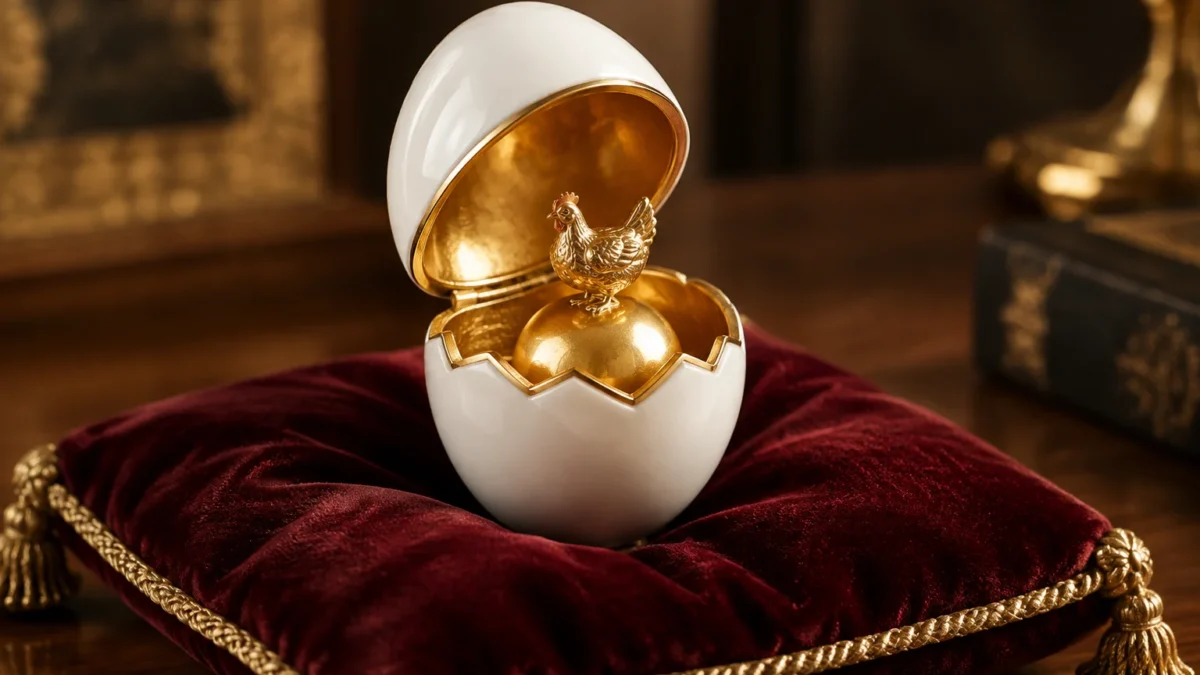
Introduction to the Jawdropping World of Fabergé Eggs
When you first see images of Fabergé eggs, it's easy to mistake them for myth. These tiny, jewel-encrusted objects look like they belong in a fairy tale rather than a museum. Yet they were very real—crafted for Russian royalty and now scattered across the globe.
The story of the Romanov eggs is one of artistry, obsession, and tragedy. In this post, we'll count down 20 of the most jawdropping Fabergé eggs ever made. We'll also bust a few myths, explain what makes a knockoff version of a bejeweled imperial egg, and help you spot the real thing.
TL;DR: Fabergé eggs are not just pretty baubles—they are miniature mechanical wonders that capture the last glittering years of Imperial Russia.
What Are Fabergé Eggs, Anyway?
Before we dive into the list, let's clarify what we mean by a "Fabergé egg." The term most often refers to the fifty Imperial eggs made by the House of Fabergé for the Russian tsars between 1885 and 1917. However, the company also produced other eggs for wealthy clients, and dozens of imitators have created Fabergé style eggs ever since.
The eggs were never simple ornaments. Each one was a one-of-a-kind creation, often hiding a surprise inside—a tiny clock, a miniature painting, or even a mechanical bird. That element of surprise is what keeps people searching for photos of Fabergé eggs today.
The Man Behind the Eggs
Peter Carl Fabergé took over his father's jewelry business in St. Petersburg in 1872 and transformed it into an international sensation. His firm's success came from relentless innovation and a refusal to repeat designs. He once reportedly said that the only difference between a cheap trinket and a masterpiece was the workmanship.
How Many Fabergé Eggs Were Created?
A common question is how many Fabergé eggs were created. The exact number is debated, but most scholars agree on fifty Imperial eggs, of which forty-three survive today. The House of Fabergé also made roughly a dozen other eggs for private clients, and many more were produced after the revolution by other firms. So while "all of the Fabergé eggs" usually means the fifty Imperial ones, the full output was larger.
The Imperial Egg Tradition
The tradition began in 1885 when Tsar Alexander III commissioned an egg as an Easter gift for his wife, Empress Maria Feodorovna. She was so enchanted that he ordered one every year. His son, Nicholas II, continued the custom, giving one to his wife and one to his mother. The last Imperial egg was delivered in 1917, the year of the Russian Revolution.
The Listicle: 20 Jawdropping Fabergé Eggs
We've ranked these eggs not by value—impossible to determine—but by their visual impact and historical significance. Each entry includes what makes it stand out and where it is today.
1. The Hen Egg (1885)
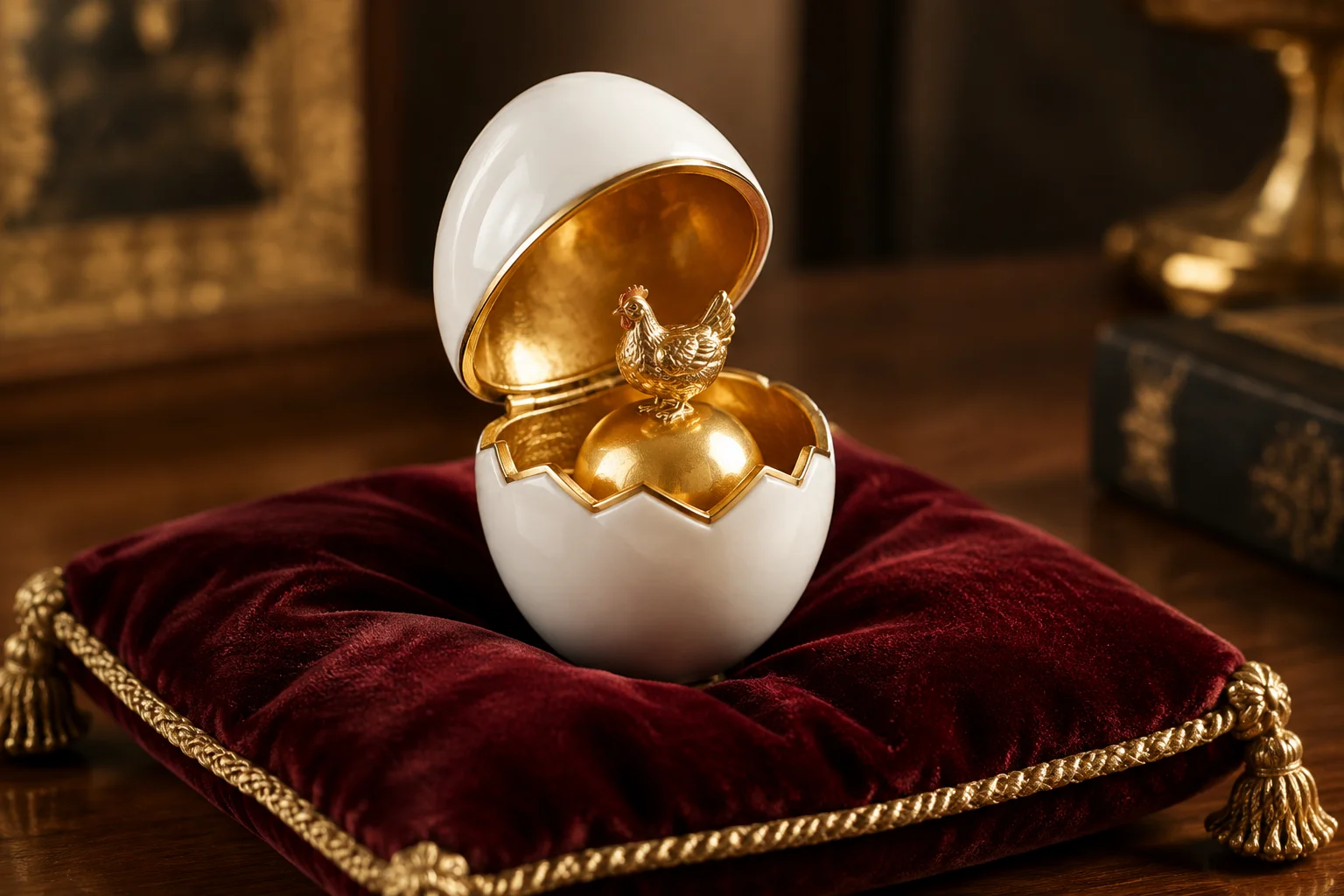
The very first Imperial egg is deceptively simple: a gold shell covered in opaque white enamel that opens to reveal a gold yolk. Inside the yolk is a gold hen, and inside the hen was originally a tiny diamond replica of the Imperial crown. The crown is now lost, but the egg itself remains the template for all that followed.
2. The Blue Serpent Clock Egg (1887)
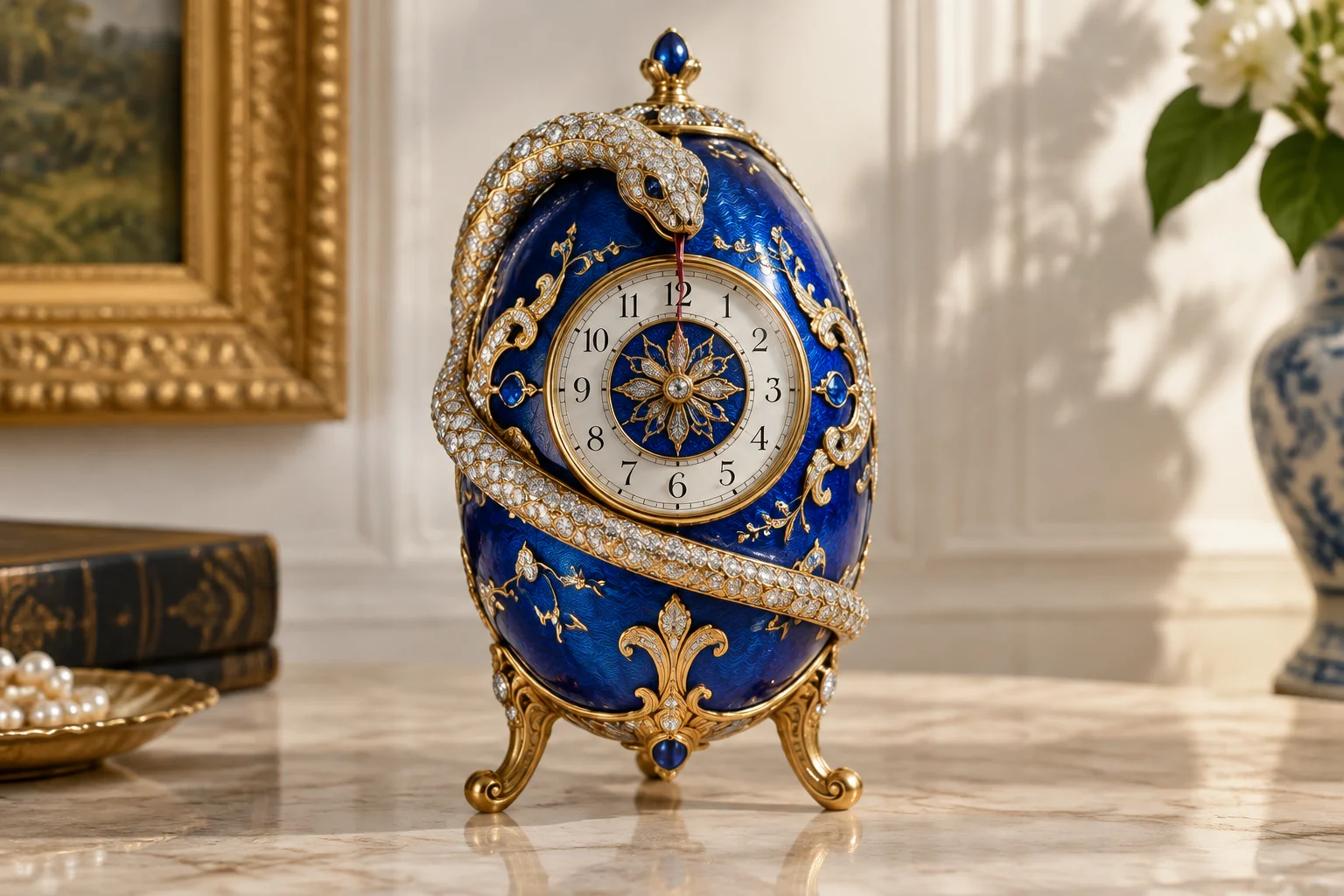
This egg doubles as a clock, with a rotating dial and a serpent whose tongue points to the hour. Crafted from gold, enamel, and diamonds, it now resides in the collection of Prince Albert II of Monaco. Its elegant blue enamel makes it one of the most beautiful Fabergé eggs in any photo.
3. The Cherub with Chariot Egg (1888)
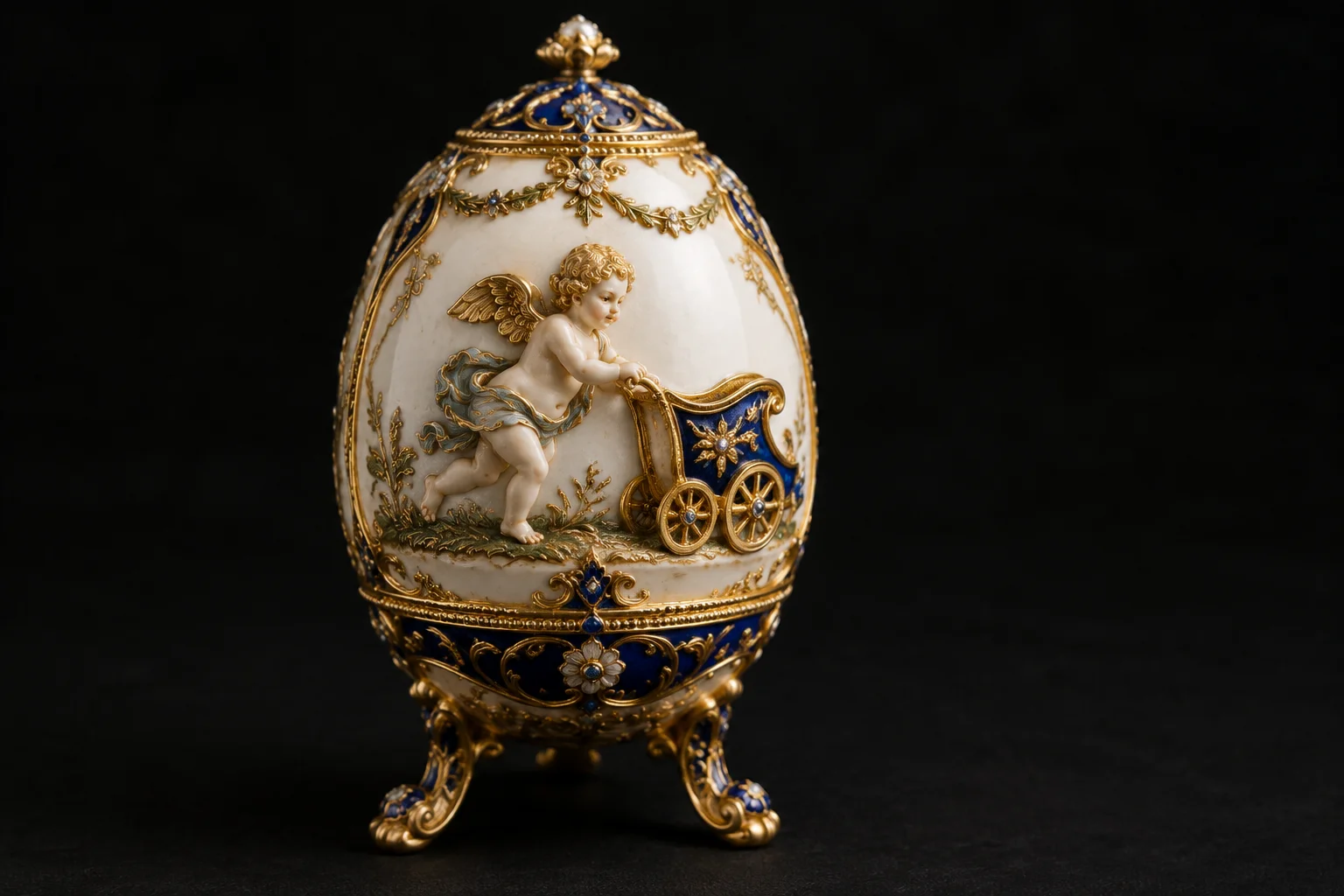
One of the "missing" Imperial eggs, this piece is known only from a single grainy photograph. It featured a cherub pushing a chariot, but its whereabouts remain unknown. The mystery adds to its allure for collectors and historians.
4. The Nécessaire Egg (1889)
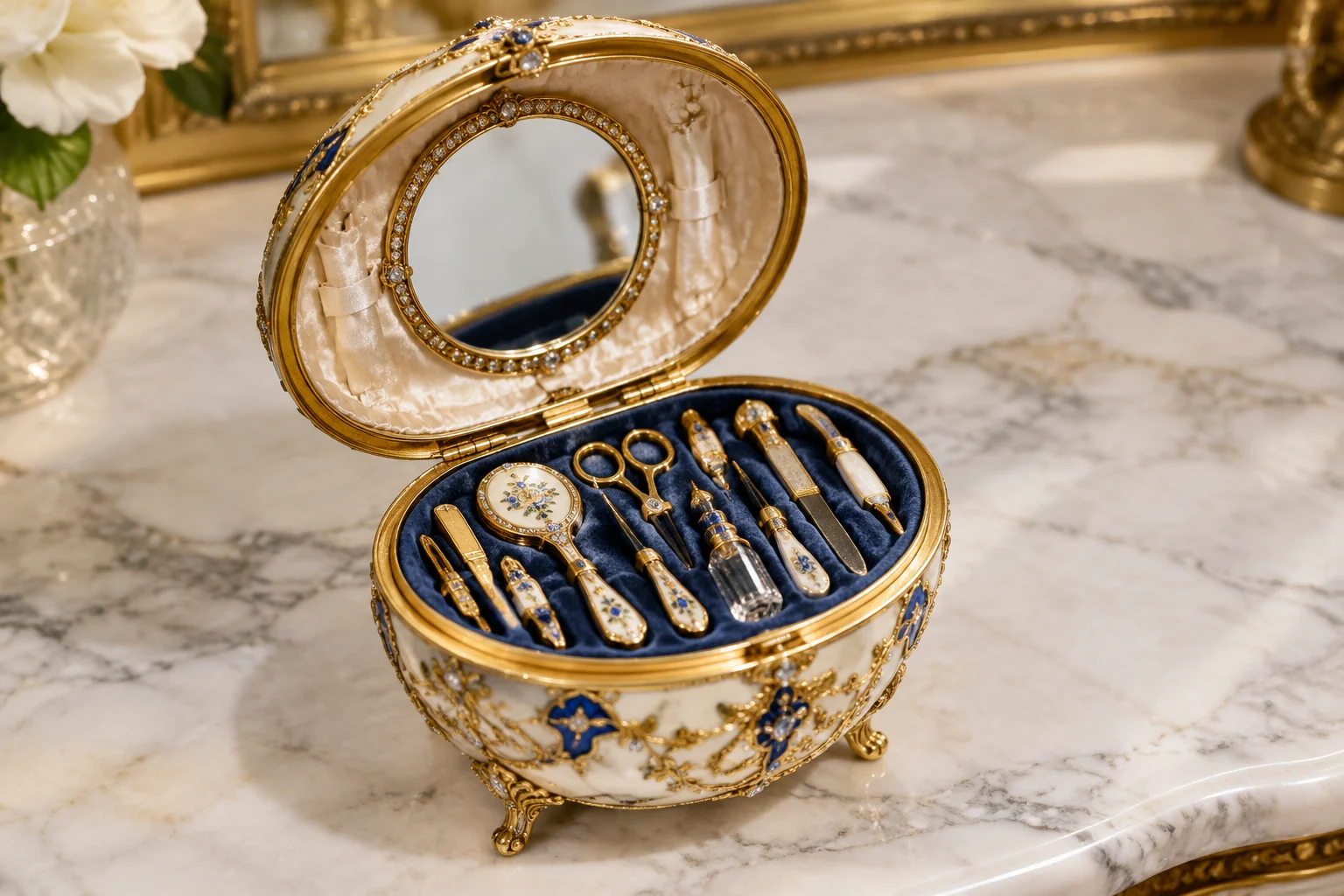
This egg was designed as a practical vanity case, containing thirteen gold and jeweled implements. It vanished after being sold by the Soviet government in the 1920s and only resurfaced in 2015. Its rediscovery made headlines and reminded the world how many treasures still hide in private hands.
5. The Danish Palaces Egg (1890)
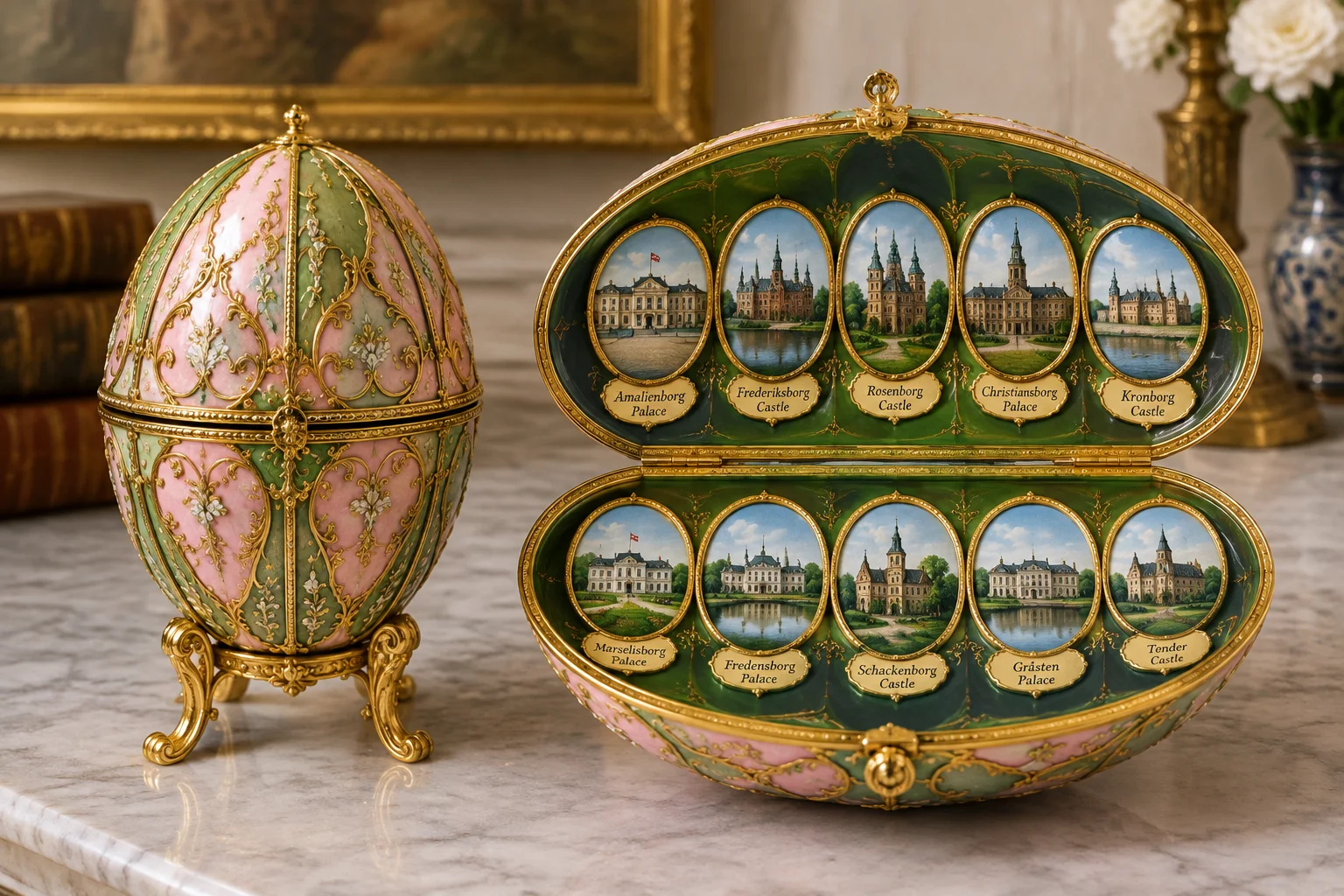
This egg opens to reveal ten miniature paintings of Danish palaces, a nod to Empress Maria Feodorovna's homeland. The outside is enameled in pink and green with gold scrollwork. It is now part of the Matilda Geddings Gray Foundation Collection at the Metropolitan Museum of Art.
6. The Memory of Azov Egg (1891)
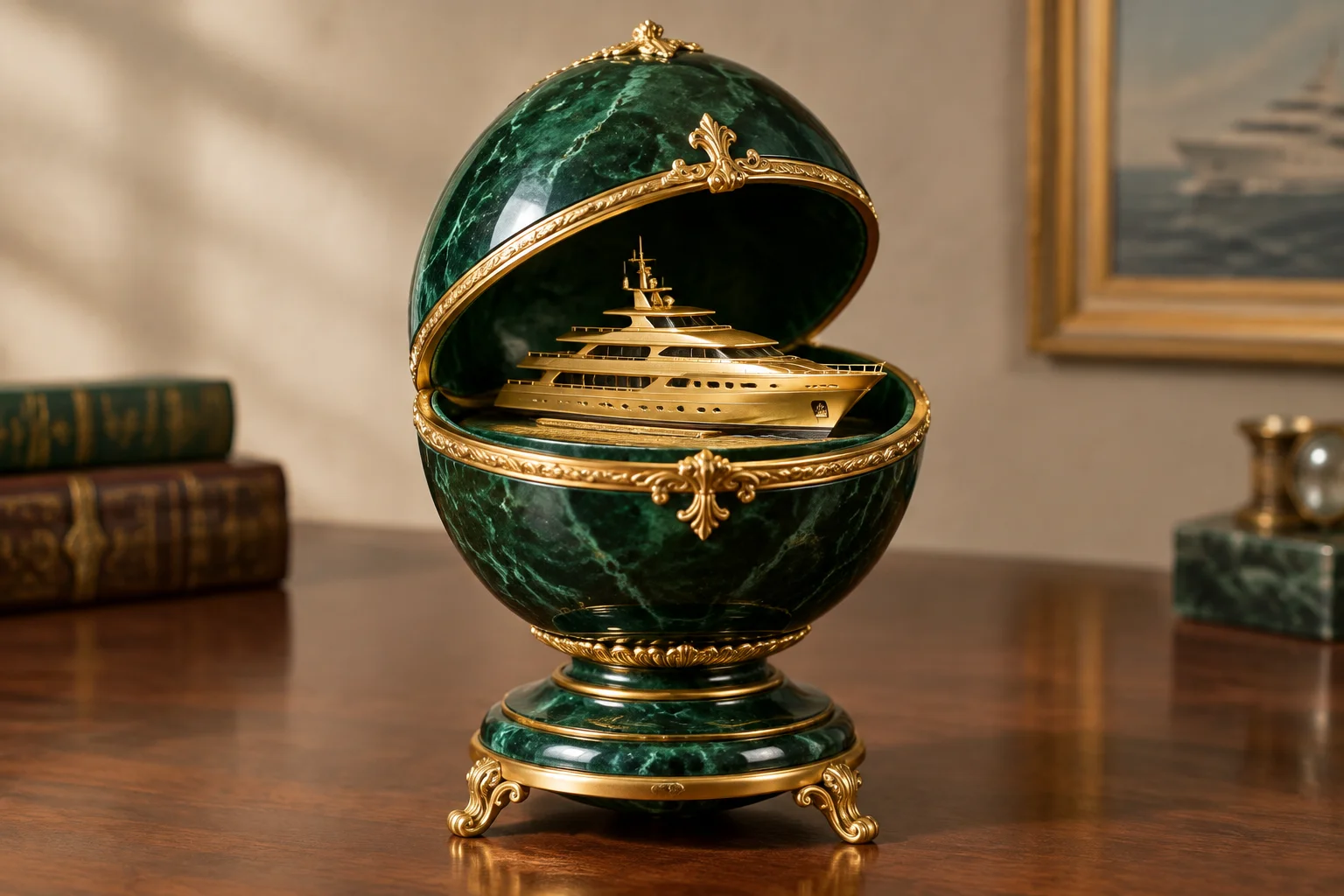
Carved from a single piece of heliotrope jasper, this egg contains a miniature gold model of the imperial yacht Pamiat Azova. The yacht was named after the Battle of Azov, and the egg commemorates a voyage. It is one of the few eggs made from hardstone rather than precious metal.
7. The Diamond Trellis Egg (1892)
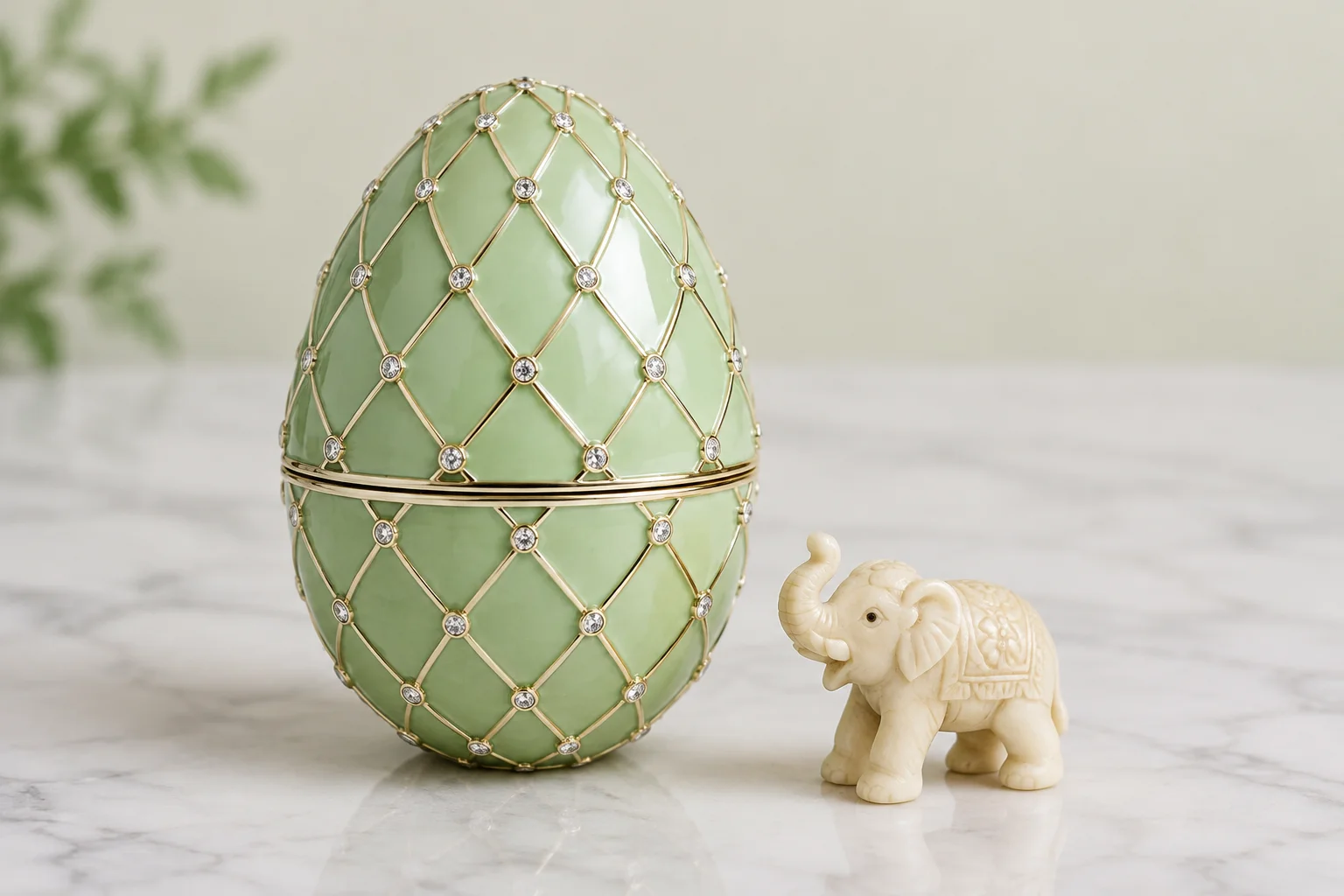
This egg's shell is covered in a diamond trellis pattern, with a carved elephant inside as a surprise. The elephant is now separated from the egg, which is in the collection of the McFerrin Foundation. The pale green and gold color scheme makes it a favorite among those who share Fabergé egg images online.
8. The Caucasus Egg (1893)
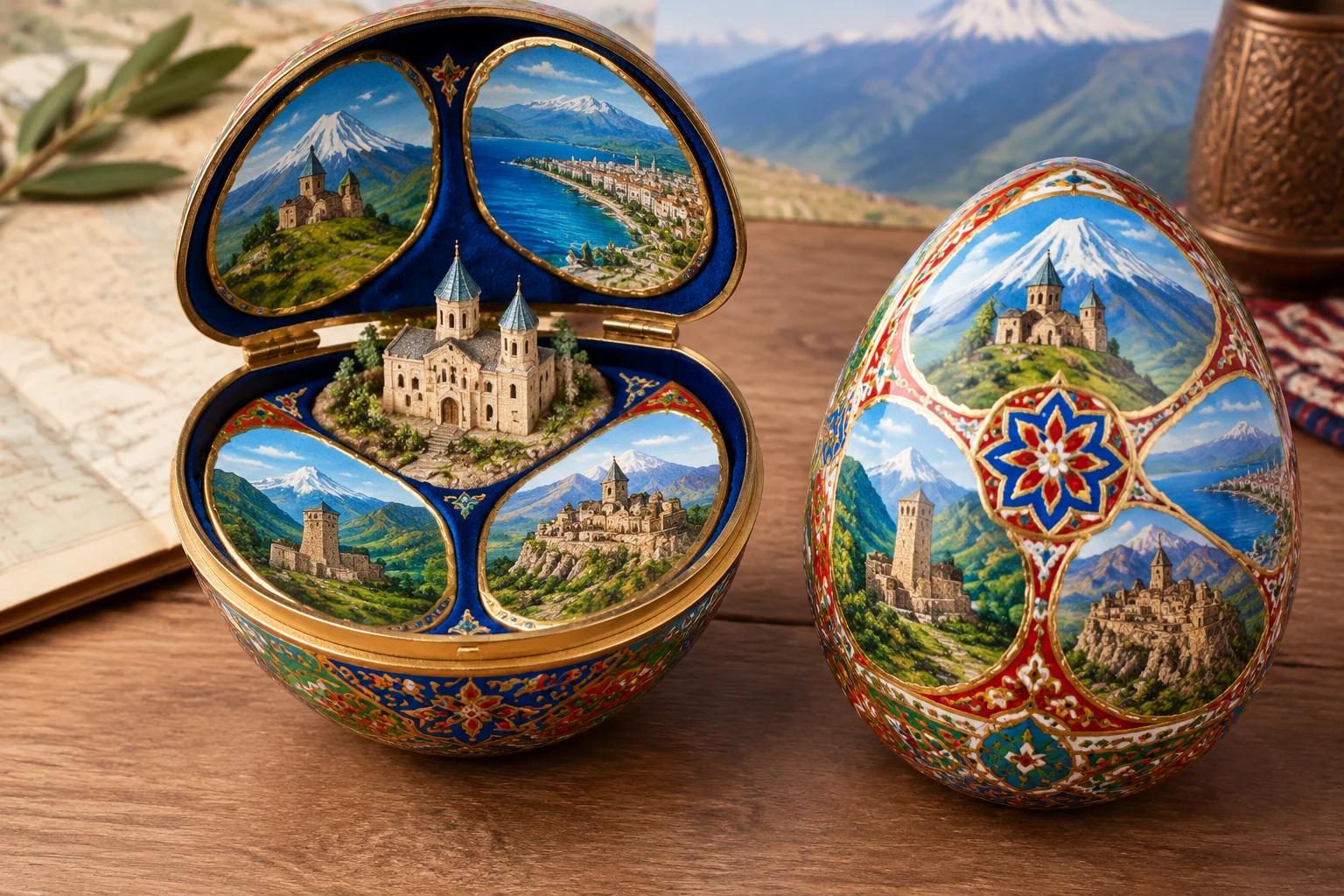
This egg contains four miniature paintings of the Caucasus region and a tiny model of a palace. It was made to commemorate the Grand Duke George Alexandrovich's time in the Caucasus. The egg is now in the Matilda Geddings Gray Foundation Collection.
9. The Renaissance Egg (1894)
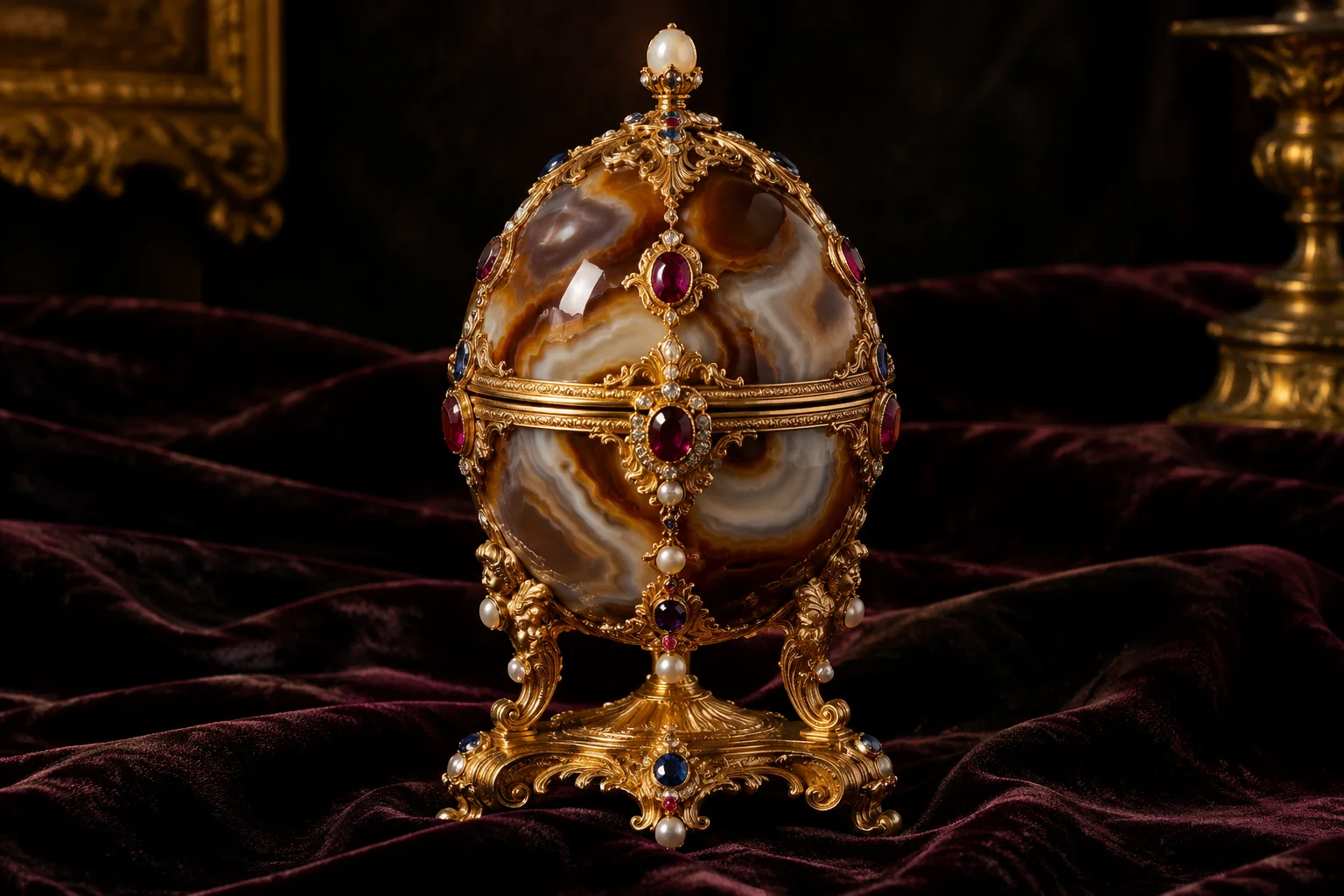
The Renaissance Egg is a faithful reproduction of a 17th-century casket, carved from agate and adorned with jewels. It was the last egg given by Alexander III to Maria Feodorovna before his death. Today it belongs to the Link of Times Foundation, owned by Viktor Vekselberg.
10. The Rosebud Egg (1895)
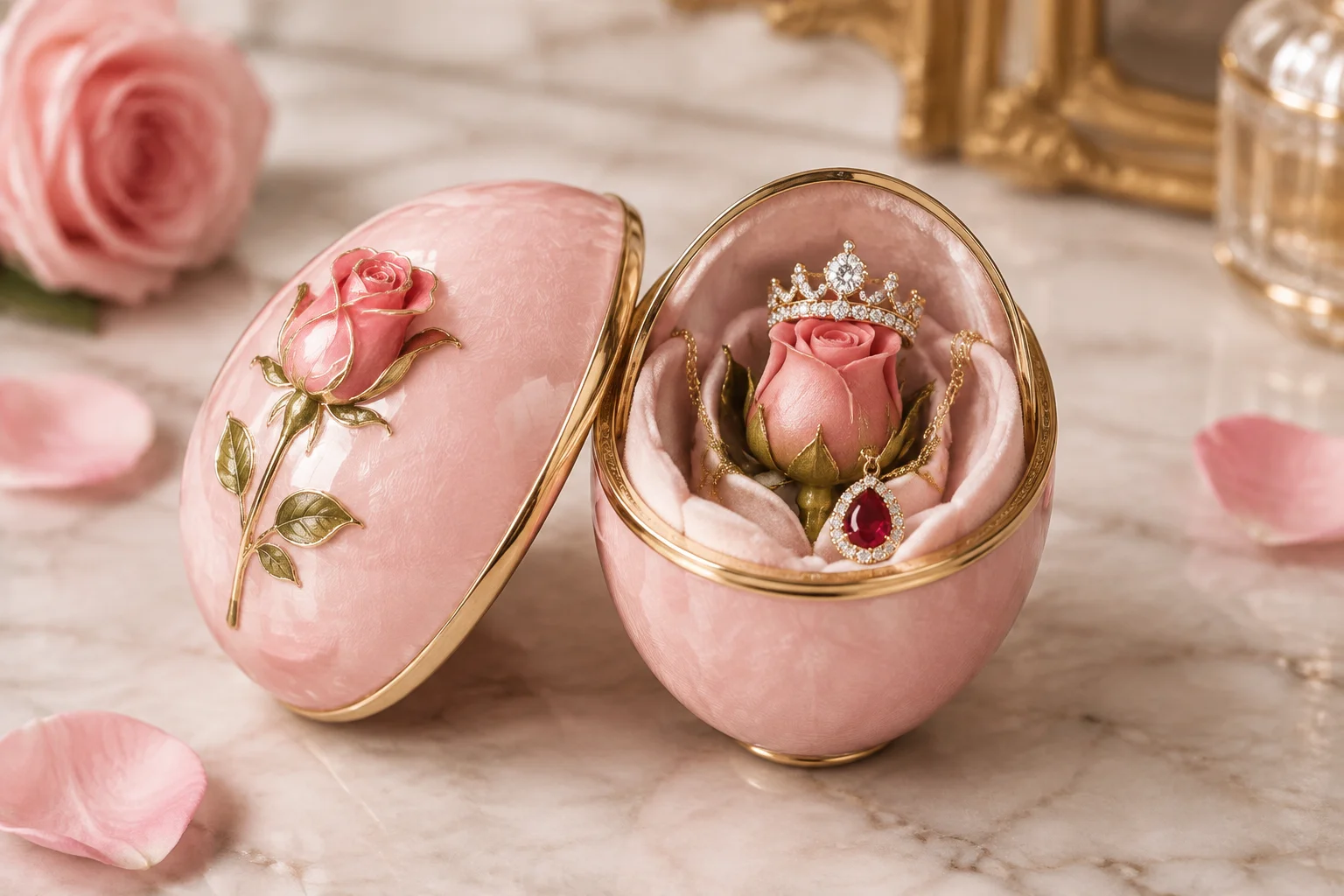
The first egg given by Nicholas II to his wife, Alexandra Feodorovna, features a rosebud surprise. Inside the bud was a tiny diamond crown and a ruby pendant, both now lost. The egg itself is in the Link of Times Foundation collection.
11. The Twelve Monograms Egg (1896)
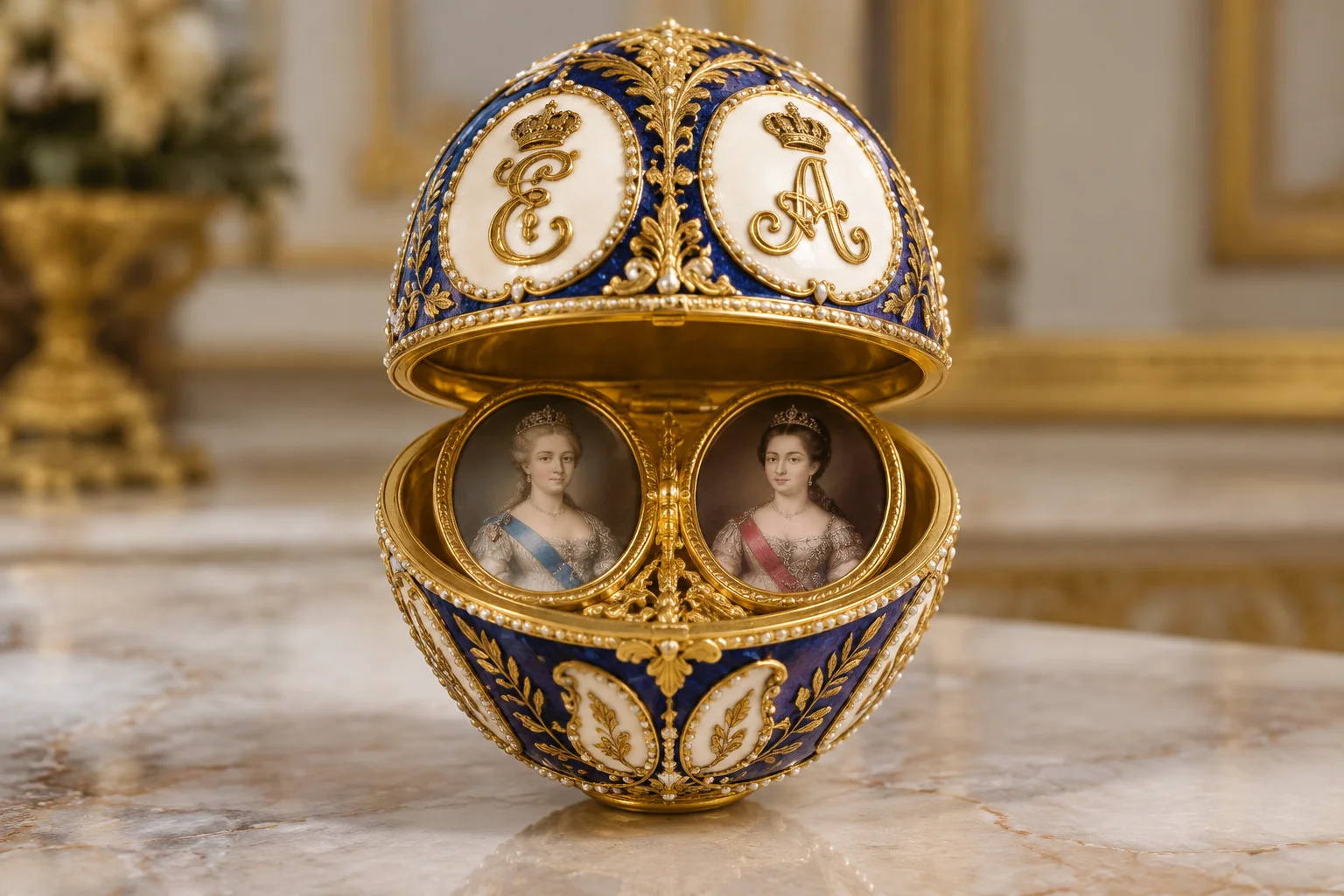
Also known as the Alexander III Portraits Egg, this piece contains six miniature portraits of Alexander III. The exterior is decorated with the monograms of Alexandra and her mother-in-law. It is now in the Virginia Museum of Fine Arts.
12. The Coronation Egg (1897)
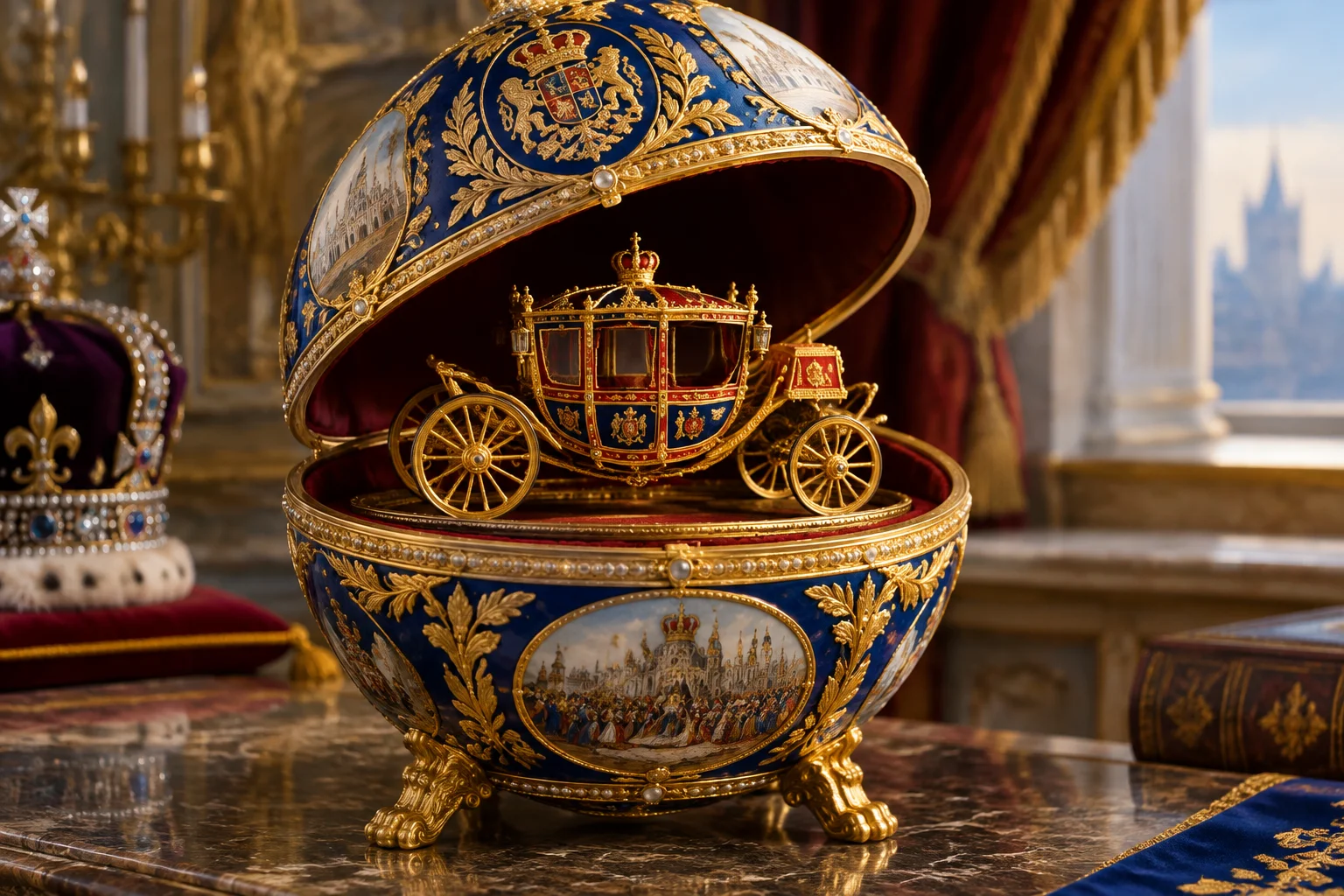
Perhaps the most famous Imperial egg, the Coronation Egg commemorates Nicholas II's coronation. Inside is a perfect miniature replica of the coronation carriage, complete with moving wheels and a tiny driver. The egg is now in the Link of Times Foundation and is often called the most beautiful Fabergé egg ever made.
13. The Lilies of the Valley Egg (1898)
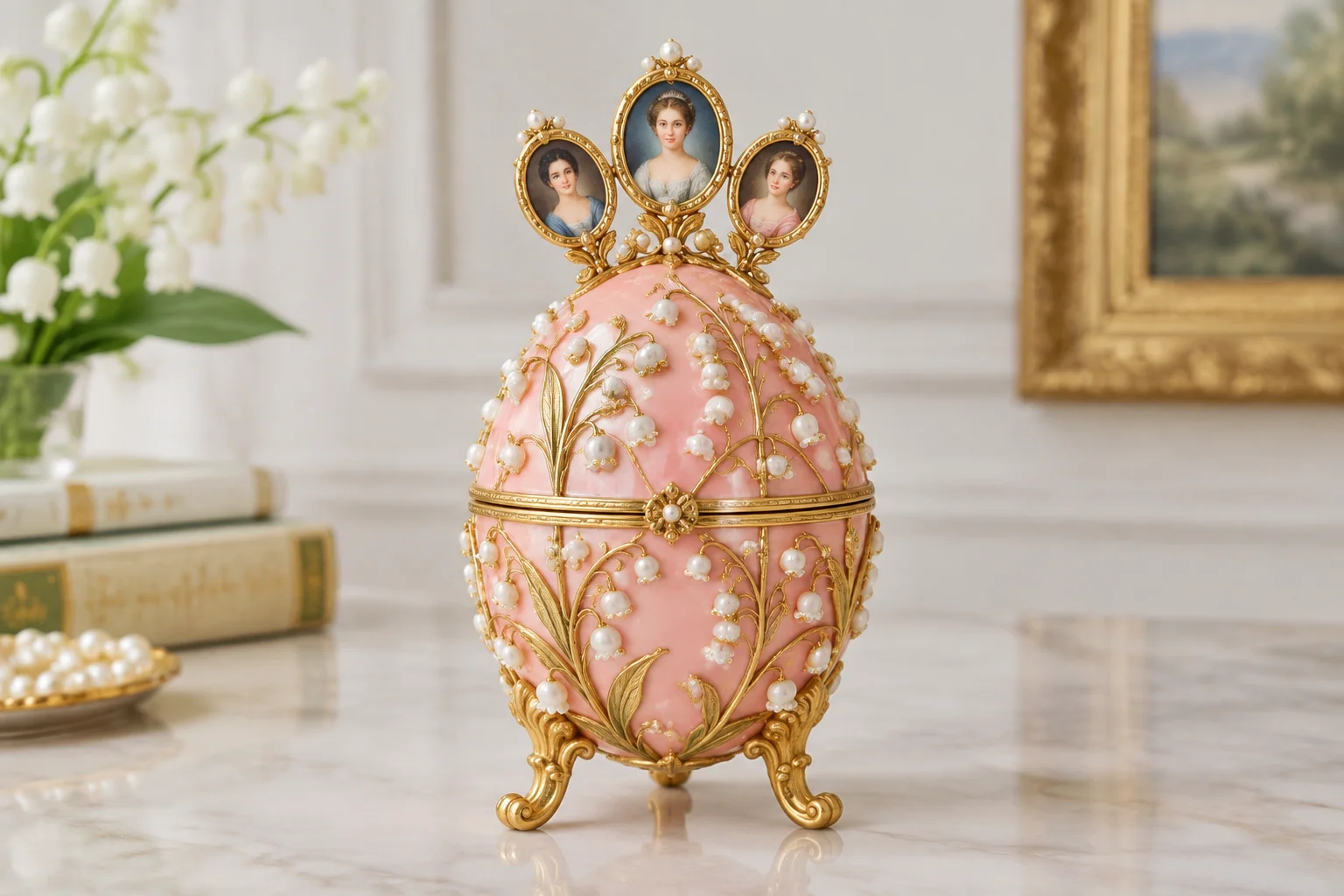
This egg is covered in pink enamel and gold lily-of-the-valley leaves, with pearls serving as the flowers. A surprise mechanism causes three miniature portraits to rise from the top. It remains one of the most photographed eggs in the Link of Times Foundation.
14. The Pansy Egg (1899)
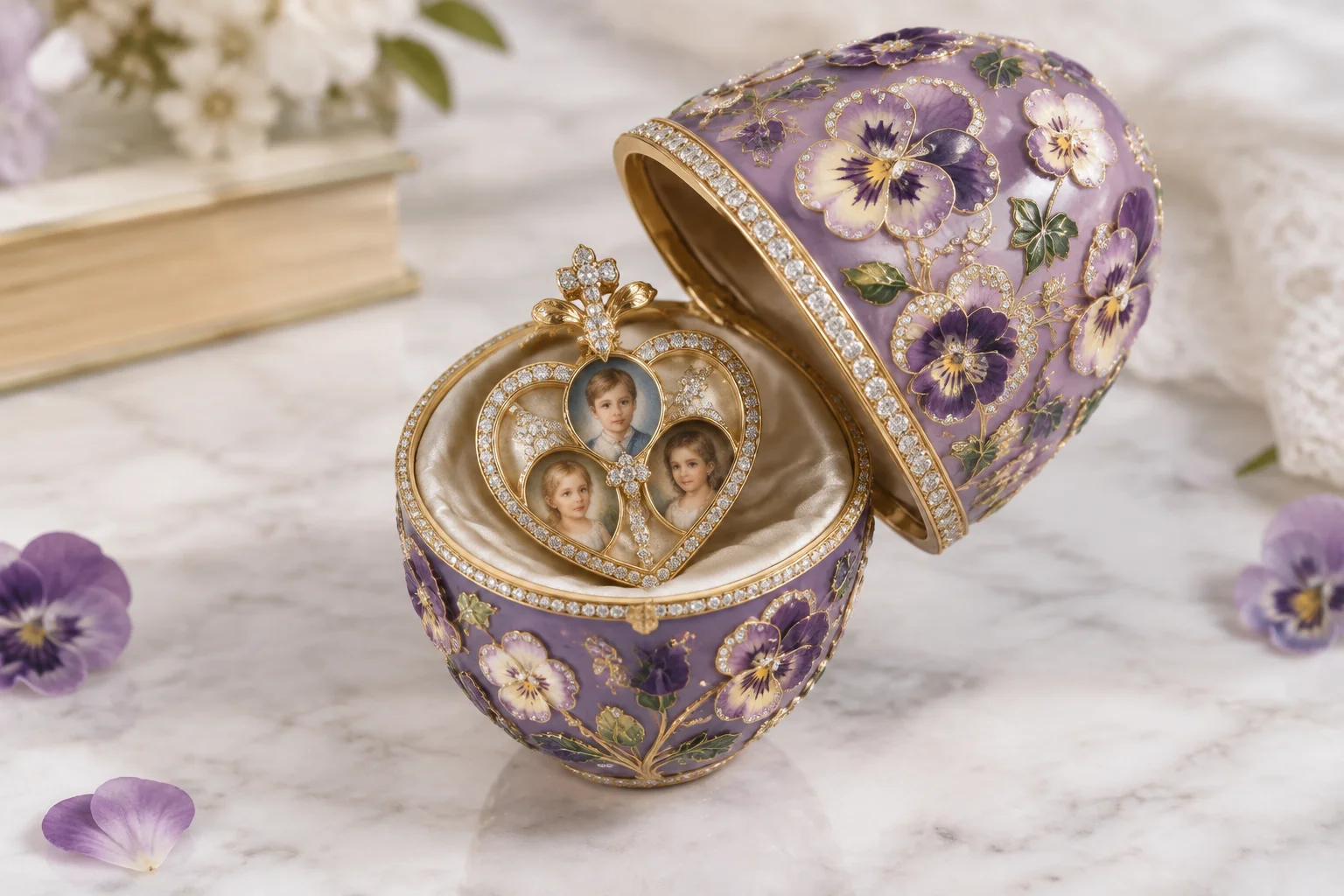
Also known as the Pansy Egg, this piece features a purple enamel shell with diamond-set pansies. Inside is a heart-shaped surprise with miniature portraits of the imperial children. It is now in the Matilda Geddings Gray Foundation Collection.
15. The Trans-Siberian Railway Egg (1900)
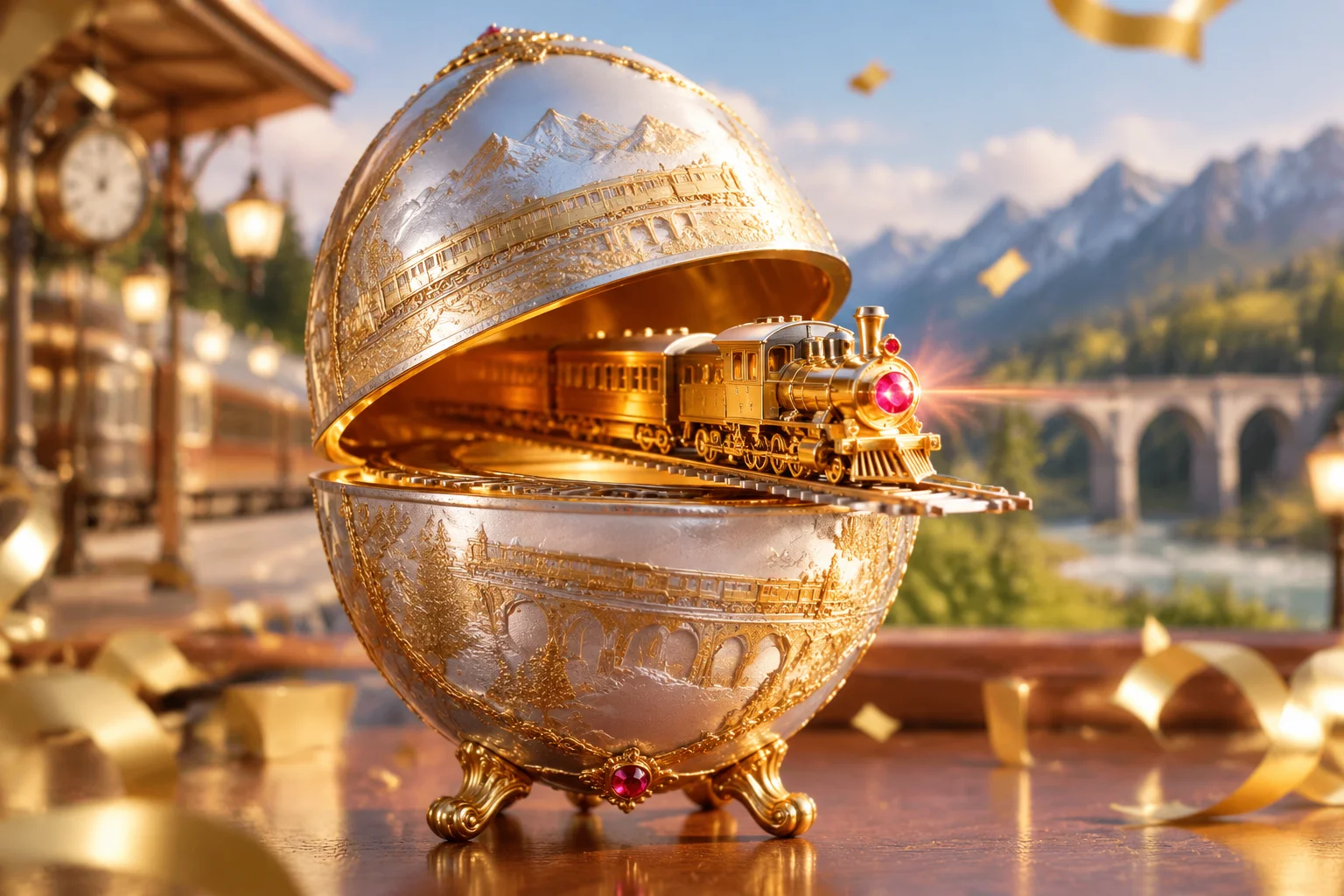
This egg celebrates the completion of the Trans-Siberian Railway. Its surprise is a miniature gold train that actually moves, complete with a ruby headlight. The egg is now in the Kremlin Armoury Museum in Moscow.
16. The Gatchina Palace Egg (1901)
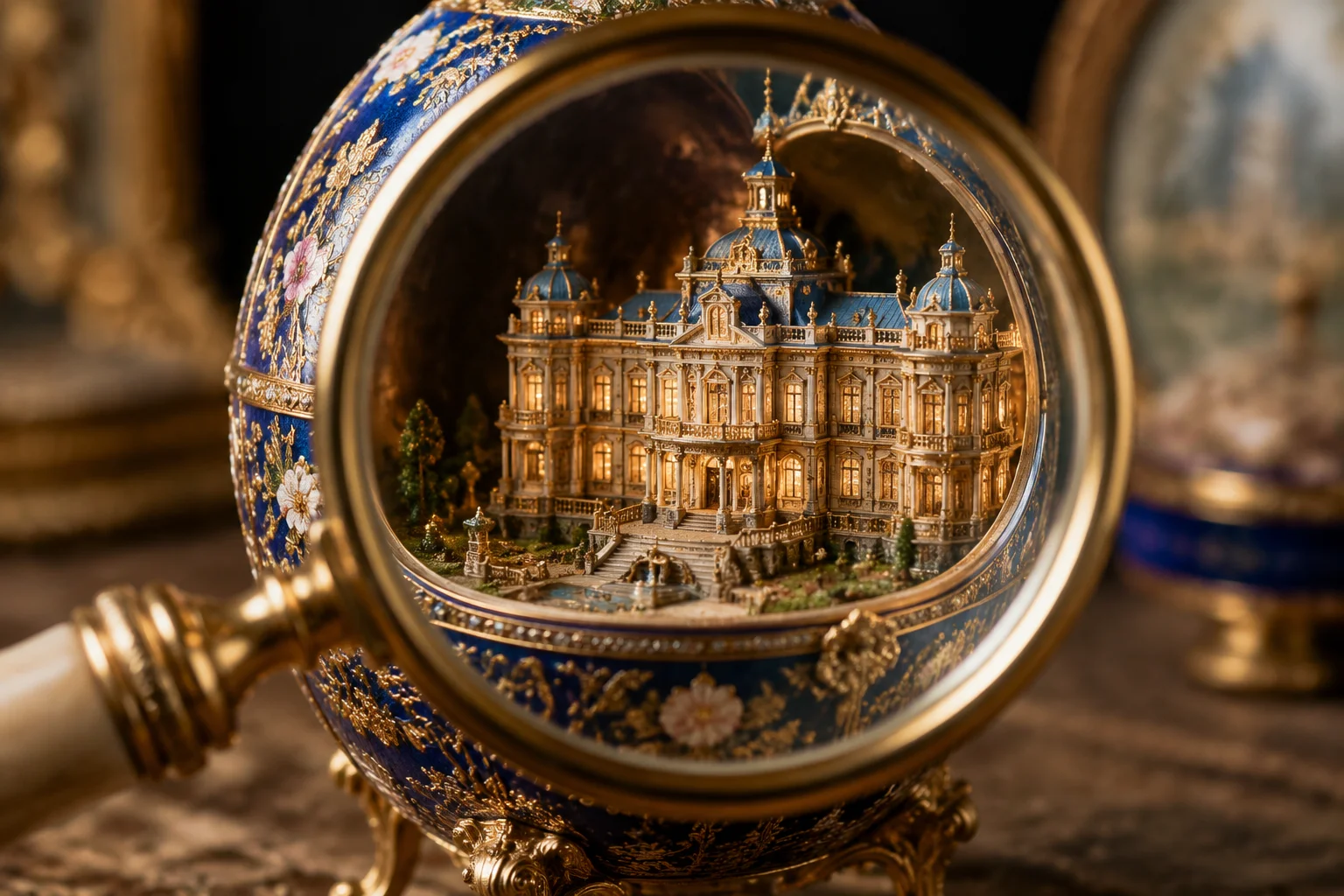
This egg contains a detailed miniature of the Gatchina Palace, the summer residence of the imperial family. The palace model is so precise that you can see tiny windows and balconies. It is now in the Walters Art Museum in Baltimore.
17. The Bouquet of Lilies Clock Egg (1902)
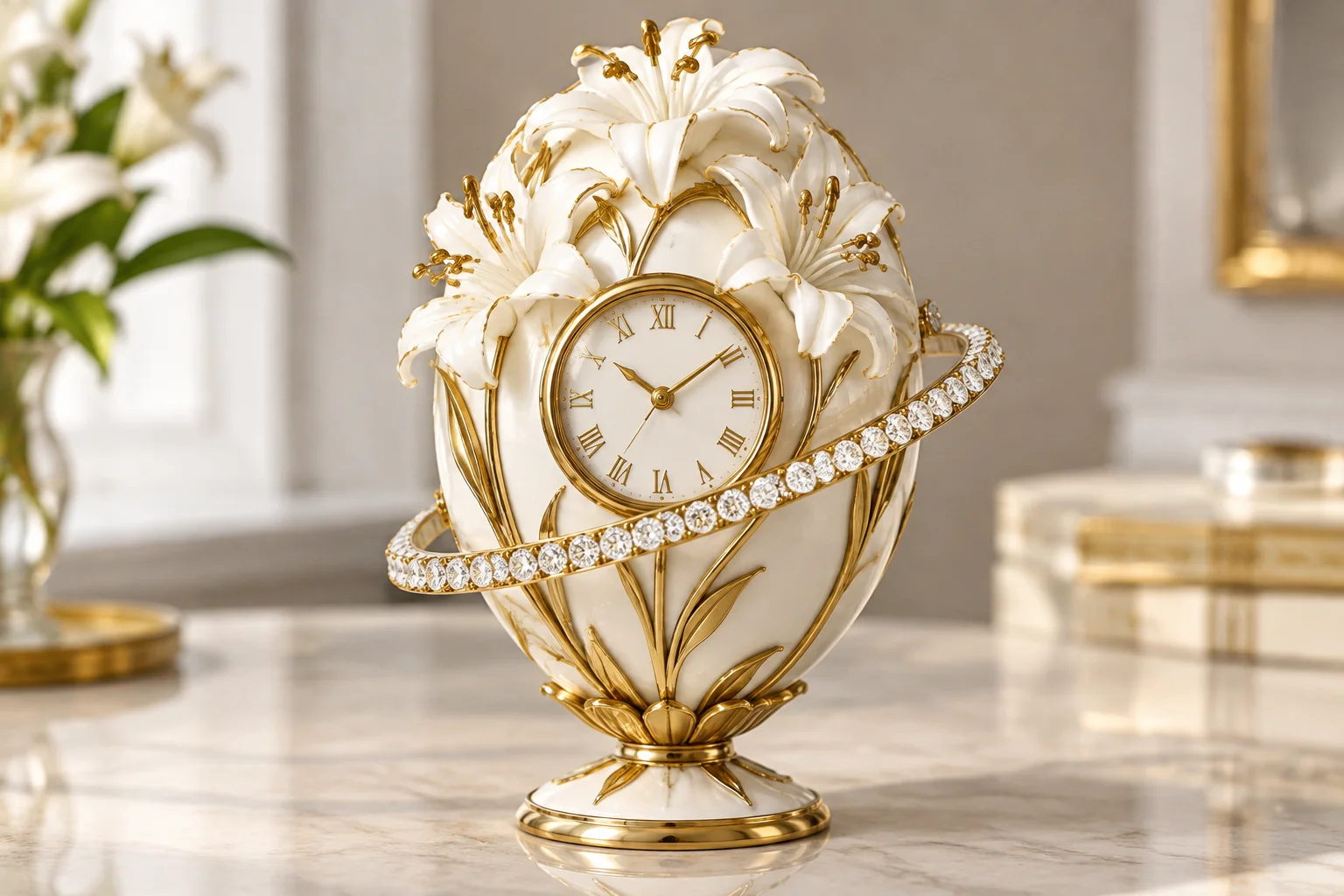
This egg is both a clock and a bouquet, with white lilies carved from chalcedony. The hours are marked by a rotating ring of diamonds. It is now in the Kremlin Armoury Museum.
18. The Peter the Great Egg (1903)
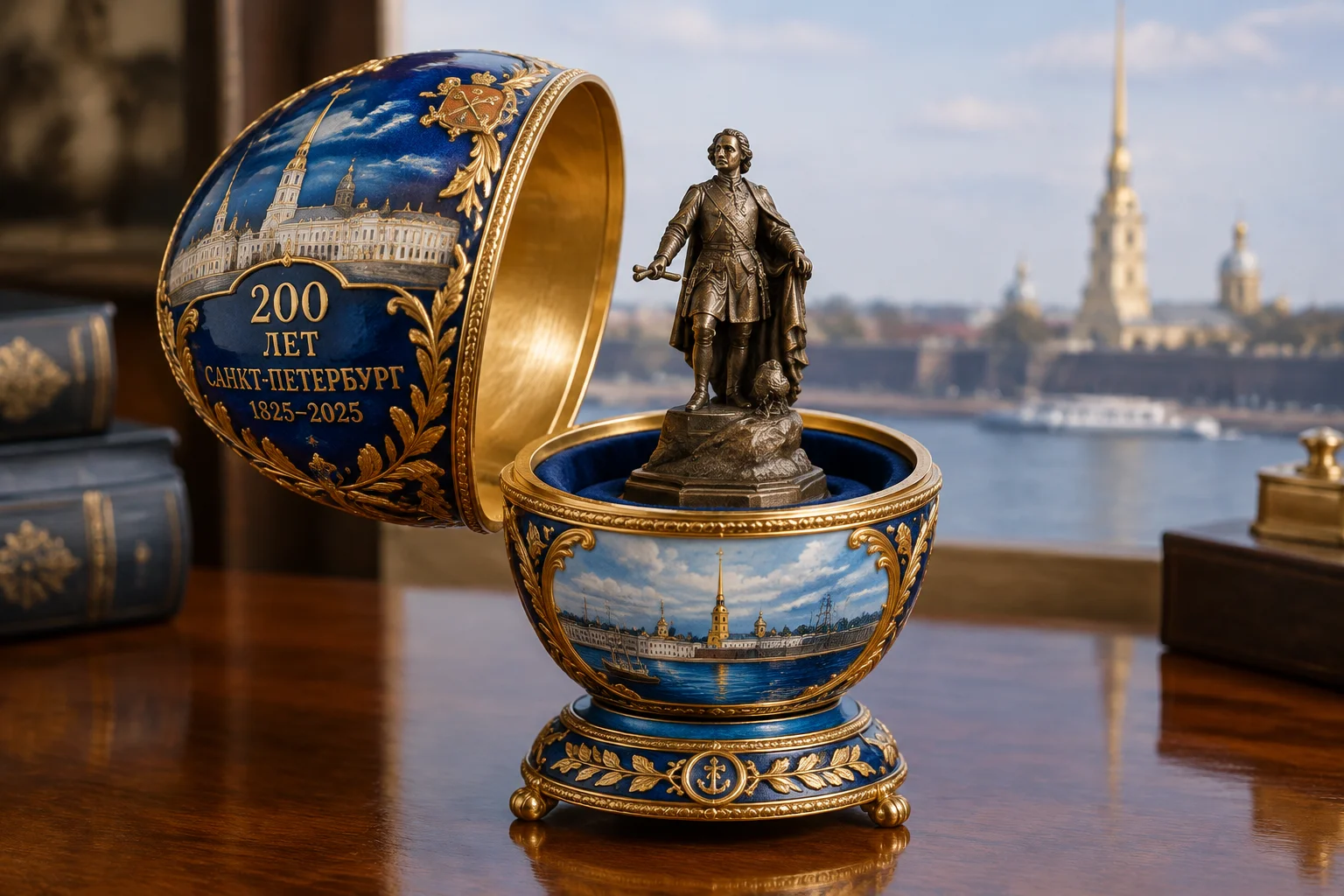
This egg commemorates the bicentennial of St. Petersburg's founding by Peter the Great. Inside is a miniature bronze statue of Peter the Great, and the exterior features four miniature paintings of the city. It is now in the Virginia Museum of Fine Arts.
19. The Moscow Kremlin Egg (1906)
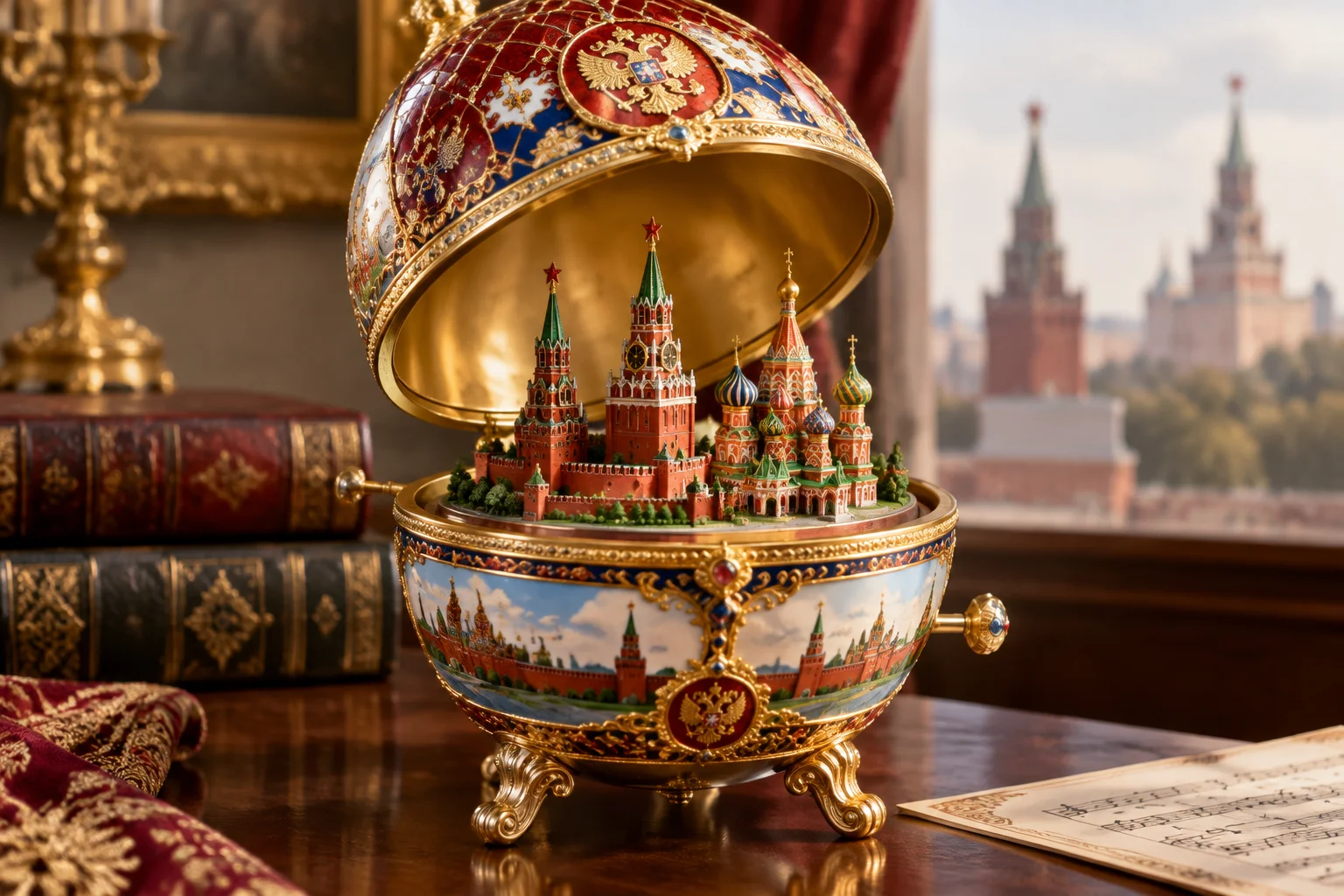
This egg is one of the largest, featuring a detailed model of the Moscow Kremlin inside. The exterior is made of gold, enamel, and silver, with a music box that plays a hymn. It remains in the Kremlin Armoury Museum.
20. The Order of St. George Egg (1916)
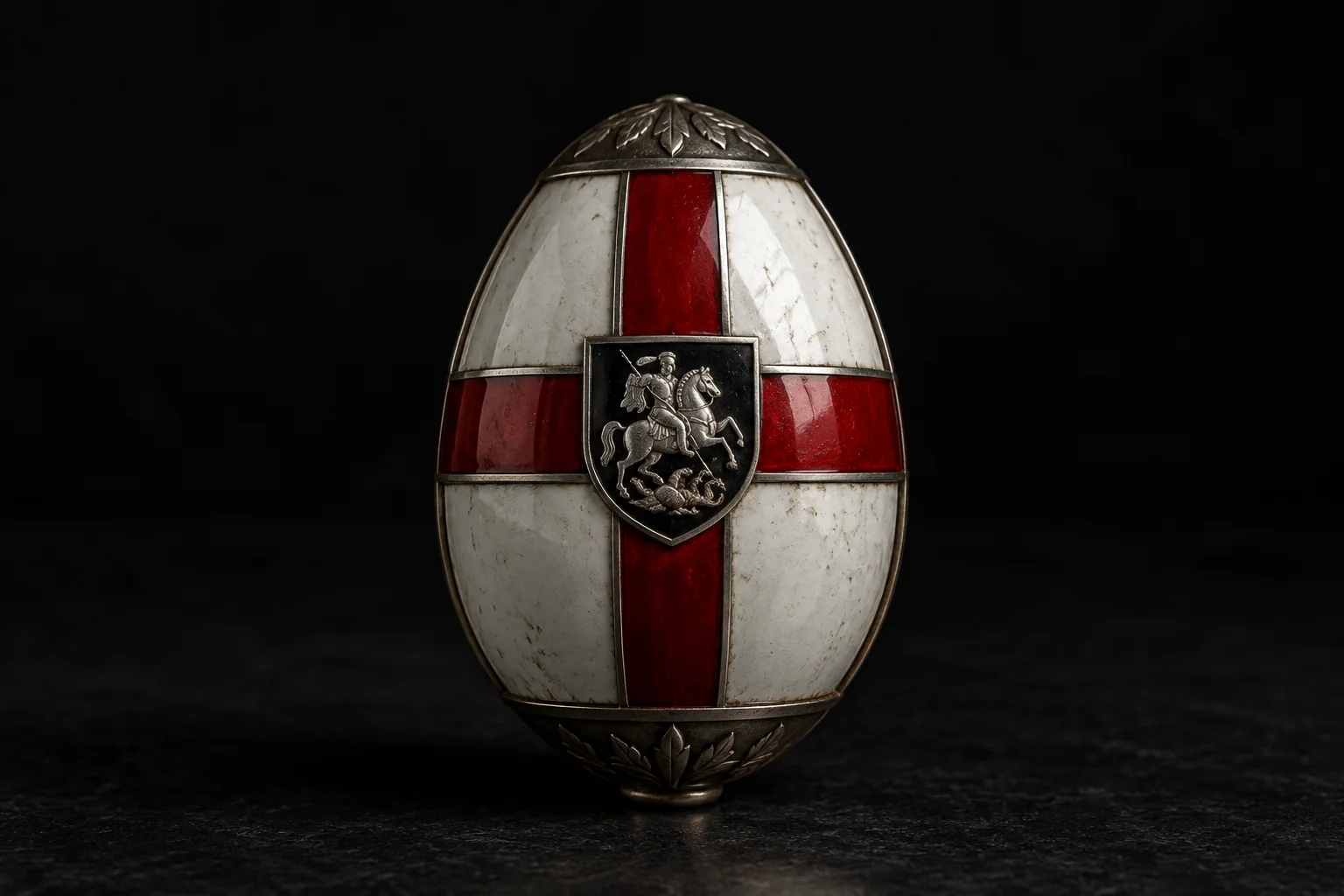
The last Imperial egg delivered to Maria Feodorovna, this piece is made of steel and enamel with the Order of St. George cross. It was given during World War I, and its somber design reflects the wartime mood. It is now in the Link of Times Foundation.
The Missing and Lost Fabergé Eggs
Not all of the Fabergé eggs survived. Several are known only from photographs or descriptions, and their whereabouts remain a mystery. The Cherub with Chariot Egg, the Nécessaire Egg, and the Mauve Egg are among the missing.
Other eggs were sold by the Soviet government in the 1920s and 1930s to raise hard currency. Some were melted down, and their materials reused. The search for these lost treasures continues, and every few years a new discovery makes headlines.
The Mystery of the Missing Eggs
Historians have identified seven Imperial eggs that are still unaccounted for. They include the Hen Egg's surprise, the Resurrection Egg, and the 1903 Royal Danish Egg. Each one is a potential holy grail for collectors.
How to Spot a Knockoff Version of a Bejeweled Imperial Egg
The market is flooded with imitations, so it's important to know the signs of a knockoff version of a bejeweled imperial egg. First, look for the maker's mark: genuine Fabergé eggs bear the hallmark of the House of Fabergé, often with the initials of the workmaster. Second, examine the craftsmanship—real eggs have flawless enamel and perfectly set stones.
Third, be wary of prices that seem too good to be true. A genuine Imperial egg has never sold for less than seven figures, and most are priceless. If someone offers you a "Fabergé egg" for a few thousand dollars, it's almost certainly a Fabergé style egg made later.
Fabergé Eggs in Popular Culture and Today
Fabergé eggs have inspired countless films, books, and even heist movies. They appear in James Bond films, in the movie "Ocean's Twelve," and in countless novels. This cultural presence keeps the demand for images of Fabergé eggs high.
Today, you can see many of the surviving eggs in museums around the world. The Kremlin Armoury in Moscow has ten, the Virginia Museum of Fine Arts has five, and the Link of Times Foundation in St. Petersburg has nine. Other eggs are in private collections, occasionally shown in exhibitions.
Where to See Fabergé Eggs Today
If you want to see them in person, plan a trip to St. Petersburg, Moscow, or Richmond, Virginia. The Metropolitan Museum of Art in New York also displays several. Many museums now offer virtual tours, so you can browse photos of Fabergé eggs from your couch.
The Legacy of Peter Carl Fabergé
Peter Carl Fabergé died in exile in 1920, but his name became synonymous with luxury. His firm's techniques influenced generations of jewelers, and his eggs remain the ultimate symbol of imperial opulence. The story of the Romanov eggs is a reminder of how art can outlive empires.
Conclusion: Why These Eggs Still Captivate
The jawdropping beauty of Fabergé eggs lies not just in their materials but in their stories. Each egg is a time capsule of a lost world, carrying the fingerprints of artisans and the dreams of royalty. Whether you're admiring photos of Fabergé eggs online or lucky enough to see one in person, they never fail to impress.
We hope this list of Fabergé eggs with pictures has inspired you to learn more. Remember, when you see a bejeweled imperial egg, you're looking at more than a jewel—you're looking at history. And if you ever spot a knockoff version of a bejeweled imperial egg, you'll now know the difference.
So go ahead and search for images of Fabergé eggs, and let the wonder sink in. These tiny treasures may be scattered across the globe, but their magic remains intact.
Frequently Asked Questions
What are the best sources for images of Fabergé eggs?
Museum websites like the Kremlin Armoury, the Virginia Museum of Fine Arts, and the Metropolitan Museum of Art offer high-resolution images of Fabergé eggs. You can also find photos of Fabergé eggs in books and online archives dedicated to the Romanov eggs.
How many Fabergé eggs were created?
The House of Fabergé created fifty Imperial eggs between 1885 and 1917, of which forty-three survive. They also made about a dozen other eggs for private clients, so the total number of Fabergé eggs is slightly higher.
What is a knockoff version of a bejeweled imperial egg?
A knockoff version of a bejeweled imperial egg is a later imitation made to look like an original Fabergé egg. These are often made of base metals, enamel, and glass stones, and they lack the maker's mark and fine craftsmanship of genuine pieces.
Are there Fabergé style eggs still made today?
Yes, many jewelers and artists create Fabergé style eggs as decorative objects. These range from affordable trinkets to high-end collectibles, but they are not made by the original House of Fabergé.
Where can I see all of the Fabergé eggs?
No single location has all of the Fabergé eggs. The largest collections are in the Kremlin Armoury in Moscow, the Link of Times Foundation in St. Petersburg, and the Virginia Museum of Fine Arts. Several eggs are in private hands and only occasionally displayed.
What makes a Fabergé egg so valuable?
Fabergé eggs are valuable due to their exceptional craftsmanship, use of precious materials, historical association with the Romanovs, and extreme rarity. Each egg is a unique work of art, and many contain intricate mechanical surprises.

Alex Warren
Related Articles





