On the night of October 16, 2000, a small twin-engine plane went down in dense fog near Goldman, Missouri, killing everyone aboard. Among the dead was Governor Mel Carnahan, a Democrat who just weeks earlier had been locked in one of the most closely watched Senate races in the country. Three weeks after his death, Missouri voters went to the polls anyway — and elected him to the United States Senate. It remains one of the strangest, most poignant stories in American political history, and also one of the most misunderstood.
Before we get into the details, here's the short version. Mel Carnahan died in a plane crash on October 16, 2000, but his name stayed on the ballot, and he defeated incumbent Senator John Ashcroft in the November 7 election — after which his widow, Jean Carnahan, was appointed to serve in his place.
TL;DR: Missouri Governor Mel Carnahan won a U.S. Senate seat in the 2000 election three weeks after he died in a plane crash, and his widow Jean was appointed to fill the seat.
That single-sentence summary sounds almost impossible, but every part of it is documented in election records and contemporary news reports. The story behind it — who Mel Carnahan was, how the crash happened, why his name remained on the ballot, and what happened afterward — is far richer than the headline version. Below, we break it down into 20 key facts that separate what's verified from what's become legend.
The truth matters here because rumors still circulate about the 2000 Missouri senate race — that the dead man somehow "cast a vote," that Ashcroft was cheated, or that the whole thing was unprecedented and illegal. None of those claims hold up. What actually happened is a story about grief, constitutional procedure, and a state that decided to honor a man it had already planned to send to Washington. Let's walk through it.
1. Who Was Mel Carnahan?
Melvin Eugene Carnahan was born in Birch Tree, Missouri, in 1934, the son of a congressman and later judge. He grew up in a family steeped in Missouri politics and public service before building his own career as a lawyer and legislator. Before becoming governor, he served as a state representative and as Missouri's state treasurer, steadily climbing the ladder of Show-Me State politics.
He was elected governor of Missouri in 1992 and took office in 1993, a Democrat in a state that often swung between parties. He won re-election in 1996, making him the first Missouri governor in decades to serve two full consecutive terms. By the late 1990s, Governor Mel Carnahan had become a well-known and relatively popular figure in state politics.
2. A Governor With A Mixed, Complicated Legacy

Carnahan's tenure as governor was marked by both progressive and controversial decisions. One of the most famous moments of his governorship was his decision in early 1999 to commute the death sentence of Darrell Mease, a convicted murderer, just days before Pope John Paul II was scheduled to visit Missouri. The pope had personally appealed for mercy, and Carnahan granted it, drawing fierce criticism from death-penalty supporters.
He also championed education funding and infrastructure improvements, and he navigated the state through several difficult budget cycles. His legacy is debated differently depending on whom you ask, but he was widely seen as a serious, competent governor rather than a flashy one. That reputation mattered a great deal when he entered the 2000 Senate race.
3. The 2000 Missouri Senate Race: Why It Mattered Nationally
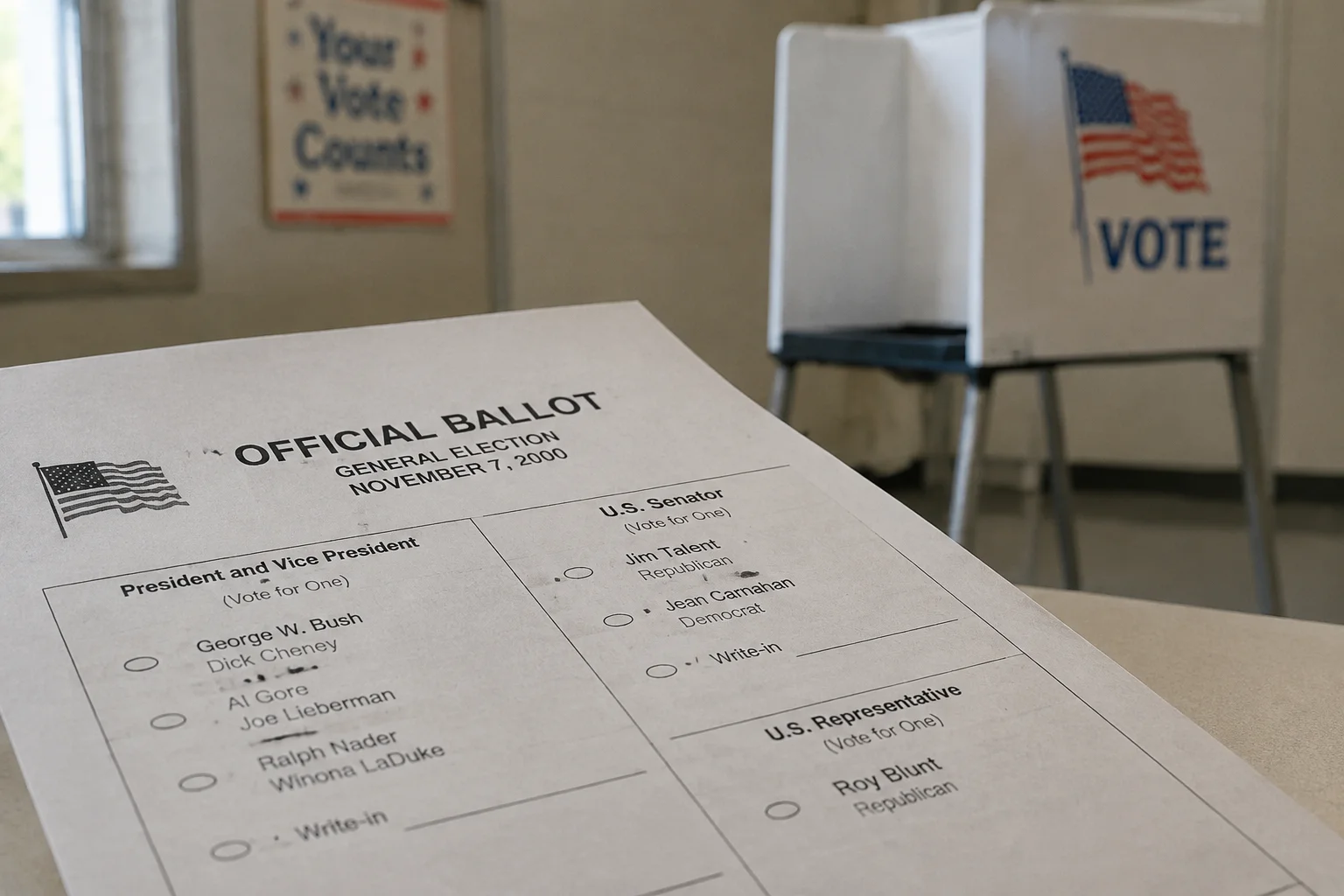
The 2000 Missouri senate race was one of the most closely watched contests in the country that year. Incumbent Republican Senator John Ashcroft was a well-known national figure, a former Missouri governor and future U.S. Attorney General under George W. Bush. Control of the U.S. Senate was razor-thin at the time, and Missouri was seen as a genuine toss-up that could determine which party held the majority.
The race drew millions in campaign spending and constant national media attention. Polls throughout 2000 showed a tight contest, with Carnahan running competitively or slightly ahead in several surveys. Both parties treated Missouri as a must-win state in an election year already charged with drama at the presidential level.
4. John Ashcroft: The Incumbent Facing A Real Fight

John Ashcroft had served as Missouri governor from 1985 to 1993 and was elected to the Senate in 1994. By 2000, he was a nationally recognizable conservative voice and a key figure in Republican politics. He was not, however, unbeatable back home, and Carnahan represented his most serious electoral challenge to date.
Ashcroft's Senate seat was one of the few held by Republicans in a state that had recently elected Democratic governors. The matchup between two former governors — Ashcroft and Carnahan — made the 2000 Missouri senate race unusually high-profile. It became a genuine grudge match between two seasoned Missouri politicians.
5. The Mel Carnahan Plane Crash: What Happened That Night

On October 16, 2000, the mel carnahan plane crash occurred in poor weather near Goldman, Missouri, in Jefferson County south of St. Louis. The plane was a twin-engine Cessna 335 piloted by Carnahan's son, Randy Carnahan, who was an experienced pilot. Also aboard were Carnahan's aide, Chris Sifford, and the governor himself, who was traveling to a campaign event in New Madrid.
The National Transportation Safety Board investigated and determined that the plane encountered fog and deteriorating visibility before crashing into a hillside. All three men aboard died. The crash was ruled an accident, attributed primarily to weather conditions and spatial disorientation. There was no evidence of foul play or mechanical sabotage, despite early speculation.
The loss was immediate national news. A sitting governor and U.S. Senate candidate had died while campaigning, just twenty-two days before the election. The tragedy reshaped the entire race overnight.
6. Who Else Died In The Crash

The loss extended beyond Governor Carnahan himself. Randy Carnahan, the governor's son, was piloting the aircraft and died in the crash. Chris Sifford, a longtime aide and close adviser, was also killed. For the Carnahan family, the tragedy was uniquely devastating: a father and son died together in the same accident.
The death of Randy Carnahan is sometimes overlooked in retellings that focus only on the governor. It shouldn't be, because it speaks to how personal and family-centered the whole story was. The Carnahans were a political dynasty, and the crash struck at the heart of that family.
7. Missouri's Ballot Rules: Why His Name Stayed On
One of the most common questions about this story is why Mel Carnahan's name remained on the ballot at all. The answer lies in Missouri election law and the timing of the tragedy. By October 16, the deadline to change or remove a candidate's name from the general election ballot had already passed.
Removing a candidate that late would have been logistically difficult and legally questionable, and it would have left Democrats without a standard-bearer. The state determined that the ballots would proceed as printed. There was no mechanism to simply substitute a new living candidate at that stage of the process.
This is the key fact that skeptics often miss: the dead man's name wasn't kept on the ballot as some kind of scheme. It was kept on because the calendar and the law left no practical alternative.
8. The Democratic Party's Unusual Decision

After the crash, Missouri Democrats faced an agonizing choice. They could try to rally behind a replacement, or they could leave Carnahan's name on the ballot and ask voters to honor him. They chose the latter, launching a campaign that essentially asked Missourians to elect the fallen governor as a tribute.
His widow, Jean Carnahan, became the emotional center of that effort, though she was not formally a candidate on the ballot. The party made clear that if Mel Carnahan won posthumously, then-Gov. Roger Wilson would appoint Jean Carnahan to the seat. That plan was openly communicated to voters, so no one was misled about what a vote for Carnahan actually meant.
9. Was It Legal To Elect A Dead Man?

Yes — and this is one of the most myth-busted points in the whole story. Under the U.S. Constitution, a deceased person cannot serve as a senator, but that does not prevent their name from appearing on a ballot or even winning an election. The Constitution sets qualifications for serving, not for appearing on ballots, and states control their own election procedures.
Missouri law allowed the election to proceed with Carnahan's name as printed. There was no constitutional crisis and no fraud. The Seventeenth Amendment governs the direct election of senators, but it does not address what happens if a winning candidate has died; that gap is filled by state law and gubernatorial appointment. Legal scholars at the time generally agreed the election was valid.
10. Election Night 2000: A Dead Man Wins
On November 7, 2000, Missouri voters went to the polls. When the results came in, Mel Carnahan had defeated John Ashcroft by roughly 48,000 votes — about two percentage points. It was a narrow but clear margin, and it became official when the results were certified.
For many Missourians, the vote was an act of mourning as much as politics. Turnout among Democrats was reportedly strong, driven partly by sympathy and partly by the desire to deny Ashcroft the seat. The result stunned observers nationwide and remains one of the most remarkable election outcomes in American history.
11. How Many Votes Did Carnahan Actually Get?
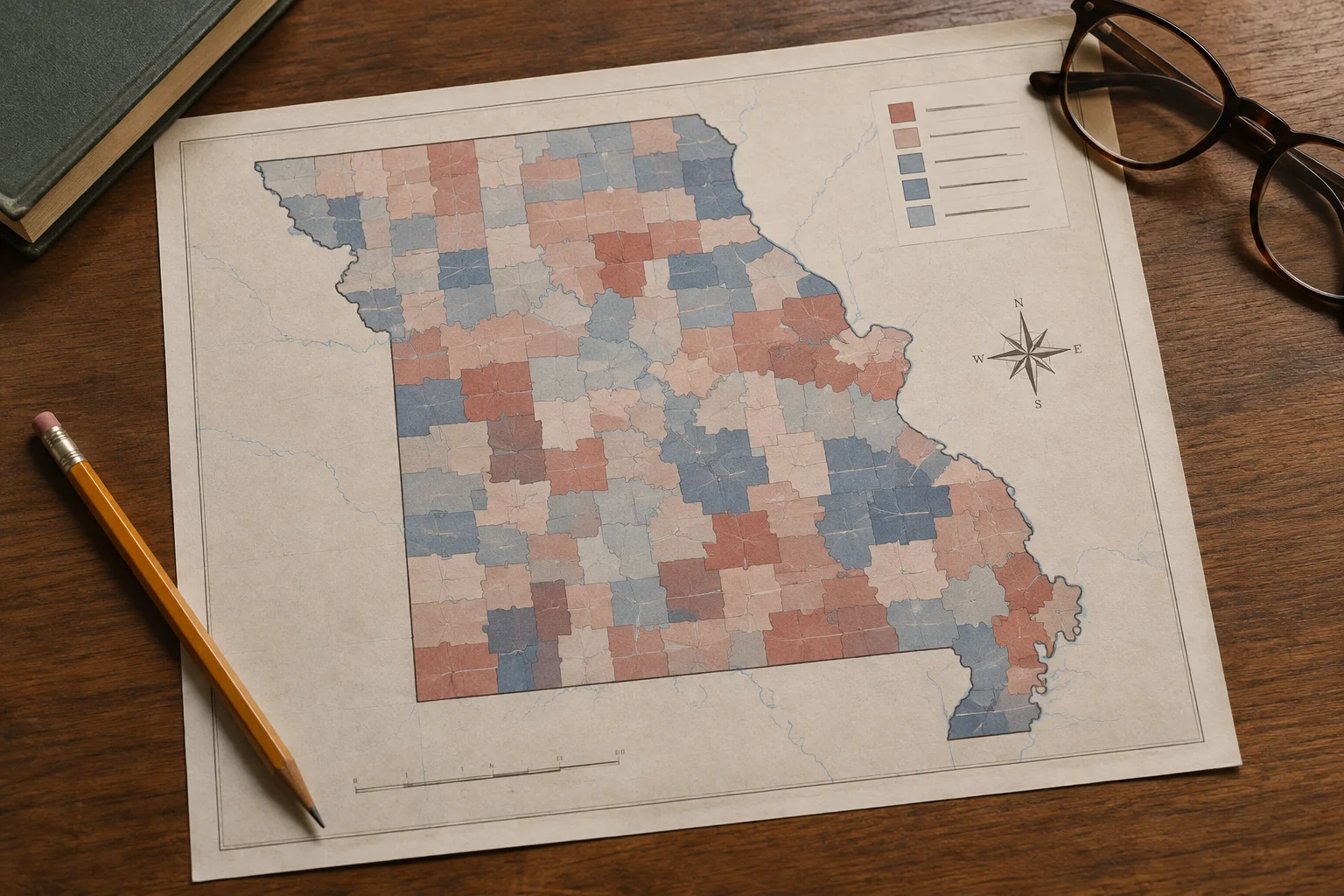
The final certified tally gave Carnahan roughly 1.19 million votes to Ashcroft's approximately 1.14 million. Those numbers confirm that Carnahan's win was not a fluke or a rounding error — it was a real, if narrow, majority of the votes cast. The margin was similar to what pre-crash polls had suggested in a close race.
It's worth noting that the outcome was consistent with the competitive nature of the race before the crash. Carnahan had been running strongly, and the tragedy likely amplified rather than created his support. Either way, the vote count is a matter of public record.
12. John Ashcroft's Reaction And Concession
John Ashcroft faced an extraordinary situation: he had lost an election to a man who had died three weeks earlier. In public remarks, he offered condolences to the Carnahan family and spoke graciously about the tragedy, even as he absorbed a painful defeat. He did not contest the result in any serious legal sense.
Ashcroft's political career did not end there. In 2001, President George W. Bush nominated him as Attorney General of the United States, and he was confirmed to that post. His defeat in Missouri became a footnote in a career that continued at the highest levels of national government.
13. Jean Carnahan's Appointment To The Senate

Jean Carnahan, Mel's widow, was appointed to the U.S. Senate to fill the seat her husband had won posthumously. Under Missouri law, then-Governor Roger Wilson made the appointment, exactly as had been promised during the campaign. She was sworn in in early 2001 and served until a special election in 2002.
Her appointment fulfilled the plan Democrats had communicated to voters. It also meant that the Carnahan family's political legacy continued, even as they mourned. Jean Carnahan became the first woman to represent Missouri in the U.S. Senate.
14. Jean Carnahan's Time In The Senate

Jean Carnahan served in the Senate for roughly two years, from 2001 to 2002. She focused on issues including education, health care, and veterans' affairs, and she generally voted with the Democratic caucus. Her tenure was short but notable given the circumstances of her arrival.
In 2002, Missouri held a special election for the seat, and she ran to keep it. She narrowly lost to Republican Jim Talent, who served until 2007. Despite the loss, her brief Senate service remains an important chapter in the Carnahan family's story.
15. The Dead-Man's-Election Precedent Question

People often ask whether this had ever happened before, and the answer is yes — it's rare but not unheard of. In 1872, for example, Horace Greeley died after the popular vote but before the Electoral College met, and his electoral votes scattered in unusual ways. There have also been state and local races where deceased candidates won.
The 2000 case stands out mainly because of the scale: a U.S. Senate seat, a sitting governor, and a national audience. It didn't establish a new legal doctrine so much as confirm existing rules. Elections can legally be won by dead candidates; they simply cannot be served by them.
16. Did the Dead Man Cast A Vote? No — Debunking That Myth
One persistent rumor claims that a vote was somehow cast in Carnahan's name, or that election officials counted a fraudulent ballot for a dead man. This is simply false. Carnahan's name appeared on the ballot, but no one voted "as" him, and there was no mechanism by which a dead candidate could personally vote.
What actually happened is far less scandalous: his name was printed, voters chose it, and the votes were counted like any others. Claiming otherwise confuses a posthumous victory with voter fraud, and the two are entirely different things. There was no evidence of widespread fraud in the race.
17. Is Gerald Carnahan Related To Mel Carnahan?

One of the most common search questions about this family is whether Gerald Carnahan is related to Mel Carnahan. Mel Carnahan's extended family has been active in Missouri politics for generations, and there are several Carnahans in public life, so it's a reasonable question. The governor's son, Russ Carnahan, later served in Congress, and his daughter Robin Carnahan served as Missouri Secretary of State.
The name "Gerald Carnahan" has occasionally appeared in connection with other figures and unrelated families, and the two should not be assumed to be the same. If you're looking for a direct line, the documented political dynasty runs through Mel, Jean, Russ, and Robin. It's a good reminder to check primary sources rather than assuming every shared surname signals a family tie.
18. The Carnahan Political Dynasty

The Carnahan name became synonymous with Missouri Democratic politics in the late 20th and early 21st centuries. Mel Carnahan's father, A.S.J. Carnahan, served in the U.S. House of Representatives. Mel's son Russ Carnahan served in the U.S. House from 2005 to 2013. His daughter Robin Carnahan served two terms as Missouri Secretary of State.
That's three generations of significant public service, a rarity in American politics. The 2000 tragedy made the family's story nationally famous, but their influence was already deep in Missouri. The dynasty arguably reached its emotional peak with the posthumous Senate win.
19. How The 2000 Race Fits Into A Chaotic Election Year

The 2000 election is remembered mostly for the Bush v. Gore presidential recount in Florida, which dragged on for weeks. Missouri's dead-man's race unfolded against that backdrop, adding to a general sense that 2000 was an election year like no other. Both races featured razor-thin margins and intense national attention.
Yet Missouri was different in kind. There was no hanging chad or Supreme Court intervention in the Senate race; the result was clear and certified relatively quickly. It was strange and tragic, but not contested. That contrast is part of what makes the 2000 Missouri senate race so distinct.
20. What The Story Says About American Democracy

Beyond the trivia value, the story reveals something real about how American elections work. They are governed by schedules, statutes, and procedures that don't pause for tragedy. The system produced an outcome that was legal, if emotionally extraordinary, and everyone involved accepted it.
It also shows how voters can use elections to express grief and gratitude, not just policy preferences. Missourians didn't elect a ghost; they elected a man they had already intended to send to Washington and entrusted his seat to his widow. That's the heart of the story — not a gimmick, but a state honoring a fallen leader through the ballot box.
The Bottom Line
The election of Mel Carnahan in 2000 wasn't fraud, a glitch, or a loophole in any sinister sense. It was a legal outcome produced by an unthinkable tragedy and a ballot deadline that couldn't be moved. A grieving state voted for a man who had died three weeks earlier, and the Constitution's rules for filling a vacant Senate seat were followed without a serious challenge.
That's why the story still fascinates people more than two decades later. It sits at the intersection of death, law, and democracy, and it has no easy parallel. Whether you see it as a tribute, a quirk of the calendar, or a little of both, the facts are remarkable enough on their own.
Frequently Asked Questions
Who won the 2000 Missouri Senate race?
Mel Carnahan, the Democratic governor of Missouri, won the 2000 Missouri Senate race even though he had died in a plane crash three weeks before Election Day. He defeated incumbent Republican Senator John Ashcroft by roughly 48,000 votes, about two percentage points.
How could a dead man win an election?
Because Missouri's ballot-change deadline had already passed on October 16, 2000, when Carnahan died, his name stayed on the printed ballots. The U.S. Constitution sets qualifications for serving in the Senate, not for appearing on a ballot, and state law governed how the vacancy would be filled. Voters legally cast ballots for Carnahan, and he won.
Who took Mel Carnahan’s Senate seat?
His widow, Jean Carnahan, was appointed to the U.S. Senate by then-Governor Roger Wilson, exactly as Democrats had promised during the campaign. She served from 2001 to 2002, then lost a special election to Republican Jim Talent.
What caused the Mel Carnahan plane crash?
The National Transportation Safety Board attributed the October 16, 2000 crash to poor weather, including fog and low visibility, along with pilot spatial disorientation. The plane, piloted by Carnahan's son Randy, struck a hillside near Goldman, Missouri. All three people aboard died.
Is Gerald Carnahan related to Mel Carnahan?
There's no documented evidence that Gerald Carnahan is directly related to Governor Mel Carnahan. The well-documented Carnahan political dynasty includes Mel, his widow Jean, his son Russ (a former congressman), and his daughter Robin (a former Missouri Secretary of State). Shared surnames alone don't establish a family connection.
Did Mel Carnahan’s dead body cast a vote?
No. That's a myth. Carnahan's name appeared on the ballot and voters chose it, but no vote was cast 'by' him, and there was no mechanism for a deceased candidate to personally vote. The election was conducted normally and certified as valid.

Alex Warren
Related Articles