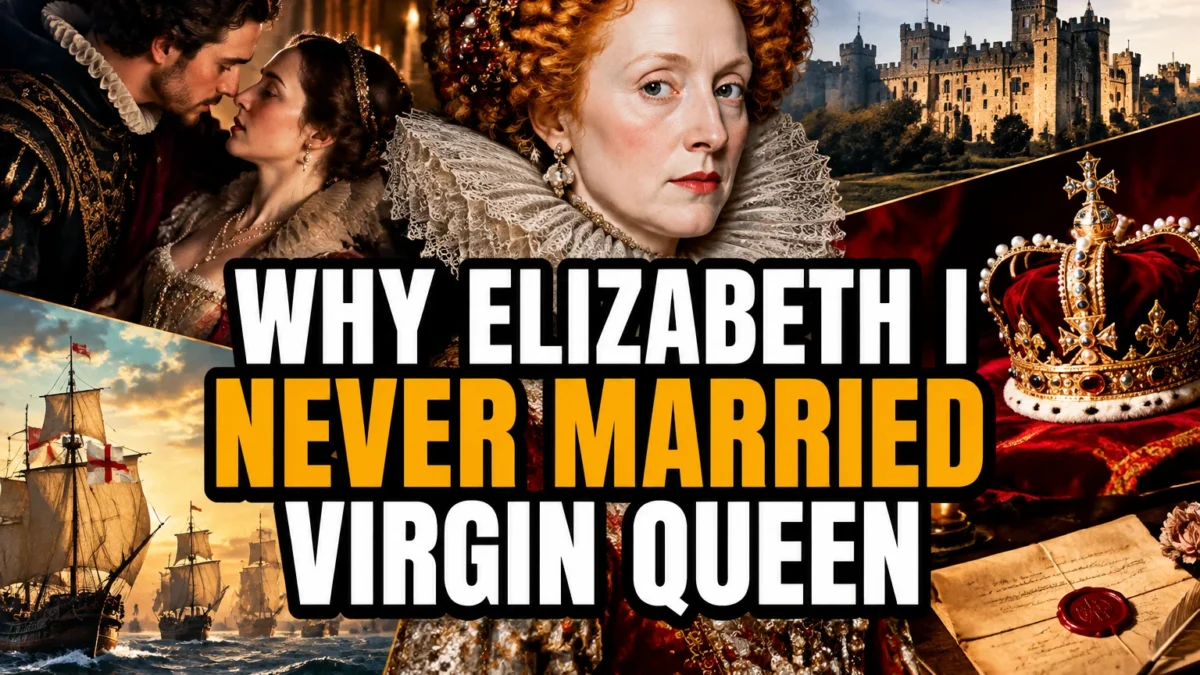
For over four centuries, one question has clung to Elizabeth I like a shadow: did Queen Elizabeth 1 ever marry? The short answer is no—she died unmarried at age 69, ending a 44-year reign that reshaped England. But the longer answer is far more fascinating, because her single status was not a simple accident of fate. It was a political strategy, a personal choice, and a myth she carefully cultivated.
Elizabeth's refusal to wed was not for lack of suitors. From the moment she took the throne in 1558, European princes, English nobles, and even her own councilors bombarded her with marriage proposals. She entertained some, rejected others, and kept everyone guessing until the very end. So why did Elizabeth I never marry? The reasons run deeper than romance—they touch on power, religion, and survival in a dangerous world.
TL;DR: Elizabeth I never married because remaining single preserved her political power, avoided religious and diplomatic disasters, and allowed her to craft the enduring myth of the Virgin Queen.
Did Queen Elizabeth 1 Ever Marry? The Short Answer
No—Elizabeth I never married, and she had no children. She was the last monarch of the Tudor dynasty, and her death in 1603 brought the family line to an end. This single fact shaped English history in ways that still matter today.
Yet the question of whether she married is not foolish. Elizabeth spent decades stringing along suitors, signing no contract, and making no vow. To observers across Europe, it often looked like a wedding was just around the corner. That ambiguity was deliberate.
Why Was Queen Elizabeth Called the Virgin Queen?
The title "Virgin Queen" was not simply a comment on her personal life. It was a piece of political branding, and Elizabeth was a master at it. She presented herself as married to England itself, a mother to her people rather than a wife to any man.
This imagery drew on deep cultural and religious symbols. In Protestant England, the Virgin Mary had been a powerful figure, and Elizabeth's advisors cleverly transferred some of that reverence onto their queen. She became a secular icon of purity, devotion, and national identity.
The Virgin Queen image also served a practical purpose. By claiming a kind of sacred singleness, Elizabeth turned her unmarried status from a weakness into a strength. A queen without a husband could not be accused of being controlled by one.
Why Did Elizabeth I Never Marry? The Core Reasons
There was never one single reason behind Elizabeth's lifelong single status. Instead, several powerful forces pulled in the same direction. Understanding them together explains why she stayed unmarried for 44 years.
1. Marriage Meant Sharing Power
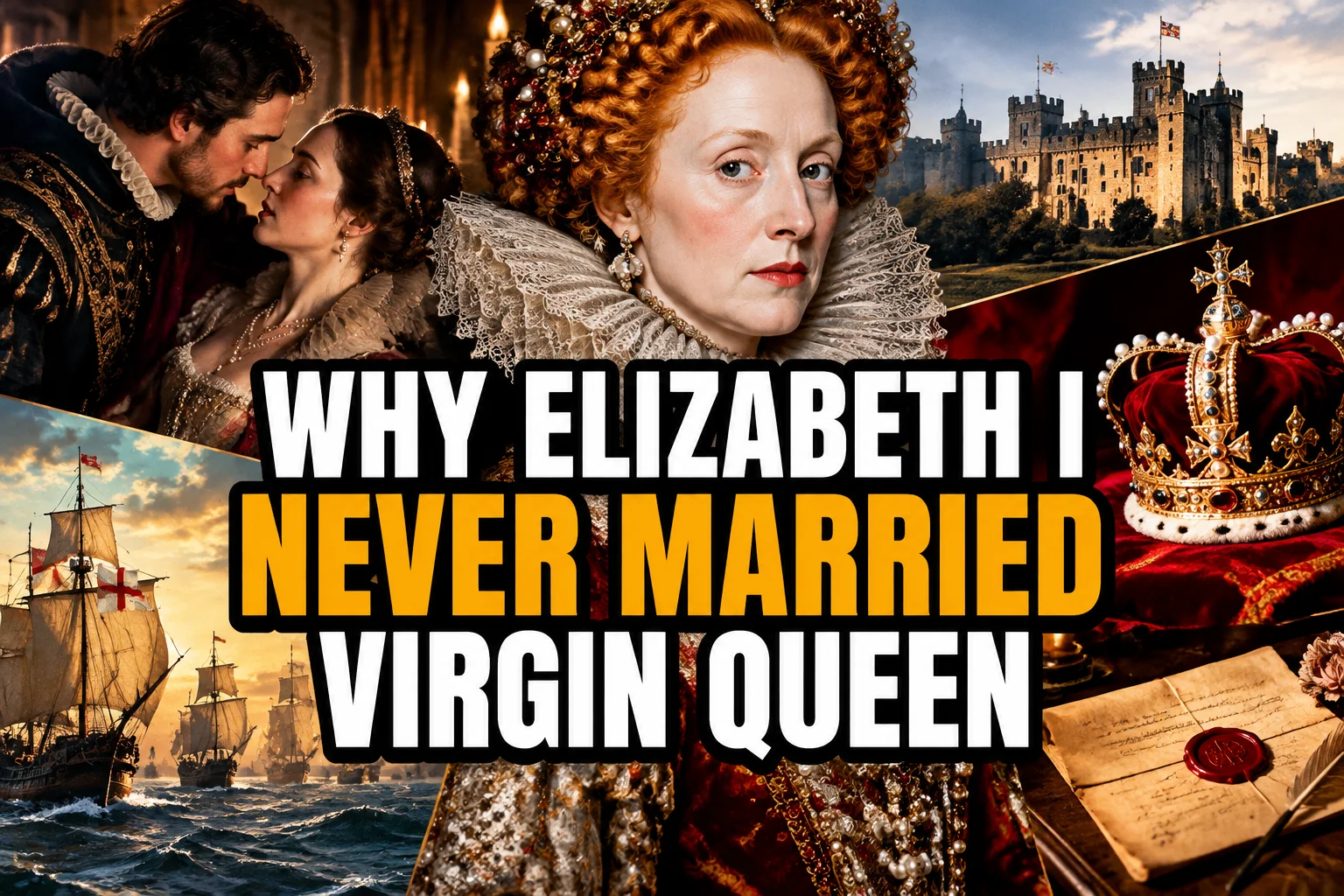
In the sixteenth century, a queen regnant was a rarity, and many people believed a woman could not rule alone. If Elizabeth married, her husband would almost certainly expect real authority. That was a risk she was not willing to take.
She had seen what happened to her sister, Mary I, who married Philip II of Spain. Philip gained enormous influence in English affairs, and the marriage was deeply unpopular. Elizabeth learned that lesson well.
By staying single, she kept every lever of power in her own hands. Her councilors might grumble, but no foreign prince or English lord could claim the throne through her.
2. Foreign Marriages Were Diplomatic Minefields
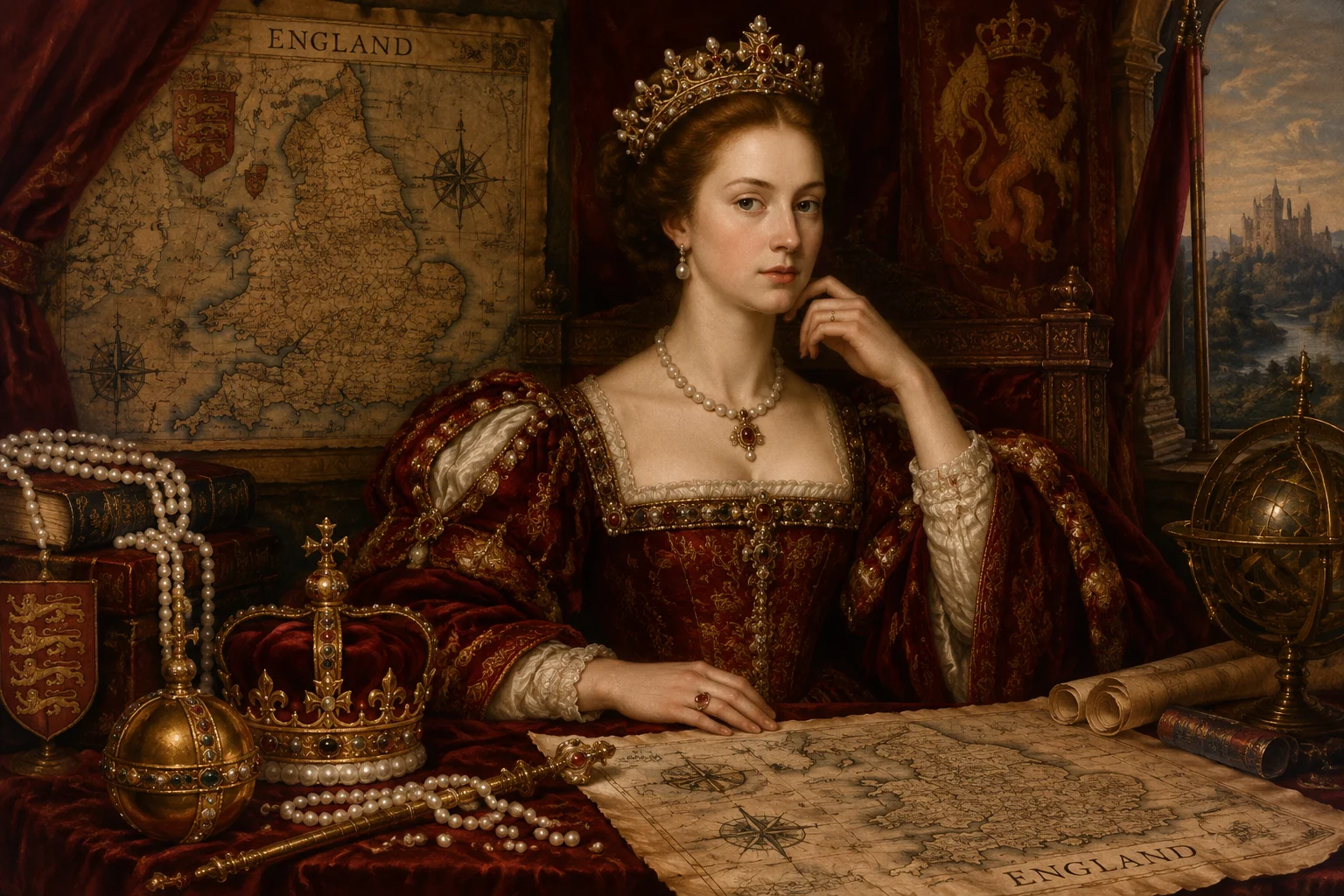
Most of Elizabeth's serious suitors were foreign princes, and each proposal came tangled in European politics. Marrying a French prince could anger Spain; marrying a Spanish king could outrage Protestants. Every option carried the threat of war.
These courtships were often useful even when no wedding was intended. Elizabeth could dangle the possibility of marriage to keep rivals guessing about her alliances. Diplomats called this the "marriage game," and she played it brilliantly.
In the end, no foreign match offered more benefit than the freedom she already had. So the negotiations dragged on, and no vows were ever exchanged.
3. Religion Made Almost Every Match Dangerous
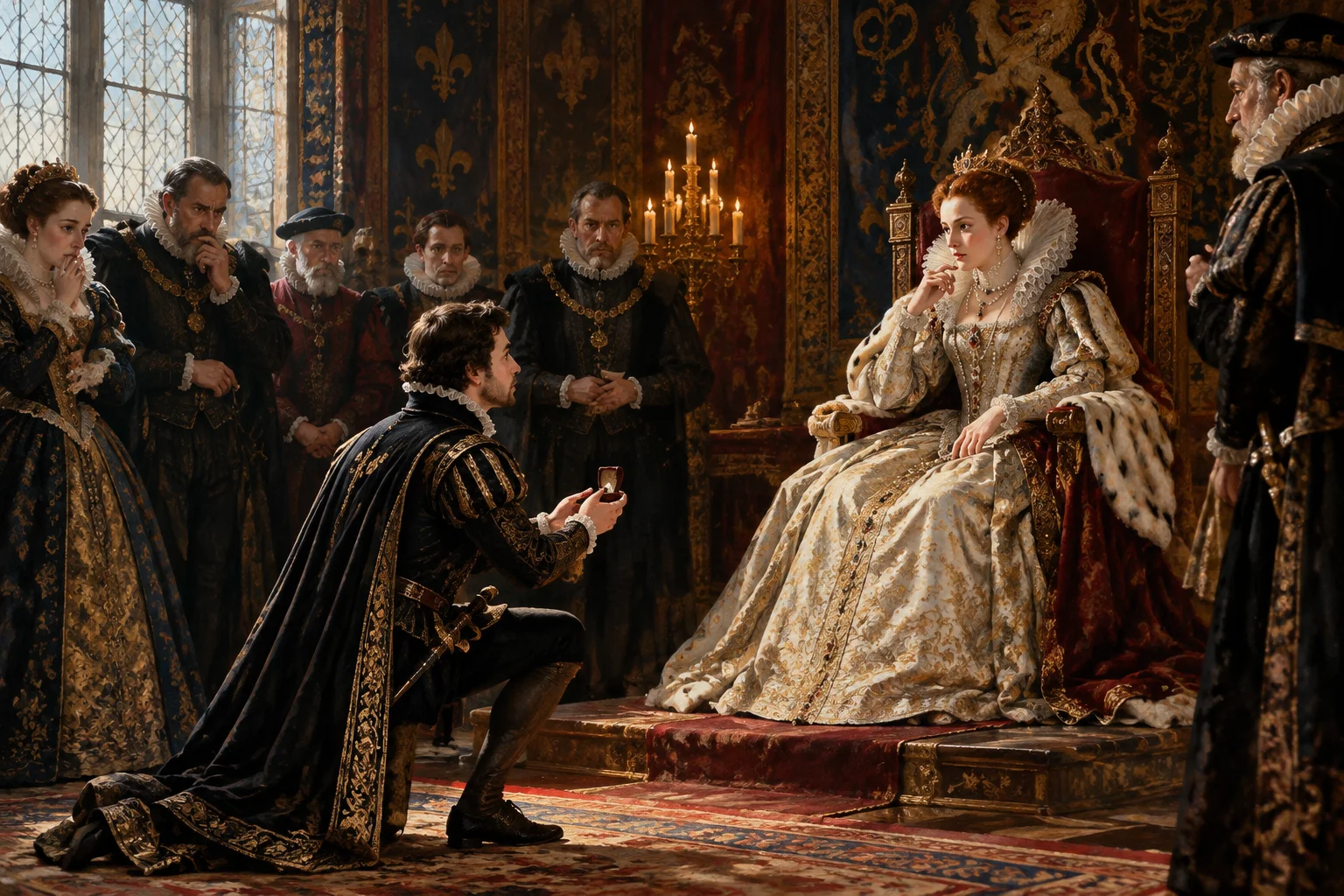
After the Reformation, Europe was split between Catholic and Protestant powers, and Elizabeth sat at the center of that divide. She had restored Protestantism to England, but many Catholics at home and abroad still hoped to bring the country back to Rome.
Marrying a Catholic prince would have enraged her Protestant subjects and possibly sparked rebellion. Marrying a Protestant prince, meanwhile, risked provoking Catholic Europe. There was simply no safe religious choice.
Even an English suitor offered no solution, since a domestic marriage would have created rival factions at court. Religion narrowed Elizabeth's options almost to nothing.
4. She Remembered What Happened to Her Mother
Elizabeth's mother, Anne Boleyn, was executed when Elizabeth was only two years old. Anne had failed to give Henry VIII a son, and that failure sealed her fate. The memory hung over Elizabeth for her entire life.
The brutal lesson was clear: a queen who married risked being judged by her husband's expectations and discarded if she failed. Childbirth was also genuinely dangerous, and many women died in labor.
Historians debate how much this personal trauma affected her, but the fear of losing autonomy through marriage was real. Elizabeth chose the one path that kept her in control.
5. An Heir Was a Threat, Not Just a Promise
A married queen was expected to produce heirs, but heirs change the political landscape. The moment Elizabeth named a successor or bore a child, plots would form around that person and her own position could weaken.
Her councilors begged her to settle the succession, yet she consistently refused to name an heir. Even Parliament pressed her on it, and she blocked them repeatedly. A named successor, she understood, was a rival waiting to happen.
Without a husband, there could be no legitimate royal children, and without children, she remained the undisputed center of power. This logic dominated her thinking for decades.
The Suitors Elizabeth I Considered and Refused
Elizabeth did not simply avoid marriage—she actively negotiated several serious proposals. These courtships reveal how she used the possibility of marriage as a tool of state.
Robert Dudley: The Great Love of Her Life?
Robert Dudley, Earl of Leicester, was Elizabeth's closest companion for decades, and many believe she loved him deeply. He was an English nobleman, a Protestant, and someone she trusted completely. If any suitor came closest to marrying her, it was Dudley.
But scandal followed him. His wife, Amy Robsart, died in suspicious circumstances in 1560, and rumors of murder never faded. Marrying Dudley would have caused a political firestorm that even Elizabeth could not weather.
She kept him close for the rest of his life without marrying him. When he died in 1588, she was devastated, reportedly locking herself away with grief.
Philip II of Spain: The Brother-in-Law Suitor
Philip II had been married to Elizabeth's half-sister, Mary I, and after Mary died he proposed to Elizabeth. The idea was to preserve the alliance between England and Spain and keep England Catholic-friendly. Elizabeth rejected him, and the refusal set the two nations on a collision course.
By declining Philip, Elizabeth signaled that England would not be absorbed into the Spanish orbit. The relationship worsened over the following decades, eventually leading to the Spanish Armada in 1588.
Francis, Duke of Anjou: The Last Serious Suitor
The final serious marriage negotiation came in the late 1570s and early 1580s, when Elizabeth considered marrying Francis, Duke of Anjou, a French Catholic prince. She was already in her mid-forties, and the match was controversial at home.
Elizabeth seemed genuinely fond of him, even affectionately calling him her "frog," and she publicly kissed him in a famous gesture. But the political and religious objections proved too strong, and the courtship fizzled out. It was the last realistic chance she had for a husband.
Did Queen Elizabeth I Have a Secret Lover?
Rumors of secret lovers followed Elizabeth throughout her reign, and historians have debated them for centuries. The most persistent claims involve Robert Dudley, her lifelong favorite. Some even suggested they were secretly married or had children together.
Modern historians have found no credible evidence of a secret marriage or illegitimate children. These stories often grew from political gossip designed to discredit her. Others came from later retellings eager for scandal.
What is clear is that Elizabeth guarded her reputation fiercely. Her public image as the Virgin Queen depended on it, and she allowed no confirmed romantic entanglement to undermine that carefully built persona.
Was Queen Elizabeth 1 a Virgin? What We Really Know
The phrase "Virgin Queen" raises an obvious question: was Elizabeth I really a virgin? This is a matter historians cannot definitively answer, and it is important to be honest about that gap in evidence.
What we know is that she never married, and she publicly claimed virginity as part of her image. What we do not know is the truth of her private life, which she kept remarkably well hidden. There is no reliable document that settles the question.
Historians like to point out that her claim was a political and religious symbol, not necessarily a medical fact. Whether or not it was literally true, it served her purposes perfectly.
Was Elizabeth I Forced to Stay Unmarried?
Elizabeth was not forced to remain single, though she faced immense pressure in both directions. Some advisors pushed for marriage and an heir, while others warned against it. In the end, the choice was hers, and she made it repeatedly.
As queen regnant, she held the final say in her own marriage. That authority was rare for a woman of her era, and she guarded it jealously. She famously declared that she would marry only if and when she chose.
So the answer is not that she was barred from marrying. It is that she judged the costs too high and the benefits too uncertain to take the step.
How the "Virgin Queen" Image Changed Her Reputation
Elizabeth did not just tolerate the Virgin Queen title—she actively promoted it. Portraits depicted her in pearls, symbolizing purity, and poets compared her to mythical goddesses. The imagery was everywhere.
A queen who belonged to no man became a queen who belonged to all her people. This made her a symbol of national unity in a deeply divided age. It also insulated her from gendered attacks that had damaged her sister's reputation.
That image has outlived her. Today the phrase "Virgin Queen" is the first thing many people connect with Elizabeth, even if they know little else about her. Her branding succeeded far beyond her own lifetime.
Which Queen Never Married? Putting Elizabeth in Context
Elizabeth I is one of history's most famous unmarried queens, but she is not the only one. Several female monarchs across Europe ruled without taking a husband, each for her own reasons.
Her own half-sister, Mary I, did marry, which makes Elizabeth's choice stand out in contrast. Later British monarchs like Queen Anne married, while some other European queens ruled as widows or single women.
Understanding this context shows that Elizabeth's decision, while unusual, was part of a broader pattern among female rulers navigating a male-dominated world.
The Legacy of England's Unmarried Queen
Elizabeth I died in 1603 without a husband or an heir, and the Tudor dynasty ended with her. Yet her decision to remain single left a powerful legacy. She had ruled for 44 years, longer than most of her contemporaries, and had done so on her own terms.
Her reign saw the defeat of the Spanish Armada, the flourishing of English literature, and a cultural confidence that shaped national identity. She proved that a woman could govern alone, and govern well.
The question of why Elizabeth I never married still fascinates us because it touches on something bigger than romance. It asks how much of a person's life is a matter of chance, and how much is a calculated choice. Elizabeth answered that question with her entire reign.
Final Thoughts: A Queen Married to Her Country
When asked whether Elizabeth I ever married, the historical record gives a clear answer: she did not. But she left a more surprising legacy than a wedding could ever have provided. She turned singleness into sovereignty and made the Virgin Queen a symbol of English strength.
Her story continues to resonate because it challenges assumptions about women and power. Elizabeth refused to let marriage define her, and in doing so, she defined an era. Four centuries later, we are still talking about her.
So the next time someone asks why Elizabeth I never married, the best answer is this: she had the crown, she had the country, and she needed no ring to complete the picture.
Frequently Asked Questions
Did queen elizabeth 1 ever marry?
No, Elizabeth I never married. She ruled England for 44 years as a single woman and died in 1603 without a husband or children, which ended the Tudor dynasty. Although she entertained many marriage proposals, she never signed a contract or took a wedding vow.
Why was Queen Elizabeth called the Virgin Queen?
The title 'Virgin Queen' was a piece of political and religious branding. Elizabeth presented herself as married to England and its mother rather than to any man. The imagery drew on cultural ideals of purity and devotion, turning her unmarried status into a symbol of national identity and sacred authority.
Why did Elizabeth I never marry?
Historians point to several intertwined reasons: marrying would have meant sharing power with a husband; foreign matches risked diplomatic and religious conflicts; she feared losing autonomy and remembered her mother's fate; and producing an heir could have created dangerous rival factions. Rather than one single reason, these factors together made staying single the safer, stronger choice.
Was Elizabeth I really a virgin?
Historians cannot definitively answer this, because there is no reliable evidence either way. She never married and publicly claimed virginity as part of her image, but her private life was carefully guarded. The title was certainly a political and religious symbol, whether or not it reflected literal fact.
Who did Queen Elizabeth 1 marry?
No one. Elizabeth I never married any of her suitors, including Robert Dudley, Philip II of Spain, and Francis, Duke of Anjou. She used marriage negotiations as political tools but never completed a match.
Which queen never married?
Elizabeth I of England is one of history's most famous unmarried queens, but she was not the only one. Several European female rulers, including some who ruled as widows or single women, governed without husbands. The reasons varied, but each faced similar pressures around marriage and succession.
Did Elizabeth I have any children?
No, Elizabeth I had no children. Her childlessness was a major political concern because it left the succession unsettled. She repeatedly refused to name an heir, and her death in 1603 ended the Tudor line and led to the accession of James I of England.
Who was the love of Elizabeth I’s life?
Many historians believe Robert Dudley, Earl of Leicester, was the closest thing to a great love in Elizabeth's life. They were deeply attached for decades, but scandal surrounding the death of his wife made marriage politically impossible. She remained close to him until his death in 1588.
Was Elizabeth I forced to stay unmarried?
No, she was not forced. As queen regnant she held the final say over her own marriage, though she faced strong pressure from advisors and Parliament to wed and produce an heir. In the end, she chose to remain single, judging the risks of marriage to outweigh the benefits.
What happened to England because Elizabeth I never married?
Because Elizabeth never married or had children, the Tudor dynasty ended with her death in 1603. The English throne passed to James VI of Scotland, uniting the crowns of England and Scotland. Her long single rule also left a lasting cultural legacy, including the enduring image of the Virgin Queen.

Alex Warren
Related Articles