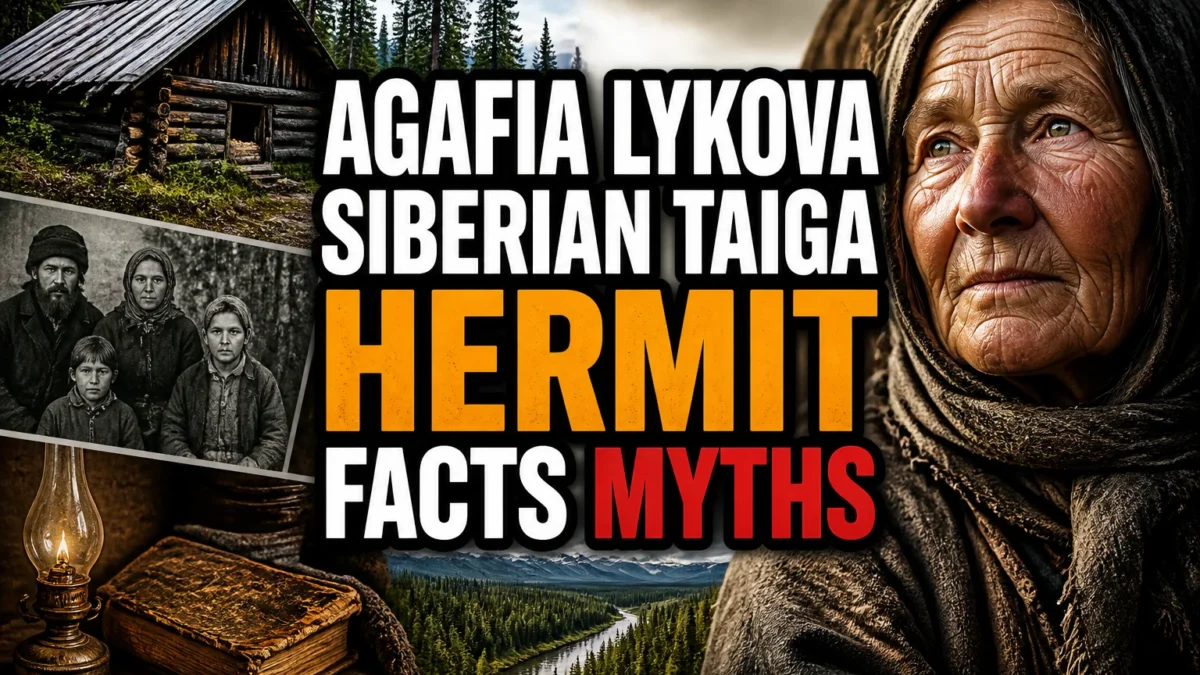
If you have seen the headline about a woman who survived Siberia's Arctic alone for 89 years, here is the friendly truth: almost every part of it is off. The real story of Agafia Lykova, often searched simply as "Agafia Russia," is stranger, sadder and more human than the clickbait version.
She was born in 1944 in a remote corner of the Siberian taiga, in a family that had fled Soviet Russia a few years before her birth. She did not live in the Arctic, she was not alone for most of her life, and she is not 89. What she did do is endure a lifetime of isolation that very few people in modern history can match.
TL;DR: Agafia Lykova, born in 1944 to a family of Old Believers hiding in the southern Siberian mountains, has lived in near-total isolation for decades, but the popular claims about the Arctic and 89 years alone simply don't hold up.
Busting the Myths in the Original Headline
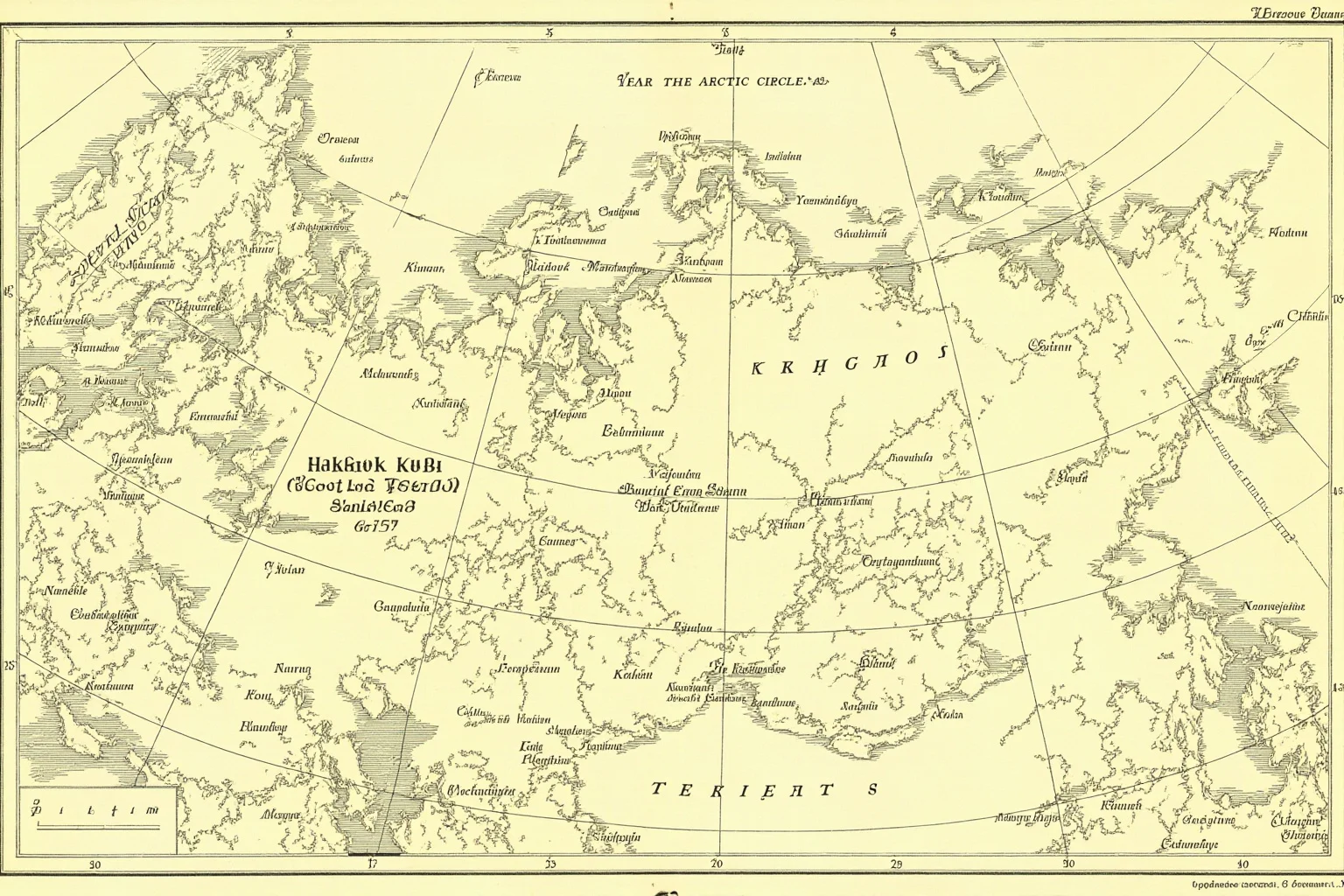
Let's start with the three claims packed into that viral title. First, the Arctic: Agafia's homestead lies in the Western Sayan Mountains in the Republic of Khakassia, at roughly 52 to 53 degrees north. The Arctic Circle sits near 66.5 degrees north, so she is far south of it, even though her winters can be bitterly cold.
Second, the number 89. Agafia was born on 16 April 1944, which made her 81 in April 2025. Nobody has credibly documented a person spending 89 years alone in the Siberian wilderness, and Agafia's own timeline doesn't come close.
Third, the word "alone." For her first four decades she lived with her parents and siblings. Her father, Karp, died in 1988, and since then she has mostly lived by herself, though never in complete isolation from the outside world.
That last point matters. Geologists, reserve staff, journalists, pilgrims and occasional helpers have visited her homestead for years, and some have stayed for stretches. Her life is remarkable enough without exaggeration.
Who Is Agafia Lykova?
Agafia Karpovna Lykova is a Russian Old Believer, a member of a branch of Orthodox Christianity that refused to accept church reforms made in the 1650s and 1660s. She is the youngest child of Karp Osipovich Lykov and Akulina Karpovna. She was born not in a village or a hospital but in a small log dwelling deep in the mountains, which means she never knew life in an ordinary Russian town during childhood.
She is one of the most famous hermits in the world, and Russian media often treat her as a living symbol of the taiga. Her homestead stands on the upper reaches of the Abakan River's tributary, the Erinat, within the territory associated with the Khakassky Nature Reserve. The nearest settlements are many kilometers away, and the area has no road access, so it is typically reached by helicopter, by foot or by boat in good seasons.
Her reputation grew after a Soviet journalist, Vasily Peskov, wrote about the family in the early 1980s. His reporting, first in the newspaper Komsomolskaya Pravda and later in a book often translated as Lost in the Taiga, introduced the Lykovs to millions of readers. Most English-language retellings still draw heavily on his work.
Why the Lykovs Fled: Old Believers and the 1930s
To understand why a family would vanish into the mountains, you have to go back centuries. After the church reforms of the mid-1600s, many Old Believers were persecuted and moved to remote regions, and Siberia became one of their great refuges. Communities hid in forests, rivers and mountain valleys to keep their rituals and books intact.
The Soviet era brought new pressure. In the 1920s and 1930s the state pushed collectivization and campaigned against religion, which put deeply devout families in a difficult position. According to Peskov's account, Karp Lykov's decision to flee came in 1936, after his brother was shot by a Soviet patrol in an incident near their settlement.
Karp took his wife Akulina and their two young children, Savin and Natalia, and headed deeper into the taiga. They moved farther from other people over the following years, eventually settling in a high, isolated spot. Two more children, Dmitry and Agafia, were born there in the 1940s.
It is worth remembering that these details come largely from the family's own recollections as relayed through Peskov and others. Some specifics, such as exact dates and distances, vary between retellings. Where sources disagree, it is safest to treat the numbers as approximate.
Life in the Taiga: How the Family Survived
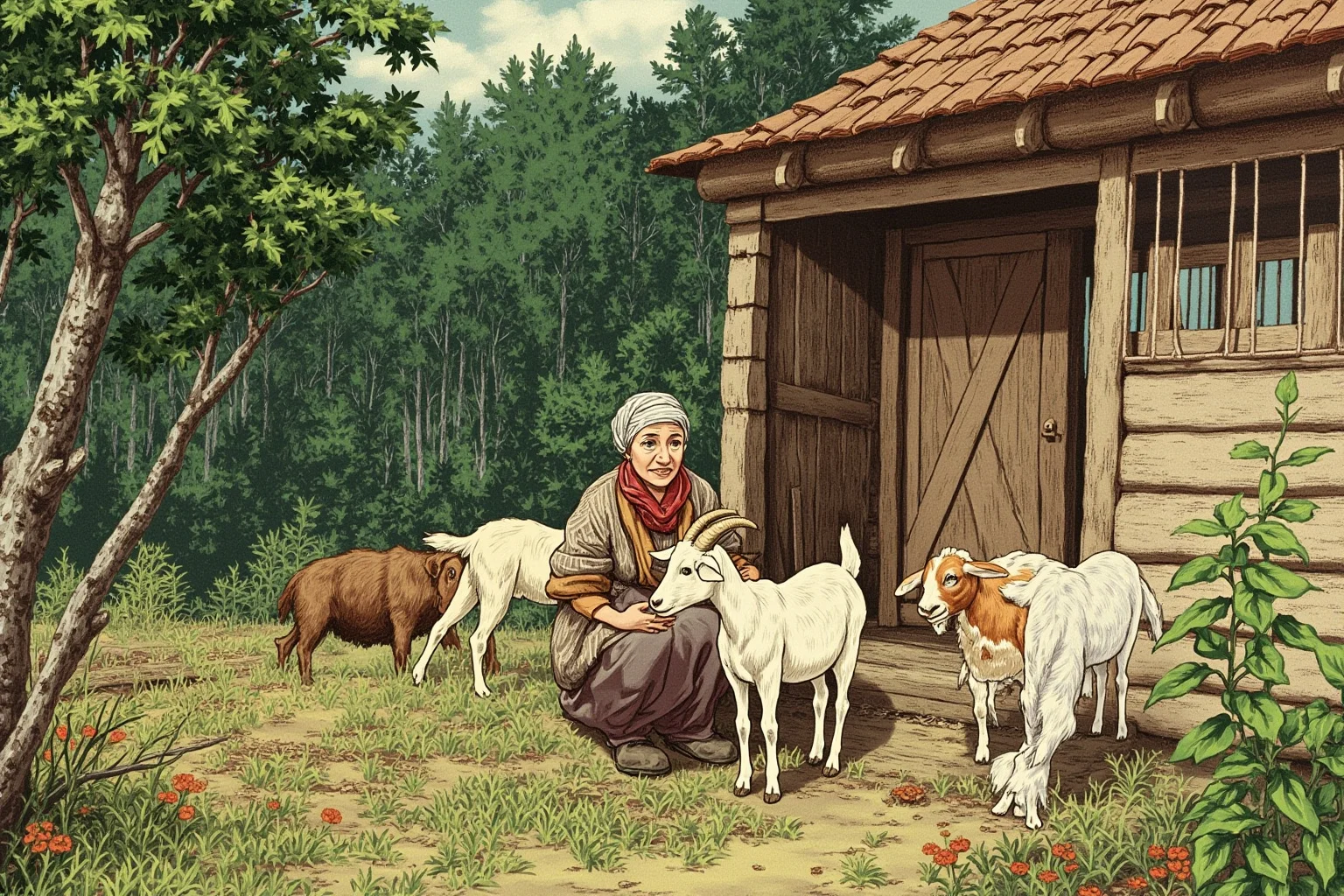
The Lykovs lived in a small, low log dwelling, built with hand tools and later lit mostly by birch-bark torches and a fire. They grew potatoes, rye, turnips and hemp in a clearing on a steep hillside. Accounts say they ate potatoes mixed with ground rye and hemp seeds, and that they went for long periods without salt.
They reportedly made much of what they needed from the forest. Clothing was woven from hemp, and footwear was made from birch bark. They also had a few metal objects, though many of their tools wore out or broke over the decades, and replacing them was nearly impossible.
Hunting was hard without firearms. According to Peskov's reporting, the family relied on traps and pits, and Dmitry became a skilled tracker who could hunt in all seasons. Stories of him pursuing animals for days across the mountains are part of the legend, though they come from secondhand accounts and should be read as vivid family lore rather than proven fact.
Religion structured their days. They prayed regularly, kept the church calendar as best they could and read from old handwritten and printed religious books. Agafia learned to read from these texts, and her speech, as visitors later described it, carried an archaic sing-song quality.
The Hunger Year of 1961
The hardest chapter in the family's story came in 1961. A hard frost struck in June, after the crops had sprouted, and the harvest failed. Akulina Karpovna died that year, and accounts say she gave much of the little remaining food to her children.
Peskov described a desperate winter in which the family ate whatever they could find, including shoe leather and bark. He also relayed the story of a single surviving rye sprout that Karp fenced off and guarded. The family later used its grain to rebuild their fields, and Karp reportedly regarded it as a sign of divine mercy.
This tale has become one of the most repeated parts of the Lykov legend. Because it rests on the family's own testimony, it is best presented as their account of events, not as independently verified history. Even so, nothing about it conflicts with what is known about the harshness of mountain taiga farming.
The famine also shows how fragile the family's independence really was. They were not thriving in some romantic wilderness idyll. They were one bad frost away from catastrophe, and they knew it.
1978: The Discovery That Changed Everything
In 1978, a team of geologists was working in the Sayan Mountains, searching for iron ore. A helicopter pilot noticed a clearing on a remote slope that looked like a cultivated garden. It was an astonishing sight in a place believed to be uninhabited.
The geologists made contact, and over time the family accepted limited help. One famous detail is that they reportedly wanted salt, along with a few simple tools, and were wary of most other gifts. Visitors found them wary but curious, and the family learned about the outside world in fragments.
One oft-repeated claim is that the Lykovs had never heard about World War II. Another is that they were fascinated and frightened by satellites crossing the night sky. These stories come from Peskov and the geologists who knew the family, and they are plausible, but they are retellings and should be treated with some care.
What is certain is that the discovery brought the family into contact with a Soviet society they had avoided for more than 40 years. It also brought them health risks, since long isolation had left them without immunity to some illnesses. Peskov later reflected on this tension, and it remains part of the story's moral complexity.
Loss and Solitude: Living Alone Since 1988
In the autumn of 1981, three of Agafia's siblings died within a short span of time. Dmitry reportedly died of pneumonia, while Savin and Natalia are said to have died of kidney failure, though diagnoses in such a remote setting were uncertain. Karp and Agafia were left to carry on.
Geologists and officials offered to move them to a village, but they refused. Karp died on 16 February 1988, and Agafia buried him with help from the geologists. She declined to leave her homestead, saying, as widely reported, that this was where she wanted to live.
Since then she has kept a garden, tended goats, chickens, dogs and cats, gathered pine nuts and berries, and maintained her prayer routines. She has occasionally left for medical care or to visit other Old Believer communities, then returned. Reports over the years have described her getting supplies, building help and company from reserve staff, volunteers and religious visitors.
Her story is not one of perfect self-sufficiency. Modern accounts describe her receiving flour, tools, medicine and sometimes technology, and relying on the goodwill of outsiders. That reality doesn't diminish her resilience, but it does counter the myth that she survives entirely alone and untouched by the modern world.
Is Agafia Lykova Still Alive in 2025?
As of the most recent widely reported information available, Agafia Lykova was alive and living on her homestead in the Khakassia taiga. She turned 81 in April 2025. I am not aware of any credible report of her death, but I can't promise that nothing has changed since that reporting.
If you are searching "is Agafia Lykova still alive 2025," the safest approach is to check recent coverage from established Russian and international news outlets. Be cautious with social media posts and clickbait sites, because fake death notices and recycled photographs circulate often. A genuine report would be carried by multiple reliable outlets.
It is also worth noting that she lives in a remote area with limited communication. News about her can be delayed or distorted, which is part of why rumors spread so easily. A single unsourced claim is never enough.
Women in Siberia: Agafia in Wider Context
Agafia is exceptional, but she is part of a long history of women in Siberia whose lives were shaped by distance, climate and politics. The region has been home to indigenous women of the Khakas, Evenki, Buryat and many other peoples, who managed households, herds and traditions across enormous territories. Their stories are often overshadowed by dramatic tales of exile and hermits.
Old Believer women, in particular, were central to preserving their communities. They taught prayers, kept household discipline and carried religious knowledge across generations, often in hidden settlements. Agafia's life fits into this tradition of faith-based endurance, even though her circumstances are unusually extreme.
History also records women who traveled to Siberia by choice or necessity. After the failed Decembrist uprising of 1825, several noblewomen, including Maria Volkonskaya and Ekaterina Trubetskaya, followed their exiled husbands to Siberia. Later, countless women were sent to labor camps and special settlements during the Soviet period, and many others migrated to the region as settlers and workers.
Placing Agafia in this wider story is a useful corrective. She is not a lone, mythic figure who appeared from nowhere. She belongs to a long line of Siberian women who built lives under pressure, each in her own way.
What We Can and Can't Say About Her Story
One reason Agafia Lykova fascinates people is that so many details come filtered through a handful of sources. Peskov's reporting is the foundation, supplemented by geologists, later journalists and documentary crews. That means some anecdotes have been repeated and polished so many times that they sound like established fact.
A healthy approach is to separate what is well supported from what is colorful retelling. It is well supported that the family fled in the 1930s, lived in isolation for decades, were found in 1978 and that Agafia has remained in the taiga. It is less certain how they felt about every outside gift, exactly what they knew about world events and how precisely some survival stories unfolded.
There is also an ethical question. Agafia has been visited, photographed and filmed many times, sometimes in ways that turned her into a spectacle. Treating her as a person, not a curiosity, is part of telling her story responsibly.
Finally, avoid romanticizing her life. The Lykovs endured hunger, illness, grief and decades without medical care. Their story is inspiring, but it is also a reminder of the human cost of persecution and isolation.
Why Agafia's Story Still Matters
Agafia Lykova's life sits at the crossroads of religion, politics, nature and memory. It shows how far people will go to protect their beliefs, and how quickly the modern world can reach even the most remote valley once it notices. It also raises hard questions about what we owe to people who choose to live apart.
The viral headline gets the geography wrong, the age wrong and the length of her solitude wrong. The real story needs no embellishment: a woman born in the mountains in 1944 who has spent most of her life far from towns, roads and neighbors, and who continues to call the taiga home.
If you want to learn more, read Peskov's work, look for reliable documentaries and treat sensational claims with healthy skepticism. History is always more interesting when we let the evidence speak for itself.
Frequently Asked Questions
Is Agafia Lykova still alive in 2025?
According to the most recent widely reported information, Agafia Lykova was alive in 2025 and living at her homestead in the Khakassia taiga. She was born on 16 April 1944, so she turned 81 that year. Because she lives in a remote area and fake rumors circulate often, check recent reports from reputable news outlets for the latest confirmation.
Did Agafia Lykova really live alone in the Arctic for 89 years?
No. Her homestead is in the Western Sayan Mountains of Khakassia in southern Siberia, far south of the Arctic Circle. She was born in 1944, so she isn't 89, and she lived with her family until her father died in 1988.
Why did the Lykov family go into the Siberian wilderness?
The Lykovs were Old Believers who, according to journalist Vasily Peskov's account, fled in 1936 after Karp Lykov's brother was shot by a Soviet patrol. Religious persecution and the pressures of the Soviet era made the family fear for their safety and faith. They moved deeper into the taiga over the following years.
How was the Lykov family discovered?
In 1978, geologists searching for iron ore in the Sayan Mountains spotted a clearing from a helicopter that looked like a cultivated garden. They made contact with the family, and the story later became widely known through Vasily Peskov's reporting in the early 1980s.
Where does Agafia Lykova live?
She lives on a remote homestead on the upper Erinat River, a tributary of the Abakan, in the Republic of Khakassia, Russia. The area has no roads and is typically reached by helicopter, on foot or by boat. It lies within the territory associated with the Khakassky Nature Reserve.
Is Agafia Lykova completely isolated from the outside world?
Not entirely. Since the family's discovery in 1978, geologists, reserve staff, journalists, religious visitors and volunteers have visited or helped her, and she has occasionally left for medical care. She lives mostly alone, but modern reports describe her receiving supplies and assistance from others.
What was life like for women in Siberia’s remote communities?
It varied widely. Indigenous women managed households, herds and traditions across large territories, while Old Believer women preserved religious practices in hidden settlements. Other women arrived as exiles, settlers or laborers, including the noblewomen who followed Decembrist husbands to Siberia after 1825.

Alex Warren
Related Articles