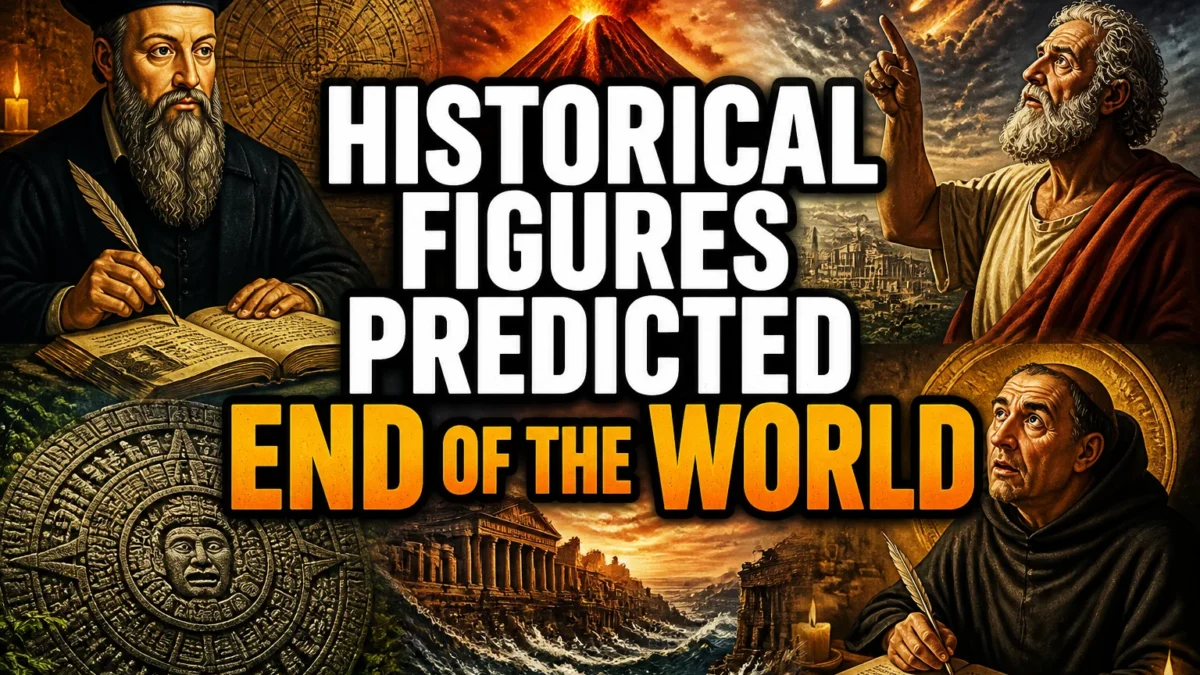
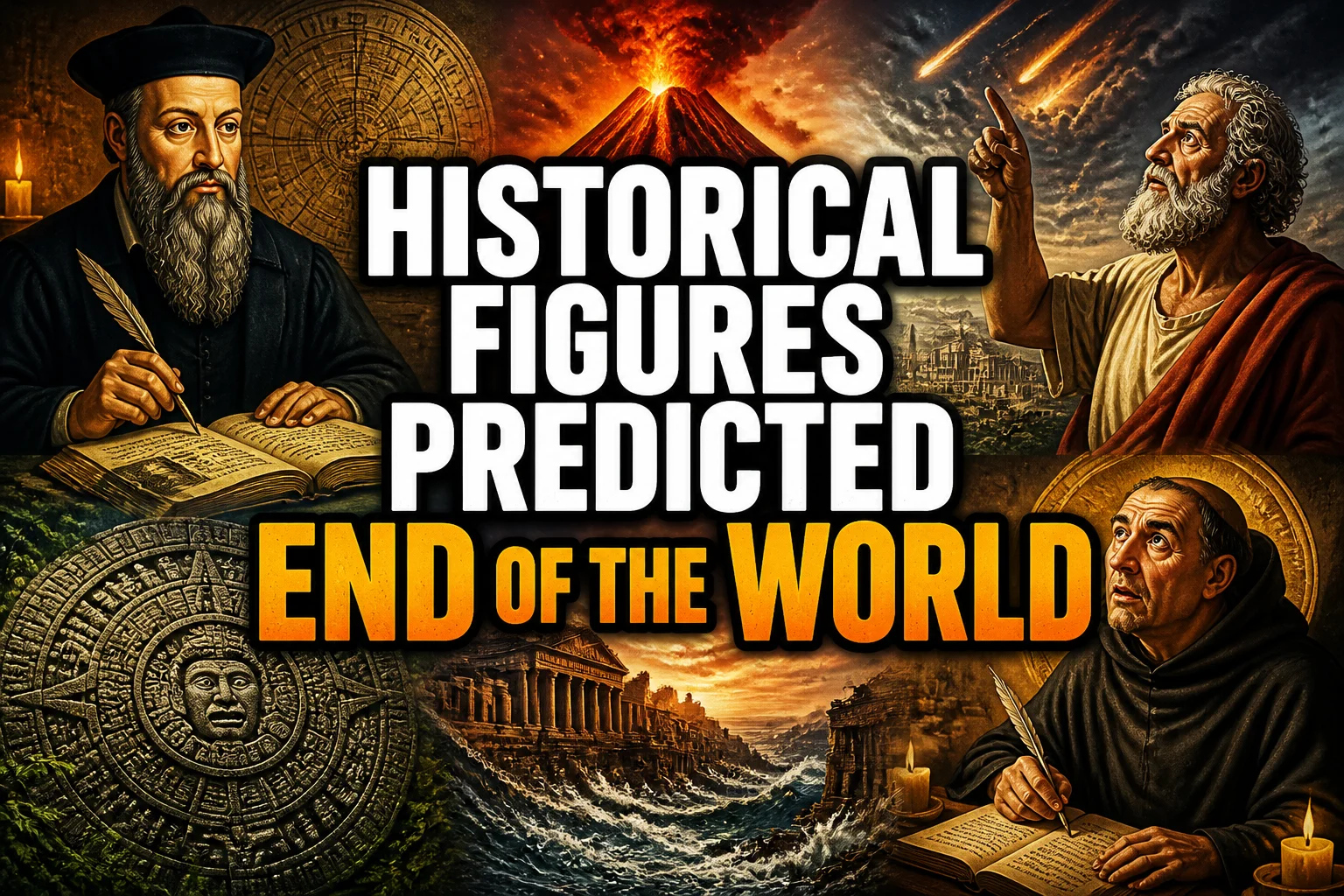
Every few years a new date circulates, a new countdown begins, and a fresh round of headlines asks whether this is finally it. What is striking is how old the pattern is, because the history of end of world predictions stretches back more than a thousand years and includes abbots, popes, astronomers, mathematicians, and radio preachers.
The 25 figures below span roughly a millennium, and every one of them named a date that has already passed. None of those dates delivered the apocalypse, but together they tell a surprisingly revealing story about how people read the signs of their own times.
TL;DR: Dozens of named historical figures — from a 10th-century preacher in Paris to Harold Camping — staked their reputations on specific end of the world dates, and every single one of those dates passed without incident.
What Years Was the World Supposed to End?
If you have ever wondered what years was the world supposed to end, the short answer is that almost every century has produced at least one serious candidate. The dates tend to cluster around a handful of biblical numbers, calendar quirks, and planetary alignments that each generation found irresistible.
The year 1000 is the most famous, though the evidence for mass panic is thin. The year 1260 came from Joachim of Fiore's reading of Revelation, 1524 from a planetary conjunction in Pisces, and 1666 from the number of the beast.
The 19th and 20th centuries added 1844, 1914, 1925, 1975, and 1988, while the modern era produced 1994, 1999, 2000, 2003, 2011, and 2012. Notice how the gaps between dates shrink as mass media grows, and how quickly a failed prediction is replaced by the next one.
If you are asking when did people think the world was gonna end, the honest answer is that somebody has thought so in nearly every generation for which we have records. The specific years change, but the underlying impulse — reading current crises as final signs — does not.
Why So Many People Have Predicted the End of the World
Apocalyptic thinking tends to flourish when the present feels unmanageable, and historians have long noticed that end of the world dates cluster around plagues, wars, and rapid social change. The Black Death, the Reformation, the World Wars, and the nuclear standoff each produced their own wave of prophecy.
There is also a textual engine behind it. A handful of biblical passages — Daniel's 1,260 days, Revelation's beasts and millennium, the 6,000-year world week — can be combined in endless ways, which is why so many who predicted the end of the world arrived at wildly different answers from the same book.
Finally, prophecy is socially powerful. A preacher who announces a date creates urgency, gathers a community, and offers believers a role in a cosmic story, which is a far more compelling message than a reminder that the world will probably continue as usual.
1. The Paris Preacher and the Myth of the Year 1000 Panic (c. 970)
Around 970, a preacher in Paris told his congregation that the world would end on the day the Feast of the Annunciation coincided with Good Friday, a rare calendar clash that had just occurred and would recur in 992. Word of the claim reached Abbo of Fleury, one of the most learned monks of the age.
Abbo wrote a refutation arguing from Scripture that no one could know the day or the hour, and he pointed out that the preacher's arithmetic proved nothing at all. His rebuttal survives, which tells us the alarm was small enough to be handled with a letter.
The idea that all of Europe trembled as the year 1000 approached is mostly a 19th-century invention, popularized by Romantic historians such as Jules Michelet. Modern medievalists have found little evidence of a mass panic, making the "millennial terrors" one of the great myth-busting stories among end of the world dates.
2. The Astrologers of Toledo and the 1186 Prophecy (1184)
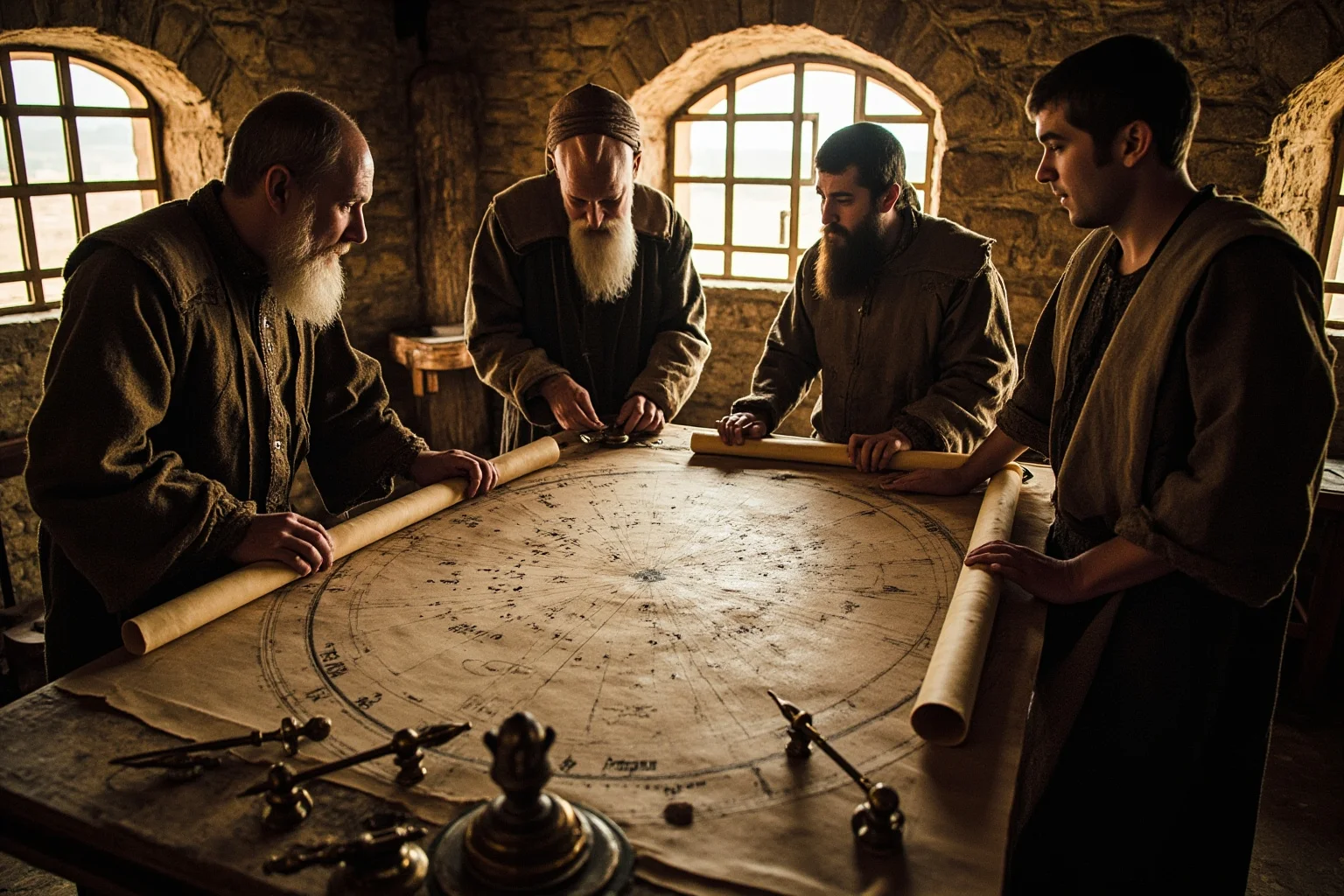
In 1184, a document attributed to the astrologers of Toledo began circulating through Europe with a chilling warning. A conjunction of planets in Libra in September 1186, it claimed, would bring storms, famine, and widespread destruction.
The so-called Letter of Toledo was copied and translated across the continent, and churchmen took it seriously enough to respond to it. September 1186 came and went without catastrophe, and the letter survives mainly as evidence of how medieval astrology and apocalyptic expectation fed one another.
3. Pope Innocent III and the Last Days (1213)
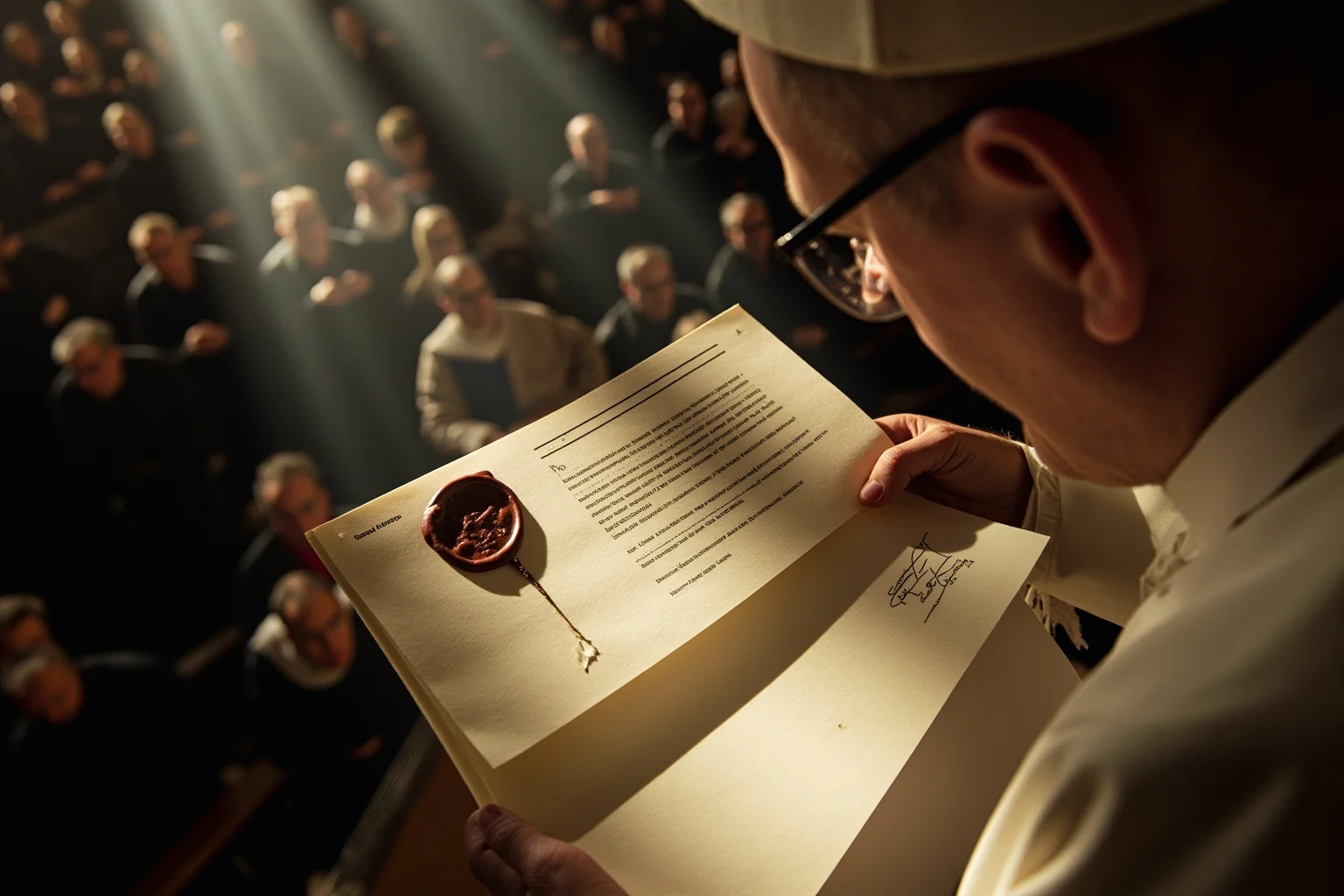
Pope Innocent III, one of the most politically powerful popes in history, summoned the Fourth Lateran Council in 1215 partly out of a conviction that Christendom had entered its final age. In a 1213 letter to the clergy, he wrote that the end of the world might be at hand and urged urgent reform.
Historians read the letter carefully, because Innocent was drawing on a long tradition of "last days" language to spur crusade and renewal rather than publishing a calendar. Even so, a pope's words gave the prophecy of the end of the world an authority that carried enormous weight across medieval Europe.
4. Joachim of Fiore and the Age of the Spirit (c. 1200)
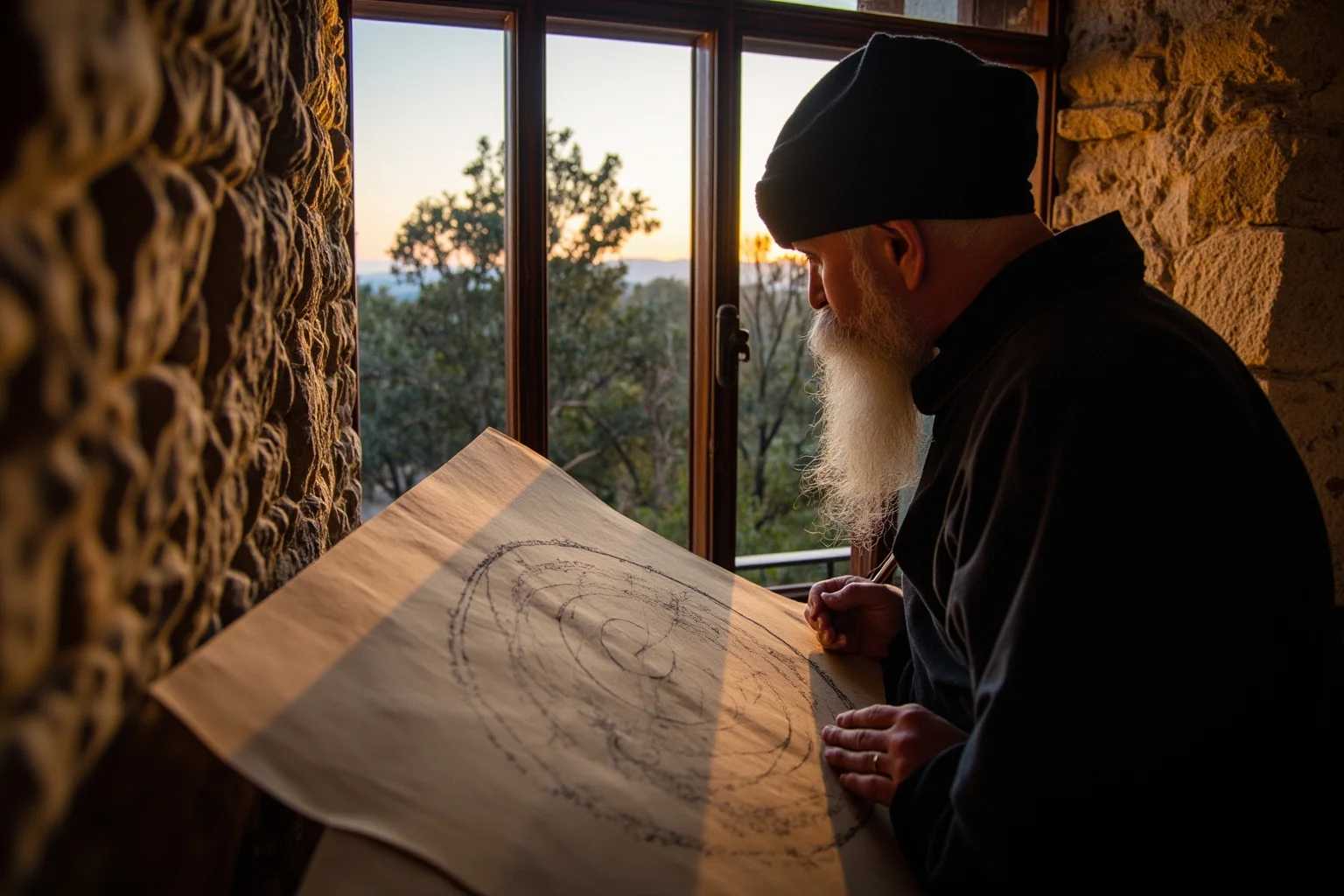
The Calabrian abbot Joachim of Fiore divided history into three ages — the Father, the Son, and the Spirit — and calculated that the third age would dawn around 1260. He derived the number from Revelation's 42 months and 1,260 days, and he died in 1202 before anyone could test it.
His followers, especially radical Franciscans, kept the date alive, and when 1260 arrived the expectation simply shifted forward. Joachim's scheme became the most influential end of the world prophecy of the Middle Ages and shaped religious movements for centuries afterward.
5. Johannes Stöffler and the Great Flood of 1524
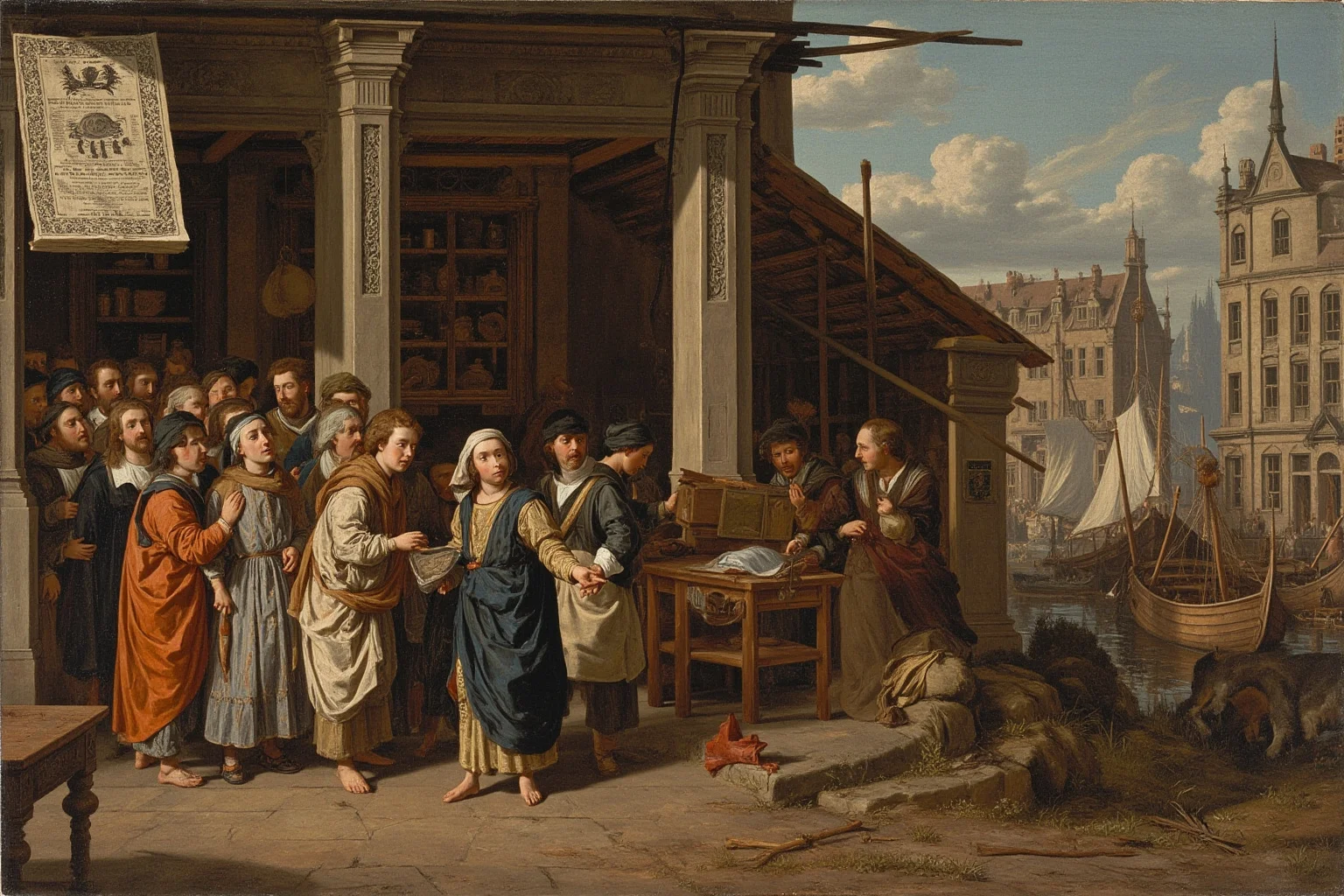
Johannes Stöffler, a respected astronomer at Tübingen, published an almanac in 1499 predicting that a conjunction of planets in Pisces in February 1524 would trigger a catastrophic flood. Pisces was a water sign, and to Renaissance readers the logic seemed impeccable.
As the date approached, European elites took notice, and some wealthy families reportedly built arks or moved to high ground. The month passed without a global deluge, though the notoriety followed Stöffler for the rest of his life.
6. Christopher Columbus and the Year 1650

Christopher Columbus spent his final years assembling a Book of Prophecies, a compilation of scriptural passages he believed foretold his voyages and the conversion of the world. Working from a 7,000-year world chronology, he concluded that only about 155 years remained.
That arithmetic pointed to roughly 1650 for the end of the world. Columbus's calculation was typical of his era's literalism, and it shows how the same biblical numbers could be made to yield wildly different end of world dates.
7. Martin Luther and the Last Days (1530s)
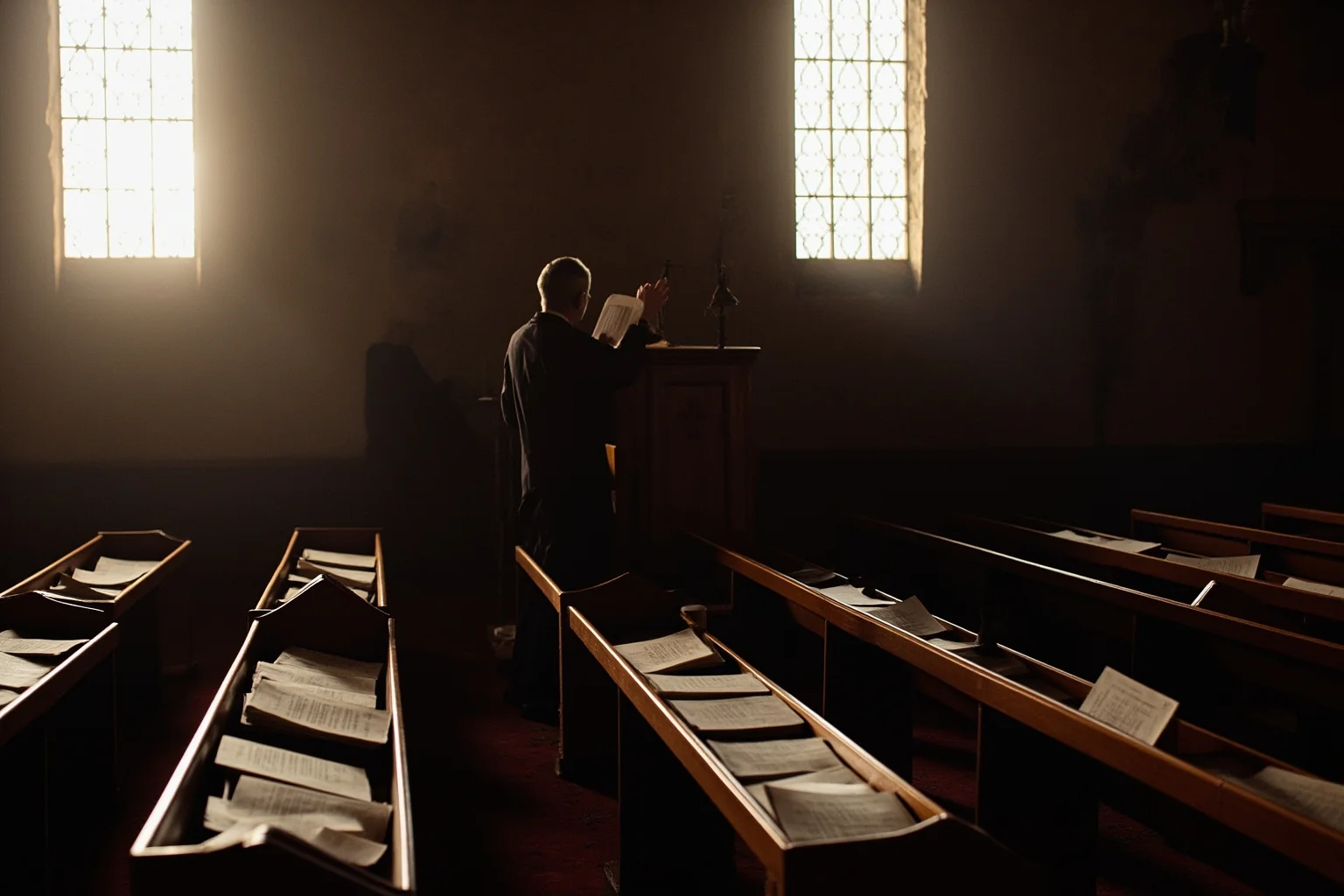
Martin Luther believed he was living in the last days and said so constantly in sermons, letters, and table talk. He read the crisis of the papacy and the upheaval of the Reformation as signs of the end, and he expected Christ's return within his own century.
Luther's 1541 world chronicle placed creation around 4,000 years before Christ, which left little room on the traditional 6,000-year timetable. He was careful to insist that no one could fix the day, but many of his followers were not so cautious.
8. Melchior Hoffman and the New Jerusalem (1529–1533)
Melchior Hoffman, a former furrier turned Anabaptist prophet, preached that Strasbourg would become the New Jerusalem and that Christ would return in 1533. He gathered followers in the city and waited for the end to arrive.
When 1533 passed, Hoffman's credibility collapsed and the Strasbourg authorities imprisoned him, where he remained until his death around 1543. His movement did not die with him, however, and its most radical wing soon moved on to Münster.
9. Jan Matthys and the Anabaptist Kingdom of Münster (1534–1535)
In 1534, Anabaptists seized the city of Münster and declared it the New Jerusalem, with the baker Jan Matthys leading the faithful. Matthys charged out on Easter Sunday 1534 believing he was the prophet Enoch and was killed almost immediately by the besieging army.
Jan van Leiden took over, crowned himself King David, and imposed a radical communal order on the city. Münster fell in June 1535, and the iron cages that held its leaders' remains still hang on St. Lambert's Church today.
10. John Napier and the Last Judgment of 1688
John Napier, the Scottish mathematician who invented logarithms, was also a serious student of Revelation. His 1593 book A Plaine Discovery of the Whole Revelation of Saint John calculated that the Last Judgment would fall in either 1688 or 1700.
The book was a bestseller and helped fix the 1688 date in the Protestant imagination. Napier's mathematics were impeccable and his premises were not, a combination that has powered end of world predictions ever since.
11. Thomas Venner and the Fifth Monarchists (1657–1661)

The Fifth Monarchists took their name from Daniel's vision of four beasts followed by a fifth kingdom, and they expected the saints to rule with Christ in the 1660s. The number 1666, drawn from Revelation's 666, looked to them like the year the old order would fall.
Thomas Venner, a London cooper, led armed uprisings in 1657 and again in January 1661, hoping to trigger the kingdom of King Jesus. The second rising was crushed and Venner was hanged, drawn, and quartered, while 1666 brought the Great Fire of London and no heavenly kingdom at all.
12. Sabbatai Zevi and the Redemption of 1666
In 1665, the Ottoman Jewish mystic Sabbatai Zevi declared himself the Messiah, and news spread across Europe and the Middle East with astonishing speed. Many Jews and a number of Christians expected the redemption, and with it the end of the present age, to arrive in 1666.
The Ottoman authorities arrested him in 1666, and under threat he converted to Islam. The movement shattered, though small groups of believers held on for generations, making it one of the most dramatic failed end-of-age predictions in history.
13. Isaac Newton and the Year 2060
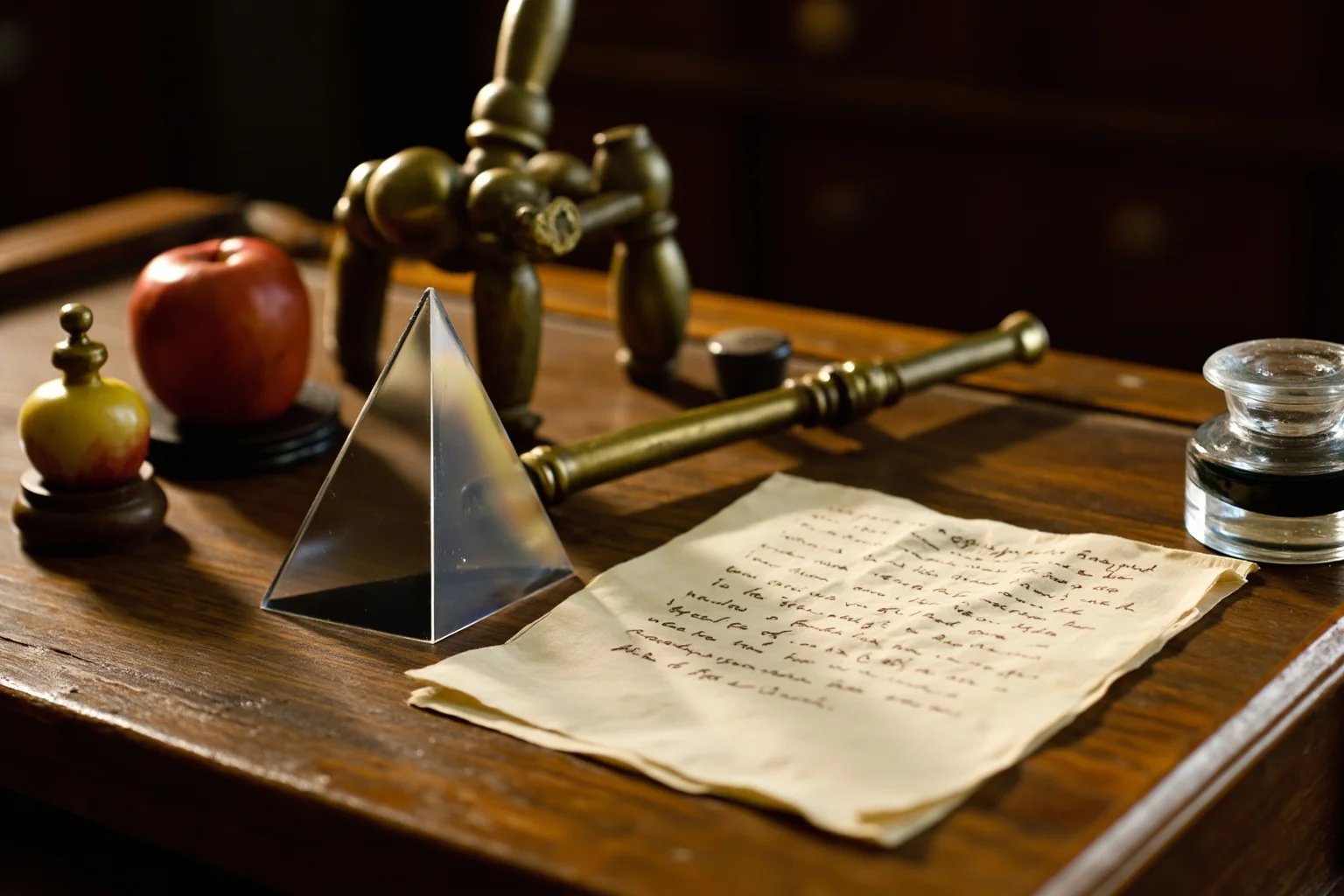
Isaac Newton, who spent decades on biblical chronology alongside his physics, concluded in a manuscript written around 1704 that the world would not end before 2060. He based the figure on the 1,260 "days" of Daniel and Revelation read as years.
Crucially, Newton warned against using such calculations to name a day, and he seems to have been trying to rein in enthusiasts rather than whip them up. His 2060 estimate remains the most famous future-dated end of world prediction attached to a major scientist.
14. William Whiston and 16 October 1736
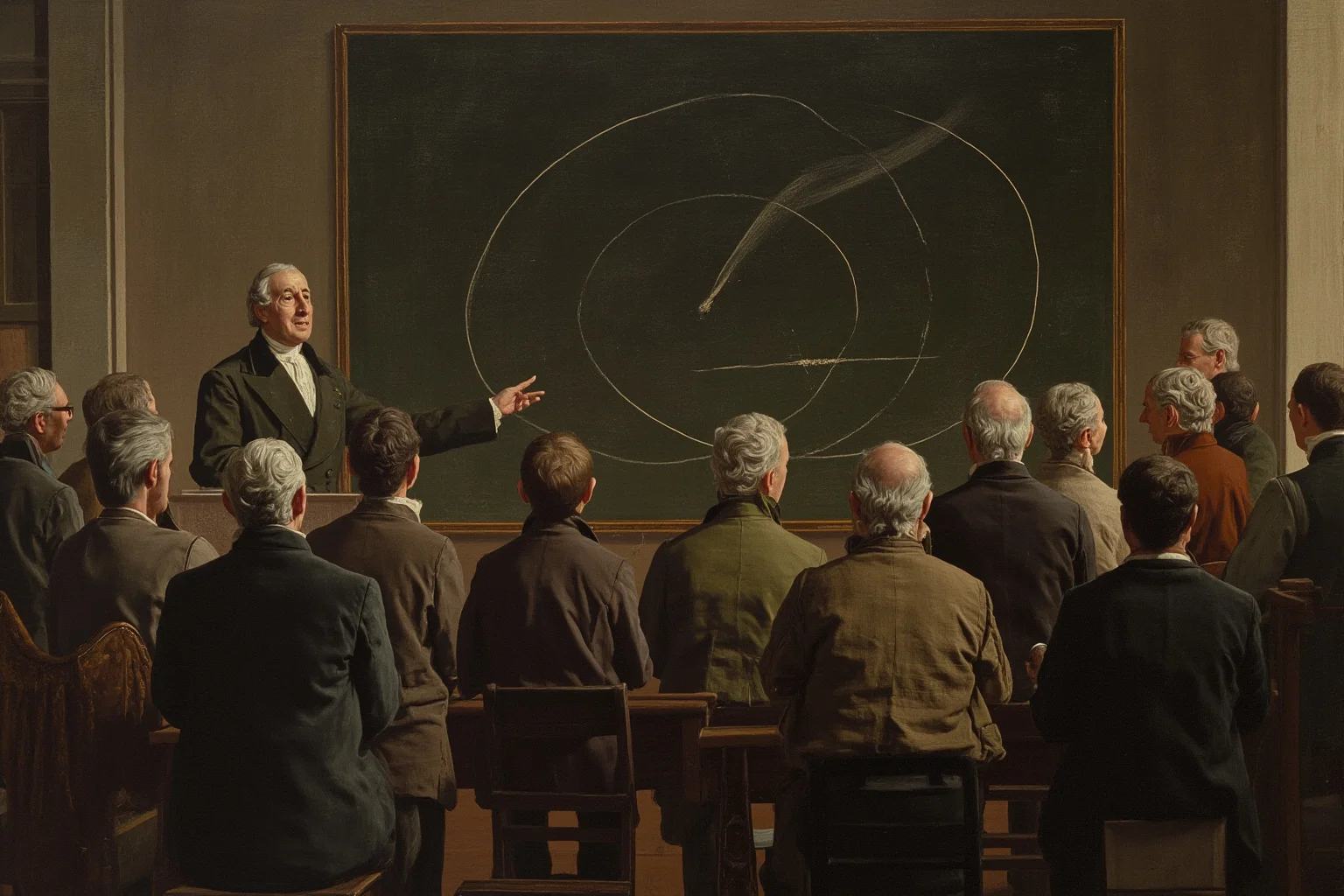
William Whiston, Newton's successor as Lucasian Professor at Cambridge, believed a comet had caused Noah's flood and would one day destroy the Earth. He calculated that a comet would strike on 16 October 1736 and said so in public lectures.
He had lost his professorship years earlier over his heterodox views, but he kept lecturing, and the date drew curious crowds. The day passed quietly, and Whiston simply recalculated.
15. William Miller and the Great Disappointment (1844)
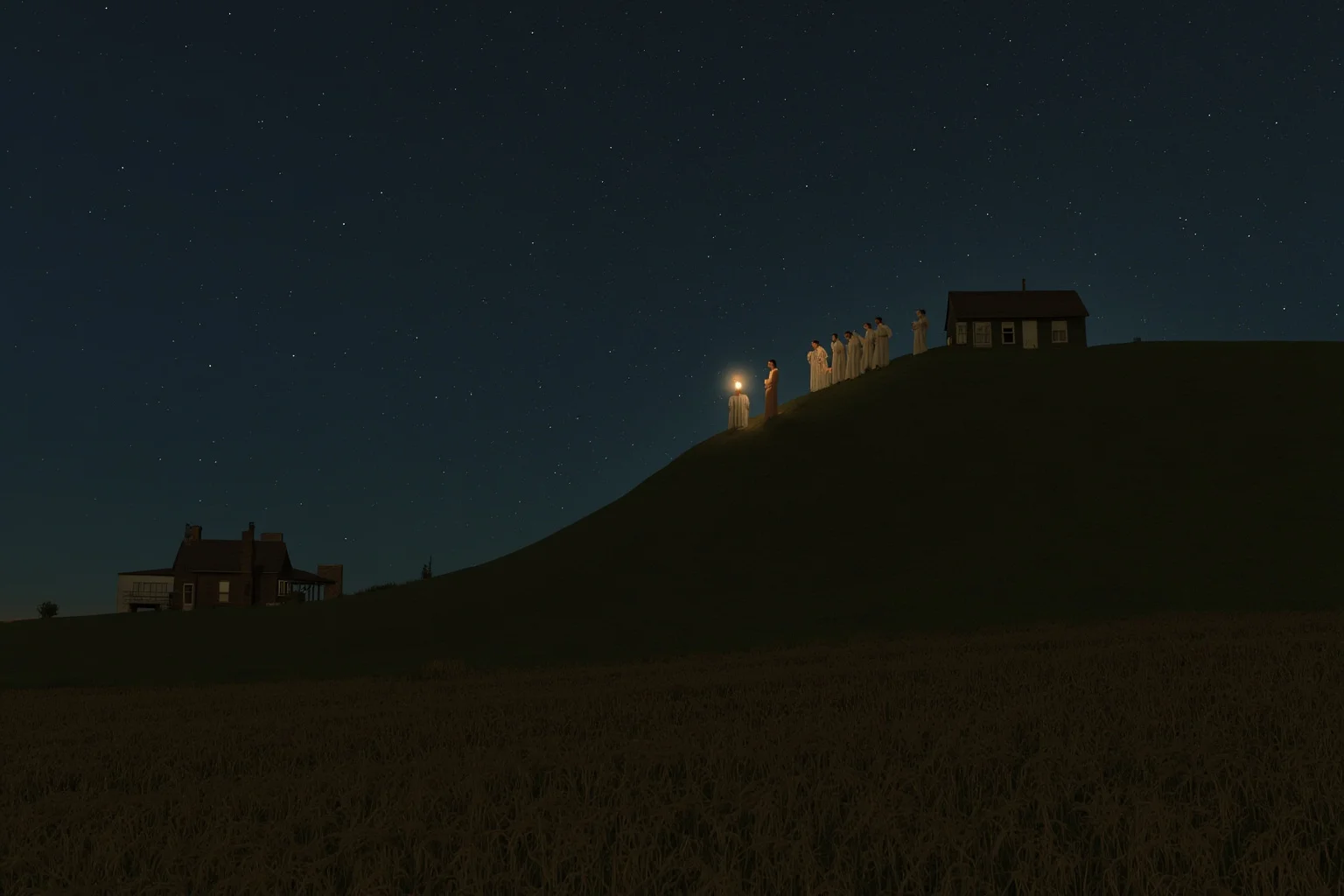
William Miller, a Baptist farmer and preacher from upstate New York, worked out from Daniel 8:14 that Christ would return around 1843. When that year passed, the date was refined to 22 October 1844.
Tens of thousands of followers, known as Millerites, gave away property and gathered to wait. The day became known as the Great Disappointment, and it produced one of the most studied cases of failed predictions of the end of the world, later analyzed in the classic 1956 book When Prophecy Fails.
16. Camille Flammarion and Halley's Comet (1910)
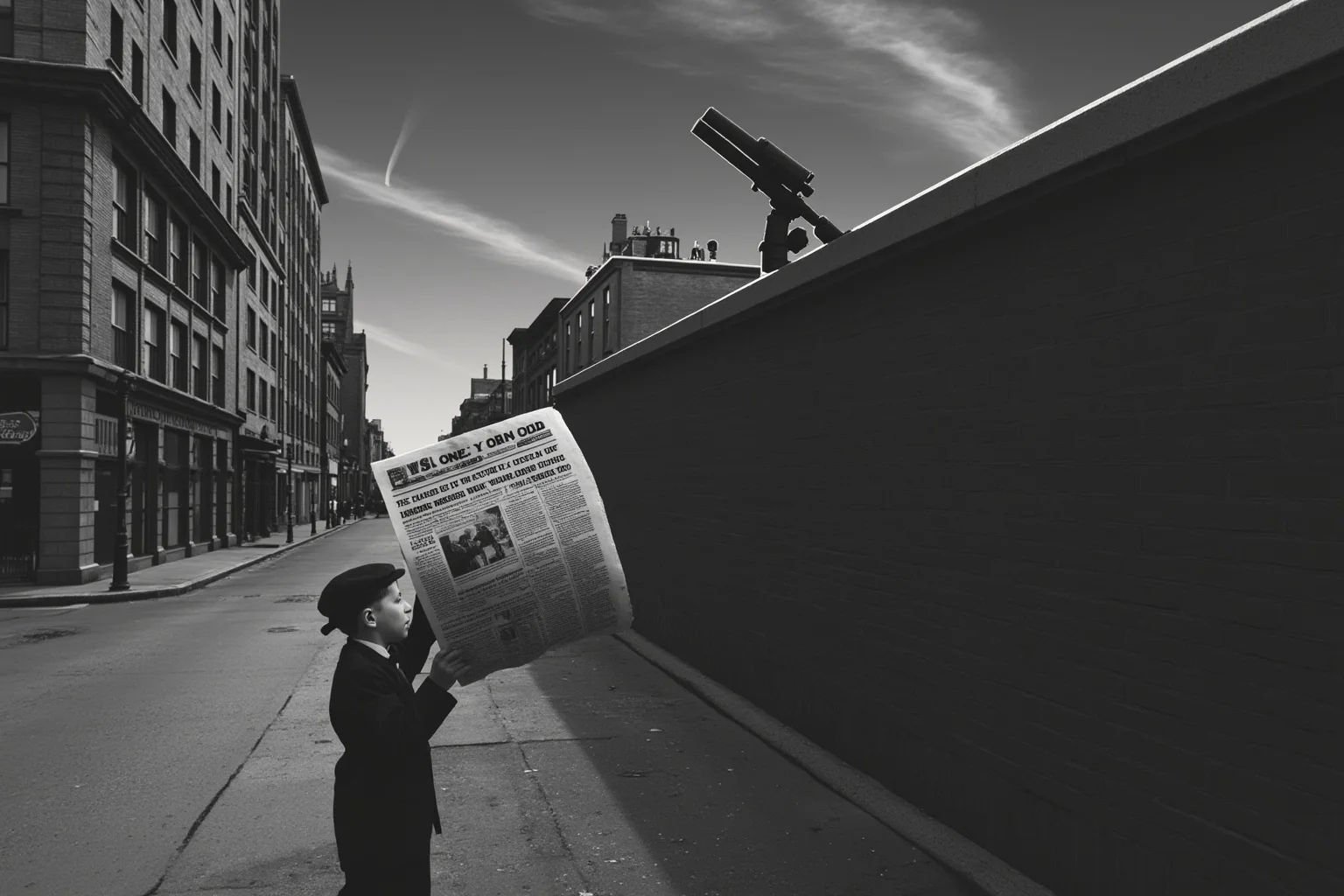
When Halley's Comet returned in 1910, Earth was due to pass through its tail, and the French astronomer Camille Flammarion speculated publicly about the possible effects of gases within it. Newspapers converted that speculation into headlines about a poisonous cloud and the end of the world.
The panic was largely a media event, and some people bought "comet pills" and sealed their windows against the supposed gas. Earth passed through the tail on 18–19 May 1910 and nothing happened, but the episode remains a textbook example of how quickly an end of world prediction can spread through the press.
17. Charles Taze Russell and 1914
Charles Taze Russell, founder of the Bible Students movement that later became Jehovah's Witnesses, taught that 1914 marked the end of the "Gentile Times" based on Daniel's prophecy of seven times. He expected that year to bring momentous change, and later followers pointed to 1918 as well.
1914 did bring a world war, which believers took as confirmation, though the movement reinterpreted the date rather than dissolving. Jehovah's Witnesses today teach that 1914 marked Christ's invisible enthronement in heaven, not the destruction of the world.
18. Joseph Franklin Rutherford and 1925

Joseph Franklin Rutherford, Russell's successor, published Millions Now Living Will Never Die in 1920 and tied the restoration of the biblical patriarchs to 1925. The movement later built a house in San Diego, Beth Sarim, for their expected return.
When 1925 passed without incident, Beth Sarim sat mostly empty until it was sold decades later. The episode shows how institutional end of world dates tend to be absorbed and reinterpreted rather than publicly abandoned.
19. Herbert W. Armstrong and the Radio Prophecies

Herbert W. Armstrong, whose Radio Church of God reached millions of American listeners, predicted Christ's return for 1936, then for 1943, and later for the early 1970s. Each date was announced with confident biblical arithmetic and then quietly revised.
His church continued to set dates through the 1960s and 1970s, and its fragmentation after his death in 1986 is a case study in what happens when a movement's calendar finally runs out. He remains one of the clearest answers to the question of who predicted the end of the world repeatedly and kept an audience.
20. Hal Lindsey and the Class of 1988

Hal Lindsey's 1970 bestseller The Late Great Planet Earth argued that the generation alive when Israel was founded in 1948 would see the end, which suggested a deadline around 1988. The book sold tens of millions of copies and shaped a generation of American prophecy belief.
The 1988 date passed, and Lindsey moved the goalposts as he had before. His book remains one of the bestselling nonfiction titles of the 1970s, a reminder that end of world predictions have often been very good business.
21. Lee Jang Rim and 28 October 1992

In South Korea, Lee Jang Rim's Mission for the Coming Days announced that the Rapture would occur at midnight on 28 October 1992. Followers gave away possessions, and some reportedly spent their savings on advertising the date.
The date passed, and the aftermath was grim, with several followers reported to have taken their own lives after the failure. It is a sobering reminder that these predictions can carry real human costs rather than merely comic ones.
22. Harold Camping and 1994, Then 2011
Harold Camping, an American radio preacher, first predicted the end for 6 September 1994, then recalculated to 21 May 2011, when he said believers would be raptured and the world destroyed five months later on 21 October. His ministry spent millions of dollars on billboards around the world.
Neither date came true, and Camping later described the May date as a "spiritual" judgment rather than a physical one. He stepped back from public ministry in 2011 and died in 2013.
23. Nostradamus and the Misread Summer of 1999

Nostradamus never dated the end of the world, but 20th-century interpreters seized on one quatrain mentioning "the year 1999, seventh month" and a "great King of Terror" from the sky. Books, documentaries, and a wave of tabloid stories turned it into a genuine end of world date.
When July 1999 passed quietly, the interpreters moved on to 2012 and beyond. It is one of the clearest cases of a prediction that belongs entirely to the predictor's readers rather than to the original author.
24. Nancy Lieder, Nibiru, and 2012
Nancy Lieder, who claimed to receive messages from extraterrestrials, announced in 1995 that a planet called Nibiru would arrive in 2003 and cause a pole shift. When 2003 passed, the date migrated to 2012 and merged with the Maya calendar hype.
The Maya long-count cycle did turn over in December 2012, but the surviving inscriptions, including Tortuguero Monument 6, describe a cyclical transition rather than a cataclysm. Zecharia Sitchin's Nibiru, meanwhile, was his own reading of Mesopotamian texts and never a scientific body.
25. John Hagee and the Four Blood Moons (2014–2015)
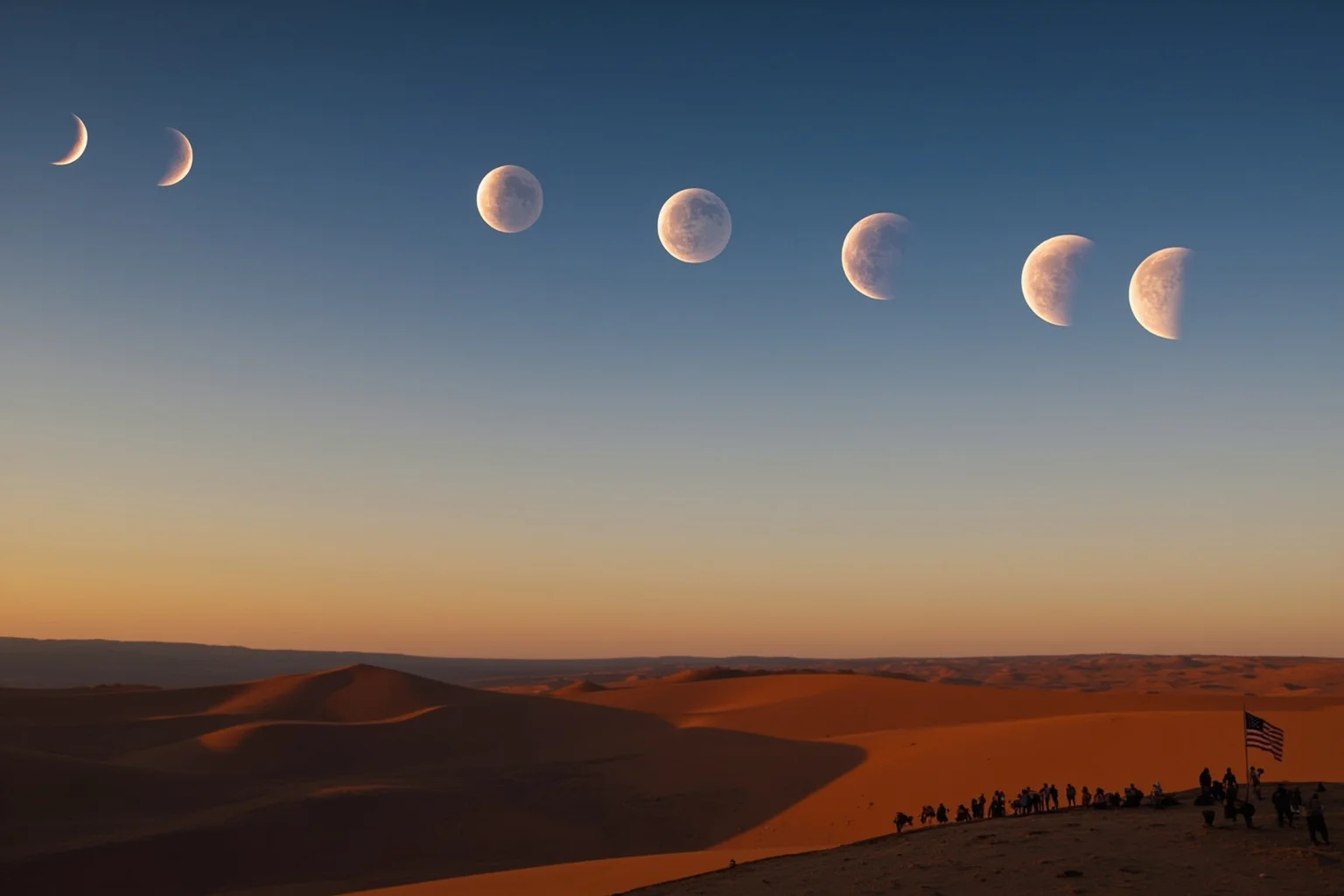
Pastor John Hagee's 2013 book Four Blood Moons linked a tetrad of lunar eclipses in 2014 and 2015 to biblical prophecy and suggested something momentous would happen to Israel and the world. The book sold heavily and the dates drew wide media attention.
The tetrad came and went, and Hagee had been careful to say he was not naming the end of the world. It is a useful example of modern prophecy language, in which predictions are hedged just enough to survive the date they describe.
What Scientists Say About When the World Will End
If you are asking when is it estimated that the world will end, astrophysics has a surprisingly calm answer: not for a very long time. The Sun is about 4.6 billion years old and will exhaust the hydrogen in its core in roughly 5 billion years.
At that point it will swell into a red giant, likely engulfing Mercury and Venus and possibly Earth as well. Long before then, a steadily brightening Sun will probably boil away the oceans in about a billion years, ending complex life on the surface.
Other hazards, such as a large asteroid impact or a nearby supernova, are treated as low-probability risks rather than scheduled events. NASA's planetary defense efforts track near-Earth objects, and no known asteroid poses a significant threat for at least the next century.
So when do scientists predict the world will end? The best estimates put the loss of habitability at around a billion years and the planet's physical destruction at about five billion, which makes the endless stream of when will the world end predictions look like very short-term thinking.
Were Any End of the World Prophecies Fulfilled?
No. Not a single specific end of world prediction in this list has been fulfilled, and that is the most consistent fact about the entire genre.
Believers sometimes respond that prophecies are conditional, pointing to Jonah's warning to Nineveh, or that a date was meant spiritually rather than literally. Those arguments can be theologically serious, but they also make the original prediction impossible to test.
What is more interesting is how rarely a failed date ends a movement. Sociologists who studied the Millerites after 1844 found that believers often grew more committed, because the community and the interpretive framework mattered more than the calendar itself.
Why Failed End of World Predictions Keep Happening
The pattern repeats because the incentives favor prediction. A specific date draws attention, builds a following, and sells books, and the cost of being wrong is usually paid by someone other than the person who set it.
So when did people think the world was going to end? The historical record suggests the answer is nearly always, in every era, with the date set just far enough ahead to feel vivid and just vague enough to be revised.
The healthiest response to any new end of the world prediction is the one Abbo of Fleury offered a thousand years ago. No one knows the day or the hour, and a confident date is usually a sign of enthusiasm rather than evidence.
Frequently Asked Questions
What are the most famous end of world predictions in history?
The best-known examples include Joachim of Fiore's expectation of a new age around 1260, the astrologers' flood panic of 1524, the Fifth Monarchists' hopes for 1666, William Miller's October 1844 date, Charles Taze Russell's 1914, Harold Camping's 2011, and the 2012 Maya calendar hype. Each one was announced with confidence and each one passed without the predicted catastrophe.
When was the end of the world predicted?
Specific dates have been announced in almost every century, including 1000, 1186, 1260, 1524, 1650, 1666, 1688, 1736, 1844, 1914, 1925, 1975, 1988, 1994, 1999, 2003, 2011, and 2012. The years change, but the pattern of a confident date followed by quiet revision is remarkably consistent.
Have any end of the world prophecies been fulfilled?
No specific end of world prediction has been fulfilled. Some believers argue that such prophecies are conditional, as in the biblical story of Jonah and Nineveh, or that a date was meant in a spiritual rather than literal sense. Those explanations may be sincere, but they also make the original claim impossible to verify.
When do scientists predict the world will end?
Scientists do not forecast a prophetic end, but they can estimate the planet's fate. Rising solar luminosity will likely make Earth uninhabitable in roughly a billion years, and the Sun will expand into a red giant in about five billion years, probably destroying the planet. No known asteroid poses a significant threat for at least the next century.
Who predicted the end of the world most often?
Among individuals, Herbert W. Armstrong and Harold Camping are strong contenders, having issued multiple revised dates across decades. Hal Lindsey also repeatedly shifted his timeline, and some religious organizations have set several dates as a body rather than through a single leader.
When did people think the world was going to end in 2012?
The 2012 date came from the end of a cycle in the Maya long count, which turned over in December 2012. Surviving Maya inscriptions, including Tortuguero Monument 6, describe a cyclical transition rather than an apocalypse. The doom framing was largely added by modern writers and New Age authors, not by the Maya themselves.

Alex Warren
Related Articles