Every year, somewhere in the world, a painting vanishes from a museum wall — and most of the time, the story ends with a return. Police stings, insurance negotiations and plain bad luck on the thief's part have brought back some of the most famous stolen paintings in history.
But not all of them. The list below splits into two halves: masterpieces that were briefly stolen and recovered, then ten stolen paintings that were never found. Together they cover the strangest corners of the world's missing artwork.
TL;DR: Most headline-grabbing art thefts end in recovery, but a stubborn handful — Vermeer's The Concert, Caravaggio's Palermo Nativity, a Raphael looted during World War II — remain on the missing artwork rolls decades later.
Why Stolen Art Is So Hard to Sell and So Hard to Get Back
There is a paradox at the heart of every art heist: the more famous the painting, the more impossible it becomes to sell. Every dealer, auction house and border officer on earth has already seen the image.
That is why many thefts were never really about selling at all. Some were ransom attempts, some appear to have been commissioned by private collectors who never intended to display the work, and plenty were crimes of opportunity by people with no plan for what came next.
Recovery rates are better than most people assume, though the figures are unreliable because many thefts are never reported. INTERPOL's Stolen Works of Art database and the Art Loss Register exist precisely because the market for stolen art paintings is scattered, informal and often surprisingly small.
That uncertainty is why any stolen paintings list comes with a caveat. Attribution and recovery status change, and works everyone assumed were destroyed have a habit of turning up decades later.
Famous Stolen Paintings That Were Recovered
The twelve cases below are the happy endings — dramatic, absurd or both. Each one reminds us that a missing canvas is not always a lost one.
1. Mona Lisa — Leonardo da Vinci (1911–1913)
On 21 August 1911, Vincenzo Peruggia walked out of the Louvre with the world's most famous portrait hidden under his coat. Peruggia was an Italian handyman who had worked at the museum and knew exactly when the gallery would be empty.
The Louvre closed for a week while police searched, and the press treated the theft as a national humiliation. Peruggia kept the panel in his Paris apartment for more than two years before trying to sell it to a Florentine dealer, who alerted the authorities.
He claimed patriotism drove him, though he also asked for money. The painting was returned to the Louvre in January 1914 and has been displayed behind glass ever since.
2. The Scream — Edvard Munch (1994, and again in 2004)
Munch's most recognizable image has been stolen twice, which is remarkable for a work that is almost impossible to sell. In February 1994, thieves took a version from the National Gallery in Oslo and left a note thanking the museum for its poor security. It was recovered that May in a sting operation.
Ten years later, armed men walked into the Munch Museum in broad daylight and took both The Scream and Madonna while visitors watched. Norwegian police recovered both in August 2006, though the canvases had suffered visible damage.
3. Portrait of the Duke of Wellington — Francisco Goya (1961–1965)
Goya's portrait of the Duke of Wellington had just been bought by the National Gallery in London through a public appeal when it disappeared in 1961. For four years it was the subject of one of Britain's most publicized manhunts.
Then in 1965 a Newcastle bus driver named Kempton Bunton handed himself in, and the painting was recovered from a left-luggage office in Birmingham. Bunton, who had demanded better provisions for pensioners, was acquitted of theft and convicted only over the picture's frame.
4. Rest on the Flight into Egypt — Titian (1995–2002)
One of the most valuable paintings in a private English collection disappeared from Longleat House in 1995. The Titian was cut from its frame and stayed gone for seven years while detectives worked the case quietly.
A reward offer finally produced results, and the canvas was recovered in London in 2002. It has since returned to Longleat, where it remains one of the estate's treasures.
5. Madonna of the Yarnwinder — Leonardo da Vinci (2003–2007)
Two men posing as tourists overpowered a guide at Drumlanrig Castle in Scotland in 2003 and left with a Leonardo. The painting, owned by the Duke of Buccleuch, was gone for four years.
Police recovered it in Glasgow in 2007, and several people were later convicted. The case is also a useful reminder that Leonardo attribution is rarely simple — experts have debated the exact status of this version for decades.
6. Portrait of Adele Bloch-Bauer I — Gustav Klimt (1938–2006)
Klimt's gold-flecked portrait was seized from a Jewish family in Vienna after the Nazi annexation of Austria in 1938. For nearly seventy years it hung in an Austrian state gallery while the Bloch-Bauer heirs fought for its return.
A 2006 arbitration panel ruled in the family's favour, and the painting went to Los Angeles. It was sold that year to the Neue Galerie for a reported $135 million, then the highest price ever paid for a painting.
7. Portrait of Wally — Egon Schiele (1938–2010)
Schiele's portrait of his mistress, Walburga Neuzil, was taken from its owner, Lea Bondi Jaray, during the Nazi era. It resurfaced in 1997 when it travelled to New York for a loan exhibition from the Leopold Museum.
A US court case then kept the painting in limbo for more than a decade. It was finally released to Bondi Jaray's heirs in 2010 under a settlement reported at $19 million, and the canvas stayed in Vienna.
8. Two Van Goghs — View of the Sea at Scheveningen and Congregation Leaving the Reformed Church in Nuenen (2002–2016)
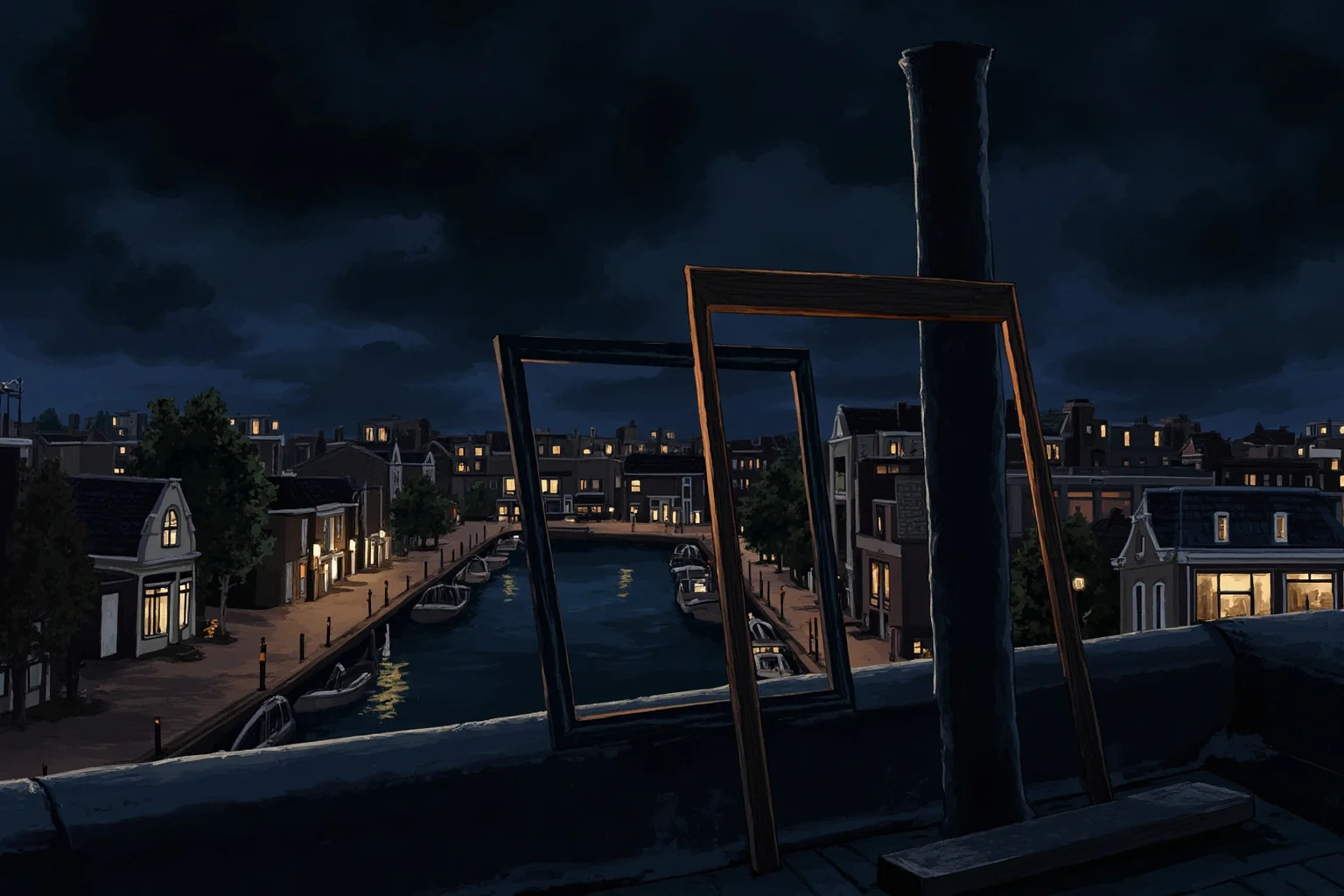
Thieves climbed onto the roof of the Van Gogh Museum in Amsterdam in December 2002 and made off with two early canvases. Two men were convicted, but the paintings were not recovered from them.
Fourteen years later, Italian police found the pair during a raid linked to organized crime near Naples. Both went back on display in Amsterdam in 2017, still missing their frames.
9. The Boy in the Red Vest — Paul Cézanne (2008–2012)
Four paintings were taken from a Zurich museum in 2008 in one of Europe's boldest daylight robberies. Cézanne's portrait of a boy in a red waistcoat was the most valuable of them, and the raid also took works by Degas, Monet and Van Gogh.
Serbian police recovered the Cézanne in 2012, and several suspects were convicted. The case has never been fully untangled, a reminder that even successful investigations rarely solve a heist completely.
10. The Parsonage Garden at Nuenen — Vincent van Gogh (2020–2021)
This small canvas was taken in a smash-and-grab at the Singer Laren museum in the Netherlands on 30 March 2020 — Van Gogh's birthday, with the museum closed because of the pandemic. The timing was not a coincidence.
The painting was recovered in 2021 in an operation involving Dutch art detective Arthur Brand, though it had been scratched and its frame was gone. A man was later convicted in connection with the theft.
11. The Ghent Altarpiece — Jan van Eyck (1794–1815)
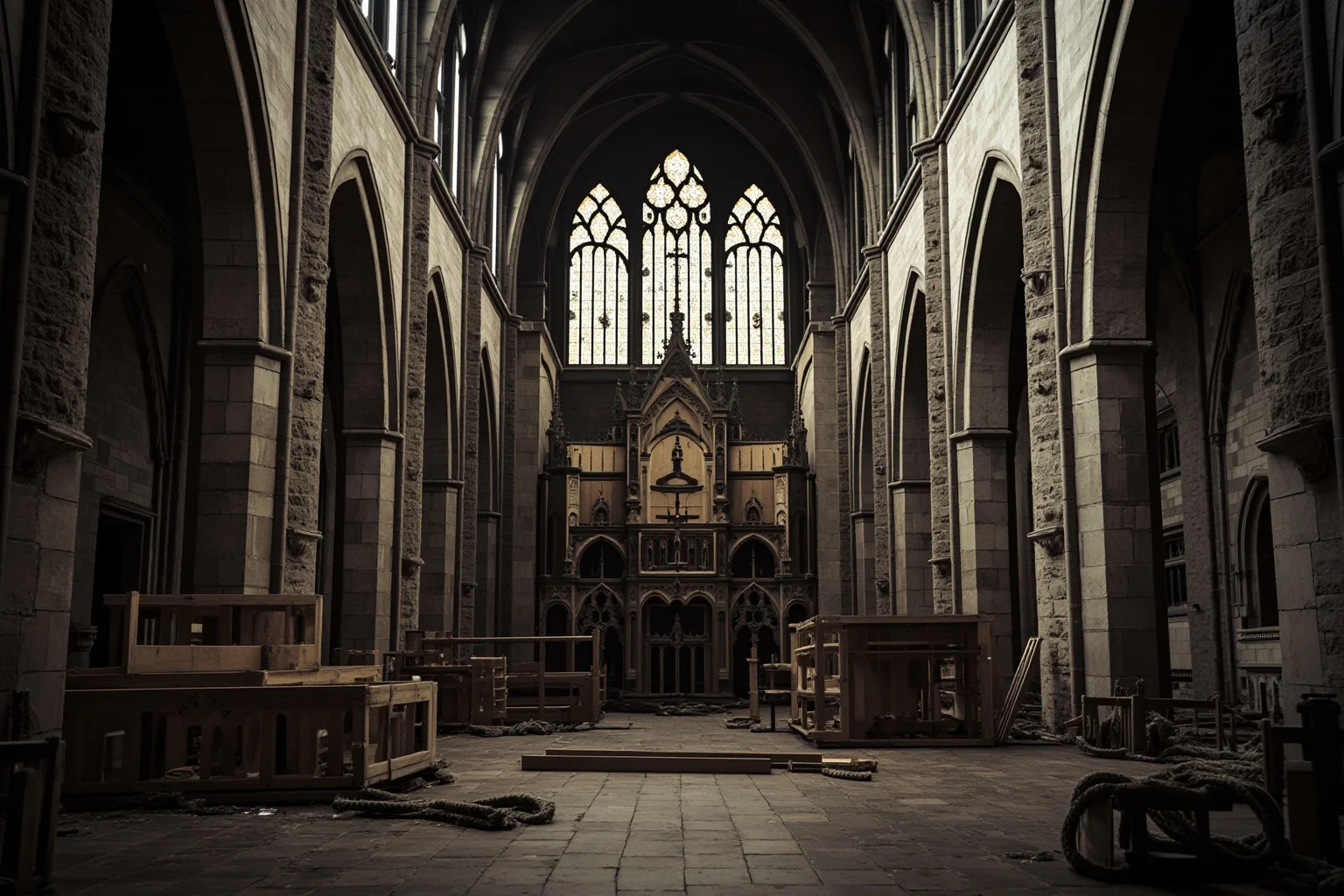
Van Eyck's enormous polyptych has been through more than most works of art. French revolutionary armies stripped it from St Bavo's Cathedral in Ghent and carried the panels to Paris in 1794.
After Napoleon's defeat, the altarpiece came home in 1815. It has been moved, dismembered and reassembled many times since, which makes it the perfect introduction to the theft described later in this list.
12. Two Laughing Boys — Frans Hals (1988, 2011 and 2020)
This small Dutch genre scene is one of the most repeatedly stolen art paintings in the world, taken from the same modest museum in Leerdam three times. Its repeated targeting says less about the painting than about security at small regional collections.
The first two thefts ended with the canvas back on its wall. The most recent case became a symbol of how thin security can be at institutions that hold treasures far more valuable than their budgets.
Stolen Paintings That Were Never Found
The second half of this stolen paintings list is the harder one. These ten works are still counted among the world's missing artwork, in some cases after nearly a century.
13. The Concert — Johannes Vermeer (1990)
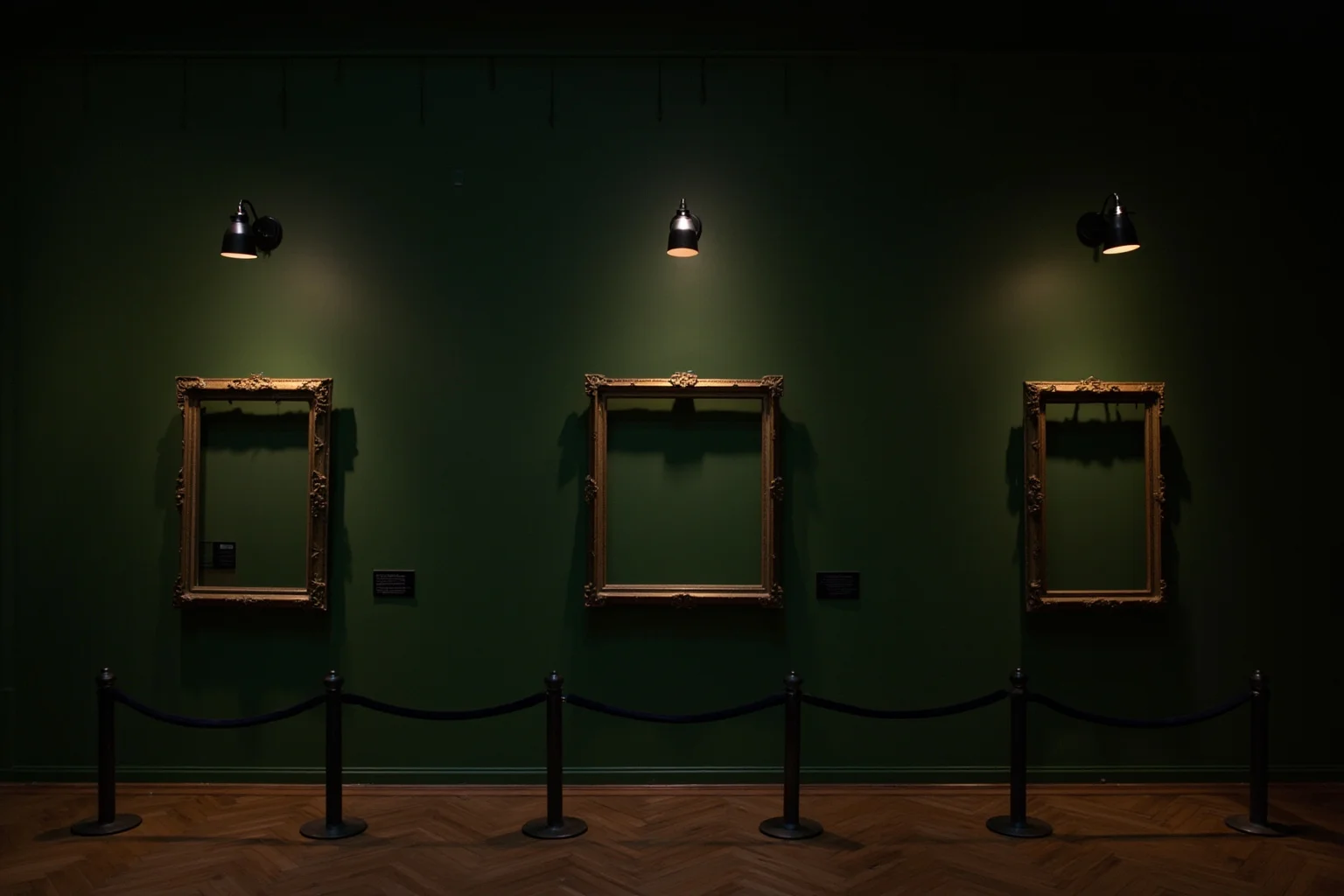
On 18 March 1990, two men dressed as police officers talked their way into the Isabella Stewart Gardner Museum in Boston, tied up the guards and spent 81 minutes inside. They left with 13 works, and none have been recovered.
Among them was Vermeer's The Concert, the most valuable unrecovered painting in the world by most estimates. The empty frames still hang in the Gardner's Dutch Room, waiting for a return that has not come in more than three decades.
14. The Storm on the Sea of Galilee — Rembrandt van Rijn (1990)
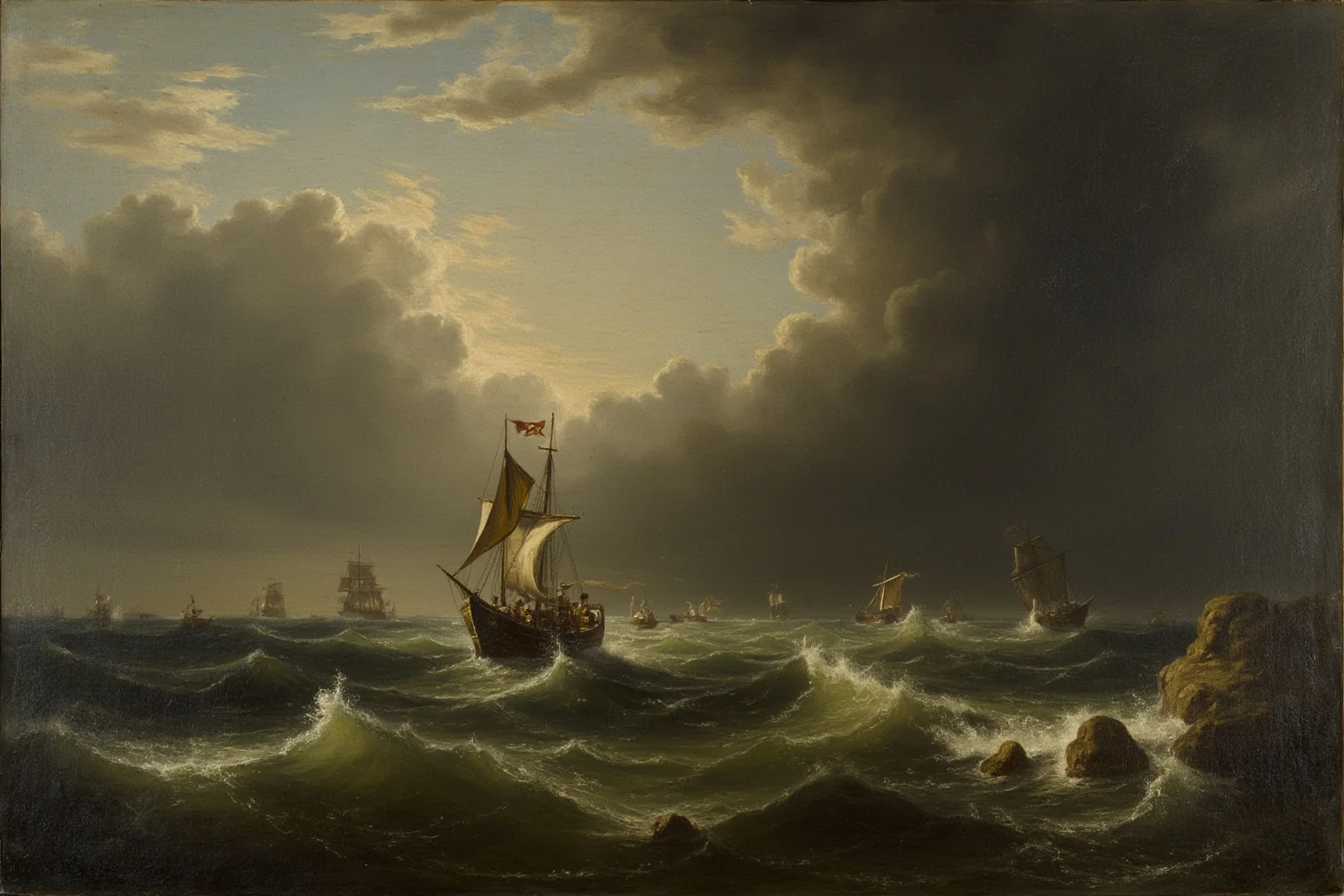
Rembrandt's only known seascape was among the works taken from the Gardner that night. It shows Christ and the disciples in a small boat on a churning sea, and the thieves cut it straight out of its frame.
No credible sighting has ever been confirmed. Investigators have chased tips across the American Midwest and through organized crime circles, and in 2013 the FBI said it believed it knew who carried out the raid.
15. Chez Tortoni — Édouard Manet (1990)
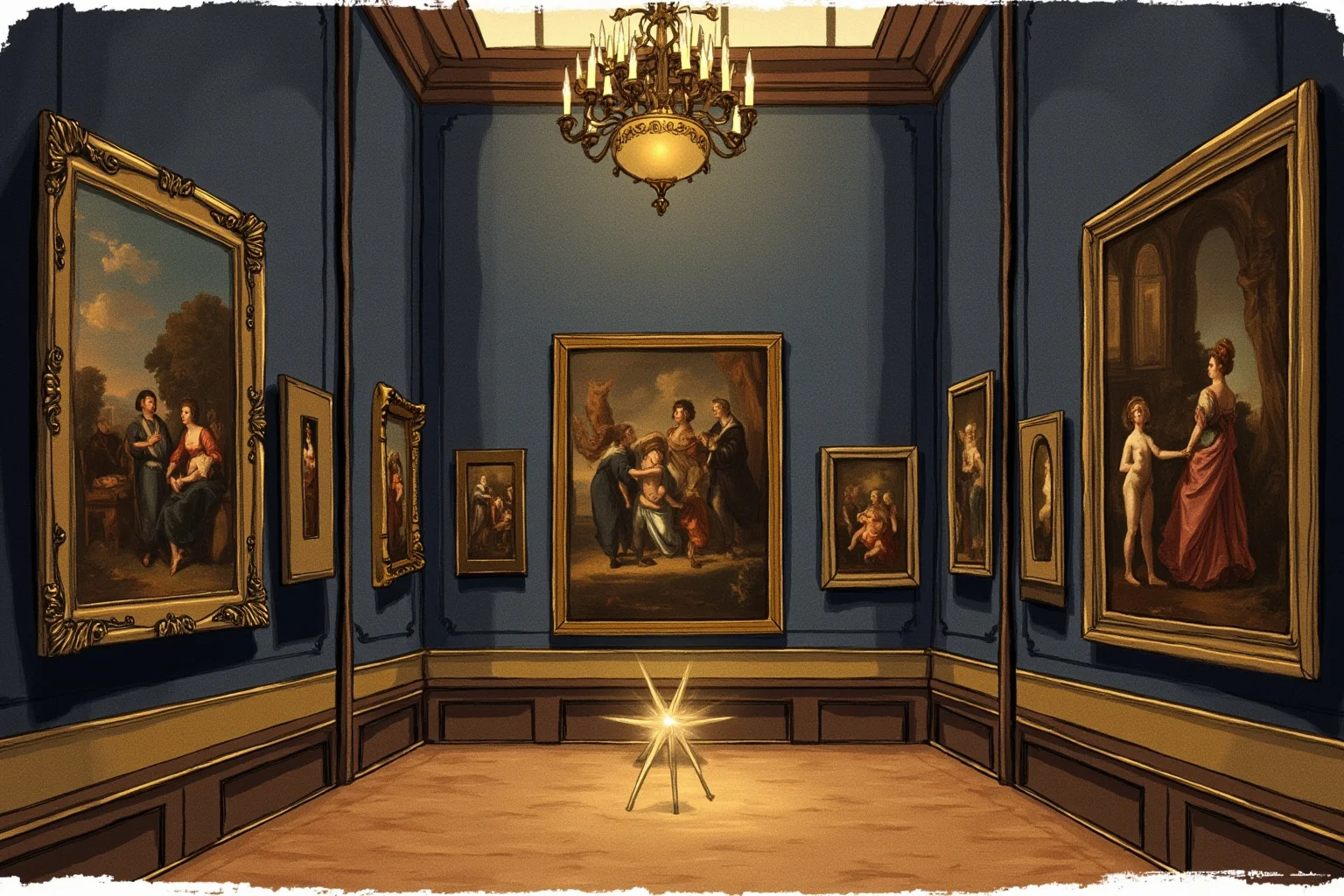
The third Gardner work on this list is a small Manet from the museum's Blue Room. Motion sensors recorded a visit to that room, and only the Manet was taken — a detail that has puzzled investigators for years.
Some analysts argue the theft looked amateurish in places, which raises the possibility that the crew did not fully know what they were taking. Either way, the painting has not been publicly seen since.
16. Nativity with St. Lawrence and St. Francis — Caravaggio (1969)
Caravaggio's altarpiece was cut from its frame in the Oratory of San Lorenzo in Palermo in October 1969. Police quickly suspected the Sicilian Mafia, and the canvas became one of the most sought-after pieces of missing art in Europe.
A mafia informant later claimed the painting had been damaged, stored badly and eventually destroyed, but that account has never been verified. A photographic reproduction now hangs in its place.
17. The Just Judges — Jan van Eyck (1934)
One panel of the Ghent Altarpiece was stolen from St Bavo's Cathedral in 1934, along with another panel that was returned within months. The thief, a stockbroker named Arsène Goedertier, died shortly after his confession, reportedly saying that he alone knew where the panel was.
He never revealed the location, and The Just Judges is still missing. A copy now fills the gap in the altarpiece, and the original remains one of the great prizes of the lost artwork world.
18. Portrait of a Young Man — Raphael (1939)
This Raphael was part of the Czartoryski collection in Kraków when it was seized during the Nazi occupation of Poland. It was intended for Adolf Hitler's never-built Führermuseum and was last reliably documented in 1945.
Poland has never abandoned the claim, and the painting sits on the country's list of wartime losses. Its fate remains one of the most significant unsolved art crimes of the Second World War.
19. Poppy Flowers — Vincent van Gogh (2010)
Van Gogh's small still life of poppies and cornflowers was taken from the Mohamed Mahmoud Khalil Museum in Cairo in August 2010. The theft exposed how weak the museum's security was, with reports at the time saying only a handful of its cameras were working.
It was not the first time the painting had gone missing; it had been stolen once before, in 1977, and later recovered. The 2010 theft has never been resolved in public.
20. Le Pigeon aux Petits Pois — Pablo Picasso (2010)
In May 2010, a lone intruder spent under an hour inside the Musée d'Art Moderne de la Ville de Paris and left with five paintings. The museum's alarm system had been out of action for weeks, a failure that only became clear afterwards.
The Picasso, a Cubist still life, is the most valuable of the five. One defendant later claimed he had thrown it into a rubbish bin in a panic, a story never corroborated and one that investigators treat with deep scepticism.
21. Woman with a Fan — Amedeo Modigliani (2010)
Modigliani's portrait of a woman holding a fan came from the same Paris raid that took the Picasso. Its soft palette and calm expression have made it one of the most reproduced items on any list of famous paintings missing from public view.
The alleged ringleader was convicted and imprisoned in 2017, but convictions have not produced the paintings. Investigators have said publicly that they believe at least some of the five may have been destroyed.
22. La Pastorale — Henri Matisse (2010)
Matisse painted La Pastorale in 1905, and it hung in the Paris museum for decades before disappearing in the same overnight raid. It is the only Matisse among the five stolen works.
The loss stings because the canvas sits at the very beginning of Matisse's Fauvist breakthrough. Like the others from that night, it has not been seen in public since.
Why Some Missing Artwork Stays Missing Forever
Cases go cold for reasons that have little to do with detective work. A stolen painting is easy to hide and almost impossible to sell, so many thefts end in stalemate — nobody can move the work, and nobody will hand it back without a deal.
Organized crime is a recurring thread. Several of the works on this list disappeared into environments where paintings function as collateral, trophies or bargaining chips rather than objects for sale.
Destruction is the outcome nobody wants to consider. If a canvas has been cut from its frame and stored in a damp cellar for years, the odds of a clean recovery fall sharply, and some claimants quietly accept that the work may no longer exist.
Then there is the simple passage of time. Witnesses die, files get lost, and a case that once had a dedicated task force becomes a paragraph in a database.
The Bottom Line on Famous Lost Paintings
The good news is that recoveries keep happening, sometimes decades later and often because someone tried to cash in. The Van Gogh pair found in Italy in 2016 and the Cézanne recovered in Serbia in 2012 both show that a stolen canvas can survive a very long time underground.
The less good news is that the biggest cases at the top of this list remain open. The Gardner frames are still empty, the Palermo Nativity is still a rumour, and the Just Judges is still the most famous missing panel in Europe.
For anyone who follows famous missing art, that is exactly the point. Every one of these works is a reminder that the difference between a recovered painting and a lost one is often a single phone call that never came.
Frequently Asked Questions
How many stolen paintings that were never found are still missing today?
Nobody knows the true number. INTERPOL's Stolen Works of Art database holds tens of thousands of records, and the Art Loss Register lists many more, but countless thefts are never reported at all. What is certain is that a small group of extremely famous works — including Vermeer's The Concert, Rembrandt's The Storm on the Sea of Galilee and Caravaggio's Palermo Nativity — have been missing for decades despite enormous publicity.
What is the most valuable stolen painting still missing?
Most estimates put Vermeer's The Concert at the top of the list. It was one of 13 works taken from the Isabella Stewart Gardner Museum in Boston in 1990, and its value today is generally placed in the hundreds of millions of dollars. Because Vermeer's surviving output is so small, the loss is considered irreplaceable.
Was the Mona Lisa ever stolen?
Yes. Vincenzo Peruggia, an Italian handyman who had worked at the Louvre, took the painting in August 1911 and kept it in his Paris apartment for over two years. He was caught in 1913 when he tried to sell it to a dealer in Florence, and the portrait returned to the Louvre in January 1914.
Why can’t thieves just sell a famous stolen painting?
Because fame is the thief's biggest problem. Major works are photographed, catalogued and instantly recognizable, which makes open sale impossible and private sale risky. Many heists end in ransom demands, insurance negotiations or long-term hiding rather than an actual sale.
What is the biggest art theft in history?
The 1990 Gardner Museum theft is the largest unsolved property crime of its kind. Two men posing as police officers took 13 works in 81 minutes, with estimates of the total value often placed around $500 million. Despite a long-running investigation and a substantial reward, nothing has been recovered.
Where can I find a searchable list of stolen paintings?
The main public resources are INTERPOL's Stolen Works of Art database, the FBI's National Stolen Art File and the privately run Art Loss Register. Museums and auction houses check these databases before buying or accepting loans, which is part of why stolen masterpieces are so hard to move.

Alex Warren
Related Articles