Markers feel like the least we can do for the dead. Yet some of history's most famous names lie in graves that are unmarked, deliberately hidden, or lost to time. This post explores twenty historical icons whose resting places are anonymous, forgotten, or have vanished entirely.
Along the way, we'll separate real historical evidence from popular legend. Some stories, like a grave that supposedly still glows, are folklore rather than fact. Others, like the tomb of the unknown soldier, turn anonymity itself into a national monument.
TL;DR: Many of history's most famous figures — from Mozart to Cleopatra — lie in unknown, unmarked, or deliberately hidden graves, proving that even the indispensable rarely get the grave they deserve.
Why Do So Many Historical Icons Have Unmarked Graves?
Before we get to the list, one quick reality check. History rarely loses a famous body because someone forgot a name. Instead, unmarked graves usually result from poverty, religious custom, political fear, battlefield chaos, or simply bad record-keeping. Understanding those reasons helps separate genuine history from romantic myth.
Some graves were unmarked by design. A heretic or a rebel might be buried secretly to prevent followers from turning the site into a shrine. In other cases, families simply couldn't afford a headstone, and a wooden cross rotted away within a generation or two. Each of the figures below explains a different path to anonymity.
The Tomb of the Unknown: Anonymity as a National Monument?
The best-known unmarked burial in the world is arguably the Tomb of the Unknown Soldier. When you ask who is buried in the tomb of the unknown, the honest answer is that nobody knows, and that is entirely the point. The monument honors unidentified service members who died in war, with their anonymity treated as sacred rather than tragic.
Different countries maintain their own versions. In the United States, the Tomb of the Unknown Soldier at Arlington National Cemetery has guarded remains of unknown service members since 1921. Several other nations, including France, the United Kingdom, and Italy, keep similar monuments, each choosing a single unidentified soldier to represent the many.
These tombs are technically marked, of course, with grand marble slabs and ceremonial guards. What makes them unique is that the person's identity stays forever unmarked, so the monument can represent everyone. That is a deliberately chosen grave unmarked by personal name, even as it is celebrated by a nation.
20 Historical Icons Buried in Unmarked Graves
The list below covers rulers, artists, philosophers, and outlaws. Each entry explains what we actually know versus what has become legend. Where scholars disagree, we say so, because the truth is usually messier and more interesting than the myth.
1. Mozart — Vienna's Lost Genius
Wolfgang Amadeus Mozart died in Vienna in 1791 and was buried in a common grave in St. Marx Cemetery, as was customary for many ordinary burials at the time. He was not thrown into a pauper's pit as some legends claim, and his widow did not attend the burial. The site today has a monument, but his exact plot was never definitively recorded.
Mozart's case is often misrepresented as a punishment for debt. Historians generally agree it reflected standard Viennese practice for middle-class burials, not shame. The secrecy of his burial location also helped fuel conspiracy theories about poison that persist to this day.
2. Cleopatra VII — A Tomb No One Has Found
Cleopatra VII, the last active Ptolemaic ruler of Egypt, died in 30 BCE, and her tomb has never been located. Ancient writers describe her burial with Mark Antony in a royal tomb, but no confirmed structure has ever been discovered. Her unmarked — or at least undiscovered — grave remains one of archaeology's biggest open questions.
Some researchers have proposed locations near Alexandria or at a site called Taposiris Magna. None of these proposals has produced conclusive evidence. Until someone finds the tomb, Cleopatra belongs on any list of famous ancient figures without a known grave.
3. Genghis Khan — A Secret Steppe Burial
Genghis Khan died around 1227, and by tradition he was buried in secret somewhere in the Mongolian steppe. Legend says the burial party killed anyone who might reveal the location, and that horses trampled the ground to erase all traces. The exact site has never been found, despite centuries of searching.
Modern archaeology has struggled because Mongolia's laws and local beliefs protect potential burial areas. Many Mongolians consider it disrespectful to disturb the Khan's resting place. For now, the most powerful conqueror in history still has no marked grave.
4. Attila the Hun — Buried in a Diverted River?
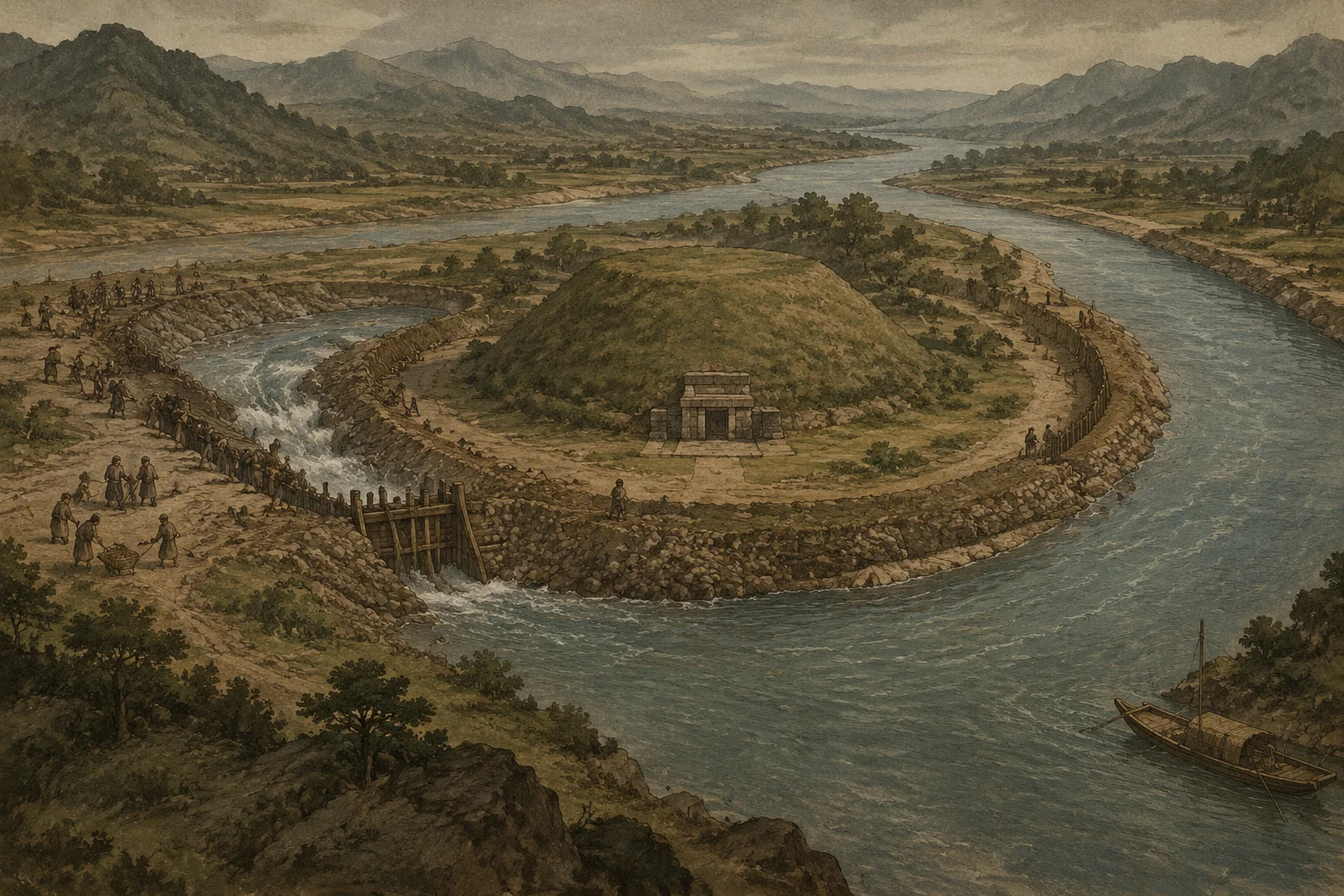
Attila the Hun died in 453 CE, and accounts of his burial are dramatic. One story says he was buried in a triple coffin of gold, silver, and iron, and that the river was diverted to hide the grave. Another tradition claims the workers who dug the grave were killed to keep the location secret.
Because these details come mainly from later and sometimes hostile sources, historians treat them cautiously. What is clear is that no confirmed burial site exists. Attila's final resting place remains one of the great unresolved mysteries of late antiquity.
5. William Shakespeare — No Name on the Stone?
Shakespeare is buried inside Holy Trinity Church in Stratford-upon-Avon, so his grave is not truly unmarked. However, the stone slab above him bears no name, only a curse warning against moving his bones. That strange inscription has prompted centuries of debate about what lies beneath.
Some researchers have used radar to scan the grave, and results have been ambiguous. The monument on the wall identifies him, but the actual grave slab remains anonymous. Shakespeare may have deliberately chosen this to prevent his remains from being disturbed.
6. Christopher Columbus — Bones on the Move
Christopher Columbus died in 1506 in Spain, but his remains were moved multiple times over the following centuries. He was buried first in Valladolid, then in Seville, and later in what is now the Dominican Republic. At least two locations claim to hold his remains today.
DNA testing in the early twenty-first century supported the claim that bones in Seville are at least partly his. The Dominican Republic continues to assert its own claim. Because of the moves, his original burial site is effectively lost, and no single unmarked grave can be confirmed.
7. Leonardo da Vinci — Buried in a French Chapel?
Leonardo da Vinci died in 1519 at Clos Lucé in France and was buried in the chapel of Saint-Florentin at Amboise. The chapel was damaged and demolished during the French Revolution, and the building was later replaced. Human remains found at the site have been attributed to Leonardo, but the identification is not universally accepted.
The current grave at the Chapel of Saint-Hubert in Amboise holds bones believed to be his. Because the chain of evidence is incomplete, historians debate whether the grave truly contains Leonardo. Either way, his original burial marker vanished with the demolished chapel.
8. Anne Boleyn — Buried Beneath the Floor
Anne Boleyn was executed in 1536 and buried in the chapel of St. Peter ad Vincula at the Tower of London. Her grave lies under the floor, and during nineteenth-century renovations her remains were reportedly identified among others. Today a modern floor tile marks her approximate burial place inside the chapel.
Because she was executed as a disgraced queen, she received no grand tomb. Her burial was quiet and shoved beneath the paving. Anne's story shows how quickly even a queen could be reduced to a nameless space within a chapel floor.
9. Catherine Howard — Another Queen Without a Monument
Catherine Howard, Henry VIII's fifth wife, was executed in 1542 and buried near Anne Boleyn in the same Tower chapel. Like Anne, she received no marked tomb of her own. A modern tile inside St. Peter ad Vincula identifies her approximate resting place.
Being buried without a name was part of the punishment for condemned royal women. It erased them from public memory for centuries. Today, visitors often leave flowers, restoring a small measure of recognition.
10. Giordano Bruno — Ashes Scattered in Rome
Giordano Bruno was burned at the stake in Rome in 1600 for heresy, and his ashes were scattered into the Tiber River. No grave exists because the execution itself erased any physical remains. A statue now stands in the Campo de' Fiori where he died, but there is nothing to bury.
Bruno's case is a stark example of a grave that is unmarked because it was never allowed to exist. His ideas, however, survived far longer than the Church authorities who condemned him. The monument commemorates the man, not a burial site.
11. Pocahontas — Died Abroad, Grave Lost
Pocahontas, also known as Matoaka and later Rebecca Rolfe, died in England in 1617 while preparing to return to Virginia. She was buried at St. George's Church in Gravesend, but the exact location of her grave was lost. The church was rebuilt after a fire, and her resting place was never definitively identified.
A statue in Gravesend honors her, but the church has only a general plaque rather than a confirmed grave. Her story has been heavily mythologized in popular culture. The unmarked nature of her burial contrasts sharply with her fame.
12. René Descartes — Skulls, Bones, and Relocations
René Descartes died in Stockholm in 1650 and was originally buried in a cemetery for foreigners. His remains were later moved to France, and during the exhumations, some bones were reportedly removed as relics. His skull is said to be kept separately at the Musée de l'Homme in Paris.
Descartes' body was moved multiple times, and its history is muddled by theft and reburial. The current monument in Paris contains some of his remains, but no one can verify exactly which parts. His original Swedish grave is long gone.
13. Wolfgang Amadeus Mozart's Family — Buried in Common Graves
Mozart himself is item one, but many members of his family also lie in unmarked graves. His father Leopold, his wife Constanze, and several of his children were buried in common or family plots without permanent markers. This was common in eighteenth-century Europe for people outside the aristocracy.
Even Constanze, who outlived Mozart by decades and became a wealthy widow, rests in a grave that has been difficult to trace. The Mozart family's fate shows that fame often did not protect even the relatives of geniuses from anonymous burial.
14. Napoleon's Soldiers — Mass Graves Across Europe
Hundreds of thousands of Napoleon's soldiers died in campaigns across Europe and were buried in mass graves. Few individual graves were ever marked, and many burial sites were forgotten. Archaeologists still uncover mass graves from battles such as those of the Napoleonic Wars.
These men were not famous individually, but collectively they shaped modern Europe. Their anonymous burials illustrate how war erases individual identity on a massive scale. The phrase about the graveyards being full of indispensable men fits this grim reality perfectly.
15. Emily Brontë — A Grave Without Names?
Emily Brontë died in 1848 and was buried in the family vault at Haworth Church in Yorkshire. The vault lies beneath the church floor, and a brass plaque names the family members, but the burial space itself is not individually marked above ground. Emily's fame came largely after her death.
Within decades, her novels made her a literary icon, and pilgrims began visiting Haworth. The church has since been modified, and the exact positioning of the vault has been altered. Emily's burial reflects the modest circumstances of a parsonage family rather than any deliberate erasure.
16. Edgar Allan Poe — A Grave That Shifted Several Times
Edgar Allan Poe died in Baltimore in 1849 under circumstances that remain mysterious. He was buried in an unmarked grave in the Westminster Presbyterian Churchyard. His body was later moved, and two different monuments now exist at different locations associated with him.
Poe's original grave had only a small stone with a number, and the exact spot was uncertain for years. A monument was eventually erected at the front of the churchyard, while a smaller marker sits near the original site. Even in death, Poe's burial has been as strange as his fiction.
17. Marie Curie's Remains — In a Lead-Lined Coffin
Marie Curie is buried in the Panthéon in Paris, so her grave is marked. However, her remains are interred in a lead-lined coffin because of radioactivity, a detail that complicates the idea of a normal burial. The Panthéon transfer happened in 1995, decades after her death in 1934.
Before that transfer, Curie was buried in a cemetery in Sceaux, and her original grave was comparatively modest. The reinterment turned her into a national icon, but the physical handling of her body was unusual. Her case shows how even marked graves can carry hidden complexities.
18. The Unknown Soldiers of the World Wars — A Global Rite
Beyond the Tomb of the Unknown Soldier in Arlington, many nations maintain graves for unidentified war dead. The United Kingdom's Westminster Abbey holds the Grave of the Unknown Warrior, and France's Arc de Triomphe holds its own unknown soldier from World War I. These graves are intentionally unnamed.
Each country selected one unidentified body to represent the many who could not be named. The ceremony is not about hiding identity but about embracing all identities at once. That is why these graves are among the most visited and most carefully guarded in the world.
19. Prisoners on Devil's Island — Buried Without Records
Devil's Island, off the coast of French Guiana, served as a notorious penal colony from 1852 to 1953. Thousands of prisoners died there, and many were buried in unmarked graves with no records kept. The jungle and sea have since reclaimed much of the cemetery.
Alfred Dreyfus, the famous wrongly convicted officer, survived his imprisonment and was later exonerated. Most of his fellow prisoners were not so fortunate. Their anonymous graves stand as a reminder of how systems can erase people entirely.
20. The Grave That Still Glows — Myth or Mystery?
Some legends describe a grave that still glows, often attributed to radioactive materials, phosphorus, or ghostly energy. In reality, claims of glowing graves are usually explained by natural phenomena such as luminescent fungi or decaying organic matter. No verified case involves a famous historical figure.
Still, these stories persist because they satisfy a deep wish that the dead remain present. They are folklore, not documented history, and should be treated as such. The real mystery of history's unmarked graves is often more mundane, rooted in poverty, war, and lost paperwork.
What Can We Learn From These Lost Graves?
These twenty figures show that fame does not guarantee a marked resting place. Wars, revolutions, religious conflicts, and simple economics erased names that once shook the world. Even the phrase about the graveyards being full of indispensable men rings true when you see how many indispensable people were buried anonymously.
The next time you walk through an old cemetery, look for the bare patches and the unreadable stones. Somewhere beneath them, a forgotten life story may be waiting. History remembers names, but the earth often keeps its secrets.
A Final Thought on Unmarked Graves
Unmarked graves remind us that memory is fragile and selective. We build monuments to some and forget the rest, often for reasons that had nothing to do with merit. The figures on this list are famous despite their anonymous burials, not because of them.
If you ever want to honor the unknown, visit a local cemetery and note how many stones have no names left. An unmarked grave is not just a lost location; it is a reminder of how easily any of us can be forgotten. History is written by the living, but the dead have their own quiet stories.
Frequently Asked Questions
Who is buried in the Tomb of the Unknown?
The Tomb of the Unknown Soldier at Arlington National Cemetery contains the remains of unidentified U.S. service members from World War I, World War II, and the Korean War, chosen to represent all unidentified war dead. Because their identities are intentionally unknown, no single name can be attached to the tomb. Other nations, including the United Kingdom and France, maintain similar monuments with their own unidentified soldiers.
Why do so many historical figures have unmarked graves?
Unmarked graves usually result from poverty, religious custom, battlefield chaos, political punishment, or lost records rather than deliberate erasure. In some cases, burial in a common grave was the normal practice for middle-class people at the time, as with Mozart. In others, the location was hidden on purpose, as with Genghis Khan.
Is it true that some graves still glow?
Stories about a grave that still glows are generally folklore rather than verified history. Natural explanations include luminescent fungi, phosphorus from decaying matter, and optical illusions. No confirmed famous historical grave has been shown to emit light.
What does the phrase ‘the graveyards are full of indispensable men’ mean?
The phrase suggests that no one, however important they seem, is truly irreplaceable. It is often attributed to various sources and has become a proverb about humility and mortality. Unmarked graves of famous figures reinforce the idea that even history's giants are not protected from being forgotten.
Has a grave ever been appropriated by a university and later restored?
There are cases where institutions or universities have taken over or altered burial sites, sometimes disturbing remains, and later efforts have restored or reinterpreted the graves. These situations vary widely, and the historical record is sometimes incomplete, so specific claims should be checked against primary sources.

Alex Warren
Related Articles