
Few surnames carry as much weight, mystery, and myth as Rothschild. For more than two centuries, the name has been shorthand for old money, secretive banking power, and — depending on who you ask — everything from legitimate financial genius to wild conspiracy theories that have little basis in fact.
So who are the Rothschilds, really? The short answer is that they were a Jewish banking family from Frankfurt who built the first truly international financial network in the late 1700s and early 1800s, and whose descendants remain active in finance, wine, philanthropy, and public life today. The longer answer is a genuinely fascinating story, and it’s worth separating the documented history from the legend.
TL;DR: The Rothschilds rose from a single Frankfurt counting house in the 1760s to build Europe’s first international bank, and while their fortune is now split across hundreds of descendants rather than held as one mega-fortune, the family remains influential in finance, wine, and philanthropy today.
1. The Name Comes From a Red Shield in Frankfurt
The surname Rothschild literally means “red shield” in German. It traces back to a house in Frankfurt’s Jewish quarter that displayed a red shield sign, which gave the family living there their identifying name in the 16th and 17th centuries.
This kind of house-sign surname was common in the crowded Judengasse, or Jewish street, of Frankfurt, where Jewish families were legally confined for centuries. It’s a small detail, but it explains the origin of Rothschild as a place-based name rather than an occupational or patronymic one.
2. Before They Were Rothschilds, They Were the Bauer Family
Genealogical records suggest the family’s earlier surname may have been Bauer before they became associated with the red shield house and adopted the Rothschild name. This is why you’ll sometimes see references to the “Bauer Rothschild family” in genealogical discussions.
By the time Meyer Amschel Rothschild was born in Frankfurt in 1744, the family was firmly established under the Rothschild name. It was Meyer Amschel who would turn a modest trading and money-changing business into the seed of a global fortune.
3. Meyer Amschel Rothschild Built the Foundation From a Frankfurt Counting House
Meyer Amschel Rothschild started out as a coin and antique dealer before moving into money-changing and lending. He gradually built relationships with German nobility, most notably becoming a financial agent for the Landgrave of Hesse-Kassel.
His real innovation wasn’t a single clever trick — it was patience, a reputation for reliability, and a growing network of trust across a fragmented, war-torn Europe. That network is the real answer to how did the Rothschilds get rich in the first place: relationships and information, not luck.
4. Five Sons Were Sent to Five Cities — And a Dynasty Was Born
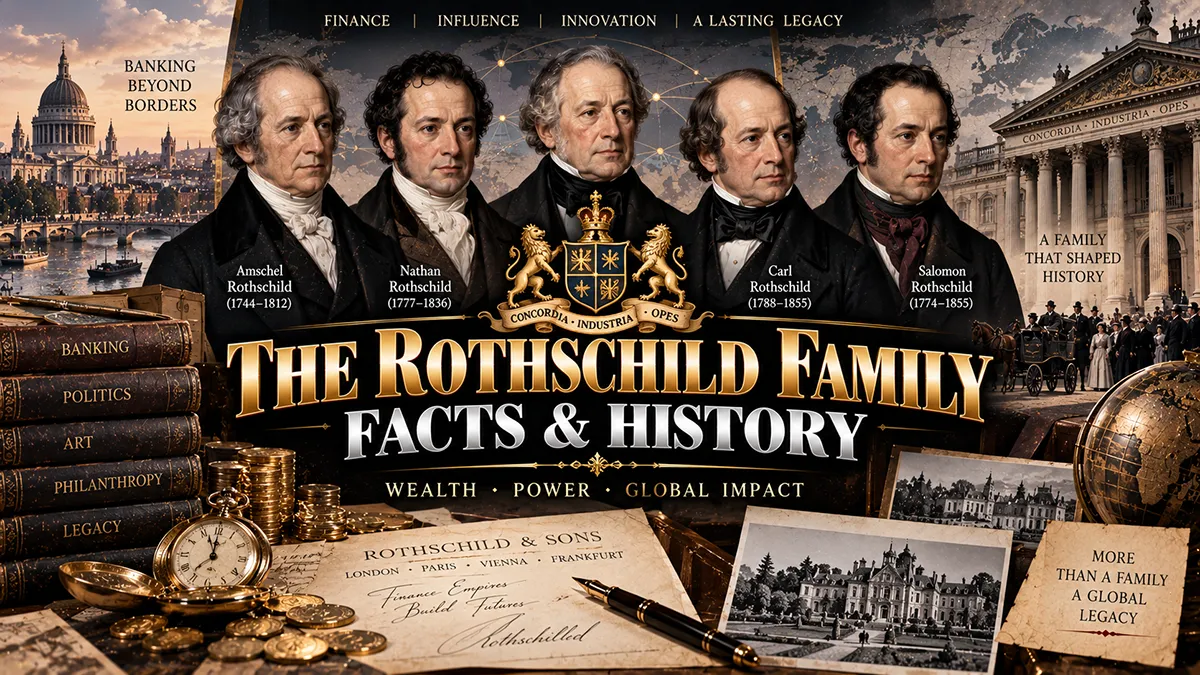
Meyer Amschel Rothschild had five sons: Amschel, Salomon, Nathan, Carl, and James. Rather than keeping the business in one place, he sent his sons to establish banking houses across Europe’s major financial centers.
This decision is arguably the single most important reason the family became so extraordinarily wealthy. It let the Rothschilds move information, credit, and capital across borders faster than any government or rival bank of the era.
5. Frankfurt, Vienna, London, Naples, and Paris Each Had a Rothschild at the Helm
Amschel stayed in Frankfurt, Salomon went to Vienna, Nathan settled in London, Carl went to Naples, and James established the Paris house. Each brother ran a formally independent bank, but they worked as a coordinated family network, sharing intelligence and capital.
This five-city structure is why historians often describe the Rothschilds less as one company and more as a private financial alliance. It’s also the origin of the phrase “Rothschild & Sons,” which described the founding firm and later became attached to several of the family’s national banking houses.
6. The Firm’s Name Reflected the Founder’s Intentions
Meyer Amschel deliberately structured the business so his sons, not outside partners, would inherit and run it. The Frankfurt-based parent firm and its branches carried variations of the family name, cementing “Rothschild” as both a surname and a brand in European finance.
In France, the Paris house became known as de Rothschild Frères, meaning “Rothschild Brothers.” That branch went on to become one of the most important private banks in French history.
7. Nathan Rothschild Turned London Into the Family’s Financial Engine
Of the five brothers, Nathan Mayer Rothschild is generally considered the most commercially aggressive. He moved to England, eventually founding N M Rothschild & Sons in London, which became the dominant house in the family network during the early 19th century.
Nathan built relationships with the British government and became a critical source of financing for the Crown during the Napoleonic Wars. His success in London is a big part of why so many people associate the Rothschild family with British, rather than German, history.
8. The Waterloo Legend: What’s True and What’s Myth
One of the most repeated stories claims Nathan Rothschild used advance knowledge of the Battle of Waterloo’s outcome to make a fortune manipulating British bond markets. This tale has been circulated for generations, often with dramatic and unverifiable details attached.
Historians who have examined the Rothschild archive have found no solid evidence for the more sensational version of this story. What is well documented is that the Rothschilds did profit from wartime government financing generally, but the specific Waterloo conspiracy is best treated as embellished legend rather than settled fact.
9. The Rothschilds Financed Wars, Governments, and Railways

Beyond Waterloo, the family’s real business was lending to governments and financing large infrastructure projects. They floated bonds for European governments recovering from the Napoleonic Wars and later financed railway construction across Britain, France, and Austria.
This government-bond business is the clearest, best-documented answer to how the Rothschilds became rich. They essentially became bankers to nations at a time when few institutions had the scale or trust to do that job.
10. They Helped Britain Buy the Suez Canal in a Single Weekend
In 1875, the British government needed to move quickly to buy Egypt’s shares in the Suez Canal Company before rival powers could act. According to well-documented accounts, Prime Minister Benjamin Disraeli turned to Lionel de Rothschild, who arranged the funds swiftly enough to secure the deal.
This episode is often cited as a prime example of the family’s unmatched ability to mobilize enormous sums on short notice. It’s one of the clearer historical illustrations of what the Rothschild family actually did for governments, as opposed to the exaggerated versions of their influence.
11. The Family Crest Carries a Motto About Unity
The Rothschild coat of arms features five arrows, symbolizing the five brothers, along with a lion and a motto: “Concordia, Integritas, Industria,” Latin for harmony, integrity, and industry. The family adopted this imagery after being granted noble status by the Austrian Empire in the early 1800s.
It’s a fitting motto, since the coordination between the five original banking houses really was the backbone of the family’s early success. Later generations continued to use variations of this crest across their businesses and estates.
12. Lionel de Rothschild Became Britain’s First Jewish MP
Lionel de Rothschild was elected to the British Parliament in 1847, but Jewish law at the time required an oath “on the true faith of a Christian” that he could not in good conscience take. He was repeatedly re-elected by his constituents but barred from taking his seat for over a decade.
Parliament finally changed the oath requirement in 1858, and Lionel de Rothschild took his seat as Britain’s first Jewish Member of Parliament. It was a landmark moment for religious freedom in British political history, not just a family milestone.
13. A Rothschild Became the First Jewish Peer in Britain
In 1885, Lionel’s son Nathan Mayer Rothschild was elevated to the peerage as Baron Rothschild, becoming the first person of Jewish faith to sit in the House of Lords. This built on decades of the family pushing against formal barriers to Jewish participation in British public life.
Across Europe, various Rothschilds received noble titles from the Austrian and British crowns, which is why you’ll often see the name preceded by “de” or “von” in French and German branches. These honors reflected both their financial importance and, gradually, greater social acceptance.
14. The Family Faced Persistent Antisemitism
Despite their wealth and titles, the Rothschilds were targets of antisemitic caricature and conspiracy theory almost from the moment they became famous. Political cartoons and pamphlets throughout the 19th century portrayed them using ugly stereotypes about Jewish people and money.
This history matters context for understanding later conspiracy theories about the family, many of which recycle the same antisemitic tropes in modern packaging. Responsible historical treatment of the Rothschilds has to acknowledge this pattern rather than repeat it.
15. The Nazis Looted the Austrian Branch’s Fortune
When Germany annexed Austria in 1938, the Vienna branch of the family, led by Louis von Rothschild, had its assets, artwork, and property seized by the Nazi regime. Louis himself was detained before eventually being allowed to leave the country in exchange for surrendering his holdings.
Much of the Vienna house’s art and property was never fully recovered, and restitution cases connected to Rothschild-owned works have continued into recent decades. It’s a stark reminder that even one of history’s wealthiest families was not immune to the horrors of the Holocaust era.
16. Rothschild Philanthropy Helped Shape Modern Israel
Baron Edmond de Rothschild, a member of the French branch, was a major early funder of Jewish agricultural settlements in Ottoman and later British-controlled Palestine starting in the 1880s. His financial support helped establish infrastructure that contributed to the foundations of the future state of Israel.
The family’s philanthropic footprint extends well beyond that one chapter, including funding for hospitals, universities, and cultural institutions across Europe and Israel. The Knesset building in Jerusalem, for instance, was funded through a Rothschild family donation.
17. Waddesdon Manor Shows Off Rothschild Taste for Grand Estates
Built in the 1870s and 1880s by Baron Ferdinand de Rothschild, Waddesdon Manor in Buckinghamshire is a French Renaissance–style château built specifically to house his art collection. It’s now managed by the National Trust and remains one of England’s most visited historic houses.
Other branches built similarly grand estates across France, Austria, and England, many of which survive today as museums or heritage sites. These homes offer a tangible, visitable window into the scale of Rothschild wealth at its height.
18. Rothschild Wine Is Still Rothschild-Owned Today
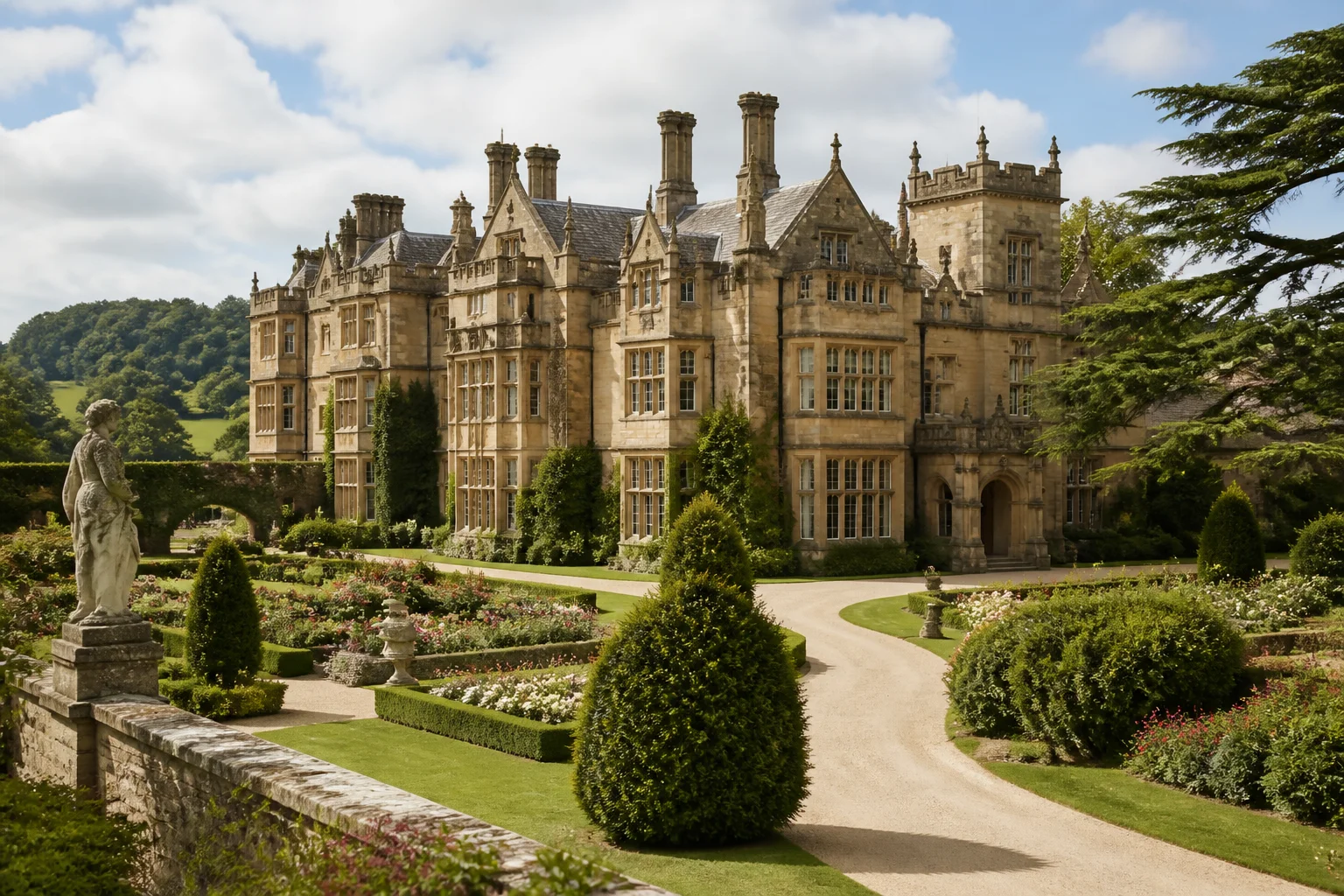
In 1868, James Mayer de Rothschild bought Château Lafite, a Bordeaux vineyard now known as Château Lafite Rothschild, still considered one of the world’s most prestigious wine estates. A separate branch of the family purchased Château Mouton Rothschild, creating a friendly rivalry between two of Bordeaux’s top producers.
Both estates remain in Rothschild family hands today, making wine one of the most visible and enduring parts of the family’s modern business holdings. If you’ve ever seen a bottle with “Rothschild” on the label, it’s a direct link to this 19th-century family investment.
19. The Genealogy of the Rothschild Family Is Vast and Branching
Tracing the full genealogy of the Rothschild family is a serious undertaking, since Meyer Amschel Rothschild’s five sons each had children who married into other prominent European Jewish banking and business families. Names like Warburg, Sassoon, and various French and Austrian noble families appear throughout the family tree.
In the early generations, the family also frequently arranged marriages between Rothschild cousins to help keep control of the business within the bloodline. Over time, as the family grew and its wealth diversified across more branches, that practice became far less common.
20. How Did the Rothschilds Get So Rich? A Quick Recap
Pulling the threads together, the Rothschild fortune was built on a few specific advantages: an early, coordinated multi-city banking network; a reputation for reliability with governments; heavy involvement in government bond markets during and after the Napoleonic Wars; and later diversification into railways, mining, and wine. None of it depended on the exaggerated secret-influence stories that later attached themselves to the family name.
It’s also worth noting that being first mattered enormously. In the early 1800s, no other private banking family had built anything like the Rothschilds’ cross-border network, and that head start compounded over generations.
21. How Wealthy Is the Rothschild Family Today?
This is where a lot of modern confusion comes in. At the family’s 19th-century peak, historians and economists have estimated the Rothschilds may have controlled a fortune larger, in relative terms, than that of many governments of the era.
Today, that wealth has been divided across hundreds of descendants over roughly seven generations, and it’s spread across trusts, private businesses, real estate, art, and investments that aren’t fully public. There’s no single, verifiable figure for “the Rothschild family net worth” today, because unlike a single-owner fortune, it was never consolidated into one balance sheet to begin with.
22. Where Do the Rothschilds Live Today?
Modern Rothschild family members live across several countries, reflecting the family’s historic branches. You’ll find descendants based in the United Kingdom, France, Switzerland, and elsewhere in Europe, with some family members also active in the United States.
There isn’t one Rothschild family seat anymore the way there might have been in the 19th century. Instead, different branches maintain their own homes, estates, and business interests in the countries where their ancestors originally settled.
23. Who Are the Current Rothschilds?
The best-known modern figures include members of the Rothschild & Co financial group, a merchant bank descended from the original Paris and London houses, currently associated with figures like David de Rothschild and Alexandre de Rothschild. Rothschild & Co operates today as a publicly listed international financial advisory and merchant banking group.
Other notable living family members are involved in the wine estates, philanthropy, and various private businesses rather than one unified “family company.” This decentralization is exactly why questions like “how many Rothschilds are alive today” don’t have a single tidy public answer — the family tree has grown far too large and spread out to count with certainty.
24. Are the Rothschilds Still the Richest Family in the World?
This is one of the most searched questions about the family, and the honest answer is almost certainly no, at least not in the way rankings like Forbes typically measure wealth. Today’s wealthiest families and individuals, such as the Waltons of Walmart, the Arnault family behind LVMH, or individual billionaires like Elon Musk and Jeff Bezos, hold fortunes that are publicly documented and concentrated in a way the Rothschild wealth no longer is — though the Rothschilds still belong on any serious list of the richest and most powerful families in history.
Because the Rothschild fortune has been divided across so many descendants and diversified into private, often undisclosed holdings, it simply doesn’t appear on modern rich-list rankings the way concentrated single-family or single-founder fortunes do. Historically, though, during the 19th century, there’s a strong case that no family controlled more relative financial influence in Europe than the Rothschilds did.
25. The Rothschild Conspiracy Theories, and Why They Persist
Because the family became genuinely powerful, genuinely secretive about some of its internal dealings, and genuinely Jewish, they became an easy target for conspiracy theorists almost from the start. Claims that the family secretly controls world governments, central banks, or global events have circulated for well over a century, often echoing older antisemitic myths about Jewish people controlling global finance.
Serious historians and economists who have studied the family’s actual archives find no credible evidence to support these sweeping claims. What the historical record does show is a real, well-documented, and genuinely remarkable banking dynasty, one interesting enough on its own merits without needing invented secret plots to explain it.
The Real Story Is Impressive Enough
The true history of the Rothschild family doesn’t need embellishment to be remarkable. A single Frankfurt money-changer’s family built Europe’s first international bank, helped finance wars and canals, broke down religious barriers in British politics, and still owns some of the world’s most famous vineyards more than 250 years later.
That’s a legacy built on strategy, timing, and an unusually tight-knit family network, not secret world control. Understanding the real story of who the Rothschilds are, and who they aren’t, is a far more interesting way to engage with one of history’s most talked-about family names.
Frequently Asked Questions
Who are the Rothschilds?
The Rothschilds are a European Jewish banking family that rose to prominence in the late 1700s, founded by Frankfurt financier Meyer Amschel Rothschild. His five sons established banking houses in Frankfurt, Vienna, London, Naples, and Paris, creating one of the first truly international banking networks. Today, their descendants are involved in finance, wine production, and philanthropy across Europe and beyond.
How did the Rothschilds get rich?
The family built its fortune through a coordinated, multi-city banking network run by Meyer Amschel Rothschild's five sons, combined with financing European governments during and after the Napoleonic Wars. They later expanded into railways, mining, and government bonds, using their cross-border reach to move capital and information faster than most competitors of the era.
How rich is the Rothschild family today?
There is no single, verified figure for the modern Rothschild family's net worth, because the original 19th-century fortune has been divided across hundreds of descendants over roughly seven generations. Their wealth today is spread across trusts, private businesses, real estate, and investments that aren't fully public, rather than held as one consolidated fortune.
Are the Rothschilds the richest family in the world?
Not by modern rankings. While the Rothschilds were arguably the most financially influential family in 19th-century Europe, today's wealthiest families and individuals, such as the Waltons or Bernard Arnault's family, hold far larger, publicly documented, and more concentrated fortunes than any single Rothschild branch today.
Where does the Rothschild family live today?
Modern Rothschild descendants live across several countries, reflecting the family's historic branches, including the United Kingdom, France, and Switzerland, with some members also based in the United States. There is no single family headquarters anymore, since each branch settled and developed independently after the original five houses were founded.
What does the Rothschild family own today?
Family members are connected to Rothschild & Co, an international merchant banking and advisory group, as well as famous Bordeaux wine estates including Château Lafite Rothschild and Château Mouton Rothschild. Various branches also hold private real estate, art collections, and philanthropic foundations built up over multiple generations.
What ethnicity are the Rothschilds?
The Rothschilds are an Ashkenazi Jewish family originating from Frankfurt, Germany, where they lived in the city's historic Jewish quarter before rising to prominence in European banking. Their Jewish heritage played a significant role in both their history of philanthropy and the antisemitic conspiracy theories that have followed the family for generations.
How many Rothschilds are alive today?
There's no publicly confirmed exact count, since the family tree has grown to include hundreds of descendants across many countries and generations. Unlike the tightly documented five original branches, the modern extended family is too large and dispersed to track with a single reliable number.
When did the Rothschild family start?
The family's rise began in the 1760s when Meyer Amschel Rothschild established a banking and trading business in Frankfurt, Germany. The dynasty's defining expansion came in the early 1800s, when his five sons set up linked banking houses across major European financial centers.

Alex Warren
Related Articles