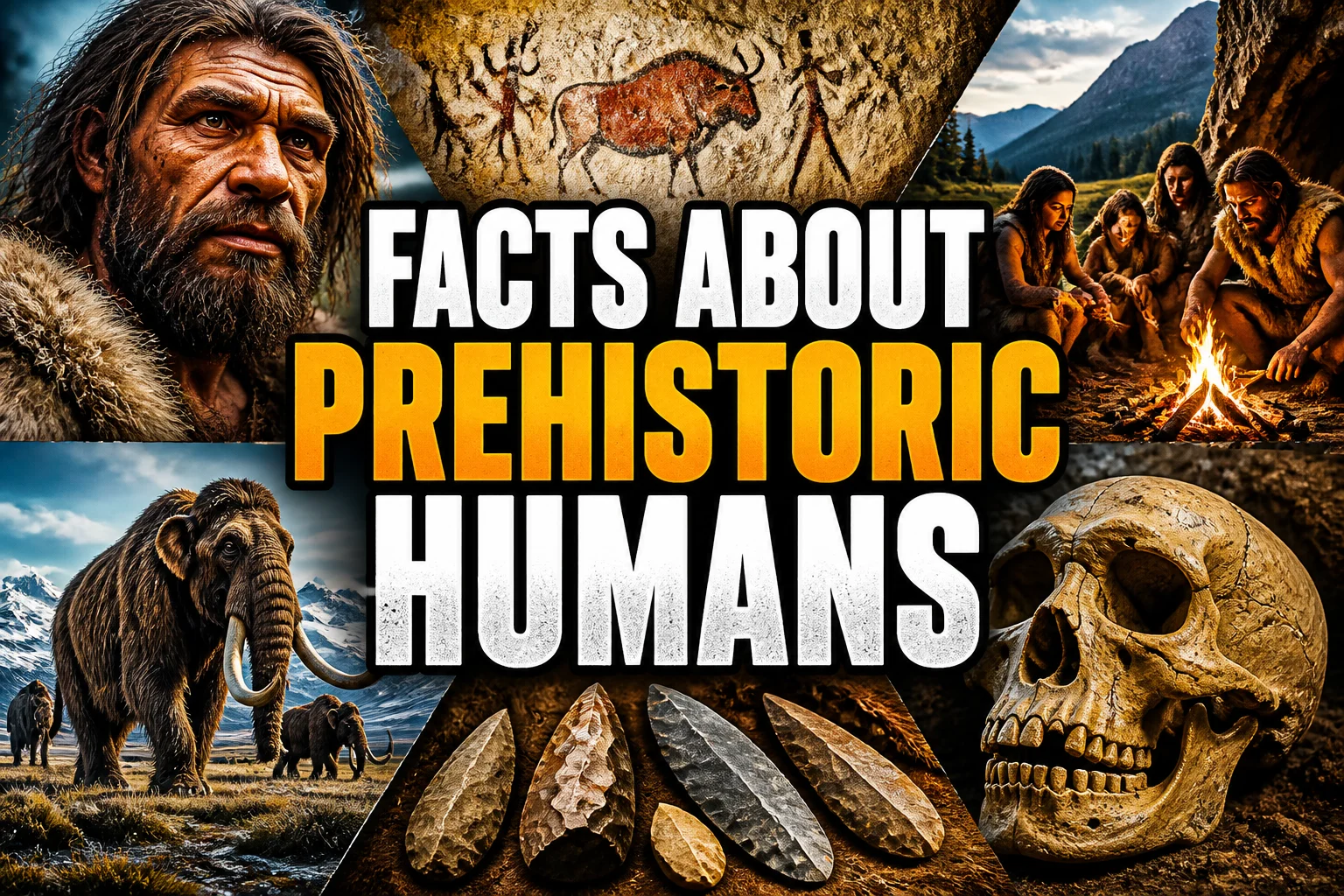
Ask most people to picture prehistoric humans and you will get the same stock image: a hunched figure in a fur loincloth, club in hand, grunting at a cave mouth. That picture owes far more to 19th-century cartoons and museum dioramas than to the actual archaeological record. The real story is stranger, smarter, and much more crowded than the stereotype allows.
Below are 24 facts about early humans, drawn from archaeology, genetics, and palaeoanthropology. Some overturn popular myths, a few are still actively debated by researchers, and others are simply fun facts about Homo sapiens that rarely make it into textbooks. Where the evidence is genuinely contested, it is flagged rather than passed off as settled.
TL;DR: Prehistoric humans were not simple cavemen but a diverse, inventive set of species who made art, controlled fire, buried their dead, and traded across continents tens of thousands of years before farming or writing appeared.
Who Prehistoric Peoples Actually Were
The word prehistoric covers roughly 99% of the human story, stretching from the first stone tools to the first written records. That immense span contains multitudes — not one kind of person, but many, living in very different places and times.
1. There Was Never Just One Species of Human
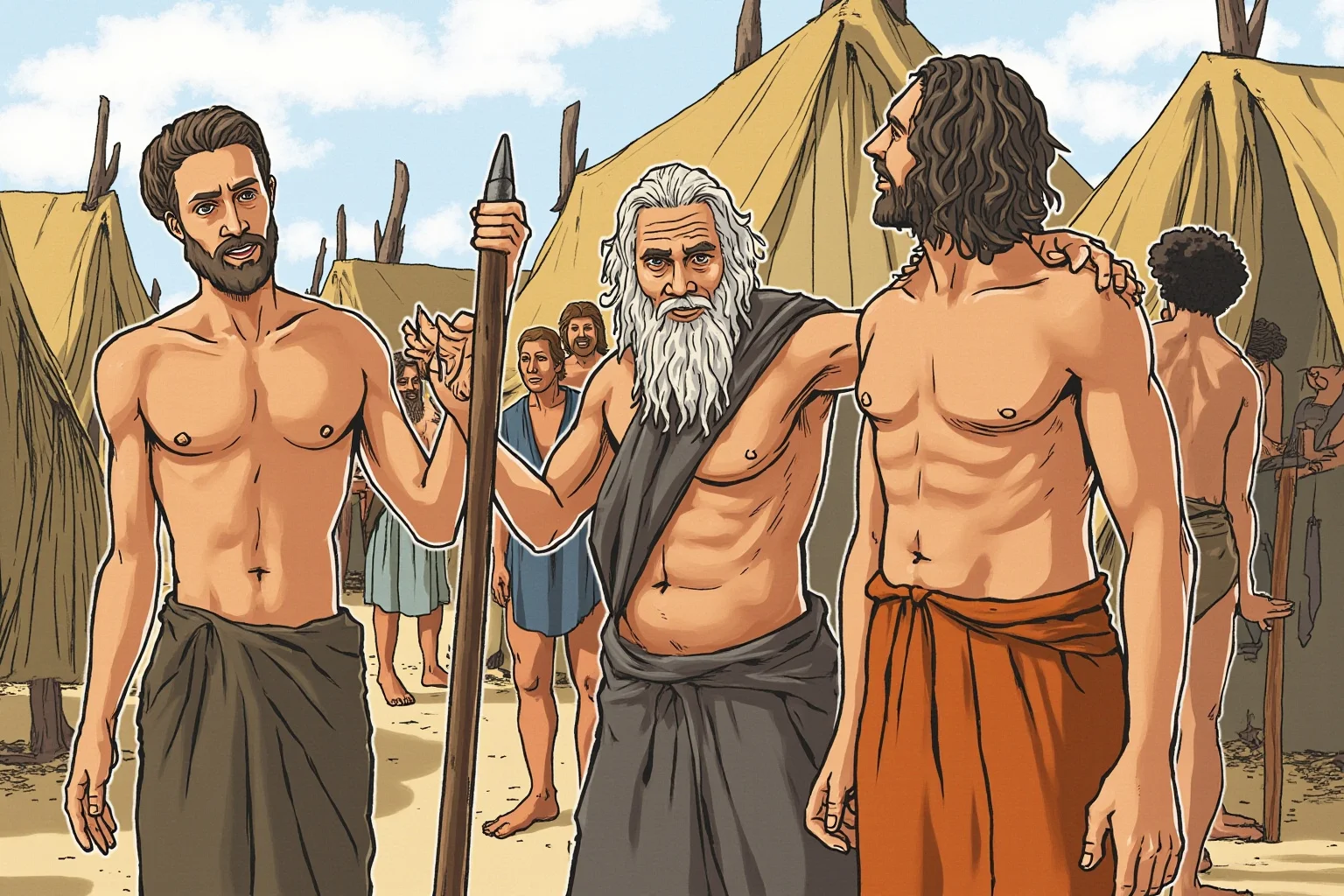
For most of the last two million years, several human species shared the planet at the same time. Alongside our own species there were Neanderthals in Europe and western Asia, Denisovans across Asia, Homo erectus over a vast range, the small-bodied Homo floresiensis on the island of Flores, and Homo naledi in South Africa.
The old image of a single file of ancestors marching towards modernity is badly out of date. The human family tree looks more like a thicket of branches, and most of those branches ended without leaving descendants.
2. Cavemen Is a Caricature, Not a Description
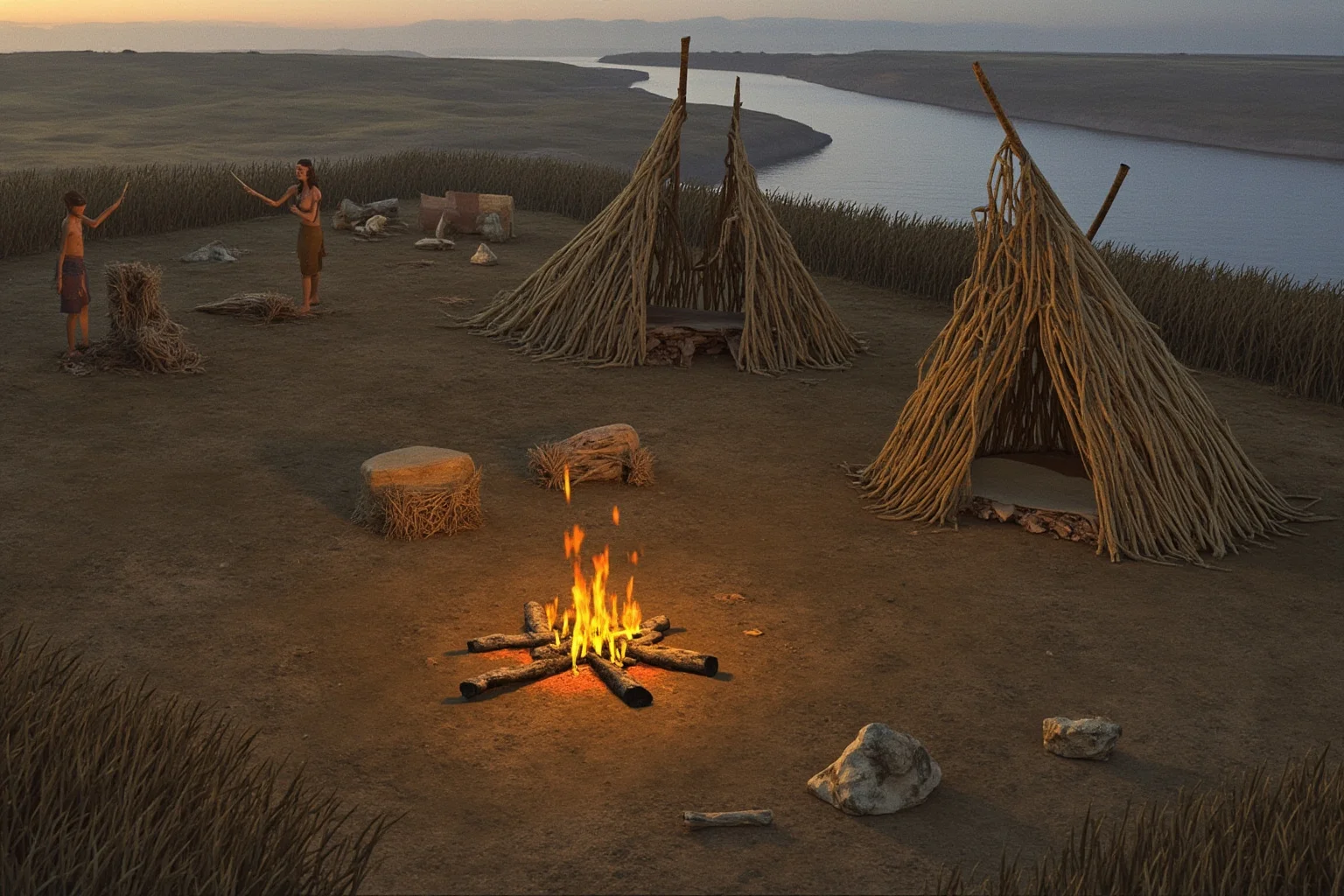
Caves preserve bone, ash, and painted walls exceptionally well, which is exactly why so many famous prehistoric sites happen to be caves. Most prehistoric peoples, however, lived in open-air camps, rock shelters, and tents of hide and bone that have almost entirely rotted away. The cavemen facts repeated today are largely an artefact of what survives, not a record of how people preferred to live.
Archaeologists sometimes call this the cave bias, and it distorts everything from diet to family size. A group camping on a river terrace leaves a thin scatter of stone flakes, while a group sheltering in a limestone cave leaves a stratified archive. Both were equally normal ways to live.
3. Neanderthals Were Cousins, Not Brutes
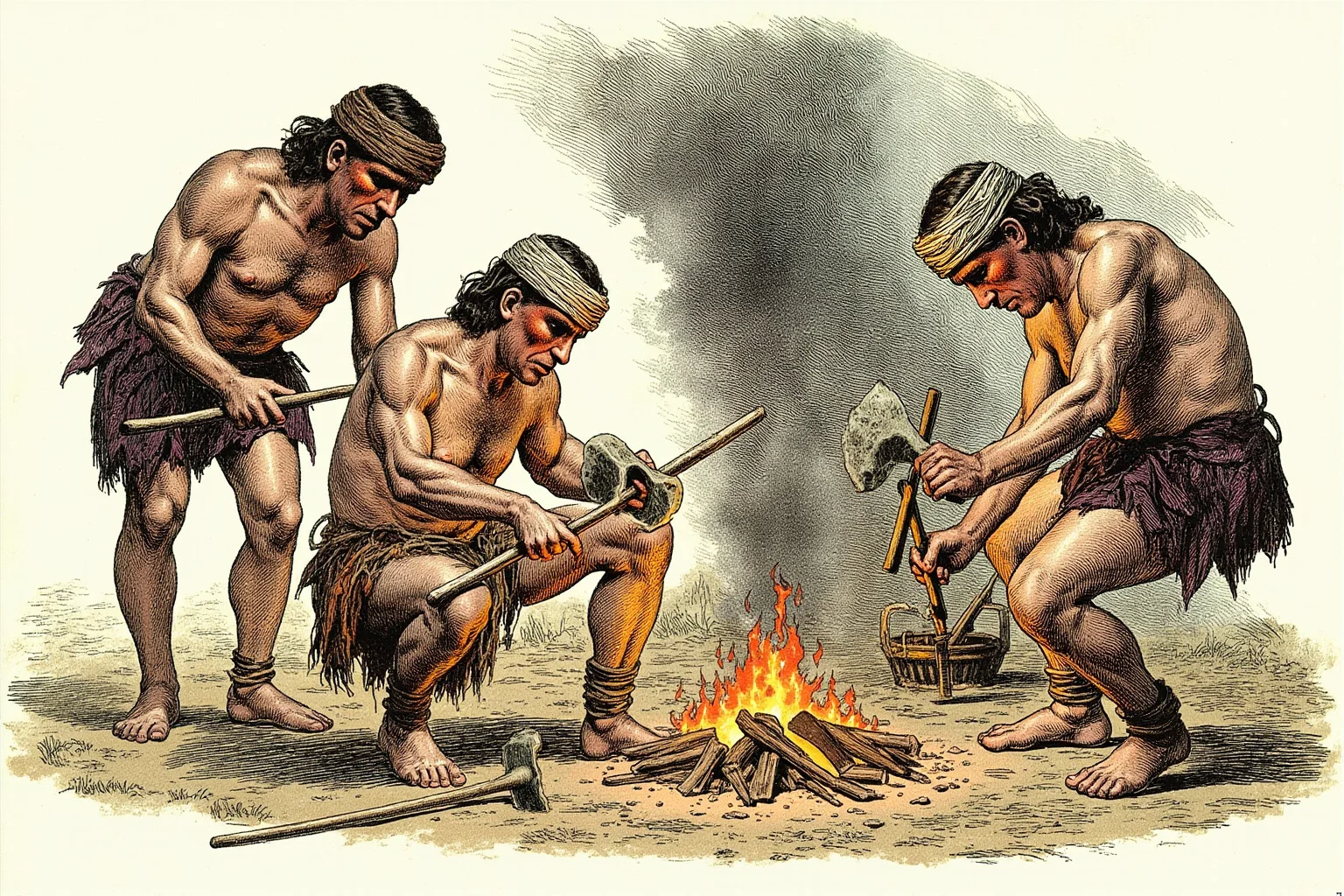
Neanderthals had brains slightly larger on average than ours, made complex stone toolkits, controlled fire, and hunted large animals at close range. Their skeletons also show healed fractures that would have required other people to supply food and care during recovery.
They produced birch-bark pitch for hafting tools, used pigments, and — according to dating published in 2018 — painted cave walls in Spain around 65,000 years ago. Not every one of those claims is universally accepted, but the dumb brute image has not survived the evidence.
4. Many Living People Carry Neanderthal DNA
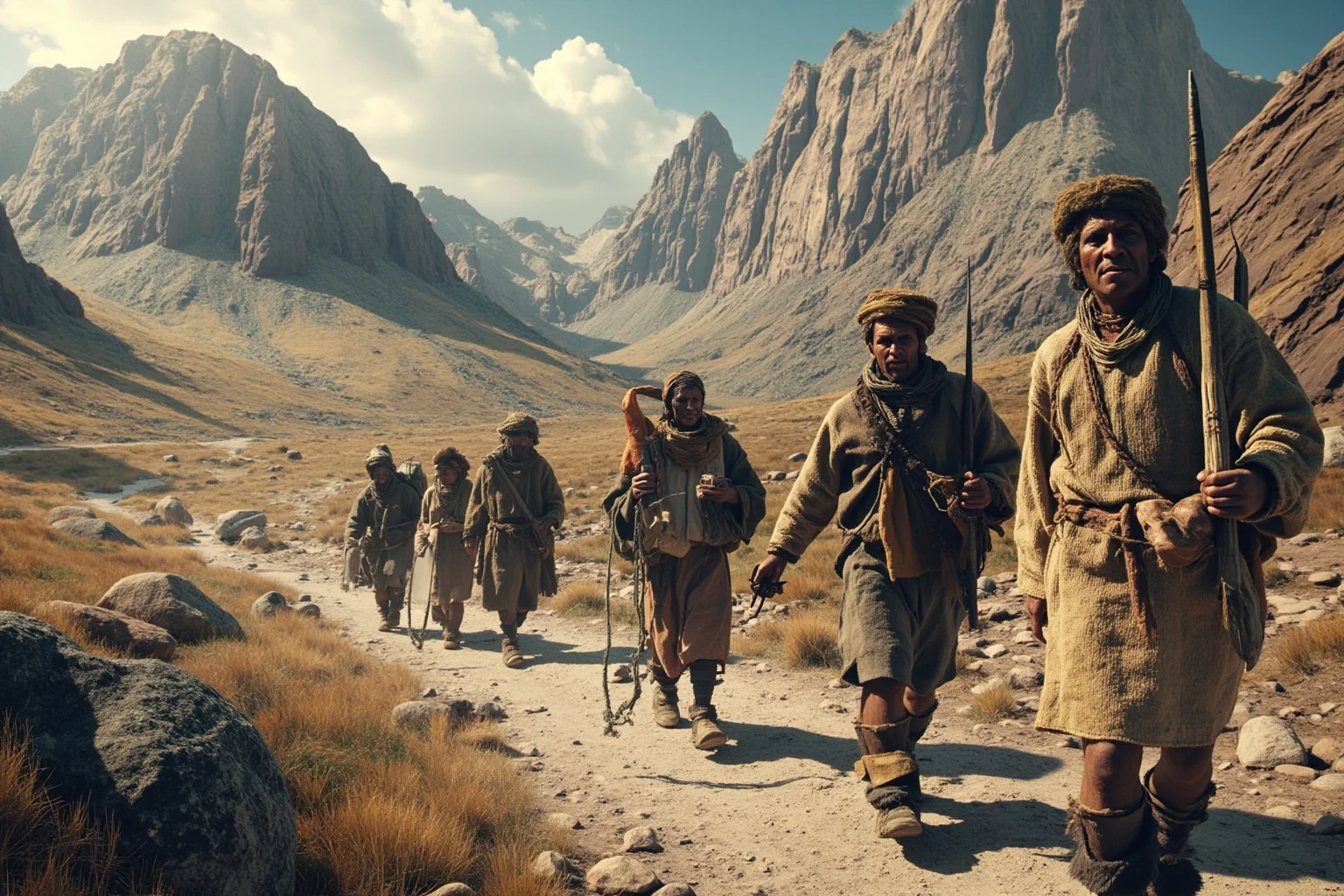
Genetic sequencing has shown that non-African populations carry roughly 1–2% Neanderthal ancestry, and some Oceanian populations carry additional Denisovan ancestry. This is one of the most striking facts on the evolution of humans, because it means extinction was not a clean break.
Some inherited variants appear to influence immune response, skin and hair, and even pain sensitivity. A small but real piece of prehistoric peoples is still walking around inside most of the world's population.
5. Prehistoric Humans Were Surprisingly Mobile
Stone tools made from obsidian turn up hundreds of kilometres from the nearest source, and marine shells appear at inland sites far from any coast. People were not confined to a single valley; they moved with the seasons, followed herds, and exchanged goods across large distances.
Mobility was a survival strategy rather than a lifestyle preference. When one area failed, networks and knowledge of distant landscapes kept groups alive.
Tools, Fire, and the Business of Survival
Technology is the part of prehistory that leaves the clearest traces, and it keeps pushing dates further back. The earliest toolkits predate our own species by more than two million years.
6. Stone Tools Are Much Older Than Our Species
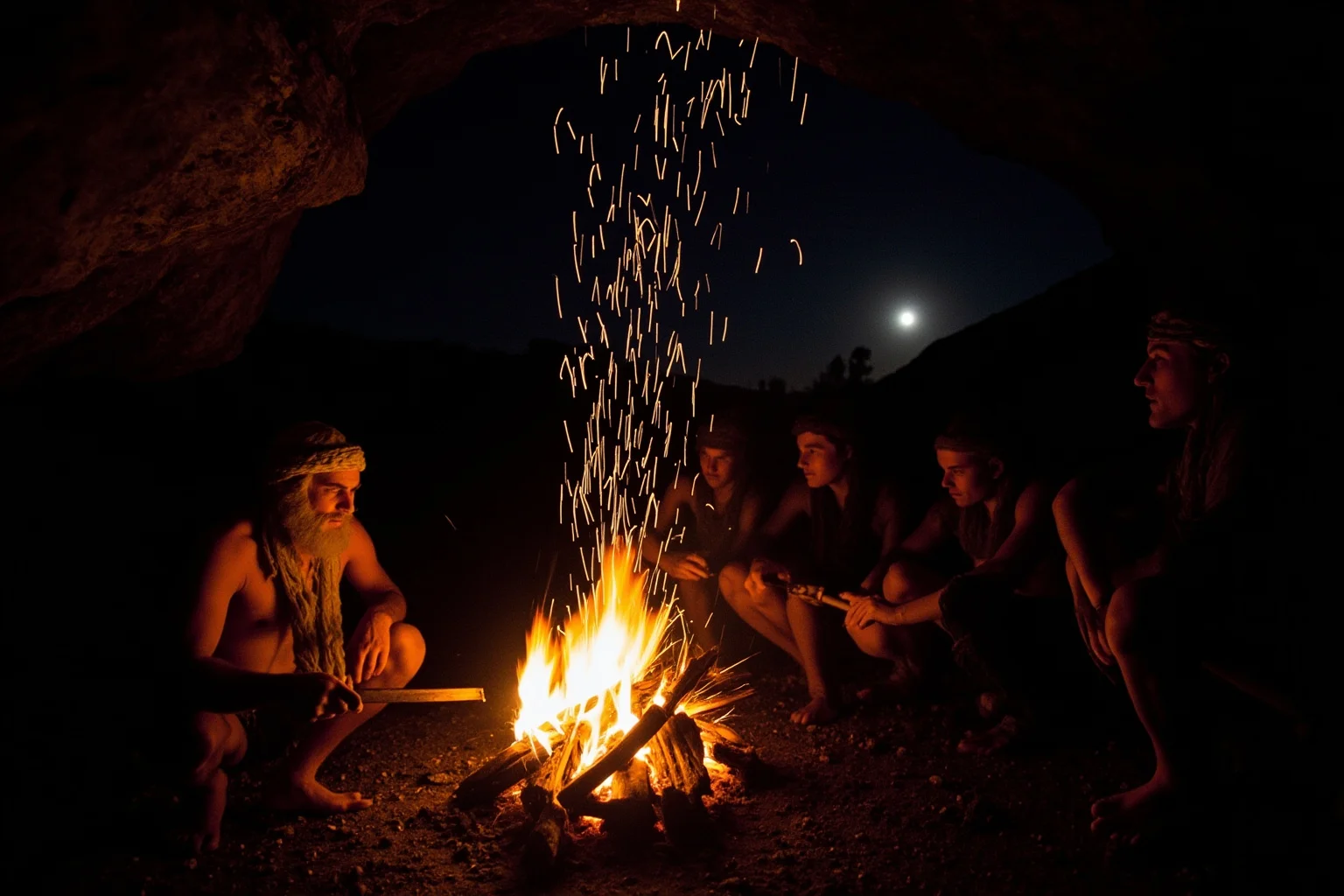
The oldest known stone tools, from Lomekwi in Kenya, date to about 3.3 million years ago, and the widespread Oldowan toolkit appears around 2.6 million years ago. Our own species, Homo sapiens, is only about 300,000 years old.
Toolmaking was therefore pioneered by earlier relatives, possibly Australopithecus or early Homo. By the time modern humans appeared, the technology was already ancient.
7. Fire Was a Turning Point, but the Dates Are Messy
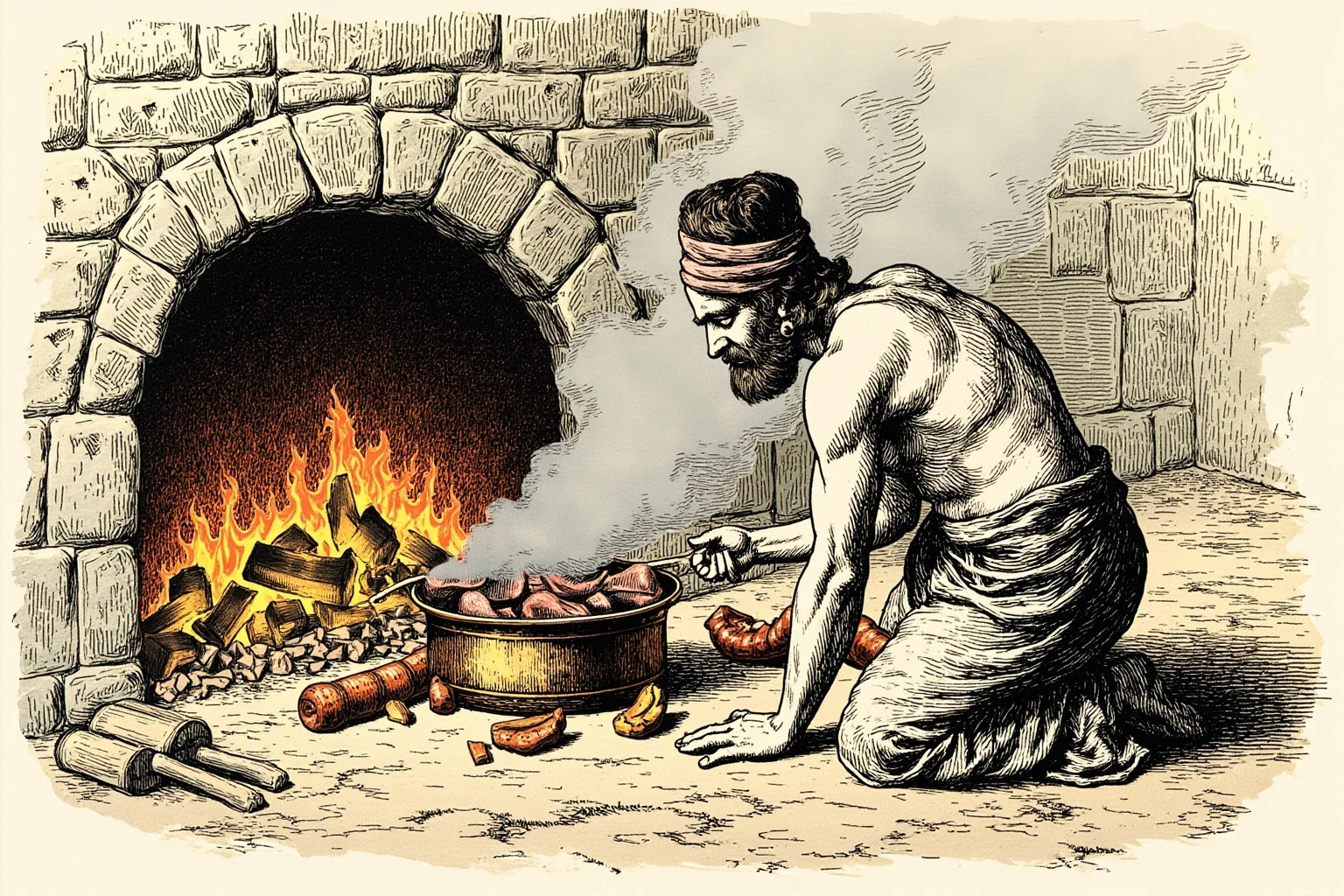
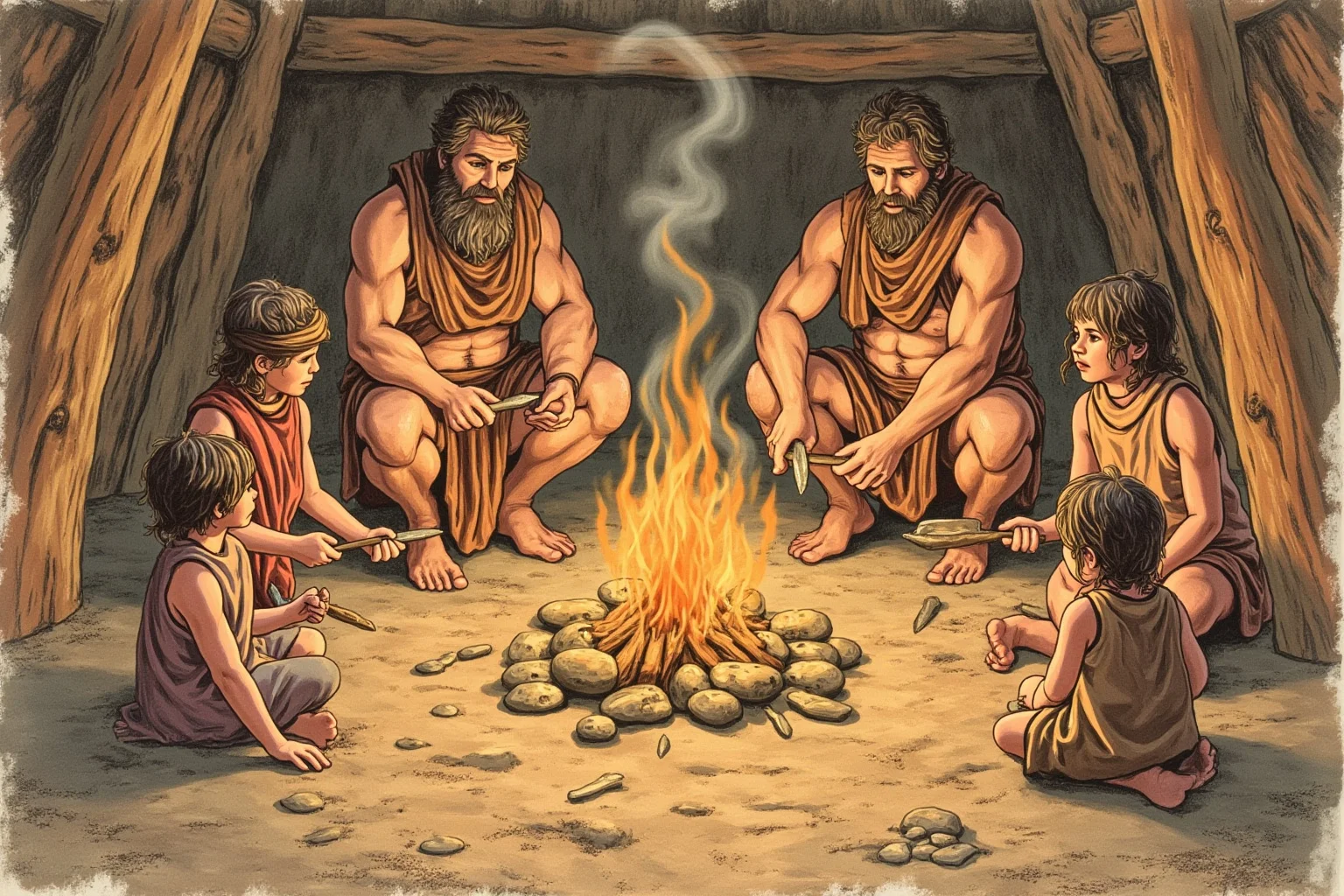
Evidence for controlled fire appears at Wonderwerk Cave in South Africa around a million years ago and at Gesher Benot Ya'aqov in Israel around 790,000 years ago. Habitual, routine use of fire is widely accepted by roughly 400,000 years ago.
Fire provided warmth, light, and protection, and it turned the campsite into a social centre. It may also have let people process tough foods and stay active after dark.
8. Cooking Might Have Reshaped Our Bodies
The primatologist Richard Wrangham has argued that cooking was the key innovation allowing human teeth and guts to shrink while brains expanded. The idea is influential but not fully settled, and direct evidence for routine cooking is patchy and hard to interpret.
What is clear is that cooking makes food easier to digest and frees up both time and energy. Even if it was not the single spark, it was almost certainly a major advantage.
9. There Was No Single Paleo Diet
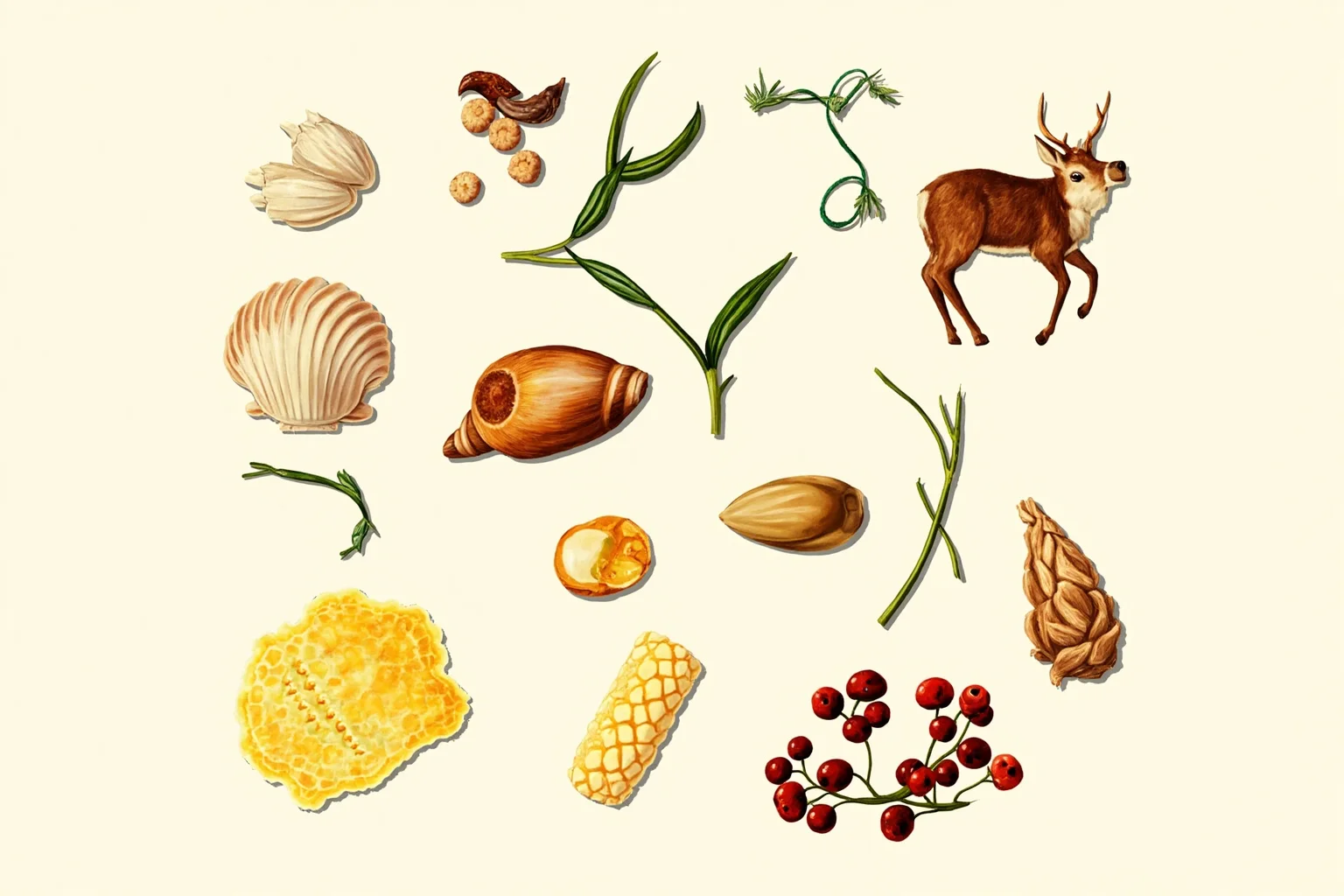
Popular early man facts often imply that prehistoric peoples ate one standard menu of meat and berries. In reality, diets varied enormously by region, season, and species — shellfish and fish on coasts, tubers and nuts inland, plus insects, honey, eggs, small game, and occasionally very large animals.
Some groups were heavily meat-dependent while others relied on plants and aquatic foods. Modern commercial paleo diets are modern inventions, not reconstructions of a real ancestral pattern.
10. They Sewed and Tailored Clothing
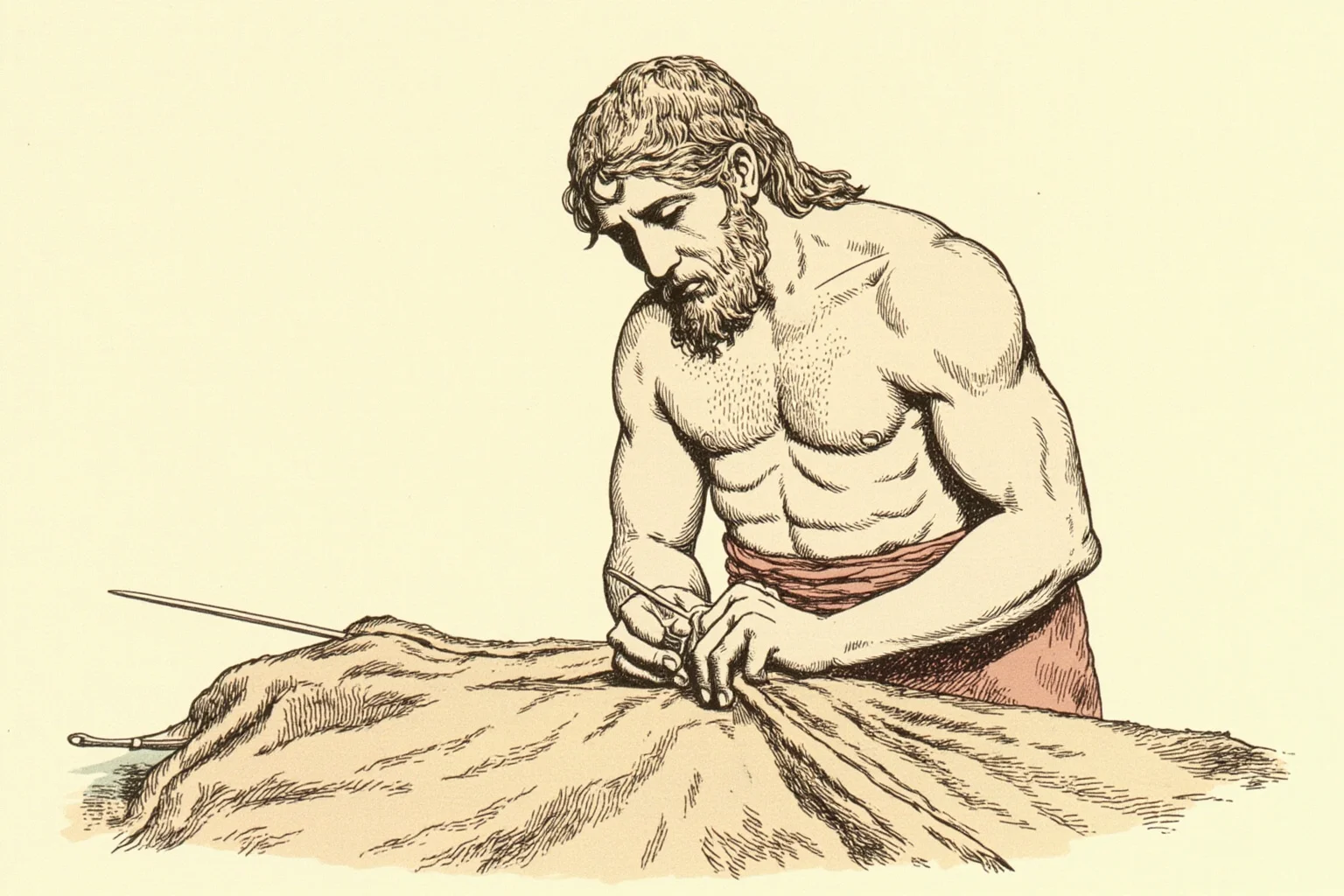
Body lice, which live in clothing rather than hair, appear to have diverged from head lice somewhere between roughly 83,000 and 170,000 years ago, hinting at how long people had been wearing garments. Eyed needles, which allow fine stitching, appear in the archaeological record around 40,000 years ago.
Eyed needles matter because they made fitted, layered clothing possible — the kind needed to survive a glacial winter. A single tool can mark the difference between visiting a cold region and living in it.
11. They Crossed Open Water
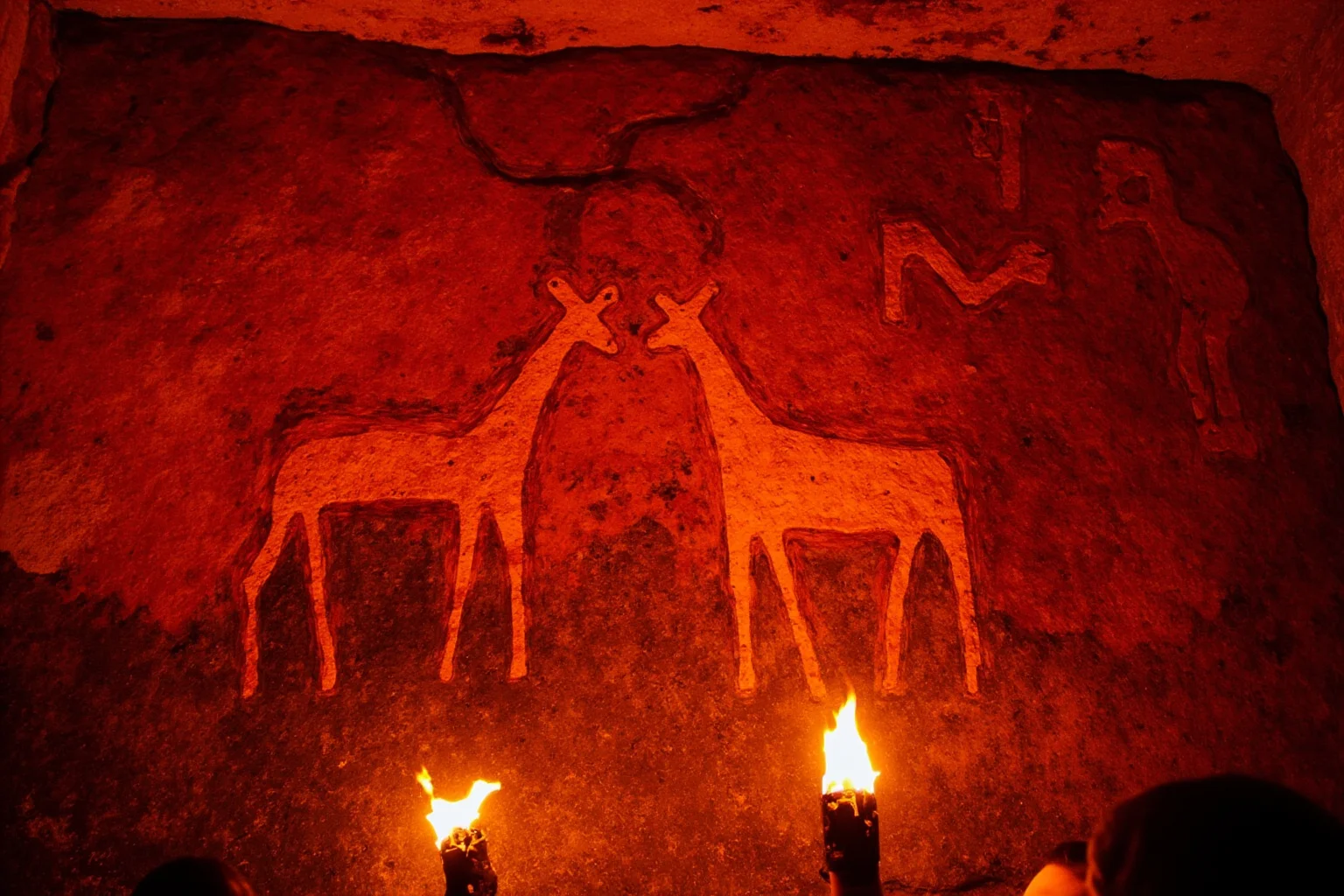
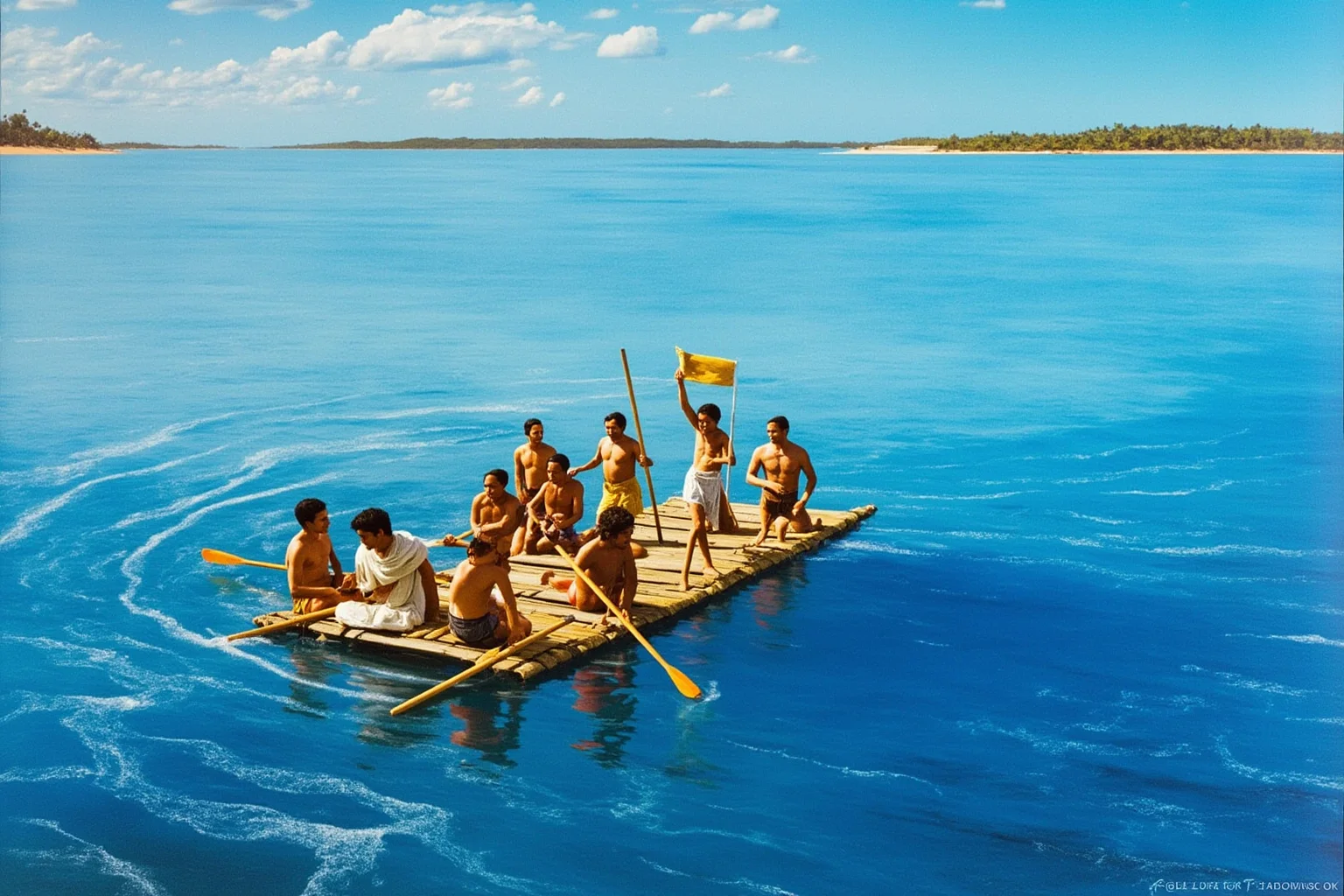
People reached Sahul, the landmass that then joined Australia and New Guinea, at least 65,000 years ago, which required crossing stretches of open sea even at low sea levels. That implies watercraft, planning, and provisioning for a voyage whose end you cannot see.
This is one of the more quietly astonishing facts about prehistoric times. Long before agriculture or metal, people were already competent sailors.
Art, Music, and the Inner Life
Symbolic behaviour — images, ornaments, music, burial — is where the just surviving model of prehistory falls apart. The record is full of things people made that served no obvious survival purpose at all.
12. Cave Art Is Older Than the Famous French Caves

Lascaux, at roughly 17,000 years old, is the famous one, but it is not the oldest. Paintings at Chauvet in France are around 36,000 years old, a warty pig at Leang Tedongnge in Sulawesi is dated to at least 45,500 years, and a Bornean cave painting is around 40,000 years old.
In 2018 researchers dated red pigment on Spanish cave walls to about 65,000 years ago and attributed it to Neanderthals. The claim is not universally accepted, but if correct it means image-making was not unique to our species.
13. The First Jewellery Was Made of Shells
At Blombos Cave in South Africa, people pierced marine shells to make beads around 75,000 years ago and engraved geometric patterns on ochre around 73,000 years ago. Similar ornaments appear at sites across Africa and the Mediterranean in the following tens of thousands of years.
Beads are portable and personal, and they make most sense as signals about identity or status. Prehistoric peoples were thinking about how they appeared to others.
14. Music Is at Least 40,000 Years Old
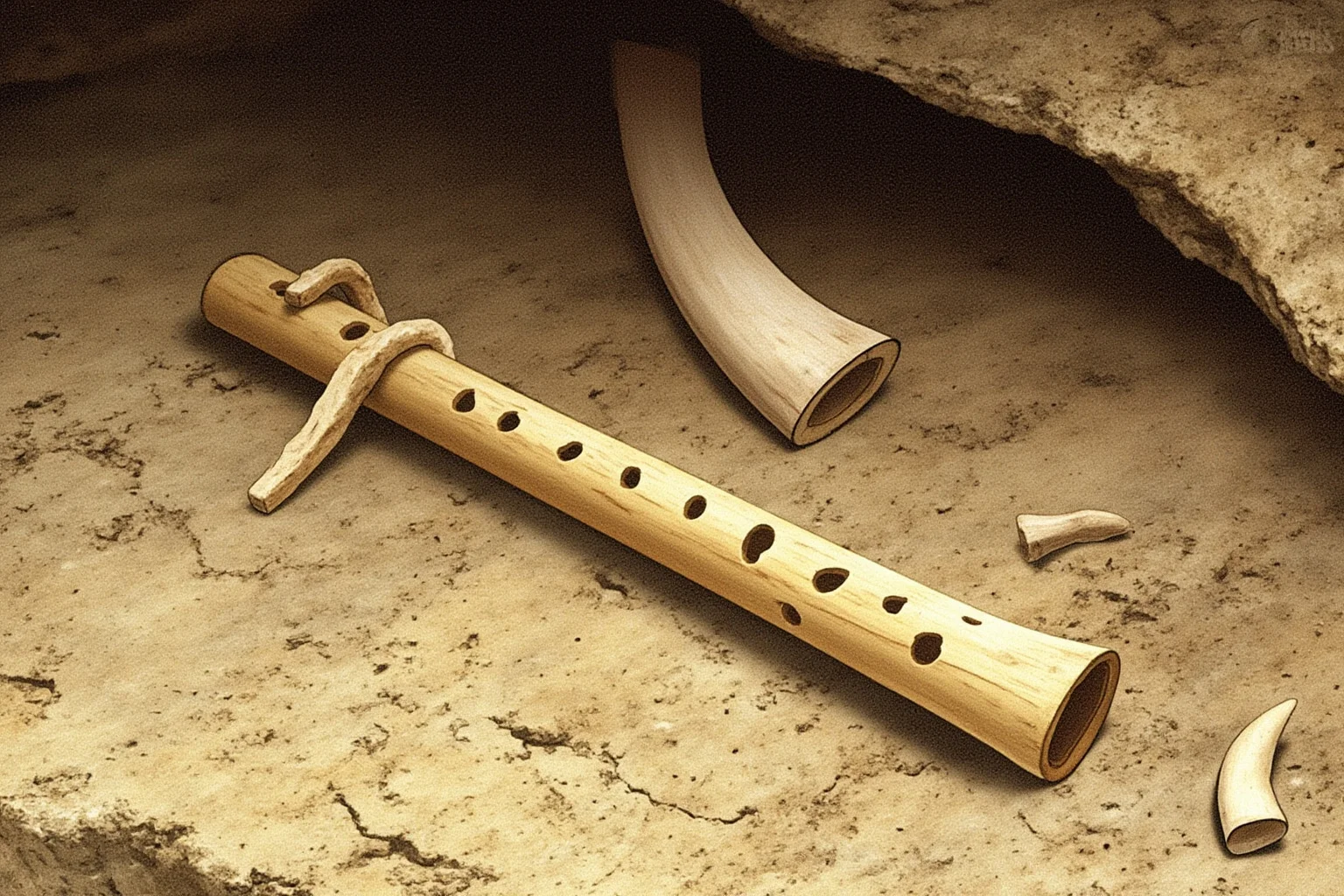
Flutes carved from bird bone and mammoth ivory have been recovered from caves in southwestern Germany, dated to roughly 40,000–43,000 years ago. One, made from a vulture wing bone, has five finger holes and a carved V-shaped mouthpiece.
An older object from Divje Babe in Slovenia, dated to around 50,000 years ago, is contested because carnivore teeth may have made the holes. Either way, music is not a recent luxury but part of the basic human toolkit.
15. They Buried Their Dead, Sometimes Elaborately
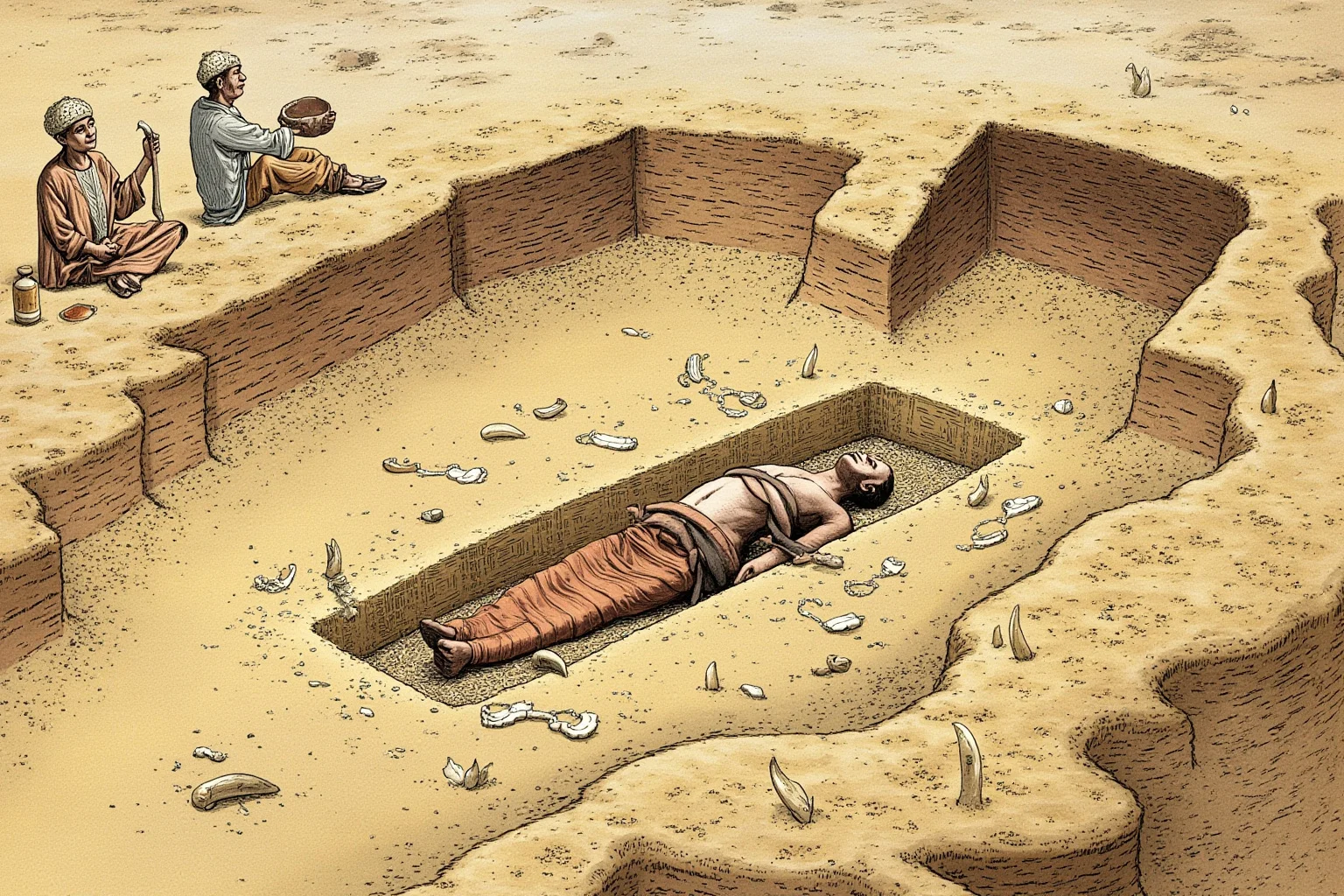
At Sungir in Russia, roughly 34,000 years ago, two children were buried with thousands of individually carved mammoth-ivory beads, an extraordinary investment of time. At Lake Mungo in Australia, burials and a cremation date back around 42,000 years.
Not every burial proves belief in an afterlife, and some famous claims, such as the flower burial at Shanidar Cave, have been questioned. Burial still shows something important: the dead were treated as people rather than simply discarded.
16. Counting May Be Very Old, but the Evidence Is Tricky
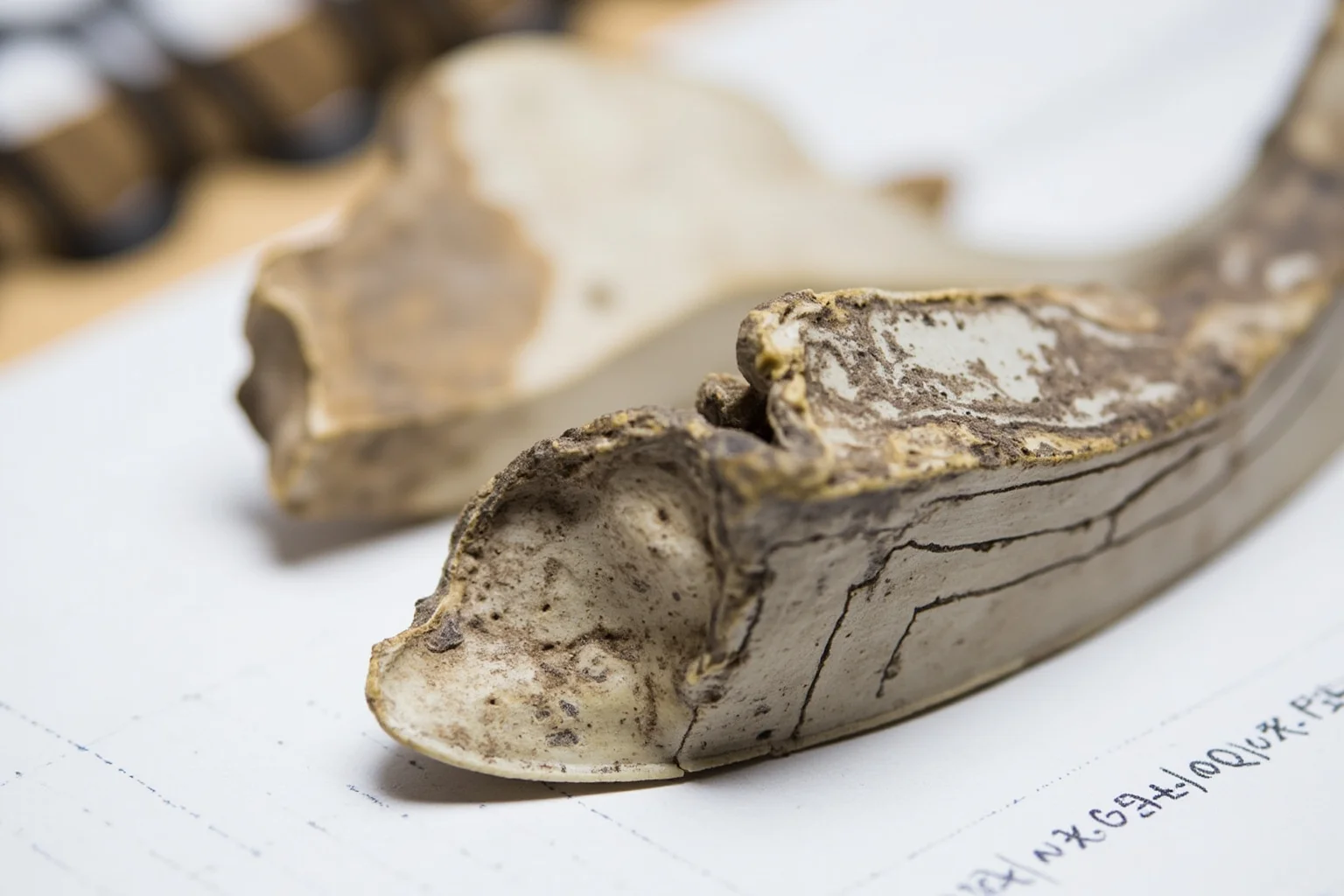
Notched bones such as the Ishango bone from Central Africa, roughly 20,000 years old, and the Lebombo bone from southern Africa, possibly around 42,000 years old, have been interpreted as tallies. Some researchers see lunar calendars, while others see simpler counting marks or even accidental scoring.
This is a good example of why prehistoric facts need careful framing. The objects are real and the markings are deliberate, but what they meant is genuinely unknown.
Bodies, Health, and the Myths We Inherited
Some of the most persistent early human facts are actually statistical artefacts or Victorian assumptions. Looking directly at the skeletons and teeth gives a rather different picture.
17. Dying at 30 Is a Statistical Illusion
Life expectancy at birth in prehistoric populations was low, often in the twenties or thirties, but that figure is dominated by infant and childhood mortality. If a person survived to adulthood, reaching their fifties, sixties, or older was entirely possible.
Skeletons of elderly adults, with heavily worn teeth and arthritic joints, are common at many sites. Averages describe populations, not the lifespan of any one individual.
18. Prehistoric Teeth Were Often Healthier Than Ours
Hunter-gatherers generally had low rates of dental cavities, while caries rates rose sharply after farming introduced starchy diets and more frequent eating. Tooth wear was severe, but decay was comparatively rare.
Dental plaque from Neanderthal individuals has preserved plant DNA and microbes, including organisms related to those that produce antibiotics. Their mouths were not cleaner in a modern sense, but their diets and bacteria were different in ways we are only beginning to map.
19. Some of Them Had Brains Bigger Than Ours
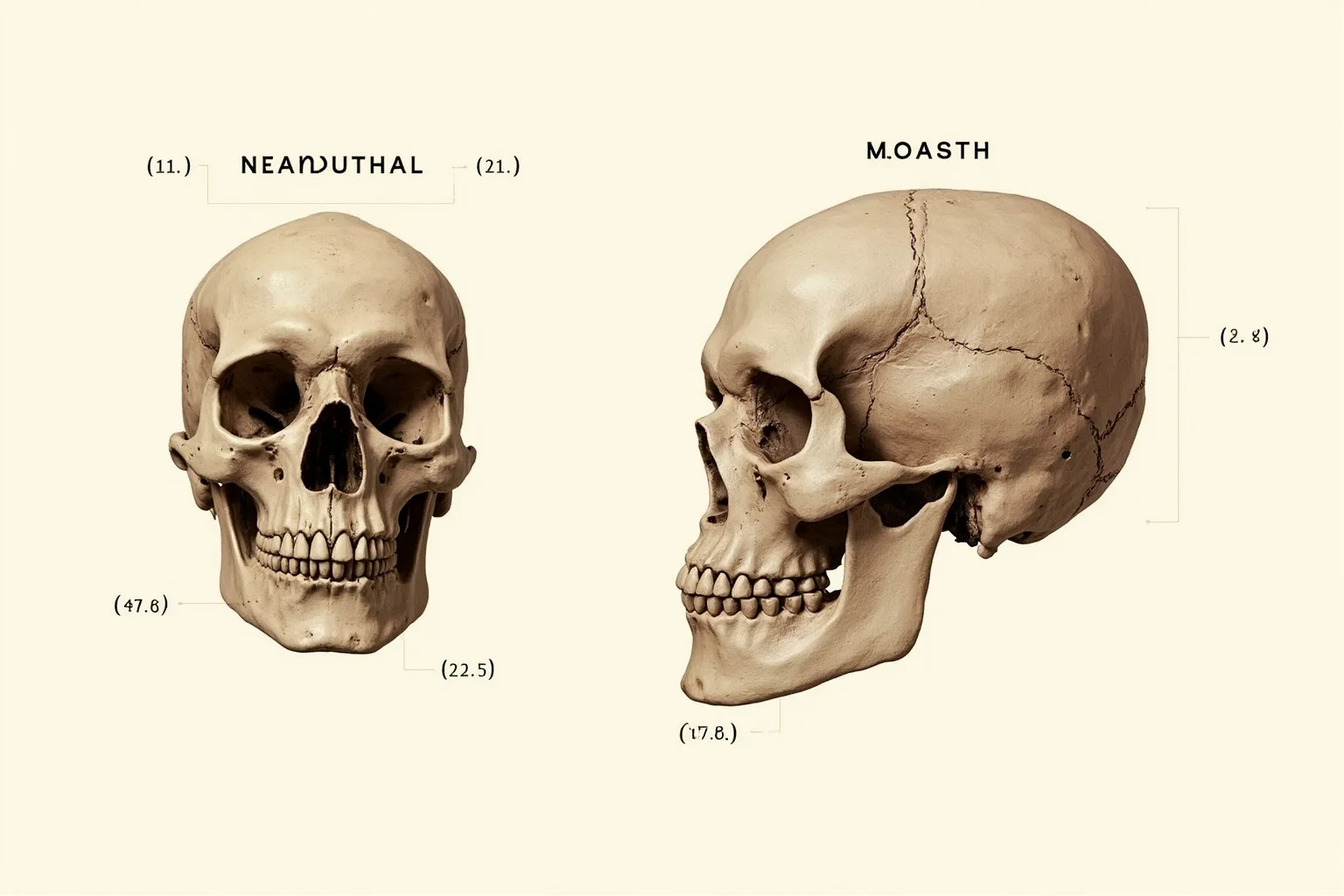
Neanderthal brains averaged larger than modern human brains, even allowing for their slightly larger bodies. Our own brains have also shrunk since the Upper Palaeolithic, by roughly a tenth or more depending on which samples are compared.
Why is a live debate, with possible explanations including smaller bodies, improved efficiency, and the sheer cost of growing an expensive organ. Anyone claiming the trend proves people are getting smarter, or dumber, is overselling the evidence.
20. Farming Made People Shorter and Sicker
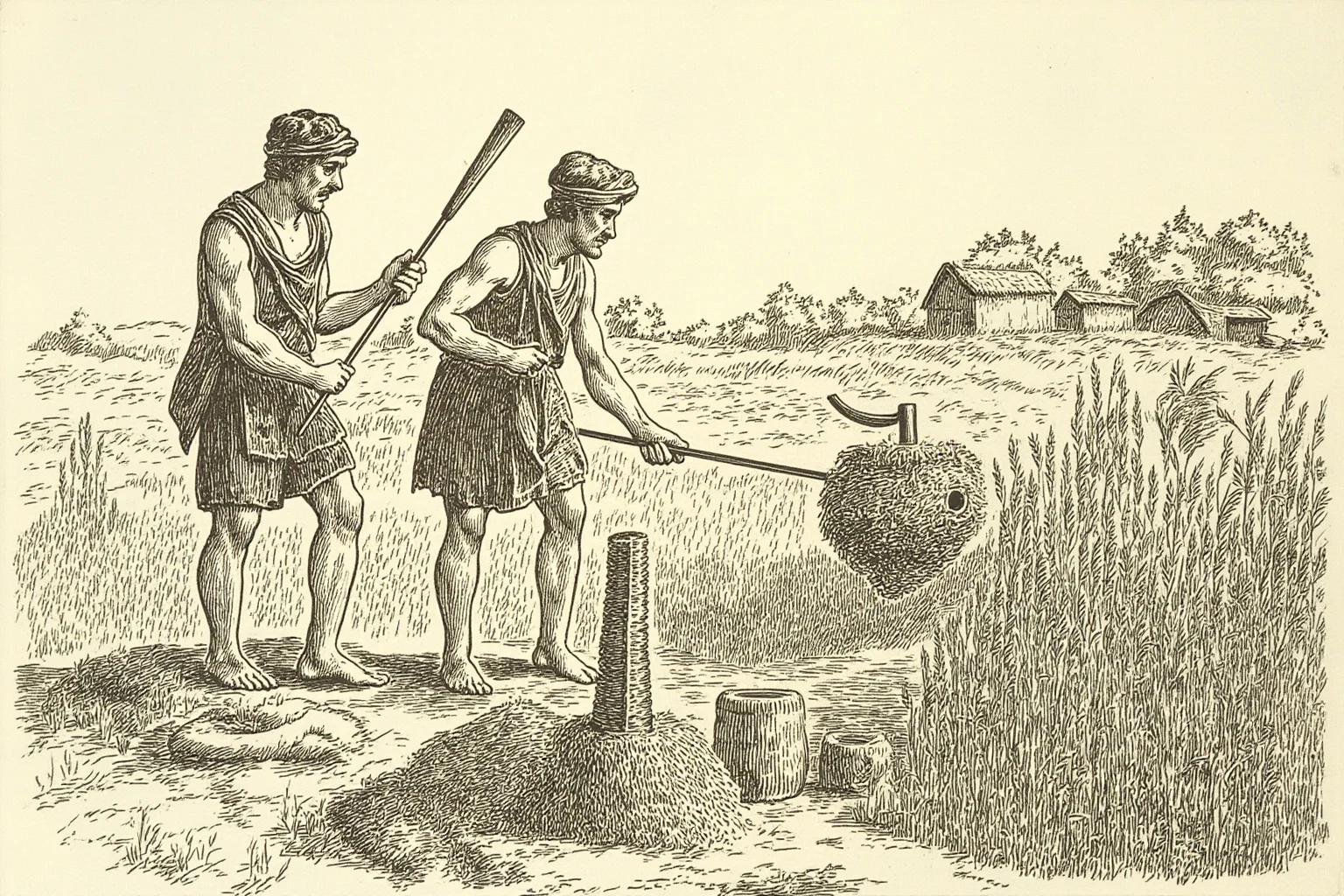
The shift to agriculture around 12,000 years ago, in several independent regions, produced more food per hectare but narrowed diets. Early farming populations show more nutritional stress, more dental decay, and more infectious disease than the hunter-gatherers who preceded them.
Average height fell in many regions and did not recover for millennia. Farming was a long-term demographic triumph and a short-term health cost, a trade-off that keeps repeating in human history.
Family, Conflict, and the Long Shadow of Prehistory
The final set of ideas concerns how prehistory people lived together: raising children, settling disputes, and moving goods. These are the questions where modern ideology creeps in most easily.
21. Childhood Was Long, and Neanderthal Children Grew Up Faster
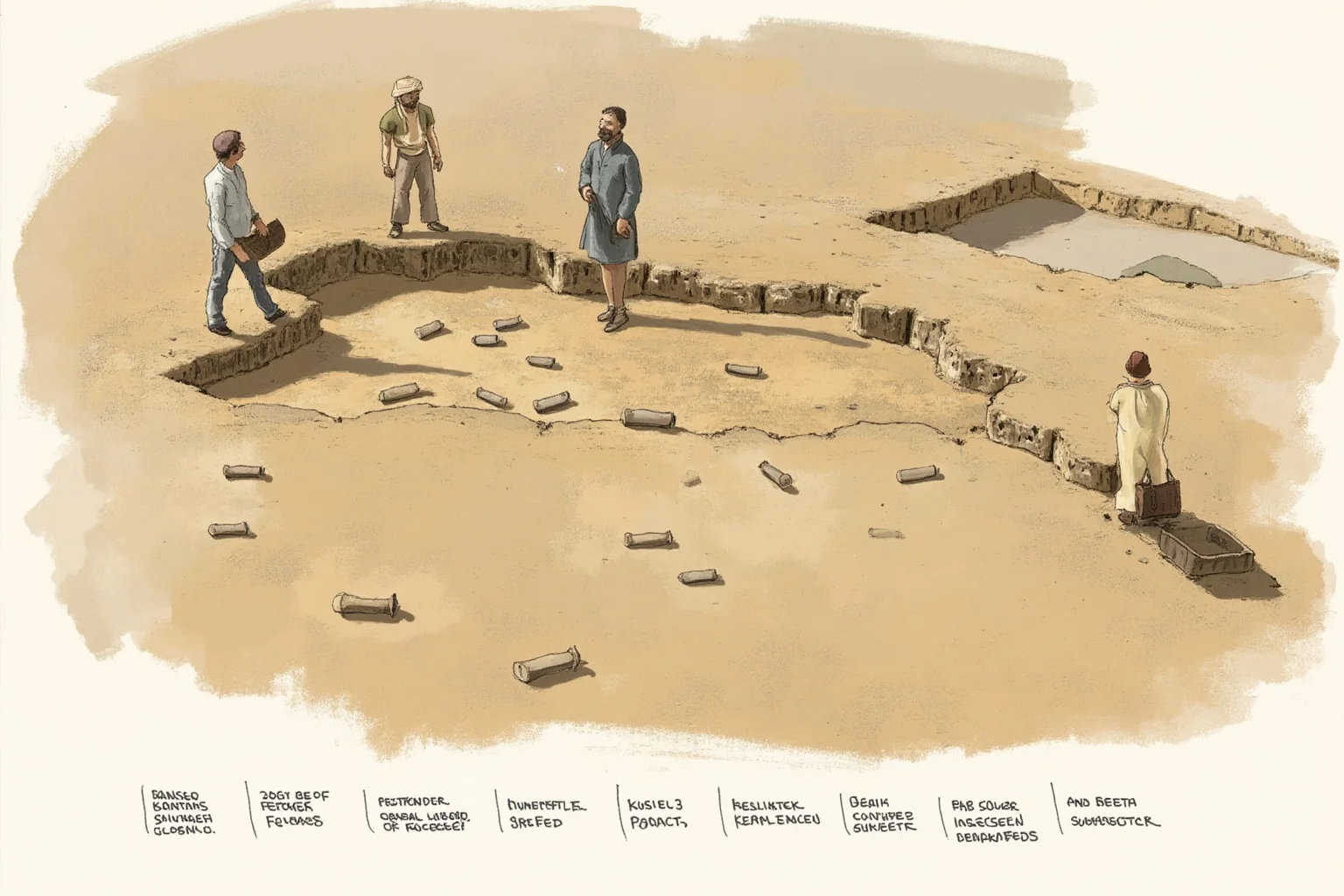
Modern humans have an unusually extended juvenile period, often linked to the time needed to learn complex skills and social rules. Neanderthal teeth, which record growth in daily layers, suggest their children developed somewhat faster.
If correct, that difference probably reflects different strategies rather than different intelligence. Learning time is an investment, and different environments reward different investments.
22. Violence Was Neither Constant Nor Absent
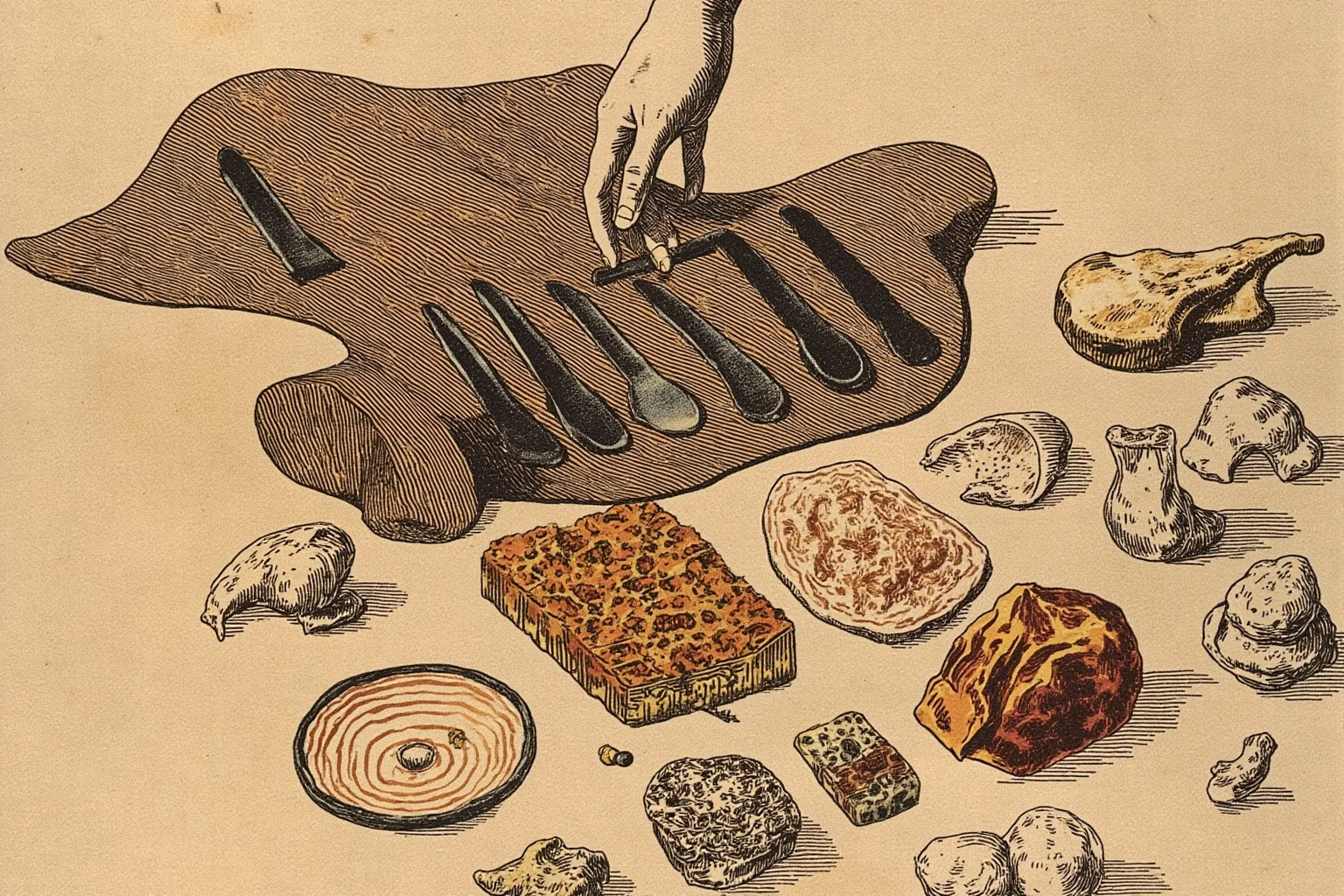
The Nataruk site in Kenya, around 10,000 years old, preserves the remains of people killed in what looks like a violent raid. Jebel Sahaba in the Nile Valley, around 13,000 years old, contains dozens of individuals with projectile injuries.
Yet many prehistoric skeletons show healed injuries and signs of long-term care, implying cooperation as well as conflict. Both the noble savage and the brutal caveman stories are caricatures the evidence does not support.
23. Long-Distance Trade Existed Before Farming
Obsidian, marine shell, amber, and other materials moved hundreds of kilometres during the Upper Palaeolithic, long before agriculture or towns. Some of this reflects people moving, and some reflects goods passing hand to hand along chains of contact.
Exchange networks act as insurance. A group with allies three valleys away has options when a hunt fails or a river floods, which is a very practical reason to invest in distant relationships.
24. They Shaped Landscapes and Probably Helped Finish Off the Megafauna
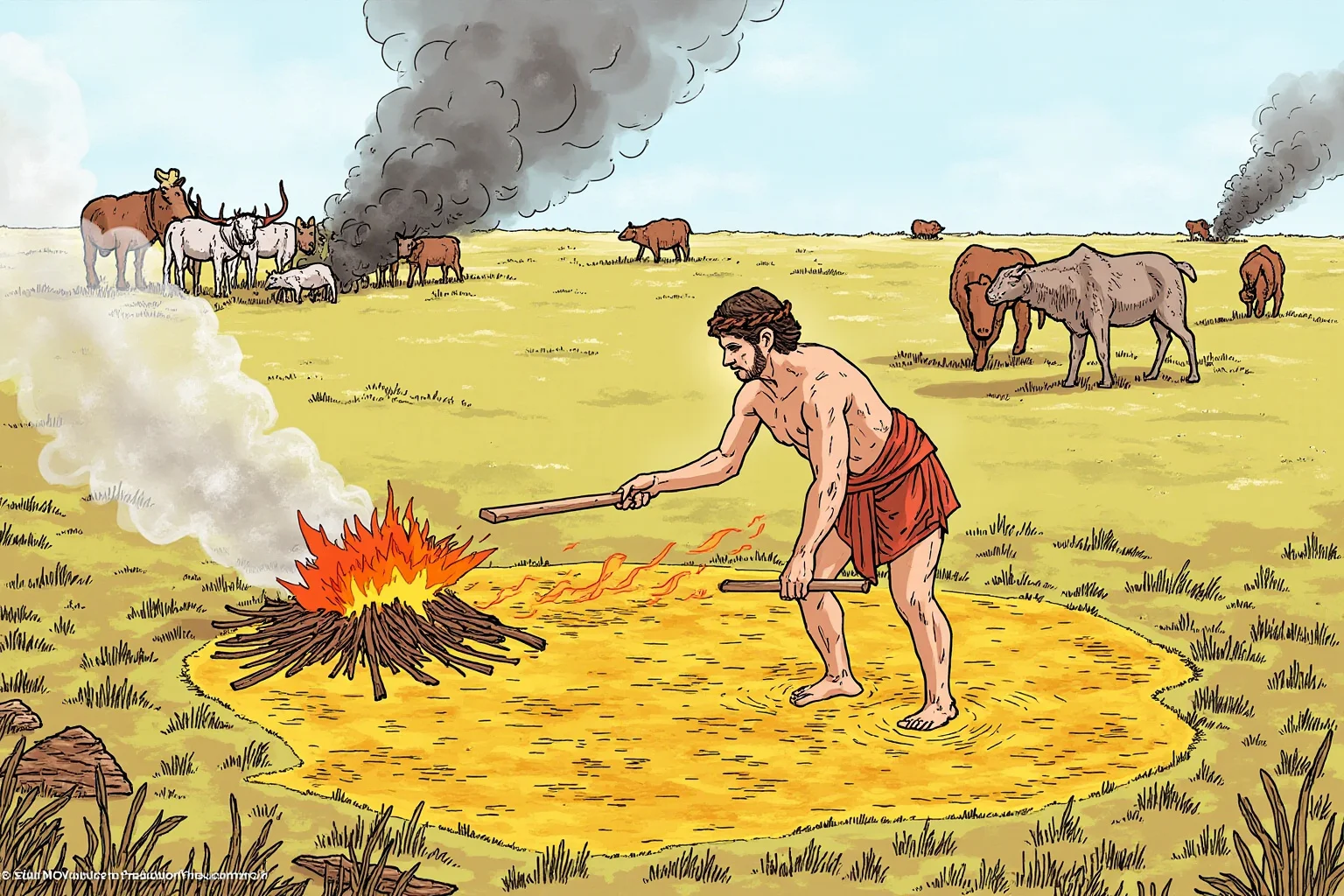
Aboriginal Australians used controlled burning to manage vegetation for tens of thousands of years, reshaping ecosystems in the process. Elsewhere, the arrival of people coincides with the disappearance of large animals such as mammoths, giant ground sloths, and moa.
Climate change also played a role, and the balance between hunting and habitat change is still argued. What is clear is that the human prehistoric footprint on landscapes is older and deeper than the word prehistory suggests.
Why These Prehistoric Facts Still Matter
Prehistory is not a prelude that ends when the interesting part begins. It covers roughly 99% of the time our species and its relatives have existed, and it contains experiments in living that no written history records.
The myths persist because they are convenient: the brutish caveman makes modern life look like progress, and the noble savage makes it look like decline. The evidence supports neither story, showing capable, creative, sometimes violent, often cooperative people solving problems with the tools they had.
That is also why this subject keeps changing. New dating methods, ancient DNA, and careful excavation regularly rewrite the dates and redraw the family tree. Every few years a cave, a bone, or a layer of sediment pushes something back by tens of thousands of years.
If you remember one thing from these 24 facts about early humans, make it this. Prehistoric peoples were not waiting to become us — they were already fully human, living in complex and varied ways that we are still working to understand.
Frequently Asked Questions
What are some interesting facts about human beings that come from prehistory?
Several stand out: most non-African people carry roughly 1–2% Neanderthal DNA, prehistoric peoples were making shell beads and painting caves tens of thousands of years ago, and our own brains have actually shrunk since the Upper Palaeolithic. Prehistoric humans also crossed open sea to reach Australia at least 65,000 years ago, long before farming or writing existed.
How long did prehistoric humans live?
Life expectancy at birth was low, often in the twenties or thirties, but that figure is pulled down heavily by infant and childhood mortality. People who survived to adulthood could reasonably reach their fifties, sixties, or older, and skeletons of elderly adults are found at many sites.
Did prehistoric humans and Neanderthals meet?
Yes. Modern humans and Neanderthals coexisted in Europe and western Asia for thousands of years and interbred. Non-African populations today carry roughly 1–2% Neanderthal DNA as a result, and some Oceanian and Asian populations also carry Denisovan ancestry.
What did prehistoric peoples eat?
Diets varied enormously by region and season, ranging from shellfish, fish, and marine mammals on coasts to tubers, nuts, seeds, insects, honey, and game inland. Some groups were heavily meat-dependent while others relied on plants and aquatic foods, so there is no single ancestral diet.
When did prehistoric times end?
Prehistory conventionally ends when writing appears, which happened at different times in different places: around 5,000 years ago in Mesopotamia and Egypt, later across much of Europe, and much later elsewhere. The term describes a stage of record-keeping rather than one global date.
Were cavemen real?
Prehistoric people certainly existed, but the club-wielding caveman is a caricature. Most people lived in open-air camps and rock shelters rather than deep caves, and caves simply preserve evidence far better. Neanderthals and other relatives were skilled, capable people rather than brutes.

Alex Warren
Related Articles