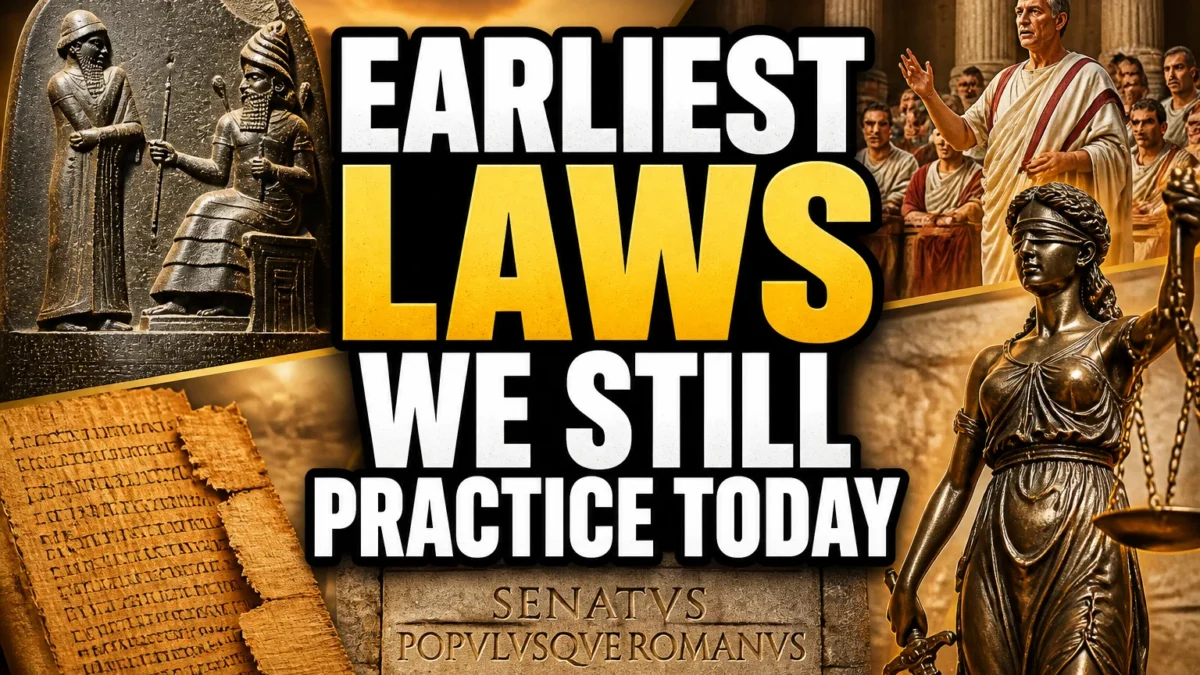
When people ask about the first laws, they often imagine a single dusty tablet that started everything. The truth is messier and far more interesting. Law grew up in many places at once, and several of those early rules never really left us.
Some of humanity's oldest legal ideas are still hiding in plain sight. They show up in apartment leases, traffic court, and the fine print on a receipt. This post traces ten early law codes and traditions whose fingerprints are still on modern life.
TL;DR: The first law codes, from Ur-Nammu and Hammurabi to Rome's Twelve Tables, established rules about property, contracts, evidence, and family that still underpin modern legal systems today.
What Counts as "the First Laws"?
Before we rank anything, we need a working definition. A law code is a written, organized set of rules issued by an authority and meant to apply to a whole community. That is different from a one-off royal decree or a private dispute settlement.
Written laws also require writing itself, plus a society complex enough to need recorded rules. That is why the earliest examples cluster in Mesopotamia, where cuneiform script and city-states appeared together. The first written legal code we know of comes from this world, though older oral customs certainly existed. The same region that produced these codes also gave rise to the earliest civilizations of the Fertile Crescent, from Sumer onward.
It also helps to separate codification from custom. Many communities enforced rules long before anyone carved them into stone. The codes that survive are snapshots of legal thinking, not the moment law was invented.
1. The Code of Ur-Nammu (c. 2100–2050 BCE)
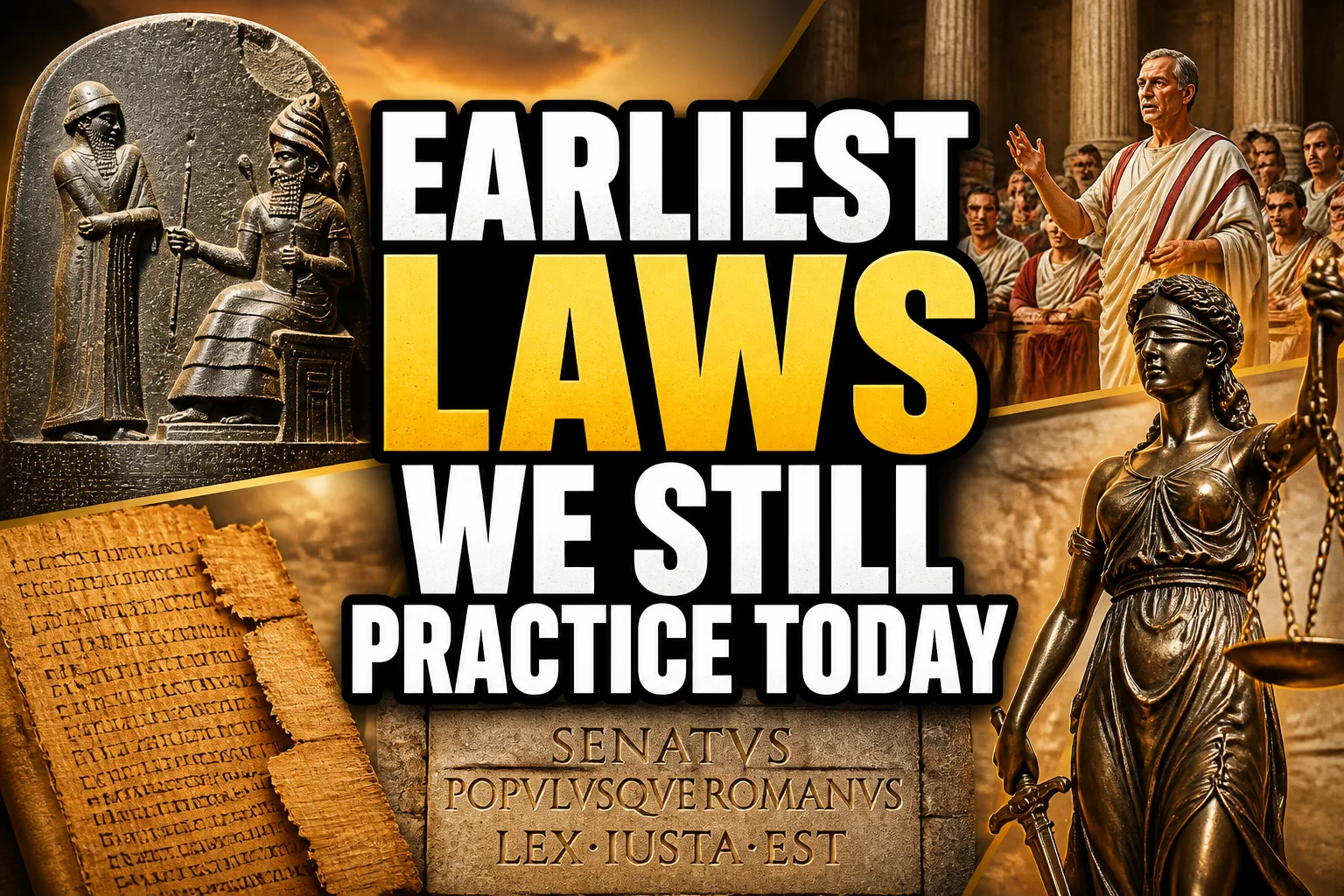
The Code of Ur-Nammu is often called the oldest surviving written law code. It was issued by Ur-Nammu, a king of the Sumerian city of Ur, and written in cuneiform on clay tablets. Roughly 57 laws survive, though the original was likely longer.
Its rules cover bodily injury, marriage, inheritance, and false accusations. One famous feature is that penalties were often financial rather than physical. A person who injured another might pay a set amount of silver instead of losing a limb.
That compensatory logic still runs through modern civil law. When courts award damages in a personal injury case, they are following a principle Ur-Nammu's scribes would recognize. The idea that harm can be repaid with compensation is one of the earliest laws we still practice.
2. The Code of Hammurabi (c. 1750 BCE)

The Code of Hammurabi is the most famous first law code, and for good reason. Carved on a tall stone stele and displayed publicly, it contains 282 case laws covering trade, property, family, and professional liability. It was meant to be read by anyone who could see it.
Its best-known feature is the principle of proportional punishment, often summarized as "an eye for an eye." That phrase is frequently misunderstood as a call for vengeance. In context, it actually limited retaliation to matching the harm, rather than allowing unlimited revenge.
Hammurabi's code also set standards for builders and physicians. If a house collapsed and killed its owner, the builder could face severe penalties. Modern professional liability law is a distant cousin of this idea.
3. The Twelve Tables of Rome (c. 450 BCE)

If you have ever wondered what was Rome's first written law code called, the answer is the Twelve Tables. According to Roman tradition, plebeians demanded that the law be written down so patrician judges could not interpret it arbitrarily. The result was a set of twelve bronze tablets posted in the Forum.
The Twelve Tables covered court procedure, debt, family law, property boundaries, and funerals. They were not elegant, and later Romans admitted as much. But they made law public, which meant it could be argued and challenged.
That principle of publicly accessible law is enormous. Modern ideas like published statutes and the right to know the charges against you trace part of their lineage to Rome's first set of written laws. So does the phrase "what was Rome's first law code" — it is the Twelve Tables, full stop.
4. The Code of Lipit-Ishtar (c. 1930 BCE)
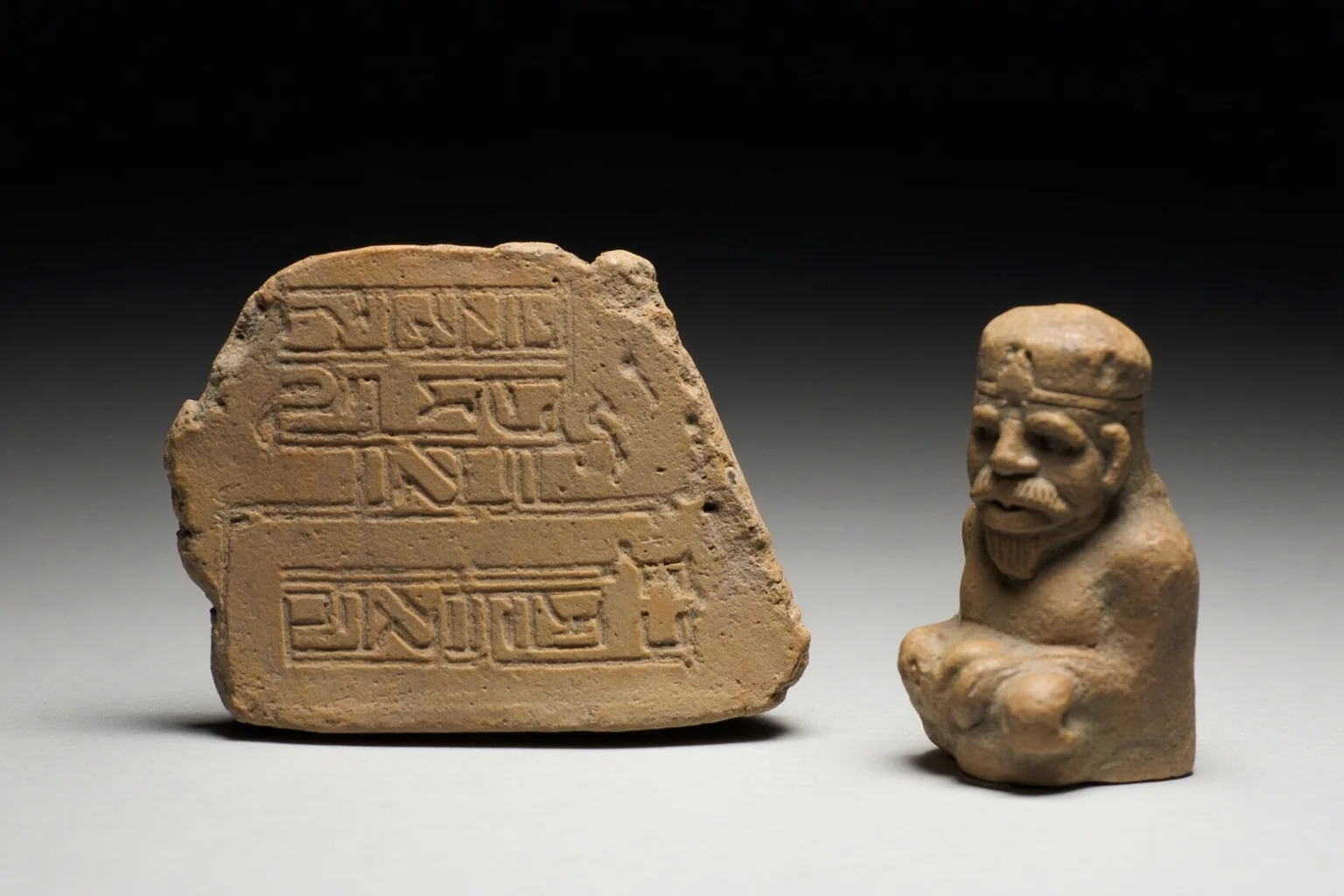
The Code of Lipit-Ishtar predates Hammurabi by more than a century. Lipit-Ishtar was a king of Isin in Mesopotamia, and his laws survive on tablets and fragments. They address tenants, slaves, inheritance, and the duties of officials.
One notable theme is protection for the vulnerable. Several provisions deal with the treatment of tenants and the obligations of landowners. This suggests that even early law codes worried about fairness in economic relationships.
Modern landlord-tenant law is far more detailed, but the basic question is the same. Who is responsible when property is damaged, and what does a tenant owe? Early Mesopotamian jurists were already wrestling with it.
5. The Hittite Laws (c. 1650–1500 BCE)
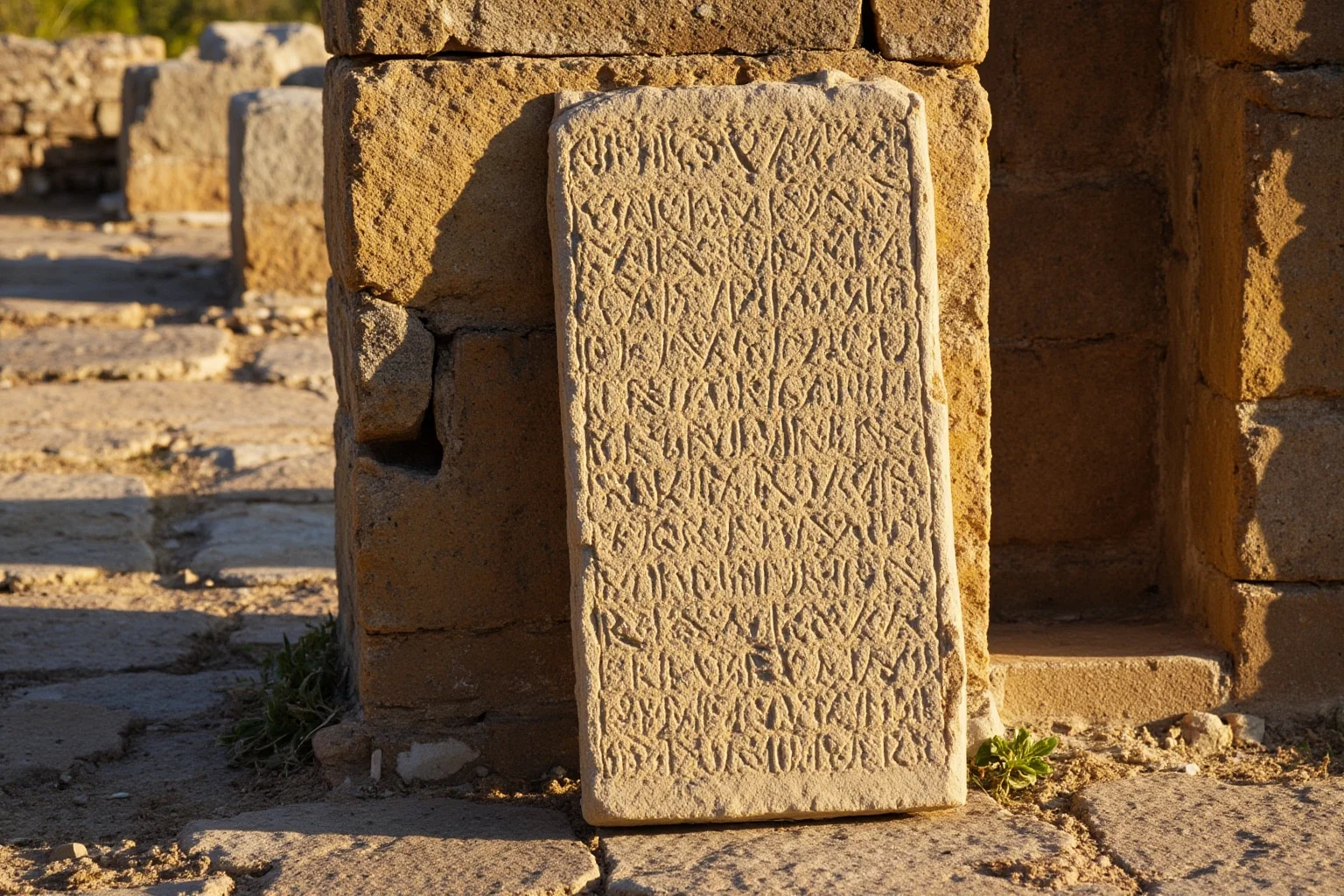
The Hittite Laws come from Anatolia, in modern Turkey, and survive in multiple copies. They are remarkable for their relatively humane penalties and their willingness to revise. Some versions show reduced fines over time, suggesting legal reform was already a thing.
The code distinguishes between accidental and intentional harm. A person who caused injury by accident might pay less than someone who acted deliberately. That distinction between negligence and intent is fundamental to modern criminal law.
Hittite law also regulated prices, wages, and the treatment of animals. In that sense, it looks less like a list of punishments and more like a practical handbook for running a society. Many of its concerns remain recognizable today.
6. The Torah's Legal Material (compiled c. 1st millennium BCE)

The legal portions of the Hebrew Bible, often grouped as biblical law, include rules on property, restitution, witnesses, and treatment of workers. These texts were compiled over centuries and reflect a mix of older customs and later editing. They are not a single code issued on one day.
Several principles here echo through Western law. The requirement for multiple witnesses in serious cases, for example, appears in biblical legal material. So does the idea of cities of refuge for people who caused accidental death.
Modern evidence rules are far more complex, but the core concern is identical. Courts still worry about false testimony and still seek ways to protect the innocent from rushed judgment. That is one of the earliest laws we still practice in spirit, if not in letter.
7. Solon's Reforms in Athens (c. 594 BCE)

Solon was an Athenian statesman who rewrote the city's laws during a period of social crisis. His reforms canceled debts, ended debt slavery for citizens, and reorganized political participation by wealth class. He also made the courts more accessible to ordinary people.
One lasting idea was that law should be written and publicly known. Another was that citizens could appeal to a jury of their peers rather than accept a magistrate's ruling alone. The Athenian jury system was large and noisy, but the principle mattered.
Jury trials in modern democracies are not direct copies of Athens. Still, the notion that ordinary people can judge facts and apply law is a thread that runs from Solon to today's courthouses.
8. The Draconian Code of Athens (c. 621 BCE)

The Draconian Code is famous mostly for its reputation. Attributed to Draco, it was Athens' first written law code, and it was known for harsh penalties. Many offenses reportedly carried the death penalty, which is where the word "draconian" comes from.
Historians debate how accurate that reputation is. Later writers may have exaggerated the severity for political reasons. What matters is that Draco's code was written down and publicly displayed, which was a step toward rule of law.
The word "draconian" survives in modern English as a warning about excessive punishment. That linguistic echo is itself a reminder of how deeply ancient legal debates shaped our vocabulary. It is a cousin to the strange statutes still on the books today — see our roundup of weird laws in America that still exist.
9. Roman Contract and Property Rules
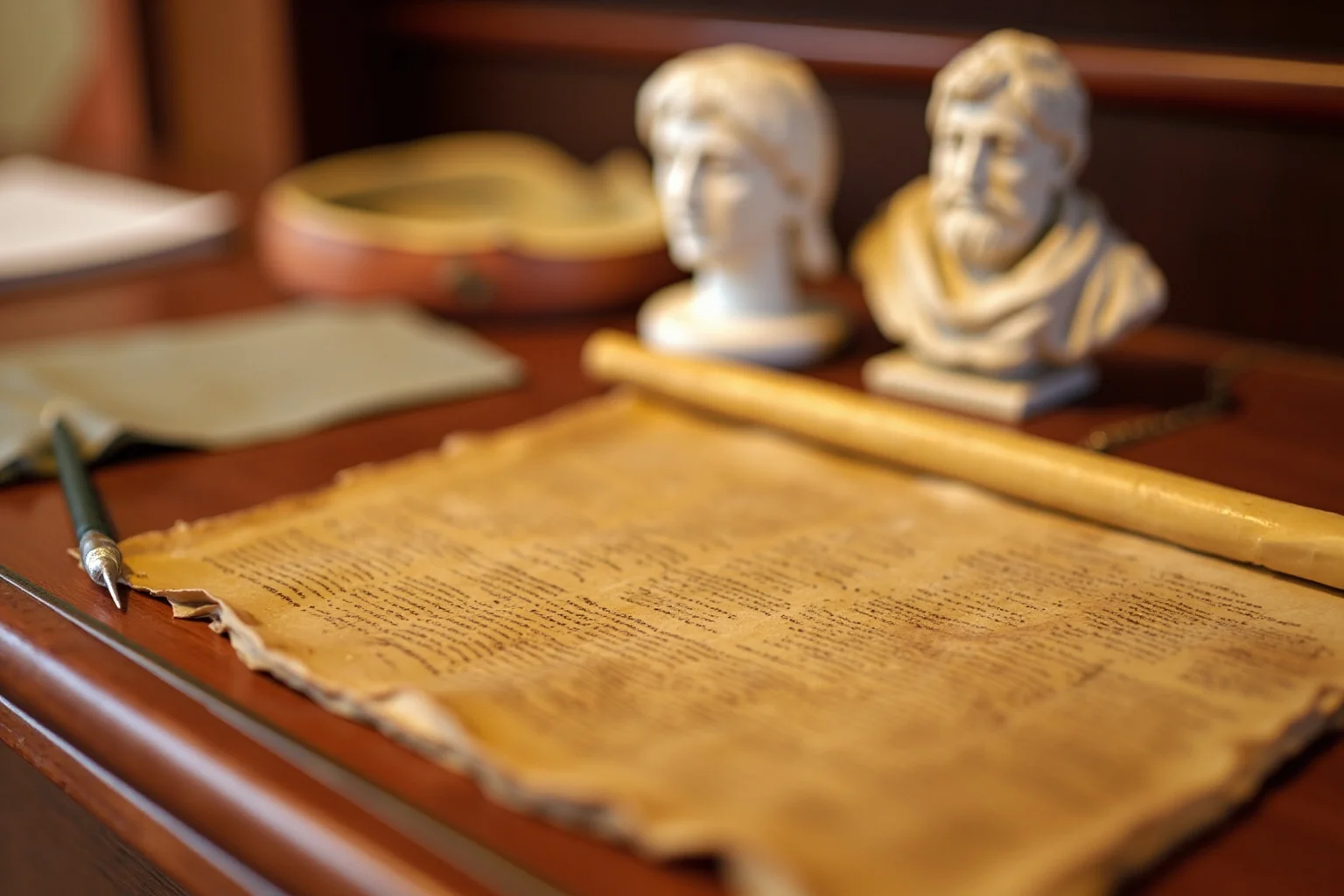
Roman law did not stop with the Twelve Tables. Over centuries, jurists developed detailed rules for contracts, sale, lease, and ownership. These rules were later compiled in the Corpus Juris Civilis under Emperor Justinian in the 6th century CE.
Many modern legal systems, especially in continental Europe, are built on this Roman foundation. The idea that a contract requires agreement, a lawful purpose, and capacity to consent is Roman in origin. So is the concept of property rights that can be transferred, inherited, and defended in court.
Even common-law countries borrowed heavily from Roman ideas through medieval scholars. When you sign a lease or buy a house, you are using concepts refined by Roman jurists two thousand years ago.
10. The Edicts of Ashoka (c. 250 BCE)

The Edicts of Ashoka were issued by the Mauryan emperor Ashoka in ancient India. They were carved on pillars and rocks across his realm, addressing ethics, welfare, and religious tolerance. They are less a law code than a public moral program, but they functioned as binding royal guidance.
Ashoka's edicts emphasize fair treatment of prisoners, respect for all religious sects, and public works like roads and wells. They also express remorse for violence during his conquest of Kalinga. That combination of law and moral reflection is unusual for the ancient world.
Modern ideas about human dignity and state responsibility have deeper roots than we often assume. Ashoka's edicts are not the direct source of modern human rights law, but they show that rulers were thinking about these questions long before the modern era.
Were the First Laws Written on Paper?
This is one of the most common questions about early law, and the answer is no. Paper, as we know it, was invented in China around the 2nd century BCE. The earliest law codes were written on clay tablets, stone steles, bronze tablets, and papyrus.
Clay was cheap and durable in Mesopotamia, which is why so many tablets survive. Stone was chosen for public display, as with Hammurabi's stele and Ashoka's pillars. Bronze was used in Rome for the Twelve Tables, though the originals were lost long ago.
So when people ask were the first laws written on paper, the honest answer is that paper came later. The impulse to write law down is ancient; the medium is just a detail that changed over time.
Why These Early Laws Still Matter
These codes are not museum pieces. They are the first experiments in solving problems we still face. How do we prove what happened? How do we punish fairly? How do we protect the weak without creating chaos?
Each early code answered those questions differently, and later societies borrowed, rejected, and revised. The result is a legal inheritance that is neither pure nor simple. It is a patchwork, and we live inside it. The same empires that produced these codes rose and fell on patterns worth studying — see the causes behind the downfall of ancient empires.
Understanding the first laws also helps us question them. When we see that rules were once different, we realize they can change again. That is perhaps the most modern lesson the ancient world offers.
Conclusion: The First Law Codes Never Really Left
The earliest laws were not written on paper, and they were not handed down in a single moment. They emerged from clay, stone, and bronze, in Mesopotamia, Rome, Athens, and beyond. Each one tried to turn custom into something public and arguable.
Many of their core ideas survive. Compensation for harm, written and accessible rules, distinctions between accident and intent, contracts, property rights, and jury judgment all have ancient roots. We practice them so routinely that we rarely notice.
So the next time you sign a lease, serve on a jury, or read a statute, remember the scribes of Ur and the lawmakers of Rome. The first laws are not behind us. They are underneath us, holding up the floor.
Frequently Asked Questions
Were the first laws written on paper?
No. Paper was invented in China around the 2nd century BCE, long after the earliest law codes. The first written laws were recorded on clay tablets, stone steles, bronze tablets, and papyrus. For example, the Code of Hammurabi was carved on a stone stele, and Rome's Twelve Tables were said to be inscribed on bronze.
What was Rome’s first written law code called?
Rome's first written law code was called the Twelve Tables, or Lex Duodecim Tabularum. According to Roman tradition, it was created around 450 BCE after plebeians demanded that the law be written down and made public. The original bronze tablets no longer survive, but the content is known from later citations.
What is the oldest surviving written law code?
The Code of Ur-Nammu, from around 2100–2050 BCE, is generally considered the oldest surviving written law code. It was issued by King Ur-Nammu of Ur in Mesopotamia and written in cuneiform on clay tablets. Roughly 57 laws survive, covering injury, marriage, inheritance, and false accusations.
Why were the first laws written down?
Writing laws down made them public and less open to arbitrary interpretation. In Rome, plebeians pushed for written law so that patrician judges could not change or hide the rules. In Mesopotamia, kings used written codes to advertise justice and legitimize their rule. Publicity and consistency were the main goals.
Do modern laws really come from ancient codes?
Not directly, but many principles do. Modern legal systems developed through Roman law, medieval scholarship, and centuries of reform. Ideas like compensation for harm, written statutes, distinctions between accident and intent, and jury judgment have ancient roots. The details are modern, but the underlying questions are very old.

Alex Warren
Related Articles