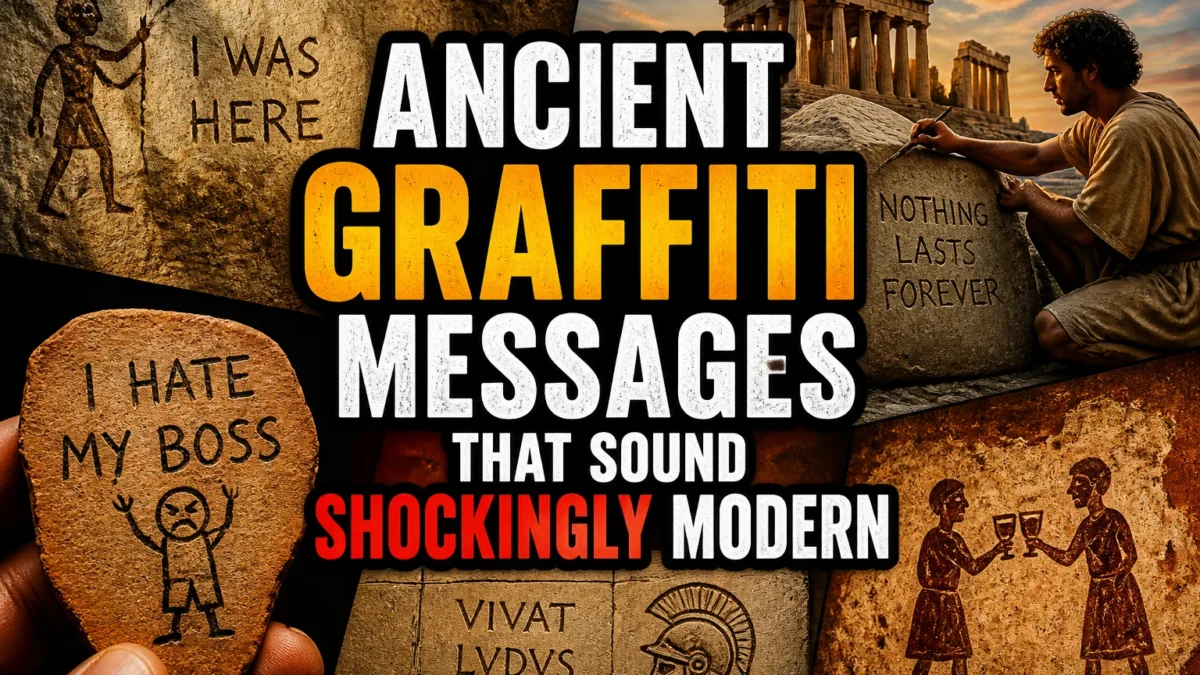
Scratch a wall in any city on Earth and you will find a message from someone who wanted to be remembered, or simply wanted to complain. That impulse is not new — it is at least two thousand years old, and the Roman world left behind an extraordinary archive of it. Pompeii's plastered streets, the granite legs of an Egyptian statue, a building site in Roman London, and the upper gallery of Hagia Sophia all carry the same kind of marks.
What makes this material startling is not its age but its tone. Read enough ancient graffiti and you start to hear voices that sound like group chats, hotel reviews, and comment-section arguments.
TL;DR: Ancient graffiti from Pompeii, Rome, Egypt, and beyond shows that people 2,000 years ago were already leaving the same jokes, complaints, love notes, and petty arguments we post online today.
Why Ancient Graffiti Feels So Familiar
Most surviving writing from antiquity is official. It is carved on monuments, copied by monks, or quoted by authors who had a point to make, which means it is filtered through power and posterity.
Graffiti is different. It is unedited, often anonymous, and usually written by someone with no expectation that anyone important would ever read it — the closest thing we have to the unfiltered voice of ordinary people in the ancient world.
That is why the best graffiti examples sound so modern. They are not trying to be literature, and they are not trying to impress a future historian. They are people being bored, rude, lonely, grateful, or in love in public, which is exactly what most of us do online.
1. “I Was Here” — the Original Check-In
The most common ancient graffito is also the most modern: a name, and a claim that its owner was present. Latin walls are full of the formula hic fuit — “was here” — scratched beside a personal name, sometimes with a friend's name or a rough date alongside.
These marks were the ancient equivalent of a location tag. They said nothing profound and demanded nothing, and their only purpose was to prove that a specific person had stood in a specific place. A legionary's scratched initials and a tagged holiday photo are doing exactly the same job.
2. The Wall That Complains About All the Writing on It
One of the most quoted pieces of Roman graffiti is a complaint about Roman graffiti. It comes from Pompeii and is usually catalogued as CIL IV 1904: “Admiror, paries, te non cecidisse ruinis, qui tot scriptorum taedia sustineas.”
The line translates roughly as: “I am amazed, wall, that you have not collapsed in ruins, since you have to endure so much tedious writing.” It is a joke, and a very recognisable one — the ancient version of scrolling to the comments purely to announce that the comments are terrible.
Versions of the same line turn up in later Latin collections, which suggests it was already a popular gag rather than a one-off. Some things get funnier the more people repeat them, and some things just get repeated.
3. The Bed-Wetting Apology to a Host
Pompeii preserves an apology that anyone who has stayed in a bad room will recognise. The graffito, catalogued as CIL IV 4957, reads: “Miximus in lecto, fateor, peccavimus, hospes; si dices quare, nulla matella fuit.”
In English: “We have wet the bed, host. I confess we have done wrong. If you ask why — there was no chamber pot.” It is part confession, part excuse, and part complaint about the accommodation, all in two lines of verse.
It is also a reminder that Roman inns were not the marble spaces of Hollywood films. Most travellers slept in cramped, shared rooms, and what they left on the walls reads more like a review than a work of literature.
4. An Ancient Comment-Section Fight Over a Girl
At Pompeii, two men argued on a wall over the same woman. The first graffito (CIL IV 8258) announces that Successus, a weaver, loves Iris, the innkeeper's slave girl — and adds, apparently in a rival's voice, that she does not care for him.
The reply (CIL IV 8259) tells the “envious one” to stop interfering and to give way to a better-looking man, then accuses him of being jealous because he is not as handsome. It is a comeback scratched into plaster, with a named target and no attempt at dignity.
What survives is not a love story but an argument. It is the closest thing antiquity offers to a public thread under a post, and the emotional register has barely changed in two millennia.
5. The Traveller Who Slept Alone and Missed His Girlfriend
In a Pompeii inn, someone scratched a line usually translated as: “Vibius Restitutus slept here alone, and longed for Urbana, his girlfriend.” The inscription, CIL IV 2146, is short and unpolished.
Nothing about it is heroic. A man on a journey, a bed that was too empty, a name he wanted to see on the wall — that is the whole content. It is the ancient ancestor of the late-night message that says “wish you were here.”
6. “Whoever Loves, May He Flourish”
Another Pompeii graffito runs: “Quisquis amat valeat, pereat qui nescit amare” — “Whoever loves, may he flourish; may he perish who does not know how to love.”
The sentiment is so generic that it could sit on a coffee mug today, and that is exactly the point. Not every ancient message was a cry of despair or a dirty joke. Plenty of them were simply people performing a mood in public, hoping someone would read it and agree.
7. Campaign Ads Scratched Into Plaster
Election season at Pompeii looked like a paint-and-plaster war. Thousands of programmata — painted or scratched endorsements — urged voters to choose candidates for aedile or duumvir, the local magistracies.
Many came from trade guilds rather than individuals. Fruit sellers, bakers, goldsmiths, and mule drivers all asked the public to elect a particular man, which is an endorsement you can still buy in a modern campaign.
Some of the notices were painted by professional sign-writers rather than scratched by supporters. That detail matters, because it shows that Roman political advertising was a small industry, not just a spontaneous outpouring of civic feeling.
8. Gladiator Fan Graffiti: “The Sigh of the Girls”
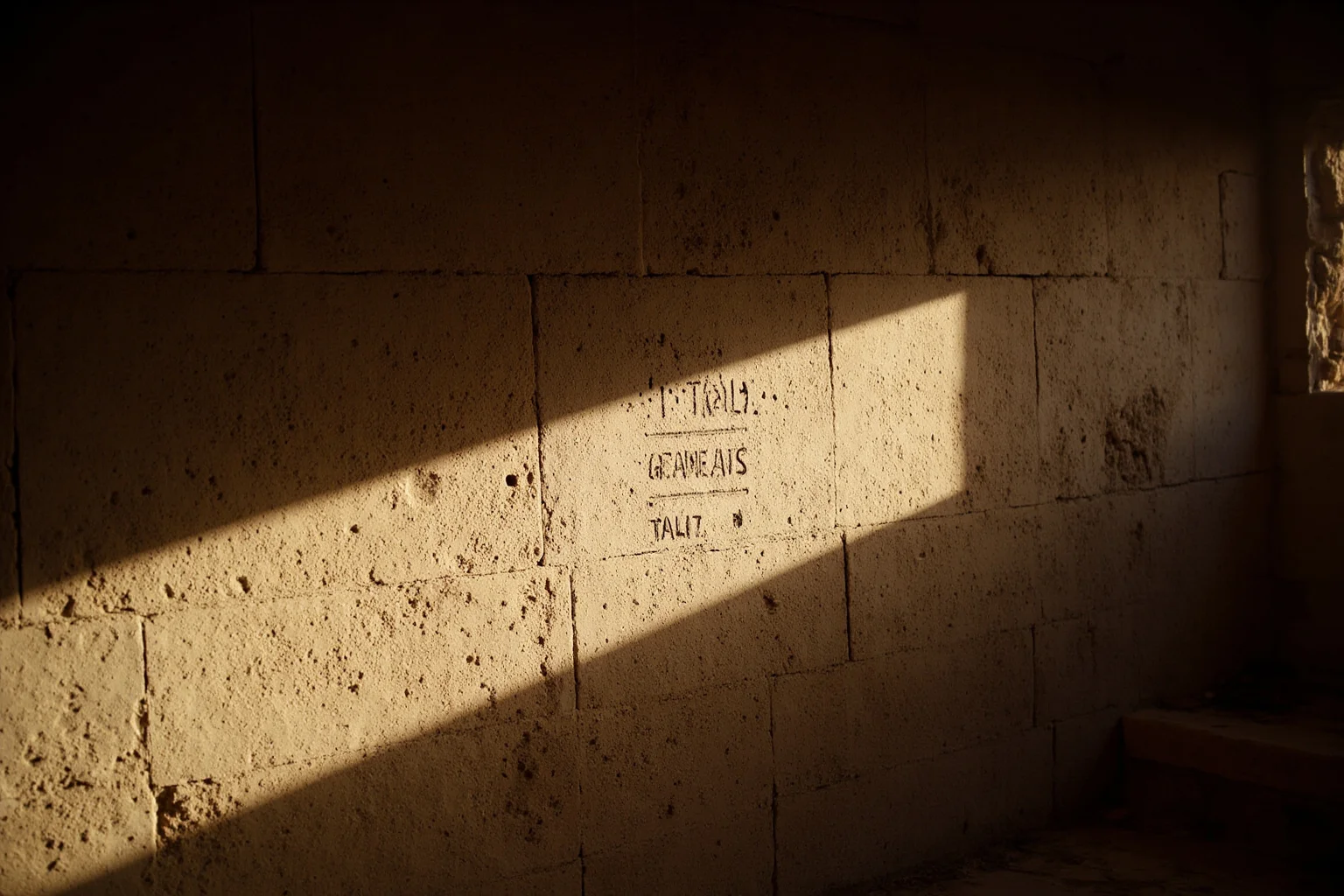
Gladiators were the sports stars of the Roman world, and their fans scratched names onto walls. One Pompeii graffito hails a fighter called Celadus as “the sigh of the girls,” which sounds like a tabloid headline with better Latin.
Other scratches record wins, training sessions, and personal favourites. At the gladiator barracks in Pompeii, one wall was covered with names and tallies, which archaeologists read as a fan record rather than an official document.
The tone is familiar: hero worship, nicknames, and the urge to be associated with a winner. Modern stadium chants and social media edits are doing the same cultural work with better lighting.
9. Bar Tabs, Drink Tallies, and Brothel Prices
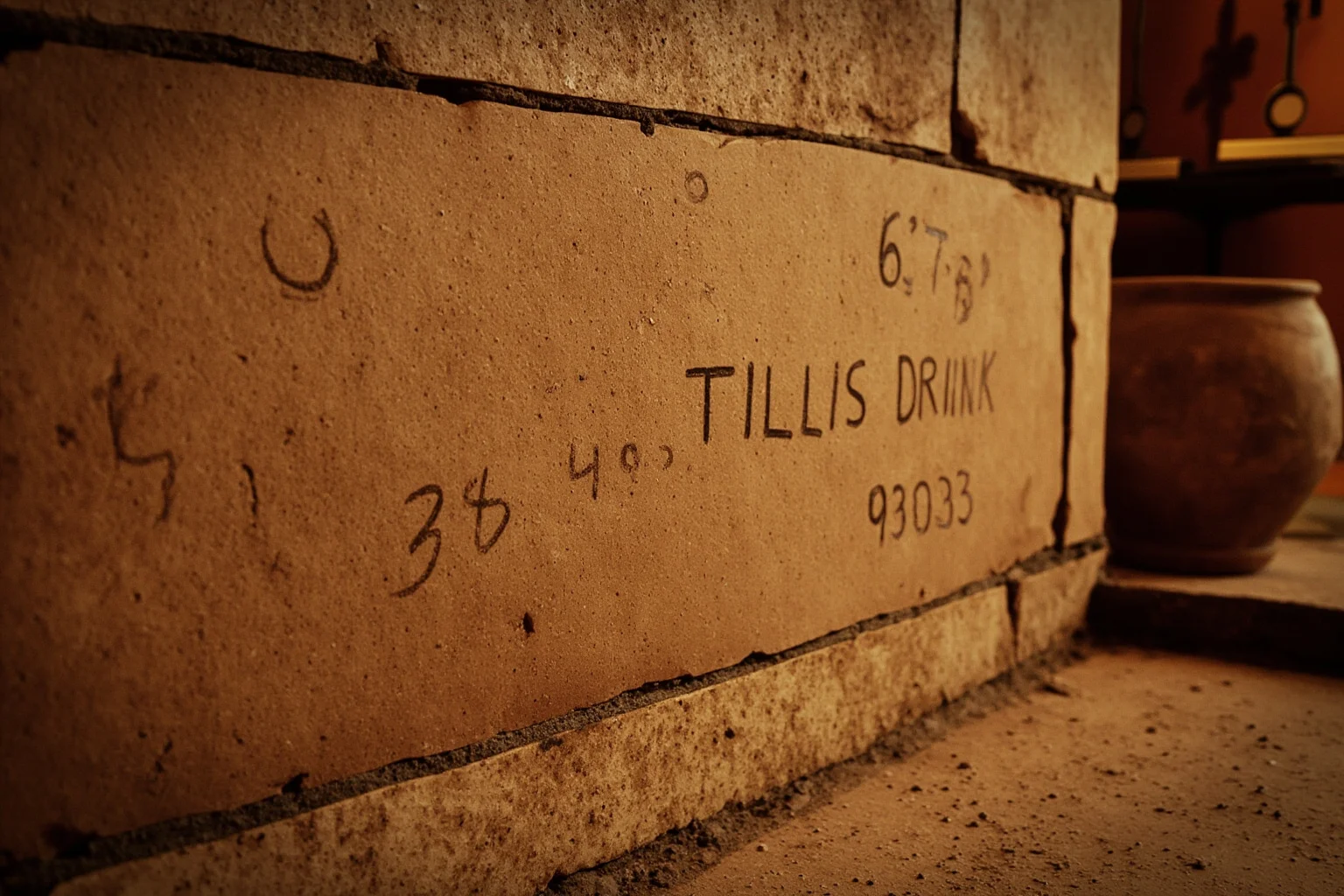
Some of the most useful ancient graffiti for historians are the boring ones. Tavern walls record how much was drunk, who owed what, and which customers had already settled up.
Pompeii's brothel district has produced graffiti listing names and prices, and those numbers are often repeated in modern articles with more confidence than the evidence supports. What is not in doubt is that commerce, not romance, drove a great deal of wall writing.
These scratches function like receipts and ledgers. They show ordinary economic life in a way that official inscriptions rarely do, which is why historians treat even a crude three-word graffito as real evidence.
10. A Doctor's Very Honest Toilet Note
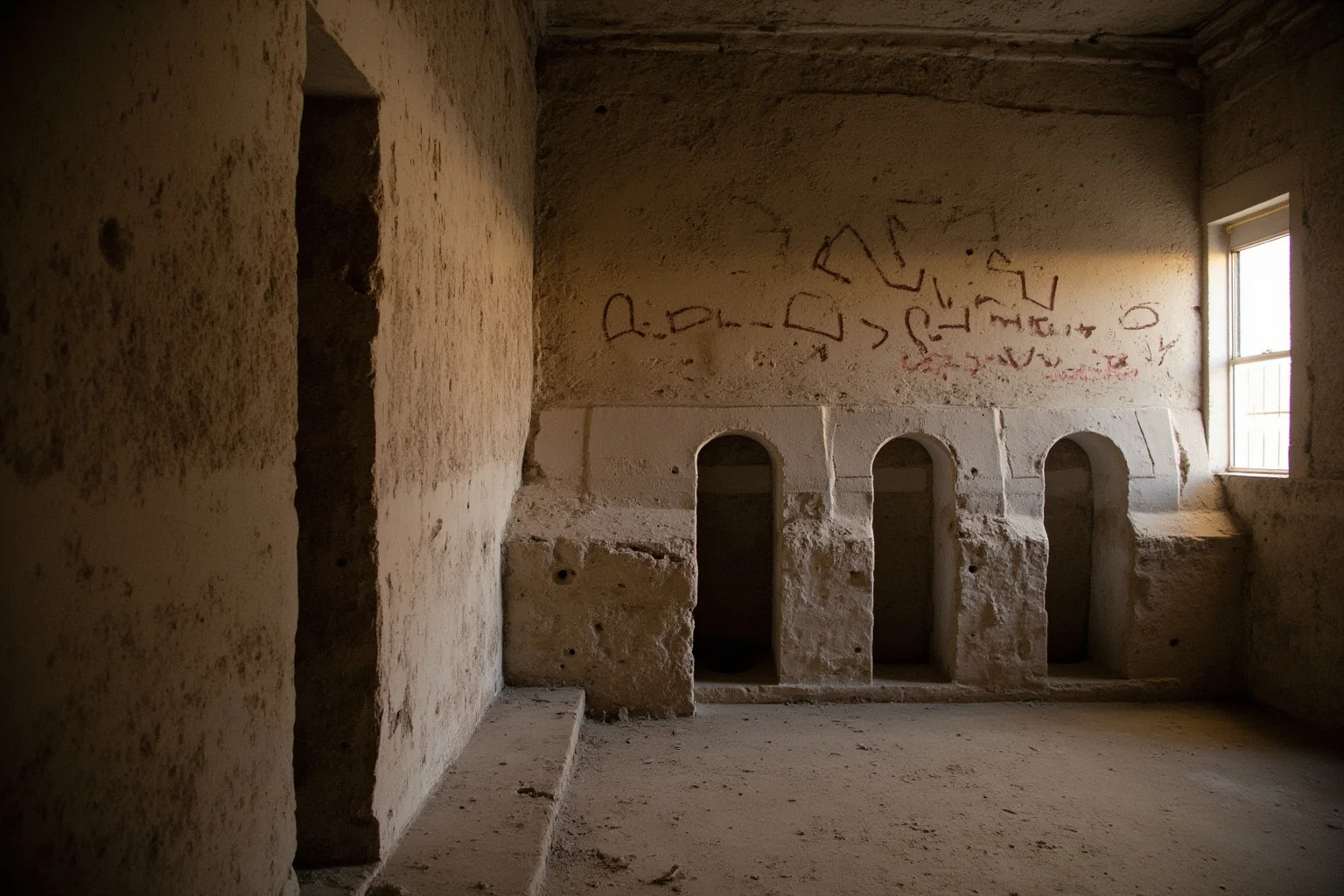
One of the most quoted pieces of ancient graffiti is a boast that has not aged well. Catalogued as CIL IV 10619, it reads: “Apollinaris, doctor to the emperor Titus, had a good crap here.”
The joke depends entirely on the contrast between the man's title and the content, and it has survived for nearly two thousand years. Titus ruled from 79 to 81 CE, so the inscription may have been written before he took the throne — assuming the claim was true at all.
Whether the writer really served the emperor is impossible to verify, which is part of the humour. Ancient walls were not fact-checked, and people made claims about themselves then exactly as they do now.
11. “Beware of the Dog” — the Sign That Wasn't Graffiti
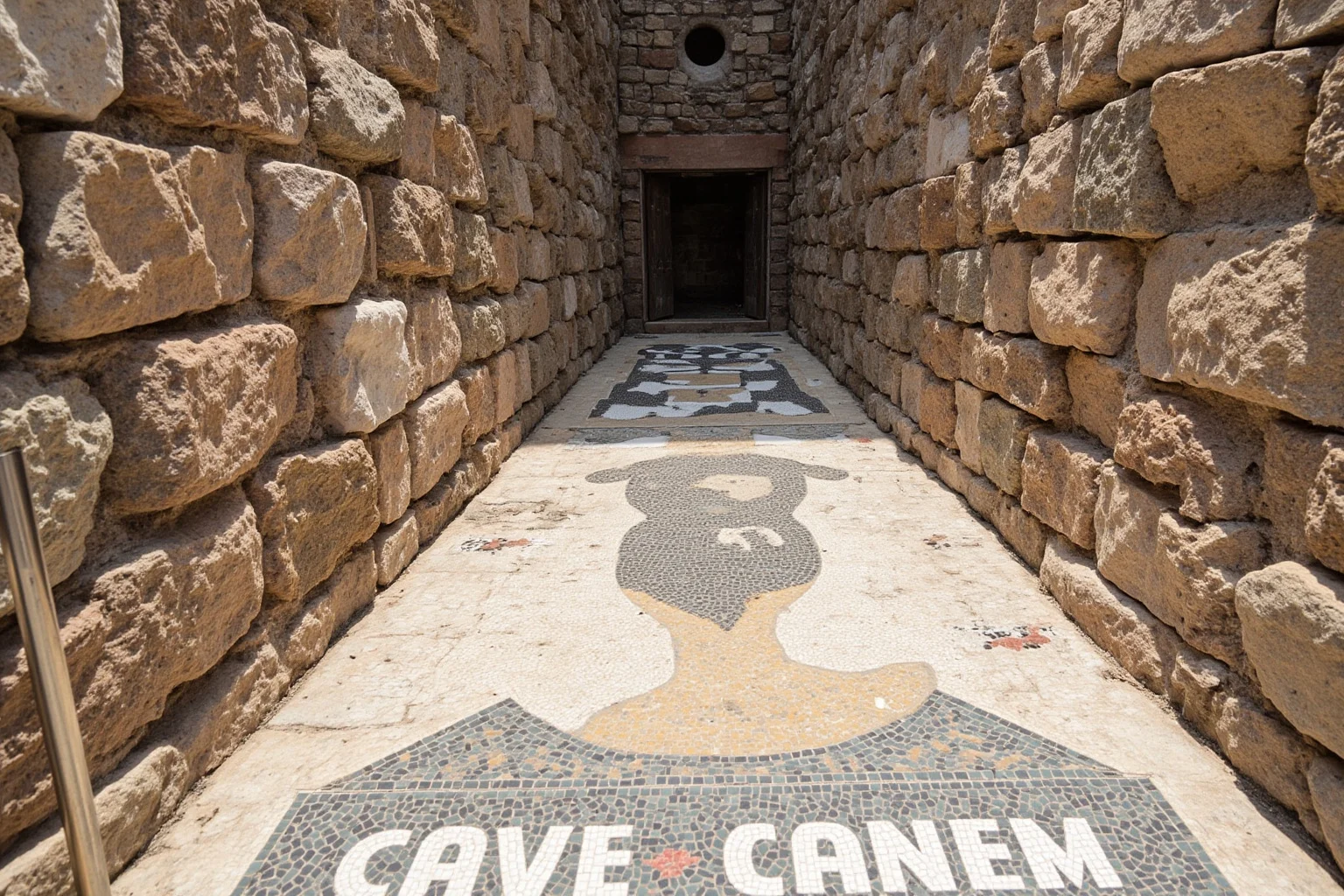
The famous cave canem — “beware of the dog” — is not graffiti. It is a floor mosaic in the entrance of the House of the Tragic Poet at Pompeii, complete with a picture of a chained dog.
It gets lumped in with ancient wall writing because it is short, punchy, and domestic, and because tourists repeat it as though it were a scratch on a doorframe. The distinction matters if accuracy matters: a commissioned mosaic is a design choice, not an outburst.
Even so, the impulse behind it is identical to the modern sign. A warning, a bit of theatre, and a touch of humour, all in one object — the Romans were very good at that combination.
12. Curse Tablets: The Ancient Art of Petty Revenge
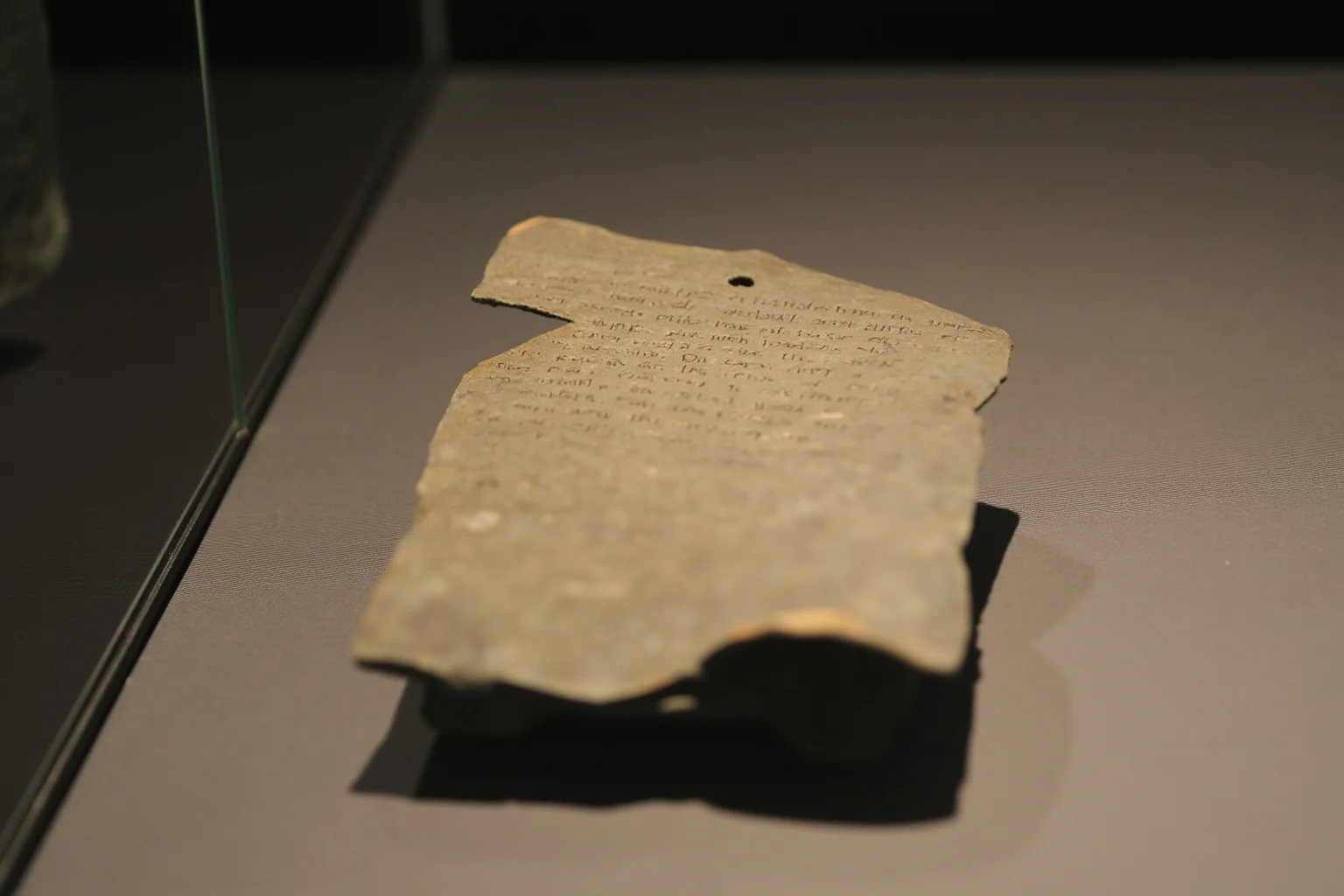
Not every ancient message was written on a wall. In Roman Britain, thin sheets of lead were folded, pierced, and thrown into the sacred spring at Bath, each carrying a request for divine punishment.
One published tablet asks the goddess Sulis Minerva to make the thief who stole two gloves lose his mind and his eyes. Others target stolen cloaks, coins, or a missing brooch, and the wording is often as legalistic as a modern complaint form.
The pettiness is startlingly familiar. It is the ancient equivalent of a furious post about a stolen parcel, with the crucial difference that the author expected a goddess to handle the follow-up.
13. The Roman London Tile That Sounds Like a Roommate Complaint
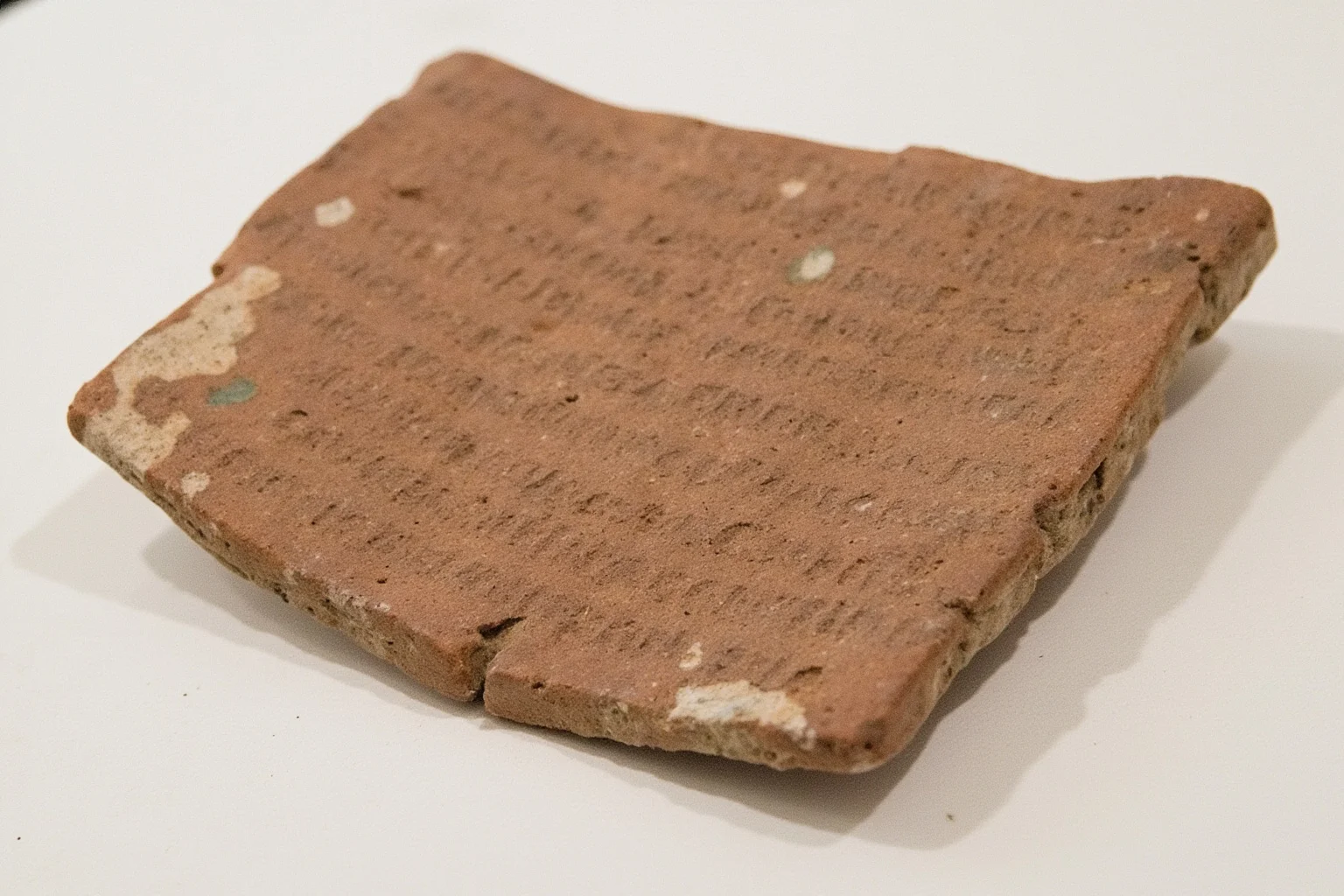
A tile found in Roman London carries a scratched line usually translated as: “Austalis has been going off by himself every day for thirteen days.” The object dates to around the early second century CE.
Nobody knows who Austalis was, or who was keeping count. The most common reading is that someone was tracking the movements of a person they lived or worked with, which sounds less like an imperial decree and more like a note left on the fridge.
The tile is a useful reminder that ancient graffiti is not only found where tourists go. It turns up on building sites, in drains, and in the rubbish of ordinary Roman towns, which is where most of the population actually lived.
14. Ancient Tourist Reviews at the Colossi of Memnon
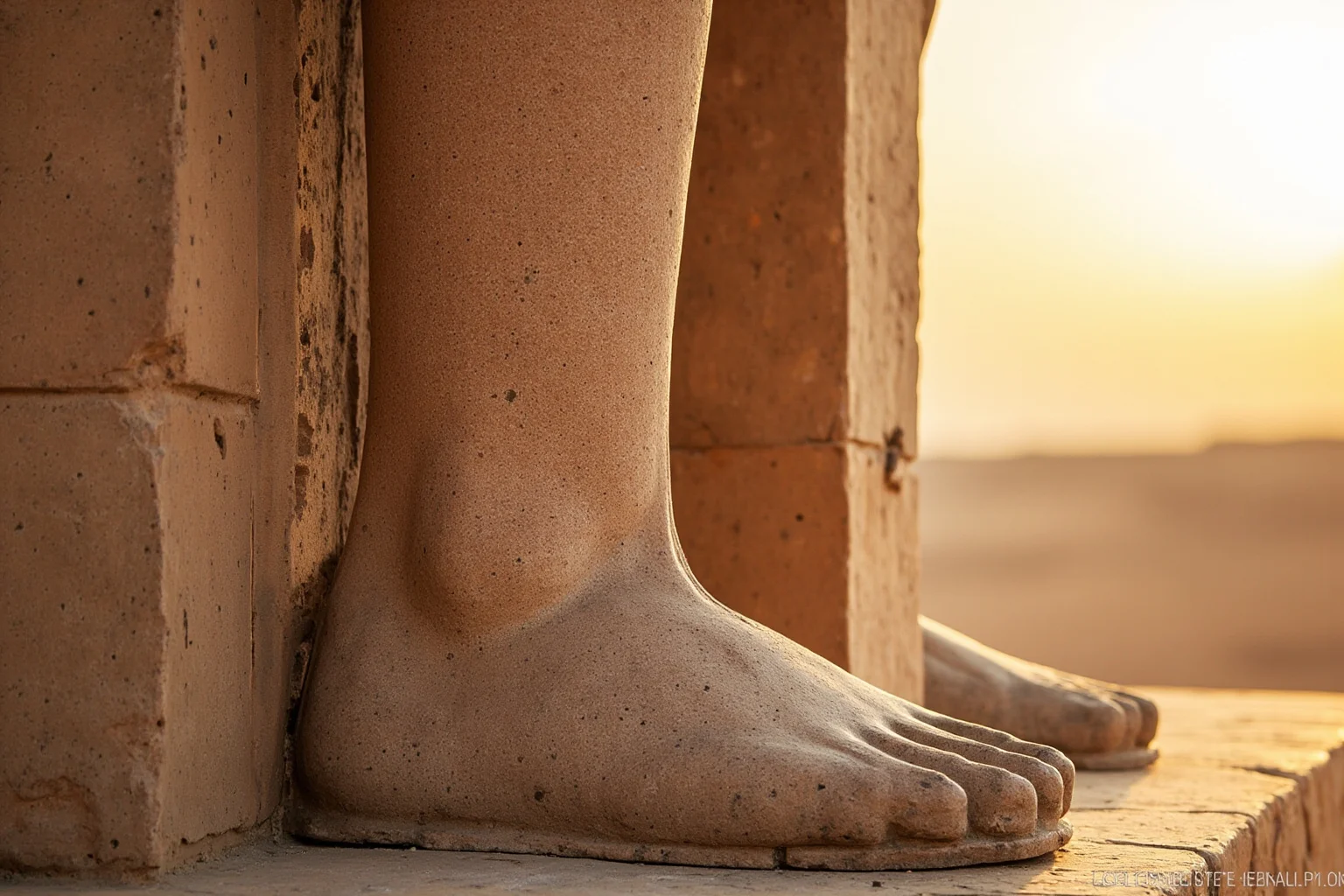
On the west bank of the Nile, two colossal statues of Amenhotep III attracted visitors for centuries, partly because one of them was said to sing at dawn. Ancient tourists left their names and comments on the stone.
Among them was Julia Balbilla, a Roman poet of Syrian royal descent who travelled with Hadrian's entourage in 130 CE and carved four Greek epigrams onto the statue's leg. Her verses describe the visit, praise the emperor, and record the hour of the “song.”
They are, in effect, a five-star review carved in stone, with a named author and a precise time stamp. Modern travel platforms have not changed the genre so much as industrialised it.
15. “Halvdan Was Here” — Viking Runes in Hagia Sophia
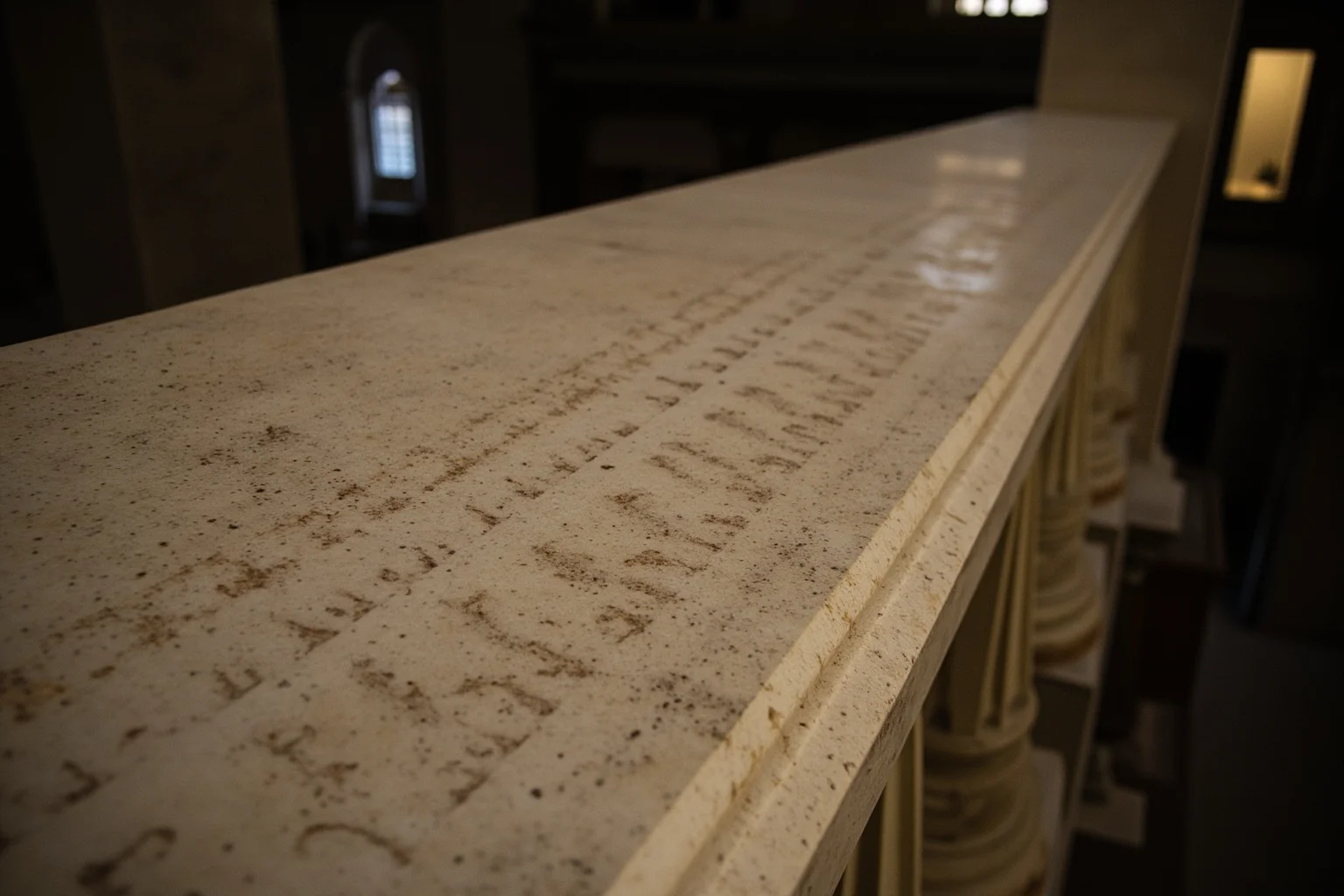
In the upper gallery of Hagia Sophia in Istanbul, a ninth-century visitor left runic graffiti that has been read as “Halvdan carved these runes,” or simply “Halvdan was here.” He was probably a member of the Varangian Guard, the Norse warriors who served Byzantine emperors.
The message is almost aggressively ordinary. A man far from home, standing inside one of the greatest buildings on Earth, chose to scratch his own name and leave it there.
It is the same instinct that covers modern monuments with initials, and it explains why heritage authorities have a complicated relationship with graffiti. Today it is vandalism; in a thousand years it may be evidence.
16. Work Complaints from Deir el-Medina
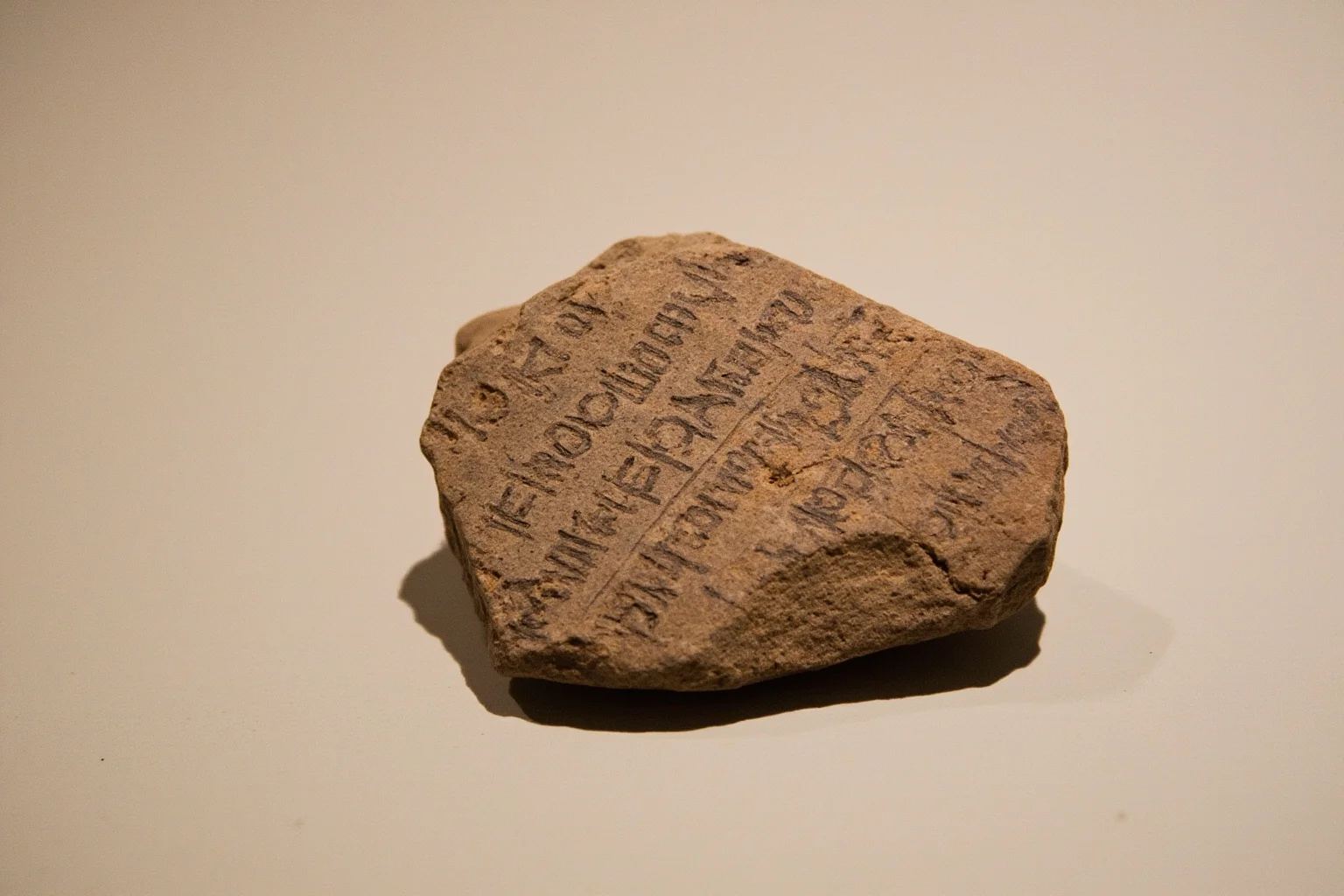
In Egypt, the craftsmen who cut and decorated royal tombs at Deir el-Medina left an extraordinary record of daily working life. Much of it survives on ostraca — broken pottery and limestone flakes used as notepads — rather than on walls, but the tone is unmistakably modern.
The records list absences and their reasons: brewing beer, embalming a relative, a scorpion sting, a sick wife. One document from the reign of Ramesses III describes what is often called the first recorded labour strike, when workers downed tools over unpaid rations.
This is where careful readers have to slow down. Not everything we call “ancient graffiti” is wall writing, and the strike itself is documented on papyrus, not scratched into plaster. The distinction matters when these texts get shared online with captions that overstate what the evidence says.
17. Soldiers' Scratches Along Hadrian's Wall
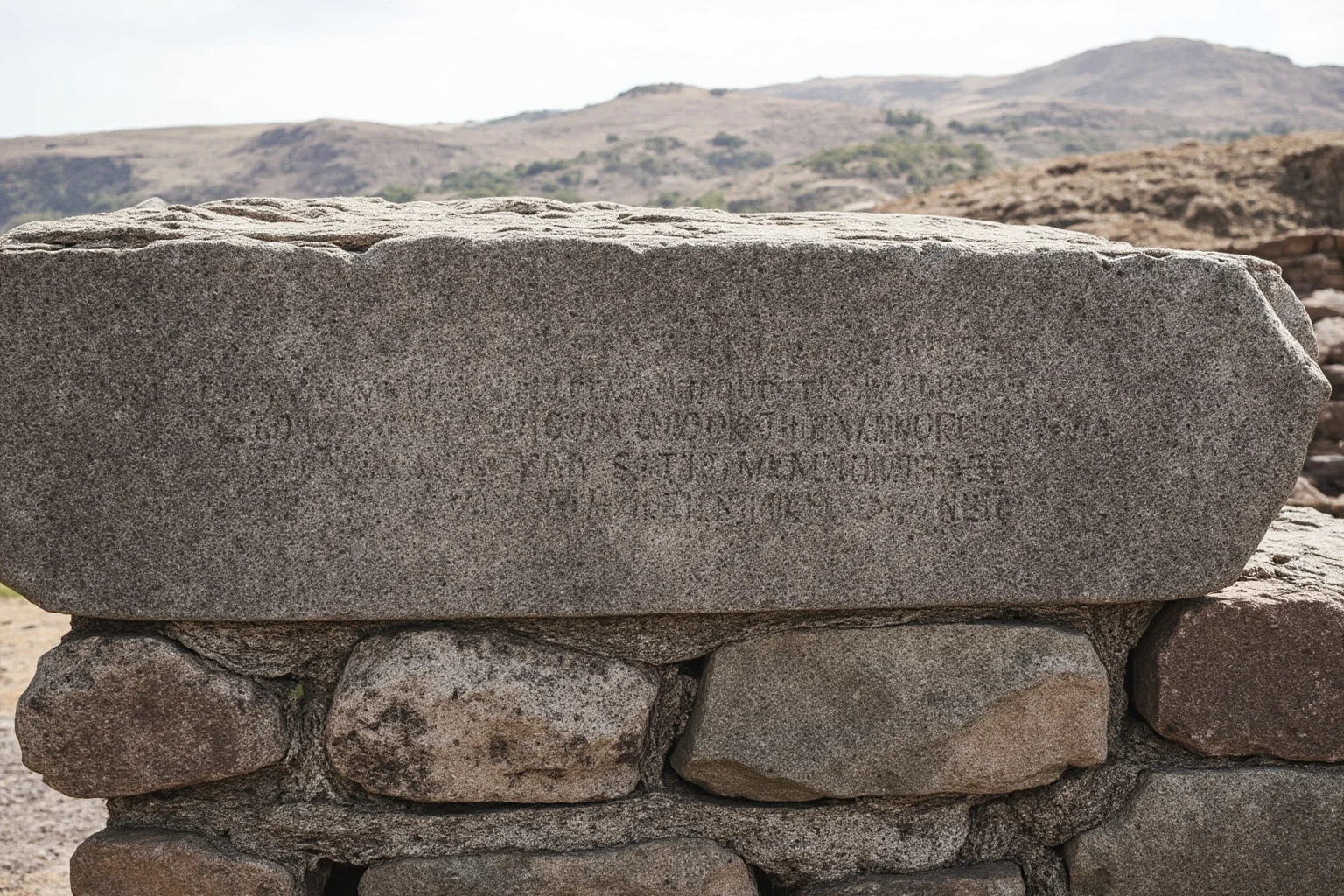
Roman soldiers stationed in northern Britain scratched names, unit marks, and crude jokes onto stone, tile, and plaster. Some carvings are religious, some are obscene, and many are simply the marks of men with time on their hands.
At sites such as Vindolanda and along Hadrian's Wall, phallic symbols appear frequently. They were not only rude jokes; in Roman culture the phallus was also a protective symbol, used to ward off bad luck, which is why it turns up on everything from amulets to bakery signs.
Garrison graffiti is a reminder that military life has always produced a particular kind of humour. The equipment changes, the boredom does not.
18. Memorial Graffiti in the Roman Catacombs
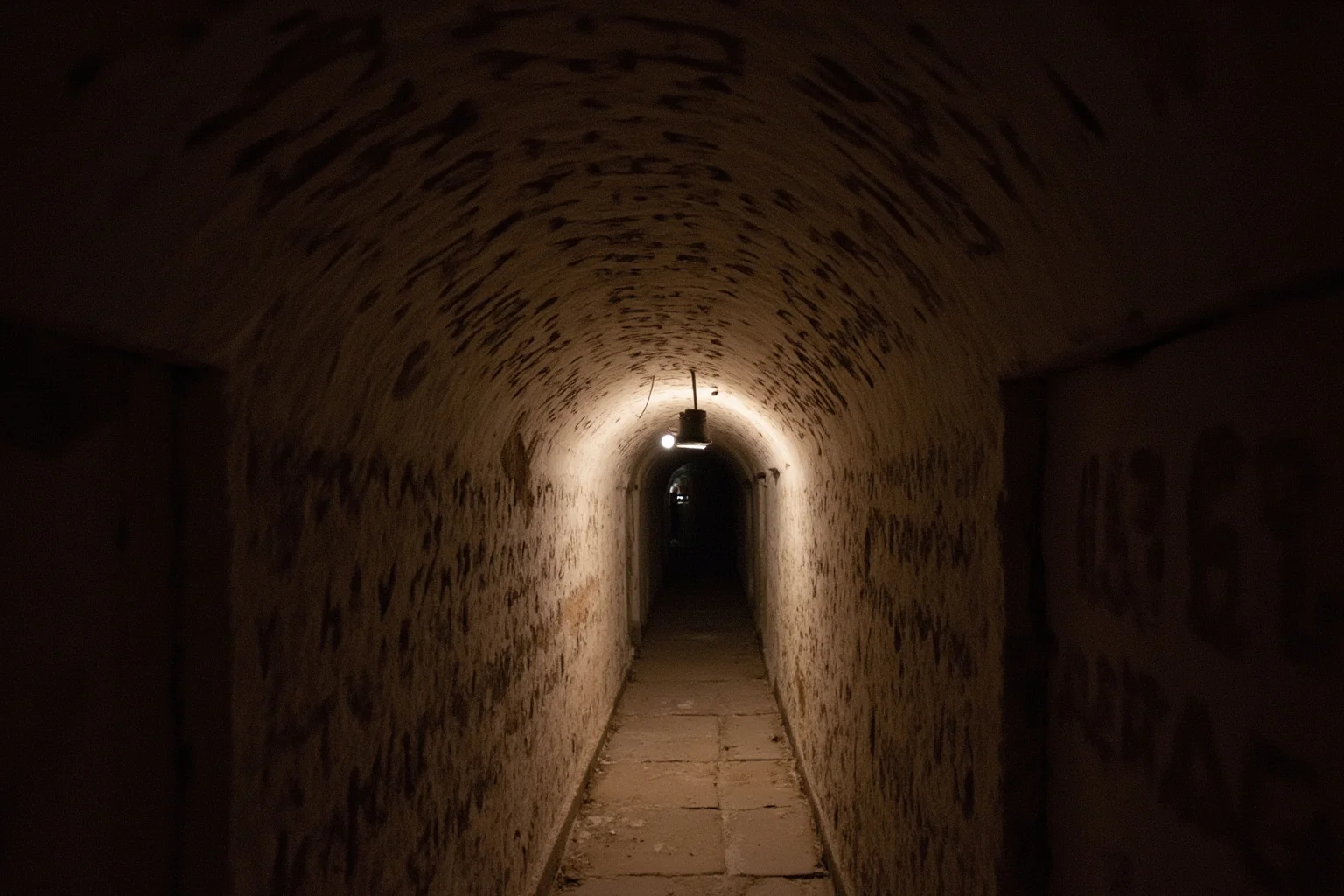
Underground Christian burial sites in Rome are covered in scratched messages. Names, dates, prayers, and short appeals fill the plaster of the catacombs, often alongside symbols such as the fish or the anchor.
Many simply ask for peace or remembrance for the dead. Others request the prayers of a martyr, which is one of the earliest forms of a practice later formalised in Christian liturgy.
Read as a group, they are a memorial wall. They do what condolence books and online tribute pages do today: hold a name, a date, and a wish for the person who has gone.
19. Love Spells and Binding Charms
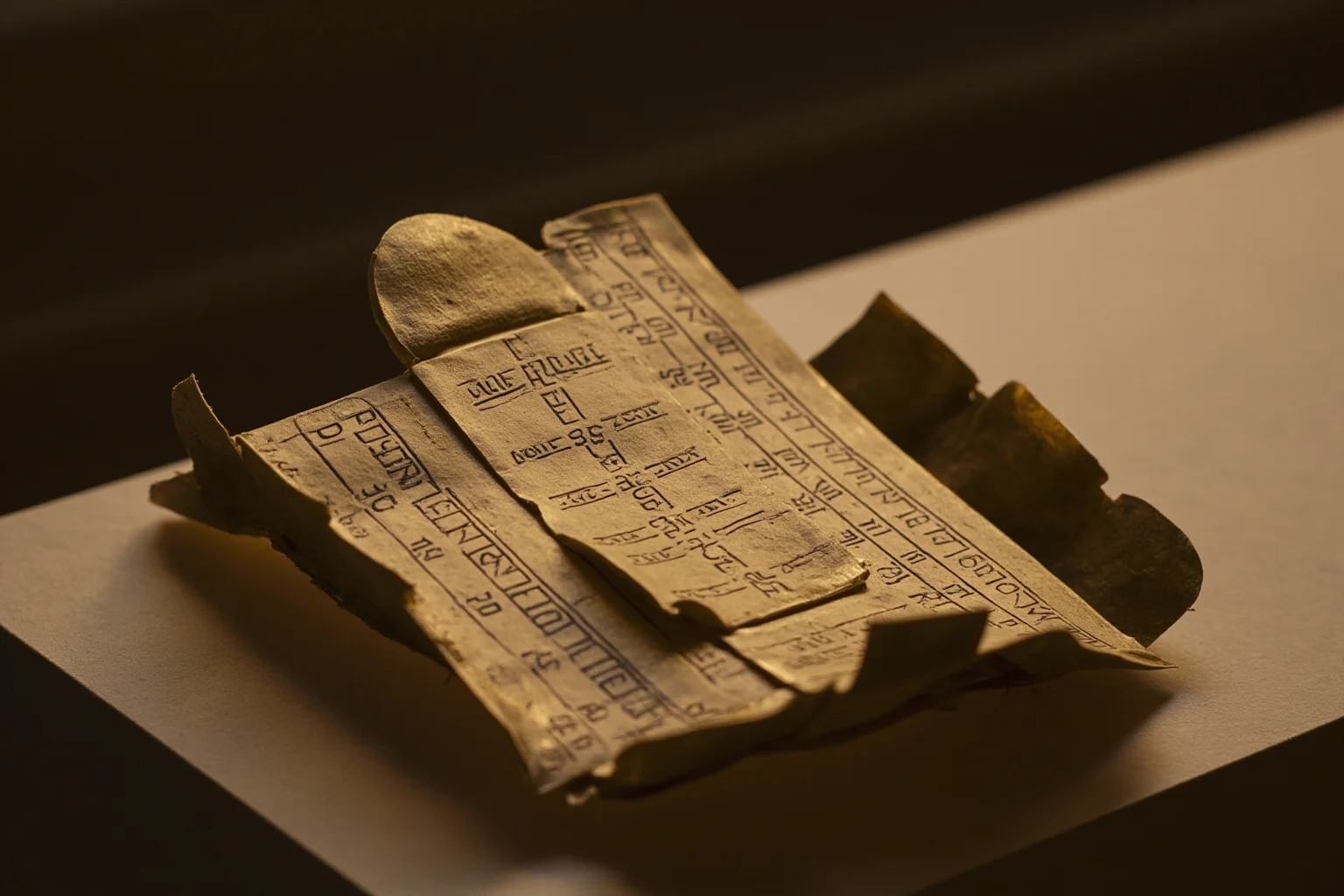
Some ancient graffiti were not messages to other people but attempts to influence them. Love charms and binding spells, known as defixiones, were often written on lead and hidden in graves, wells, or sanctuaries.
The typical aim was to force a named person to burn with desire, or to silence a rival in a lawsuit or a chariot race. The language is legalistic, as though the writer were drafting a contract with a supernatural party.
Modern readers tend to find these texts unsettling rather than charming, which is fair. They are a reminder that ancient people had the same longings and the same willingness to try something irrational in pursuit of them.
20. Alphabet Practice and Doodles on the Wall
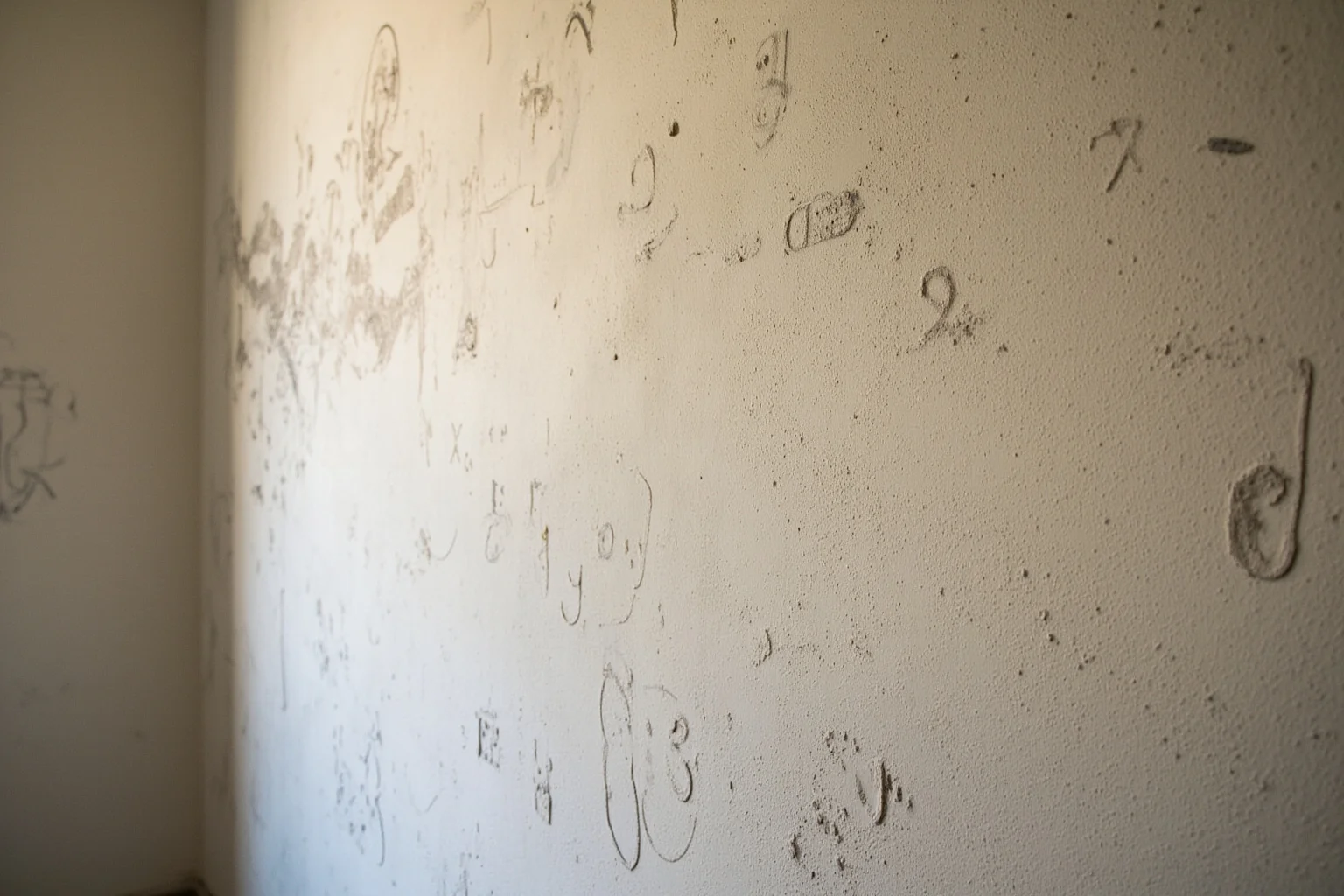
Not every scratch is a message. Pompeii's walls carry alphabets written out in order, lines of poetry copied again and again, and simple shapes with no obvious meaning at all.
Some of it was schoolwork. Children and apprentices practised letters on whatever surface was available, much as a modern child writes on a fogged-up window, and teachers' marks and exercises have been found near schools.
There are also jokes, riddles, and word games, including early examples of the famous Sator Arepo word square. Graffiti was never only about communication; it was also about passing the time.
21. The Charcoal Inscription That Moved Vesuvius's Date
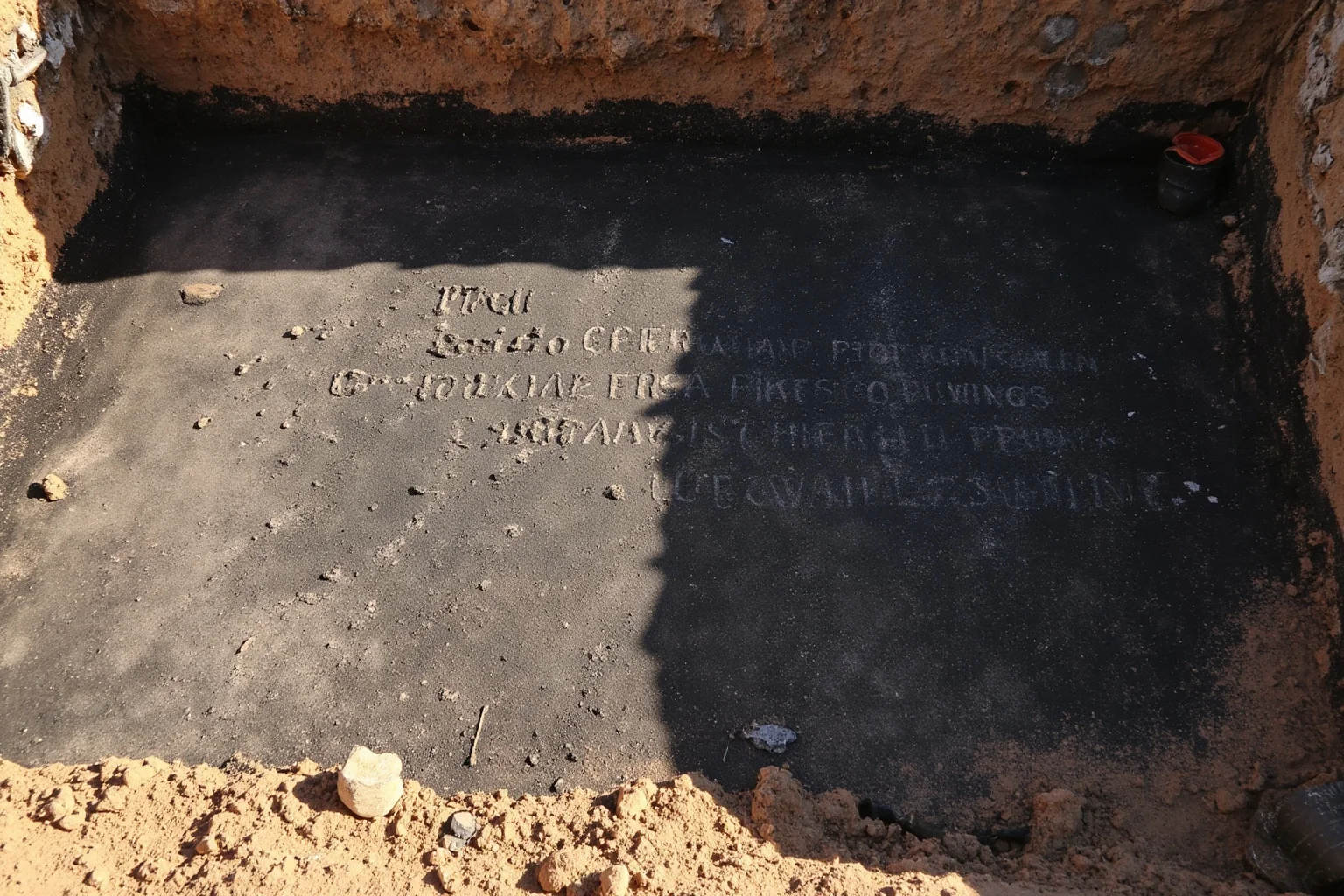
In 2018, archaeologists working in a villa at Pompeii found a charcoal inscription that changed the debate about when Vesuvius erupted. The text includes the phrase “XVI K Nov,” meaning the sixteenth day before the Kalends of November — 17 October.
Because charcoal fades quickly, the writer probably made the mark shortly before the eruption. That supports an argument some historians had been making for centuries: that the disaster happened in autumn rather than on the traditional date of 24 August 79 CE.
The traditional date comes from a letter attributed to Pliny the Younger, and it is not necessarily wrong. But the charcoal is strong counter-evidence, and it shows how a few scratched words can rewrite a timeline.
22. Thank-You Notes to the Gods
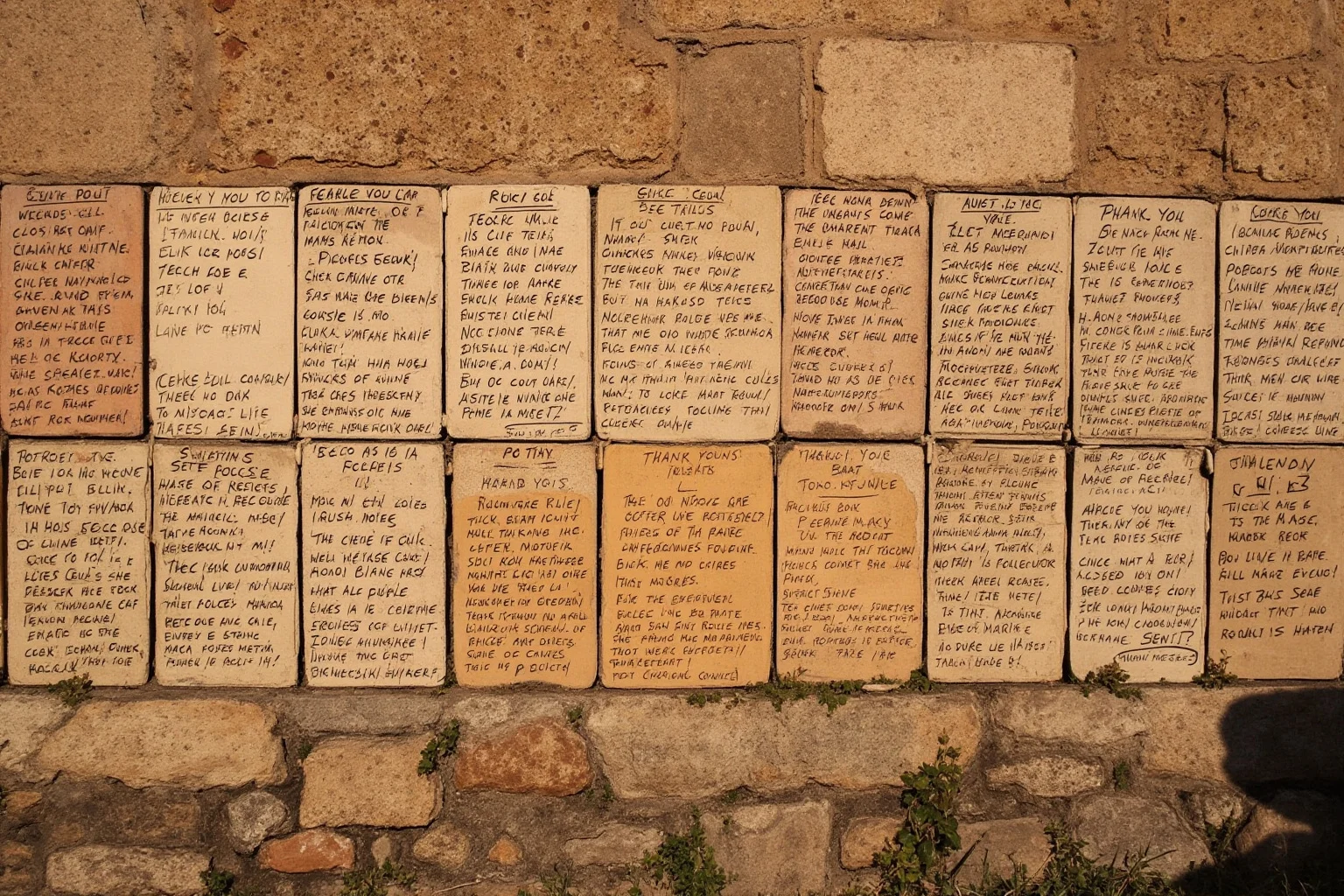
Many ancient graffiti are votive. A person who had survived an illness, a voyage, or a dangerous birth might scratch a short thanks on the wall of a sanctuary, often with the formula “votum solvit libens merito” — “he paid his vow willingly, as deserved.”
These messages were public by design. They told other visitors that the god had delivered, which is why sanctuaries accumulated them the way a popular restaurant accumulates reviews.
The psychology is familiar: gratitude, plus a small performance of gratitude for other people to see. The internet did not invent the humblebrag, and it did not invent the five-star review either.
23. Relationship Status Updates, 2,000 Years Early
Declarations of the form “X loves Y” are among the most common graffiti in the Roman world. Names were scratched beside names, sometimes with a plea to Venus or a wish for the beloved's health.
Some were clearly public announcements, intended to be read by anyone passing. Others look more like rehearsal, the written equivalent of saying a name out loud to hear how it sounds.
Either way, the format has survived almost unchanged. Change the medium and the message stays the same: I want this to be true, and I want someone to know it.
How Historians Actually Read Ancient Graffiti
The main corpus for Roman wall writing is volume IV of the Corpus Inscriptionum Latinarum, which gathers thousands of texts from Pompeii, Herculaneum, and Stabiae. The total runs into the many thousands, and it includes painted notices, scratched lines, and everything in between.
Context does a lot of the work. Scholars record where a graffito sits on a wall, how high it is, whether it was scratched or painted, and how the handwriting compares with other marks nearby, because a message in a bar means something different from the same words in a bedroom.
The category matters too. A dipinto is painted, often professionally, and a graffito is scratched, usually casually. Treating them as one thing is convenient for a blog post but sloppy for a historian.
Myths About Ancient Graffiti Worth Retiring
The first myth is that Pompeii's walls are nothing but dirty jokes. Sexual and scatological lines get the most attention online, but they are a minority of what survives, and they sit alongside election notices, shopping lists, poems, and prayers.
The second myth is that everyone in Pompeii could read and write fluently. Literacy levels are genuinely debated, and the evidence is mixed: thousands of scratches suggest a wider range of writers than elites-only models allow, but professional sign-writers clearly produced many of the painted notices.
The third myth is that all this material dates to the eruption of 79 CE. Walls accumulated marks over decades, some inscriptions were added by later visitors, and early excavators moved and sometimes lost pieces, which complicates any tidy story about who wrote what.
Where Ancient Graffiti Still Survives Today
Pompeii and Herculaneum remain the headline sites, and much of the most fragile graffiti is now protected behind glass or displayed in reproductions rather than left exposed.
The Roman Baths in Bath hold the curse tablets, while Vindolanda and the museums along Hadrian's Wall display soldiers' carvings and writing tablets. Rome's catacombs, the Colossi of Memnon, and the upper gallery of Hagia Sophia preserve graffiti from very different worlds.
One practical note: touching or adding to any of it is destructive and illegal at these sites. The whole reason this material is remarkable is that it survived, and it only survives if nobody decides to add to it.
Why 2,000-Year-Old Messages Still Land
The content of ancient graffiti is often banal, and that is precisely why it works. Nobody was writing for posterity, which means we are reading something closer to a private thought that accidentally became permanent.
That accident gives us access to people the historical record usually skips: enslaved workers, soldiers, shopkeepers, travellers, and children practising their letters. Their concerns are recognisable because they are ours — money, sex, friendship, boredom, and the desire to be noticed.
It is worth holding that pleasure lightly. Translation is uncertain, humour is easily lost, and a line that reads as a modern joke may have had a different force in its own time. The honest takeaway is not that the Romans were just like us, but that a few of their messages land with a shock of recognition that no official inscription can quite match.
Frequently Asked Questions
What are the most famous 2000 year old Pompeii messages?
The best-known examples include the graffito complaining that the wall must be exhausted from all the writing on it (CIL IV 1904), the apology from guests who wet the bed because there was no chamber pot (CIL IV 4957), and the lonely traveller Vibius Restitutus, who slept alone and missed Urbana (CIL IV 2146). Others are less famous but just as human, such as the argument between the weaver Successus and a rival over the slave girl Iris. Strictly speaking, these inscriptions were written over the decades before 79 CE, so they are roughly 1,900 to 2,000 years old rather than exactly 2,000.
Is Pompeii graffiti really 2,000 years old?
Much of it is close to that age, because Pompeii was buried by Vesuvius in 79 CE and its walls stopped accumulating new marks at that point. However, the graffiti was written across the preceding decades and even centuries, so a single wall can carry texts from different generations. Some marks were also added by later visitors, and early excavators occasionally moved or misrecorded pieces, so dates are usually given as approximate ranges rather than exact years.
Did ordinary Romans write graffiti, or was it only the educated elite?
This is genuinely debated. The sheer volume of scratches at Pompeii suggests that writing was not confined to a tiny elite, but it does not prove universal literacy either. Painted election notices were often produced by professional sign-writers, while scratched lines are more likely to be personal. The safest conclusion is that literacy was broader than older scholarship assumed, but still far from universal.
How does Roman graffiti compare with historic graffiti from other cultures?
The behaviour is remarkably similar, even when the scripts differ. Norse visitors carved runic graffiti into Hagia Sophia, Egyptian workmen kept records on limestone ostraca, and Greek-speaking travellers carved their names onto the Colossi of Memnon. What sets Roman graffiti apart is sheer volume and preservation, thanks largely to the eruption that sealed Pompeii and Herculaneum in ash.
Is “Beware of the Dog” actually ancient graffiti?
No. The cave canem warning is a floor mosaic at the entrance of the House of the Tragic Poet in Pompeii, showing a chained dog. It is often described as graffiti because it is short and blunt, but it was a commissioned decorative element rather than a scratched note. The message is authentic Roman, the medium is not.
Where can you see ancient graffiti today?
Pompeii and Herculaneum display the largest collections, much of it behind glass or in reproduction to protect it. The Roman Baths in Bath hold the curse tablets, Vindolanda and Hadrian's Wall museums show soldiers' carvings, and Rome's catacombs preserve early Christian memorial graffiti. Runic graffiti can still be seen in the upper gallery of Hagia Sophia in Istanbul, and visitor inscriptions remain on the Colossi of Memnon in Egypt.

Alex Warren
Related Articles