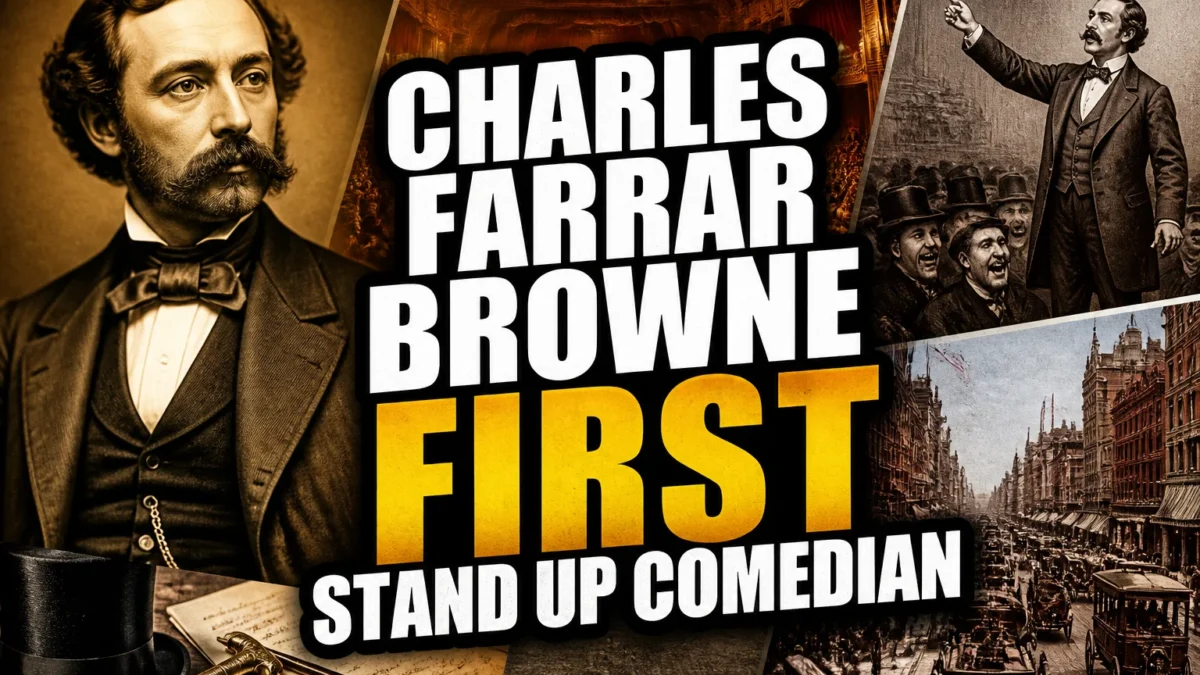
If you type "who was the first stand-up comedian" into a search bar, you will get a flurry of confident answers: Artemus Ward, Mark Twain, even Shakespeare's clowns. The truth is a little more complicated than a single name. No one woke up one morning in the 1800s and invented stand-up comedy like a lightbulb, but a shy newspaperman from Maine named Charles Farrar Browne came closer than almost anyone else.
Browne performed under the stage name Artemus Ward and toured both sides of the Atlantic with a deadpan lecture that made audiences roar. Whether he counts as the first stand-up comedian depends on how you define the job, but he is the strongest candidate America has to offer. This post explores who he was, what he actually did on stage, and why the label sticks.
TL;DR: Charles Farrar Browne, performing as Artemus Ward, was a 19th-century humorist whose deadpan lecture tours made him the leading candidate for America's first stand-up comedian.
Who Was Charles Farrar Browne?
Charles Farrar Browne was born in Waterford, Maine, in 1834, the son of a struggling farmer and storekeeper. He had little formal education and left home as a teenager to learn the printing trade, which was the traditional on-ramp for a career in newspapers. By his early twenties he was writing for and editing small papers across Ohio, and he quickly discovered that he had a gift for making people laugh on the page.
In 1858, while working at the Cleveland Plain Dealer, Browne created a fictional character named Artemus Ward. Ward was a traveling showman — a carnival barker with terrible spelling, shaky grammar, and an unshakable confidence in his own wisdom. Browne wrote letters from Ward to the editor, and readers ate them up, turning a local column into a national phenomenon.
The formula was simple and devastating: Ward mangled the language while dispensing opinions on politics, religion, and money as if he were an expert. Readers understood the joke immediately. Browne was not the first American humorist — Benjamin Franklin and others came before him — but he was one of the first to build a national audience around a single comic persona.
The Man Behind the Pen Name
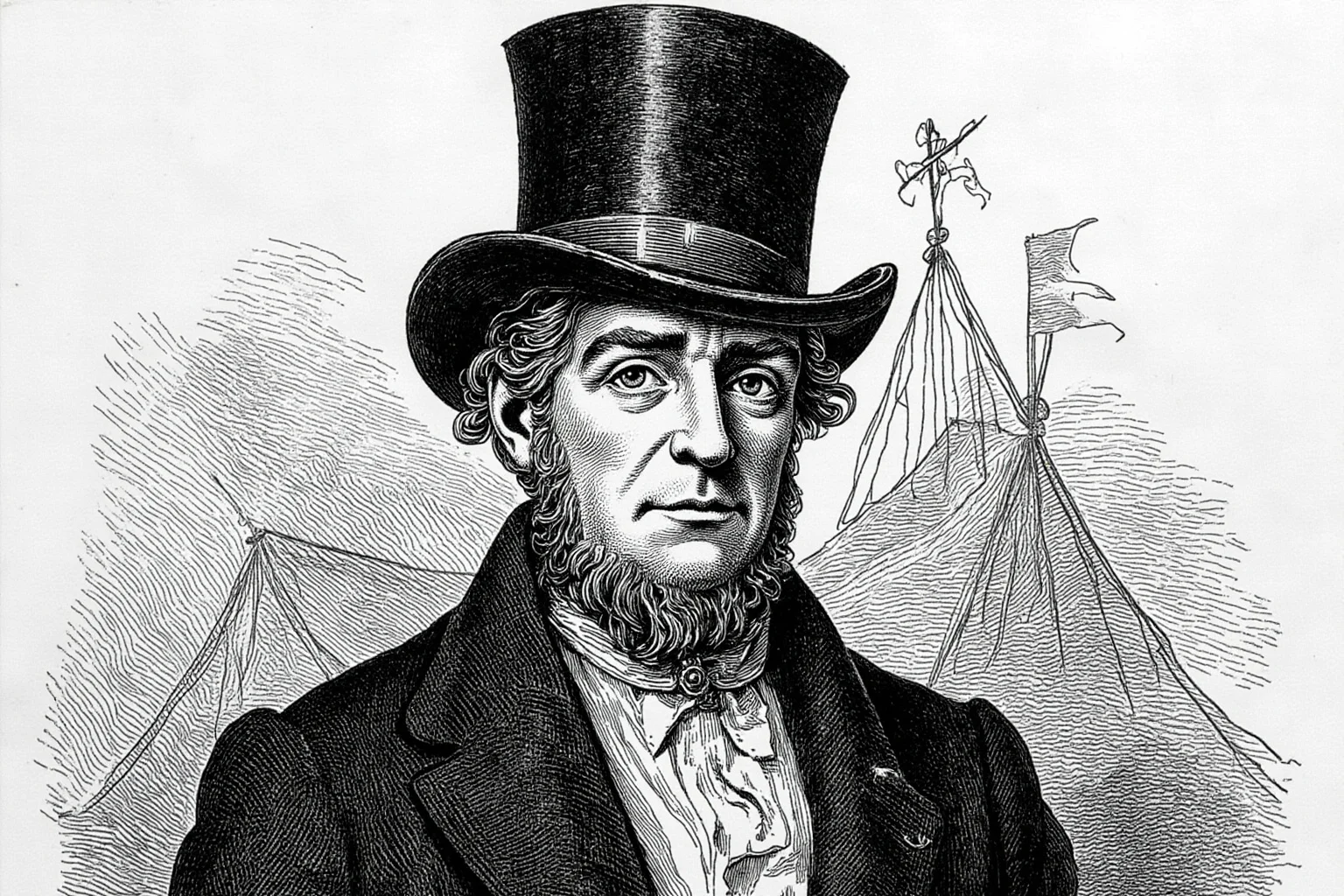
It helps to separate the writer from the character, because Browne and Ward were very different people. Browne was quiet, sensitive, and often unwell; he disliked crowds and once described himself as painfully shy. Ward, by contrast, was loud, boastful, and blissfully ignorant, a man who thought nothing of selling tickets to a show that did not exist. That gap between creator and creation is part of what makes the story so interesting.
Browne used Ward as a mask, which let him say things he could never say as himself. Through Ward, he mocked the pretensions of politicians, the smugness of the educated, and the moralizing of the religious press. Readers who disagreed with the joke could be told they simply did not get the character. It was a clever form of protection, and it became a template for later American satirists.
By the early 1860s, Browne was one of the most quoted writers in the country. He moved to New York, took a job at the New York Vanity Fair, and became a fixture in a literary circle that included some of the era's best-known wits. Fame brought him money and opportunity, but it also brought the pressure to appear in public — something the shy man behind the pen name dreaded.
Why the "First Stand-Up Comedian" Label Sticks
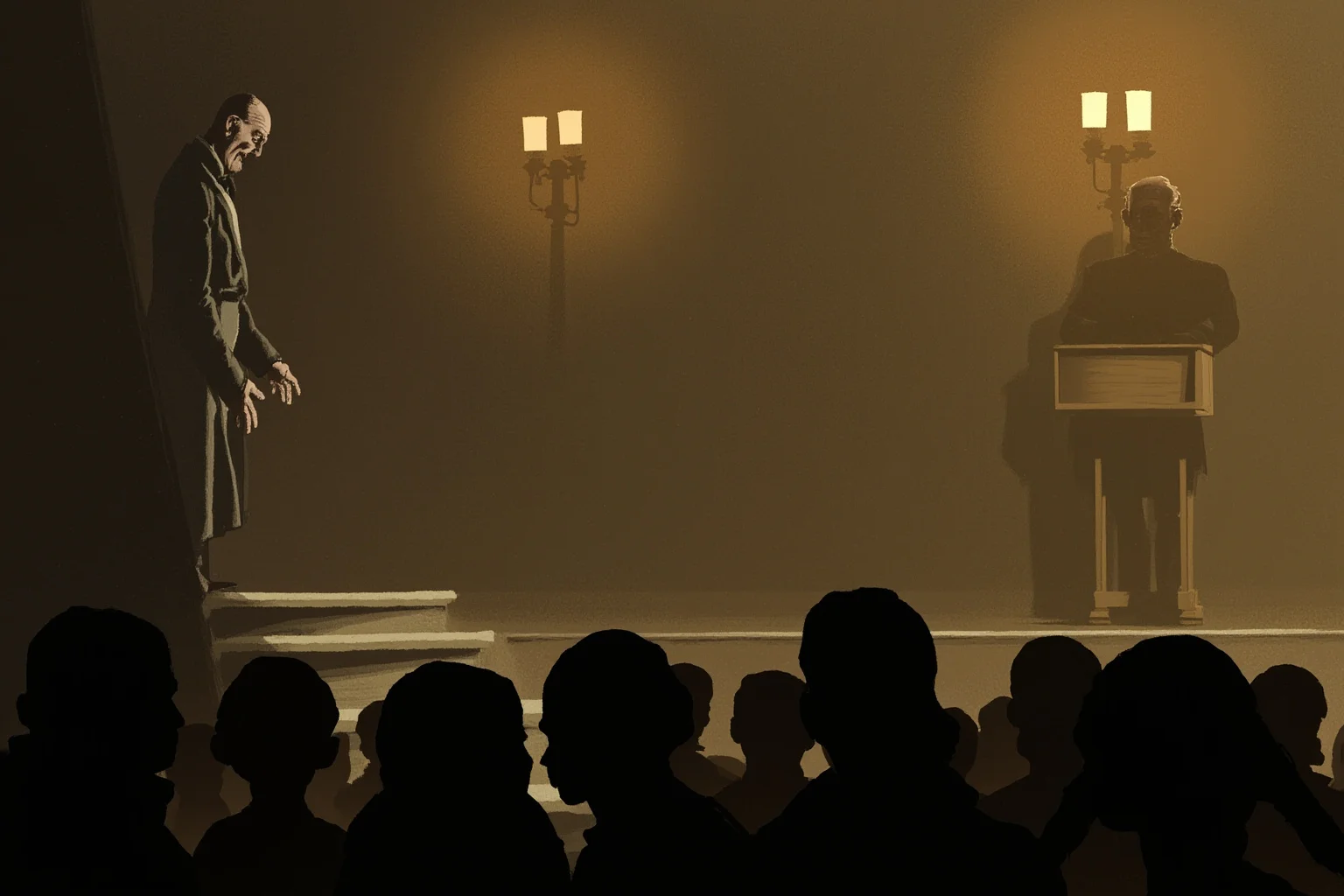
The phrase "first stand-up comedian" is a modern term applied backward to a 19th-century performer, so any answer requires a definition. If stand-up means one person alone on a stage, speaking directly to an audience, with no costumes and no partner, then Artemus Ward's lecture tours fit that description remarkably well. If it means a comedian working a nightclub microphone with a tight five minutes of punchlines, then obviously he does not.
Browne was not a stage actor delivering someone else's script, and he was not a circus clown doing physical bits. He was the writer and the performer of his own material, and he stood alone in front of a paying crowd. He controlled his pacing, his silences, and his delivery. That combination is closer to modern stand-up than almost anything that came before it.
Historians of comedy generally treat him as a key transitional figure rather than a neat point of origin. The American humorist tradition ran from the almanac writers through Browne, then Mark Twain, and eventually into vaudeville and the comedy album. Browne sits near the front of that line, which is why his name keeps surfacing whenever someone asks who was the first comedian in America.
His Famous Lecture Tours
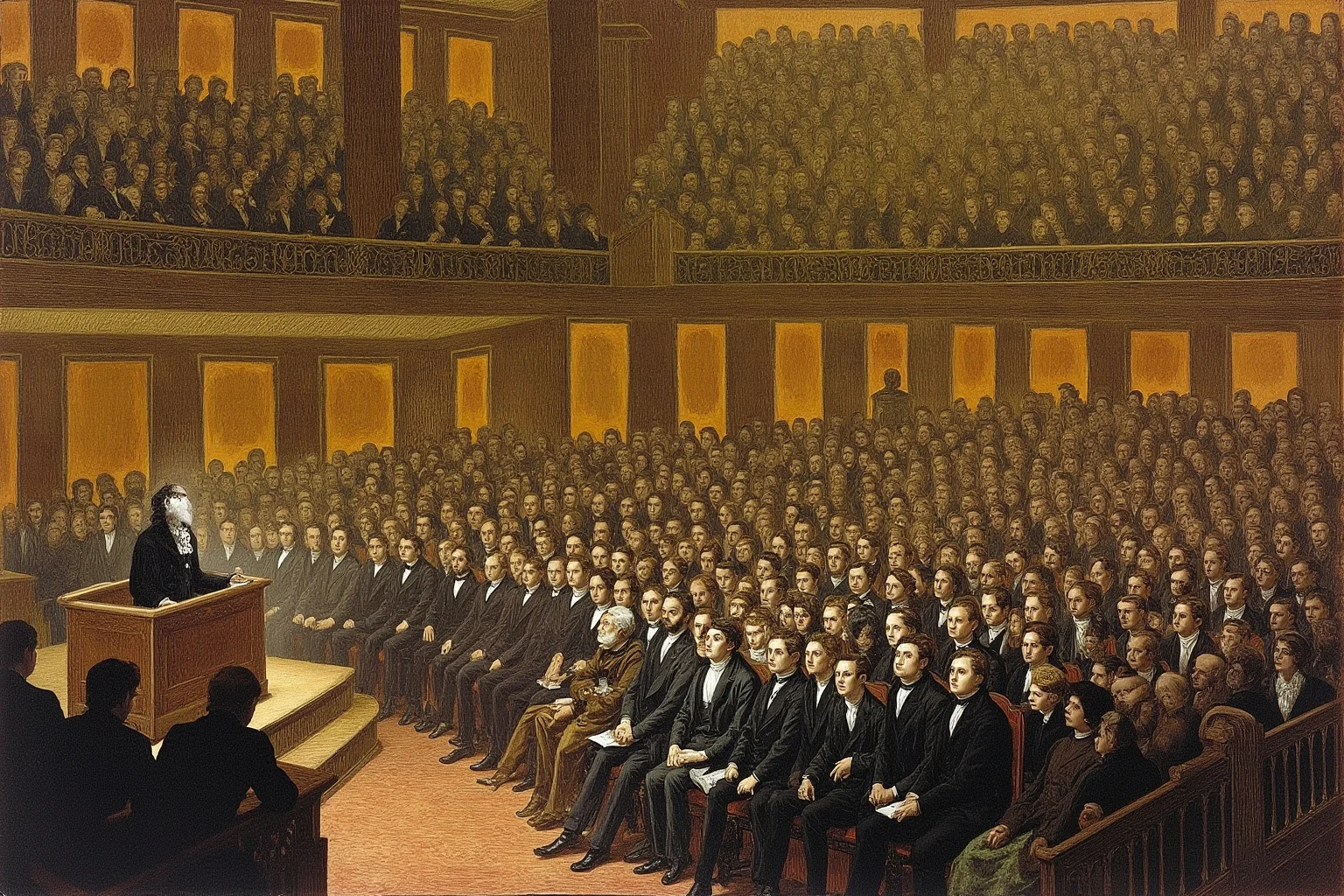
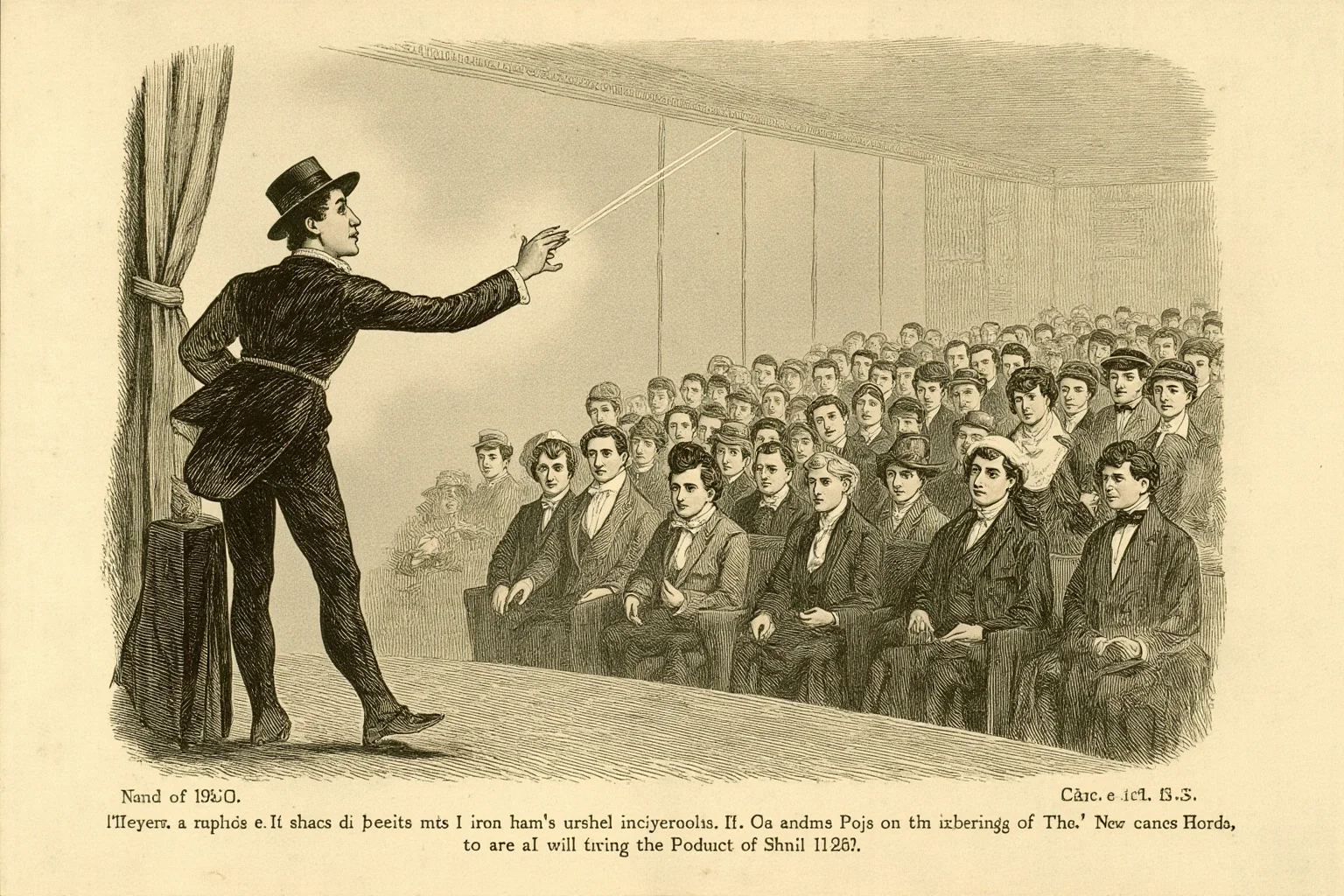
In 1861, Browne took Artemus Ward on the road as a live lecture act, and this is the phase that earns him his reputation. Lecture halls across the northern states were packed with paying audiences who came to hear a humorous talk, not a play or a concert. The format was loosely advertised as a lecture on a serious topic, but the real draw was the comedy.
The stagecraft was minimal by design. Browne came out in ordinary clothes, stood behind a lectern, and read from a manuscript with a straight face, pausing to let jokes land. Contemporary accounts describe the audience laughing while the performer stayed almost entirely solemn, which is the classic deadpan technique. He did not tell the crowd when to laugh, and that restraint was the whole trick.
He toured England in 1866 and was warmly received there, which matters for the history of the form. British reviewers marveled at the idea of a man making a living by standing up and being funny in front of strangers. The lectures gave a name and a shape to a kind of performance that had been scattered across minstrel shows, variety bills, and after-dinner speeches.
Artemus Ward's Signature Deadpan Style
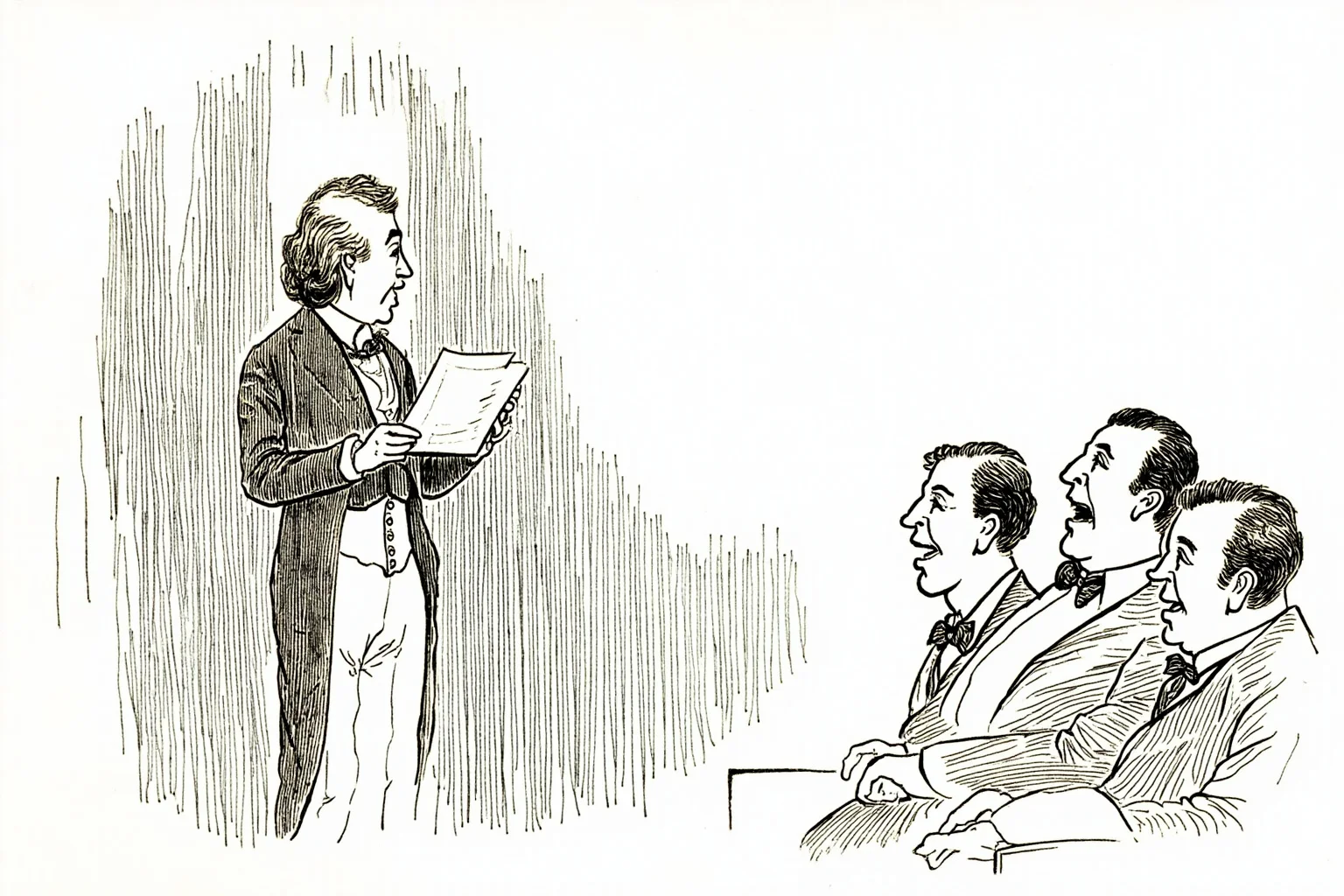
Deadpan, sometimes called dry humor, works by refusing to signal that a joke is coming. The performer says something absurd with the calm of a man reading a weather report, and the audience has to do the work of noticing the absurdity. Browne built his entire stage persona on that single technique, and he used it relentlessly.
His comedy also relied heavily on misspelling and malapropism, which sounds like a cheap gag until you see how he deployed it. Ward's mangled words were not random; they were calibrated to deflate pomposity and to make the character feel like a real person rather than a polished wit. Modern comedians use vocal fry, catchphrases, and awkward pauses in much the same way: to create a recognizable voice the audience can trust.
Finally, Browne understood that the audience was part of the performance. He read their reactions, adjusted his pace, and let silences stretch until the room got restless. That instinct — treating a live crowd as an active collaborator rather than a passive listener — is the beating heart of stand-up, and it is a big part of why he remains the strongest answer to who was the first stand-up comedian.
From Newspaper Columns to the Stage

The move from page to stage was not an obvious career step in the 1860s. There were no comedy clubs, no late-night shows, and no recorded albums; the only way to reach a live audience was to rent a hall and sell tickets. Browne made that leap because his fictional letters had already built a fan base eager to see the man behind them.
His transition also says something about how American entertainment was changing. The mid-19th century saw a boom in public lecturing, driven by railroads, telegraphs, and a growing middle class with money to spend on an evening out. Browne rode that wave and helped shape it, proving that audiences would pay to laugh rather than to be edified.
The commercial success mattered. Once promoters saw that humor alone could fill a hall, they started booking more comics and building variety programs around them. Browne did not create the American comedy industry, but he demonstrated that it could be profitable, which is often the difference between a one-off novelty and a lasting form.
Artemus Ward on the Page
Browne's writing deserves attention on its own terms, because his books circulated widely in the United States and Britain. Collections such as "Artemus Ward: His Book" and "Artemus Ward: His Travels" turned his newspaper columns into a durable literary property. Abraham Lincoln reportedly read Ward's work aloud to his cabinet before presenting the Emancipation Proclamation, hoping to lighten a tense room.
That anecdote is repeated often, and while the precise details vary across sources, it illustrates how central Browne was to the comic culture of his moment. His voice was familiar enough to serve as a national mood-lifter at a moment of enormous political strain. Very few humorists in any era achieve that kind of reach.
His influence on other writers is easier to document. A young Mark Twain admired Browne, imitated his deadpan narrator, and eventually inherited his mantle as one of the most recognized historical figures in American letters. Twain's famous jumps in time and space, his casual disregard for narrative order, and his straight-faced absurdity all echo techniques Browne had popularized a decade earlier.
Influence on Mark Twain and American Humor
The connection between Browne and Twain is the clearest line of descent in 19th-century American comedy. Twain attended one of Ward's lectures, praised his writing, and later delivered humorous lectures of his own in almost exactly the same format. The two men were different in temperament, but the family resemblance is unmistakable.
Some scholars have argued that Twain borrowed more than he admitted, both in style and in specific routines. Whether or not that claim holds, the broader point stands: Browne showed that a humorist could be a serious literary figure, not just a jester. That shift in status made it possible for writers like Twain to be taken seriously as artists.
From Twain the line runs forward to Will Rogers, to radio comics, to the stand-up boom of the 1950s and 1960s, and to the modern scene. The DNA is recognizable at every step. When a comedian today walks on stage alone with nothing but a microphone and a point of view, they are working in a tradition Browne helped define.
What Comedy Looked Like Before Browne
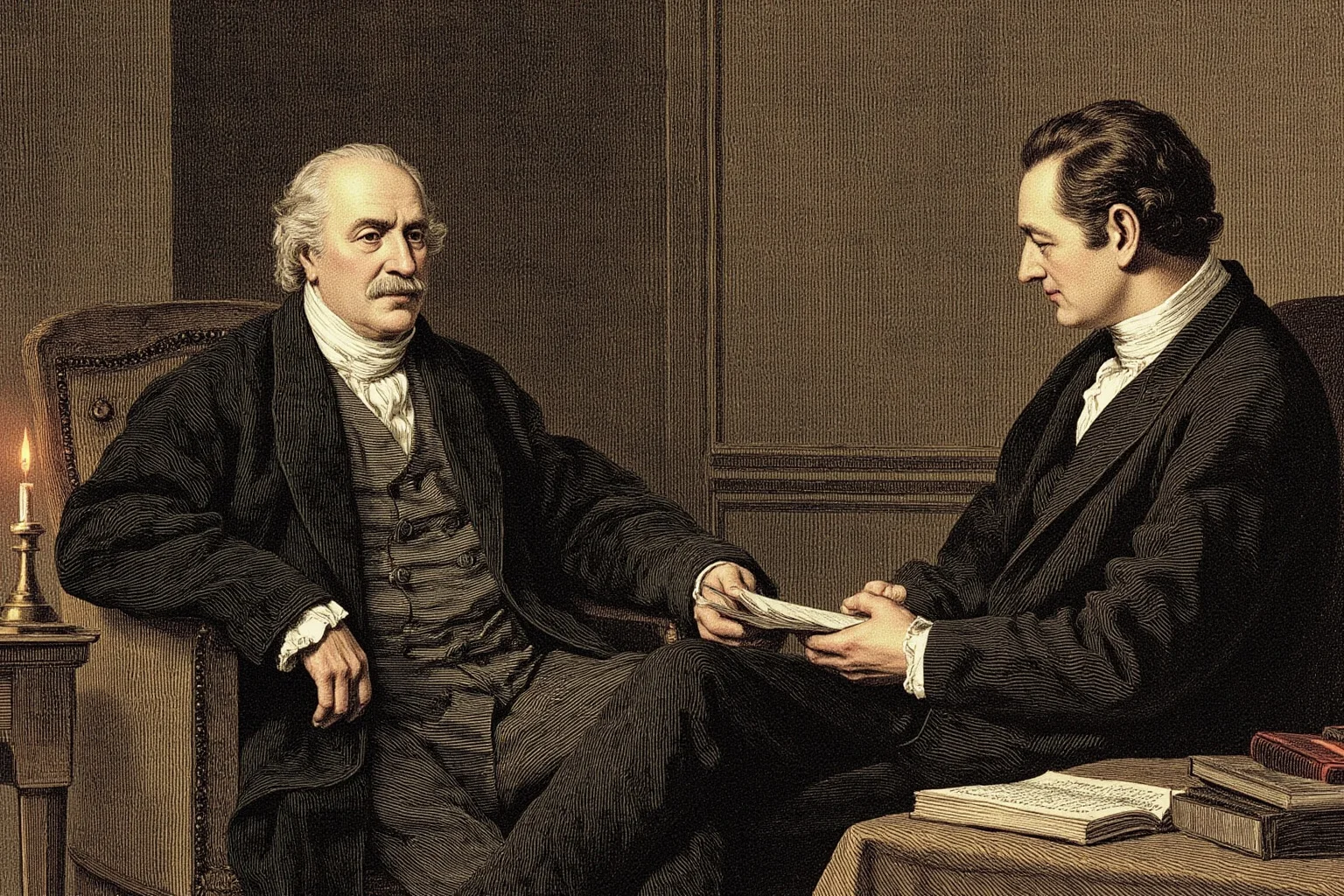
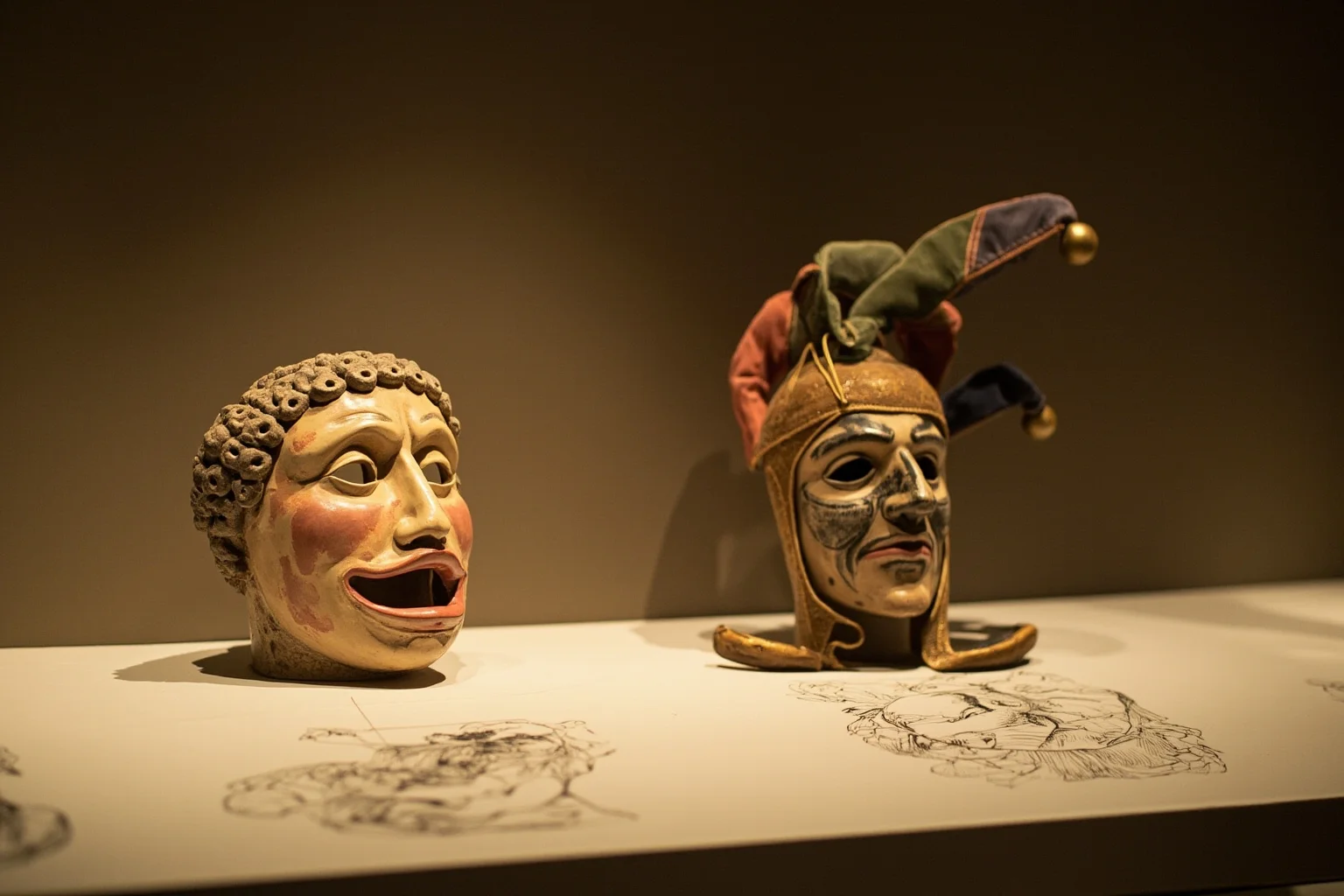
The phrase "first comedy" implies a beginning, but humor existed long before Browne put on a suit and stepped behind a lectern. Ancient Greek playwrights wrote comedies, medieval jesters entertained courts, and Shakespeare's clowns cracked jokes for paying audiences in the 1600s. None of that is stand-up as we understand it.
In early America, comic performance lived inside other entertainment formats. Minstrel shows, which were popular but deeply racist, included comic routines between songs. Variety bills featured singers and dancers alongside funny monologists. After-dinner speakers told anecdotes at clubs and banquets. Humor was everywhere, but it rarely stood alone as the main attraction.
Browne's innovation was to strip away the songs, the sketches, and the scenery and sell humor as the whole product. That is a genuine break with what came before, and it is why his name belongs in any serious discussion of the history of comedy. He did not invent joking; he helped invent the format in which joking is the entire show.
How Browne Performed Without Modern Tools
It is tempting to imagine early stand-up as a primitive version of a modern special, but the conditions were radically different. There was no microphone, so Browne had to project to the back of the hall using only his voice. There was no amplification, no lighting design, and no video screen; the audience either heard him or they did not.
He also had no safety net. A modern comedian can workshop material in small clubs, watch the response, and cut what does not work. Browne's touring schedule gave him repetition, but every performance was live and unrepeatable. If a joke failed, he had to recover in real time, in front of people who had paid real money.
Critics sometimes lump Browne in with the lecture-circuit performers who toured serious topics like temperance and abolition. That comparison undersells what he was doing. He was not lecturing on a worthy subject with a few jokes sprinkled in; the humor was the point, and the audience knew it when they bought their tickets.
The End of the Artemus Ward Act
Browne's career was tragically short. He contracted tuberculosis, the same disease that would later kill so many writers of his era, and his health declined through the late 1860s. He continued to travel and perform when he could, but the illness limited him badly.
He died in Southampton, England, in March 1867, at just 33 years old. The news shocked readers on both sides of the Atlantic, and obituaries praised him as one of the funniest writers America had produced. Mark Twain, still early in his own career, was among those who mourned him.
Because Browne died young, his influence is often underestimated. He did not have decades to refine his act or to mentor a generation of performers. What he had was a brief, brilliant run that showed what was possible, and that turned out to be enough to secure his place in the history of American comedy.
Was He Really the First?
Here is where the myth-busting comes in. No single person can be proven to be the first stand-up comedian, because the category itself did not exist in the 1800s. Comedy historians disagree about which performers qualify, and some point to earlier figures in Britain, France, or the United States who told jokes on stage for money — the same kind of tangled priority debate that surrounds the question of who really discovered America first.
What we can say with confidence is that Browne was among the first to make solo comic performance a sustainable, popular, ticket-selling enterprise. His lectures were not a side gig or a novelty act; they were his livelihood and his legacy, and they attracted large paying crowds. By any reasonable measure, that puts him at the front of the line.
So when someone asks who was the first comedian in America, the honest answer is that the question is harder than it looks. The most defensible answer names Charles Farrar Browne, with the caveat that "first" always depends on how you define the words. That is not a dodge; it is the truth about how cultural history actually works.
Why Charles Farrar Browne Still Matters
Browne matters first because he demonstrated that comedy could stand alone. Before him, American humor was usually packaged with something else; after him, it was clear that an audience would pay for laughing and nothing more. That insight is the foundation of the entire modern entertainment industry built around stand-up.
He also matters as a writer. His Artemus Ward letters are funny in ways that still land, and they show how a comic persona can be used to smuggle in social criticism. The technique of hiding serious observations inside a foolish narrator is now standard practice for satirists, and Browne helped make it respectable.
Finally, Browne matters because he is a genuine historical figure with a real, traceable career, not just a trivia answer. He was born, he wrote, he toured, he influenced Mark Twain, and he died far too young. That is a full human story, and it is one worth telling whenever the history of American comedy comes up.
How to Remember His Place in History
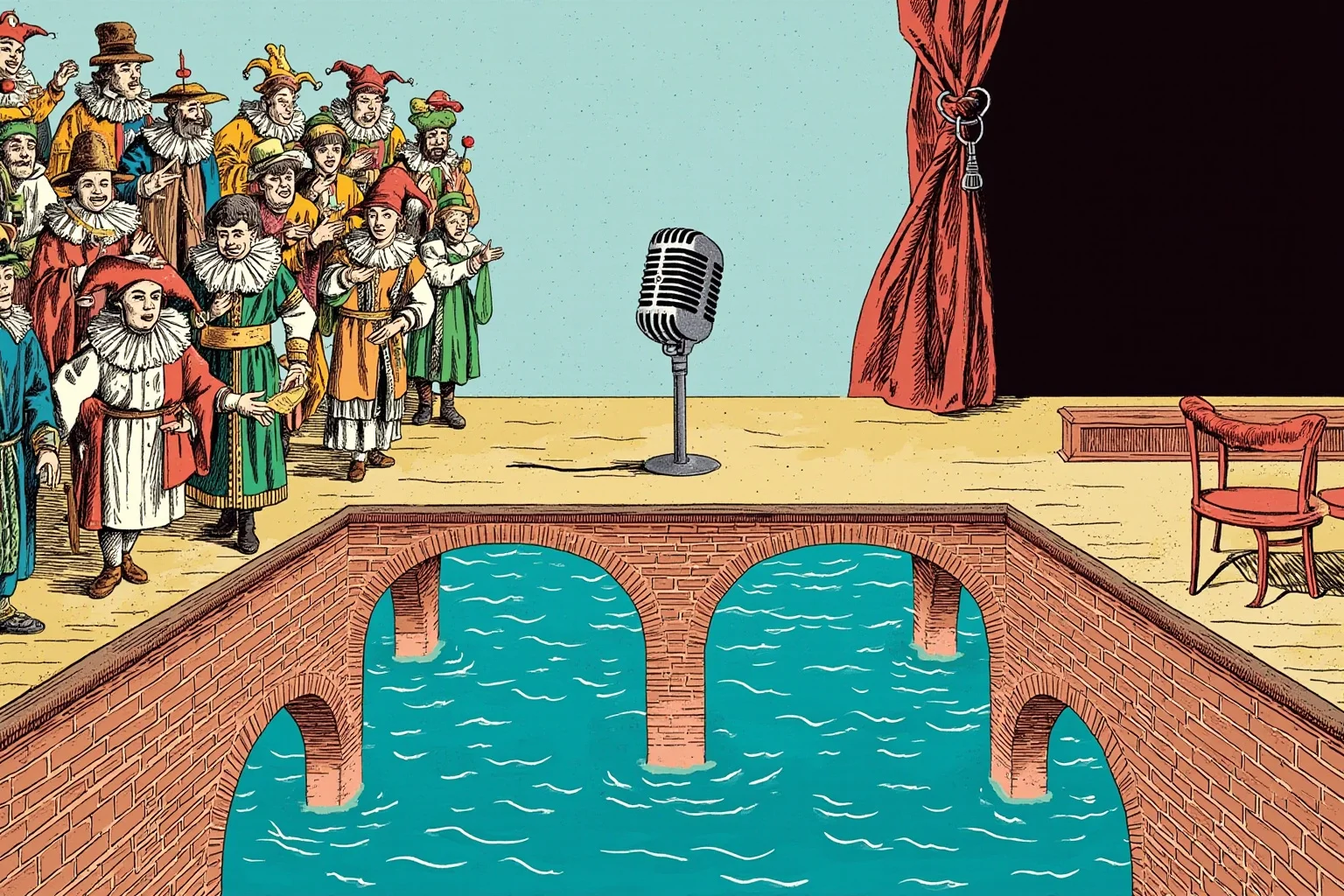
A simple way to keep Browne straight in your mind is to think of him as a bridge. On one side are the older traditions of jesters, minstrels, and lecturers; on the other side is the modern stand-up stage. Browne walked across that bridge, and in doing so he helped define what a comedian could be in America.
He was not a perfect fit for the modern label, and it is fine to say so. Historical accuracy means acknowledging that the term "stand-up comedian" is ours, not his — the same way the labels we slap on other long-dead figures often reveal more about us than about them. His own contemporaries called him a humorist and a lecturer, and those words carried their own prestige in the 1860s.
Still, the connection is real and it is worth celebrating. When you hear someone say that Charles Farrar Browne was America's first stand-up comedian, the claim is doing a specific kind of work: it is honoring a man who stood alone on a stage, told his own jokes, and made strangers laugh for a living. That is a fair description of the job, then and now.
Frequently Asked Questions
Who was the first stand-up comedian?
There is no single provable answer, because the term "stand-up comedian" is modern and did not exist in the 19th century. The strongest candidate in America is Charles Farrar Browne, who performed as Artemus Ward in the 1860s. He wrote his own material, stood alone on stage, and sold tickets purely for comedy, which is why many historians place him at the front of the line.
Was Artemus Ward a real person?
No, Artemus Ward was a fictional character created by the writer Charles Farrar Browne. Ward was a boastful, misspelling traveling showman whose letters appeared in newspapers, and Browne later adopted the name and persona for his live lecture tours. The confusion is understandable, since Browne answered to the name in public and the two are often treated as one.
What made Charles Farrar Browne’s comedy different from earlier performers?
Browne stripped away the songs, sketches, and scenery that usually surrounded comic performance in his era. He stood alone behind a lectern, read his own material with a straight face, and let the humor be the entire show. Earlier comedy in America was typically part of minstrel shows, variety bills, or after-dinner speeches rather than the main attraction.
Did Charles Farrar Browne influence Mark Twain?
Yes, Twain admired Browne and attended at least one of his lectures. Twain's deadpan narrator, his loose narrative structure, and his straight-faced absurdity all resemble techniques Browne had popularized a decade earlier. Many scholars see Browne as a direct stylistic forerunner of Twain and the broader American humorist tradition.
How did Charles Farrar Browne die?
Browne contracted tuberculosis and died in Southampton, England, in March 1867, at the age of 33. He had been touring Britain when his health deteriorated, and news of his death was widely reported on both sides of the Atlantic. His early death is one reason his influence is often underestimated today.
What should I read to learn more about Charles Farrar Browne?
The best place to start is Browne's own writing, particularly the collections of Artemus Ward letters such as "Artemus Ward: His Book" and "Artemus Ward: His Travels." For broader context, general histories of American humor and books on the 19th-century lecture circuit cover his career and its influence. His work is in the public domain and widely available online.
Is Charles Farrar Browne really America’s first stand-up comedian?
He is the leading candidate rather than a settled fact, because the definition of stand-up comedy is modern. Browne performed solo, wrote his own jokes, and built a career on live comedy, which matches the job closely. However, other 19th-century performers also told jokes on stage for money, so the honest answer is that he was among the first and arguably the most influential.

Alex Warren
Related Articles