
A king who refuses to sit down because he is terrified his body might shatter sounds like a fairy tale. Yet the glass delusion was a documented feature of early modern mental life, and it consumed at least two royal lives in strikingly specific ways.
The condition made people believe, with total conviction, that their bodies were made of glass. From medieval courts to nineteenth-century Bavaria, this post traces the strange history of that belief through twenty-two distinct facts.
TL;DR: The glass delusion made early modern sufferers believe their bodies were made of glass, and its most famous cases include Charles VI of France and Princess Alexandra of Bavaria.
The Medical Origins of the Glass Delusion
This condition was not a single formal disease in the modern sense. Instead, it was a recurring delusional theme that physicians and chroniclers recorded across several centuries.
1. The Glass Delusion Was a Recognized Early Modern Complaint

Historians of psychiatry often treat the glass delusion as one of the strangest delusional beliefs in early modern Europe. Patients described themselves as brittle, transparent, or liable to break at the slightest touch. It appears in medical writing, court chronicles, and literature often enough to be recognized as a pattern rather than a one-off oddity.
The term itself is modern shorthand for a cluster of beliefs about glass bodies. Early sources did not always use a single diagnostic label, but they returned again and again to the image of a person who could shatter. That repetition tells historians that the fear had deep cultural roots.
2. Sufferers Feared More Than Broken Bones
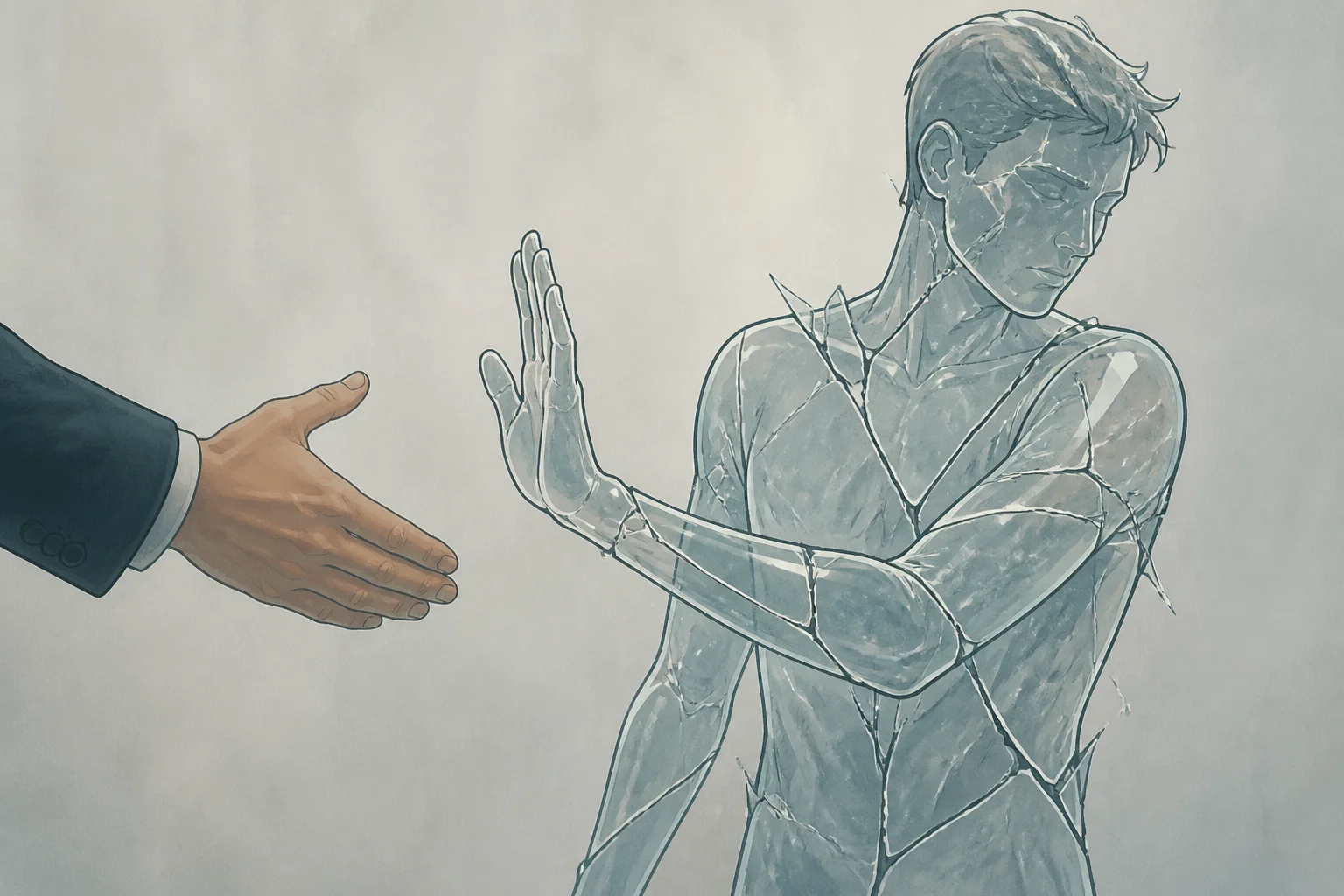
The fear was not about ordinary injury or pain. A person with the glass delusion believed that a fall, a firm handshake, or even sitting down could smash them into fragments. This was an existential terror, not a simple phobia of accidents.
Some sufferers avoided contact with other people entirely. Others moved with exaggerated care, held their arms stiffly, or stood rather than risk compressing a supposedly glass body into a chair. The behavior made the invisible belief visible to everyone around them.
Some descriptions even mention patients wrapping themselves in padding or avoiding hard surfaces. These protective actions look similar to obsessive-compulsive rituals, but the driving belief was different. The goal was not to prevent contamination or harm to others; it was to keep the glass body intact.
3. It Was Rooted in Real Bodily Anxiety

Early modern medicine did not separate mind and body as cleanly as modern medicine often does. Physicians believed that emotional states like fear and sorrow could physically alter the body's humors and organs. In that framework, a delusion about bodily fragility was also a story about health, heat, cold, and internal balance.
Glass delusion sufferers often described the body as a container under pressure. The image of a brittle vessel reflected broader anxieties about bodily integrity, contamination, and sudden ruin. These fears were especially acute in an age before safe surgery, antibiotics, or reliable trauma care.
4. Physicians Linked It to Melancholy

Early modern doctors classified many stubborn delusions under the broad heading of melancholy. Melancholy was understood as an excess of black bile, a cold and dry humor that could darken the imagination and produce fixed false beliefs. The glass delusion fit neatly into this framework.
A melancholic patient might withdraw, brood, and develop strange bodily convictions. The glass delusion supplied a physical explanation for that inward suffering: the patient was not merely sad but dangerously fragile. Treatment, such as it was, often focused on warming, moistening, and rebalancing the body.
5. Its Peak Matches the Age of Glass
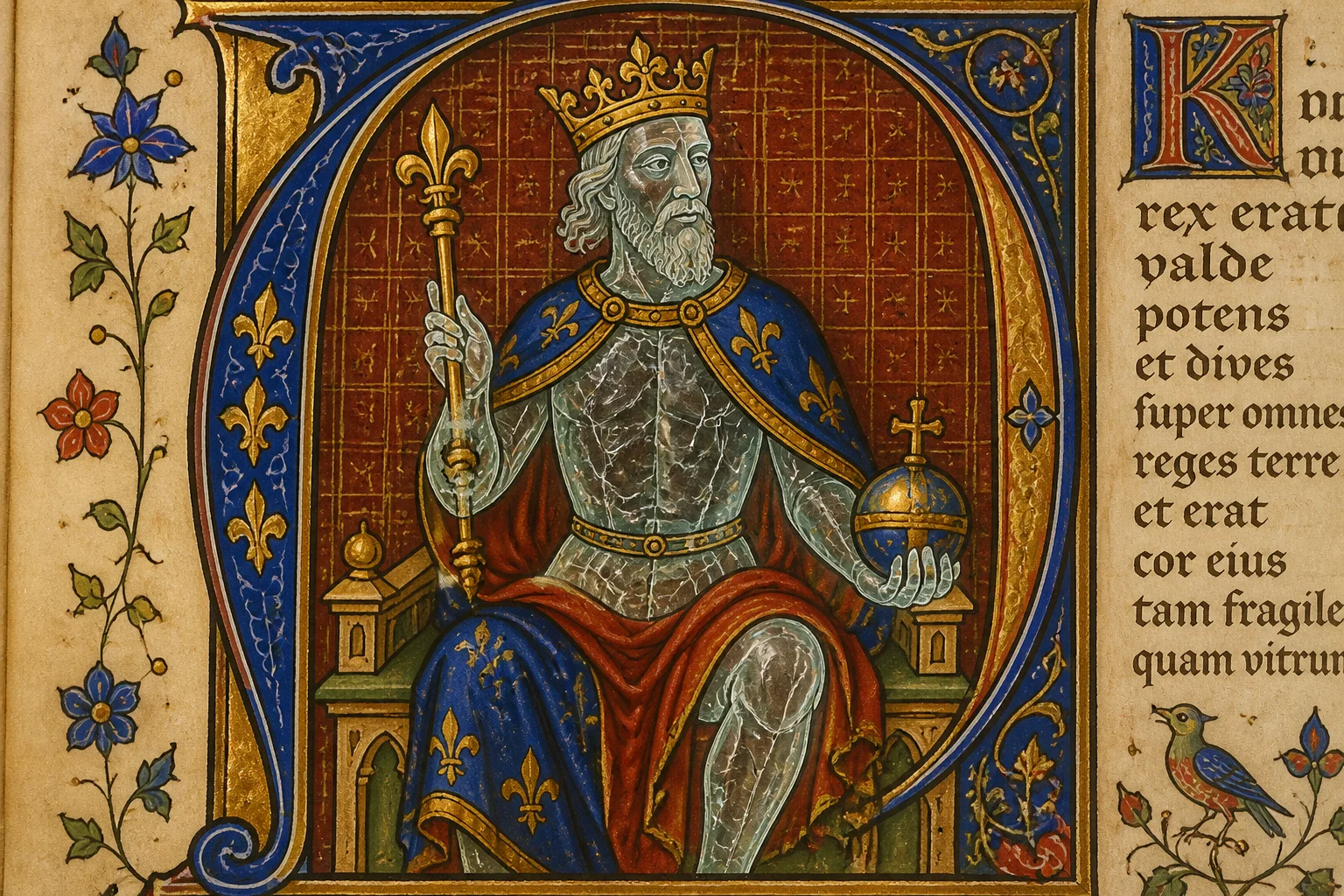
Glass was a luxury material in the late Middle Ages and early Renaissance. Venice and Murano were perfecting clear glass, and wealthy households displayed glassware as a sign of refinement. As glass became more visible in elite life, it offered a new vocabulary for fragility.
Some historians suggest that the glass delusion peaked between roughly the fifteenth and seventeenth centuries because glass itself carried so much cultural meaning. It was precious, transparent, and easily destroyed. A human body imagined as glass was the opposite of sturdy flesh, armor, or stone.
Royal Cases: King Charles VI of France
The most famous early sufferer was a medieval king whose long reign was repeatedly interrupted by severe mental illness. Charles VI of France became the face of the glass delusion in popular memory.
6. King Charles VI of France Was Its Most Famous Sufferer

Charles VI ruled France from 1380 until 1422, but his reign was fractured by episodes of psychosis. According to many later accounts, at certain points he believed that his body was made of glass or had become dangerously fragile. The belief was disturbing enough to shape how his household treated him.
His first major breakdown occurred in 1392, when he attacked his own men during a military expedition. Later episodes included periods of confusion, refusal to bathe or change clothes, and the conviction that he might break. The glass delusion appears in the historical record as one of several persistent false beliefs.
7. His Delusion Was Part of a Larger Mental Illness
Modern scholars do not diagnose Charles VI from a distance with certainty. His symptoms, however, included periods of agitation, disorientation, and delusional thinking that could last for months. The glass belief was only one thread in a much more complicated clinical picture.
At times Charles forgot his own identity or failed to recognize his family. At other times he was lucid enough to govern, at least in name. This pattern of relapse and partial recovery made his reign politically volatile and left his court walking on eggshells, literally and figuratively.
8. Court Life Bent Around the King's Fragility
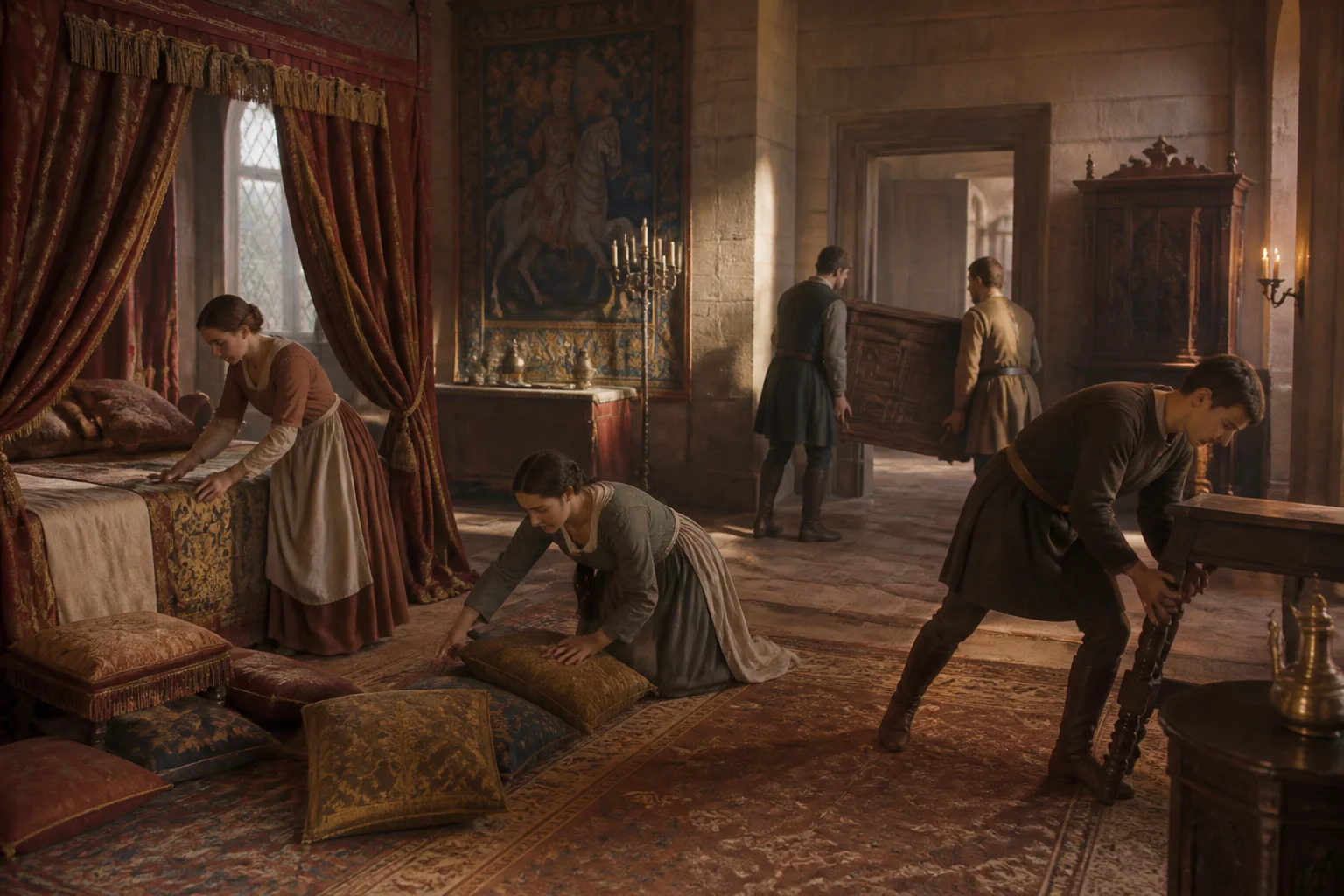
Courtiers and servants reportedly adapted their behavior to avoid triggering the king's fear of breaking. Accounts describe careful handling, soft furnishings, and a general avoidance of sudden movements around him. A king who believed he was glass could not simply be handled like any other patient.
Charles VI's household also had to manage his refusal to change clothing or wash for long stretches. Cleanliness and clothing changes could feel physically threatening to him. This created practical problems that blended medical care, diplomacy, and daily maintenance.
Royal households had no modern psychiatric language, so they treated the king's fear as a practical problem. They managed his environment, controlled access to him, and tried to reduce sudden contact. This pragmatic response may look primitive, but it resembles modern efforts to create low-stress environments for people in crisis.
9. Some Chroniclers Say He Wore Reinforced Clothing
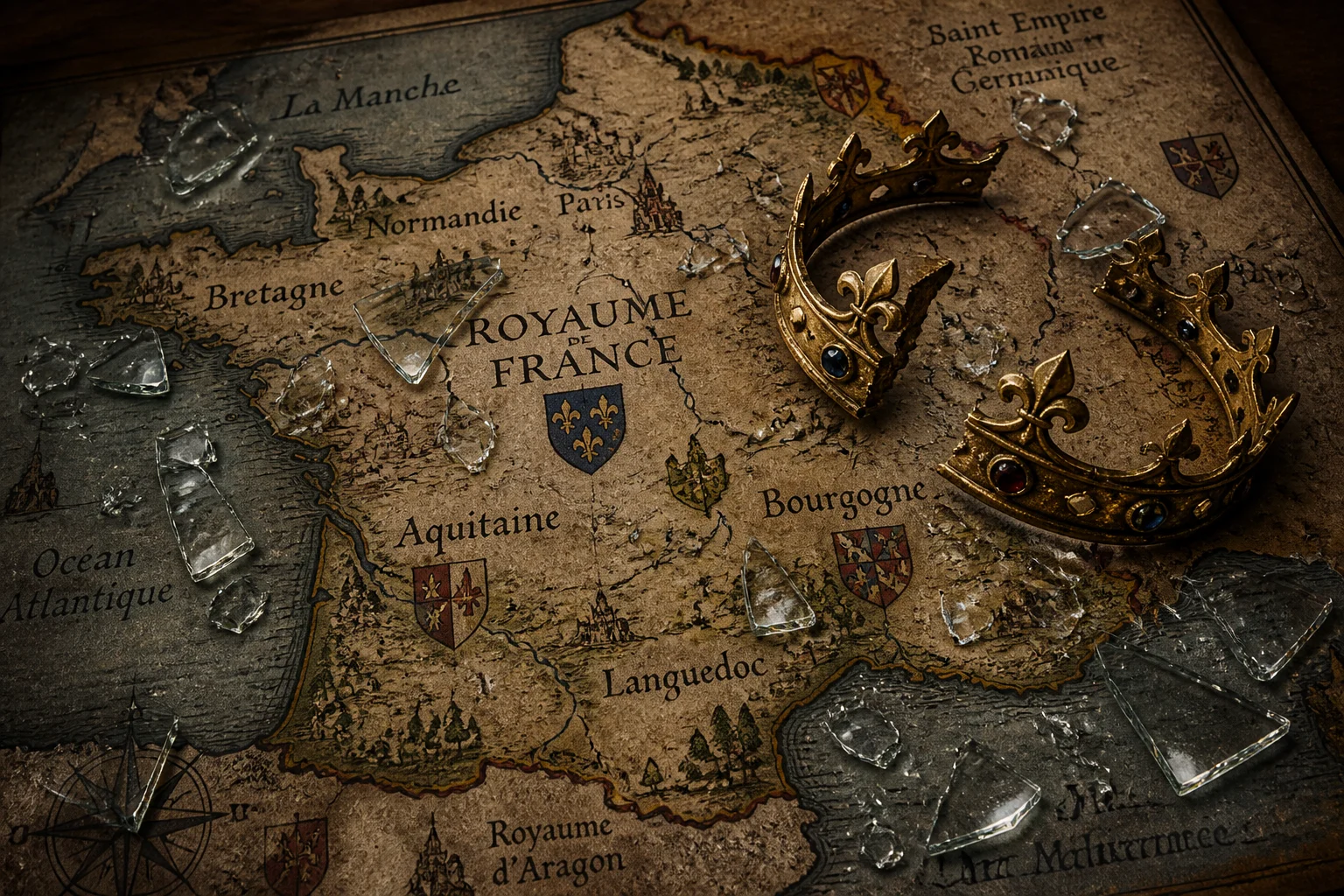
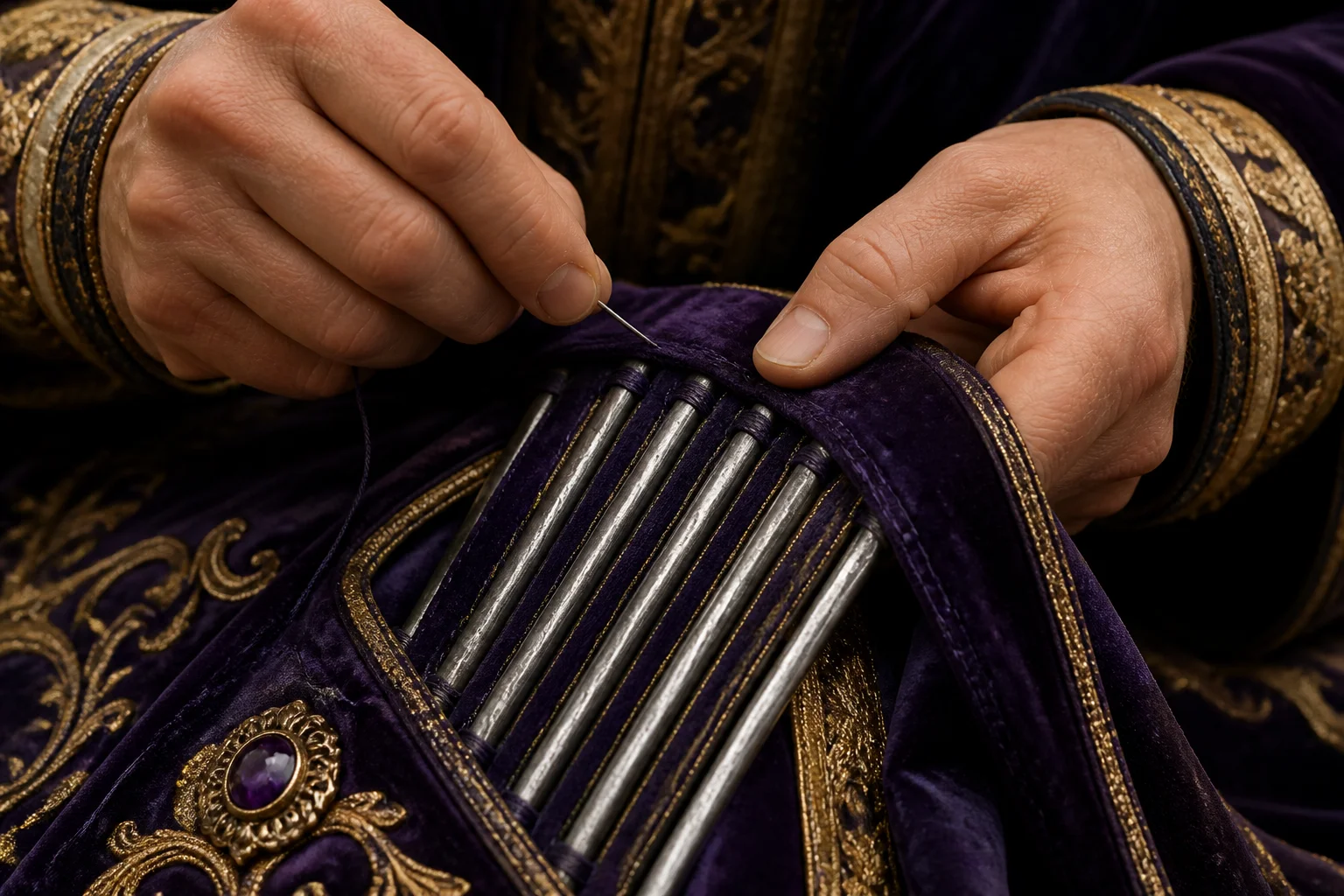
One often-repeated detail is that Charles VI had iron rods or stays sewn into his clothing to protect his imagined glass body. This story has circulated in histories for centuries, though the precise primary evidence is thinner than popular retellings suggest. It is best treated as a chronicler's tradition rather than a verified wardrobe inventory.
Whether or not reinforced clothing was literally used, the story captures how seriously contemporaries took his condition. The image of a king padded against his own shattering is at once tender and terrible. It also shows that mental illness could be accommodated, not just mocked, in a medieval court.
10. Charles VI's Case Shaped Historical Memory

Charles VI is often called Charles the Mad, and his illness has long overshadowed his reign. The glass delusion became a shorthand for the chaos of French royal power during the Hundred Years' War. Shakespeare and later writers drew on the image of the broken king, though not always accurately.
Historians caution against reducing a complex ruler to a single delusion. Yet the glass belief remains one of the most striking details in the history of medieval mental illness. It also prepares the way for a later royal case that moved the delusion from swords and armor to pianos and parlors.
Princess Alexandra of Bavaria and the Glass Piano
The glass delusion is often described as an early modern phenomenon, but it did not vanish with the Middle Ages. In nineteenth-century Bavaria, a Wittelsbach princess gave the old fear a strange new form.
11. Princess Alexandra of Bavaria Carried the Delusion Into the 19th Century

Princess Alexandra of Bavaria was a member of one of Europe's most prominent royal families. Born in 1826, she was the daughter of King Ludwig I of Bavaria and Queen Therese. Her life is often remembered less for court politics than for a bizarre and deeply personal belief.
According to biographical accounts, Alexandra believed that she had swallowed a piano made of glass as a child. That object, she reportedly thought, remained inside her body and could break if she moved too suddenly. The old glass delusion had found a new, distinctly modern centerpiece.
12. Princess Alexandra Amalie of Bavaria Was a Royal Intellectual

Her full name, Princess Alexandra Amalie of Bavaria, places her firmly in the Wittelsbach dynasty. She was one of several royal siblings, and she grew up surrounded by art, music, and intellectual life. Unlike some royal daughters, she showed a strong literary inclination.
Alexandra did not marry, and she devoted much of her time to writing and cultural pursuits. That literary identity matters because her glass piano belief was not the whole of her personality. Medical historians mention the delusion precisely because it attached itself to an otherwise active and creative mind.
13. The Alexandra of Bavaria Glass Piano Story Is a Strange Detail

The Alexandra of Bavaria glass piano story has become the most famous example of the delusion in the nineteenth century. Reports say she moved through rooms with extreme caution, convinced that the invisible glass instrument inside her could crack or shatter. Sudden movement, physical contact, and even strong sound may have felt dangerous.
It is hard to know exactly how much of the story is documented versus embroidered. What is clear is that the account has persisted because it is such a vivid blend of royal life, mental illness, and domestic technology. A glass piano is both impossible and intensely evocative.
14. Her Movements Were Governed by Invisible Danger

Alexandra reportedly moved sideways through doorways to avoid compressing or shattering the glass object she believed was inside her. Some accounts say she would not sit normally and kept her body held in ways that suggested constant vigilance. That behavior would seem odd to visitors who did not know the reason.
Her case illustrates how a delusion can produce a private system of rules. Every room, chair, and corridor became a potential threat. The invisible piano was not just a bizarre image; it was a daily lens through which she interpreted physical space.
15. Her Case Shows How Delusions Borrow From Daily Life
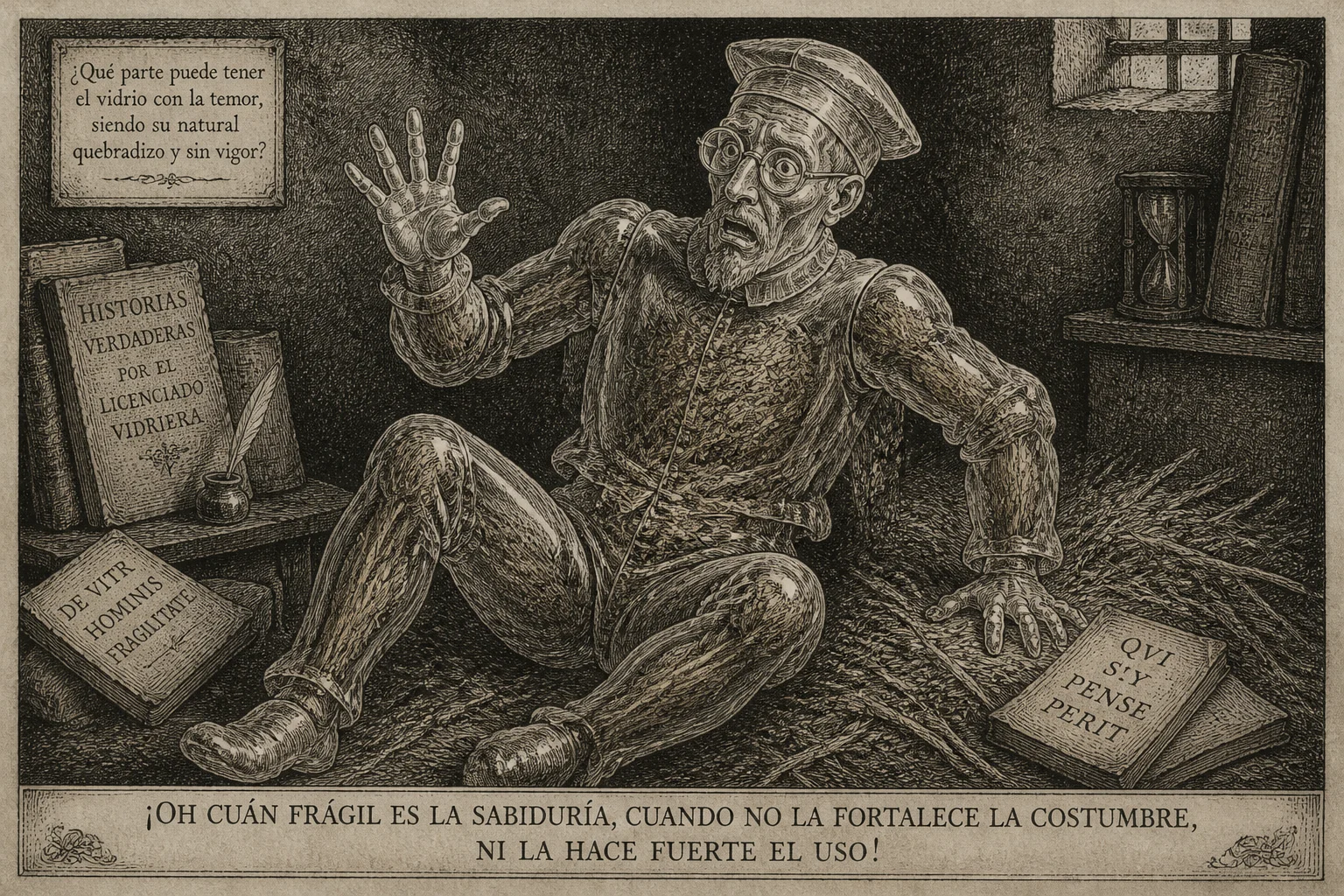
Delusions do not arrive from nowhere. They often take their imagery from the sufferer's environment, memories, and social world. Alexandra grew up around music and fine objects, and glass was a common luxury material in royal interiors.
A glass piano would have been a recognizable object of beauty and fragility. Her belief also reflected the era's romantic fascination with delicate nerves and refined sensitivity. An aristocratic woman who feared shattering could be seen as tragically fragile rather than simply ill, and that cultural framing may have shaped how her family and biographers understood her.
Literature, Culture, and Later Medicine
The glass delusion did not belong only to patients and physicians. It migrated into fiction, social commentary, and eventually the language of modern psychiatry.
16. Cervantes Turned the Glass Delusion Into Literature
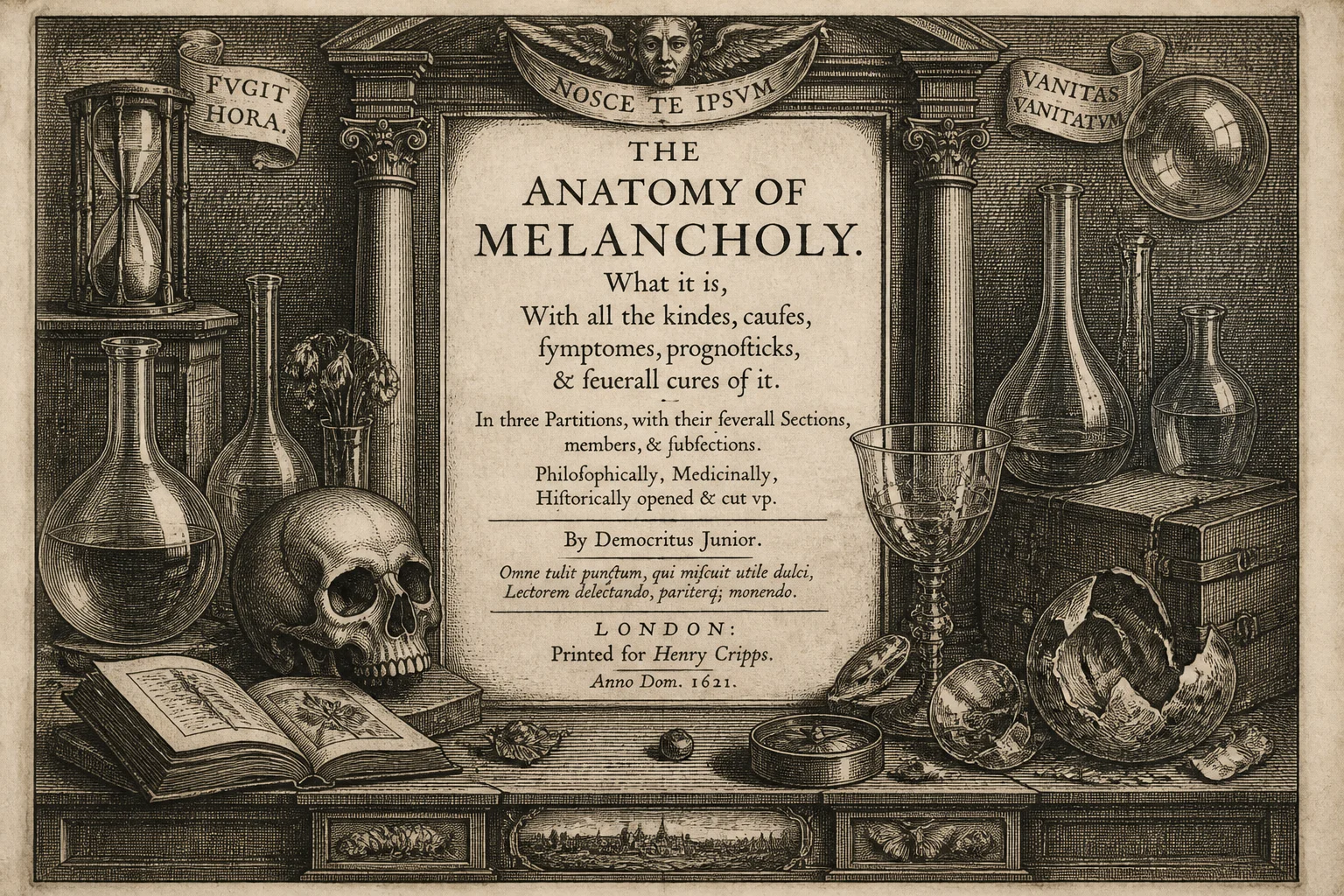
Miguel de Cervantes, the author of Don Quixote, wrote a novella about a man whose body becomes glass. In 'El licenciado Vidriera,' or 'The Glass Graduate,' a poor scholar named Tomás Rodaja is poisoned by a quince. After recovering physically, he wakes up convinced that he is made entirely of glass.
The story was published in 1613 as part of the Exemplary Novels. Cervantes used the glass body as both a comic premise and a serious study of vulnerability. The character wins fame for his clever answers while living in constant terror of being touched.
17. The Glass Graduate Was a Satire of Fragile Reputation
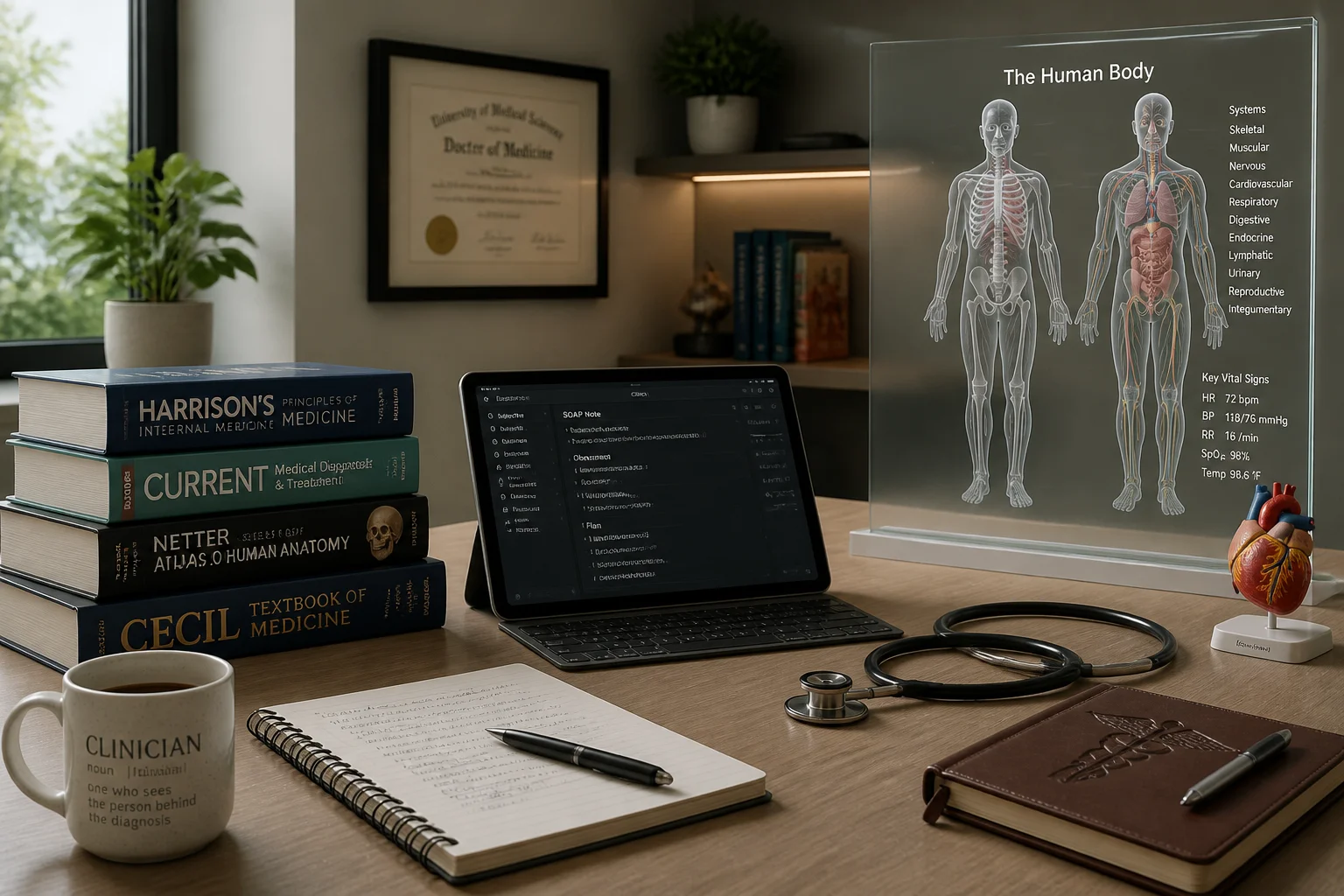
Tomás Rodaja refuses to wear normal clothes, sleeps in straw, and begs people not to come near him. Yet his sharp intellect makes him a public curiosity, and crowds gather to ask him questions. Cervantes was clearly interested in how a fragile mind could become a social spectacle.
The novella also mocks the way reputation can shatter under scrutiny. The glass man is both broken and brilliant, admired and isolated. This literary use of the glass delusion shows that early modern people already understood the condition as more than a medical oddity.
18. Robert Burton and Early Writers Recorded Glass-Anxiety Cases
Robert Burton's 1621 work The Anatomy of Melancholy is one of the most influential early modern books on mental distress. Burton catalogued a huge range of melancholic delusions, including fears that the body had become brittle or fragile. He described patients who feared movement because they believed they might break.
Burton's work helped frame the glass delusion as part of a broader landscape of melancholy. Other early medical and philosophical writers also noted patients who thought they were made of glass, pottery, or other brittle materials. The specific material varied, but the underlying dread of shattering was consistent.
19. Modern Psychiatry Would Reclassify the Condition

Today there is no separate psychiatric diagnosis called the glass delusion. A clinician would more likely describe it as a somatic delusion, a fixed false belief about the body, within a broader psychotic or delusional disorder. The specific content is less important than the fact that the belief is false, fixed, and distressing.
Modern frameworks would also look for underlying conditions such as schizophrenia, severe depression with psychotic features, or a neurological illness. Historical cases cannot be diagnosed reliably from old chronicles. Still, the glass delusion remains a valuable case study in how psychiatric symptoms are shaped by culture.
20. The Delusion Faded as Glass Became Ordinary
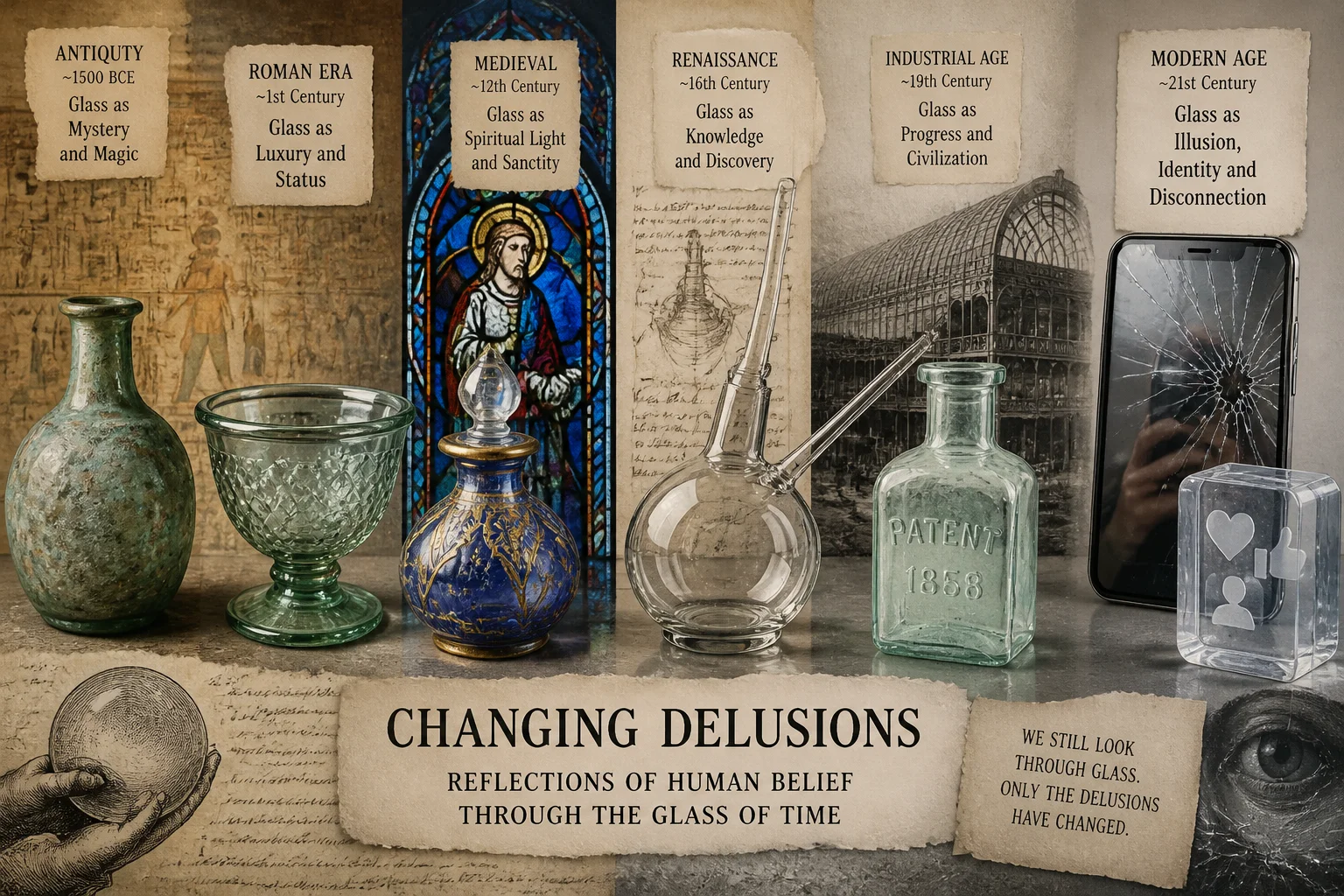
One of the puzzles in the history of psychiatry is why the glass delusion became much rarer in the modern era. Some scholars suggest that as glass became cheap and common, it lost its power as a symbol of exquisite fragility. A material that appears in every kitchen window is less likely to anchor a rare and terrifying conviction.
Others argue that the medical language changed, not the underlying fear. People still experience bodily delusions, but they may describe them in terms of technology, electricity, or implants. The glass delusion may have dissolved into new forms of somatic anxiety.
21. The Glass Delusion Still Echoes in Modern Life
The image of a glass body has never entirely disappeared. It survives in literature, art, and everyday phrases about feeling fragile, transparent, or about to crack. Mental health advocates sometimes use the metaphor to explain how intrusive thoughts and anxiety can make a person feel dangerously exposed.
Historically, the glass delusion is a reminder that mental illness is not timeless and unchanging. It takes its symbols from the world around it. A medieval king feared breaking like a goblet; a Bavarian princess feared a glass piano; today's anxieties may wear a different costume but grow from the same human vulnerability.
22. The Glass Delusion Was a Product of Its Time, Not a Universal Madness
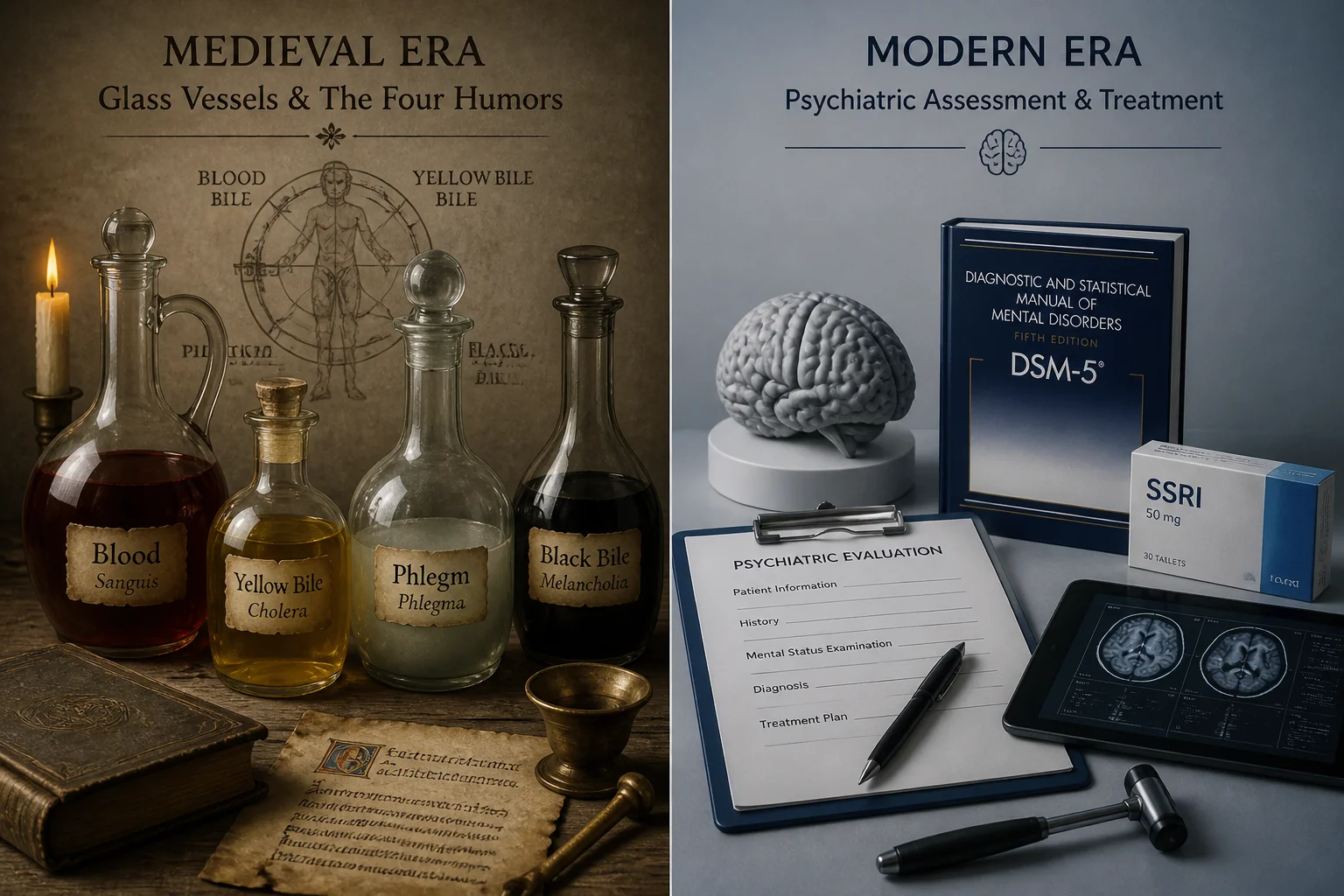
The delusion appears so often in early modern Europe that it can look timeless, but it is not. Its imagery depended on the value of glass, the language of humoral medicine, and the social performance of royal and scholarly status. Those conditions were historically specific.
This does not mean the underlying fear of bodily ruin has vanished. It means that the mind borrows the nearest available symbols when it builds a delusion. The glass body was an early modern invention, just as later eras would produce delusions shaped by radio waves, electricity, and digital surveillance.
The Fragile Mirror of the Mind
The glass delusion is not just a curiosity cabinet story. It sits at the intersection of medicine, culture, and the human need to make sense of bodily fear. Charles VI and Princess Alexandra of Bavaria lived centuries apart, but each turned an abstract terror into a concrete set of rules.
By looking at their stories, we see that delusions are not random noise. They are shaped by the materials, hierarchies, and anxieties of their time. The glass delusion may be rare today, but its lesson is lasting: the mind often speaks through the body, and sometimes the body believes it is made of something that can shatter.
Frequently Asked Questions
What is the glass delusion?
The glass delusion is a historical psychiatric phenomenon in which a person believed their body was made of glass or had become so brittle it could shatter. It appeared most often in early modern Europe, especially between the 15th and 17th centuries. Sufferers might avoid sitting, touching, or sudden movement to protect their imagined fragility.
Did Princess Alexandra of Bavaria really believe she had swallowed a glass piano?
According to biographical accounts, Princess Alexandra of Bavaria believed that as a child she had swallowed a piano made of glass and that it remained inside her body. She reportedly moved very carefully to avoid shattering it. Historians treat the story as a documented tradition about her illness, though the exact clinical details cannot be fully verified today.
Who was Princess Alexandra Amalie of Bavaria?
Princess Alexandra Amalie of Bavaria was a 19th-century Wittelsbach princess, born in 1826 as the daughter of King Ludwig I of Bavaria and Queen Therese. She never married and pursued literary interests. She is best remembered in medical history for the glass piano delusion associated with her name.
Why did people with the glass delusion fear shattering?
The fear was rooted in a fixed false belief about bodily fragility, not ordinary caution. Early modern medical culture associated such delusions with melancholy and a body that could be physically altered by emotional distress. Cultural exposure to precious glass likely gave the fear its specific imagery.

Alex Warren
Related Articles