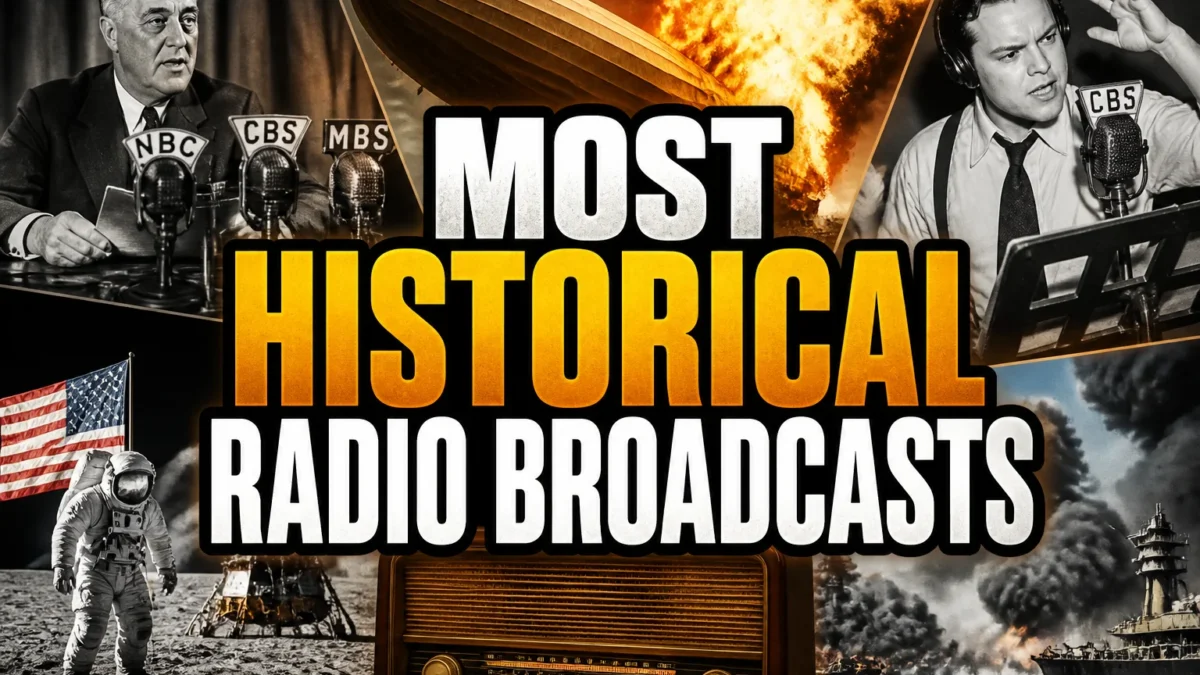
Most “firsts” in radio American history are not as clean as the old stories suggest. Radio was built by tinkerers, ship operators, and amateurs before anyone thought to sell an ad or read the news. This list of the most historical radio broadcasts traces the moments when scattered experiments became a shared public medium.
The 1920s are often treated as radio’s Big Bang, and with good reason: radio broadcasts in the 1920s turned a technical novelty into a household ritual. But the story starts earlier and keeps evolving long after the decade ends. Some famous broadcasts are also wrapped in myths that deserve a closer look.
TL;DR: Radio’s most historic broadcasts did more than reach listeners—they created live audiences, shaped national identity, and rewired how people experienced news, culture, and crisis.
What Makes a Radio Broadcast Truly Historic?
A broadcast can be historic because it was first, because it reached millions, or because it changed how people thought about the medium. Some moments did all three at once. This list mixes technical milestones, news events, and cultural broadcasts rather than pretending a single ranking explains them.
“First” is often contested in radio history, so each entry uses terms like “often credited” where sources disagree. That is not hedging for its own sake; it reflects how radio developed in parallel across countries and amateur stations. The goal is to understand why each transmission mattered, not to repeat marketing myths.
The Early Airwaves: Radio Broadcasts in the 1920s
The 1920s transformed radio from a hobbyist medium into a mass medium. The impact of the radio 1920s was cultural as much as technical, because it gave millions of people a shared clock of scheduled listening. That change matters more than any single gadget.
The history of radio in US is often told through stations such as KDKA, WEAF, and WSM, but European public broadcasters were also building systems in the same years. Denmark’s Statsradiofonien, for example, extended radio from Danmark to ordinary households by giving public broadcasting a permanent home. We will meet that milestone early in the list.
The Most Historical Radio Broadcasts: 22 Moments
The broadcasts below appear in chronological order rather than by rank. That order shows how radio’s power shifted from experiment to institution, then to live witness of world events.
1. Fessenden’s Christmas Eve Experiment (1906)
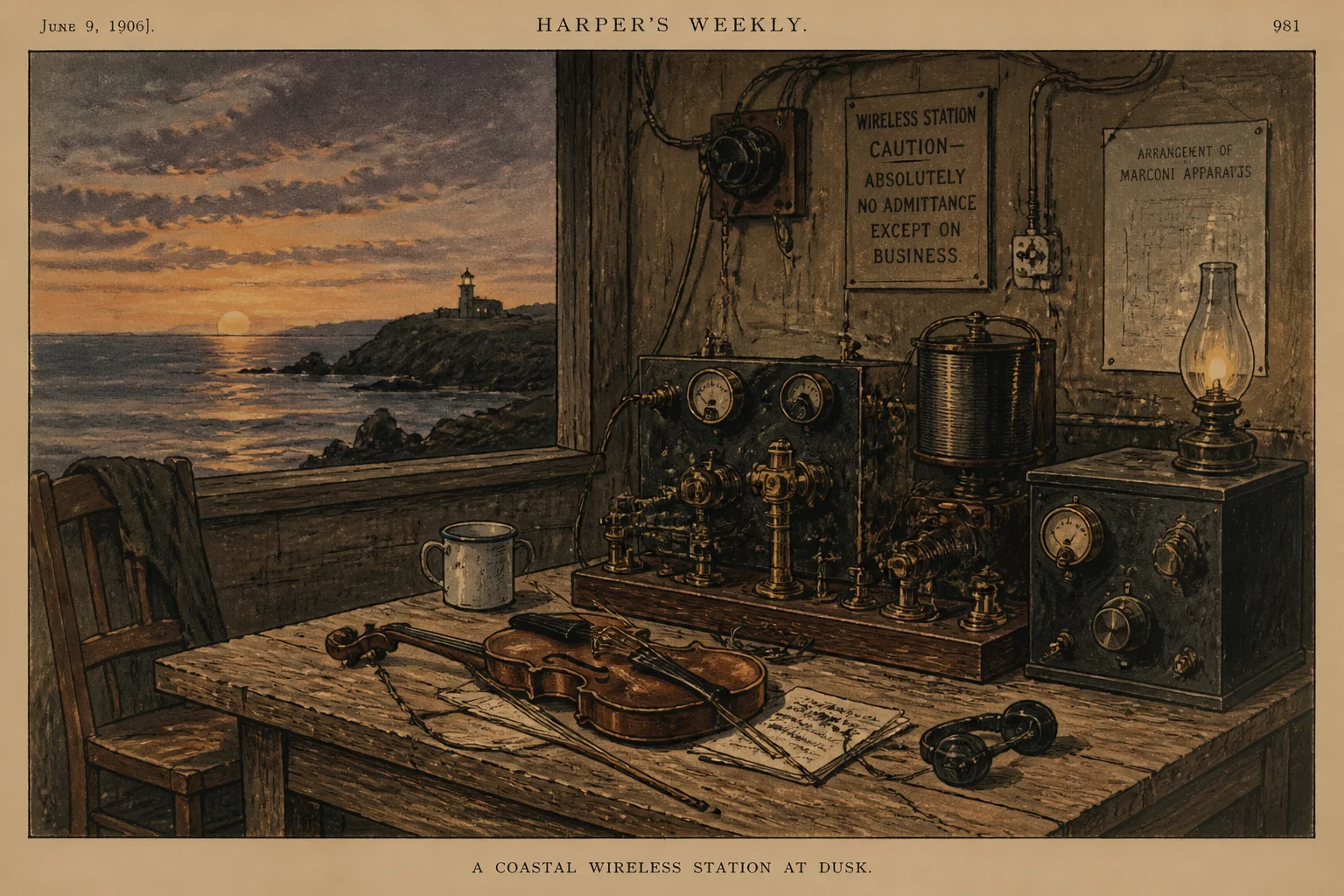
On Christmas Eve 1906, Canadian-born inventor Reginald Fessenden reportedly made the first transmission of speech and music to wireless operators at sea. His broadcast from Brant Rock, Massachusetts, included a phonograph record, a violin solo, and a short biblical reading, according to later accounts from Fessenden and his associates.
Some radio historians debate the details because the earliest written evidence is scattered and the event was not a scheduled public broadcast. Still, the episode is often credited as the first true audio broadcast rather than simple Morse code. It is a useful myth-check: radio did not begin with a commercial studio, but with an inventor trying to prove that wireless could carry the human voice.
2. KDKA’s Election-Night Broadcast (1920)
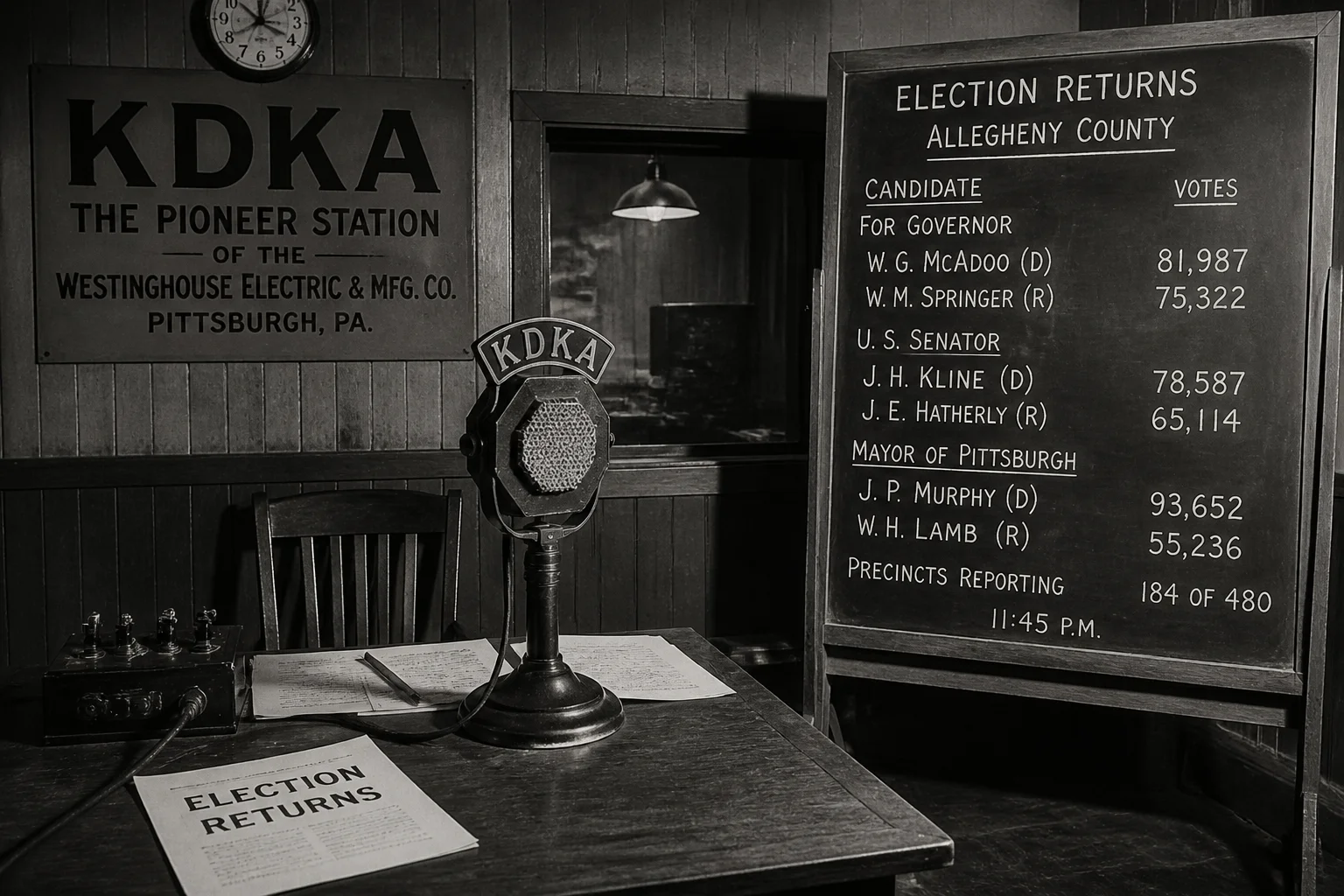
On November 2, 1920, Pittsburgh station KDKA began scheduled broadcasting with returns from the Harding–Cox presidential election. It was not the first transmission in human history, but it is widely treated as the beginning of commercial radio in the United States. KDKA had a license, a regular schedule, and a public audience hearing news before the morning papers.
The broadcast reached perhaps a few thousand listeners rather than a national audience, so its later fame can exaggerate its size. What made it historic was the model it set: a station promising regular news and entertainment, not just a one-off experiment. That model shaped the history of radio in US broadcasting for the next century.
3. The BBC’s First Daily Service from 2LO (1922)
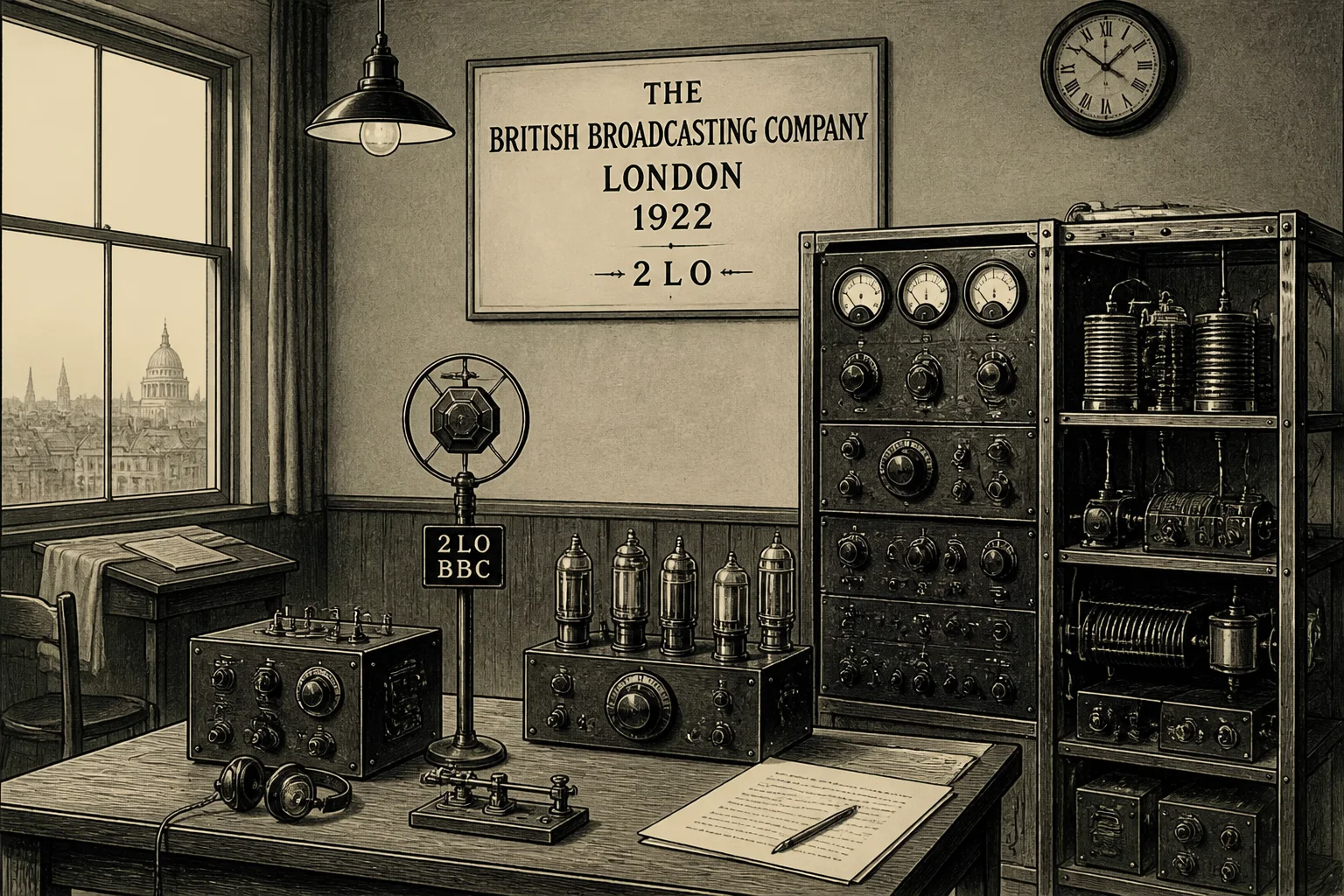
On November 14, 1922, the British Broadcasting Company began regular daily programs from the London station 2LO. The service was owned by radio manufacturers and funded through licenses, an early sign that radio would need a stable business model. Early broadcasts included news, concerts, and children’s material.
This moment did not create radio, but it created a public-service tradition that influenced state broadcasters around the world. Unlike the American commercial model, the BBC route favored centralized control and public funding. Both paths competed globally and shaped what listeners came to expect from the medium.
4. WSM’s Barn Dance Begins the Grand Ole Opry (1925)
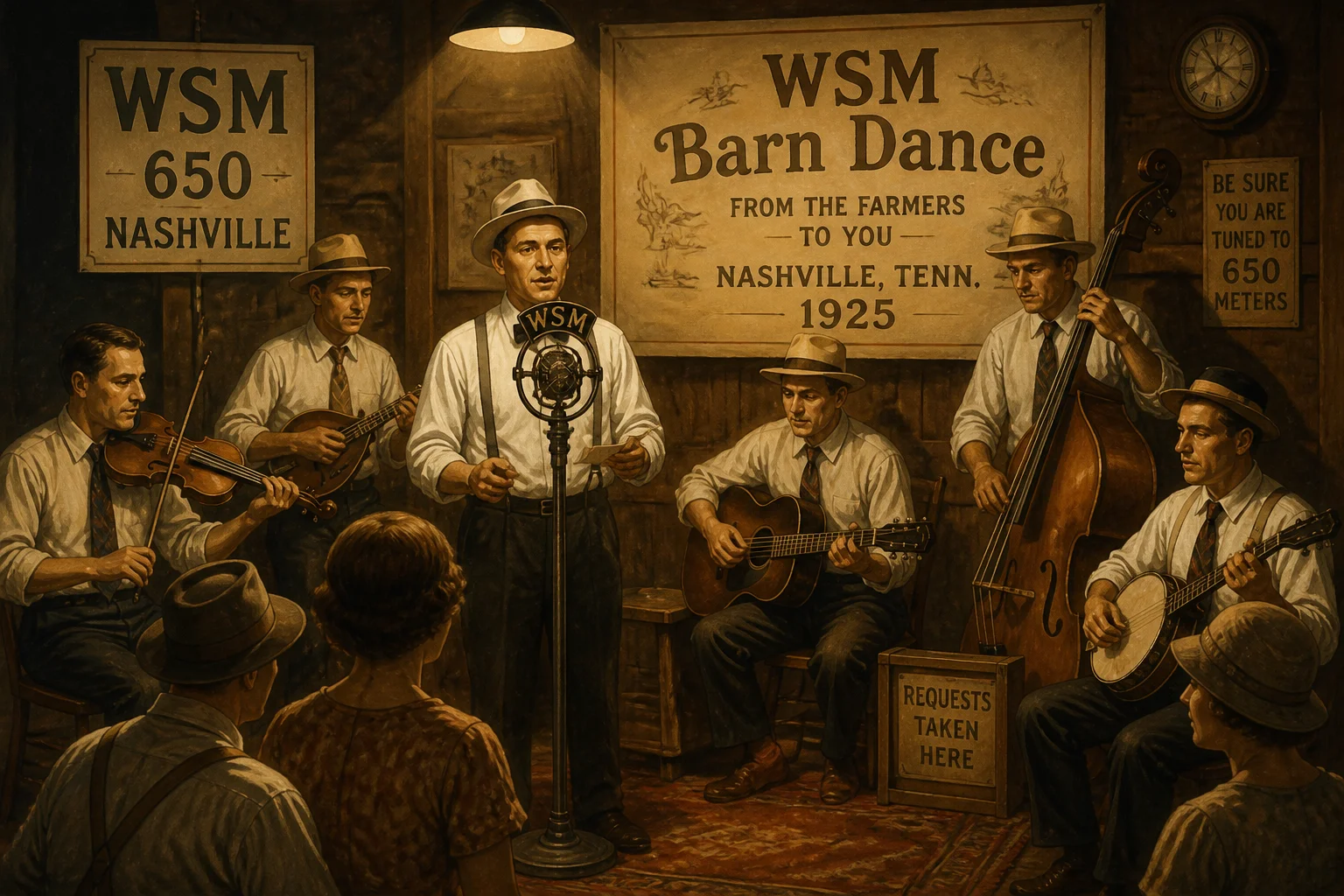
On November 28, 1925, Nashville station WSM began airing a weekly “Barn Dance” program that later became the Grand Ole Opry. The early show featured local string bands, fiddlers, and singers, turning regional music into a broadcast genre. Radio gave rural and working-class listeners a national stage for country music long before records or streaming did.
The impact of the radio 1920s on American music is easy to understate because the industry was still young. WSM’s clear-channel signal carried the Opry far beyond Nashville, helping to standardize what “country” sounded like to distant audiences. That is a cultural legacy no single record sale could match.
5. The Scopes Trial Goes Live (1925)
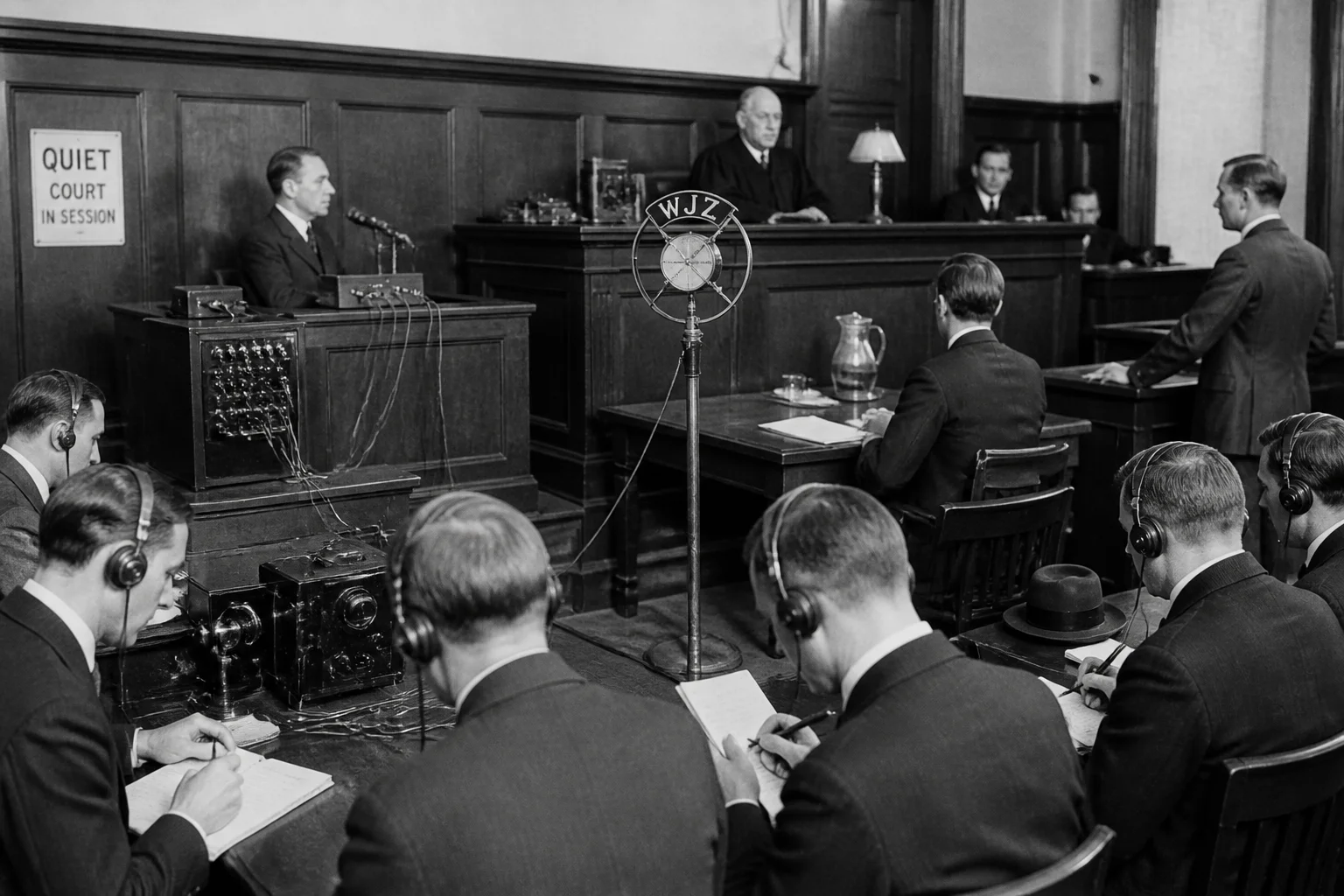
In July 1925, radio listeners followed the Scopes “monkey trial” in Dayton, Tennessee, through live courtroom coverage by Chicago station WGN. The trial tested Tennessee’s law against teaching human evolution and became a national conflict between science and religious traditionalism. Radio news was no longer just reading headlines; it could transport listeners into a room where history was happening.
The broadcast used telephone lines and temporary equipment to carry courtroom voices to the Midwest and beyond. Modern accounts often focus on the legal arguments, but the radio dimension shows how news reporting changed in real time. It also set expectations that media could turn local conflicts into national events.
6. Radio from Danmark: Statsradiofonien Signs On (1925)
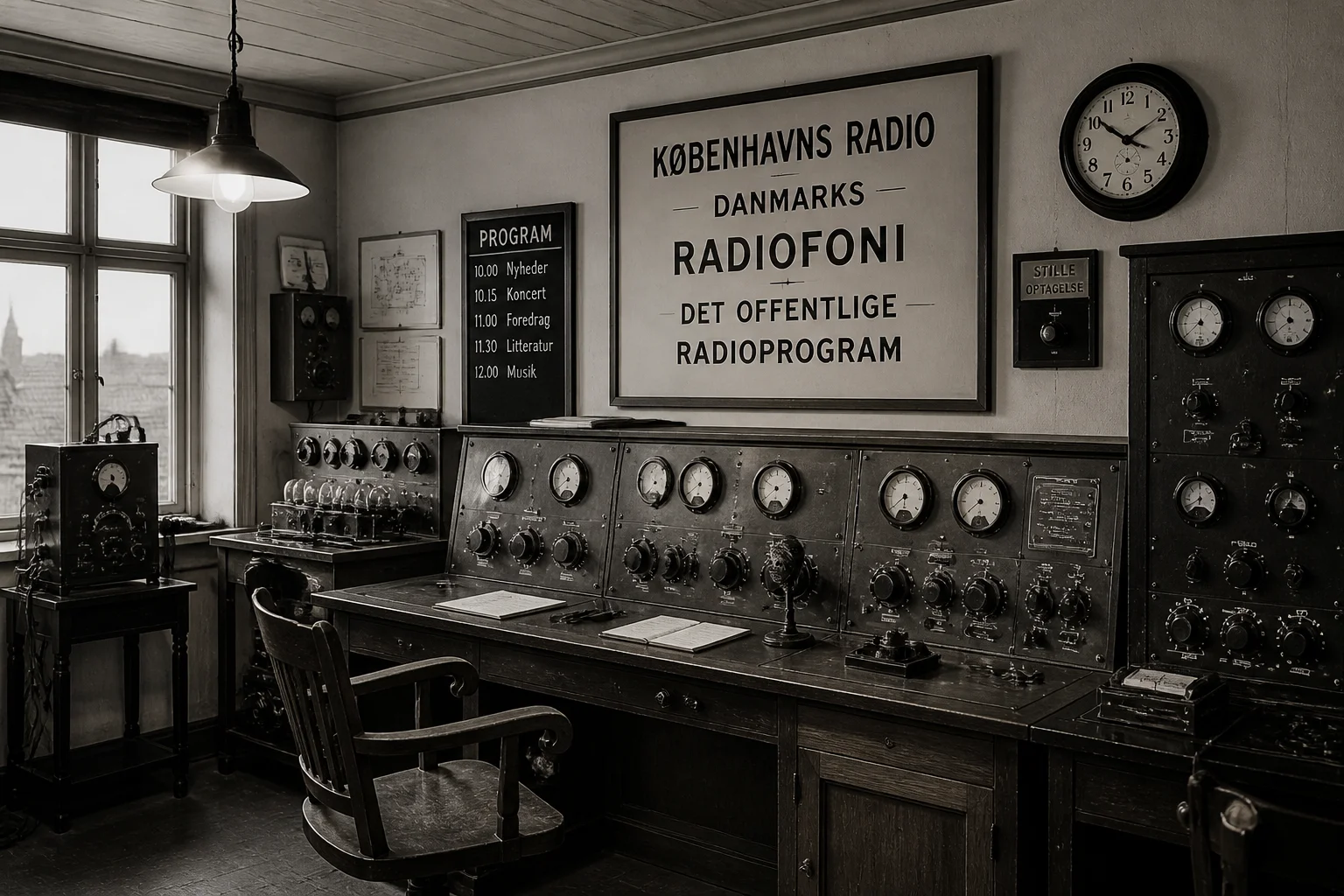
Denmark’s national broadcaster, Statsradiofonien, began regular service in 1925 as a public institution funded by license fees. For listeners in Scandinavia, this brought radio from Danmark into public life on a schedule built for news, culture, and education. It was part of a broader European movement toward state-sponsored broadcasting.
The Danish model was not a copy of the American commercial system, and it matured more slowly in some ways. Yet it reflected a core insight from the 1920s: radio was too powerful to leave only to advertisers or governments. That tension between public service and commercial radio remains part of radio’s global history.
7. Lindbergh’s Transatlantic Flight Captivates Radio (1927)
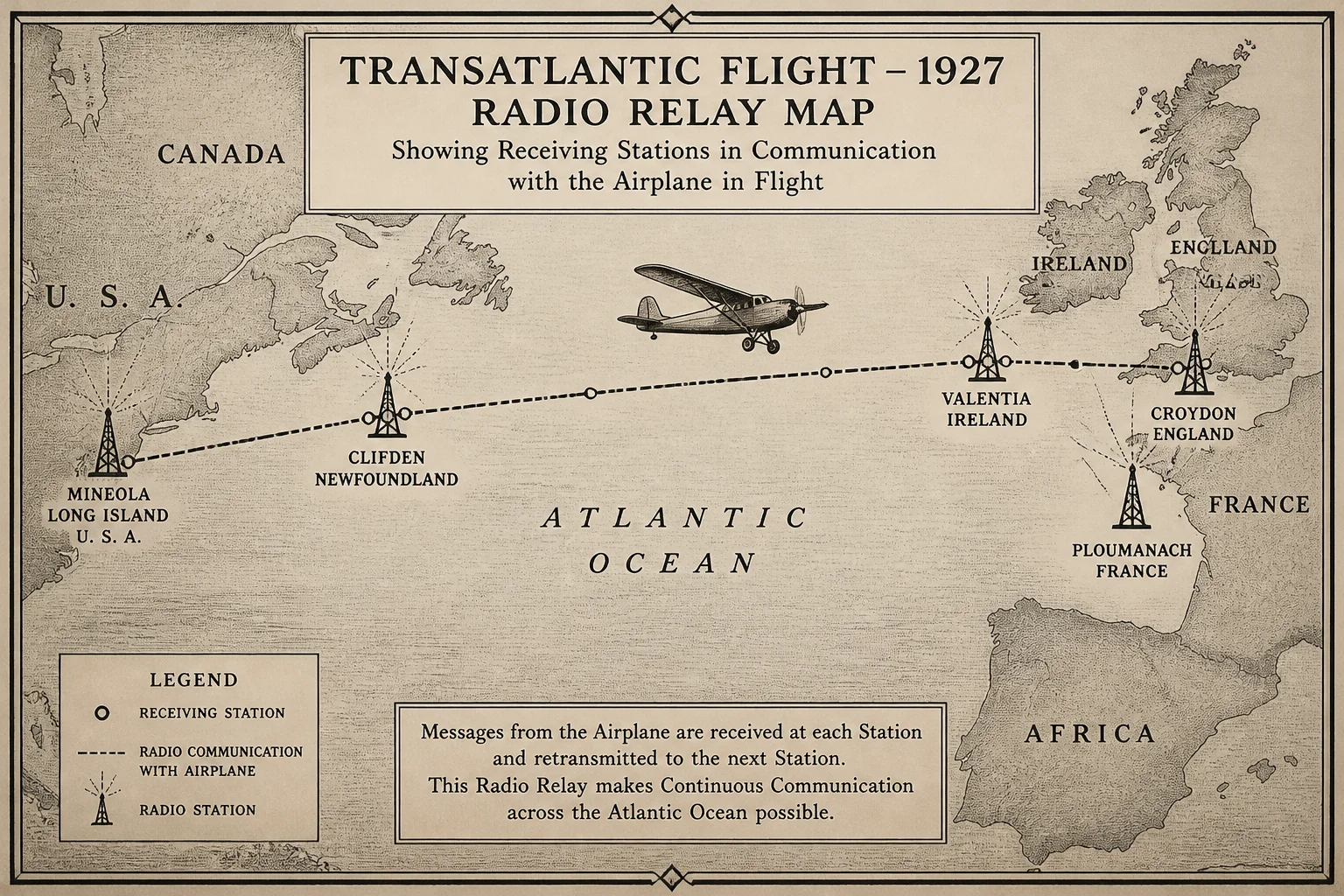
Charles Lindbergh’s solo flight from New York to Paris in May 1927 became one of the first global news events amplified by radio. Stations on both sides of the Atlantic followed the flight through wireless relays, shipping reports, and embassy updates, often with dramatic urgency. When Lindbergh landed, radio helped turn an aviator into an international hero.
The coverage was not a single broadcast, but a wave of radio bulletins and commentaries that stretched across days. It showed that radio could cover a developing story rather than only announce one after the fact. The celebrations that followed were among the largest live public events the medium had yet experienced.
8. FDR’s First Fireside Chat (1933)
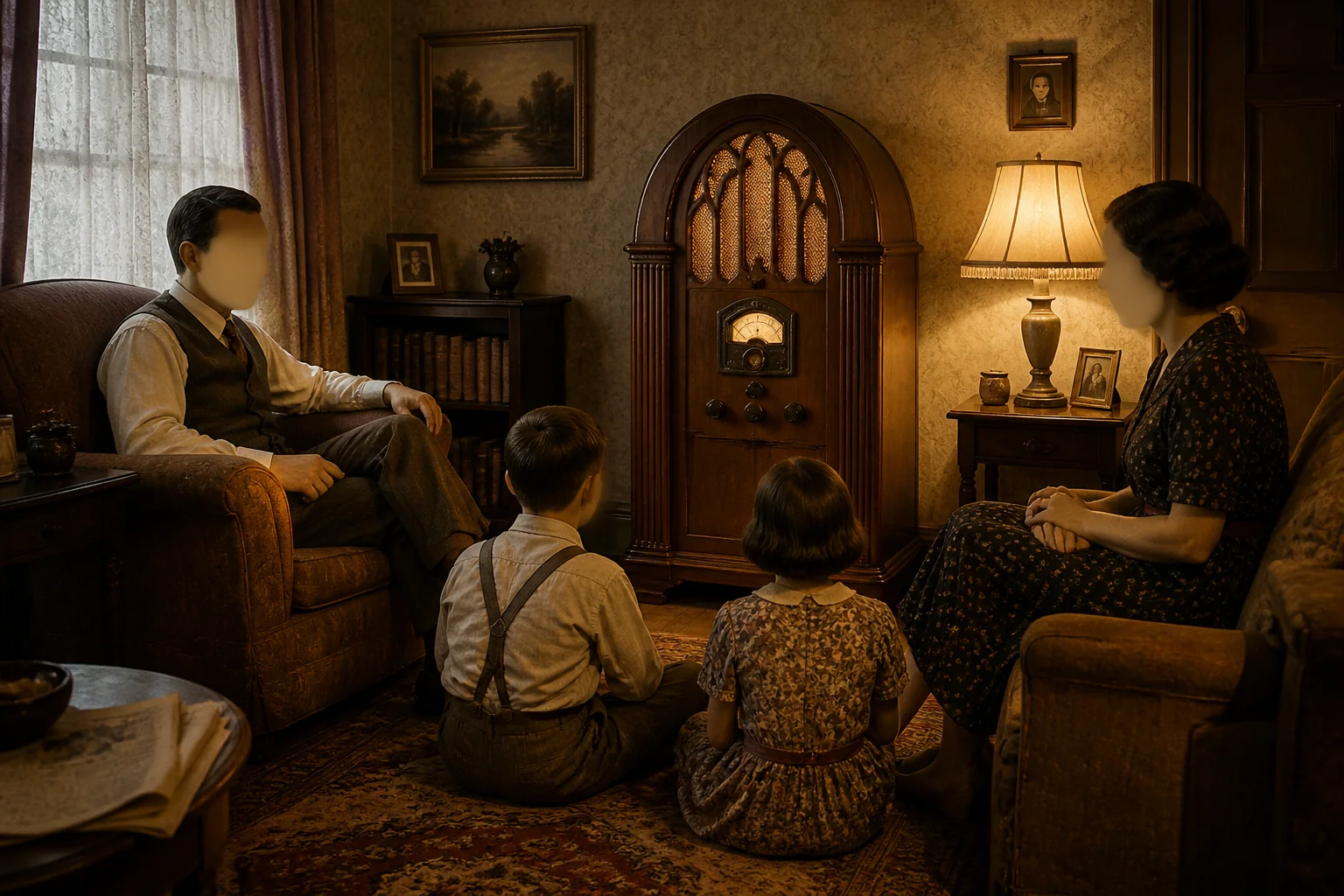
On March 12, 1933, President Franklin D. Roosevelt addressed Americans in the first of his “fireside chats,” speaking directly to listeners in measured, conversational language. He explained the banking crisis and tried to build confidence during the Great Depression. The broadcast established the presidency as a radio voice inside the home.
Roosevelt’s chats were not actually delivered beside a fireplace, and they were heavily rehearsed, but the intimate label stuck. The tactic changed political communication by letting leaders bypass newspapers and speak straight to citizens. Radio American history after this point cannot be told without the idea of a national audience gathered around the set.
9. Edward VIII’s Abdication Broadcast (1936)
On December 11, 1936, King Edward VIII announced on BBC radio that he had abdicated the British throne to marry Wallis Simpson. The address was introduced by the famous phrase “His Royal Highness Prince Edward,” a title he had just relinquished. It was a rare moment when a modern monarchy turned to radio to explain a personal crisis to an empire.
Millions across Britain and the Commonwealth listened as the former king said he found it impossible to carry the burden of kingship without the woman he loved. Radio proved it could handle not just scheduled entertainment but an unprecedented constitutional announcement. The event helped cement the BBC’s role as the UK’s shared national stage.
10. The Hindenburg Disaster Broadcast (1937)
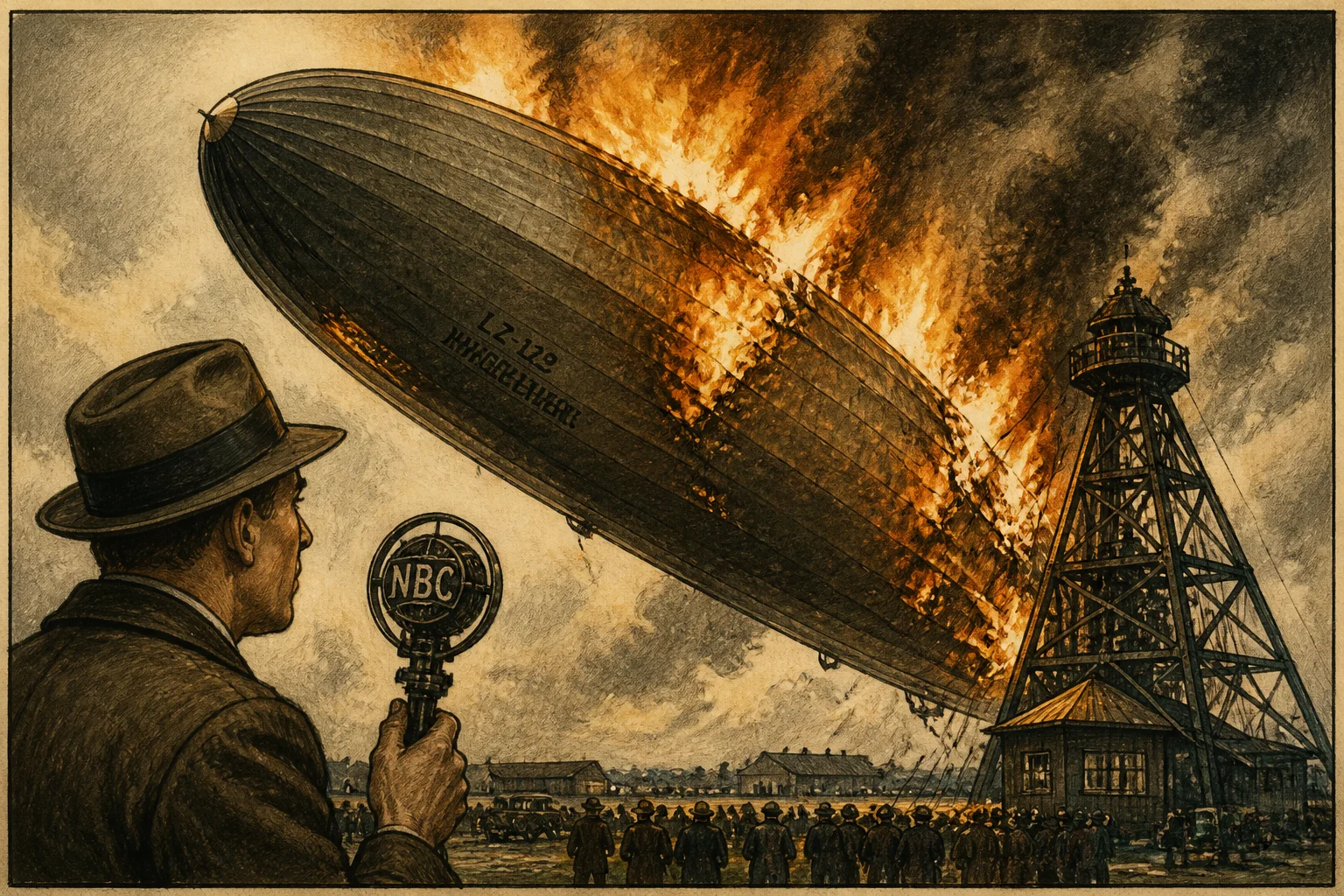
On May 6, 1937, reporter Herbert Morrison recorded his famous emotional description of the airship Hindenburg bursting into flames at Lakehurst, New Jersey. His words, including “Oh, the humanity!” were not heard live nationwide at the time. The recording was flown to Chicago and aired later, which makes it a classic example of how radio memory can blur the line between live and recorded sound.
Morrison’s report still matters because it captured the horror of a technological disaster with an intimacy that print could not match. The crash ended public confidence in passenger airships almost overnight. It also showed that a reporter’s voice could become inseparable from an event itself.
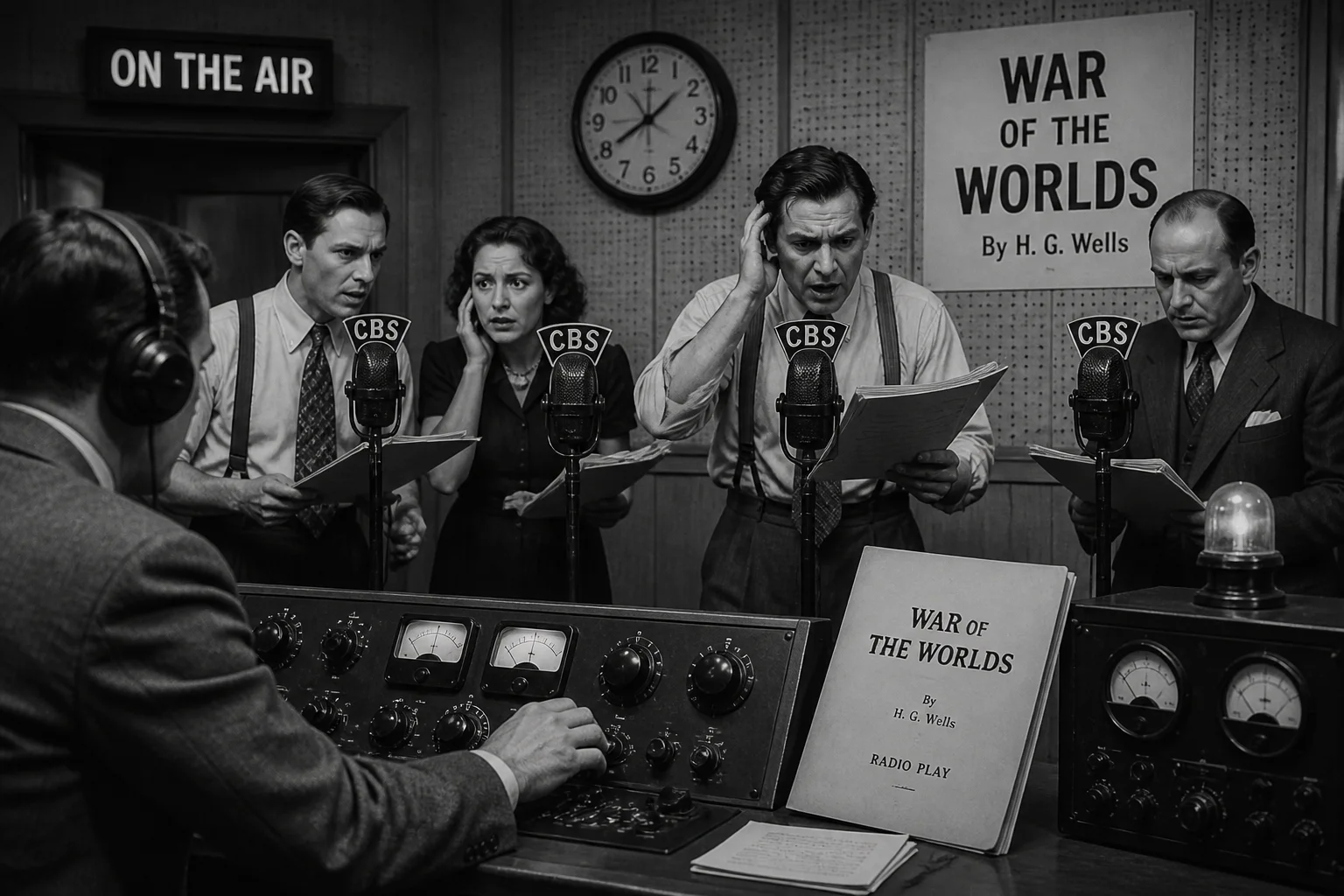
11. Orson Welles and The War of the Worlds (1938)
On October 30, 1938, Orson Welles and the Mercury Theatre on the Air presented a radio adaptation of H. G. Wells’s The War of the Worlds as a series of urgent news bulletins. Many listeners tuned in after the opening disclaimer and encountered what sounded like real reports of a Martian invasion. The program became the most discussed radio drama in American history.
The popular story that millions panicked across the country is heavily exaggerated. Contemporary audience surveys and later scholarship suggest the panic was limited, though some frightened callers did contact police and newspapers. The episode remains a powerful myth about media gullibility and the authority of radio’s news format.
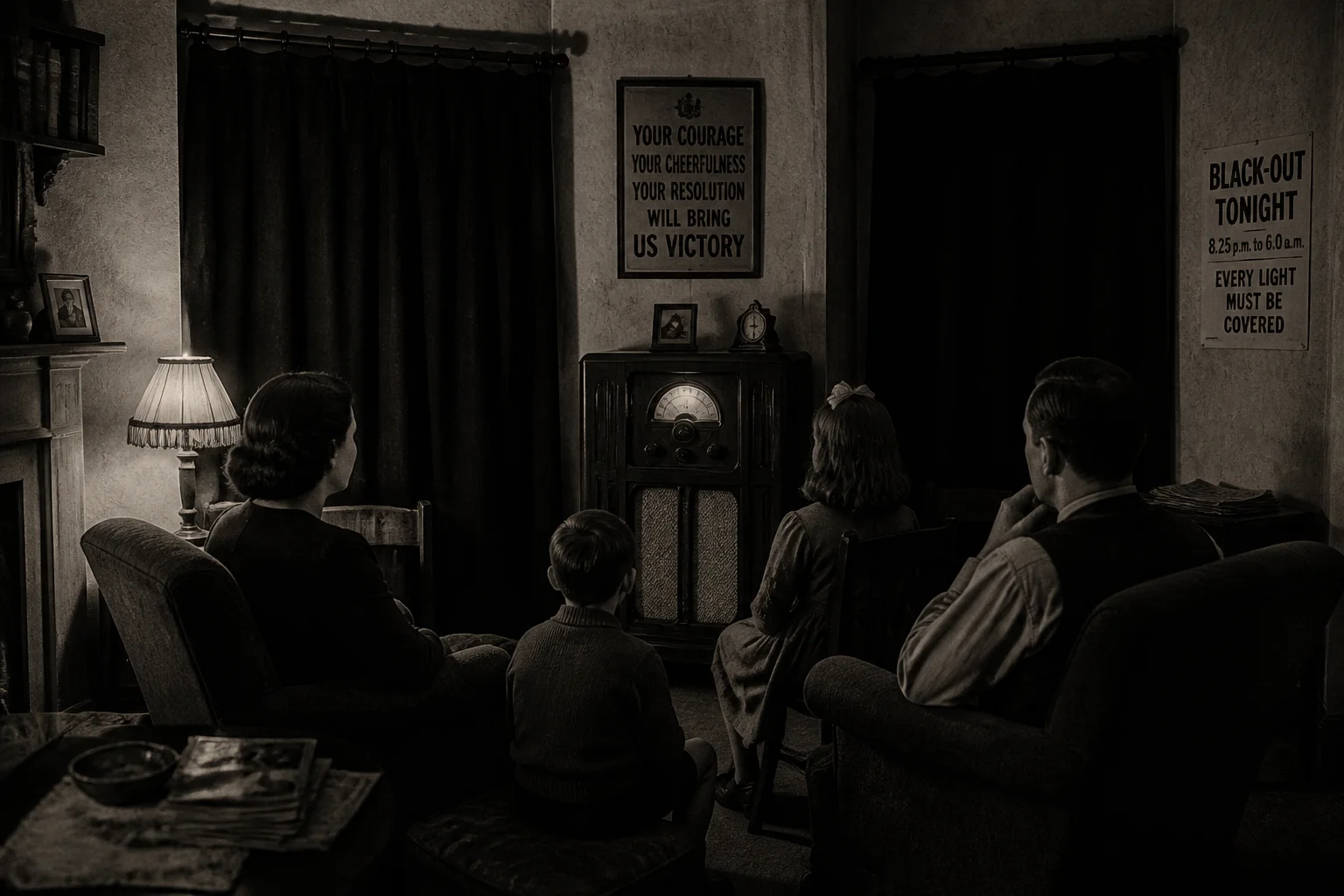
12. Chamberlain’s Declaration of War (1939)
On September 3, 1939, British Prime Minister Neville Chamberlain announced on BBC radio that Britain was at war with Germany. His tired, somber delivery became the sound of a failed peace policy and the start of the Second World War for Britain. The broadcast reached homes, offices, and air-raid posts with devastating clarity.
Chamberlain did not need vivid language; the gravity came from the moment and the medium. Radio carried the news at the same instant to millions who would soon face blackouts and rationing. It demonstrated that a single short speech could mark a national before-and-after.
13. De Gaulle’s Appeal from London (1940)
On June 18, 1940, French General Charles de Gaulle broadcast an appeal to the French people from BBC studios in London, urging resistance after France’s defeat by Nazi Germany. The speech became a founding text of Free French resistance, even though relatively few French people heard it live. Radio was no longer just a domestic service; it was a weapon of exile and legitimacy.
The BBC’s French-language broadcasts helped keep the idea of a free France alive during the occupation. De Gaulle’s precise phrasing has been quoted ever since, but the historical weight comes from the act itself: a military figure defying an armistice on a foreign transmitter. It remains one of the clearest examples of radio’s political power in wartime.
14. Churchill’s “Finest Hour” Speech (1940)
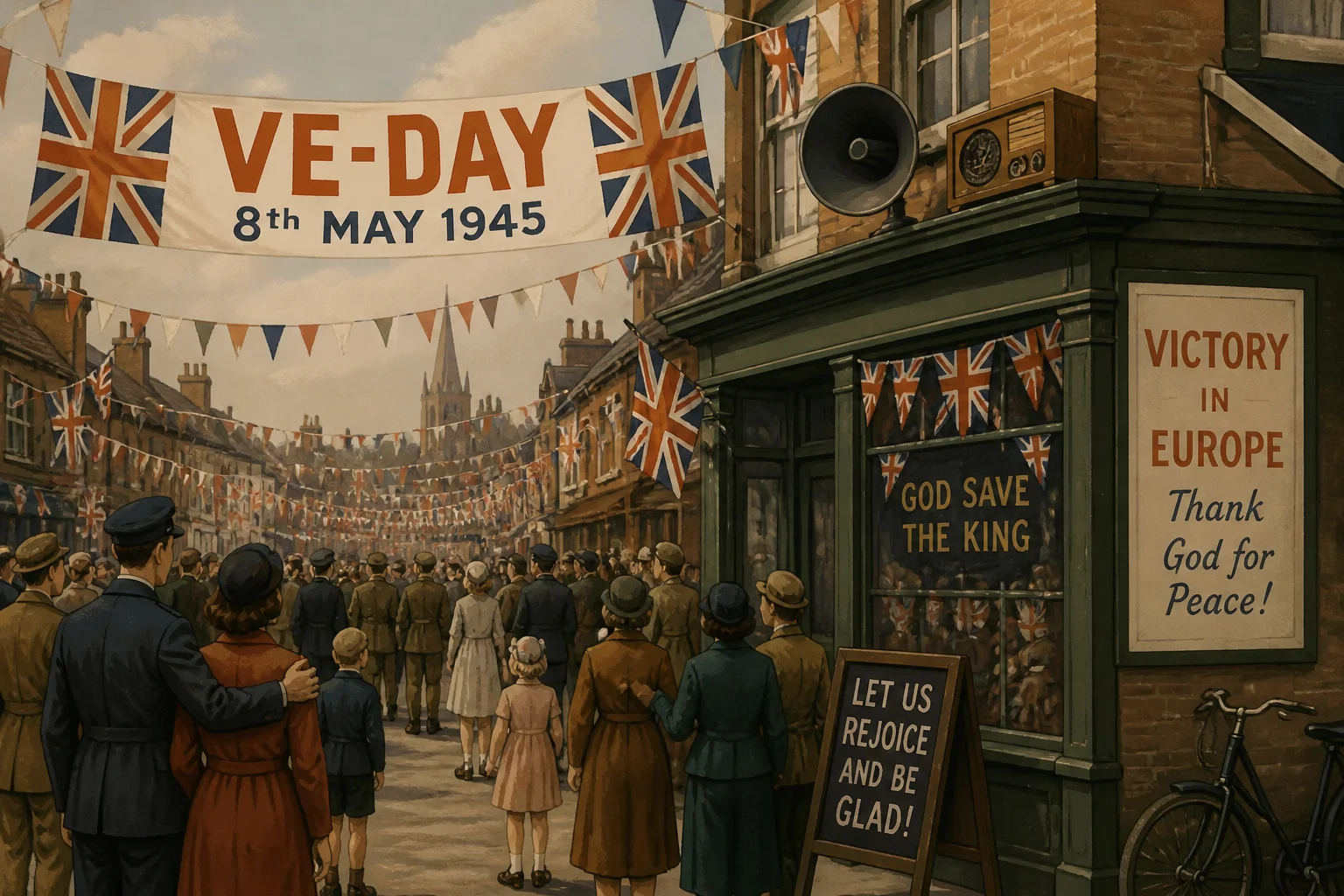
On June 18, 1940, Winston Churchill told the House of Commons that the Battle of France was ending and the Battle of Britain was about to begin. His speech is remembered as the “finest hour” address, and excerpts were later relayed to the public on radio. The words were aimed at Parliament, but the medium carried their resolve far beyond Westminster.
Churchill did not make a separate studio recording of that speech on the same day; some famous recordings are wartime or later re-recordings. That small distinction is a good reminder that radio history often mixes live speeches, re-recordings, and famous clips. What survived was the message of endurance that helped define Britain’s wartime identity.
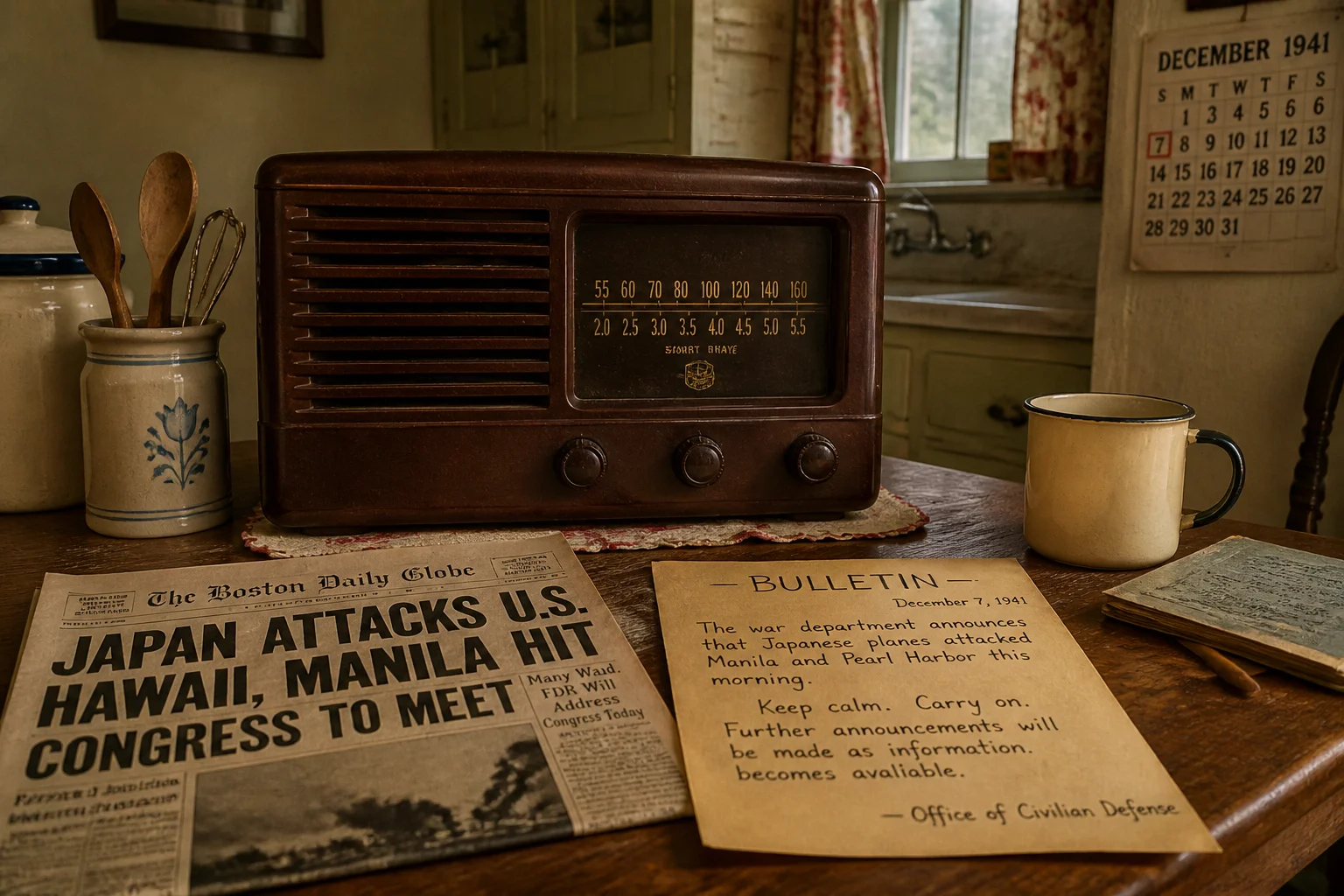
15. Pearl Harbor Radio Bulletins (1941)
On the afternoon of December 7, 1941, American radio stations interrupted regular programs with bulletins about the Japanese attack on Pearl Harbor. Listeners heard the news hours before newspapers could provide details, often while the attack was still unfolding. The broadcasts turned a distant naval base into an immediate national emergency.
The bulletins were not a single dramatic address but a cascade of updates that restructured the day for millions. President Roosevelt’s “date which will live in infamy” address to Congress the next day was radio’s formal capstone. Together, they marked the moment the United States entered the Second World War and fully embraced radio as an urgent news medium.
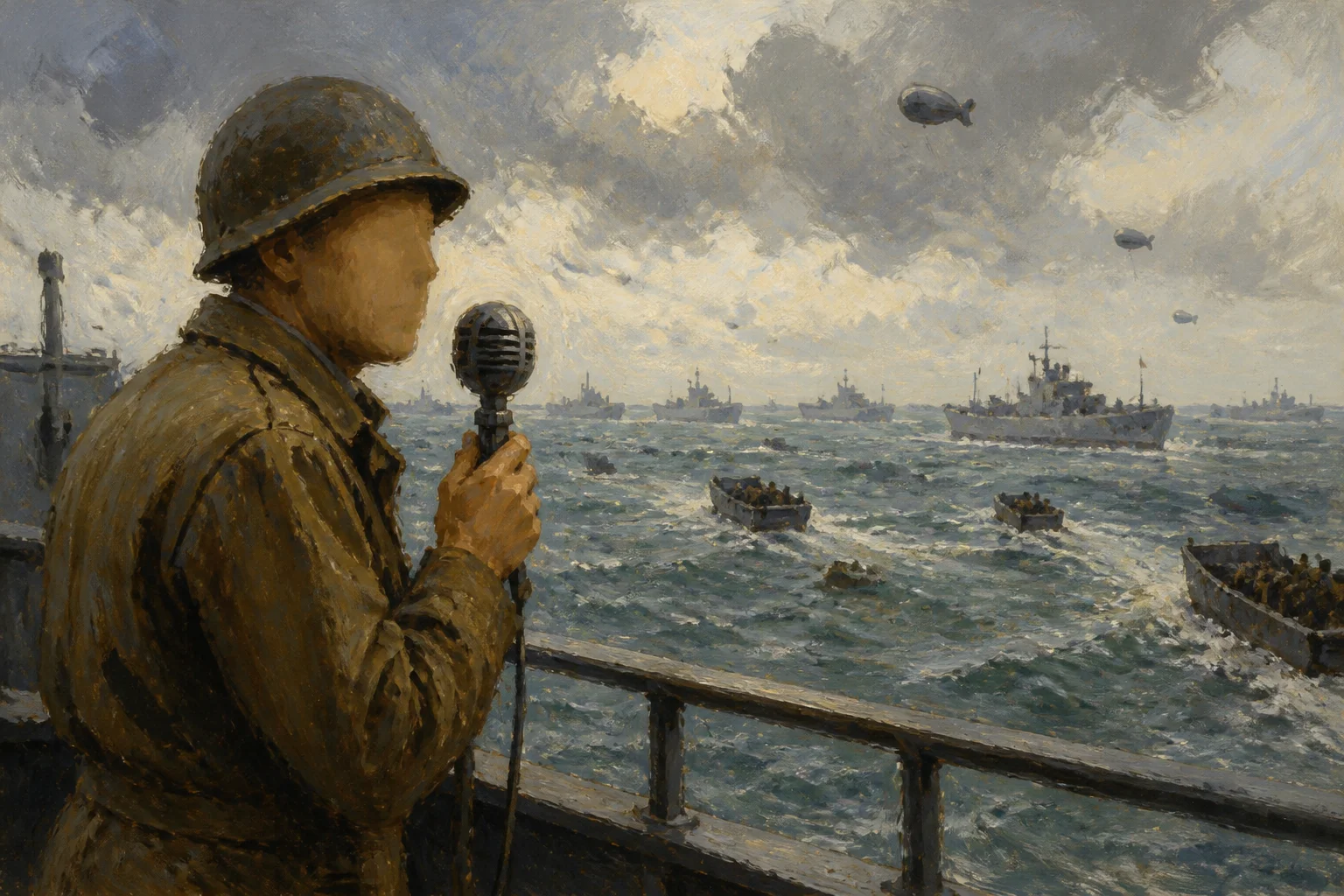
16. D-Day Radio Reports (1944)
On June 6, 1944, radio correspondents reported the Allied landings in Normandy in real time. CBS correspondent George Hicks famously recorded audio of the assault from a ship offshore, capturing gunfire and anti-aircraft fire as his voice stayed steady. The recording was flown back and broadcast to listeners desperate for concrete news of the invasion.
D-Day coverage showed that radio could convey the chaos of battle without images, relying on sound and description. Networks broke into regular schedules, and churches and factories paused as early reports spread. It was a defining day for broadcast journalism as a witness to history.
17. VE Day Broadcasts (1945)
On May 8, 1945, the end of war in Europe was announced through radio speeches by President Harry Truman and Prime Minister Winston Churchill. British and American stations carried hours of live public celebrations, royal appearances, and practical announcements about the transition to peace. Radio became the simultaneous national gathering place for both relief and remembrance.
The broadcasts were not only speeches; they included crowd sounds from Trafalgar Square, Times Square, and countless small towns. Listeners heard the war end in a mosaic of voices, sirens, and church bells. That day confirmed radio’s role as a shared civic medium in moments of collective emotion.
18. Emperor Hirohito’s Surrender Broadcast (1945)
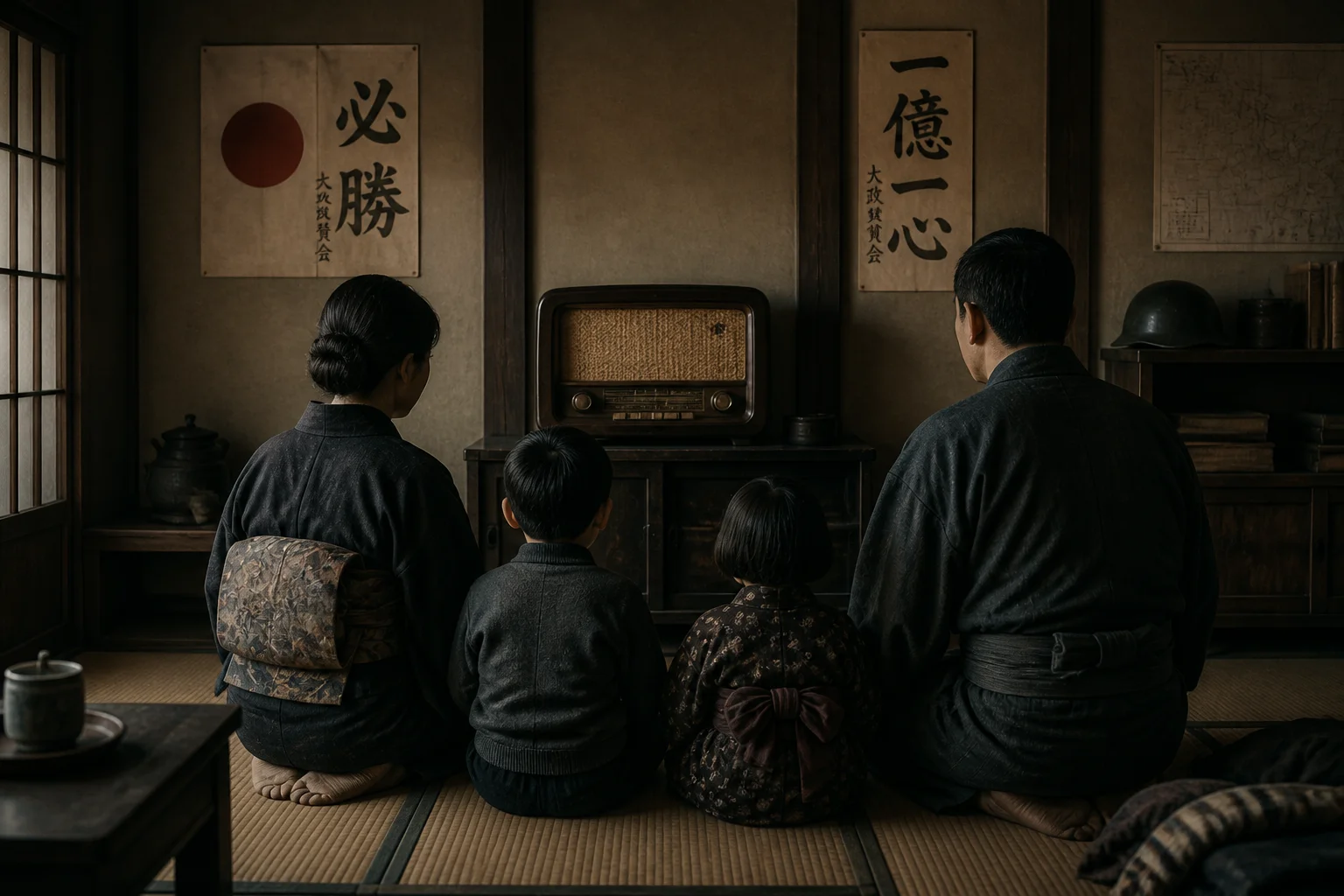
On August 15, 1945, Japanese Emperor Hirohito announced Japan’s acceptance of the Potsdam Declaration in a recorded radio address. It was the first time most Japanese citizens had ever heard the emperor’s voice, and many struggled to understand his formal court language. The broadcast signaled the end of the Pacific War and the collapse of imperial Japan’s wartime order.
The speech was carefully prepared and recorded in advance, and some military officers attempted to block it before it aired. Radio’s authority was so powerful that the emperor’s voice itself became the symbol of surrender. It remains one of the most significant single broadcasts in modern Asian history.
19. India’s “Tryst with Destiny” Address (1947)
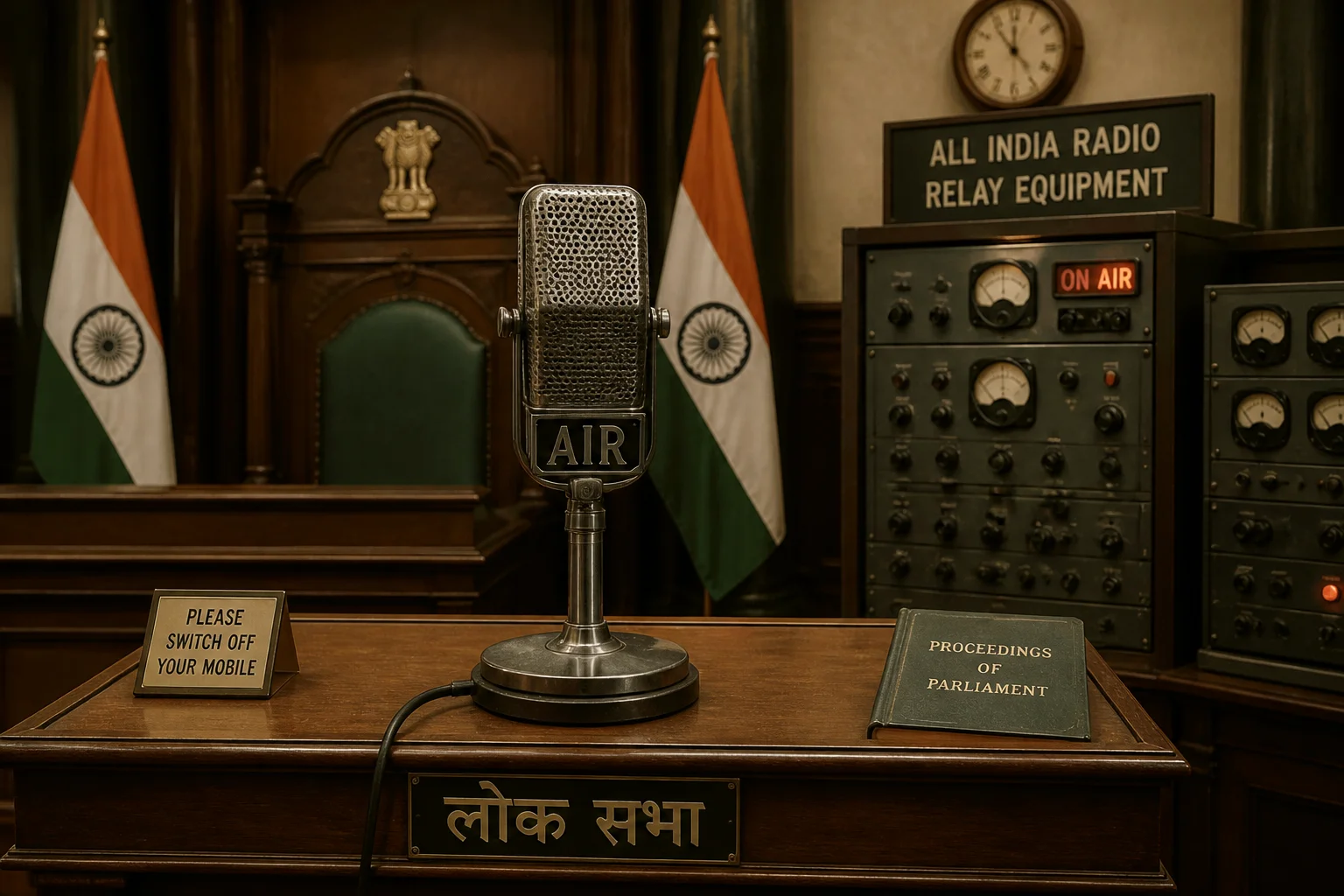
On the night of August 14, 1947, Jawaharlal Nehru addressed the Constituent Assembly in New Delhi as India approached independence. His words, later known as the “Tryst with Destiny” speech, were carried by All India Radio to millions across a newly partitioned nation. The broadcast framed independence as both triumph and enormous responsibility.
Nehru delivered the speech in English, and radio translated and relayed the moment to a multilingual population. The broadcast demonstrated radio’s role in nation-building for postcolonial states. It also showed that radio could make a political declaration feel intimate and national at the same time.
20. JFK’s Cuban Missile Crisis Address (1962)
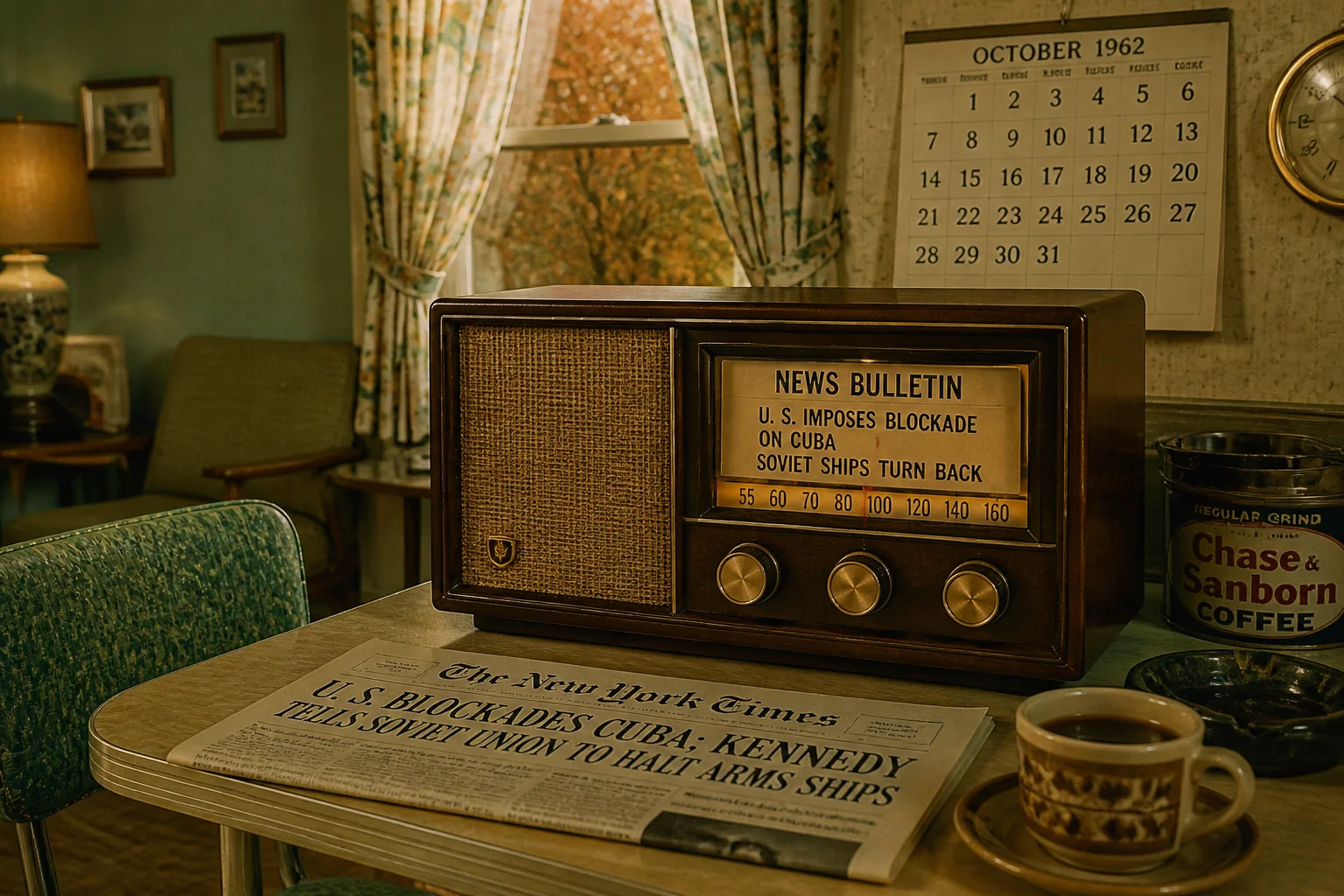
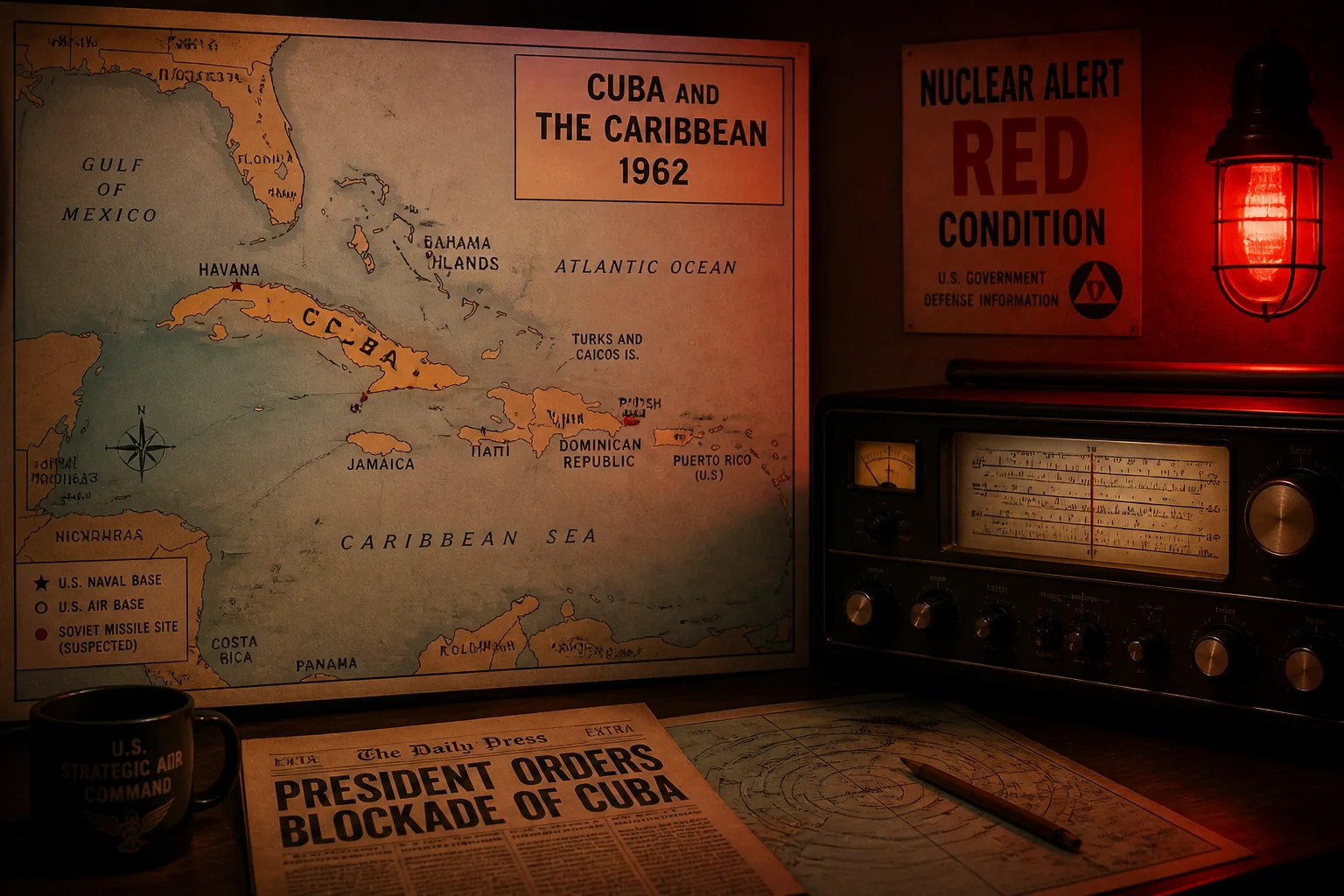
On October 22, 1962, President John F. Kennedy told Americans in a radio and television address that the Soviet Union had placed nuclear missiles in Cuba. He announced a naval quarantine and warned the country of the possible costs ahead. Radio carried the speech to cars, kitchens, and workplaces at a moment of genuine nuclear anxiety.
The address marked the public phase of the Cuban Missile Crisis, which lasted until the Soviet withdrawal later that autumn. It showed that radio broadcasts in the Cold War could be instruments of presidential crisis management, not just entertainment. Listeners understood that their daily routines were now connected directly to geopolitics.
21. MLK’s “I Have a Dream” Address (1963)
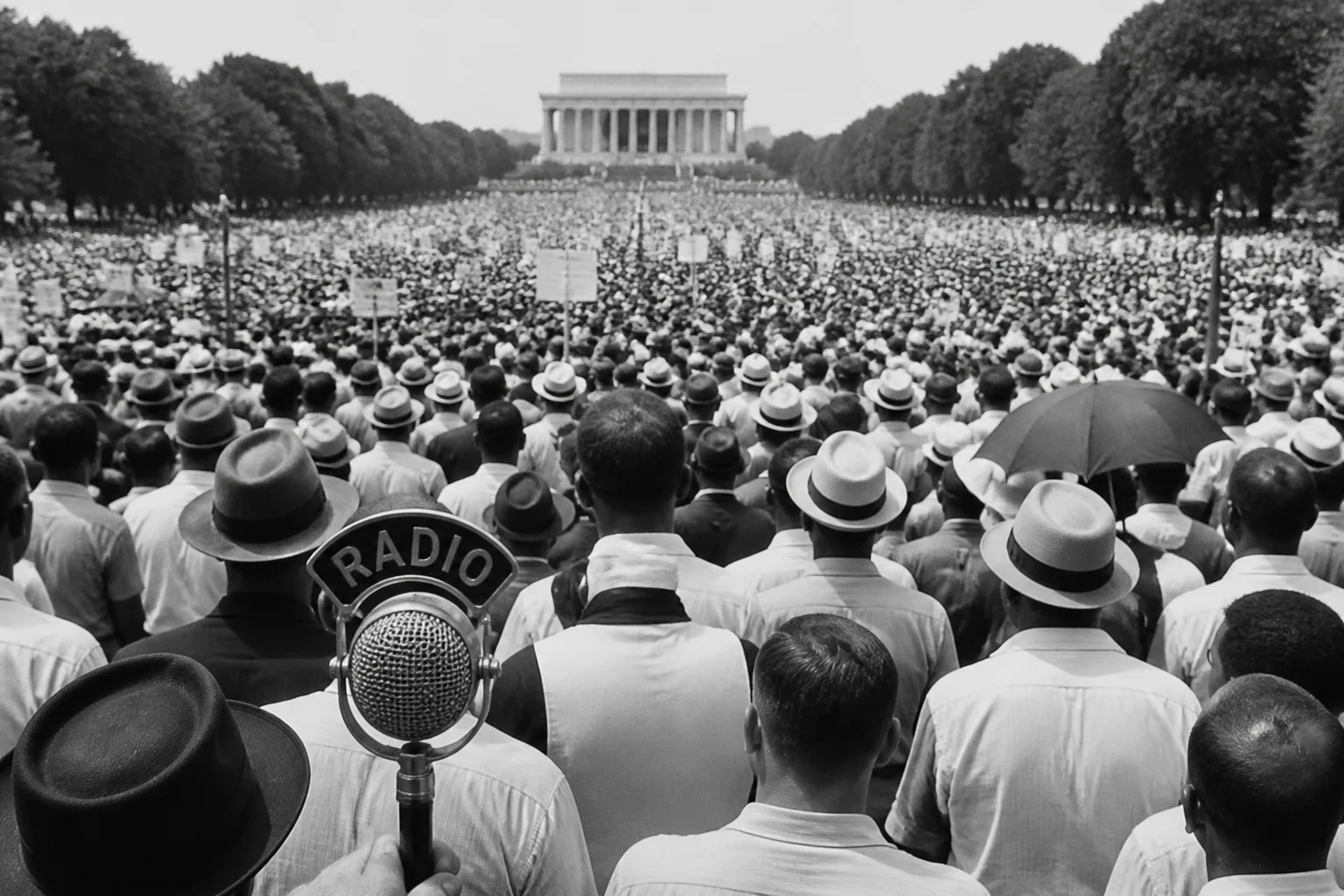
On August 28, 1963, Martin Luther King Jr. delivered his “I Have a Dream” speech during the March on Washington for Jobs and Freedom. Radio and television carried the address live to a national audience, with Black radio stations and networks helping spread it to communities that mainstream outlets often underserved. The speech became a defining document of the civil rights movement.
The broadcast mattered because it gave millions who were not in Washington an immediate sense of the movement’s scale and moral argument. Radio reporters described the crowd as much as the speech, helping listeners feel the event. Decades later, the recording remains a standard reference for how oratory and broadcast media can reinforce each other.
22. Apollo 11 Moon Landing Broadcast (1969)
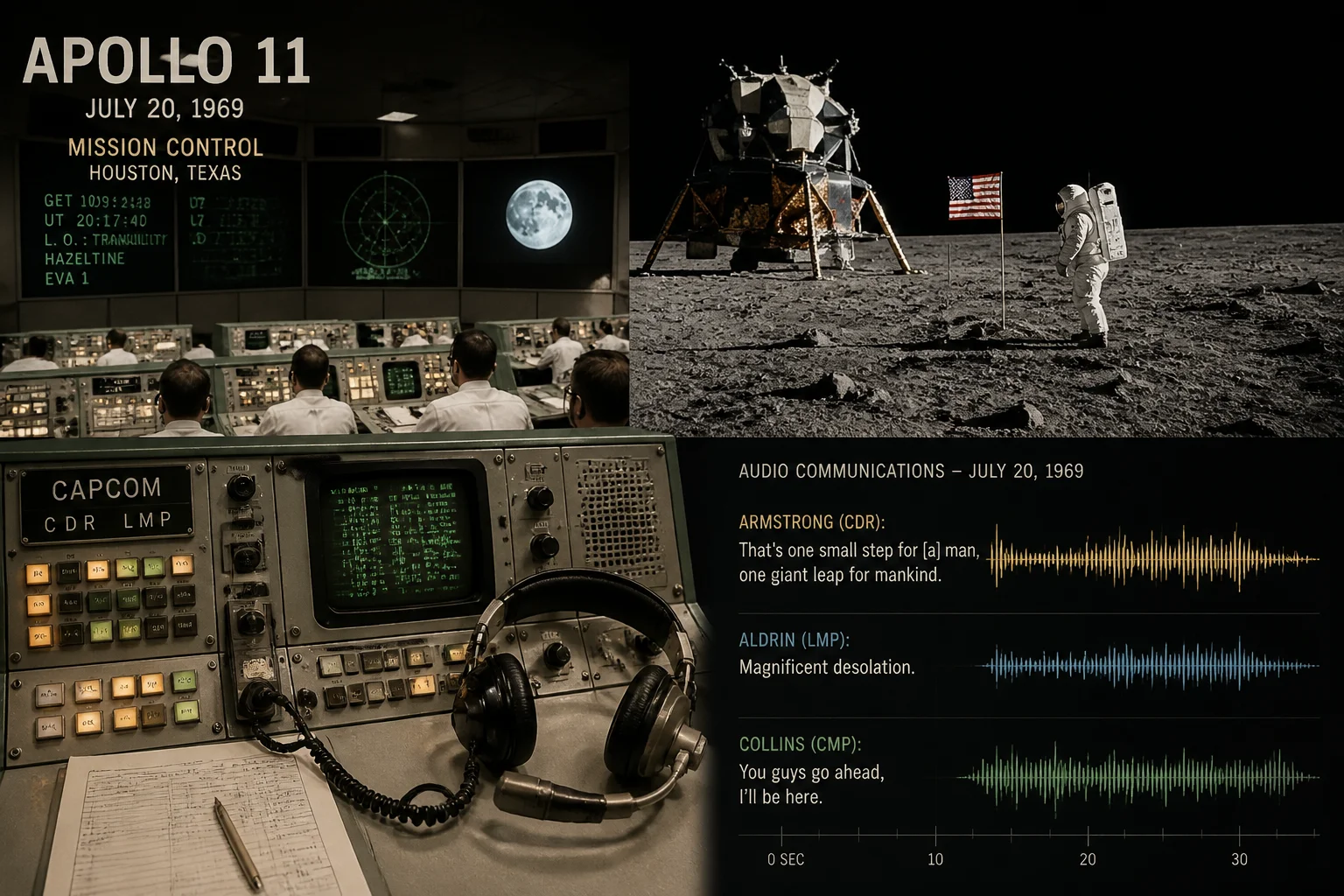
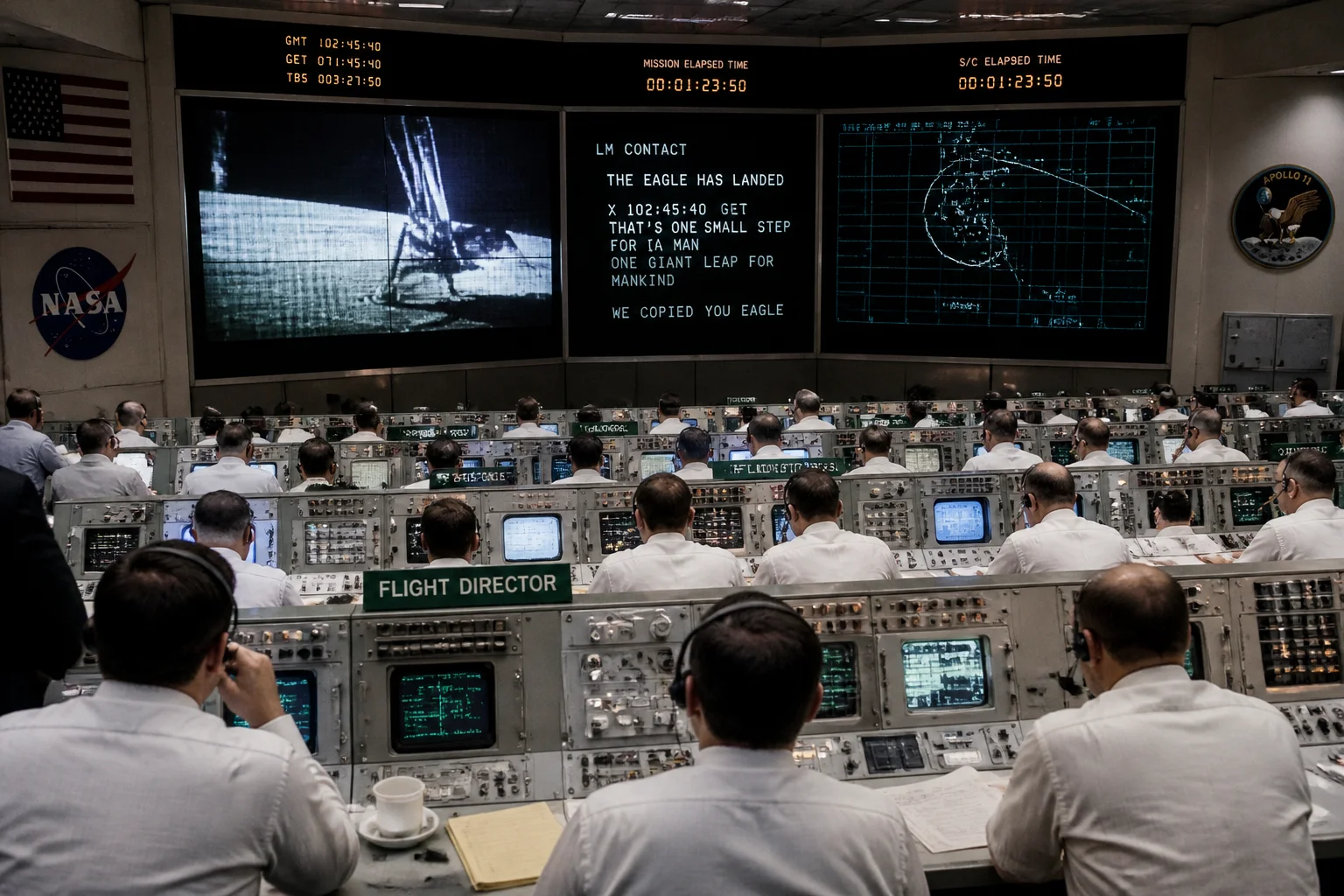
On July 20, 1969, when Neil Armstrong and Buzz Aldrin landed on the Moon, radio carried the voices of mission control and the astronauts to listeners worldwide. Television showed the images, but radio allowed people without TV access to follow every technical milestone. The landing was estimated to reach hundreds of millions of people across media formats.
The broadcast mixed live technical dialogue with composed narration, creating a global shared event in a divided world. It showed that radio could still be the primary real-time medium for transportation and disaster coverage even in the television age. The Moon landing remains one of radio broadcasting’s most widely witnessed moments.
What These Broadcasts Reveal About Radio History
These broadcasts show that radio’s history was never a single invention with a simple start date. The history of radio in US and across the world is a series of overlapping experiments, business models, and government policies. That is why the 1920s remain such a useful anchor: they turned radio from a curiosity into a scheduled public habit.
Radio’s power came less from the box than from simultaneity. When millions heard the same voice at the same time, they could imagine themselves as part of a national or global community. That sense of shared time still influences podcasts, live news, and streaming broadcasts today.
Myth-Busting the Most Famous Broadcasts
The cleanest radio stories are often the least reliable. KDKA was not the first station, the War of the Worlds panic was far smaller than legend says, and Fessenden’s 1906 transmission survives mainly through later recollections. Those qualifications do not make the broadcasts less important; they make the history more interesting.
Another myth is that radio’s rise was sudden and automatic. The impact of the radio 1920s was real, but it required licensing battles, advertising debates, technical standards, and years of habit-building. Audiences had to learn what a schedule meant and why they should invite voices into their homes.
Finally, “historic” does not mean “good.” Some of the most significant broadcasts carried war, surrender, and crisis. Radio was never a neutral tool, and its most memorable moments often arrived when ordinary listening was interrupted by extraordinary danger.
The Legacy of Radio’s Historic Moments
Each broadcast on this list survived because it became part of how a society remembered itself. Newspapers and later television archives preserved some events, but radio gave them a live, urgent texture. The voice cracking, the crowd roaring, and the signal cutting in and out are part of the historical record.
The next time you stream a live program or hear a breaking-news bulletin, you are tapping into a pattern that was built during the radio age. That pattern did not begin with one broadcast, but it became unmistakable in the decades covered here. The most historic broadcasts are not just recordings; they are proof that sound can make an era feel present.
Frequently Asked Questions
What is the history of radio in US broadcasting?
The history of radio in US broadcasting began with experimental transmissions in the early 1900s and became a commercial mass medium in the 1920s. Stations such as KDKA, WEAF, and WSM established regular schedules, advertising, and news coverage. Radio later grew into a major force in politics, music, and breaking news from the Great Depression through the Cold War.
Why were radio broadcasts in the 1920s so influential?
Radio broadcasts in the 1920s created the first scheduled, shared listening culture in American homes. They introduced regularly timed news, music, sports, and entertainment to audiences that had never experienced live audio at a distance. They also set the commercial and public-service models that still shape broadcasting today.
Did The War of the Worlds broadcast really cause mass hysteria?
Not to the extent that later legends claim. While some listeners did call police or newspapers, audience research and modern scholarship show that the panic was limited and often exaggerated by newspapers trying to discredit radio. The broadcast was still a landmark in radio drama and media influence.
What was the impact of the radio 1920s on American society?
The impact of the radio 1920s was broad: it united scattered communities around shared programs, accelerated the spread of popular music, and changed how politicians communicated. It also created new industries in advertising, broadcasting, and entertainment. Radio became the first electronic mass medium in the American home.
What does ‘radio from Danmark’ refer to in broadcast history?
It generally refers to the public radio tradition that developed in Denmark, beginning with Statsradiofonien in 1925. The country built a license-funded public service model that carried news, culture, and education to Danish listeners. That model influenced later national broadcasters in Scandinavia and beyond.

Alex Warren
Related Articles