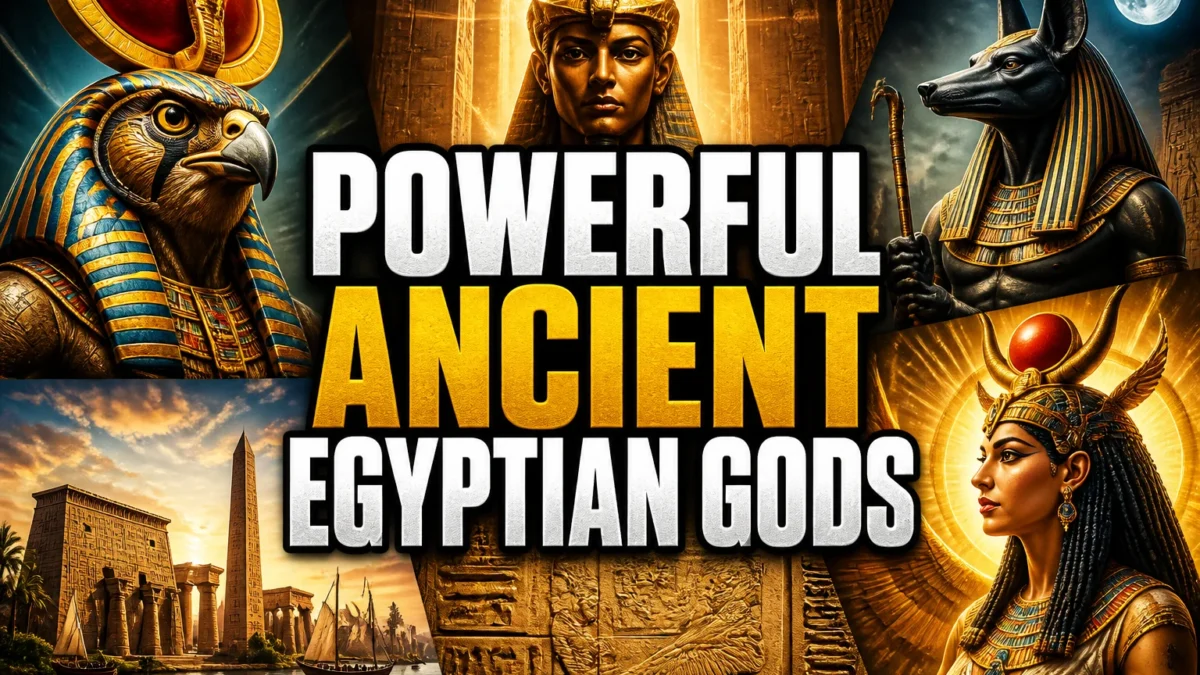
Ancient Egypt produced a vast pantheon of gods and goddesses, but asking which one was the most powerful Egyptian god is trickier than it sounds. The civilization lasted for more than three thousand years, and its religion did not have a single fixed ruler in every era. Instead, different cities and dynasties elevated different deities as the creator, the sun, or the king of the gods.
This list explores twenty great Egyptian gods and goddesses whose myths, temples, and festivals shaped life along the Nile. It includes famous names such as Osiris, Isis, Horus, and Anubis, but also less obvious forces such as Shu and Tefnut. The goal is to show what made each one powerful in its historical context.
TL;DR: Amun-Ra is usually the closest answer to who was the most powerful Egyptian god, but the title shifted by time and city among Ra, Atum, Ptah, Osiris, Isis, and Horus.
Why a Definitive Rank Is Hard to Find
Ancient Egypt was not one culture with a single holy book. It was a patchwork of regions, called nomes, each with patron deities, temple economies, and creation myths. When a city became politically dominant, its god often became the supreme deity.
The most important ancient Egyptian gods were therefore not ranked like characters in a modern game. Egyptologists look at evidence such as temple size, royal patronage, festival records, and how often a deity appears in funerary texts. Even then, the word powerful is an interpretation, not an ancient official title.
The Sun and Creation Deities
The creator gods have the strongest overall claim to being Egypt's supreme powers. Their myths explain how the cosmos emerged from watery chaos, and their temples anchored major cities.
1. Amun-Ra: The Hidden One Who Became King of the Gods
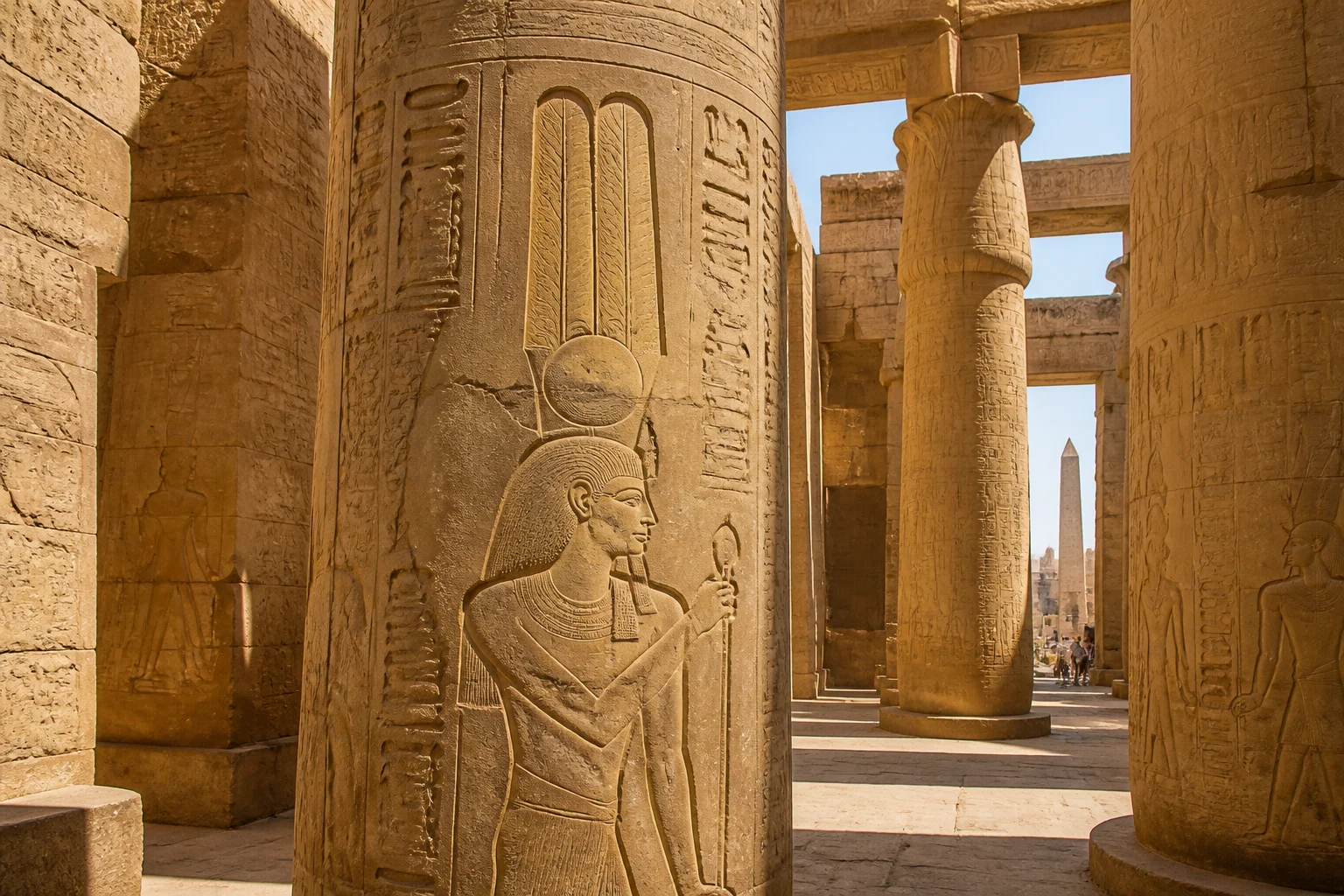
Amun began as a local god of Thebes whose name means the hidden one. When Theban princes reunified Egypt in the New Kingdom, Amun merged with the sun god Ra to become Amun-Ra. This fusion gave him both solar power and a creator identity, making him the closest figure to an official most powerful Egyptian god.
Temples such as Karnak grew into massive economic and religious centers. Pharaohs claimed Amun as divine father, and priests of Amun amassed enough wealth to rival the palace. Still, his supremacy was tied to Theban political dominance rather than an eternal, universal ranking.
2. Ra: The Sun God Who Ruled the Sky
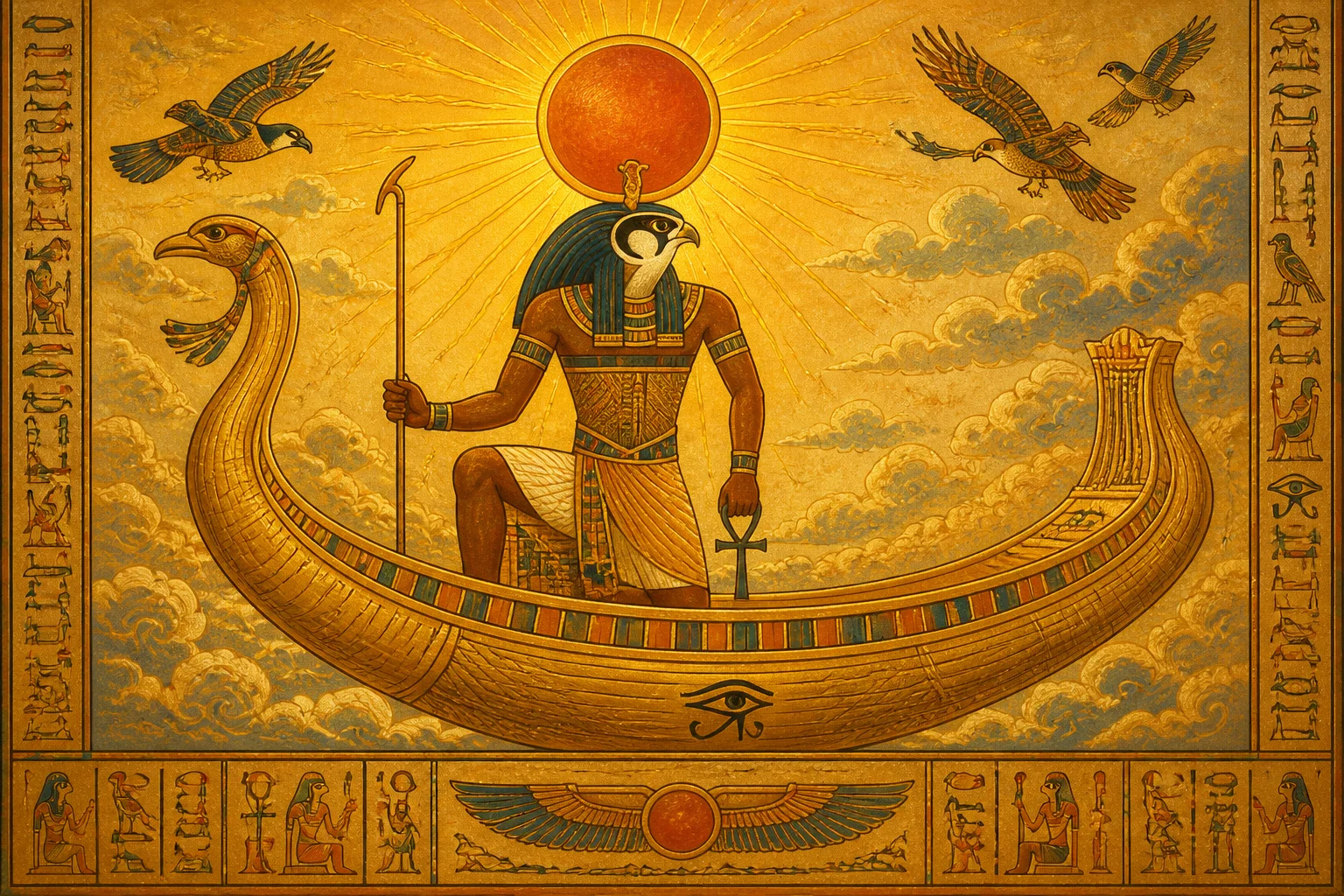
Ra was the sun god of Heliopolis and one of the oldest major deities in Egypt. Every morning he was imagined sailing across the sky in a solar barque, and at night he battled the chaos serpent Apophis in the underworld. This daily journey made him a symbol of cosmic order.
Ra often merged with other gods, creating forms such as Atum-Ra, Amun-Ra, and Khnum-Ra. He was not erased by those combinations; he was absorbed because his power was seen as essential. Many pharaohs took the title son of Ra, linking kingship directly to solar authority.
3. Atum: The Self-Created Creator
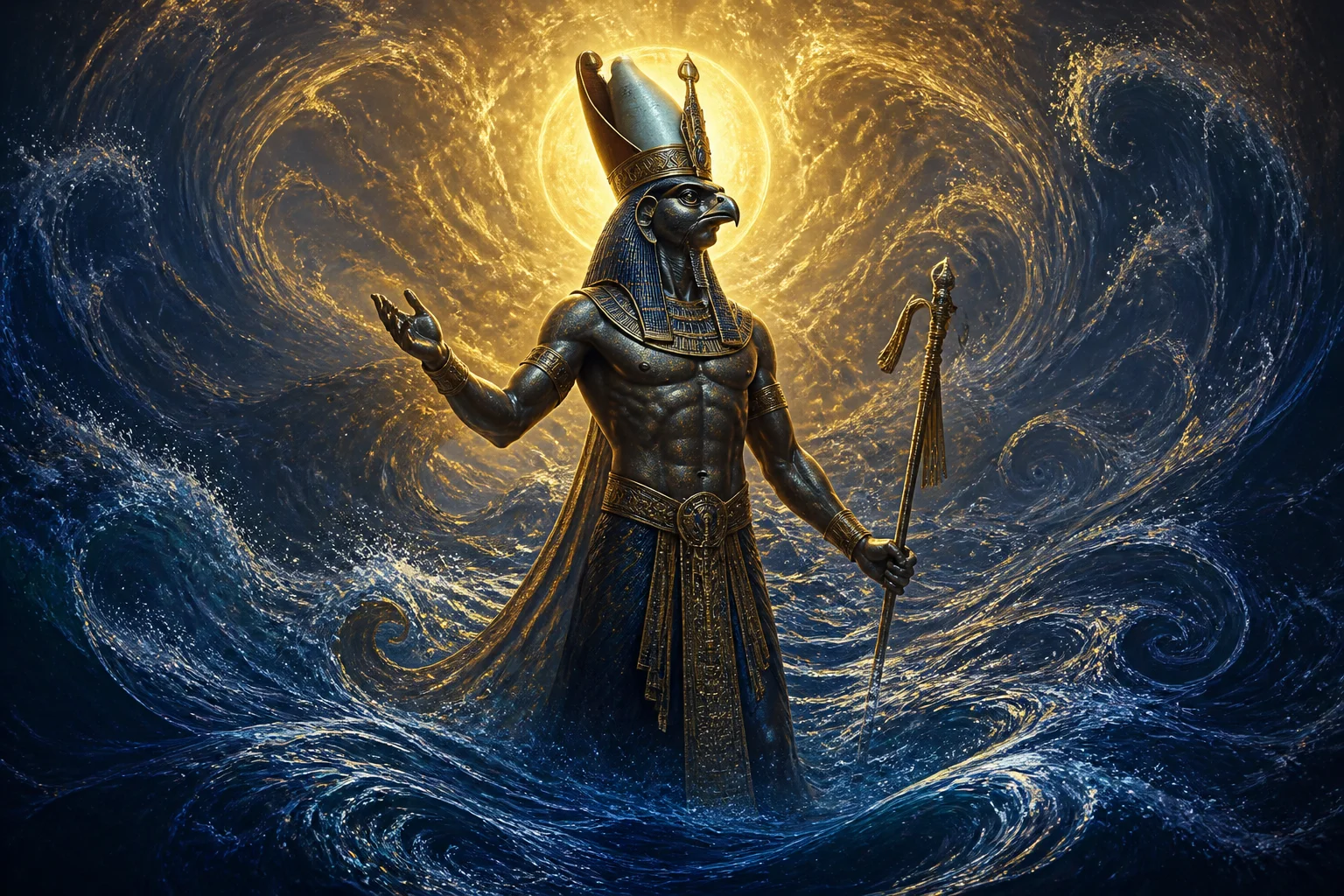
Atum was the creator god of Heliopolis who brought himself into being from the primeval waters called Nun. In one myth he created the first divine pair, Shu and Tefnut, through his own bodily fluids or shadow. This made him a god of completeness and original power.
Atum was later merged with Ra as Atum-Ra, especially at sunset, when the sun was imagined as an aging creator. He remains important because his story shows how Egyptians imagined creation beginning without outside help. That self-creation was a big claim to being the origin of everything.
4. Ptah: The Craftsman Who Spoke the World Into Being
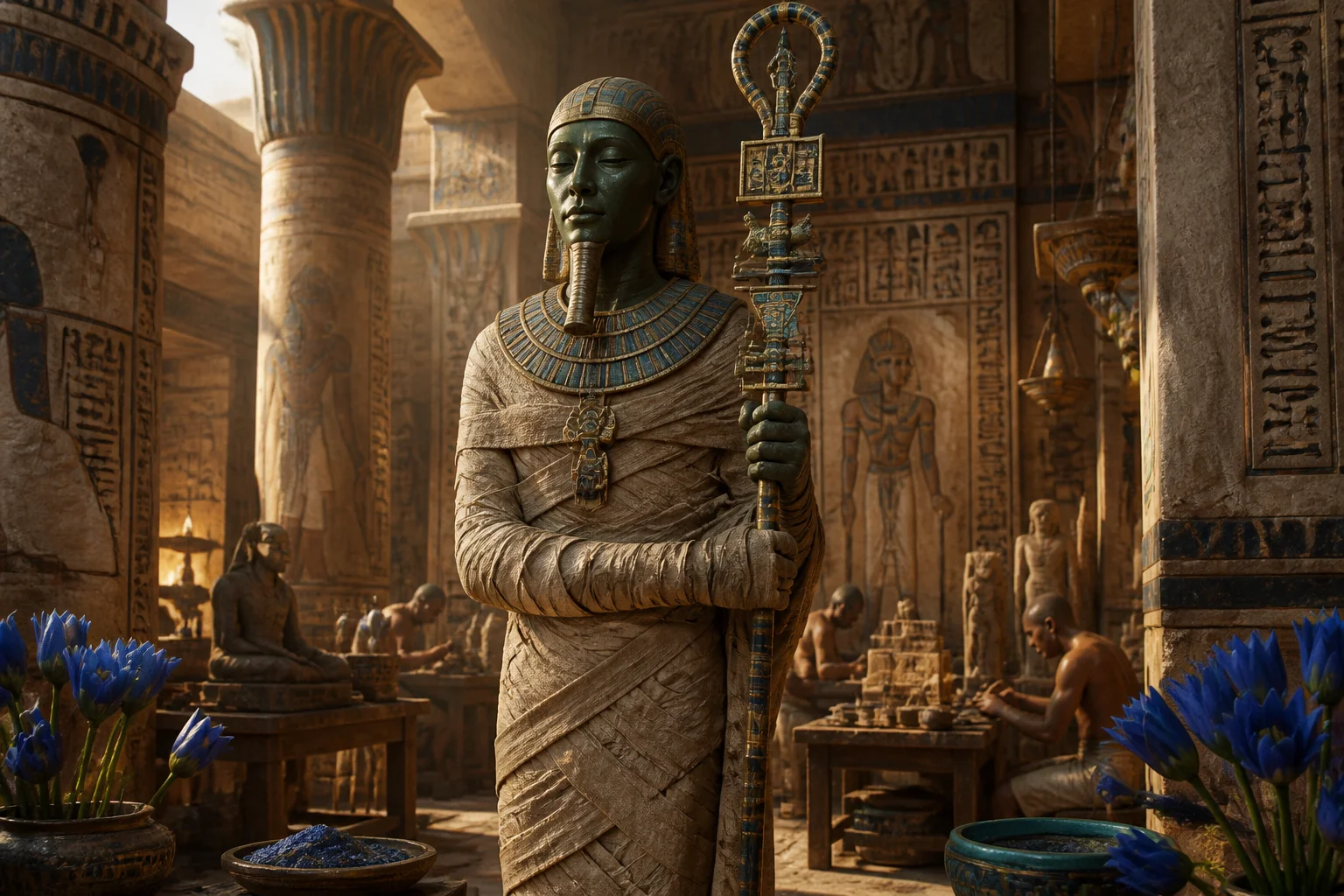
Ptah was the chief god of Memphis and patron of craftsmen, architects, and smiths. In Memphite theology, he created the universe by conceiving it in his heart and speaking it into existence with his tongue. This idea of thought-and-word is one of ancient Egypt's most philosophical creation concepts.
Ptah headed a triad with Sekhmet and Nefertem, and his temple at Memphis was a major religious center. He also guarded the royal jubilee and the arts. Although less famous today than Ra or Osiris, Ptah was absolutely one of the great Egyptian gods in his home city.
5. Khnum: The Potter Who Shaped Life
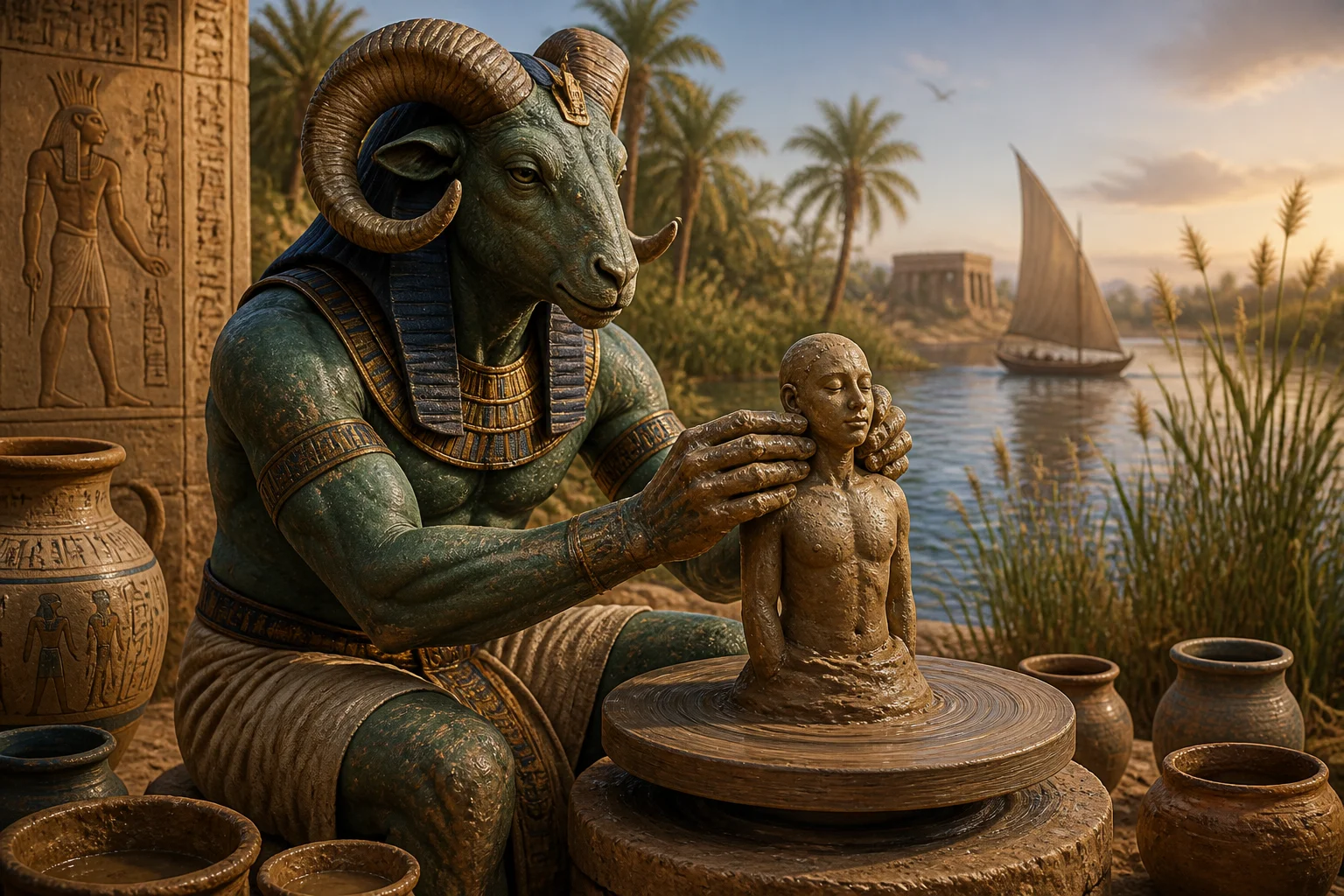
Khnum was a ram-headed creator god worshipped especially at Elephantine and Esna. Egyptians imagined him as a divine potter who shaped each person on his wheel and breathed life into them. That made him a creator not just of the cosmos but of individual human identity.
He controlled the Nile's flood in his role as a water-source deity. In some myths, he was also the ba or soul of Ra. Though he is less pop-culture famous than Anubis or Bastet, his craft-based creation story shows how local industries shaped theology.
Death, Kingship, and the Osiris Cycle
The most powerful Egyptian gods also included figures who ruled the afterlife and the living monarchy. Their stories center on death, rebirth, inheritance, and the right to rule.
6. Osiris: Lord of the Underworld and Rebirth
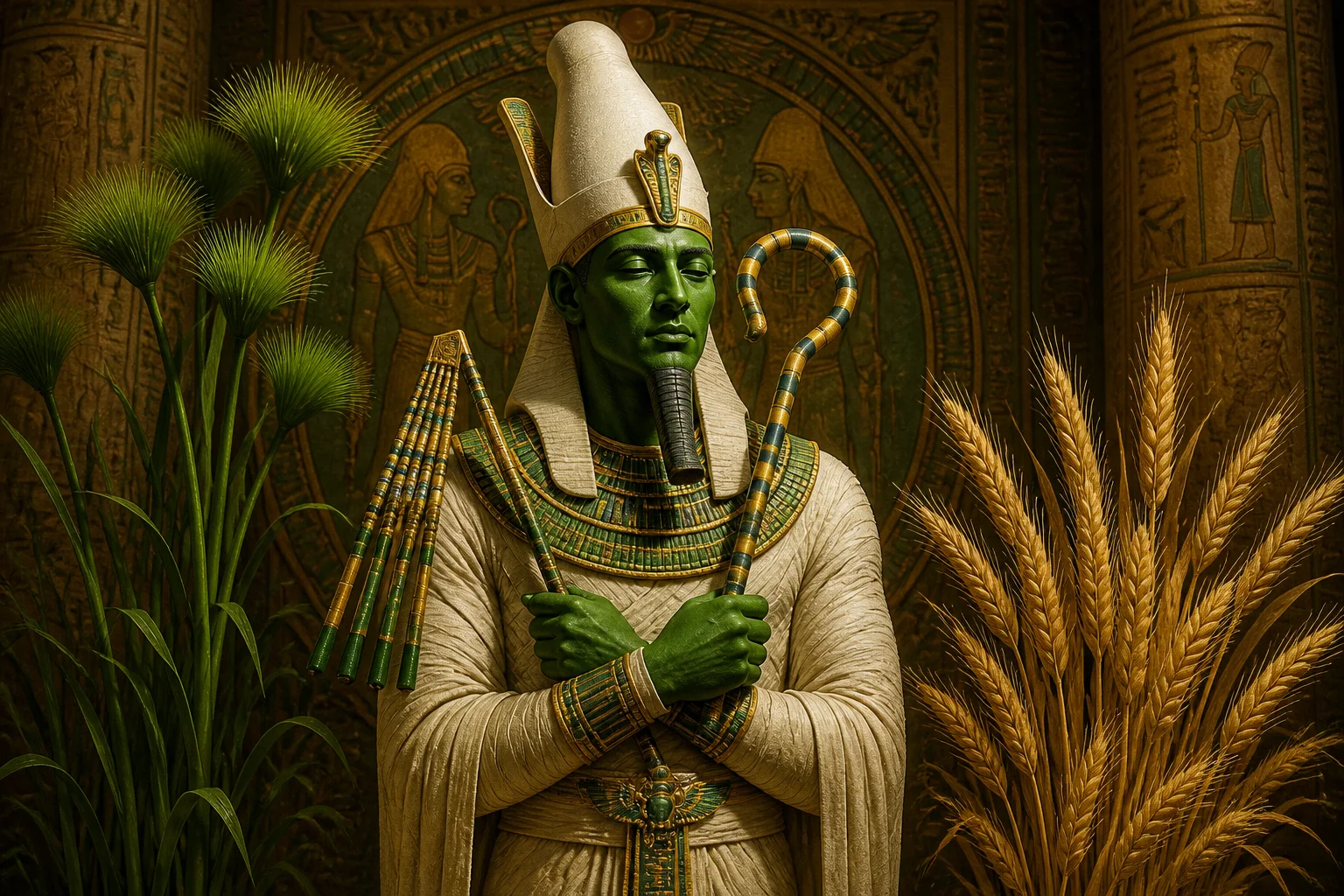
Osiris was a king god who became ruler of the dead after being murdered by his brother Set. His sister-wife Isis reassembled his body and revived him long enough to conceive Horus. This cycle made Osiris the central symbol of death, resurrection, and the fertile Nile.
Every Egyptian hoped to be welcomed by Osiris in the afterlife. He was not a sun god in the usual sense, but his role as judge and redeemer gave him enormous emotional power. By the Late Period, Osiris was one of the most widely worshipped gods in Egypt.
7. Isis: The Most Powerful Egyptian Goddess of Magic and Thrones
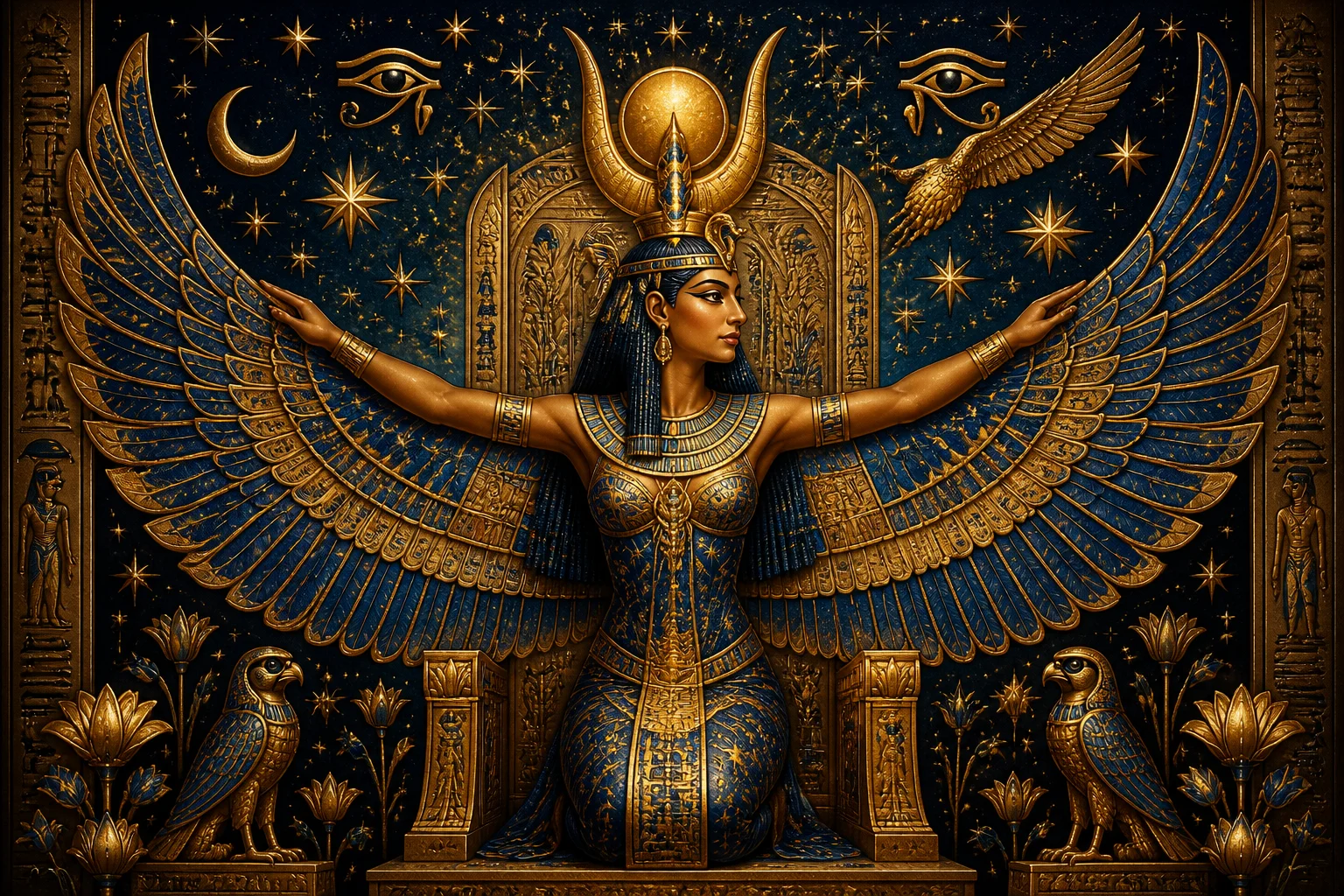
Isis was the sister-wife of Osiris and mother of Horus, and she became one of ancient Egypt's most beloved deities. Egyptian sources credit her with great magic, cleverness, and loyalty, especially in the myth where she finds and reassembles Osiris. Her name may be connected to the word for throne, tying her to royal power.
Isis later developed a cult that spread beyond Egypt into the Roman world. She was invoked for healing, protection, and motherhood. If you are asking who was the most powerful Egyptian goddess, Isis is the strongest overall candidate for longevity, influence, and mythological skill, though not the only answer.
8. Horus: The Living King in the Sky
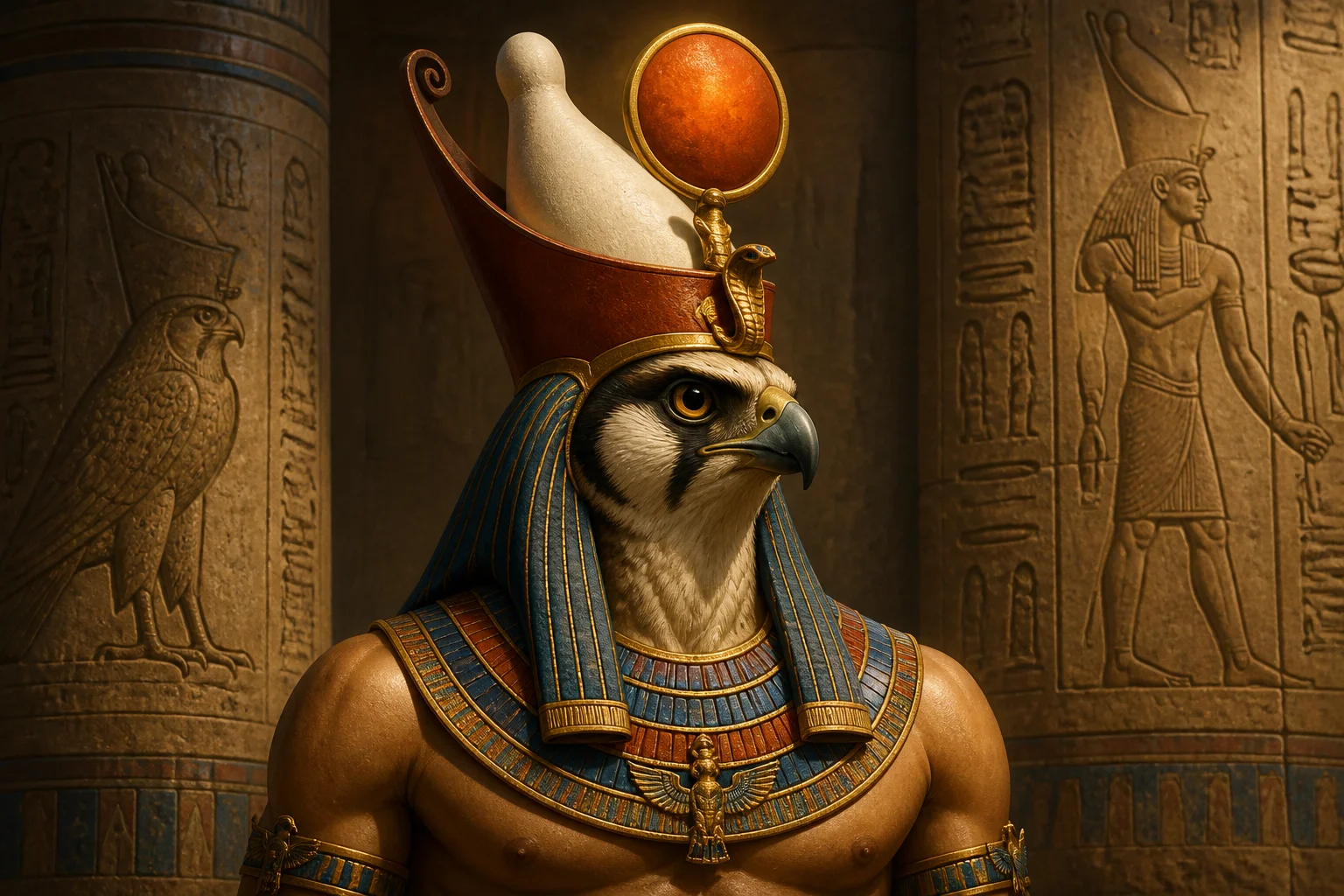
Horus was the falcon-headed sky god and son of Isis and Osiris. He fought Set for the throne after Osiris's death, and his victory made him the model for every living pharaoh. The pharaoh was often called the living Horus, which made Horus essential to Egyptian kingship.
Horus had many forms, including Horus the Child and Horus of the Horizon. His eye was a protective amulet and symbol of wholeness. Although he was not usually called the creator, his link to royal legitimacy made him one of the most politically powerful gods in Egypt.
9. Set: The Strong but Dangerous God of Chaos
Set, also spelled Seth, was the god of confusion, storms, deserts, and foreign lands. In the Osiris myth he murders his brother, yet earlier texts show him as a defender of Ra's sun barque against Apophis. That dual nature makes him one of Egyptian myth's most misunderstood figures.
Set was not simply evil in the modern sense. He represented necessary chaos and strength, but he could become a scapegoat in times of political crisis. His power was real, but it was dangerous, which is why he was both worshipped and ritually rejected.
10. Nephthys: The Quiet Power Behind Funerals
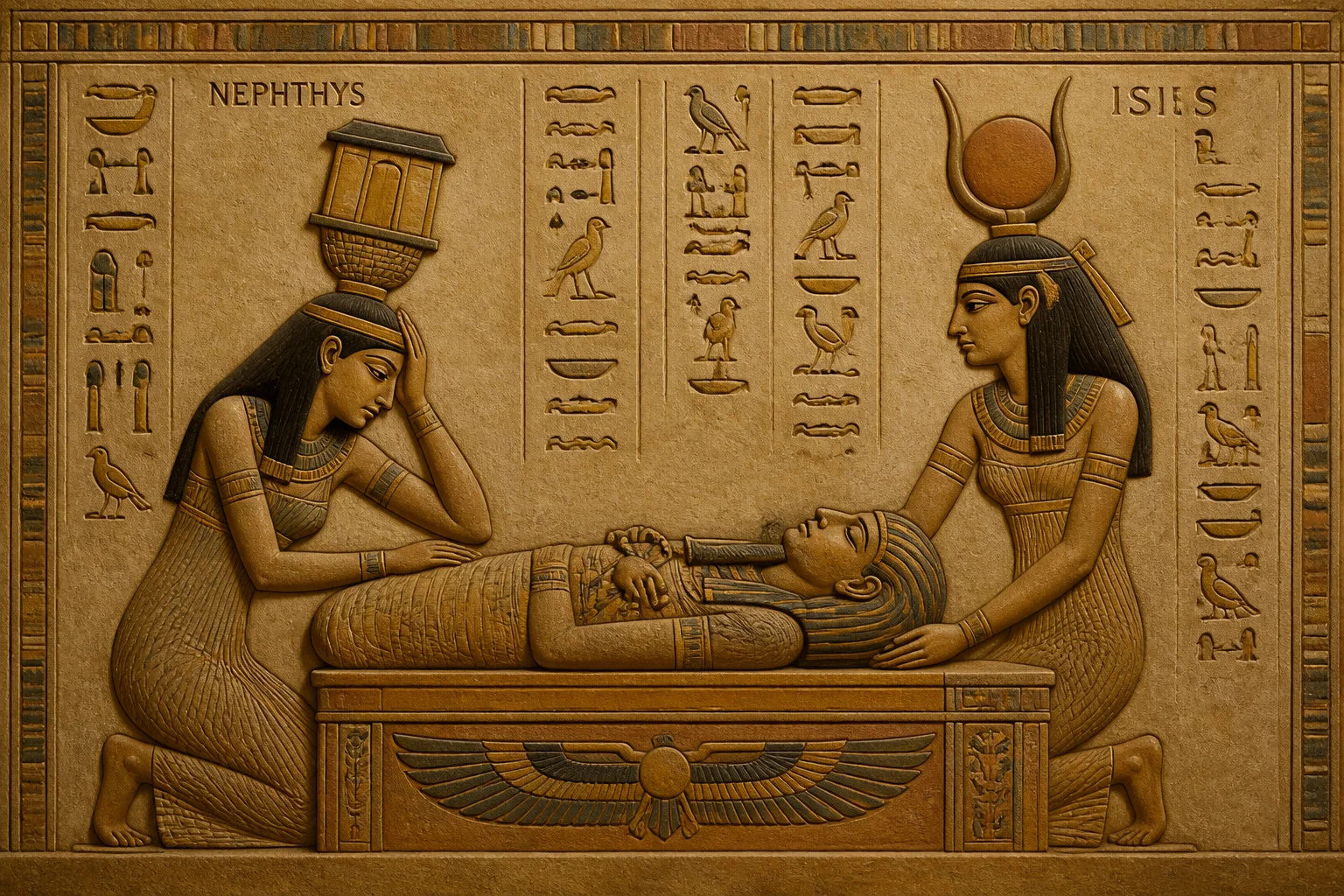
Nephthys was the sister of Isis and Osiris and the wife of Set in many myths. She helped Isis search for and mourn Osiris, and she protected the dead as a mourner goddess. Her name means lady of the house, but her role extended far beyond domestic life.
She often appears with Isis on coffins and canopic jar texts. Nephthys was not a minor figure; she was a full member of the divine family. Her steady presence shows that power in Egyptian myth could also be protective and funerary, not just solar or royal.
11. Anubis: The Guardian of the Dead
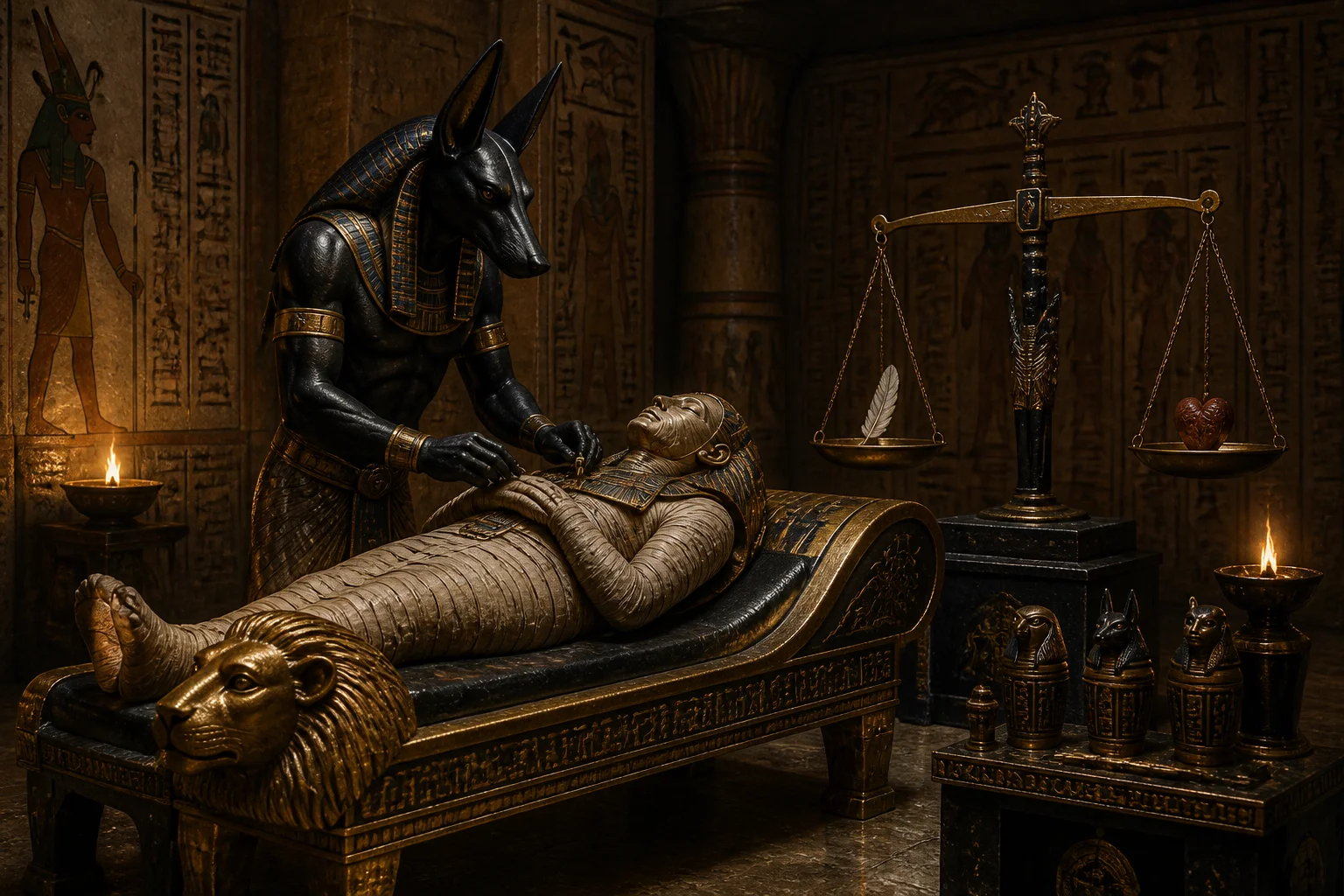
Anubis, the jackal-headed god, presided over mummification and the weighing of the heart. He guided souls into the hall of judgment and checked that the scales were fair. This made him one of the most important ancient Egyptian gods for individual salvation.
Anubis was especially popular because death was a shared human concern. He was often called foremost of the westerners, meaning the dead in the western necropolises. Later traditions made him the son of Osiris and Nephthys, but earlier sources call him the son of Ra.
Goddesses of Protection, Power, and Devotion
Egyptian goddesses were not secondary figures. Several governed war, healing, kingship, and the cosmic order, and their cults could be enormous.
12. Hathor: The Most Famous Egyptian Goddess of Joy and Love
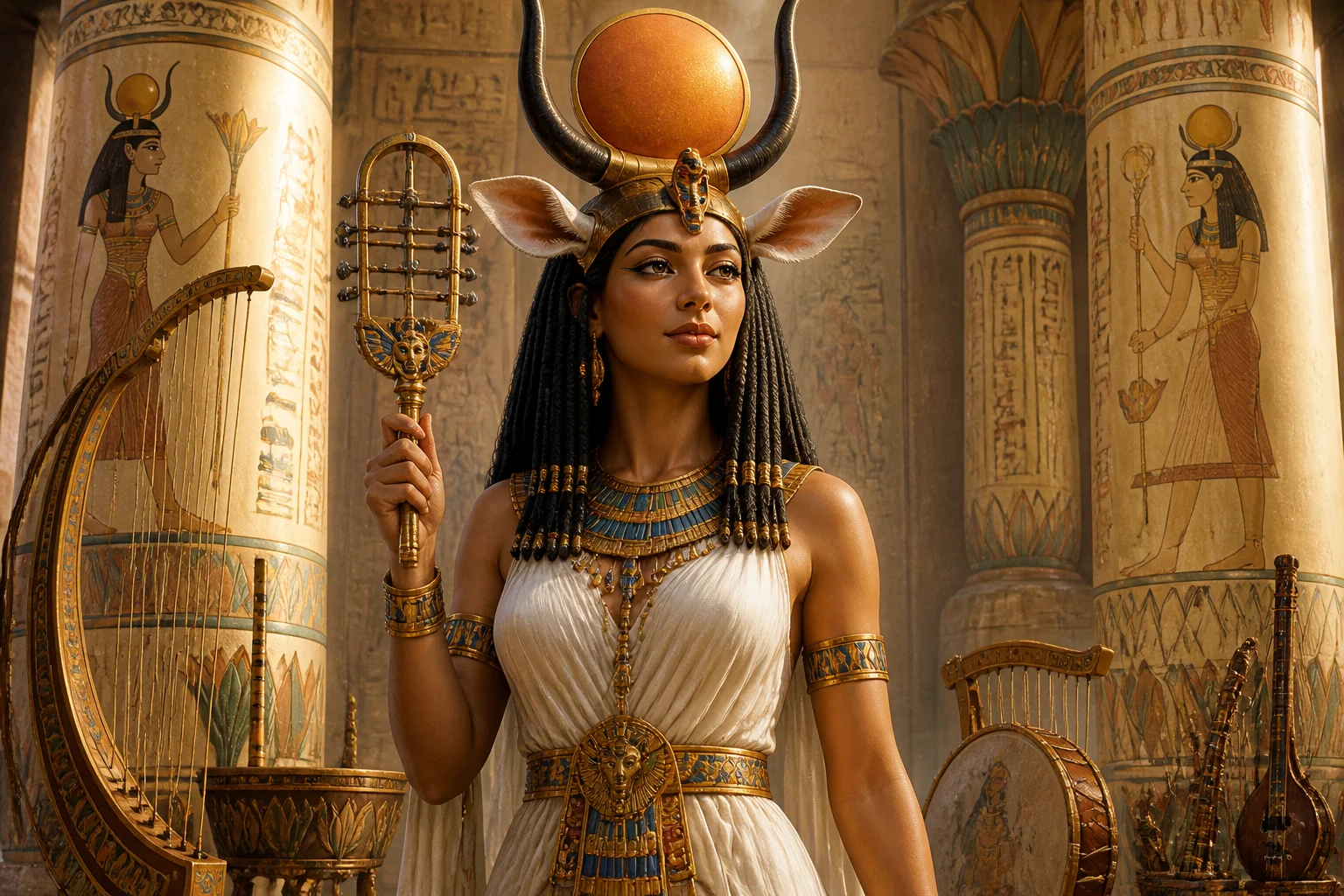
Hathor was a cow-headed or cow-eared goddess of love, music, dance, beauty, and motherhood. She could also transform into a fierce ally when needed, sometimes merging with Sekhmet in myth. Her worship was hugely popular among ordinary Egyptians and kings alike.
Temples such as Dendera were dedicated to Hathor, and she was honored with mirrors, sistrums, and joyful festivals. If you seek the most famous Egyptian goddess in art and daily devotion, Hathor has a very strong claim. Her warmth made her accessible, while her solar connections kept her cosmic.
13. Sekhmet: The Strongest Egyptian Goddess of Wrath and Healing
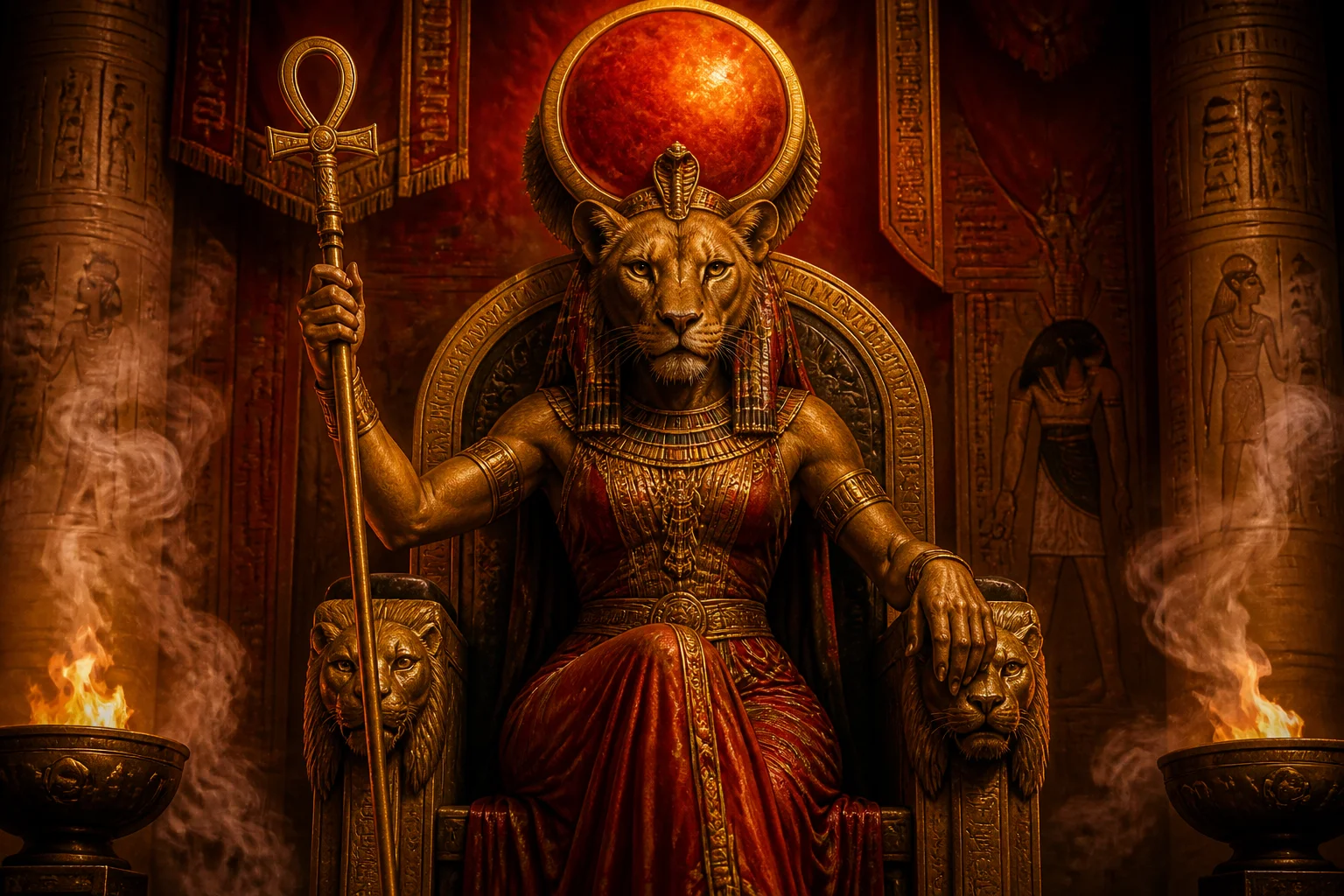
Sekhmet was a lioness-headed goddess of war, plague, and the burning power of the sun. In the myth of the destructive goddess, she nearly wiped out humanity before Ra tricked her into drinking red beer. That story shows her as a force beyond ordinary control.
Priests also invoked Sekhmet for healing, because the one who sent disease could remove it. Her statues were sometimes made in large numbers to calm her power. For raw destructive force, Sekhmet is often called the strongest Egyptian goddess, though Isis rivals her in magical influence.
14. Bastet: The Protective Cat Goddess
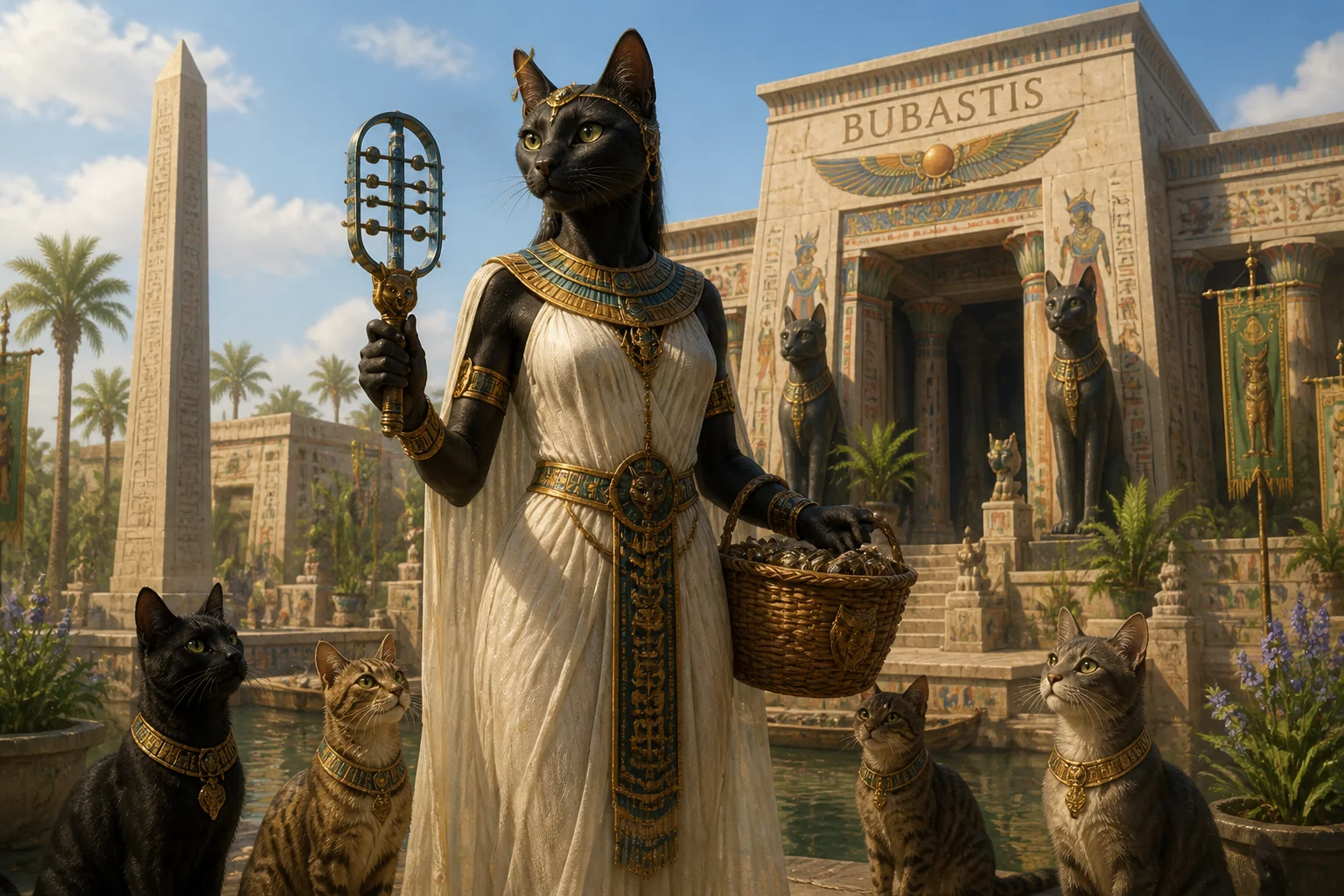
Bastet began as a lioness warrior goddess, but over centuries she softened into a cat-headed protector of home, fertility, and music. Her cult center at Bubastis held famous festivals described by Greek writers. She remained a guardian against illness and evil spirits.
Bastet was not merely cute; she was a solar protector and a daughter of Ra. Her dual nature reflects the Egyptian view that a gentle household cat still descends from a wild killer. That blend of affection and power made her one of Egypt's most popular goddesses.
15. Ma'at: The Goddess Who Was Also Cosmic Order
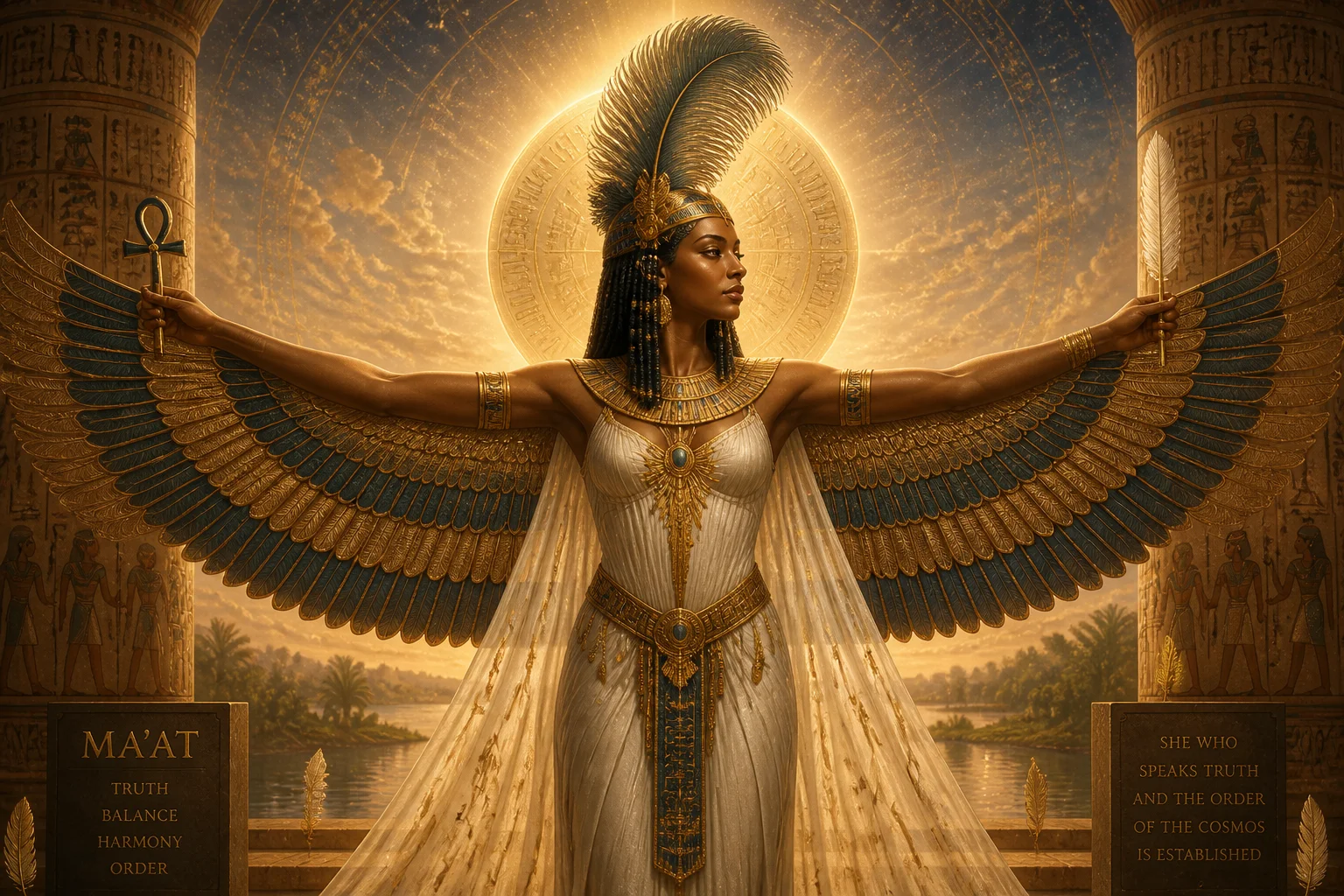
Ma'at was the goddess of truth, justice, balance, and the right order of the universe. She was shown as a woman with an ostrich feather on her head, and that feather weighed against the heart in the afterlife. Without Ma'at, the world would fall back into chaos.
Pharaohs were expected to uphold Ma'at, and judges were her representatives. Ma'at was less a deity with a dramatic myth than an abstract divine principle. Still, that principle was so central that even the mightiest gods were said to live by Ma'at.
Sky, Wisdom, and Other Great Gods
Several other deities held immense power in specific cities or in the structure of the cosmos itself. They remind us that Egyptian religion included far more than the usual mummy and cat icons.
16. Thoth: The Scribe Who Invented Writing and Magic
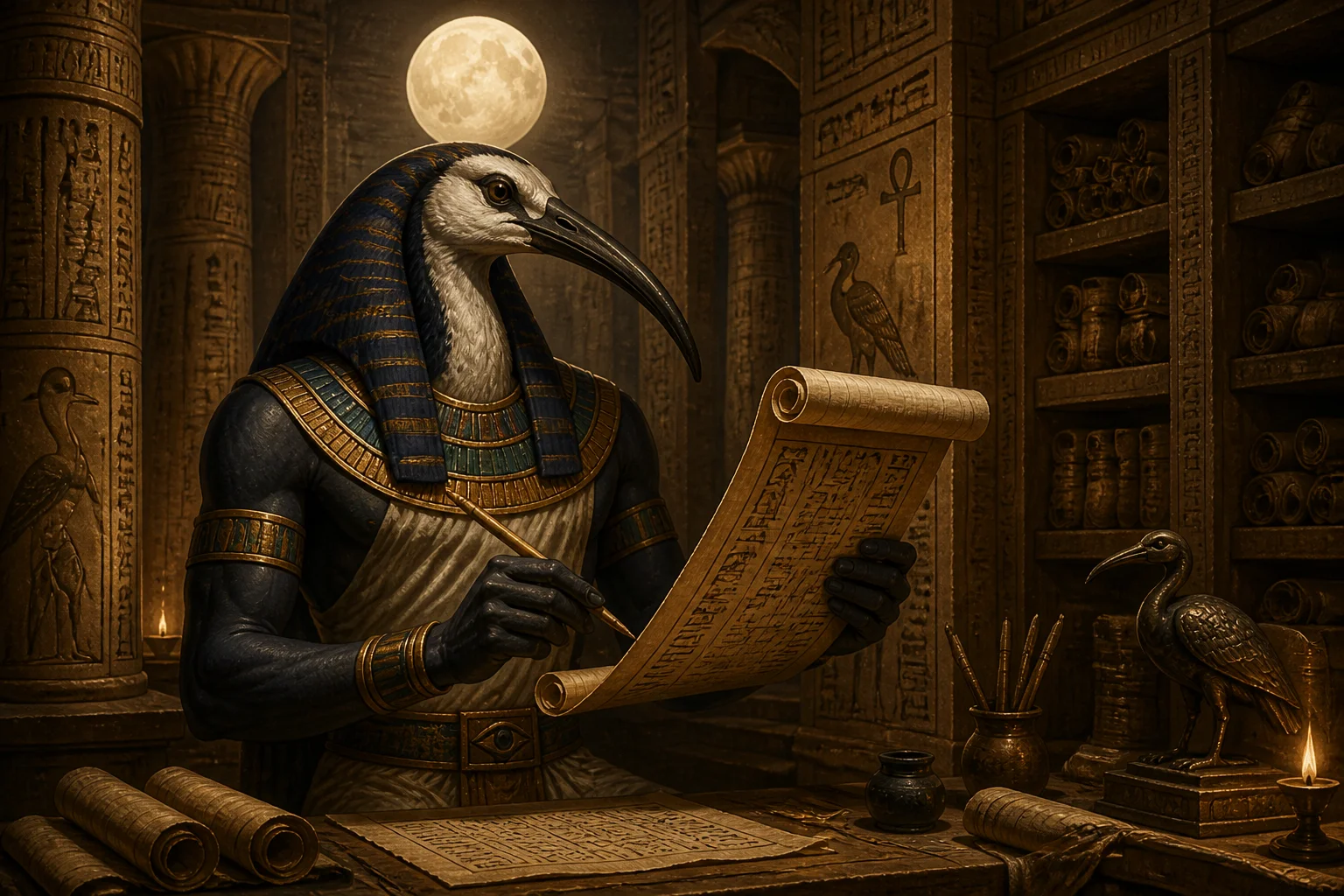
Thoth was the ibis-headed or baboon god of wisdom, writing, science, and magic. He was the scribe of the gods and the inventor of hieroglyphs, and he kept records at the weighing of the heart. His knowledge gave him a different kind of power from the warrior gods.
Thoth could mediate between Horus and Set, heal injured eyes, and regulate the calendar. He was worshipped at Hermopolis and connected to the moon. If any god could be called the best Egyptian god in terms of intellect and magical precision, Thoth is a strong contender.
17. Shu: The God of Air Who Holds Up the Sky
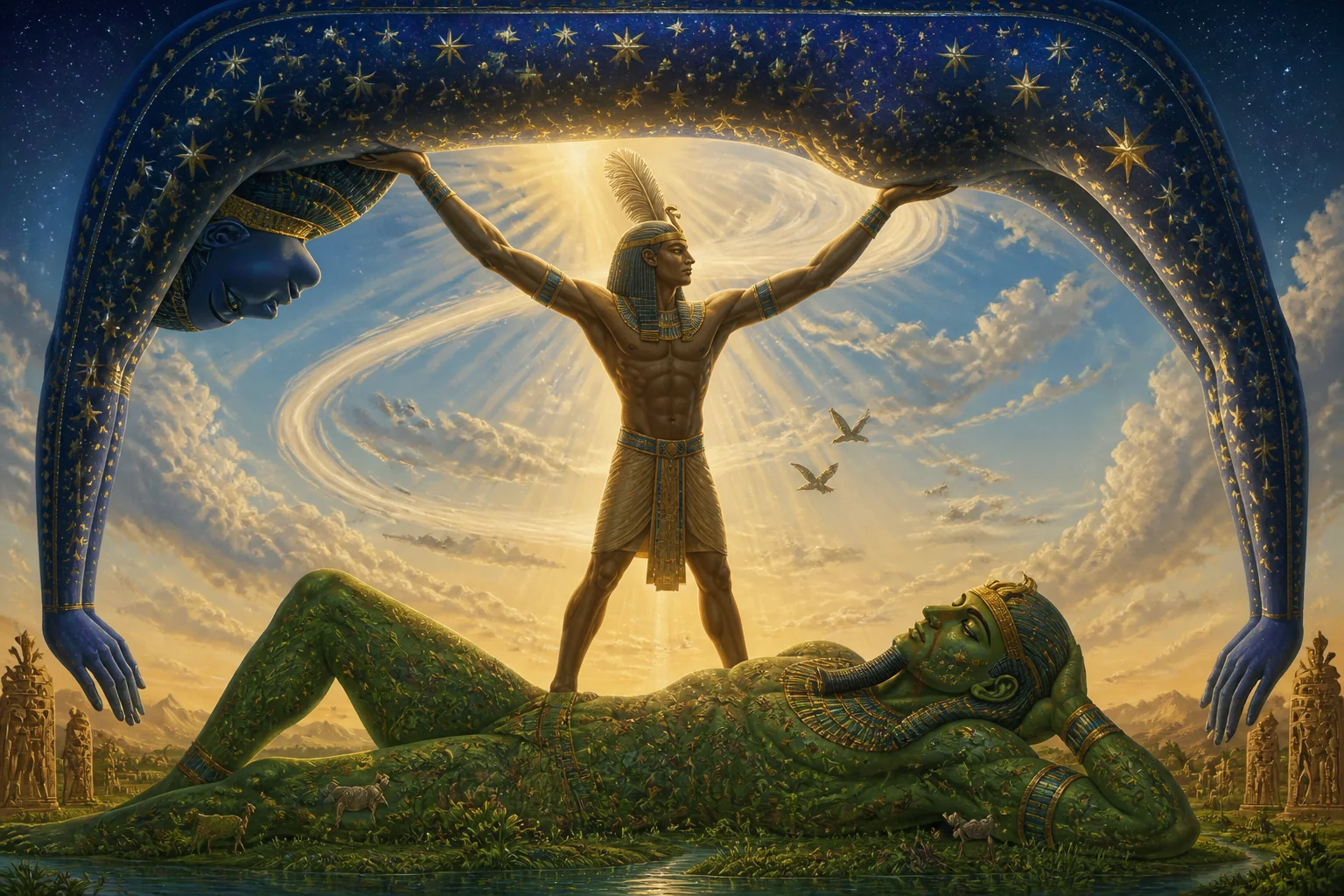
Shu was the god of dry air and light, son of Atum and brother-husband of Tefnut. He separated the earth god Geb from the sky goddess Nut and held Nut above them, creating the space in which life could exist. This made him a foundational cosmic force.
Shu appears less often in popular culture, but his role was essential in Egyptian world structure. He was sometimes linked with the sun's light. His calm, sustaining strength is a reminder that not all power was dramatic destruction.
18. Tefnut: The Moisture Goddess With a Fierce Side
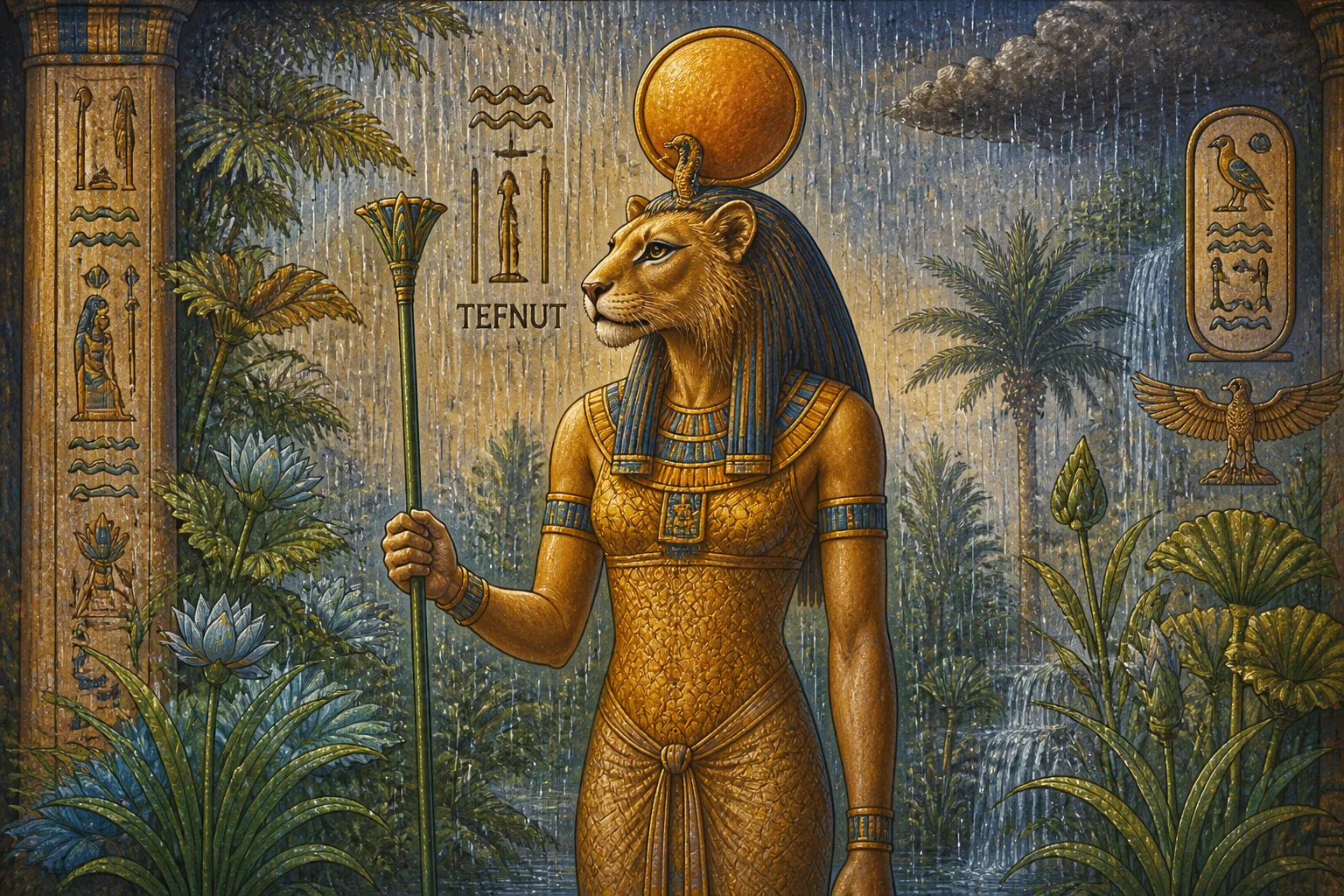
Tefnut was the goddess of moisture, dew, and rain, and the sister-wife of Shu. Together with Shu, she was one of the first deities created by Atum. Her presence represented the watery atmosphere that made Egypt's dry landscape habitable.
Myths describe Tefnut as a fierce lioness who once retreated to Nubia and had to be coaxed back by Thoth and Shu. This shows she was not only gentle moisture. Her power could be wild and solar, linking her to the leonine goddesses who defended Ra.
19. Sobek: The Crocodile God of Military Might and the Nile
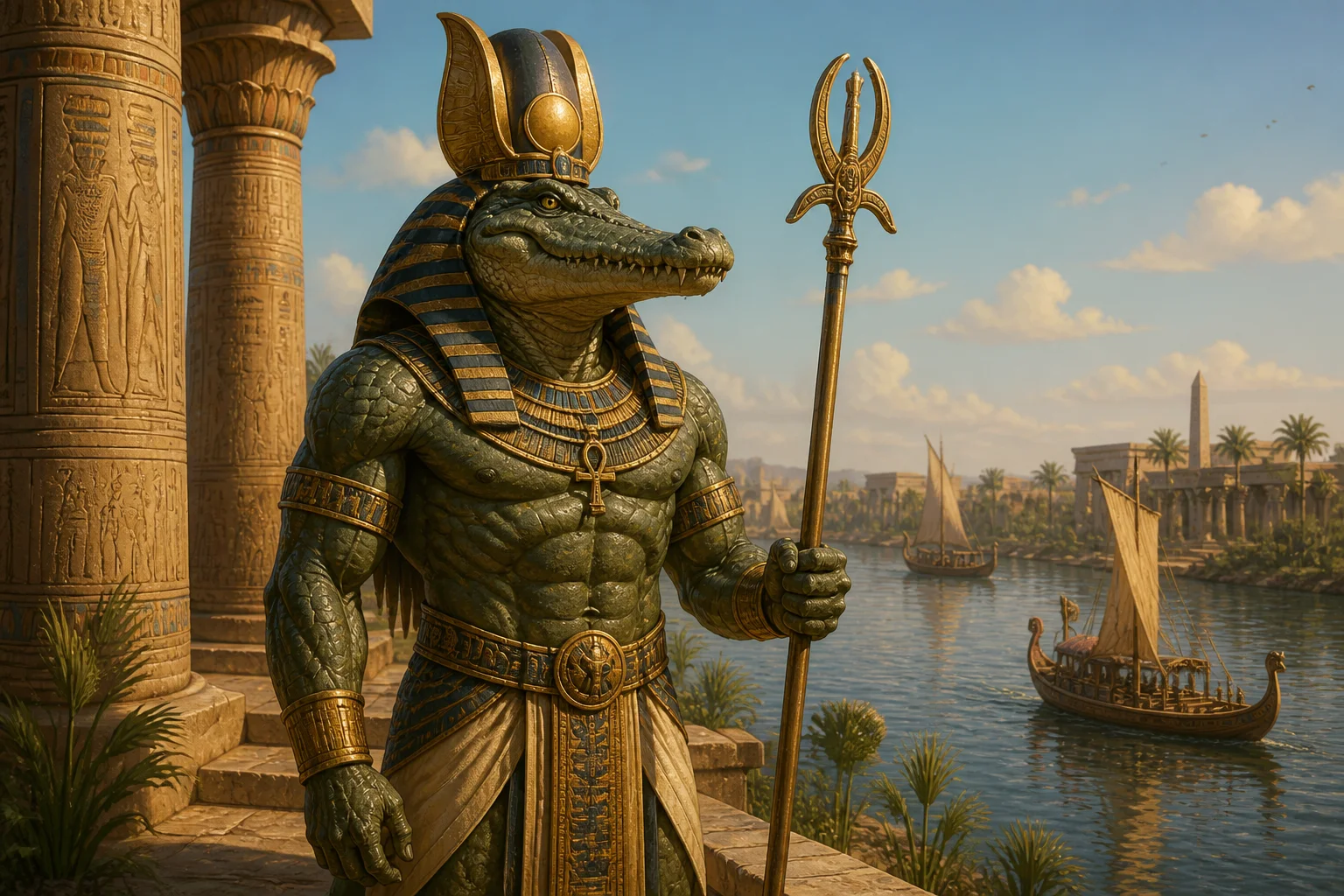
Sobek was the crocodile god of the Nile, pharaonic power, and military courage. Egyptians saw crocodiles as deeply dangerous, so Sobek could be both feared and honored as a protector. At sites such as Kom Ombo, he received temple worship and mummified crocodile offerings.
He was sometimes merged with Horus or Ra, which elevated his status. In the Faiyum, he was a major regional deity with a rich cult. Sobek shows how the Egyptian gods most powerful in local regions could be drawn from the Nile's most intimidating animals.
20. Mut: The Mother Goddess and Divine Queen
Mut was the mother goddess of Thebes and the consort of Amun. Her name means mother, and she was depicted as a vulture-headed or crowned woman. In the Theban triad, she stood beside Amun and their son Khonsu as a royal divine family.
Mut could also take on lioness traits, linking her to Sekhmet and other fierce goddesses. Her temple at Karnak was part of one of Egypt's largest religious complexes. As the feminine counterpart to Amun-Ra, she held an exalted place among the most important ancient Egyptian gods.
How Worshippers Actually Experienced These Gods
Ordinary Egyptians experienced these deities through festivals, household altars, amulets, and votive offerings. The great state temples were mostly closed to the public, but festival processions brought divine images into the streets. In that public setting, people could ask questions and offer prayers at outer gates.
Many surviving texts come from royal and priestly contexts, so our view of the gods is shaped by elites. Still, personal names such as Hori or Satiah show that families identified with specific gods. That everyday devotion helps explain why some deities remained beloved for centuries beyond their city's political rise.
Who Was the Most Important God in Ancient Egypt?
There is no single answer that fits all three thousand years of Egyptian history. In the Old Kingdom, Ra or Atum in Heliopolis and Ptah in Memphis had the strongest royal backing. In the New Kingdom, Amun-Ra of Thebes became the empire's supreme state god, and his priests called him king of the gods.
For personal religion, Osiris and Isis may have touched more ordinary lives than any solar deity. Osiris ruled the afterlife that everyone hoped to enter, while Isis offered healing and magic. So the most honest answer is that the most important title was regional, historical, and personal.
Modern lists that crown one single best Egyptian god often overlook that nuance. It is more accurate to say that Ra, Amun-Ra, Osiris, Isis, Horus, Ptah, and Sekhmet all functioned as supreme powers in their own contexts. That is less tidy, but it fits the evidence.
Final Verdict: Who Was the Most Powerful Egyptian God?
If you need a single name, Amun-Ra is the closest answer to who was the most powerful Egyptian god during Egypt's imperial peak. He combined the hidden creator of Thebes with the visible solar power of Ra. His temples and priesthood dominated the New Kingdom.
But the title is a modern shorthand, not an ancient fixed fact. The Egyptian gods most powerful in one century could lose prominence in another. That shifting cast is exactly what makes Egyptian religion so rich and so worth studying.
Frequently Asked Questions
Who was the most powerful Egyptian god?
Amun-Ra is the closest single answer. During the New Kingdom, the Theban god Amun merged with the sun god Ra and was worshipped as king of the gods with the huge temple complex at Karnak. However, in other periods Ra, Atum, Ptah, or Osiris held supreme status in their own regions, so there was no permanent official top god.
Which Egyptian gods were the most powerful?
The strongest candidates are usually the creator and sun gods—Ra, Amun-Ra, Atum, and Ptah—along with Osiris, Isis, Horus, and Sekhmet. Their power came from creation, kingship, the afterlife, magic, or destructive solar force. Different cities would have ranked them differently.
Who was the most important god in ancient Egypt?
The answer changes by era and region. In the Old Kingdom, Ra and Atum had major Heliopolis influence, while Ptah was central in Memphis. In the New Kingdom, Amun-Ra became the supreme state god, and Osiris dominated afterlife beliefs in every period.
Who is the strongest Egyptian goddess?
Sekhmet and Isis are the top contenders. Sekhmet has the raw destructive power of war, plague, and the sun, while Isis has unmatched magical skill, brilliant strategy, and a cult that spread across the Roman world. Hathor is another powerful candidate through her solar and fertility roles.
Who was the most powerful Egyptian goddess?
Isis is usually considered the most powerful Egyptian goddess because of her magical expertise, role as throne-goddess, and vast international cult. Sekhmet is her closest rival in raw force and was both feared and invoked for healing.
Who is the most famous Egyptian goddess?
Isis is the most globally famous Egyptian goddess today, and she was widely worshipped even in Roman times. Hathor and Bastet are also extremely recognizable through ancient art and modern pop culture. Isis stands out for her sprawling international influence.

Alex Warren
Related Articles