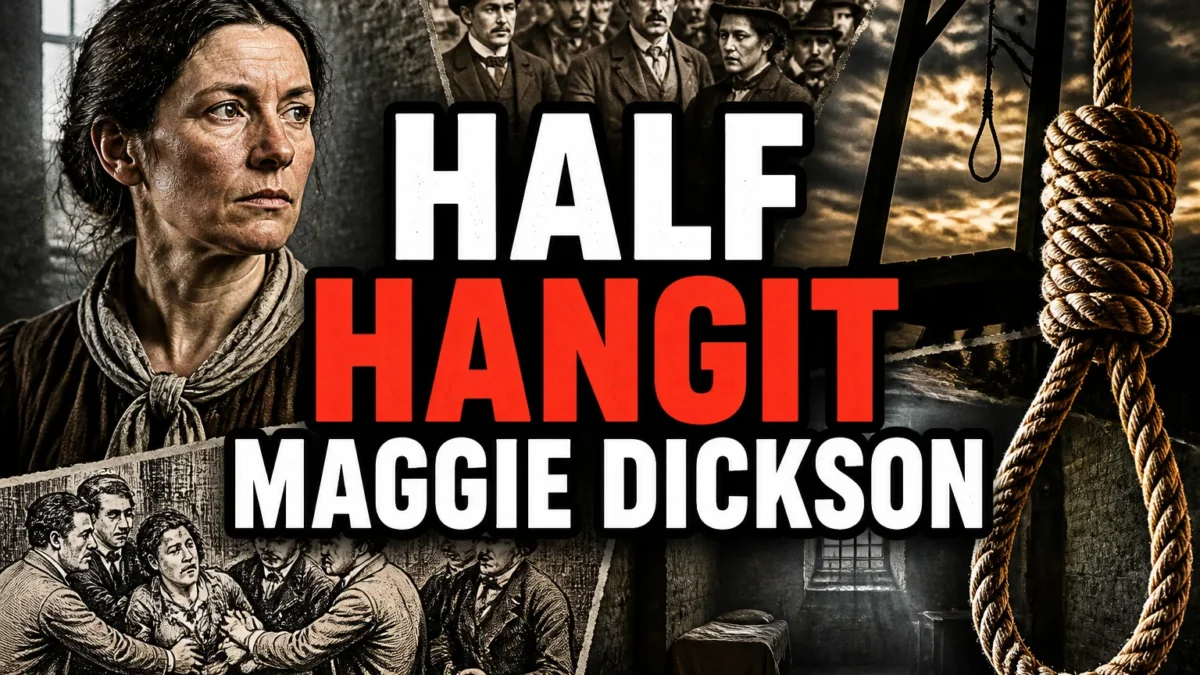
In the summer of 1724, an Edinburgh fishwife named Maggie Dickson was led to the gallows in the Grassmarket, condemned to die for concealing a pregnancy. The hangman did his grim work and the crowd dispersed, believing justice had been served. Then, as her body was being carted away for burial, someone noticed movement inside the wooden coffin. What followed turned a routine execution into one of Scotland's strangest legal cases and gave birth to the legend of Half Hangit Maggie.
Nearly three centuries later, her story still captivates people. It sits at the crossroads of law, medicine, folklore, and a society that punished desperate women with breathtaking cruelty. The details have been embellished over the years, but the core events are well documented in contemporary records.
TL;DR: Maggie Dickson survived her own hanging in Edinburgh in 1724, was legally declared dead, and went on to live for decades as the legendary "Half Hangit Maggie."
The Real Maggie Dickson: What We Actually Know
The historical record on Maggie Dickson is thinner than most retellings suggest. Contemporary sources confirm the basic outline of her story, but many of the vivid details come from later folklore. She was a fishwife and hawker from Musselburgh, a town just east of Edinburgh, though some accounts place her origins elsewhere in the Lothians.
Her surname was sometimes recorded as Dickson, sometimes as Dixon, and she was married to a man named Dickson who worked as a fisherman. The couple had at least one child together. Her age at the time of the hanging is usually estimated as being in her early to mid twenties.
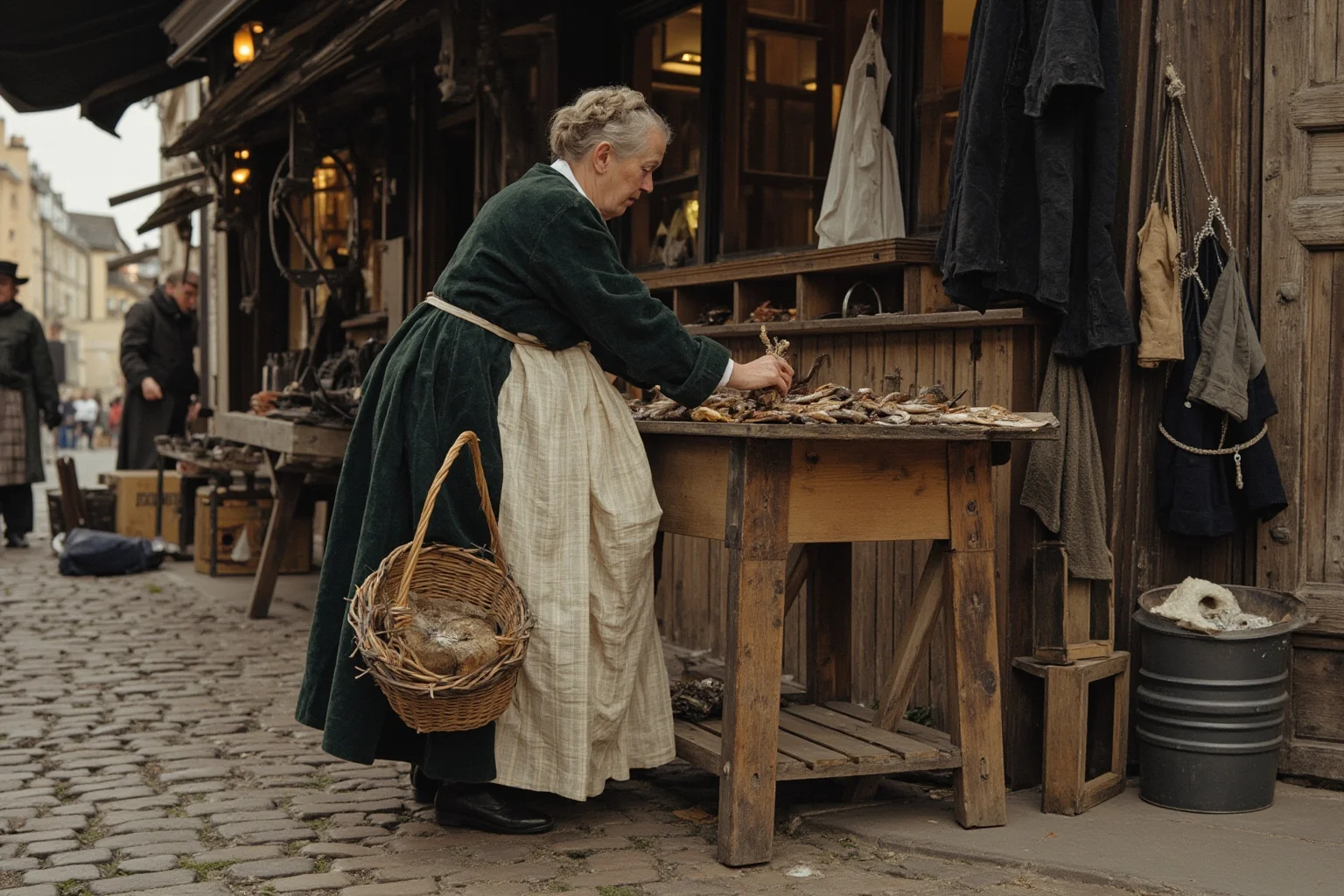
Maggie's occupation mattered for how her story unfolded. As a fishwife, she was part of a distinctive working-class community of women who sold fish in Edinburgh's streets and markets. These women were known for their loud voices, sharp tongues, and fierce independence. They also lived close to the edge of poverty.
The 1720s were a harsh time in Scotland. Food prices were high, wages were low, and women in Maggie's position had almost no legal protections. When her story is told today, it is often stripped of this context, turning a story about poverty and desperation into a simple tale of miraculous survival. Maggie Dickson is one of many women forgotten by history whose real lives reveal far more than the legends suggest.
Concealment of Pregnancy: The Crime That Sent Her to the Gallows
Maggie Dickson was not hanged for murder. She was convicted under a law that made it a capital offense to conceal a pregnancy that ended in a stillbirth or the death of a newborn. The legal thinking was that if a woman hid her pregnancy, she must have intended to kill the child.
The specific charge against Maggie was that she had concealed her pregnancy and that her baby had died. Some accounts say the child was stillborn, while others suggest it died shortly after birth. The exact circumstances were never clearly established, which makes the harshness of the sentence even more striking.
This law disproportionately affected poor, unmarried, or abandoned women. A married woman in a stable household had family, neighbors, and a midwife who could testify that she had announced her pregnancy. A woman like Maggie, whose husband was often away at sea, could find herself isolated at the moment she most needed support.
Maggie's defenders later argued that the baby had been premature and that she had never intended any harm. Whatever the truth, the court in Edinburgh found her guilty. The sentence was death by hanging, to be carried out in the Grassmarket, the city's main place of execution.
The Day of the Hanging: September 2, 1724
The execution took place on September 2, 1724. The Grassmarket was a bustling open space in the shadow of Edinburgh Castle, where markets, fairs, and public executions all shared the same cobblestones. Crowds gathered for hangings the way they gathered for any public spectacle.
Maggie was hanged along with another condemned person, though the details of that companion are rarely mentioned in modern retellings. The executioner performed his duty, and Maggie was left hanging for the customary length of time. Contemporary accounts suggest she was left for longer than usual, though precisely how long is disputed.
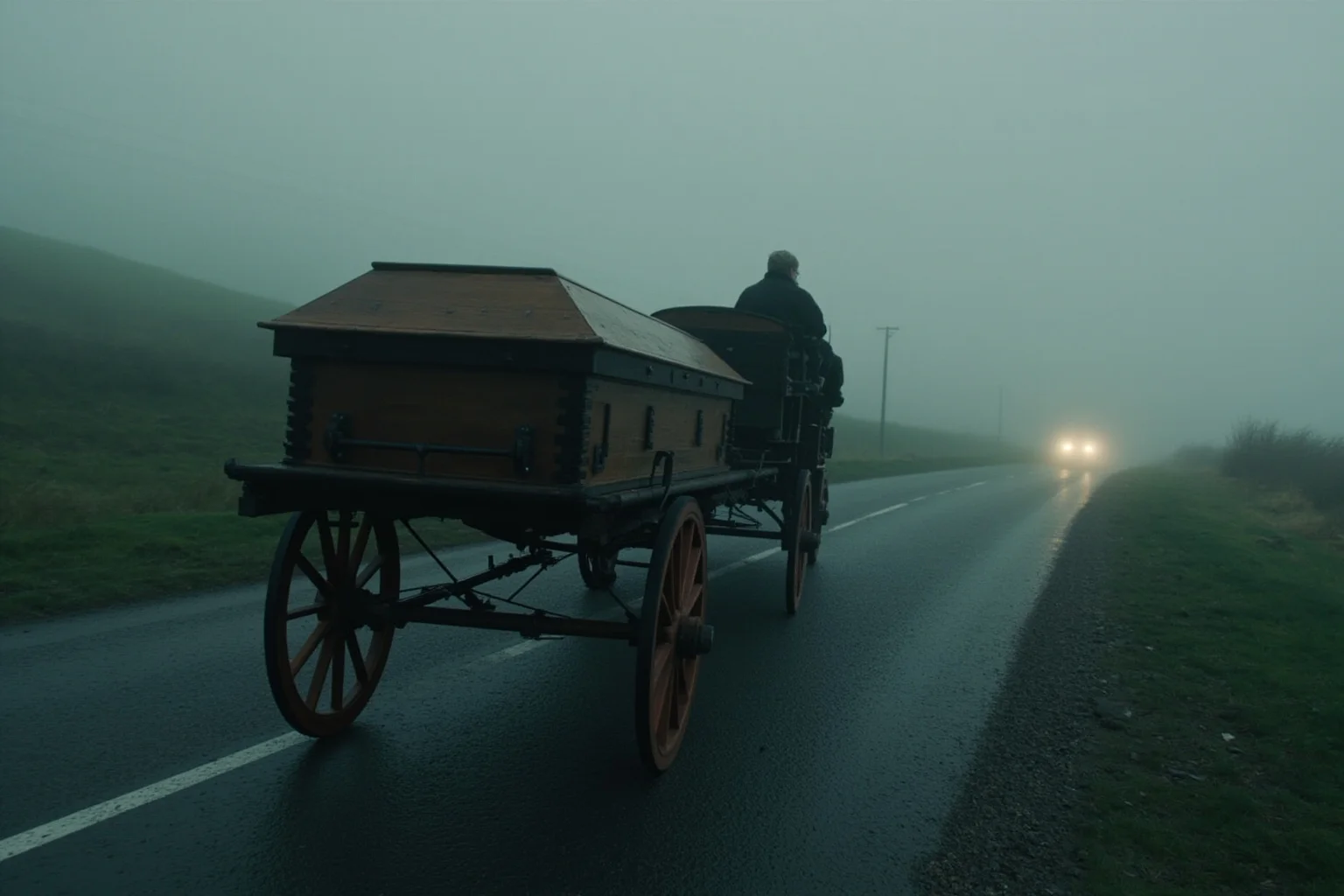
When she was cut down, she appeared to be dead. Her body was placed in a wooden coffin and loaded onto a cart for transport back to Musselburgh for burial. The procession set off along the road toward her home parish.
Somewhere along the route, probably near Duddingston or Musselburgh, someone heard a noise from the coffin. The cart was stopped, the lid was opened, and Maggie Dickson was found to be alive. In the most dramatic versions of the story, she sat up and asked for a drink.
How Did She Survive? The Medical Mystery
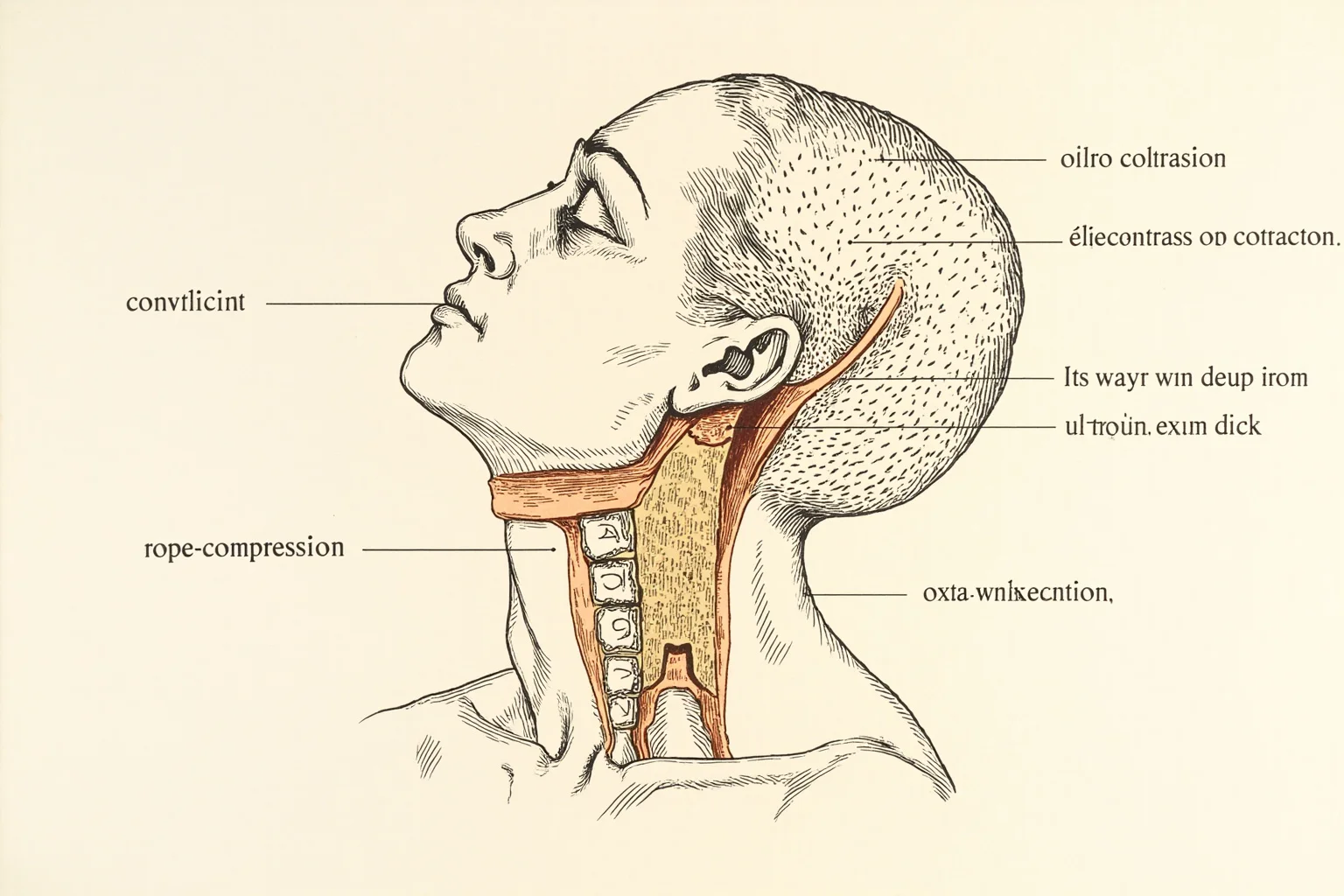
Modern medical experts have offered several explanations for how a hanged person could survive. The most common theory involves what would later be called a "hangman's fracture" that, in Maggie's case, failed to be fatal. If the drop was too short, the rope could compress the airway without severing the spinal cord or crushing the windpipe completely.
Another possibility is that Maggie experienced a vasovagal response that made her appear dead. Her heart rate and breathing could have slowed so dramatically that even a medical professional might have declared her dead. In the 18th century, the tests for death were rudimentary at best.
Some historians note that the executioner may have deliberately rigged the hanging to be survivable. This was not unheard of, though it was rare and extremely risky. If discovered, an executioner who botched a hanging for bribes could face serious consequences.
The cold Scottish air may also have played a role. Lowered body temperature can slow metabolic processes and reduce the brain's oxygen demands. Combined with the other factors, it is plausible that Maggie survived a brief period of oxygen deprivation that would have killed someone in less favorable conditions.
Legally Dead: The Strange Aftermath of the Maggie Dickson Hanging

Once Maggie was discovered alive, the authorities faced a bizarre legal problem. The sentence had been carried out, and as far as the law was concerned, she was dead. Her punishment was complete. There was no precedent for hanging someone a second time for the same crime.
The courts ruled that Maggie could not be re-executed. She was a free woman in the eyes of the law. This outcome made her something of a celebrity in Edinburgh and beyond. People marveled at the woman who had beaten the gallows.
Legally, the ruling was sound under Scottish law at the time. The sentence had been "hanged by the neck until dead," and the state had done its part. The fact that Maggie had inconveniently failed to stay dead was not her fault. The principle that a person cannot be punished twice for the same offense carried the day.
Some accounts say that the hangman was investigated for dereliction of duty. Others suggest that the authorities were simply too embarrassed to pursue the matter further. Either way, no second execution took place.
The Nickname "Half Hangit Maggie"
The nickname came quickly and stuck permanently. In Scots dialect, "half hangit" means exactly what it sounds like. The phrase captured both the physical reality of what had happened and the public's sense of wonder at it. It was a badge of honor and a reminder of her brush with death.
The nickname also reflects the way ordinary Scots viewed the legal system. A woman who had survived the gallows was seen not as a criminal who escaped justice but as someone whom fate had chosen to spare. The nickname carried affection rather than condemnation.
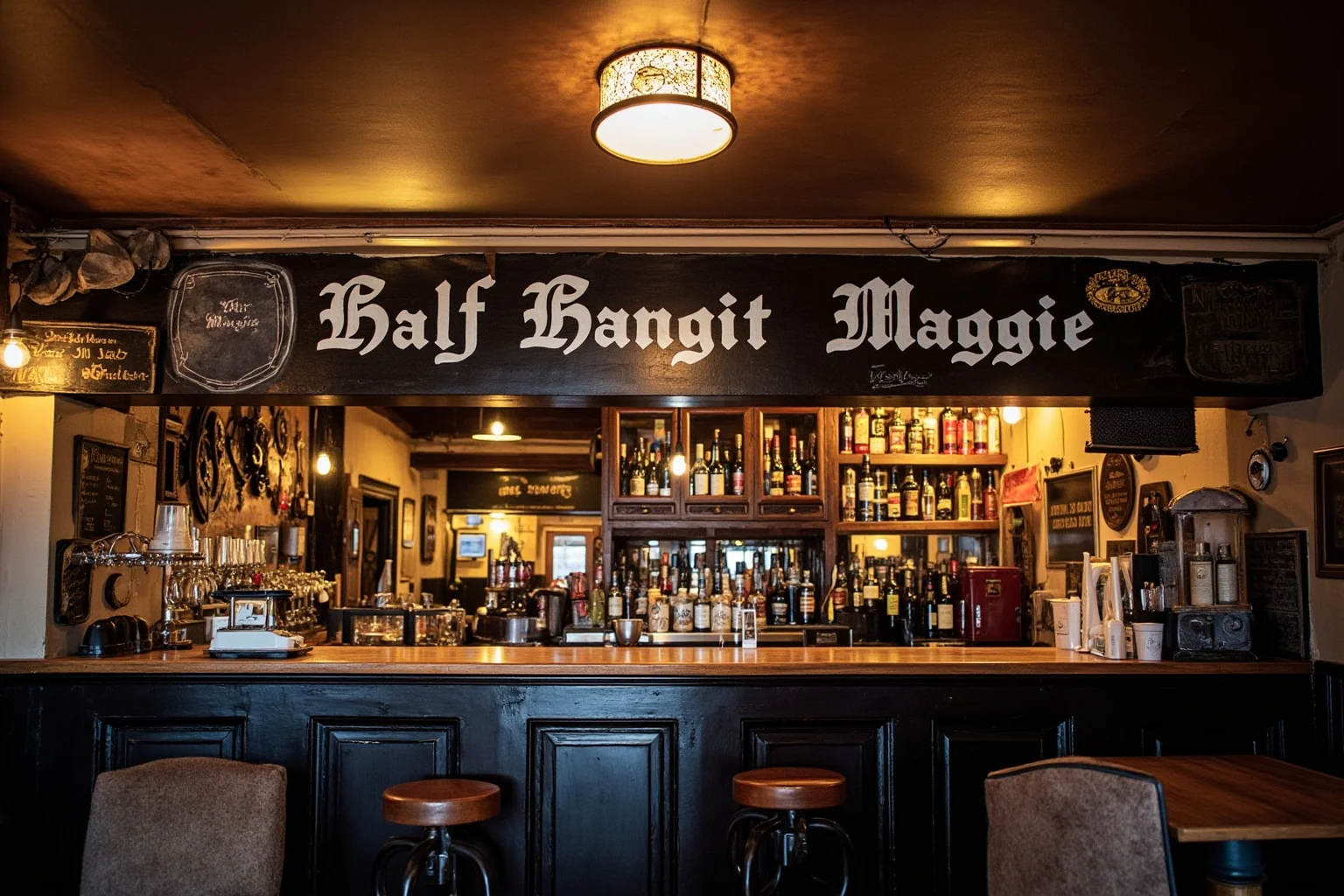
In Edinburgh today, the name "Half Hangit Maggie" is widely recognized. It appears on pub signs, in ghost tours, and in countless retellings of the city's darker history. A pub on the Royal Mile was named Halfway House for a time, though its connection to Maggie is more folkloric than historical.
The nickname has also given rise to a local phrase. To be "half hangit" came to mean being in a state of partial ruin or exhaustion. The phrase faded from common use, but the nickname endured.
What Happened to Maggie After the Hanging?
The most reliable accounts say that Maggie returned to Musselburgh and resumed her life. She went back to selling fish and living with her husband. Some sources suggest she had more children, though this is not firmly documented.
One persistent legend claims she ran a pub in Edinburgh in her later years. There is no solid evidence for this, but it fits the public's desire to give the story a satisfying ending. A woman who survived the gallows would naturally become a local fixture, the thinking goes.
Another tradition holds that she lived for another thirty to forty years after the hanging. If true, she would have died in the 1750s or 1760s. No grave marker or burial record has been definitively linked to her.
What is clear is that Maggie Dickson never faced another criminal charge. Whether through luck, changed circumstances, or simple determination, she stayed out of the courts for the rest of her life. Her brush with death appears to have given her a second chance that she did not waste.
Separating Fact from Folklore

The story of Half Hangit Maggie has been retold so many times that fact and fiction have blurred. Some versions claim she was pregnant at the time of the hanging and later gave birth to a healthy child. There is no contemporary evidence for this.
Other versions say she was hanged at the Tolbooth rather than the Grassmarket. While the Tolbooth was Edinburgh's main prison, executions were typically carried out in the Grassmarket at this period. The confusion likely arose because the Tolbooth was where condemned prisoners were held before execution.
A popular claim is that she walked back to Musselburgh on her own feet after waking in the coffin. Contemporary sources are less clear on this point. Some say she was taken to a nearby inn to recover, while others insist she made the journey herself. The truth is probably somewhere in between.
The story of her re-arrest and the legal battle over her fate is well documented, though the details vary. Some accounts say the courts debated for weeks before releasing her. Others suggest the decision was made quickly and quietly to avoid embarrassment.
The Legal and Social Context of the Maggie Dickson Hanging
To understand Maggie's story, it helps to understand the Scotland of 1724. The country was still recovering from the upheavals of the previous century, including civil war, religious conflict, and the failed Jacobite rising of 1715. Edinburgh was a city of stark contrasts, where wealth and desperate poverty existed side by side.
The legal system was harsh, especially for women accused of crimes against morality or the family. Concealment of pregnancy was one of several offenses that carried the death penalty. Infanticide, witchcraft, and certain thefts could also lead to the gallows.
Women in Maggie's position had few options. Contraception was unreliable and poorly understood. Abortion was dangerous and illegal. A woman who found herself pregnant without support faced ruin, imprisonment, or worse. The law offered no mercy for those who made desperate choices.
The fact that Maggie was married makes her case somewhat unusual. Most women convicted of concealment were unmarried. Her conviction suggests either that the evidence against her was strong or that she lacked the social connections to mount an effective defense.
Why the Story Endures
The tale of Half Hangit Maggie has survived for three centuries because it touches on something universal. It is a story about the fragility of life, the fallibility of human judgment, and the possibility of second chances. It is also a story about a woman who refused to die quietly.
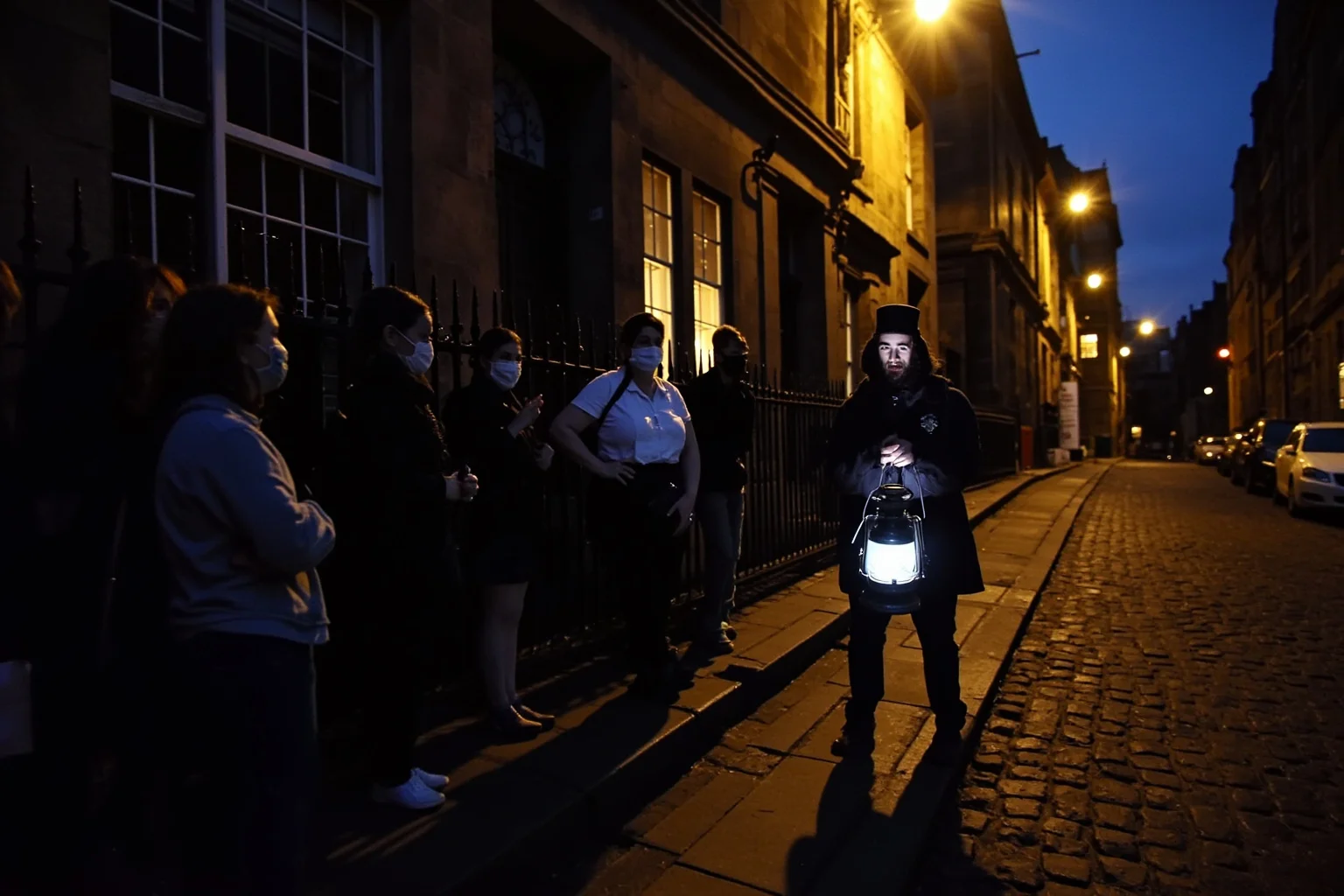
Edinburgh itself has kept the story alive. The Grassmarket, where the hanging took place, is now a popular tourist area filled with pubs and restaurants. Ghost tours regularly include Maggie's story, sometimes embellishing it with supernatural elements. She has become part of the city's mythology. Like Gruoch, the real-life Lady Macbeth, Maggie Dickson has been transformed by centuries of storytelling into a figure who straddles Scottish history and legend.
The story also resonates with modern audiences who see injustice in the legal system. A woman hanged for concealing a pregnancy, in an era before women had basic rights, is a figure of sympathy rather than scorn. Her survival feels like a victory against a cruel system.
Medical historians find the case fascinating for different reasons. The survival of a hanged person was rare but not unheard of. Each documented case helped advance understanding of exactly how hanging kills and how it can fail to kill.
Half Hangit Maggie in Edinburgh Today
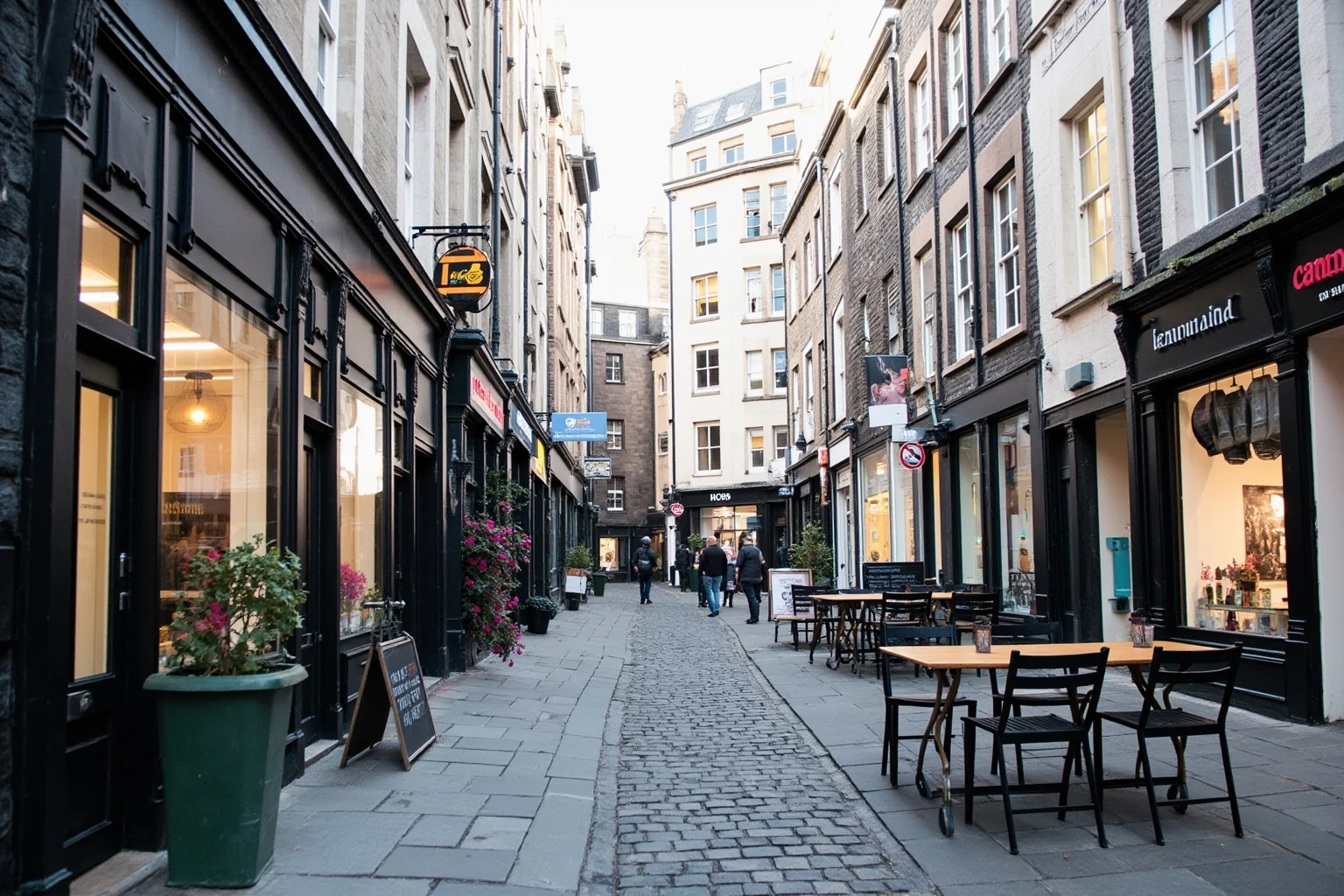
Visitors to Edinburgh can still trace the route of Maggie's fateful journey. The Grassmarket remains a central gathering place, with the site of the old gallows marked for those who know where to look. The road toward Musselburgh follows roughly the same path it did three centuries ago.
A pub called Maggie Dickson's once operated in the Grassmarket, though it has since closed or changed names. The Halfway House on Fleshmarket Close, a narrow alley near Waverley Station, trades partly on the legend. Its name is often explained as a reference to Maggie's "half hanging."
The story appears in numerous books about Edinburgh's history and folklore. It is a staple of walking tours, a favorite of local storytellers, and a reminder that history is full of strange and unlikely events. For many visitors, Half Hangit Maggie is their introduction to the darker side of Edinburgh's past.
Local historians continue to research the case, hoping to uncover more details about Maggie's life before and after the hanging. Parish records, court documents, and contemporary newspapers are the most promising sources. Each new discovery adds depth to a story that has already proven remarkably durable.
Lessons from the Legend
The story of Half Hangit Maggie is more than a curiosity. It is a window into a world where life was cheap, justice was brutal, and survival was never guaranteed. It reminds us how far the law has come and how far it still has to go.
Maggie's case helped shape public opinion about the harshness of capital punishment for concealment of pregnancy. Within a few decades of her hanging, such cases were treated with growing skepticism. The law itself was not fully reformed until much later, but the seeds of change were planted.
The medical aspects of her survival contributed to a growing understanding of resuscitation. If a hanged person could be revived, then perhaps other forms of apparent death could be reversed. This thinking influenced the development of early resuscitation techniques in the later 18th century.
For modern readers, the story serves as a reminder that history is full of ordinary people who lived through extraordinary events. Maggie Dickson was not a queen or a general. She was a fishwife who survived her own execution and became immortal because of it.
The legend of Half Hangit Maggie will likely endure for another three centuries. It has all the elements of a great story: injustice, survival, legal drama, and a heroine who refused to be beaten. And at its heart is a simple, astonishing fact: a woman was hanged, declared dead, and lived to tell the tale.
Frequently Asked Questions
Did Half Hangit Maggie really survive her hanging?
Yes. Contemporary records confirm that Maggie Dickson was hanged in Edinburgh's Grassmarket on September 2, 1724, and was later found to be alive while being transported for burial. The courts ruled she could not be hanged again.
What crime was Maggie Dickson hanged for?
Maggie Dickson was convicted of concealment of pregnancy, a capital offense under Scottish law at the time. The charge alleged that she hid her pregnancy and that her baby died, which the law treated as evidence of intent to kill.
Why was Maggie Dickson called ‘Half Hangit Maggie’?
The nickname comes from the Scots phrase 'half hangit,' meaning partially hanged. Because she survived her execution, locals began calling her Half Hangit Maggie, a name that has stuck for nearly 300 years.
How long did Maggie Dickson live after the hanging?
The exact length is uncertain, but tradition holds that Maggie lived for another 30 to 40 years after surviving the gallows. No definitive burial record has been found to confirm the precise date of her death.
Where did the Maggie Dickson hanging take place?
The hanging took place in the Grassmarket, Edinburgh's main public execution site in the 18th century. The Grassmarket is now a popular tourist area in the shadow of Edinburgh Castle.

Alex Warren
Related Articles