Love triangles are history’s most durable form of gossip. They blend desire, power, betrayal, and politics into stories that feel almost too dramatic to be true. But many famous love triangles are less neat than the legend suggests.
This list traces popular love triangles from ancient myth to the twentieth century. In each case, we separate documented evidence from later embroidery, because the real stories are often more complicated—and more human—than the tidy versions we inherit.
TL;DR: The most famous love triangles in history are rarely simple romances; they are usually tangled with power, politics, and storytelling that often outruns the evidence.
Why Famous Love Triangles Still Fascinate Us
Desire, jealousy, and ambition are not the whole story. In many of history’s best-known cases, the triangle persisted because it entangled marriage, inheritance, religion, and public reputation. When a crown or a fortune is at stake, private feelings become political events.
Popular retellings often flatten these stories into two rivals and one prize. The historical record usually shows lopsided power, limited female agency, and records written by the winners. Understanding that does not make the stories less compelling; it makes them more honest.
Ancient and Legendary Love Triangles
Some of the oldest famous love triangles come from myth and antiquity, where evidence is uneven. In these cases, the line between history and legend is part of the story.
1. Paris, Helen, and Menelaus
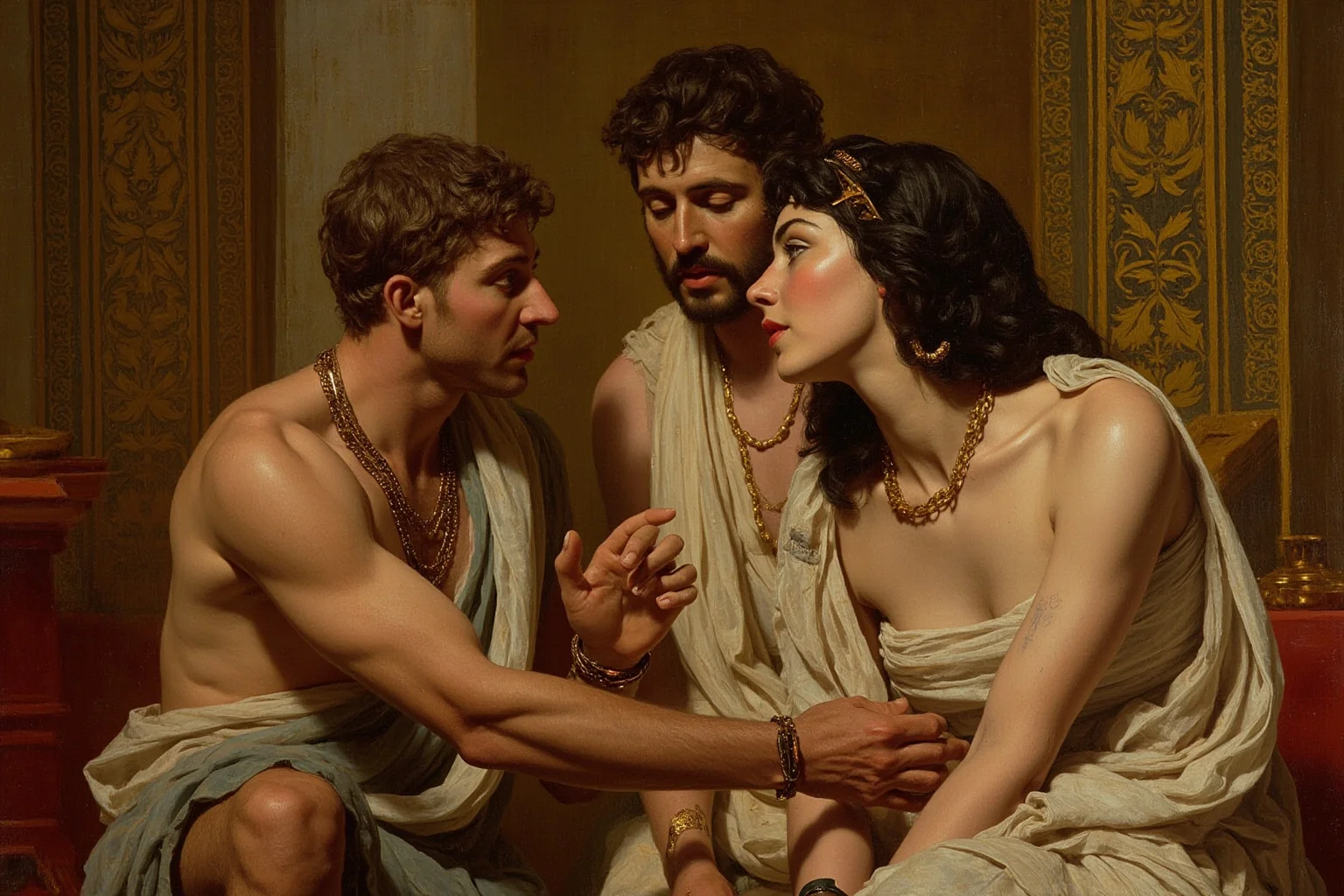
The Trojan War legend gives us one of the oldest love triangle examples in Western storytelling. In Greek myth, Helen of Sparta leaves her husband Menelaus for Paris of Troy, prompting a war that destroys a city. Later writers, not contemporary records, gave the story its most familiar shape.
There is no reliable historical evidence that this exact triangle happened. Homer’s epics and later Greek drama treat Helen, Paris, and Menelaus as symbolic figures as much as people. For that reason, this is best read as myth rather than documented history.
2. Cleopatra, Julius Caesar, and Mark Antony
Cleopatra VII forms part of perhaps the most famous love triangle attached to the ancient world, but the chronology is often flattened. Cleopatra’s alliance with Julius Caesar began in 48-47 BCE and produced a son, Caesarion. After Caesar’s assassination in 44 BCE, she later formed a political and personal partnership with Mark Antony.
Those two relationships were sequential, not simultaneous, so this is less a triangle than a timeline. Still, Roman propaganda turned them into a scandalous story of an eastern queen seducing two Roman leaders. The myth has shaped popular culture far more than the political realities.
3. Hadrian, Vibia Sabina, and Antinous
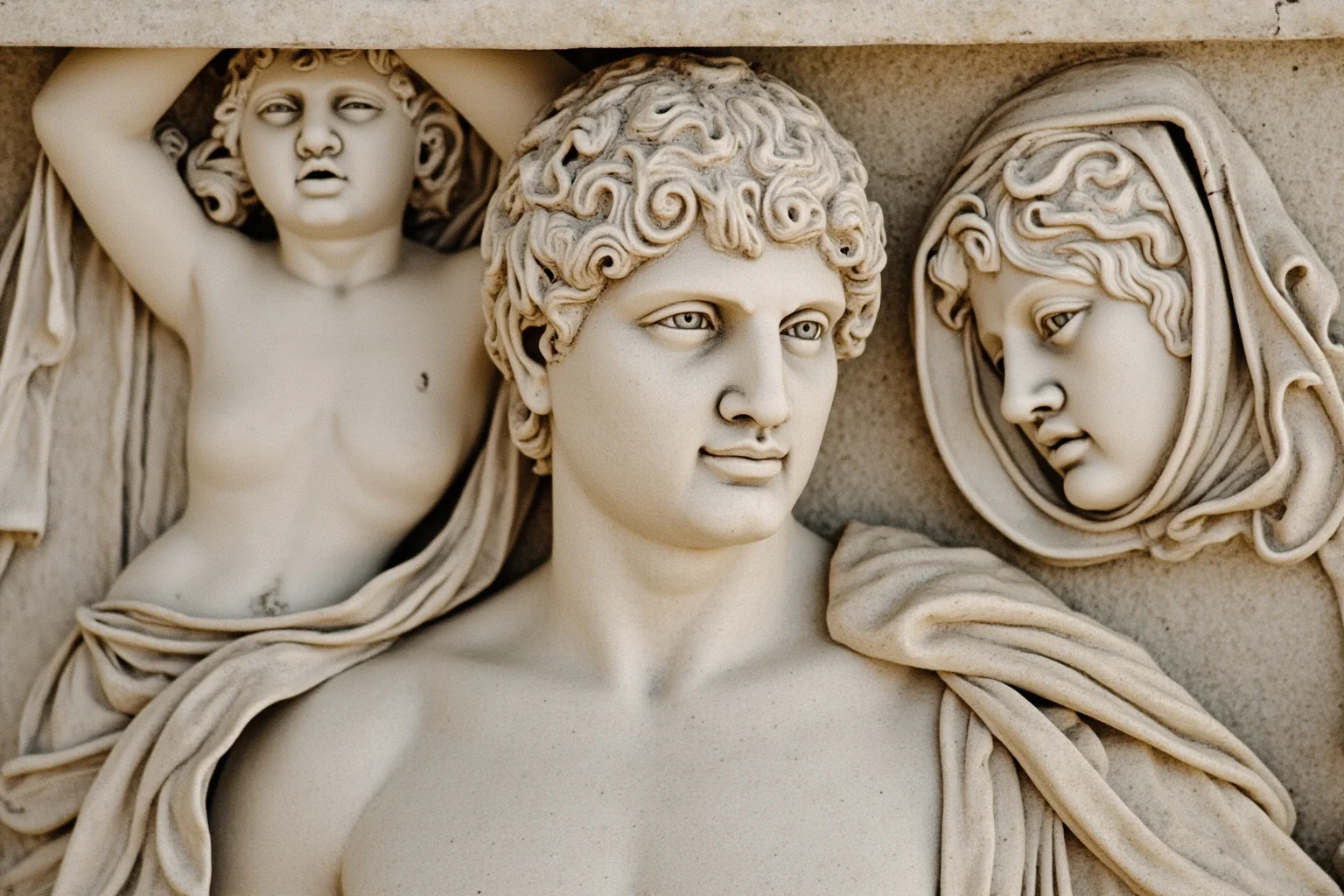
Hadrian’s marriage to Vibia Sabina was reportedly strained, and his intense devotion to Antinous, a young man from Bithynia, is well attested in sculpture, coins, and inscriptions. After Antinous drowned in the Nile in 130 CE, Hadrian deified him and founded the city of Antinoöpolis. That public grief makes this one of the more unusual iconic love triangles from antiquity.
Historians disagree about how to describe the relationship between Hadrian and Antinous. Roman sources are often hostile or gossipy, and Sabina’s private feelings are largely lost. What survives is enough to show a powerful emperor whose emotional life defied simple categories.
4. Arthur, Guinevere, and Lancelot
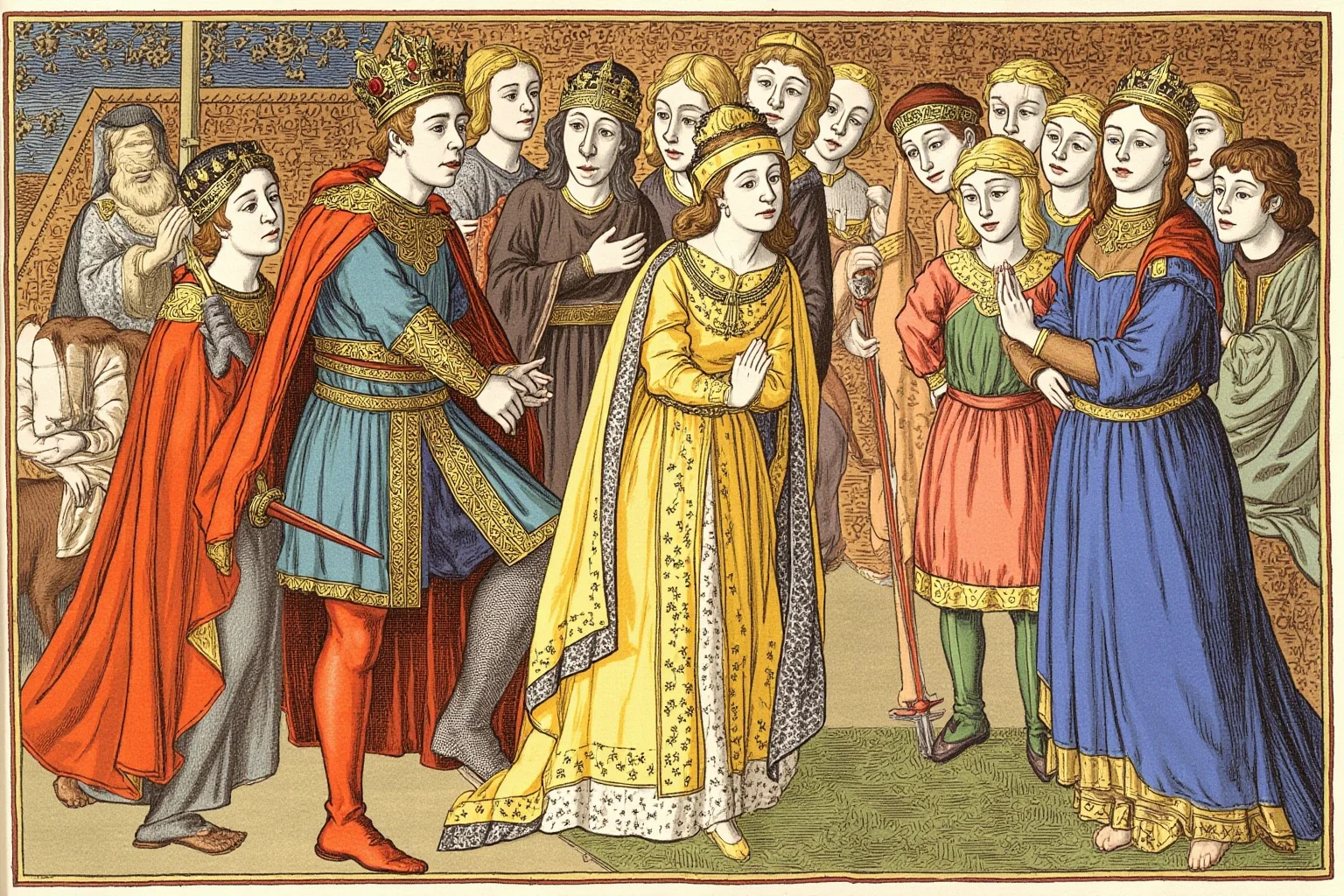
The triangle of Arthur, Guinevere, and Lancelot is a literary creation that grew across centuries. The earliest Arthurian texts do not feature Lancelot at all; his romance with Guinevere was added by Chrétien de Troyes in the twelfth century. Later medieval cycles expanded the betrayal into the moral crisis that destroys Camelot.
There is no solid evidence for a historical Arthur, let alone a historical Lancelot. The story matters not because it happened, but because it shaped medieval ideas of chivalry, loyalty, and forbidden love. It remains one of the most popular love triangles in European literature.
5. Tristan, Isolde, and King Mark
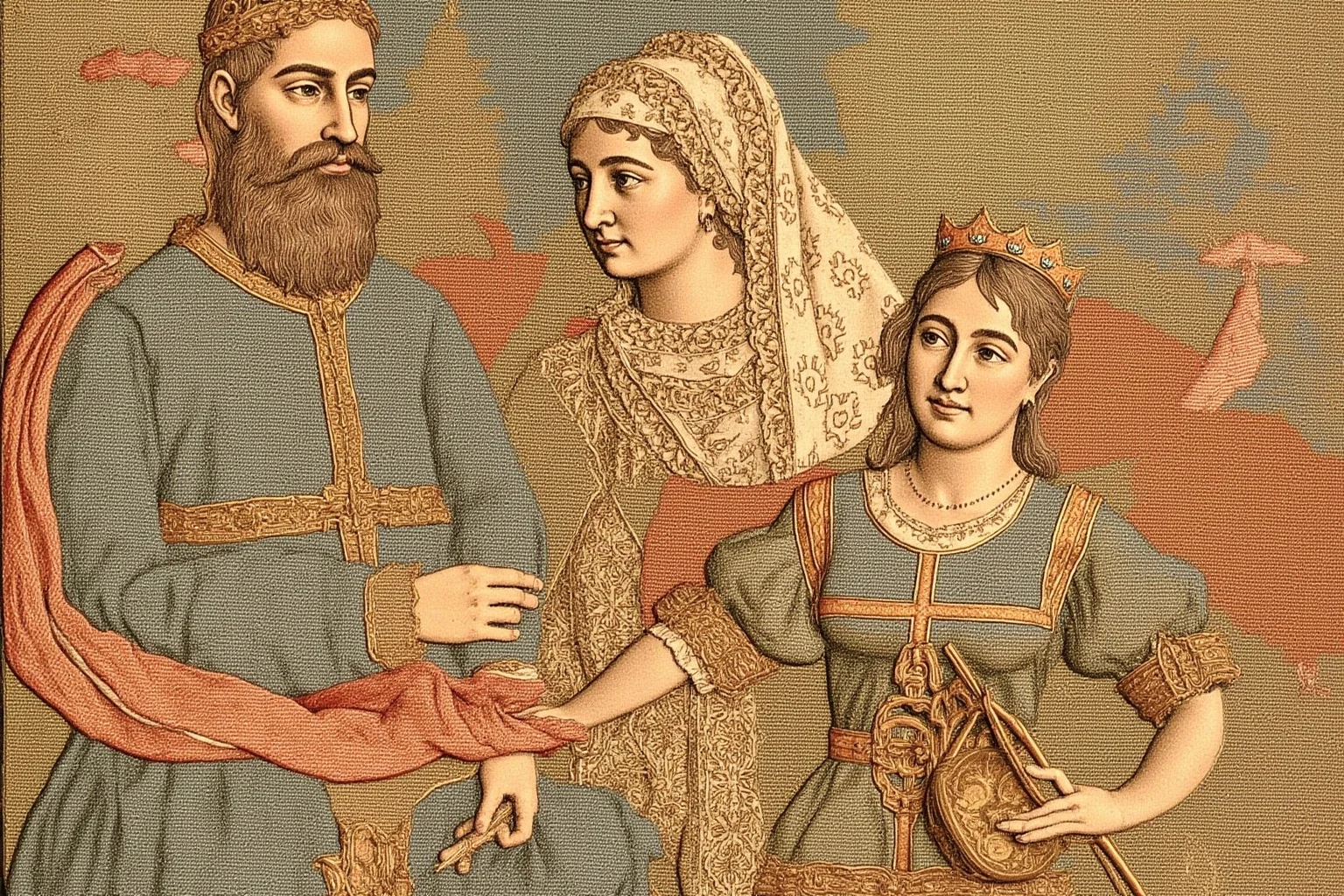
The medieval romance of Tristan and Isolde revolves around a knight, a king’s bride, and the king to whom he owes loyalty. In most versions, a love potion removes the lovers’ guilt, but the political damage remains. King Mark is both Isolde’s husband and Tristan’s lord, making the betrayal intensely layered.
Like Arthur and Lancelot, this story’s roots may be older, but its surviving versions are romance, not reliable history. Its influence on later doomed-love narratives is enormous. Scholars treat it as one of the foundational love triangle examples in Western literature, not a documentary record.
Renaissance and Early Modern Triangles
From the Tudor court to Bourbon France, early modern Europe turned royal marriage into a public institution. Mistresses, queens, and favorites did not simply compete for affection; they competed for influence, land, and dynastic survival.
6. Henry VIII, Catherine of Aragon, and Anne Boleyn
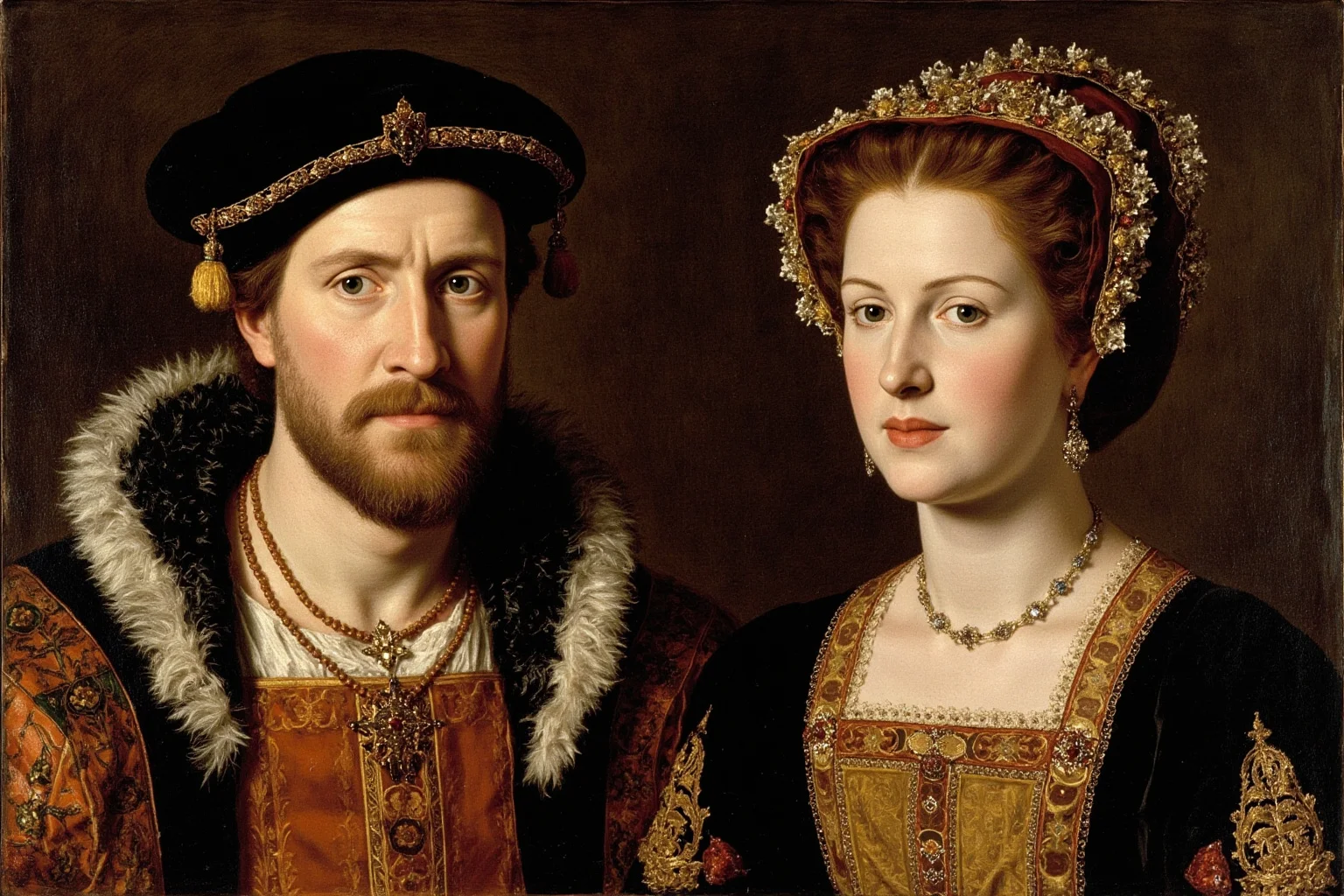
Henry VIII’s struggle to replace Catherine of Aragon with Anne Boleyn is often called a famous love triangle, though it is really a dynastic and religious crisis. Henry married Catherine in 1509, but by the late 1520s he sought an annulment, arguing that the marriage was invalid. Anne Boleyn refused to become his mistress, which pushed Henry to break with the Roman church.
Catherine resisted until her death in 1536, never accepting the annulment, while Anne became queen in 1533 and was executed in 1536. The triangle is less about mutual romance than about power, legitimacy, and the English Reformation. Popular retellings tend to reduce this structural upheaval to personal rivalry.
7. Henri II, Catherine de’ Medici, and Diane de Poitiers
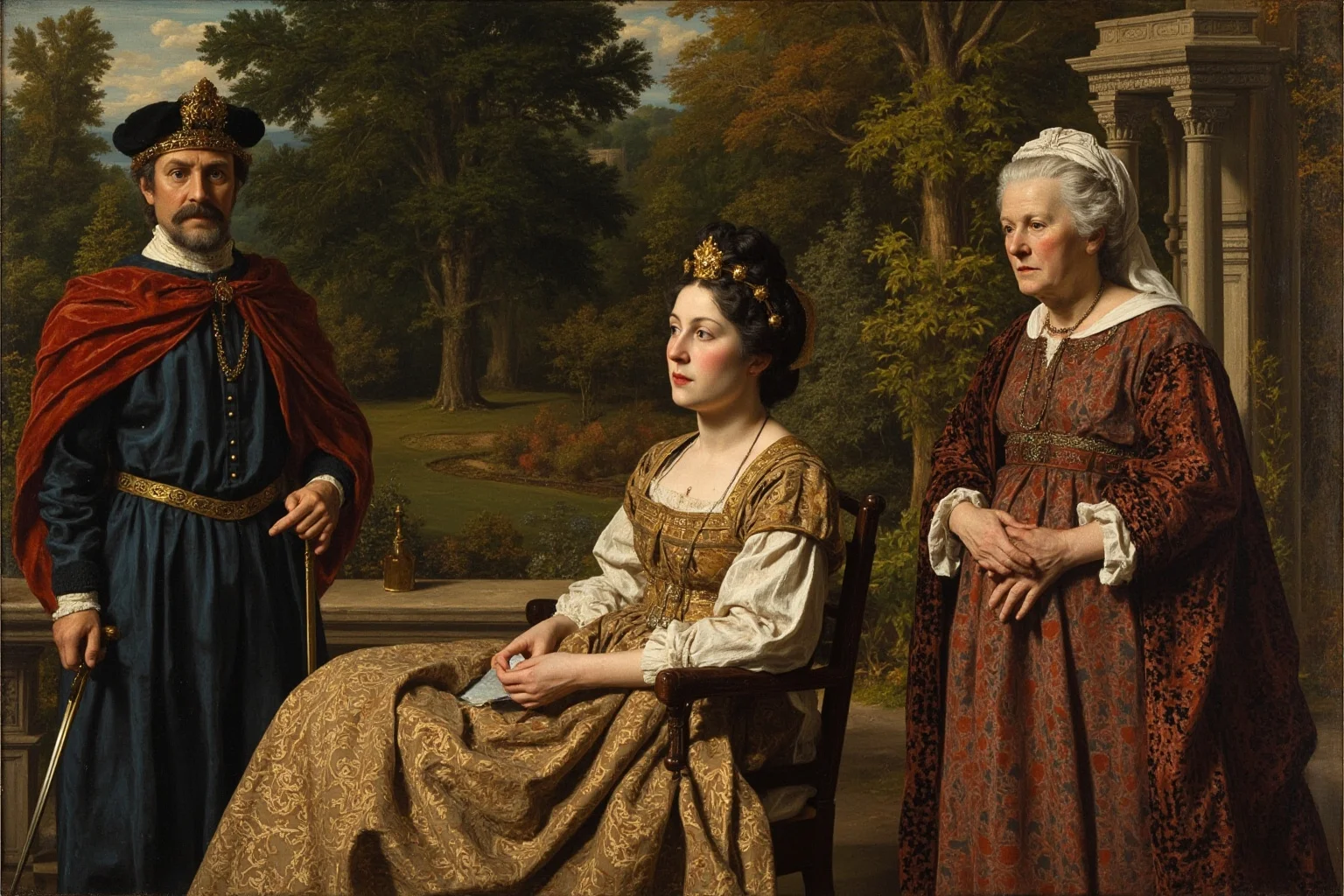
Henri II of France was married to Catherine de’ Medici for political reasons, but his dominant emotional attachment was to Diane de Poitiers, who was about twenty years his senior. Diane held real influence at court, appeared in royal iconography, and effectively eclipsed the queen for much of Henri’s reign. Catherine’s resentment is well documented.
When Henri died in 1559, Catherine moved quickly to remove Diane from the center of power and reclaim royal influence. This triangle shows how royal mistresses were not always peripheral; they could shape patronage and politics. It is one of the clearest Renaissance examples of an iconic love triangle driven by court power.
8. Elizabeth I, Robert Dudley, and Lettice Knollys
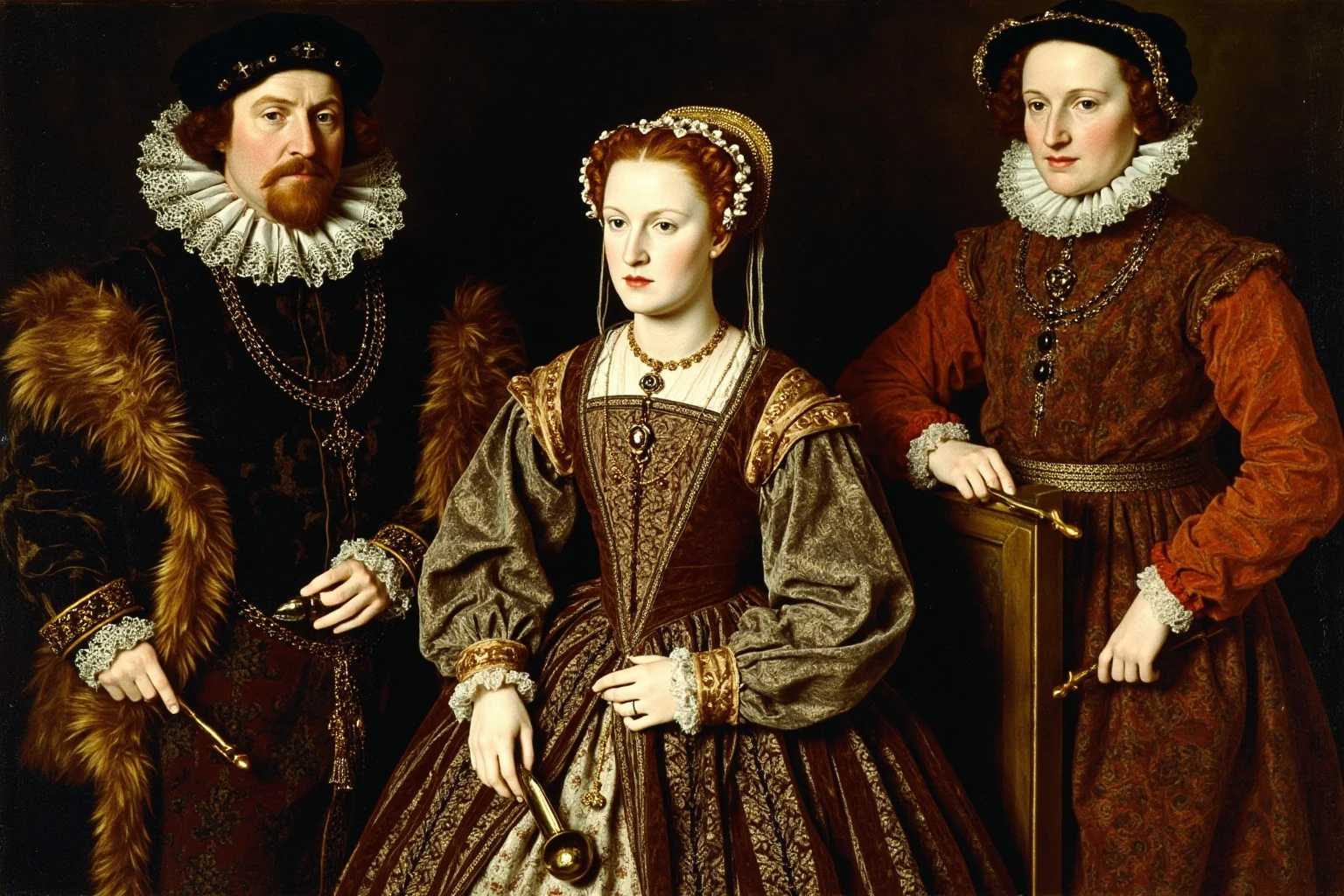
Elizabeth I and Robert Dudley were close from childhood, and their bond fueled rumors for decades. Whether it was romantic, political, or both remains uncertain, but Elizabeth was furious when Dudley secretly married her cousin Lettice Knollys in 1578. The queen banished Lettice from court and never fully forgave the deception.
This triangle is compelling because it turns on possession, jealousy, and the impossible position of a queen who could not marry her favorite. Lettice and Dudley remained married until his death in 1588. Historians caution against assuming a physical affair between Elizabeth and Dudley, but the emotional stakes were unmistakable.
9. Charles II, Catherine of Braganza, and Barbara Villiers
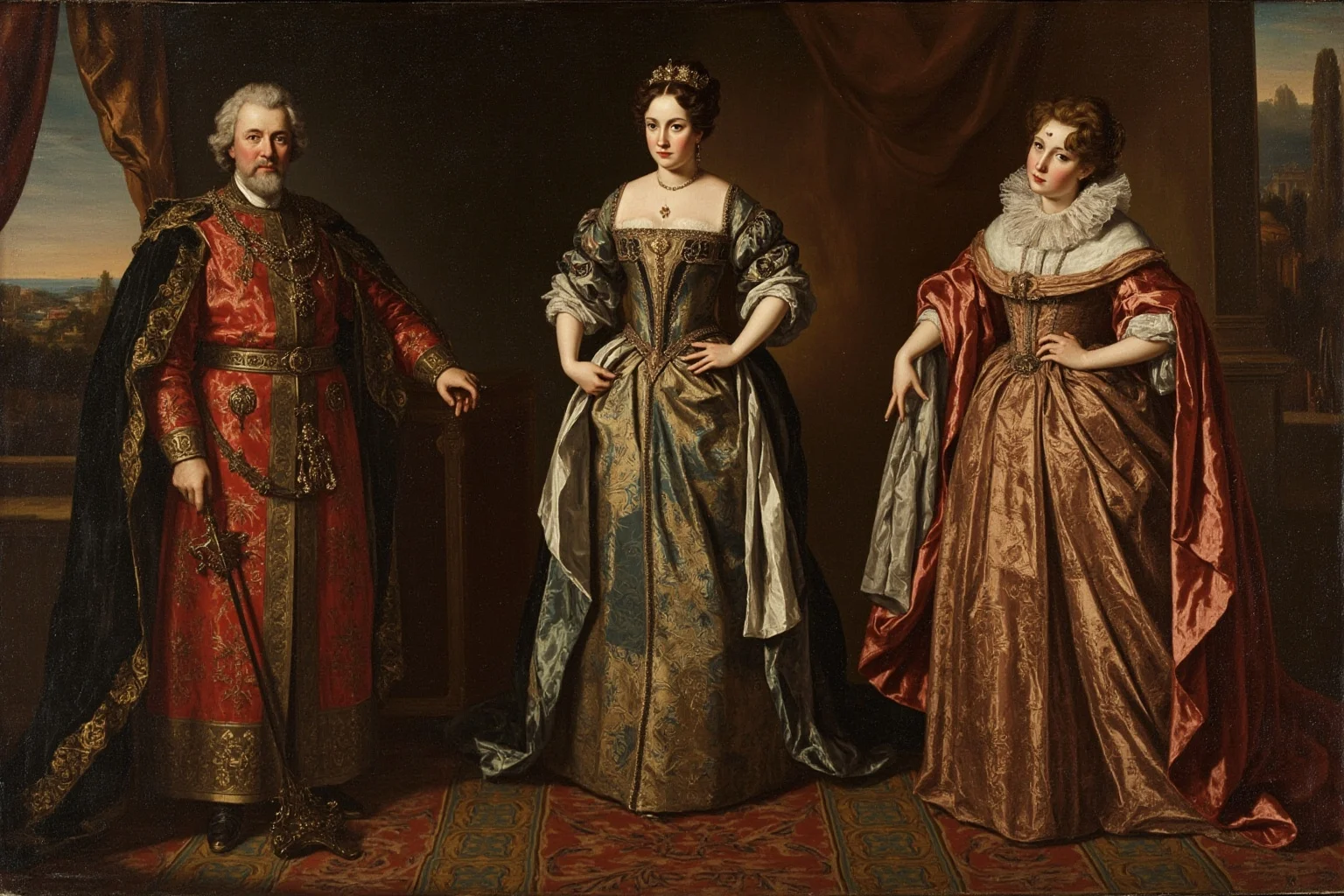
Charles II married Catherine of Braganza in 1662, but his mistress Barbara Villiers was already a powerful presence at court. Charles forced Catherine to accept Barbara as a lady of the bedchamber, which became a public humiliation for the queen. Catherine’s early attempts to resist only made her position more isolated.
Catherine never produced an heir, while Barbara bore several children by Charles during the 1660s. The king’s many affairs were political as well as personal, but his treatment of Catherine and promotion of Barbara made this one of the most overt royal triangles of the era. It reveals how little privacy a queen possessed.
10. Mary, Queen of Scots, Lord Darnley, and the Earl of Bothwell
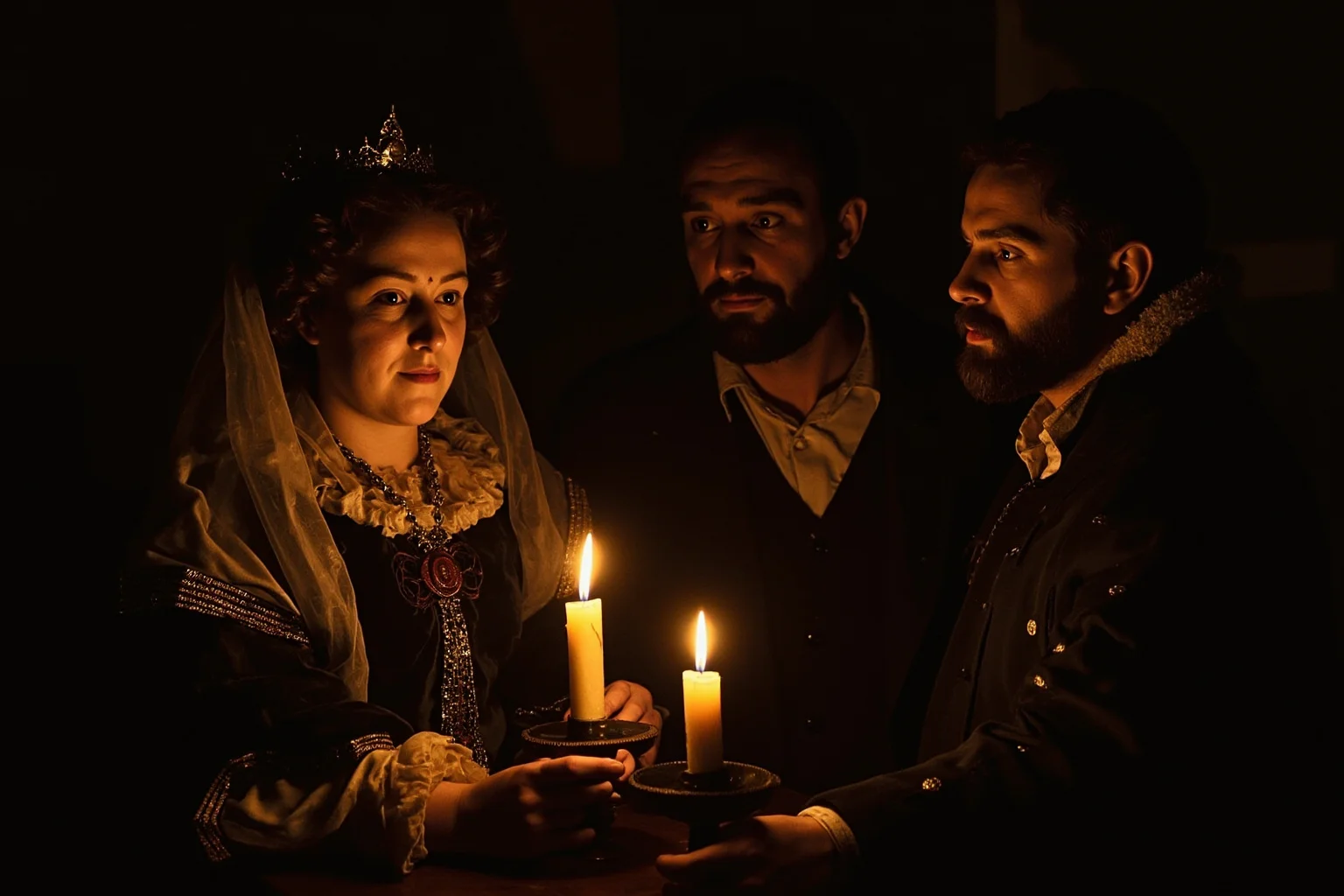
Mary, Queen of Scots, married her cousin Henry Stuart, Lord Darnley, in 1565, but the marriage collapsed amid violence and factional intrigue. In 1567, Darnley was killed in an explosion at Kirk o’ Field, and suspicion quickly fell on James Hepburn, Earl of Bothwell. Mary married Bothwell only months later, which outraged many of her subjects.
Historians still debate Mary’s degree of complicity in Darnley’s murder and the nature of her relationship with Bothwell before and after. What is clear is that the affair destroyed her already fragile rule. This is less a romantic triangle than a deadly political one, often simplified into a popular love triangle narrative.
Nineteenth-Century Love Triangle Examples
The nineteenth century created new forms of publicity: newspapers, novels, and celebrity culture. Middle-class and aristocratic scandals alike could travel quickly, turning private triangles into serialized public entertainment.
11. Napoleon Bonaparte, Joséphine, and Hippolyte Charles
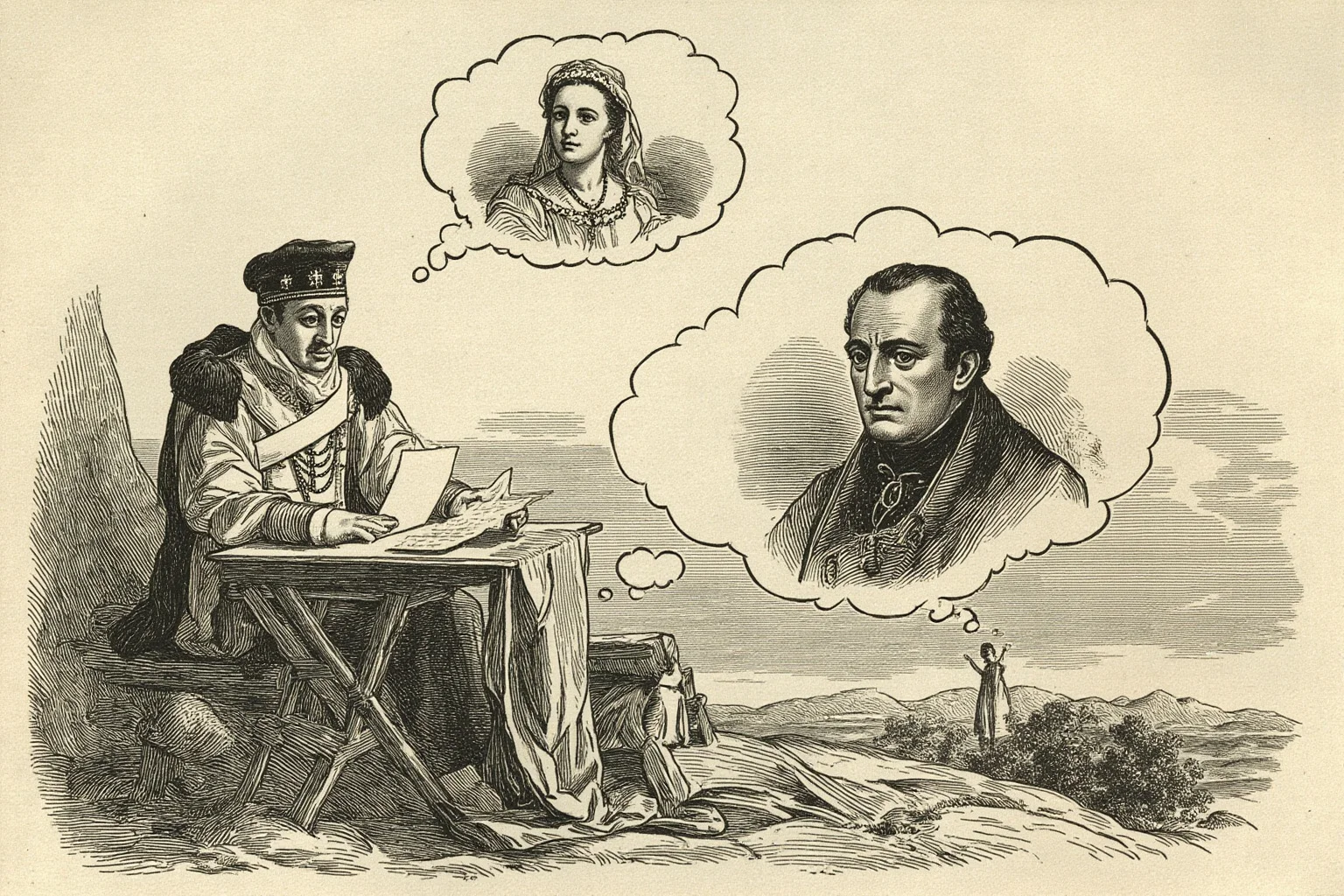
While Napoleon was campaigning in Egypt in 1798-1799, rumors reached him that Joséphine had been unfaithful with Hippolyte Charles, a French officer. Napoleon’s furious letters became famous, and the scandal nearly ended the marriage. The exact extent of Joséphine’s relationship with Charles is still debated by historians.
After Napoleon returned, the couple reconciled politically and emotionally for a time, but trust never fully recovered. This episode is often cited among love triangle examples from the revolutionary era because the evidence includes Napoleon’s own angry correspondence. As with many such stories, part of the triangle is real and part is magnified by jealousy and distance.
12. Lord Byron, Lady Caroline Lamb, and William Lamb
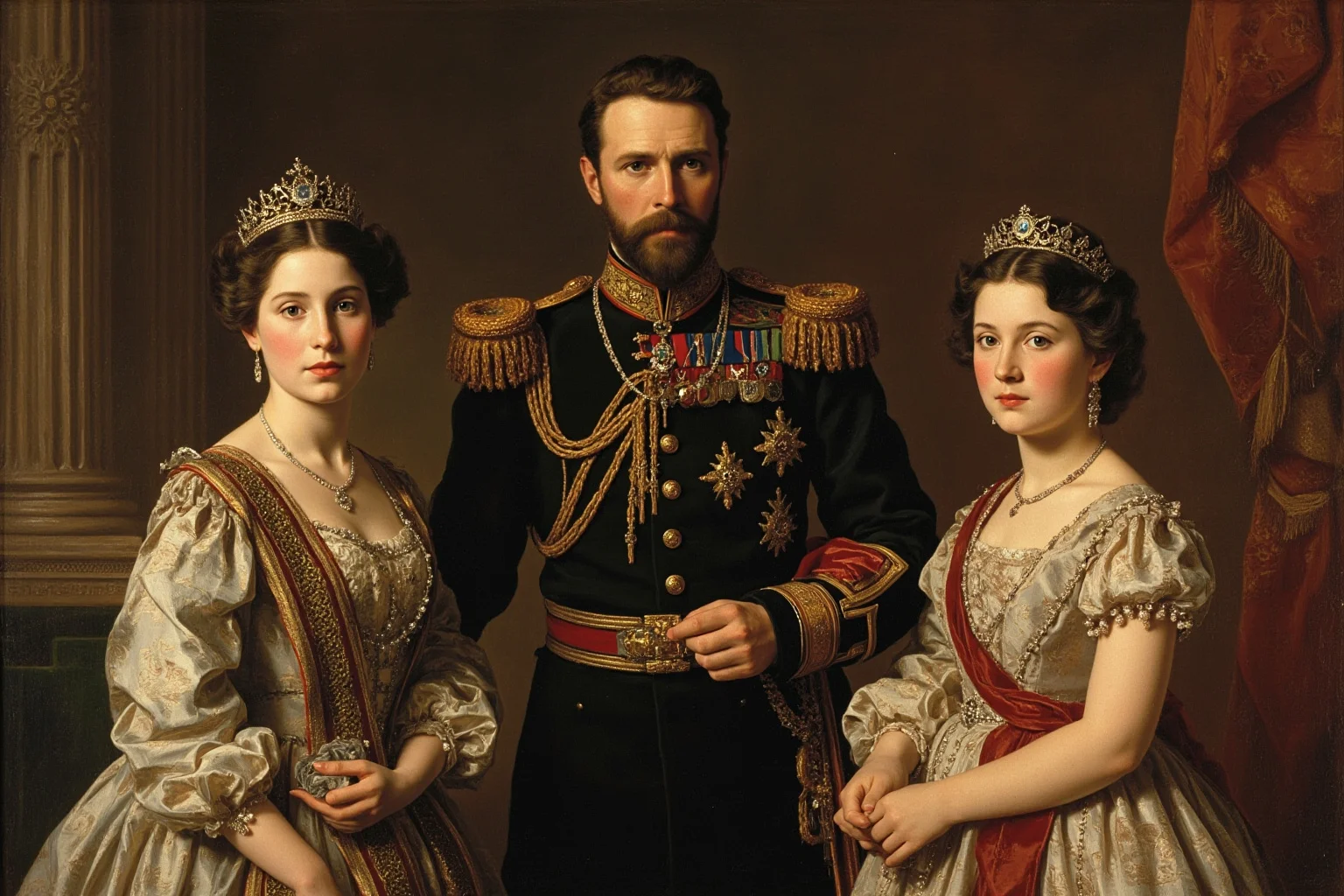
Lady Caroline Lamb, wife of the politician William Lamb, began a very public affair with Lord Byron in 1812. Byron broke it off quickly, but Caroline’s obsession lasted for years and became a Regency scandal. Her husband remained legally bound to her while the drama played out in letters, novels, and society gossip.
Byron was already a celebrity, and Caroline’s pursuit made the triangle one of the most talked-about in early nineteenth-century Britain. Her later novel Glenarvon fictionalized the affair and damaged her reputation. The story is a reminder that fame, not royalty, could make a private triangle intensely public.
13. Tsar Alexander II, Empress Maria Alexandrovna, and Catherine Dolgorukova
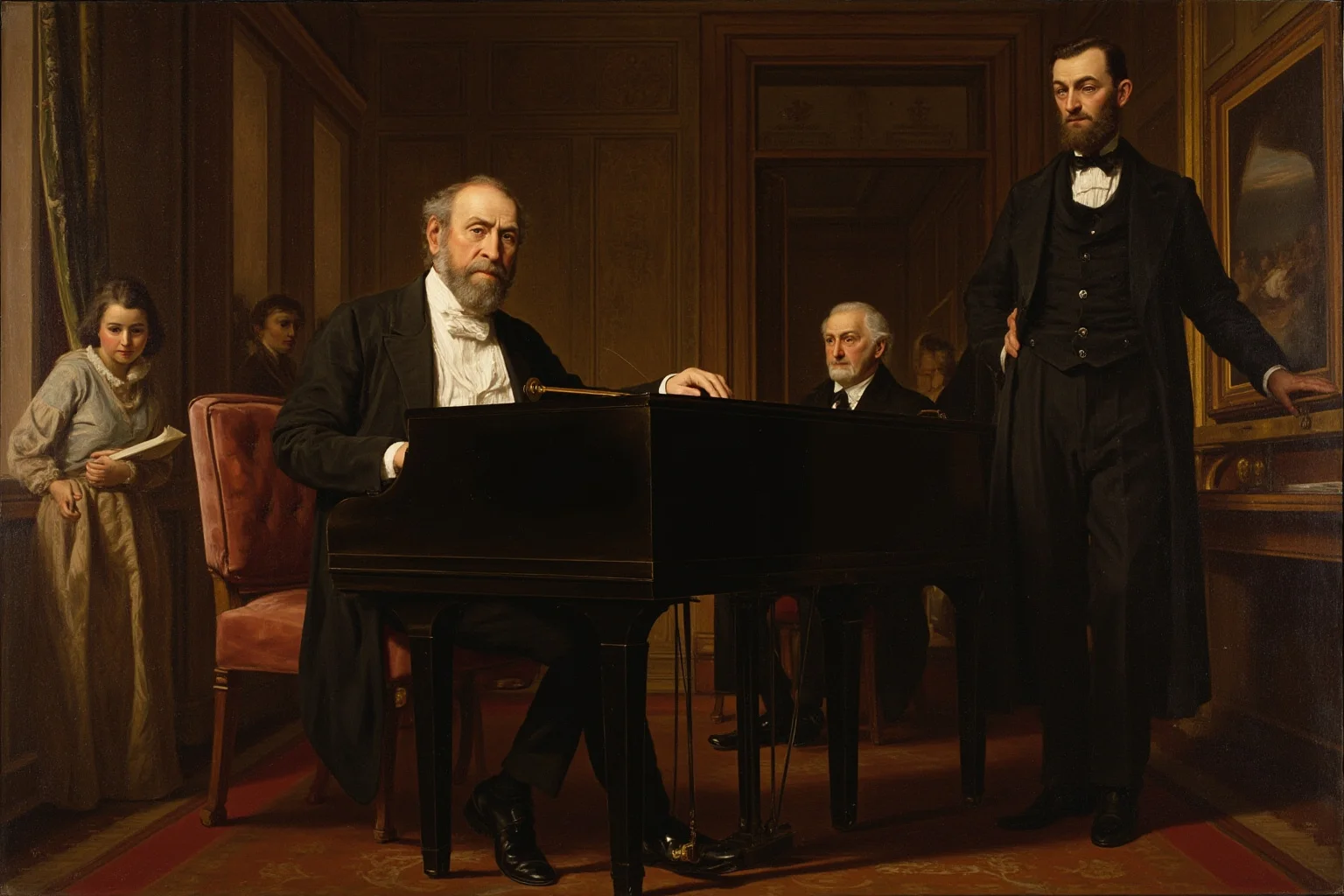
Tsar Alexander II began a long relationship with Catherine Dolgorukova, who was born decades after him, while he was still married to Empress Maria Alexandrovna. Catherine bore him several children and lived in the Winter Palace, which created an unusual second household inside the imperial court. The arrangement scandalized the Romanov family.
After Maria Alexandrovna died in 1880, Alexander married Catherine morganatically, less than a year before his own assassination in 1881. The triangle was not hidden; it shaped court politics and succession anxiety. It is one of the clearest imperial examples of a famous love triangle built on unequal power.
14. Richard Wagner, Cosima Liszt, and Hans von Bülow
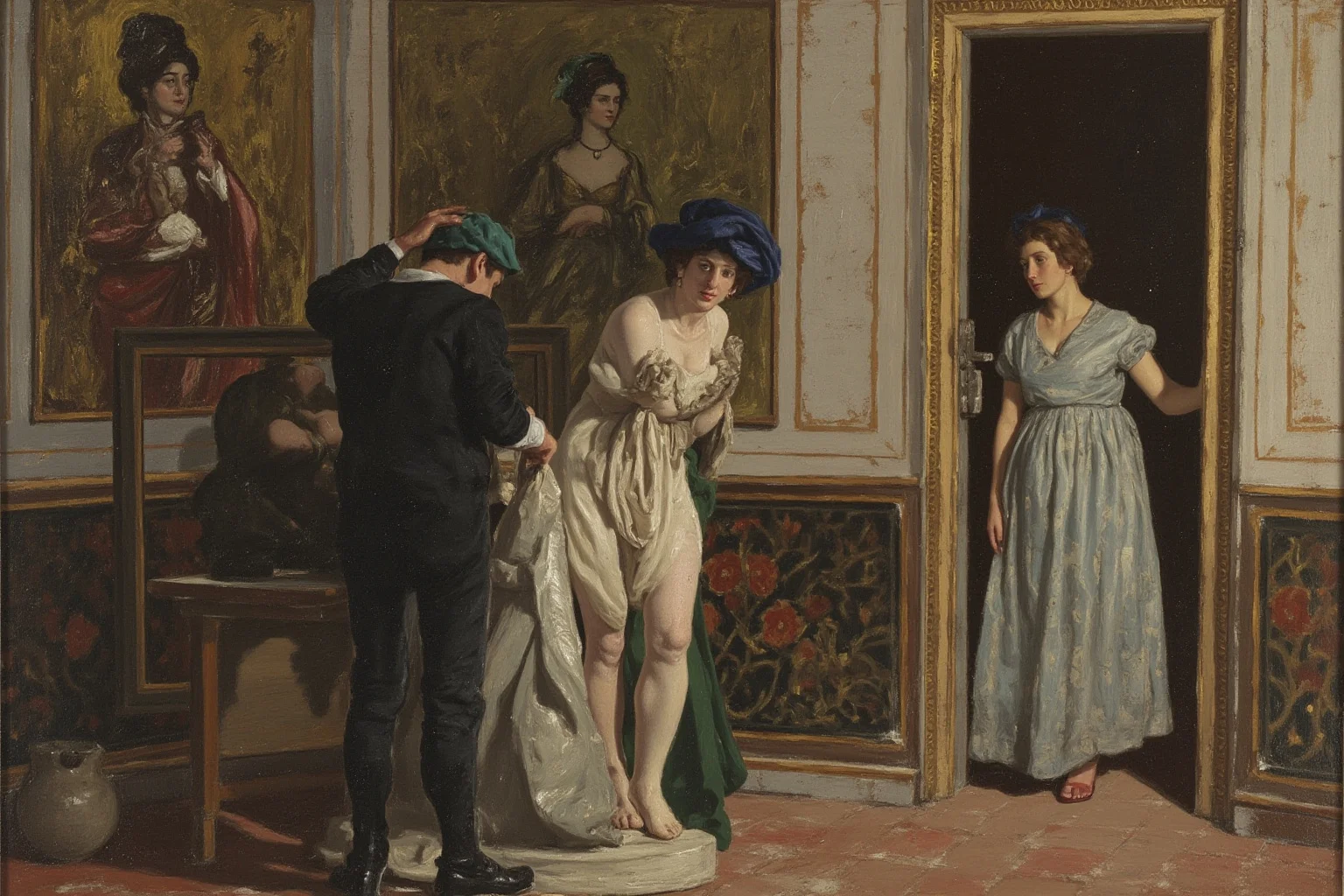
Cosima Liszt, daughter of Franz Liszt, married the conductor Hans von Bülow in 1857, but she later began a relationship with Richard Wagner. She moved in with Wagner in the 1860s, and Wagner fathered her children before she divorced von Bülow. In 1870, Cosima married Wagner and became his devoted widow and promoter.
Von Bülow, himself a major musical figure, remained loyal to Wagner musically even as his marriage collapsed. The triangle is unusually well documented through letters and diaries. It illustrates how Bohemian artistic circles could create arrangements that scandalized middle-class society while enabling creative collaboration.
15. Auguste Rodin, Camille Claudel, and Rose Beuret
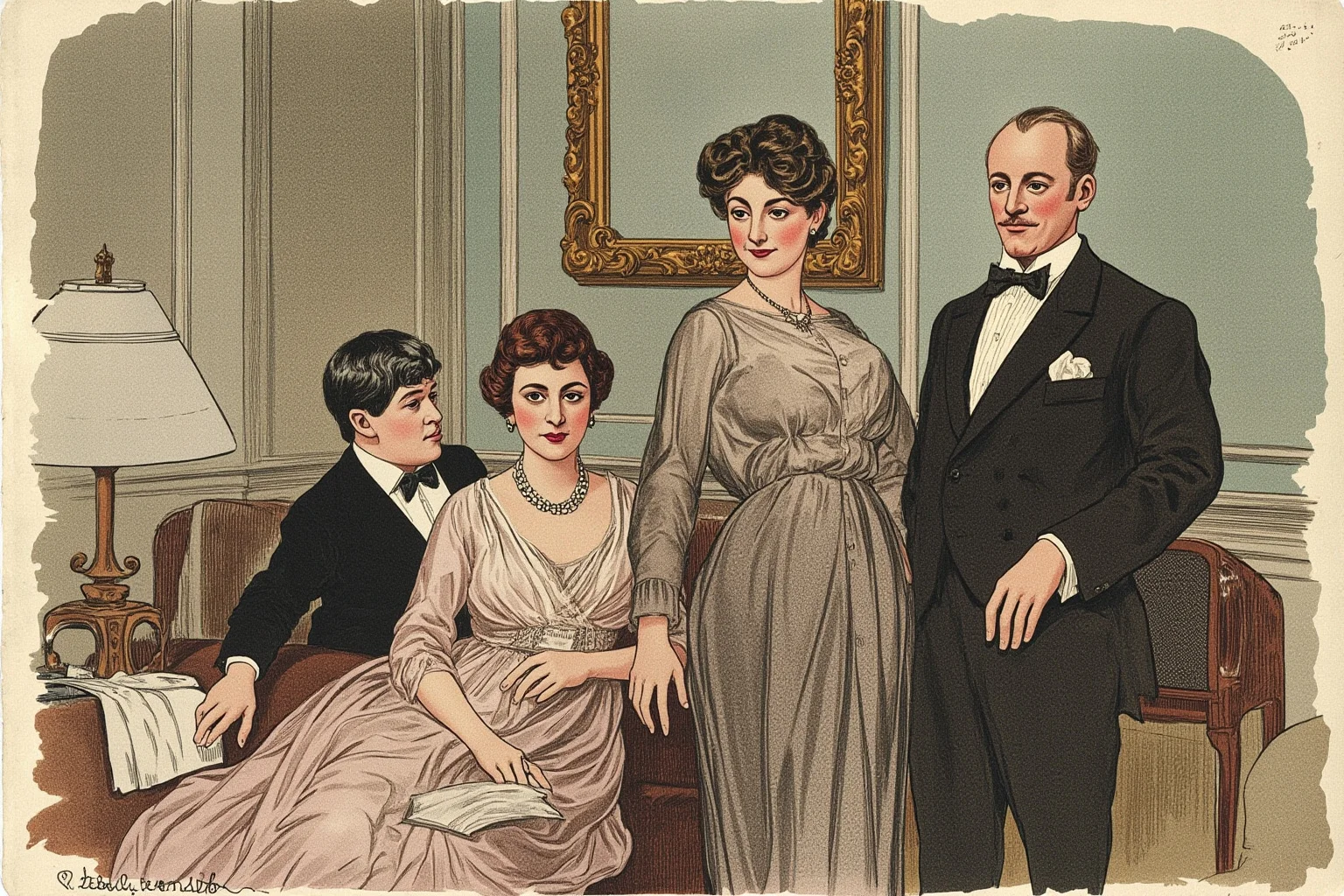
Rodin’s longtime companion Rose Beuret shared his life for decades, but his intense relationship with the sculptor Camille Claudel became both a creative and personal entanglement. Claudel was Rodin’s student, collaborator, and lover from the 1880s into the 1890s. The relationship eventually collapsed amid jealousy, mental health struggles, and professional inequality.
Rodin stayed with Rose and finally married her in 1917, shortly before both died. Claudel’s later life was marked by isolation and institutionalization, which has made historians cautious about romanticizing the affair. The triangle is now studied for its artistic legacy and the ways gender shaped who got credit and support.
16. Edith Wharton, Edward Wharton, and Morton Fullerton
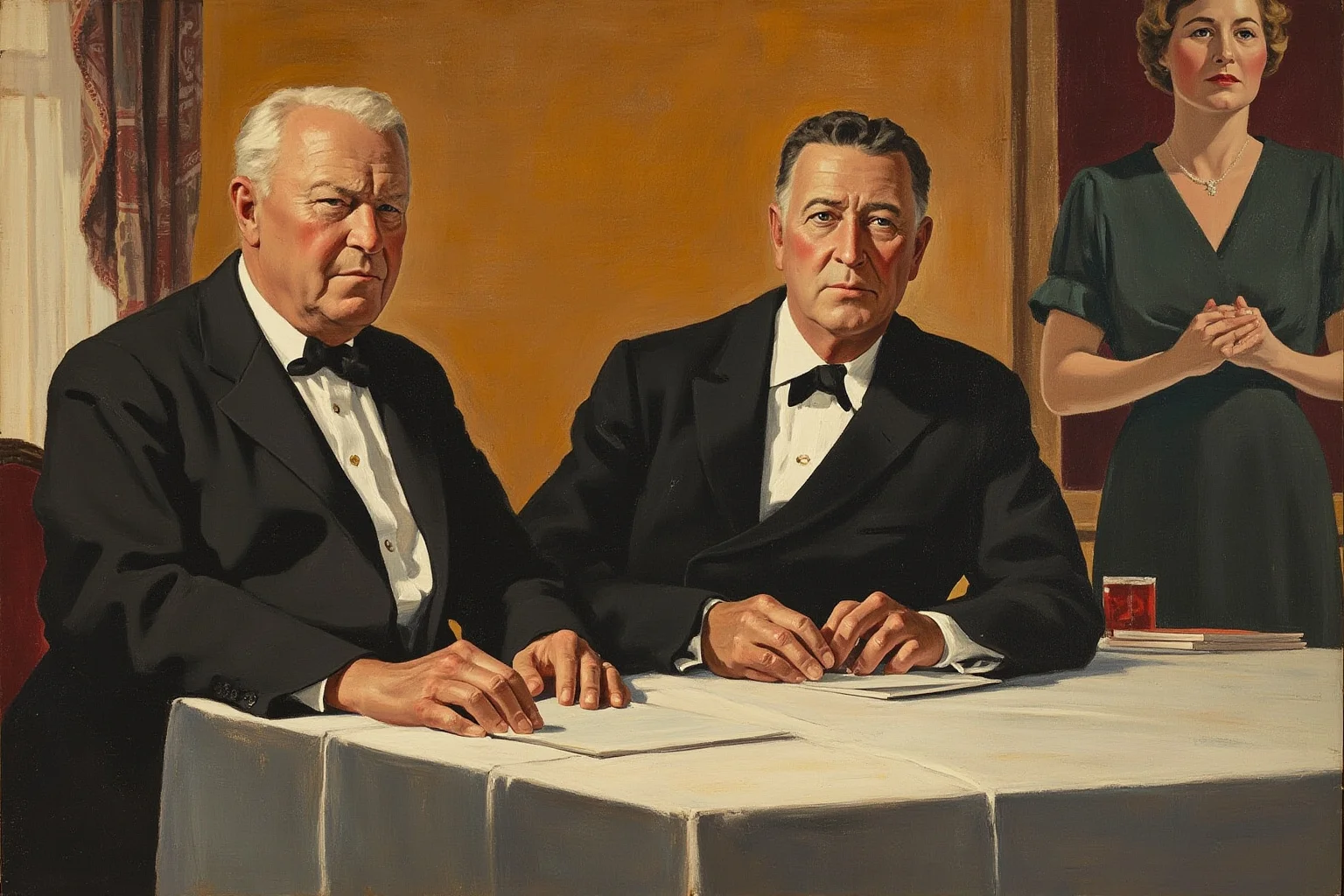
Edith Wharton married Edward Wharton in 1885, but the marriage became emotionally hollow and ended in divorce in 1913. In middle age, Wharton began an affair with the American journalist Morton Fullerton, and her letters to him reveal a private passion that contrasts with her restrained public persona. The affair peaked around 1908 and faded before the divorce.
This triangle matters because it changes how readers understand Wharton’s novels of desire, constraint, and betrayal. Edward Wharton was not a romantic rival so much as the legal and social obstacle in the background. Historians use this case to show that famous love triangles are not confined to kings and queens.
Twentieth-Century Iconic Love Triangles
The twentieth century made private life public in new ways, from tabloids to television. Some of the era’s most famous love triangles were documented in letters, memoirs, and court records; others remain stubbornly unproven.
17. Franklin D. Roosevelt, Eleanor Roosevelt, and Lucy Mercer
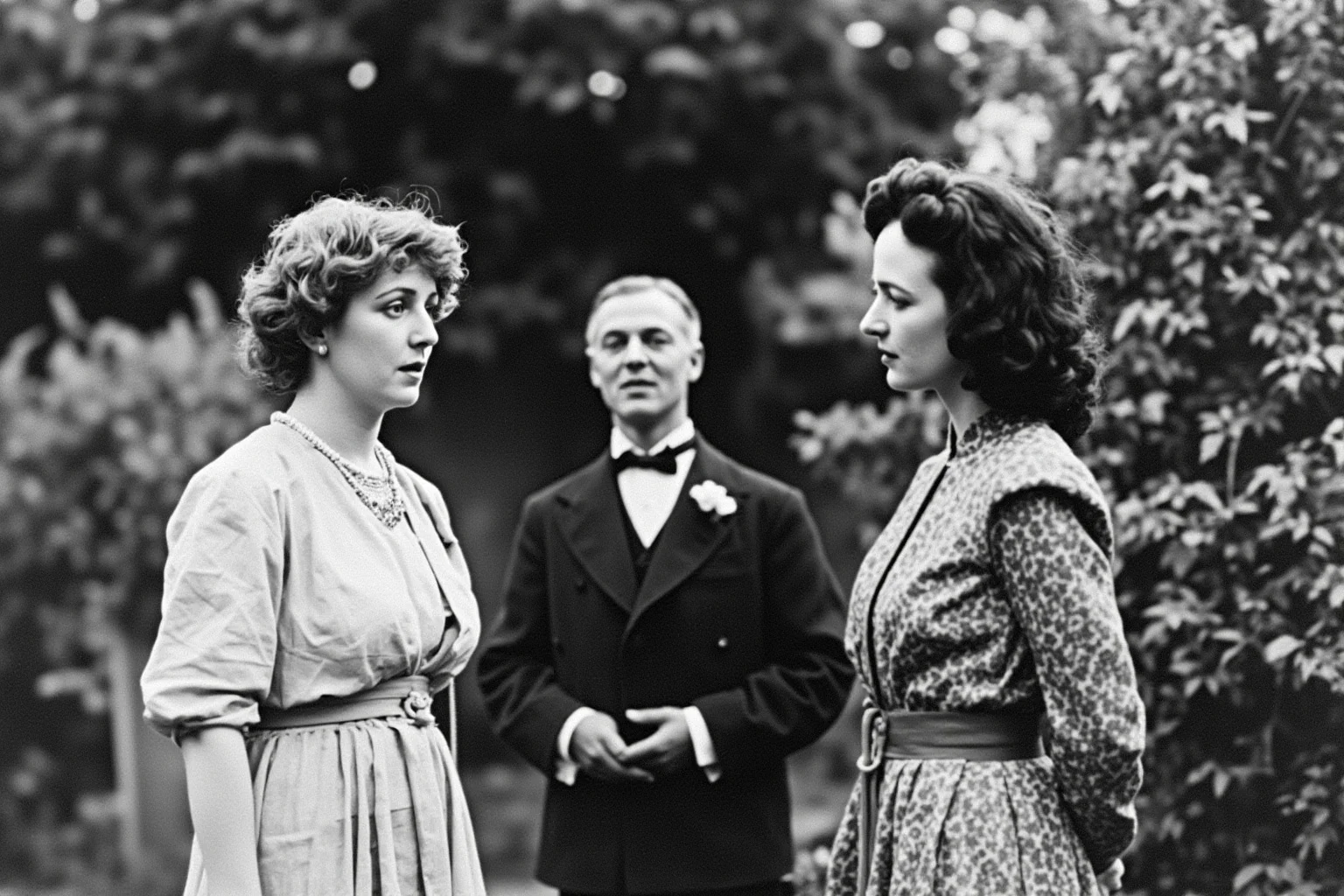
Franklin and Eleanor Roosevelt’s marriage became a political partnership after Eleanor discovered his relationship with Lucy Mercer in 1918. Lucy had been Eleanor’s social secretary, and the rupture reshaped the marriage. Franklin promised to end the affair, but Lucy and Franklin reconnected in his later years, secretly.
Eleanor forged an independent public life and became one of the most influential first ladies in American history. This triangle is now seen less as a simple betrayal and more as the foundation of a working alliance. Still, the private wound shaped the emotional architecture of the Roosevelt household for decades.
18. Vita Sackville-West, Harold Nicolson, and Violet Keppel
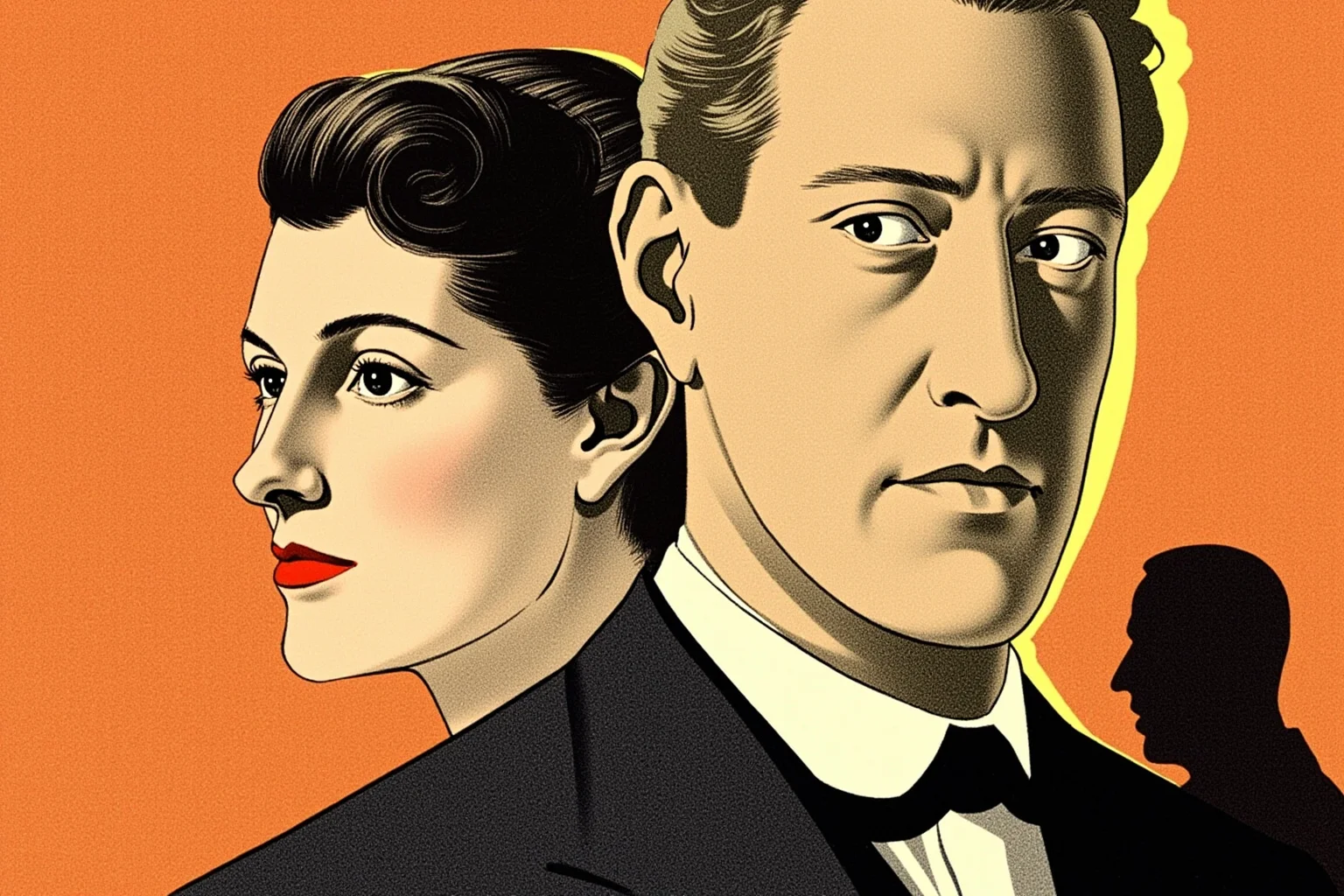
Vita Sackville-West and Harold Nicolson married in 1913, and both had same-sex relationships while maintaining a devoted marriage. Vita’s affair with Violet Keppel was passionate, possessive, and occasionally scandalous, especially when the two women attempted to run away together in 1918. Their families intervened, and the relationship eventually cooled.
Harold, a diplomat and writer, accepted Vita’s attachments as part of their unconventional marriage, which lasted until Vita’s death in 1962. The triangle is significant because it shows how fluid desire and practical partnership could coexist in the early twentieth century. It is one of the most documented iconic love triangles in LGBTQ+ history.
19. Edward VIII, Wallis Simpson, and Ernest Simpson
Edward VIII’s insistence on marrying Wallis Simpson, an American still married to Ernest Simpson, triggered the abdication crisis of 1936. Wallis had divorced her first husband and was still married to Ernest when her relationship with Edward became a constitutional problem. The British government and church opposed the marriage.
Edward abdicated in December 1936, and Wallis divorced Ernest, allowing them to marry in 1937. The triangle was less about romantic secrecy than about monarchy, religion, and public morality. It remains one of the most consequential popular love triangles of the twentieth century.
20. Frida Kahlo, Diego Rivera, and Cristina Kahlo
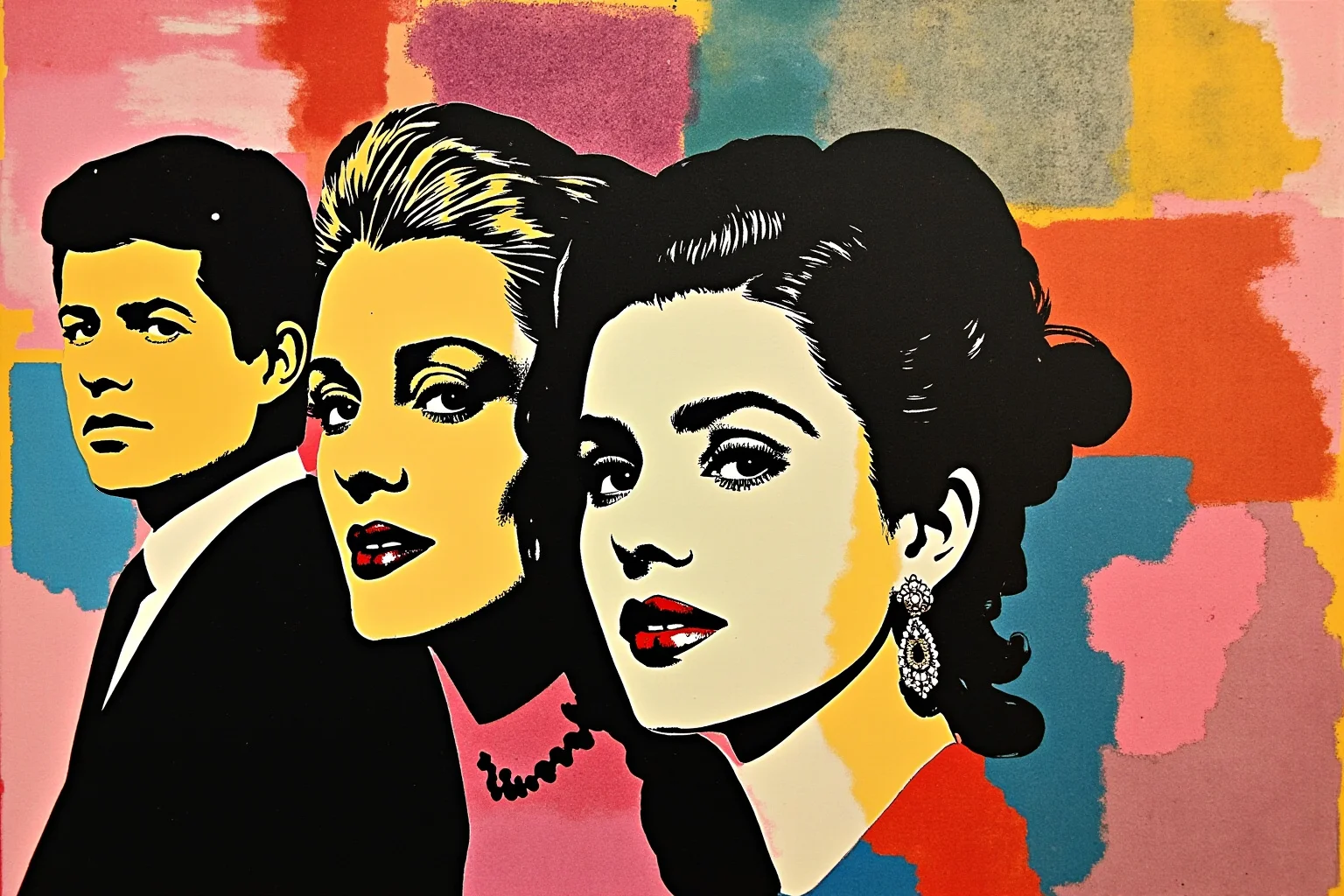
Frida Kahlo married Diego Rivera in 1929, and their marriage was already passionate and volatile when she discovered his affair with her younger sister Cristina in the mid-1930s. The betrayal shattered Kahlo and appears in her paintings and correspondence. Rivera’s relationship with Cristina did not break the marriage permanently, but it changed its terms.
Kahlo later had her own affairs, and the couple divorced in 1939 before remarrying in 1940. The triangle is compelling because it was processed through Kahlo’s art, not only through gossip. Scholars still debate how much of that art reflects the Cristina affair specifically, but the personal rupture is not in doubt.
21. John F. Kennedy, Jacqueline Kennedy, and Marilyn Monroe
Few modern triangles are as mythologized as the alleged link between John F. Kennedy, Jacqueline Kennedy, and Marilyn Monroe. Monroe’s breathy performance of ‘Happy Birthday, Mr. President’ in 1962 made the rumor permanent in popular culture. However, the evidence for an actual affair between Kennedy and Monroe is thin, anecdotal, and fiercely debated.
Historians generally treat the story as an unproven slice of Cold War celebrity gossip rather than settled fact. It matters because it shows how quickly rumor can harden into one of the most famous love triangles in modern memory. The gap between proof and legend is the real story.
22. Prince Charles, Princess Diana, and Camilla Parker Bowles
Prince Charles married Lady Diana Spencer in 1981, but his long-standing attachment to Camilla Parker Bowles continued. Diana later described the marriage as overcrowded, and the triangle became a global media spectacle. The couple separated in 1992 and divorced in 1996, with Diana famously saying there were ‘three of us in this marriage.’
Camilla was herself married for much of the early period, which deepened the public sense of a double triangle. Charles and Camilla eventually married in 2005. Because this played out in living memory, it is probably the most widely recognized famous love triangle of the modern era.
What Famous Love Triangles Actually Teach Us
Across centuries, the same pattern appears: power, property, reputation, and dynasty do most of the work. The romantic element is often real, but it is rarely sufficient to explain the consequences. Looking at these love triangle examples side by side shows how much storytelling shapes what we think we know.
Some stories are myth, some are documented scandal, and many lie in between. The responsible historian’s rule is simple: separate firm evidence from rumor, and do not assume that the most dramatic version is true. That caution does not flatten the stories; it makes them more interesting.
Frequently Asked Questions
What makes a love triangle historically significant?
A love triangle becomes historically significant when it intersects with power, succession, reputation, or large social change. Royal affairs, political marriages, and celebrity scandals often shaped laws, wars, or public conversations. The most durable cases are those with strong evidence or a major cultural afterlife.
Are Cleopatra, Julius Caesar, and Mark Antony really a love triangle?
Not in a strictly simultaneous sense. Cleopatra’s relationship with Julius Caesar came first and ended with his death in 44 BCE; her partnership with Mark Antony began later. They are often grouped as a famous love triangle because Roman propaganda and later popular culture blended the two relationships into one story.
Which famous love triangles are actually myth or legend?
The triangles of Paris-Helen-Menelaus, Arthur-Guinevere-Lancelot, and Tristan-Isolde-King Mark are best treated as literary myths. Fictional romance, not reliable historical record, created their familiar forms.
Did John F. Kennedy and Marilyn Monroe really have an affair?
There is no firm documentary evidence that John F. Kennedy and Marilyn Monroe had a sexual relationship. The claim rests on rumors, secondhand accounts, and Monroe’s public performance at his 1962 birthday celebration. Historians generally describe it as unproven.
Why do royal love triangles often appear in history?
Royal marriages were dynastic alliances, not private choices, so affection and desire often existed outside them. Mistresses, favorites, and new partners could influence patronage, succession, and policy. That structural tension made royal love triangles both personal and political.

Alex Warren
Related Articles