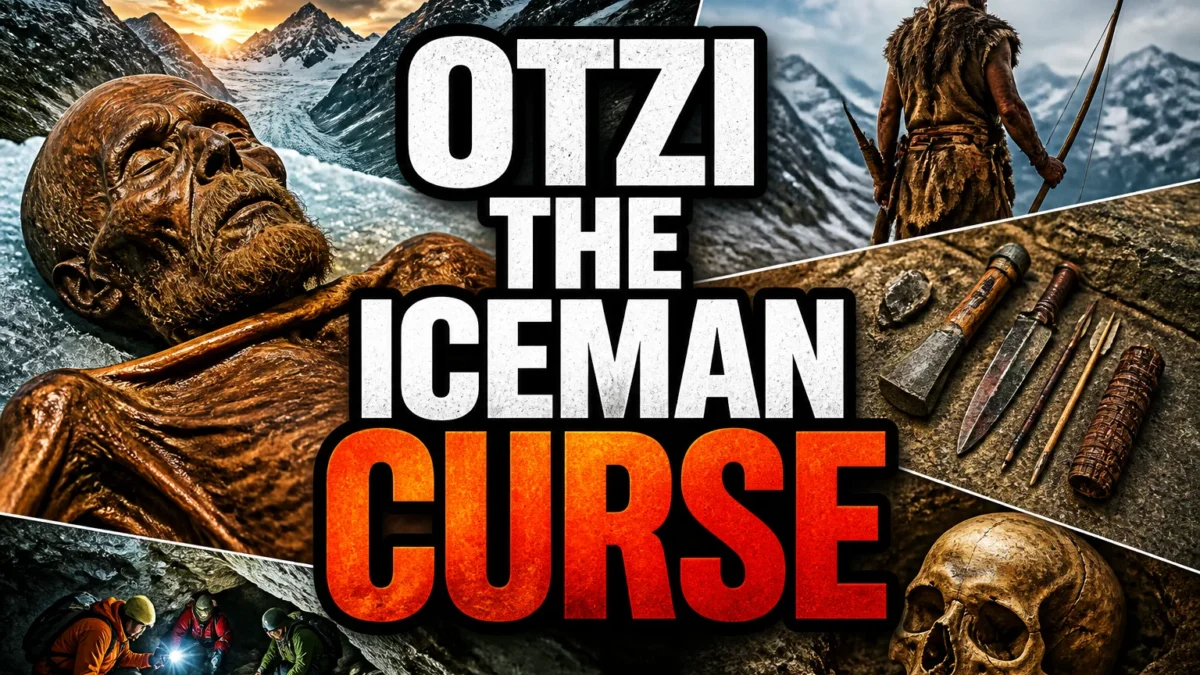
In 1991, two German hikers stumbled onto a frozen body high in the Ötztal Alps on the Austrian-Italian border. What they thought was a lost mountaineer turned out to be a Copper Age man who had lain in the ice for more than 5,000 years.
Ötzi the Iceman, as he became known, is now one of the most studied human remains on Earth. Yet alongside the science grew a strange legend: the curse of Ötzi the Iceman, a supposed jinx that struck down the people who found and examined him.
TL;DR: Ötzi the Iceman almost certainly died from an arrow wound to the shoulder around 5,300 years ago, and the famous "curse" is a coincidence-driven legend rather than a real supernatural force.
The Discovery That Started Everything
On September 19, 1991, Helmut Simon and his wife Erika were descending from the Finailspitze peak when they spotted something dark in a meltwater gully. They initially believed they had found the remains of a modern climber who had gone missing in the area.
It took several days for researchers to realize the body was ancient. The discovery site, in the Schnalstal valley, would eventually be named the Tisenjoch, and the mummy itself would take the name Ötzi after the Ötztal Alps.
The find was extraordinary because the body had been naturally freeze-dried and preserved. Skin, organs, hair, and even the contents of his stomach survived, giving scientists an unprecedented window into Copper Age life.
What Science Says About Ötzi's Death
The question of how did Ötzi the Iceman die has driven decades of research. Early examinations focused on the possibility of exposure, since the body was found in a high, cold mountain pass.
Later CT scans in 2001 revealed something far more dramatic: a flint arrowhead embedded in his left shoulder, just below the shoulder blade. The arrow had severed a major blood vessel, and the wound would almost certainly have been fatal.
Researchers also found a deep cut on his right hand and bruises across his body. These injuries suggest he was in a violent struggle in the days or hours before his death, not simply a lone traveler caught by bad weather.
The Arrowhead Evidence
The Ötzi arrowhead is a small triangular piece of flint, roughly 2 centimeters wide, found lodged in the soft tissue near his left shoulder. The shaft of the arrow was never recovered, which is why the wound went unnoticed for a decade.
To confirm the finding, scientists used a technique called multislice computed tomography to build a three-dimensional image of the body. The scan clearly showed the stone tip and the damaged subclavian artery beneath it.
Modern forensic reconstructions suggest Ötzi bled to death relatively quickly after the shot. He may have survived for minutes to hours, but not long enough to remove the arrow or escape his attacker.
The Ötzi Arrow Wound and Other Injuries
The Ötzi arrow wound was not his only trauma. Investigators documented a cut on his right hand that penetrated to the bone, likely a defensive injury sustained while trying to grab a blade.
He also had rib fractures, a nose fracture, and extensive bruising on his back and legs. Some of these injuries may have occurred during a fall, but others point to a beating or a close-quarters fight.
A head wound discovered later added to the picture. A blow to the back of the head, possibly from a fall after the arrow strike, may have contributed to his rapid death.
When Did Ötzi Die?
Radiocarbon dating places Ötzi's death at roughly 5,300 years ago, or around 3300 to 3100 BCE. That puts him in the late Neolithic or early Copper Age, a transitional period in European prehistory.
This timing matters because it places Ötzi before the rise of many well-known ancient civilizations. He lived centuries before the pyramids of Giza were completed, and long before the Bronze Age transformed European metalworking.
His copper axe, a rare and valuable tool for the period, hints that he held relatively high status. Owning copper in 3300 BCE was like carrying a luxury item, which makes his violent end even more intriguing.
The Full Story of Ötzi the Iceman
The story of Ötzi the Iceman is really two stories. One is a scientific biography pieced together from his body, his tools, and his DNA. The other is a cultural legend built from coincidence and imagination.
Scientifically, Ötzi was a roughly 45-year-old man, about 1.6 meters tall, with brown eyes and a beard. He carried a bow, a quiver of arrows, a copper axe, a flint dagger, and a birch-bark container.
His stomach contents revealed a last meal of ibex meat, red deer, and einkorn wheat, eaten shortly before he died. Pollen in his gut suggests the meal happened in spring or early summer, in a valley below the pass.
Genetic studies have linked him to modern Sardinians and to isolated Alpine populations. His genome also shows he had a genetic predisposition to cardiovascular disease, and CT scans found hardened arteries.
The Curse of Ötzi the Iceman: How the Legend Began
The curse of Ötzi the Iceman did not come from Ötzi himself. It emerged from a grim coincidence: several people connected to the discovery and study of the mummy died within a few years of each other.
The first was Rainer Henn, a forensic pathologist who was the first scientist to examine the body. He died in a car crash in 1992 while traveling to a conference about Ötzi.
Next came Kurt Fritz, a mountain guide who helped recover the body. He died in an avalanche in 1993 while leading a group in the Alps, the same year the mummy was moved to a new facility.
The Deaths Attributed to the Curse

The legend grew as more names were added to the list. Journalists and tabloids began counting every death with even a loose connection to the Iceman.
Rainer Henn
Rainer Henn was a well-known forensic expert who conducted the initial examination of Ötzi's remains. His death in a car accident in 1992 became the first entry in the curse narrative.
At the time, his death seemed tragic but ordinary. Only in hindsight, once other deaths followed, did writers begin to frame it as the opening chapter of a supernatural pattern.
Kurt Fritz
Kurt Fritz was an experienced mountain guide who participated in the recovery operation. He died in an avalanche in 1993, an event that shocked the mountaineering community.
Avalanches are a real and well-documented hazard in the Alps. Still, the timing made his death a central pillar of the growing curse story.
Helmut and Erika Simon
The hikers who found the body, Helmut and Erika Simon, became the most cited names in the legend. Helmut Simon died in 2004 after falling from a cliff near the discovery site, a fall that some writers called eerie.
Erika Simon died in 2006 after a long illness. The pairing of their deaths, close together and both connected to the original find, gave the curse narrative its most emotionally powerful chapter.
Other Names Linked to the Legend
Several other figures were folded into the story over the years. A journalist who covered the discovery, a rescue team member, and a researcher involved in early studies were all counted among the supposed victims.
The exact number varies depending on who is telling the story. Some accounts claim seven deaths, others claim more, and the boundaries of who "counts" are drawn loosely.
Why the Curse of the Iceman Is Almost Certainly a Coincidence
The curse of the iceman collapses under even light scrutiny. The people involved were mountaineers, researchers, and journalists working in high-risk environments or at advanced ages.
Mountain guides face avalanche risk as part of their job. Forensic pathologists travel constantly. Elderly researchers die of natural causes, and hikers who spend decades in the Alps face real danger every season.
This is a textbook case of apophenia, the human tendency to see patterns in random events. Once you decide a curse exists, every subsequent death becomes evidence, while every unrelated death is quietly ignored.
The curse of Ötzi also ignores the many people connected to the mummy who lived long, healthy lives. Dozens of scientists, conservators, and officials worked with Ötzi without incident, but their survival rarely makes headlines.
This pattern mirrors other famous "curses" throughout history, such as the curse of Tutankhamun that spread after the 1922 discovery of the pharaoh's tomb.
The Curse of the Ice Mummy in Popular Culture
The curse of the ice mummy became a staple of documentaries, tabloid articles, and internet lists. The story fits a familiar template: an ancient body disturbed by modern hands, followed by mysterious retribution.
This template echoes older legends like the curse of Tutankhamun, which spread after the 1922 discovery of the pharaoh's tomb. Both stories follow the same arc of discovery, death, and sensational retelling.
Museums and tourism boards have sometimes leaned into the mystery. The South Tyrol Museum of Archaeology in Bolzano, where Ötzi now rests, presents the science first, but the curse remains a popular draw for visitors.
What Ötzi's Death Tells Us About His World
Ötzi's violent death is not just a curiosity. It is evidence that Copper Age Alpine communities could be dangerous places, with conflict, competition, and interpersonal violence.
The arrow wound suggests a deliberate attack, possibly an ambush. Someone shot him from a distance, likely from below, which means his attacker may have known the terrain and waited for him.
His valuable copper axe raises a motive question. Was this a robbery, a feud, a territorial dispute, or something else entirely? Researchers have proposed many theories, but no single explanation has been proven.
The Science That Keeps Unfolding
Ötzi remains one of the most intensively studied ancient bodies in the world. Advances in DNA sequencing, isotope analysis, and imaging continue to yield new details.
In 2012, researchers sequenced his full genome, revealing ancestry and health risks. Later studies examined his stomach bacteria, his tattoos, and the proteins in his tissues.
His 61 tattoos, made from soot rubbed into small cuts, may have marked acupuncture points or served as therapeutic treatments. They are among the oldest direct evidence of tattooing on a preserved body.
How Did Ötzi the Iceman Die? The Short Answer
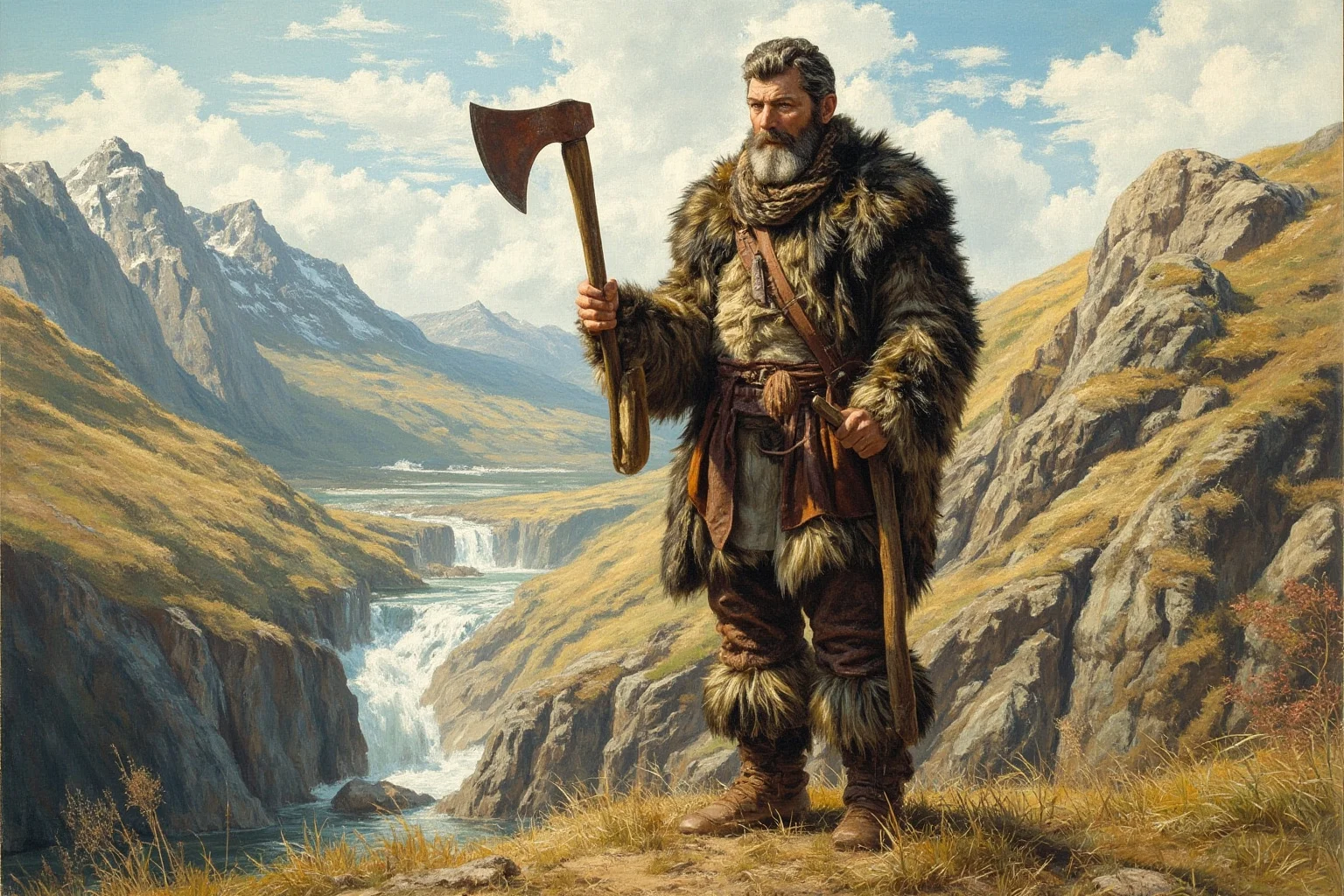
If you want the simplest answer to how did Ötzi the Iceman die, it is this: he was shot with an arrow and bled to death. The arrowhead in his shoulder, confirmed by CT scanning, is the clearest cause of death.
Secondary injuries, including a head wound and a cut hand, suggest he was attacked and possibly fell. Whether the head trauma happened before or after the arrow strike remains debated.
What is not debated is that his death was violent. This was not a peaceful passing in old age, and it was not simply hypothermia on a lonely mountain path.
How Did Ötzi the Iceman Die According to Forensic Reconstructions
Forensic scientists have built detailed scenarios of Ötzi's final hours. Most agree he was in the mountains, possibly fleeing or traveling through a contested area, when he was shot from behind and below.
The arrow severed the subclavian artery, causing rapid blood loss. He likely collapsed within minutes, though he may have lived long enough to remove the arrow shaft, which would explain why only the head remained.
His body was then covered by snow and ice, which preserved it for millennia. The glacier that entombed him eventually melted enough in 1991 for hikers to spot him.
Ötzi's Death and the Ethics of Displaying Human Remains
Ötzi's story also raises modern ethical questions. Should a man who died violently 5,000 years ago be displayed in a museum, studied endlessly, and used to sell documentaries?
Supporters argue that the scientific value is immense and that Ötzi is treated with respect in a climate-controlled chamber. Critics say he deserves burial and that the research has become a spectacle.
The debate reflects a broader shift in archaeology toward respecting ancient individuals. It also reminds us that Ötzi was a real person, not just a set of data points or a spooky legend.
Common Myths About Ötzi the Iceman
Several myths surround Ötzi beyond the curse. One is that he was a shepherd who simply got lost, a story that ignores the arrow wound and the signs of struggle.
Another myth claims he was a shaman or a ritual sacrifice. There is no solid evidence for this, and most researchers view his death as the result of interpersonal conflict.
A third myth says his tattoos were purely decorative. In reality, their placement near joints and along the spine suggests they may have had a medical or symbolic purpose.
The Real Legacy of the Iceman
Ötzi's legacy is scientific, not supernatural. He has given us the oldest known complete Copper Age outfit, the oldest known copper axe, and one of the oldest preserved human genomes.
He has also become a symbol of the Alps and of South Tyrol, drawing hundreds of thousands of visitors to Bolzano each year. His face, reconstructed from his skull, is now instantly recognizable.
The curse of Ötzi the Iceman, by contrast, tells us more about us than about him. It shows how much humans love a mystery, and how easily coincidence can be dressed up as fate.
Conclusion: A Man, Not a Mummy's Curse
Ötzi the Iceman died from an arrow wound around 5,300 years ago, and the evidence for that is overwhelming. The curse of Ötzi the Iceman, on the other hand, rests on a handful of tragic but statistically unremarkable deaths.
His story is remarkable enough without the supernatural. A Copper Age man, frozen in time, has taught us about diet, disease, migration, violence, and daily life in prehistoric Europe.
So the next time you hear about the curse of the iceman, remember the arrowhead. That small piece of flint, not an ancient spell, is what really killed Ötzi the Iceman.
Frequently Asked Questions
How did Ötzi the Iceman die?
Ötzi the Iceman died from blood loss after being shot with an arrow. A flint arrowhead was found embedded in his left shoulder, and CT scans showed it had severed a major blood vessel. He also had a cut hand, rib fractures, and a head wound, suggesting he was attacked in a violent encounter around 5,300 years ago.
When did Ötzi die?
Radiocarbon dating places Ötzi's death at roughly 5,300 years ago, around 3300 to 3100 BCE. This was during the late Neolithic or early Copper Age, centuries before the pyramids of Giza were completed.
Is the curse of Ötzi the Iceman real?
No. The curse is a legend built on coincidence. Several people connected to the discovery and study of the mummy died in accidents or of natural causes, but they were mountaineers, researchers, and journalists who faced ordinary risks. Dozens of other people connected to Ötzi lived long, healthy lives.
Who were Helmut and Erika Simon?
Helmut and Erika Simon were the German hikers who discovered Ötzi's body in the Ötztal Alps in 1991. Helmut died in 2004 after a fall near the discovery site, and Erika died in 2006 after an illness. Their deaths are often cited in the curse legend, though both are explainable by ordinary causes.
What was the Ötzi arrow wound?
The Ötzi arrow wound was a puncture to his left shoulder caused by a flint arrowhead. The arrow severed the subclavian artery, causing rapid blood loss. The arrow shaft was never found, which is why the injury went undetected until 2001.
What is the story of Ötzi the Iceman?
Ötzi was a roughly 45-year-old Copper Age man who lived in the Alps around 5,300 years ago. He carried a copper axe, a bow, and a flint dagger, and he died violently from an arrow wound. His body was preserved in ice until hikers found him in 1991, making him one of the most studied ancient humans ever discovered.

Alex Warren
Related Articles