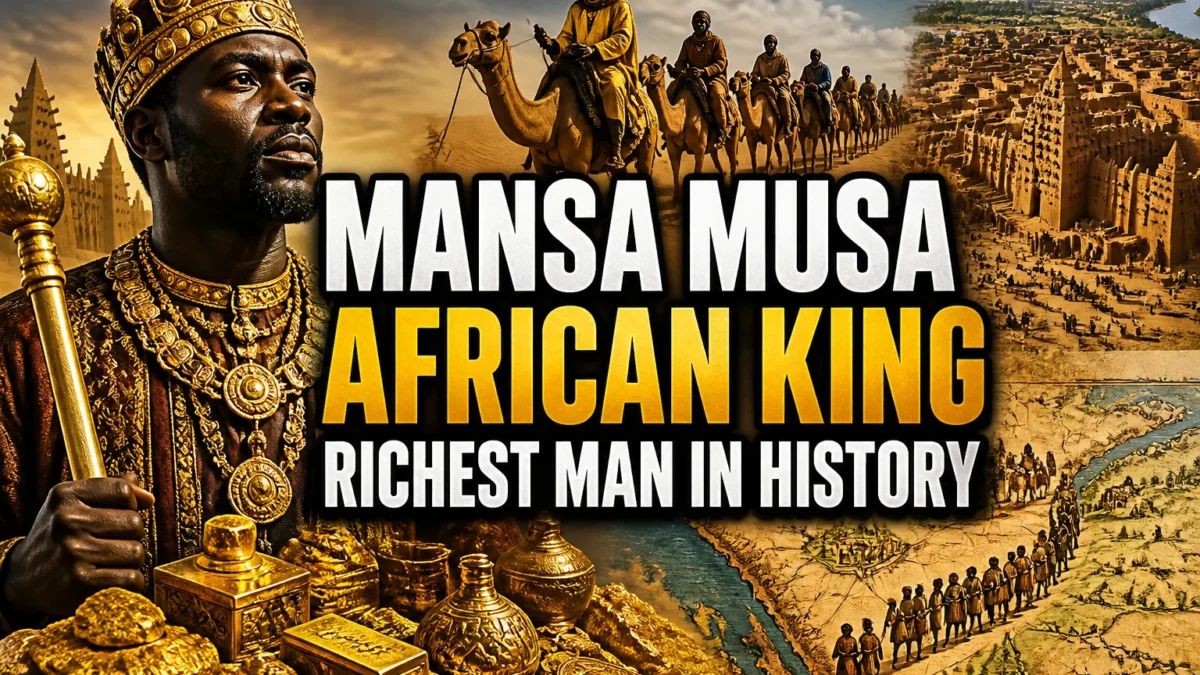
Ask the internet who the richest man in African history was, and one name comes up almost every time: Mansa Musa, the 14th-century ruler of the Mali Empire. He is routinely called the richest king in history, and sometimes the richest man to ever exist. His story has everything: caravans of gold, a legendary pilgrimage, and a crash in the price of gold.
But a lot of what gets repeated about this rich African king is half-remembered, exaggerated, or just invented. In this post we'll walk through what the evidence says, bust a few popular myths, and look at other rich African kings and the wealthiest people on the continent today.
TL;DR: Mansa Musa of Mali was almost certainly one of the wealthiest rulers of the medieval world, but the viral "$400 billion" figure is a modern guess that no historian can actually verify.
Who Was Mansa Musa?
Mansa Musa ruled the Mali Empire in West Africa in the early 14th century. "Mansa" is a Mandinka title often translated as "king" or "emperor." Musa belonged to the Keita dynasty, which traced its power back to Sundiata Keita, the legendary founder of Mali in the 13th century.
Historians usually date his reign from about 1312 to around 1337, though some sources suggest slightly different years. The uncertainty exists because many of our written sources were produced by outside observers, often decades after the events they describe.
How Musa came to the throne is itself a puzzle. The Egyptian writer al-Umari recorded a story, supposedly told by Musa himself in Cairo, that his predecessor Abubakari II (also written Abu Bakr II) led a huge fleet out into the Atlantic and never came back. Musa said he had been left as deputy and became king.
That tale is fascinating, but it rests on a single reported conversation and has no independent confirmation. It's best treated as an intriguing account rather than established fact.
Whatever the route to power, Musa inherited a large and well-organized state. Mali stretched across the Sahel and savanna from near the Atlantic coast toward the bend of the Niger River. Its cities, including Timbuktu and Gao, sat on some of the most profitable trade routes in the world.
Where Did Mali's Gold Come From?
Mali's wealth did not come from a single royal treasure chest. It came from controlling trade. The goldfields of regions such as Bambuk and Buré, in the upper Senegal and upper Niger river areas, supplied a large share of the gold that reached North Africa, the Middle East, and Europe in the medieval period.
Mali's rulers didn't necessarily dig the gold themselves. They taxed, regulated, and protected the commerce that moved it, and that gave the crown a steady and enormous income.
The trade ran in both directions. Salt from Saharan mines such as Taghaza traveled south, while gold traveled north on camel caravans. Copper, cloth, kola nuts, and horses moved along the same networks.
Arabic writers also reported that West African rulers claimed the largest gold nuggets for themselves while letting gold dust circulate as currency. That detail is often repeated, and it fits with the idea of a state managing its gold supply, though the exact practice is hard to confirm.
It's also important to be honest about the less glamorous side of this economy. The trans-Saharan trade included enslaved people, and Mali, like most states of its era, took part in slavery. The wealth of medieval empires, in Africa and everywhere else, was never built on gold alone.
The 1324 Hajj: The Journey That Made Him Famous
Every Muslim who is able is expected to make the pilgrimage to Mecca at least once, and Musa's hajj in 1324 became one of the most talked-about journeys of the Middle Ages. He traveled north across the Sahara and reached Cairo in mid-1324 before continuing on to Arabia.
Cairo was then one of the largest and richest cities in the world, ruled by the Mamluk sultan al-Nasir Muhammad. Even so, Musa's arrival made a lasting impression.
Arabic sources describe an enormous caravan. Figures such as 60,000 travelers and around 12,000 attendants appear in the accounts, along with camels loaded with gold. The numbers differ between authors, and medieval writers often rounded up or exaggerated, so treat the exact totals with caution.
What is consistent across the sources is the impression of staggering generosity. Musa reportedly gave gold to officials, scholars, and the poor, and he spent heavily in Cairo's markets.
One frequently told anecdote says Musa was reluctant to kiss the ground before the sultan, saying he bowed only to God. Versions of the story vary, so it's more a window into how people remembered him than a verified scene.
The key point is that people were still talking about Musa more than a decade later. Al-Umari gathered information in Cairo around twelve years after the visit, and Cairo residents still described the Malian king's generosity in vivid terms.
Did Mansa Musa Really Crash the Price of Gold?
This is one of the most popular claims about him, and it has a real basis. Al-Umari reported that the value of gold in Cairo fell after Musa's visit because so much of it flooded the market. He added that the market still hadn't fully recovered when he was writing years later.
That's a solid piece of evidence for a local effect, and it's a big reason Musa's name became tied to ideas of extreme wealth.
But the story is often inflated. This was a regional dip in the value of gold, described in a single main source, not a worldwide financial collapse. We don't have detailed price data that would let us measure how large or how long-lasting the drop really was.
Another story says Musa ran short of money on the return journey and borrowed from Cairo merchants at high interest. This also comes from al-Umari's reporting.
If true, it suggests the pilgrimage was enormously costly even for a ruler of Musa's resources. It also reminds us that rich is not the same as limitless.
How Rich Was Mansa Musa, Really?
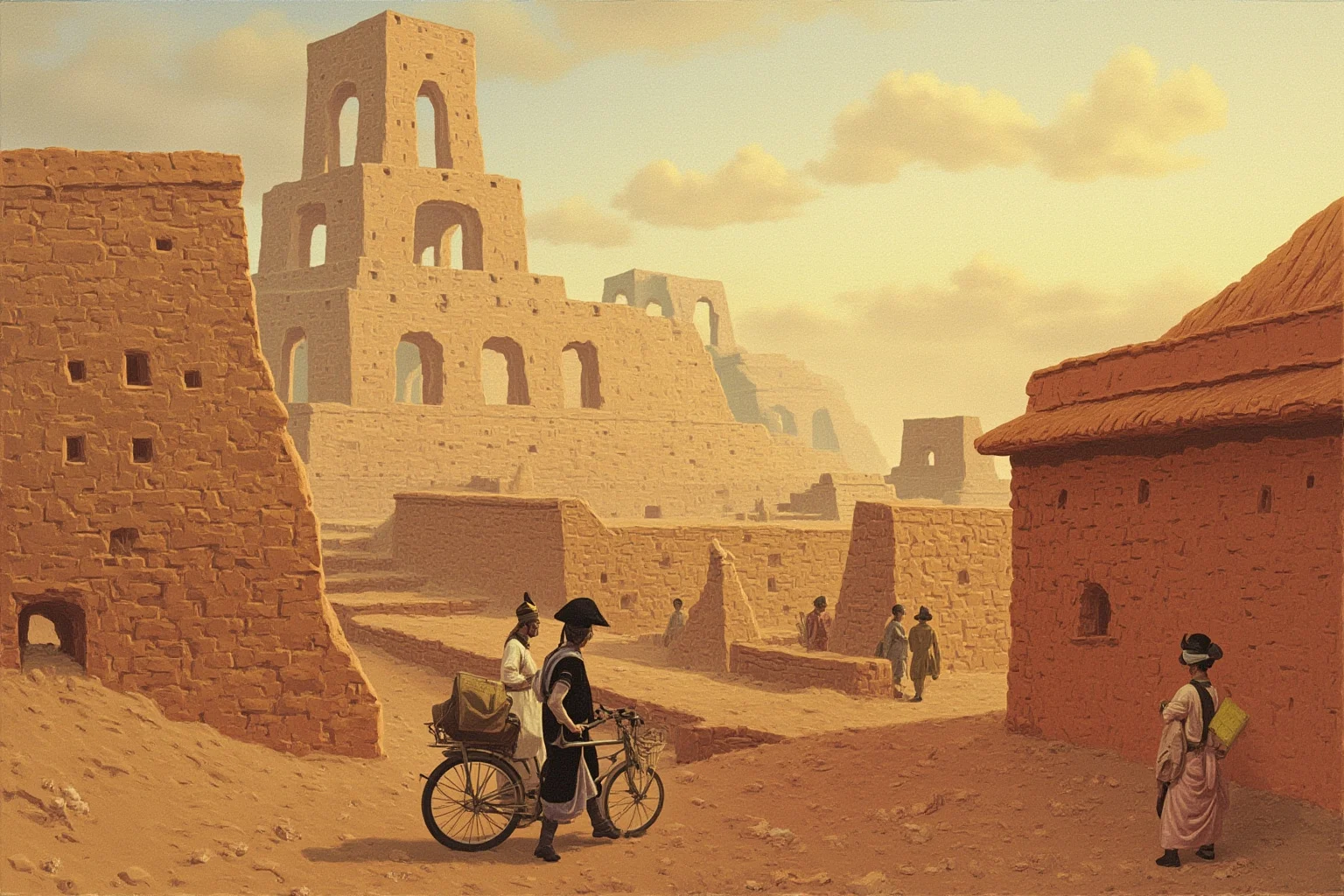
You've probably seen the claim that Mansa Musa was worth $400 billion or more. That number doesn't come from any medieval source. It's a modern estimate that popular lists have repeated, and it isn't based on surviving treasury records, because none exist.
There are no tax ledgers, no inventories of Mali's gold, and no accounts of annual royal income. Without those, any dollar figure is educated guesswork at best.
There are deeper problems too. Comparing wealth across 700 years means comparing gold's purchasing power, living standards, and economic systems that were wildly different from ours.
A king also doesn't own an empire the way a billionaire owns shares. Personal fortune and state revenue were tangled together, so historians tend to say Musa was among the richest rulers of his age rather than naming a number.
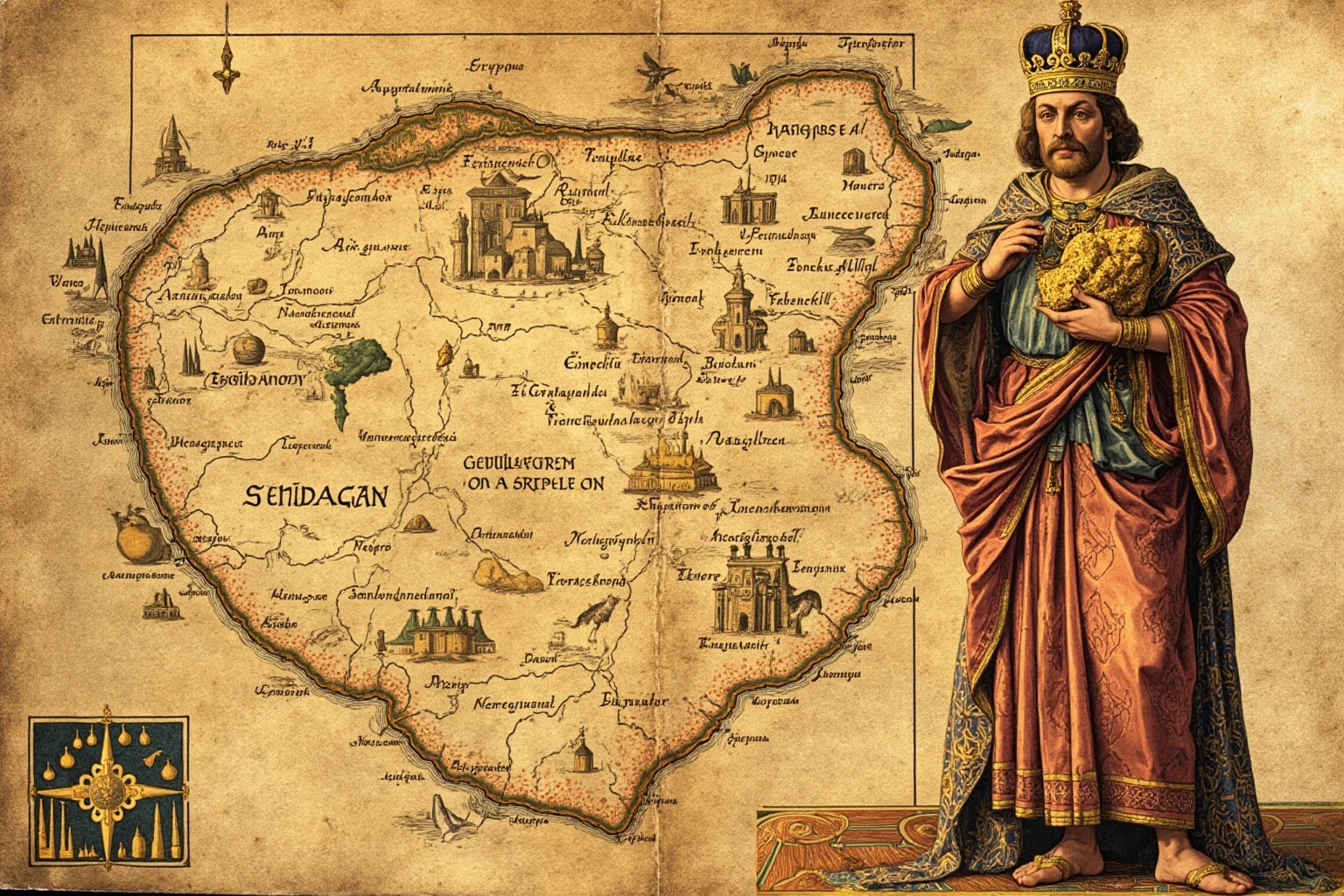
What we can say with confidence is that his contemporaries thought he was astonishingly wealthy. The Catalan Atlas, a map made in Majorca around 1375, shows a crowned African ruler labeled "Musse Melly" holding a gold nugget. The accompanying text describes him as lord of a land rich in gold.
That tells us that Musa's reputation traveled all the way to Mediterranean Europe within a few decades.
Was Mansa Musa the Richest King in the World?
That depends on how you measure it. If "richest" means the most gold flowing through a single ruler's kingdom in his lifetime, Musa is a legitimate contender for the richest king in the world, and many historians would put him in the top tier of medieval rulers.
But "the richest king in history" is not a title anyone can prove. There are rival candidates across many centuries.
Some economic historians estimate that the Roman emperor Augustus controlled a personal fortune of billions of sesterces, a very large share of the Roman economy. Emperors of China's Song dynasty ruled over what may have been the largest and most advanced economy of their era. Mughal emperors such as Akbar governed a vast and prosperous empire in South Asia.
These comparisons run into the same problem as the Musa estimates: incomplete data and very different economies. Dynastic fortunes are hard to pin down in any era, as you can see in our look at the richest and most powerful families in history. The honest answer to "who was the richest man to ever exist?" is that Mansa Musa is among the strongest candidates, but nobody can crown a definitive winner.
A more useful way to see it is that Musa symbolizes something real. In the 1300s, one of the wealthiest places on Earth was in West Africa, and the wider world knew it.
Myths About Mansa Musa Worth Busting
"He Was Just a Rich Man Who Gave Money Away"
Musa was a ruler and statesman, not just a spender. He governed a large empire, oversaw trade networks, and used his pilgrimage to build diplomatic ties with the Islamic world.
The hajj was also a political statement. It announced Mali as a major Muslim kingdom to Cairo, Mecca, and beyond.
"Mali Collapsed Right After He Died"
Mali did not fall apart overnight. About fifteen years after Musa's death, the Moroccan traveler Ibn Battuta visited Mali in 1352 and 1353, during the reign of Musa's brother Mansa Suleyman.
Ibn Battuta praised the security of the roads and the Malians' respect for justice, though he also complained about the king's stinginess. Mali's power declined gradually, and in the 1400s the Songhai Empire rose to take over much of its former influence.
"Musa Founded Timbuktu"
Timbuktu existed before Musa and was already a trading settlement. What Musa did was boost its importance by bringing it firmly into Mali's orbit and investing in its religious and scholarly life.
The city's famous reputation as a center of learning grew mostly in the 15th and 16th centuries. Musa's reign helped lay the groundwork for that, but he didn't create it from scratch.
"Africa Had No Wealthy Kingdoms Until Modern Times"
This myth is the one Musa's story helps destroy. Medieval Africa had major states with sophisticated administrations, long-distance trade, and impressive wealth. Mali was one of several.
What Mansa Musa Built: Mosques, Scholars, and Timbuktu
Musa didn't just spend his money on the road. According to later sources, he returned from the hajj with scholars, books, and an architect, Abu Ishaq al-Sahili, who came from Granada in Muslim Spain.
The later chronicle Tarikh al-Sudan and the historian Ibn Khaldun connect al-Sahili with a domed audience hall in the royal capital. Later tradition also links him to the Djinguereber Mosque in Timbuktu, though the building was altered over the centuries and its exact early history is debated.
These projects introduced new building techniques to the region, including the use of baked brick in some structures. They also reinforced Islamic learning in Mali's cities.
The long-term payoff was cultural. Timbuktu grew into a center for manuscripts, legal scholarship, and teaching, and tens of thousands of historic manuscripts have survived in the region. Much of that flowering happened after Musa, but his patronage was an important early push.
How Do We Know All This? The Sources
Here's something worth knowing: Musa himself left no known written account. Our knowledge comes from a mix of Arabic writers and local traditions.
Al-Umari and Ibn Khaldun, writing in the Mamluk and North African worlds, recorded what they learned from people who had met Musa or been in Cairo during his visit. Ibn Battuta described Mali a few decades after Musa. Later, Timbuktu scholars wrote chronicles such as the Tarikh al-Sudan and the Tarikh al-Fattash, in the 1600s.
West African oral tradition also matters. Griots, the hereditary historians and storytellers of the Mande world, preserved the epic of Sundiata and other stories across generations.
Archaeology has been more limited. Even the exact location of Mali's capital, usually called Niani, is not settled, so many details remain open.
That means we should hold some claims lightly. When a number or anecdote comes from a single outside source written long after the fact, caution is the right response.
Other Rich African Kings Worth Knowing
Musa was exceptional, but he was not alone. Africa's history includes many rich African kings and wealthy states.
The Kings of Ghana (Wagadou)
The early Ghana Empire, centered in what is now southeastern Mauritania and Mali, was known as a land of gold. The Andalusian geographer al-Bakri, writing in 1068, described the splendor of its royal court. This was centuries before Musa.
Mansa Suleyman of Mali
Musa's brother ruled Mali for roughly two decades after him. Under Suleyman, Mali remained powerful and prosperous, as Ibn Battuta's visit shows.
Askia Muhammad of Songhai
Askia Muhammad I took power in the late 1400s and built Songhai into the largest state in West Africa. He made a famous hajj of his own in 1496 to 1497, which later chronicles describe as lavish and designed to show off his empire's standing.
The Sultans of Kilwa
On the East African coast, the Swahili city-state of Kilwa grew rich by shipping gold from the interior, in the region linked to Great Zimbabwe, across the Indian Ocean. Its mosques and palaces still stand in ruins today as a reminder of that trade.
The Asante Kings
The Asante Empire in what is now Ghana, which flourished in the 18th and 19th centuries, was famous for gold regalia and the sacred Golden Stool. Its rulers controlled access to goldfields and trade routes to the coast.
Ancient Egyptian Pharaohs
If you stretch the question to all of African history, pharaohs belong in the conversation. The treasures from Tutankhamun's tomb, from a relatively minor king, hint at how much wealth powerful rulers of Egypt could command.
Who Is the Richest Man in Africa Today?
If you landed here searching for the wealthiest man in Africa right now, the name you'll most often see is Aliko Dangote, the Nigerian industrialist behind Dangote Cement, sugar, and refining businesses. Forbes and Bloomberg have ranked him as Africa's richest person for most of the past decade or so.
Other names that appear near the top of these lists include South Africa's Johann Rupert and Nicky Oppenheimer, and Egypt's Nassef Sawiris. Nigeria's Mike Adenuga and Abdulsamad Rabiu also appear regularly.
The rankings change often. Stock prices, commodity markets, and currency swings can move fortunes by billions of dollars in a single year, so it's worth checking a current Forbes or Bloomberg list rather than trusting any static figure.
There's an interesting contrast with Musa here. Today's billionaires, whether in Africa or among the richest Americans in history, have net worth numbers that can be checked against public filings and markets, while Musa's wealth can only be described, never measured.
Why Mansa Musa Still Matters
Mansa Musa matters because his story corrects a common blind spot. For many people, the medieval world conjures up European castles and knights, not a West African ruler whose gold became famous from Cairo to Majorca.
His legacy also reminds us that wealth was only part of the picture. Trade networks, scholarship, and diplomacy gave Mali its global reach.
So was he the richest man in African history? Very likely, or at least in the top handful. Was he the richest man who ever lived? That's a claim no one can prove, and the most honest answer is that Musa was a remarkable ruler of an extraordinarily wealthy empire, and that is impressive enough.
Frequently Asked Questions
Who was the king richest in the world?
Mansa Musa of Mali, who ruled in the early 14th century, is the most commonly cited answer for the king richest in the world. Medieval writers in Cairo and Europe described him as astonishingly wealthy because Mali controlled major gold-producing and trading regions. However, no records exist that would let historians calculate his fortune, so he is best described as one of the richest rulers in history rather than definitively the richest.
How much was Mansa Musa worth?
No one knows. The popular figure of $400 billion is a modern estimate that isn't based on surviving medieval financial records, because none exist. Historians generally avoid assigning a dollar value and instead describe him as among the wealthiest rulers of his era.
Was Mansa Musa the richest man to ever exist?
He is a strong candidate, but it can't be proven. Other rulers such as Augustus of Rome, Song dynasty emperors, and Mughal emperors also controlled immense resources, and comparing wealth across centuries is very difficult. Many historians simply say Musa was among the richest people in history.
Did Mansa Musa really crash Egypt’s economy?
Not quite. The Egyptian writer al-Umari reported that gold's value in Cairo dropped after Musa's 1324 visit and had not fully recovered years later. That points to a real local effect, but it was a regional market dip described in limited sources, not a full economic collapse.
Who is the richest man in Africa today?
Aliko Dangote, the Nigerian businessman behind Dangote Cement and other industrial companies, has been ranked Africa's richest person by Forbes and Bloomberg for most of the past decade or so. Others such as Johann Rupert, Nicky Oppenheimer, and Nassef Sawiris often appear near the top. Rankings change with markets and currencies, so check a current list.
Where did Mansa Musa get his gold?
Mali's wealth came largely from controlling and taxing trade in gold from West African goldfields such as Bambuk and Buré, along with trade in salt, copper, and other goods across the Sahara. The rulers didn't need to mine all of it themselves. Their income came from regulating a trade network that supplied much of the gold reaching the Mediterranean world.
Who were other rich African kings besides Mansa Musa?
Notable examples include the kings of the early Ghana Empire, Mansa Suleyman of Mali, Askia Muhammad I of Songhai, the sultans of Kilwa on the East African coast, and the Asante kings of what is now Ghana. Ancient Egyptian pharaohs also belong in the wider story of rich African rulers.

Alex Warren
Related Articles