Introduction
History is full of celebrated names — geniuses, generals, presidents, and saints — whose beginnings were far from respectable by the standards of their day. Many of them were born outside marriage, a status that carried real legal and social consequences for centuries. In some eras, being an illegitimate son or daughter meant losing inheritance rights, facing exclusion from certain professions, or enduring lifelong stigma.
Yet the historical record shows that illegitimacy was neither rare nor ruinous. Powerful families, royal courts, and even the papacy found ways to accommodate — and sometimes exploit — the talents of children born out of wedlock. What follows is a list of 20 historical figures whose illegitimate birth is well documented, along with the historical context that shaped their lives.
TL;DR: Illegitimacy was common across history and rarely stopped talented people from shaping politics, art, and science — though it often determined what they could inherit and how they were remembered.
What "Illegitimate" Actually Meant
Before diving into the list, it helps to understand that "illegitimate" was not a single, uniform category. In medieval and early modern Europe, canon law distinguished between children born outside marriage and those born to parents who later married. The latter could sometimes be legitimized retroactively, restoring inheritance rights.
In England, the common law rule was harsh: a child born before marriage was legally a stranger to both parents. Royal and noble families often petitioned the crown or the pope for legitimization, and the process was frequently political rather than moral. This context matters because it explains why some figures on this list inherited thrones while others were quietly excluded.
1. Leonardo da Vinci (1452–1519)
Leonardo was born in Vinci, Tuscany, to a notary named Piero da Vinci and a peasant woman named Caterina, who were not married. Because he was illegitimate, he was excluded from the notarial profession that his father's family had practiced for generations. That exclusion may have pushed him toward art and engineering instead of law and finance.
Modern biographers debate the details of his early life, but the documentary record is clear that Leonardo was not a legitimate heir. He received some informal education but no university training, which was typical for illegitimate sons of his class. His illegitimacy is often cited as one reason he never married and left no direct descendants.
2. Alexander Hamilton (1755/57–1804)
Hamilton was born on the Caribbean island of Nevis to James Hamilton, a Scottish trader, and Rachel Faucette, who had separated from her first husband but was not legally divorced. Under the laws of the time, Alexander was therefore illegitimate and could not inherit property or attend the Anglican church school on the island.
This background shaped his fierce ambition and his later insistence on a strong central government. When he arrived in the American colonies, he reinvented himself through education and military service. His illegitimate birth was a social liability he largely overcame, though it was used against him by political enemies.
3. William the Conqueror (c. 1028–1087)

William was the only son of Robert I, Duke of Normandy, and Herleva, a woman of non-noble birth who may have been a tanner's daughter. Because his parents never married, his contemporaries called him William the Bastard — a label that followed him even after he became Duke of Normandy at age seven.
His illegitimate status made his early rule precarious, as rival nobles questioned his right to inherit. He ultimately conquered England in 1066 and became one of the most powerful monarchs in Europe. His story is a reminder that illegitimacy could be a political weapon used by opponents rather than an absolute bar to power.
4. John of Austria (1547–1578)
Don John of Austria was the illegitimate son of Holy Roman Emperor Charles V and Barbara Blomberg, a singer from Regensburg. Charles V acknowledged him but arranged for him to be raised in Spain under a false name until his identity could be revealed safely.
He went on to command the Holy League fleet at the Battle of Lepanto in 1571, a decisive victory against the Ottoman Empire. His royal blood gave him access to high command, but his illegitimacy meant he could never inherit the Spanish or imperial thrones. He died young, at 31, while serving as governor of the Netherlands.
5. James Scott, Duke of Monmouth (1649–1685)

James Scott was the eldest illegitimate son of King Charles II of England and his mistress Lucy Walter. Charles acknowledged him and gave him the dukedom of Monmouth, along with a prominent place at court. Monmouth became a popular Protestant figure during a period of intense anti-Catholic sentiment.
In 1685, after Charles II died without a legitimate heir, Monmouth led a rebellion against James II. The uprising failed, and he was executed for treason. His story illustrates how illegitimate royal sons could rise very high — but also how their lack of legal standing made them vulnerable when the political winds shifted.
6. Charlotte, Princess of Wales (1796–1817)

Princess Charlotte was the only legitimate child of the future George IV, but her parents' marriage was notoriously unhappy and she was raised largely apart from them. Her situation is often cited in discussions of royal illegitimacy because her death in childbirth in 1817 triggered a succession crisis that led to a scramble among George III's sons to produce heirs.
Strictly speaking, Charlotte was legitimate, so she belongs here as a contrast case. Her story shows how much royal succession depended on legitimate births — and how a single death could reshape a dynasty. The subsequent marriages of her uncles produced Queen Victoria, whose own legitimacy was never in doubt.
7. Elizabeth I of England (1533–1603)
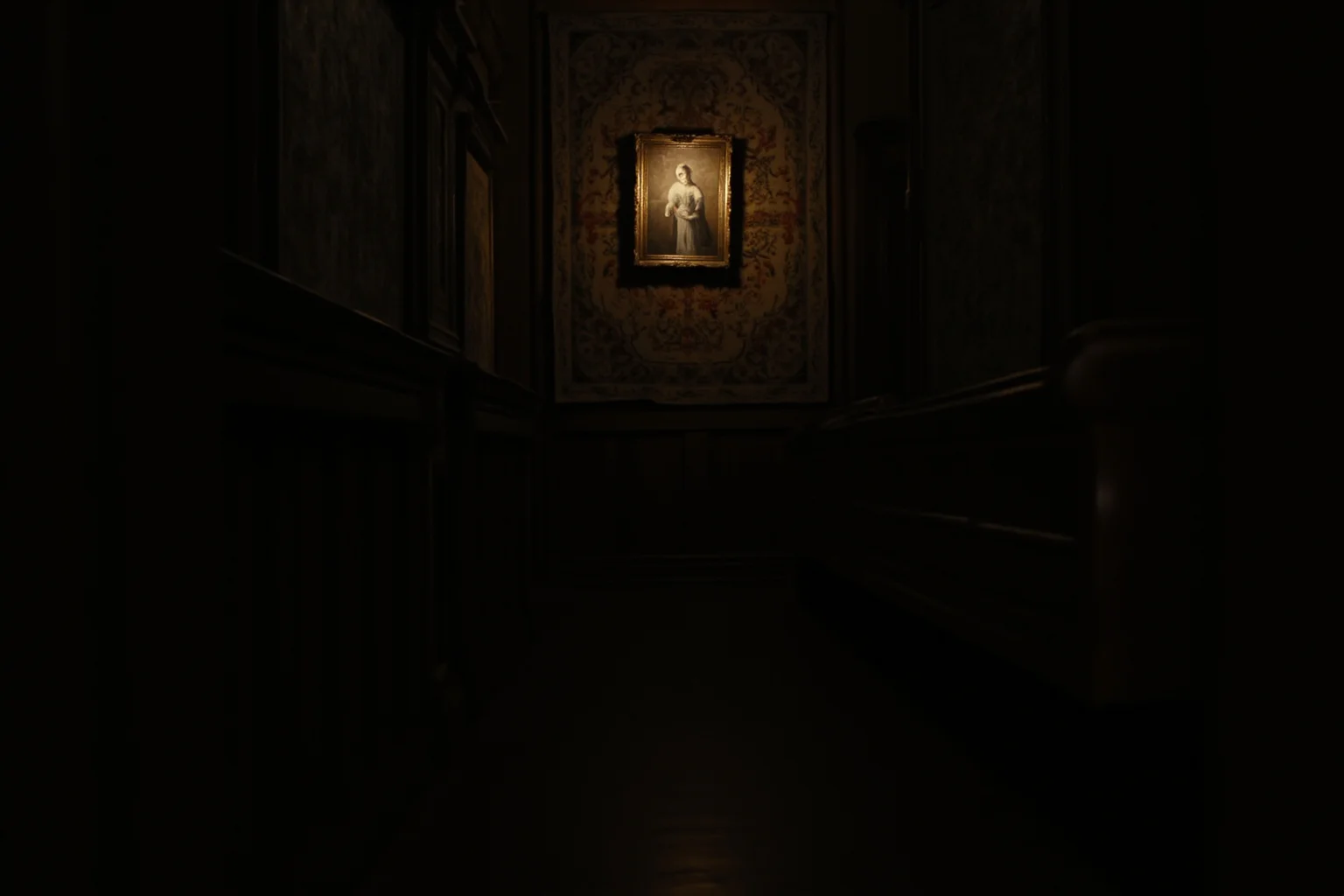
Elizabeth was born to Henry VIII and Anne Boleyn, whose marriage Henry had engineered by breaking with the Roman Catholic Church. After Anne's execution in 1536, Henry declared his marriage to her invalid and Elizabeth illegitimate, removing her from the line of succession.
Parliament later restored her place in the succession, and she became queen in 1558. The question of her legitimacy haunted her reign, especially in Catholic Europe, where many regarded her as a usurper. Her long and successful rule demonstrated that political power could outweigh legal technicalities — at least in England.
8. Henry FitzRoy, Duke of Richmond (1519–1536)

Henry FitzRoy was the acknowledged illegitimate son of Henry VIII and his mistress Elizabeth Blount. The surname FitzRoy literally means "son of the king," a common naming convention for royal bastards in England. Henry VIII made him Duke of Richmond and Somerset, the highest peerage granted to an illegitimate son in English history.
There were rumors that Henry considered making FitzRoy his heir, though no formal steps were taken. FitzRoy died at 17, likely of tuberculosis, before any such plan could mature. His brief life shows how royal fathers could elevate illegitimate sons without ever fully legitimizing them.
9. John James Audubon (1785–1851)

Audubon, the famous ornithologist and painter, was born in Saint-Domingue (modern Haiti) to a French naval officer and his mistress. His parents married before his birth in some accounts, but the documentation is murky, and he was raised in France by his father's legal wife.
He later emigrated to the United States, where he struggled financially before achieving fame with "The Birds of America." His origins were sometimes used to question his respectability, but his scientific and artistic achievements eclipsed such concerns. He is a good example of how talent could overcome social stigma in the early American republic.
10. Horatio Nelson (1758–1805)

Admiral Nelson was legitimate — his parents were married — but he fathered an illegitimate daughter, Horatia, with Emma Hamilton. Horatia's status is relevant here because she was raised by Nelson's family after his death and eventually married a clergyman. Her story reflects the double standard: illegitimate sons often faced fewer consequences than illegitimate daughters.
Nelson himself is included because his own family background was modest, and his rise to naval fame was based on merit rather than birth. His relationship with Emma Hamilton was scandalous in its day, but his military achievements made him a national hero. The fate of his illegitimate daughter shows how the children of famous men could be absorbed into respectable society.
11. Robert Dudley, Earl of Leicester (1532–1588)

Robert Dudley was the son of the Duke of Northumberland and was legitimate, but his family's involvement in the failed attempt to put Lady Jane Grey on the throne led to his imprisonment and temporary disgrace. He is often mentioned in discussions of Elizabeth I's favorites, and his marriage to Amy Robsart ended in her mysterious death.
Dudley's case is included as a reminder that legitimacy alone did not guarantee security. Political misfortune could taint a family far more than birth status. His relationship with Elizabeth I fueled rumors, but no evidence supports the claim that they had illegitimate children.
12. James Hepburn, Earl of Bothwell (c. 1534–1578)

Bothwell, the third husband of Mary, Queen of Scots, was legitimate by birth but became notorious for his role in the murder of Lord Darnley. His story is often tangled with questions about the legitimacy of Mary's son, James VI of Scotland and I of England. James was born to Mary and Darnley, whose marriage was valid, so his legitimacy was never seriously questioned.
Bothwell is included here because his turbulent career shows how accusations of illegitimacy could be used as political ammunition. Enemies of Mary spread rumors about her children, but the legal record supports James's legitimacy. The episode is a caution against accepting sensational claims at face value.
13. Jean-Baptiste Colbert (1619–1683)

Colbert, the powerful French minister under Louis XIV, was born into a merchant family and was legitimate. He is relevant to this topic because he helped codify French laws on illegitimacy and inheritance, which shaped the lives of countless ordinary people. His reforms aimed to regularize the status of children born outside marriage.
Colbert's own rise from a modest background shows that talent and royal favor could trump birth. His administrative legacy included the Code Louis, which standardized civil law in France. The code's provisions on illegitimacy were influential in later legal systems.
14. Sarah Bernhardt (1844–1923)

Bernhardt, the legendary French actress, was the daughter of Julie Bernard, a courtesan, and her father's identity was never publicly confirmed. She was raised in a convent and later attended the Paris Conservatoire. Her illegitimate birth was a social handicap in respectable circles, but her stage genius made her a global star.
She had one son, Maurice, whose father she never named. Bernhardt's life illustrates how the performing arts offered a path to fame and independence for women who did not fit conventional moral expectations. Her career spanned decades and she became a symbol of artistic daring.
15. Jack London (1876–1916)

London, the American author of "The Call of the Wild," was born to Flora Wellman and was given the surname of John London, the man his mother married shortly after his birth. His biological father, astrologer William Chaney, denied paternity. London grew up in poverty in California and worked a series of manual jobs before finding success as a writer.
His uncertain parentage troubled him throughout his life, and he explored themes of heredity and identity in his fiction. His rise from poverty to international fame is a classic American success story. The question of his paternity was never definitively resolved.
16. T. E. Lawrence (1888–1935)

Lawrence of Arabia was the illegitimate son of Sir Thomas Chapman and Sarah Junner, the family governess. His parents lived together as husband and wife under the assumed name Lawrence, and the children were raised believing they were legitimate. Lawrence learned the truth as a young man, and it deeply affected him.
He went on to play a key role in the Arab Revolt during World War I and wrote the classic memoir "Seven Pillars of Wisdom." His illegitimacy was a private burden that he rarely discussed publicly. His story shows how family secrets could coexist with public heroism.
17. Fidel Castro (1926–2016)

Castro was born to Ángel Castro y Argiz, a wealthy Spanish landowner, and Lina Ruz González, who was the family's cook and housekeeper. His parents married when he was a teenager, which legitimized him under Cuban law. He later led the Cuban Revolution and ruled the country for decades.
His early life was relatively privileged, and his father's wealth funded his education at elite Jesuit schools. His illegitimate birth was not a major obstacle in Cuban society at the time. His political career was shaped far more by ideology and circumstance than by his birth status.
18. Leonardo's Contemporaries: Alessandro de' Medici (1510–1537)
Alessandro de' Medici, the first Duke of Florence, was widely believed to be the illegitimate son of Lorenzo II de' Medici, though some sources suggest his father was Pope Clement VII. He was installed as ruler of Florence with papal support and ruled until his assassination in 1537.
His illegitimate status was a constant source of political tension, and his enemies used it to question his authority. He was the first Medici to hold a hereditary ducal title, which required legitimization. His short life ended in violence, a reminder that illegitimate rulers often faced precarious legitimacy.
19. LBJ and the Question of Illegitimate Children

Lyndon B. Johnson, the 36th U.S. president, was legitimate by birth, but the phrase "LBJ illegitimate children" appears in search queries because of persistent rumors about extramarital affairs. No credible documentary evidence supports the claim that Johnson fathered children outside his marriage to Lady Bird Johnson.
Johnson's biographers have documented his womanizing, but rumors about illegitimate offspring remain unsubstantiated. This entry is included to address the search interest directly and to caution against repeating unverified claims. Historical accuracy requires distinguishing between documented affairs and unproven allegations about children.
20. Modern Legacies: Steve Jobs (1955–2011)

Steve Jobs was born to Joanne Schieble and Abdulfattah Jandali, who were unmarried graduate students, and was adopted shortly after birth. His biological parents later married and had another child, the novelist Mona Simpson. Jobs's adoption was not a legal stigma, but it shaped his sense of identity.
He co-founded Apple and became one of the most influential technologists of the modern era. His biological father reportedly did not know about him until much later. Jobs's story shows how adoption and illegitimacy, once sources of shame, are now understood in very different social terms.
Why Illegitimacy Mattered — and Why It Still Does
The historical figures on this list show that illegitimacy was a common feature of premodern and early modern societies. It could determine inheritance, limit education, and shape marriage prospects, but it rarely erased individual talent. Royal and noble families often found ways to advance their illegitimate sons while keeping them from the throne.
The double standard was persistent: illegitimate sons of powerful men were sometimes celebrated, while illegitimate daughters faced harsher social consequences. Legal reforms over the past two centuries have largely removed the formal disabilities attached to illegitimacy in Western countries. Today, the term itself is increasingly avoided in favor of neutral language about family structure.
Conclusion
From William the Conqueror to Steve Jobs, history is full of people who were born outside marriage and went on to change the world. Their stories remind us that social categories are not destiny, and that the past was more complicated than simple moral labels suggest. When you encounter claims about famous figures and illegitimate children, it pays to check the sources — some are well documented, and some are pure rumor. For another example of how myth and rumor can shadow a historical reputation, see these chilling facts about Ivan the Terrible.
The next time you read about a historical figure, consider how their family circumstances shaped their opportunities. Illegitimacy was often a barrier, but it was rarely an absolute one. The 20 figures here are proof that talent, ambition, and timing could overcome even the strictest social rules.
Frequently Asked Questions
Which famous historical figures were illegitimate children?
Well-documented examples include Leonardo da Vinci, Alexander Hamilton, William the Conqueror, John of Austria, James Scott (Duke of Monmouth), Henry FitzRoy, and T. E. Lawrence. Each was born outside marriage, though the legal and social consequences varied widely by time and place.
Did LBJ have illegitimate children?
No credible documentary evidence supports claims that Lyndon B. Johnson fathered children outside his marriage. Biographers have documented his extramarital affairs, but the specific rumor about illegitimate children remains unsubstantiated and should not be presented as fact.
Was Leonardo da Vinci illegitimate?
Yes. Leonardo was born in 1452 to a notary, Piero da Vinci, and a peasant woman named Caterina, who were not married. His illegitimate status excluded him from the family notarial profession and may have steered him toward art and engineering.
How did illegitimacy affect inheritance in history?
In many legal systems, especially English common law, children born outside marriage could not inherit from their parents. Royal and noble families sometimes petitioned for legitimization, which could restore inheritance rights, but the process was often political.
Was William the Conqueror illegitimate?
Yes. William was the son of Robert I, Duke of Normandy, and Herleva, who were not married. His contemporaries called him William the Bastard, and his illegitimate status was used by rivals to challenge his rule before he conquered England in 1066.
Were there illegitimate children of U.S. presidents?
There are persistent rumors about several presidents, but few are supported by strong evidence. The most discussed cases involve Thomas Jefferson and his enslaved mistress Sally Hemings, where DNA evidence supports a relationship, though the exact number of children remains debated by historians.

Alex Warren
Related Articles