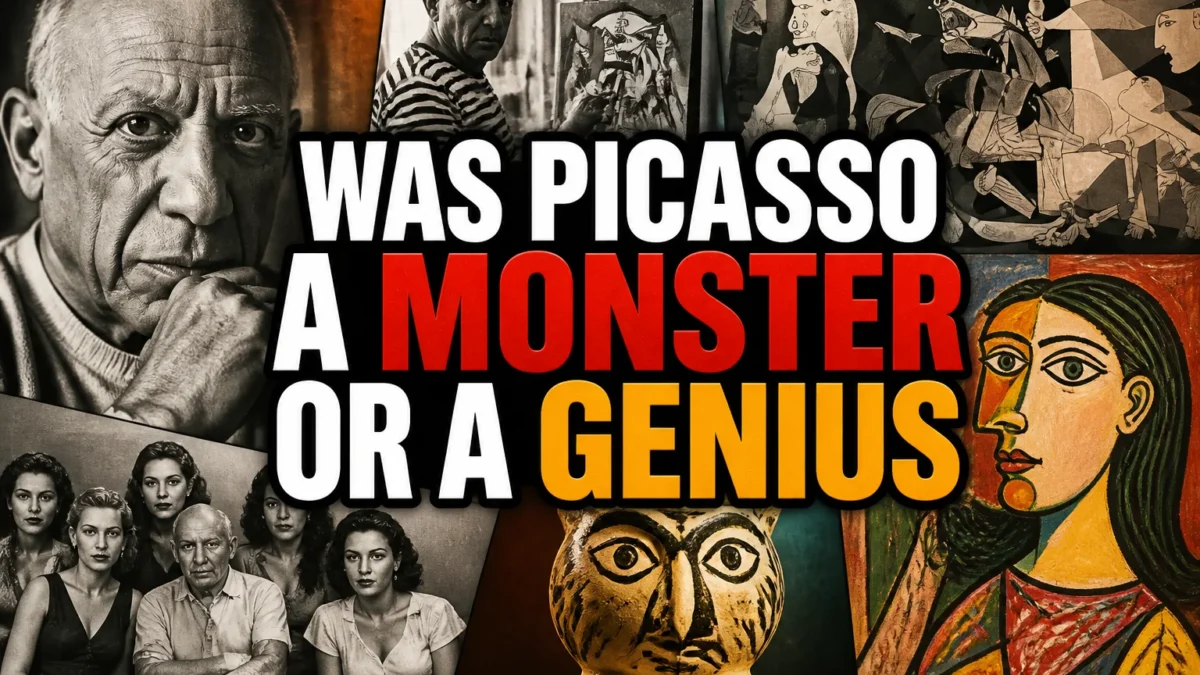
Few artists split opinion like Pablo Picasso. To millions of people he is the defining genius of modern art. To a growing number of others, he is a cautionary tale about what the world forgives when someone is famous enough.
Both reactions have real history behind them. This post sets out ten documented reasons people call him a monster and ten reasons his reputation as a genius has survived anyway, marking where the evidence is solid and where it comes from a single, biased, or disputed source.
TL;DR: Picasso was a revolutionary artist and, by the accounts of many people close to him, a cruel and controlling partner, and both things can be true at once.
What Did Picasso Do? A Quick Primer
Pablo Ruiz Picasso was born on 25 October 1881 in Málaga, Spain, and died on 8 April 1973 in Mougins, France. His father, José Ruiz y Blasco, was an art teacher who trained him early. Picasso spent most of his adult life in France.
So what did Picasso do that made him so famous? He co-invented Cubism, painted the anti-war landmark Guernica, pioneered collage and assemblage in modern art, and kept reinventing his style for more than seven decades. He also produced sculpture, ceramics, prints, stage designs, and book illustrations in enormous quantities.
That is the answer to "why is Picasso famous," but fame, even the kind that puts someone among the most recognized historical figures, is not the same as goodness. The rest of this post deals with the harder question.
Was Picasso a Good Person? The Honest Short Answer
People search "was Picasso a good person" or "was Pablo Picasso a bad guy" expecting a yes or no. Historians rarely give one, because the evidence is lopsided in an uncomfortable way. His artistic achievements are well documented, while much of what we know about his private conduct comes from the people he hurt, and from his own contradictory remarks.
A fair reading is that he could be generous, funny, and fiercely loyal to some causes, and also domineering and cruel in intimate relationships. Several women in his life suffered serious harm, though how much of it he caused is debated. The sections below take each side in turn.
10 Reasons People Call Picasso a Monster
These are the criticisms that come up most often. Some are well documented, and others rest on memoirs written by people with their own perspectives.
1. He Moved Through Partners Like Chapters of His Art
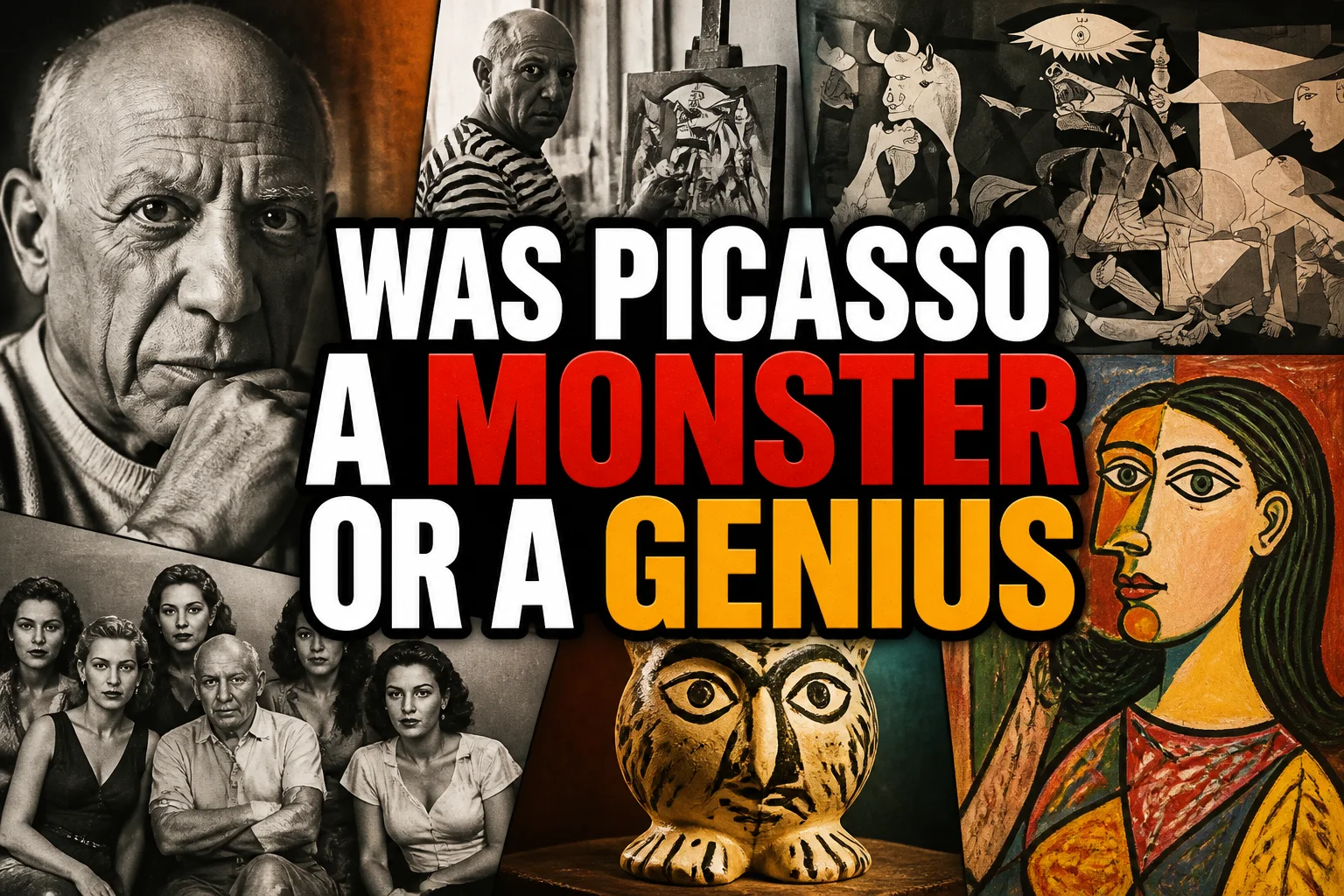
Picasso's love life closely tracked his artistic phases. Fernande Olivier, Eva Gouel, Olga Khokhlova, Marie-Thérèse Walter, Dora Maar, Françoise Gilot, and Jacqueline Roque each became central subjects of his work for a time. Many biographers note that when a relationship ended, a new muse and a new style often arrived together.
Critics argue this made the women material rather than partners. Defenders reply that this is simply how many artists work, but the pattern still troubles many readers.
2. The Age Gaps Were Enormous
In January 1927, Picasso, then 45 and married to Olga, met Marie-Thérèse Walter, who was 17. He pursued her, and she became the model for some of his most sensual paintings of the early 1930s. They had a daughter, Maya, in 1935.
Later, Françoise Gilot was 21 when she began living with him at around 61, and he married Jacqueline Roque, then in her thirties, when he was nearly 80. Modern readers see a consistent power imbalance, even when the relationships were consensual in the legal sense of the time.
3. Several Women in His Life Suffered Tragically
Marie-Thérèse Walter died by suicide in 1977, four years after Picasso's death. Jacqueline Roque died by suicide in 1986. Dora Maar suffered a mental collapse in the 1940s and lived reclusively for much of her later life.
We should be careful here, because mental illness has many causes and nobody can assign blame precisely. Still, his granddaughter Marina Picasso and others have argued that life with him was destructive for the women who loved him.
4. He Refused Olga a Divorce

Picasso's marriage to Olga Khokhlova, a dancer with the Ballets Russes, collapsed by the mid-1930s. He never divorced her, and they remained legally married until she died in 1955. A commonly cited reason is that French law at the time would have divided his property, including his artworks, between them.
Olga was left in a painful limbo, sometimes writing him letters he reportedly ignored. Whatever the legal reasoning, the arrangement served his finances at her expense.
5. He Allegedly Enjoyed Women's Rivalry
One of the most repeated stories says Picasso watched Marie-Thérèse Walter and Dora Maar fight over him in his studio and treated it as amusing. The tale comes largely from Picasso's own telling and from friends' recollections, so it should be treated as an anecdote rather than a proven event.
Even so, it fits the broader image of a man who kept several women in tension with each other. It is part of why the word "monster" stuck.
6. He Tried to Block Françoise Gilot's Memoir
Gilot left Picasso in 1953, taking their two children, Claude and Paloma. She was the first of his partners to leave him, which stung his pride. In 1964 she published Life with Picasso with Carlton Lake, and Picasso tried to stop its publication in France through the courts, without success.
The attempt to silence a former partner is one of the clearest documented examples of him using power against someone who left. The book has been criticized for its shaping by Gilot's point of view, but it remains a major source.
7. His Family Life Was Painful for Many Relatives
Picasso's son Paulo, from his marriage to Olga, reportedly worked as his father's chauffeur and struggled with alcohol and money. Paulo's children, Marina and Pablito, grew up in difficult circumstances. When Picasso died in 1973, Pablito was turned away from the funeral and later died after drinking bleach.
Marina's 2001 memoir, Picasso: My Grandfather, paints a bitter portrait of the family, though like all family memoirs it reflects one person's grief and anger.
8. He Has Been Accused of Coldness to Friends in Danger
During the German occupation of France, Picasso stayed in Paris, painted quietly, and was officially unwelcome to the Nazis as a "degenerate" modern artist. Some accounts say he declined to intervene when his old friend, the poet Max Jacob, was arrested in 1944. Jacob died soon afterwards in the Drancy internment camp.
The details of what Picasso was asked, and what he could actually have done, are disputed. It remains a frequent example in the "bad person" argument, but it is better described as a contested accusation than a settled fact.
9. He Stayed Loyal to Communism and Stalin's Image
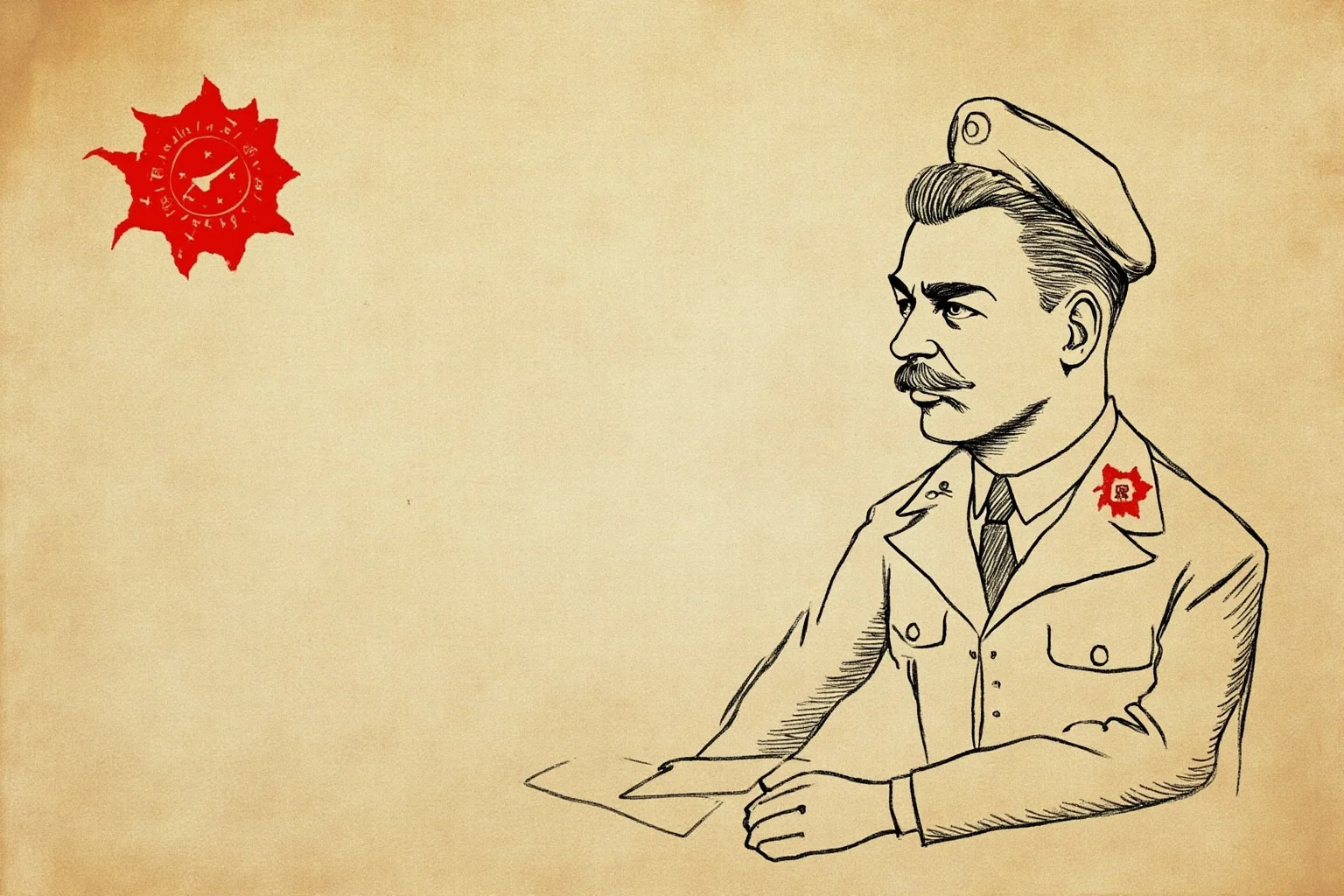
Picasso joined the French Communist Party in 1944, after the liberation of Paris. In 1953 he drew a portrait of Stalin after the dictator's death, which the party itself criticized as insufficiently heroic.
He was never a political leader, and his support of the party was as much about anti-fascism as ideology. Even so, his lack of public criticism of Soviet repression disappointed many admirers.
10. He Borrowed From African Art Without Credit
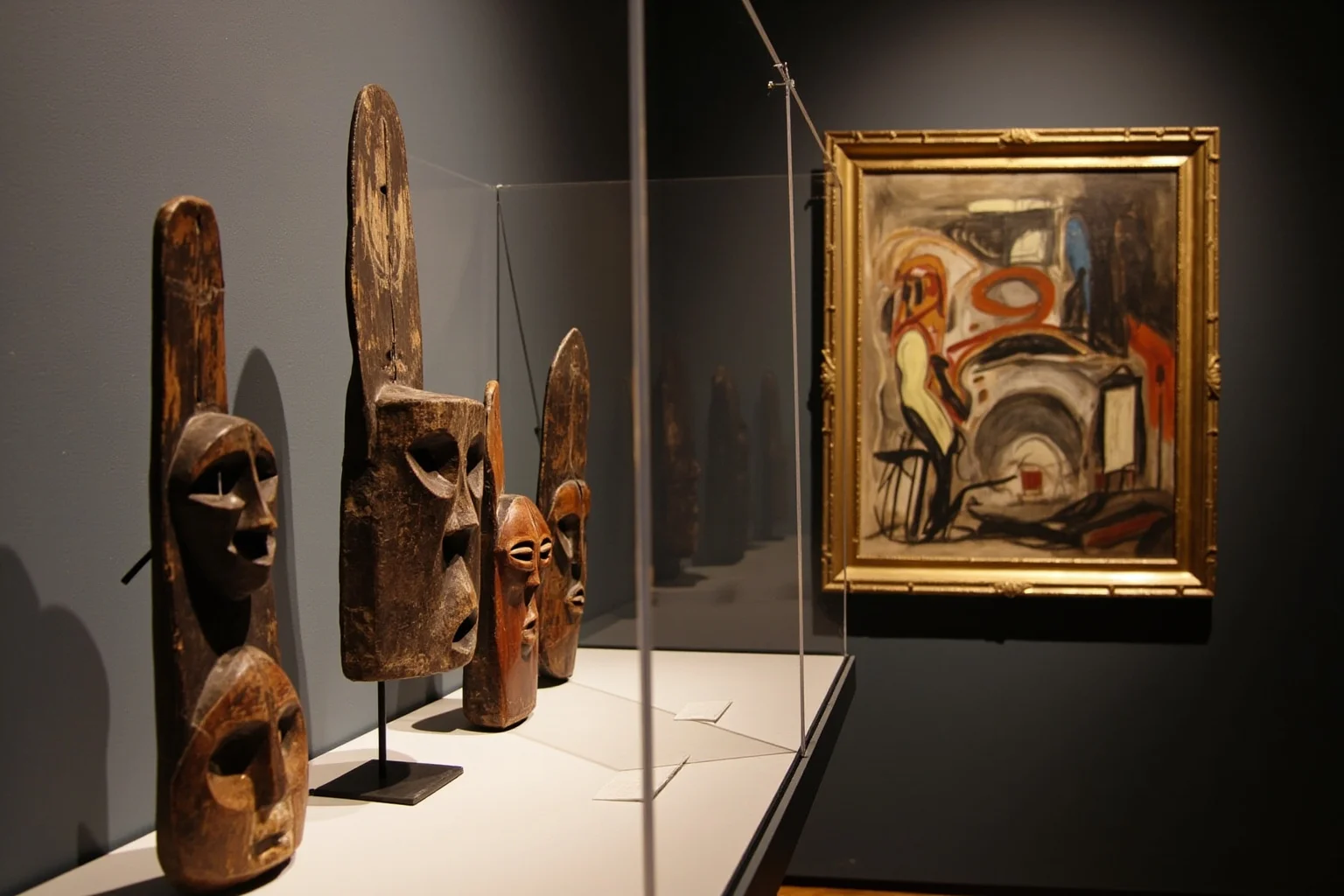
In 1907 Picasso visited the ethnographic museum at the Trocadéro in Paris, and the experience is often linked to the radical faces in Les Demoiselles d'Avignon. Today, critics argue that European modernists took ideas from African and Oceanic objects while rarely naming the artists or the communities behind them.
This is a criticism of the art world as much as of Picasso himself. Still, he is the most famous beneficiary of that system.
10 Reasons People Still Call Picasso a Genius
Now the other side of the ledger. These are the achievements that keep museums full and historians citing him, even when they criticize the man.
11. He Was a Genuine Child Prodigy
Picasso trained under his father and showed remarkable skill early. His First Communion (1896) and Science and Charity (1897) were painted when he was in his teens, and the latter earned recognition in Madrid and Málaga. He entered Madrid's Royal Academy of San Fernando as a teenager, though he soon lost interest in formal study.
Stories about his first spoken word being "pencil" are charming but unverified family lore. The surviving teenage paintings are proof enough of his talent.
12. The Blue and Rose Periods Gave Poverty an Emotional Language
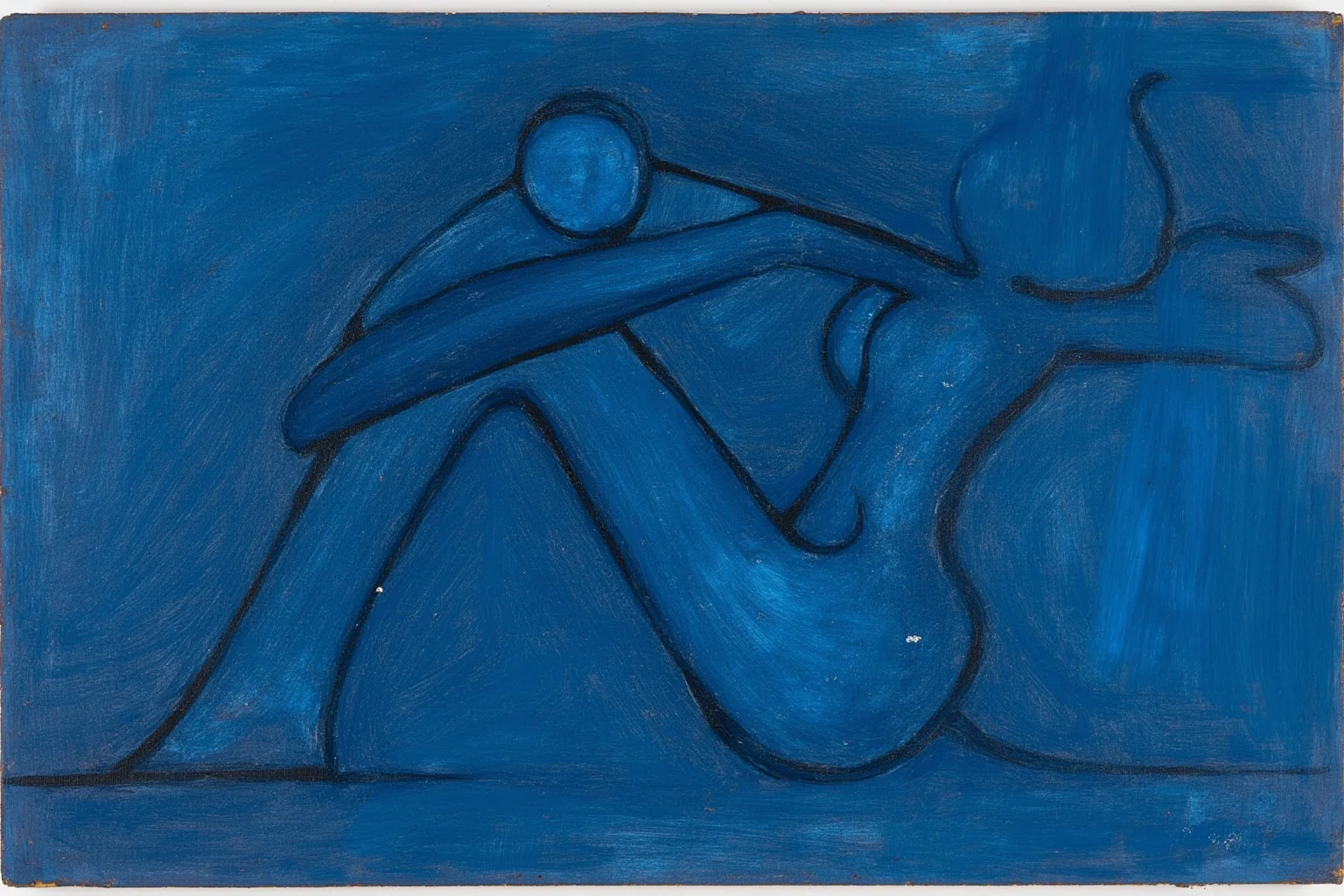
After the suicide of his friend Carlos Casagemas in 1901, Picasso entered what is now called his Blue Period (about 1901 to 1904). Cold blue tones and gaunt figures filled paintings of beggars, the blind, and the lonely. The warmer Rose Period followed, with circus performers and harlequins.
These works are among his most popular today. They also show that his early fame was built on emotional depth as well as technique.
13. Les Demoiselles d'Avignon Broke the Rules

Painted in 1907, this large canvas of five nude figures with angular, mask-like faces shocked even Picasso's close friends. It rejected single-point perspective and traditional ideas of beauty. Many art historians treat it as a turning point leading toward Cubism.
It is not a comfortable painting, and it has drawn criticism for its treatment of women and its borrowing from non-European art. It is also one of the most influential paintings of the twentieth century.
14. He and Braque Invented Cubism
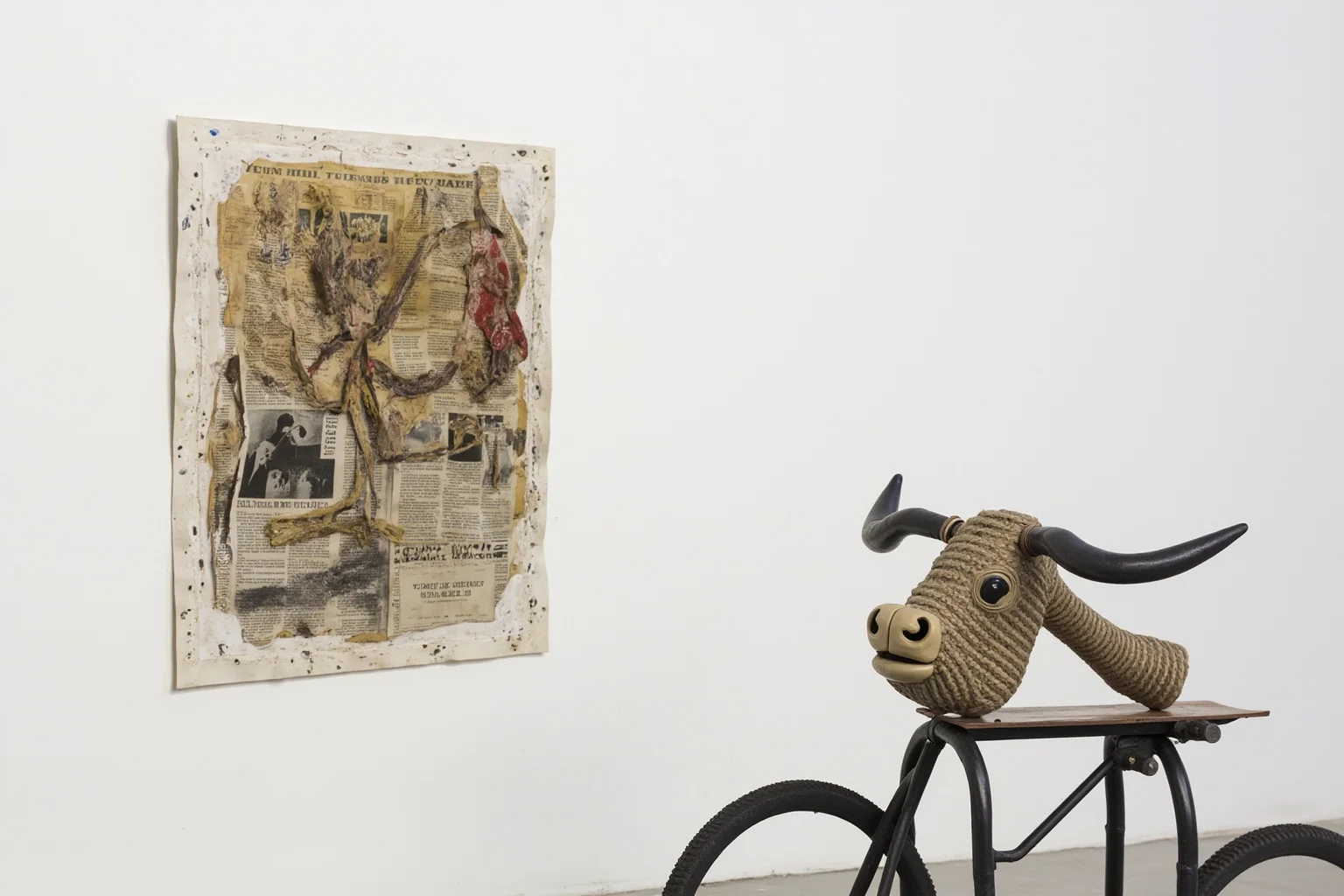
From about 1908 to 1914, Picasso and Georges Braque worked so closely that their paintings can be hard to tell apart. They broke objects into fragments and showed several viewpoints at once. A critic's remark about Braque's "cubes" in 1908 is where the movement's name is usually traced.
Cubism changed painting, sculpture, and architecture. It remains one of the most important turning points in art history.
15. He Pioneered Collage and Assemblage
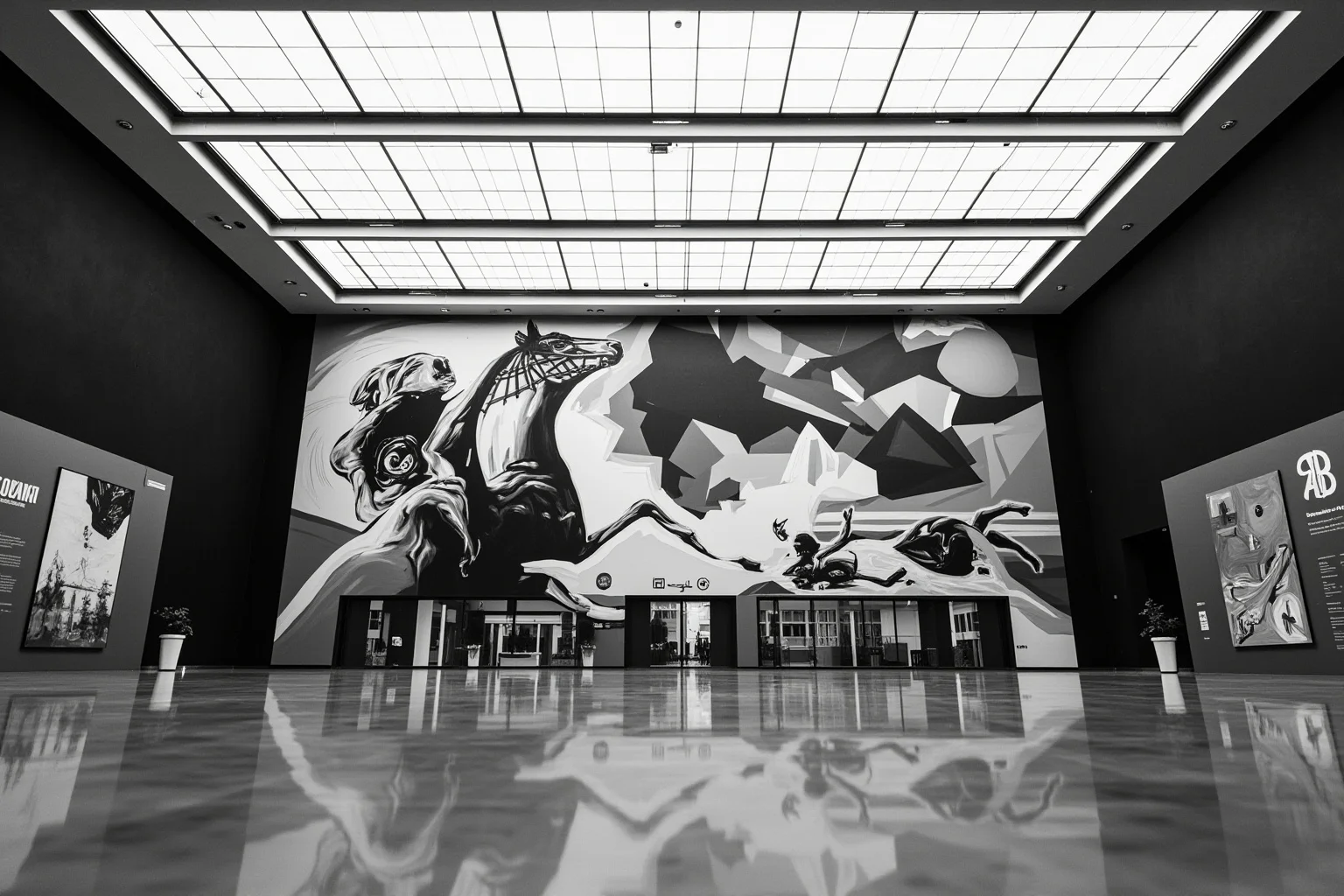
In 1912, Picasso made Still Life with Chair Caning, gluing oilcloth printed with a chair-caning pattern onto the canvas and framing it with rope. It is often cited as one of the first collage works of modern art. Decades later, in 1942, he combined a bicycle seat and handlebars into Bull's Head.
These pieces taught later artists that art could be made from almost anything. That idea underlies a huge amount of contemporary work.
16. Guernica Became the Great Anti-War Painting
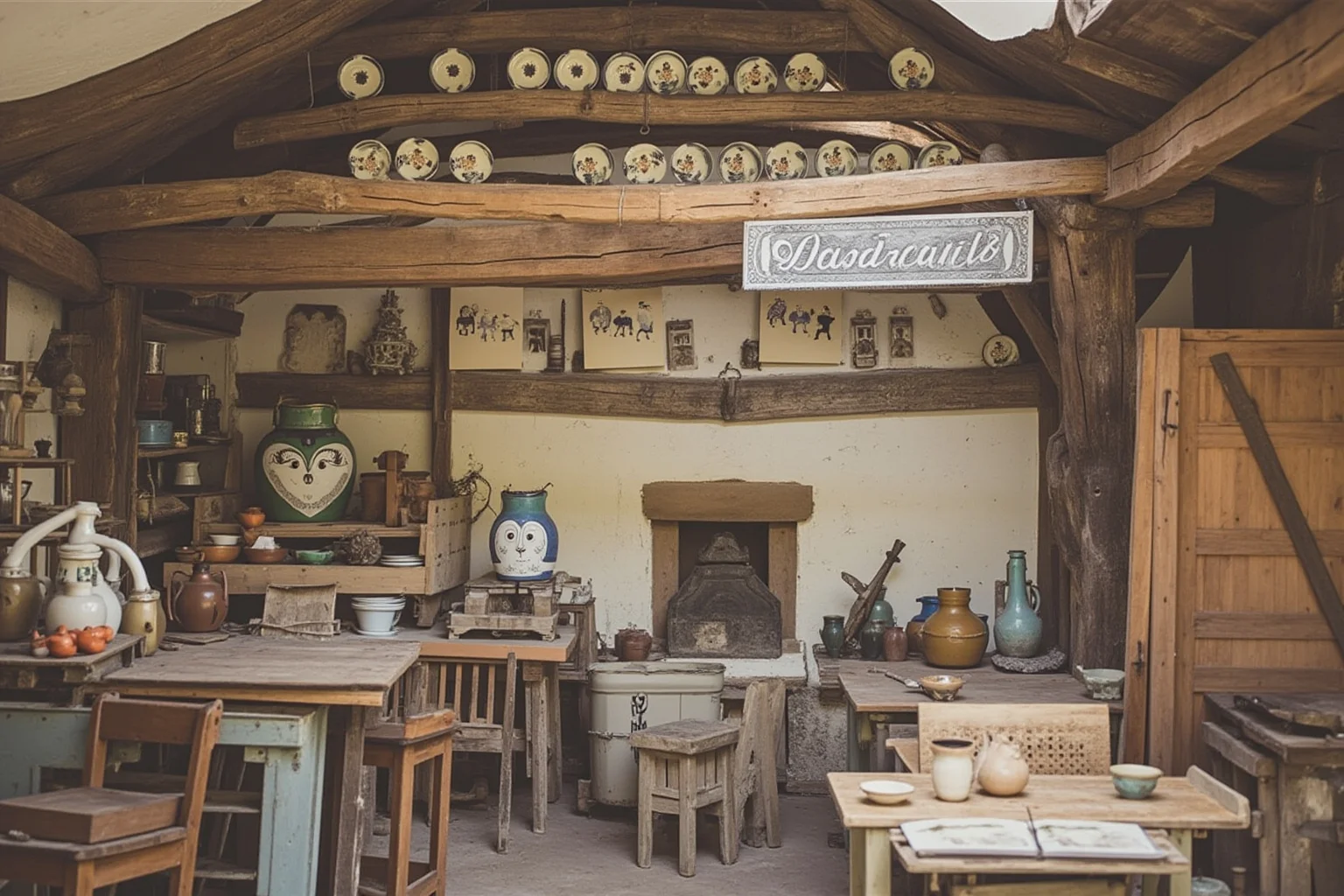
On 26 April 1937, German and Italian aircraft supporting Franco's forces bombed the Basque town of Guernica. Picasso, living in Paris, painted a huge black, white, and gray canvas for the Spanish Republic's pavilion at the Paris World's Fair that year. It measures roughly 3.5 by 7.8 metres.
Picasso reportedly wanted it to stay out of Spain until democracy returned, and it arrived there in 1981. Today it hangs in Madrid's Reina Sofía museum and remains a global symbol of civilian suffering.
17. He Mastered Sculpture, Ceramics, and Printmaking
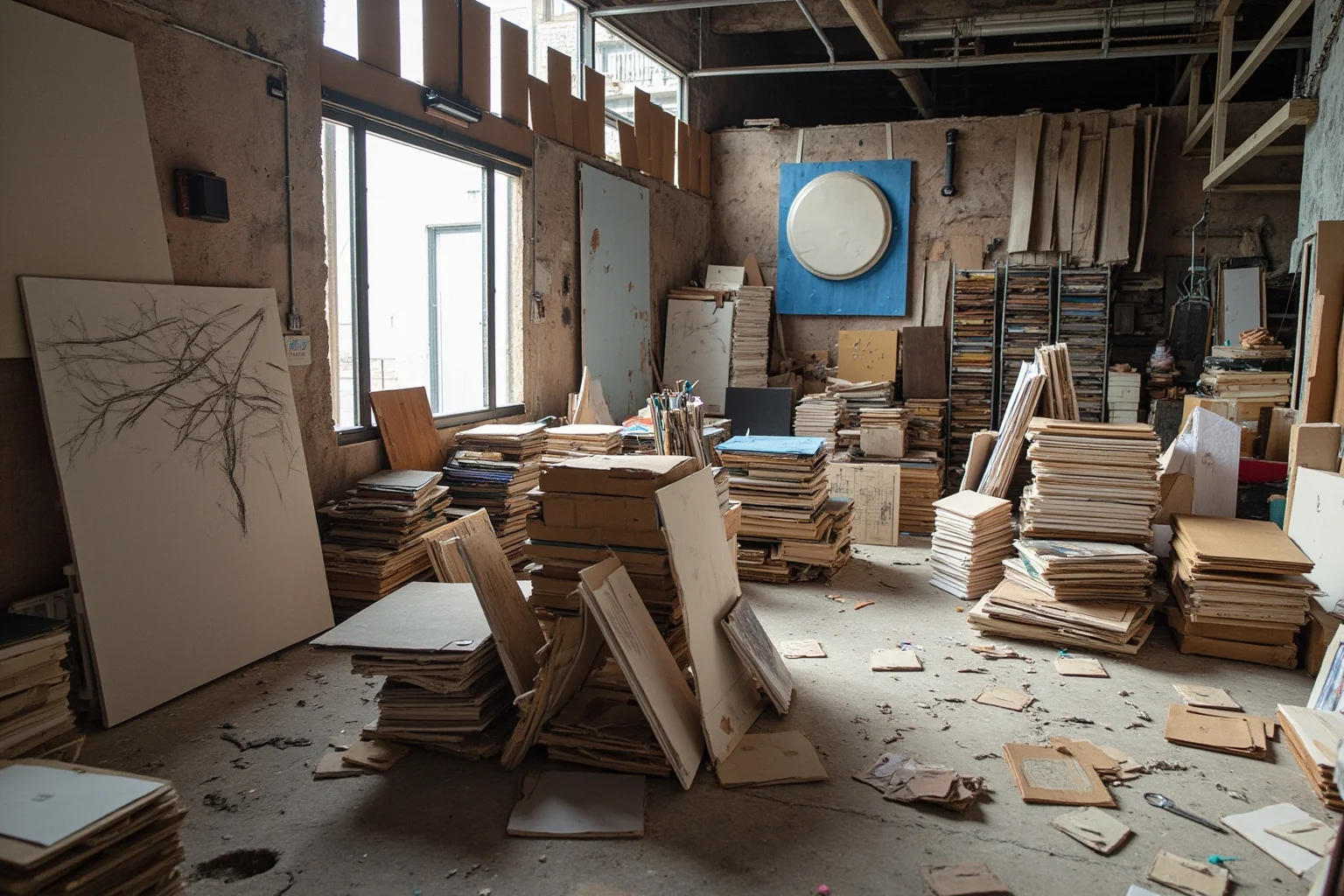
Picasso was far more than a painter. He made welded and assembled sculptures, and from 1947 he worked at the Madoura pottery in Vallauris, producing thousands of ceramic pieces. His etchings, such as the Vollard Suite from the 1930s, are considered masterworks of printmaking.
Many artists excel in one medium. Picasso changed the standards in several.
18. His Output Was Staggering
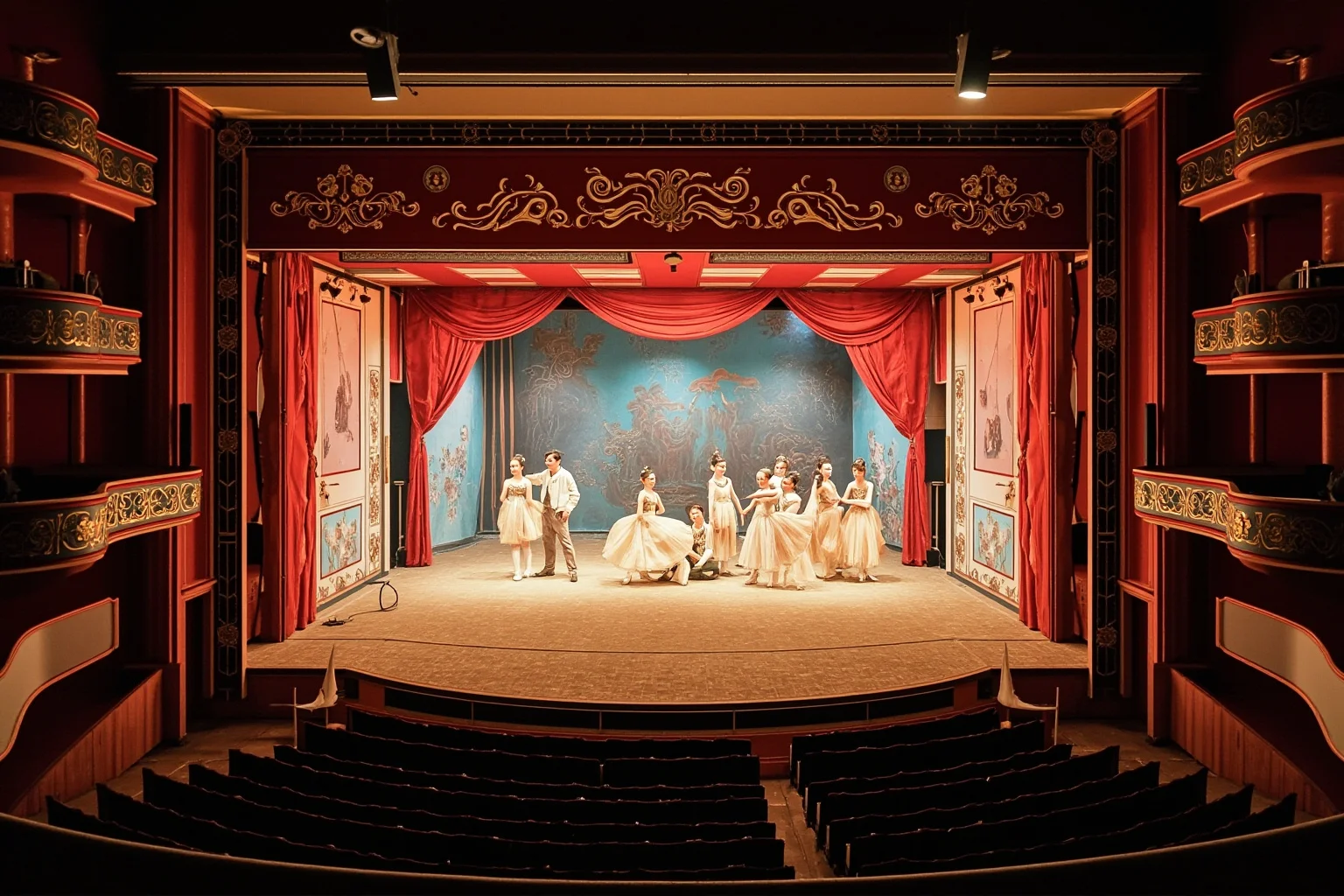
Estimates of his lifetime production run to around 50,000 works, including paintings, drawings, prints, sculptures, and ceramics. Exact figures vary depending on how drawings and prints are counted. By any measure, it is an extraordinary body of work.
That volume matters because it shows constant experimentation. He rarely settled into a single formula for long.
19. He Kept Reinventing Himself
Picasso moved from Cubism to a classical, almost Ingres-like style in the early 1920s, then toward Surrealist-influenced distortion. He also designed sets and costumes for the 1917 ballet Parade, created for Sergei Diaghilev's Ballets Russes with Jean Cocteau and Erik Satie. It was during that project that he met Olga Khokhlova.
This restlessness frustrated critics who wanted consistency. It also made him a model for artists who refuse to repeat themselves.
20. His Influence and Market Value Still Dominate
Picasso's reach extends through Abstract Expressionism, Pop Art, and contemporary art, and his late, rough, energetic paintings were reappraised by later generations as ahead of their time. His Women of Algiers (Version O) sold at Christie's in 2015 for about $179 million, then a record for any artwork at auction.
Market prices do not prove greatness. They do show that his work remains central to how the art world defines value.
Was Picasso Crazy? Did Picasso Go Insane?
No reliable evidence shows that Picasso was clinically insane, and no diagnosis of him is documented. The "mad artist" label gets attached to many painters, and the story of Van Gogh's ear shows how much myth can build up around one incident. People who ask "was Picasso crazy" or "what was wrong with Picasso" are usually reacting to his obsessive work habits, his temper, and his superstitions. Associates described him as intensely driven, sometimes paranoid about illness, and uneasy discussing death.
The "insane" label is also tied to his final years, when he painted rapidly and loosely. Critics at the time dismissed those works as the scribbles of an old man. Later curators and artists reassessed them as bold and freewheeling, and many now see them as influential.
The more useful question is not whether he was mad but whether his behaviour was acceptable. For many of the people around him, the answer was no.
So, Monster or Genius?
The two labels are not opposites, and Picasso's story is the best-known example of why. His art changed the twentieth century, and documented accounts from partners and family describe controlling, hurtful behaviour. Museums have started to display his work alongside that context rather than hiding it.
The most honest way to approach him is to keep both truths in view. Look at the paintings, learn the history, and be cautious with the myths on either side.
Frequently Asked Questions
What did Picasso do?
Pablo Picasso was a Spanish artist who spent most of his career in France. He co-founded Cubism with Georges Braque, painted the anti-war work Guernica in 1937, helped invent collage and assemblage, and made sculpture, ceramics, prints, and theatre designs. He also reinvented his style repeatedly over roughly seven decades and produced an estimated 50,000 works.
Why is Picasso famous?
Picasso is famous for transforming how art is made. Cubism, Les Demoiselles d'Avignon, Guernica, and his experiments with collage changed painting and sculpture. His enormous output, constant stylistic change, and record-breaking auction prices have kept him at the centre of art history.
Was Picasso a good person?
Historians generally describe him as a complicated figure rather than a simple hero or villain. He supported anti-fascist causes and could be generous, but partners and relatives have described him as controlling and cruel. Much of this evidence comes from memoirs by people close to him, such as Françoise Gilot and his granddaughter Marina Picasso, so details should be weighed carefully.
Why was Picasso considered a bad person?
Criticism centres on his treatment of women: large age gaps, serial relationships, refusing Olga Khokhlova a divorce, and trying to block Françoise Gilot's memoir. Two of his partners, Marie-Thérèse Walter and Jacqueline Roque, died by suicide after his death, and Dora Maar suffered a breakdown. Mental illness has many causes, so blame is debated, but the pattern troubles many modern readers.
Was Picasso crazy, or did Picasso go insane?
There is no documented diagnosis or credible evidence that Picasso went insane. He was obsessive, superstitious, and intensely driven, which led to the rumours. His late, loose-brushed paintings were once dismissed as the work of a declining mind but are now widely reappraised as bold and influential.
What was wrong with Picasso?
No medical or psychological condition is established in the historical record. Biographers describe a domineering, jealous, and self-absorbed personality, along with fear of illness and death. Beyond that, speculation about a diagnosis is just that, speculation.

Alex Warren
Related Articles