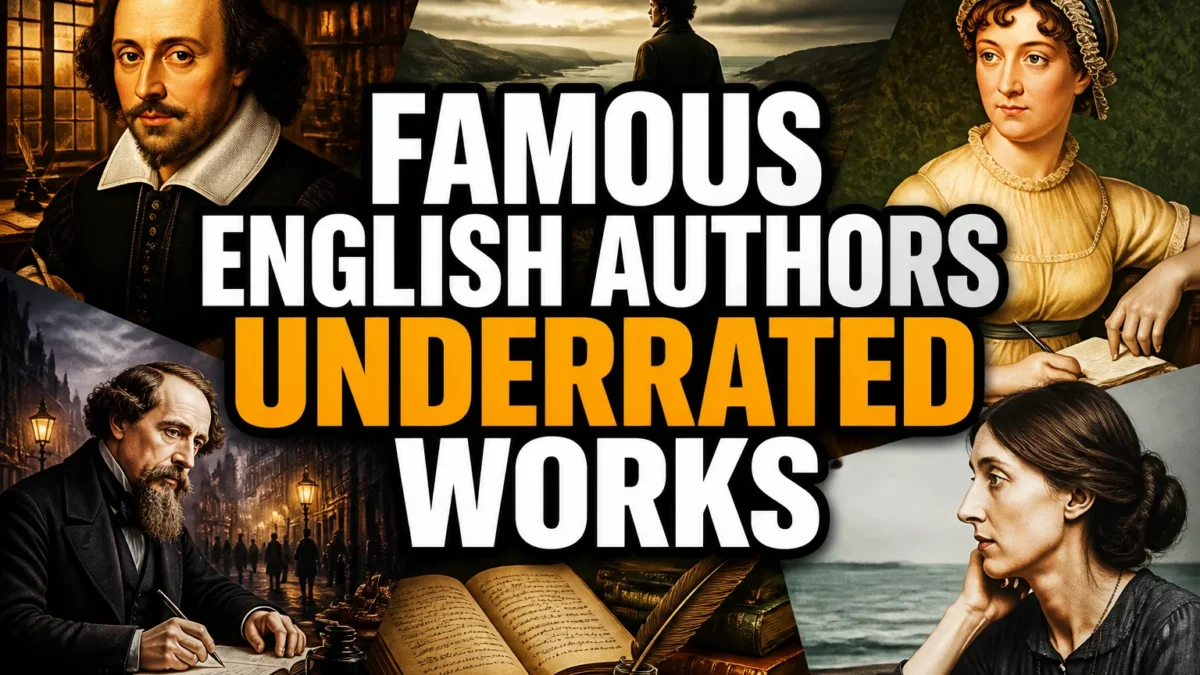
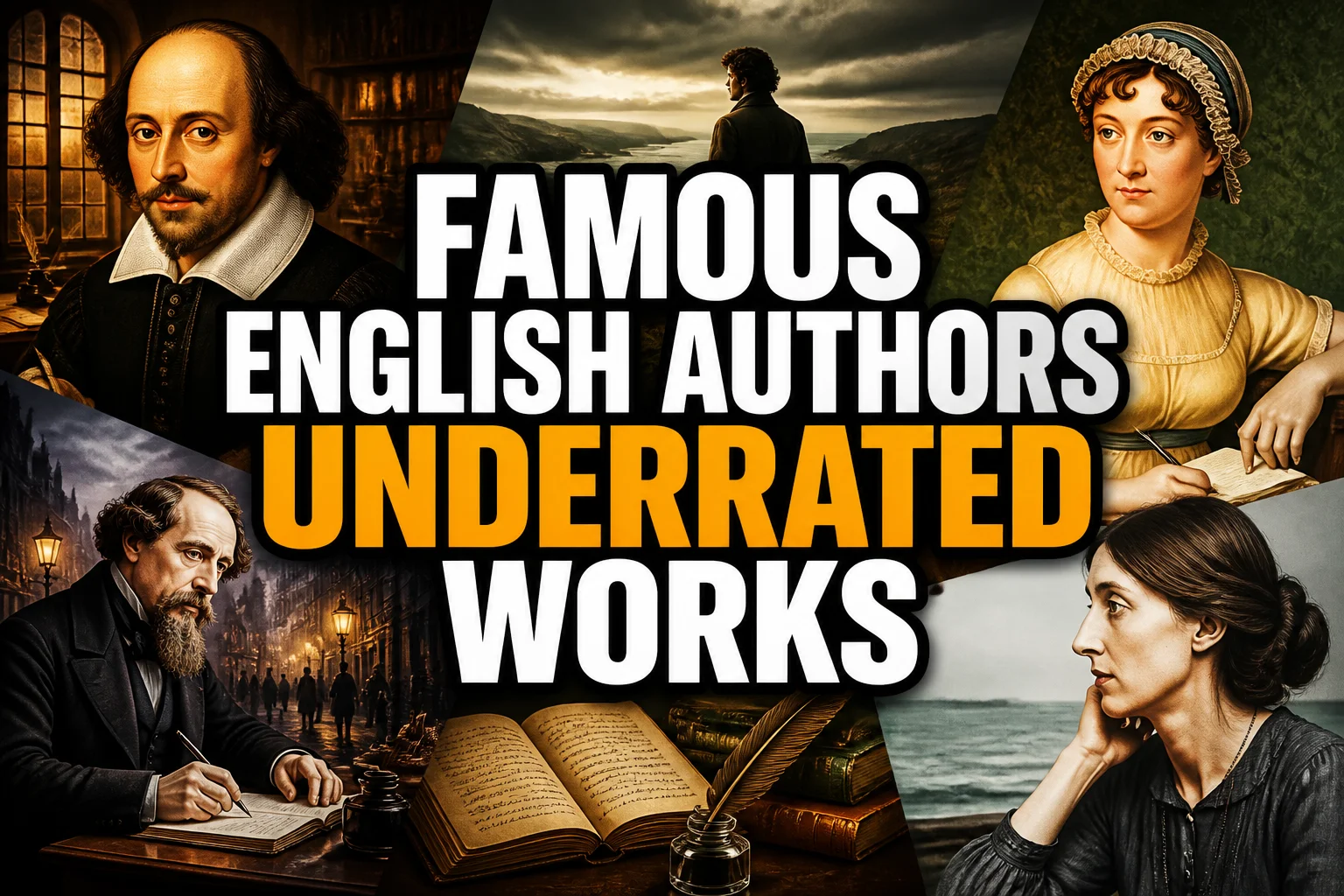
Ask a room full of readers to name famous English authors and the same names come back: Shakespeare, Austen, Dickens, Orwell, the Brontës. That shortlist is not wrong, but it is the tip of a much stranger iceberg. The writers are famous; the books that make them interesting often are not.
This guide takes 22 canonical names and pairs each one with a work that has been overshadowed, miscategorised or quietly forgotten. Some were commercial failures in their own day, some were dismissed because of their genre, and a few were simply unlucky in what they were published next to.
TL;DR: The most famous English authors are remembered for a handful of titles, but their most rewarding books are usually the ones nobody assigns — from Chaucer's Trojan romance to Woolf's final, unfinished novel.
English, British, and the Labels We Get Wrong
Start with a myth worth clearing up: 'English' and 'British' are not interchangeable, and neither one is the same as 'written in English'. England is one part of the United Kingdom, alongside Scotland, Wales and Northern Ireland, and each has its own literary tradition.
The distinction matters because many of the most well known British authors are not English at all. Robert Burns and Walter Scott were Scottish, Dylan Thomas was Welsh, and James Joyce and W. B. Yeats wrote from Ireland. For a broader view of how writers from other traditions earned their reputations, see this survey of the most influential writers in history.
Even a strictly English list gets complicated. Jonathan Swift was born in Dublin to English parents, and Joseph Conrad was born in Polish-speaking Ukraine before becoming one of the best English writers of the twentieth century. This list leans toward authors formed by England and its literary culture, and it says so rather than pretending the borders are tidy.
What Actually Makes a Work 'Underrated'
A book is not underrated simply because it is old, long or difficult. For this list, a work had to clear at least one of three bars: it was overshadowed by a more famous book by the same author, it was dismissed because of its genre, or it failed in its own time and never recovered.
Genre snobbery explains a great deal. Sensation novels, ghost stories, children's books and early science fiction were long treated as lesser achievements, which is why Wilkie Collins and Mary Shelley are still fighting for shelf space. Popularity and literary value have never been the same thing, and most lists of English famous authors quietly confuse the two.
Why Great Writers End Up With Forgotten Books
There is a simple structural reason for all of this. Publishers, schools and prize committees need a manageable canon, so one title per author gets promoted and the rest drift out of print.
The same thing happens to popular English writers during their own lifetimes. A single bestseller can define an author so completely that reviewers treat everything afterwards as a footnote, and a single hostile review can bury a book for a century. Reputation is a rumour that hardens into a syllabus. For a case study in how fragile literary fame can be, see these famous quotes everyone knows by heart and the stories behind them.
What This List Is Not
This is not a ranking of the best English authors, and the numbering is chronological rather than evaluative. Nor is it a claim that the famous books are overpraised — Middlemarch and Great Expectations earn their places honestly.
The aim is narrower and more useful: to point at specific, obtainable books that reward the hours they ask for. Treat the numbers as a reading order only if you like starting at the beginning of literary history and working forward.
Part One: Medieval, Renaissance and Seventeenth-Century Authors
1. Geoffrey Chaucer — Troilus and Criseyde
The Canterbury Tales gets the syllabus and the pilgrimage jokes, but Chaucer's longest complete poem is arguably his most finished achievement. Troilus and Criseyde, written in the 1380s in rhyme royal, retells a Trojan War love story from Boccaccio and turns it into something psychologically modern.
Its heroine has been argued over for six centuries: betrayed, betraying, or simply trapped by circumstances she cannot control. Reading it shows a medieval English author exploring fate and free will with more subtlety than plenty of modern novels manage.
2. William Shakespeare — The Rape of Lucrece
The myth is that Shakespeare's non-dramatic poetry is a footnote to the plays. In 1594, though, Lucrece was a commercial success, printed by Richard Field, dedicated to the Earl of Southampton, and reprinted repeatedly during the playwright's lifetime.
It is a grim, forensic poem about an assault and its political aftermath, and its language is as dense as anything in the late plays. Reading it complicates the image of the greatest English writer as purely a man of the theatre.
3. Christopher Marlowe — Edward II
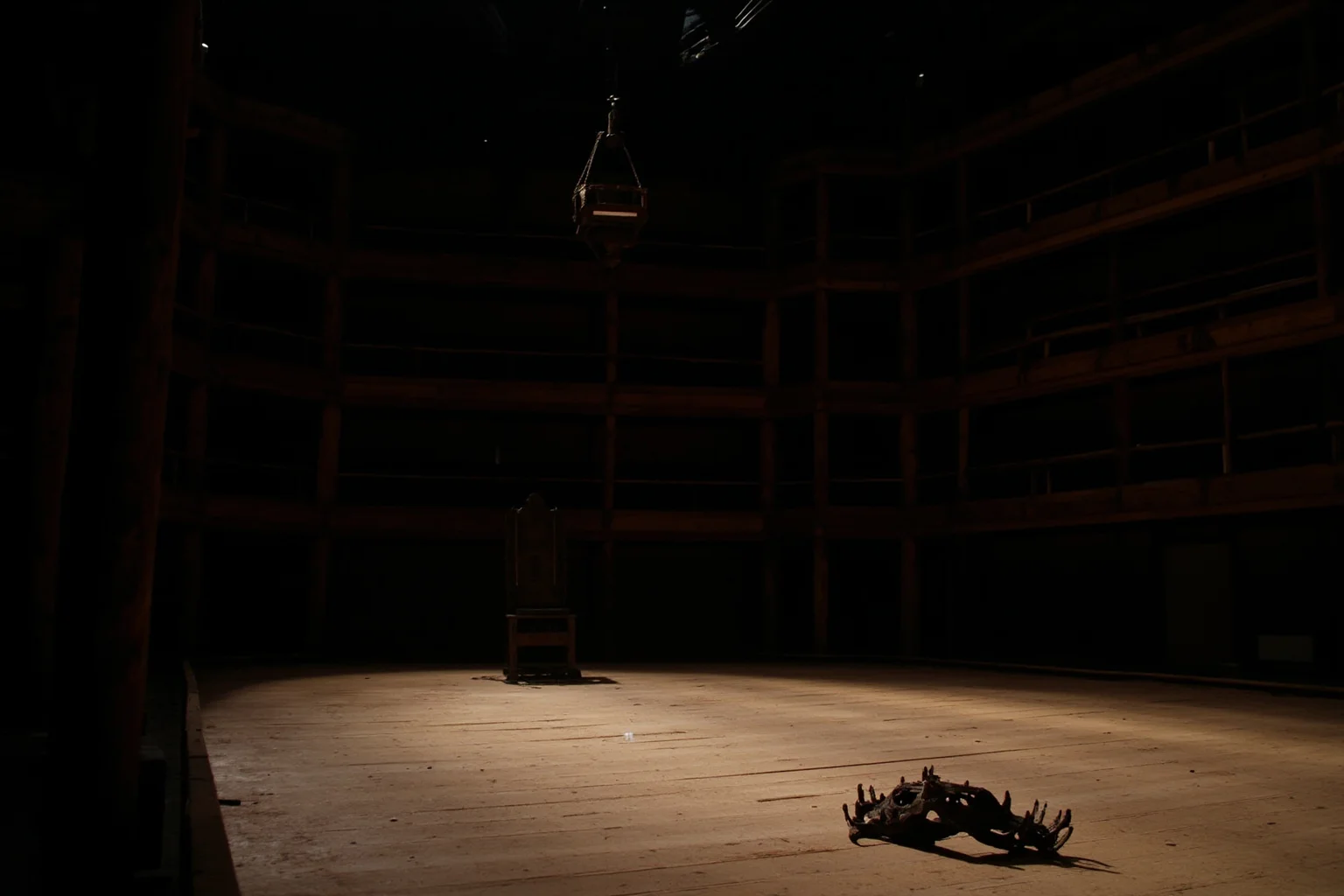
Doctor Faustus and Tamburlaine absorb most of Marlowe's attention, yet Edward II (c. 1592) is his most disciplined play. It dramatises a king destroyed by favouritism and aristocratic backlash, and it refuses to sentimentalise anyone involved.
Its influence on Shakespeare's Richard II is widely accepted, and its unflinching final act still lands hard on stage. For readers who assume early modern history plays are dry, this is the corrective.
4. John Donne — Devotions upon Emergent Occasions
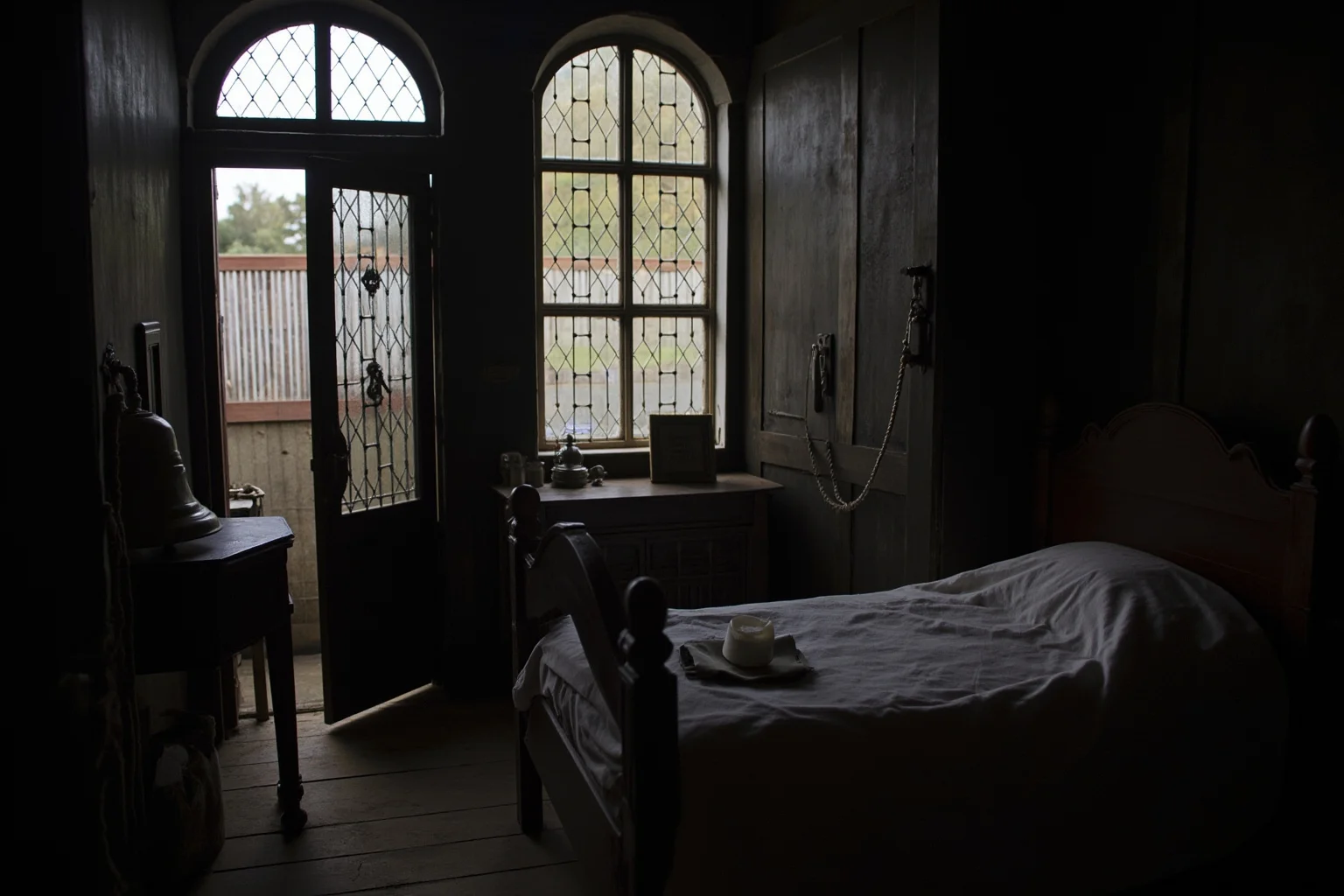
Donne the poet is famous for metaphysical conceits; Donne the prose writer is barely read. Devotions upon Emergent Occasions (1624) records a serious illness in twenty-three stages of meditation, and it is where the phrases 'no man is an island' and 'for whom the bell tolls' originate.
It is a strange, claustrophobic book about the body, fear and community, written by a man who was about to take holy orders. It shows an English writer thinking about mortality in a register that anticipates the modern memoir.
5. Ben Jonson — Bartholomew Fair
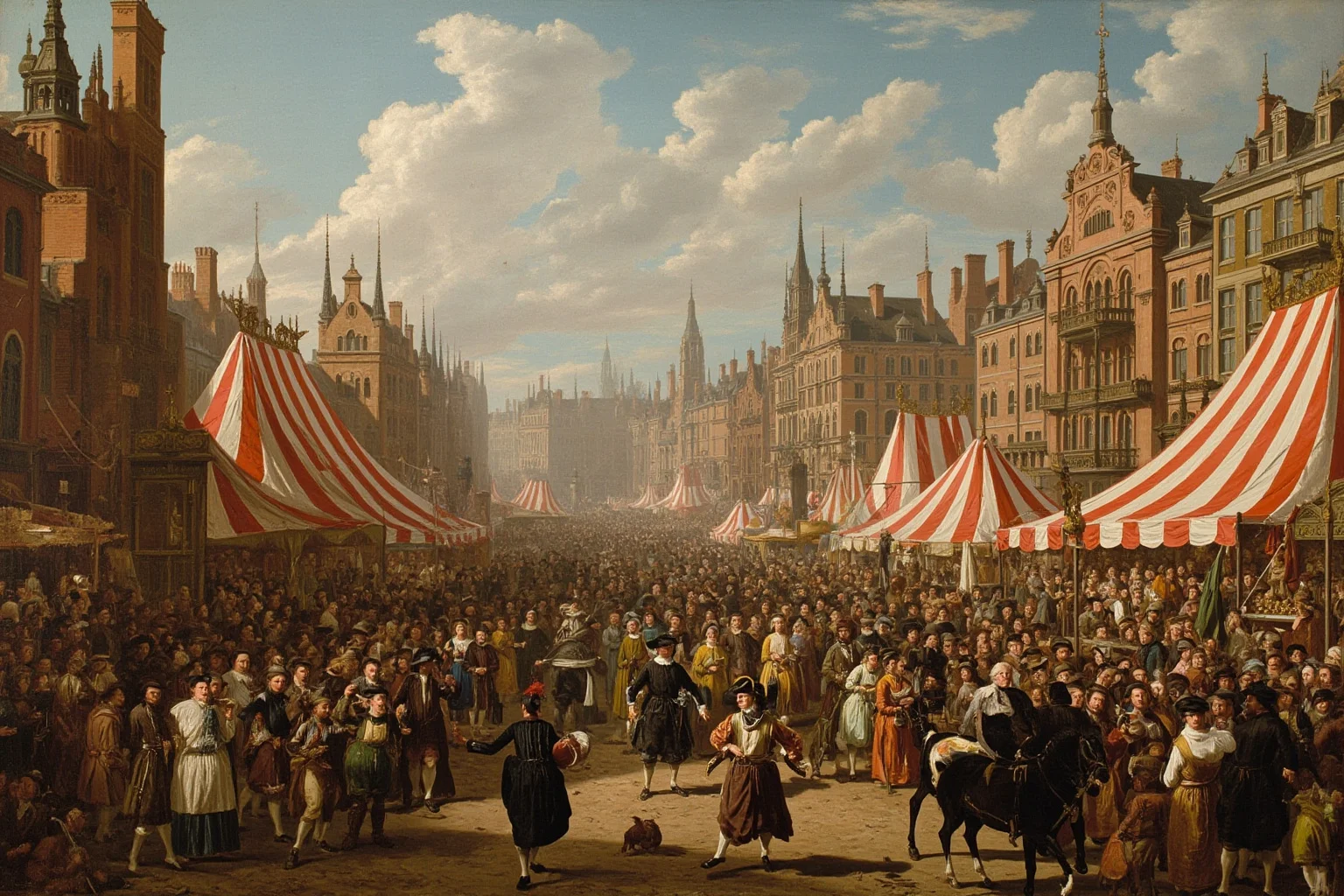
Ben Jonson is remembered as Shakespeare's rival and the author of Volpone, but Bartholomew Fair (1614) is his funniest and most humane play. Set over one day at a London cloth fair, it lets con artists, Puritans and petty officials collide in a single crowded space.
Jonson's reputation as a stern classicist has made him feel like homework; this comedy proves otherwise. It is also a sharp satire of people who police other people's pleasures.
6. John Milton — Samson Agonistes
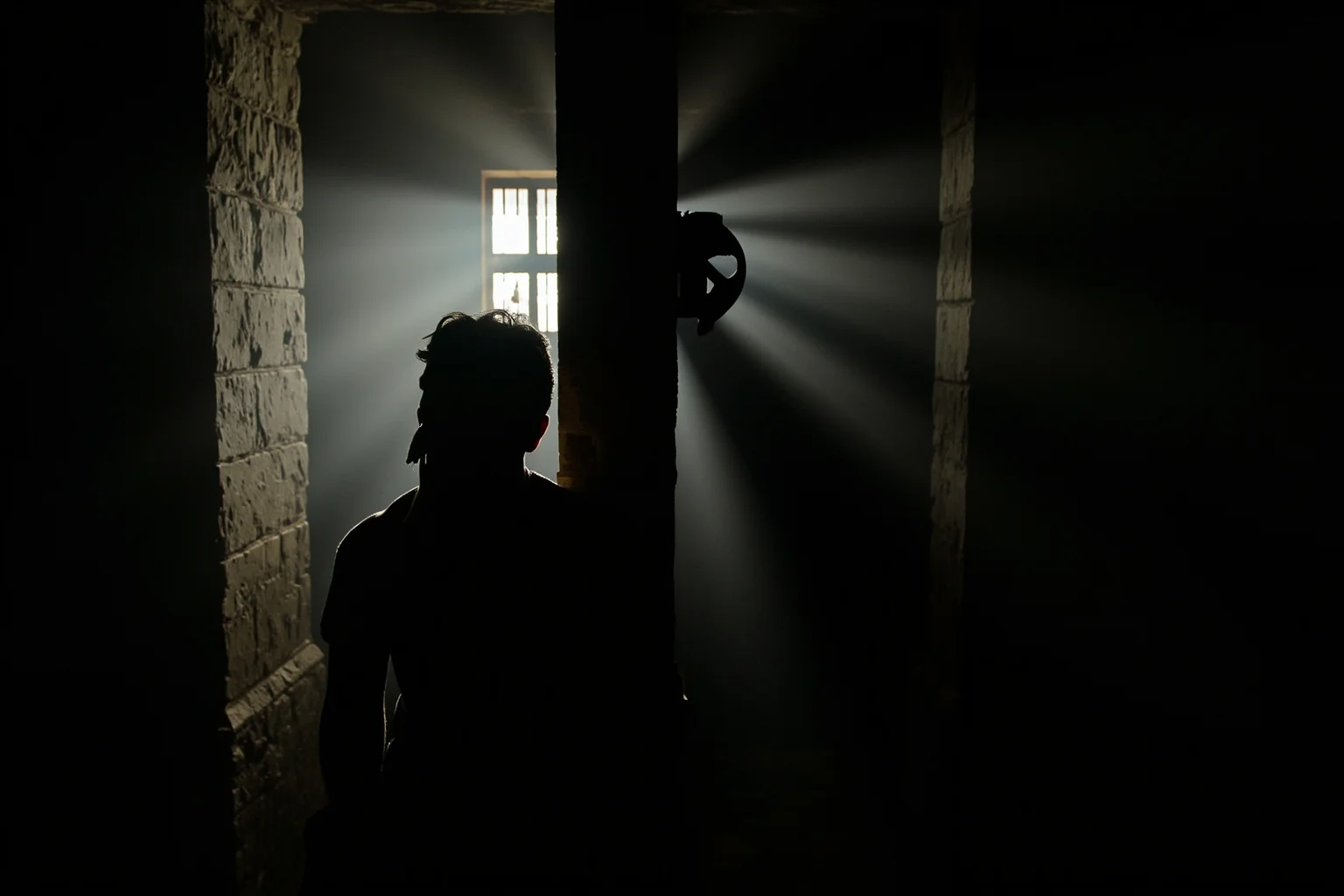
Paradise Lost eclipses everything else Milton wrote, which is a shame for Samson Agonistes (1671). Published alongside Paradise Regained, it is a closet drama modelled on Greek tragedy, following a blind and imprisoned hero.
Critics still argue about its politics, and that argument is part of the point. Read as poetry rather than doctrine, it is one of the most austere and moving works produced by any of the writers of English literature. If poetry is what draws you in, start with this guide to the greatest poets of all time.
Part Two: Restoration and Eighteenth-Century Authors
7. Aphra Behn — Love-Letters Between a Nobleman and His Sister
Aphra Behn was the first Englishwoman known to have earned a living by her writing, and Oroonoko is the book usually attached to her name. Love-Letters (1684–87), a three-part epistolary novel, is the more daring experiment.
It fictionalises a contemporary aristocratic scandal and shifts narrators and styles between volumes, which makes it feel startlingly modern. It is also one of the earliest English novels by anyone, male or female. Behn is one of many women whose influence is still being recovered; see these influential female writers for more.
8. Daniel Defoe — Roxana
Robinson Crusoe and Moll Flanders take the attention, but Roxana (1724) is Defoe's darkest novel. Its narrator prospers through a series of calculated relationships and recounts the whole thing with unnerving composure.
The ending is notoriously abrupt and morally unresolved, which some readers find frustrating and others find brilliant. Either way, it shows an author of English fiction testing how unlikeable a protagonist can be before the reader walks away.
9. Jonathan Swift — A Tale of a Tub
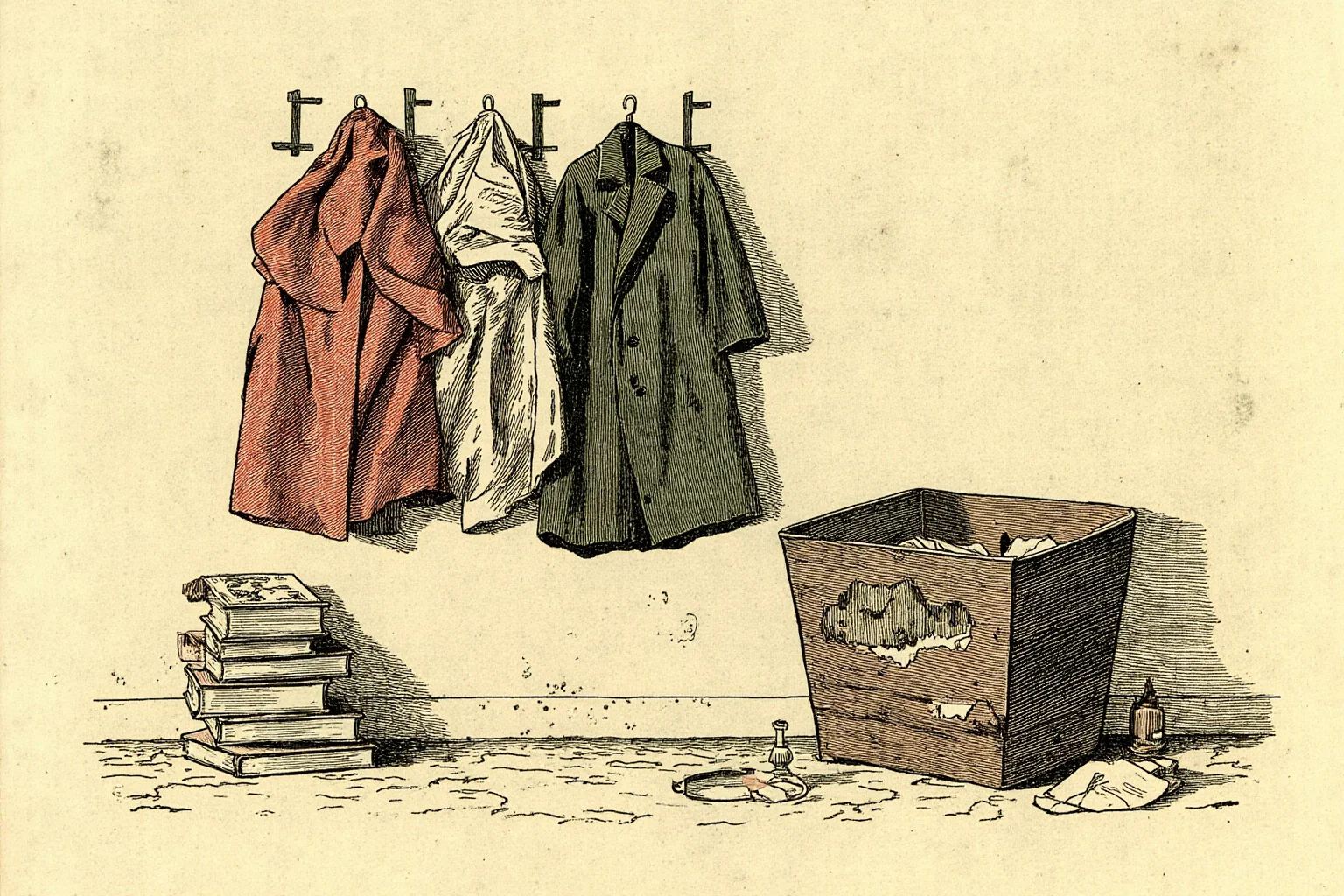
Gulliver's Travels is read simultaneously as a children's adventure and a misanthropic satire. A Tale of a Tub (1704), Swift's first major prose work, is stranger: a mock-scholarly history of Christianity told through three brothers and a coat.
It is dense with parody of bad writing, which makes it a book about books as much as about religion. Swift reportedly came to regret its irreverence, and it has never been a crowd-pleaser.
10. Samuel Johnson — Rasselas
Johnson is more famous as a dictionary-maker and a conversationalist than as a novelist. Rasselas (1759) was written in about a week, by his own account, to cover his mother's funeral expenses and debts, and it is a short philosophical tale set in an Ethiopian valley.
It asks whether any way of life actually delivers happiness, and it refuses to pretend the answer is easy. The result is bracing rather than bleak, and it is one of the quickest routes into eighteenth-century English prose. If that question appeals, these historical philosophers tackle it at greater length.
Part Three: Romantic and Victorian Authors
11. Jane Austen — Mansfield Park
Pride and Prejudice sells the postcards; Mansfield Park (1814) is the Austen novel that resists charm. Its heroine, Fanny Price, is timid, physically fragile and morally stubborn, three qualities that make readers impatient before they become fascinated.
The book is also unusually honest about money, inheritance and the slave-holding estate that funds its characters' comfort. That discomfort is exactly why it repays a second reading.
12. Mary Shelley — The Last Man
Frankenstein made Shelley famous and has never stopped being adapted. The Last Man (1826) imagines a plague erasing humanity in the twenty-second century, and it sold badly enough to damage her commercial standing.
It is also a portrait of grief, written after losses that included Percy Shelley and Byron. Read now, it looks less like a curiosity and more like a founding text of apocalyptic fiction.
13. Charles Dickens — Barnaby Rudge
Dickens wrote fifteen novels, and Barnaby Rudge (1841) is the one most readers skip. It is a historical novel built around the Gordon Riots of 1780, when anti-Catholic violence tore through London.
It has a genuinely frightening mob, an early murder mystery and a title character who is one of Dickens's most sympathetic outsiders. Its reputation suffers mainly from being published between The Old Curiosity Shop and Martin Chuzzlewit.
14. Charlotte Brontë — Villette
Jane Eyre is the romance; Villette (1853) is the stranger, sadder book. It draws directly on Brontë's time in Brussels, and its narrator, Lucy Snowe, is guarded, watchful and deliberately hard to love.
The novel's refusal to comfort the reader, including in its last pages, is what makes it remarkable. Many critics now rank it as her finest work, even though Jane Eyre remains the popular favourite.
15. Emily Brontë — Poems by Currer, Ellis and Acton Bell
Emily Brontë has a reputation as a one-novel author, but she was a poet first. The 1846 collection Poems by Currer, Ellis and Acton Bell gathered work by all three sisters, and it sold barely any copies.
Emily's contributions, including 'No Coward Soul Is Mine', carry the same harsh, elemental power as Wuthering Heights in a fraction of the words. Ignoring them means missing half of what she actually wrote.
16. Elizabeth Gaskell — Ruth
Elizabeth Gaskell is loved for Cranford and North and South, but Ruth (1853) was the book that caused a scandal. It centres on an unmarried mother taken in by a dissenting minister and his sister, and it asks the reader to sympathise with her.
Victorian readers were not supposed to extend that sympathy, and the novel was attacked in the press for it. Gaskell was distressed by the reaction, and the book has never recovered the readership of her gentler works.
17. Wilkie Collins — Armadale
The Woman in White and The Moonstone dominate Wilkie Collins's reputation. Armadale (1866) is the one with Lydia Gwilt, a fortune-hunting, poisoning anti-heroine who is arguably one of Victorian fiction's great villains.
It is also formally daring, built on coincidences, dreams and doubled identities that Collins dares the reader to accept. Sensation fiction rarely gets credit as literature, which is precisely why this one is underrated.
18. George Eliot — Romola
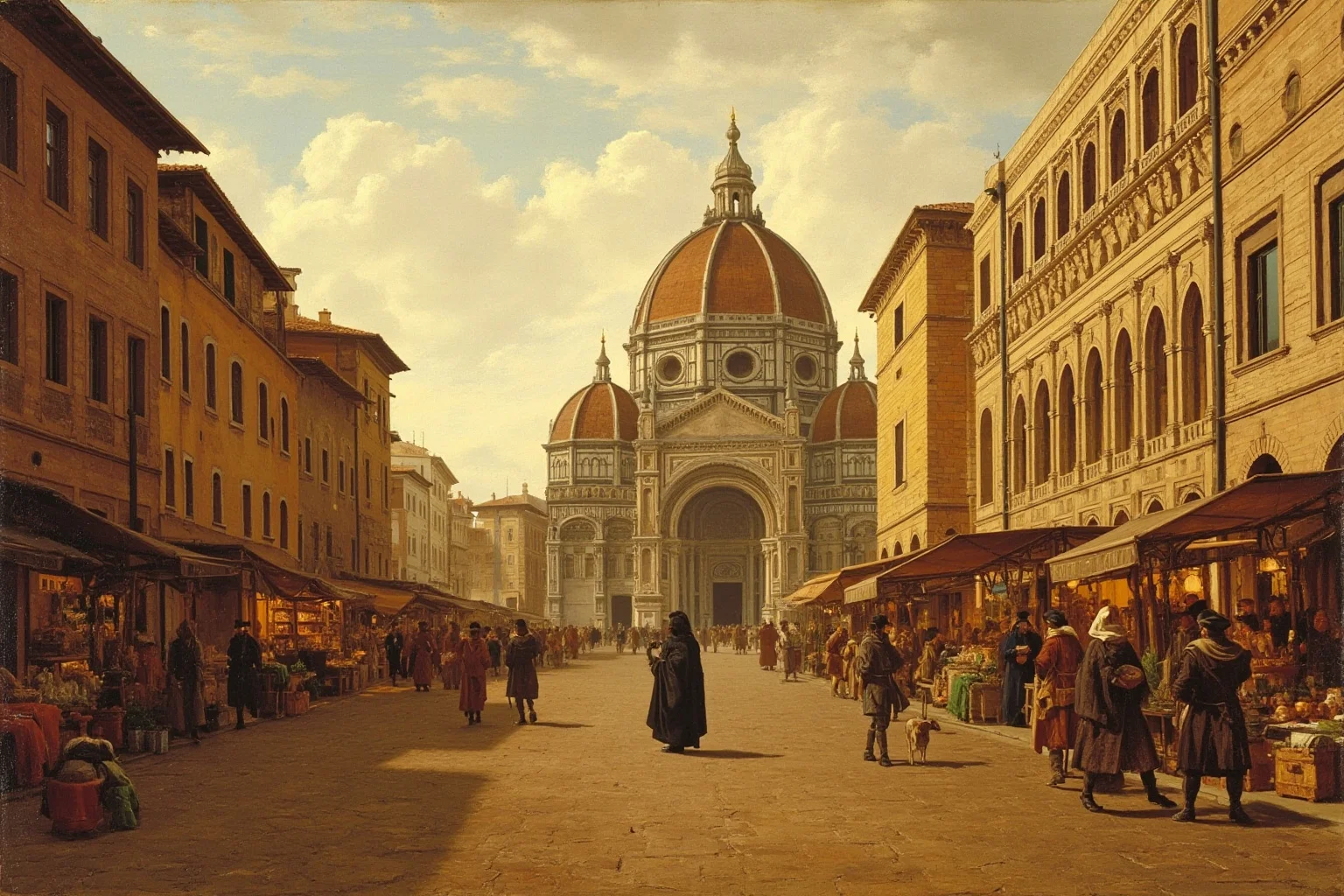
George Eliot is often named as the best novelist in English of the Victorian period, and Romola (1862–63) is the book that nearly broke her. Set in Florence in the 1490s, it required deep research into Renaissance politics, theology and the rise of Savonarola.
Readers who loved the warmth of Silas Marner found it heavy going, and it has stayed in the shadow of Middlemarch ever since. It remains a serious attempt by one of the great English novelists to write history as fiction.
19. Thomas Hardy — The Woodlanders
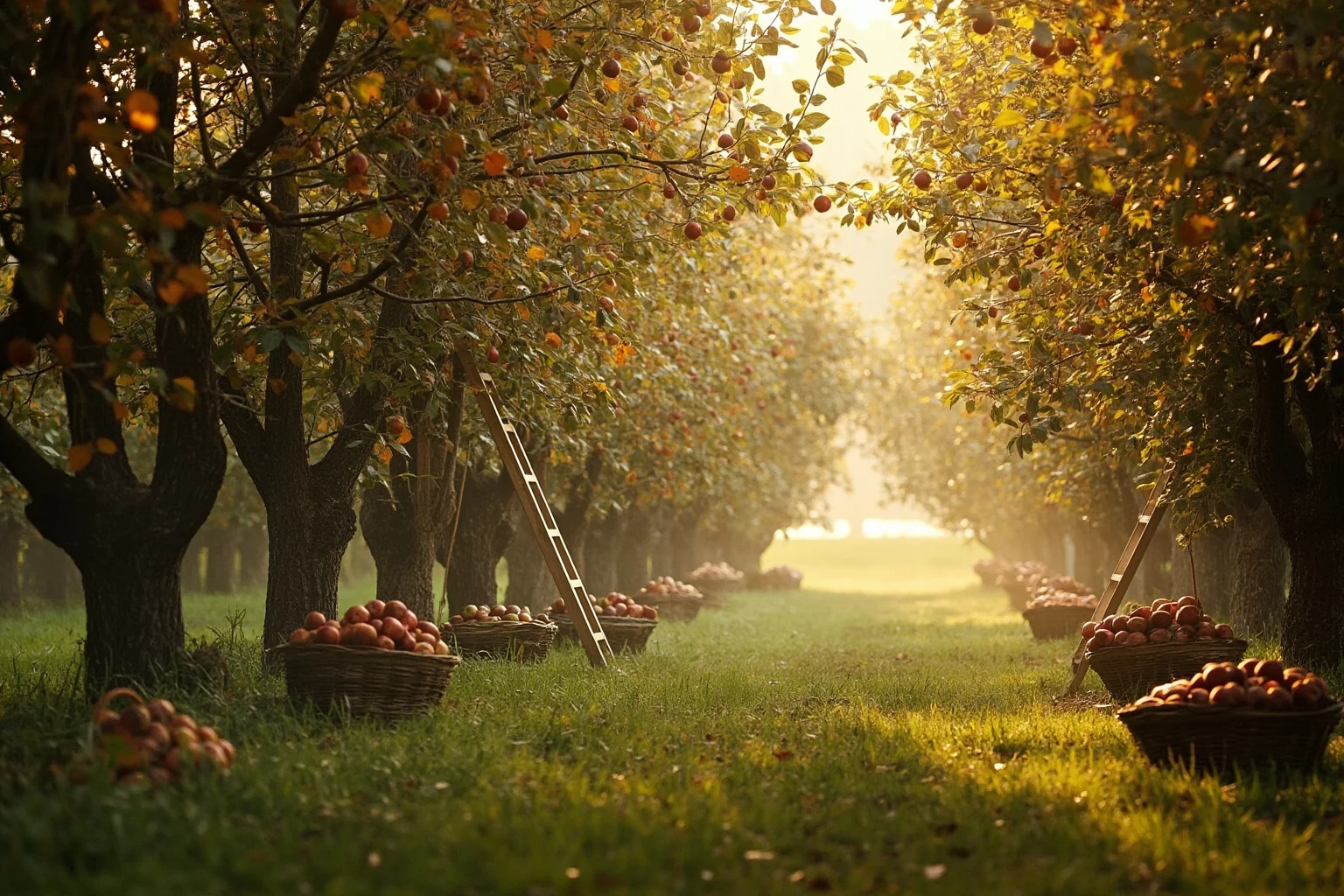
Hardy's famous four — Tess, Jude, The Mayor of Casterbridge and Far from the Madding Crowd — leave The Woodlanders (1887) in the shade. It is set in a woodland economy of orchards and timber, where trees are as consequential as the people who prune them.
The plot is quietly brutal, and its treatment of a woman choosing between security and love is more clear-eyed than Hardy is usually given credit for. It may be the best entry point for readers who find his famous novels too melodramatic.
Part Four: Twentieth-Century Authors
20. Joseph Conrad — Under Western Eyes
Joseph Conrad was born in what is now Ukraine, learned English in his twenties and became one of the best English writers of the twentieth century. Heart of Darkness is the set text; Under Western Eyes (1911) is the deeper political novel.
It follows a student who betrays a revolutionary and then cannot escape the consequences, in a Russia Conrad never visited. Its portrait of a surveillance state has aged unnervingly well.
21. Virginia Woolf — Between the Acts
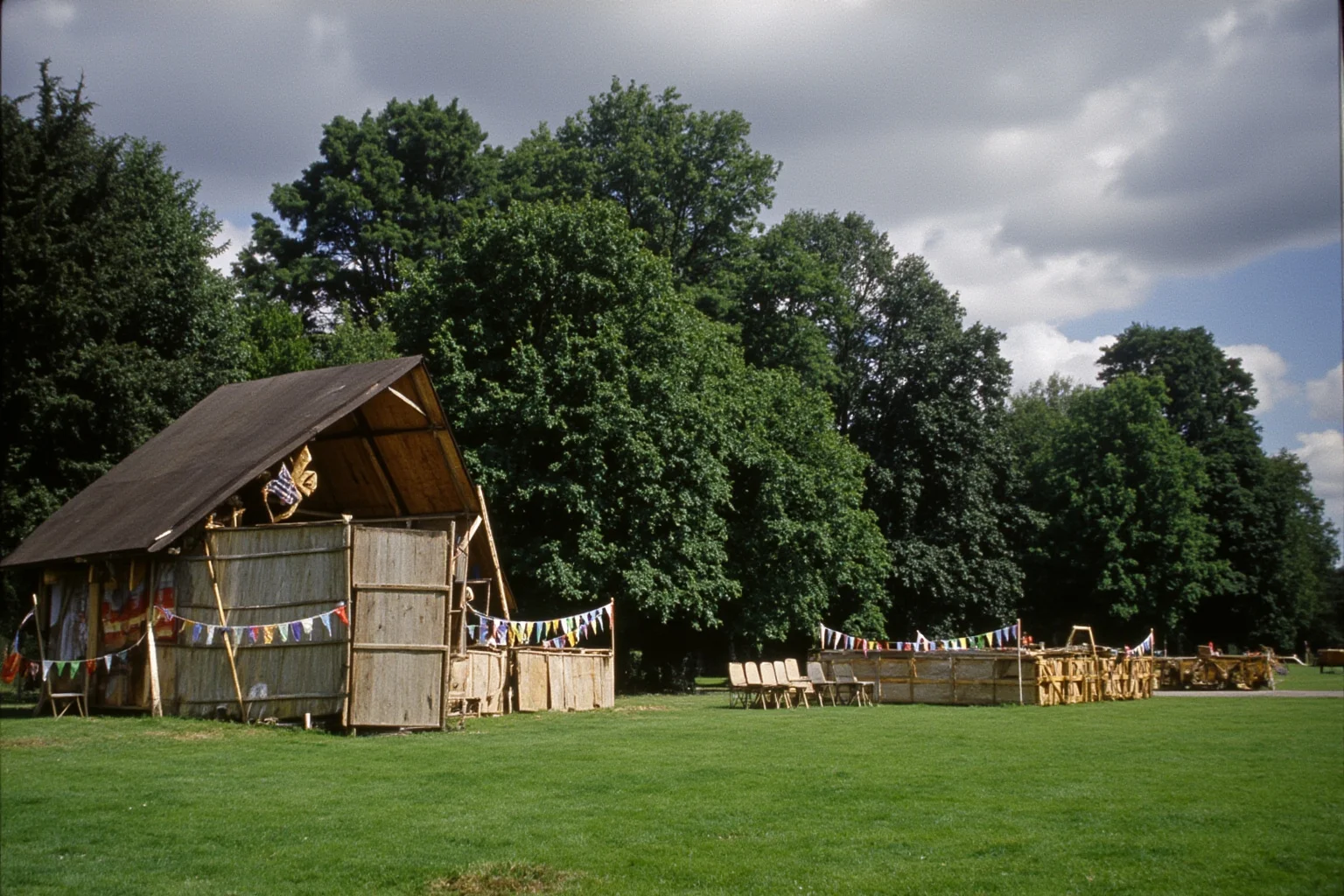
Mrs Dalloway, To the Lighthouse and Orlando get the attention, and Between the Acts (1941) is the novel Woolf never finished. Published after her death, it unfolds over a single day as a village stages a pageant.
The book is about Englishness, performance and the drift toward war in 1939, and its prose is as experimental as anything she wrote. Reading it as a final statement gives it a weight her earlier novels do not quite have.
22. George Orwell — Coming Up for Air
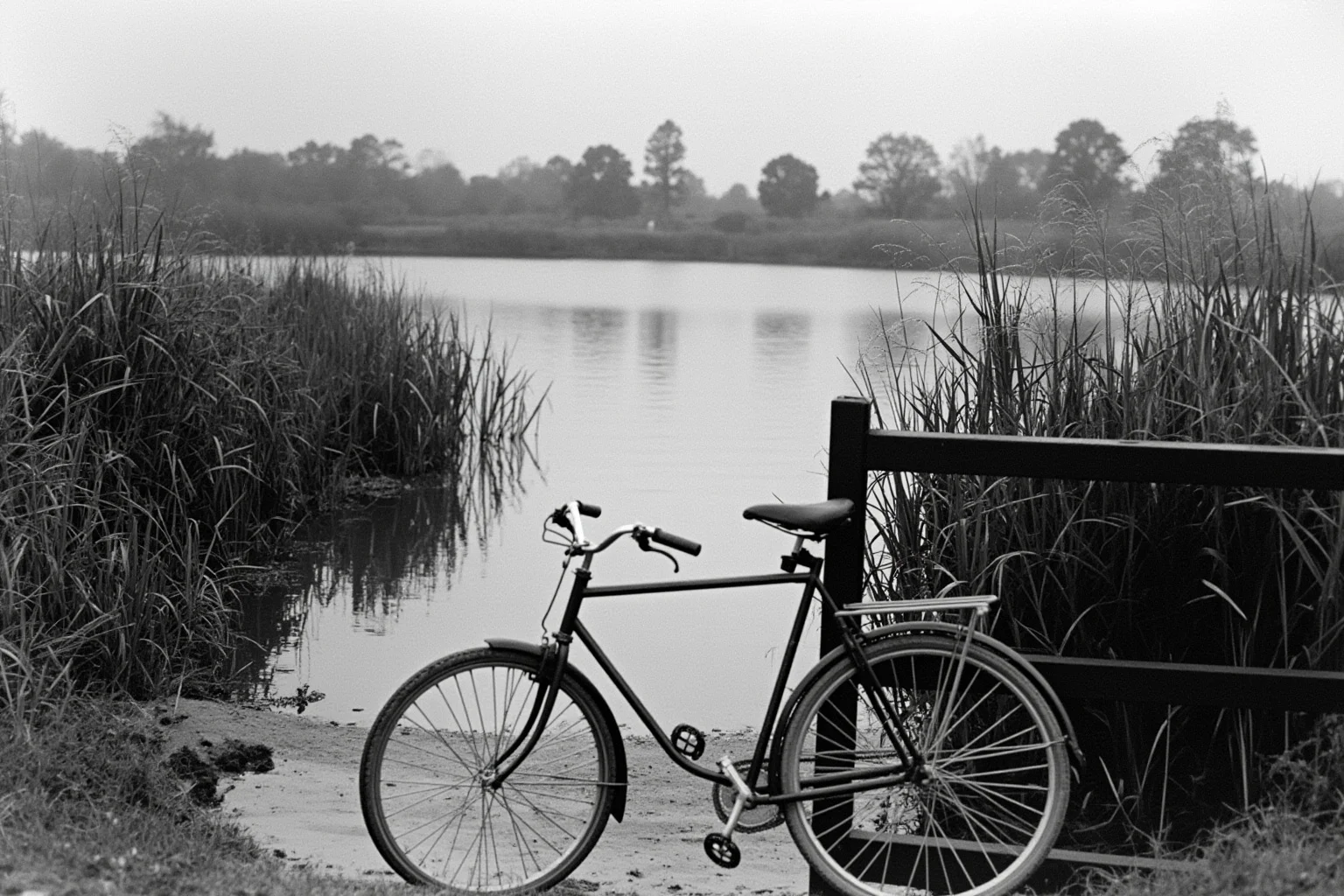
Orwell is fixed in the public mind by Animal Farm and Nineteen Eighty-Four, both written at the very end of his life. Coming Up for Air (1939) is a comic, rueful novel about a middle-aged insurance salesman who wants to revisit the pond of his childhood.
It is about nostalgia, suburbia and the fear of another war, and it contains some of Orwell's funniest writing. It also shows that this most popular of English writers could be tender when he wanted to be.
Why These Overlooked Books Still Matter
The point of this list is not to replace the famous books. It is to show that the greatest writers in English were rarely one-book authors, and that their range is wider than any syllabus admits.
Reading an underrated work also changes how the famous ones look. Once you have met Criseyde, Chaucer's pilgrims feel less like a museum exhibit, and once you have read Between the Acts, Woolf's earlier novels read like rehearsals for a harder, sadder finale.
If you want a starting point, choose by appetite rather than prestige. Rasselas is a weekend, Villette is a winter, and The Woodlanders is for anyone who has ever daydreamed about moving to a village and regretting it.
One myth is worth dropping for good: importance is not the same as difficulty. Several of the books above are short, funny or genuinely suspenseful, and they lost the publicity contest rather than the argument. That is the whole case for reading them.
Frequently Asked Questions
Who are some well known British authors to start with?
Shakespeare, Jane Austen, Charles Dickens, the Brontë sisters, George Orwell and Virginia Woolf are the usual starting points, and all six appear on this list. British literature also includes Scottish, Welsh and Irish writers such as Walter Scott, Dylan Thomas and James Joyce, so the label covers far more ground than many readers expect.
What is the difference between an English author and a British author?
English means born in or formed by England, while British refers to the United Kingdom as a whole, including Scotland, Wales and Northern Ireland. Jonathan Swift was born in Dublin and Joseph Conrad in what is now Ukraine, yet both are often described as English writers because of where they built their careers.
Which underrated book on this list is the easiest place to start?
Samuel Johnson's Rasselas is short, clear and surprisingly funny, and Orwell's Coming Up for Air is the most immediately readable of the modern picks. Readers who want plot first should try Wilkie Collins's Armadale or Mary Shelley's The Last Man.
Why do famous authors end up with forgotten books?
Publishers, schools and prize committees need a manageable canon, so one title per author tends to get promoted while the rest go out of print. A single bestseller or a single hostile review can freeze an author's reputation for a century.
Did Shakespeare really write narrative poems as well as plays?
Yes — Venus and Adonis (1593) and The Rape of Lucrece (1594) were both printed during his lifetime and were among his most popular works. They were dedicated to the Earl of Southampton and reprinted several times, which suggests a readership well beyond the theatre.
Are any of these works unfinished or hard to find?
Virginia Woolf's Between the Acts was unfinished at her death and published posthumously in 1941, though it reads as a complete novel. Most of the other titles remain in print through Penguin Classics, Oxford World's Classics or Broadview editions.

Alex Warren
Related Articles