


Ask most people who discovered America, and you’ll get one answer: Christopher Columbus, 1492. It’s a tidy story, the kind that fits neatly into a grade-school rhyme. But it’s also incomplete, and in some ways deeply misleading.
America wasn’t an empty continent waiting to be “found” by Europeans. It was home to millions of people for tens of thousands of years before Columbus ever set sail, and it was visited by other Europeans centuries before he arrived. Sorting out who actually got here first — and what “discovery” even means — takes a lot more nuance than a single date.
TL;DR: Indigenous peoples arrived in the Americas at least 15,000 years ago, Norse explorers reached North America around 1000 CE, and Columbus’s 1492 voyage — which never touched the mainland United States — only “discovered” America for Europe, not for the world.
The Quick Answer: There Isn’t One Single “Discovery”
The honest answer to “who discovered America” depends entirely on which question you’re actually asking. Are you asking who first set foot on the continent? Who was the first European to arrive? Or who founded the political nation known as the United States of America?
Each of those questions has a different answer, and none of them is Columbus. He never set foot on the North American mainland at all — his 1492 voyage landed in the Bahamas, and his later trips explored the Caribbean and parts of Central and South America. Keeping these three separate questions in mind is the key to untangling this whole debate.
Where Did the First Americans Really Come From?
Long before any European ship crossed the Atlantic, humans were already thriving across North and South America. The most widely supported theory holds that ancient peoples crossed from Siberia into Alaska over Beringia, a land bridge exposed by low sea levels during the last Ice Age, sometime between roughly 20,000 and 15,000 years ago.
From there, groups migrated southward, either along an interior ice-free corridor or down the Pacific coastline in small boats. Archaeological finds like fossilized footprints in New Mexico’s White Sands and the Monte Verde site in Chile suggest people were established across two continents earlier than scientists once assumed.
These early arrivals — often grouped under the term Paleo-Indians — are the true first Americans, and their descendants became the hundreds of distinct Indigenous nations that existed long before 1492.
So when did the first people come to America? Current evidence points to at least 15,000 years ago, with some researchers arguing for dates beyond 20,000 years. Either way, humans were in the Americas roughly 14,000 years before Columbus’s ships ever left Spain.
Ranking the Contenders: Who First Discovered America, In Order
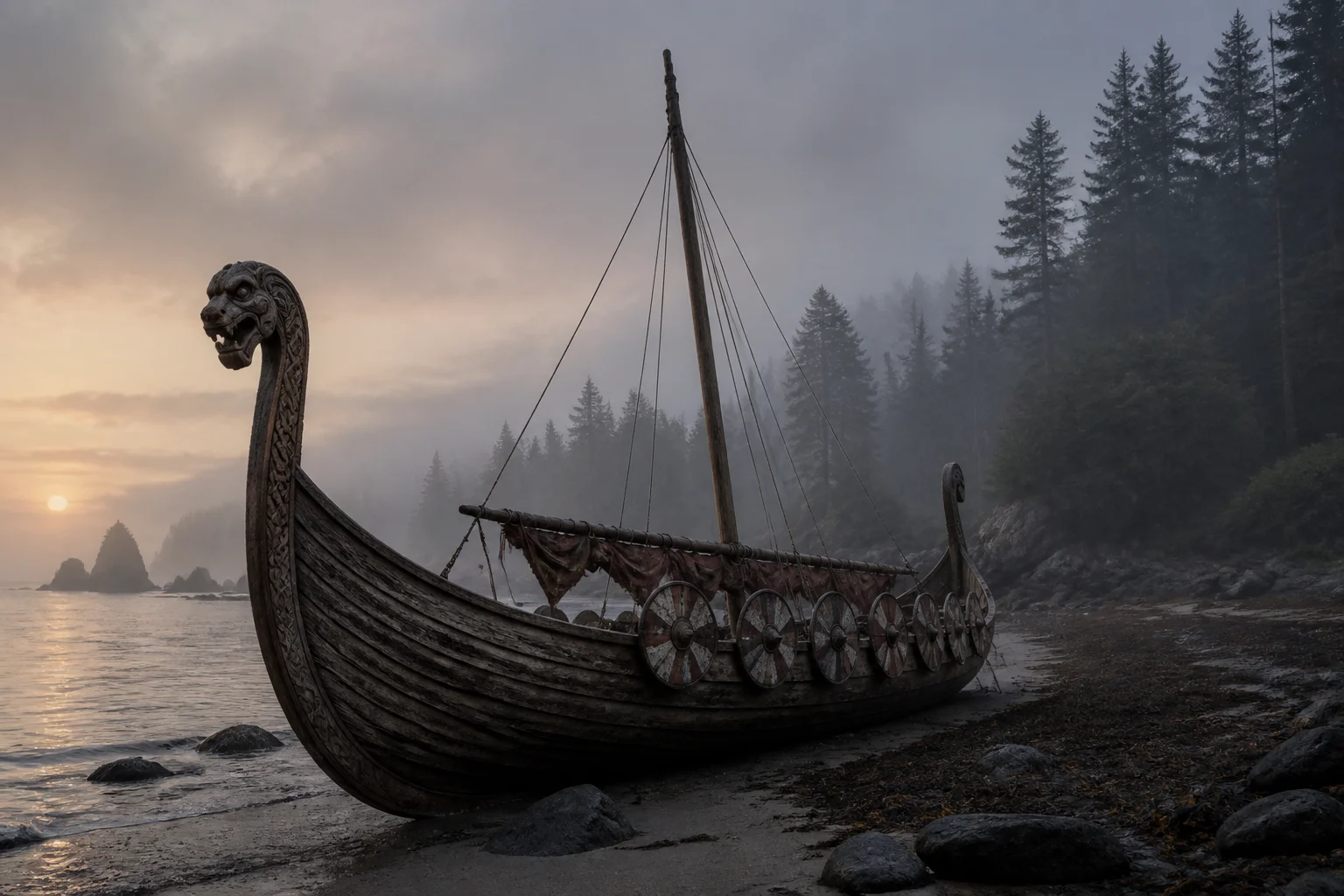
Here’s a chronological rundown of every major group or individual credibly (or, in a few cases, dubiously) linked to “discovering” America, in the rough order they appear in the historical record.
1. The Paleo-Indians who crossed Beringia
These are the genuine first discoverers of the Americas, arriving via the Bering land bridge at least 15,000 years ago. They weren’t a single tribe or culture but many small groups who gradually spread across two continents over thousands of years.
2. The Clovis culture
Named for stone tools found near Clovis, New Mexico, this culture flourished around 13,000 years ago and was long considered the “first” American civilization. Newer discoveries have since shown that people were present even earlier, but Clovis remains a crucial marker in North American prehistory.
3. The Monte Verde settlers
Excavations in southern Chile revealed a settlement dated to roughly 14,500 years ago, predating Clovis sites in North America. This pushed back the accepted timeline for human presence in the Americas and reinforced that migration happened in waves, not one clean event.
4. The Solutrean Hypothesis (a fringe theory)
Some researchers have proposed that Ice Age Europeans crossed the Atlantic by boat around 20,000 years ago, based on similarities between Solutrean stone tools in France and Clovis tools in America. Mainstream archaeologists remain skeptical, and this idea is not widely accepted evidence-based history.
5. Polynesian voyagers
Genetic and botanical evidence, including the presence of the sweet potato — a South American crop — in Polynesia before European contact, suggests some interaction between Polynesian sailors and South Americans, possibly around 1200 CE. The evidence is intriguing but still debated among historians and geneticists.
6. Saint Brendan the Navigator
Irish legend holds that a 6th-century monk named Brendan sailed across the Atlantic and reached a “promised land.” This story comes from a medieval text called the Navigatio Sancti Brendani, but no archaeological evidence supports an actual transatlantic voyage. It remains folklore, not history.
7. Bjarni Herjólfsson
This Norse sailor is credited with being the first European to sight land in the Americas, around 985 CE, when he was blown off course sailing toward Greenland. He didn’t land, but his report reportedly inspired later Norse voyages.
8. Leif Erikson and Vinland
Around 1000 CE, Norse explorer Leif Erikson led an expedition that reached a region he called Vinland, believed to correspond to parts of Newfoundland. Archaeologists confirmed this with the discovery of a Norse settlement at L’Anse aux Meadows, making it the only verified pre-Columbian European site in North America.
9. Erik the Red and the Greenland colonies
Leif’s father, Erik the Red, founded Norse settlements in Greenland that served as a launching point for voyages further west. These colonies eventually died out, likely due to climate shifts and isolation, but they connect the dots of Norse exploration toward North America.
10. The Zheng He myth
A popular but widely discredited theory claims Chinese admiral Zheng He’s fleet reached the Americas in 1421, decades before Columbus. This idea, popularized by a non-academic book in the early 2000s, lacks credible archaeological or documentary support and is rejected by mainstream historians.
11. Christopher Columbus
In 1492, sailing for the Spanish crown, Columbus landed in the Bahamas, believing he’d reached Asia. His voyages opened sustained European contact with the Americas, but he never reached the continental United States, and he was neither the first human nor the first European to arrive.
12. John Cabot
Sailing for England in 1497, Cabot reached the coast of Newfoundland, becoming the first European since the Norse to explore the North American mainland. His voyage became the basis for England’s later claims to North American territory.
13. Amerigo Vespucci
This Italian explorer and cartographer recognized that the lands Columbus found weren’t Asia but an entirely separate landmass. A German mapmaker later honored him by labeling the new continent “America” on a 1507 map, giving the New World its name.
14. Juan Ponce de León
In 1513, this Spanish explorer landed in Florida, becoming the first confirmed European to set foot on what is now the continental United States. This makes him a strong answer to “who was the first European to discover America” in the specific context of U.S. soil.
15. Giovanni da Verrazzano
Sailing for France in 1524, Verrazzano explored much of the Atlantic coastline of what’s now the United States, from the Carolinas to Nova Scotia. His voyage helped map territory that France would later claim.
16. Jacques Cartier
Also sailing for France, Cartier explored the Gulf of St. Lawrence starting in 1534, laying groundwork for French colonization of Canada. His expeditions extended European knowledge of North America’s interior.
17. St. Augustine and Spanish Florida
Founded by the Spanish in 1565, St. Augustine is the oldest continuously occupied European-established city in the continental United States. Spain’s early presence in Florida predates English colonization by decades.
18. Roanoke and Jamestown
England’s first attempt at colonization, Roanoke, mysteriously failed in the 1580s. Jamestown, founded in 1607, succeeded and became the first permanent English settlement in America, marking the start of sustained English colonization.
19. The Pilgrims at Plymouth
In 1620, a group of English separatists known as the Pilgrims landed at Plymouth aboard the Mayflower. Their colony became one of the most culturally significant early English settlements, though it was neither the first European nor even the first English settlement.
20. The Founding Fathers
In 1776, a group of colonial leaders declared independence from Britain, and by 1789 the United States had a functioning government under the Constitution. This is the moment many people really mean when they ask who founded America — not discovery, but the creation of a nation.
So Who Actually Founded America? (Discovery vs. Founding)
It’s worth pausing on a common mix-up: “discovering” America and “founding” America are two very different things. Discovery refers to arrival on the continent, whether by ancient migrants, Norse sailors, or Columbus’s crew. Founding usually refers to the political creation of the United States as an independent nation.
When people ask who founded America, they’re often really asking about the Founding Fathers — figures like George Washington, Thomas Jefferson, Benjamin Franklin, and John Adams.
These men didn’t discover a continent; they helped build a government, drafting the Declaration of Independence in 1776 and later the Constitution. That’s a fundamentally different achievement from anything Columbus, the Norse, or Indigenous peoples accomplished centuries earlier.
American Explorers Who Shaped the Map After Columbus
Once European contact was established, a long line of explorers pushed further into the continent, mapping rivers, mountains, and coastlines that Europeans hadn’t yet documented. Hernando de Soto explored the Southeast in the 1540s searching for gold, while Francisco Vázquez de Coronado pushed into the Southwest around the same time. Later, American-born explorers took over the story entirely.
Meriwether Lewis and William Clark led their famous expedition from 1804 to 1806, mapping the newly acquired Louisiana Territory and reaching the Pacific coast.
Figures like Daniel Boone and later frontier explorers continued pushing westward expansion throughout the 18th and 19th centuries. These American explorers didn’t “discover” the continent, but they dramatically expanded European-American knowledge and control of it.
When Was America Discovered? Sorting Out the Dates
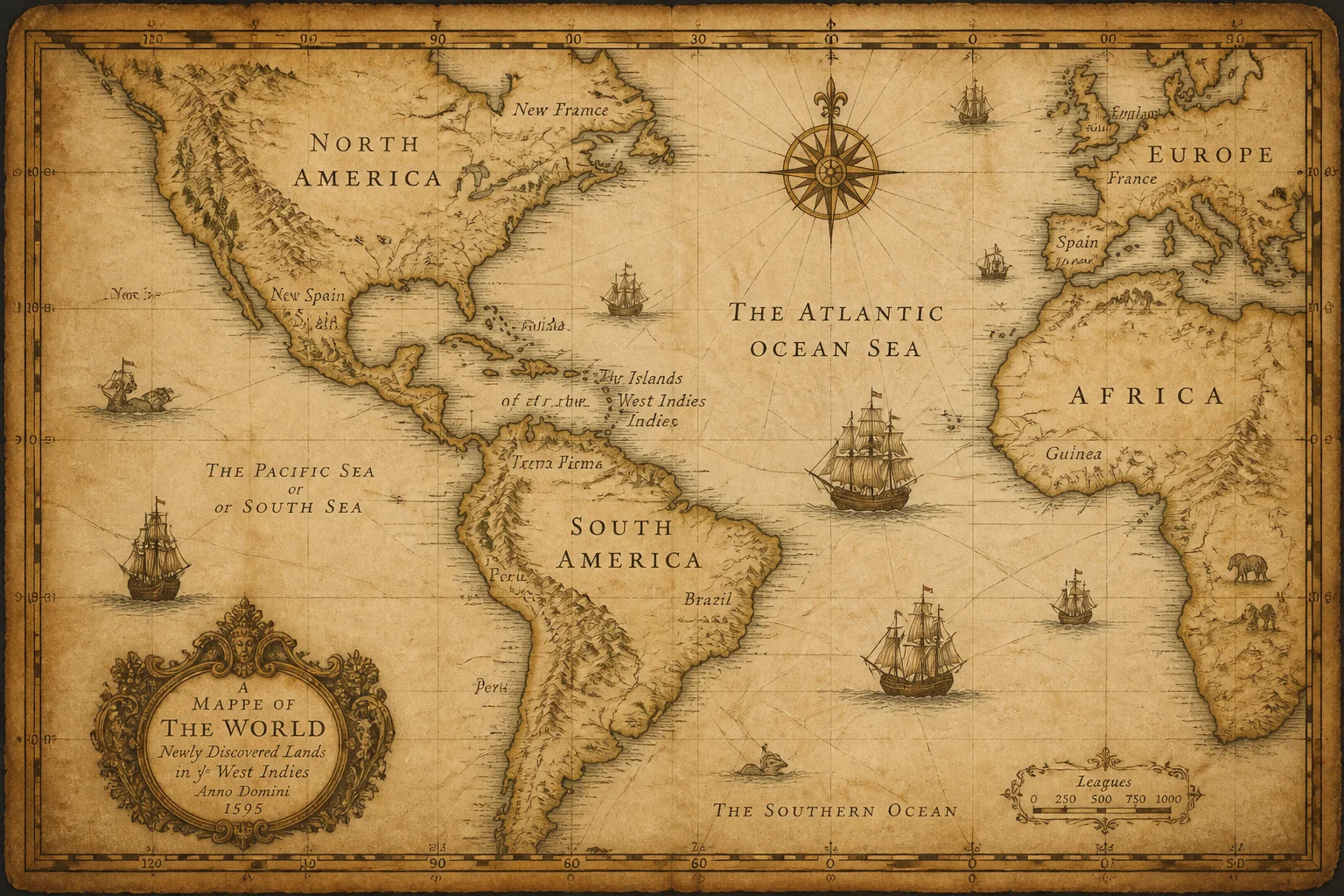
Given everything above, there’s no single “america found date” that satisfies every version of the question. Here’s the timeline broken down clearly:
Indigenous peoples arrived at least 15,000 years ago, and possibly earlier, via Beringia and coastal migration routes. Norse explorers reached North America around 1000 CE, roughly 500 years before Columbus.
Columbus reached the Caribbean in 1492, opening the era of sustained European colonization, though he never touched the continental U.S. Ponce de León became the first confirmed European on U.S. soil in 1513, and the United States itself wasn’t founded as a nation until 1776, with its government structure finalized in 1789.
So when was the United States of America discovered, specifically? If you mean the land, Indigenous peoples were there millennia earlier. If you mean European arrival on what’s now U.S. territory, that’s 1513 with Ponce de León. If you mean the country’s founding, that’s 1776.
Why the “Columbus Discovered America” Myth Persists
The Columbus-centric story took hold for reasons that have more to do with 19th-century nation-building than historical accuracy. Early American leaders wanted a symbolic “discovery” story that wasn’t tied to England, and Columbus, an Italian sailing for Spain, fit that need conveniently. Columbus Day became a national holiday in the 20th century, cementing the narrative in classrooms for generations.
Modern historians have worked to correct this oversimplified picture, emphasizing both the deep history of Indigenous nations and the earlier, verified Norse presence in North America. This shift isn’t about erasing Columbus’s historical significance — his voyages did trigger lasting, large-scale contact between Europe and the Americas. It’s about being accurate regarding who was actually here first, and who else arrived long before 1492.
The Bottom Line: So Who Really Found America First?
If you’re asking who found the Americas first in any meaningful sense, the answer is the ancestors of today’s Indigenous peoples, who arrived at least 15,000 years ago.
If you’re asking about Europeans specifically, Norse explorers led by Leif Erikson beat Columbus by about 500 years, backed by real archaeological evidence at L’Anse aux Meadows. And if you’re asking who founded America as a nation, that credit belongs to the Founding Fathers of 1776.
Columbus matters historically because his voyages triggered the sustained European colonization that reshaped the modern world, for better and often for much worse for the people already living there.
But “discovery” is a loaded word, and the real history of who came to America first is richer, older, and more complicated than any single explorer’s name. That complexity is exactly what makes it worth understanding correctly.
Frequently Asked Questions
When was America discovered?
It depends on what you mean. Indigenous peoples arrived in the Americas at least 15,000 years ago via Beringia; Norse explorers reached North America around 1000 CE; and Columbus reached the Caribbean in 1492. There is no single agreed-upon 'discovery date' because different groups arrived at very different times.
Who discovered America first?
The first humans to discover the Americas were the ancestors of Indigenous peoples, who migrated from Asia across the Beringia land bridge at least 15,000 years ago. Among Europeans, Norse explorers led by Leif Erikson reached North America around 1000 CE, roughly 500 years before Christopher Columbus.
Did Columbus actually discover America?
No, not in the literal sense. Columbus landed in the Bahamas in 1492 and never reached the continental United States. Millions of Indigenous people already lived across the Americas, and Norse explorers had reached North America centuries earlier.
Who founded America?
If the question refers to the founding of the United States as a nation, credit goes to the Founding Fathers, including George Washington, Thomas Jefferson, and Benjamin Franklin, who led the drafting of the Declaration of Independence in 1776 and the Constitution afterward.
Who was the first European to reach the continental United States?
Spanish explorer Juan Ponce de León is credited as the first confirmed European to set foot on what is now the continental United States, landing in Florida in 1513.
Where did the first Americans come from?
Most evidence points to ancient peoples migrating from Siberia into Alaska across the Beringia land bridge, then spreading throughout North and South America over thousands of years, starting at least 15,000 years ago.
Did the Vikings really reach America before Columbus?
Yes. Archaeological evidence at L'Anse aux Meadows in Newfoundland confirms that Norse explorers, including Leif Erikson, established a settlement in North America around 1000 CE, nearly 500 years before Columbus's 1492 voyage.
Who were the first people in the United States?
The first people in what is now the United States were Paleo-Indians, ancient migrants who crossed from Asia and spread across the continent starting at least 15,000 years ago, becoming the ancestors of Native American nations.

Alex Warren
Related Articles