
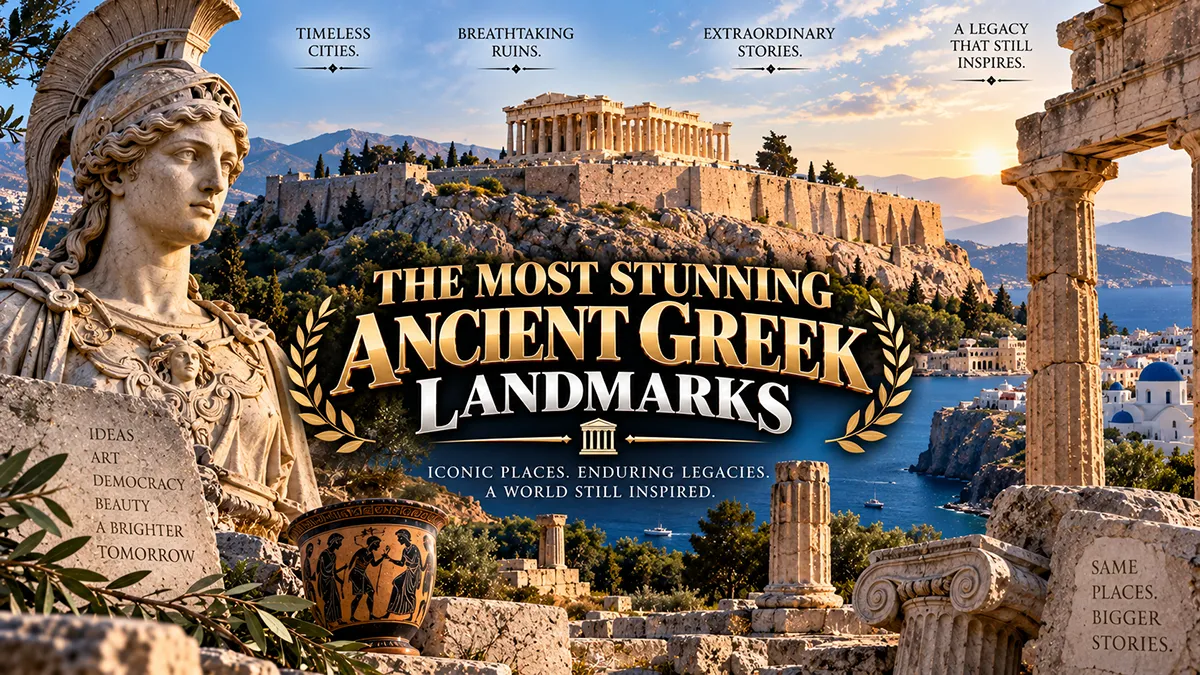
Greece is basically an open-air museum. Wander almost any hillside, coastline, or island, and you’ll trip over the marble bones of a civilization that shaped Western architecture, theater, philosophy, and democracy.
When people search for “greece landmarks” or “famous ancient greek buildings,” they usually picture one image — the Parthenon glowing at sunset above Athens. But that’s just the beginning.
This guide rounds up the most stunning ancient Greek landmarks still standing (or partly standing) today, from world-famous icons to lesser-known ruins that archaeologists and history nerds love.
We’ll also gently correct a few popular myths along the way, because a lot of “facts” about these sites have gotten wobbly with age — much like the buildings themselves.
TL;DR: From the Parthenon to the Palace of Knossos, ancient Greece’s surviving temples, theaters, and tombs remain some of the most breathtaking and historically important landmarks on Earth.
What Counts as an Ancient Greek Landmark?
When we talk about ancient Greek monuments, we’re generally talking about structures built between roughly the 8th century BCE and the Roman conquest of Greece in 146 BCE. That span covers the Archaic, Classical, and Hellenistic periods — the eras that gave us the Parthenon, the Oracle at Delphi, and the palaces of Crete.
It’s worth noting that many “ancient Greek buildings” people picture today are ruins, not complete structures. Weather, earthquakes, wars, looting, and centuries of reused building material have taken a toll.
What survives is often a skeleton of columns, foundations, or a single well-preserved theater — but even in fragments, these sites are extraordinary.
1. The Parthenon, Athens
The Parthenon is the landmark most people picture when they think of Greece, and for good reason. Built between 447 and 432 BCE on the Acropolis of Athens, it was dedicated to the goddess Athena and funded largely through the treasury of the Delian League, a group of Greek city-states led by Athens.
Contrary to popular belief, the Parthenon was never a simple, purely white building. Traces of paint found by archaeologists suggest its sculptures and details were originally painted in vivid reds and blues, a far cry from the bleached-marble look we associate with “classical” Greece today.
The temple has survived earthquakes, a fire, conversion into a church and then a mosque, and a devastating 1687 explosion when it was used as an Ottoman gunpowder store. What stands today is a heavily restored version of a building that has been damaged and repaired for over 2,400 years.
2. The Erechtheion, Athens
Just north of the Parthenon on the Acropolis sits the Erechtheion, a temple famous for its six elegant maiden columns known as the Caryatids. Completed around 406 BCE, it honored both Athena and Poseidon and marked the mythical spot where the two gods supposedly competed for patronage of Athens.
The Caryatids you see on-site today are replicas. The originals were removed for preservation, and one was controversially taken to the British Museum in the early 1800s, a dispute that continues to fuel debate over cultural heritage repatriation.
3. The Propylaea, Athens
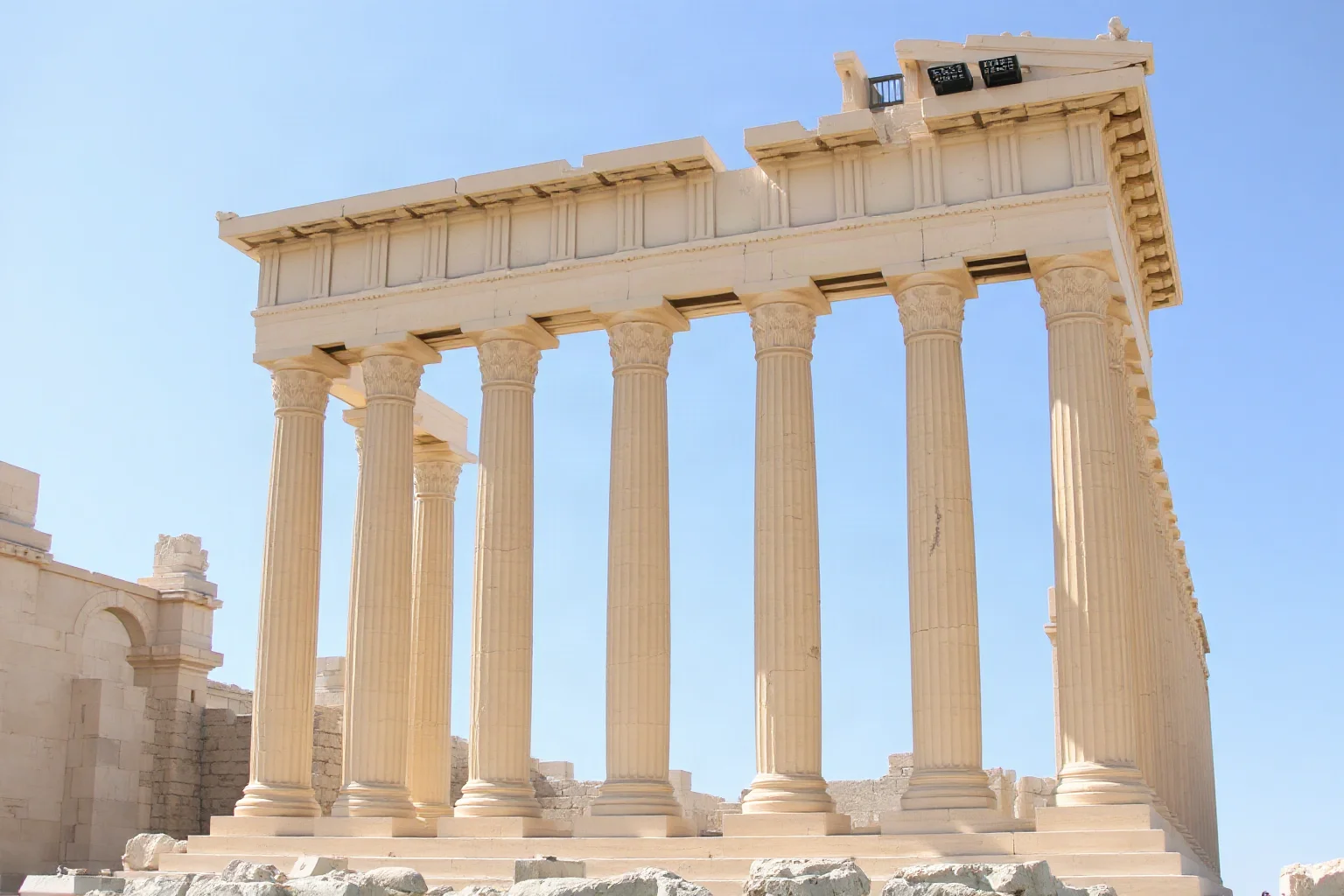
The Propylaea served as the grand ceremonial gateway to the Acropolis, designed by the architect Mnesikles starting around 437 BCE. Its monumental columns were meant to prepare visitors — literally and psychologically — for the sacred space beyond.
Construction was actually never finished, likely interrupted by the outbreak of the Peloponnesian War. Even incomplete, it remains one of the more technically ambitious ancient Greek structures and buildings on the entire hill.
4. Temple of Olympian Zeus, Athens
Once the largest temple in mainland Greece, the Temple of Olympian Zeus took centuries to complete. Construction began in the 6th century BCE but wasn’t finished until the Roman emperor Hadrian funded its completion around 132 CE.
Only 15 of the original 104 towering Corinthian columns remain standing today. Even in ruin, the surviving columns give a real sense of scale that photos rarely capture.
5. Theatre of Dionysus, Athens
Carved into the southern slope of the Acropolis, the Theatre of Dionysus is considered the birthplace of Greek tragedy. This is where playwrights like Sophocles, Euripides, and Aristophanes originally staged their work for Athenian audiences during religious festivals honoring Dionysus.
It’s a strong answer to anyone searching for ancient greek buildings for performances — the theater could reportedly hold tens of thousands of spectators at its peak. The stone seating visible today mostly dates from later Roman-era renovations, though the site’s origins stretch back to the 6th century BCE.
6. Ancient Agora & Stoa of Attalos, Athens
The Ancient Agora was the civic and social heart of Athens — a marketplace, meeting ground, and site of early democratic debate. Philosophers including Socrates reportedly taught and argued here among the market stalls.
The reconstructed Stoa of Attalos, a long covered colonnade originally built around 150 BCE, now houses a museum showcasing artifacts from the site. It’s one of the best-preserved examples of how a functional, everyday Greek building actually looked.
7. Temple of Hephaestus, Athens
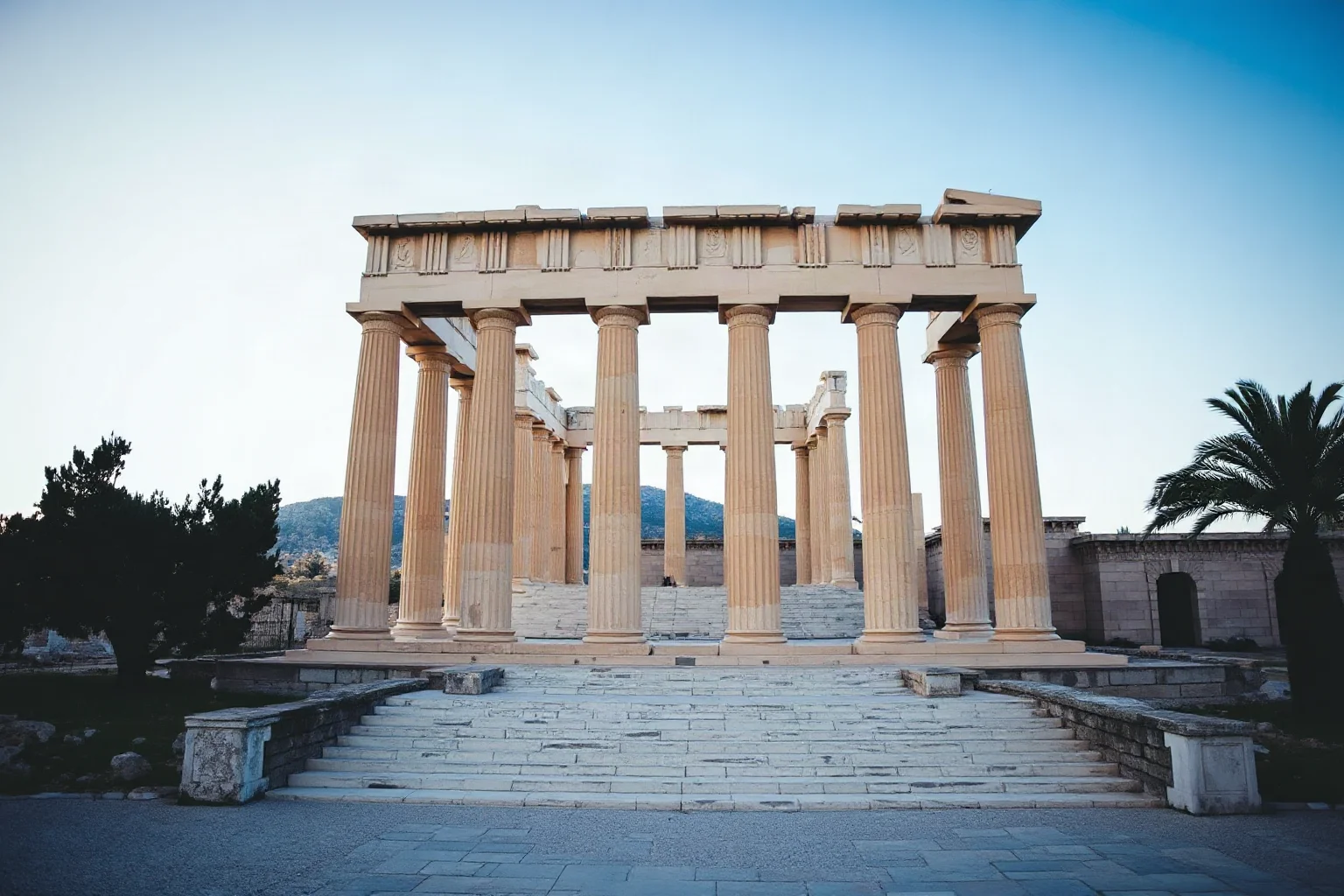
Overlooking the Ancient Agora, the Temple of Hephaestus is often overlooked by visitors rushing to the Acropolis, but it happens to be one of the best-preserved ancient Greek temples anywhere in the world. Built around 449–415 BCE, it was dedicated to the god of metalworking and craftsmanship.
Its survival is partly thanks to later reuse as a Christian church, which protected it from the destruction many other temples suffered. Standing in front of it gives a rare, nearly complete sense of what a classical Doric temple actually looked like.
8. Tower of the Winds, Athens
This octagonal marble structure near the Roman Agora is one of the world’s oldest known meteorological stations. Built in the 1st century BCE by the astronomer Andronikos of Kyrrhos, it once featured a weather vane, sundials, and a water clock.
Each of its eight sides is decorated with a relief representing a different wind direction. It’s a great example of how ancient Greek buildings weren’t just temples and theaters — some were genuinely functional science tools.
9. Temple of Poseidon, Cape Sounion
Perched dramatically on a cliff above the Aegean Sea, the Temple of Poseidon at Sounion was built around 444 BCE to honor the god of the sea. Ancient sailors leaving or returning to Athens would have seen its columns from their ships, a striking welcome or farewell.
Romantic poet Lord Byron reportedly carved his name into one of the columns in the 19th century, a bit of graffiti that’s still visible today. Sunset visits here are famous for good reason — the lighting on the marble is genuinely stunning.
10. Temple of Apollo, Delphi
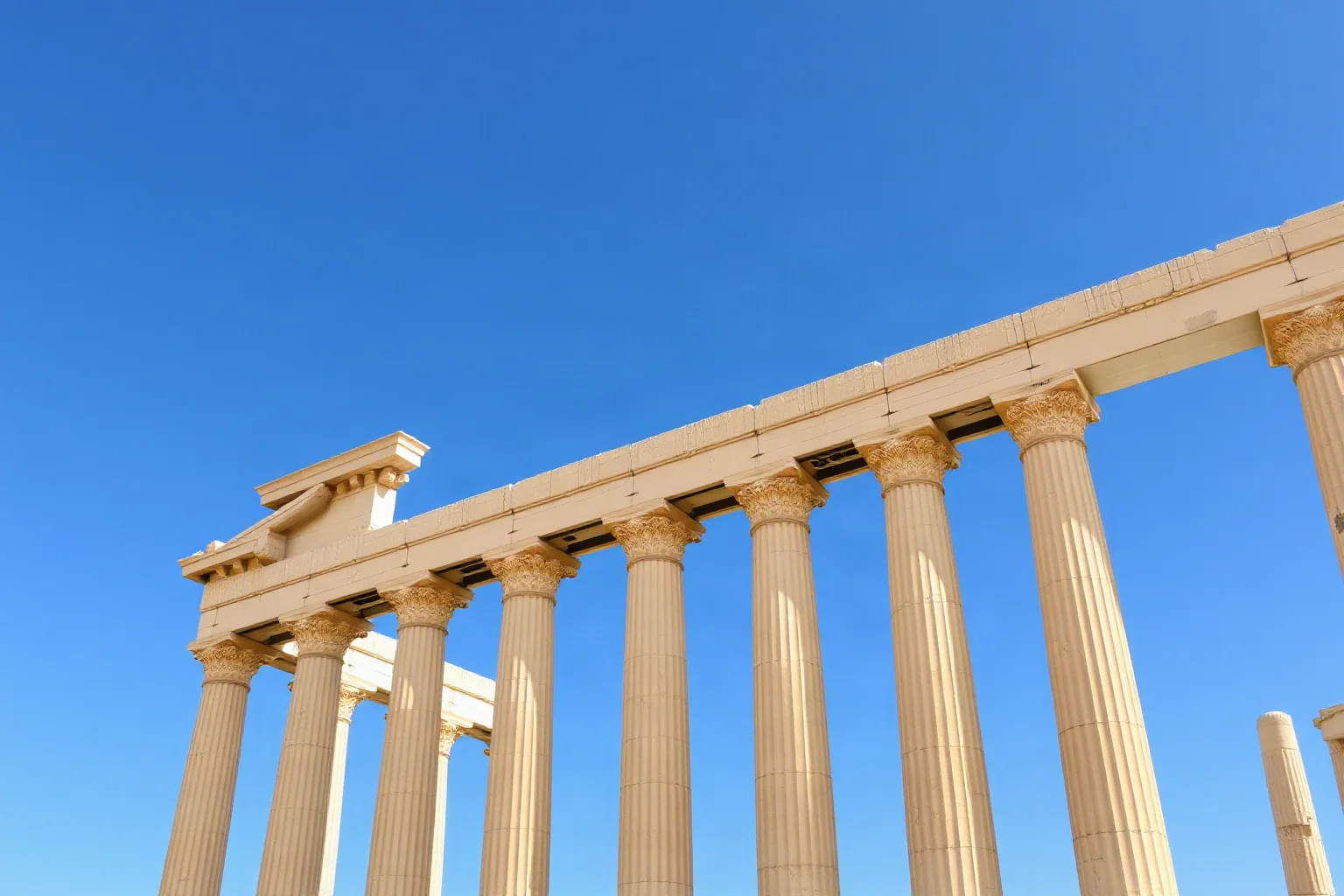
Delphi was considered the spiritual center of the ancient Greek world, home to the Oracle of Delphi — a priestess believed to channel prophecies from Apollo. City-states and rulers from across the Mediterranean sent representatives here to seek guidance before major decisions.
The temple ruins visible today date mainly from a 4th-century BCE rebuilding, since earlier versions were destroyed by fire and earthquake. Modern geological studies have suggested underground gases may have contributed to the oracle’s trance-like state, though this remains a theory rather than settled fact.
11. Ancient Theatre of Delphi
Just above the Temple of Apollo, the Theatre of Delphi could seat around 5,000 spectators and hosted musical and poetic competitions as part of the Pythian Games. Its elevated position offers sweeping views over the entire sanctuary and the valley below.
Much of the surviving structure dates to the 4th century BCE, with later Roman modifications. It’s a smaller cousin to Epidaurus, but no less atmospheric.
12. Tholos of Athena Pronaia, Delphi
A short walk from the main sanctuary, the Tholos is a circular structure whose exact original purpose still puzzles historians. Built around 380–360 BCE, only three of its original twenty Doric columns remain standing.
Despite the mystery, it’s one of the most photographed ruins in Delphi, largely because its circular form is so different from the rectangular temples nearby.
13. Temple of Zeus, Olympia
The Sanctuary of Olympia was home to the ancient Olympic Games and to one of the Seven Wonders of the Ancient World: a massive gold-and-ivory statue of Zeus that once stood inside this temple. The statue itself is long lost, likely destroyed sometime after antiquity, but the temple’s foundations and fallen columns remain on-site.
Built around 470–456 BCE, the temple was a key religious focus of the games, which combined athletic competition with worship. It’s one of the clearest examples of how sport and religion were deeply intertwined in ancient Greek culture.
14. Ancient Stadium of Olympia
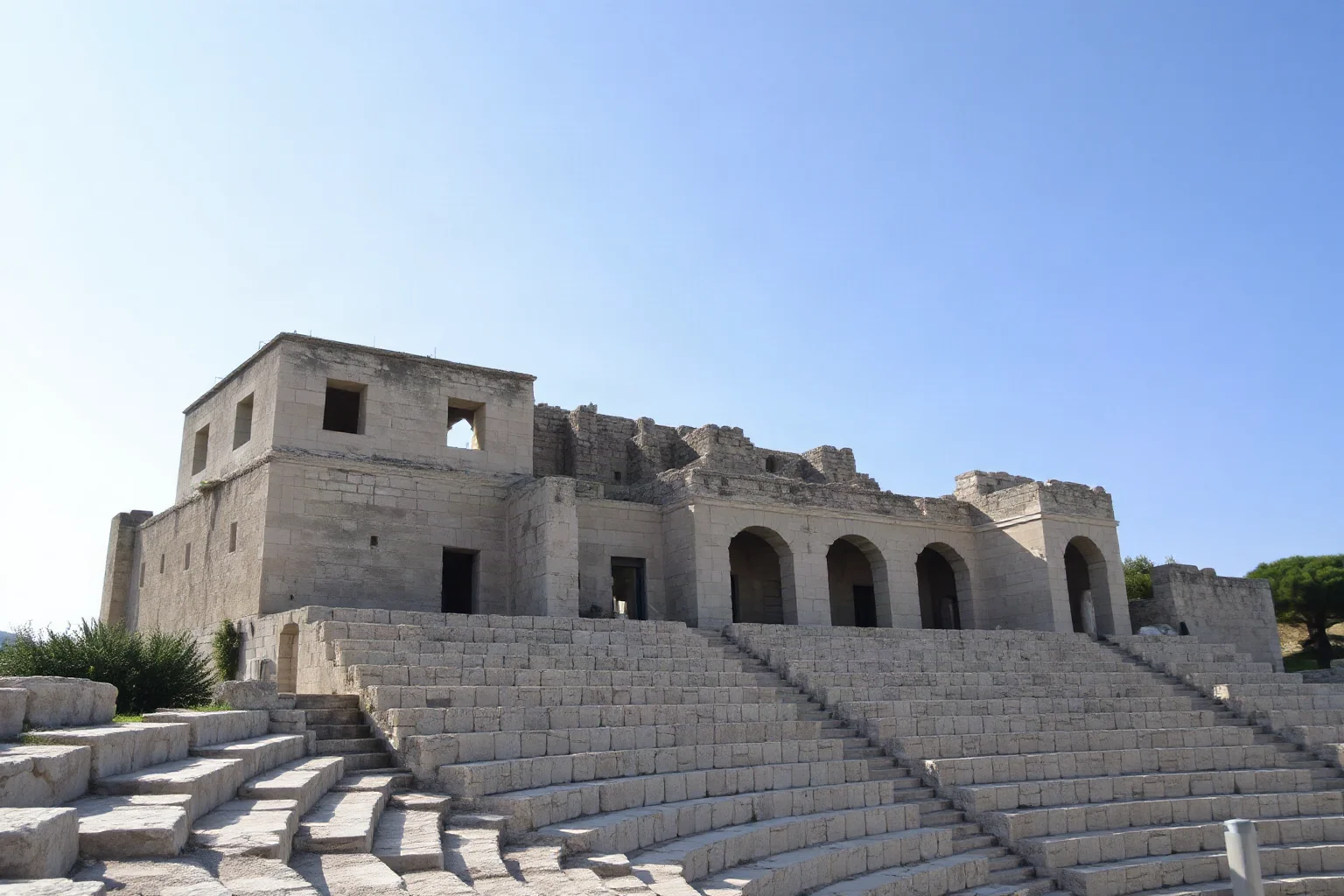
The stone stadium at Olympia hosted the original Olympic Games starting in 776 BCE, according to ancient tradition, though the exact historical accuracy of that founding date is debated among historians. The track could reportedly hold tens of thousands of spectators, seated directly on grass-and-earth embankments rather than stone seating.
Running the length of the ancient track is a popular activity for modern visitors. It’s a simple experience, but standing where ancient athletes once competed barefoot is genuinely moving.
15. Philippeion, Olympia
This circular memorial was commissioned by Philip II of Macedon after his victory at the Battle of Chaeronea in 338 BCE, and later completed by his son, Alexander the Great. It originally held gold and ivory statues of the Macedonian royal family.
Its presence at Olympia — a pan-Hellenic religious site — was a political statement as much as a religious one, signaling Macedonian dominance over the rest of Greece.
16. Ancient Theatre of Epidaurus
Often called the best-preserved ancient theater in Greece, Epidaurus is renowned for its extraordinary acoustics. Legend has it a coin dropped on the central stage can be heard clearly from the highest seats, and while modern acoustic studies have offered scientific explanations involving the limestone seating, the effect is still remarkable in person.
Built in the 4th century BCE and later expanded, it could seat around 13,000 to 14,000 people. It remains a working performance venue today, hosting an annual summer arts festival — a rare case of an ancient Greek building for performances still doing its original job.
17. Sanctuary of Asclepius, Epidaurus
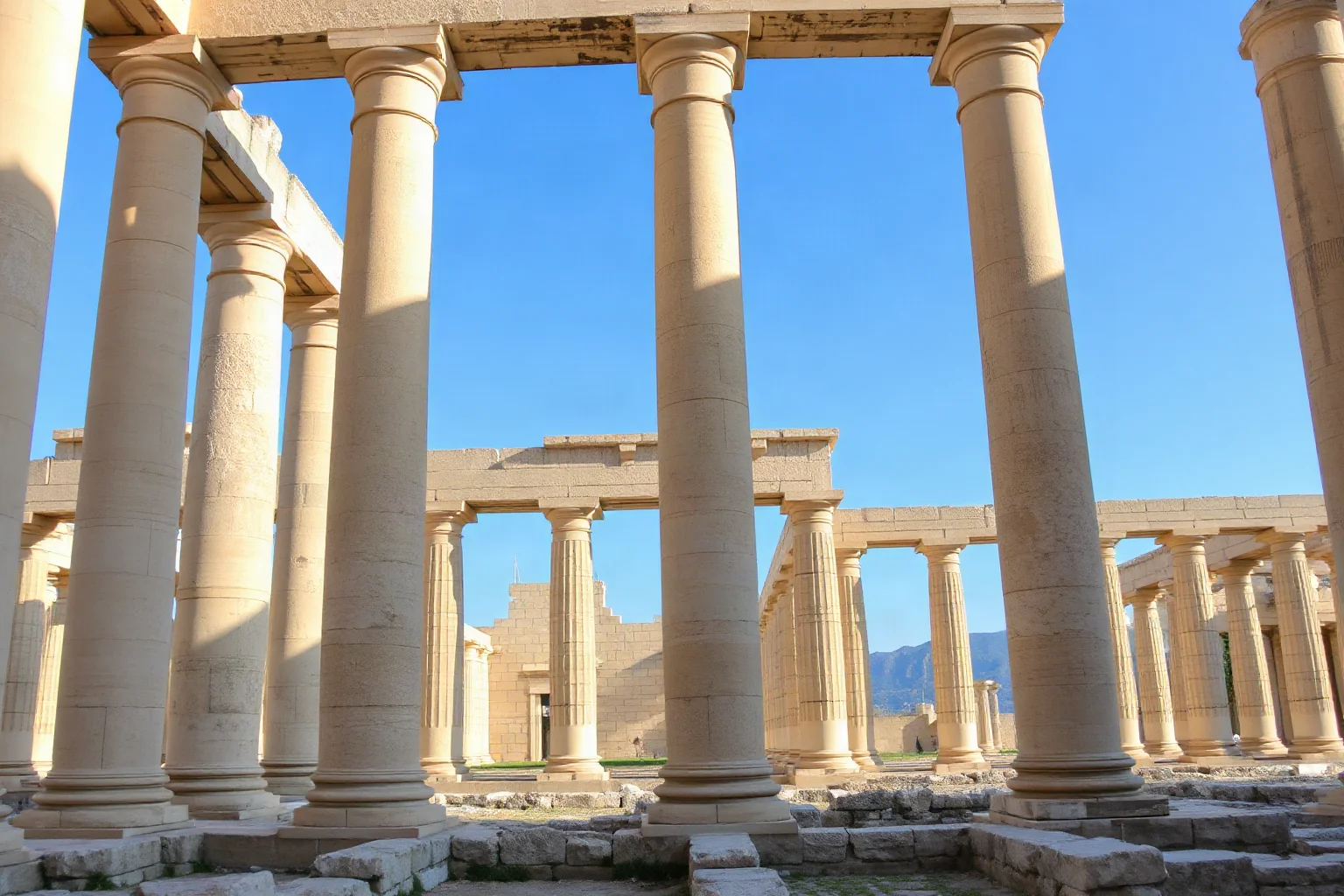
Adjacent to the theater, this sanctuary was dedicated to Asclepius, the god of healing, and functioned as one of the ancient world’s most important healing centers. Patients traveled from across Greece seeking treatment that mixed genuine medical practice with religious ritual.
The complex included dormitories, baths, and a mysterious circular building called the Tholos, whose exact function is still debated. It’s considered an early ancestor of the modern hospital concept.
18. Palace of Knossos, Crete
On the island of Crete, the Palace of Knossos represents the Minoan civilization, which predates classical Greek culture by centuries and is sometimes treated separately from mainland “ancient Greece.” Excavated in the early 1900s by archaeologist Arthur Evans, the sprawling complex is linked in Greek mythology to King Minos and the legendary labyrinth of the Minotaur.
It’s worth knowing that some of what visitors see today, including several colorful frescoes and reconstructed sections, reflects heavy early-20th-century restoration work rather than pure original structure. Historians continue to debate how accurate those reconstructions really are.
19. Lion Gate, Mycenae
The Lion Gate is the grand entrance to the Bronze Age citadel of Mycenae, dated to around 1250 BCE. Its relief carving of two lionesses flanking a central column is one of the oldest surviving monumental sculptures in Europe.
Mycenae is associated with the legendary King Agamemnon from Homer’s tales of the Trojan War, though the historical accuracy of that connection remains unproven. The site nonetheless offers real, physical evidence of the sophisticated Mycenaean civilization that predated classical Greece.
20. Treasury of Atreus, Mycenae
Near the citadel, this beehive-shaped tomb — technically called a tholos tomb — was likely built for a Mycenaean ruler around the 13th century BCE. Its name is misleading, since it wasn’t actually a treasury and has no confirmed link to the mythical King Atreus.
The engineering is genuinely impressive for its age: a corbelled dome roughly 13 meters high, built without mortar, that remained one of the tallest domed structures in the world for over a thousand years.
21. Temple of Aphaia, Aegina
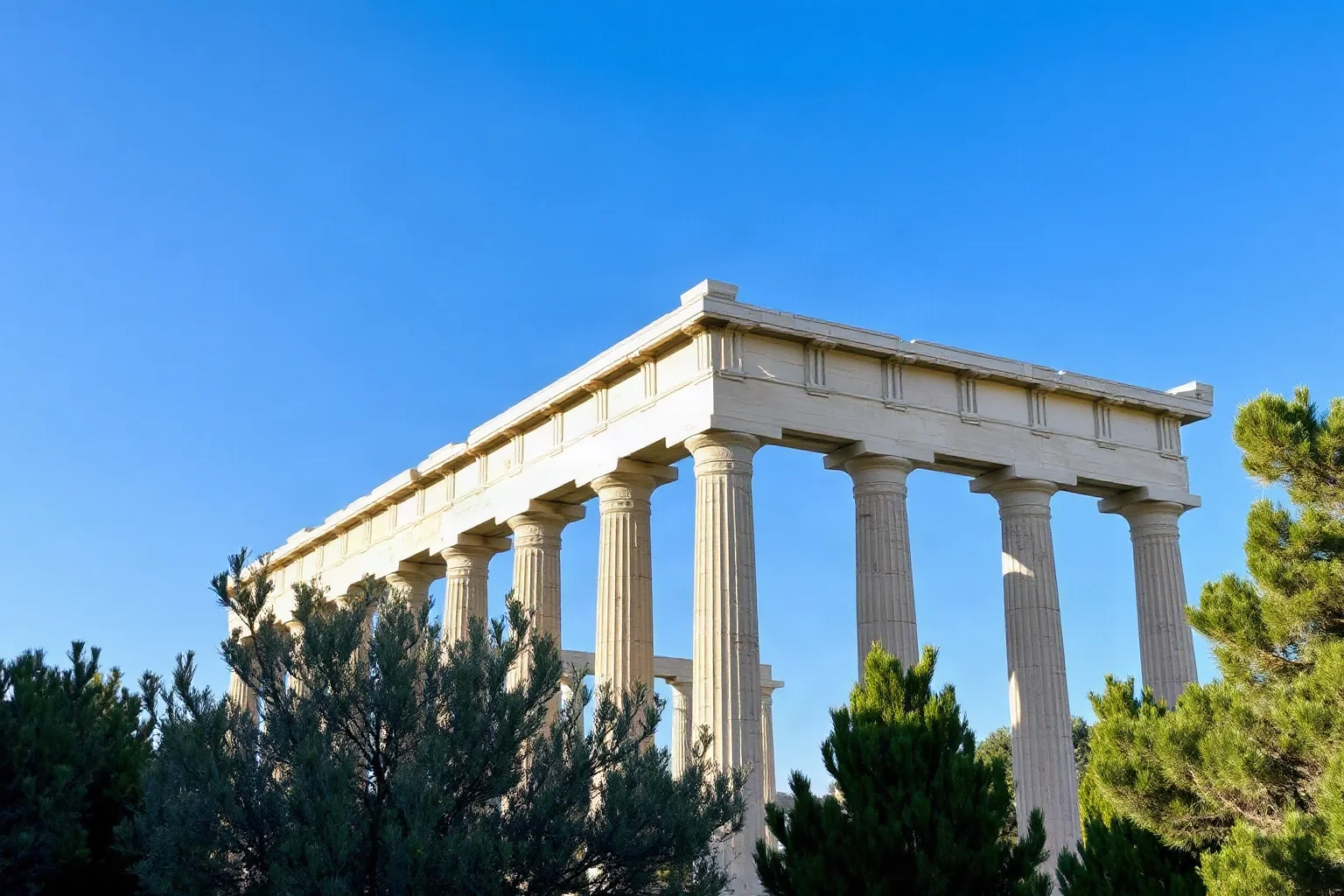
Less visited than Athens or Delphi, the Temple of Aphaia sits on the island of Aegina and dates to around 500 BCE. It’s dedicated to a local goddess, Aphaia, whose worship was largely specific to the island.
Many of its sculptures were removed in the 19th century and eventually ended up in a Munich museum, a common fate for Greek antiquities during that era of European collecting. What remains on-site is still an atmospheric, well-proportioned Doric temple worth the ferry ride.
22. Ancient Messene
One of the most underrated ancient buildings in Greece, Messene was a fortified city built in the 4th century BCE with walls stretching over 9 kilometers. It includes a stadium, theater, sanctuary, and one of the best-preserved ancient gymnasiums in the country.
Because it receives far fewer visitors than Athens or Olympia, Messene offers a quieter, more immersive look at how an entire ancient Greek city actually functioned.
23. Royal Tombs of Vergina (Ancient Aigai)
Vergina, ancient Aigai, was the first capital of the Kingdom of Macedon. In 1977, archaeologist Manolis Andronikos discovered a series of royal tombs here, including one widely believed to belong to Philip II, father of Alexander the Great.
The attribution of that specific tomb has been debated by scholars over the years, and not every historian agrees on the identification. Regardless, the gold artifacts and painted tomb facades recovered here rank among the richest archaeological finds in Greek history.
24. Sanctuary of the Great Gods, Samothrace
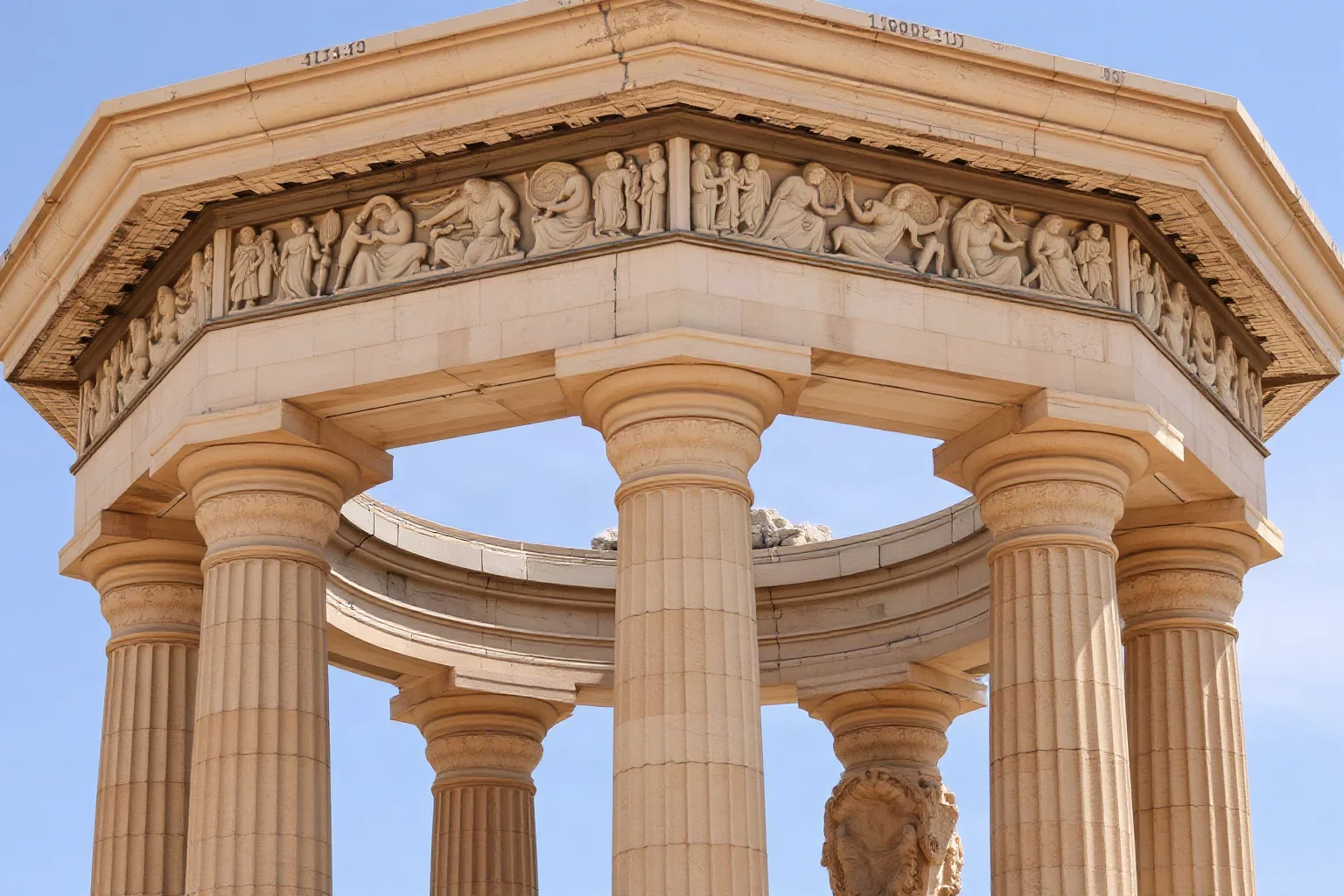
On the remote island of Samothrace, this sanctuary hosted secretive religious rites known as the Samothracian Mysteries. It’s also the original find-site of the famous Winged Victory of Samothrace statue, now displayed in the Louvre in Paris.
The sanctuary’s isolated setting kept it somewhat protected from later development, and its ruins still convey a genuine sense of mystery.
25. Sanctuary of Apollo, Delos
The tiny island of Delos was considered the mythical birthplace of Apollo and Artemis, making it one of the most sacred sites in the ancient Greek world. At its peak, it was also a major commercial hub in the Aegean.
Today the entire island is essentially an open archaeological site, with temple ruins, mosaic-floored houses, and the iconic Terrace of the Lions. No permanent modern population lives there, which helps preserve its ancient character remarkably well.
Visiting These Landmarks Today
Many of these historical landmarks in Greece are spread across the mainland and islands, so seeing them all in one trip takes real planning. Athens alone can keep you busy for days between the Acropolis, the Agora, and nearby museums.
If you’re short on time, prioritizing the Acropolis, Delphi, and Olympia gives a strong overview of temples, oracles, and athletic history in one relatively manageable route. Adding Epidaurus or Mycenae works well if you’re exploring the Peloponnese.
Museums matter just as much as the ruins themselves. The Acropolis Museum, the National Archaeological Museum in Athens, and the Archaeological Museum of Heraklion all hold artifacts that help make sense of what you’re looking at on-site.
Final Thoughts on Greece’s Ancient Landmarks
What makes these famous Greek landmarks so enduring isn’t just their age — it’s how much they still shape ideas about architecture, democracy, theater, and storytelling today. Every column, ruined or intact, represents choices real people made thousands of years ago about beauty, power, and belief.
A lot of popular claims about these sites have grown fuzzier with retelling, from oracle gases to labyrinth myths, so it’s worth treating dramatic legends with healthy curiosity rather than taking them at face value. The verified history is dramatic enough on its own.
Whether you’re planning an actual trip or just love reading about ancient civilizations, these landmarks are a reminder that history isn’t locked away in books. In Greece, it’s still standing in the sun, waiting to be walked through.
Frequently Asked Questions
What are some famous ancient Greek buildings?
Some of the most famous ancient Greek buildings include the Parthenon and Erechtheion on the Acropolis of Athens, the Temple of Apollo at Delphi, the Temple of Zeus at Olympia, the Theatre of Epidaurus, and the Palace of Knossos on Crete. Each reflects a different aspect of ancient Greek life, from religion and government to theater and athletics.
What is the most famous landmark in Greece?
The Parthenon, on the Acropolis of Athens, is generally considered the most famous landmark in Greece. Built in the 5th century BCE and dedicated to the goddess Athena, it remains the most recognized symbol of ancient Greek architecture worldwide.
What are the top landmarks people recommend seeing in Greece?
Commonly recommended landmarks include the Acropolis and Parthenon in Athens, the Sanctuary of Delphi, the ancient site of Olympia, the Theatre of Epidaurus, the Palace of Knossos in Crete, and the Bronze Age ruins of Mycenae. Many travelers also add Delos and Samothrace for a quieter, less crowded island experience.
Which ancient Greek buildings were used for performances?
Ancient Greek theaters were purpose-built for performances, with the Theatre of Dionysus in Athens and the Ancient Theatre of Epidaurus among the most famous examples. These open-air venues hosted tragedies, comedies, and musical competitions, and Epidaurus still hosts live performances today thanks to its remarkably well-preserved acoustics.
Are any of the Seven Wonders of the Ancient World located in Greece?
Yes. Of the traditional Seven Wonders of the Ancient World, two were in Greece: the Statue of Zeus at Olympia and the Colossus of Rhodes. Neither survives today, though the temple foundations at Olympia can still be visited.
Why are so many ancient Greek landmarks in ruins rather than fully intact?
Most ancient Greek structures have suffered damage from earthquakes, wars, fires, and centuries of stone being repurposed for later buildings. Some, like the Temple of Hephaestus in Athens, survived in better condition because they were reused as churches, which offered a degree of ongoing protection.

Alex Warren
Related Articles