
When people ask what the oldest library in the world is, the answer is more complicated than a single building. Long before printed books, humans were already collecting clay tablets, papyrus scrolls, and parchment into organized archives. The story of the earliest libraries takes us from the palaces of Mesopotamia to the temples of Egypt and the monasteries of Europe.
This post explores the oldest libraries, where they were found, who built them, and why they matter. Along the way, we bust a few myths about what counts as a library. By the end, you'll know which ancient collections still stand, which survive only in ruins, and which one is often called the first library in the world.
TL;DR: The world's oldest known library is Ashurbanipal's Library in Nineveh, but even older archives like Ebla and Ugarit show that collecting knowledge is a human instinct stretching back over 4,500 years.
What Counts as a Library? The Definition Problem
Before we crown any building as the oldest library in the world, we need to agree on terms. A library is more than a pile of texts; it involves collection, organization, and some intention to preserve knowledge. Archives, by contrast, often hold administrative records rather than literary works meant for reading.
Many ancient collections blur this line. A palace archive of tax records isn't quite a library, while a temple collection of hymns and myths is closer. Scholars debate whether the earliest libraries were royal storehouses, priestly repositories, or something in between.
Adding to the confusion, most ancient libraries have vanished. Their contents survived only because fire baked clay tablets hard or because dry desert air preserved papyrus. That means our "oldest" label often reflects what happened to survive, not necessarily what came first.
So when you ask where the first library was, the honest answer is: we don't know for certain. But we have strong candidates, and each tells us something about the urge to gather knowledge.
The Usual Answer: Ashurbanipal's Library in Nineveh
The name most often given as the oldest library in the world is the Library of Ashurbanipal, also called the Nineveh library. It was assembled in the 7th century BCE for Ashurbanipal, king of the Neo-Assyrian Empire. Located in Nineveh, near modern Mosul in Iraq, it was part of the royal palace complex.
Ashurbanipal was unusual among ancient kings for his personal interest in reading and scholarship. He boasted of his ability to read the difficult cuneiform script, a rare skill even for royalty. His agents scoured the empire for texts, copying and collecting everything from literature to law.
The library held tens of thousands of clay tablets, including the famous Epic of Gilgamesh. It also contained astronomical observations, medical recipes, omens, and dictionaries. When Nineveh was sacked in 612 BCE, fires destroyed the palace but baked the clay tablets, accidentally preserving them for archaeologists.
Because of its size, organization, and royal purpose, Ashurbanipal's library is often called the earliest systematically collected library. It is also one of the oldest discovered library in the world sites, though it is not the oldest collection of texts overall.
Wait, Isn't There an Older Library? The Ebla Archive
If you dig into the earliest library records, you'll quickly meet Ebla. In the 1970s, archaeologists excavating Tell Mardikh in Syria uncovered a royal archive dating to around 2350 BCE. That's more than 1,700 years before Ashurbanipal's library.
The Ebla tablets were stored on wooden shelves that have long since rotted away, but the order of the tablets was reconstructed from how they fell. They include administrative records, treaties, and scribal exercises. Some scholars argue this makes Ebla one of the oldest libraries, or at least the oldest known archive.
Was it a library in the modern sense? Not exactly. It served the palace's bureaucratic needs, but it also preserved literary and religious texts. This ambiguity is why historians are careful about calling Ebla the first library in the world.
Still, Ebla shows that organized collections existed long before Ashurbanipal. If your definition of a library includes archives, then the earliest library may be far older than Nineveh.
Ugarit and the Royal Archives of the Bronze Age
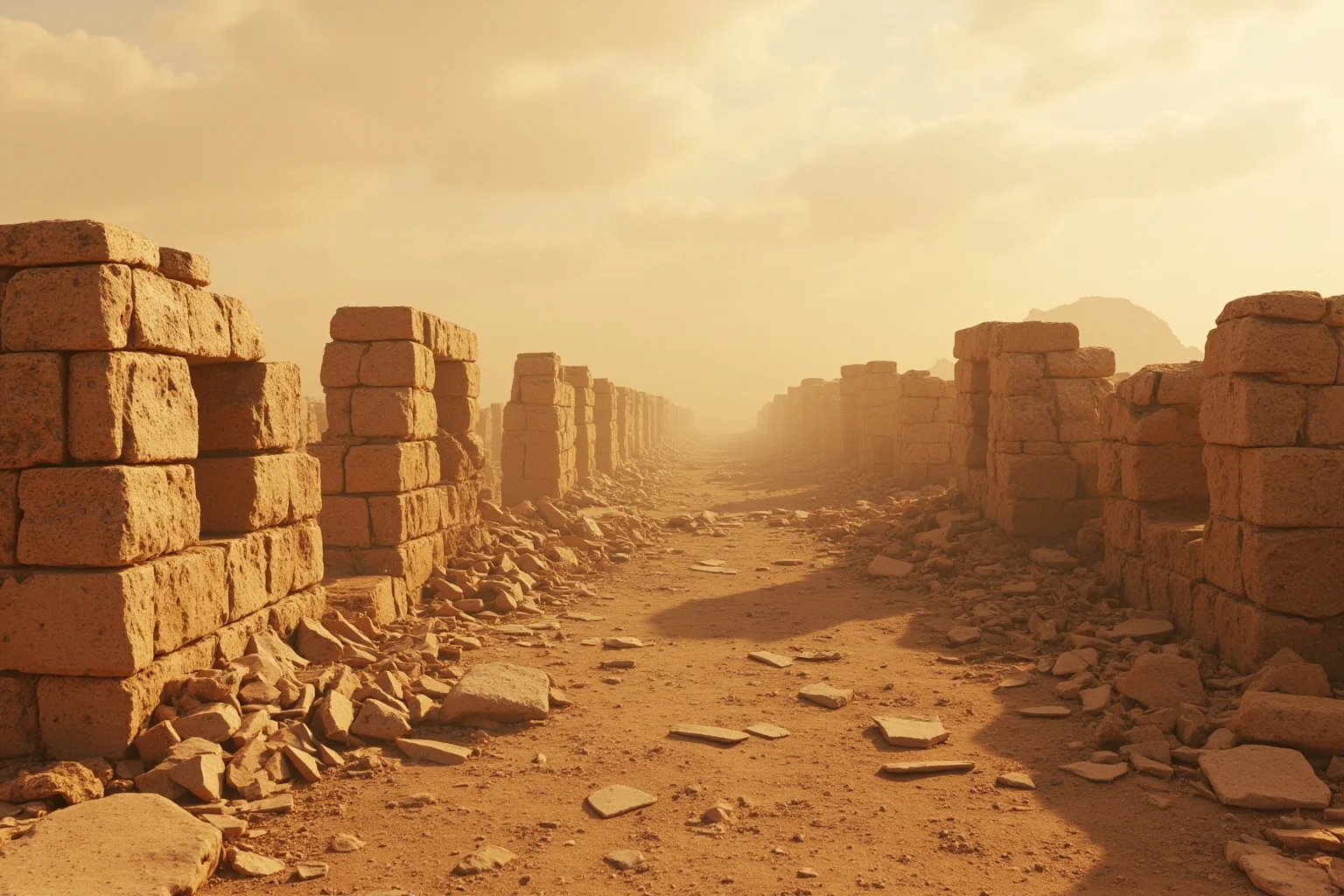
Another strong contender is the city of Ugarit, on the Syrian coast. Its archives, destroyed around 1180 BCE, contained texts in multiple languages including Ugaritic, Akkadian, and Hurrian. This multilingual collection suggests a cosmopolitan center of learning.
The Ugarit tablets include the Baal Cycle, a major mythological text, alongside diplomatic letters and economic records. They were stored in several locations, including a palace and a priest's house. This distribution hints at a culture that valued both administration and literature.
Like Ebla, Ugarit is sometimes described as an ancient library because of its organized, curated texts. It is not the oldest library in the world by most counts, but it is among the earliest. Its destruction preserved the tablets, much as fire preserved Nineveh's clay.
These Bronze Age archives remind us that library history is not a single line of descent. Multiple civilizations independently developed the habit of collecting texts.
Hattusa: The Hittite Capital's Tablet Collection
In central Turkey, the Hittite capital of Hattusa held a massive tablet collection dating to roughly 1400–1200 BCE. It included laws, treaties, and religious texts written in cuneiform. Archaeologists have recovered thousands of fragments.
Some of these tablets were cataloged with labels and shelf marks, suggesting an early form of library organization. That level of management is striking for the Bronze Age. It indicates that Hattusa's scribes thought carefully about how to store and retrieve information.
Is Hattusa the oldest library in the world? No, but it is one of the oldest libraries with evidence of cataloging. That makes it a key site for anyone tracing the history of information management.
Egypt's Temple Libraries and the House of Life
Ancient Egypt had its own library traditions, though papyrus rarely survives. Temples often included a "House of Life," a scriptorium and repository for sacred texts. These institutions trained scribes and stored religious knowledge.
The most famous Egyptian library was at Alexandria, founded in the 3rd century BCE. It was not the earliest library, but it became the most legendary. At its height, it aimed to collect a copy of every known book.
Earlier Egyptian collections existed at places like Edfu and Abydos, where inscriptions mention libraries. Because papyrus decays in damp conditions, we have far less physical evidence than in Mesopotamia. Still, Egypt clearly had organized archives long before Alexandria.
Calling Alexandria the first library in the world is a common myth. It was influential and ambitious, but it stood on centuries of earlier collecting traditions.
The Library of Alexandria: Myth vs. Reality
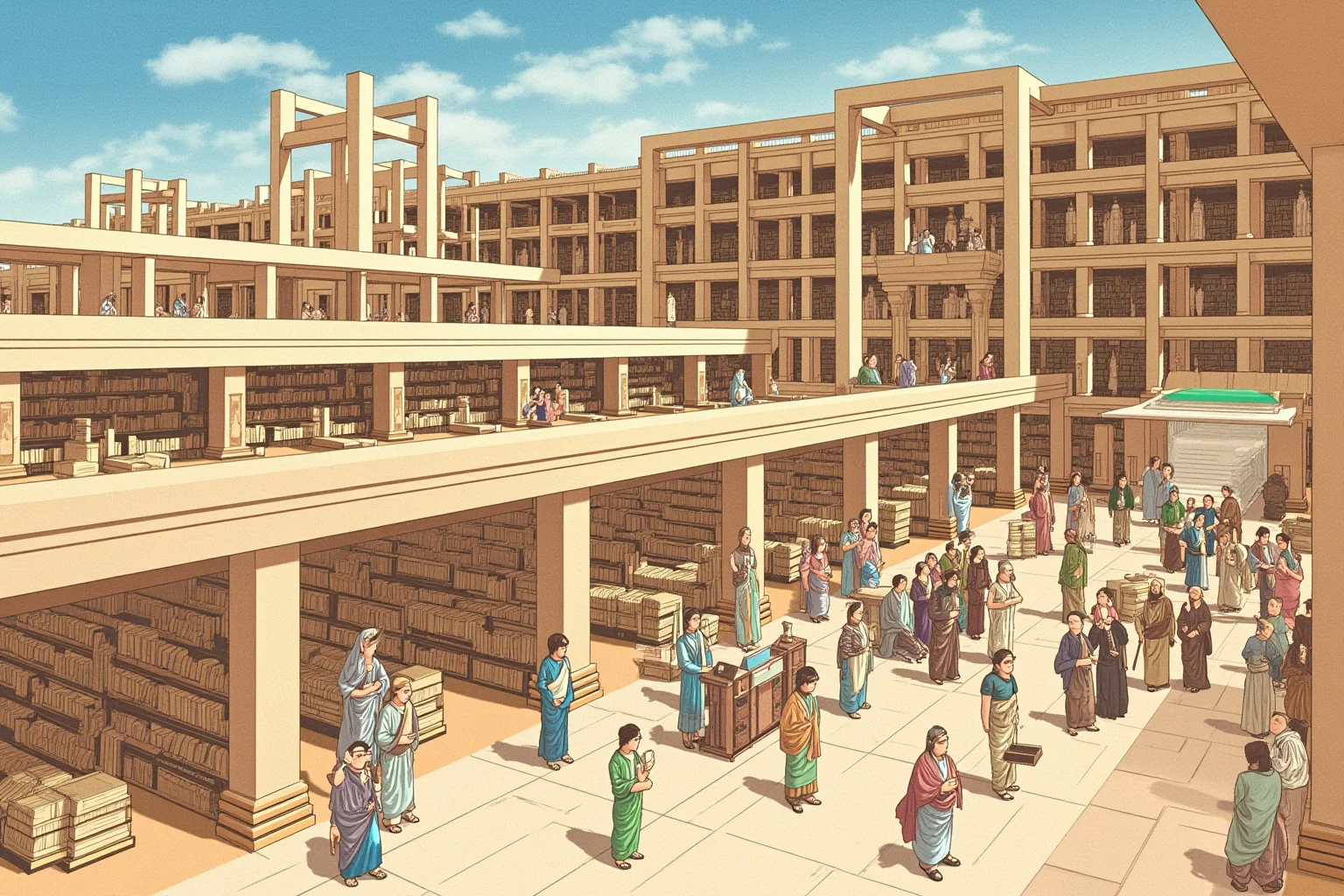
No discussion of oldest libraries can skip Alexandria. Founded under the early Ptolemies, it was part of a larger research institution called the Mouseion. Scholars from across the Mediterranean came to study, translate, and debate.
The library's collection may have numbered in the hundreds of thousands of scrolls. It acquired texts through purchase, copying, and sometimes seizure. Its librarians, including Zenodotus and Callimachus, created catalogs and edited texts.
Despite its fame, Alexandria was not the oldest library in the world. Its decline was also gradual, not a single dramatic fire. Multiple episodes of damage and neglect over centuries eroded the collection.
The myth of a singular destruction persists because it makes a good story. The reality is messier and more interesting: a great library that faded rather than burned in one night.
Did Any Ancient Libraries Survive? The Case of Al-Qarawiyyin
The oldest libraries in the world that still exist are medieval, not ancient. One often cited is the library of Al-Qarawiyyin in Fez, Morocco, founded in 859 CE. It is frequently called the oldest working library in the world.
Al-Qarawiyyin was established by Fatima al-Fihri, a woman who funded a mosque and learning center. Its library grew over centuries and still operates today. That makes it a modern day home oldest library candidate for continuous service.
Other long-lived libraries include the Vatican Library, founded in 1475, and the Bodleian at Oxford, opened in 1602. None of these are ancient, but they show how libraries evolve rather than disappear.
When people ask where is the oldest library in the world today, the answer depends on whether you mean oldest surviving institution or oldest original collection. Al-Qarawiyyin often wins the first category.
Who Built the First Library? Kings, Priests, and Scribes
If you ask who built the first library, the answer is likely anonymous scribes and rulers. The earliest collections were royal or temple projects, funded by elites who needed records and legitimation.
Ashurbanipal is the most famous individual builder, but he stood on a long tradition. Hittite kings, Egyptian pharaohs, and Sumerian rulers all maintained archives. Women like Fatima al-Fihri later played key roles in library patronage.
The driving forces were practical: taxes, laws, diplomacy, and religion. Literature and science often rode along on the back of administration. That is why so many ancient libraries began as archives.
So the first library was probably a collaborative effort, not a single genius invention. It emerged wherever complex societies needed to remember.
How Clay Tablets, Papyrus, and Parchment Shaped Libraries
Library history is also a story about materials. Clay tablets are heavy but nearly indestructible when fired, which is why Mesopotamian libraries survive. Papyrus is light and portable but rots in humidity, so Egyptian libraries vanished.
Parchment, made from animal skin, became dominant in the medieval period. It was durable and could be bound into codices, the ancestor of the modern book. This shift changed how libraries stored and organized knowledge.
Each material influenced what could be collected. Clay favored short texts and durable storage; papyrus favored scrolls and portability; parchment enabled long, bound volumes. The physical form of a library shaped its contents.
Understanding these materials helps explain why our picture of the earliest library is so uneven. Survival is not the same as importance.
What Did Ancient Libraries Actually Contain?
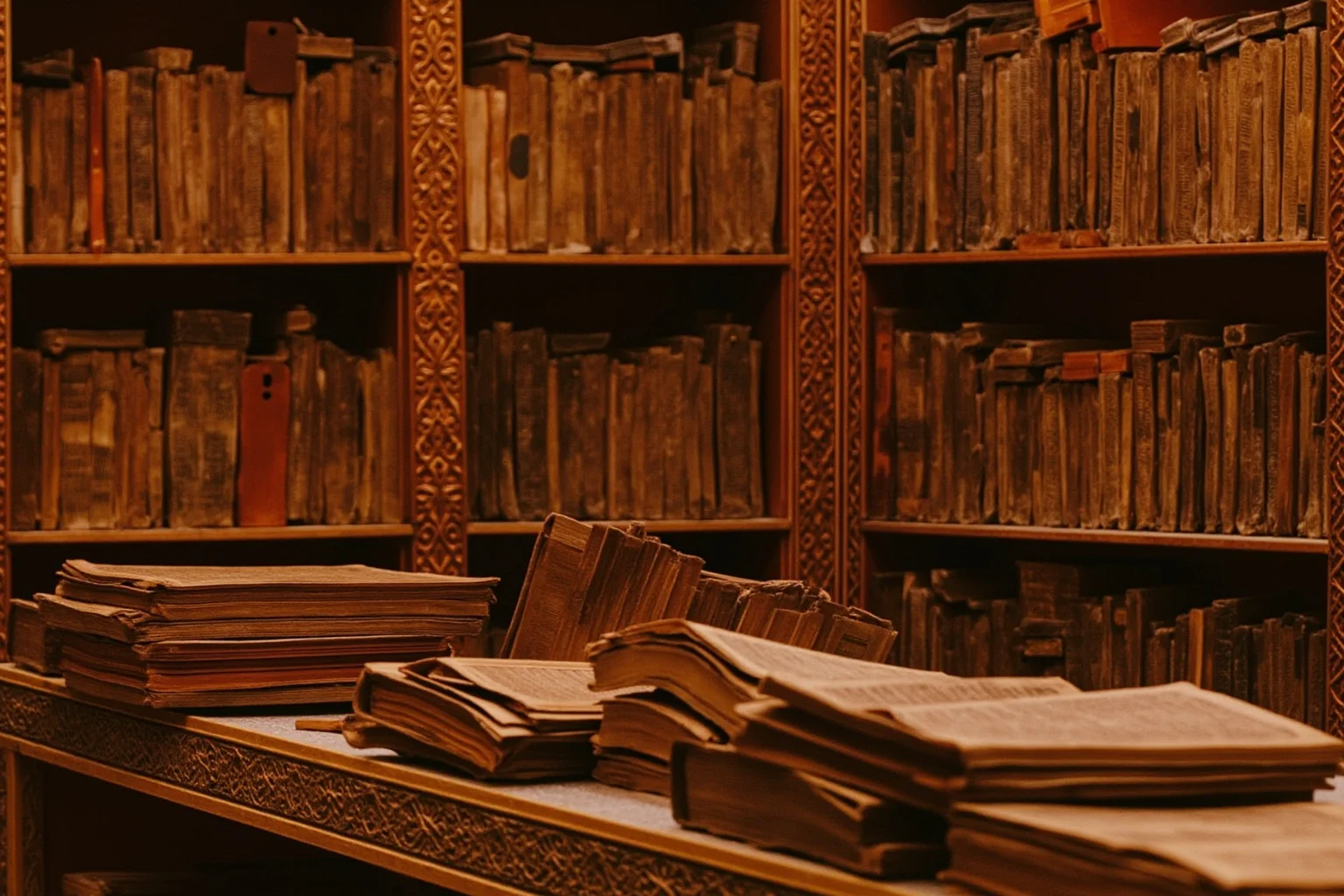
Ancient libraries were not just literature. They held tax records, legal codes, medical prescriptions, astronomical tables, and religious rituals. The Epic of Gilgamesh sat alongside laundry lists of temple offerings.
This mix surprises modern readers who imagine libraries as quiet reading rooms. In truth, ancient libraries were working collections for administrators, priests, and scholars. They were tools as much as treasures.
Some tablets include colophons, notes by scribes about who copied them and when. These are early forms of metadata, helping us trace how texts traveled. They show a sophisticated awareness of information management.
So when we celebrate the oldest library in the world, we are also celebrating early bureaucracy, science, and storytelling.
The Oldest Discovered Library in the World: A Moving Target
The phrase oldest discovered library in the world is tricky because new discoveries keep happening. Ebla was unknown until the 1970s. Future excavations could push the date back further.
Currently, Ebla and other Early Bronze Age archives are the oldest known. Ashurbanipal's library is the oldest that clearly functioned as a curated collection for reading and scholarship. Both claims are defensible depending on definitions.
For this reason, historians avoid absolute statements. They say "oldest known" or "earliest attested" to leave room for new evidence. That caution is a feature of good history, not a weakness.
If you want a single answer, Nineveh remains the most popular. If you want the most ancient, look to Ebla and Ugarit.
Nineveh's Legacy: Why Ashurbanipal's Library Still Matters
Ashurbanipal's library is more than an archaeological curiosity. Its tablets transformed our understanding of Mesopotamian literature, religion, and science. The Epic of Gilgamesh survived because of this collection.
When the tablets were deciphered in the 19th century, they revealed a sophisticated culture that predated Greece and Rome. George Smith's translation of the flood story caused a sensation. It showed that biblical narratives had ancient Near Eastern parallels.
The library also preserved early mathematical and astronomical knowledge. Its texts include observations that later influenced Greek and Islamic science. In that sense, Nineveh helped transmit knowledge across millennia.
Calling it the oldest library in the world may be imprecise, but its importance is hard to overstate. It is the library that gave us Gilgamesh.
Common Myths About the First Library
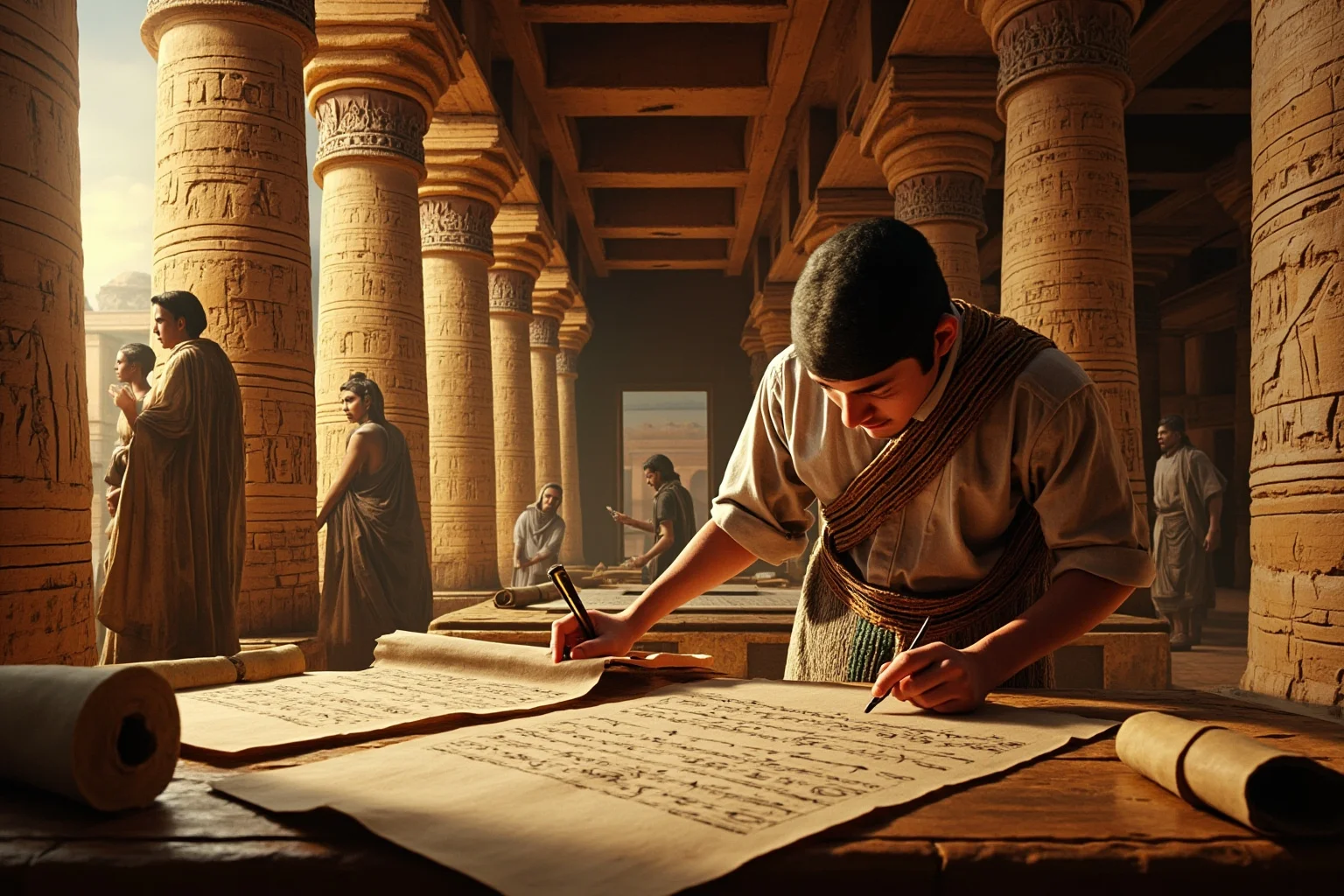
One persistent myth is that the Library of Alexandria was the first library. It was not; it was preceded by centuries of collecting in Mesopotamia and Egypt. Another myth is that all ancient libraries were destroyed in dramatic fires.
In reality, most libraries declined through neglect, funding cuts, and political upheaval. Fires happened, but they were rarely the sole cause. The romantic image of a single catastrophic loss oversimplifies history.
A third myth is that ancient libraries were open to the public. Most were restricted to elites, priests, or scholars. The idea of a public lending library is a much later development.
Busting these myths helps us appreciate the real achievements of ancient collectors. They built something remarkable with the tools they had.
How Libraries Evolved from Archives to Public Institutions
Over millennia, libraries shifted from royal storehouses to monastic scriptoria to university collections. Medieval monasteries preserved classical texts by copying them. Islamic libraries in Baghdad and Cordoba advanced science and translation.
The printing press in the 15th century transformed libraries by making books cheaper and more abundant. Public libraries emerged in the 19th century, funded by taxes and philanthropy. Andrew Carnegie alone funded thousands.
Today, libraries are digital as well as physical, but their core mission endures. They collect, organize, and preserve knowledge for future generations. That mission links us directly to the scribes of Nineveh.
Understanding this evolution shows that the oldest library in the world is not just a relic. It is the beginning of an ongoing human project.
What the Earliest Library Tells Us About Human Nature
The earliest library reveals a basic human drive: to remember and to share. Long before writing, people told stories and passed knowledge orally. Writing and libraries extended that reach across time.
Collecting texts also reflects a desire for power and prestige. Kings who gathered knowledge signaled sophistication and control. Libraries were instruments of state as much as culture.
Yet there is also curiosity in these collections. Astronomical observations, medical experiments, and myths suggest a hunger to understand the world. That hunger is still with us.
So the history of the oldest libraries is ultimately a history of ourselves. We are the species that builds libraries.
Conclusion: The Oldest Library Is a Story, Not a Single Building
When someone asks what is the oldest library in the world, the best answer is nuanced. Ashurbanipal's Library in Nineveh is the most famous and the oldest known systematically collected library. But Ebla, Ugarit, and Hattusa push the story back even further.
If you mean the oldest surviving working library, Al-Qarawiyyin in Fez often takes the title. If you mean the oldest discovered library in the world, the Early Bronze Age archives of Syria and Turkey are the current frontrunners. Each answer depends on definitions.
What matters is that libraries have been part of civilization for over four millennia. They preserved our stories, our laws, and our science through war and decay. The next time you visit a library, remember the scribes of Nineveh and the archivists of Ebla.
They started something that we are still building today. And that is the real history behind the world's oldest library.
Frequently Asked Questions
What is the oldest library in the world?
The oldest library in the world is usually identified as Ashurbanipal's Library in Nineveh, dating to the 7th century BCE. However, older archives like Ebla (c. 2350 BCE) and Ugarit (destroyed c. 1180 BCE) may qualify as libraries depending on how you define the term. Most historians say Nineveh is the oldest known systematically collected library, while Ebla is the oldest discovered archive.
Where was the first library?
The first library was likely in ancient Mesopotamia or Syria. The Ebla archive in modern Syria, dating to around 2350 BCE, is a strong candidate for the earliest organized collection of texts. Other early libraries existed in Ugarit, Hattusa, and eventually Nineveh in Iraq.
Who built the first library?
No single person built the first library; it emerged from royal and temple administrations in the ancient Near East. Ashurbanipal, king of Assyria, built the most famous early library at Nineveh. Earlier collections at Ebla were maintained by palace scribes whose names are largely unknown.
Where is the oldest library in the world today?
The oldest library still in operation is often cited as the library of Al-Qarawiyyin in Fez, Morocco, founded in 859 CE. The ruins of Ashurbanipal's Library are in Nineveh, near modern Mosul, Iraq. The Ebla archive site is at Tell Mardikh in Syria.
Was the Library of Alexandria the first library?
No, the Library of Alexandria was not the first library. It was founded in the 3rd century BCE, centuries after libraries in Mesopotamia, Egypt, and Anatolia. It was famous for its size and scholarship, but it built on older traditions of collecting texts.
What did the oldest libraries contain?
The oldest libraries contained clay tablets with literature, laws, administrative records, religious texts, and scientific observations. Ashurbanipal's Library included the Epic of Gilgamesh. Ebla's archive held treaties, economic records, and scribal exercises.

Alex Warren
Related Articles