

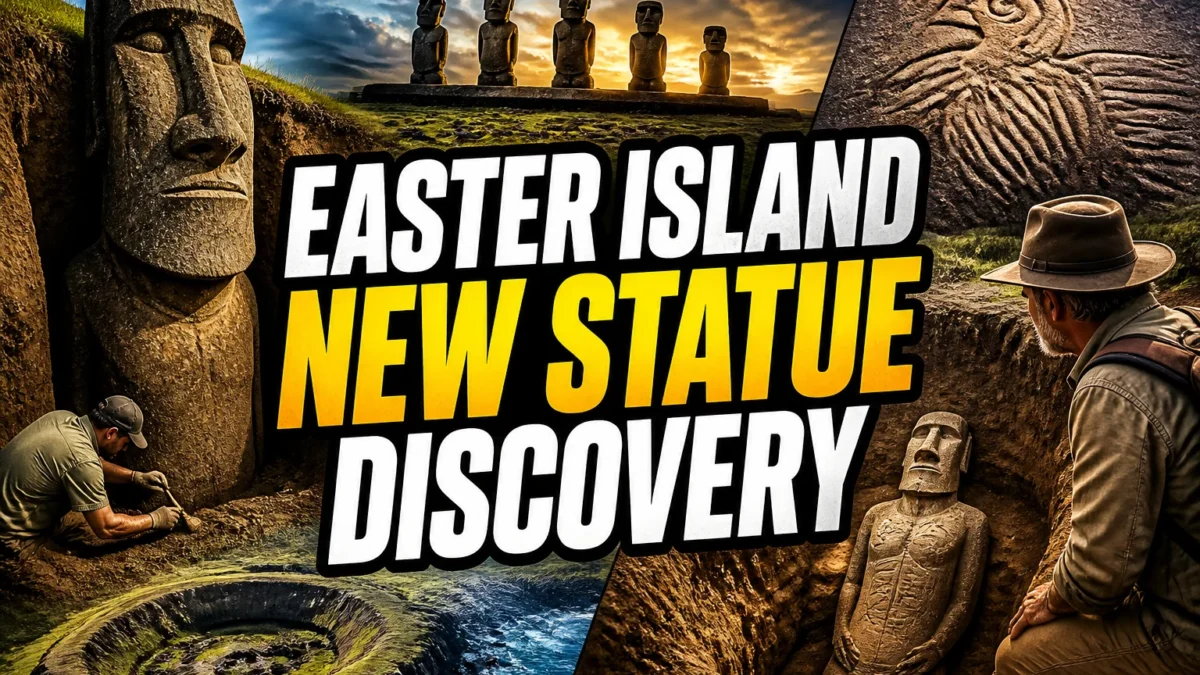
TL;DR: In 2023, a previously unknown moai was discovered in a dried-up crater lake on Easter Island, proving that new Easter Island discoveries are still rewriting what we know about the Rapa Nui people.
The New Easter Island Discovery, Explained
In February 2023, a team of volunteers and researchers from three Chilean universities announced something genuinely surprising. They had found a brand-new moai statue at the bottom of a dried-up crater lake inside the Rano Raraku volcano. The statue had likely been hiding in plain sight for centuries, submerged under reeds and water.
For decades, scholars assumed Rano Raraku had given up all its secrets. It is the quarry where the vast majority of moai were carved, and it has been studied since the early twentieth century. This new Easter Island discovery made it clear the volcano still had more to say.
A new statue appearing on Easter Island sounds like the plot of a mystery novel, but the real explanation is earthier. It was not a supernatural event, and no secret civilization left it there overnight. The lake had simply dried up enough for researchers to see what had been buried all along.
What Exactly Was Found at Rano Raraku?
The newly found moai is about 1.6 meters (5.2 feet) tall. That makes it small compared to the famous giants at Tongariki, but size is not the point of this 2023 easter island discovery. What matters is where it was sitting and how well it survived.
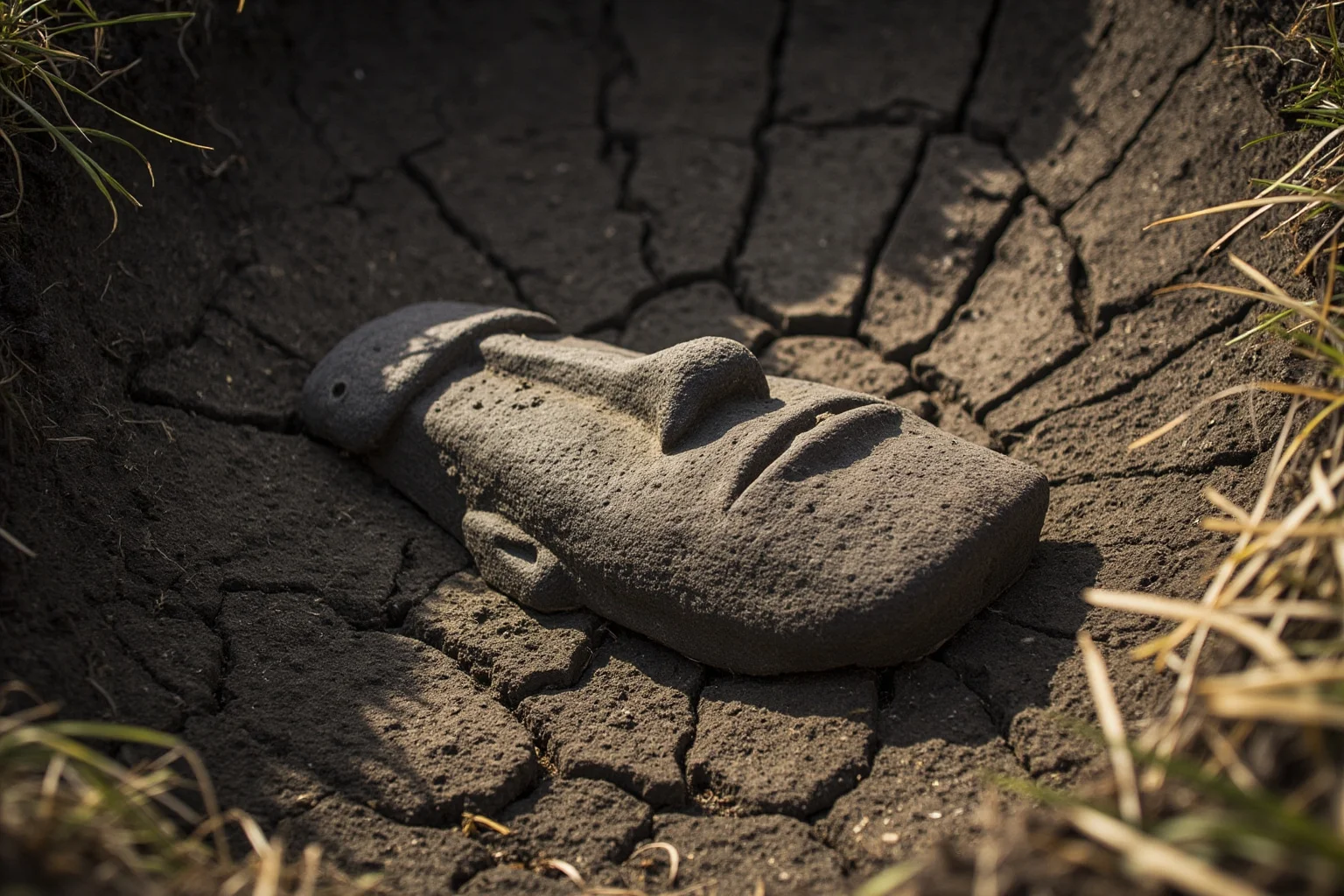
The statue was found lying on its back in the sediment of the crater lake. Because it had been underwater or in damp ground for centuries, much of its surface was better preserved than many statues exposed to wind and rain on the slopes above. Researchers described it as lying face-up, essentially waiting to be noticed.
The team used photogrammetry and drone mapping to record the site before touching anything. This is standard practice in modern archaeology, and it means the new moai statue found on Easter Island can be studied digitally even before it is fully excavated.
Why This New Moai Statue Found on Easter Island Matters
Every moai tells researchers something about the Rapa Nui people who carved it. This statue is no different, and its location is the most interesting part of the story. It suggests that moai were not only placed on ceremonial platforms along the coast, but also in and around the quarry itself.
The find also challenges a popular assumption. Many people imagine that archaeologists have already catalogued every major Easter Island statue. In reality, the island has hundreds of known statues, and new fragments and figures still turn up from time to time.
A 2023 new discovery at easter island does not overturn everything we know. It simply adds a new data point to a long-running puzzle about how statues were moved, displayed, and abandoned. That is how archaeology usually works.
The Real Story Behind the Easter Island Statue Discovery
Rano Raraku is a volcanic crater on the eastern side of the island. Its slopes are made of soft volcanic tuff, a rock that is relatively easy to carve with stone tools. That is why the Rapa Nui quarried most of their moai there between roughly the thirteenth and sixteenth centuries.
Hundreds of statues remain on the slopes, many of them unfinished or half-buried. Some are still attached to the bedrock, as if the carvers simply walked away mid-job. This makes Rano Raraku one of the most evocative archaeological sites on Earth.
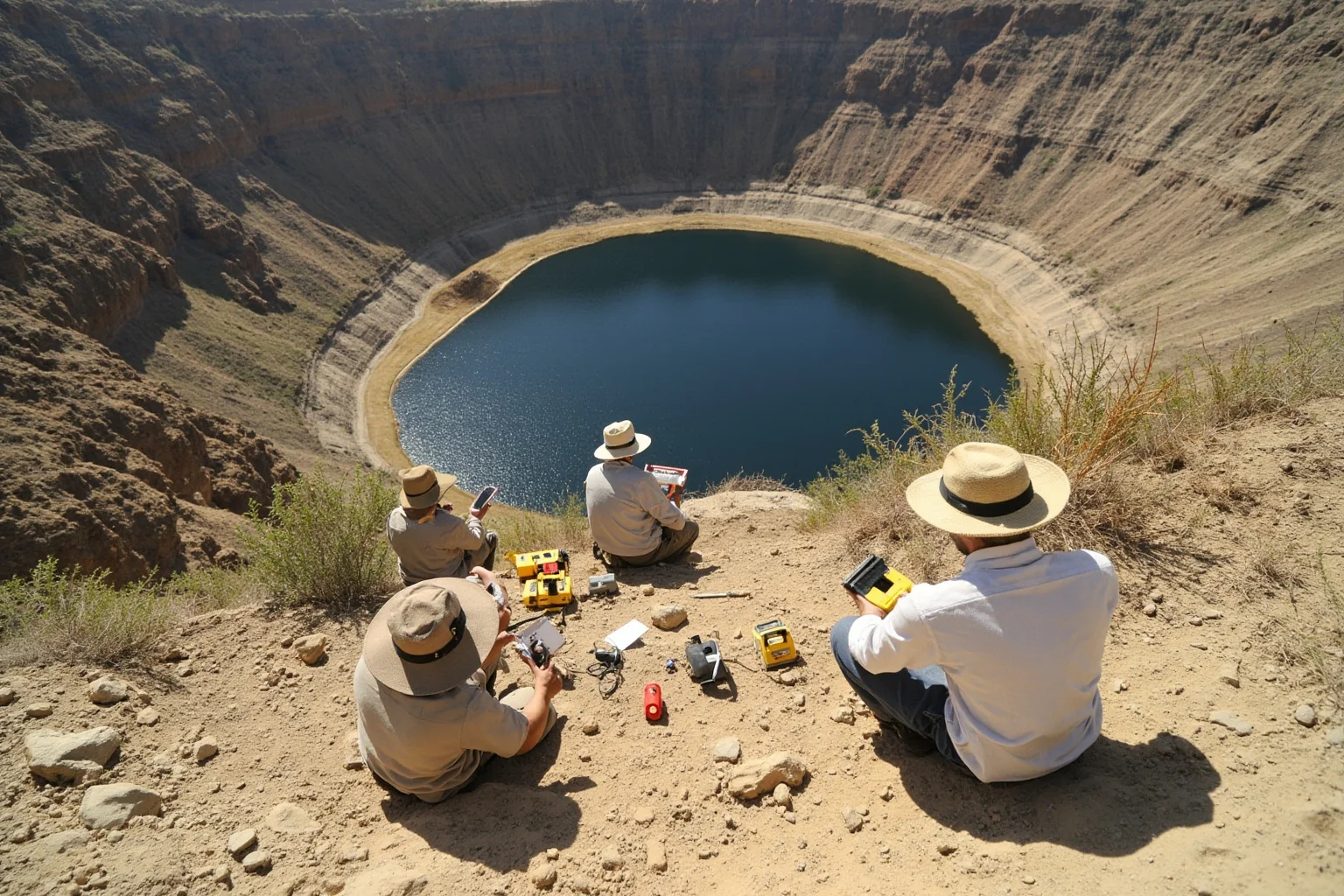
The crater also contains a freshwater lake. Over the past few decades, that lake has shrunk dramatically, partly due to changes in rainfall and partly due to the impact of introduced plants like totora reeds. The 2023 discovery happened precisely because the water level dropped low enough to expose the lakebed.
What the Easter Island Recent Discovery Does Not Mean
It is tempting to frame every new find as a total mystery that science cannot explain. That is not quite what happened here. The new statue is unusual, but it fits comfortably within what we already know about Rapa Nui carving traditions.
The phrase easter island discovery gets attached to a lot of dubious headlines online. Some claim that a statue literally appeared out of nowhere, or that it was placed by aliens, or that it proves a lost civilization. None of that is supported by evidence, much like the wilder ocean mysteries and conspiracy theories that circulate online.
What the public should take from the 2023 find is more modest and more interesting. It shows that the island still has undiscovered archaeology, and that careful fieldwork can still surprise experts. That is genuinely newsworthy on its own.
How Many Moai Are There on Easter Island?
The island is home to roughly 900 to 1,000 known moai, depending on how you count fragments and unfinished pieces. Nearly half of them are still at Rano Raraku, either on the slopes or embedded in the crater walls. The rest are spread across the island on ceremonial platforms called ahu.
The largest completed moai ever erected, known as Paro, stands about 10 meters (33 feet) tall on the Ahu Te Pito Kura. An unfinished statue called El Gigante at Rano Raraku is even bigger, at around 20 meters (65 feet) long, though it was never raised.
The 2023 find adds one more to that total, but it also hints that more statues may be waiting under sediment. That possibility alone has kept researchers interested in the island for well over a century.
The Enduring Moai Statues Mystery
One of the biggest questions in Rapa Nui studies is how the statues were moved. The moai were carved at Rano Raraku, but many ended up kilometers away on coastal platforms. Some weigh more than 80 tons, which makes the logistics genuinely impressive.
A well-known hypothesis suggests the statues were "walked" upright using ropes, tilting them side to side in a rocking motion. Experimental archaeologists have tested this idea with replica moai, and it is plausible. Other researchers favor sledges, rollers, or a combination of methods.
The moai statues mystery is not really about one solution. It is about how a relatively small island society organized labor, food, and engineering on a remarkable scale. The statues are the visible result of a complex social effort.
The 2023 Easter Island Discovery in Context
The new moai was not found alone. It was one of several archaeological projects running at Rano Raraku around the same time. Researchers were also mapping the crater's sediment, studying the reeds, and sampling the lakebed for environmental data.
This kind of slow, methodical work rarely makes headlines, but it is where real knowledge comes from. The 2023 announcement was notable partly because it was so visual. A nearly complete statue in a lakebed is a compelling image, and that image traveled fast online.
Social media turned the find into a small phenomenon. Posts claimed a "new statue appeared" on the island, which is not quite accurate but captures the public's fascination. The truth is that the statue had probably been there for centuries, hidden by water.
Why Rano Raraku Keeps Surprising Archaeologists
The crater is a natural trap for sediment, which means objects can be buried and preserved for a very long time. That makes it an unusually rich archaeological environment. It is not just a quarry; it is also a kind of time capsule.
Dating the lakebed layers helps researchers understand when the statue was carved and when it was abandoned. Sediment cores can reveal changes in vegetation, rainfall, and human activity over centuries. That context is often more valuable than the statue itself.
The 2023 find also raised new questions about how many moai might be buried in similar conditions elsewhere. If one statue was hiding under a lake, what else might be under the island's other wetlands and slopes?
What the Rapa Nui People Say About the Discovery
The Rapa Nui are the Polynesian people who live on the island, and they are not passive observers of its archaeology. The island is their home, and the moai are their ancestors' legacy. As such, excavations are carried out with community consultation and permissions.
Local Rapa Nui organizations, including the Ma'u Henua community, help manage the island's archaeological sites and national park. Any new discovery involves their input, and the 2023 find was no exception. Researchers work alongside community representatives.
This is an important point that international headlines sometimes miss. The new Easter Island discovery is not just a scientific event. It is also a cultural moment for the people whose ancestors carved the statue.
The Moai Statues for Sale Question
One of the strangest search trends around Easter Island involves people looking for easter island moai statues for sale. This is worth addressing honestly, because the answer matters. Genuine moai are protected cultural heritage, and they cannot be legally bought or sold.
What people usually find when they search for moai statues for sale are replicas. These range from small resin souvenirs to larger garden ornaments, and they are widely available online. None of them are real archaeological objects, and none of them come from the island's protected sites.
Easter Island's moai are part of a UNESCO World Heritage Site and are protected by Chilean law. Removing or trading in authentic moai or their fragments is illegal. If you see an advertisement claiming to sell a real moai, treat it as a red flag rather than a bargain.
What Makes a Moai a Moai?
Moai are stylized human figures with oversized heads and heavy brows. They typically feature long ears, a prominent nose, and a tight-lipped expression. Many were originally topped with reddish stone hats called pukao, quarried from a different part of the island.
The statues are not portraits of specific individuals, at least not in any way researchers can confirm. They likely represent ancestors or important lineage figures. Their placement on ahu facing inland suggests they watched over the community rather than the sea.
Over time, many moai were toppled during periods of conflict or environmental stress. Others were buried by erosion. The ones standing today, including those at Tongariki, were largely re-erected during twentieth-century restoration projects.
The Engineering Behind the Easter Island Statue Discovery
Moving a moai was only half the challenge. The other half was raising it onto an ahu platform and fitting it with a pukao. Some pukao weigh several tons, and they had to be lifted onto the statue's head. That is an engineering feat by any standard.
Ropes made from plant fibers, wooden levers, and ramps are the most likely tools used. Experiments have shown that a few dozen people can move a mid-sized moai with the right technique. Larger statues would have required much more coordination.
The 2023 statue is small, but it still had to be carved, moved, and placed. Its position near the quarry suggests it may never have been intended for a distant ahu. That makes it a useful clue about local production and display practices.
Common Myths About Easter Island
One stubborn myth is that the islanders cut down every tree and collapsed their own society. Recent research suggests the story is more complicated. Rats, climate shifts, and European contact all played roles, and the population did not simply self-destruct.
Another myth is that the statues were moved by aliens or lost technology. There is no evidence for either claim. Rapa Nui oral tradition and experimental archaeology both point to human ingenuity using simple tools and large teams.
A third myth is that all moai face the sea. In fact, most ahu moai face inland, toward the villages they were meant to protect. This detail alone has reshaped how scholars interpret the statues' purpose.
How the 2023 Discovery Was Announced
The find was announced by researchers affiliated with several Chilean universities and covered widely in science media. The team published images and 3D models of the statue, which helped the story spread quickly. The coverage emphasized that the statue was surprisingly well preserved.
The announcement was careful not to overstate the find. Researchers described it as an important addition to the island's known inventory, not a rewriting of history. That measured tone is typical of serious archaeology.
Unfortunately, headlines often exaggerate. Some outlets framed the discovery as a baffling mystery that science could not explain. The actual research is more interesting than the hype, even if it is less dramatic.
Does the 2023 Find Solve the Moai Mystery?
No, and it was never expected to. The moai statues mystery involves questions about labor, belief, ecology, and politics that no single find can answer. The new statue is a clue, not a solution.
What the find does is confirm that Rano Raraku is still productive ground for research. It also shows how environmental change can suddenly reveal what was hidden. As the crater lake continues to shrink, more discoveries may follow.
That possibility is exciting for archaeologists and for the Rapa Nui community alike. Each new find adds a chapter to a story that is thousands of years old and still not fully written.
Why the New Easter Island Discovery Still Baffles
Calling the discovery "baffling" is partly a media hook, but there is a real puzzle underneath. Why was this statue in the lakebed, and why was it left there? Was it unfinished, abandoned, or deliberately deposited? Those questions remain open.
Its orientation is another detail researchers want to understand better. The statue was lying face-up, which is unusual for statues found on the slopes. Sediment analysis may eventually explain how it came to rest that way.
For now, the honest answer is that the new moai raises more questions than it answers. That is normal in archaeology, and it is exactly why the island remains so compelling to researchers and travelers alike.
What Happens Next for the New Statue
The statue will be studied further before any decision is made about moving or displaying it. Researchers want to understand its context before disturbing the site. That means more mapping, more sediment sampling, and more consultation with the Rapa Nui community.
There is also the question of preservation. A statue that has been stable in wet sediment for centuries may not react well to sudden exposure. Conservators will need to assess how best to protect it over the long term.
Whatever happens next, the 2023 discovery has already done something valuable. It has reminded the world that Easter Island's story is not finished, and that the next new discovery at easter island may be just beneath our feet.
Visiting Easter Island Today
Easter Island, known locally as Rapa Nui, is one of the most remote inhabited places on Earth. It sits in the Pacific Ocean thousands of kilometers from the nearest major landmass. Getting there usually means a flight from Santiago, Chile.
The island is a national park, and visitors must follow strict rules to protect the sites. You cannot touch the moai, climb on them, or take anything from the archaeological areas. Guided tours are the best way to see the statues responsibly.
The best time to visit depends on what you want. The island's climate is mild year-round, and the crowds are rarely overwhelming. If you go, remember that you are visiting a living community, not just an open-air museum.
The Bottom Line on the Easter Island Discovery
The 2023 discovery of a new moai at Rano Raraku is a genuine archaeological event, but not a paranormal one. It was found because the crater lake dried up, revealing a statue that had been hidden in sediment for centuries. It adds to our understanding of how and where moai were made.
The find also shows why the island continues to fascinate. It is a place where geology, culture, and history overlap in ways that still puzzle researchers. Every new Easter Island discovery is a reminder of how much we still do not know.
The next time a headline claims that a new statue suddenly appeared on Easter Island, it is worth reading past the clickbait. The real story, involving patient researchers, changing lakes, and centuries-old craftsmanship, is far richer than the myth.
Frequently Asked Questions
Was a new statue really discovered on Easter Island in 2023?
Yes. In February 2023, researchers from several Chilean universities announced the discovery of a previously unknown moai at the bottom of the dried-up crater lake inside the Rano Raraku volcano. The roughly 1.6-meter statue had likely been hidden under water and reeds for centuries, so it is a genuine archaeological find rather than a statue that appeared from nowhere.
Where exactly was the new moai statue found on Easter Island?
The statue was found in the lakebed of the crater lake inside Rano Raraku, the volcanic quarry where most moai were carved. It was lying on its back in the sediment. Because the lake has shrunk significantly in recent decades, the low water level exposed an area of the lakebed that researchers had not been able to examine closely before.
Can I buy real Easter Island moai statues for sale anywhere?
No. Authentic moai are protected cultural heritage and cannot legally be bought, sold, or removed from the island. Easter Island's statues are part of a UNESCO World Heritage Site and are protected under Chilean law. What you will find when searching for easter island moai statues for sale are replicas, such as small souvenirs or garden ornaments, none of which come from archaeological sites.
How many moai statues are there on Easter Island?
There are roughly 900 to 1,000 known moai on the island, depending on whether you count fragments and unfinished pieces. Nearly half of them are still at Rano Raraku, either on the slopes or embedded in the crater walls. The rest are distributed across the island on ceremonial platforms called ahu.
Did the 2023 discovery solve the mystery of how moai were moved?
No. The discovery adds a useful data point but does not resolve the long-standing debate about how the statues were transported. Researchers still discuss several plausible methods, including the idea that moai were 'walked' upright with ropes, as well as sledges, rollers, and combinations of techniques. What the find does show is that Rano Raraku still holds undiscovered archaeology.
Why is the new statue considered baffling to researchers?
The mystery is not about a statue appearing out of thin air. The real puzzle is why this particular moai was in the lakebed and why it was left there, possibly unfinished or deliberately deposited. Its face-up orientation is also unusual compared to statues found on the slopes, and sediment analysis may eventually help explain how it came to rest that way.
Can you visit the site where the new moai was found?
Rano Raraku is part of the island's national park, and visitors must follow strict rules to protect the archaeological sites. You cannot touch or climb on the moai, and access is generally through guided tours. Any additional access to the specific excavation area depends on decisions made by researchers and the local Rapa Nui community.

Alex Warren
Related Articles





