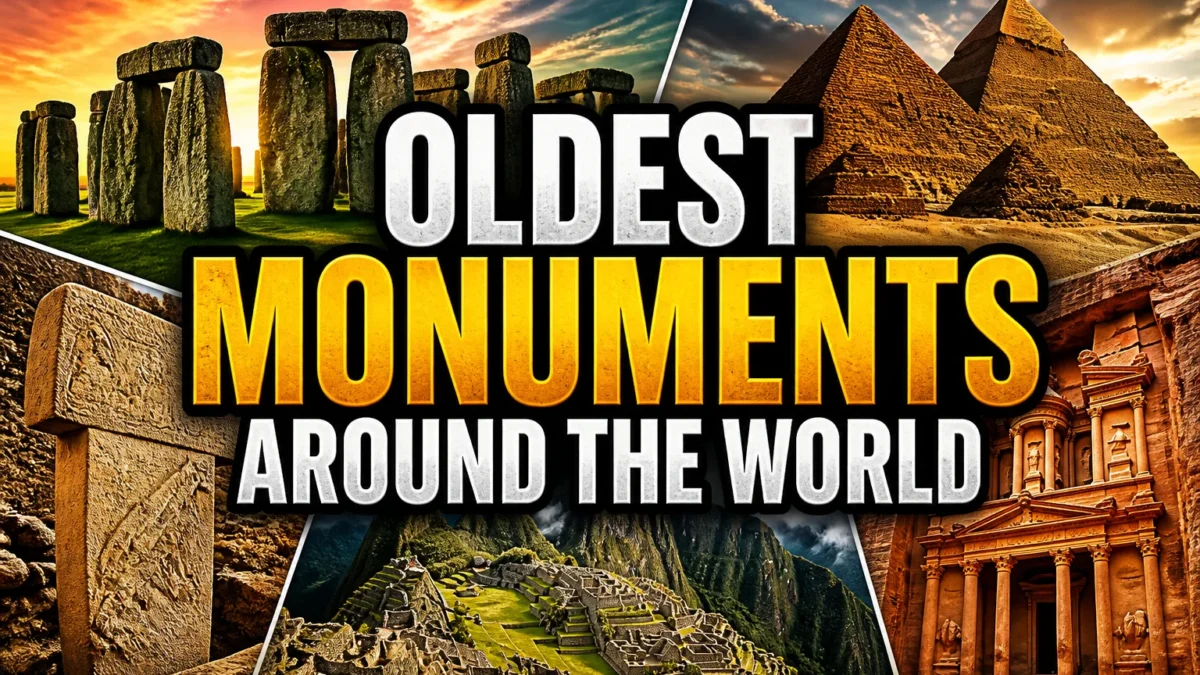
Humanity has been building monuments for far longer than most people realize. Long before the pyramids of Egypt or the medieval monuments of Europe, our ancestors were raising stones into shapes that still stand today.
These structures aren't just old piles of rock. They're windows into how early humans understood the cosmos, their communities, and their place in the universe. From temples built before agriculture to burial mounds older than writing itself, the oldest monuments in the world reveal a story of ingenuity spanning thousands of years.
TL;DR: The oldest monuments in the world date back over 11,000 years, revealing that monumental architecture predates farming, writing, and even the wheel.
What Counts as the Oldest Monument?
Before diving into specific examples of monuments, it helps to clarify what we mean by "oldest." Archaeologists typically define a monument as a structure built for ceremonial, ritual, or commemorative purposes rather than purely practical shelter.
Dating these ancient monuments is rarely straightforward. Researchers rely on methods like radiocarbon dating, stratigraphy, and luminescence dating, each with margins of error that can span centuries. New discoveries regularly push back the timeline, which is why any list of the oldest monuments in the world comes with an implicit "that we know of."
When studying monuments ancient peoples constructed, we're often limited to archaeological evidence alone. Later medieval monuments built by literate civilizations frequently came with written records, but the structures on this list predate such documentation entirely.
Some of the historic landmarks in the world listed below are well-known world heritage monuments, while others remain relatively obscure. All of them, however, predate recorded history in their respective regions and offer glimpses into cultures that left no written records behind.
What follows is a chronological tour of the oldest monument candidates on Earth, ordered from the most ancient to the merely ancient. Each represents a milestone in humanity's long tradition of building things that last.
1. Göbekli Tepe (c. 9600 BCE)
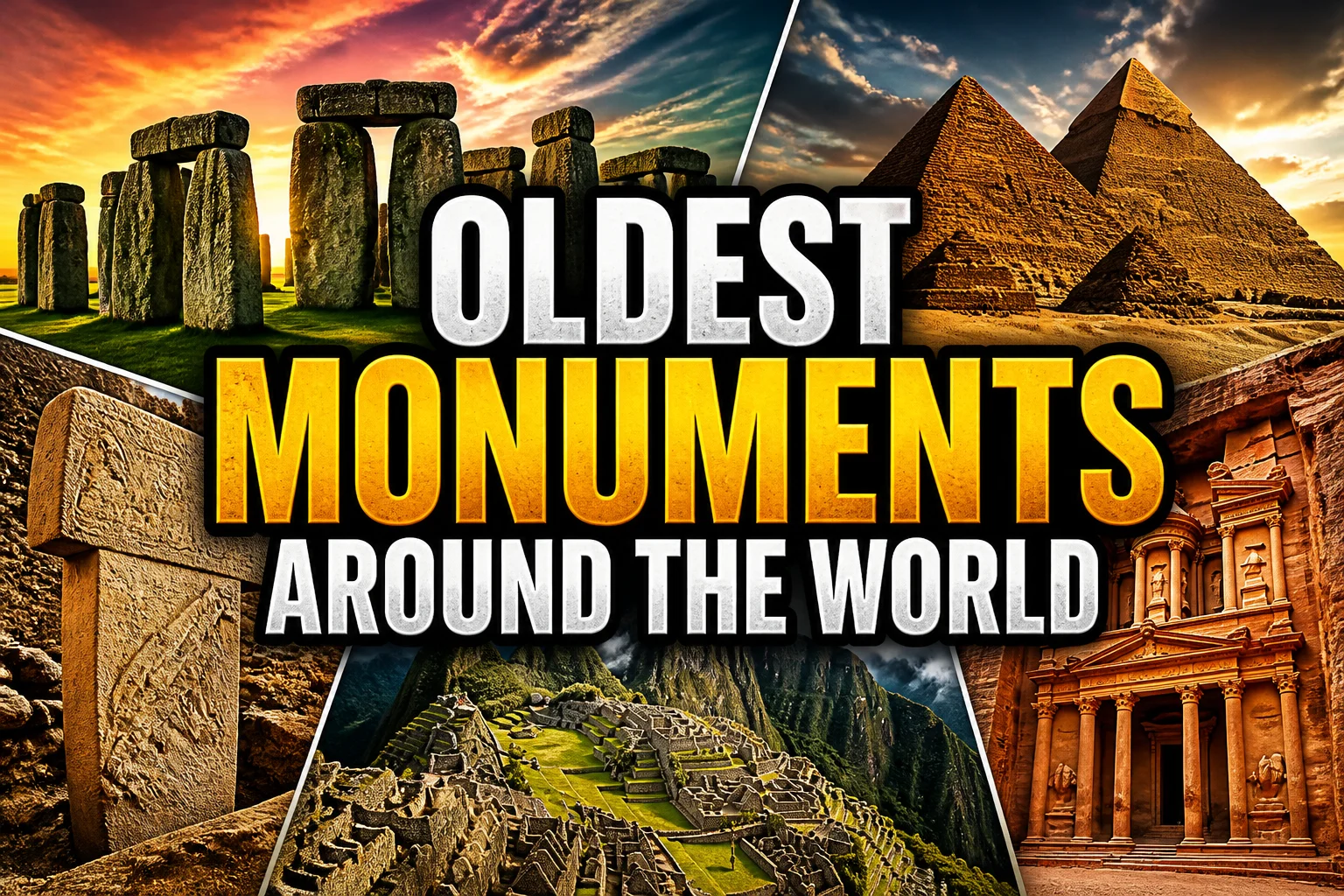
Located in southeastern Turkey, Göbekli Tepe is widely considered the oldest monument in the world. Dating to approximately 9600 BCE, it predates agriculture, pottery, and permanent settlements by millennia.
The site consists of massive T-shaped limestone pillars arranged in circular formations. Some of these pillars stand over 5 meters tall and are decorated with reliefs of foxes, snakes, boars, and other animals.
What makes Göbekli Tepe so extraordinary is that it was built by hunter-gatherers, not farmers. This challenges the long-held assumption that organized religion and monumental architecture required an agricultural surplus to develop.
The site was deliberately buried around 8000 BCE, possibly for ritual reasons. Its rediscovery in the 1990s by German archaeologist Klaus Schmidt reshaped how scholars think about the origins of monuments history and the relationship between religion and civilization.
Göbekli Tepe is now a UNESCO World Heritage Site and is often called the oldest landmark in the world. Ongoing excavations continue to reveal new structures, and some researchers believe only a fraction of the site has been uncovered.
2. Tower of Jericho (c. 8000 BCE)
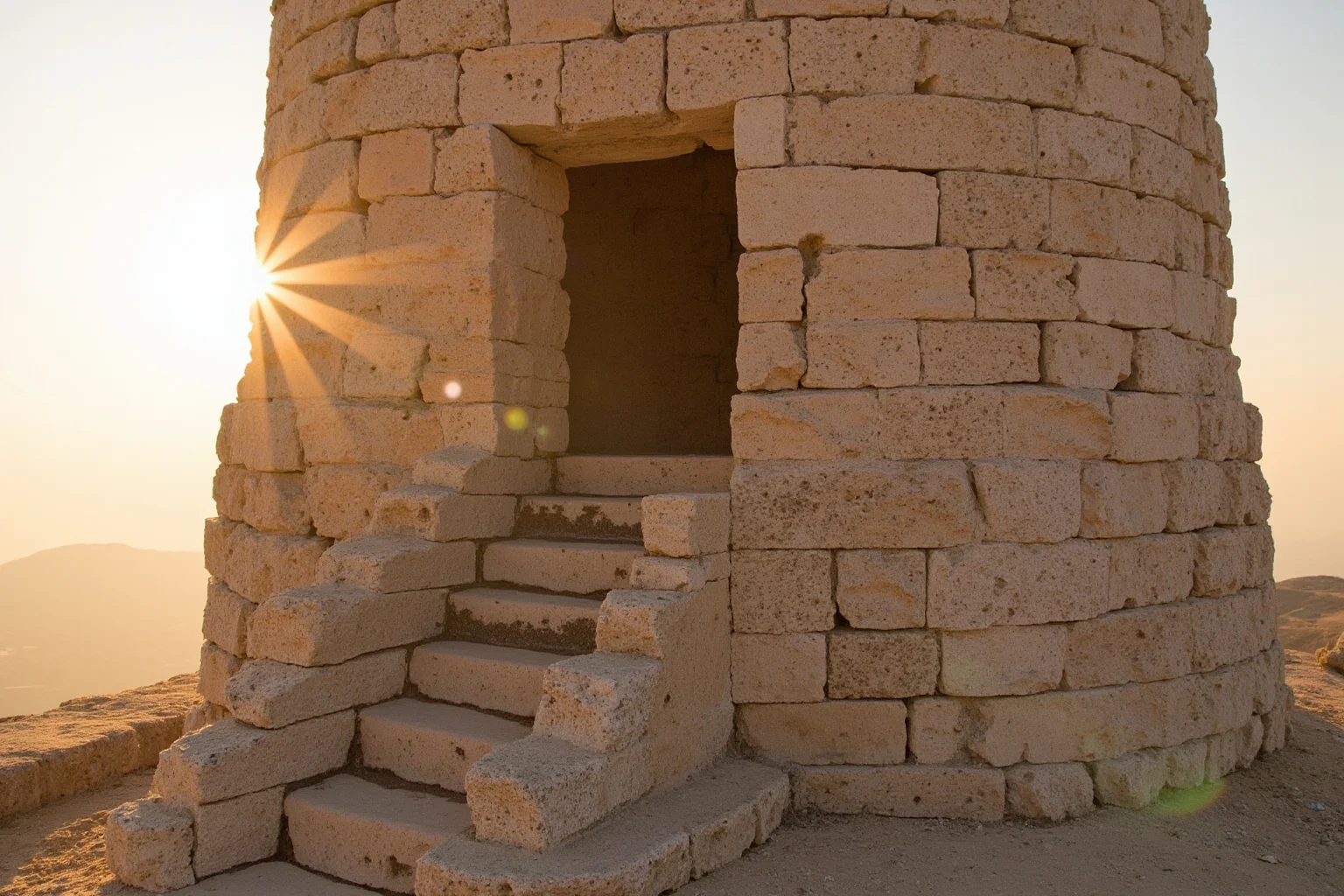
The Tower of Jericho is an ancient stone structure built around 8000 BCE during the Pre-Pottery Neolithic period. It stands in the archaeological site of Tell es-Sultan, near the modern city of Jericho in the Palestinian territories.
The tower is roughly 8.5 meters tall and was connected to a massive wall. It features an internal staircase with 22 steps, making it one of the earliest known examples of monumental stone architecture.
Archaeologists have debated its purpose for decades. Some suggest it served a defensive function, while others argue it had ceremonial or symbolic significance related to the community's cosmology.
Recent research has proposed that the tower and wall were aligned with the summer solstice sunset. This would make the structure one of the earliest known astronomical monuments, predating Stonehenge by thousands of years.
Whatever its original purpose, the Tower of Jericho demonstrates that early sedentary communities were capable of coordinated large-scale construction. It remains one of the most significant old monuments in the Middle East.
3. Barnenez Cairn (c. 4800 BCE)
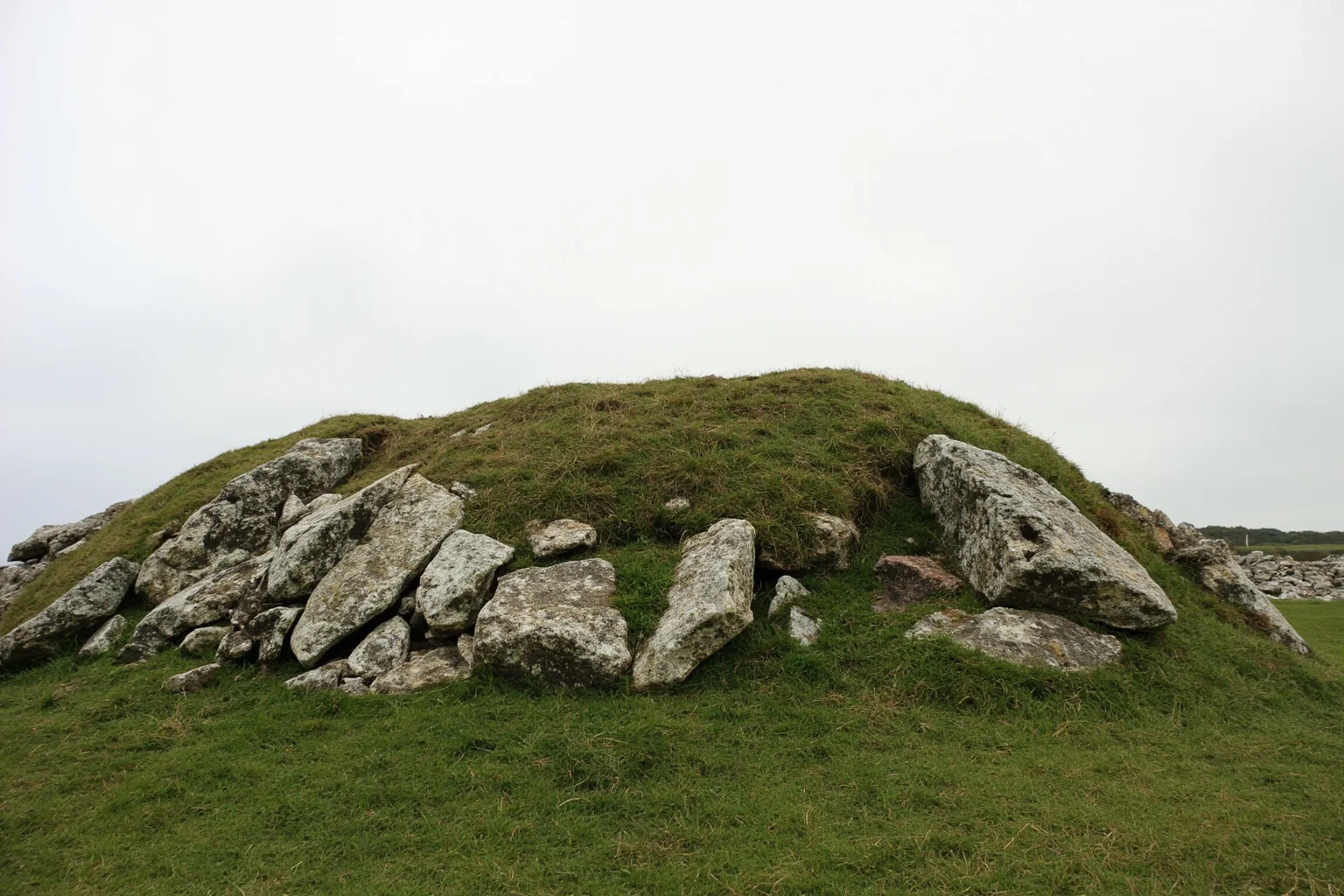
The Cairn of Barnenez, located in northern Brittany, France, is one of the oldest monuments in Europe. Built around 4800 BCE, it is a massive Neolithic burial mound measuring 72 meters long and up to 8 meters high.
The structure contains 11 passage graves arranged in two main sections. Archaeologists excavating the site in the 1950s recovered pottery, stone tools, and polished axe heads, providing valuable insight into the Neolithic cultures of Atlantic France.
Barnenez is sometimes called the "Prehistoric Parthenon" due to its scale and sophistication. Its construction required an estimated 13,000 to 14,000 cubic meters of stone, a remarkable feat for a society without metal tools.
The cairn's chambers feature carved symbols, including depictions of axes and serpentine patterns. These engravings may have held symbolic or religious meaning for the community that built them.
Today, Barnenez is recognized as one of the most important megalithic monuments in the world. It attracts visitors interested in ancient monuments and stands as a testament to the engineering capabilities of Neolithic peoples.
4. Tumulus of Bougon (c. 4700 BCE)
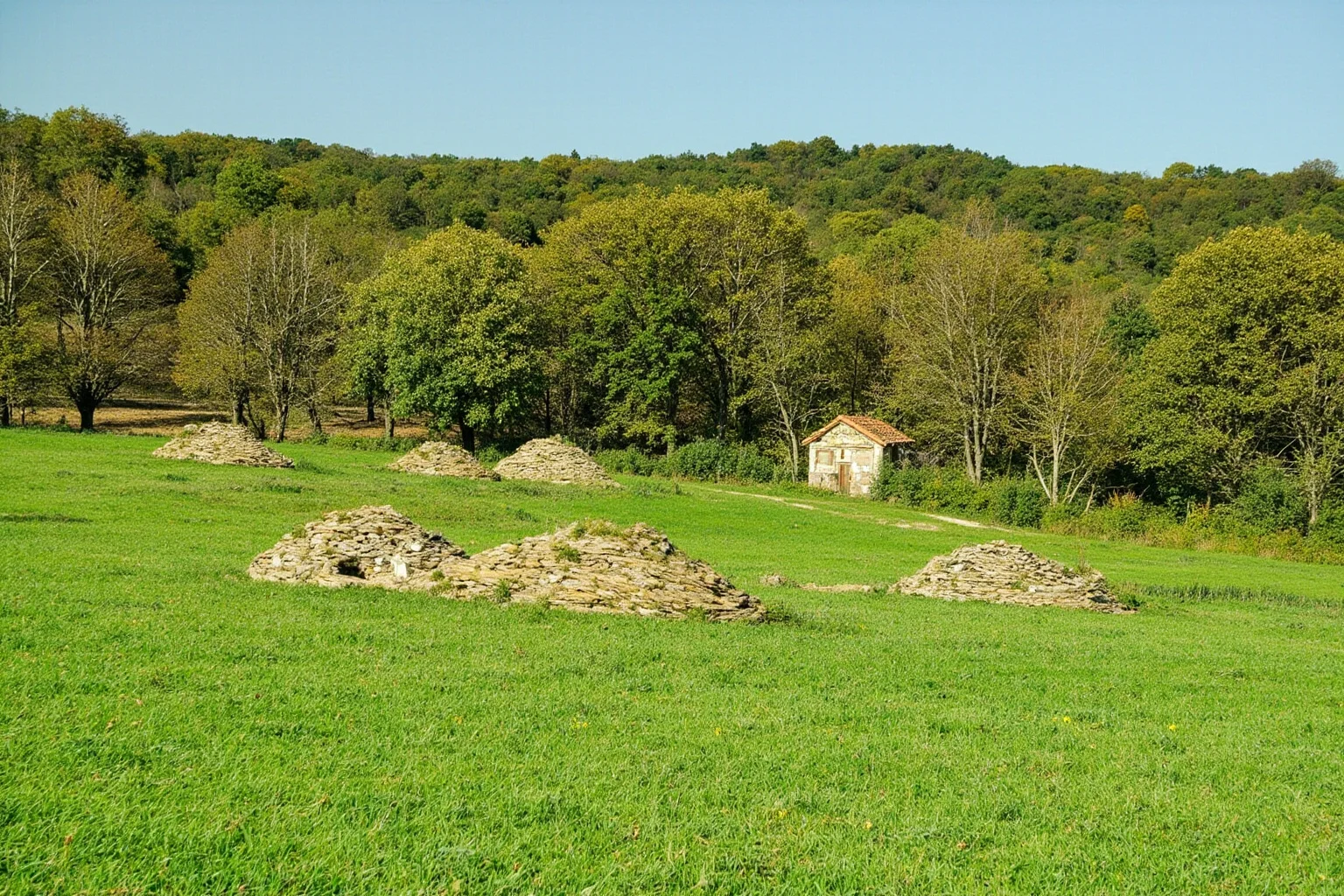
The Tumulus of Bougon is a complex of Neolithic burial mounds located in western France. Dating to approximately 4700 BCE, it consists of five separate tumuli built over several centuries.
The site was first excavated in 1840 and has yielded human remains, pottery, and grave goods. The oldest of the mounds, known as Tumulus A, features a central chamber accessed by a narrow passageway.
What makes Bougon particularly interesting is the diversity of its construction techniques. Some chambers use dry-stone walling, while others employ massive limestone slabs, reflecting evolving architectural practices over generations.
The site also produced evidence of secondary burial practices, where bones were rearranged or removed after initial interment. This suggests complex ritual behaviors surrounding death and the afterlife.
The Tumulus of Bougon now houses an on-site museum displaying artifacts recovered from the mounds. It serves as a key reference point for understanding Neolithic funerary monuments history in western Europe.
5. Carnac Stones (c. 4500 BCE)
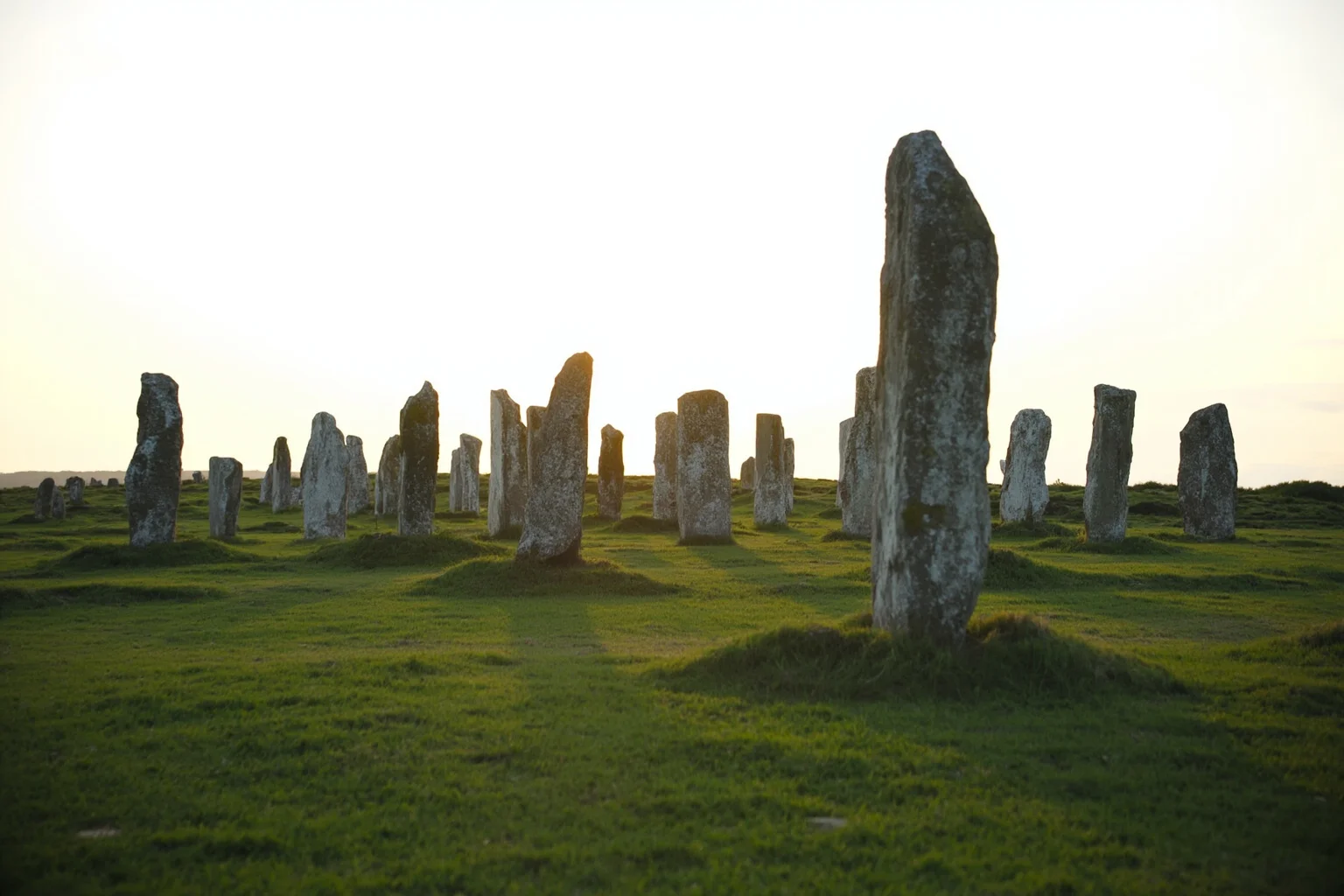
The Carnac Stones in Brittany, France, represent one of the most extensive megalithic alignments in the world. Erected around 4500 BCE, the site features over 3,000 standing stones spread across roughly 40 hectares.
The stones are arranged in parallel rows, some stretching for several kilometers. They vary in height from less than a meter to over six meters, and their precise alignment has puzzled researchers for centuries.
Local legend claims the stones were Roman soldiers turned to stone by a local saint. In reality, they were erected by Neolithic communities whose purposes remain debated among archaeologists.
Some scholars suggest the alignments served astronomical or calendrical functions. Others propose they marked territorial boundaries or processional routes used in communal rituals.
The Carnac Stones are among the most visited historic monuments in France. While not yet a UNESCO World Heritage Site, they are protected as a national monument and continue to be studied by researchers.
6. Knap of Howar (c. 3700 BCE)
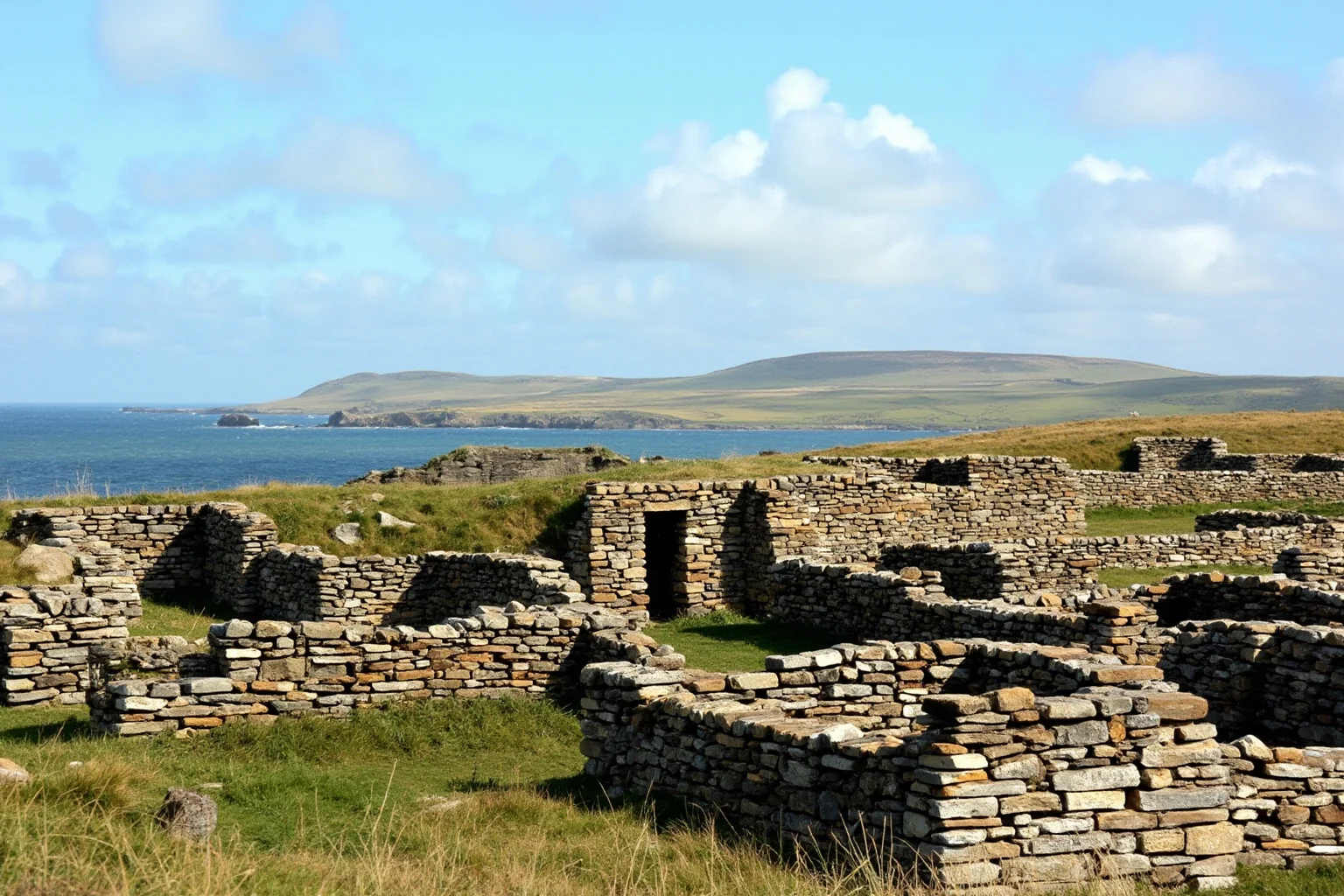
The Knap of Howar on the island of Papa Westray in Orkney, Scotland, is one of the oldest preserved domestic structures in northern Europe. Built around 3700 BCE, it consists of two adjacent stone-walled houses connected by a passageway.
The walls were constructed using locally available stone and still stand to a considerable height. The larger structure contains hearths, storage areas, and partitions, suggesting a well-organized domestic space.
Archaeological excavations in the 1930s and 1970s revealed pottery, stone tools, and animal bones. These findings indicate that the inhabitants farmed cattle and sheep, fished, and gathered shellfish.
While primarily a domestic site rather than a ceremonial monument, Knap of Howar demonstrates the sophisticated building practices of Neolithic communities in northern Scotland. It provides context for understanding the broader landscape of old monuments in the region.
The site is managed by Historic Environment Scotland and is accessible to visitors year-round. It offers a rare glimpse into everyday life during a period when most surviving structures are ritual rather than residential.
7. Ġgantija Temples (c. 3600 BCE)
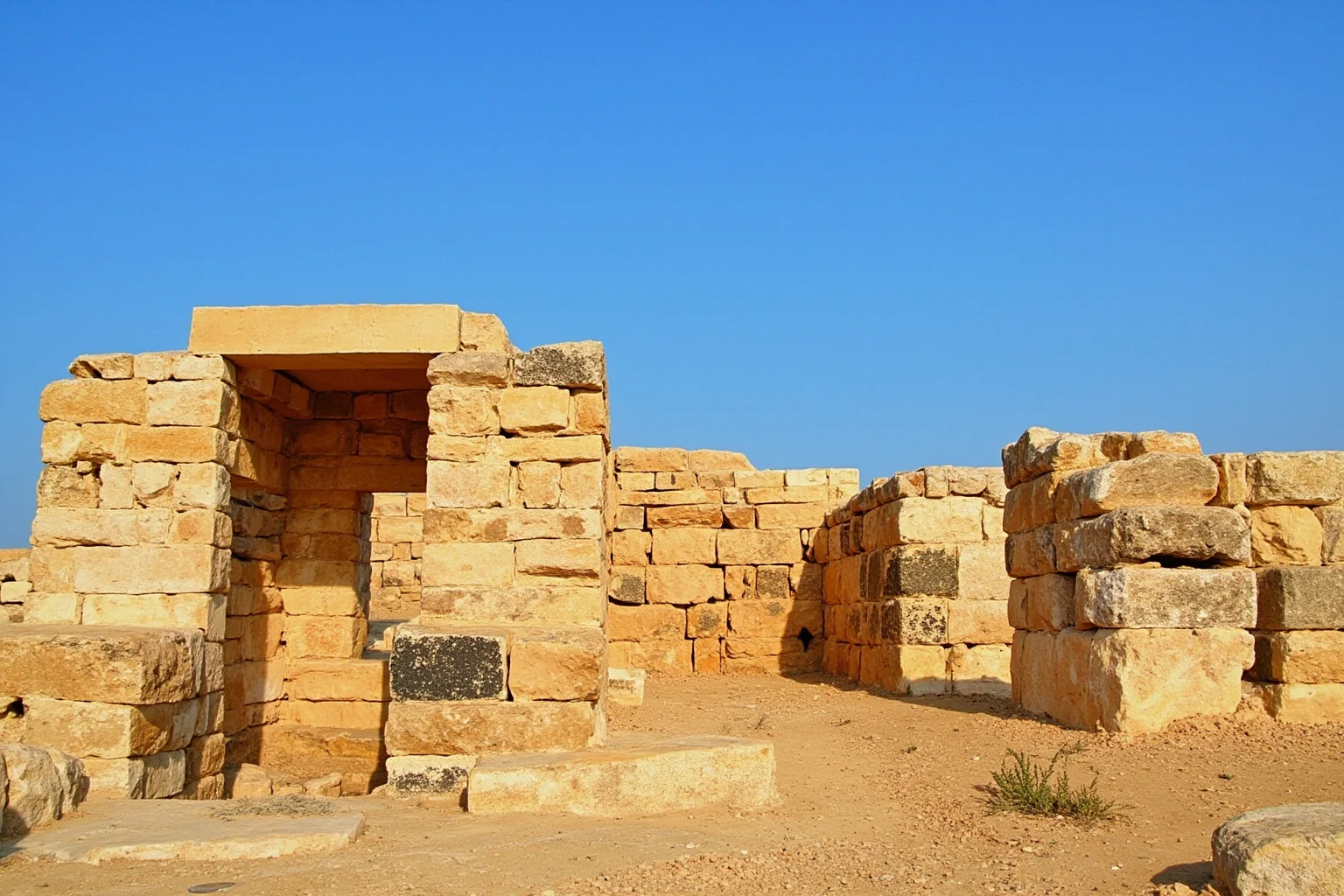
The Ġgantija Temples on the island of Gozo, Malta, are among the oldest free-standing structures on Earth. Built around 3600 BCE, they predate the Egyptian pyramids by over a thousand years.
The complex consists of two temples enclosed within a massive boundary wall. The larger temple has five apses arranged in a cloverleaf pattern, a design characteristic of Maltese temple architecture.
The walls are built from massive limestone blocks, some weighing over 50 tons. Local legend held that a giantess built the temples while carrying her baby, which is reflected in the name "Ġgantija," derived from the Maltese word for giant.
Archaeological evidence suggests the temples were used for animal sacrifice and ritual offerings. Excavations have uncovered altars, libation holes, and figurines, including the famous "fat lady" statues associated with fertility cults.
Ġgantija is part of the Megalithic Temples of Malta, a UNESCO World Heritage Site. It stands as one of the most significant examples of monuments from the prehistoric Mediterranean world.
8. Sechin Bajo (c. 3500 BCE)
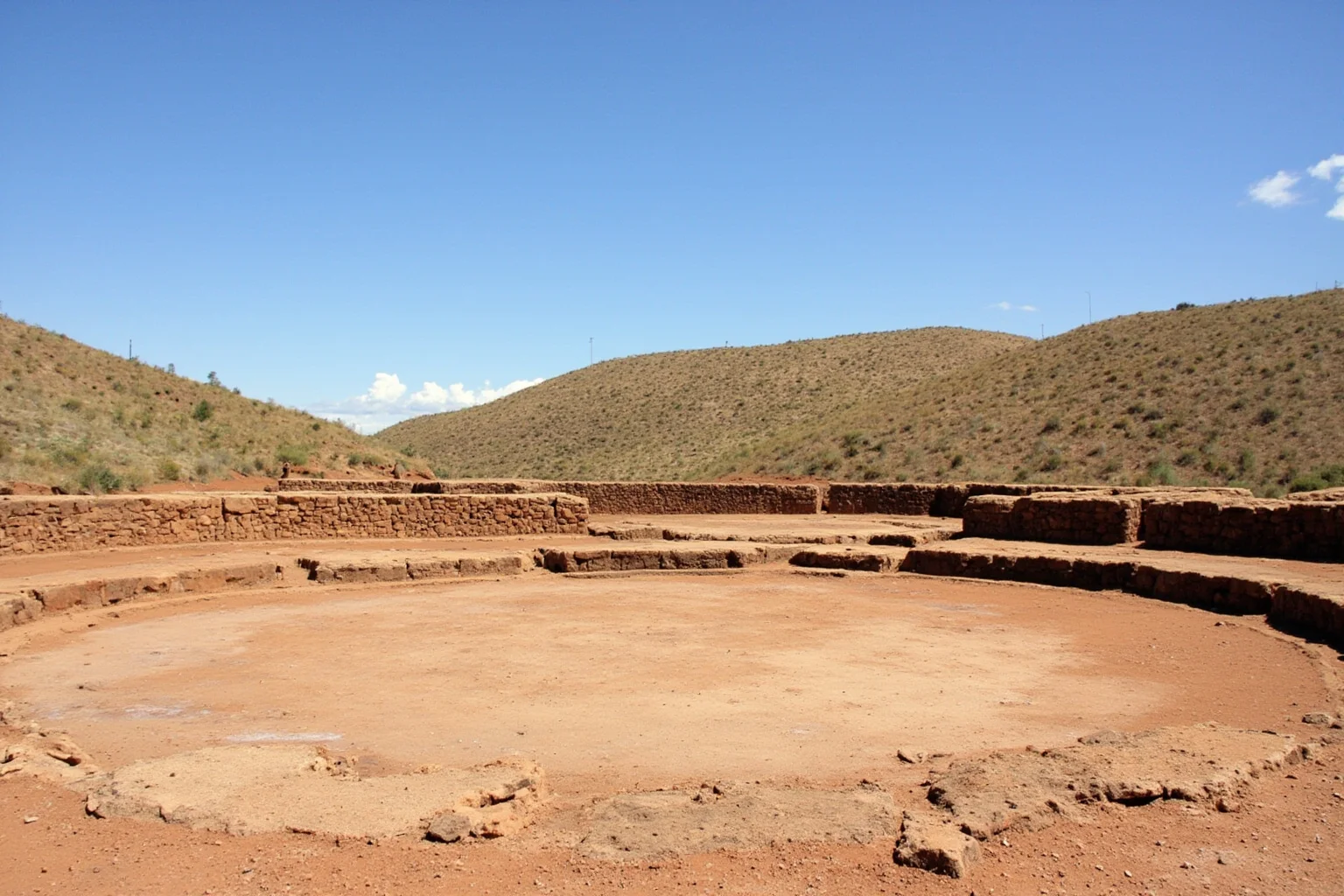
Sechin Bajo is an archaeological site in the Casma Valley of Peru. Excavations in 2008 and 2009 revealed structures dating to approximately 3500 BCE, making it one of the oldest known monumental sites in the Americas.
The site features a circular adobe plaza and a platform constructed from conical adobes. These findings pushed back the timeline for monumental architecture in the Andes by several centuries.
Archaeologists from the German Archaeological Institute and Peru's National Institute of Culture led the excavations. They identified multiple construction phases, indicating that the site was used and modified over a long period.
The dating of Sechin Bajo has been significant but should be noted within the context of ongoing archaeological debate. Some scholars urge caution, noting that radiocarbon dates from early Andean sites can be complex to interpret.
Nevertheless, Sechin Bajo contributes to a growing body of evidence that the Andes was a cradle of early civilization. Along with nearby sites like Caral, it challenges the assumption that monumental architecture in the Americas began later than in the Old World.
9. Newgrange (c. 3200 BCE)
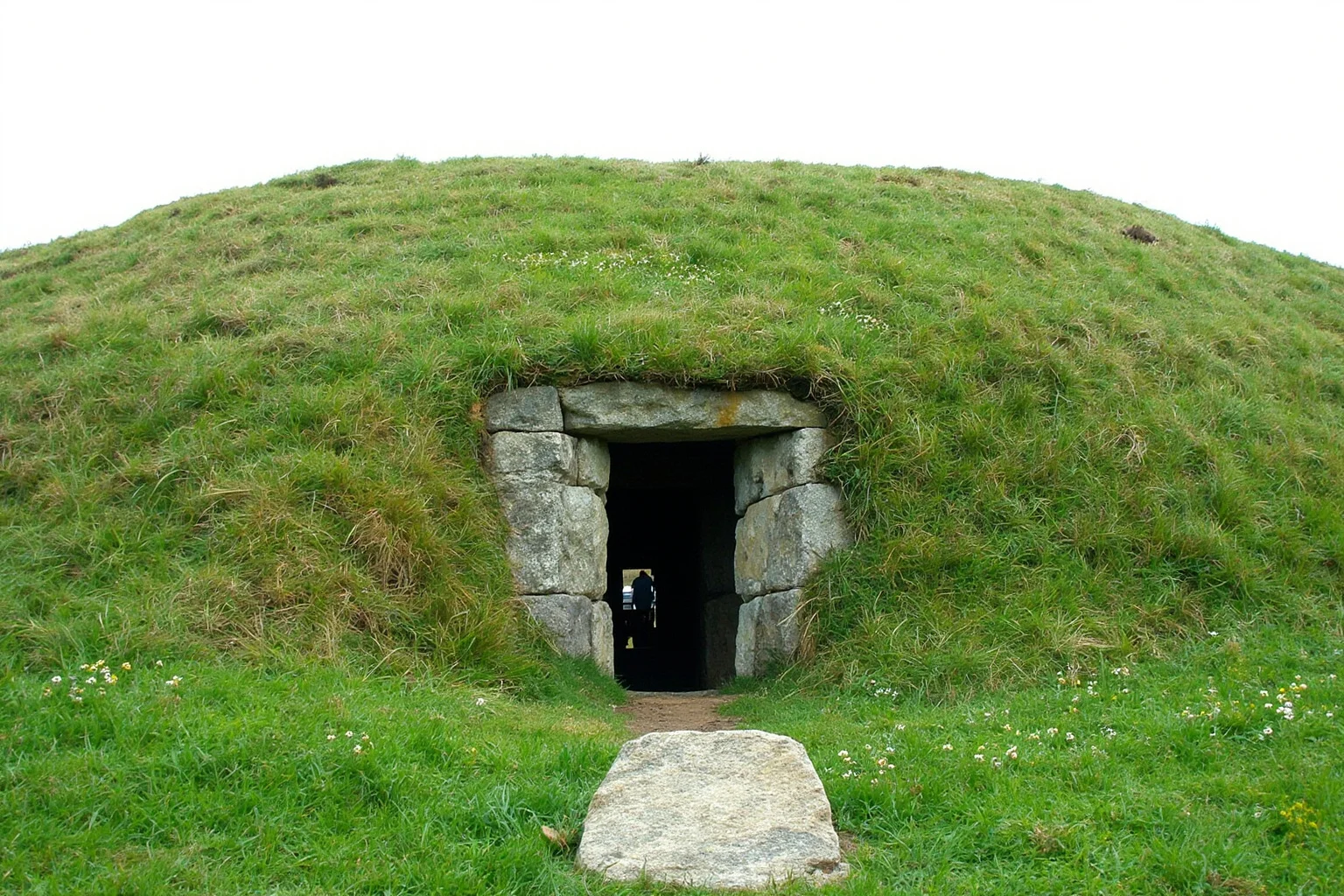
Newgrange is a Neolithic passage tomb located in the Boyne Valley of Ireland. Constructed around 3200 BCE, it is approximately 500 years older than the Great Pyramid of Giza.
The mound is roughly 85 meters in diameter and 13 meters high, covering an area of about one acre. A 19-meter-long passage leads to a central cruciform chamber with a corbelled roof that has remained watertight for over 5,000 years.
Newgrange is most famous for its alignment with the winter solstice. Each December, sunlight enters through a roofbox above the entrance and illuminates the inner chamber for about 17 minutes on the shortest days of the year.
The entrance stone is elaborately decorated with spiral and lozenge motifs. Similar megalithic art appears throughout the passage and chamber, making Newgrange one of the richest sources of Neolithic art in western Europe.
Newgrange is part of the Brú na Bóinne UNESCO World Heritage Site. It is one of the most famous monuments of the world associated with prehistoric astronomy and attracts thousands of visitors each winter solstice.
10. Knowth (c. 3200 BCE)
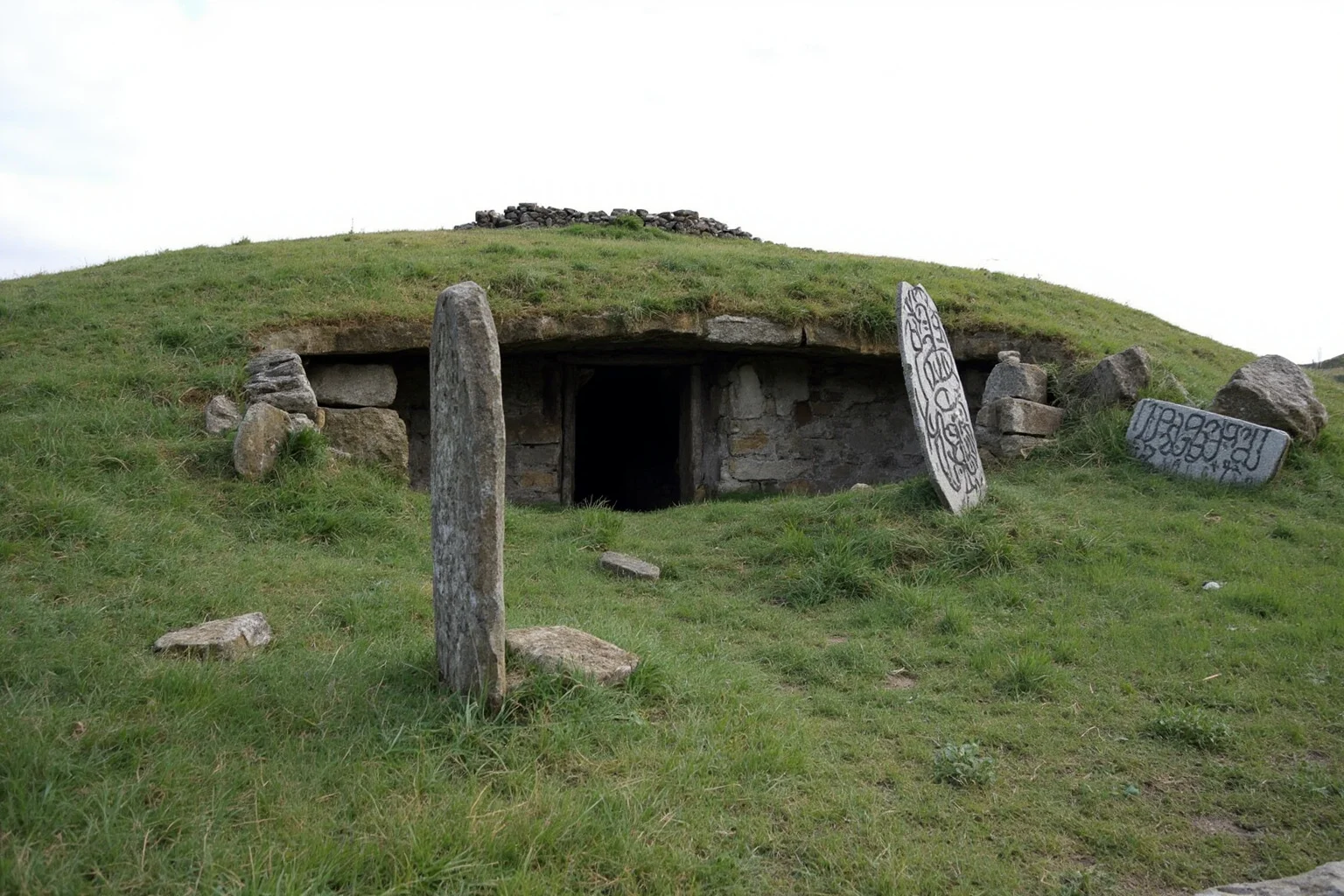
Knowth is another passage tomb in the Boyne Valley, situated just a kilometer from Newgrange. Built around 3200 BCE, it is part of the same Brú na Bóinne complex and shares many architectural similarities.
The main mound at Knowth is larger than Newgrange, measuring about 95 meters in diameter. It contains two passages, one facing east and one facing west, each leading to a central chamber.
Knowth is distinguished by its extraordinary megalithic art. Over 200 decorated stones have been found at the site, representing roughly half of all known megalithic art in Europe. The carvings include crescents, spirals, and undulating serpentine lines.
The site was used for centuries, and later communities added smaller satellite mounds around the main structure. Archaeological evidence shows that Knowth was inhabited into the early medieval period, long after its original ritual purpose had faded.
Knowth is accessible to visitors through the Brú na Bóinne Visitor Centre. While less famous than Newgrange, it is equally significant for understanding the monuments history of Neolithic Ireland.
11. Tarxien Temples (c. 3150 BCE)
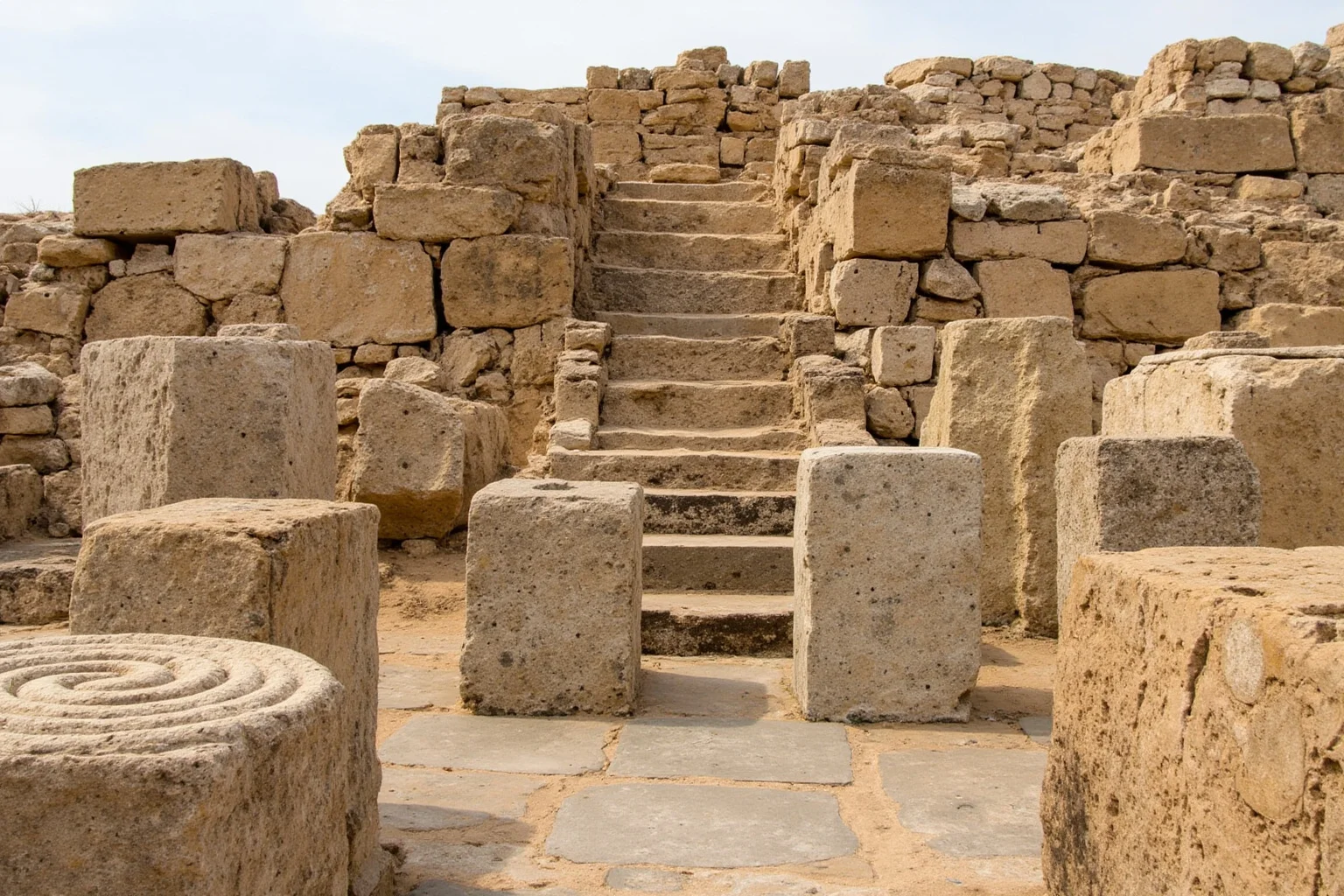
The Tarxien Temples are a complex of four megalithic structures in the village of Tarxien, Malta. Dating to around 3150 BCE, they represent the height of the Maltese temple-building tradition.
The temples are known for their elaborate stone carvings, including spirals, animals, and what may be depictions of deities. A massive stone block found at the site weighs approximately 2.5 tons and may have served as an altar.
Excavations in the early 20th century uncovered evidence of animal sacrifice, including burned animal bones and flint blades. The site also produced the "fat lady" figurines similar to those found at Ġgantija, reinforcing the connection to fertility rituals.
One of the most notable features is a relief carving of two bulls and a sow. This is among the earliest known representational art in the Mediterranean islands and provides insight into the agricultural practices of temple builders.
The Tarxien Temples are part of the UNESCO-listed Megalithic Temples of Malta. They are among the most important ancient monuments in the Mediterranean and demonstrate the remarkable sophistication of Maltese Neolithic culture.
12. Skara Brae (c. 3180 BCE)
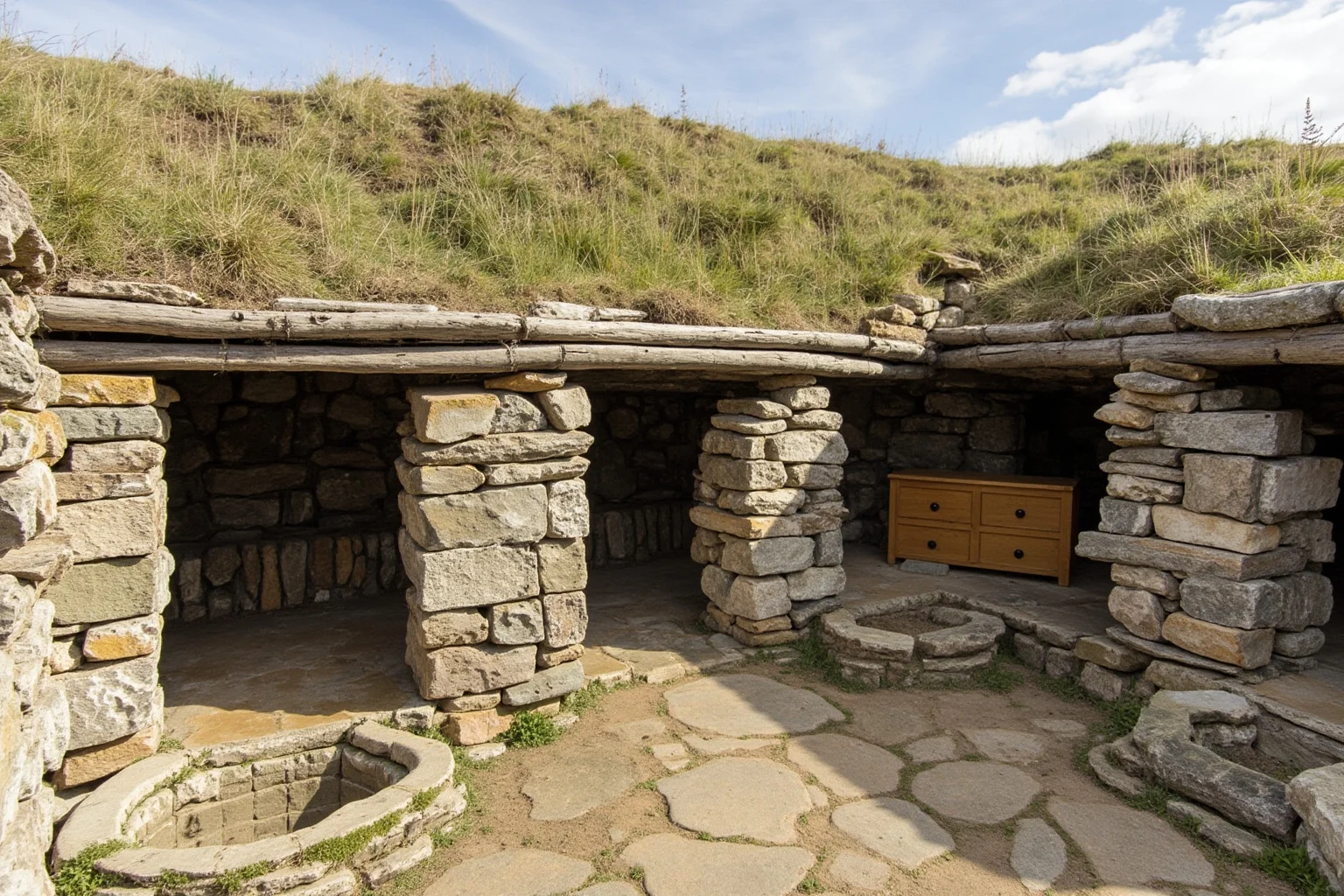
Skara Brae is a Neolithic village on the Orkney mainland in Scotland. Occupied from roughly 3180 BCE to about 2500 BCE, it is one of the best-preserved prehistoric settlements in Europe.
The site consists of eight clustered houses connected by covered passageways. Each house contains a central hearth, stone beds, and a distinctive "dresser" made of stone, suggesting a standardized domestic layout.
Skara Brae was preserved for millennia under sand dunes until a severe storm in 1850 exposed the structures. The buildings and their contents were remarkably intact, offering a rare snapshot of Neolithic daily life.
While primarily a settlement rather than a ceremonial monument, Skara Brae is part of the Heart of Neolithic Orkney UNESCO World Heritage Site. Nearby sites like the Ring of Brodgar and Maeshowe represent the ritual monuments of the same culture.
Together, these Orkney sites demonstrate that Neolithic communities in northern Scotland built both domestic and ceremonial structures of remarkable quality. Skara Brae remains one of the most visited historic landmarks in the world for prehistory enthusiasts.
13. Stonehenge (c. 3000 BCE)
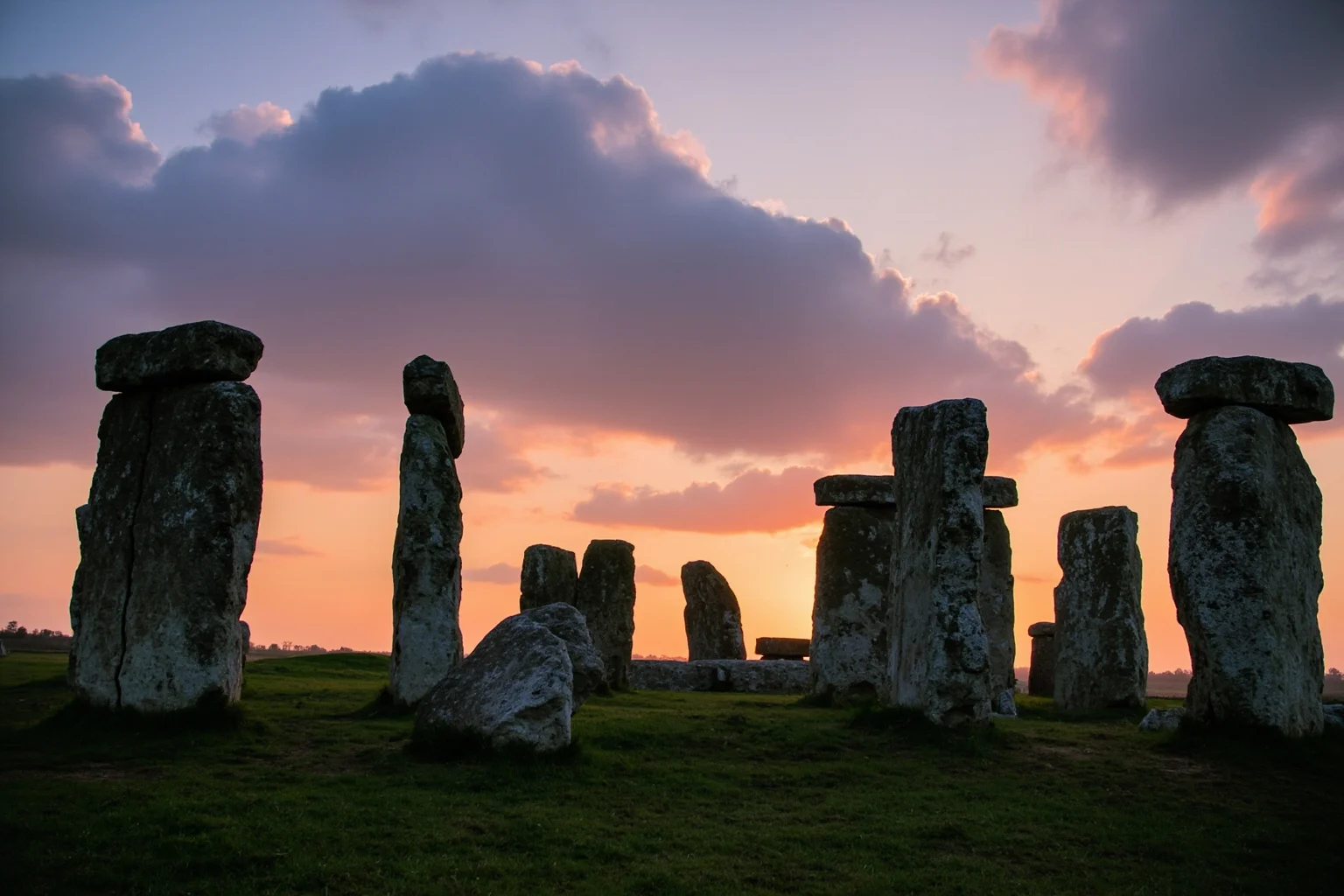
Stonehenge is perhaps the most famous prehistoric monument in the world. Located on Salisbury Plain in Wiltshire, England, its main construction phases date to around 3000 BCE, with modifications continuing for over a millennium.
The site consists of a circular arrangement of massive sarsen stones topped by lintels, surrounding smaller bluestones. The bluestones were transported from the Preseli Hills in Wales, roughly 240 kilometers away, an extraordinary feat for Neolithic peoples.
Stonehenge's alignment with the summer solstice sunrise and winter solstice sunset is well documented. This astronomical function has made it one of the most studied ancient monuments in the world, though its full purpose remains debated.
The surrounding landscape contains hundreds of burial mounds, avenues, and other features. Recent archaeological work has revealed additional monuments hidden underground, suggesting Stonehenge was part of a larger ceremonial complex.
Stonehenge is a UNESCO World Heritage Site and one of the most famous monuments of the world. It continues to attract over a million visitors annually and remains a powerful symbol of prehistoric achievement.
14. Avebury (c. 2850 BCE)
Avebury, located about 30 kilometers north of Stonehenge, contains the largest stone circle in Europe. Constructed around 2850 BCE, it is part of a larger Neolithic landscape that includes avenues, enclosures, and burial mounds.
The outer stone circle at Avebury has a diameter of roughly 335 meters and originally contained about 100 stones. Two smaller circles stand within the larger one, creating a complex arrangement that dwarfs Stonehenge in scale.
Many of Avebury's stones were destroyed in the medieval and early modern periods. Local villagers broke up the stones for building material, and some were buried to clear land for agriculture.
The site was partially restored in the 1930s by archaeologist Alexander Keiller. He re-erected fallen stones and marked the positions of missing ones with concrete pillars, giving visitors a sense of the original layout.
Avebury is part of the Stonehenge, Avebury, and Associated Sites UNESCO World Heritage Site. It is among the most significant historic monuments in Britain and offers a different perspective on Neolithic ceremonial architecture.
15. Monte d'Accoddi (c. 2700 BCE)
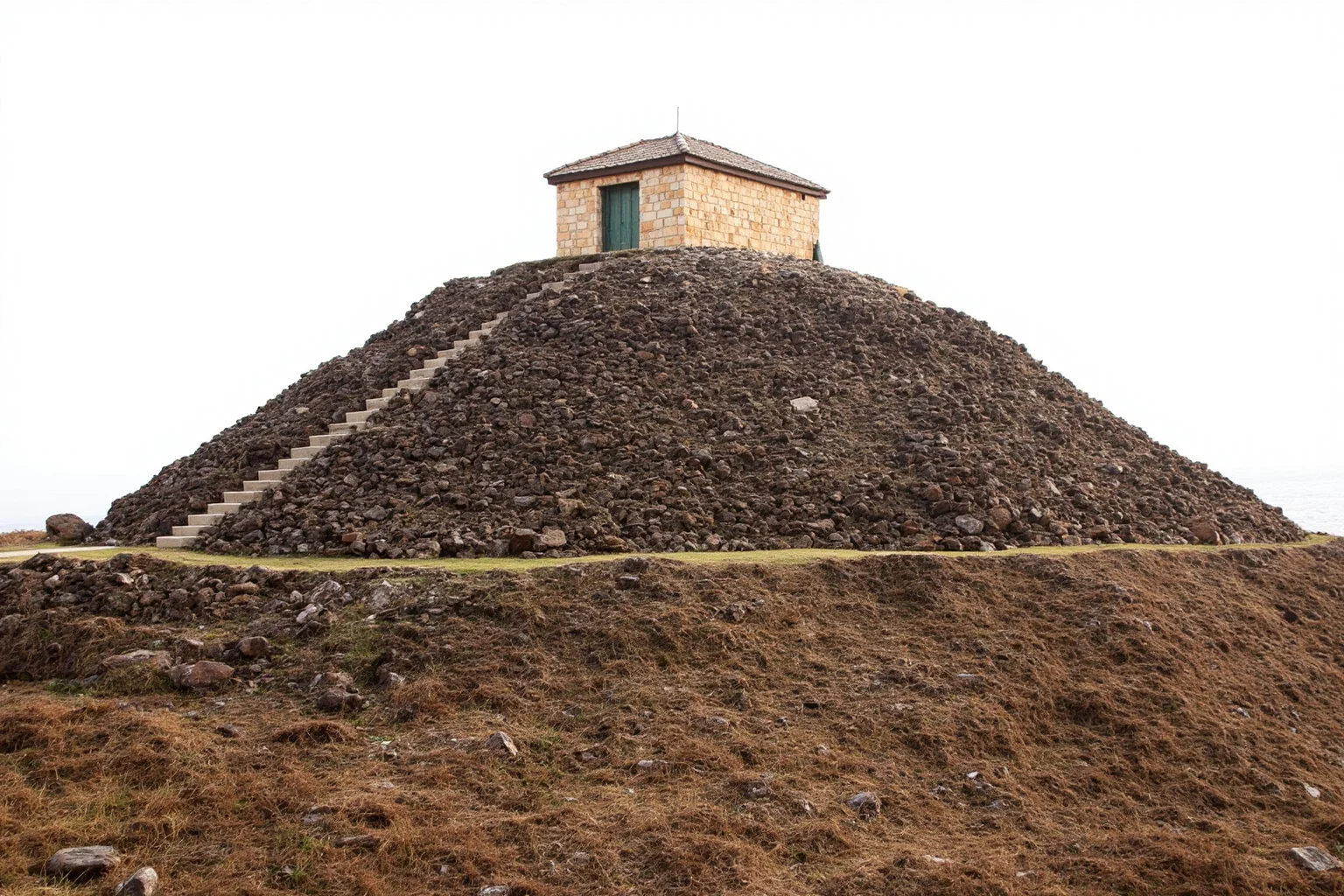
Monte d'Accoddi is an unusual prehistoric structure located near Sassari in Sardinia, Italy. Dating to approximately 2700 BCE, it consists of a massive stepped platform resembling a Mesopotamian ziggurat.
The structure measures about 30 by 30 meters at its base and rises to a height of roughly 7 meters. A ramp leads to the top, where a rectangular structure may have served as a temple or altar.
Archaeologists have debated Monte d'Accoddi's function since its discovery in the 1950s. Some suggest it reflects cultural contact with the eastern Mediterranean, while others see it as an indigenous development.
The site was used over a long period, with evidence of multiple construction phases. Pottery and other artifacts found at the site link it to the Ozieri culture, Sardinia's main Neolithic tradition.
Monte d'Accoddi is one of the most distinctive examples of monuments from prehistoric Europe. Its unique form sets it apart from other Mediterranean structures and highlights the diversity of Neolithic architectural experimentation.
16. Pyramid of Djoser (c. 2650 BCE)
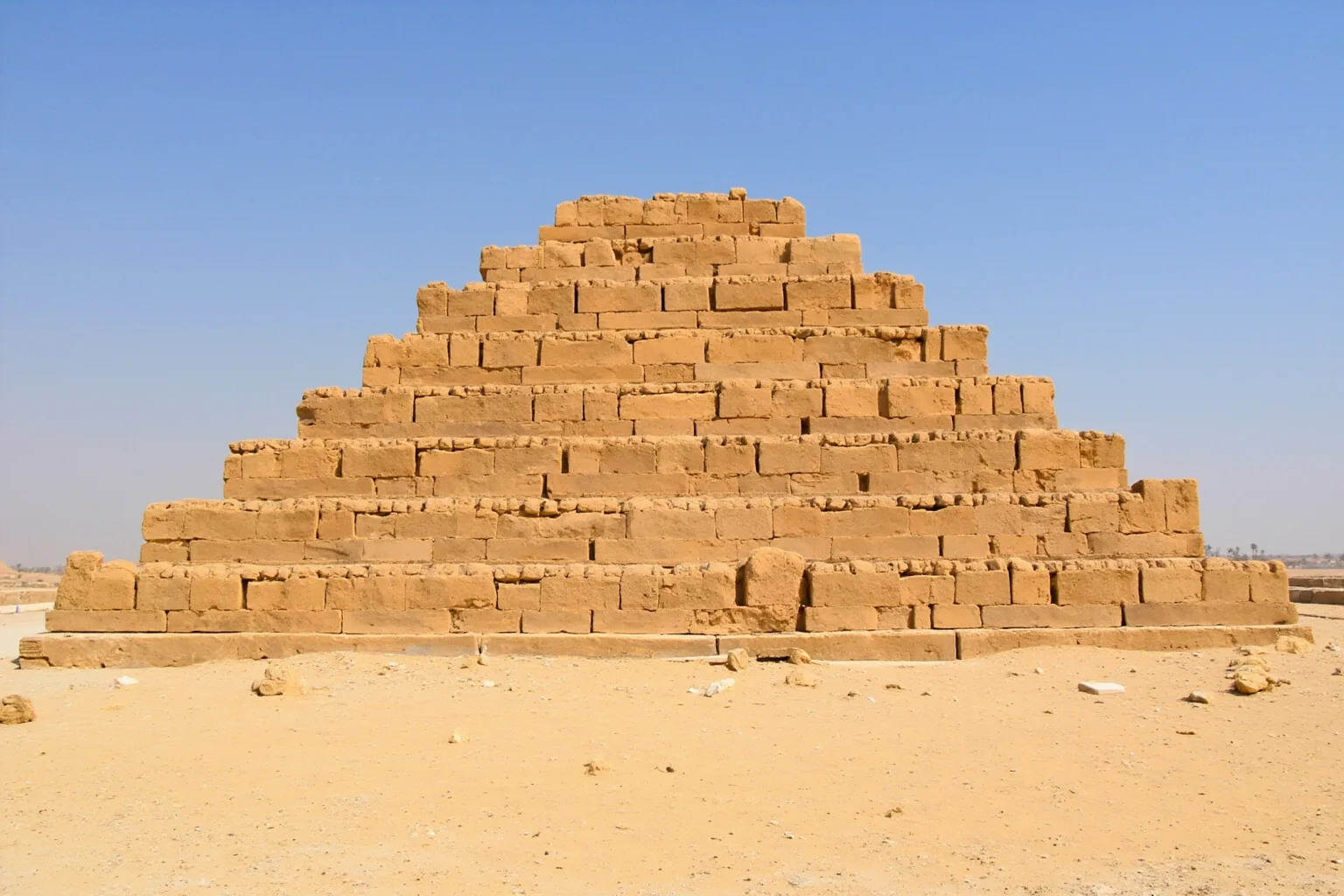
The Pyramid of Djoser, located at Saqqara in Egypt, is the oldest complete stone building complex in the world. Built around 2650 BCE, it was designed by the architect Imhotep for Pharaoh Djoser of the Third Dynasty.
The structure began as a traditional flat-roofed mastaba tomb. It was expanded in stages into a six-step pyramid rising to about 62 meters, making it the first monumental pyramid in Egyptian history.
The complex surrounding the pyramid includes temples, courtyards, and shrines. The elaborate design represents a transition from earlier mud-brick construction to large-scale stone architecture, a revolution in ancient monument building.
Imhotep was later deified by the Egyptians, reflecting the significance of his architectural achievement. The step pyramid influenced the design of later pyramids, including the Great Pyramid of Giza built roughly 70 years later.
The Pyramid of Djoser underwent extensive restoration in the 20th and 21st centuries. It reopened to visitors in 2020 after a 14-year conservation project and remains one of the most important historic landmarks in the world.
17. Caral (c. 2600 BCE)
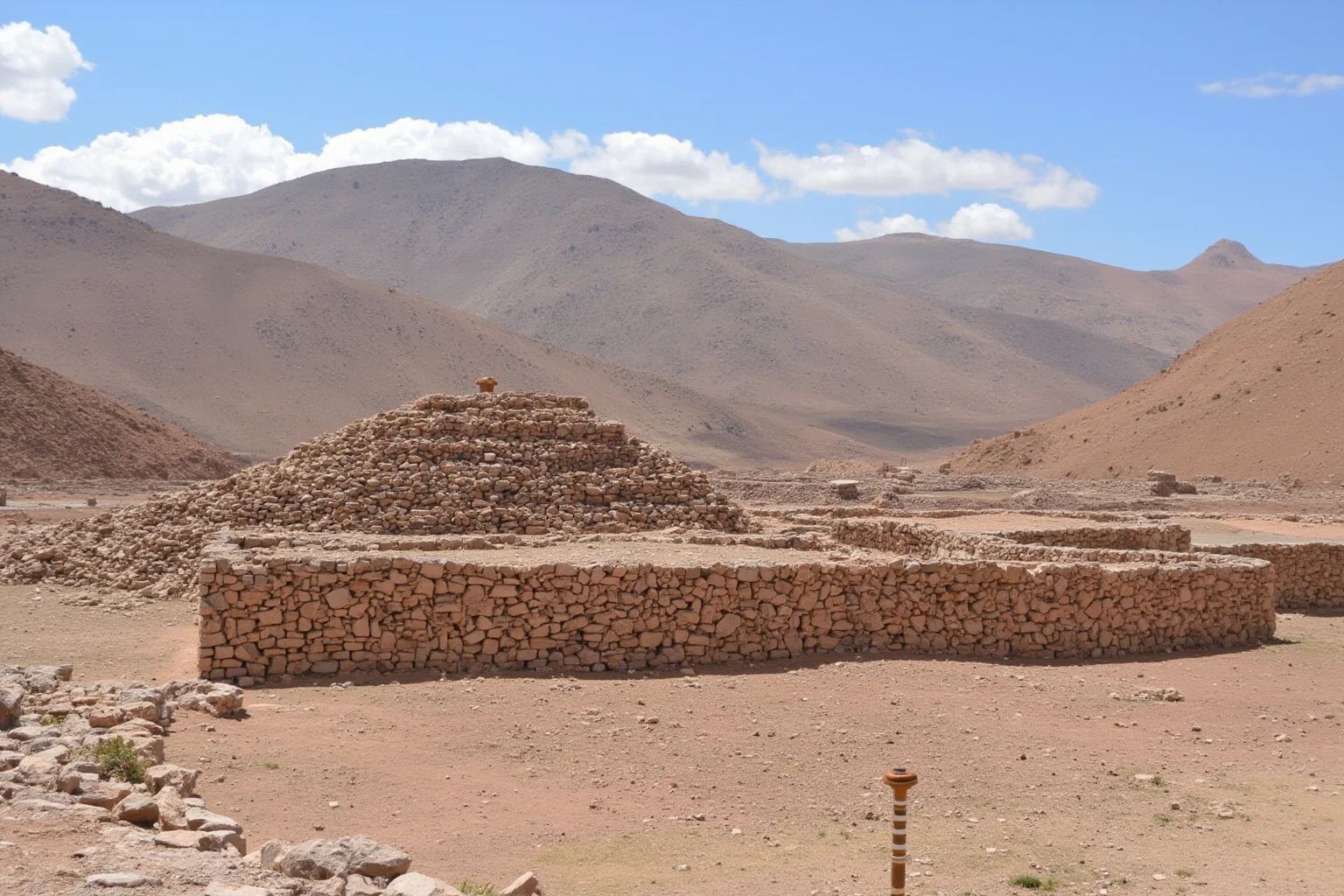
Caral is an ancient city in the Supe Valley of Peru, dating to approximately 2600 BCE. It is the oldest known urban center in the Americas and a contemporary of the early Egyptian pyramids.
The site covers about 60 hectares and includes six large pyramidal structures, circular plazas, and residential areas. The largest pyramid, the Templo Mayor, measures roughly 150 by 120 meters and stands 18 meters high.
Caral was discovered in 1996 by Peruvian archaeologist Ruth Shady. Her excavations revealed a complex, stratified society that built monumental architecture without ceramics, metal tools, or a writing system. The city's sophisticated design is a prime example of ancient cities more advanced than we realize.
The site produced musical instruments made from animal bones, including flutes decorated with incised designs. These findings suggest that music and ritual played an important role in Caral's civic life.
Caral is a UNESCO World Heritage Site and part of the broader Norte Chico civilization. It is among the most significant ancient monuments in the Americas and has reshaped understanding of early urban development.
18. Great Pyramid of Giza (c. 2570 BCE)
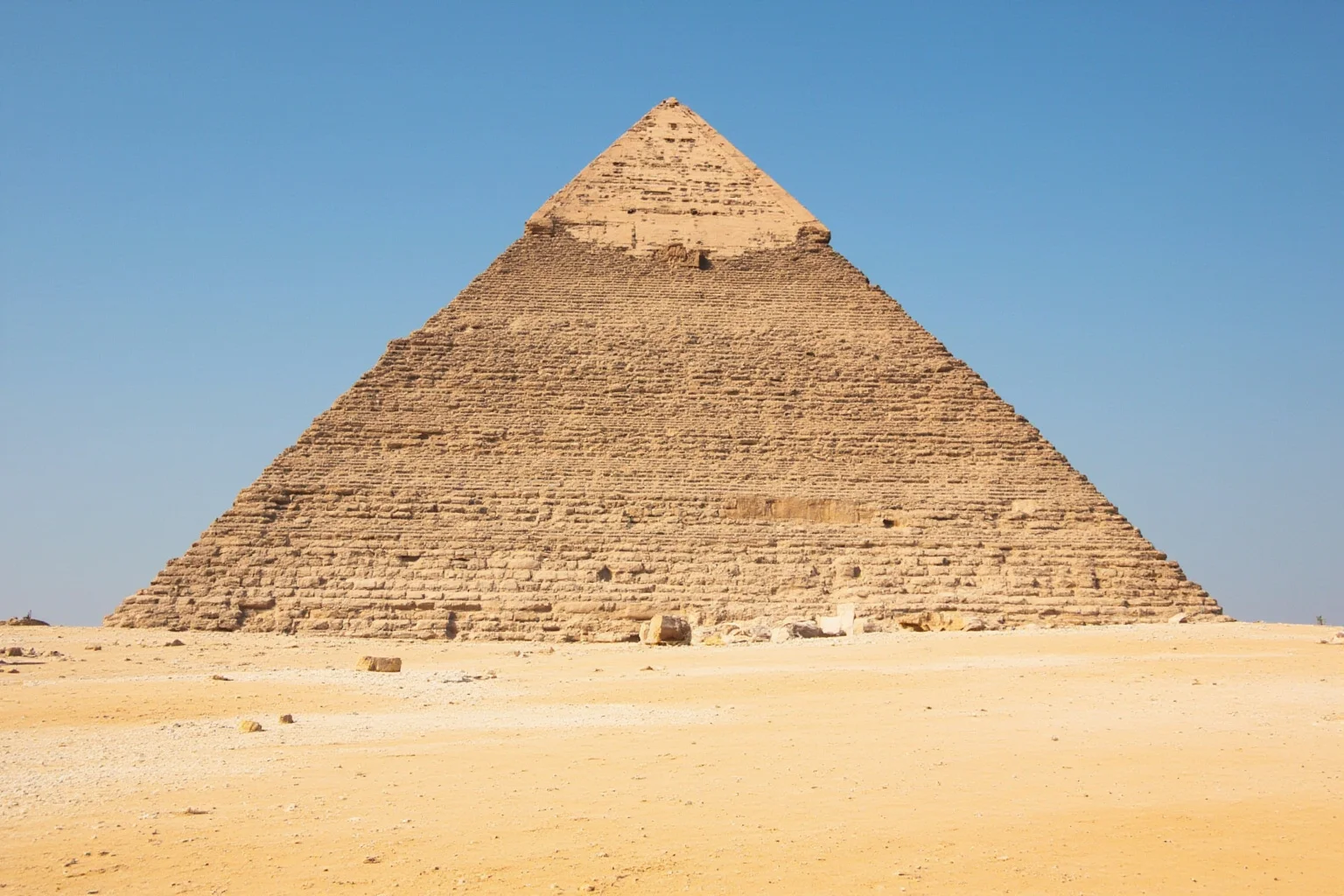
The Great Pyramid of Giza is the largest of the three pyramids on the Giza plateau in Egypt. Built around 2570 BCE for Pharaoh Khufu, it is the only one of the Seven Wonders of the Ancient World still standing.
The pyramid originally stood about 146.6 meters tall, making it the tallest human-made structure in the world for nearly 4,000 years. It consists of approximately 2.3 million stone blocks, some weighing over 80 tons.
The internal structure includes the King's Chamber, the Queen's Chamber, and the Grand Gallery. The precision of its construction, with joints between stones less than a millimeter thick in places, continues to impress engineers today.
The Great Pyramid is surrounded by temples, smaller pyramids, boat pits, and the Great Sphinx. Together, these structures form one of the most iconic archaeological complexes on the planet. The Great Sphinx itself is featured in our list of the most influential statues ever made.
The Giza pyramids are a UNESCO World Heritage Site and among the most famous monuments of the world. They attract millions of visitors annually and remain the subject of ongoing archaeological research.
19. Ziggurat of Ur (c. 2100 BCE)
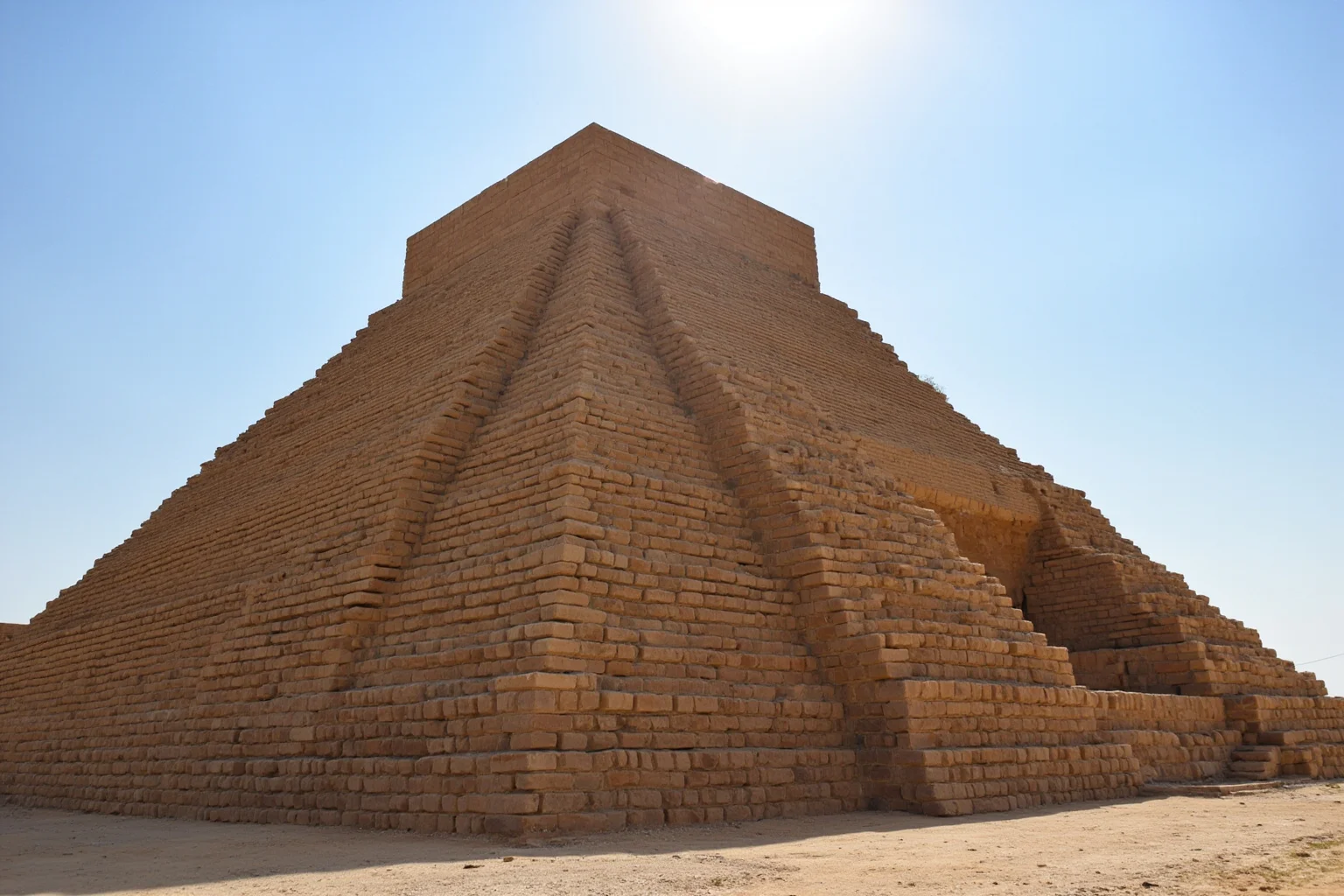
The Great Ziggurat of Ur is a massive stepped temple located in present-day Dhi Qar Province, Iraq. Built around 2100 BCE by King Ur-Nammu of the Third Dynasty of Ur, it was dedicated to the moon god Nanna.
The structure originally measured about 64 meters long, 45 meters wide, and 30 meters high. It was constructed of mud-brick cores faced with baked brick, a technique typical of Mesopotamian monumental architecture.
The ziggurat was part of a larger temple complex that served as the religious and administrative center of Ur. Excavations in the 1920s and 1930s by Sir Leonard Woolley uncovered the site and surrounding structures.
The ziggurat was partially reconstructed in the 1980s under Saddam Hussein's regime. The reconstruction faced criticism from some archaeologists but made the structure more accessible to visitors.
The Ziggurat of Ur is one of the best-preserved ancient monuments of Mesopotamia. It provides a tangible link to the Sumerian civilization and its contributions to world heritage monuments. The Sumerians also played a role in the greatest empires in history, though their civilization predates the major empires on that list.
20. Nuraghe Su Nuraxi (c. 1500 BCE)
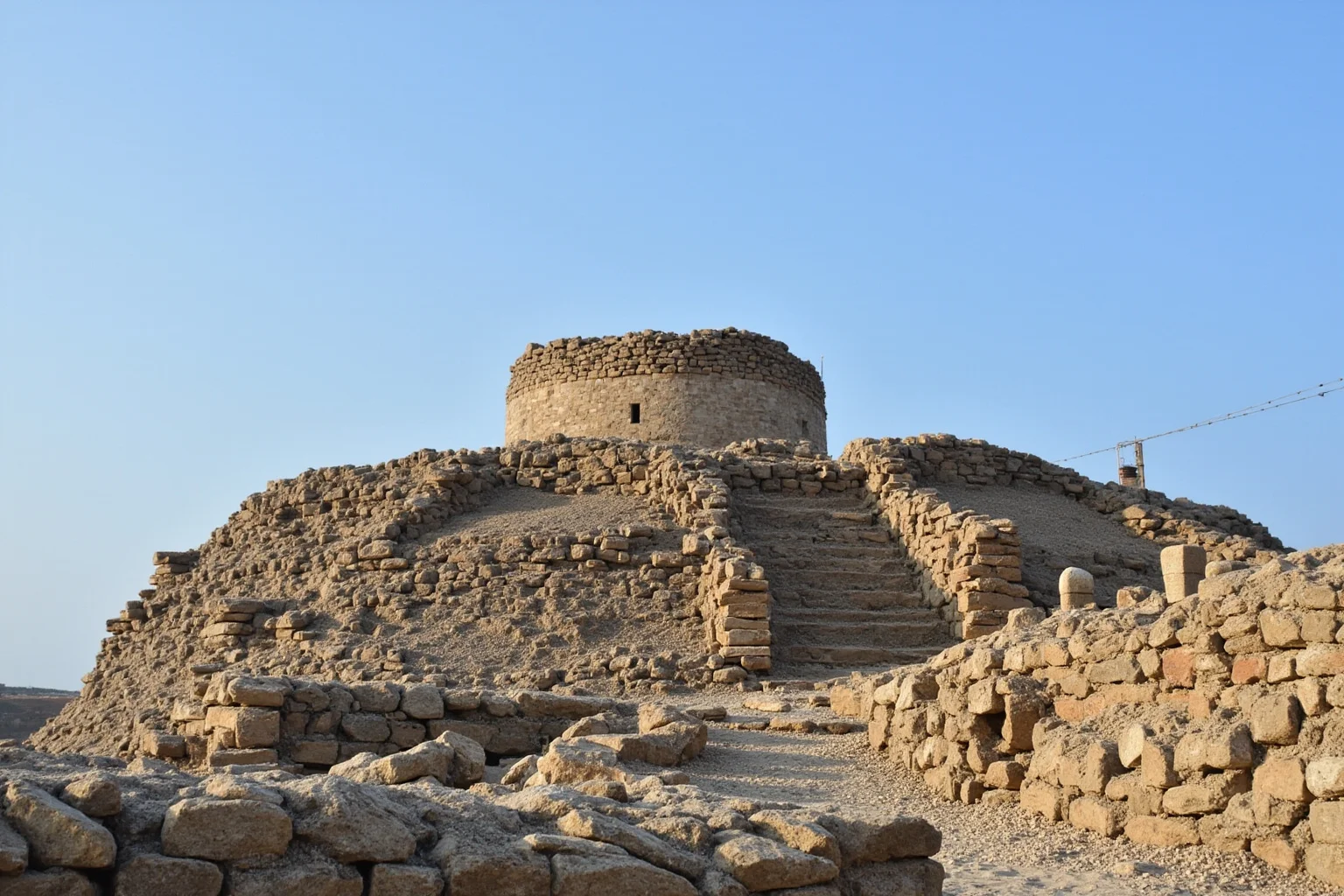
Nuraghe Su Nuraxi is a Bronze Age tower complex in Barumini, Sardinia, Italy. Built around 1500 BCE, it is the most complete and best-preserved example of Sardinia's unique nuraghe architecture.
The central tower, or mastio, originally stood about 18.5 meters tall. It is surrounded by a complex of smaller towers and a settlement, all enclosed within massive defensive walls.
Over 7,000 nuraghi dot the Sardinian landscape, but Su Nuraxi is among the largest and most elaborate. The structure was expanded over centuries, reflecting the evolving social and political organization of Nuragic society.
Excavations in the 1950s by archaeologist Giovanni Lilliu revealed the full extent of the complex. The site yielded bronze figurines, pottery, and tools that provide insight into Nuragic culture and trade networks.
Su Nuraxi is a UNESCO World Heritage Site and one of the most important ancient monuments in the western Mediterranean. It demonstrates that Sardinia was home to a sophisticated civilization long before later medieval monuments appeared across Europe. For more on the structures that followed, see our post on the oldest and most beautiful churches around the world.
21. Great Wall of China (c. 7th century BCE)
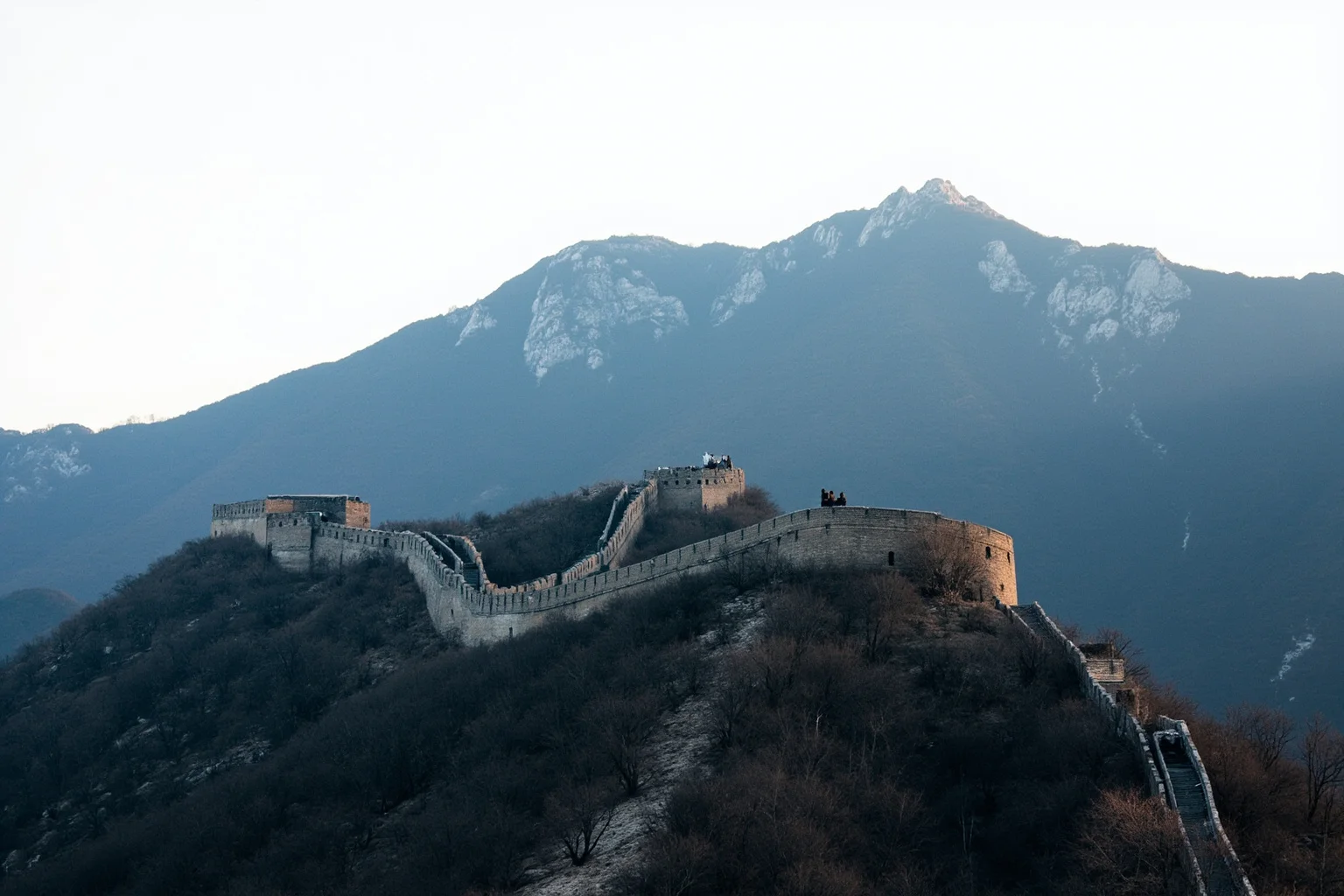
The Great Wall of China is not a single structure but a series of fortifications built over many centuries. The earliest sections date to the 7th century BCE, when various Chinese states constructed walls to defend against nomadic incursions.
After unifying China in 221 BCE, the First Emperor Qin Shi Huang ordered the connection and extension of existing walls. Subsequent dynasties, particularly the Han and Ming, rebuilt and expanded the wall over the following two millennia.
The most visible sections today date to the Ming Dynasty (1368-1644 CE). These sections feature brick and stone construction, watchtowers, and beacon towers, representing some of the most impressive fortification architecture in East Asia.
The total length of all wall sections, including branches and parallel walls, exceeds 21,000 kilometers. This makes the Great Wall the largest human-made structure in the world by length. For context on the empires that built such vast projects, explore our ranking of the greatest empires in history.
The Great Wall is a UNESCO World Heritage Site and one of the most famous monuments of the world. While its earliest sections are over 2,500 years old, the wall as a unified structure evolved over many centuries.
22. Stone Circles of Senegambia (c. 3rd century BCE)
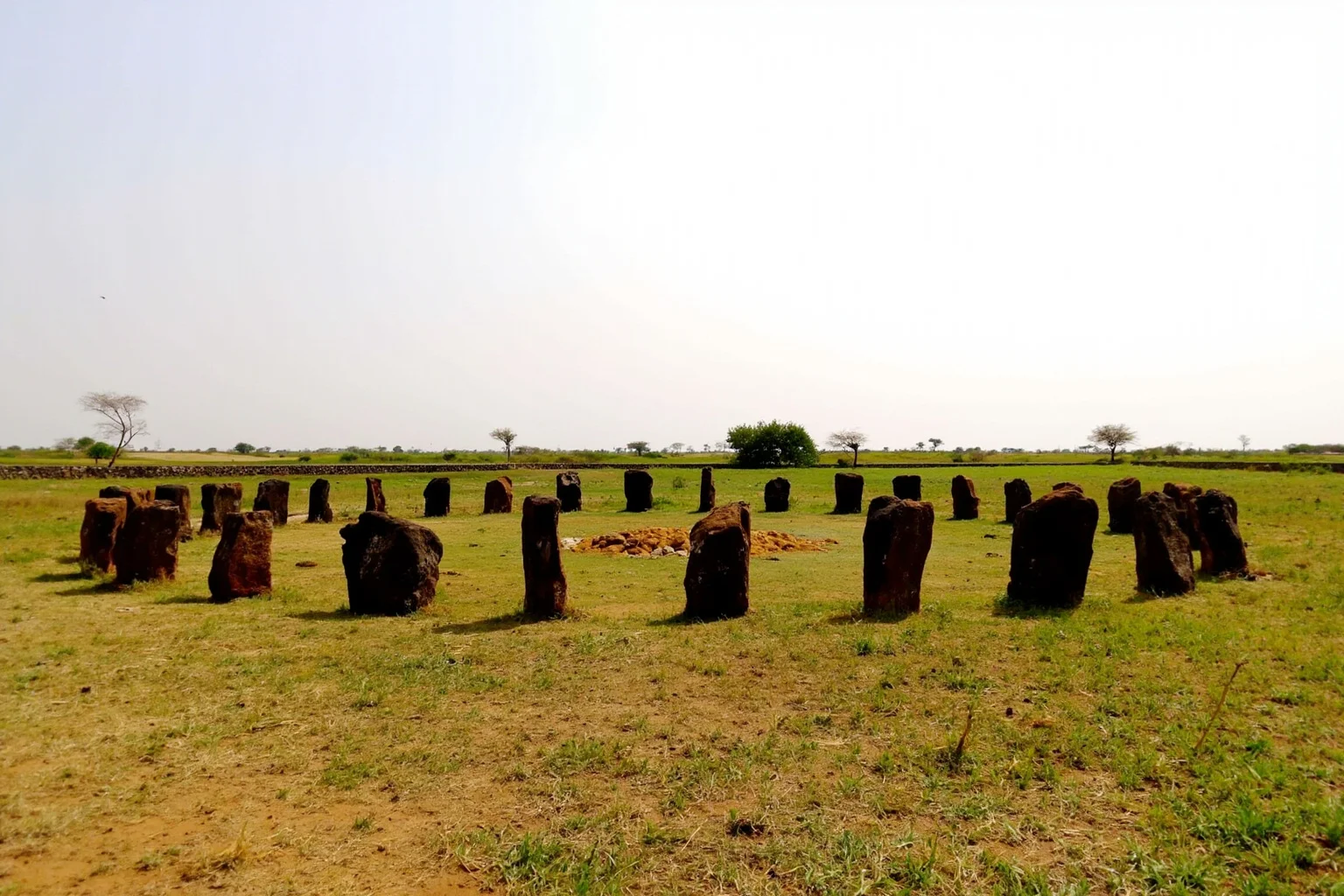
The Stone Circles of Senegambia are a group of megalithic monuments spread across parts of Senegal and Gambia. Dating to approximately the 3rd century BCE, they represent one of the largest concentrations of stone circles in Africa.
The site encompasses over 1,000 circles containing more than 28,000 stones. The stones are mostly laterite pillars, some standing over two meters tall, arranged in circles averaging 6 to 10 meters in diameter.
Archaeological excavations have uncovered burial mounds, pottery, and metal objects within the circles. These findings suggest the sites served both funerary and ceremonial purposes for the communities that built them.
The exact cultural affiliation of the builders remains uncertain. Unlike European megaliths, African stone circles have limited associated archaeological evidence, making it difficult to connect them to specific historical populations.
The Stone Circles were inscribed as a UNESCO World Heritage Site in 2006. They are among the most significant ancient monuments in West Africa and challenge the misconception that monumental architecture was limited to Europe and the Near East.
What These Ancient Structures Tell Us
The monuments listed above span over 9,000 years of human history. From the hunter-gatherers of Göbekli Tepe to the organized states of ancient China, each structure reflects the values and capabilities of the society that built it.
Many of these sites are now recognized as world heritage monuments, protected for future generations. Their preservation allows ongoing research that continues to reshape our understanding of human prehistory and early civilization.
The question of what is the oldest monument in the world may never have a single definitive answer. New archaeological discoveries regularly push back timelines, and debates about dating methods continue among scholars.
What is clear, however, is that the impulse to build monuments is deeply embedded in human nature. Whether for worship, burial, defense, or commemoration, people across cultures and continents have always built structures meant to outlast them.
The next time someone asks you about any monuments worth visiting, consider looking beyond the familiar names. Some of the most remarkable structures on Earth were built before history itself was written, and they have stories still waiting to be fully told.
Frequently Asked Questions
What is the oldest monument in the world?
Göbekli Tepe in southeastern Turkey is widely considered the oldest monument in the world, dating to approximately 9600 BCE. Built by hunter-gatherers before the advent of agriculture, it predates Stonehenge by roughly 6,600 years and the Egyptian pyramids by over 7,000 years.
Are the Egyptian pyramids the oldest monuments?
No, the Egyptian pyramids are not the oldest monuments in the world. While the Pyramid of Djoser dates to around 2650 BCE, structures like Göbekli Tepe, the Tower of Jericho, and the megalithic temples of Malta are thousands of years older. The pyramids are among the most famous monuments of the world, but they are far from the earliest.
What is the difference between ancient monuments and medieval monuments?
Ancient monuments typically refer to structures built before the fall of the Roman Empire, roughly before 500 CE. Medieval monuments were constructed during the Middle Ages, roughly 500–1500 CE, and often include castles, cathedrals, and fortified walls built by literate societies with written records.
How do archaeologists date the oldest monuments?
Archaeologists use several methods to date ancient monuments, including radiocarbon dating of organic materials, stratigraphy (studying layers of sediment), and luminescence dating of sediments. Each method has limitations and margins of error, which is why dates for the oldest monuments are often given as approximate ranges rather than exact years.

Alex Warren
Related Articles