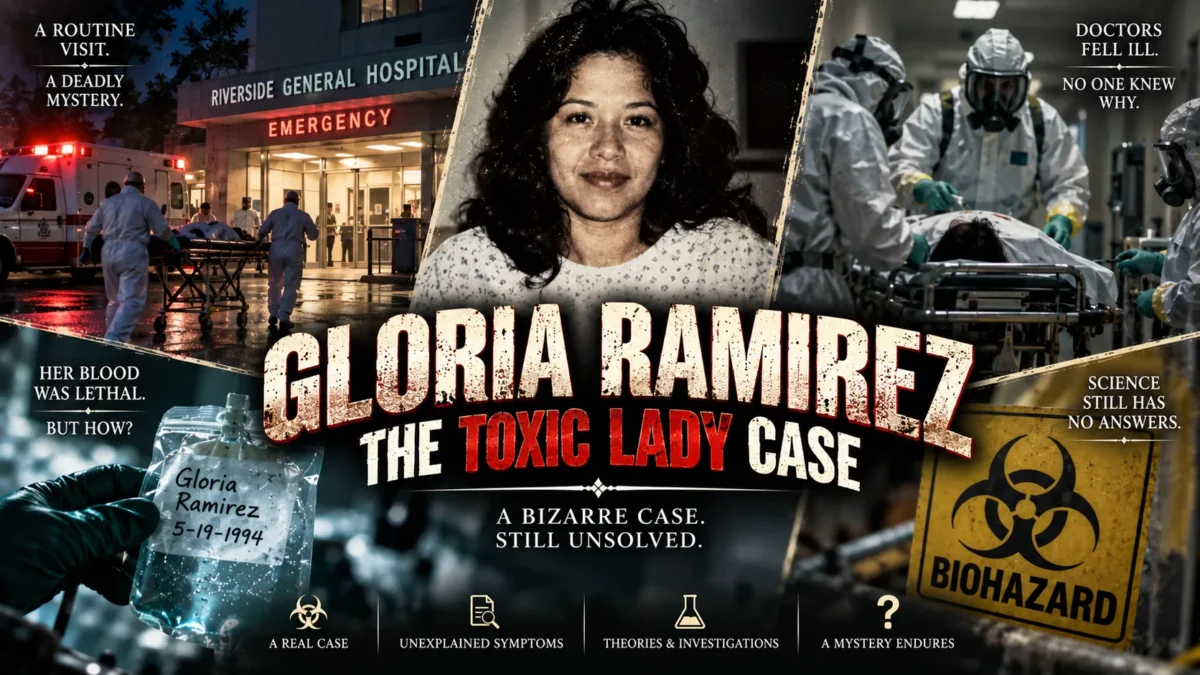
On a February night in 1994, a dying woman was wheeled into a California emergency room, and within minutes, the room itself seemed to become a hazard zone. Nurses collapsed. Doctors felt their muscles seize up. A hospital had to be partially evacuated because of a patient who never left her gurney.
This is the story of Gloria Ramirez, a woman better known today by an eerie nickname: the Toxic Lady. Her case has fascinated true-crime fans, toxicologists, and paranormal enthusiasts alike for three decades, and it still doesn't have a tidy answer.
TL;DR: Gloria Ramirez, later nicknamed the "Toxic Lady," died in a Riverside, California ER in 1994 after several hospital staff mysteriously fell ill near her body, and despite theories involving DMSO and mass psychogenic illness, the exact cause was never conclusively proven.
Who Was Gloria Ramirez?
Gloria Ramirez was a 31-year-old woman living in Riverside, California, in the early 1990s. She was a mother of three who had been diagnosed with advanced cervical cancer, a disease that had already progressed significantly by the time of the incident that made her famous.
By most accounts, she was an ordinary woman going through an extraordinarily difficult medical crisis. Nothing about her life before February 19, 1994, suggested she would become the subject of decades of speculation, documentaries, and internet legend.
The Night Everything Went Wrong at Riverside General
On the evening of February 19, 1994, paramedics brought Gloria Ramirez to the emergency room at Riverside General Hospital. She was in severe distress, suffering from rapid heartbeat, irregular breathing, and confusion, symptoms consistent with the late stages of her cancer.
As medical staff worked to stabilize her, several people in the room noticed something unusual. Ramirez's skin reportedly had an oily sheen, and there was a strange odor coming from her body, described by different witnesses as similar to ammonia, garlic, or fruit.
Things escalated when a nurse named Susan Kane attempted to draw blood from Ramirez's arm. Kane later reported noticing manila-colored particles floating in the blood sample and detecting a strong ammonia-like smell emanating from the syringe itself.
The Emergency Room Emergency
Shortly after handling the syringe, Susan Kane reportedly began to feel dizzy and eventually fainted. She was not alone in this reaction. Several other staff members in the room started experiencing similar symptoms within minutes of each other.
Reports described medical personnel suffering from muscle spasms, breathing difficulties, and lightheadedness. In total, roughly 23 hospital workers reported feeling ill that night, and about five of them required hospitalization for their symptoms.
The emergency room was evacuated as a precaution, and parts of Riverside General Hospital were effectively shut down while officials tried to figure out what was happening. Patients who were not critical were moved outside into the parking lot while hazardous materials teams investigated the scene.
Gloria Ramirez's Cause of Death
Amid the chaos, medical staff continued to try to treat Ramirez, but she went into cardiac arrest and could not be revived. She was pronounced dead shortly after arriving at the hospital, before doctors could determine what, if anything, was causing the strange reactions around her.
An autopsy was later performed, and the official finding attributed her death to complications from cervical cancer, specifically kidney failure caused by the cancer's effects on her urinary tract. In terms of the medical record, Gloria Ramirez's cause of death was not mysterious at all; her cancer had reached a fatal stage.
What remained genuinely unexplained was why so many hospital workers became sick around her in those chaotic minutes. That question, far more than the cause of her death itself, is what turned this into the case now known as the Toxic Lady incident.
Why People Started Calling Her "The Toxic Woman"
News coverage in the weeks after the incident latched onto the strangest detail: it seemed as though Ramirez's own blood or body had somehow poisoned the people trying to save her. Headlines and later retellings dubbed her "the Toxic Lady" or "the toxic woman," and the label stuck permanently.
It's an understandable nickname given how dramatic the scene reportedly was, but it's worth pausing on the phrase "toxic blood" itself. No conclusive evidence ever proved that Ramirez's blood contained a toxin capable of poisoning multiple adults in a hospital room within minutes.
The nickname reflects the mystery and the panic of that night more than it reflects a scientifically confirmed fact. That distinction matters a lot when separating the real gloria ramirez case from the version that has grown in retellings over the years, in much the same way that many historical events everyone always remembers incorrectly have drifted from what actually happened.
Riverside County Calls in the Scientists
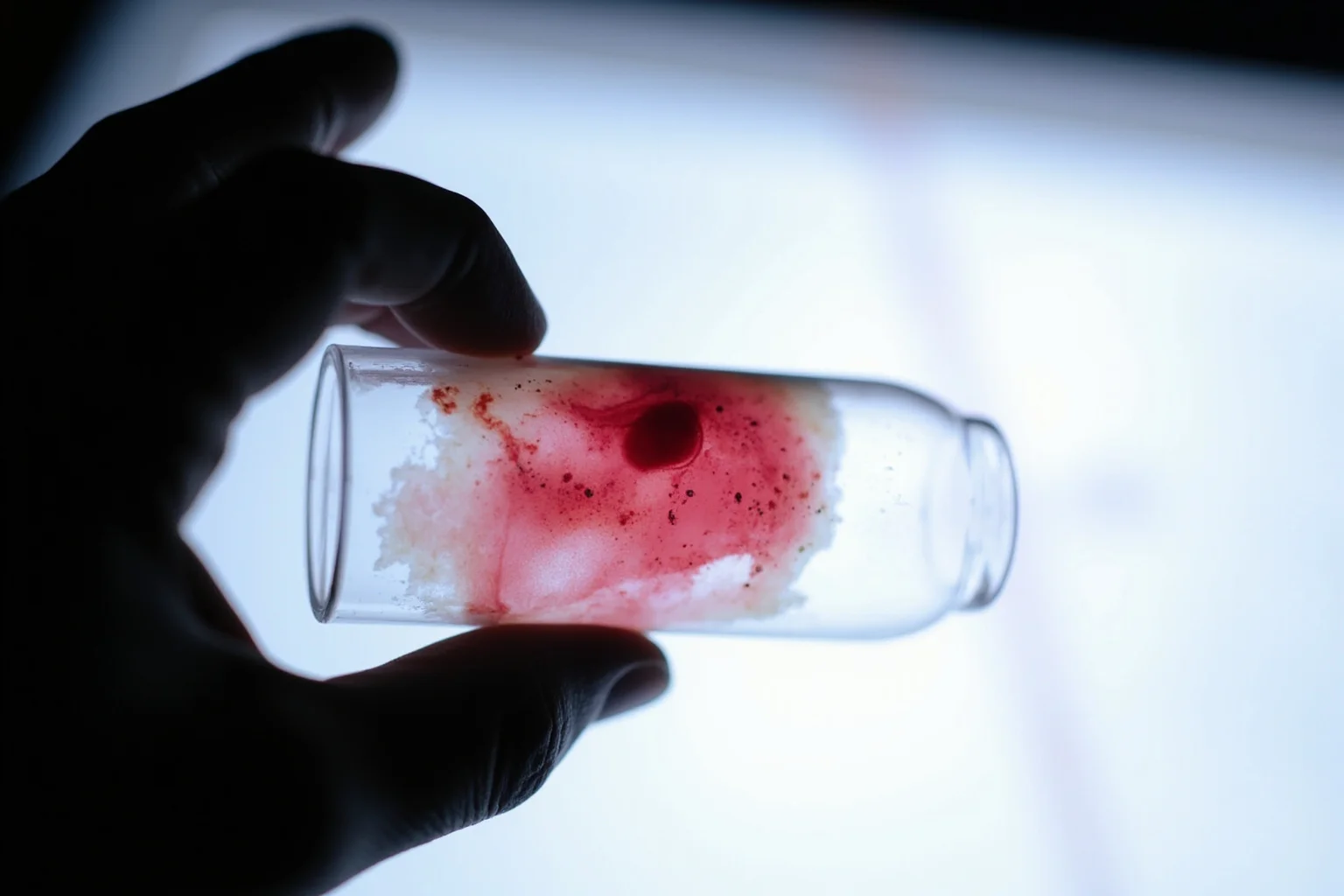
Because the incident affected hospital employees and shut down part of a public facility, Riverside County officials wanted answers. They eventually brought in scientists from Lawrence Livermore National Laboratory, a federal research facility with expertise in hazardous materials and forensic science, to analyze blood samples and try to reconstruct what had happened.
This was a serious, resource-intensive investigation, not just a local curiosity. Researchers examined tissue and blood samples using specialized equipment, looking for any chemical compound that could explain the odor and the reported symptoms among staff.
The DMSO Theory Explained
The most widely cited explanation to come out of the Lawrence Livermore investigation involved a chemical called dimethyl sulfoxide, or DMSO. Researchers Patrick Grant and colleagues published their findings in a 1994 paper in the journal Forensic Science International, proposing a chain reaction they believed might explain the symptoms.
The theory suggested that Ramirez may have been using DMSO at home as a folk remedy for pain, something that was reportedly common in some alternative medicine circles at the time despite not being an approved treatment. DMSO on its own is a solvent used in some legitimate medical and industrial applications, but it is not typically dangerous in small exposures.
According to the Lawrence Livermore hypothesis, DMSO in Ramirez's system could have combined with medical oxygen being administered to her, plus other factors during treatment, to form dimethyl sulfate, a considerably more toxic compound. The idea was that this reaction, possibly accelerated by the mechanical stress of drawing blood, released fumes that briefly affected nearby staff.
It's important to be clear about what this theory is and isn't. It was a plausible chemical hypothesis published by credentialed researchers, but it was never proven with certainty, and no other laboratory independently confirmed that dimethyl sulfate was actually present in the room that night. The gloria ramirez dmso explanation remains the leading scientific theory, not a settled conclusion.
The Mass Hysteria Counter-Theory
Not everyone accepted the DMSO explanation, and several skeptics offered an alternative reading of events rooted in psychology rather than chemistry. Writer and paranormal investigator Joe Nickell, among others, argued that the incident fit a well-documented phenomenon known as mass psychogenic illness, sometimes called mass hysteria.
Mass psychogenic illness occurs when a group of people, often under stress and in close physical proximity, begin experiencing real physical symptoms triggered by anxiety and suggestion rather than by an external toxin. It has been documented in workplaces, schools, and other settings around the world, and symptoms can include dizziness, fainting, nausea, and muscle spasms, very similar to what was reported at Riverside General.
Under this theory, the true trigger might have been the unusual smell and appearance of Ramirez's blood combined with the general tension of a chaotic ER, rather than any actual chemical poisoning. Once one nurse fainted, the theory goes, others in a high-stress environment may have followed suit partly through psychological contagion.
Why No Theory Fully Solved the Mystery
Both the DMSO chemical theory and the mass hysteria theory have supporters, and both have real gaps. Critics of the DMSO theory point out that the specific chemical reaction proposed was never recreated or verified under controlled conditions matching the ER scenario exactly.
Critics of the mass hysteria theory note that some of the physical evidence, like the reported crystals in the blood sample and the distinctive odor noticed by multiple independent witnesses before anyone fainted, is harder to explain through psychology alone. Both explanations rely on witness testimony collected after a chaotic and frightening event, which is never a perfect source of scientific data.
No autopsy or laboratory finding ever isolated a specific toxic compound conclusively proven to have caused the staff's symptoms. That unresolved gap is exactly why the gloria ramirez case continues to be discussed in forensic science courses, true-crime shows, and online forums nearly thirty years later.
The Legal Aftermath
The incident had consequences beyond the scientific debate. Gloria Ramirez's family filed lawsuits related to her treatment and death, and Riverside General Hospital faced scrutiny over how the emergency room staff handled the situation.
The hospital itself struggled financially in the years following the incident, partly due to the reputational damage and costs associated with the case, and it eventually closed in 1999. While it would be an oversimplification to say the Toxic Lady incident alone caused the closure, it was undeniably a significant and costly chapter in the facility's final years.
The Toxic Lady in Documentaries and Pop Culture
Given its blend of medical mystery, unexplained science, and genuine human tragedy, it's no surprise the case has been revisited repeatedly in media. Multiple television programs covering unsolved mysteries and forensic science have produced segments and full episodes examining what happened that night in Riverside.
A gloria ramirez documentary treatment typically appears on shows dedicated to strange medical cases and unexplained phenomena, often alongside other classic unsolved mysteries. Podcasts and YouTube series focused on true crime and paranormal history have also covered the toxic lady gloria ramirez story extensively, usually walking through the DMSO and mass hysteria theories side by side.
This media attention has helped keep the gloria ramirez story alive in public memory, but it has also occasionally blurred the line between confirmed facts and dramatized speculation. Some retellings lean heavily into the more sensational aspects of the case, presenting the toxic blood angle as more certain than the actual scientific record supports.
Separating Fact From Legend
It's worth directly addressing a few persistent myths that have grown around this story, much like the way many popular "facts" of American history turn out to be totally wrong once you look closer. First, there is no verified evidence that Gloria Ramirez's body was somehow permanently or supernaturally toxic; the leading scientific theory involves a specific, temporary chemical reaction tied to a substance she may have been using, not some inherent property of her blood.
Second, claims that dozens of people were seriously injured or that anyone besides Ramirez died as a result of the incident are not supported by the historical record. The reported number of affected staff, around 23, with about five requiring hospitalization, is significant, but all of them recovered.
Third, and perhaps most important, her actual cause of death was clearly documented as cancer-related kidney failure. The "toxic blood" element of her story refers specifically to the unexplained reactions among hospital staff, not to the medical reason she died that night.
Why This Case Still Fascinates People Today
Part of what keeps the toxic lady case relevant is that it sits in a rare space between hard science and genuine mystery. Unlike many urban legends, this incident involved a real hospital, real named medical professionals, and a real published scientific investigation from a respected national laboratory.
At the same time, unlike a fully solved forensic case, it never reached a definitive conclusion that satisfied everyone. That combination of credibility and unresolved ambiguity is exactly the kind of story that keeps showing up in documentaries, classrooms, and late-night internet searches.
The case also serves as a genuinely useful teaching example in medical and forensic science discussions about mass psychogenic illness, chemical toxicology, and the challenges of investigating rare, non-repeatable events. Few cases offer such a clean real-world illustration of how difficult it can be to reconstruct exactly what happened in a chaotic emergency after the fact.
A Human Story Behind the Legend
It's easy, when discussing a case with such a dramatic nickname, to lose sight of the person at the center of it. Gloria Ramirez was a mother in her early thirties fighting a terminal illness when she arrived at that emergency room, and she died there, likely frightened and in pain, surrounded by chaos that had nothing to do with her own suffering.
Her family has had to watch her name become shorthand for a spooky unsolved mystery rather than remembered simply as a woman who died of cancer. That's a worthwhile thing to keep in mind whenever this story gets retold purely for its shock value.
Final Thoughts on the Toxic Lady Mystery
Nearly three decades later, the Gloria Ramirez case remains one of the more genuinely puzzling incidents in recent American medical history. The DMSO theory offers a scientifically grounded, if unproven, explanation, while the mass psychogenic illness theory offers a psychologically plausible alternative that doesn't require any exotic chemistry at all.
What we can say with confidence is that a woman died of cancer-related complications, that a real and well-documented incident sickened numerous hospital staff around her, and that despite a serious scientific investigation, no single explanation has been proven beyond doubt. That honest uncertainty, rather than a neat solved mystery, is probably the most accurate way to remember the toxic lady story.
Frequently Asked Questions
Who was the Gloria Ramirez toxic lady?
Gloria Ramirez was a 31-year-old woman from Riverside, California, who was rushed to an emergency room in February 1994 while suffering from advanced cervical cancer. She earned the nickname 'the Toxic Lady' after several hospital staff members reportedly fell ill from an unexplained odor and symptoms linked to her blood while she was being treated.
What was Gloria Ramirez’s actual cause of death?
According to the official autopsy, Gloria Ramirez died from kidney failure caused by complications of advanced cervical cancer. The mysterious symptoms experienced by hospital staff that night were a separate, unresolved phenomenon and were not the cause of her own death.
Is it true that Gloria Ramirez had toxic blood?
There's no confirmed scientific proof that her blood was inherently toxic. The leading theory from Lawrence Livermore National Laboratory researchers proposed that a chemical called DMSO, possibly used as a home remedy, may have reacted with other substances to briefly release irritating fumes, but this was never definitively proven.
What is the DMSO theory in the Gloria Ramirez case?
Scientists suggested Ramirez may have used dimethyl sulfoxide (DMSO), a folk pain remedy, which could have combined with medical oxygen and other factors to form dimethyl sulfate, a toxic compound. This theory, published in Forensic Science International in 1994, remains the most cited but still unproven explanation for the staff's symptoms.
How many people were affected in the Gloria Ramirez incident?
Reports indicate around 23 hospital staff members experienced symptoms such as dizziness, fainting, and muscle spasms, with about five requiring hospitalization. All those affected reportedly recovered.
Was mass hysteria a possible explanation for the toxic lady case?
Yes, some skeptics, including writer Joe Nickell, argued the staff's symptoms could be explained by mass psychogenic illness, a documented phenomenon where stress and suggestion trigger real physical symptoms in groups. This remains a competing theory alongside the DMSO chemical explanation.
Are there documentaries about the Gloria Ramirez case?
Yes, the case has been featured in multiple documentary and true-crime style programs covering unsolved medical mysteries, as well as numerous podcast and YouTube retellings, though not all of these presentations are equally accurate to the original scientific record.

Alex Warren
Related Articles