

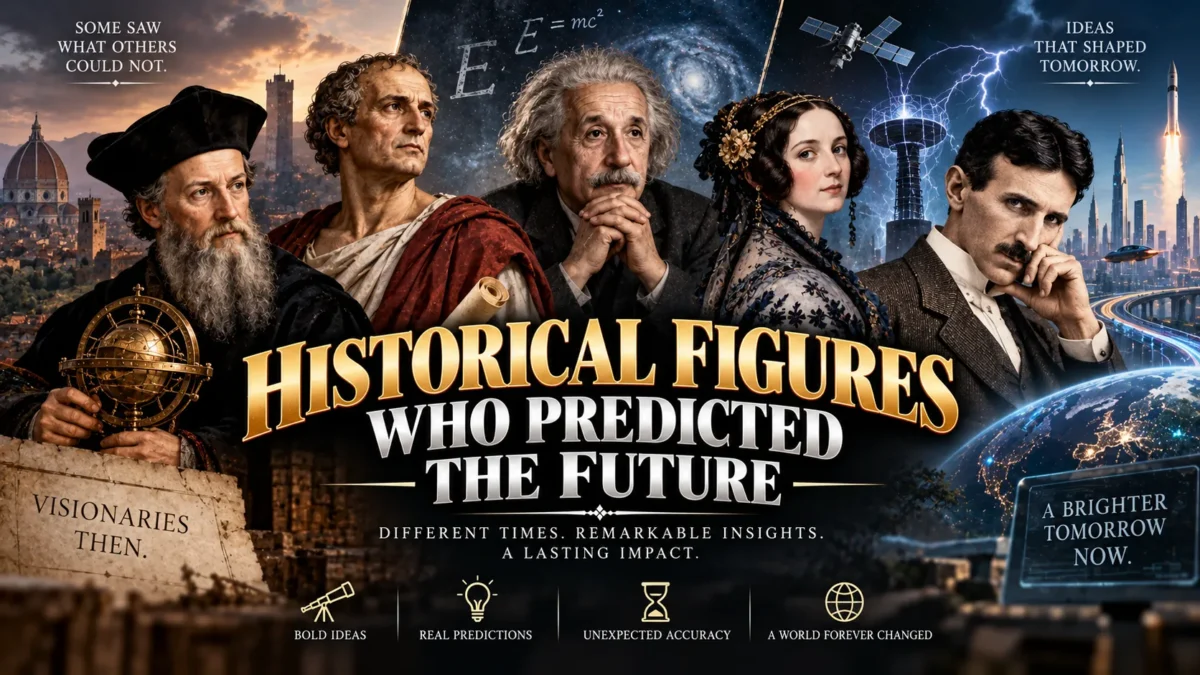
Every generation has its dreamers, scientists, and skeptics who dared to imagine what tomorrow might look like. Some of their guesses were lucky, some were built on careful observation of trends, and a few were so precise they still feel eerie today.
Separating real historical predictions from myth-making after the fact is trickier than it sounds, which is exactly why this list exists.
Before we dive in, it’s worth saying clearly: nobody has ever had a crystal ball. What these people had instead was pattern recognition, scientific literacy, or in some cases, a well-timed guess that happened to land.
That distinction matters if we want to understand can history be predicted at all, or whether we’re just good at remembering the hits and forgetting the misses.
TL;DR: A handful of scientists, writers, and thinkers throughout history made startlingly accurate forecasts—not through magic, but through sharp observation of science, society, and human nature.
Can History Be Predicted? A Quick Primer
Historians and social scientists have argued for centuries about whether the past predicts the future in any reliable way. Some patterns do repeat: empires overextend, technologies converge, populations react predictably to scarcity or abundance. That’s why economists, demographers, and military strategists still study history closely.
But prediction is not the same as prophecy. The people on this list weren’t reading tea leaves; they were extrapolating from real scientific trends, political shifts, or technological momentum already visible in their own time. That’s a very different skill from the vague, after-the-fact pattern-matching used to make figures like Nostradamus look prophetic.
Throughout this piece, you’ll notice a mix of scientists, novelists, and even a few mythological figures. Mythology matters here too, because ancient cultures had their own vocabulary for the one who predicts the future—prophets, oracles, and seers—and understanding that cultural role helps explain why we’re still fascinated by predictions of the future from the past.
1. Jules Verne Imagined Submarines and Space Travel
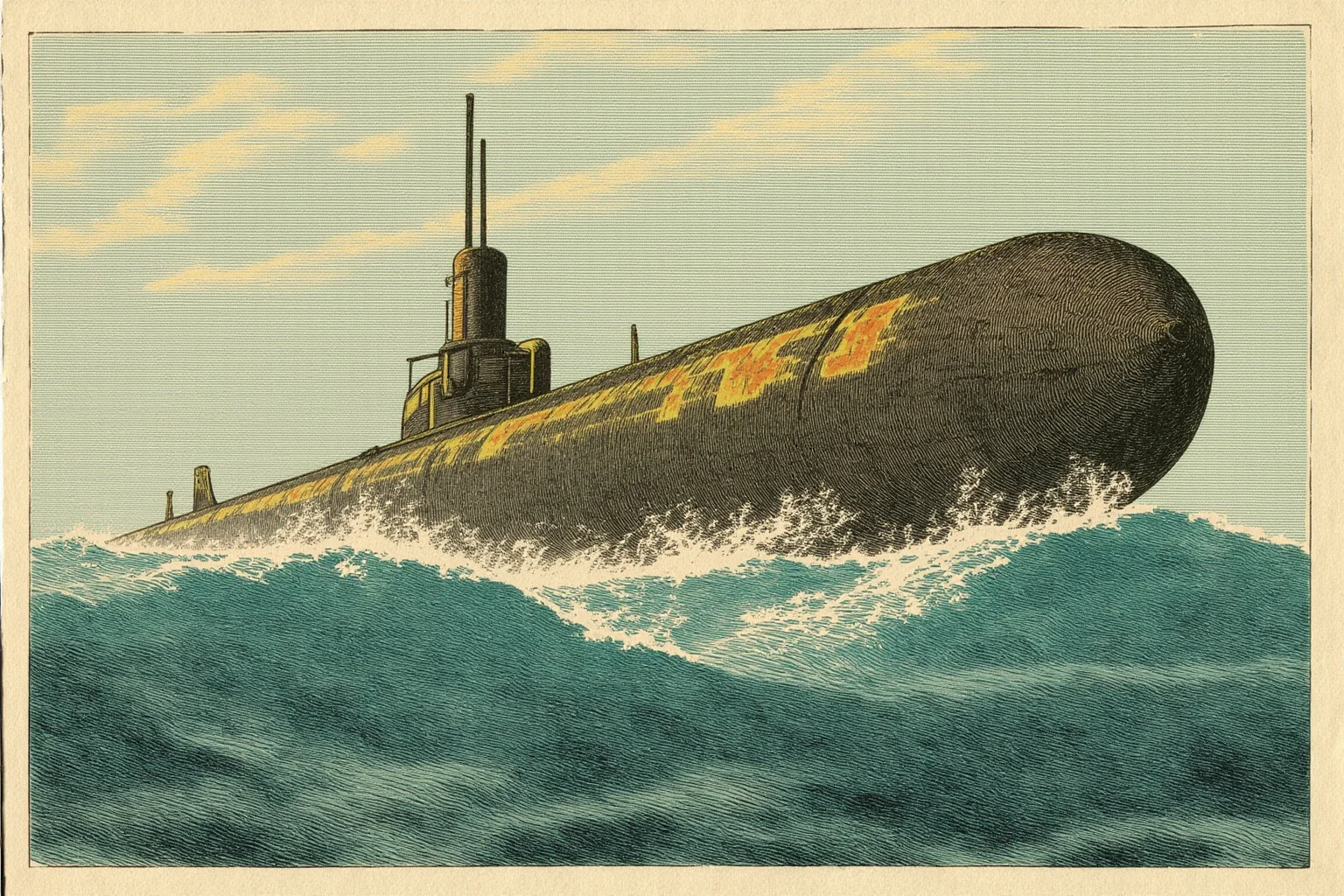
Jules Verne wasn’t a scientist, but he read scientific journals obsessively and used them to fuel his fiction. In “Twenty Thousand Leagues Under the Sea” (1870), he described a submarine, the Nautilus, with a level of engineering detail that predated the electric-powered submarines of the 20th century.
In “From the Earth to the Moon” (1865), Verne described a crewed capsule launched from Florida, a detail that eerily echoes NASA’s later choice of launch site. He got plenty wrong too, including the physics of his launch cannon, but his instinct for where engineering was heading was remarkable for a 19th-century novelist.
2. Leonardo da Vinci Sketched Flying Machines and War Vehicles
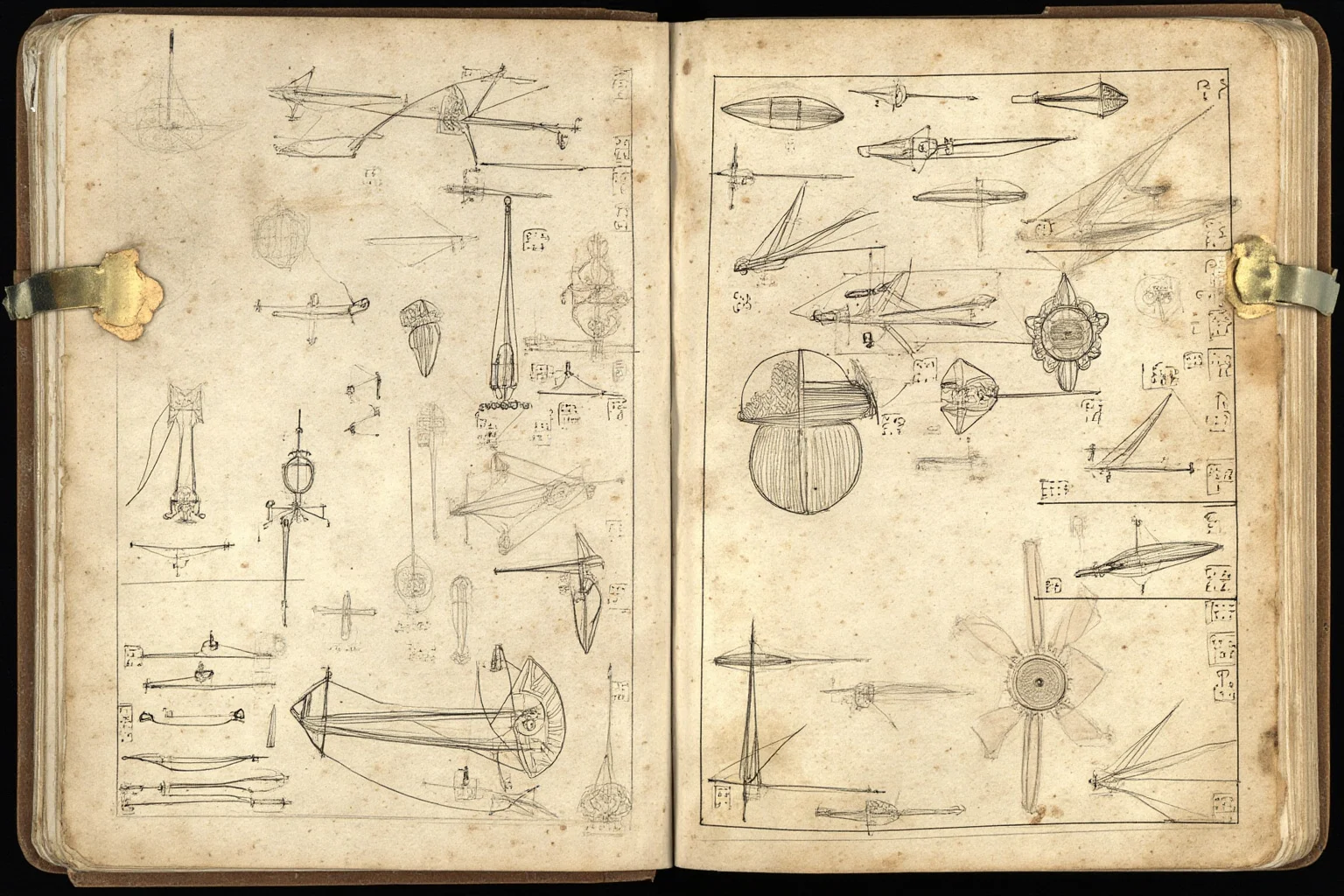
Leonardo da Vinci, often ranked among the smartest people in history, filled his notebooks with designs for aerial screws, parachutes, and armored vehicles centuries before powered flight or tanks existed. His ornithopter sketches weren’t functional aircraft, but they captured the basic aerodynamic problem humans would eventually solve.
His armored cart design, sketched around 1487, is often cited as a conceptual ancestor to the modern tank. Da Vinci himself never built these machines at scale, so his legacy here is less about engineering success and more about demonstrating that the underlying ideas were imaginable long before the materials science caught up.
3. H.G. Wells Predicted Tanks and Atomic Weapons
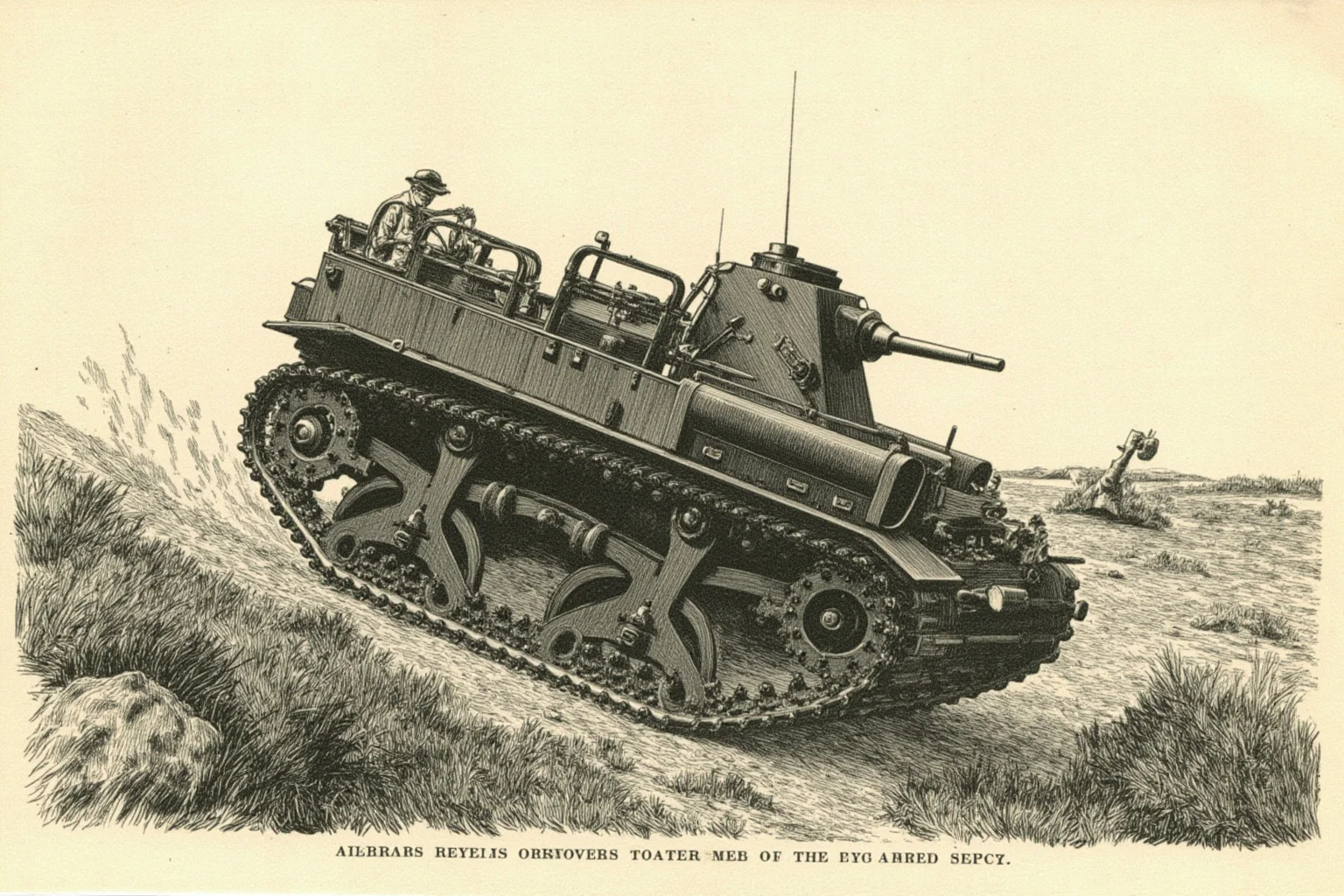
H.G. Wells wrote “The Land Ironclads” in 1903, describing armored, tracked combat vehicles more than a decade before real tanks appeared on World War I battlefields. It’s one of the clearer examples of a man who predicted the future through informed speculation about military engineering trends already underway.
Even more striking is his 1914 novel “The World Set Free,” which used the phrase “atomic bombs” and described weapons of civilization-ending power decades before nuclear fission was understood. Physicist Leo Szilard later said Wells’ fiction influenced his own thinking about chain reactions, making this one of the most historically documented cases of fiction anticipating science.
4. John Elfreth Watkins and the 1900 Ladies’ Home Journal Predictions
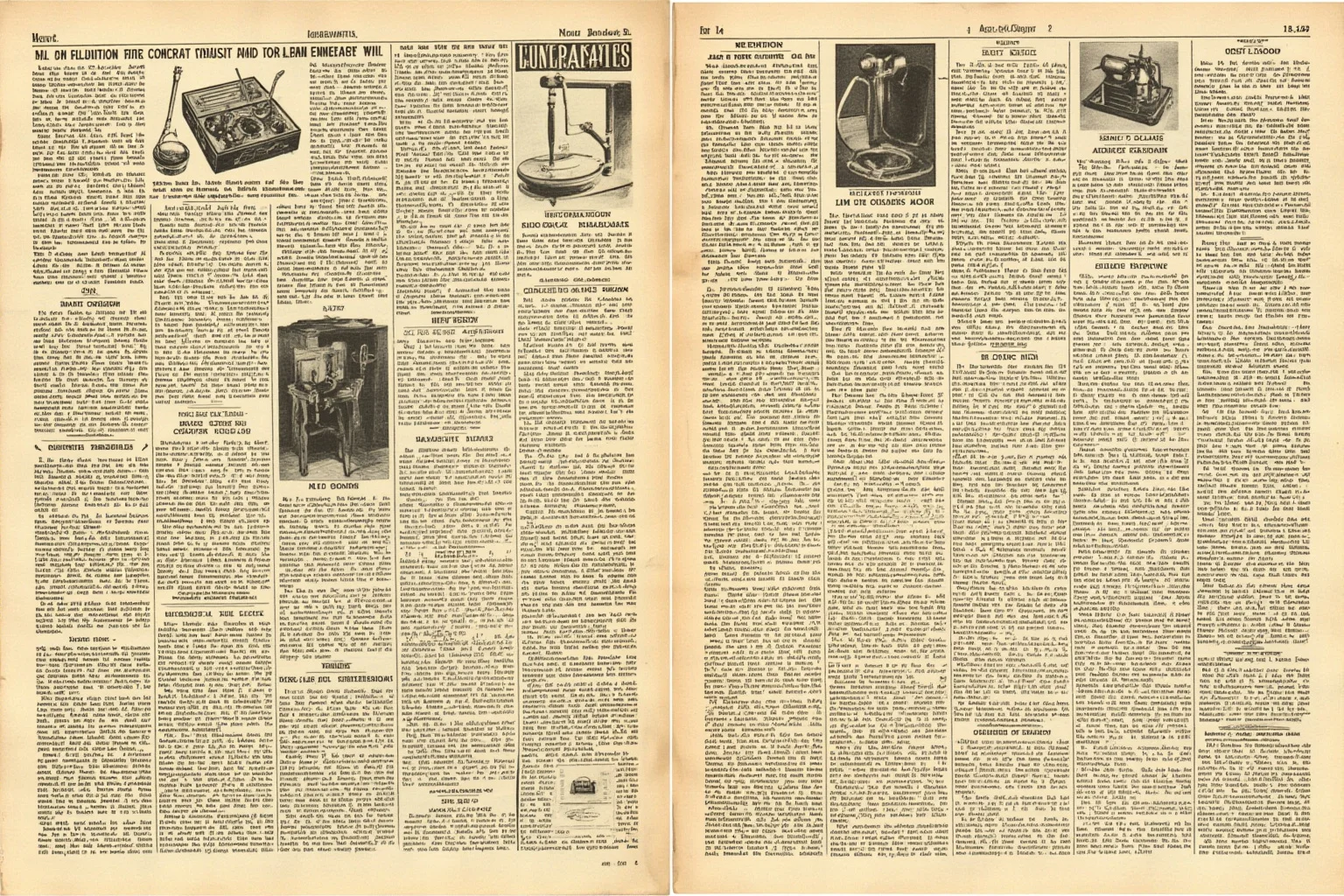
In December 1900, engineer John Elfreth Watkins published an article in Ladies’ Home Journal titled “What May Happen in the Next Hundred Years.” He predicted color photography, images transmitted across continents, and pre-prepared meals delivered to homes.
Watkins also predicted mobile communication devices in a rough sense, describing telephones carried across long distances without wires. Not everything landed; he also predicted the elimination of mosquitoes and houseflies, which obviously never happened. Still, his hit rate on technology is one of the better-documented examples of predictions about the future from the past.
5. Nikola Tesla Foresaw Wireless Communication Devices
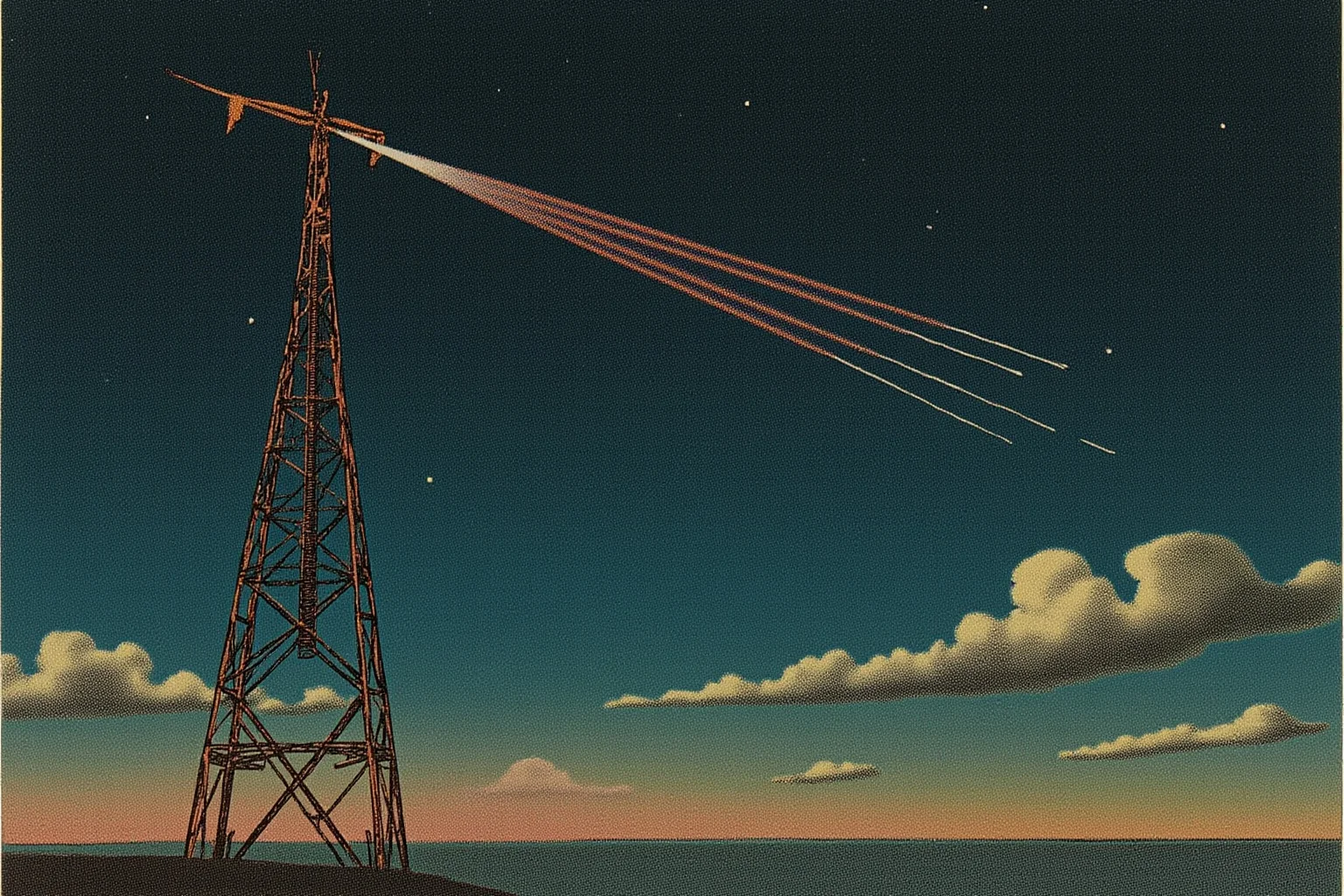
Nikola Tesla spent much of his career obsessed with wireless power and communication, and by the 1920s he was giving interviews describing a future where people carried compact wireless devices. He envisioned instant communication across the globe through pocket-sized instruments, a concept that maps surprisingly well onto modern smartphones.
Tesla’s own company, aiming to build a global wireless information system through his Wardenclyffe Tower project, never achieved commercial success in his lifetime. But his theoretical groundwork in wireless transmission genuinely shaped the radio and telecommunications industries that followed.
6. Alexis de Tocqueville Predicted the Rise of the US and Russia
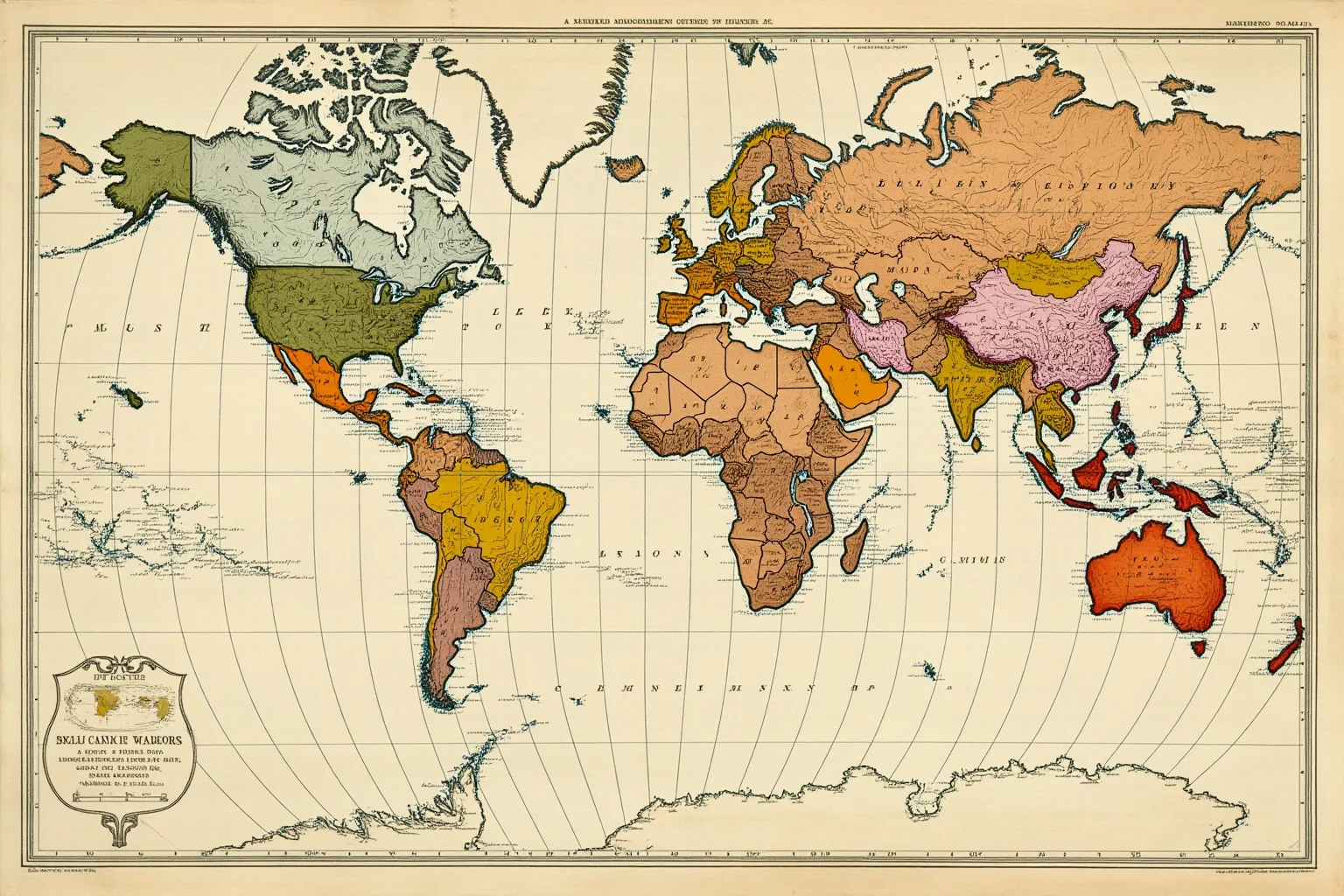
In “Democracy in America” (1835), French political thinker Alexis de Tocqueville wrote that the United States and Russia seemed destined to become the two dominant world powers, each following a different path—one through liberty, the other through servitude. This was written more than a century before the Cold War made that exact rivalry a defining feature of global politics.
Tocqueville based this on careful observation of territorial expansion, population growth, and governing structures in both nations, not guesswork. It stands as one of the most cited historical predictions in political science for good reason.
7. Mark Twain and Halley’s Comet
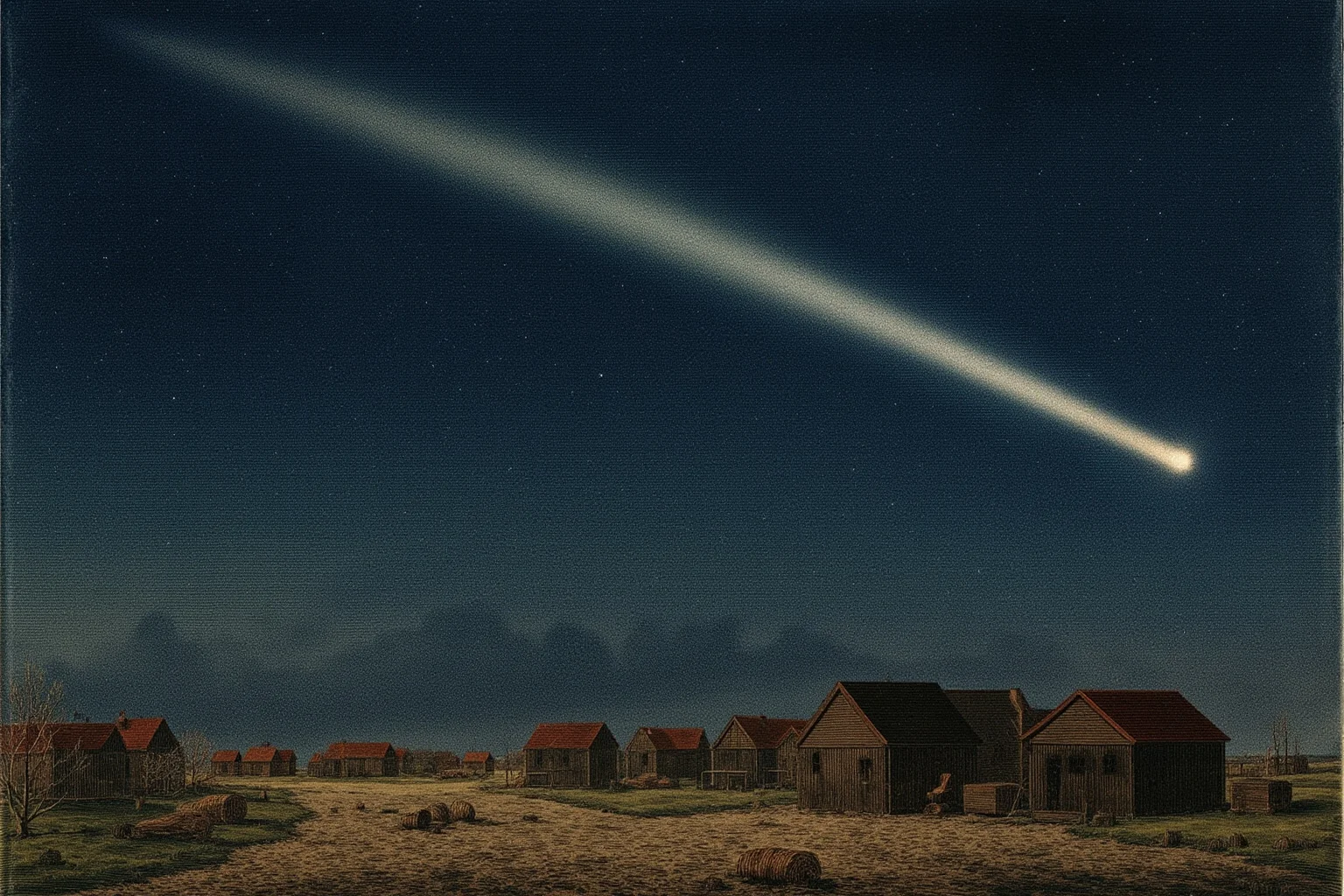
Mark Twain was born in 1835, the same year Halley’s Comet passed near Earth. In 1909, he reportedly said he expected to “go out” with the comet when it returned, a remark recorded by his biographer Albert Bigelow Paine and now counted among the amazing quotes said by legendary historical figures.
Twain died on April 21, 1910, one day after the comet’s closest approach to Earth. Whether this was a genuine premonition or simply Twain’s dry wit paired with good timing is impossible to know for certain, but it remains one of history’s most quoted personal predictions.
8. Roger Bacon and Medieval Machine Concepts
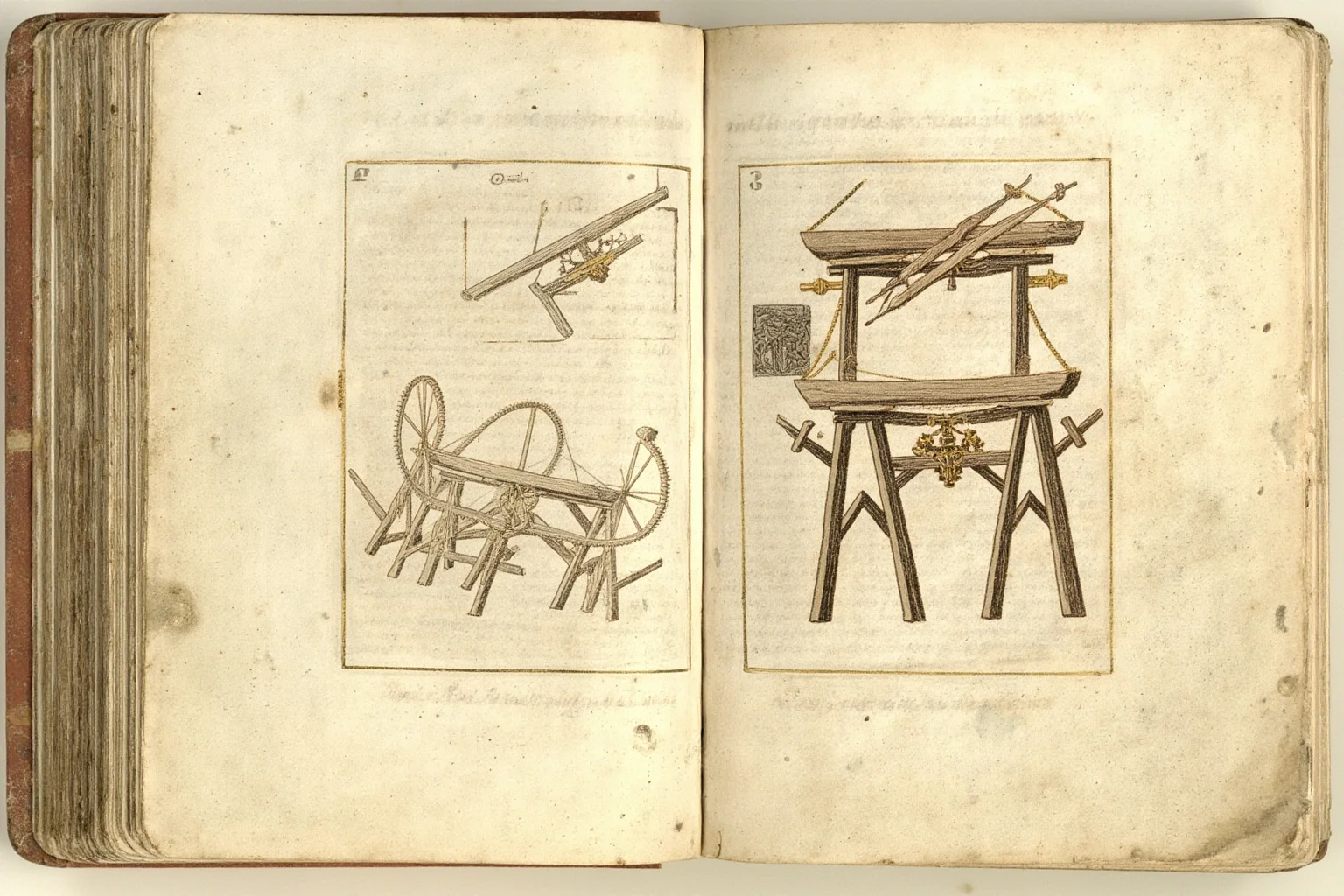
Roger Bacon, a 13th-century English friar and early scientific thinker, is often credited with describing self-propelled carts, ships that could sail without rowers, and flying devices in writings attributed to him. Historians debate how much of this material can be reliably traced to Bacon himself versus later additions.
What’s not in dispute is that Bacon was an early advocate for empirical observation over pure philosophy, a mindset that laid groundwork for the scientific method centuries before Francis Bacon popularized it further. His speculative writings show that mechanical flight and automation were being imagined far earlier than most people assume.
9. Thomas Malthus Warned About Population Growth
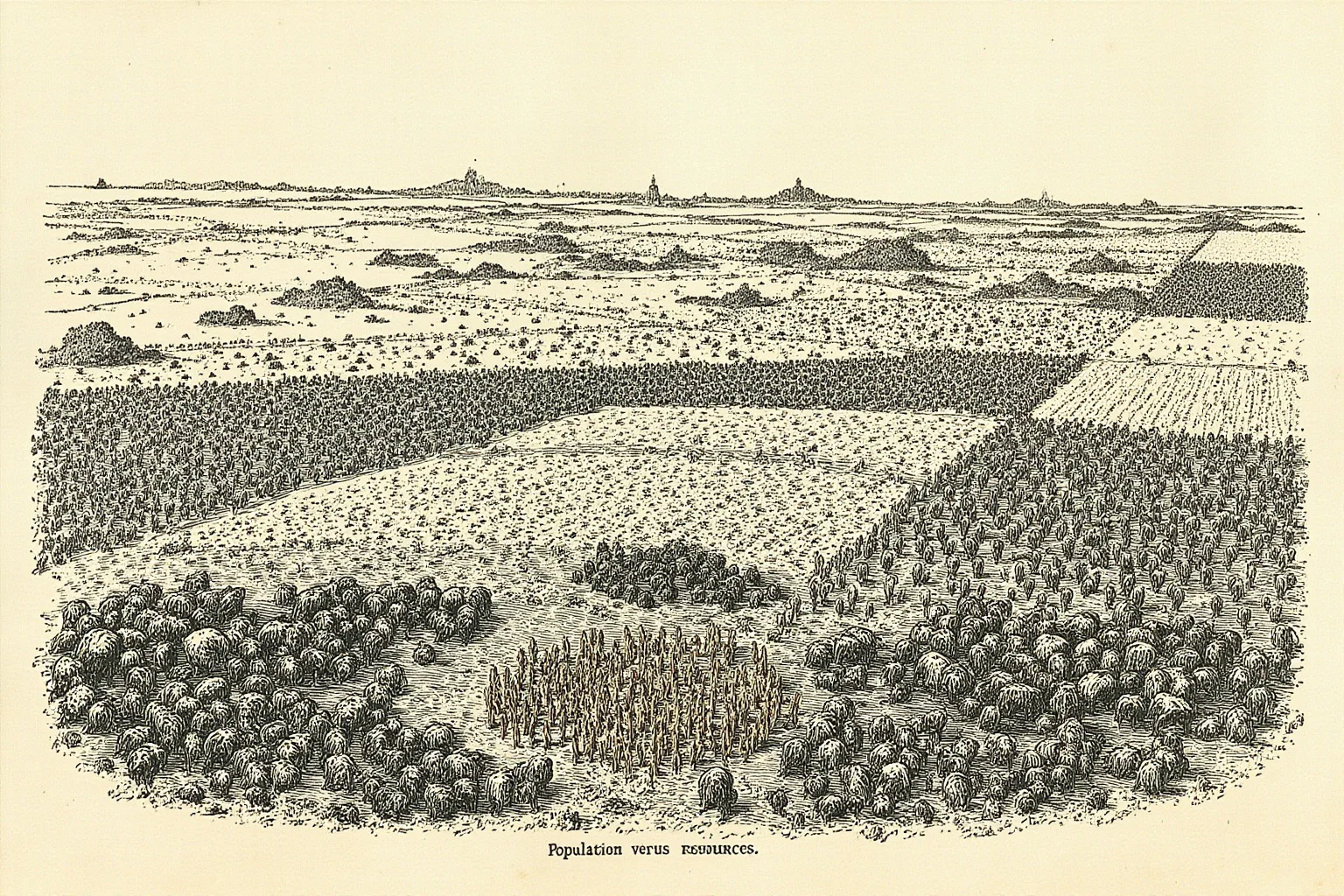
Thomas Malthus published “An Essay on the Principle of Population” in 1798, arguing that population would eventually outgrow food supply unless checked by famine, disease, or war. His mathematical framing—population growing geometrically while food supply grows arithmetically—became foundational to demographic theory.
Malthus was wrong about timing because he didn’t anticipate the agricultural innovations of the 19th and 20th centuries, including the Green Revolution. Even so, his core warning about resource limits still shapes debates on sustainability and environmental policy today.
10. Edward Bellamy Envisioned Something Like Credit Cards
Edward Bellamy’s 1888 utopian novel “Looking Backward” described a future society using a card-based system to draw against a citizen’s credit, rather than carrying cash. This is widely cited as one of the earliest conceptual descriptions of a credit-card-like payment system.
Bellamy wasn’t an economist or engineer; he was a social reformer using fiction to critique the inequality of his era. Even so, his imagined banking system anticipated a real financial technology by roughly seven decades.
11. Winston Churchill’s 1931 Essay on Nuclear-Scale Weapons

Before he became a wartime prime minister, Winston Churchill wrote an essay titled “Fifty Years Hence,” published in the Strand Magazine in 1931. In it, he speculated about harnessing atomic energy for both power generation and devastating weaponry, at a time when nuclear fission had not yet been discovered.
Churchill wasn’t a physicist, but he read scientific literature closely and consulted with scientific advisors throughout his political career. His essay is a striking example of political leaders paying close attention to where physics was heading, years before the Manhattan Project made it real.
12. Arthur C. Clarke Proposed Geostationary Satellites
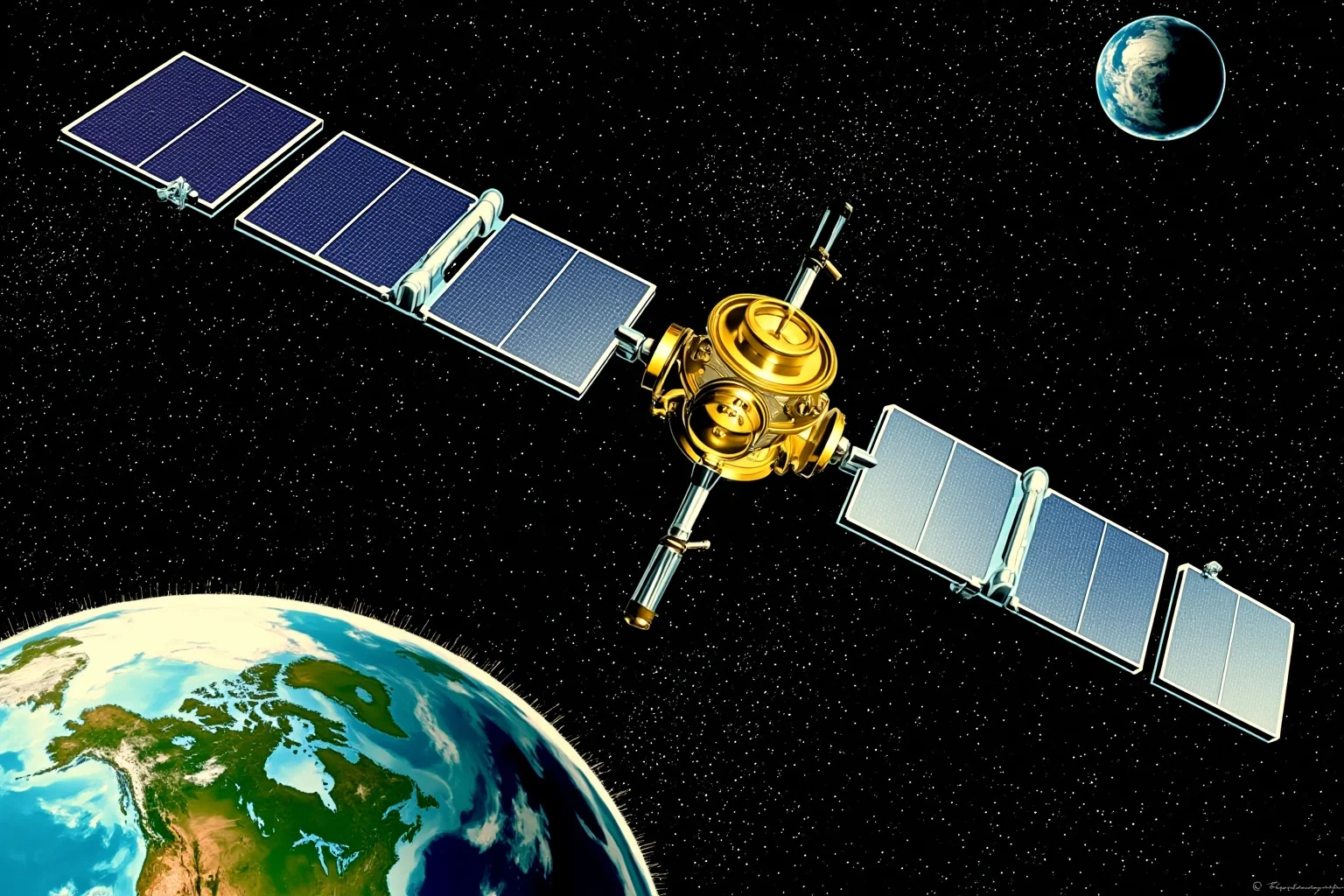
In a 1945 article for Wireless World, science fiction writer and engineer Arthur C. Clarke proposed the idea of satellites placed in a fixed orbit above the equator to relay communications signals across the globe. This orbit is now known as the Clarke Orbit in his honor.
Unlike many fictional predictions on this list, Clarke’s satellite concept was a genuine engineering proposal grounded in orbital mechanics. Communications satellites launched decades later confirmed his idea was not just imaginative but technically sound.
13. Isaac Asimov’s 1964 Predictions for the Year 2014

Asked by the New York Times to imagine the 2014 World’s Fair, Isaac Asimov wrote an essay predicting wireless communication, video calling, and machines capable of retrieving information instantly for users. He also predicted increasing reliance on robotics in daily labor.
Asimov was a trained biochemist as well as a prolific science fiction author, and he grounded his predictions in the computing trends already visible in the 1960s. His essay is frequently cited today as one of the more accurate people who predicted the future exercises of the 20th century.
14. Alvin Toffler Warned About Information Overload
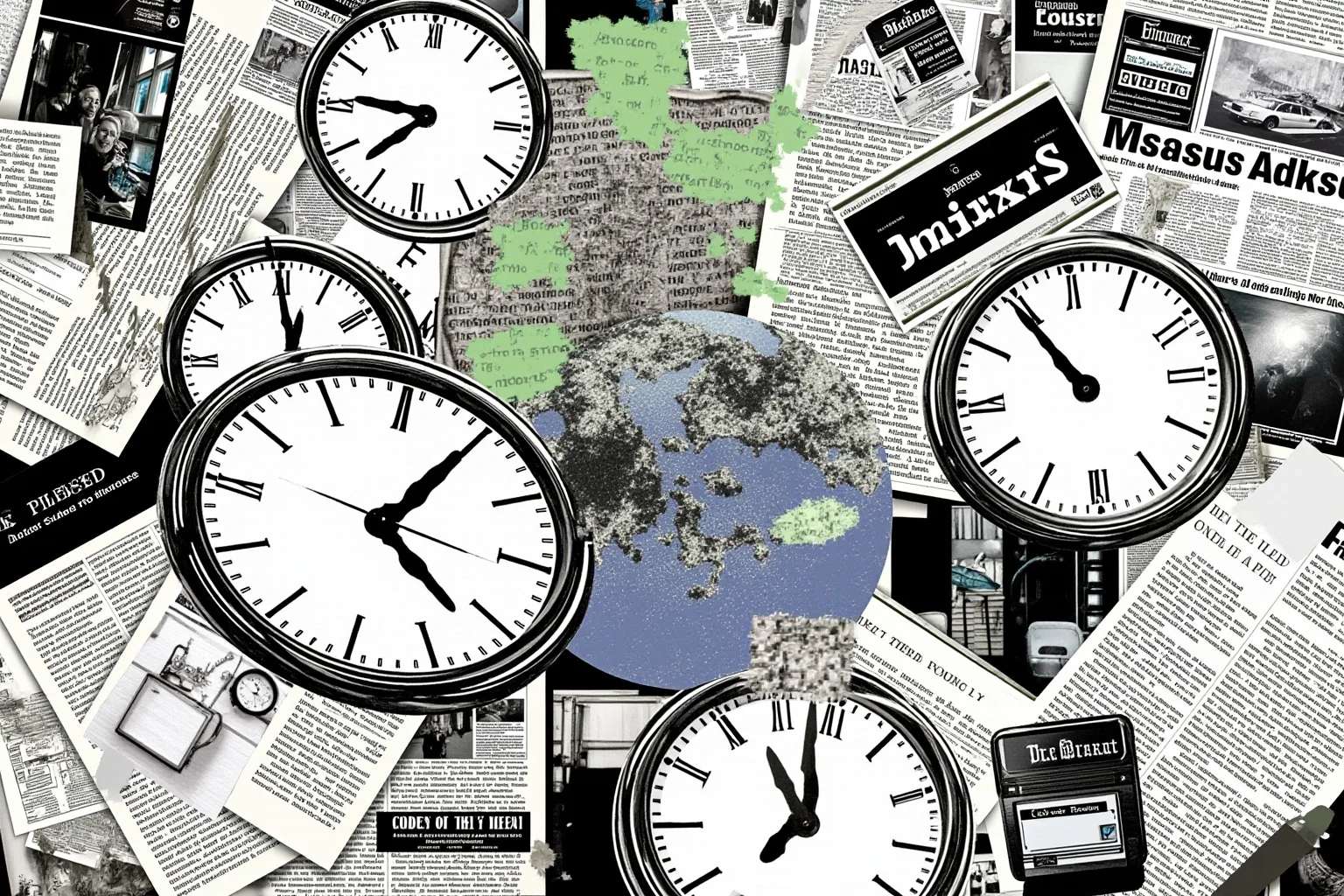
Futurist Alvin Toffler’s 1970 book “Future Shock” described a coming era where the pace of technological and social change would overwhelm individuals psychologically. He coined the term “information overload” to describe this exact phenomenon.
Toffler wasn’t predicting specific gadgets so much as a social condition, and that’s exactly what makes his forecast hold up. Decades later, discussions about digital burnout and constant connectivity echo his warnings almost word for word.
15. George Orwell’s Surveillance State in 1984
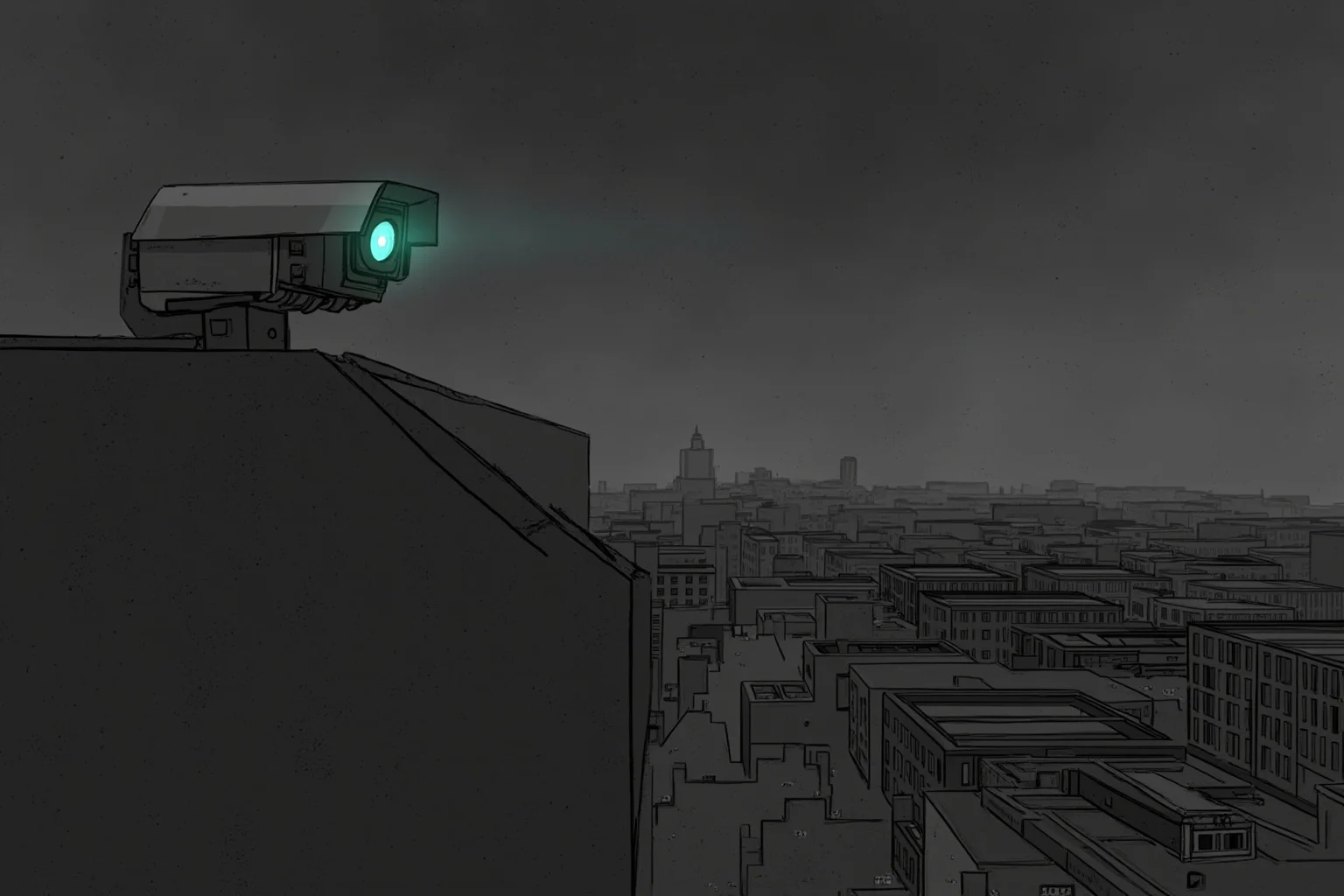
George Orwell’s 1949 novel “1984” depicted a society under constant government surveillance, complete with telescreens monitoring citizens in their own homes. Orwell was writing political allegory about totalitarianism, not offering a literal technology roadmap.
Even so, his imagery of pervasive monitoring has become the default cultural reference point whenever modern surveillance technology expands. That lasting relevance is why Orwell is still invoked constantly in conversations about privacy and data collection.
16. Rachel Carson Predicted Ecological Collapse from Pesticides

Marine biologist Rachel Carson published “Silent Spring” in 1962, warning that widespread pesticide use, particularly DDT, would devastate bird populations and disrupt ecosystems. Her research was grounded in field observation and toxicology, not speculation.
Carson faced fierce pushback from chemical companies at the time, but her predictions about ecological damage were later validated by scientific studies. Her book is widely credited with helping launch the modern environmental movement and leading to DDT restrictions in the United States, and she’s often counted among historical figures who changed the world for the better.
17. Ada Lovelace Predicted Computers Could Do More Than Math

Working with Charles Babbage’s proposed Analytical Engine in the 1840s, mathematician Ada Lovelace wrote notes suggesting the machine could eventually compose music or produce graphics, not just calculate numbers. This insight, tucked into her 1843 translation and annotation of an Italian paper on the Engine, predates general-purpose computing by over a century.
Lovelace is frequently cited as an early example of a woman who predicted the future of computing with startling clarity, and she’s regularly listed among history’s most powerful women. Her notes are considered some of the first descriptions of what we’d now call a computer algorithm.
18. The Oracle of Delphi and Ancient Prophecy Culture

In ancient Greece, the Oracle of Delphi—channeled through a priestess known as the Pythia—was consulted by kings, generals, and ordinary citizens seeking guidance about the future. Her cryptic answers were interpreted by priests, often vaguely enough to fit whatever outcome eventually occurred.
Historians view the Oracle less as genuine foresight and more as a powerful cultural institution that shaped decisions simply by being trusted. It’s a useful reminder that ancient societies had deep cultural roles for those believed to predict culture and fate, even without any verifiable predictive accuracy.
19. Cassandra, Myth’s Original Unheeded Prophet
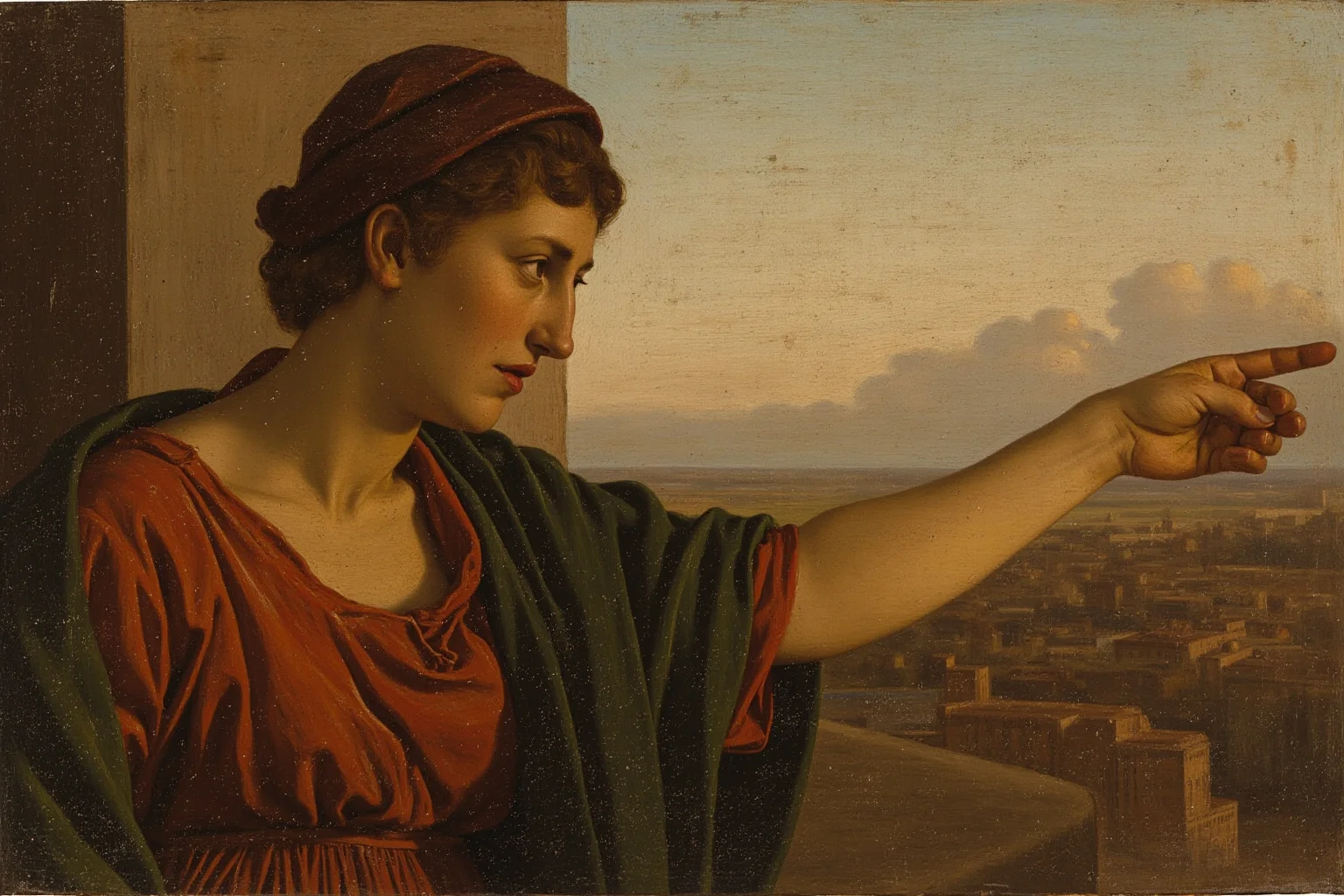
In Greek mythology, Cassandra was a Trojan princess granted the gift of true prophecy by Apollo, but cursed so that no one would ever believe her warnings. She’s not a historical figure, but her story became the archetype for the one who predicts the future correctly and is ignored anyway.
The term “Cassandra complex” is still used today to describe people who make accurate warnings that get dismissed. Her myth reflects how ancient cultures processed the frustrating gap between foresight and persuasion.
20. Nostradamus and the Limits of Vague Prophecy
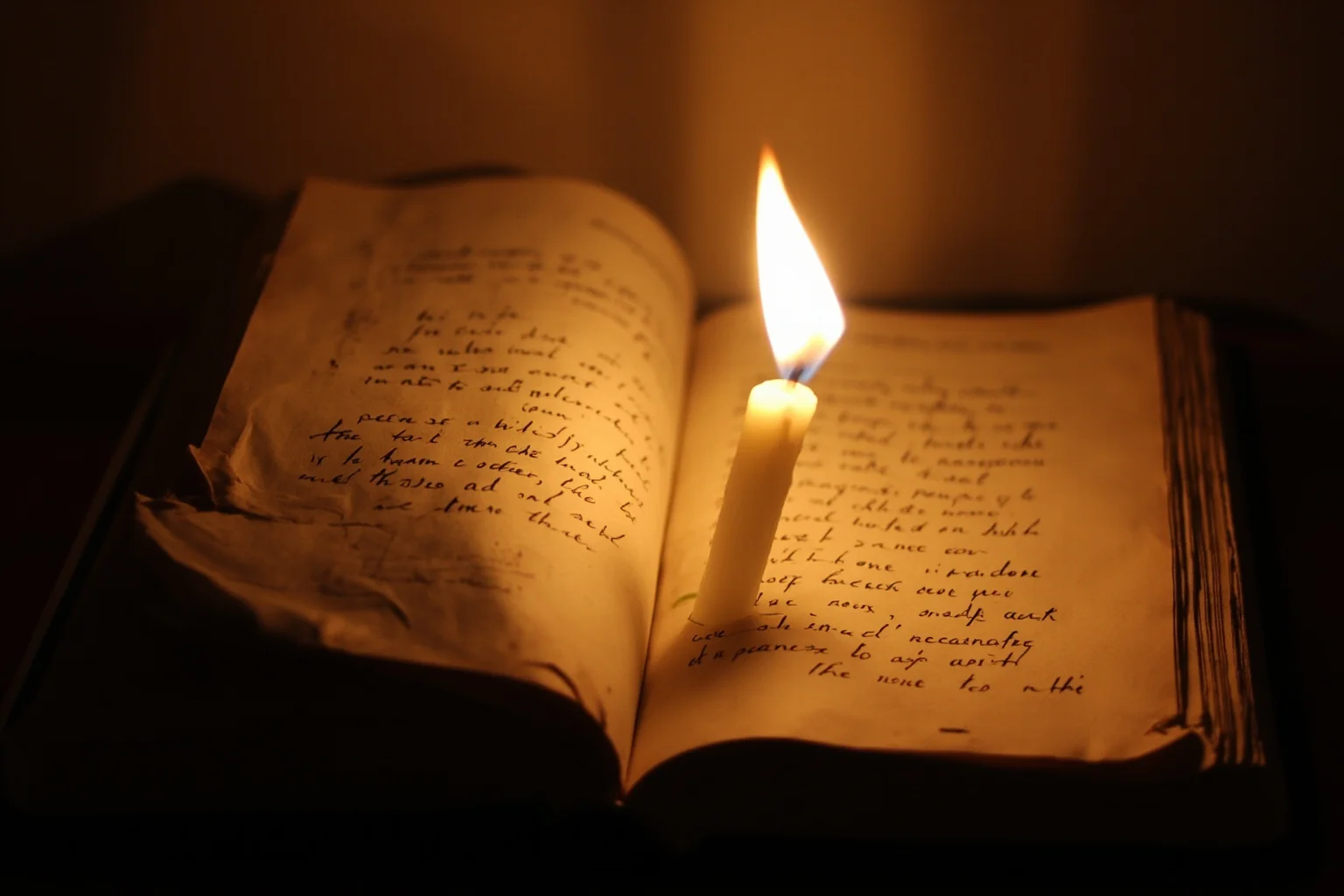
Michel de Nostredame, known as Nostradamus, published a collection of cryptic quatrains in 1555 that many later readers claimed predicted everything from the French Revolution to World War II. Historians and skeptics broadly agree these connections are made retroactively, fitting vague verses to events after they’ve already happened. For a closer look at his life and claims, see these facts about Nostradamus and his predictions.
Nostradamus never named specific dates, places, or people with any consistency, which makes his writing flexible enough to be reinterpreted endlessly. He’s included here specifically as a myth-busting example of why loose prophecy shouldn’t be confused with genuine historical predictions.
21. Karl Marx’s Mixed Record on Capitalism’s Future
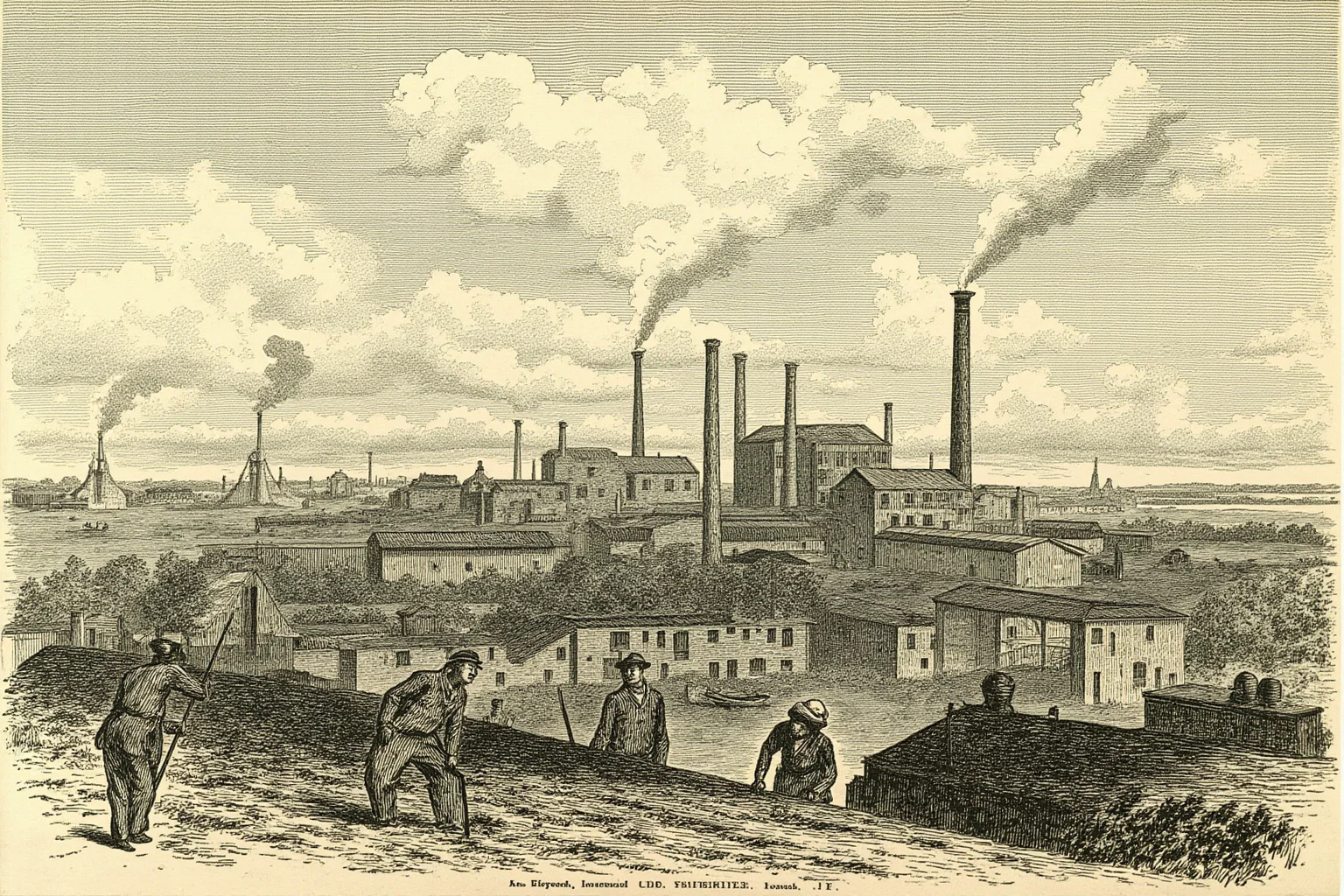
Karl Marx predicted that industrial capitalism would concentrate wealth into fewer hands and eventually provoke worker uprisings against owners of production. His analysis of capital concentration and globalization of markets has aged surprisingly well in some respects, particularly regarding corporate consolidation.
However, Marx also predicted that revolution would occur first in the most industrialized nations, which didn’t happen; the major 20th-century communist revolutions occurred in largely agrarian Russia and China instead. His record is a good example of why even rigorous theorists get some historical predictions right and others wrong.
22. Computer Scientists and the Y2K Problem

By the late 1990s, computer scientists and engineers were sounding alarms about the Year 2000 problem, warning that software storing dates with two digits instead of four could malfunction when the calendar rolled from 1999 to 2000. This prediction wasn’t mystical at all; it was based on direct knowledge of how legacy code was written decades earlier.
Governments and companies spent billions of dollars preparing for the rollover, and the transition into 2000 passed with relatively few serious incidents. Some critics later called it overhyped, but the engineers’ underlying technical prediction about the flawed code was entirely accurate, and the smooth transition was largely a result of the preparation their forecast triggered.
What Makes Some Predictions Come True?
Looking across this list, a pattern emerges among the people who predict the future most successfully. They tend to be closely engaged with real scientific or social trends already in motion, rather than working from pure imagination or mysticism.
Writers like Verne, Wells, and Clarke succeeded because they understood the physics and engineering constraints of their eras well enough to extrapolate logically. Thinkers like Tocqueville, Malthus, and Marx succeeded, at least partially, because they studied demographic and economic patterns closely enough to project them forward.
By contrast, figures like Nostradamus and the Oracle of Delphi endure culturally not because their predictions were verifiably accurate, but because ambiguous language invites people to find meaning after the fact. That’s an important distinction for anyone asking whether the past predicts the future in any reliable, testable way.
Final Thoughts on Predicting the Future
History doesn’t hand out crystal balls, but it does reward close observation, scientific literacy, and a willingness to take current trends seriously instead of dismissing them. The genuine successes on this list came from people who were paying deep attention to their own time, not people claiming supernatural insight.
That’s probably the most useful lesson embedded in these historical predictions: foresight is less about foretold the future through mystery, and more about noticing where the present is already heading. The next time someone claims to have accurately predicted the future, it’s worth asking whether they were reading trends carefully, or simply getting lucky with a vague guess.
Frequently Asked Questions
What is the term for one who predicts the future?
Someone who predicts the future is often called a futurist, prophet, seer, or oracle, depending on the cultural and historical context. Futurist typically describes modern analysts who use data and trend analysis, while prophet and oracle are older terms tied to religious or mythological traditions, such as the Oracle of Delphi in ancient Greece.
Can history be predicted with any real accuracy?
History can't be predicted with certainty, but recurring patterns in technology, economics, and demographics do allow careful observers to make reasonable forecasts. Historical figures like Alexis de Tocqueville and Thomas Malthus succeeded partially because they analyzed real trends already underway, rather than relying on guesswork or mysticism.
Who is considered the man who predicted the future most accurately?
There's no single agreed-upon winner, but Arthur C. Clarke is frequently cited for his 1945 proposal of geostationary communication satellites, since it was a specific, technically grounded prediction that came true almost exactly as described. Jules Verne and H.G. Wells are also commonly mentioned for their remarkably prescient science fiction.
Was there a woman who predicted the future accurately in history?
Yes. Mathematician Ada Lovelace predicted in the 1840s that computing machines could eventually be used for tasks like composing music, not just calculations, more than a century before general-purpose computers existed. Marine biologist Rachel Carson also accurately warned in 1962 that pesticide overuse would cause lasting ecological damage.
What are some famous examples of predictions of the future from the past that came true?
Notable examples include Jules Verne describing submarines decades before they existed, H.G. Wells predicting tank warfare and atomic weapons in fiction, and Arthur C. Clarke proposing communication satellites in 1945. Winston Churchill also wrote about the potential for atomic energy and weapons years before nuclear fission was scientifically confirmed.
Why do some historical predictions fail even when made by smart people?
Predictions often fail because they can't account for unforeseen innovations, social changes, or events that shift the trajectory of a trend. Thomas Malthus, for example, correctly identified population growth pressures but couldn't anticipate agricultural advances like the Green Revolution that eased food shortages.

Alex Warren
Related Articles





