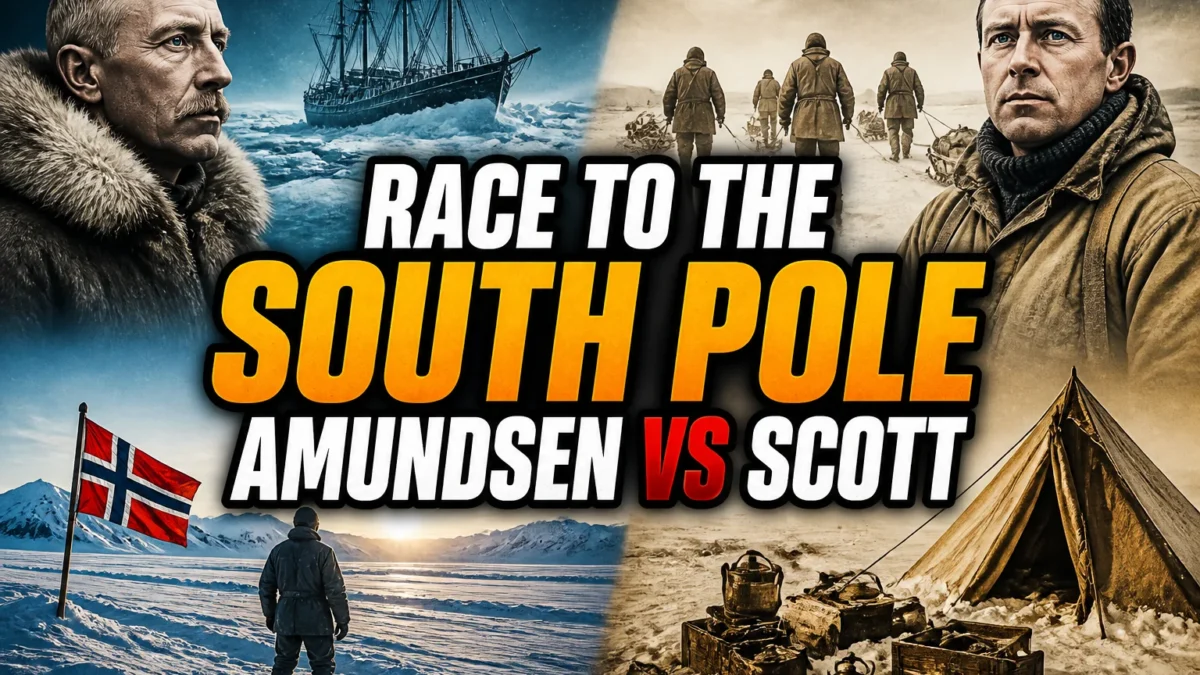
Few stories in the history of exploration are retold as often as the race to the South Pole. Two expeditions, one Norwegian and one British, converged on the bottom of the world in 1911 and 1912. One team came home in triumph, and the other died on the ice.
The usual version is a tidy morality play about dogs versus ponies, or professionals versus gentlemanly amateurs. The real story is messier and more interesting. Here is what actually happened, what historians still argue about, and which popular myths deserve to be retired.
TL;DR: Roald Amundsen reached the South Pole first on 14 December 1911 through meticulous planning, while Robert Falcon Scott's party arrived 34 days later and perished on the return march in a tragedy shaped by weather, logistics and hard luck.
Why the Race for the South Pole Began
By the early 1900s the two poles were the last great prizes of geographic exploration. Antarctica had only been sighted in 1820, and its interior was almost entirely unknown. Reaching the pole meant crossing a continent larger than Europe, in the coldest and windiest conditions on Earth.
Britain had a strong claim to Antarctic ambition. Robert Falcon Scott led the Discovery Expedition of 1901–04, and he marched south with Edward Wilson and Ernest Shackleton to about 82°17'S. That was a record at the time, but it was still far from the pole.
Shackleton's Nimrod Expedition of 1907–09 then pushed to 88°23'S, roughly 97 nautical miles short of the pole. He turned back to keep his men alive, and the decision is widely admired. It also made clear that the pole was within reach, and that better logistics would decide who got there.
Scott announced a new British Antarctic Expedition, later known as the Terra Nova Expedition. It was funded by public subscription, private donors and a government grant. Scott wanted the pole, but he also wanted a serious program of science, and that mix of goals shaped everything that followed.
How Amundsen Quietly Changed Course
Roald Amundsen was not originally headed south at all. The Norwegian had planned an Arctic drift across the polar basin in the ship Fram, which had been built for Fridtjof Nansen. He was already famous for leading the first voyage through the Northwest Passage aboard Gjøa between 1903 and 1906.
In September 1909 the news broke that Frederick Cook and then Robert Peary had each claimed the North Pole. Both claims were controversial, and they remain disputed. But to Amundsen the Arctic prize looked taken, and his funding was tied to polar glory.
He decided to head for the South Pole instead and kept the change a closely guarded secret. Only a handful of people knew, and he feared that backers and officials would withdraw their support if he announced it. He told the crew only when the Fram reached Madeira in September 1910, and by most accounts he gave the men the chance to leave.
He also sent word to Scott, who learned of the Norwegian challenge in Australia in October 1910. Critics at the time called the secrecy underhanded, and some still do. Amundsen's defenders point out that no rule of exploration required him to announce his route in advance.
Two Bases on the Ross Sea
The two expeditions set up camp on opposite sides of the Ross Sea region. Scott built his hut at Cape Evans on Ross Island, near McMurdo Sound, where Shackleton had worked before him. The ground there was solid rock, and the route south via the Beardmore Glacier had already been scouted by Shackleton.
Amundsen made a bolder choice. He landed at the Bay of Whales on the Ross Ice Shelf in January 1911 and built a base he called Framheim. It sat roughly 60 miles closer to the pole than Scott's camp, and it had no known route onto the polar plateau.
The site was a gamble because the ice shelf can calve and break away. Shackleton had judged the area too risky for a base, but Amundsen studied the earlier reports. He concluded that the barrier edge there had been stable for decades, and he was proved right in his own time.
In early February 1911 Scott's Northern Party met the Fram at the Bay of Whales. For the British, this made the rival's position impossible to ignore. Even so, Scott by most accounts stuck to his original plan rather than change course.
Scott vs. Amundsen: Two Very Different Plans
The contest between Scott and Amundsen came down largely to method. Amundsen had one goal, and he organized everything around it. Scott had several aims, including geology, meteorology, biology and the pole, and his transport plan reflected a mix of hopes and hedges.
Dogs, Skis and Fur
Amundsen relied on Greenland sled dogs and skis, and he did not treat the dogs as pets. He planned from the start to kill some of them along the way to feed the remaining dogs and the men. His team also borrowed from Arctic peoples. During the Gjøa voyage he had learned from the Netsilik Inuit about fur clothing and dog driving, and he carried that knowledge south.
His men included Olav Bjaaland, a champion skier, and Helmer Hanssen, an experienced dog driver. They were joined by Oscar Wisting and Sverre Hassel, and they laid supply depots in the autumn of 1911 at 80°, 81° and 82°S. Depots were marked with flags laid out in lines so they could not be missed in poor visibility.
Ponies, Motors and Muscle
Scott's plan was more complicated. He brought Manchurian ponies, a few dogs and experimental motor sledges, and he expected men to haul sledges for much of the distance. His experience on the Discovery Expedition had left him skeptical of dogs, and he also had a deep belief in man-hauling as a test of character.
The motor sledges failed early. One was lost through the sea ice while it was being unloaded, and the others broke down on the Ross Ice Shelf. The ponies struggled in the cold and in the soft snow, and they needed fodder that had to be hauled in. Many of Scott's problems traced back to this reliance on animals and machines that did not suit the terrain.
Clothing was another difference. Amundsen's party wore loose, layered fur garments that let sweat escape. The British used wool and windproof outer layers, which were effective but less forgiving when men worked hard in the cold. Historians continue to debate how much this mattered, but it is one reason the Norwegians' approach looks so modern.
Amundsen's South Pole Expedition: The Dash
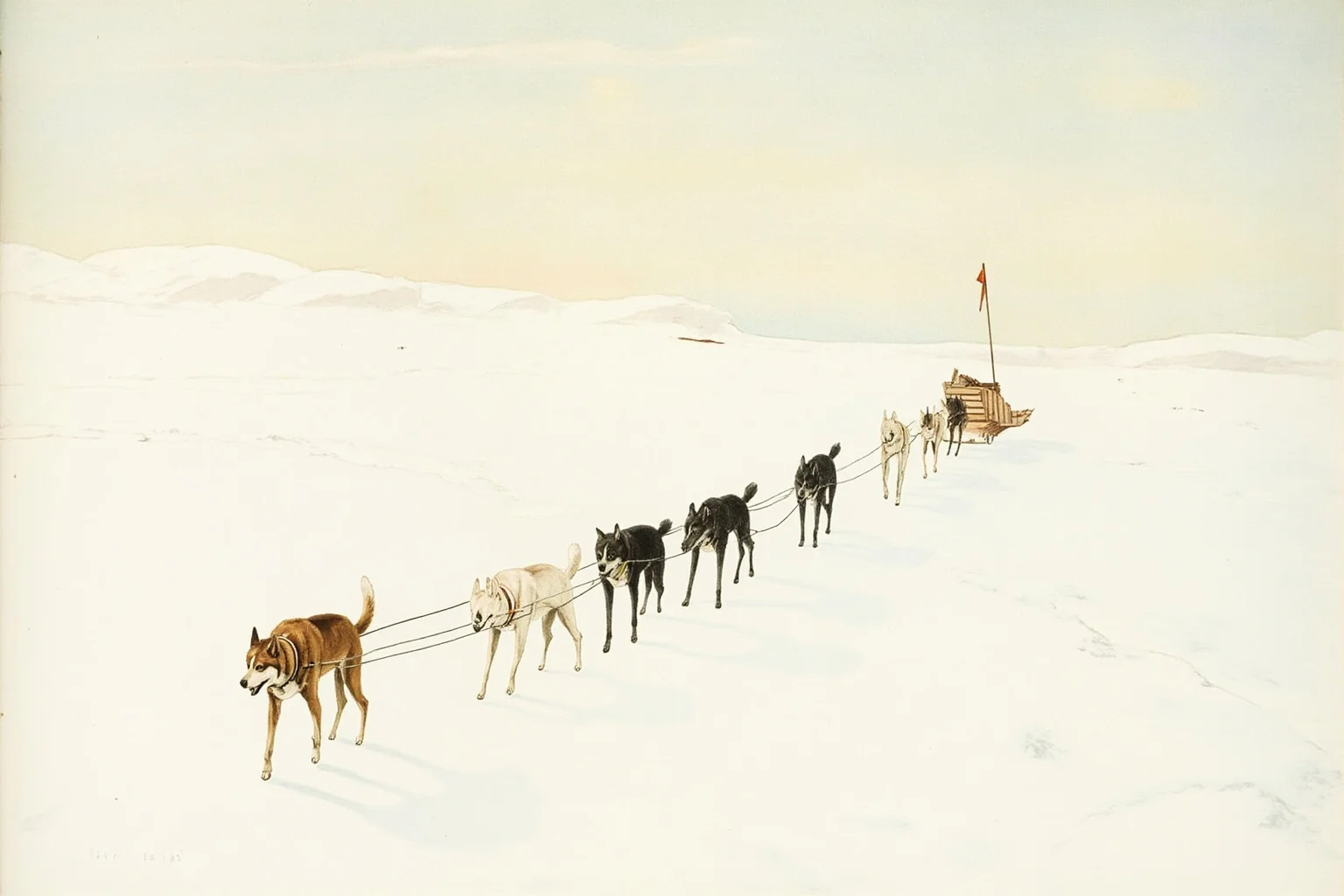
Amundsen's team made a false start on 8 September 1911 when the weather was still too cold. Temperatures fell to around −56°C, and they retreated to Framheim after leaving supplies behind. The episode exposed a rift with Hjalmar Johansen, who had argued against the early departure. Amundsen later excluded him from the polar party, a decision that left lasting bitterness.
The real journey began on 19 October 1911. Five men set out with four sledges and 52 dogs. They followed the depot line south, then turned toward the mountains where no one had been before.
Amundsen found a path through the Transantarctic Mountains by way of a steep glacier he named after Axel Heiberg, one of his supporters. The climb was hard, and the team's skill with dogs let them gain altitude quickly. At the top of the glacier, at a spot nicknamed the Butcher's Shop, he had 24 dogs killed to feed the survivors and the men.
The party crossed the high plateau in fog and cold and reached the pole on 14 December 1911. Amundsen's men planted the Norwegian flag and took careful measurements around the spot to be sure they were as close as they could get. They named the camp Polheim, meaning home at the pole.
Amundsen left a small tent there with a letter for King Haakon VII of Norway. He also wrote a note to Scott asking him to forward the letter if the Norwegians did not make it home. It was a practical precaution, and it was not meant as mockery.
The return was efficient. The five men reached Framheim on 25 January 1912, ahead of schedule, with just 11 of their 52 dogs. The expedition's total travel time was 99 days, and all five men were alive. Amundsen's news reached the world in March 1912 from Hobart, Tasmania.
Scott's Long March South
Scott's polar journey started in stages. The motor party left in late October 1911, and the ponies set out earlier because they were slower. Scott and the main group followed on 1 November, planning to cover more than 800 miles each way.
The plan was a relay. Support parties would haul supplies to a certain point and then turn back, leaving a smaller group to continue. The dogs were to return early, and the final push would be made by men hauling sledges. It was a logical scheme, but it left little margin for delay.
Problems accumulated. The depot that was supposed to hold supplies for the return, One Ton Depot, ended up about 35 miles short of its intended position because the ponies were weak. A four-day blizzard in early December pinned the expedition down. And the ponies had to be shot at the foot of the Beardmore Glacier, so the men were forced to haul the sledges themselves.
The last support party turned back on 4 January 1912 at about 87°S. Scott chose five men for the final push: himself, Edward Wilson, Henry Bowers, Lawrence Oates and Edgar Evans. Adding Bowers at the last minute meant that rations and equipment planned for four had to be stretched across five.
Reaching the Pole: 14 December vs. 17 January
On 16 January 1912 the British party spotted a black flag in the distance. Their first reaction was dread, and they soon found sledge and dog tracks. The next day, 17 January, they reached the pole and found the Norwegian tent, flag and letter.
Scott wrote in his diary: "Great God! this is an awful place and terrible enough for us to have laboured to it without the reward of priority." That line has become one of the most quoted sentences in polar history. A photograph taken at the pole shows the five men looking exhausted and deflated.
The British had arrived 34 days after the Norwegians. They had also hauled their own sledges for most of the way, which cost them time and energy. They now faced the same distance back, with their food and fuel already stretched thin.
The Return March and the Final Tent
The trip home started badly and got worse. Edgar Evans, who had been strong early on, suffered a fall and a head injury, and his condition declined. He died on 17 February 1912 near the foot of the Beardmore Glacier.
The remaining four pressed on across the Ross Ice Shelf. Scott recorded unusually cold nights and slow progress, and Oates's feet were badly frostbitten. Oates is said to have walked out of the tent to his death in mid-March, and Scott recorded his words: "I am just going outside and may be some time." The exact date is uncertain because the diary entries are not perfectly precise, but it was around 16 or 17 March.
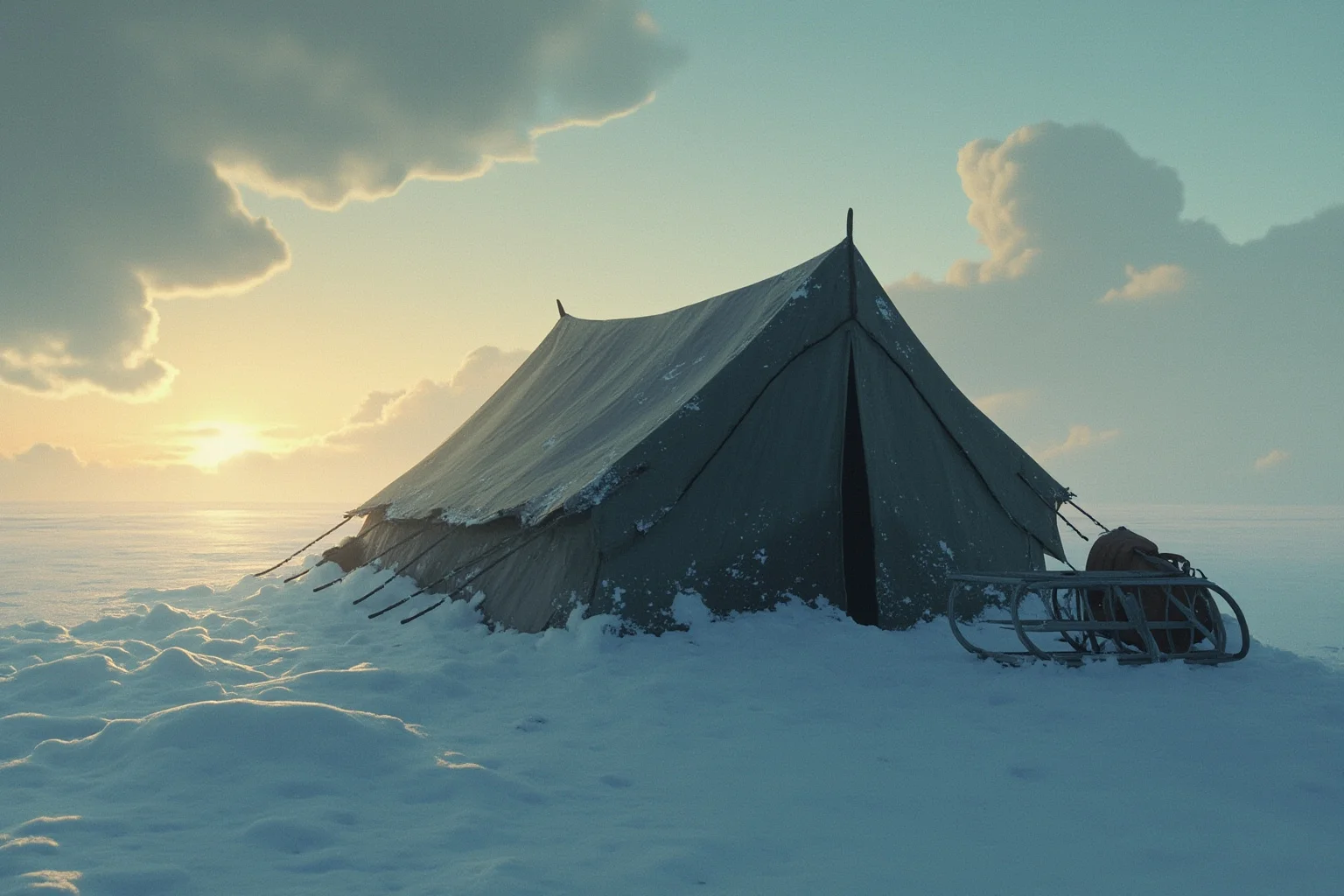
Scott, Wilson and Bowers struggled on for a few more days. They made their last camp roughly 11 miles from One Ton Depot, where a blizzard confined them to their tent. Scott's last diary entry is dated 29 March 1912, and it ends with a plea to look after the families of the men.
Meanwhile a relief effort had gone out. Apsley Cherry-Garrard and the dog driver Dimitri Gerov reached One Ton Depot in early March and waited several days before turning back. Cherry-Garrard struggled with guilt about this for the rest of his life, though most historians do not blame him.
A search party found the tent on 12 November 1912. Inside were the three bodies, Scott's diaries and about 35 pounds of geological specimens that the men had hauled to the end. They covered the tent with snow and left the men where they lay.
Why Did Scott's Party Die? The Evidence
Historians have argued about this for more than a century, and the honest answer is that there was no single cause. Several factors combined, and some remain contested. Here are the main candidates.
The first is timing and pace. Man-hauling at high altitude burned more calories than the rations supplied, so the men were steadily losing strength. Starting the return march late and moving slowly left no margin.
The second is weather. Susan Solomon's analysis in The Coldest March (2001) argued that February and March 1912 were unusually cold on the Ross Ice Shelf, slowing the party's progress. Other researchers have questioned how unusual the weather really was, so the point is debated.
The third is supplies. Some fuel reportedly evaporated from depot cans with leaky seals, leaving less for melting snow and cooking. Illness may also have played a part, and scurvy is often mentioned. How much it mattered remains uncertain, and some historians argue that the symptoms were mainly the result of exhaustion and exposure.
The fourth is decisions. Critics point to the transport mix, the depot positions and the late change to a five-man party. Defenders say Scott made reasonable choices with the knowledge he had and was undone by bad luck, including the illness of Evans and Oates. The truth is probably somewhere in between.
Antarctica and Amundsen: Myths vs. Reality
Myth: Amundsen Cheated by Using Dogs
There were no rules in the race to the South Pole. Amundsen chose the tools he thought would work best, and Scott brought dogs of his own. Using dogs was not cheating, and the plan to kill some of them for food was a deliberate part of the strategy.
It does seem harsh by modern standards. In the context of the time, it was a standard polar technique.
Myth: Amundsen Was Simply Lucky
Luck played a part, as it does in every expedition, but Amundsen's success came mainly from preparation. He studied Arctic survival methods and chose skilled skiers and dog handlers. He also put extensive depots in place and kept the team small. The route through the mountains was a real risk, and his handling of it showed careful judgment.
Myth: Scott Was a Bungler
The revisionist wave of the late 1970s, especially Roland Huntford's book Scott and Amundsen (1979), painted Scott as incompetent. Later historians have pushed back on that picture. Scott led a large scientific program, and his expedition produced important results in geology, biology and meteorology.
He also made real mistakes, and his choice of transport and the thin margins of his plan are fair targets for criticism. The balanced view is that he was a capable but flawed leader who faced a difficult challenge.
Myth: Scott Was a Flawless Hero
The opposite myth took hold after his death. Britain turned the dead explorers into national heroes, and Scott's diary, published in 1913, helped cement the image. That version tends to skip over the planning problems and the debates about his decisions.
Myth: Amundsen's Letter Was an Insult
Some retellings suggest that the note left in the tent at the pole was a taunt. The evidence points to a practical purpose. Amundsen wanted proof that he had been there and a way to get his report to the King of Norway if something went wrong on the way back.
Myth: It Was a Pure Race from the Start
For Scott, the pole was a major goal but not the only one. His expedition carried out extensive scientific work, including the famous winter journey to Cape Crozier to collect emperor penguin eggs. Cherry-Garrard later described it in The Worst Journey in the World. For Amundsen, the pole was everything, and that focus gave him an edge.
How the World Reacted
When Amundsen's success became public in 1912, some in Britain were sour about it. Newspapers questioned whether his methods were sporting, and some commentators resented his secret change of destination. Over time, the reaction became more respectful.
News of Scott's death reached the world in February 1913 after the Terra Nova returned to New Zealand. The public response was enormous, with memorial services including one at St Paul's Cathedral in London. Scott and his companions became symbols of courage, endurance and sacrifice.
That image shaped British memory for decades. It also set up the backlash, when later writers swung the other way and blamed Scott for his own fate. Today most serious historians avoid both extremes and try to understand the expedition on its own terms.
What Happened to Amundsen Next
Amundsen did not stop exploring. In 1926 he took part in the airship Norge flight, led by Umberto Nobile and financed by Lincoln Ellsworth, which flew over the North Pole. This made him part of the first expedition widely accepted as reaching both poles, though as a flight rather than an overland journey.
He died in 1928 while flying to search for survivors of Nobile's airship Italia. His plane vanished over the Barents Sea, and only some debris was ever found. His body was never recovered.
Today the Amundsen–Scott South Pole Station, a research base established in the 1950s, carries both men's names. It is a fitting memorial to two expeditions that reached the same place by very different paths.
Lessons from the Race to the South Pole
The contest between Scott and Amundsen is often reduced to a single lesson about preparation. That lesson is valid, but the story offers more. It shows how narrow the margin for error was in polar travel, and how a few days of delay or a few degrees of extra cold could turn a hard journey into a fatal one.
It also shows how history gets written. The same events were turned into a tale of heroic sacrifice, then a tale of reckless incompetence, and now into something more nuanced. The best approach is to read the diaries, look at the evidence, and accept that some questions remain open.
Amundsen's achievement stands as a model of planning and skill. Scott's last diary entries remain among the most moving documents in exploration. Together, they tell a story that is both a triumph and a tragedy, and that is why it still draws readers more than a century later.
Frequently Asked Questions
How long did Amundsen’s South Pole expedition take?
Amundsen's South Pole expedition left Framheim on 19 October 1911, reached the pole on 14 December 1911 after 56 days, and returned to base on 25 January 1912. The round trip took 99 days. All five men survived, along with 11 of the 52 dogs that began the journey.
Who reached the South Pole first, Amundsen or Scott?
Roald Amundsen's Norwegian team reached the pole first, on 14 December 1911. Robert Falcon Scott's British party arrived on 17 January 1912, 34 days later, and found the Norwegian tent and flag already there.
Why did Amundsen succeed where Scott’s party failed?
Amundsen succeeded through single-minded planning. He used dogs and skis, wore loose fur clothing, laid well-marked depots, and set up his base closer to the pole. Scott's party faced more complications, including failed motor sledges, weak ponies, man-hauling, and unusually cold weather on the return. Historians debate how much each factor mattered.
How did Scott and his companions die?
Edgar Evans died in February 1912 after a fall and a decline in health. Lawrence Oates, badly frostbitten, walked out of the tent in mid-March. Scott, Wilson and Bowers died in their tent around the end of March, about 11 miles from One Ton Depot, trapped by a blizzard with little food and fuel.
Did Amundsen keep his South Pole plans secret?
Yes. Amundsen publicly planned an Arctic expedition and changed course only after the Cook and Peary North Pole claims in 1909. He told his crew in Madeira in September 1910 and sent word to Scott. Some critics saw this as underhanded, while others note that no rule required him to announce his destination.
Was there a real race for the South Pole?
Once Scott learned of Amundsen's plans, the race for the South Pole was real, at least in the public mind. But Scott's expedition also had major scientific goals, and he did not change his plan after hearing about the Norwegians. For Amundsen, reaching the pole was the entire aim.
Why is the Amundsen–Scott South Pole Station named after both men?
The research station at the geographic South Pole carries both names to honor the two explorers who reached the pole in the 1911–12 season. It was established in the 1950s and remains in operation today.

Alex Warren
Related Articles