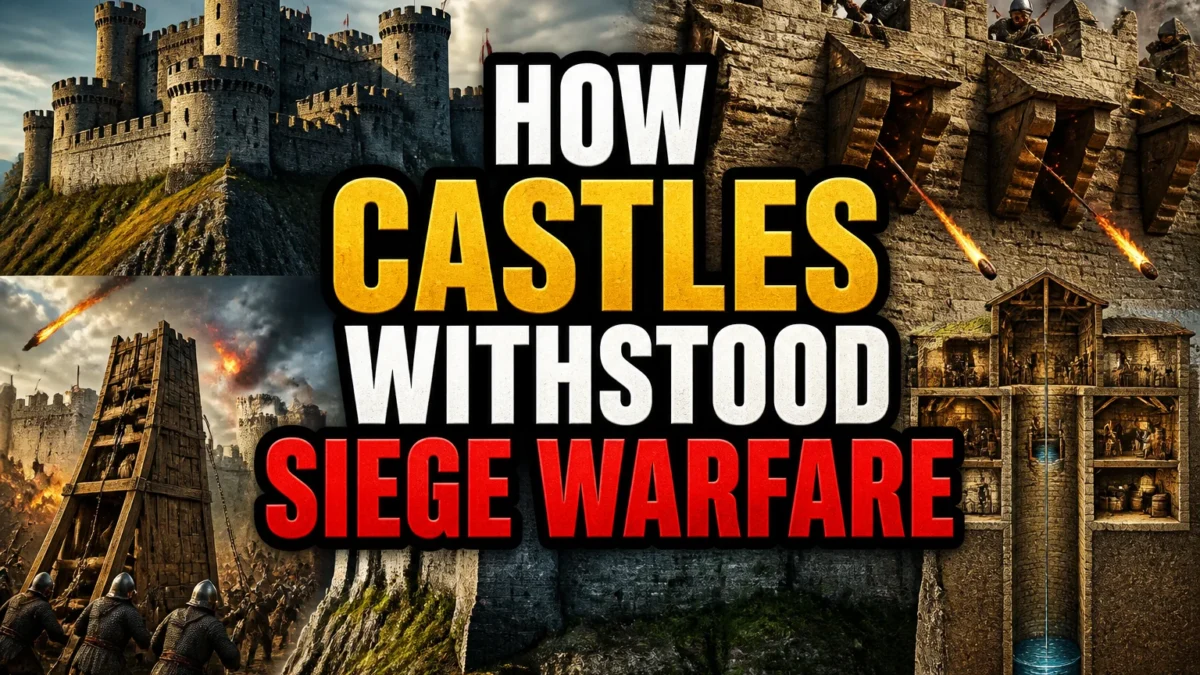
The popular image of castle warfare is dramatic: defenders pouring boiling oil from the battlements while knights scale ladders under a storm of arrows. The real story is less cinematic but far more ingenious.
Most castles were designed not to win a single heroic fight, but to make the siege of a castle so slow, costly, and exhausting that attackers gave up or ran out of supplies. Medieval castle defense was fundamentally about slowing an enemy down and punishing every step.
TL;DR: Castles survived sieges less through heroic last stands than through layered passive design—high walls, narrow gateways, water defenses, and kill zones that forced attackers to pay in time, blood, and supplies.
The Strategic Logic of Castle Design
Castles were rarely meant to be comfortable peacetime homes first. They were fortified command posts built to control territory, guard a road or river, and offer refuge to the surrounding population.
The design followed one principle: delay and punish. A successful defense did not need to kill the entire besieging army.
It only needed to hold out until winter, disease, a relief force, or an empty treasury forced the attackers to lift the siege. That was the key to how castles protected people: they bought time.
The Attacker's Problem
To understand medieval castle defense, imagine the besieger's options. He could storm the walls, but that required ladders, siege towers, and a terrifying climb under fire.
He could batter a gate or wall, but defensive fire and ditches made that slow. Failing that, he could mine, tunneling under a wall and setting fire to the timber props to collapse it.
Mines demanded time, skilled diggers, and stable ground, and defenders often dug countermines to intercept them. The cheapest weapon was starvation, but sitting outside a castle exposed the besieging army to disease, cold, and a possible relief force.
Every defensive feature existed to make one of these options more expensive. Castle warfare was therefore a contest of engineering and logistics, not just bravery.
20 Castle Features That Turned Sieges Into Nightmares
1. The Moat
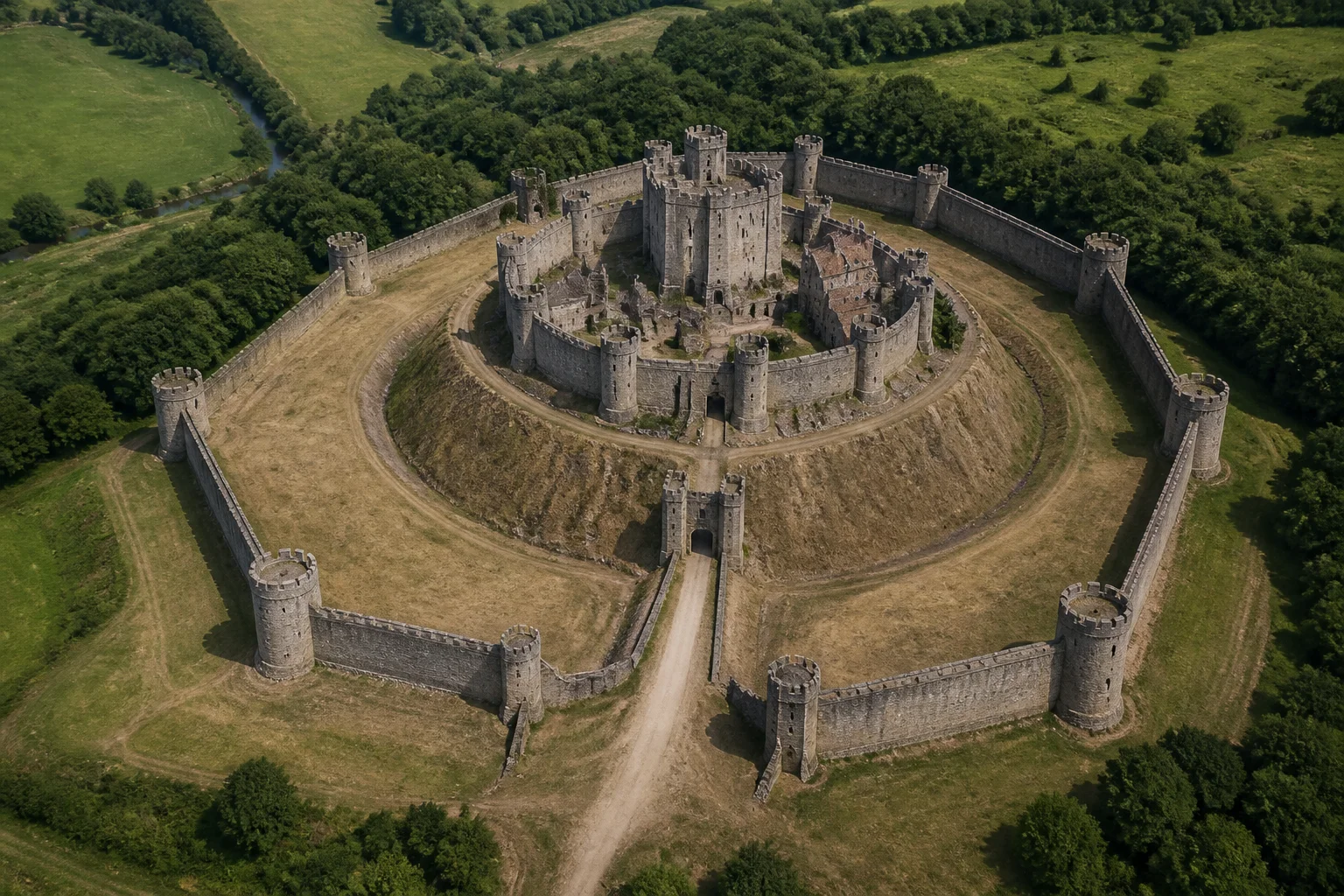
Moats are often imagined as water-filled rings full of crocodiles, but most castle moats were dry ditches. A dry moat served a subtler purpose: it kept enemy siege towers and battering rams from reaching the base of the curtain wall.
Even a shallow ditch could force heavy equipment to stop at an awkward distance. Water moats existed where the water table allowed, but they created maintenance problems and could freeze.
The real value of any moat was as an open killing ground that attackers had to cross under fire. It also gave defenders a clear line of sight to every approach.
2. Curtain Walls
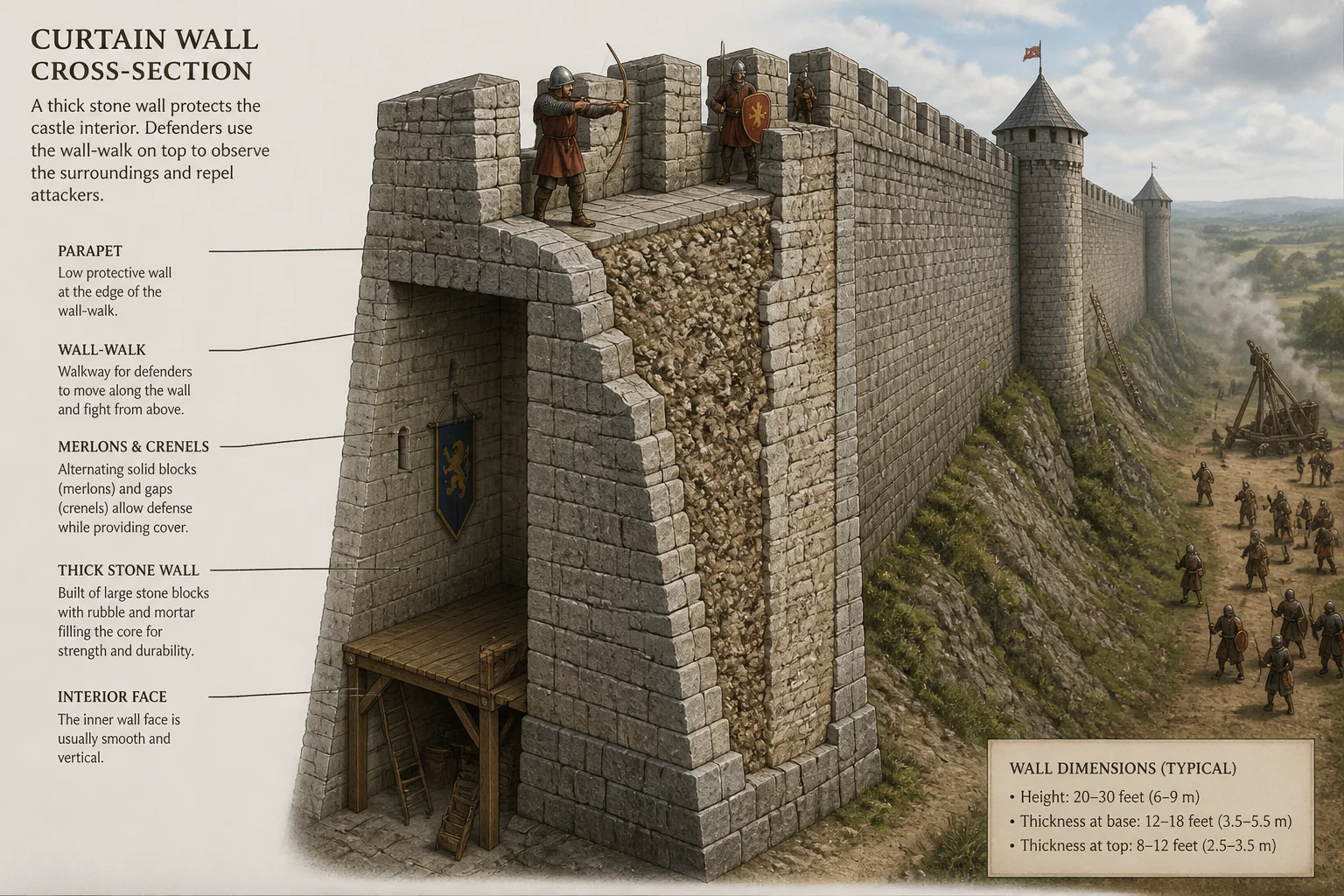
The curtain wall was the main outer wall connecting towers and gatehouses. It was typically thick at the base, sometimes 8 to 12 feet or more, to resist mining and battering.
Height mattered, but thickness mattered more when attackers tried to knock a breach. Behind the wall, defenders moved along a wall-walk to shift troops quickly from one threatened point to another.
The wall also created a psychological barrier, forcing attackers to cross cleared ground under observation. Builders often placed it on natural ridges or slopes so any approach felt exposed and hopeless.
3. Gatehouses and Barbicans
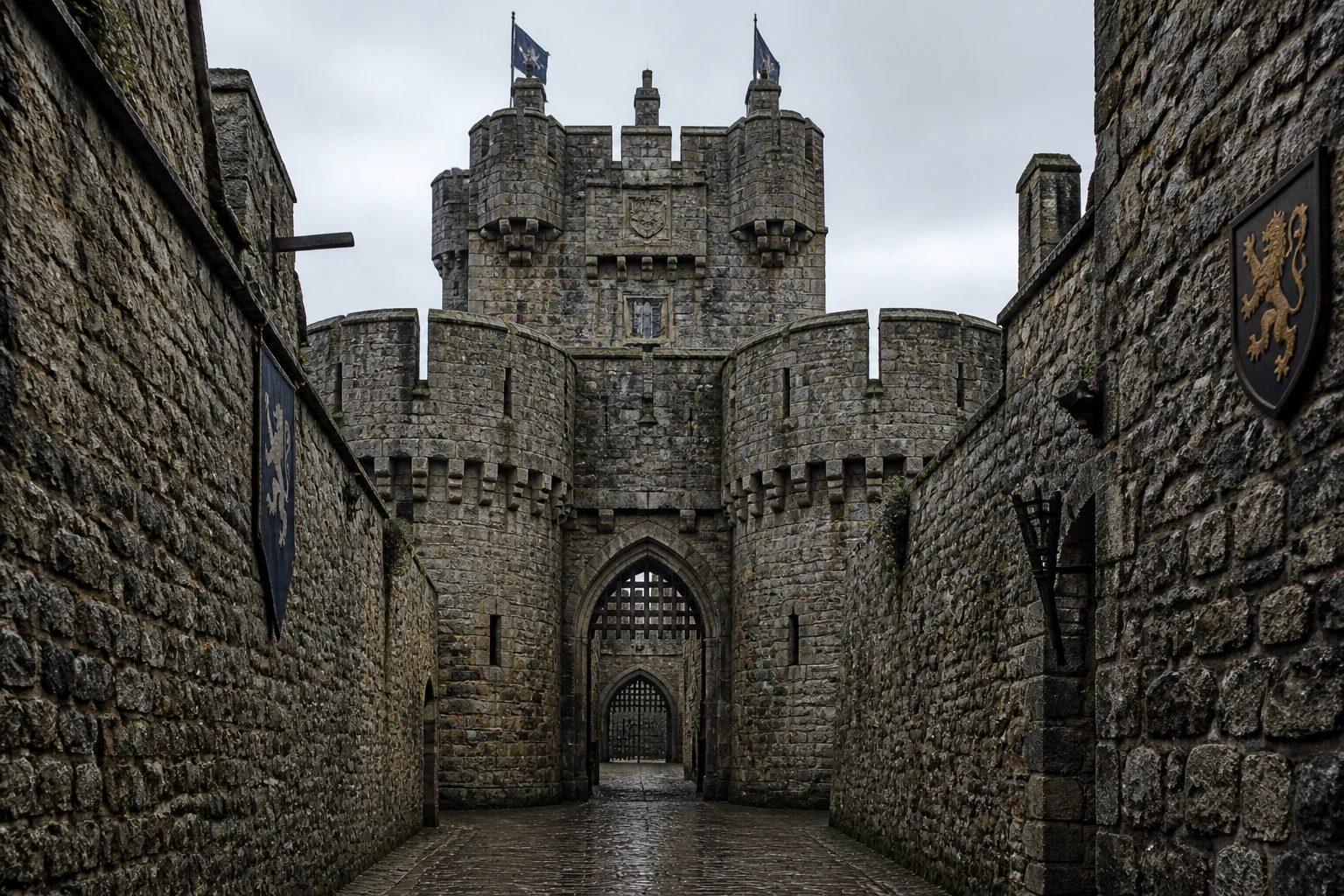
The main gate looked like the obvious weak point, so castle builders made it the strongest part of the design. A gatehouse was a fortified entrance with multiple doors, guardrooms, and defensive positions above.
Many castles added a barbican, an outer fortified gateway in front of the main gate. An attacker who fought into a barbican often found himself trapped in a narrow, walled passage.
This turned the gate from an opening into a death funnel. Defenders could shoot down from both sides while attackers struggled to bring a ram forward.
4. Portcullises and Murder Holes
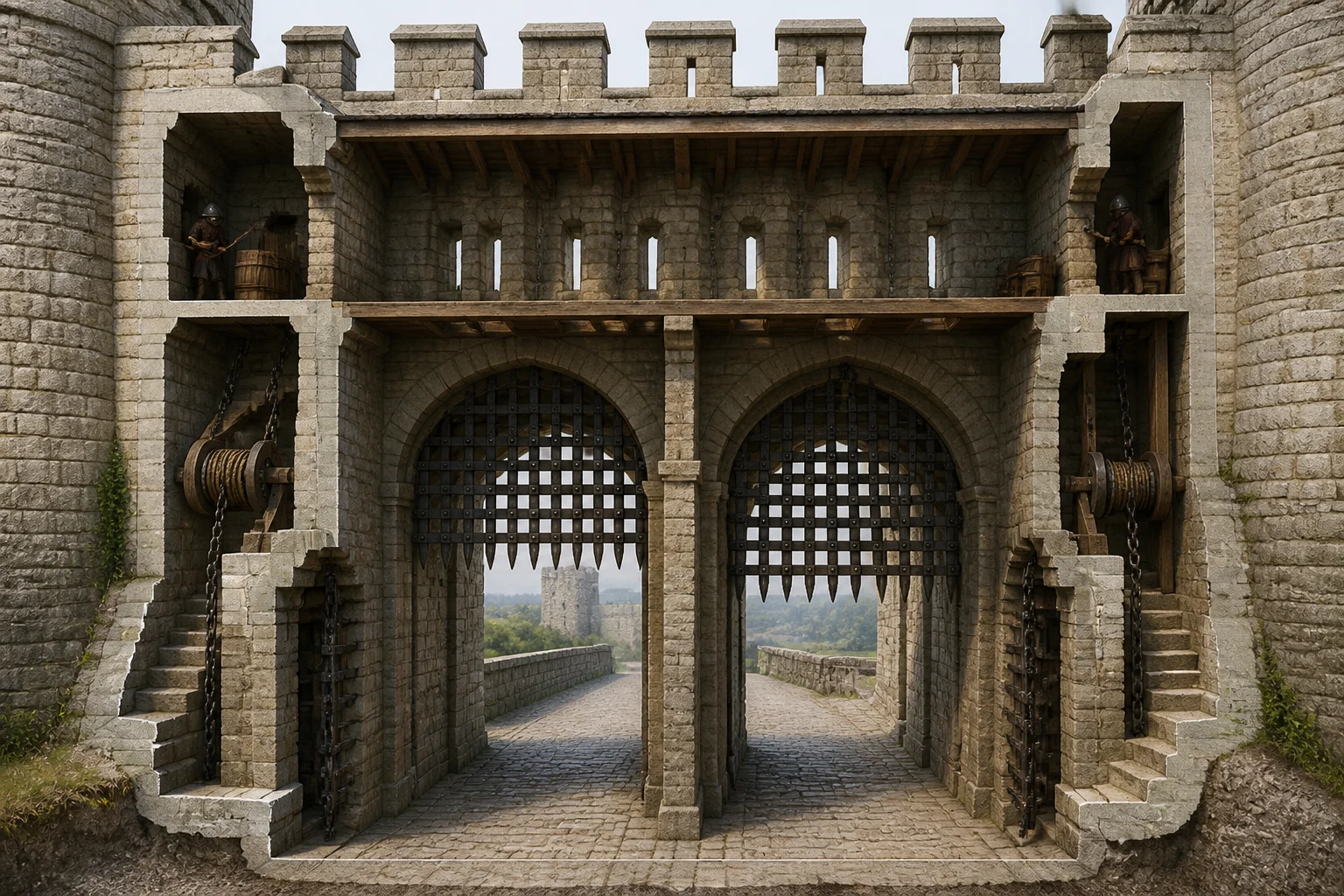
Inside the gate passage, a heavy wooden or iron-grilled portcullis could drop down to seal the way. Many gate passages had two portcullises, so attackers could be trapped between them.
If a first gate was forced, the second created a lethal holding pen. Above the passage, openings called murder holes allowed defenders to drop stones, quicklime, or hot water onto attackers below.
Boiling oil is mostly a myth, since oil was too expensive for common use, but water, sand, and rocks worked well enough. The effect was not always instantly lethal, but it made the gate passage a terrifying place to stand.
5. Round Towers and D-Shaped Towers
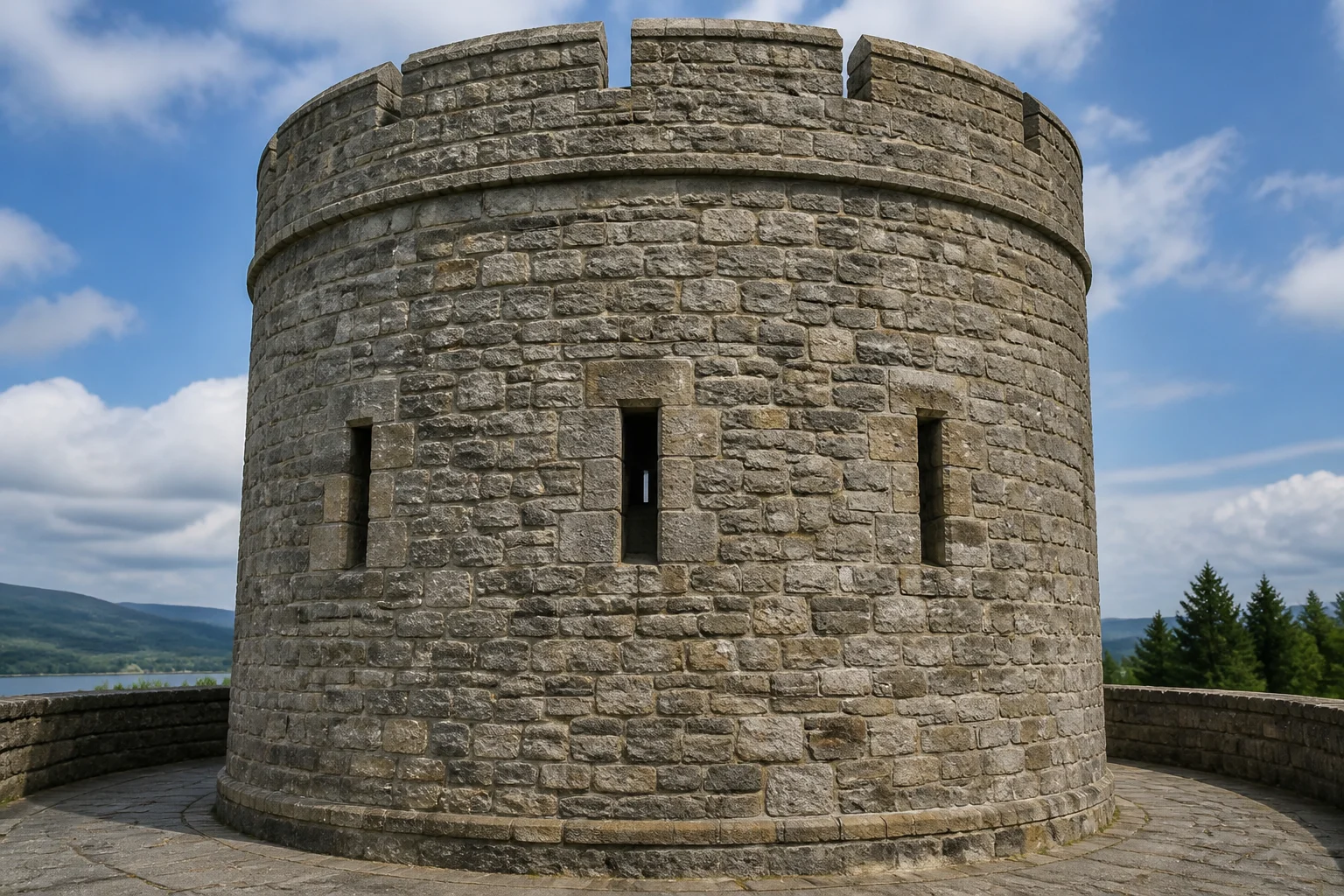
Early castles sometimes used square towers, but square corners created blind spots. A sapper could work at the base of a square tower without being seen from arrow loops along the wall.
Round or D-shaped towers gave defenders a wider field of fire and deflected stones from catapults more effectively than flat surfaces. They also removed the vulnerable corners that siege engines liked to target.
The shift toward round towers shows how medieval castle defense learned from real sieges. Builders gradually abandoned features that looked strong but failed in practice.
6. Crenellations and Battlements
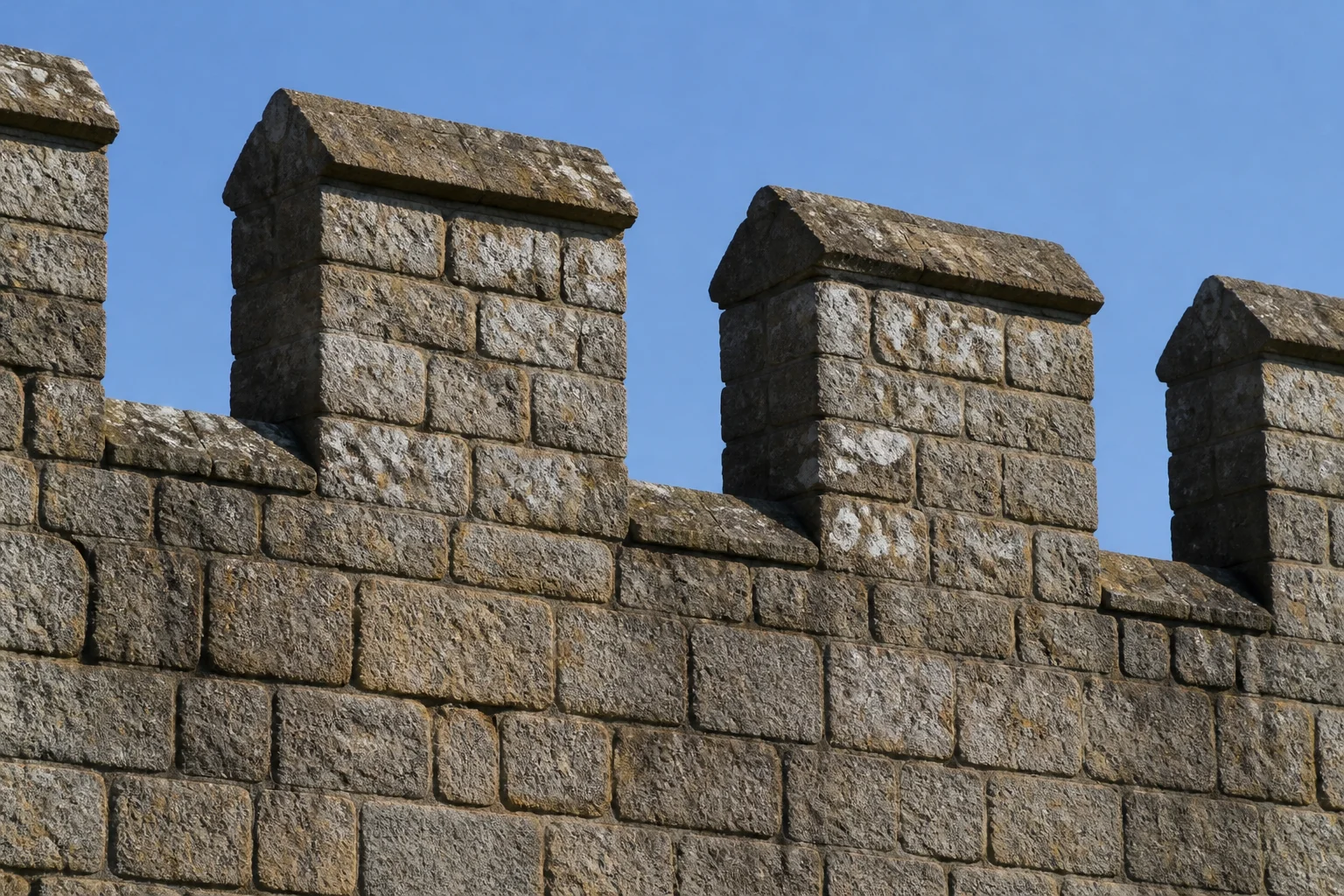
The tooth-shaped tops of castle walls were not decorative. The raised sections, called merlons, gave defenders cover while the gaps, called crenels, allowed them to shoot or observe.
Defenders moved, shot, and ducked in a rhythm behind the battlements. Some castles added wooden shutters or hinged arrow slits in the crenels for extra protection during a heavy missile exchange.
Crenellations were so central to fortification that in some places a lord needed official permission to add them. The right to crenellate was a status marker as well as a defensive upgrade.
7. Machicolations
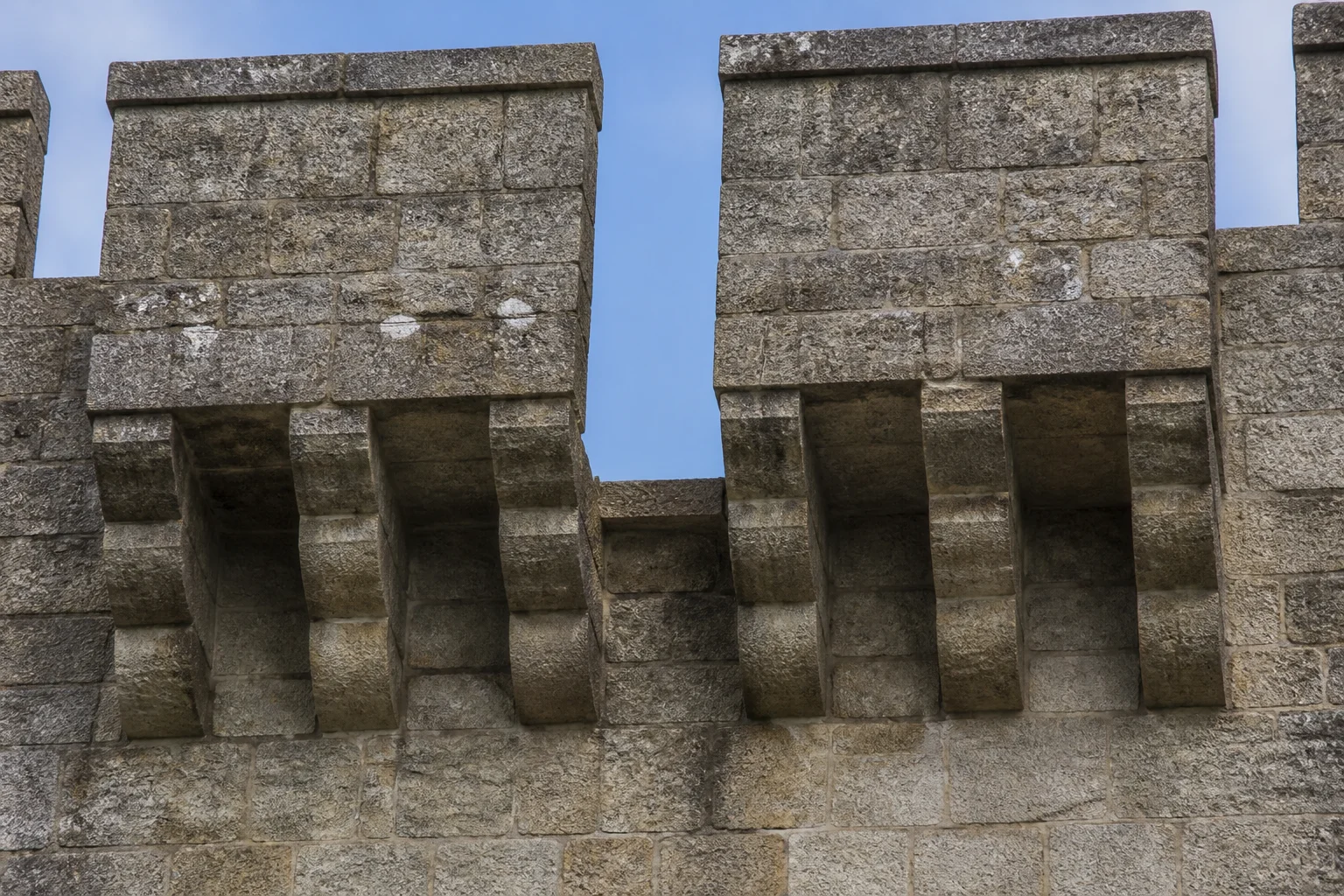
Machicolations were stone brackets projecting from the top of a wall or tower, creating an open gap at the base of the parapet. Defenders could drop objects straight down onto attackers hugging the wall below.
This solved a serious problem: from the top of a high wall, it was hard to hit an enemy at the base. Machicolations turned the wall's shadow zone into a vertical kill zone.
Over time, machicolations became a visual symbol of strength, but their original purpose was practical. They allowed defenders to punish anyone who reached the exact spot where walls were hardest to defend.
8. Arrow Loops and Embrasures
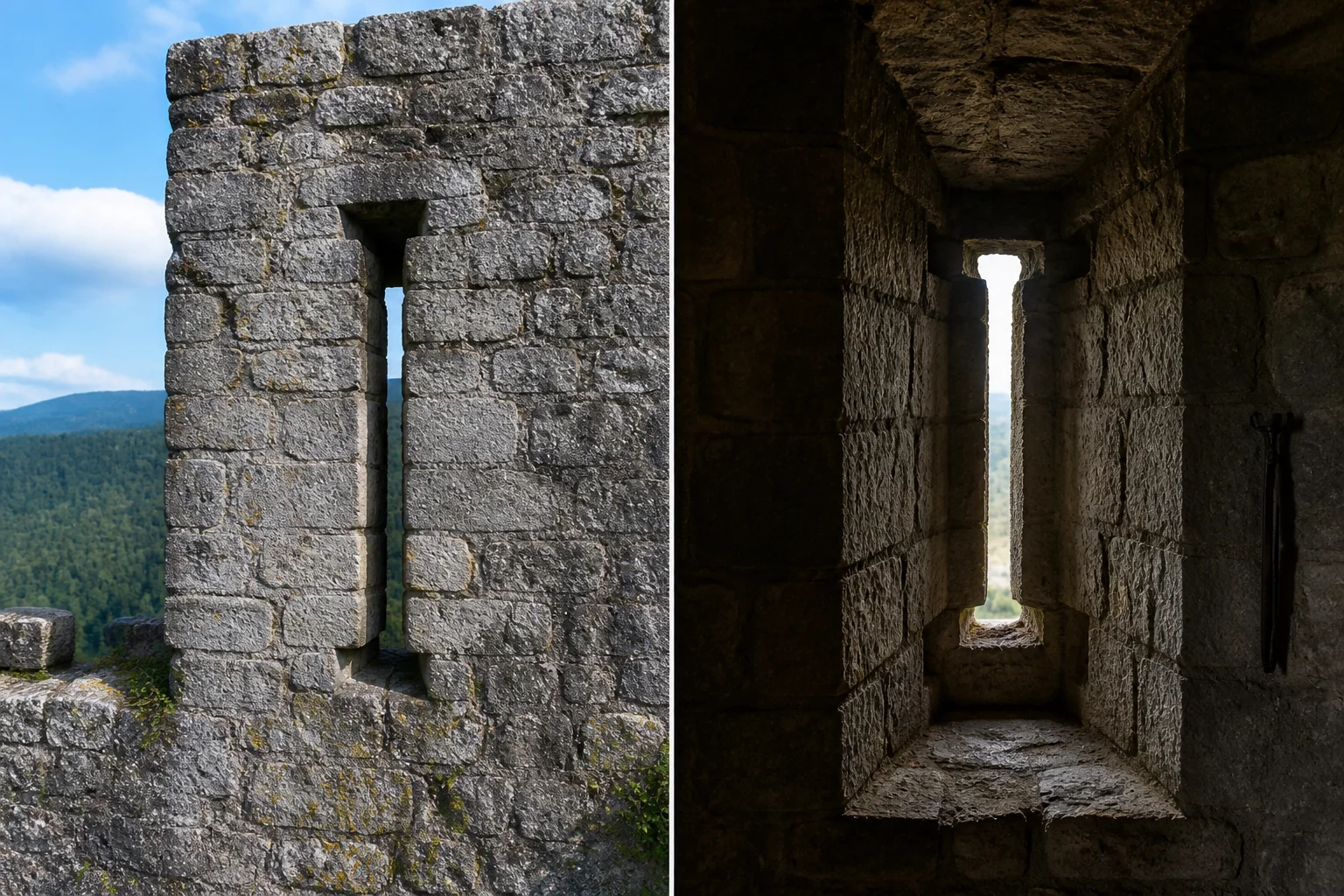
Arrow loops, also called arrow slits, were narrow vertical openings cut into walls. They allowed an archer or crossbowman to shoot out while presenting a tiny target to attackers shooting in.
Designers varied the shape of arrow loops over time. Some had wide internal splays so a defender could aim across a broad arc without exposing much of his body.
A well-placed crossbowman behind an arrow loop could dominate an approach without ever being easy to hit. This made climbing toward a wall far more dangerous for attackers.
9. The Keep or Donjon
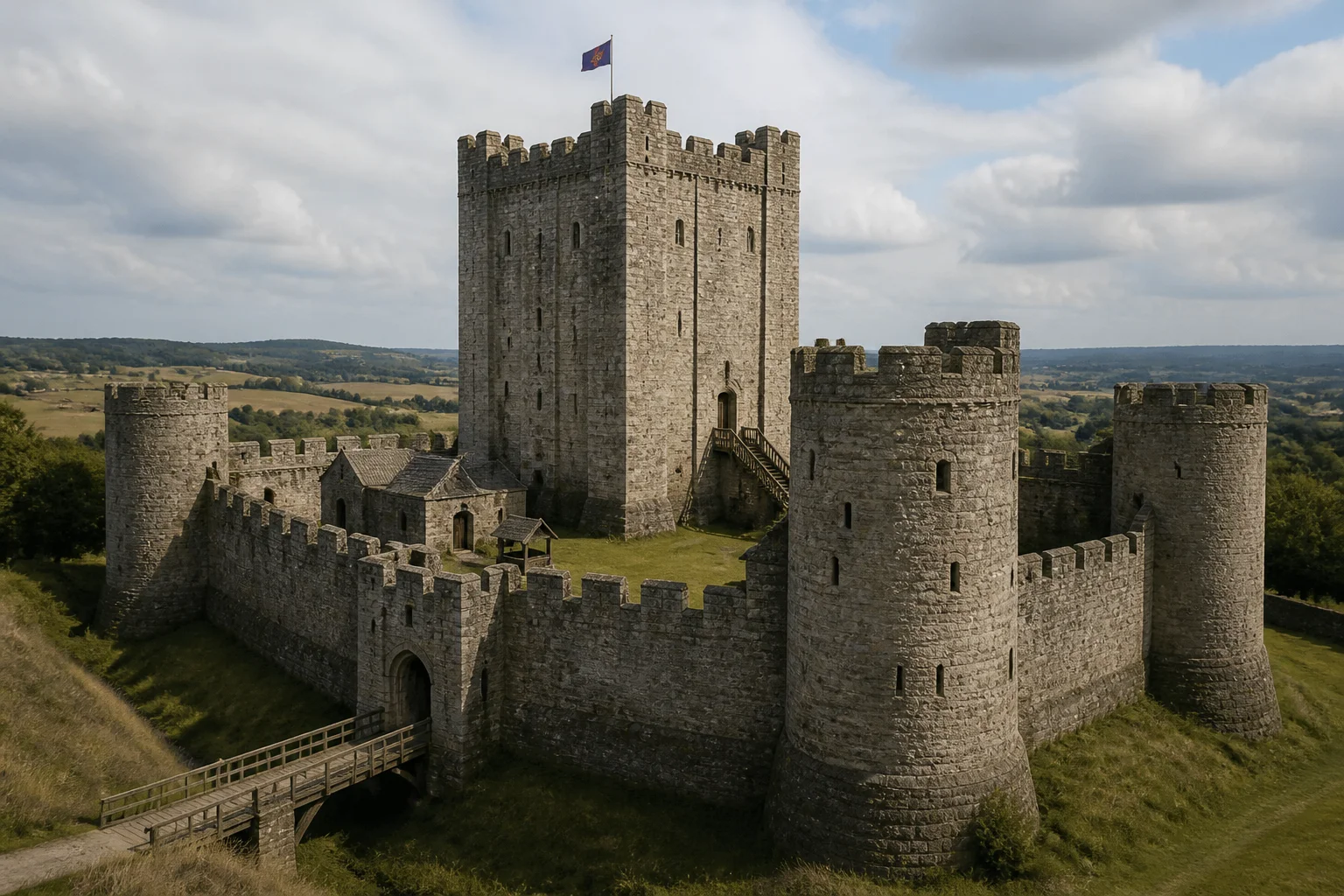
The keep was the strongest tower and the last line of defense when the outer defenses fell. Early keeps were often square, while later designs became round or polygonal for the same reasons as round towers.
A keep contained private chambers, a hall, and often a chapel, but its defensive purpose was always clear. If attackers breached the outer walls, defenders could retreat upward and continue to resist from a built-in fortress.
The keep also served as a visible statement of lordly power. A tall stone tower announced that this was not a place that could be taken quickly.
10. Concentric Defense Rings
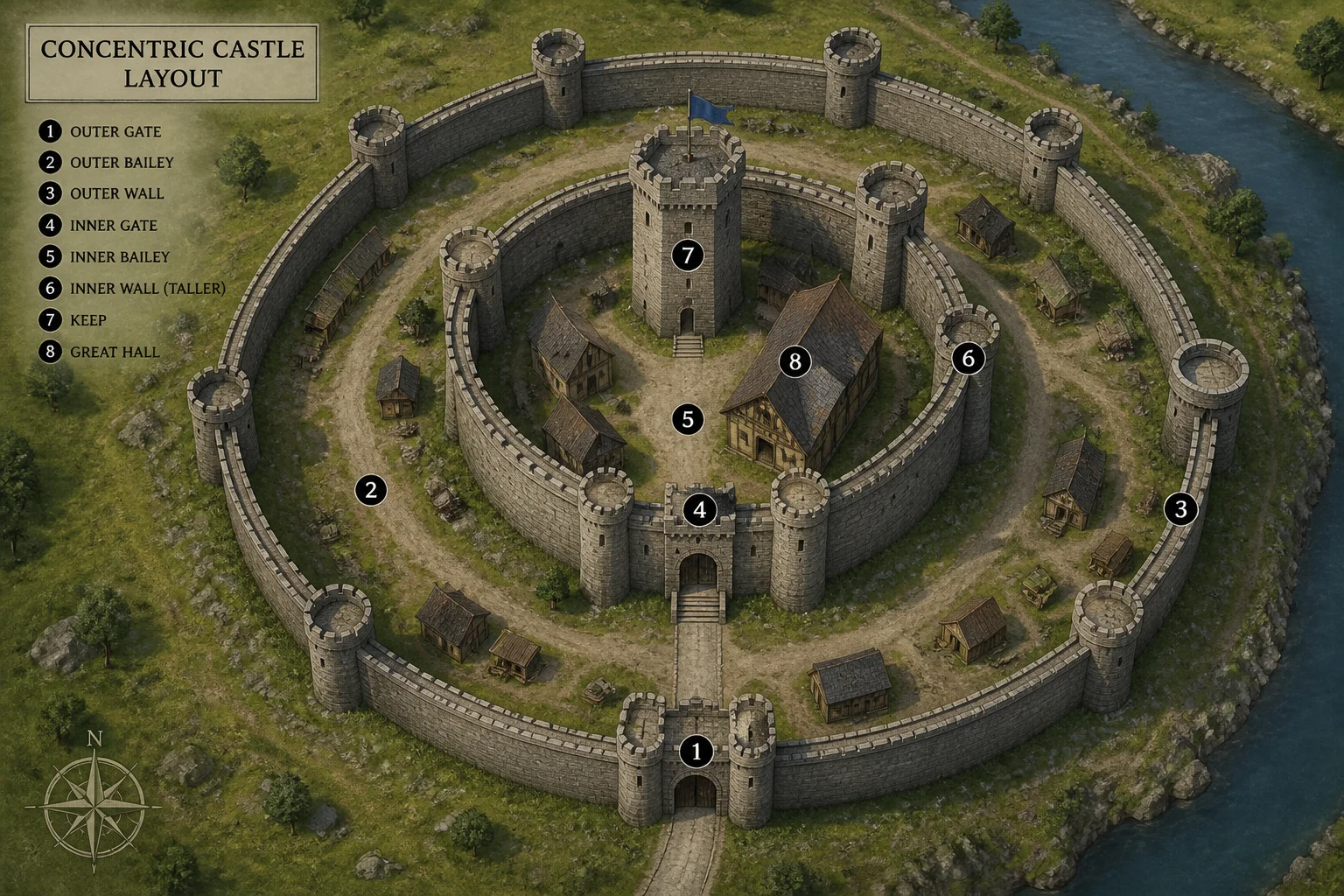
The most sophisticated castles, such as those built by Edward I in Wales, used concentric rings of walls. An attacker who captured the outer wall then faced a taller inner wall with the outer wall now working against him.
The space between the rings, called the outer ward or killing ground, became a trap. Medieval castle defense at this level was less about one wall and more about layered firepower.
Concentric design forced an attacker to fight upward twice, often while surrounded by walls he had already beaten. It was a brutally efficient answer to castle warfare.
11. Outer and Inner Baileys
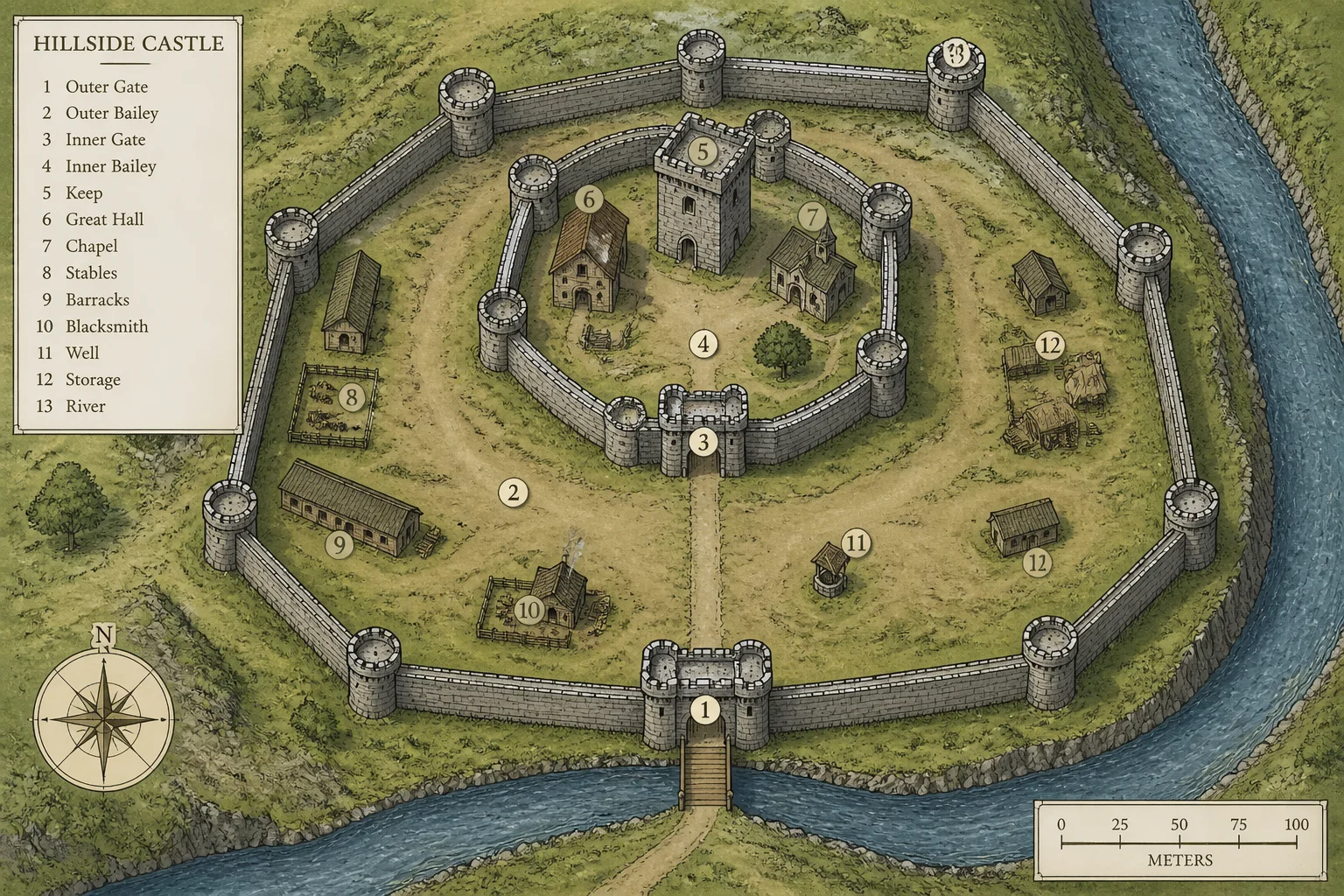
A bailey was a courtyard enclosed by a wall. Complex castles placed an outer bailey around a more strongly defended inner bailey, separating working areas from the lord's residence and the keep.
This division meant a breach in the outer wall did not give attackers the whole castle. They still had to fight across open ground and break through another defensive line.
Outer baileys also gave defenders room to organize counterattacks and move supplies. Their layout turned the castle into a series of connected strongpoints instead of one fragile shell.
12. Postern Gates and Sally Ports
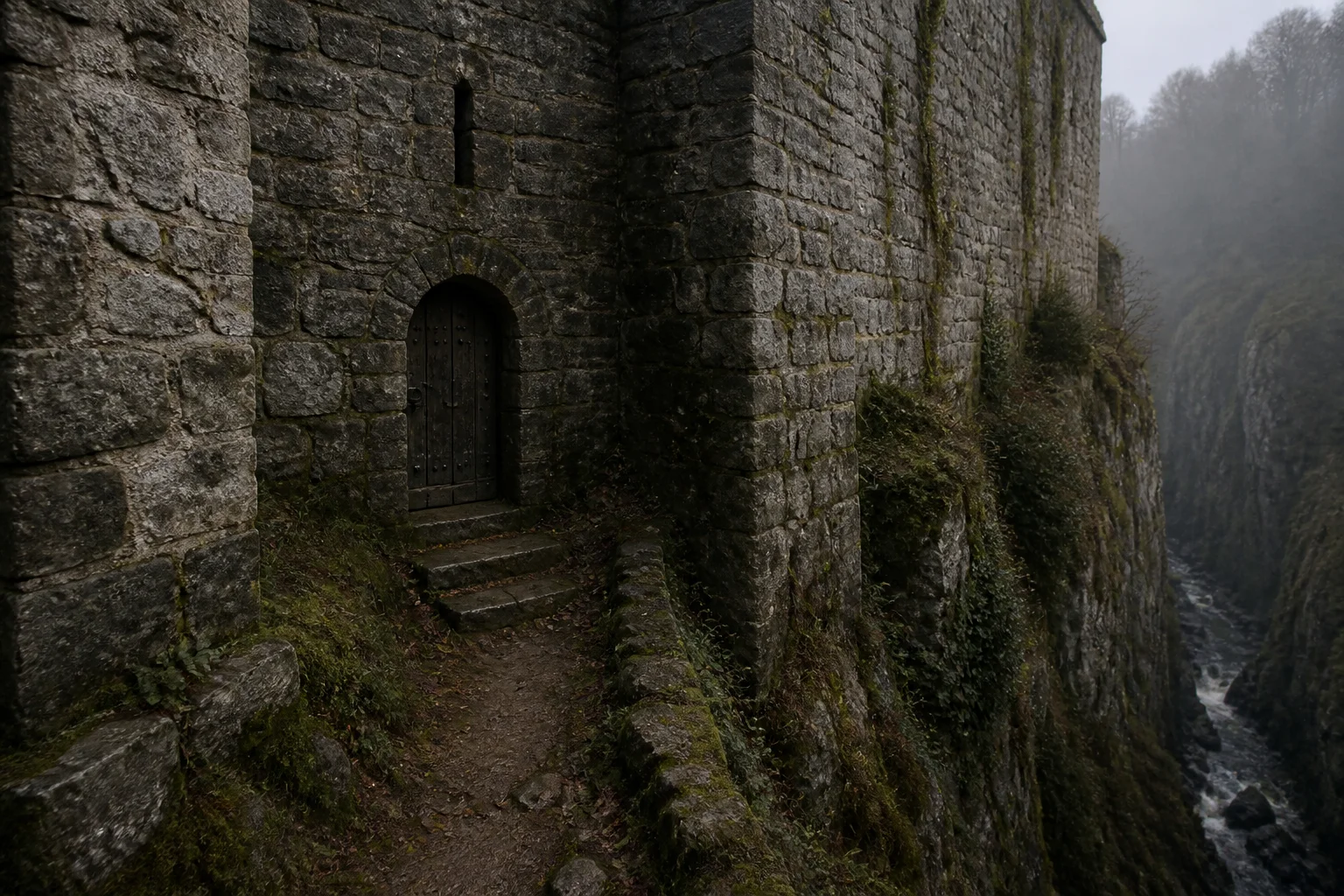
A postern gate was a small, hidden exit on a less exposed side of the castle. It allowed defenders to send messengers, bring in supplies, or launch surprise raids against an enemy camp.
These raids, called sorties, could burn siege engines and scatter workers. The postern had to be carefully sited so it remained usable without becoming an easy way for attackers to slip inside.
A good postern was narrow, concealed, and easily sealed. It gave a garrison options beyond sitting behind the walls and waiting.
13. Talus and Battered Wall Bases
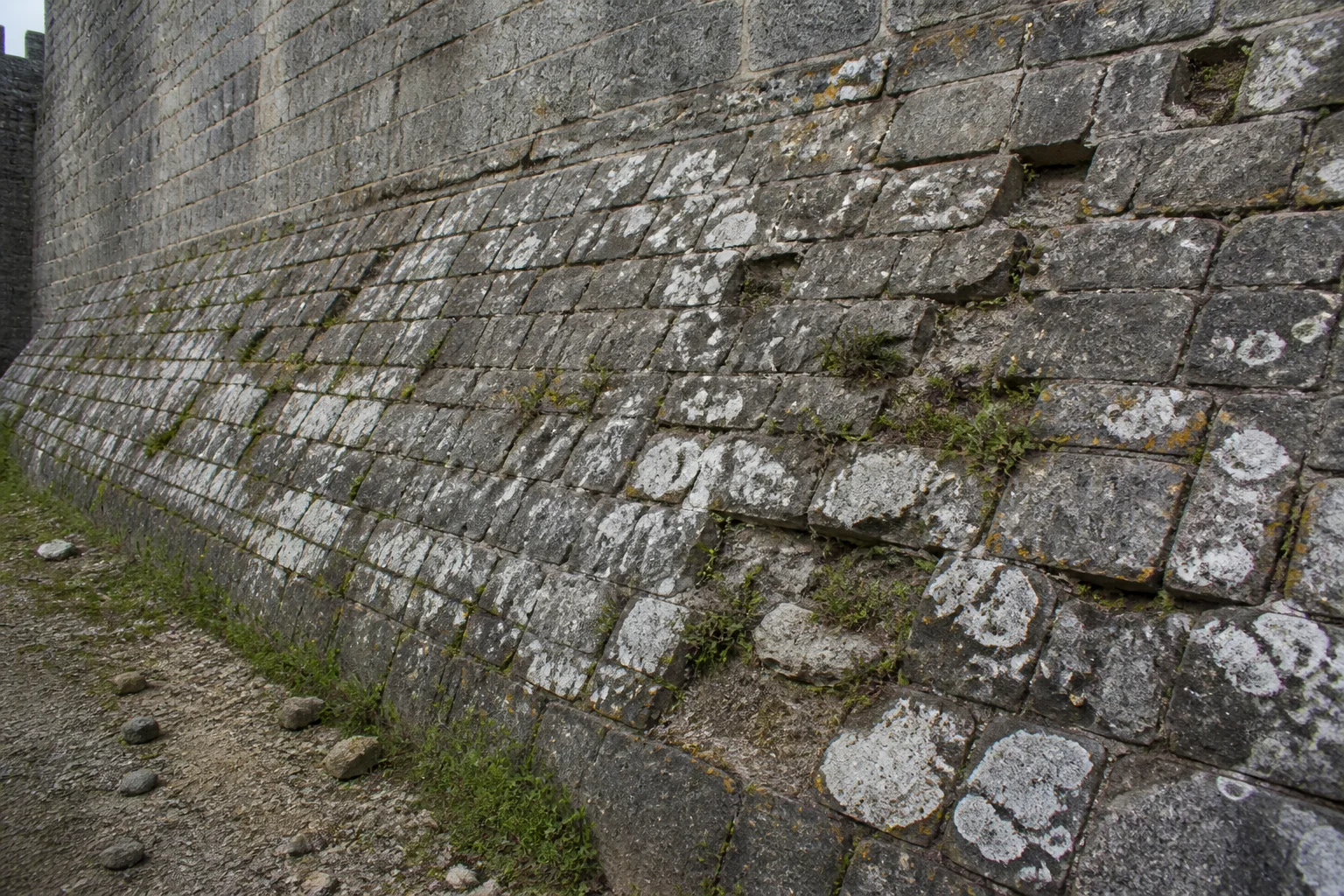
Many castle walls were built with a sloped, thickened base called a talus or batter. This angled stonework strengthened the wall against battering rams and made scaling ladders harder to place securely.
The talus also caused objects dropped from above to rebound outward. A stone dropped from machicolations could hit the angled base and fly sideways into attackers rather than dropping uselessly at the wall's foot.
Builders who paid attention to the base of the wall gave defenders an extra weapon. Even a simple stone could become a dangerous projectile after bouncing off the talus.
14. The Dry Ditch and Counterscarp
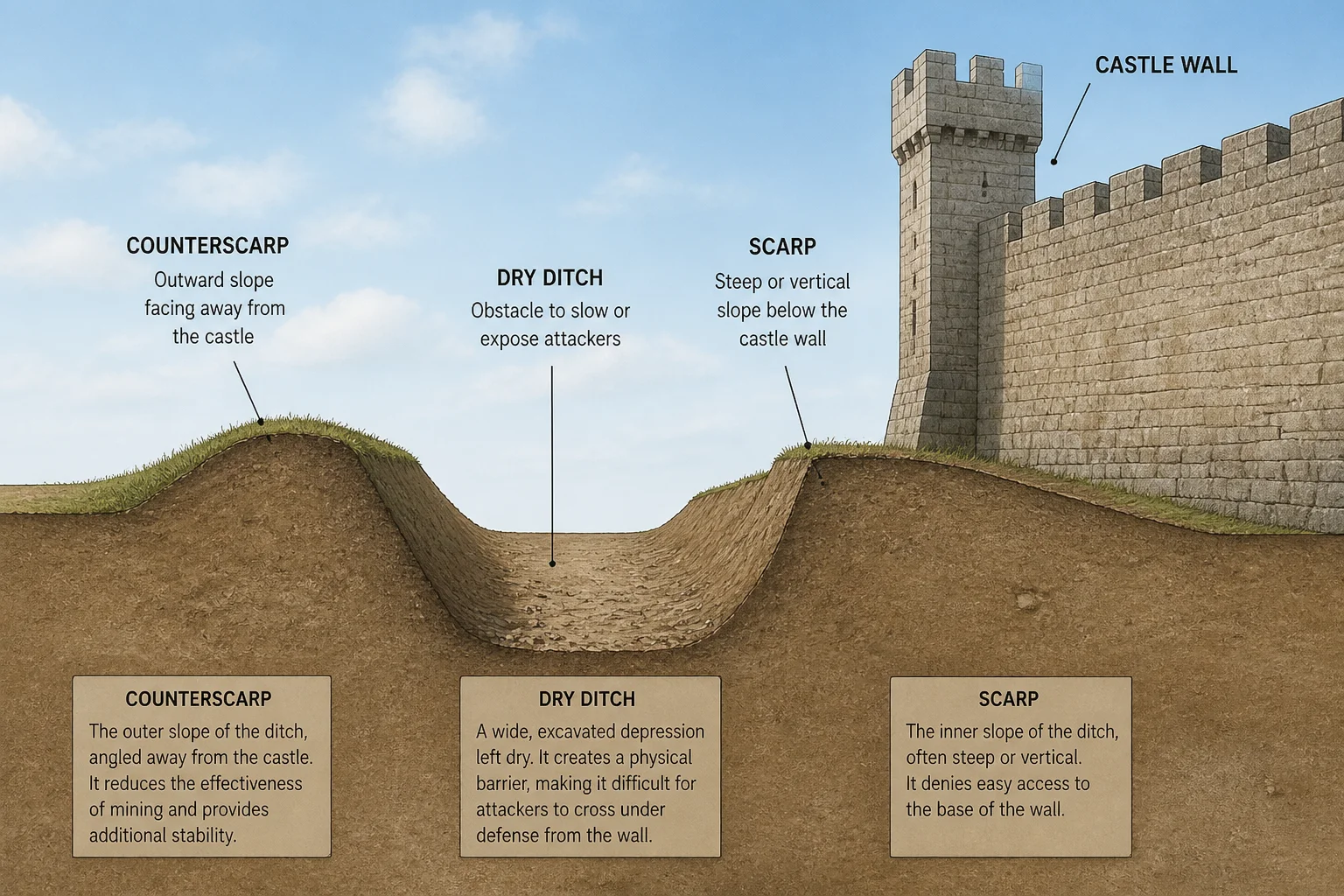
Beyond the moat, military engineers shaped the ground itself for defense. The counterscarp was the outer slope of the ditch facing the castle, and a steep counterscarp made it difficult for attackers to climb down and up under fire.
A carefully cut ditch could also keep siege towers at a distance and expose the bellies of attackers as they crossed. Even without water, a ditch transformed flat ground into a controlled obstacle.
Manipulating the land around a castle was often cheaper than building ever-higher walls. It was a reminder that castle warfare began long before an attacker reached the stonework.
15. Drawbridges and Turning Bridges
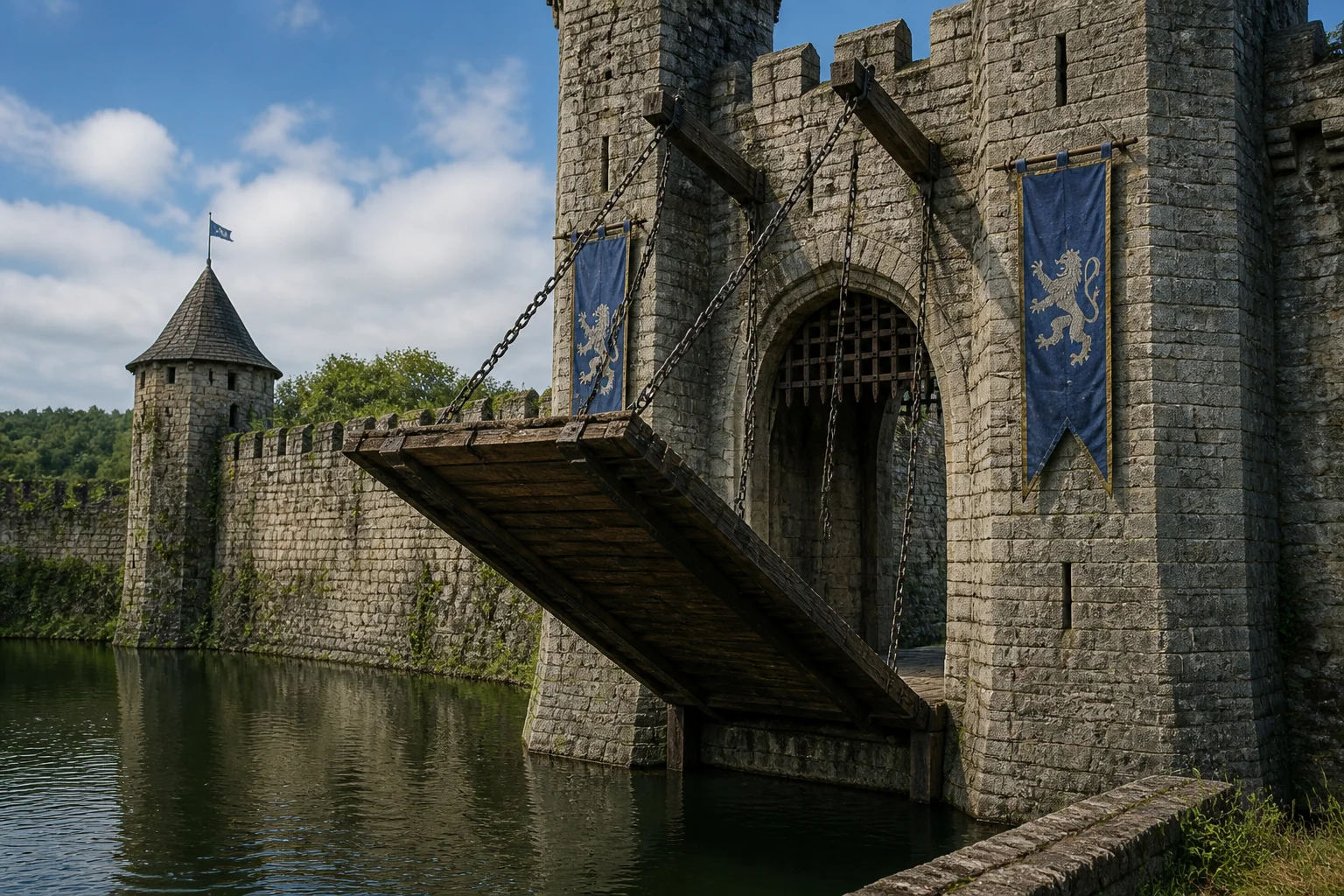
A drawbridge was usually a wooden bridge across a moat or ditch that could be raised against the gate. Many were counterweighted so two men could lift them quickly.
When closed, the raised bridge doubled as an extra barrier protecting the gate. Some later castles used a turning bridge that pivoted on a central axis, making it impossible for attackers to lower it from outside.
A gate without a drawbridge was far more vulnerable to a direct rush. With the bridge raised, attackers first had to cross a ditch, then break through the bridge, then face the gate itself.
16. Wells and Water Supply
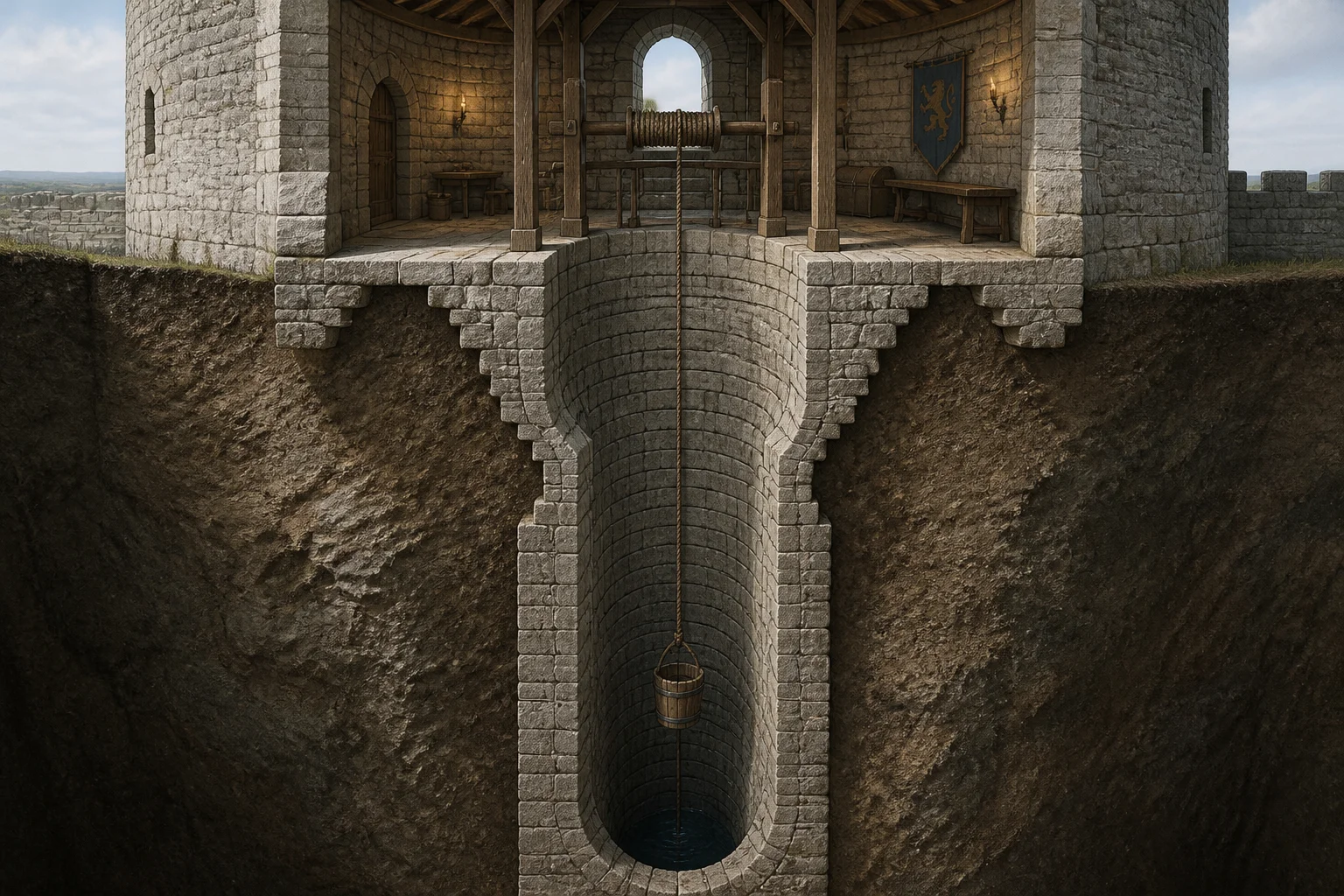
During a siege of a castle, water was more valuable than weapons. Builders sank wells deep into bedrock, often inside the keep, so defenders could not be cut off from clean drinking water.
Some castles also collected rainwater in cisterns. An attacker who could not poison, divert, or drain the water supply faced the grim prospect of waiting out defenders who were better hydrated than the besiegers.
The loss of a well was usually fatal. More castles may have surrendered from thirst or spoiled water than from a dramatic breach in the walls.
17. Granaries and Food Storage
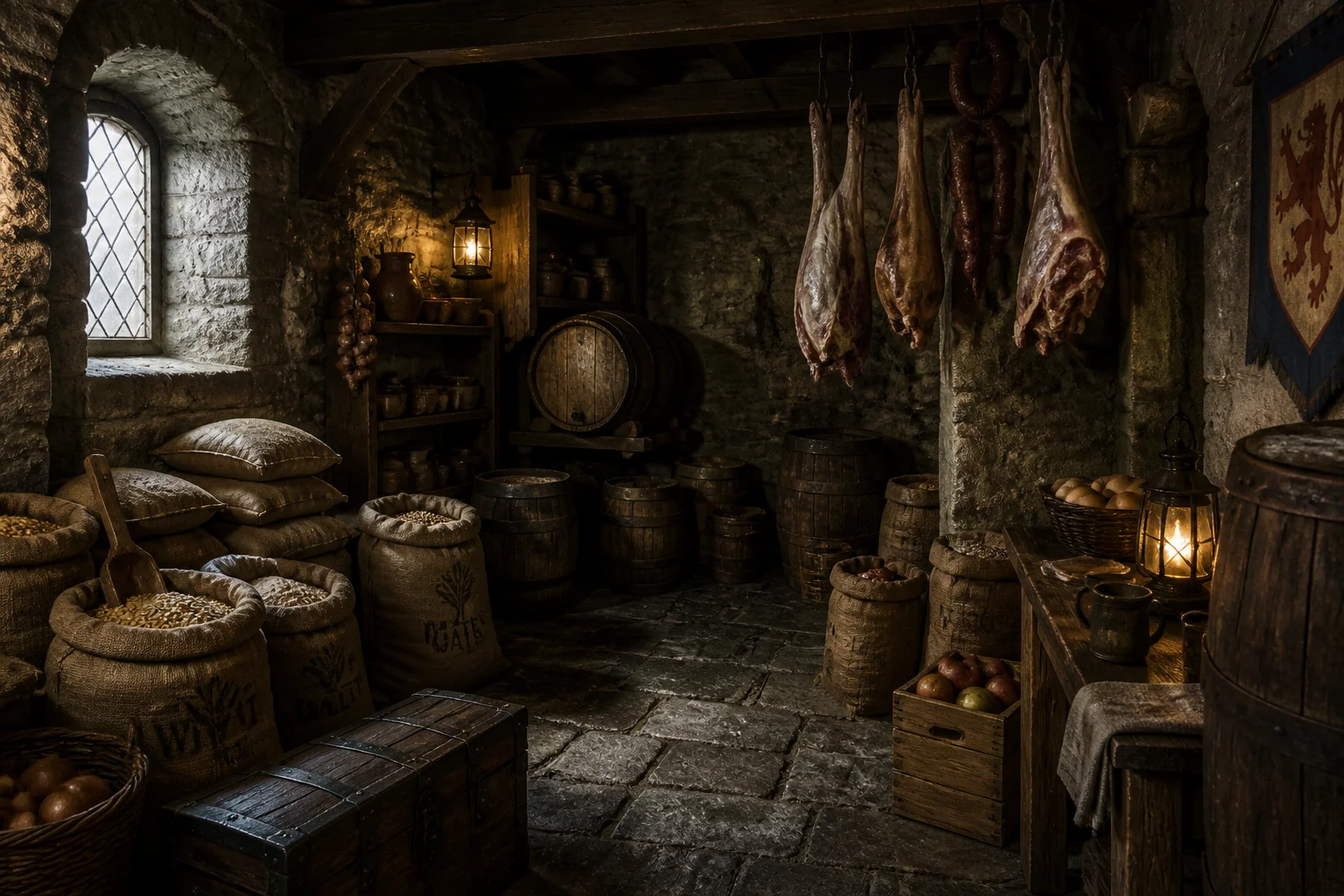
A well-defended castle needed to be self-sufficient for months. Large storerooms, granaries, and cellars held grain, salted meat, dried fish, and ale.
Castles usually entered a siege with supplies already stockpiled, but no garrison could hold forever. The real contest was often between the food stocks inside and the supply lines of the army outside.
An experienced lord knew that a full granary was as important as a deep moat. Hunger inside the walls could defeat the best defensive architecture.
18. Spiral Staircases
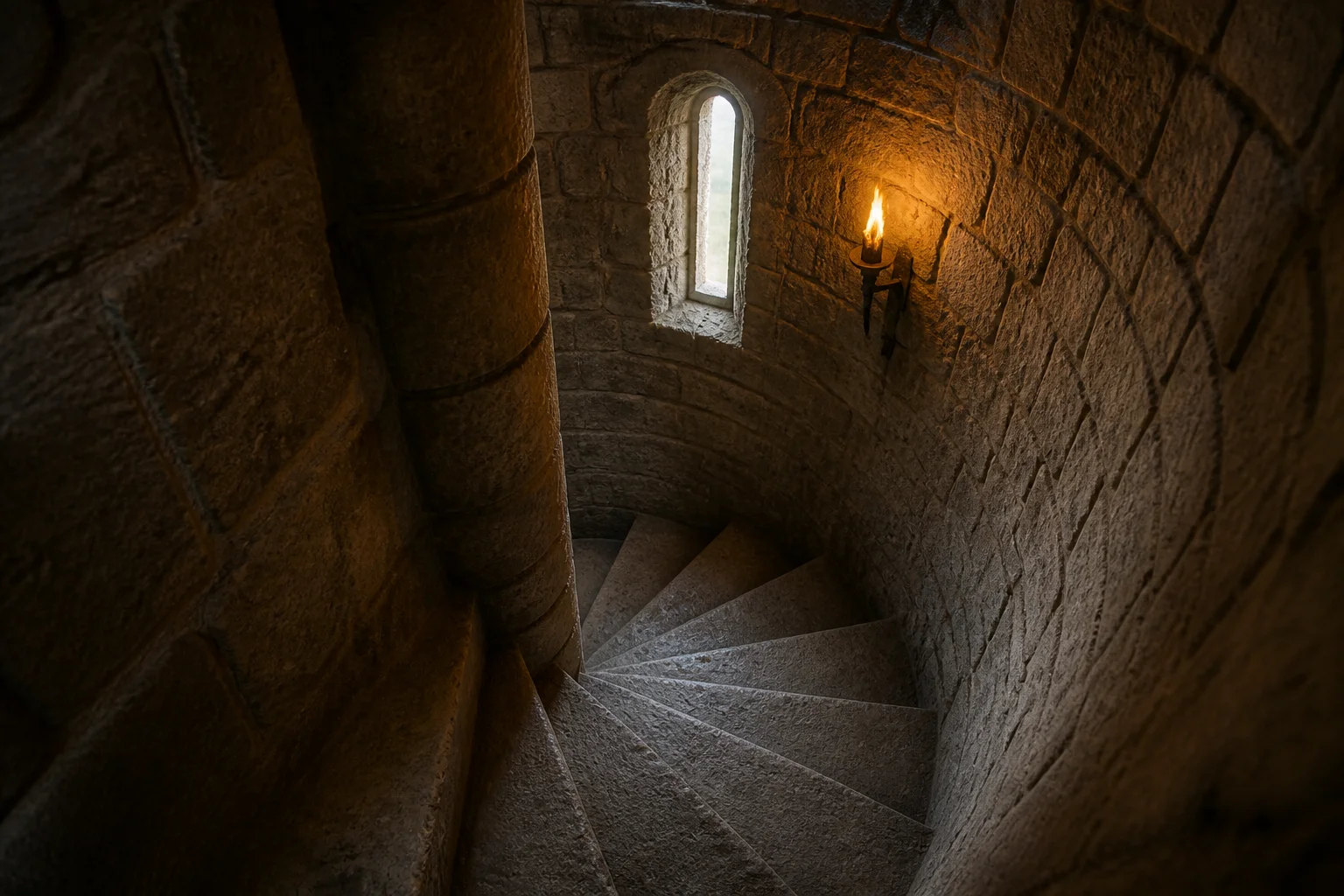
Many castle staircases spiral clockwise as they ascend. The theory is that this gave a right-handed defender, usually coming down from above, more room to swing a sword while an attacker pushing upward had his sword arm crowded by the central column.
This detail is sometimes exaggerated in modern accounts, and not every staircase followed the rule. Still, such staircases were narrow, built into thick walls, and easy to defend one man at a time.
A single determined fighter could hold a narrow stair for quite a while. Even if the outer defenses fell, stairs slowed the final assault.
19. Forebuildings and Drawbar Chambers
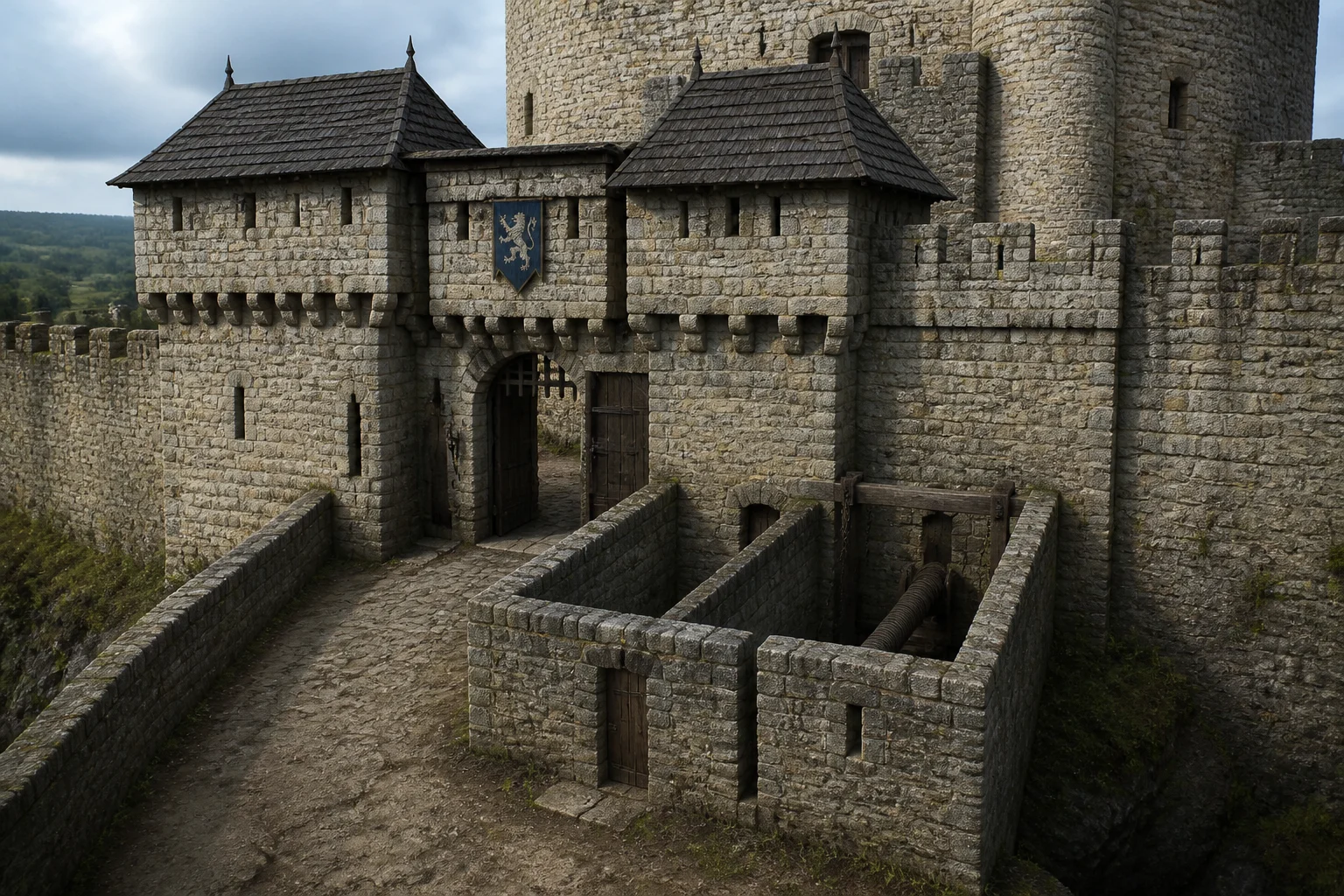
A forebuilding was a defended entrance block attached to a keep, forcing visitors to climb past guardrooms and arrow loops before reaching the main door. It made the entrance to the inner refuge as difficult as possible.
At the door itself, a heavy wooden beam called a drawbar slid into a stone socket. Drawbar chambers allowed a guard to lock the door from inside a wall recess, so the bar could not be easily pushed back.
This meant the weakest point of any room, the door, was not left as a simple wooden slab. It was reinforced, hidden, and covered by multiple defensive positions.
20. Hoardings
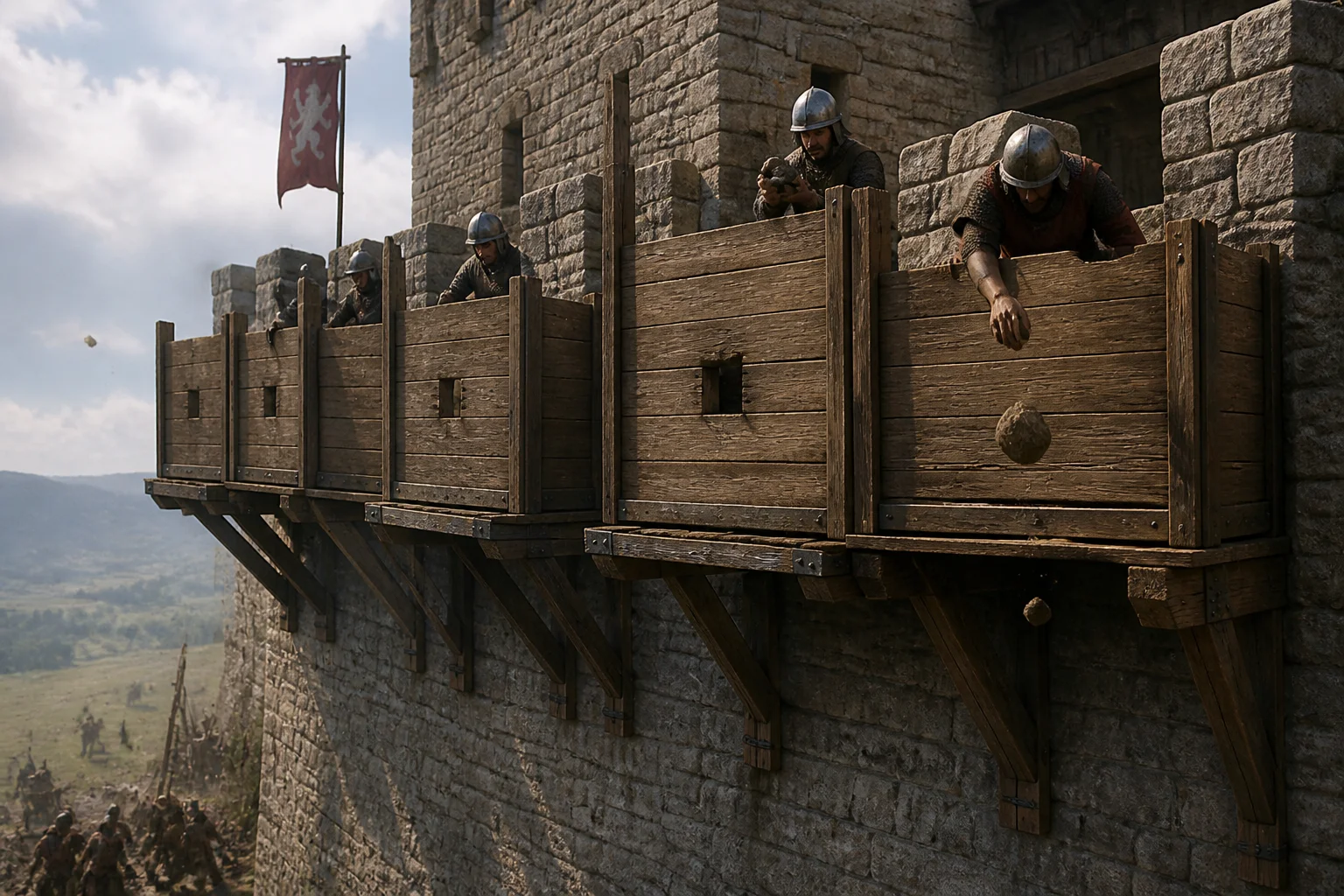
Hoardings were wooden galleries built out from the top of walls and towers. They functioned like machicolations but were cheaper to construct and could be added when a castle expected attack.
Defenders stood behind their timber walls and dropped stones through gaps in the floor. Because wood could rot or burn, hoardings were often temporary wartime additions rather than permanent stonework.
Many castles show stone sockets for hoarding beams just below the battlements. These scars reveal where wooden defenses once gave an extra line of attack.
Myths of Medieval Castle Defense
Not every famous cliché survives the historical record. Defenders did not routinely fill moats with spikes or pour endless waves of boiling oil from the ramparts.
Hand-to-hand fighting on the battlements did happen, but commanders usually preferred to avoid it. Every defender lost in a sword fight was one less archer to hold the wall.
Movies also make castle sieges look like single-day events, when in reality they could drag on for months. The slow grind of supply, disease, and morale often mattered more than one dramatic assault.
Why These Features Worked Together
Individual features mattered less than the way they overlapped. An attacker approaching a well-designed castle had to cross a killing ground, then a ditch, then a wall, then an inner gate, and then perhaps another wall.
At each point, archers behind arrow loops, guards on wall-walks, and defenders at machicolations could shoot from multiple angles. This layering is what made a direct assault so costly.
Even if one line failed, the castle did not collapse. The garrison could fall back to a bailey, a gatehouse, or the keep, forcing the attacker to begin the same brutal work again.
Castle warfare was not really about impenetrable walls. It was about making every meter of progress expensive enough that a siege became a poor gamble for the attacker.
What Really Defeated Castles
No castle was truly impregnable. The purpose of all these features was not to make an attack impossible, but to make it unaffordable in time, money, and lives.
Many castles fell not to storm or mining but to negotiated surrender. Once the water failed, disease spread, or the lord received no promise of relief, practical terms often made more sense than a doomed last stand.
Gunpowder eventually changed the balance. By the late medieval and early modern periods, cannons could smash high stone walls, and castle design shifted toward low, thick earthwork fortresses.
Still, the medieval castle defense system worked for centuries. It remains a clear answer to the question, how did castles protect people when the gates closed and the banners appeared on the horizon.
Frequently Asked Questions
What was a typical siege of a castle like?
A siege was usually a slow, grinding standoff rather than a sudden battle. The attacking army surrounded the castle, cut off supplies and reinforcements, and tried to break the walls through storm, mining, or bombardment. Defenders conserved food and water, harassed the besiegers with arrows and raids, and waited for a relief force, disease, or winter to weaken the army outside.
How did castles protect people during an attack?
Castles protected people by combining layered physical defenses with a plan to outlast the attacker. High walls, gatehouses, moats, and towers made direct assault difficult, while wells, storerooms, and hidden posterns helped defenders survive for weeks or months. The goal was not to defeat the entire enemy army but to make the attack too slow and expensive to continue.
Did defenders really pour boiling oil on attackers?
The boiling oil scene is mostly a myth. Oil and fat were too valuable for common use in medieval kitchens and armories. Defenders did drop boiling water, hot sand, quicklime, stones, and other materials through murder holes and machicolations, which could cause serious injuries without using scarce oil.
What was the weakest part of a medieval castle?
The gate remained one of the weakest points in a castle because it had to allow normal traffic through. Castle builders responded by making the entrance as difficult as possible, with gatehouses, drawbridges, portcullises, barbicans, and murder holes. The weakest point varied by castle, but any gap in the wall or ditch could become a target.
How long could castles hold out in a siege?
Holdout times varied enormously depending on garrison size, supplies, water, and the strength of the besieging army. Some castles fell within days if they were surprised or undermanned, while others held for months. The deciding factors were usually food and water inside the walls and the besiegers' own supply problems outside.
Why did attackers build siege towers instead of just climbing ladders?
Siege towers gave attackers a protected platform at the height of the castle wall, allowing soldiers to cross onto the wall without a long exposed climb. Ladders were lighter and faster but left attackers extremely vulnerable to arrows, stones, and pushed ladders. Siege towers were heavier and harder to move, but they could carry more soldiers and offer overhead cover.

Alex Warren
Related Articles