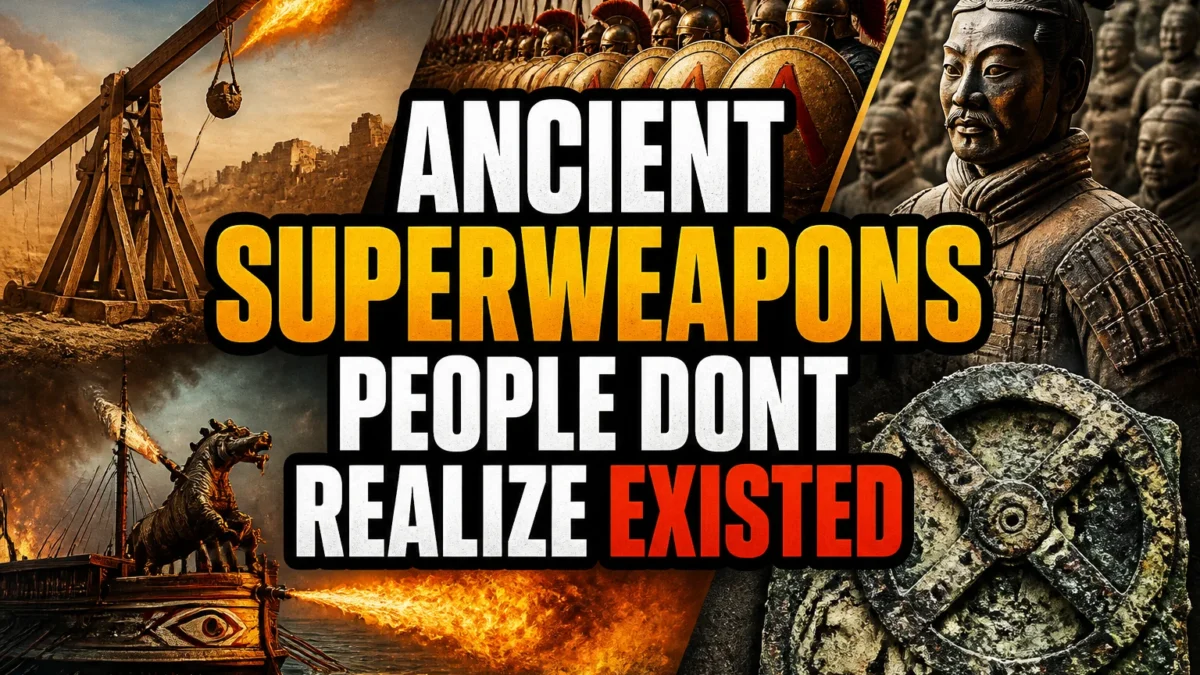
When we picture ancient warfare, most of us imagine bronze swords, spears, and walls of shields. The reality is stranger and far more creative than that age-old movie battle scene. Ancient engineers built mechanical arrow slingers, ship-grabbing cranes, flamethrowers, and chemical traps that sound almost modern.
Some of these weapons were battlefield mainstays, while others existed only in manuals or legends. This list mixes both while trying to separate what sources support from what later storytellers inflated. These are the ancient superweapons many people do not realize existed.
TL;DR: Ancient warfare included terrifying devices like Greek fire, giant bolt throwers, repeating artillery, and chemical ambushes that challenge the myth of simple sword-and-sandal combat.
Why Ancient Superweapons Need a Reality Check
The word superweapon suggests something invincible, but ancient technology rarely worked that way. Many of these machines were expensive, fragile, or only effective in narrow conditions. Ancient writers also loved a dramatic story, so modern historians often debate how well some devices actually worked.
That context matters. This list is not claiming every weapon rivaled a modern missile. Instead, it shows how sophisticated and strange ancient military engineering could be when commanders threw money and ingenuity at a problem.
1. The Gastraphetes: An Ancient Weapon That Resembled a Giant Crossbow
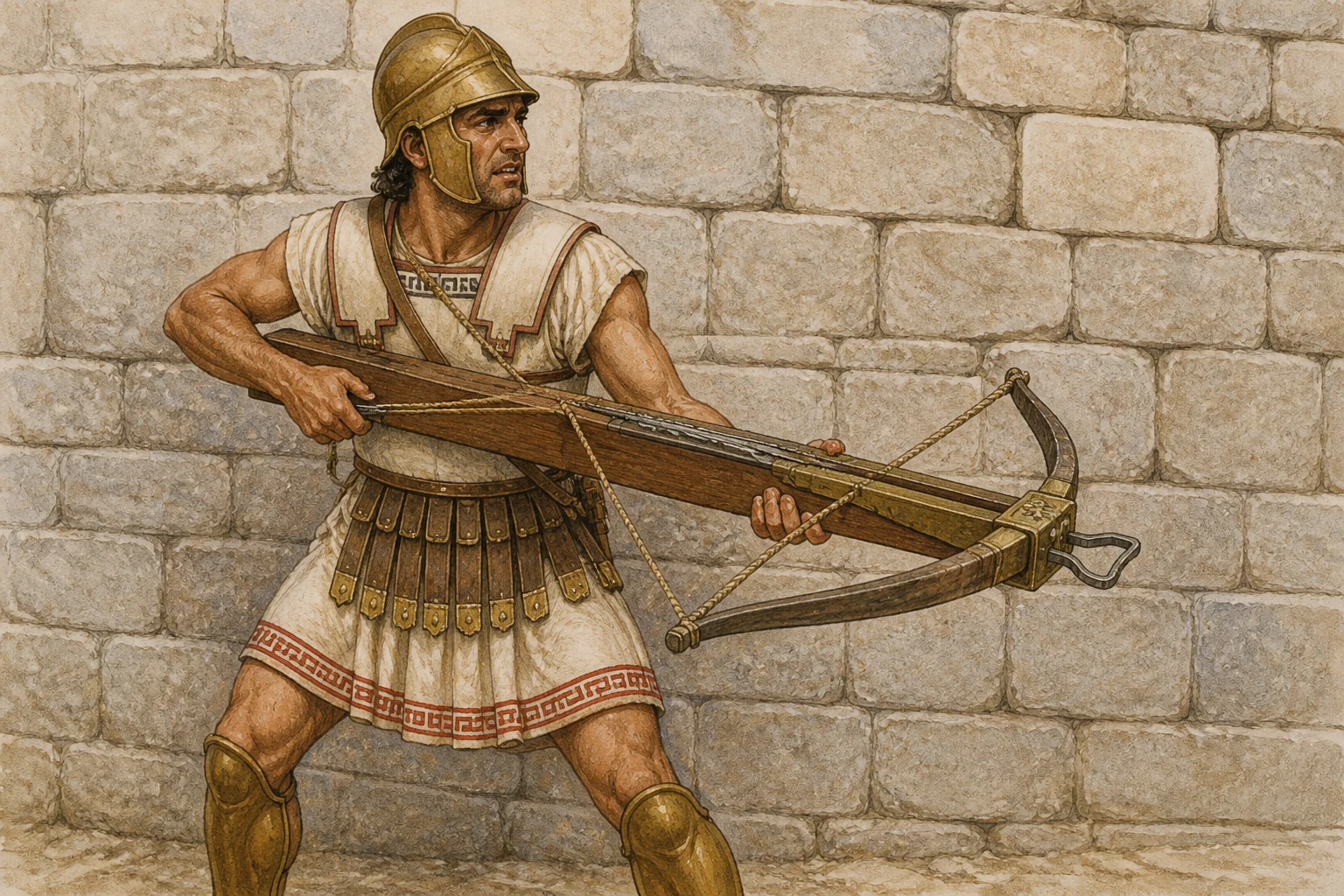
The gastraphetes, often called a belly bow, was developed in the Greek world around the fifth or fourth century BCE. It was essentially an oversized composite bow mounted on a wooden stock with a slider, trigger, and a curved rest the shooter braced against their stomach. That design let one soldier store more energy than a normal bow could manage, making it one of the clearest ancient weapons that resemble giant crossbows.
Later Greek technical writers described the gastraphetes in detail, though surviving examples are rare. It fired heavy bolts farther and harder than standard archery, and it likely inspired the torsion catapults that followed. Think of it as the first step in an arms race toward true artillery.
The gastraphetes was not a mass-produced superweapon because it was slower to load than a standard bow. Yet its mechanical stock set a pattern that later artillery would follow. When people imagine a giant crossbow in ancient war, this is often the machine they are picturing.
2. The Oxybeles: A Giant Bolt Thrower on a Stand
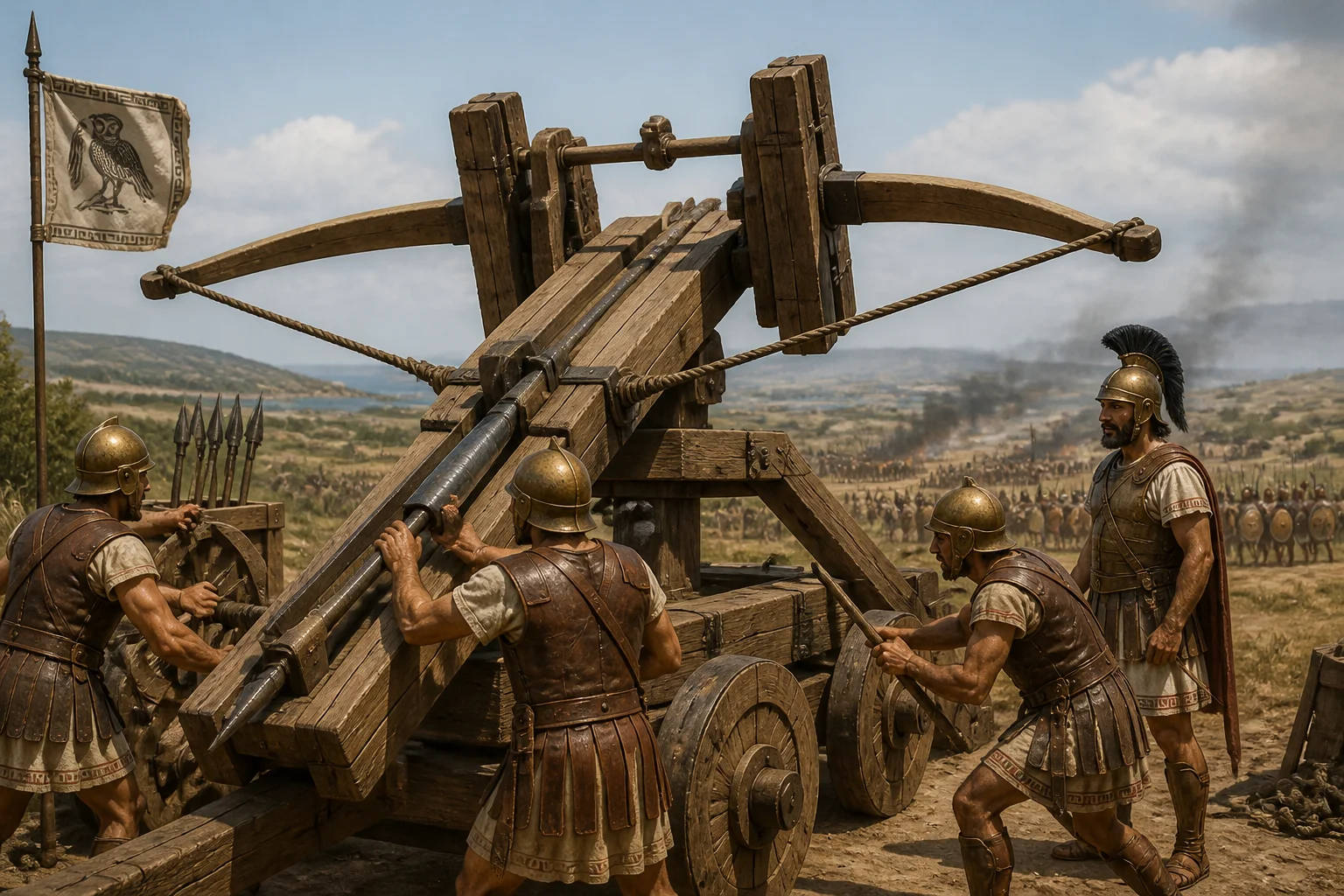
The oxybeles took the gastraphetes idea and scaled it up for siege and battlefield work. It used a large composite bow or, later, twisted sinew springs to launch long, heavy bolts from a wheeled or fixed mount. The name simply means sharp bolt in Greek, but the weapon itself was anything but simple.
Unlike a handheld bow, the oxybeles needed crews to wind back the arms and could be aimed with more consistency. Hellenistic armies used it to target siege equipment, walls, and clustered troops. It is another member of the family of ancient weapons that resemble giant crossbows, though it was far too heavy for one person to carry.
Siege engineers valued the oxybeles because it could outrange most defenders on a wall. Accounts from Hellenistic sieges describe bolt throwers clearing battlements and punching through light cover. Even so, they required skilled crews and regular maintenance.
3. The Roman Scorpio: Accurate Torsion Artillery for Field Armies
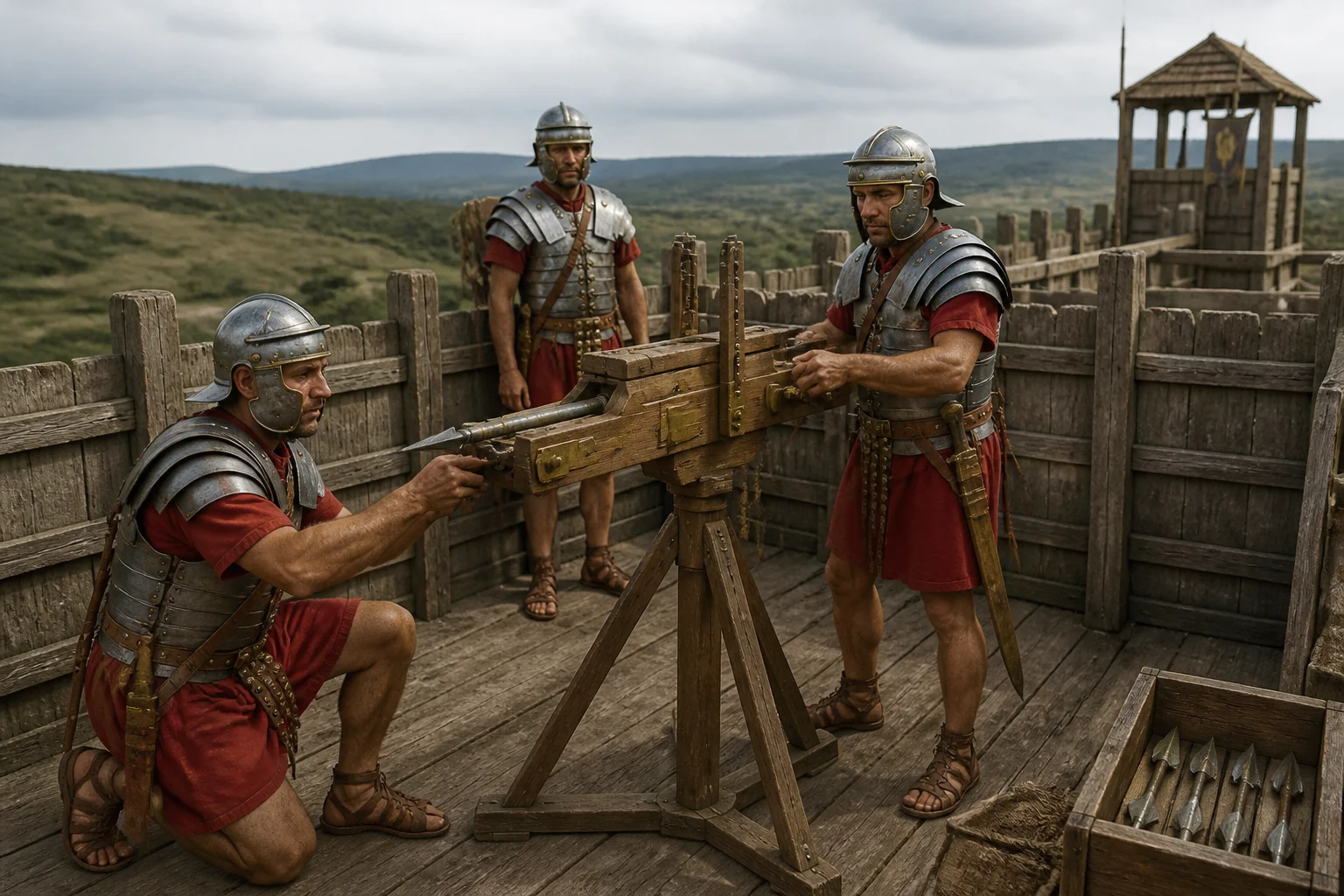
The scorpio was a Roman torsion bolt-shooter that looked like a compact, tripod-mounted crossbow. Roman accounts describe it as accurate enough to pick off individual attackers, which made it useful on walls and in open field battles. Caesar and other writers mention scorpiones firing in support of legions.
It used twisted sinew bundles to power two arms, a step up in reliability and power from earlier designs. A well-trained crew could adjust the weapon quickly and fire repeatedly from a protected position. In many ways, it was the professional Roman answer to older Greek bolt throwers.
The scorpio is sometimes grouped with the ballista because both use torsion arms. Roman historians often make a distinction by size and mount rather than fundamental design. That variety shows how standardized-looking ancient artillery could still be adapted to different roles.
4. The Polybolos: A Repeating Bolt Thrower from Philo of Byzantium
Philo of Byzantium described a device called the polybolos, sometimes called an ancient repeating crossbow or machine gun. It used a chain drive connected to a windlass and a magazine of bolts, allowing a crew to cock and fire repeatedly with less manual resetting. The idea was shockingly modern even if the engineering was difficult.
Most historians treat the polybolos as a technical study rather than a battlefield staple. The mechanism was complex, heavy, and likely prone to jamming under combat conditions. Still, its existence proves that ancient engineers were thinking about sustained fire long before gunpowder.
The polybolos did not vanish because the idea was bad. It probably disappeared because simpler weapons were easier to build and maintain in large numbers. Warfare often rewards reliability over mechanical brilliance.
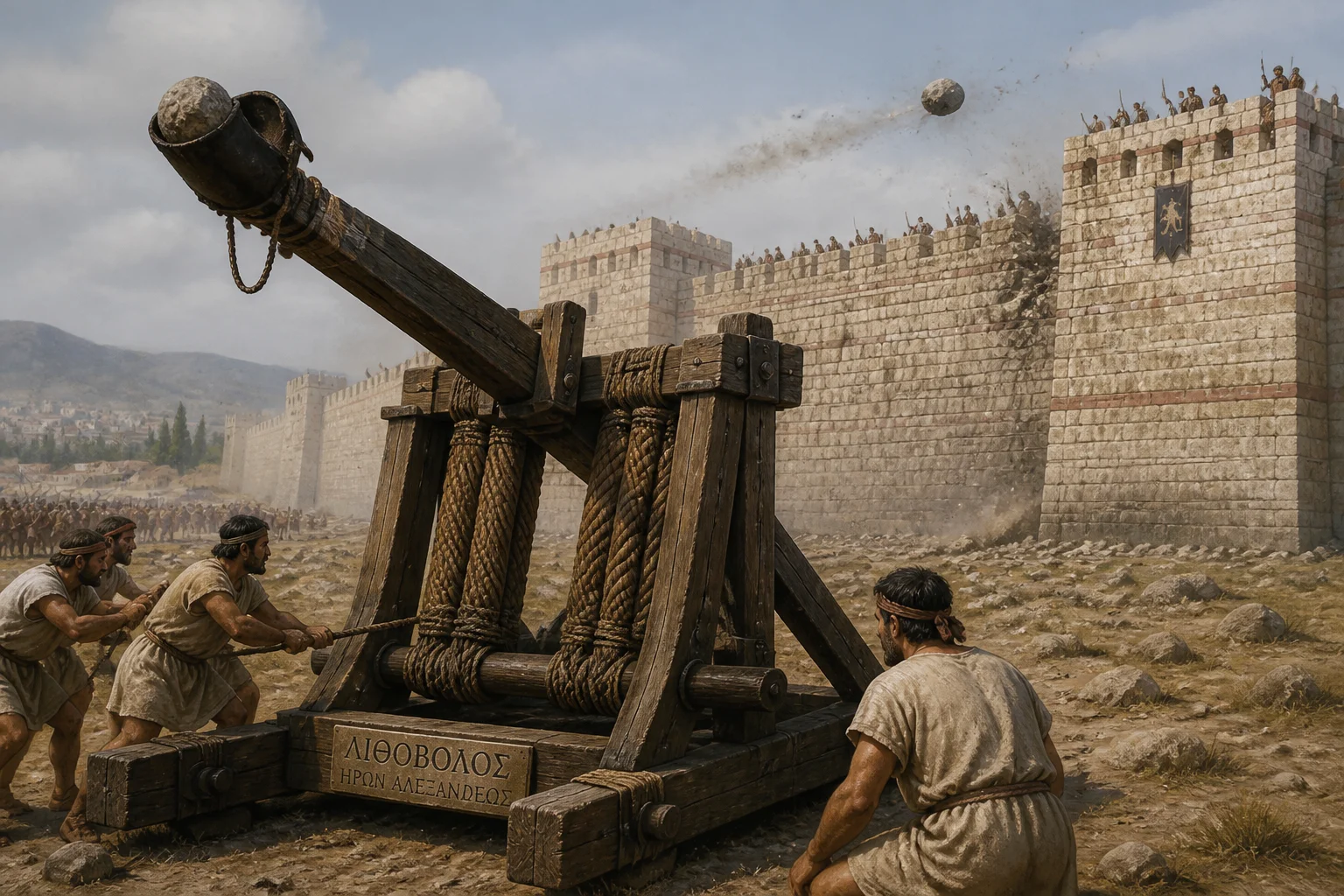
5. The Lithobolos: The Stone-Throwing Siege Breaker
The lithobolos was a torsion catapult built to throw stones instead of bolts. Depending on its size, it could lob heavy rocks at walls, towers, and groups of defenders from a safe distance. Hellenistic and Roman armies used versions of it in sieges across the Mediterranean.
Larger stone throwers required enormous tension from sinew bundles and sometimes had adjustable angles and washers. They were not precise sniper weapons, but they did not need to be. The goal was to batter fortifications and terrify the people behind them.
Some Hellenistic stone throwers were built as prestige projects as much as weapons. A siege that displayed a massive stone thrower could intimidate a city before a single shot was fired. That psychological role was as real as the physical damage.
6. The Onager: The Roman Catapult That Kicked Like a Donkey
The onager was a late Roman torsion weapon with a single vertical arm that hurled stones from a sling. Its name came from the violent recoil, which reminded soldiers of a wild donkey's kick. It was simpler than two-armed engines and easier to build in the field.
Roman writers describe onagers being used in sieges and sometimes in open battle to break up formations. Accuracy was limited, and the machine could be dangerous to its own crew if parts snapped. Even so, it remained a powerful artillery option for centuries.
The onager remained in use into the early medieval period in some regions. Its simple design meant local workshops could produce it without relying on a few master engineers. That durability helps explain why the one-armed stone thrower outlasted many more complex machines.
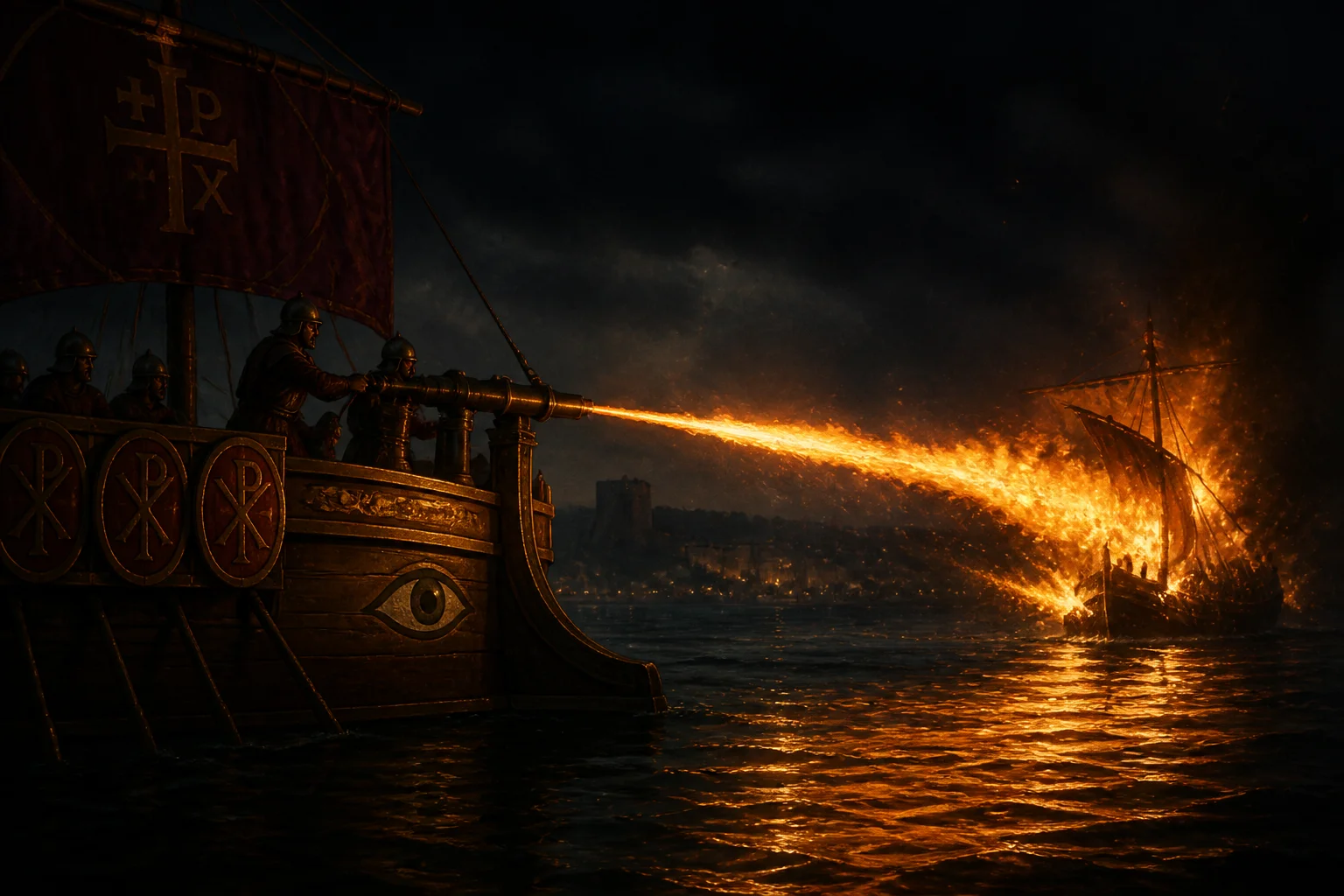
7. Greek Fire: The Secret Flamethrower of the Byzantine Navy
Greek fire was an incendiary weapon used by the Byzantine Empire, especially at sea. It was projected through tubes called siphons and was said to ignite on contact with water, making it extremely difficult to extinguish. The exact recipe was a tightly guarded state secret, and historians still debate its ingredients.
Modern tests suggest it may have used petroleum, resin, sulfur, or quicklime, but no one can fully reconstruct the formula from surviving sources. That mystery is part of what made Greek fire so feared. Even rival empires tried and failed to copy it.
Although Greek fire appears after the classical era, it is often grouped with ancient weapons because it continued a long tradition of incendiary warfare. It shows how a technological secret could act as a force multiplier in naval combat.
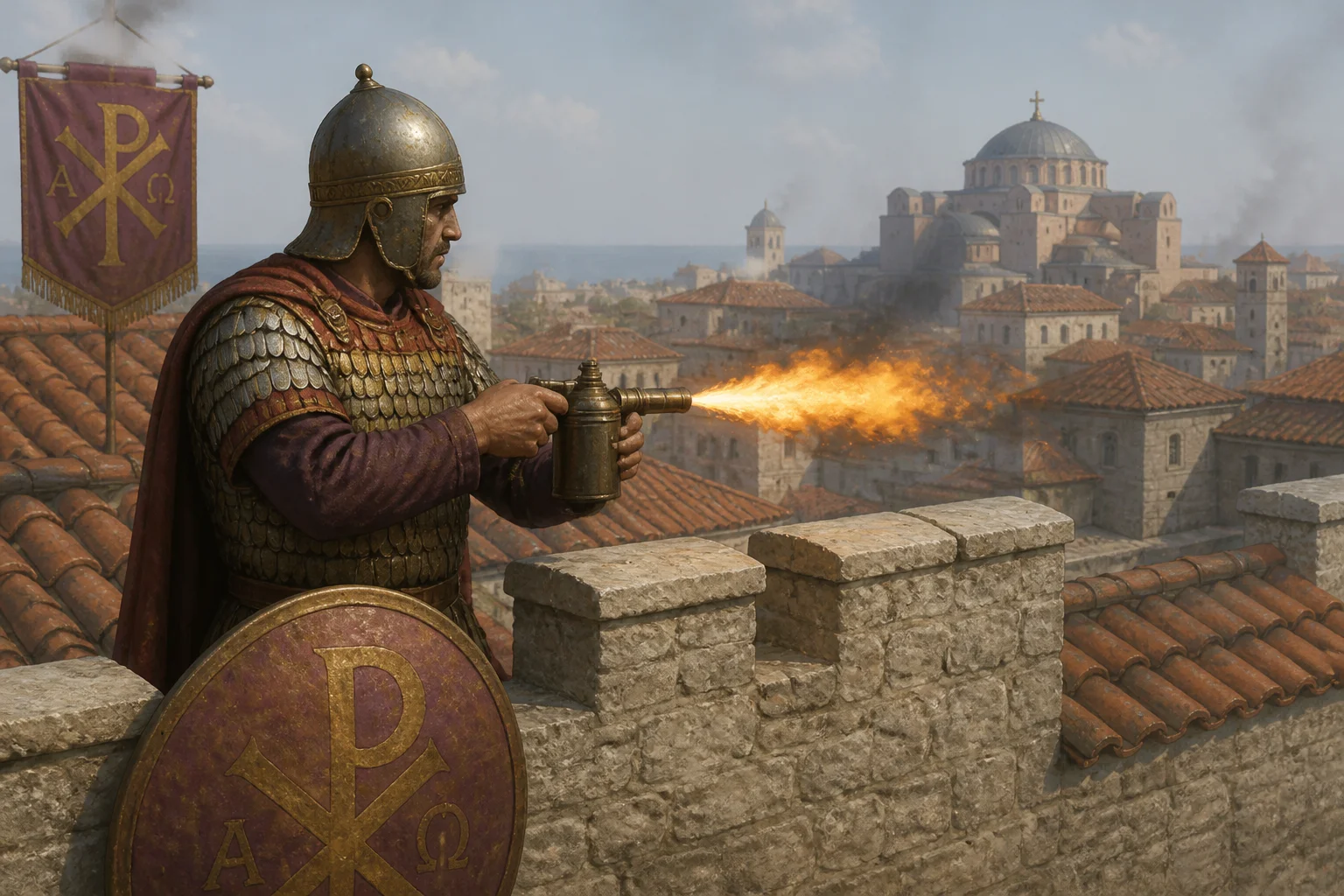
8. The Cheirosiphon: A Handheld Byzantine Fire Projector
If Greek fire was the navy's terror weapon, the cheirosiphon was its infantry-sized cousin. Byzantine military manuals mention small portable siphons that soldiers could carry to spray burning liquid at close range. It was essentially a one-person flamethrower used to defend walls or attack enemy ships.
The device was likely dangerous to operate and required careful handling of a volatile fuel. Its range was short, but the psychological effect must have been enormous. A wall of fire coming from a single soldier would have seemed almost supernatural to enemies.
Surviving texts do not give us exact diagrams of the cheirosiphon, so reconstructions remain tentative. It likely required a heavy container, a pump or bellows, and a flame source carried safely. That uncertainty is common with secret weapons, which were rarely documented in detail.
9. The Claw of Archimedes: The Ship-Grabbing Crane
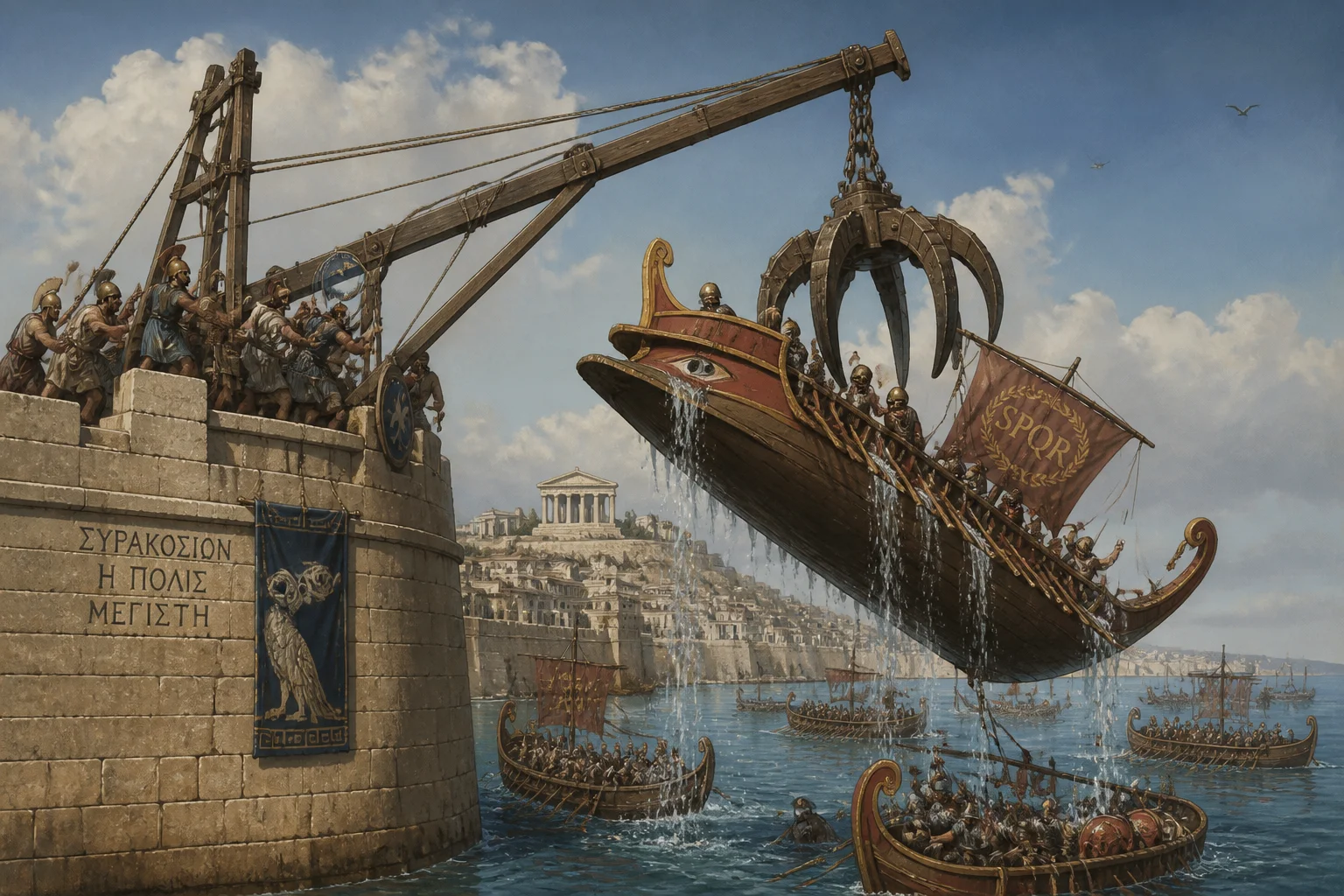
During the Roman siege of Syracuse in the third century BCE, ancient sources say Archimedes built machines to defend the city. One of the most famous was the claw, a crane or beam that reached over the walls and grabbed enemy warships. It may have lifted or shaken ships before dropping them back into the water.
The exact design is unknown because surviving accounts are partly dramatic retellings. Some historians think it was a grappling hook on a lever, while others suggest a floating crane. Either way, the claw became a symbol of ancient engineering used for naval defense.
The fact that the claw was never clearly replicated suggests it may have been a custom defense for Syracuse's unique walls and harbor. It was less a portable superweapon than a civic emergency project. Still, the image of a city using cranes to fight a navy remains unforgettable.
10. Archimedes' Heat Ray: Superweapon or Ancient Legend?
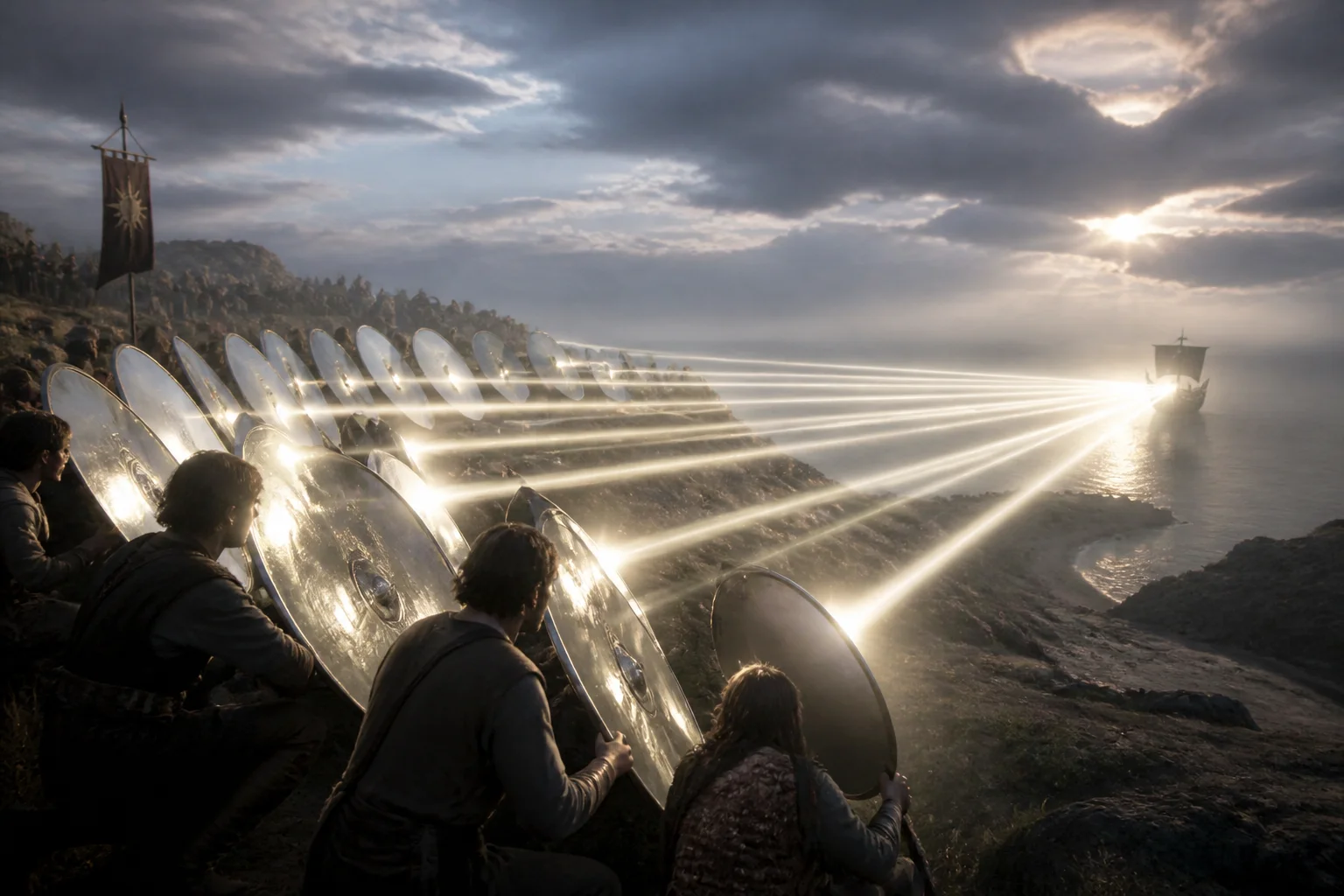
Another famous story from Syracuse claims Archimedes used polished bronze or mirror shields to focus sunlight and set Roman ships on fire. It is a vivid image, and later writers repeated it for centuries. Modern experimental archaeology has produced mixed results, and many experts treat the heat ray as more legend than proven history.
A mirror array might have dazzled or distracted sailors, but setting moving wooden ships aflame at distance is far less certain. This is a useful reminder with ancient superweapons: a good story sometimes outlasts the weapon itself. We should not present an unverified tale as settled fact.
Some researchers have recreated mirror arrays and managed to ignite small targets under ideal conditions. But a moving ship at sea is a far harder target than a stationary test panel. The mystery persists because ancient evidence is too thin to settle either way.
11. The Corvus: Rome's Boarding Bridge for Sea Battles
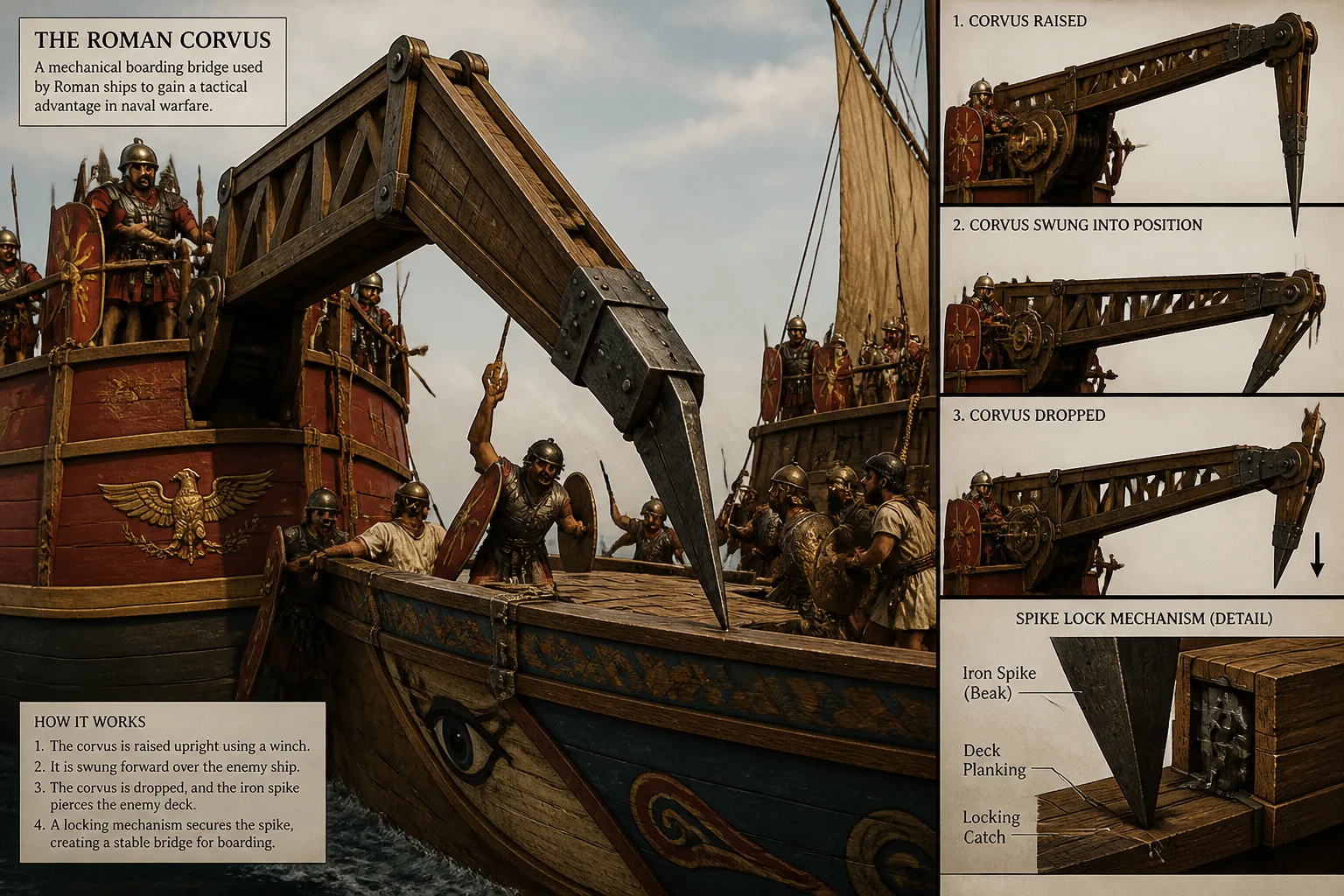
Rome struggled against Carthage at sea during the First Punic War, so it turned naval battles into infantry fights. The corvus was a rotating boarding bridge mounted on the prow of a Roman warship. It dropped onto an enemy deck, and a spike at the end, sometimes called a beak, locked the ships together.
Roman marines could then storm across and fight with swords and shields, where they were strongest. The corvus worked brilliantly at first, but it also made Roman ships top-heavy and less stable in storms. Over time, Rome relied more on traditional naval tactics and better-built ships.
The corvus shows how a superweapon can win battles and still be abandoned. Rome eventually stopped using it as heavily because the same device that made boarding easy also made sailing dangerous. It is a classic case of a technological trade-off.
12. The Helepolis: The Nine-Story Siege Tower
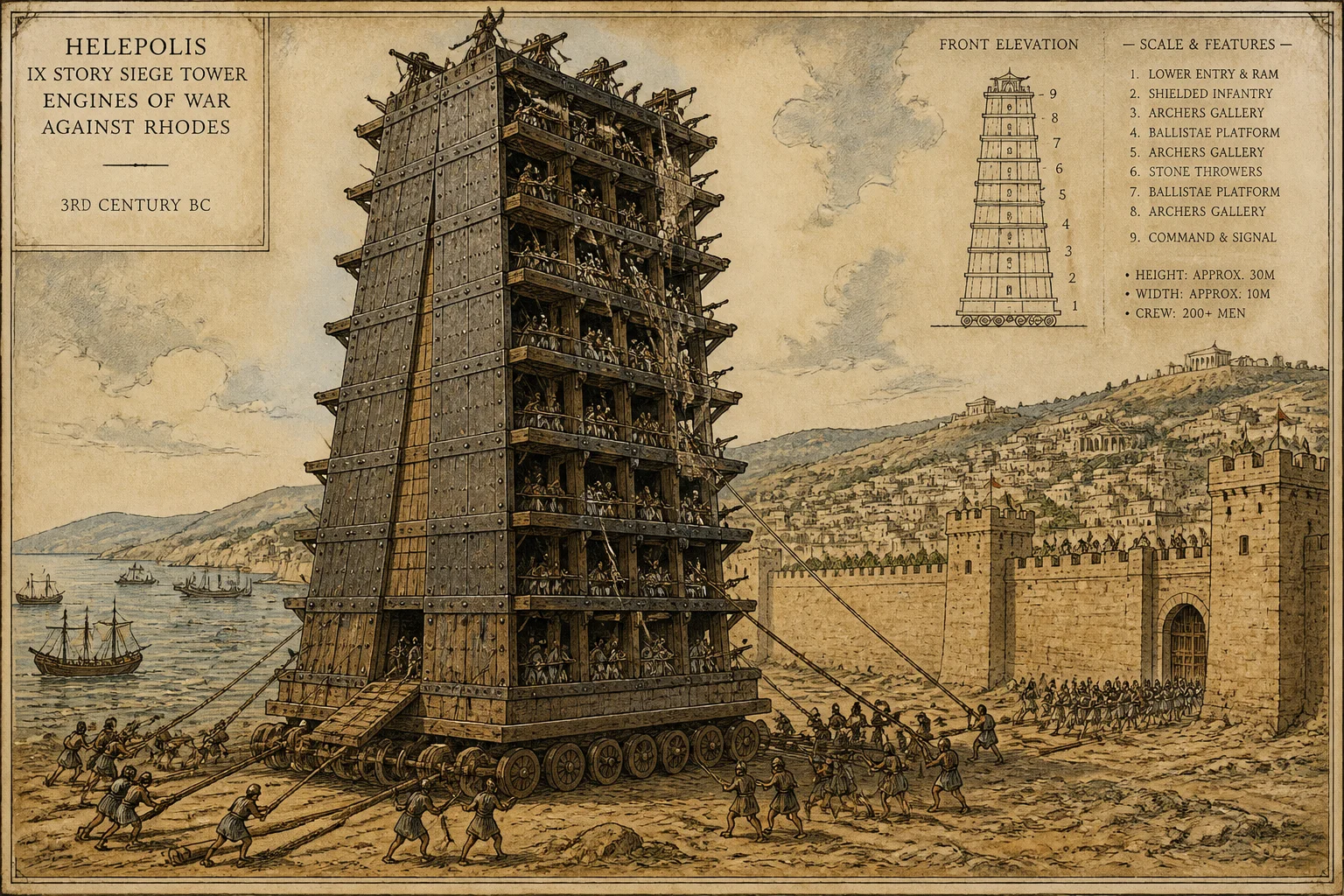
Demetrius Poliorcetes earned his nickname 'besieger of cities' partly because of the Helepolis. This enormous siege tower was built for the siege of Rhodes around 305 BCE and may have stood over 40 meters high. It was iron-plated on the outside and carried numerous catapults and ballistae inside.
The Helepolis moved on wheels and required a huge crew to push and operate it. Its name literally means 'taker of cities.' Despite its size, Rhodes survived, and the tower eventually proved too cumbersome to deliver a knockout blow.
Demetrius left behind a reputation for huge machines even though Rhodes did not fall. The Helepolis may not have been the most efficient weapon, but it was an engineering statement. Ancient warfare, like modern warfare, sometimes ran on spectacle and fear as much as steel.
13. The Sambuca: A Ship-Mounted Assault Bridge
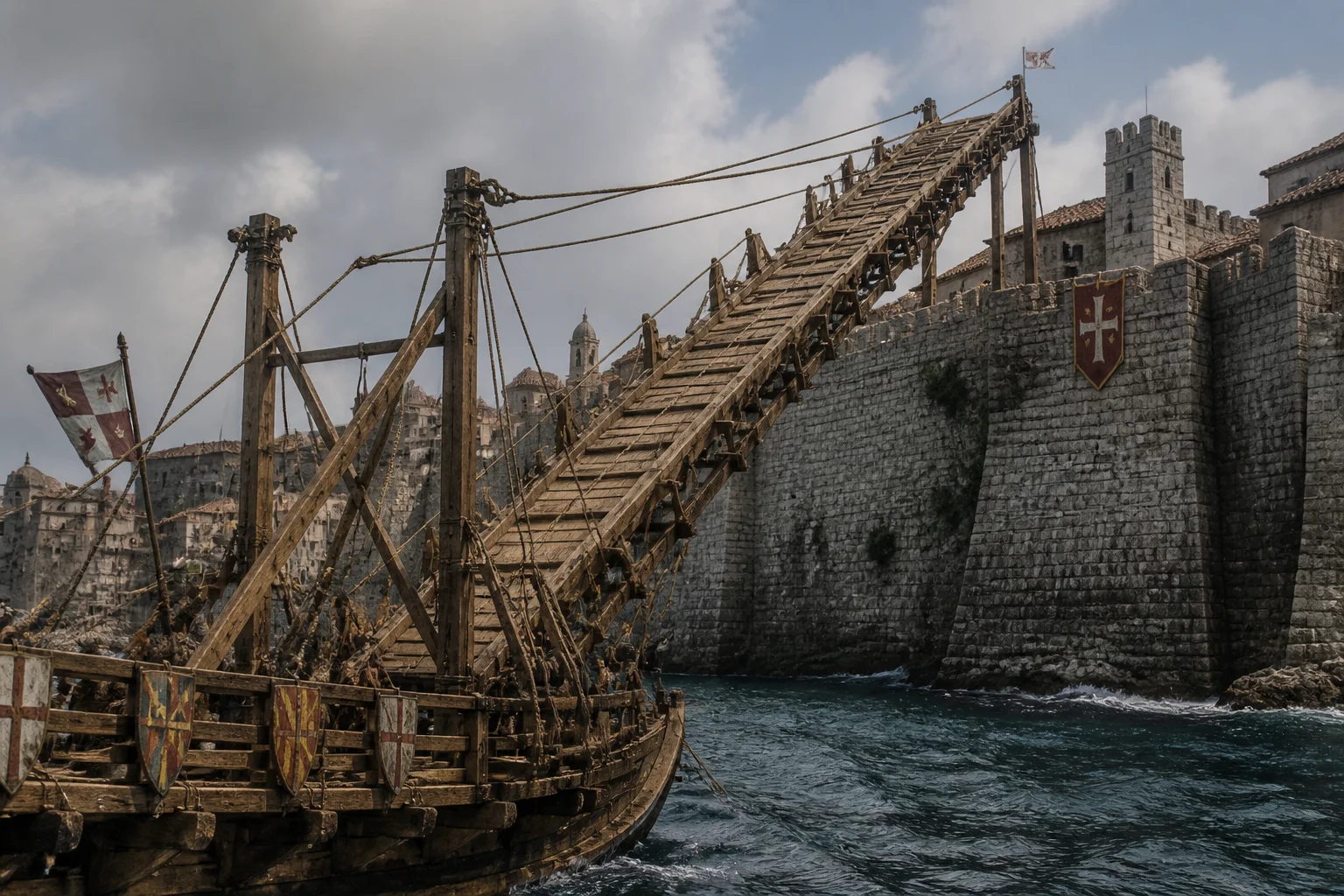
The sambuca was another oversized siege device, but it operated from the sea. Ancient sources describe a covered bridge or scaling ladder mounted on ships and raised toward enemy walls. Its name came from a stringed instrument, likely because of the frame's shape or the ropes that raised it.
It was used in attacks on coastal cities, including Mithridates VI's assault on Rhodes in the first century BCE. Defenders often countered by firing on the exposed ships or destabilizing the platform. The sambuca illustrates how ancient commanders tried to crack walled cities from the water.
Naval siege engines like the sambuca were especially difficult to use in rough water. A sudden swell or a well-aimed defender stone could wreck the raising mechanism. That fragility is why ship-mounted towers and bridges remained niche weapons.
14. Scythed Chariots: Terrifying but Often Useless
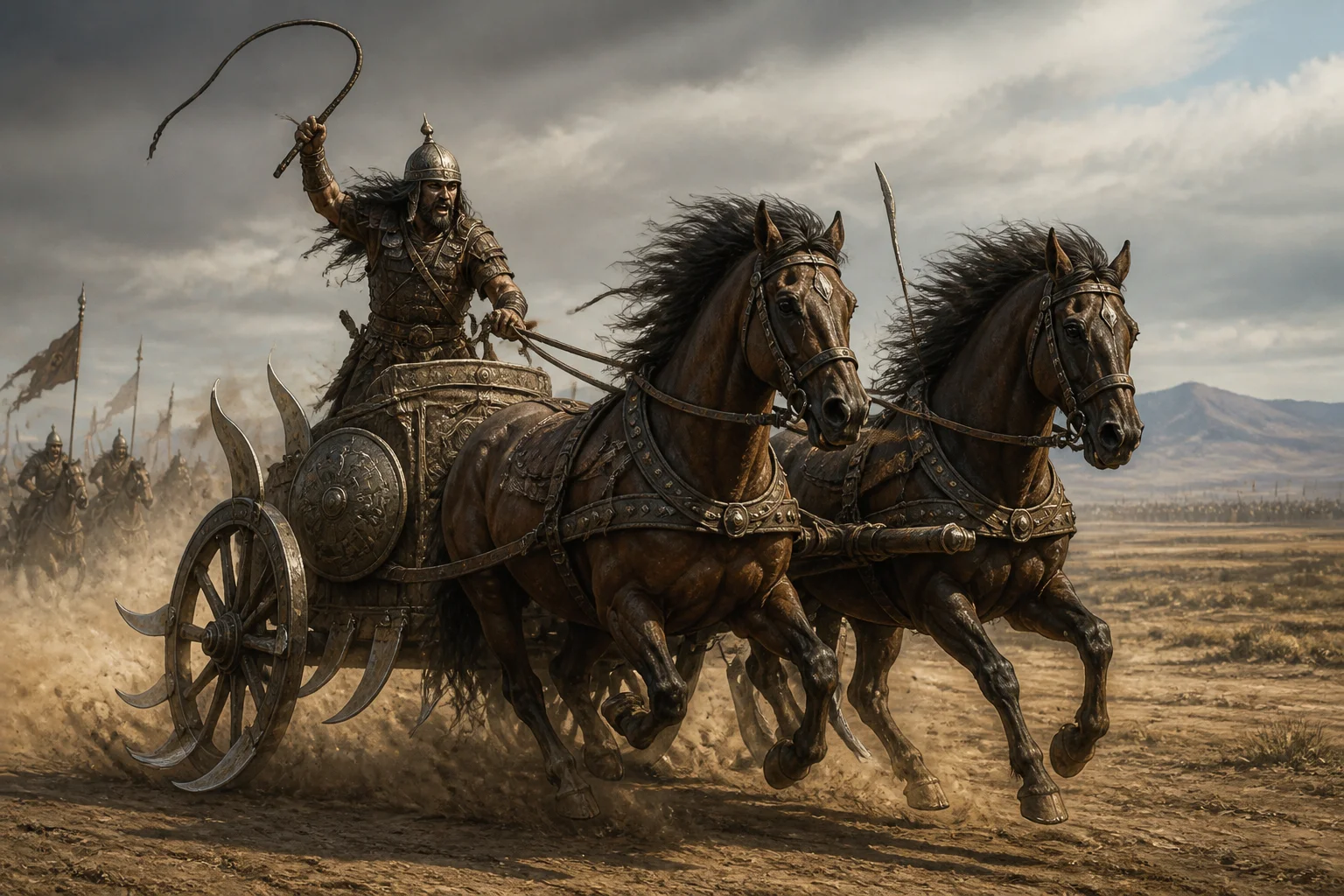
Scythed chariots have become a staple of ancient battle scenes, but they were real. Persian and Hellenistic armies fitted chariot wheels or axles with curved blades and drove them at enemy infantry. The goal was to shred and panic opposing formations.
In practice, scythed chariots rarely lived up to the hype. Disciplined troops could open lanes, target the horses, or use rough ground to break up the charge. At battles like Gaugamela, they made a scary entrance but did not decide the outcome.
Ancient sources often mention scythed chariots with more excitement than evidence of battlefield success. They were costly, needed flat ground, and could be countered by calm infantry. Their fame may say more about how ancient writers loved a frightening image than about their actual impact.
15. War Elephants with Fighting Towers
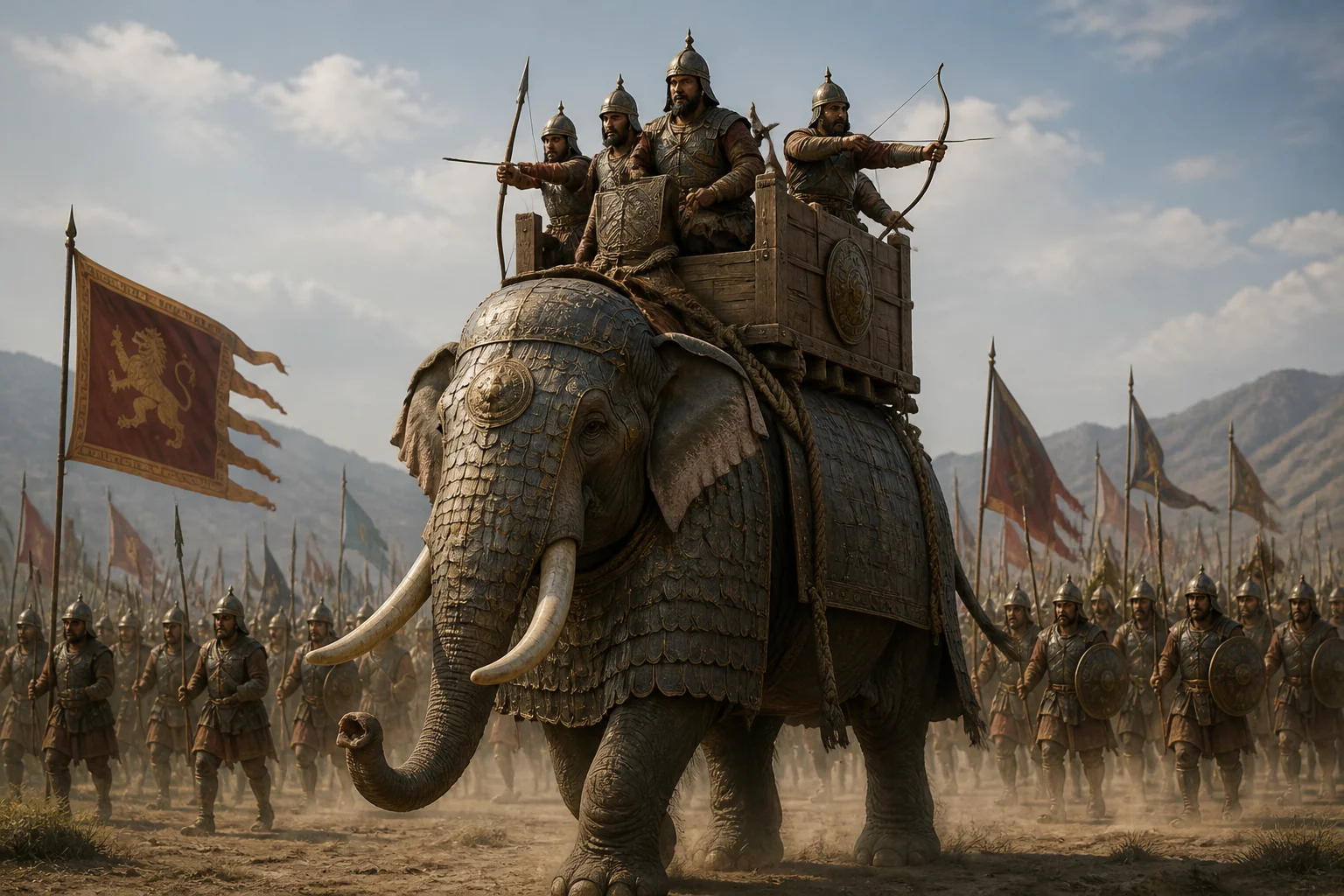
War elephants were the heavy tanks of the ancient Mediterranean and South Asia. Some armies mounted wooden towers on their backs, carrying javelin throwers or archers. Carthage, the Seleucids, and Indian kingdoms all used elephants to shatter infantry lines and scare cavalry horses.
But elephants were expensive, hard to transport, and could panic under missile fire. A wounded elephant might turn and trample its own troops. Commanders learned to use them selectively, often as psychological weapons rather than reliable line-breakers.
Not all elephants carried towers, and different cultures used them differently. Some Indian armies fought from bare-backed elephants, while Hellenistic kingdoms preferred protected platforms. The common thread was psychological shock, not mechanical perfection.
16. War Pigs: The Ancient Counter-Elephant Weapon
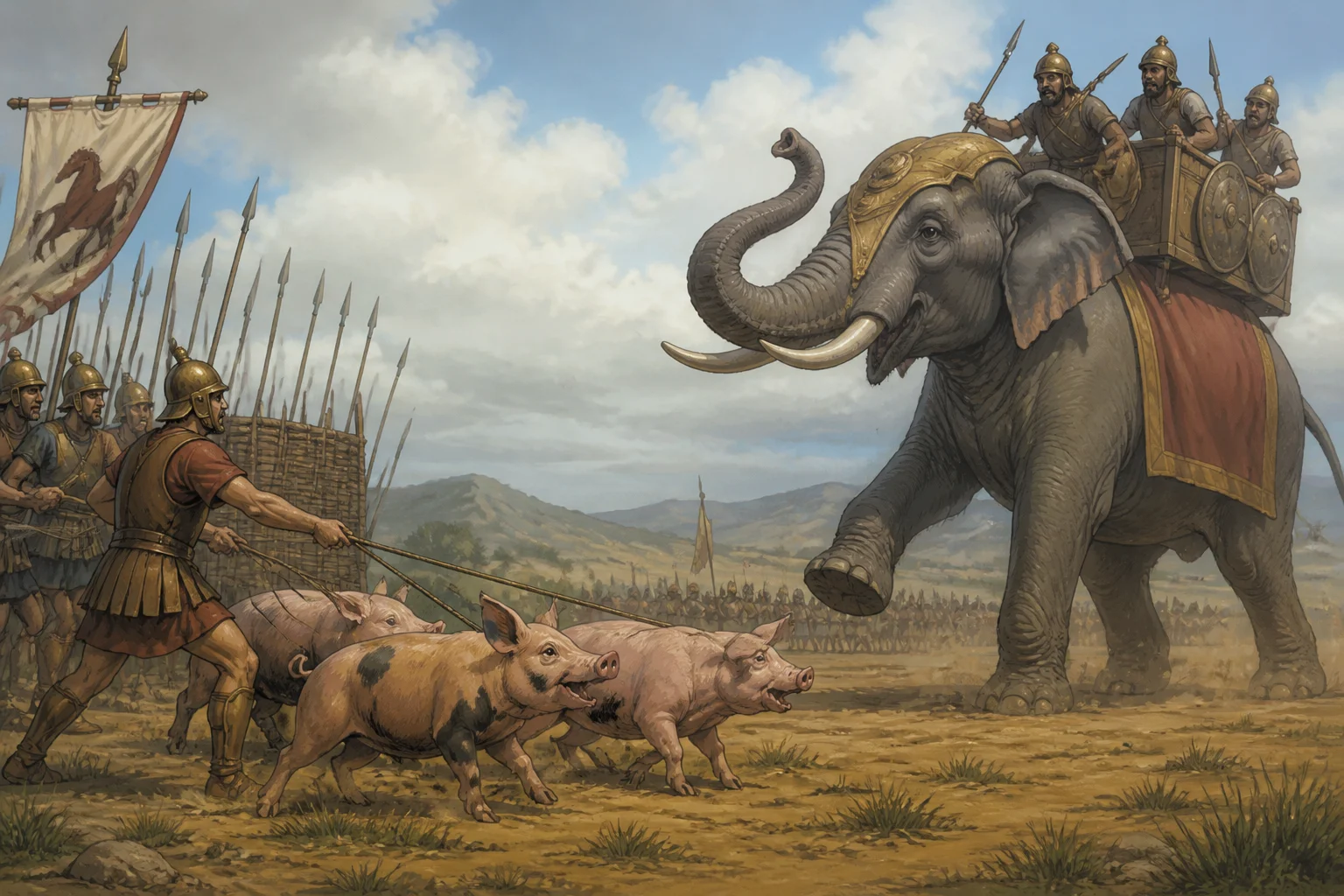
Ancient writers such as Pliny and Aelian mention the notion that pigs could unsettle elephants, and some stories add pitch and fire. The idea was that the squeals and flames would drive elephants into a panic. This may have been attempted more often in storytelling than on real battlefields.
Historians are skeptical about how often this tactic was actually used. It would have been cruel, difficult to control, and risky for the attackers. Still, the story survives because it captures the desperate creativity of ancient warfare.
Modern readers should treat the war pig story as an ancient curiosity rather than a widely documented superweapon. It appears in literary sources but not as a regular military manual recommendation. That does not make it worthless, just less reliable than a proven device like the caltrop.
17. Caltrops: Tiny Spikes That Slowed Advancing Armies
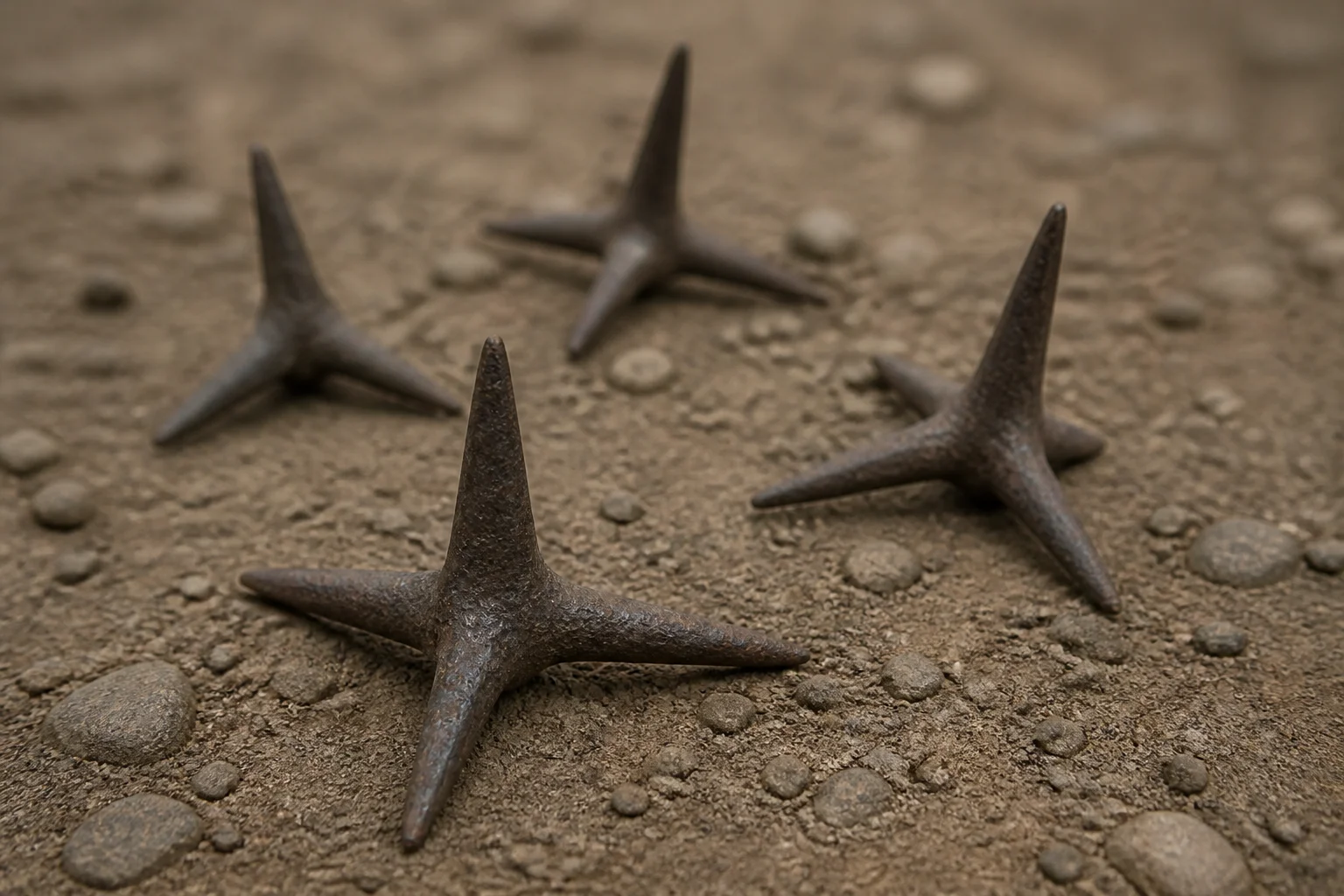
A caltrop is a small iron device with four spikes arranged so that one point always points upward. Ancient armies scattered them on roads, river crossings, and passes to injure cavalry horses and slow infantry. They were cheap, easy to produce, and did not require any advanced engineering.
Roman legions carried them as field defenses, and later armies kept using the same basic design for centuries. A caltrop did not look like a weapon of mass destruction, but it could shape a battle before it started. Denying an enemy safe movement was often more valuable than a dramatic siege engine.
Caltrops were a superweapon in the same way a landmine is: cheap, passive, and hard to spot. They could channel an enemy into a chosen kill zone without any soldier needing to fire a shot. In siegecraft and retreats, that was often decisive.
18. The Chinese Repeating Crossbow: A Fast-Firing Magazine Bow
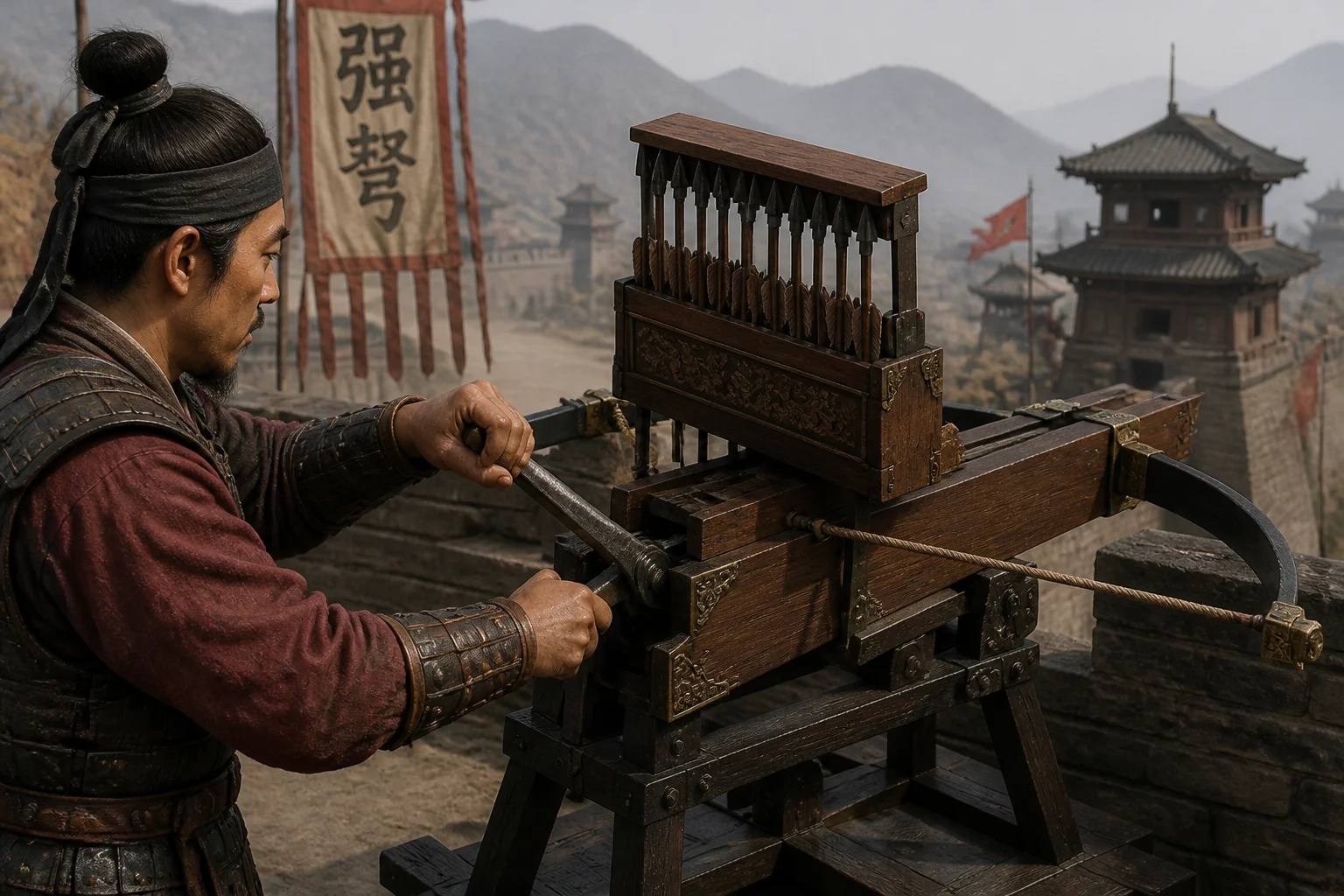
In ancient China, repeating crossbows used a top-mounted magazine and a lever to fire bolts in quick succession. Later versions are often linked to Zhuge Liang, but archaeological finds and texts suggest the mechanism is older. A soldier could work the lever back and forth without stopping to reload after each shot.
The trade-off was power and range, since individual bolts were often lighter. Still, a repeating crossbow could put many projectiles into an approaching formation. It is one of the clearest non-Western examples of a weapon that upends the idea that ancient armies only used simple bows.
The repeating crossbow was not a long-range precision weapon. Its strength lay in volume and relative ease of use for defenders. Later Chinese armies kept refined versions in service for centuries, proof that the concept worked well enough to survive.
19. The Traction Trebuchet: Muscle-Powered Siege Artillery
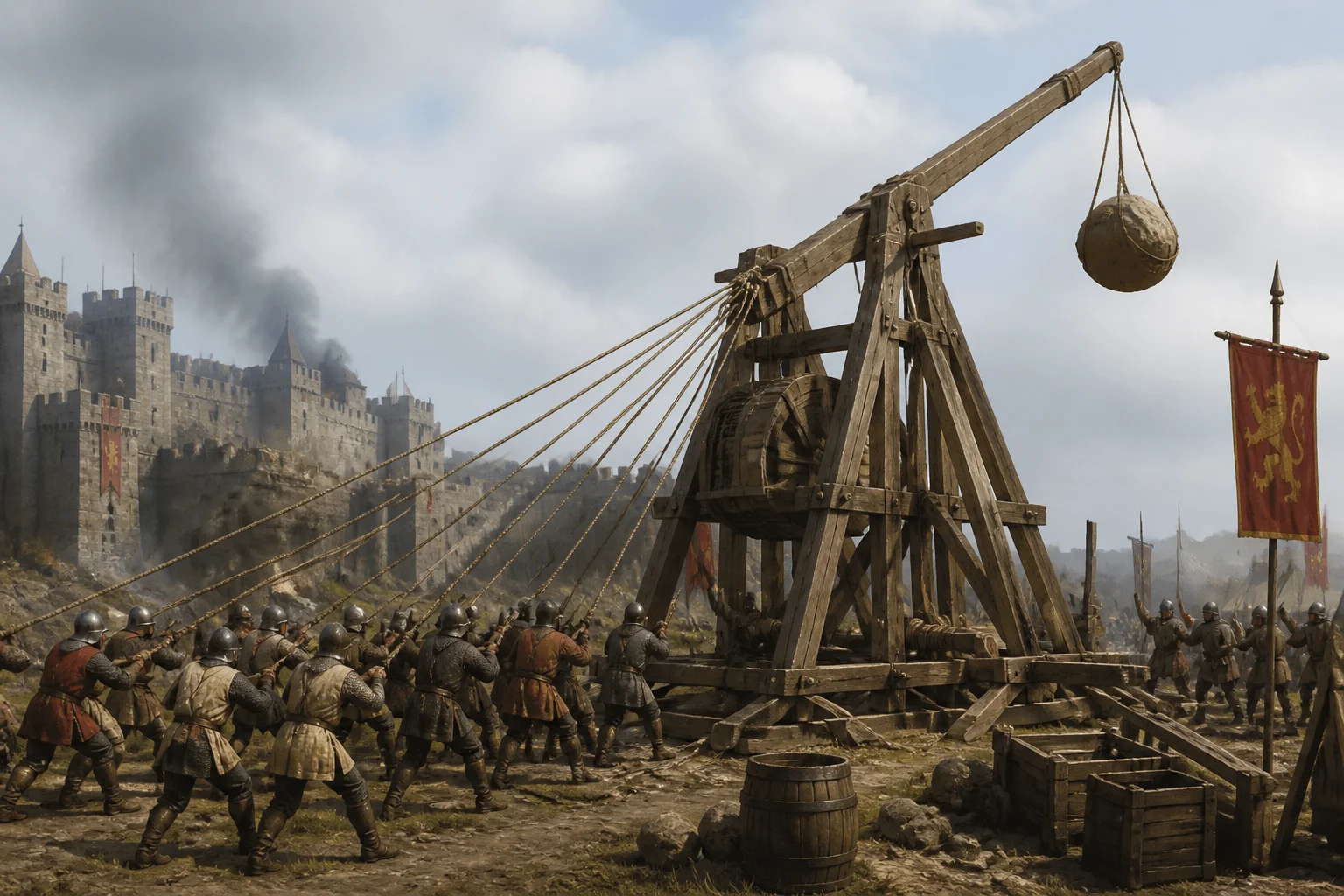
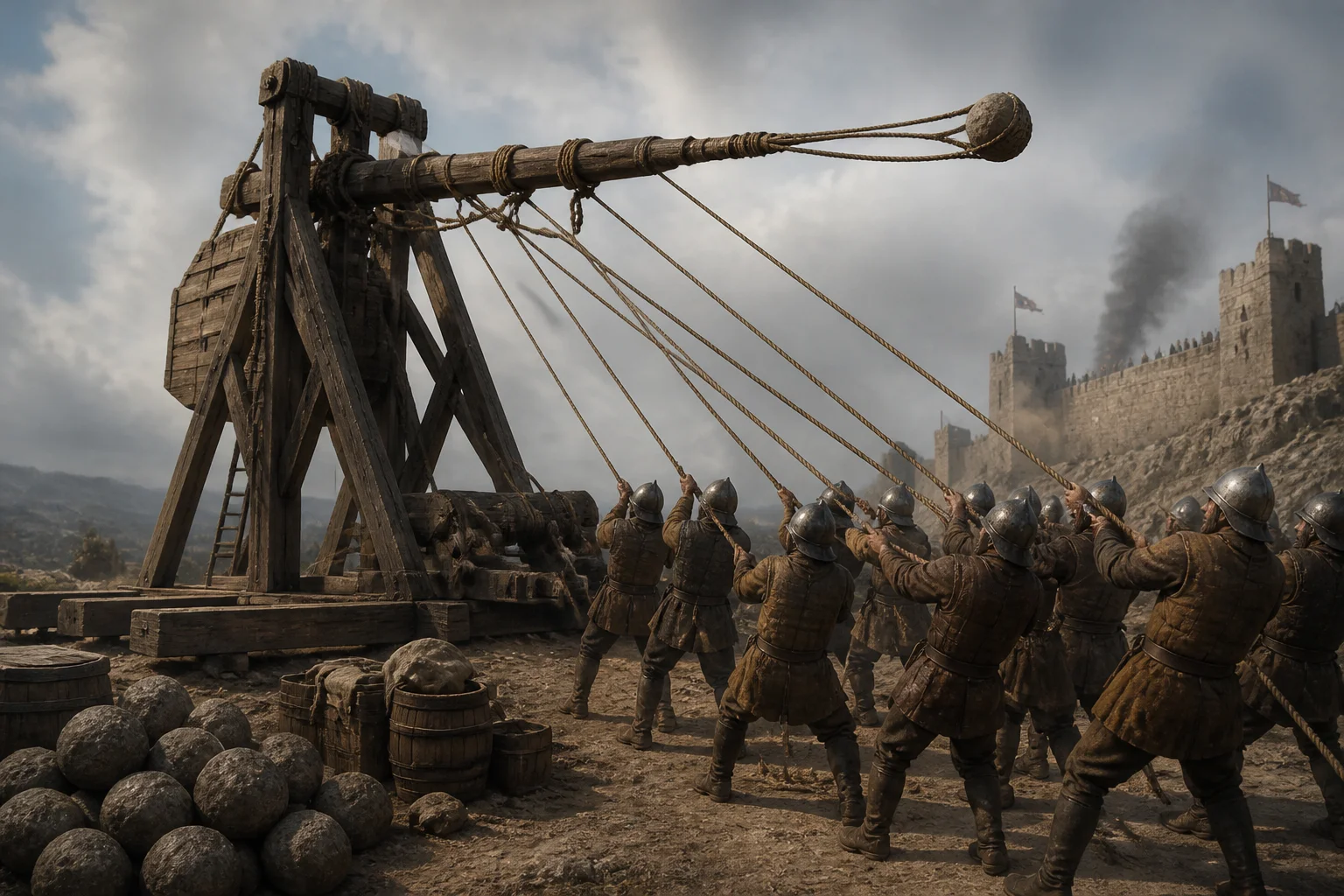
Historical evidence points to ancient China as the early home of the traction trebuchet, likely before the common era. A crew hauled on ropes to swing a pivoting arm and hurl a stone from a sling. It offered a flexible, human-powered alternative to torsion machines.
Traction trebuchets spread across Asia and eventually influenced siege warfare in the Mediterranean world. They could be built quickly from wood and rope, and their rate of fire depended on the crew's stamina. The idea seems simple now, but it represented a major step in siege technology.
One advantage of the traction trebuchet was its rate of fire. A trained crew could launch smaller stones more often than a torsion engine could manage. That made it useful for suppressing defenders and forcing them off walls.
20. Mad Honey: The Accidental Chemical Ambush
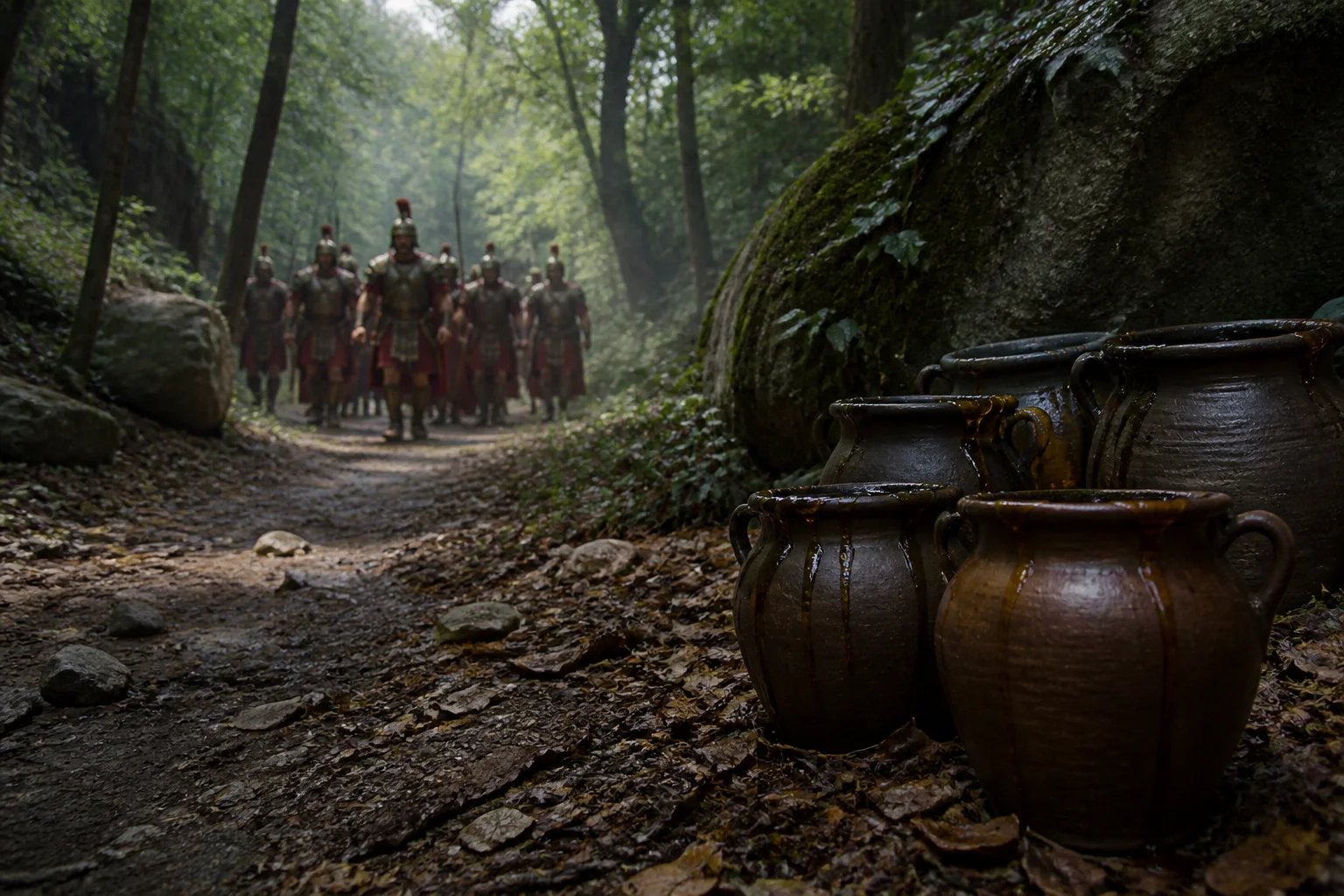
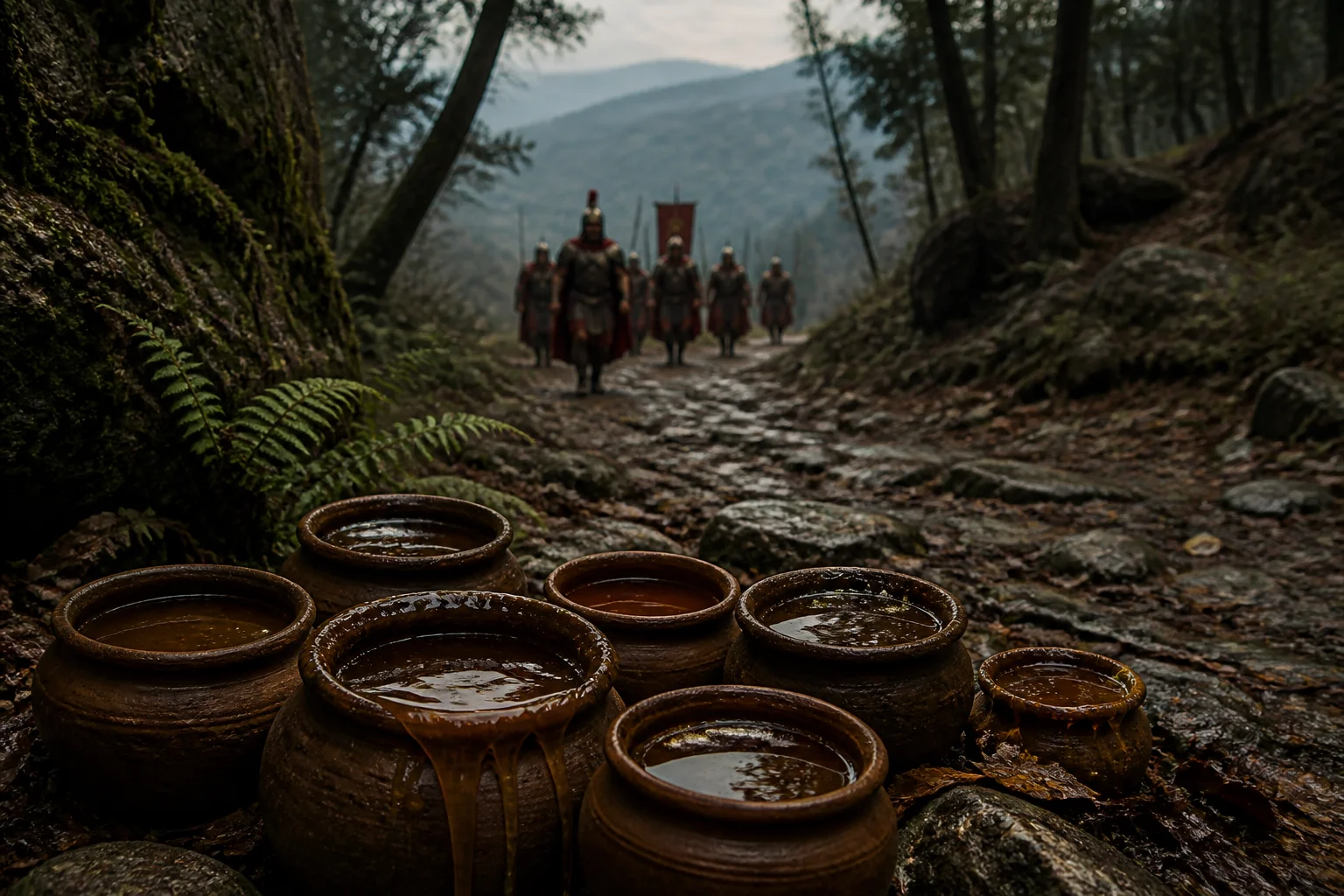
In the Pontus region near the Black Sea, locals did not always fight with iron. Ancient writers describe how they left pots of honey made from rhododendron nectar along a route used by Roman soldiers. The honey contained natural toxins that caused dizziness, vomiting, and confusion.
One famous story involves Pompey's army, though details vary and ancient accounts can exaggerate. Affected troops were then ambushed while they were incapacitated. It was not an engineered superweapon, but it shows how environmental knowledge could become a weapon.
Mad honey remains a real phenomenon today, and historians consider the basic mechanism plausible. This is ancient biological warfare in the most literal sense: using nature itself as a trap.
Why These Weapons Still Matter
Ancient superweapons were rarely the unstoppable marvels that legends describe. They were expensive, temperamental, and often less important than logistics, training, and morale. What makes them fascinating is the ambition behind them.
From ancient weapons that resemble giant crossbows to chemical ambushes, these devices show that ancient people approached war as an engineering problem. That same mindset eventually produced gunpowder, artillery, and every modern military technology that shapes our world.
Frequently Asked Questions
What ancient weapons that resemble giant crossbows actually existed?
The gastraphetes, oxybeles, and scorpio are the most direct examples. They used stocks, triggers, bow arms, and heavy bolts, so they closely resembled oversized crossbows, even though they were often too large for one person to carry.
Was Greek fire really unstoppable?
Ancient sources describe it as extremely hard to extinguish, but its exact recipe is unknown. Modern experiments suggest it was fearsome but not invincible, and its effect depended on weather, range, and the skill of the crews using it.
Did Archimedes actually build a heat ray and a claw?
The claw and the heat ray are known mainly from later dramatic accounts. The claw is plausible as a crane-like grapnel, but the heat ray's effectiveness is widely questioned and should be treated as ancient legend rather than proven history.
Were repeating weapons really used in ancient times?
Yes in limited forms. The polybolos was a repeating bolt thrower described by Philo of Byzantium, and Chinese repeating crossbows allowed rapid fire with a lever and magazine. They were clever designs, though they were often harder to maintain than simpler weapons.

Alex Warren
Related Articles