

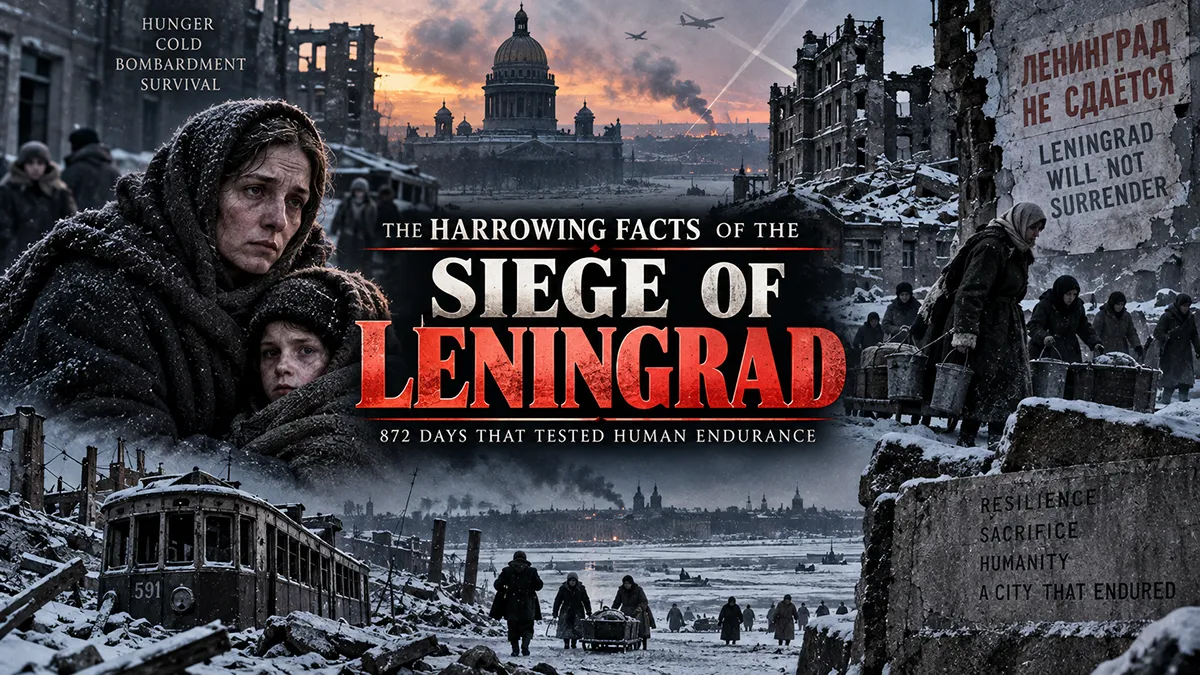
Few chapters of the Second World War are as devastating, or as astonishing, as what happened inside Leningrad between 1941 and 1944.
For nearly two and a half years, a city of roughly three million people was cut off from the rest of the world, bombarded from the air and ground, and slowly starved by a deliberate German strategy.
The Siege of Leningrad, sometimes called the Battle of Leningrad or the Blockade of Leningrad, remains one of the deadliest sieges in recorded history, and its story still shapes how Russia remembers the Leningrad war and World War 2 as a whole.
This post separates documented history from popular myth, and walks through the siege from its opening days to its long, painful legacy. Along the way, we’ll look at the numbers, the survival stories, and the strange internet-era question of why Hitler didn’t just “take” the city instead of surrounding it.
TL;DR: The Siege of Leningrad was an 872-day Nazi blockade during WWII that starved hundreds of thousands of civilians, yet the city never fell.
What Was the Siege of Leningrad?
The Siege of Leningrad was a military blockade imposed by Nazi Germany and its Axis allies on the Soviet city of Leningrad (now St. Petersburg) during World War 2. German and Finnish forces encircled the city in September 1941, cutting off nearly all supply routes by land.
Rather than storming the city outright, German commanders chose to surround it and let starvation, cold, and shelling do much of the work.
You may see this event referred to under several names: the Battle of Leningrad, the Leningrad Blockade, or simply Leningrad’s WWII ordeal. All of these describe essentially the same catastrophic period, though “battle” sometimes refers more narrowly to the military campaigns fought to break the encirclement.
Whatever term is used, the history of Leningrad during this period is one of the most extreme tests of civilian endurance in modern history.
1. Leningrad Was Under Siege for Almost 900 Days
The siege lasted from September 8, 1941, to January 27, 1944, a total of 872 days. It’s often rounded up in popular history to “900 days,” a phrase popularized by journalist Harrison Salisbury’s influential book on the subject. Either way, it stands as one of the longest and most lethal sieges any city has ever endured.
For comparison, that’s longer than the entire United States involvement in World War 2 after Pearl Harbor. Anyone asking how long the Siege of Leningrad lasted is really asking about nearly two and a half winters of near-total isolation.
2. The Siege Began as Part of Hitler’s Operation Barbarossa
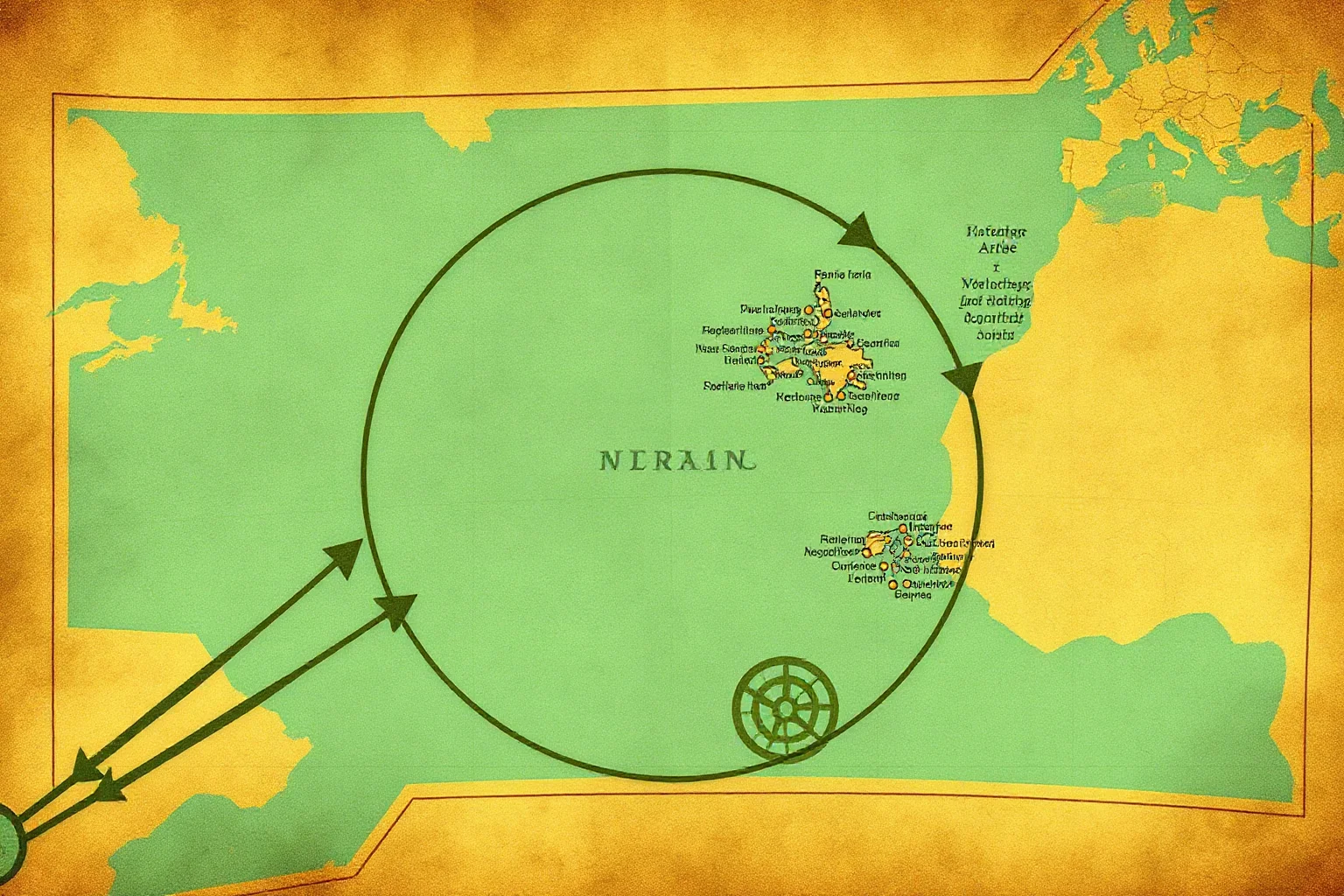
Leningrad’s encirclement wasn’t an isolated event. It grew directly out of Operation Barbarossa, Germany’s massive June 1941 invasion of the Soviet Union. Army Group North was tasked with capturing Leningrad, then the USSR’s second-largest city and a major industrial and naval hub.
German forces reached the city’s outskirts remarkably fast, and by early September they had cut the last rail links connecting Leningrad to the rest of Soviet-controlled territory. From that point on, the city could only be reached by water, air, or, once winter came, by ice.
3. Hitler Didn’t Want to Capture Leningrad — He Wanted to Starve It
A persistent internet joke asks, essentially, “don’t siege Leningrad, just take it,” as if a quick assault would have been the obvious move. Historically, though, German planners deliberately rejected a direct infantry assault on the city. Military directives from 1941 indicate the intent was to seal Leningrad off and let starvation and bombardment destroy it rather than risk the enormous casualties of urban combat.
This wasn’t a strategic oversight; it was policy. Some German planning documents from the period discuss allowing the civilian population to starve rather than accepting responsibility for feeding a captured city of millions. It’s a chilling detail that’s easy to lose in memes about the siege, but it’s well documented in surviving Wehrmacht and political records.
4. Leningrad’s Name and Symbolism Made It a Prime Target
Leningrad wasn’t just strategically valuable; it was symbolically loaded. Named after Vladimir Lenin, it had been the cradle of the 1917 Bolshevik Revolution and was one of the Soviet Union’s most important cultural and industrial centers. Capturing or destroying it would have struck a major blow against Soviet morale and propaganda.
The city also housed critical shipyards, arms factories, and the Baltic Fleet, making it a genuine military prize on top of its symbolic weight. That combination of ideology and industry made it a top-priority target from the earliest planning stages of Barbarossa.
5. The City Was Almost Completely Cut Off From the Outside World
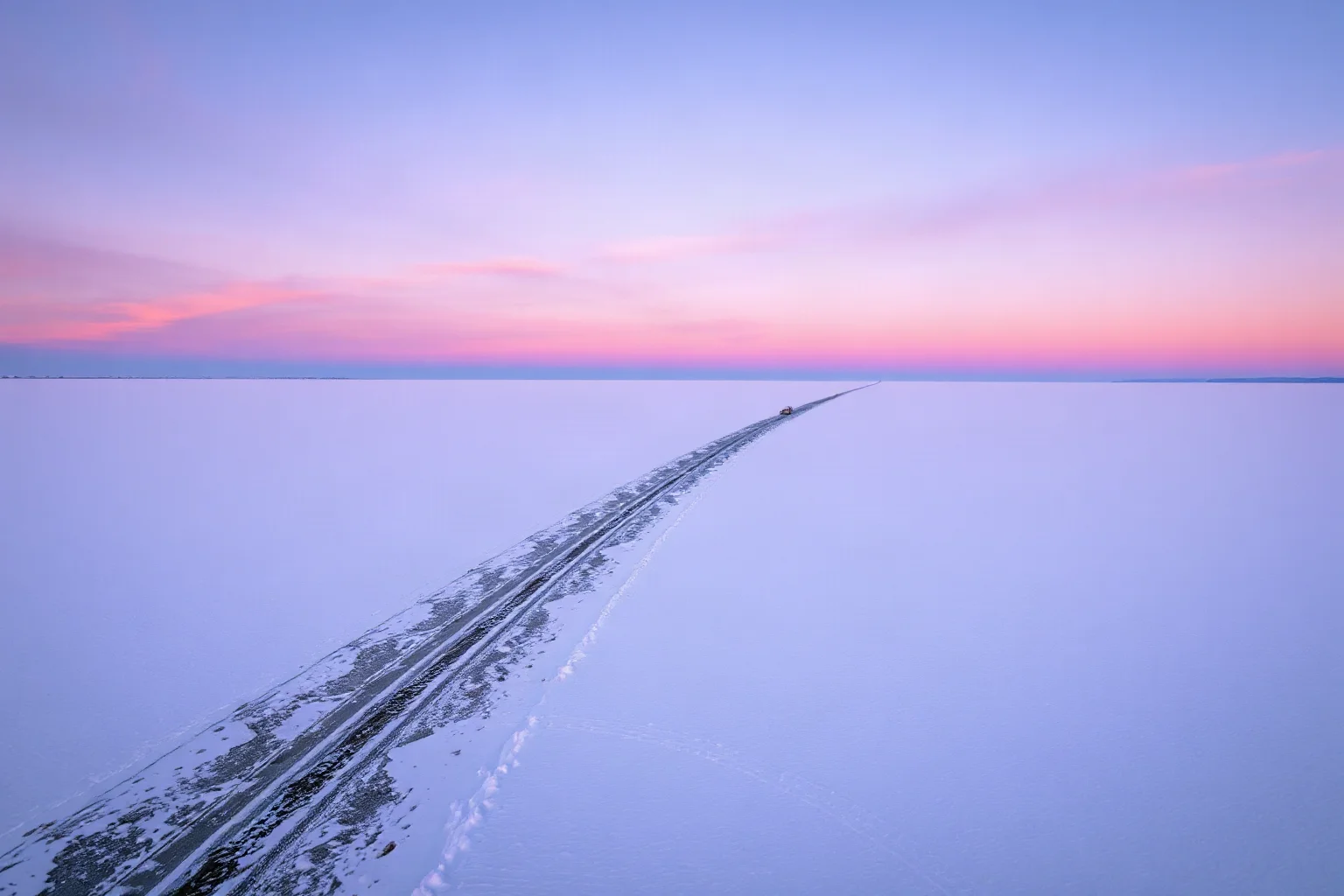
Once German and Finnish forces closed the ring around Leningrad, the only way in or out was across Lake Ladoga, a large freshwater lake to the city’s east. Rail lines, roads, and telegraph connections to the rest of the Soviet Union were severed. Food, fuel, and medical supplies could no longer move freely into the city.
This near-total isolation is what makes the blockade of Leningrad so distinct from many other WWII sieges. It wasn’t just a military siege line; it was an attempt to seal off an entire metropolitan population from food and hope alike.
6. The “Road of Life” Was Leningrad’s Only Lifeline
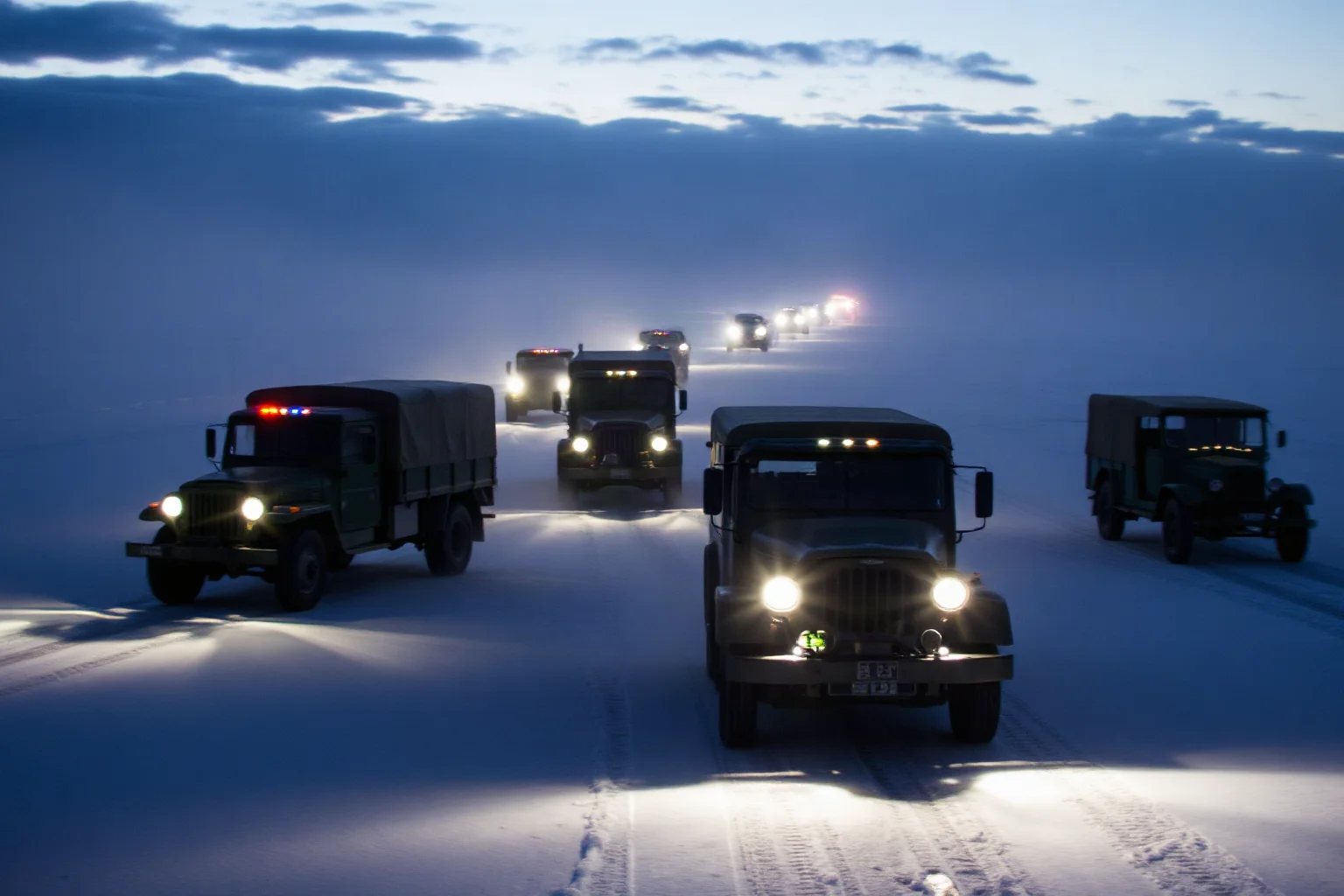
In winter, Lake Ladoga froze solid enough to support truck traffic, and Soviet authorities built what became known as the Road of Life across the ice. Convoys carried in flour, ammunition, and fuel, and carried out evacuees, mostly children, the elderly, and the wounded. It was extraordinarily dangerous, since German aircraft regularly strafed and bombed the convoys.
Many trucks broke through thin ice and sank with their cargo and drivers. Even so, the Road of Life remained the single most important supply route for the besieged city, and without it, the death toll would almost certainly have been even higher.
7. Bread Rations Fell to as Little as 125 Grams a Day

By the winter of 1941-42, food stockpiles inside the city had collapsed. At the lowest point, some categories of civilian workers received as little as 125 grams of bread per day, roughly the size of a small dinner roll. Soldiers and manual laborers received somewhat larger rations, but still far below what was needed to survive long term.
Rationing was tightly controlled through ration cards, and losing your card could mean losing access to food altogether. Black-market trading and theft of ration cards became desperate, sometimes deadly, matters.
8. “Blockade Bread” Was Made From Sawdust, Cellulose, and Wallpaper Paste

As grain supplies ran out, bakers stretched what little flour remained with substitutes: cellulose, sawdust, ground tree bark, and even wallpaper paste that still contained edible starch. This became grimly known as “blockade bread.” It provided calories, barely, but little real nutrition.
Residents also reportedly ate pets, livestock feed, and anything with caloric value they could find. These weren’t isolated anecdotes; they’re consistent with rationing records and survivor testimony collected after the war.
9. The Winter of 1941-42 Was One of the Coldest on Record

As if starvation weren’t enough, the first winter of the siege was exceptionally harsh, with temperatures dropping well below freezing for extended stretches. Fuel shortages meant many apartments had no heating, and the electrical grid was severely rationed. Frozen water pipes and burst plumbing made basic sanitation nearly impossible.
The combination of extreme cold and starvation was catastrophic. Malnourished bodies had little capacity to regulate their own temperature, and hypothermia and starvation often worked together to kill people who might have survived either one alone.
10. Starvation, Not Bombs, Killed the Most People
While German artillery and air raids did kill thousands of Leningraders, the overwhelming majority of deaths during the siege came from starvation and related illness. Historians studying Leningrad casualties consistently find that famine, cold, and disease were the primary killers, not direct combat.
This is part of what makes the siege so distinct within World War 2 history. It was less a battle of armies inside the city and more a slow, grinding humanitarian catastrophe unfolding behind the front lines.
11. Desperate Survival Led to Documented Cases of Cannibalism
This is one of the siege’s most disturbing aspects, and it’s important to be careful about how it’s discussed. Soviet-era police (NKVD) records and postwar historical research do document cases of cannibalism during the worst months of starvation, including both eating the already dead and, in a smaller number of cases, killing for food. Some individuals were arrested and prosecuted for these crimes at the time.
Historians caution that exact numbers are difficult to verify and were likely a small fraction of the population, even amid widespread famine. It’s a real, documented phenomenon, but it shouldn’t be treated as representative of how most Leningraders behaved under unimaginable pressure.
12. A Young Girl’s Diary Became a Symbol of the Siege’s Horror
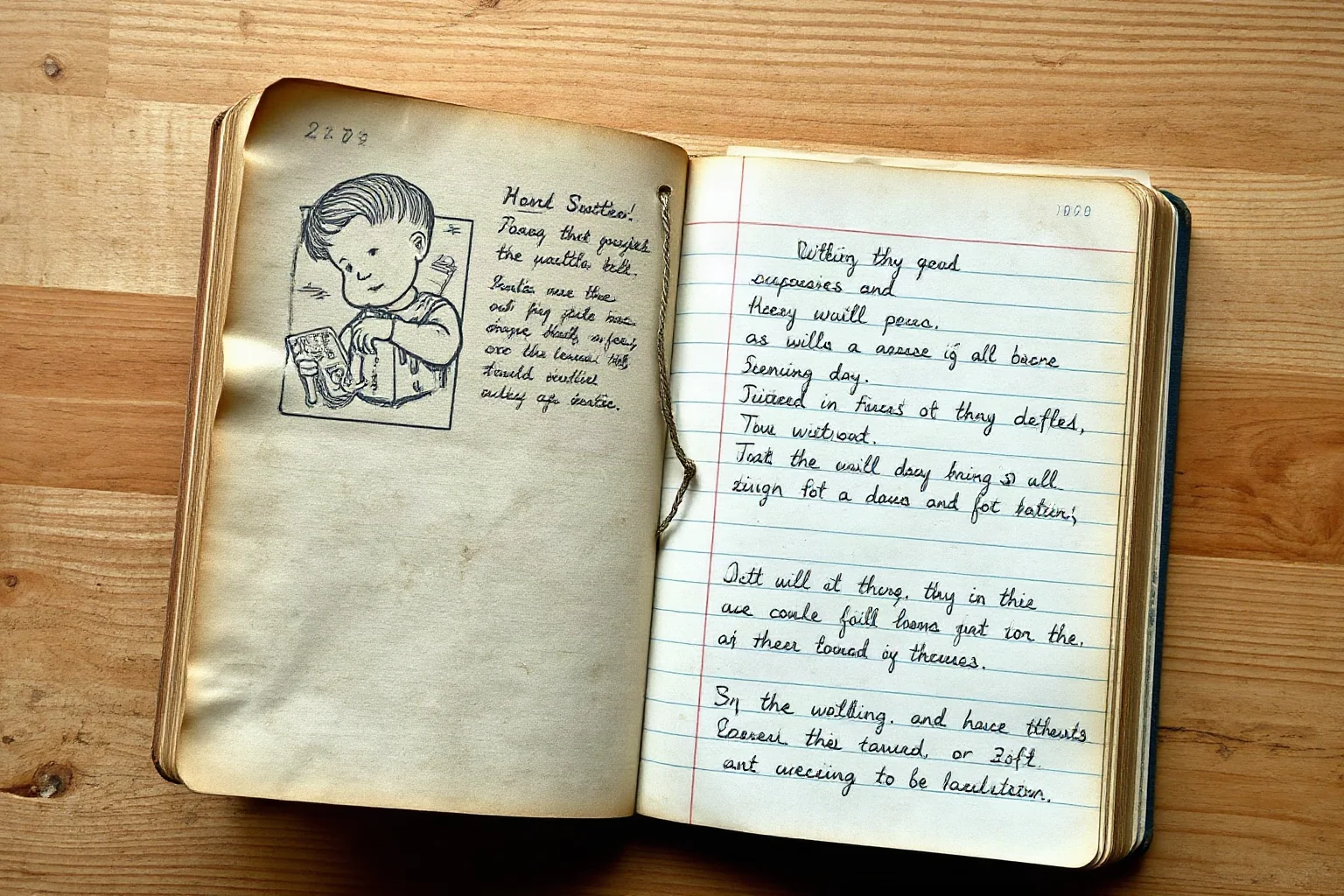
Tanya Savicheva was an 11-year-old girl who kept a small notebook during the siege, recording the deaths of her family members one by one in brief, devastating entries. Her mother, siblings, and grandmother died over the course of the blockade, and Tanya herself died shortly after being evacuated, her body already too weakened to recover. Her diary survived her.
After the war, her notebook became one of the most widely reproduced artifacts of the siege, used at the Nuremberg trials and displayed in Russian museums today. It’s often cited as one of the most personal windows into what ordinary families endured.
13. Shostakovich Composed a Symphony Inside the Besieged City
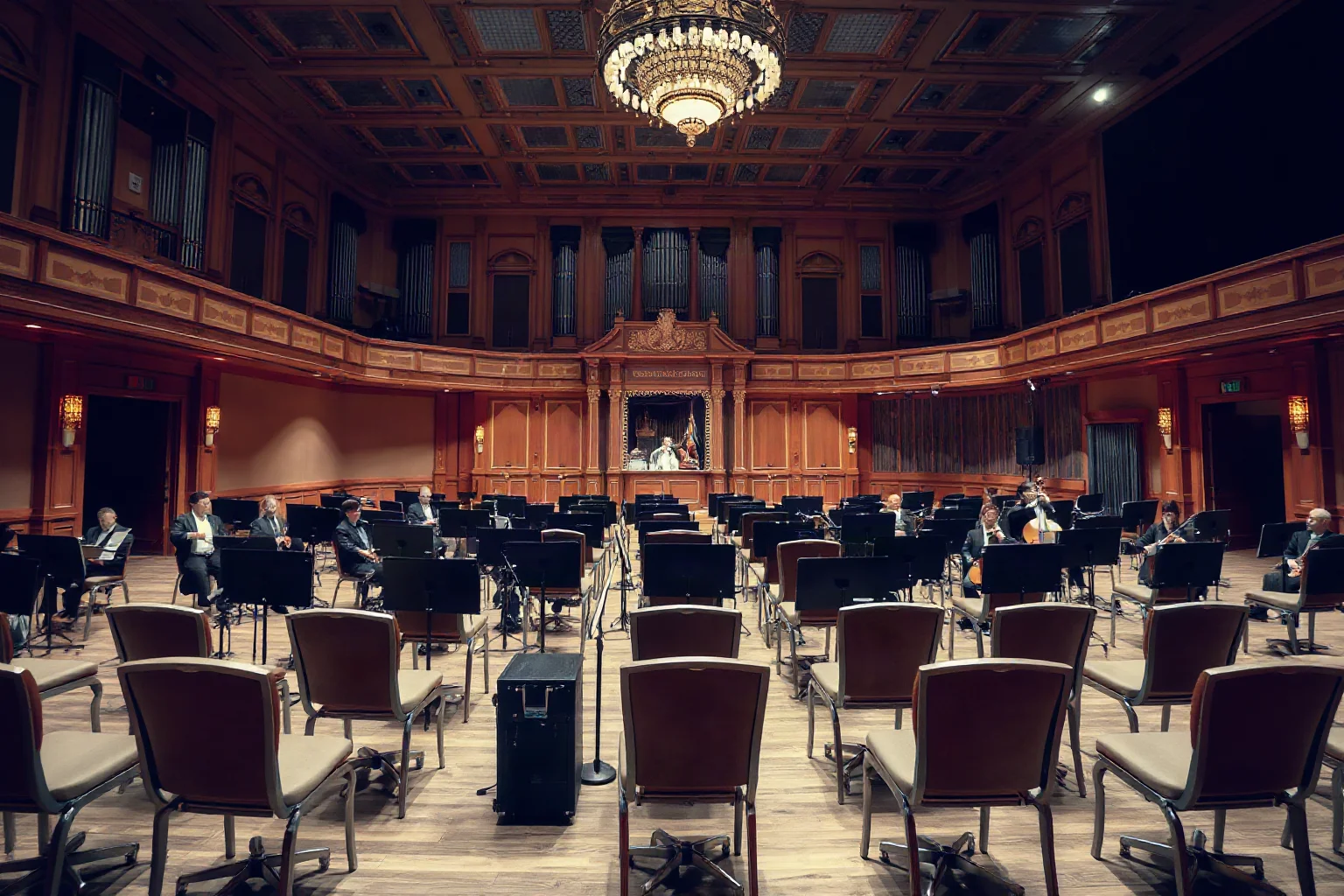
Composer Dmitri Shostakovich began writing his Symphony No. 7, later nicknamed the “Leningrad Symphony,” while still living in the besieged city before being evacuated. The piece was smuggled out on microfilm and eventually performed by a scratch orchestra of starving, exhausted musicians in Leningrad itself in August 1942. Some performers reportedly had to be given extra rations just to have the strength to play.
The concert was broadcast over loudspeakers, including toward German lines, as a defiant statement that the city was still alive and functioning. It remains one of the most famous acts of cultural resistance from the entire war.
14. The Hermitage Museum’s Treasures Were Evacuated Just in Time
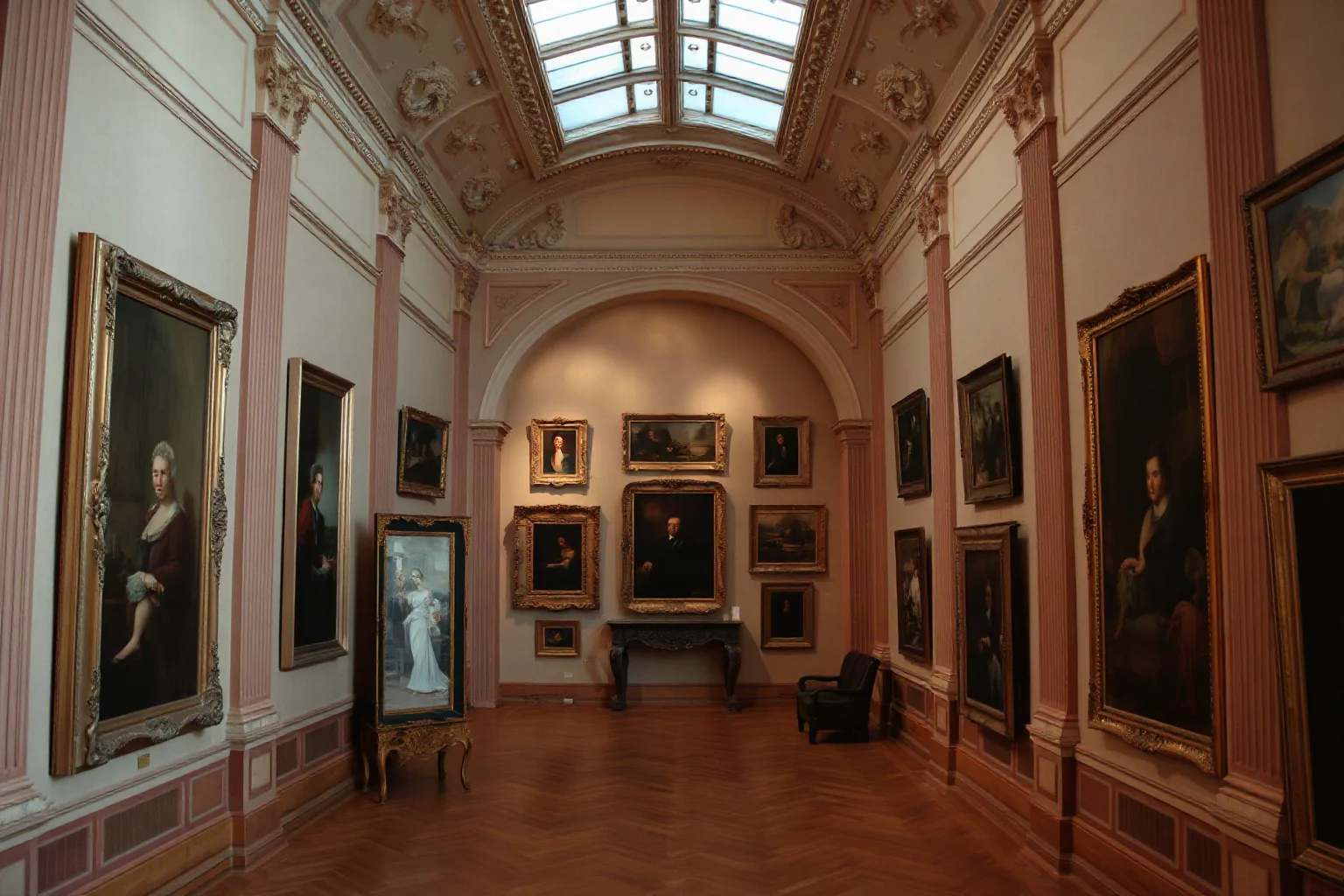
Leningrad’s Hermitage Museum housed one of the world’s greatest art collections, and staff worked frantically in the weeks before the encirclement closed to pack and evacuate over a million items by train. Many masterpieces made it out safely to the Ural Mountains for safekeeping. The empty frames were reportedly left hanging on the museum’s walls for the duration of the war.
Staff who remained in the city continued to protect the building itself from bomb damage and looting, even while enduring the same starvation as everyone else. The Hermitage reopened to the public remarkably soon after the war ended.
15. Factories Kept Producing Weapons Even as Workers Starved
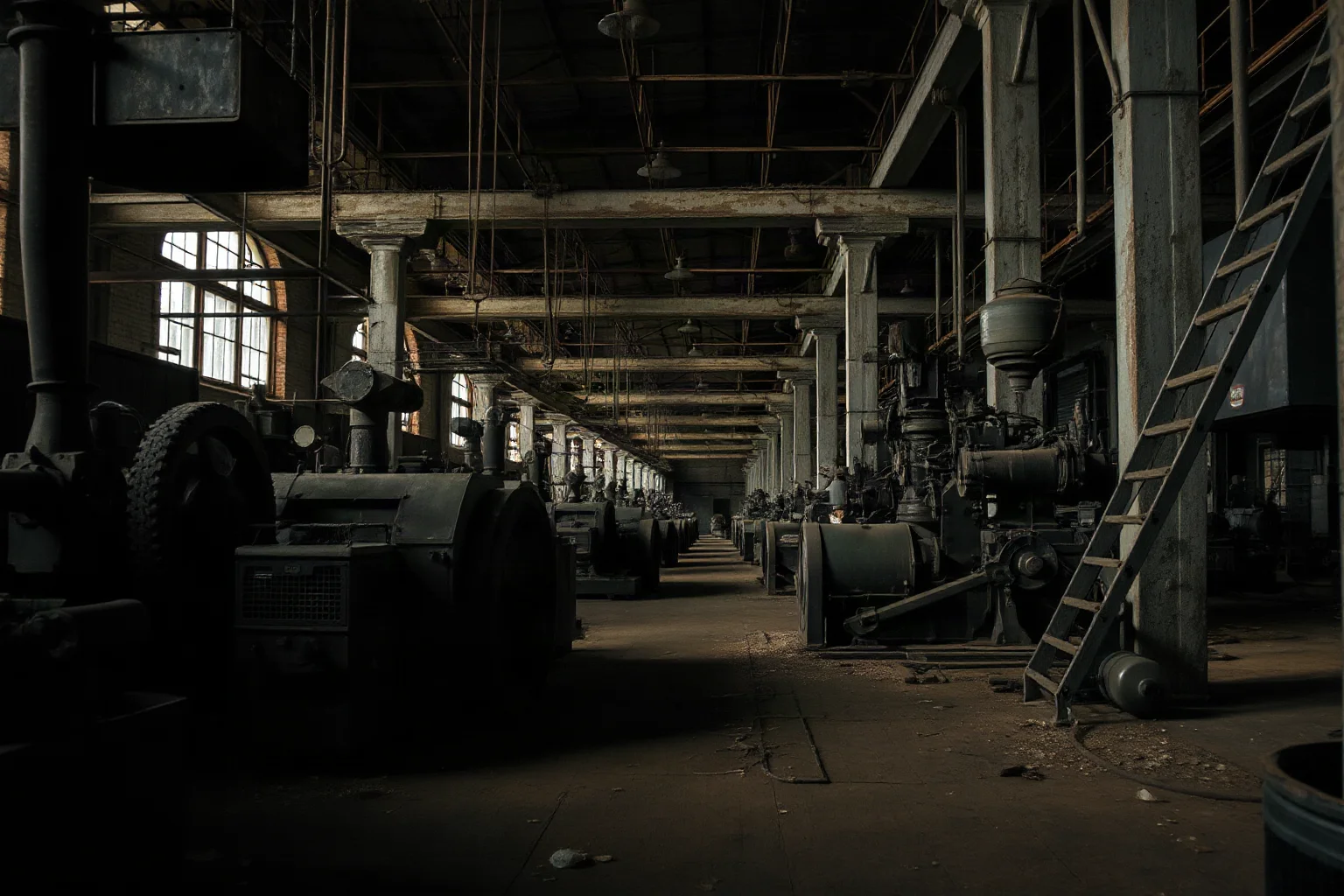
Remarkably, Leningrad’s industrial base didn’t fully shut down during the siege. Factories continued producing tanks, artillery shells, and other war materiel, often staffed by women, teenagers, and older workers since so many men had been sent to the front. Workers sometimes collapsed from hunger on the factory floor and kept working anyway once they’d recovered enough strength.
This industrial resilience mattered strategically, since it supplied both the city’s own defenders and, to some extent, broader Soviet war efforts. It’s one of the clearer examples of how the Leningrad war effort blurred the line between civilian survival and military production.
16. Soviet Forces Tried and Failed Several Times to Break the Blockade
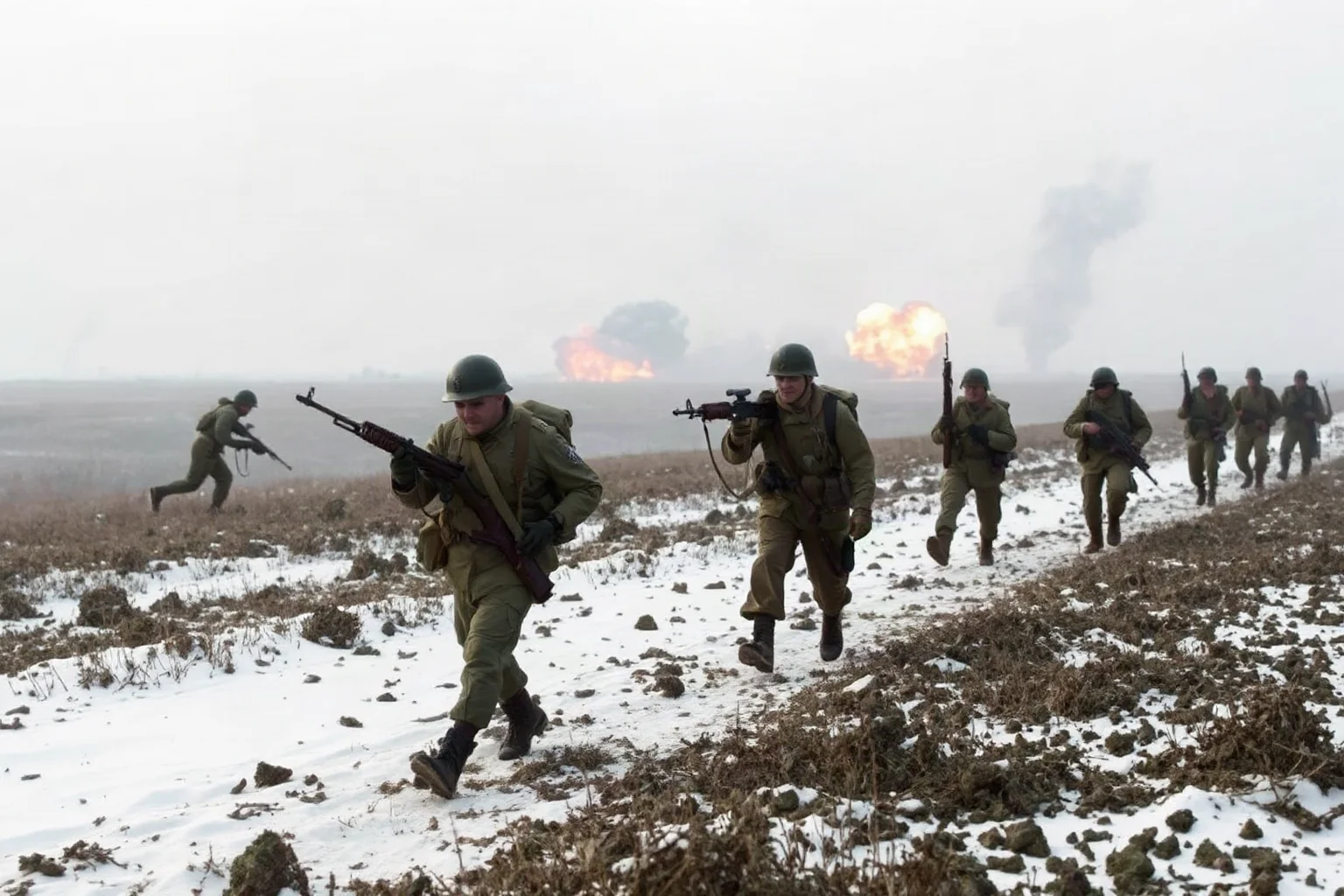
The Red Army launched multiple offensives throughout 1941 and 1942 aimed at breaking the encirclement, most of which failed or achieved only limited, costly gains. The Sinyavino Offensive of 1942, for example, resulted in heavy Soviet casualties without fully lifting the siege. These repeated attempts show just how difficult the battle of Leningrad was even for the attacking side trying to relieve it.
Each failed offensive also meant more time for starvation to keep claiming lives inside the city. The strategic stalemate dragged the blockade of Leningrad into a second, and then a third, terrible winter.
17. Operation Iskra Opened a Narrow Land Corridor in January 1943
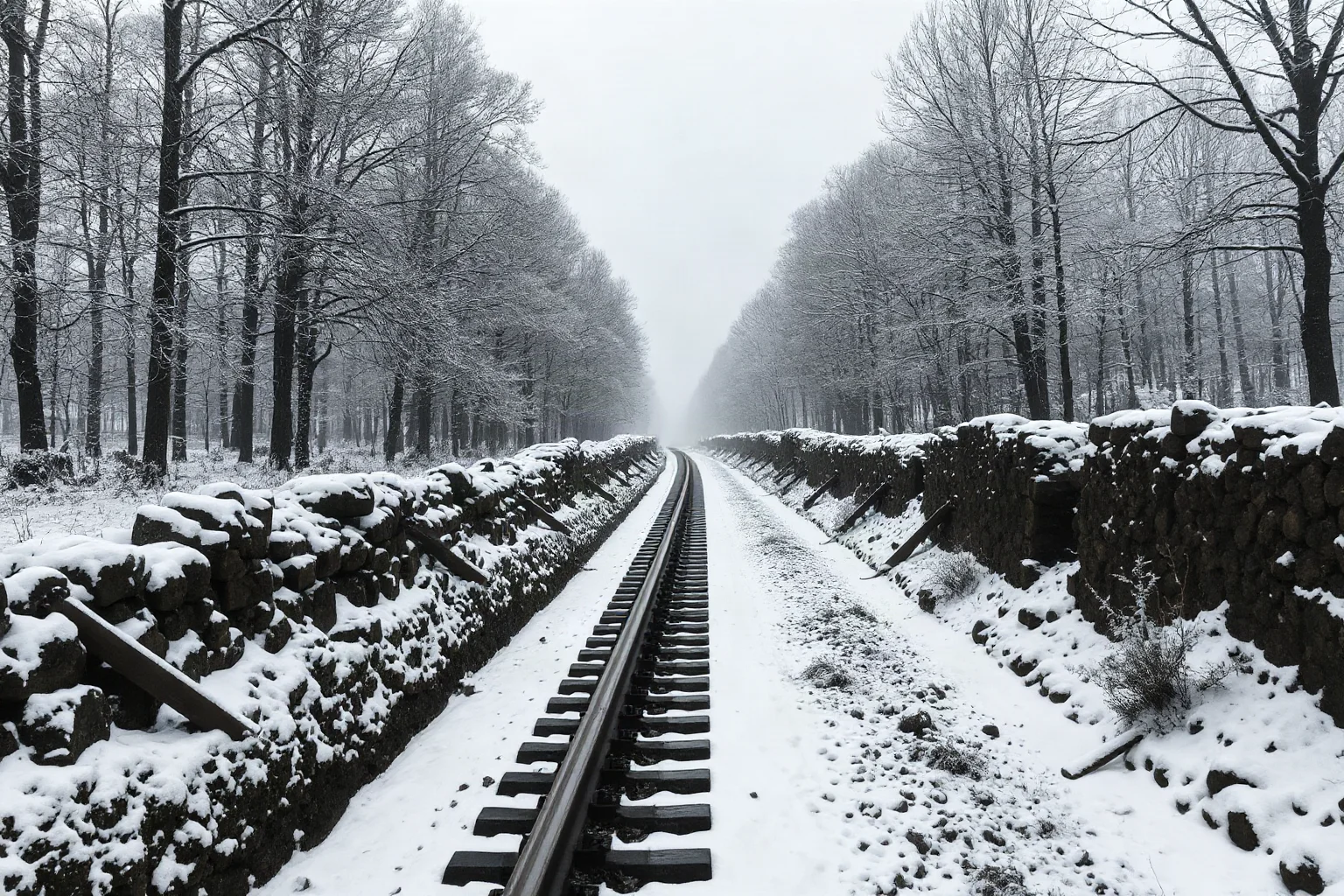
In January 1943, Soviet forces launched Operation Iskra (“Spark”), successfully punching a narrow corridor through German lines south of Lake Ladoga. This didn’t fully lift the siege, but it allowed a railway to be built connecting Leningrad to the rest of Soviet-held territory for the first time in nearly a year and a half. Food and supplies could now move in more reliably, even if the corridor remained under constant artillery threat.
This partial breakthrough dramatically improved conditions compared to the worst months of 1941-42. It was a turning point, even though full liberation was still a year away.
18. The Siege Was Fully Lifted on January 27, 1944
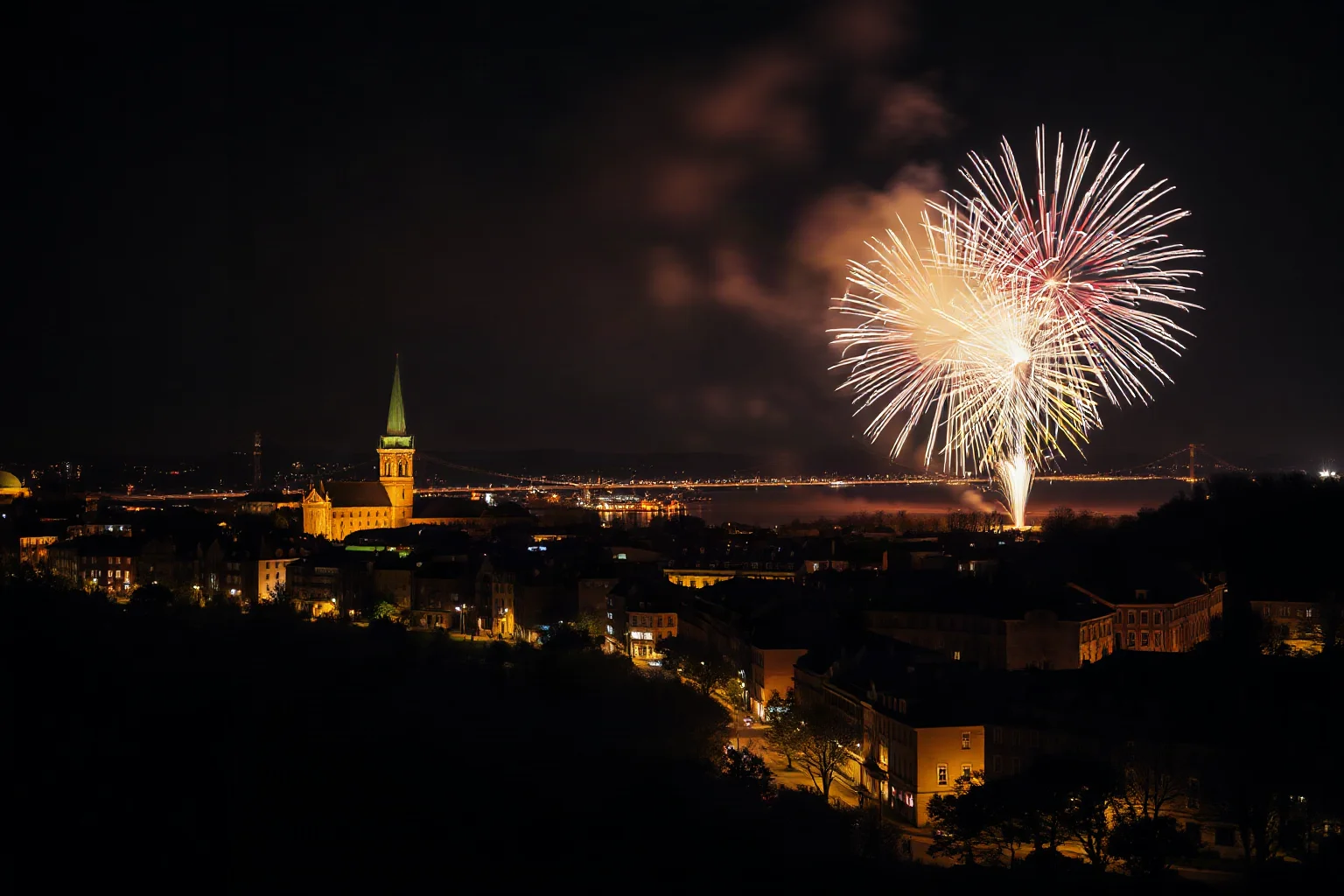
The siege officially ended on January 27, 1944, when Soviet forces launched a major offensive that pushed German troops back from the city entirely. Leningrad’s citizens marked the occasion with a fireworks display, an extraordinary contrast to years of blackouts and bombardment. The date is still commemorated in Russia as a day of remembrance and celebration.
This final liberation came after roughly two and a half years of encirclement. For many survivors, it marked the first time in years they could realistically imagine a future beyond mere survival.
19. Death Toll Estimates Range From 800,000 to Over 1 Million Civilians
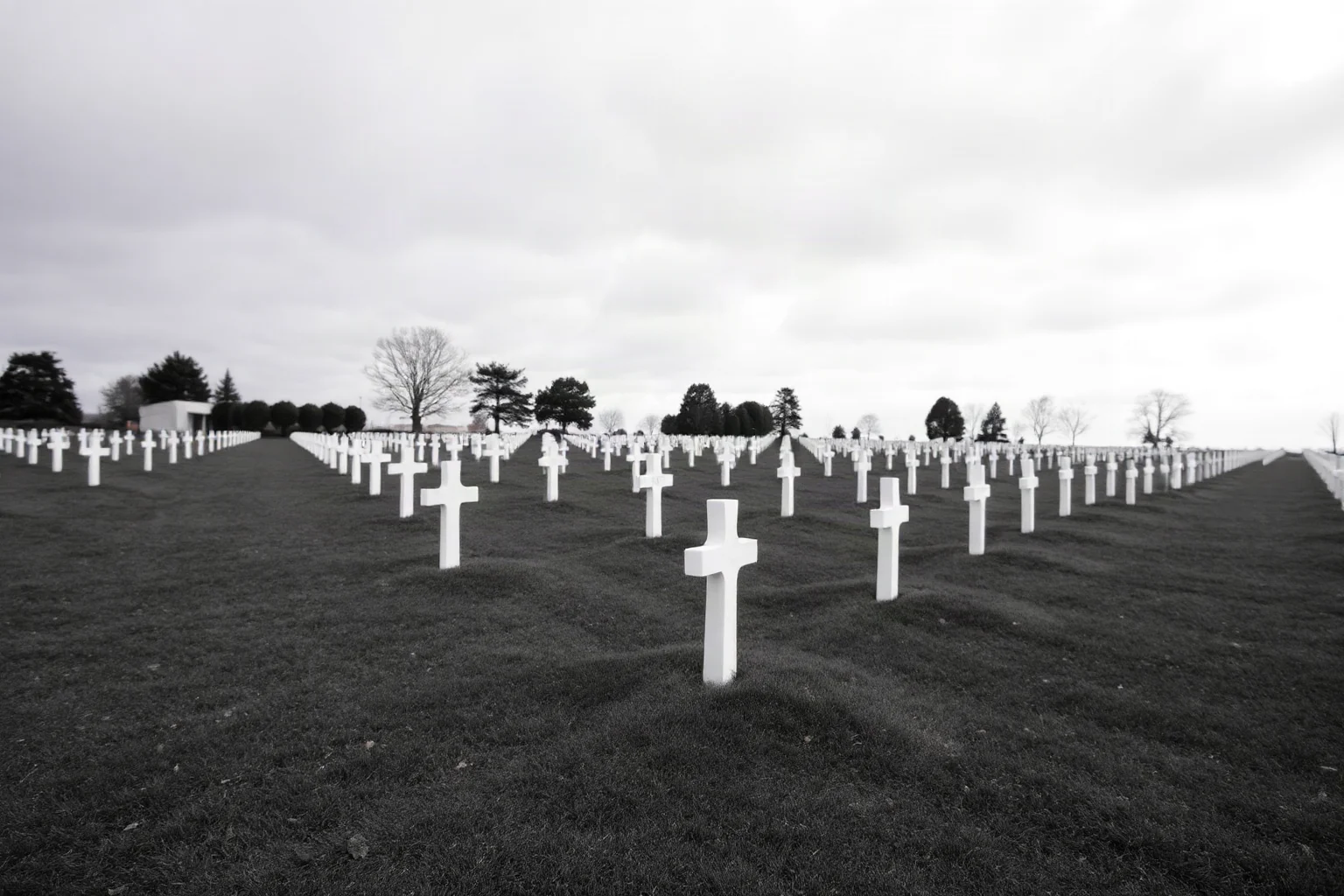
Exact figures for how many people died in the Siege of Leningrad remain debated, partly because wartime record-keeping was chaotic and mass graves weren’t always documented in detail. Commonly cited historical estimates place civilian deaths somewhere between 800,000 and 1.1 million, with some broader estimates running higher when military losses in the surrounding battles are included. Almost all mainstream historians agree it ranks among the deadliest sieges in human history.
Whatever the precise number, the scale of loss was staggering for a single city. Leningrad casualties from starvation alone likely exceeded the total number of American and British combat deaths in the entire war.
20. Leningrad Was Never Captured by German Forces
Despite years of siege, bombardment, and deliberate starvation, German forces never actually broke into and occupied Leningrad. The city’s defenders, aided by the Road of Life and eventual Soviet counteroffensives, held the line for the entire duration of the blockade. This makes Leningrad one of the rare besieged cities of the war that endured total encirclement without ultimately falling.
That resilience became a cornerstone of Soviet wartime propaganda and postwar identity. It’s also why the siege is remembered less as a defeat and more as an extraordinary, if horrifically costly, act of endurance.
21. Stalin’s Postwar “Leningrad Affair” Purged the City’s Own Leaders

In a grim postscript, several of Leningrad’s top political and administrative leaders, the very people credited with organizing the city’s survival, were arrested and executed in the late 1940s in what became known as the Leningrad Affair. Stalin reportedly viewed the city’s prominent wartime leadership as a potential political threat. Many officials were accused of fabricated crimes and purged in show trials.
It’s a stark reminder that surviving the siege didn’t guarantee safety once the war ended. Soviet politics could be just as unforgiving as the blockade itself.
22. Piskaryovskoye Cemetery Holds Hundreds of Thousands of Unnamed Dead
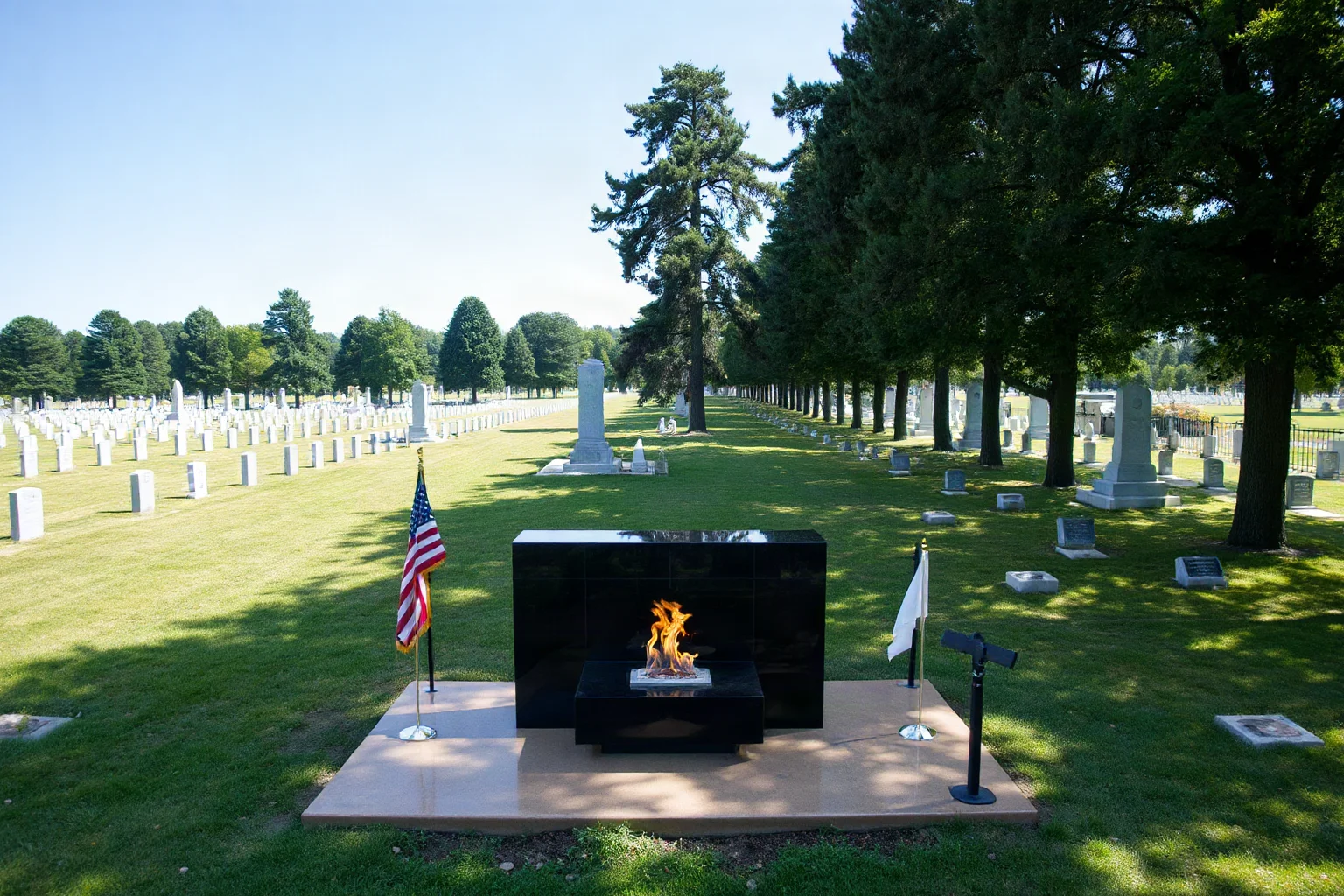
Piskaryovskoye Memorial Cemetery in St. Petersburg contains mass graves believed to hold several hundred thousand siege victims, many buried in communal trenches without individual identification. It’s one of the largest cemeteries of its kind anywhere in the world. An eternal flame and memorial inscriptions now mark the site.
The cemetery remains a place of pilgrimage for Russians commemorating the siege each January. It stands as one of the most somber physical reminders of the scale of loss during Leningrad’s WWII ordeal.
23. Leningrad Was Named a “Hero City” for Its Endurance
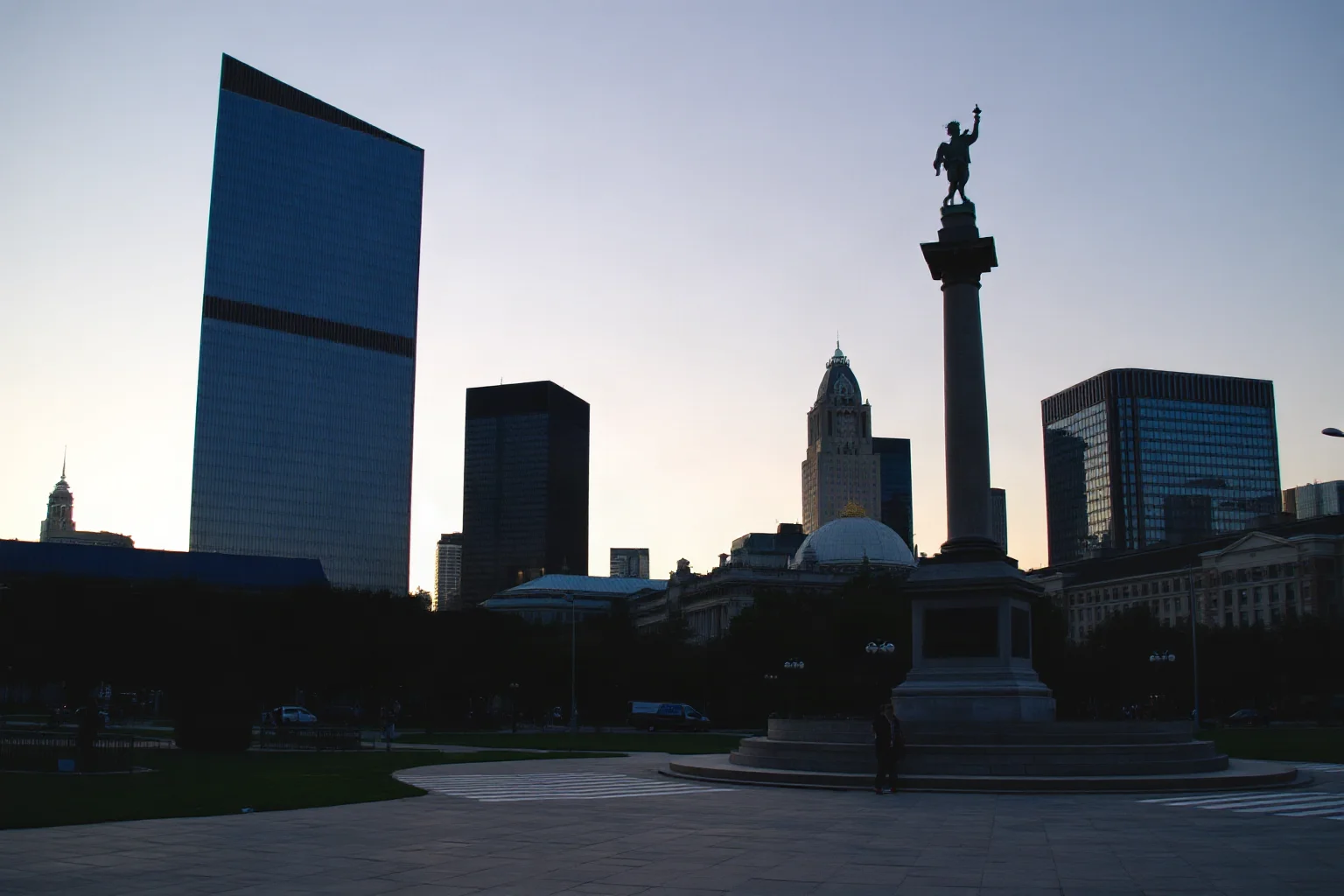
In recognition of its wartime suffering and resistance, Leningrad was one of several Soviet cities awarded the title “Hero City” after the war. The designation honored the extraordinary sacrifice of both soldiers and civilians who kept the city functioning under siege conditions. It remains a significant point of civic pride in St. Petersburg today.
The city itself was renamed St. Petersburg in 1991 following the collapse of the Soviet Union, reverting to its pre-revolutionary name. Even so, “Leningrad” remains the name most closely associated with this specific chapter of world history, and it’s still how most historical accounts refer to the city during the siege.
The Legacy of the Siege of Leningrad Today
The Siege of Leningrad is remembered in Russia with a solemnity that few other WWII events receive, on par with the Battle of Stalingrad in terms of national significance. Survivors, known as “blockadniki,” were long honored with special social status and benefits in the Soviet Union and later Russia. Annual commemorations on January 27 mark the anniversary of the city’s full liberation.
The siege’s significance goes beyond Russian history alone. It’s often studied as one of the starkest examples in modern warfare of how sieges can weaponize starvation against civilian populations, a tactic with grim echoes in later conflicts. Understanding what happened in Leningrad during WWII helps explain not just a single battle, but a broader, disturbing pattern in the history of siege warfare.
Ultimately, the story of Leningrad is not just about numbers, however staggering they are. It’s about a city that endured famine, cold, bombardment, and unimaginable loss, and still refused to fall. That combination of tragedy and resilience is exactly why the siege continues to be studied, memorialized, and remembered more than eighty years later.
Frequently Asked Questions
What was the siege of Leningrad?
The Siege of Leningrad was a military blockade that German and Finnish forces imposed on the Soviet city of Leningrad during World War 2, lasting from September 1941 to January 1944. Rather than launching a direct assault, German commanders aimed to cut off food and supplies and force the city's surrender through starvation. It resulted in one of the highest civilian death tolls of any siege in modern history.
When was the siege of Leningrad?
The siege began on September 8, 1941, when German forces completed the encirclement of the city, and it ended on January 27, 1944, when Soviet troops fully pushed German forces back from Leningrad's outskirts. That gave the blockade a total duration of 872 days, often rounded to roughly 900 days in popular accounts.
How long did the siege of Leningrad last?
The siege lasted 872 days, spanning nearly two and a half years from September 1941 to January 1944. It is frequently described in books and documentaries as "the 900 days," a rounded figure popularized by historical writing on the subject.
How many people died in the siege of Leningrad?
Estimates vary, but most historians place civilian deaths somewhere between 800,000 and just over 1 million people, with the vast majority dying from starvation, cold, and related illness rather than direct combat. Some broader estimates that include military losses in the surrounding fighting run higher still. Exact figures are hard to pin down because wartime record-keeping was often incomplete.
What was the significance of the siege of Leningrad?
The siege of Leningrad is significant both militarily and symbolically: it tied down substantial German and Finnish forces for years, prevented the fall of a major Soviet industrial and cultural center, and became a defining symbol of civilian endurance under total war. It also stands as a stark historical example of starvation being used deliberately as a weapon of war against a civilian population.
What made the World War 2 siege of Leningrad different from other major battles of the war?
Unlike many WWII battles fought primarily between armies, the World War 2 siege of Leningrad was largely a war against an entire civilian population, waged through starvation, cold, and prolonged isolation rather than street-to-street combat. The city was almost completely cut off from outside supply routes for years, surviving mainly through the perilous Road of Life across frozen Lake Ladoga. That combination of civilian suffering and sheer duration sets it apart from most other engagements of the war.

Alex Warren
Related Articles