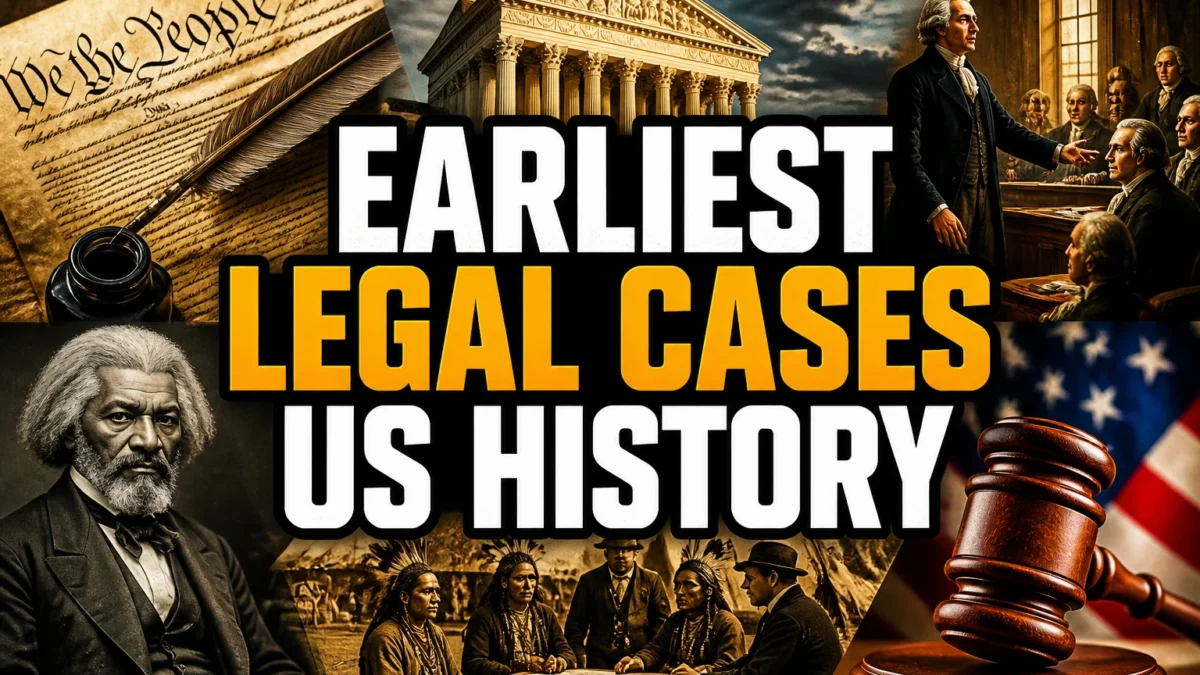
Ask most people to name the first landmark in American law, and they will point to Marbury v. Madison. The real story of the earliest legal cases in US history is messier, older, and more interesting than that single case suggests.
Court cases in US history did not begin with the Constitution. Colonial meetinghouses, state courts, and the first federal docket all produced rulings that still shape modern rights.
TL;DR: Early American court cases, from colonial sedition trials to West v. Barnes and Calder v. Bull, built the legal foundation that later landmarks like Marbury v. Madison would stand on.
A Note on Dates and Courts
Dates can be misleading when we talk about early American law. Some cases below were decided in colonial courts before the United States existed; others happened in state courts after the Revolution but before the federal courts were fully running.
I have marked the jurisdiction for each case where it matters. Historical court cases in the US are easier to understand when you know which court was actually speaking.
Why These Early Cases Still Matter
Early US history court cases are often taught as names and dates, but they were live arguments over power. They tested whether legislatures could erase court rulings, whether treaties outweighed state laws, and what protections defendants actually had.
Many important US history court cases on this list were small disputes that became big precedents. A debt case, a libel trial, or a pension claim could ripple outward for generations.
Viewing these historical court cases in the US side by side shows how American law was built piece by piece. The Constitution supplied broad words, but courts had to decide what those words meant in practice.
Several of these entries are not Supreme Court cases at all. That broader view matters because many constitutional ideas began in state and colonial courts before reaching the federal docket.
The First Supreme Court Docket: A Quick Reality Check
The first case in the Supreme Court was not a dramatic constitutional showdown. West v. Barnes, a Rhode Island debt dispute, was docketed in 1791 and dismissed on a procedural issue.
For years the Court had little business and no settled procedure. Understanding that slow start helps explain why early decisions often read as arguments about process rather than sweeping rights.
It also explains why later cases like Calder v. Bull and Marbury v. Madison feel so weighty. They arrived after the Court had started to define its own role.
Key Themes Across These Early Cases
One theme is the fight over whether courts can limit legislatures. Cases like Commonwealth v. Caton and Bayard v. Singleton said courts could hold a law void, before Marbury v. Madison made the federal version famous.
A second theme is the tension between state power and national treaties. Rutgers v. Waddington and Ware v. Hylton show that postwar debt and property disputes often became constitutional conflicts.
A third theme is the development of courtroom procedure. West v. Barnes, Georgia v. Brailsford, and Hayburn's Case were not just about doctrine; they helped define what the federal judiciary could actually do.
22 Earliest Legal Cases That Shaped American Law
The cases below appear in rough chronological order, moving from colonial courts to the early Supreme Court. Each one resolved a concrete dispute while leaving a lasting legal idea behind.
This list is not exhaustive, but it covers many court cases in American history that lawyers and historians still use as reference points. Some are famous; a few are deliberately unsung.
1. The Trial of Anne Hutchinson (1637)
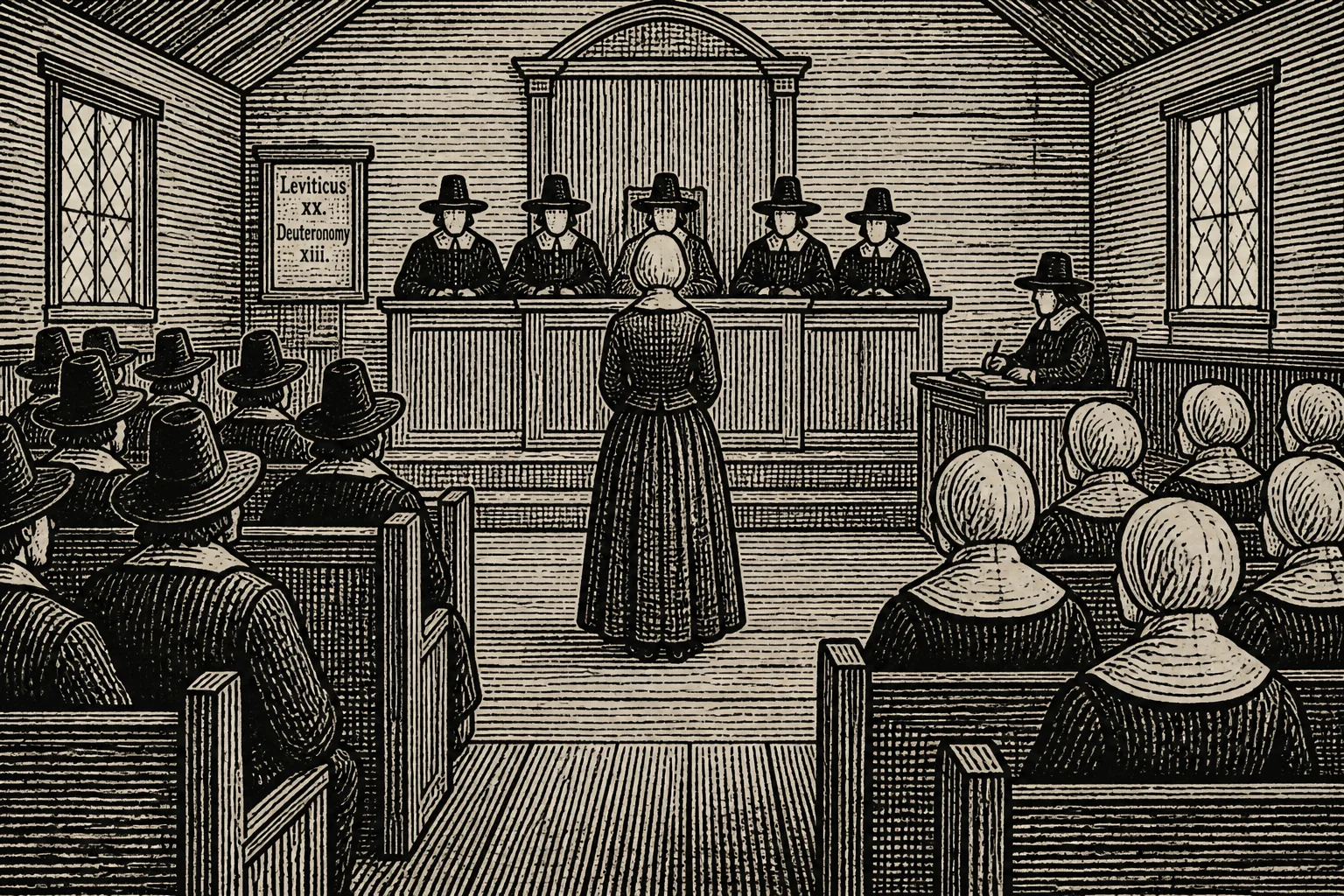
In 1637, Massachusetts Bay Colony put Anne Hutchinson on trial before the General Court. She was accused of challenging Puritan ministers and holding unauthorized religious meetings in her home.
The court banished her, and she later settled in what became Rhode Island. The case showed how tightly church and state were fused in early New England legal order.
Hutchinson's trial is now studied less as a criminal case than as a warning about religious orthodoxy enforced by courts. It marks one of the earliest recorded legal proceedings in what would become the United States.
2. The Trial of Mary Dyer (1660)
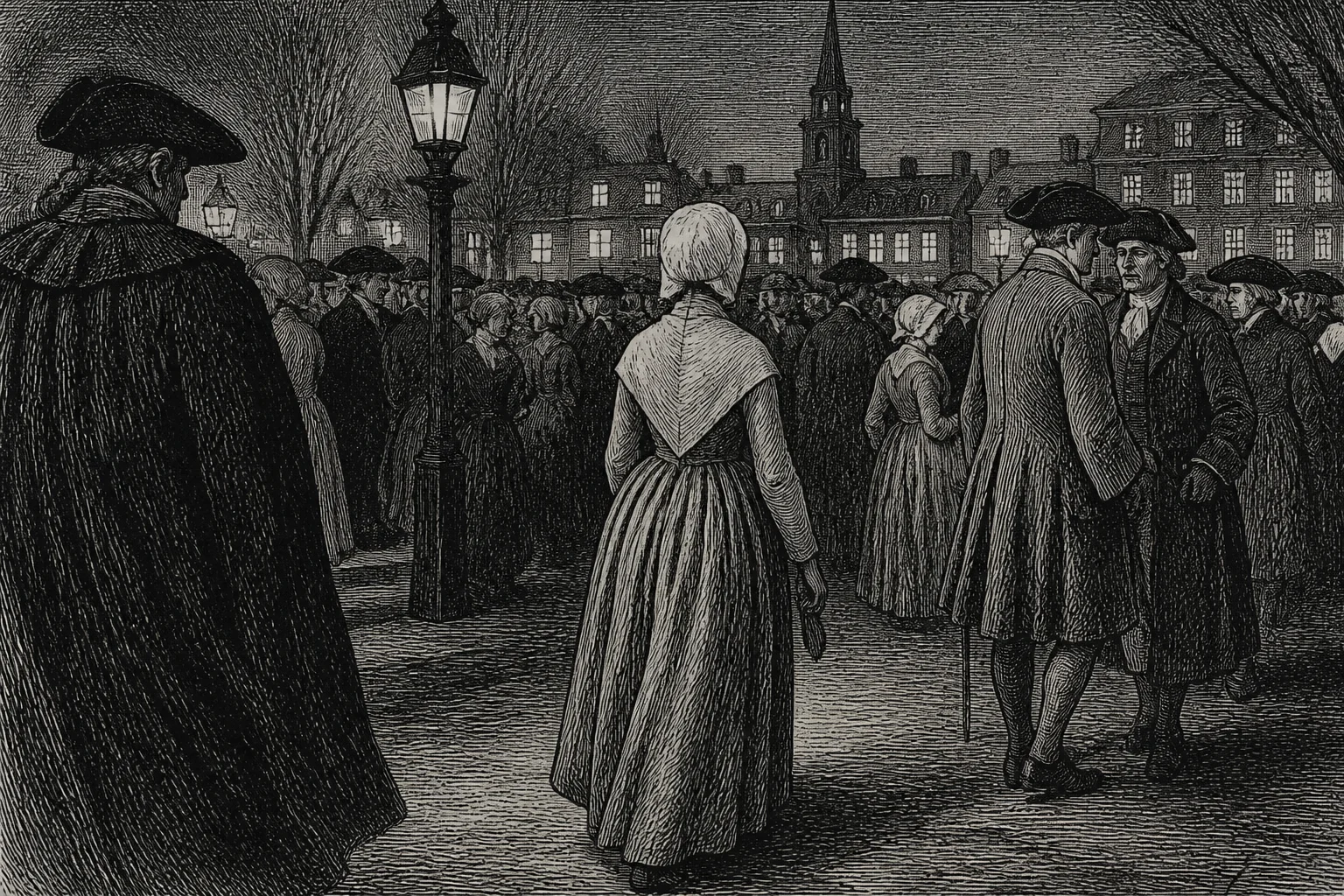
Mary Dyer, a Quaker, was banished from Massachusetts Bay under laws aimed at suppressing Quaker missionaries. She returned anyway, deliberately testing the legal order.
She was convicted and hanged on Boston Common in 1660. Her case revealed how legal severity could be used against religious dissent in colonial America.
Dyer's case remains a dark benchmark in colonial legal history. It illustrates how legal authority could be used to enforce religious uniformity.
3. The Salem Witch Trials (1692)
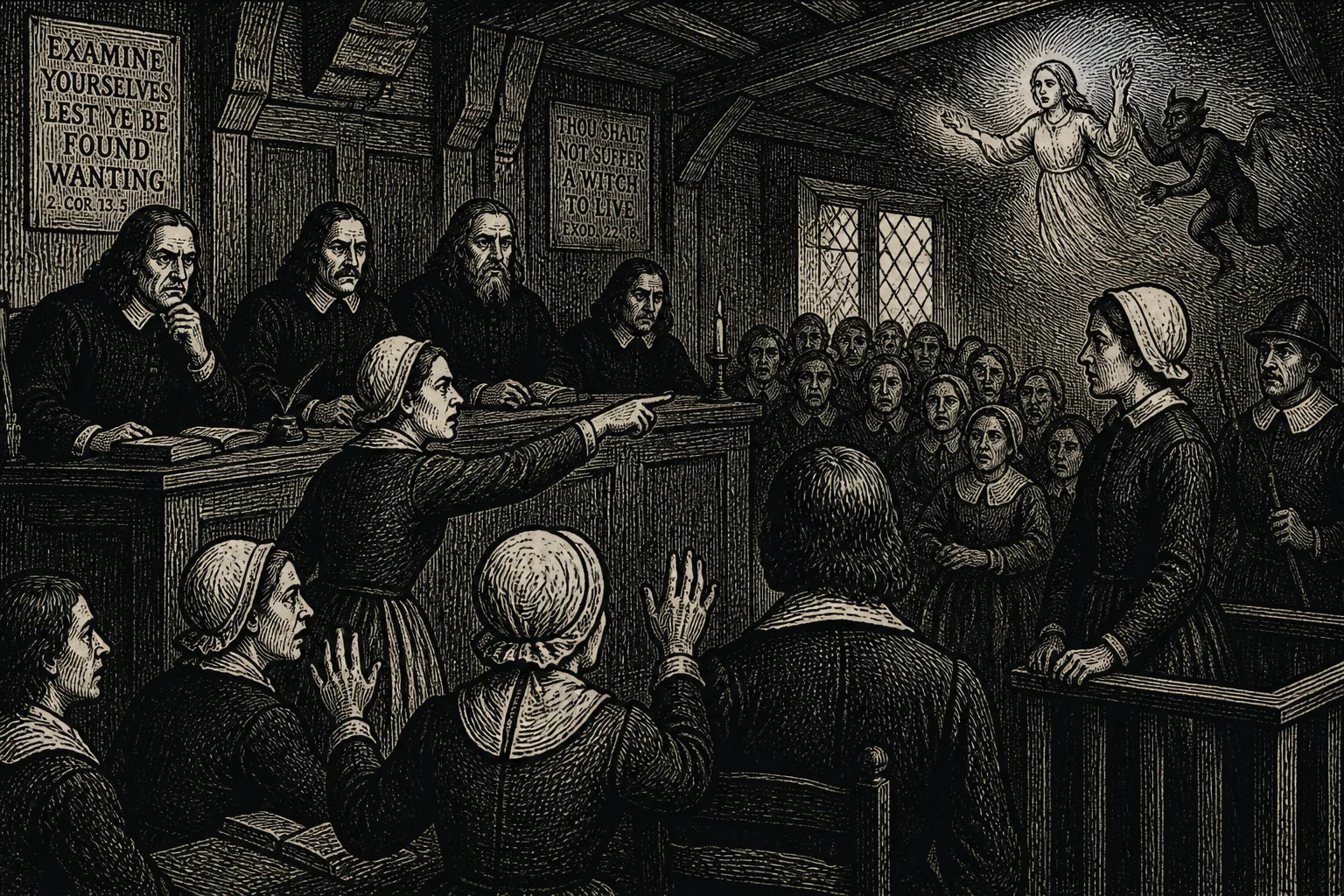
The Salem witch trials were not a single case but a wave of prosecutions in Massachusetts. Special courts accepted spectral evidence, meaning accusations that a defendant's spirit or apparition harmed someone.
Nineteen people were hanged, one man was pressed to death, and several others died in jail. The proceedings later became shorthand for how legal panic can overwhelm due process.
Massachusetts eventually annulled many of the convictions and offered restitution. Salem remains one of the most studied US history court cases because it shows what happens when rules of evidence collapse.
4. The Trial of John Peter Zenger (1735)
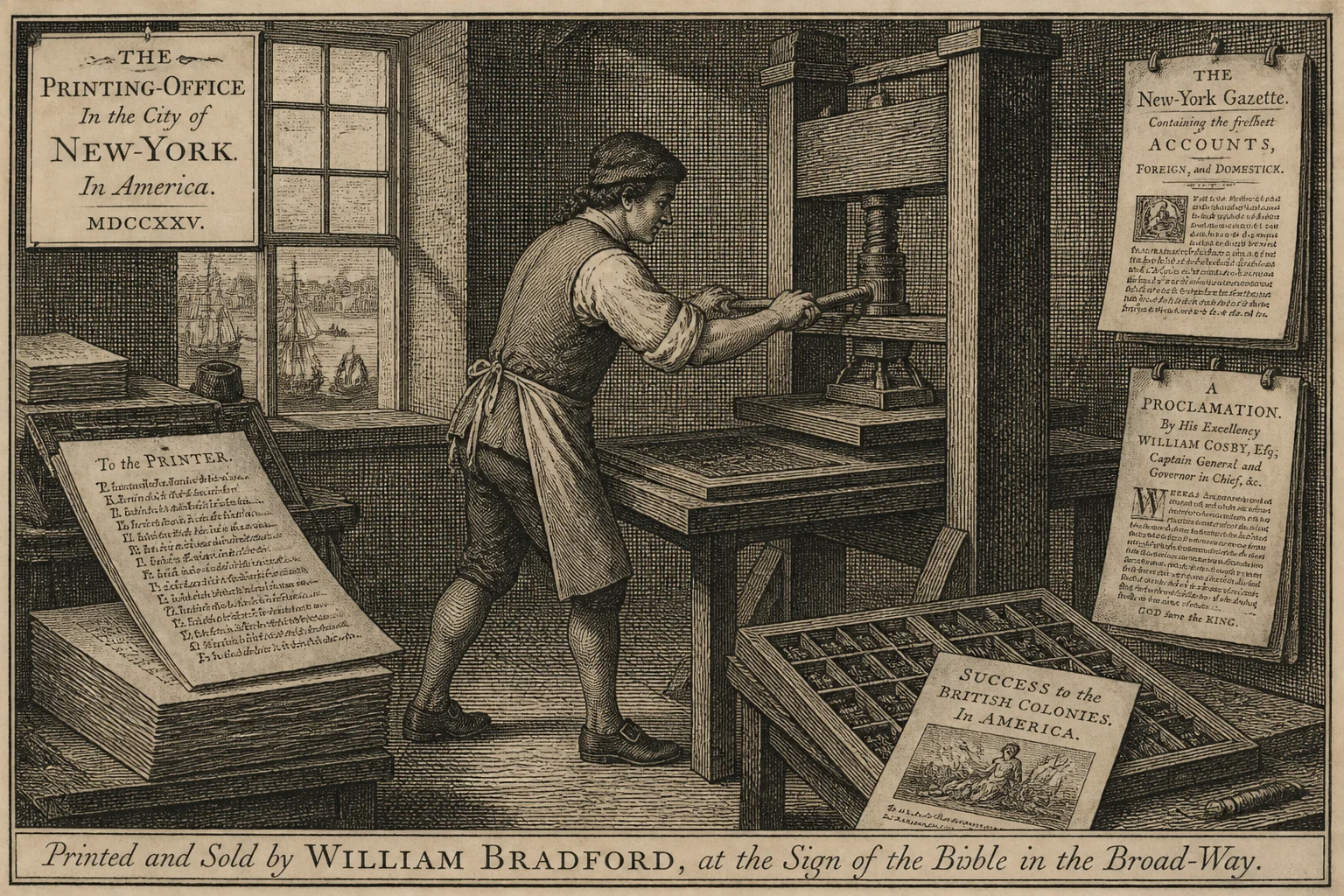
New York printer John Peter Zenger was prosecuted for seditious libel after his newspaper criticized the colonial governor. The law at the time generally treated true statements as no defense against libel.
His lawyer, Andrew Hamilton, persuaded the jury to accept a broader principle: that truthful political criticism should not be criminal. The jury acquitted Zenger in 1735.
The verdict did not instantly change the formal law, but it became a powerful argument for press freedom. Later generations cited Zenger's case as a foundation of free expression in American courtrooms.
5. Paxton's Case and the Writs of Assistance (1761)
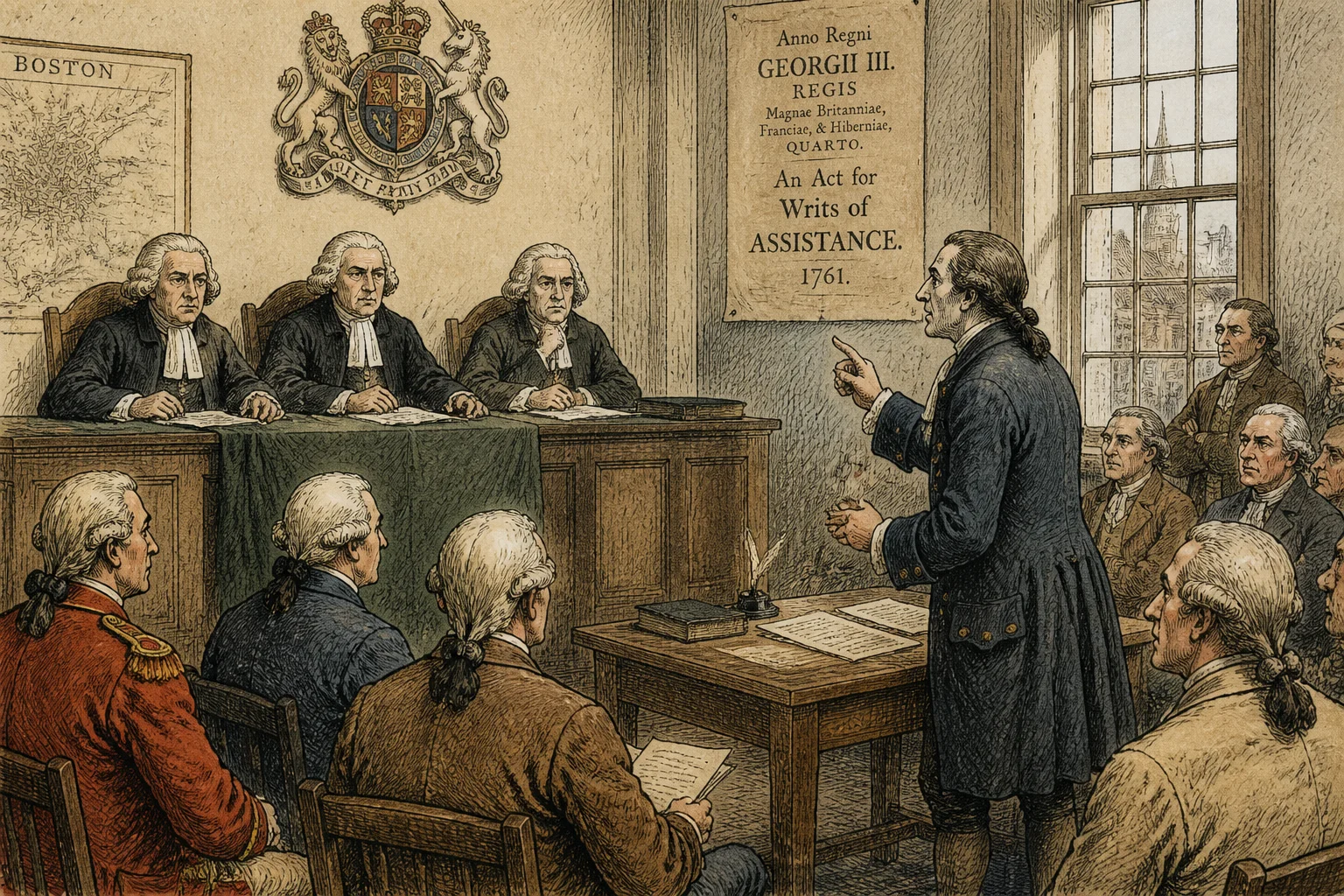
In 1761, Boston lawyer James Otis argued against general search warrants known as writs of assistance. He said they allowed officials to search anywhere without naming a specific person or place.
The court did not give Otis a clear victory, and the writs were renewed. Still, his argument against unreasonable searches echoed for years.
John Adams later described the scene as a turning point in the movement toward independence. The dispute became an early seed of the Fourth Amendment's protection against unreasonable searches and seizures.
6. The Boston Massacre Trials (1770)
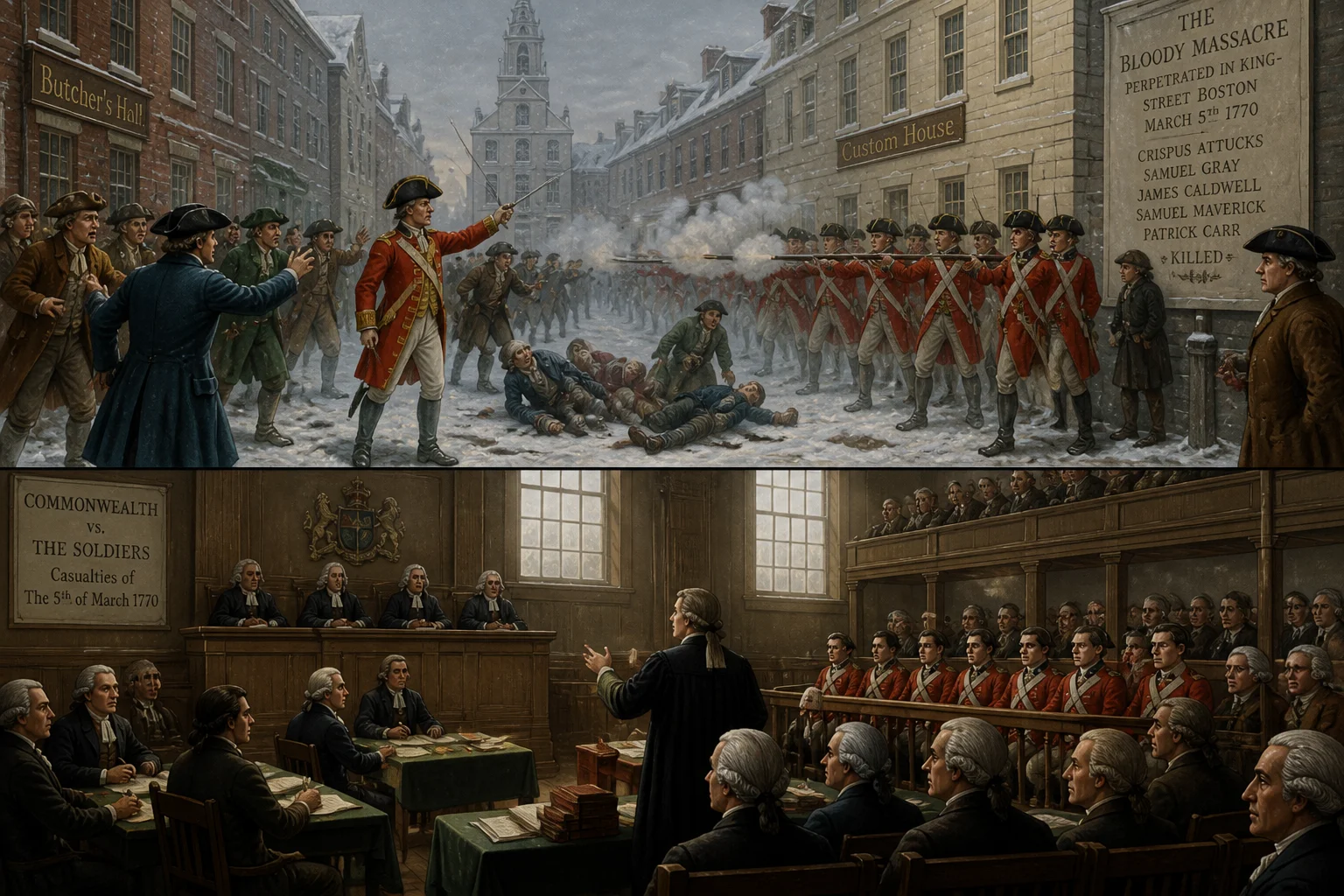
After British soldiers fired into a Boston crowd in 1770, the question was whether they could get a fair trial in a hostile city. John Adams, a future president, joined the defense team.
Captain Thomas Preston was acquitted in his separate trial. In the soldiers' trial, most were acquitted, but two were convicted of manslaughter and branded on the thumb.
The Boston Massacre trials are remembered as important US history court cases because they demonstrated that legal representation and restraint could survive revolutionary tension.
7. The Quock Walker Cases (1781–1783)
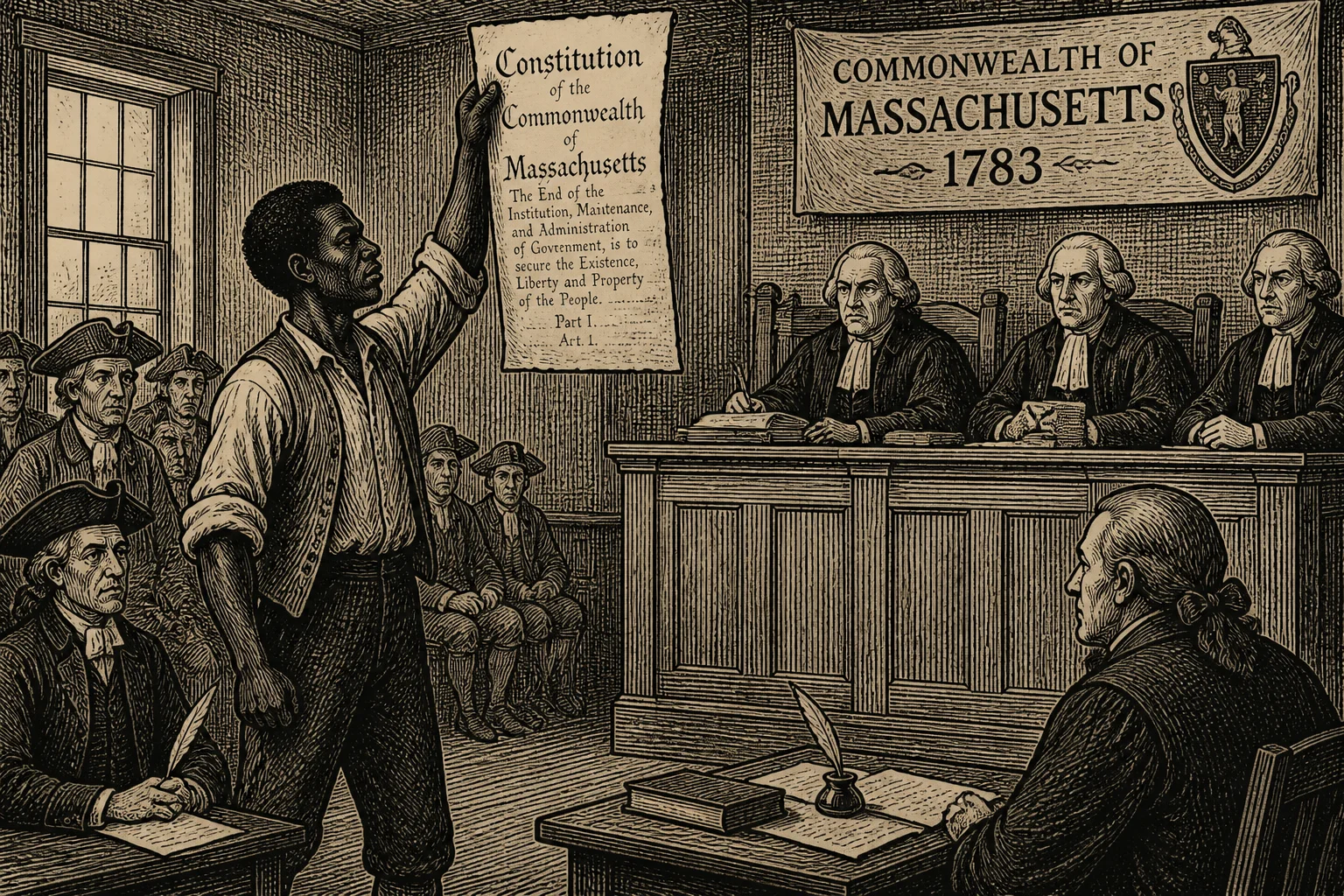
Quock Walker, an enslaved man in Massachusetts, sued for his freedom based on the state constitution of 1780. That document declared that all men are born free and equal.
In 1783, the Massachusetts Supreme Judicial Court ruled in Commonwealth v. Jennison that slavery was incompatible with that language. The decision effectively ended slavery in Massachusetts.
The Quock Walker litigation shows how state constitutions could become weapons in court cases in American history. It shaped the region's path toward abolition.
8. Commonwealth v. Caton (1782)
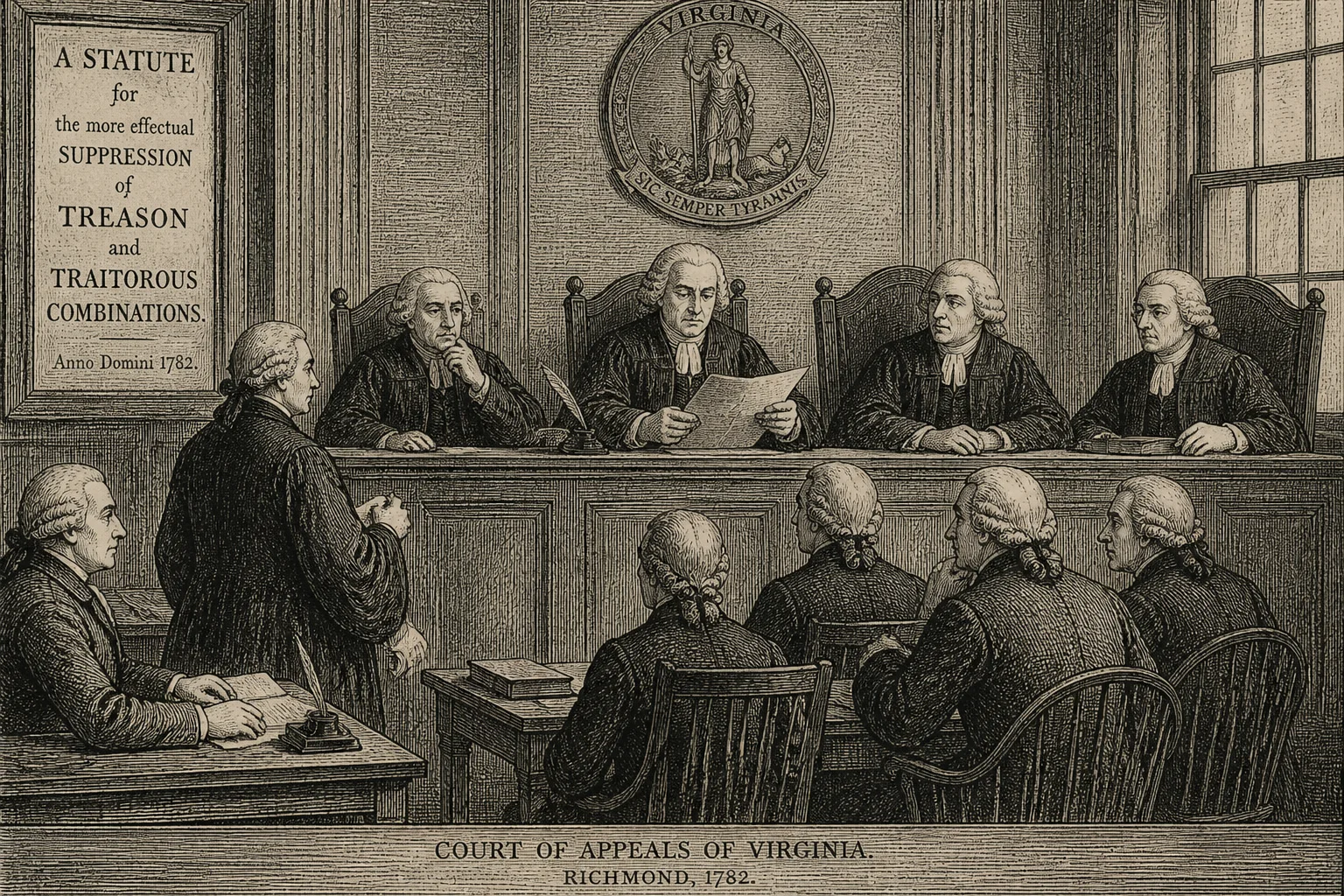
In Virginia, three men convicted under a treason statute argued that the law conflicted with the state constitution. The Virginia Court of Appeals considered whether courts could refuse to enforce an unconstitutional statute.
Judge George Wythe wrote that courts should have that power, even though the court ultimately upheld the convictions. The case did not create a clean precedent, but it planted an idea.
Commonwealth v. Caton is often studied among historical court cases in the US. It helped lay intellectual groundwork for later federal judicial review.
9. Rutgers v. Waddington (1784)
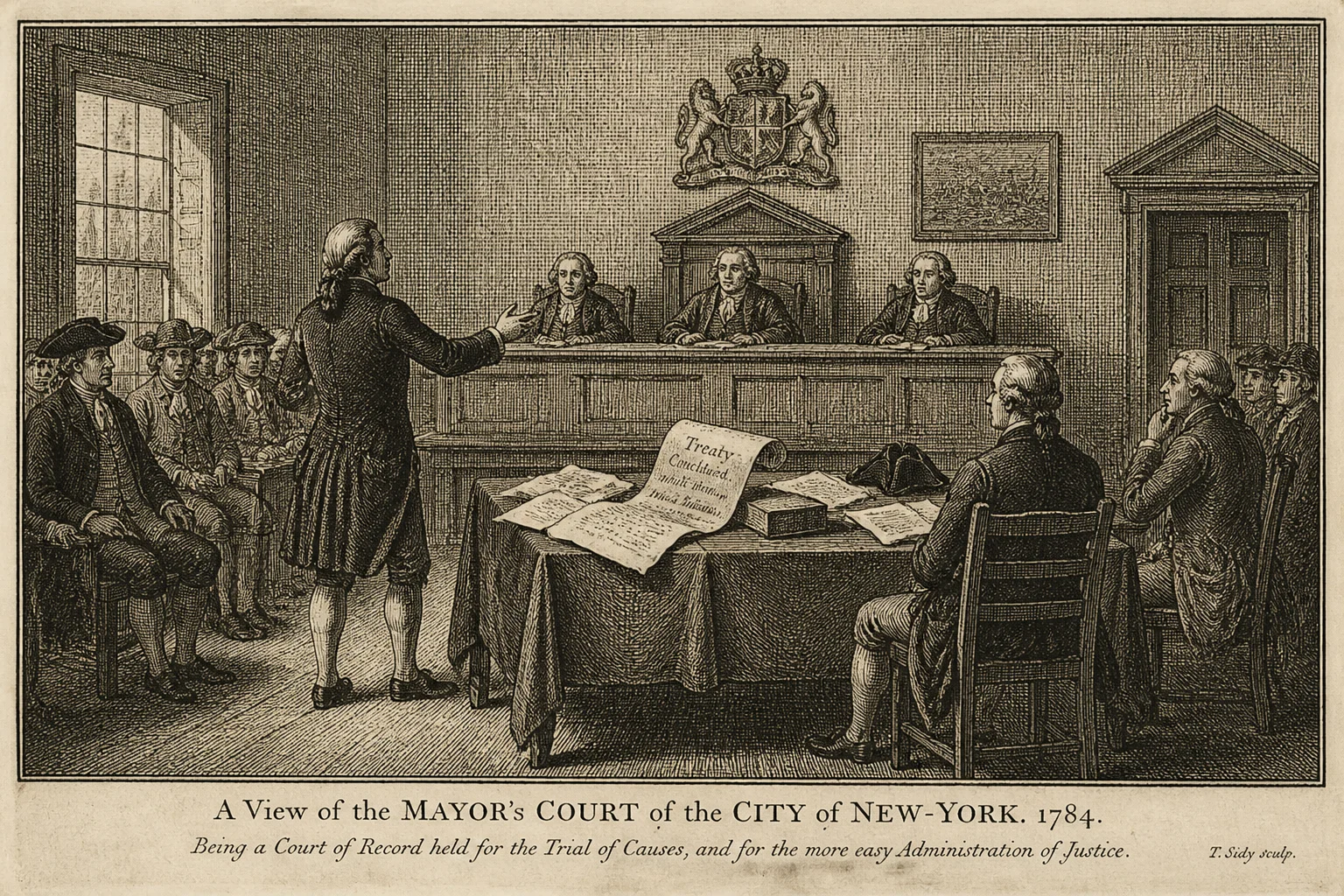
After the Revolution, a New York widow sued a Loyalist merchant for rent during the British occupation of her brewery. Alexander Hamilton defended the merchant by arguing that the Treaty of Paris should override a state trespass law.
The Mayor's Court in New York City refused to apply the state statute in full, awarding only limited damages. The ruling is remembered as an early assertion that treaties and national obligations could limit state legislation.
Rutgers v. Waddington was technically a local civil case, but it raised questions that would soon reach the Supreme Court. It showed how postwar legal battles over loyalist property became constitutional disputes.
10. Bayard v. Singleton (1787)
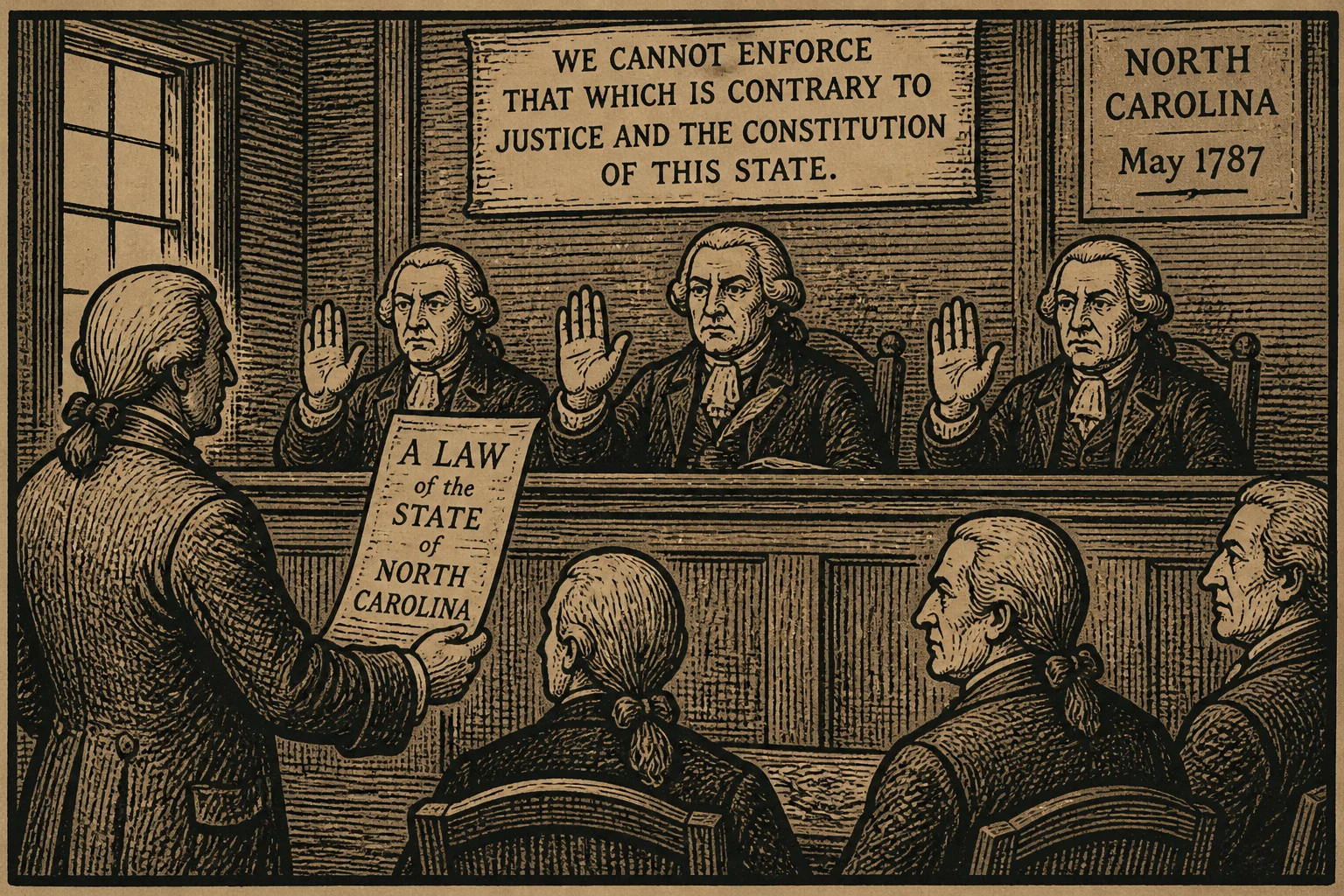
North Carolina passed a law that blocked Loyalists from recovering confiscated property. Elizabeth Bayard, a Loyalist's daughter, challenged it.
The Court of Conference refused to apply the state law and declared it void as inconsistent with the state constitution. It became one of the earliest reported state court decisions to strike down a legislative act.
Bayard v. Singleton confirmed that American judges were beginning to see themselves as guardians of fundamental law. That idea would define court cases in American history for centuries.
11. West v. Barnes (1791): The First Case in Supreme Court History
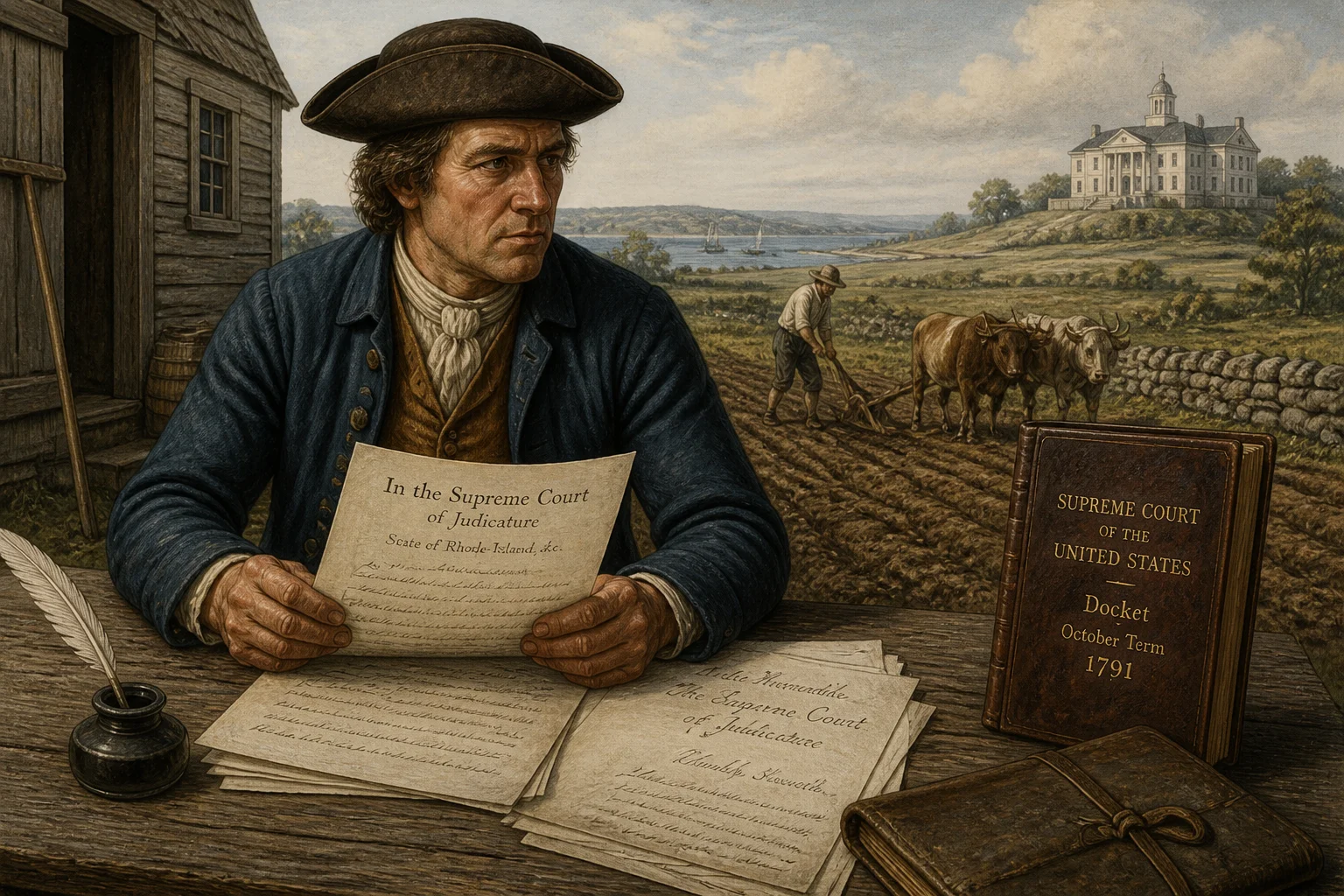
If you ask what was the first case in the Supreme Court, the practical answer is West v. Barnes. The case was docketed in 1791, when a Rhode Island farmer challenged a debt-related judgment.
For decades, people have searched for a grand constitutional statement in the first case of the Supreme Court, but there is none. The Court dismissed the case on a procedural defect before significant arguments could unfold.
West v. Barnes still matters because it marks the start of the Supreme Court's case log. It is a reminder that the highest federal court began with ordinary disputes, not headline doctrine.
The absence of drama is itself the point. Many later accounts search for a precedent that West v. Barnes simply does not provide.
12. Georgia v. Brailsford (1792)
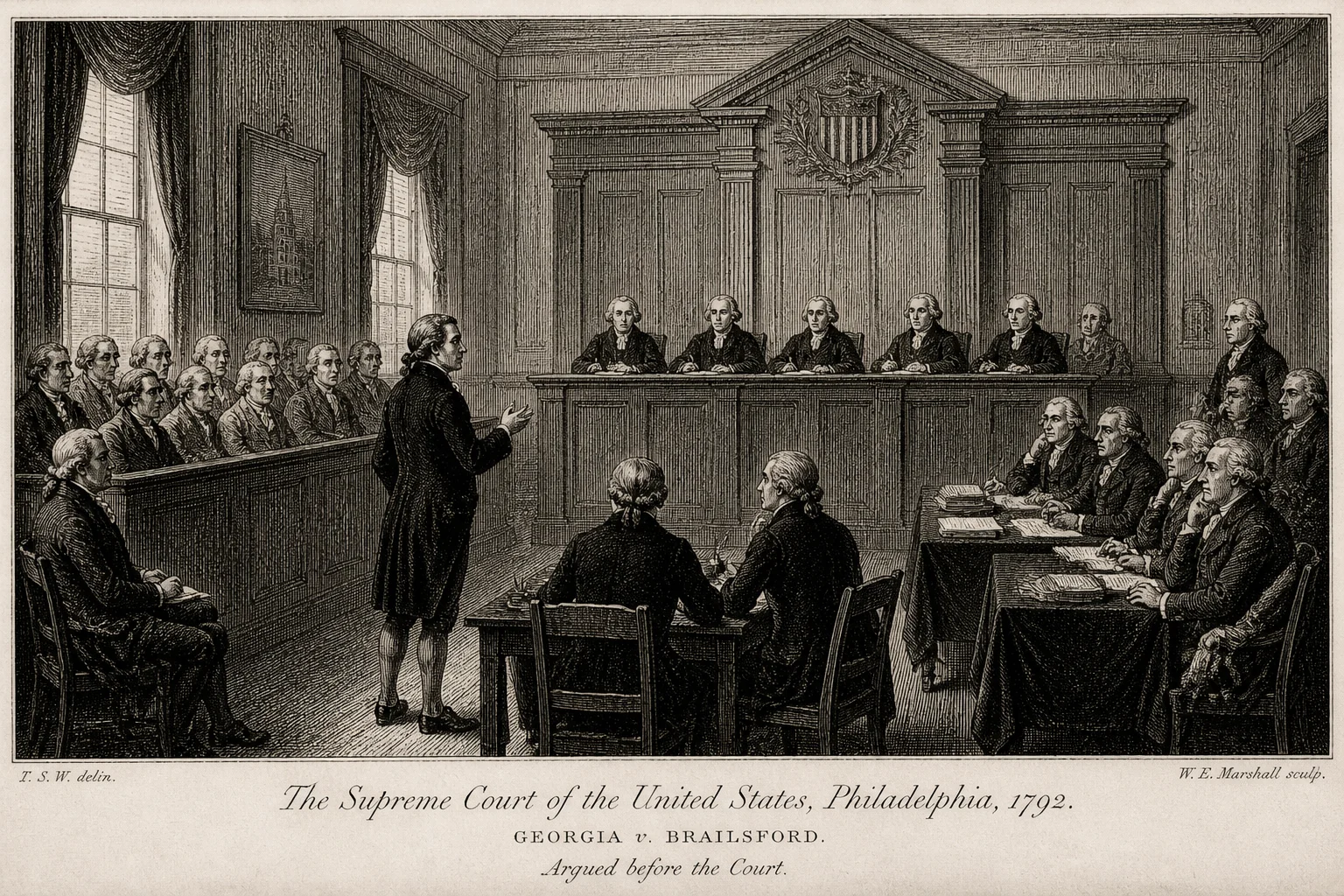
Georgia's early Supreme Court appearance involved a dispute over debts connected to a British creditor during the Revolution. The Court assembled a jury in Philadelphia.
The case is often described as the first jury trial conducted by the Supreme Court. Chief Justice John Jay instructed the jury on the facts and the law.
Georgia v. Brailsford did not produce a landmark constitutional holding. Instead, it revealed how the young Supreme Court was still defining its courtroom procedures.
13. Hayburn's Case (1792)
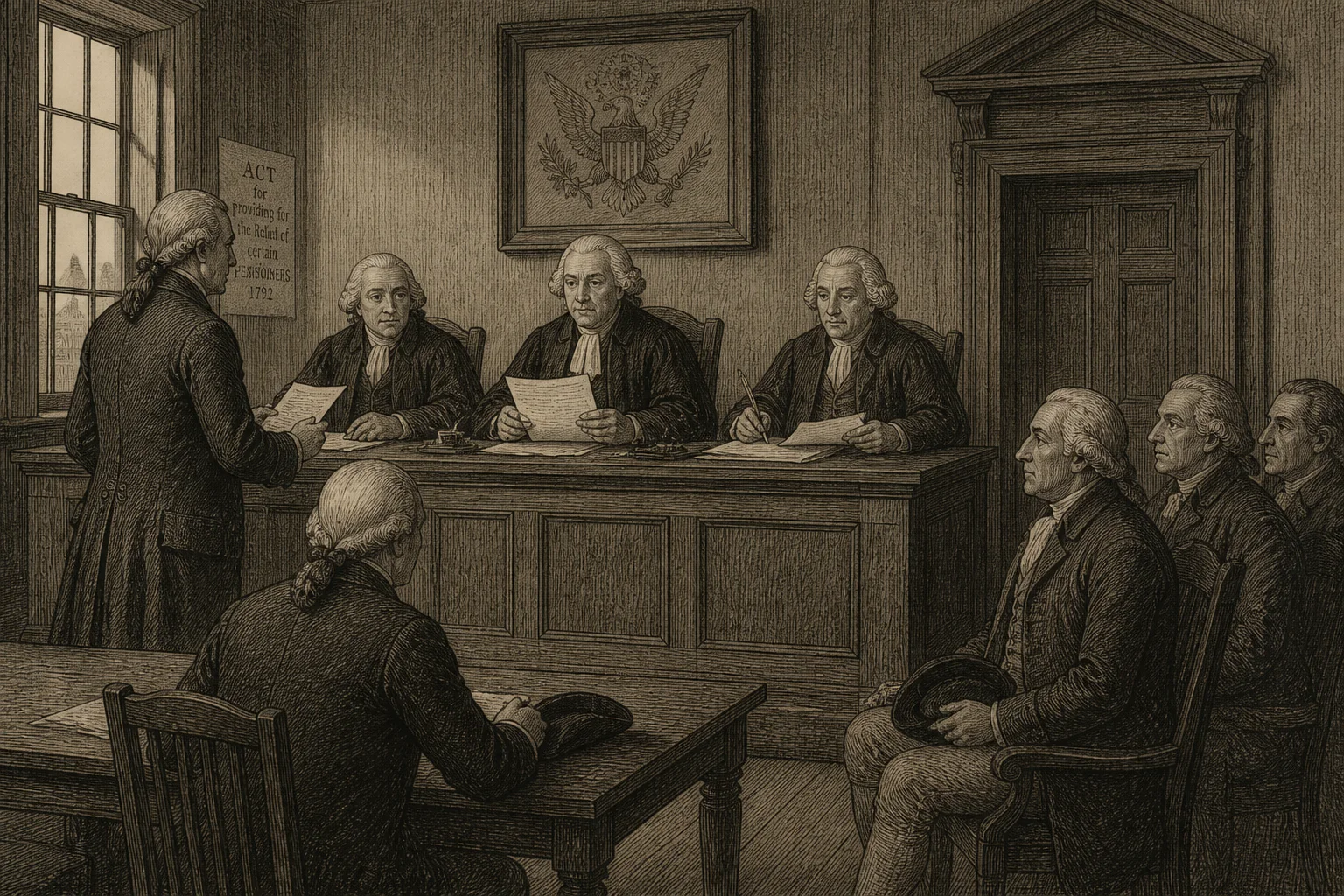
Hayburn's Case is less a single decision than a group of 1792 pension disputes that reached the federal circuit courts. Congress had assigned judges to recommend pension amounts, subject to revision by the Secretary of War.
Several justices objected that this duty was not judicial, and they refused to perform it. The dispute forced an early conversation about separation of powers.
Hayburn's Case is now cited in modern debates about when courts may decline to act. It established that federal judges should decide actual cases, not simply advise the executive branch.
14. Chisholm v. Georgia (1793)
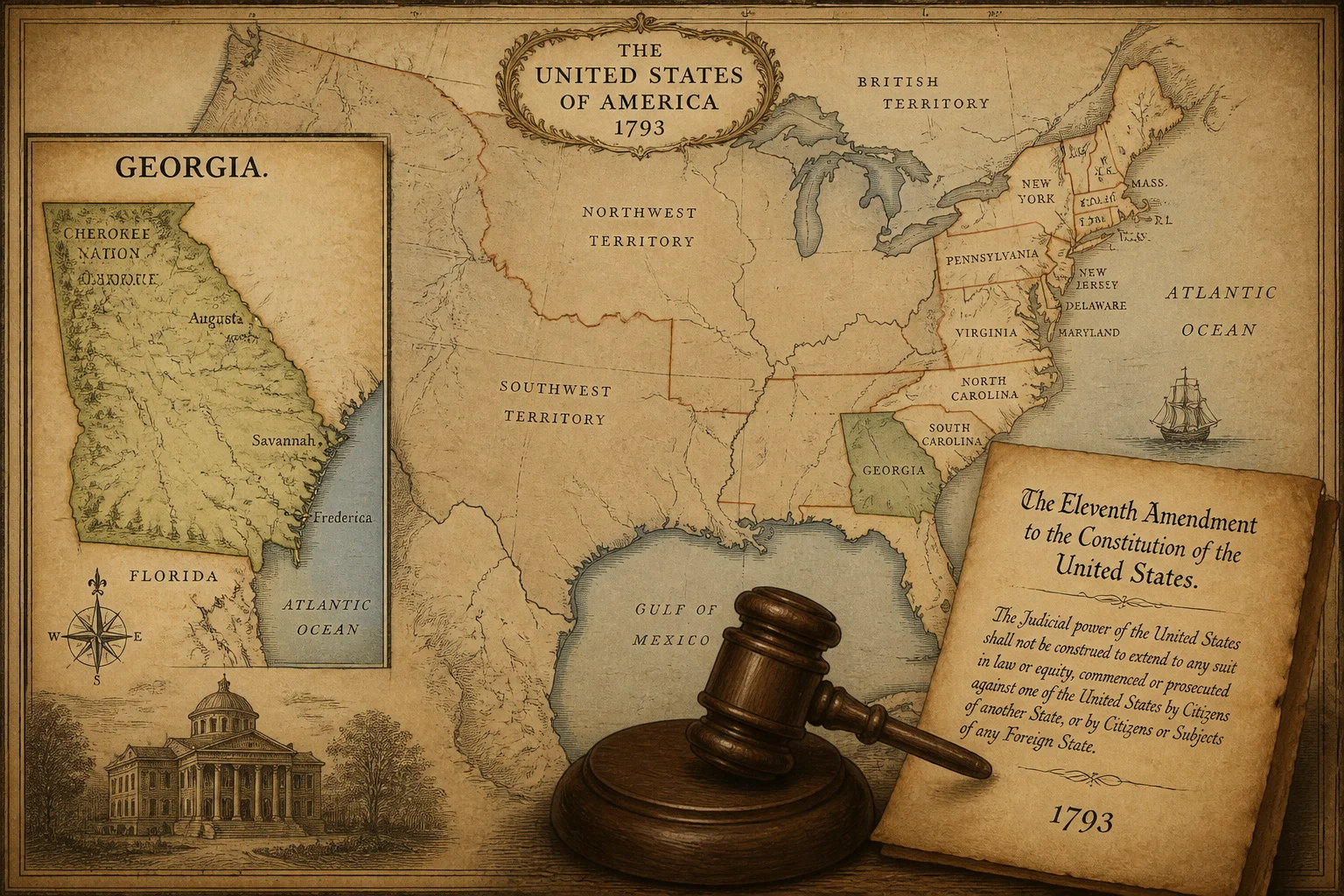
In Chisholm v. Georgia, the Supreme Court ruled that a citizen of one state could sue another state in federal court. The decision challenged the idea that states were automatically immune from such suits.
The reaction was swift and negative. By 1795, the Eleventh Amendment was ratified to reverse the result.
Chisholm remains a foundational case because it showed that Supreme Court rulings could provoke constitutional change. It also clarified that states were not entirely beyond federal judicial power.
15. Ware v. Hylton (1796)
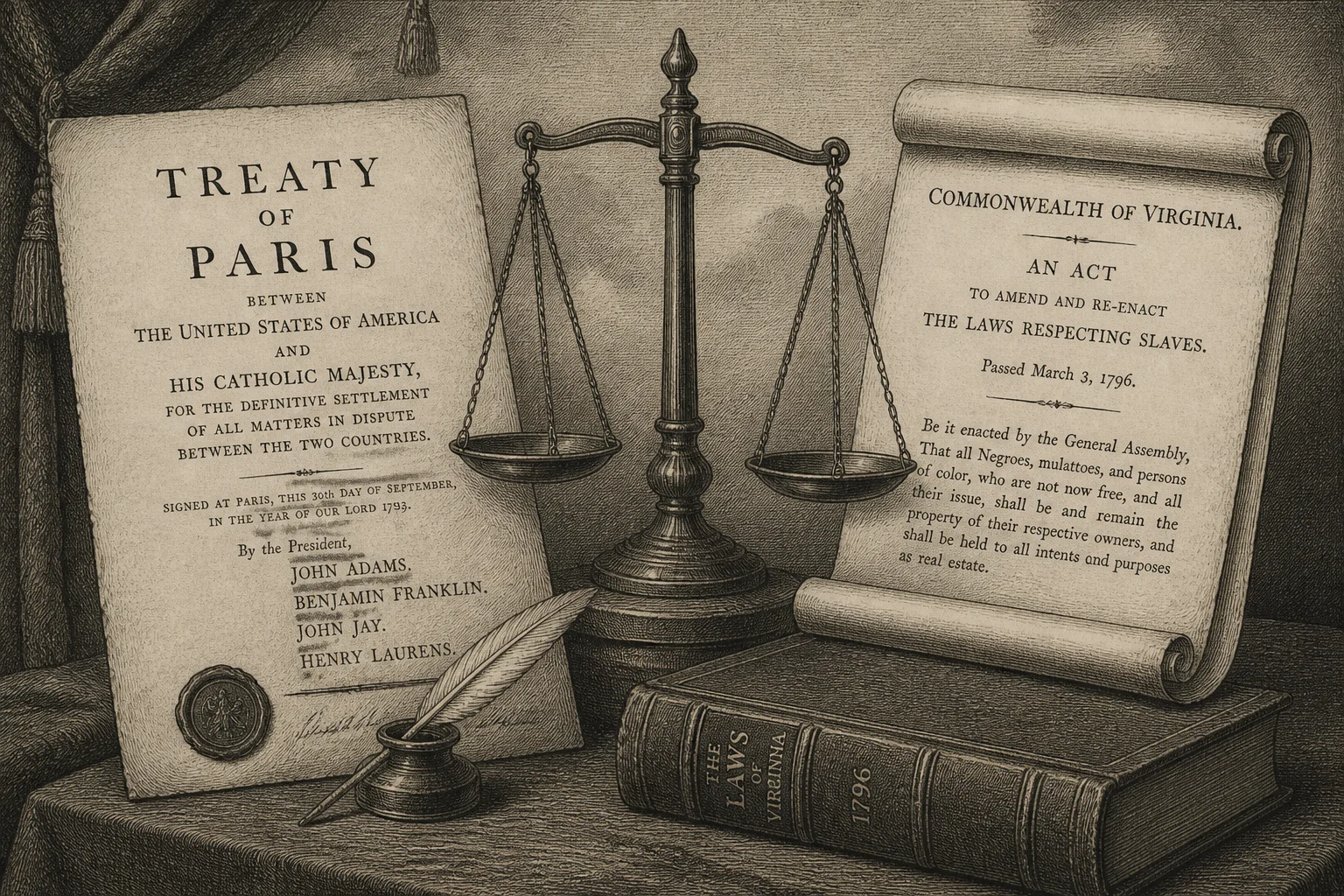
Virginia had passed laws that allowed its citizens to pay debts to British creditors into the state treasury, effectively canceling private obligations. In Ware v. Hylton, the Supreme Court enforced the Treaty of Paris over those state laws.
The decision affirmed that valid federal treaties are part of the supreme law of the land. It forced state courts and legislatures to respect national obligations.
Ware v. Hylton is part of the larger story of important US history court cases that defined federal supremacy. It also gave the Supreme Court early practice in reviewing state law against national commitments.
16. Hylton v. United States (1796)
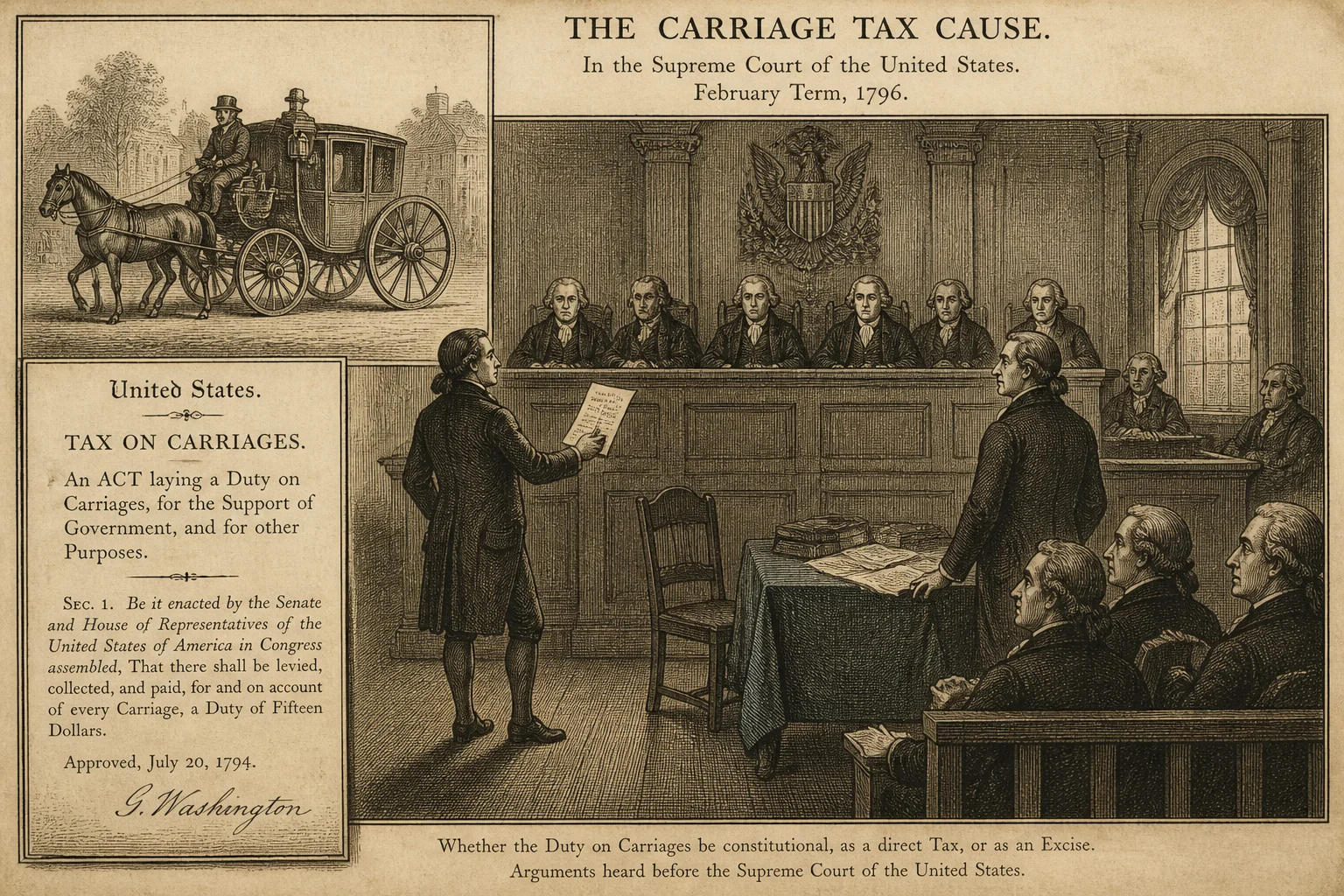
Daniel Hylton challenged a federal tax on carriages, claiming it was an unconstitutional direct tax. The Supreme Court upheld the tax.
The case is often described as the first time the Supreme Court examined the constitutionality of a federal statute. The justices took the challenge seriously even though they ruled against Hylton.
Hylton v. United States helped establish that the Court could review federal legislation. That set the stage for the more famous use of judicial review in Marbury v. Madison.
17. Calder v. Bull (1798): The Ex Post Facto Limits
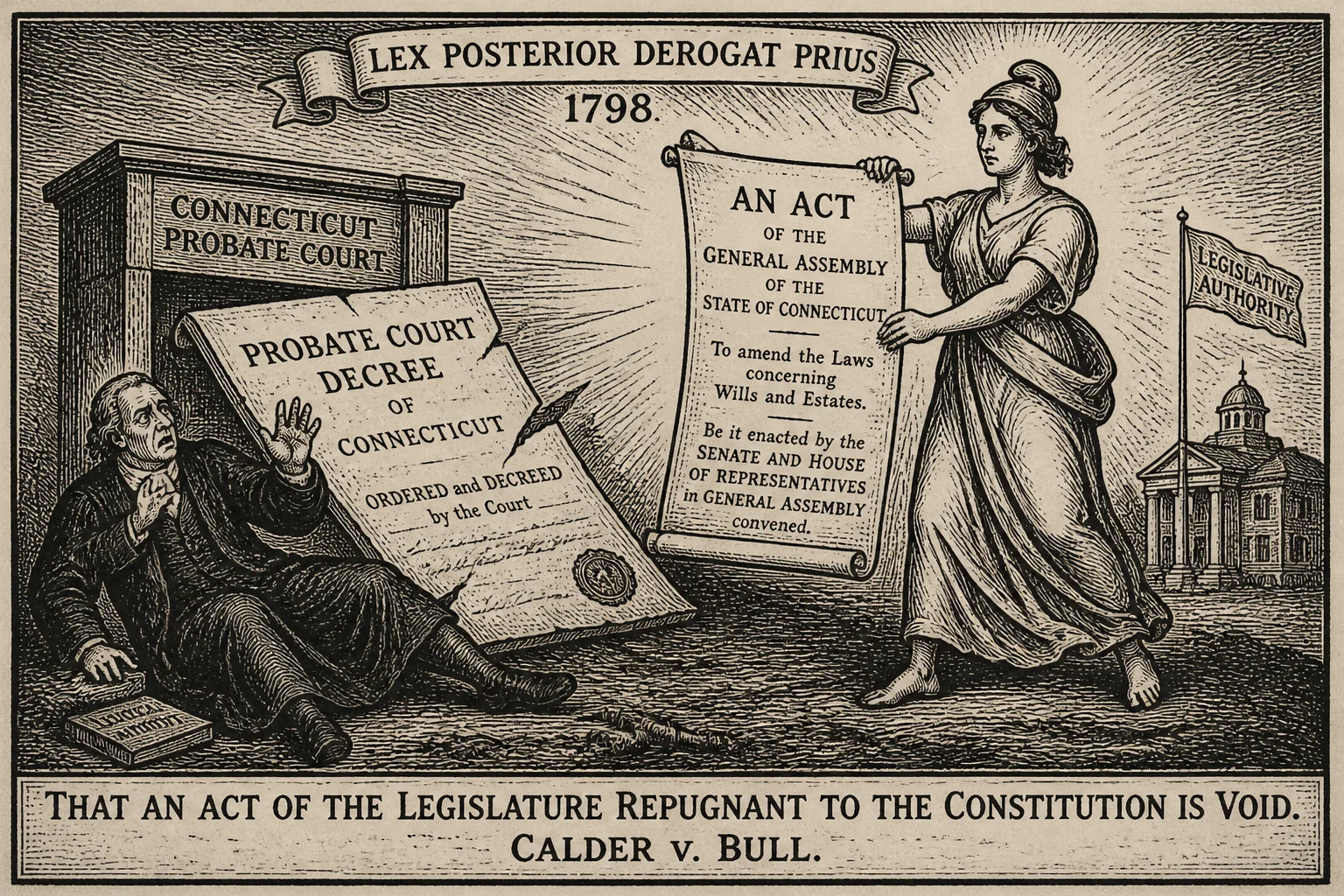
Calder v. Bull began when the Connecticut legislature set aside a probate court decree and authorized a new hearing. The heirs who lost the first outcome claimed that the legislature had imposed an ex post facto law.
In 1798, the Supreme Court ruled that the constitutional ban on ex post facto laws applied only to criminal punishment, not civil disputes. The Connecticut act was therefore allowed to stand.
Calder v. Bull is important because it gave early meaning to a constitutional phrase that courts still interpret. It is also remembered for the justices' sharp debate over natural law and the limits of legislative power.
18. Marbury v. Madison (1803)
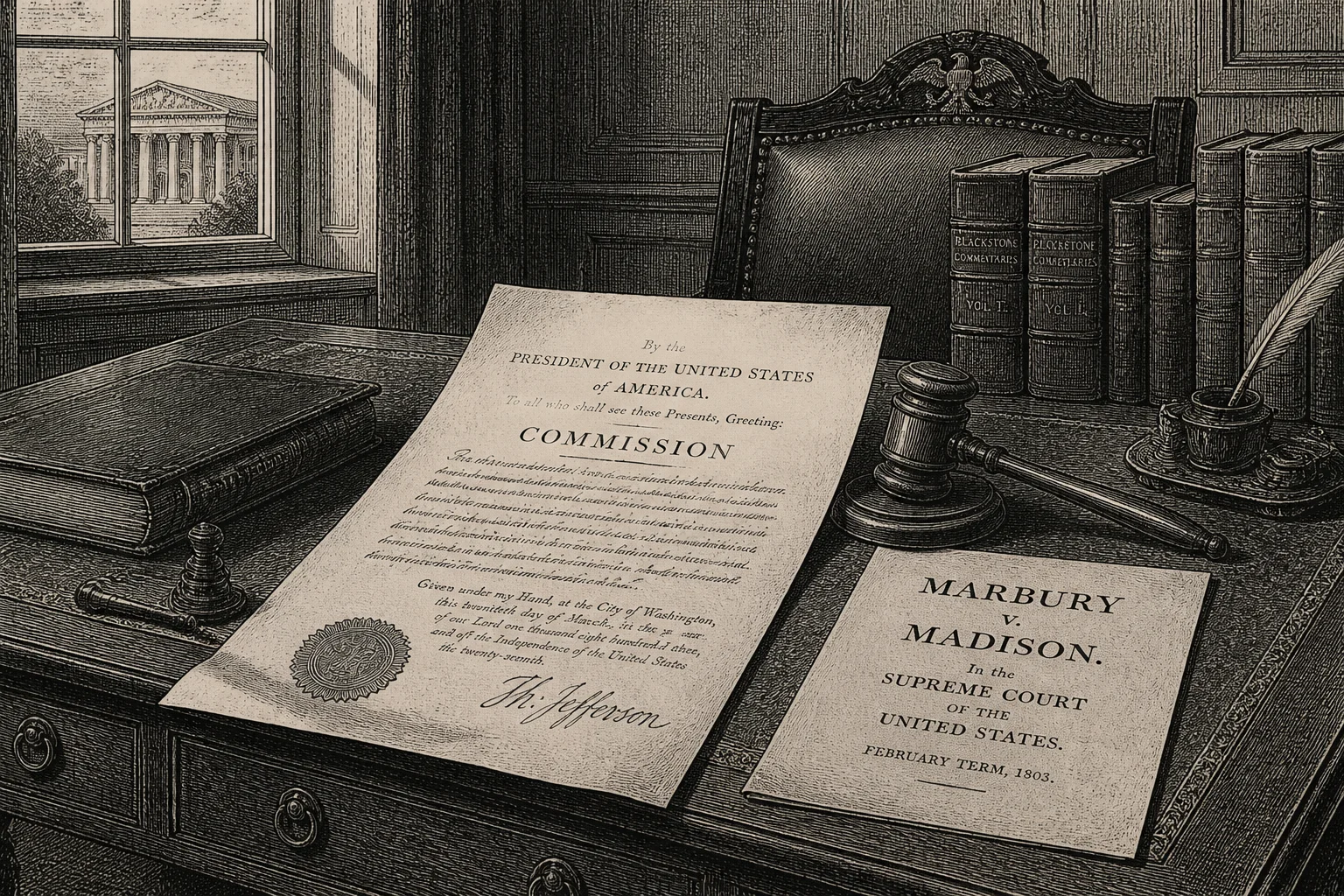
Marbury v. Madison is not the first case in Supreme Court history, but it is the most famous. Chief Justice John Marshall ruled that William Marbury had a right to his commission, yet the Court could not force delivery because the relevant statute was unconstitutional.
The decision established judicial review for the federal Supreme Court in a forceful way. Marshall built on ideas that had appeared in earlier state cases such as Bayard v. Singleton.
Marbury matters because it gave the judiciary a clear role in interpreting the Constitution. It turned a political dispute over appointments into a cornerstone of American constitutional law.
19. Fletcher v. Peck (1810)
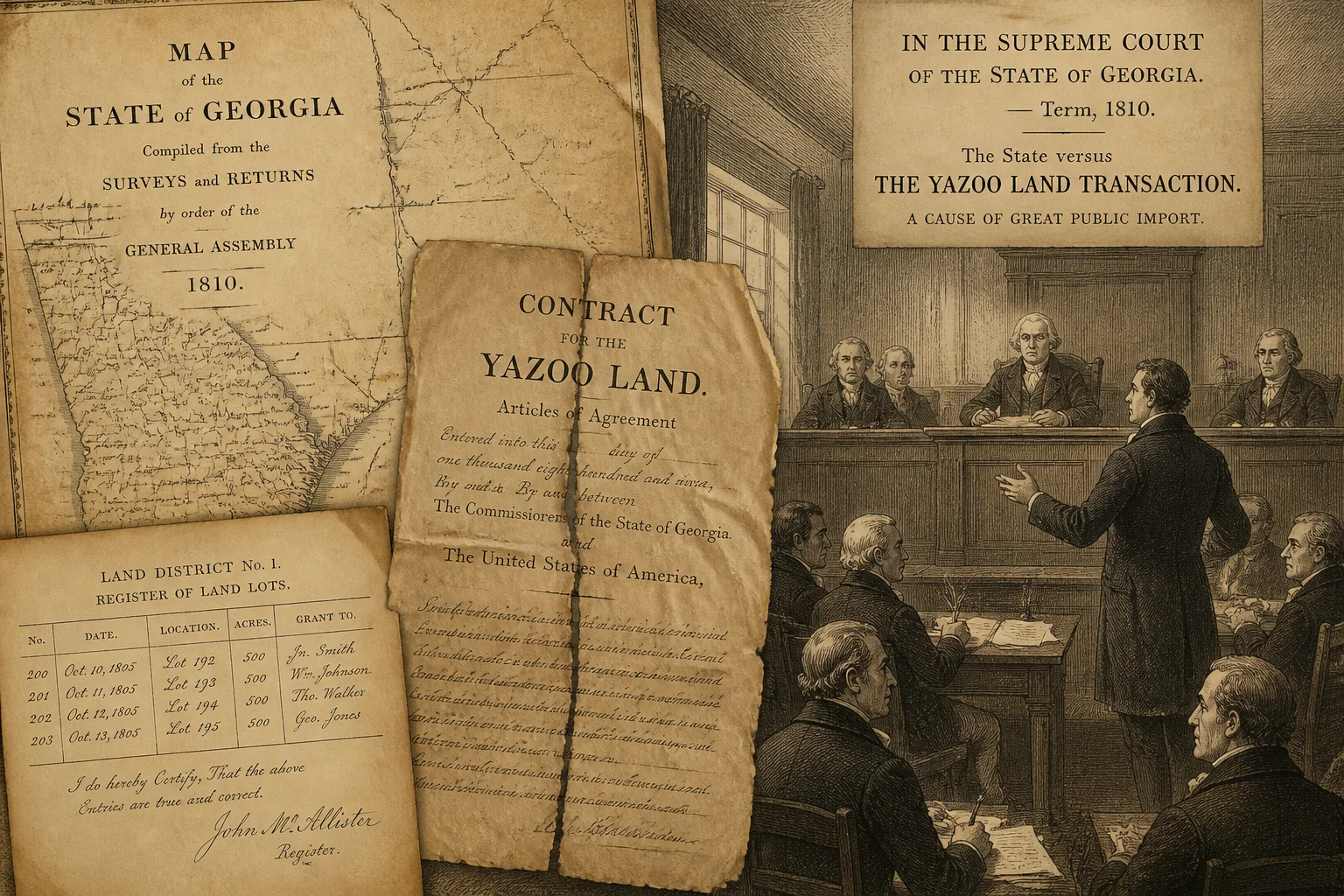
Fletcher v. Peck grew out of a corrupt Georgia land sale known as the Yazoo land scandal. After public outrage, a later Georgia legislature tried to revoke the sale.
The Supreme Court held that the revocation violated the Contract Clause. In doing so, it became the first Supreme Court decision to strike down a state law as unconstitutional.
The case protected vested property rights and signaled that the Court would police state legislatures. That line of authority became central to American legal history.
20. Dartmouth College v. Woodward (1819)
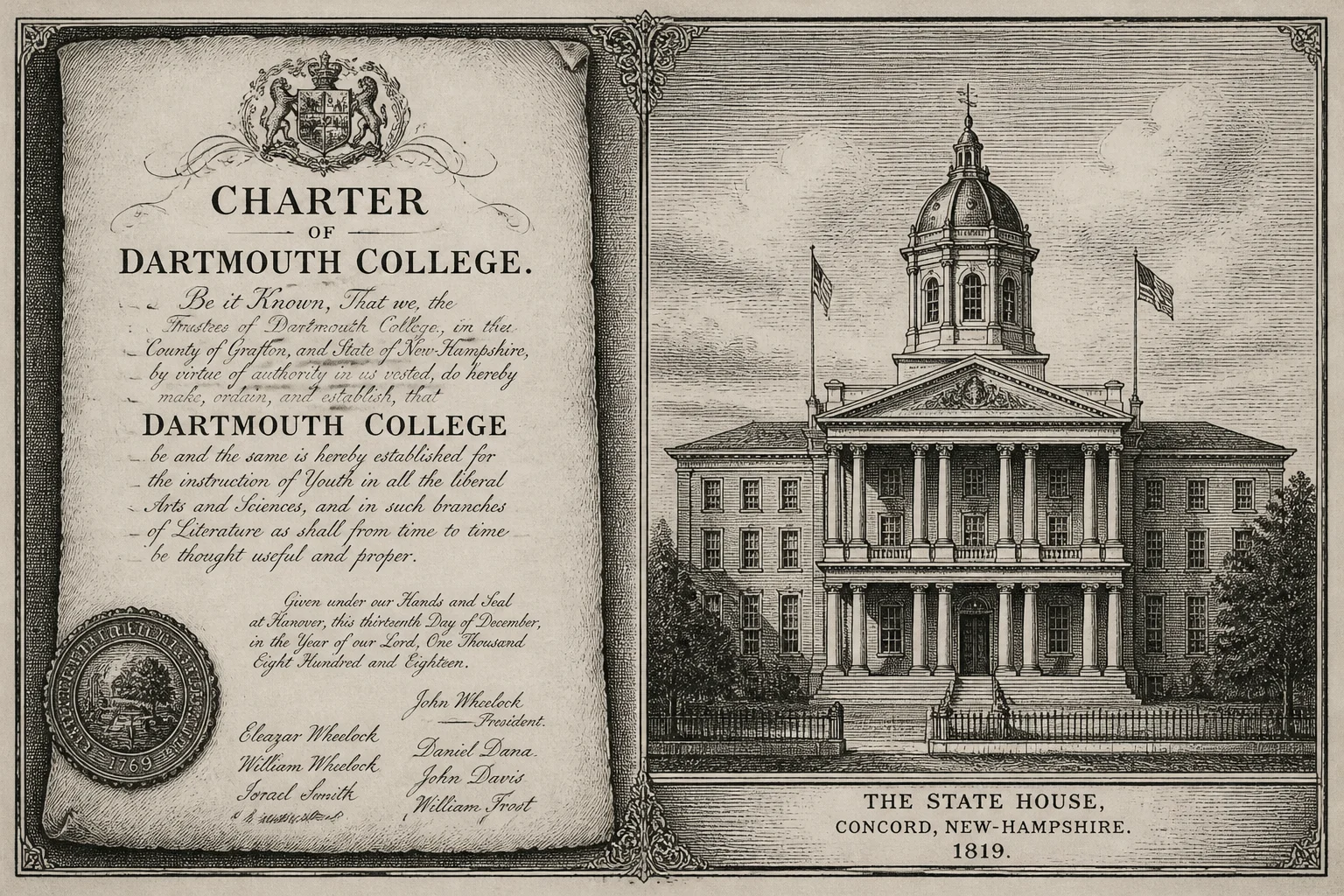
New Hampshire attempted to restructure Dartmouth College from a private institution into a public one. The college argued that its original charter was a contract.
The Supreme Court agreed, ruling that the state could not unilaterally alter a private charter. The decision strengthened the Contract Clause and encouraged the growth of private corporations.
Dartmouth College v. Woodward fits among important US history court cases because it clarified that corporate charters had constitutional protection. It shaped American education and business law.
21. McCulloch v. Maryland (1819)
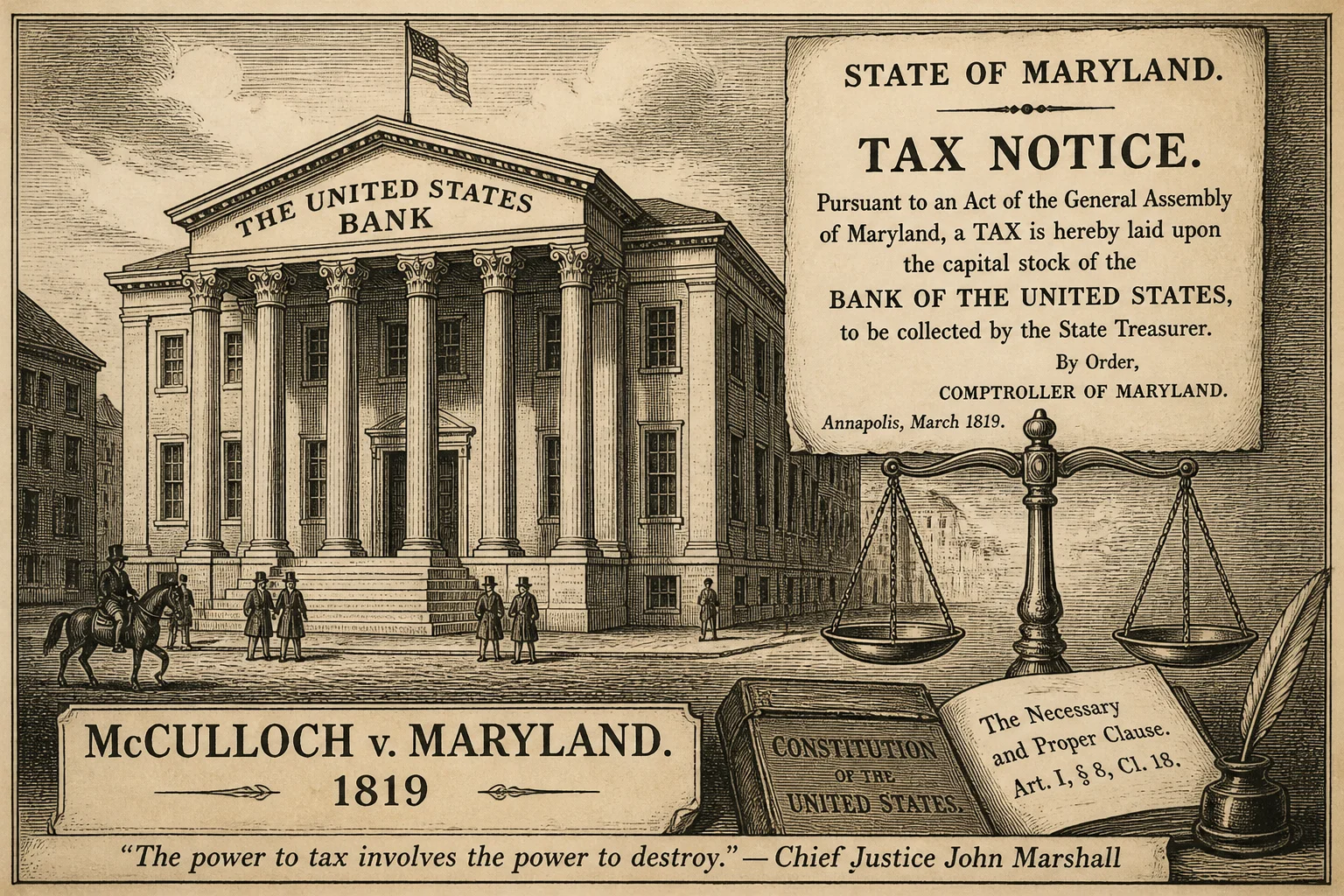
Maryland tried to tax the Second Bank of the United States, and the bank's cashier, James McCulloch, refused to pay. Chief Justice John Marshall upheld Congress's power to create the bank under the Necessary and Proper Clause.
Marshall also ruled that Maryland could not tax an instrument of the federal government. The decision strengthened federal supremacy and broad congressional authority.
McCulloch v. Maryland is a classic among US history court cases because it addressed the balance between state and national power. It remains foundational in debates over federal authority.
22. Gibbons v. Ogden (1824)
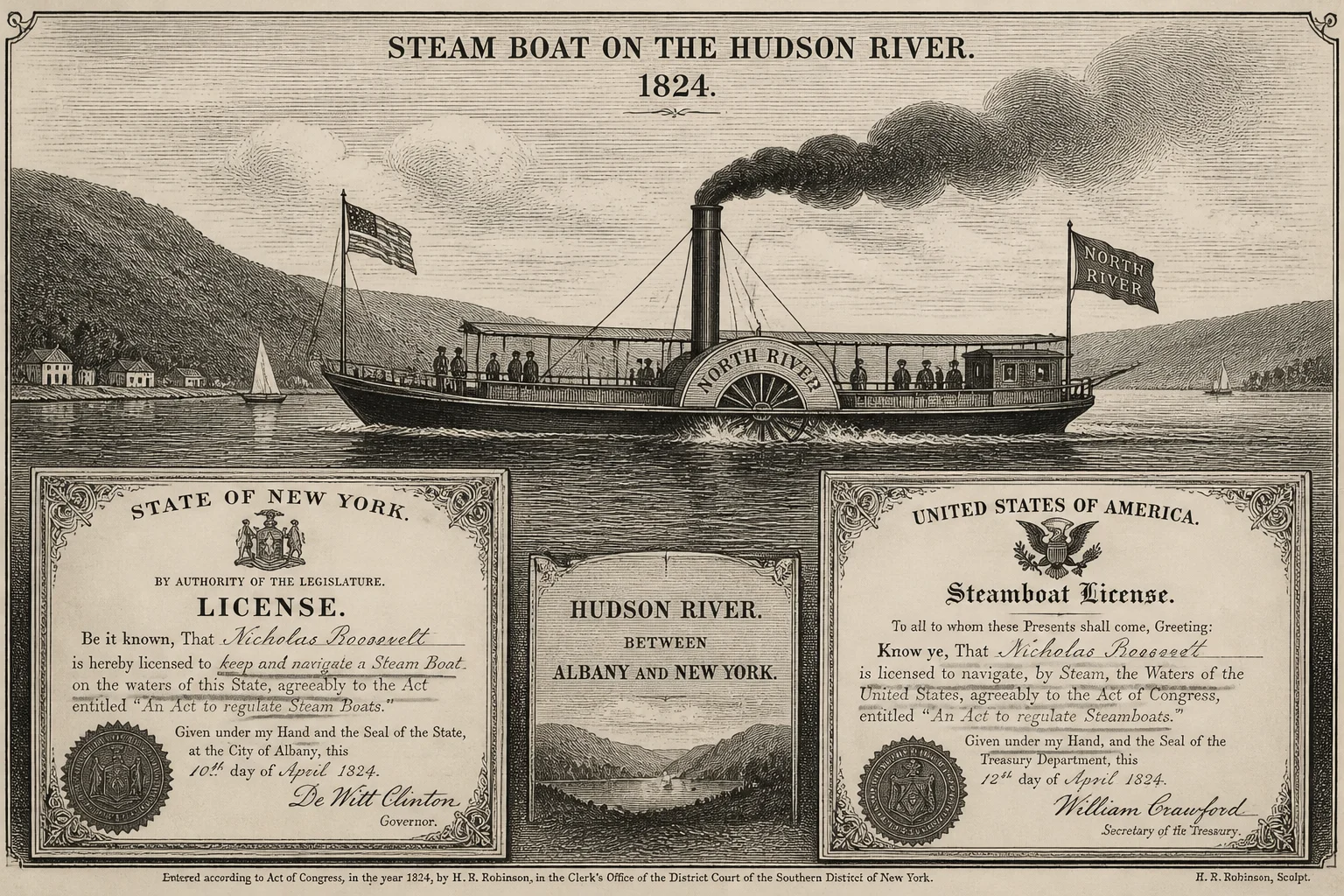
A New York steamboat monopoly sparked Gibbons v. Ogden. Thomas Gibbons operated a ferry under a federal license, while Aaron Ogden held a state-authorized monopoly.
The Supreme Court ruled that Congress has the power to regulate navigation as part of interstate commerce. The state monopoly had to yield to federal law.
Gibbons v. Ogden established a broad reading of the Commerce Clause. It shaped how the United States developed as one national market rather than a patchwork of state zones.
The Legacy of Early American Court Cases
These early legal battles were not abstract. They decided who could speak, who could own property, how far states could go, and how the new federal courts would operate.
The next time you see an argument about free speech, search warrants, or federal power, listen for echoes of these historical court cases in the US. They are the roots of modern constitutional debate.
Some entries on this list, like Calder v. Bull and West v. Barnes, are less famous than Marbury. But they anchor the timeline of court cases in American history and remind us that landmark law often begins with small, practical disputes.
Frequently Asked Questions
What was the first case of Supreme Court history?
The first case docketed in the U.S. Supreme Court was West v. Barnes in 1791. It was a Rhode Island debt dispute dismissed on a procedural defect, not a constitutional landmark.
Why is Calder v. Bull important?
Calder v. Bull (1798) limited the constitutional ban on ex post facto laws to criminal punishment. The Court ruled that a Connecticut law setting aside a civil probate decree did not violate that ban.
Which early Supreme Court case established judicial review?
Marbury v. Madison (1803) established federal judicial review. Earlier state cases such as Bayard v. Singleton had already experimented with the idea.
What was the first Supreme Court case to strike down a state law?
Fletcher v. Peck (1810) was the first Supreme Court decision to invalidate a state law as unconstitutional. It relied on the Contract Clause.
What was the first major constitutional case in the Supreme Court?
Chisholm v. Georgia (1793) is often considered the first major constitutional case. It prompted the Eleventh Amendment after the Court allowed a citizen to sue a state.

Alex Warren
Related Articles