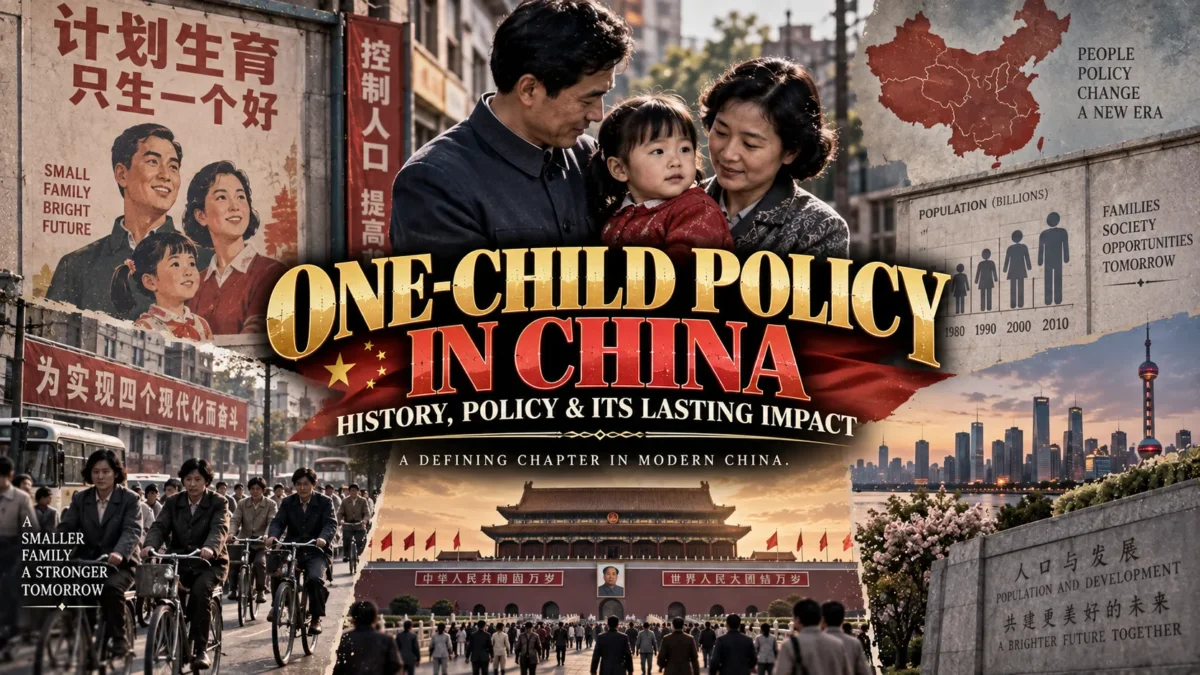
For nearly four decades, one of the most sweeping social experiments in human history quietly reshaped the lives of over a billion people.
China’s one-child policy, sometimes referred to informally as the “1 child policy,” told most families across the country that they could legally have only one child. It’s a piece of history that still sparks debate, confusion, and more than a few myths.
So why did a government decide to step into the most personal decision a family can make? And what really happened to the people who lived under it? Let’s separate the well-documented facts from the exaggerations and take a clear-eyed look at how this policy came to be, how it worked, and why China eventually walked away from it.
TL;DR: China’s one-child policy, in force from roughly 1980 to 2015, was a state effort to slow population growth that succeeded in that narrow goal but left behind a gender imbalance, an aging population, and deep social scars that the country is still grappling with today.
What Was the One-Child Policy?
The one-child policy was a set of population-control regulations introduced by the Chinese government that generally limited most urban couples to a single child. It officially began around 1980, though some restrictions had been building for years before that.
The policy was administered through a mix of national guidelines and local enforcement, which meant the experience of the policy could vary quite a bit depending on where a family lived.
It’s worth noting upfront that the policy was never quite as absolute as the name suggests. Millions of families, particularly in rural areas or among ethnic minorities, were legally allowed to have two or more children under various exceptions. Still, the core idea, that the state had the authority to cap family size, was a radical and controversial shift in social policy.
The Roots of the Policy: Overpopulation Fears in the 1970s
To understand why the one-child policy happened, you have to go back to the population anxieties of the mid-20th century. China’s population had grown enormously after 1949, partly encouraged by early Communist Party rhetoric that framed a large population as a source of national strength.
By the 1970s, however, economists and planners were increasingly worried that rapid population growth would outpace the country’s ability to feed, house, and employ its citizens.
China had already introduced a “later, longer, fewer” campaign in the early 1970s, encouraging later marriages, longer gaps between births, and fewer children overall.
This voluntary approach did slow growth somewhat, but government planners felt it wasn’t enough. Following the death of Mao Zedong and the rise of Deng Xiaoping’s reform-era leadership, population control became tied to broader economic modernization goals.
The thinking, influenced partly by global population science of the era, was straightforward: fewer mouths to feed meant more resources per person and faster economic development. In 1980, the Chinese government formally introduced the one-child policy as national guidance, urging (and in practice mandating for many) that couples have only one child.
How the Policy Was Implemented
Implementation of the one-child policy wasn’t a single law handed down and applied uniformly. Instead, it was rolled out through provincial regulations, workplace committees, and local family planning offices that had significant power over people’s reproductive choices. Urban residents, who were more easily monitored through work units and residency registration, tended to face the strictest enforcement.
Couples who wanted to have a child typically needed to apply for a birth permit before conceiving. Family planning workers, often at the neighborhood or village level, tracked menstrual cycles, contraceptive use, and pregnancies as part of their official duties. This created an environment where reproduction became a matter of public record rather than purely private choice.
Contraception and sterilization were heavily promoted, and in many regions, they were essentially compulsory for anyone who had already had their permitted number of children. State-subsidized birth control, IUDs, and sterilization procedures were made widely available, and local officials were often given quotas to meet, which shaped how aggressively the policy was enforced in their area.
Enforcement: Incentives, Penalties, and Controversial Measures
The one-child policy relied on a mix of carrots and sticks. Families who complied could receive benefits like extra land allocations, better job assignments, cash bonuses, or priority access to housing and schooling. These incentives were significant, especially in poorer communities where every advantage mattered.
On the other side, non-compliance carried real financial and social costs. Families who had unauthorized children could face steep fines, sometimes called “social compensation fees,” along with the loss of certain government benefits and even professional consequences like demotion or job loss for state employees.
In some cases, unauthorized children were denied the official household registration, known as hukou, which limited their access to public education and healthcare.
It’s also important to be honest about the darker chapters of enforcement. Human rights organizations and journalists have documented cases of coerced abortions and forced sterilizations, particularly during certain periods and in certain regions where local officials faced intense pressure to meet birth quotas.
These practices were not officially sanctioned as national policy in the way fines were, but they were a documented and troubling reality of how enforcement played out on the ground.
Who Was Exempt? Rural Families, Ethnic Minorities, and Special Cases
One of the most misunderstood aspects of the one-child policy is just how many exceptions existed. Rural families, who made up a large share of China’s population, were often permitted to have a second child if their first was a girl. This exception reflected the deep cultural preference for male heirs, particularly for agricultural labor and continuing the family line.
Ethnic minorities, who make up about 8 percent of China’s population, were generally subject to more relaxed rules or were exempt from the policy altogether in many regions. This was partly a matter of practical governance and partly an effort to avoid appearing to target minority populations with the strictest controls.
Other exceptions applied to couples where both partners were only children themselves, to families in remote or sparsely populated areas, and in certain cases to ethnic Han families who remarried and combined households. By some estimates, only around a third of China’s population was ever strictly limited to exactly one child under the tightest version of the rules.
The Gender Imbalance Problem
One of the most significant unintended consequences of the one-child policy was a skewed sex ratio at birth. In a culture where sons were traditionally favored for carrying on the family name and supporting aging parents, the pressure to have a son when only one child was allowed led some families to make difficult and, in some cases, ethically troubling choices.
Sex-selective abortion, though illegal, became more common after ultrasound technology made prenatal sex determination widely accessible in the 1980s and 1990s. Combined with underreporting of female births and, in rarer and more troubling cases, abandonment, this contributed to a sex ratio at birth that skewed notably male compared to the natural global average.
The result was a generation with tens of millions more men than women, a demographic gap that researchers and sociologists have linked to social issues ranging from difficulty finding spouses to increased trafficking of women in some rural areas. This imbalance remains one of the most cited long-term consequences of the policy.
The “Little Emperor” Generation
On the cultural side, the one-child policy gave rise to what’s often called the “little emperor” or “little empress” generation, referring to children who grew up as the sole focus of two parents and often four grandparents. With no siblings to compete with for attention or resources, many of these children experienced concentrated investment in their education and upbringing.
Some sociologists have pointed to this generation as more individualistic and academically driven compared to earlier generations that grew up with siblings. Others have noted the pressure that came with being the sole hope for a family’s future, particularly around academic achievement and career success.
Whatever the social effects, this generation is now a defining feature of modern Chinese society, filling the workforce, starting their own families, and in many cases now caring for two aging parents each, a responsibility that has its own economic implications.
Aging Population and the Looming Demographic Crisis
Perhaps the most consequential long-term effect of the one-child policy has been its impact on China’s population structure. By deliberately shrinking family sizes for over three decades, the policy contributed to a rapidly aging population with a shrinking pool of working-age people to support it.
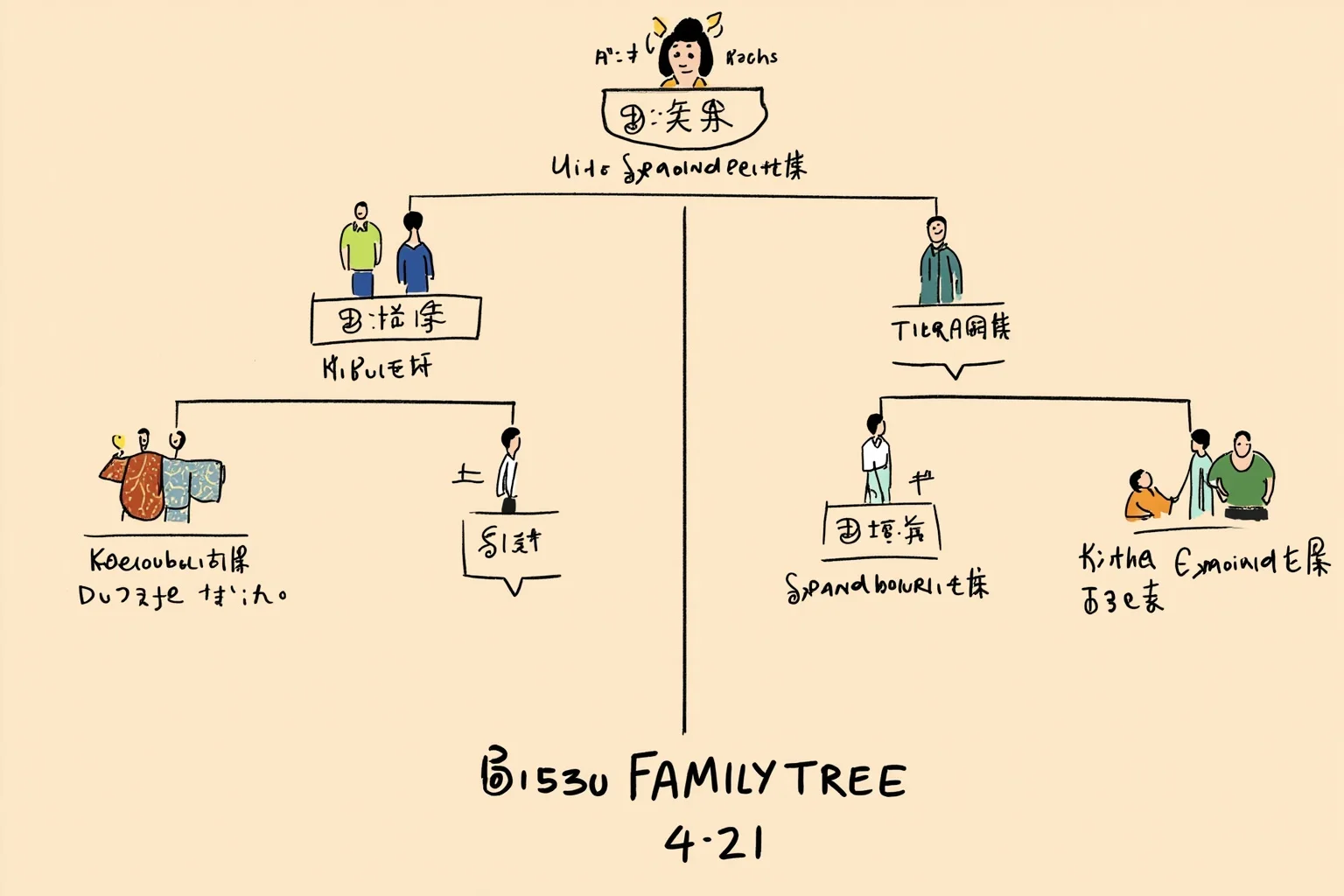
This creates a structural challenge sometimes called the “4-2-1 problem,” where a single adult child may eventually be responsible for supporting two parents and up to four grandparents. It’s a demographic squeeze that has serious implications for pensions, healthcare systems, and elder care in the coming decades.
China’s total fertility rate, the average number of children born per woman, fell well below the replacement level of roughly 2.1 during the policy years and has continued to decline even after restrictions were lifted. This has made reversing the demographic trend far more difficult than simply changing the law.
Human Rights Concerns and International Criticism
The one-child policy drew consistent criticism from international human rights organizations throughout its existence. Groups like Human Rights Watch and Amnesty International documented cases of forced sterilizations, coerced abortions, and punitive measures against families who exceeded birth limits, especially during periods of aggressive local enforcement.
Critics argued that the policy represented an extreme intrusion into reproductive rights and bodily autonomy, regardless of the government’s stated goals around economic development and resource management. Chinese officials generally defended the policy as a necessary, if difficult, measure for the country’s long-term stability and growth.
It’s worth being careful here about generalizing individual abuses into a claim that every family experienced coercion, because enforcement varied enormously by region, era, and local official. But the documented pattern of abuses is a real and important part of the policy’s history, not a fringe claim.
The Slow Unwinding: From One Child to Two
By the early 2010s, Chinese demographers and economists were increasingly vocal about the risks of the shrinking workforce and aging population. In 2013, the government began loosening restrictions, allowing couples to have a second child if either parent was an only child themselves.
This partial relaxation didn’t produce the baby boom officials had hoped for. Rising costs of housing, education, and childcare in China’s cities meant many eligible couples simply chose not to have a second child, even when it became legally possible.
Facing continued demographic pressure, China formally ended the one-child policy nationwide in 2015, replacing it with a universal two-child policy that took effect in January 2016. This marked the official close of the one-child era, though its demographic and social effects were far from over.
2021 and Beyond: The Three-Child Policy
Even the two-child policy failed to reverse China’s declining birth rate in the way officials had hoped. In May 2021, the government announced it would allow all couples to have up to three children, alongside new support measures like extended parental leave and tax incentives aimed at encouraging larger families.
By this point, the challenge wasn’t legal permission but cultural and economic reality. A generation raised in the one-child era, now facing high costs of urban living, had largely adjusted to the idea of smaller families as the norm, making policy reversal a much slower process than policy implementation had been.
This shift illustrates an important lesson from the entire episode: population policies that are relatively quick to impose can be remarkably slow and difficult to reverse once deeply embedded in social behavior and expectations.
Myths vs Facts About the One-Child Policy
Given how widely discussed the one-child policy has become in Western media, it’s picked up a fair share of myths along the way. One common misconception is that literally every family in China was restricted to one child, when in reality, exceptions for rural families, ethnic minorities, and other special cases meant a large portion of the population could legally have more.
Another myth is that the policy alone is single-handedly responsible for China’s current demographic challenges. In reality, declining fertility rates are a global trend seen in many industrialized and rapidly developing countries, even those without any government mandate, though the one-child policy certainly accelerated and deepened the trend in China’s case.
It’s also sometimes claimed that the policy has been fully reversed and had no lasting effect. In truth, the shift to two-child and then three-child policies hasn’t produced a significant rebound in birth rates, showing just how deeply the decades of restriction reshaped social norms around family size.
The Policy’s Lasting Legacy
Today, the one-child policy stands as one of the most consequential social experiments of the modern era. It achieved its narrow, stated goal of slowing population growth, with estimates suggesting it prevented hundreds of millions of additional births over its lifetime, though demographers debate the precise figure given the fertility decline already underway before 1980.
But the policy’s ripple effects, a skewed gender ratio, an aging population, and a generation shaped by being an only child, continue to influence Chinese society well into the 21st century. It’s a powerful reminder that population policy isn’t just a numbers game; it reaches into culture, family life, and generations not yet born.
As China now works to encourage larger families, the one-child policy’s legacy offers a cautionary lesson for any government considering large-scale intervention in something as personal as family planning. Once social norms shift on this scale, they don’t easily shift back.
Final Thoughts
The story of the one-child policy is more nuanced than the simplified version often repeated in headlines. It wasn’t a single, uniform law applied equally to everyone, but a patchwork of national goals and local enforcement that changed lives in profoundly different ways depending on where and when people lived.
Understanding this history helps make sense of demographic headlines coming out of China today, from labor shortages to shifting family incentives. It’s also a striking case study in how governments attempt, and sometimes struggle, to manage something as fundamentally human as the decision to have children.
Frequently Asked Questions
When did China’s one-child policy start and end?
The policy was formally introduced around 1980 and officially ended nationwide in 2015, when China moved to a universal two-child policy that took effect in January 2016.
Did every family in China only have one child under the policy?
No. Many rural families, ethnic minorities, and couples who were themselves only children were legally allowed to have two or more children, so the policy's actual restrictions varied widely across the population.
Why did China end the one-child policy?
China ended the policy mainly due to concerns about a rapidly aging population and a shrinking workforce, both of which threatened long-term economic growth and the ability to support elderly citizens.
What happened to families who violated the one-child policy?
Families who exceeded birth limits could face fines known as social compensation fees, loss of benefits, and in some documented cases, coerced abortions or forced sterilizations, though enforcement intensity varied significantly by region and era.
Did the one-child policy cause a gender imbalance in China?
Yes. A cultural preference for sons combined with access to sex-selective abortion contributed to a sex ratio at birth that skewed male, leaving China with tens of millions more men than women in certain generations.
Is any version of the one-child policy still in effect today?
No. China now allows couples to have up to three children as of 2021, and the government has introduced incentives to encourage larger families rather than restrict them.

Alex Warren
Related Articles