

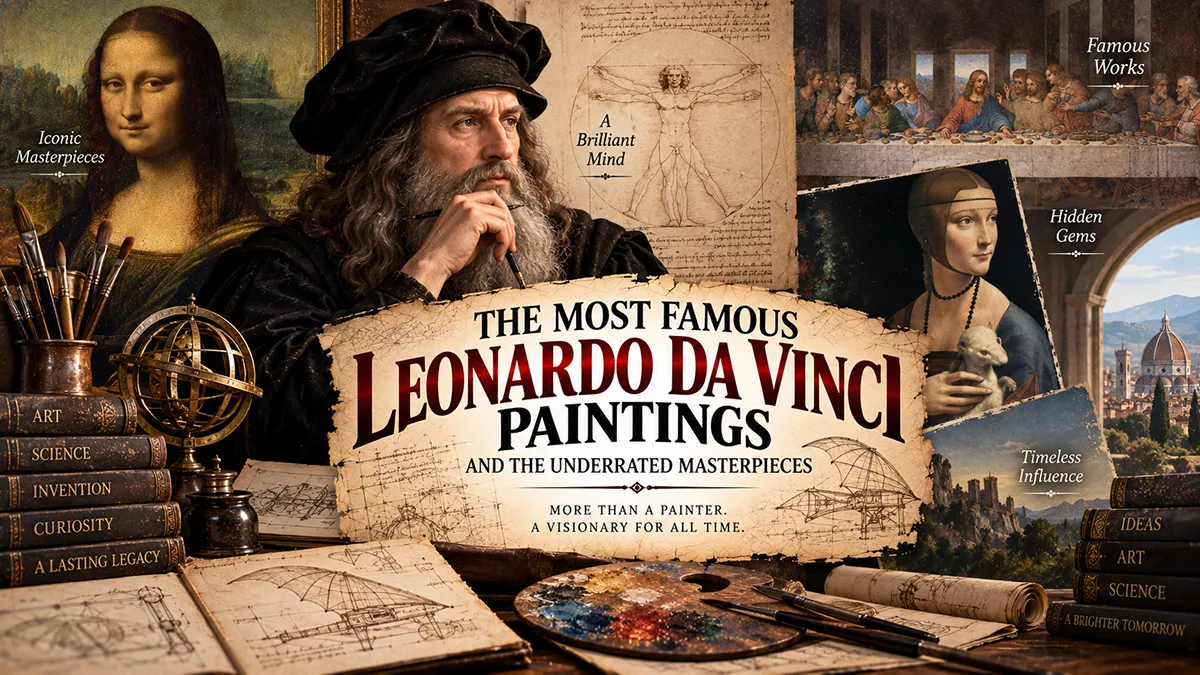
Ask most people to name a Leonardo da Vinci painting, and you’ll get one answer within about two seconds: the Mona Lisa. Maybe a second person will mention The Last Supper. But Leonardo’s actual body of surviving work is tiny compared to his reputation, and that’s exactly what makes it so fascinating.
He accepted far more commissions than he ever finished, obsessed over technique to the point of sabotaging his own materials, and left behind a scattering of paintings, unfinished panels, and disputed attributions that art historians still argue about today.
This guide walks through the most famous Leonardo da Vinci paintings everyone recognizes, then digs into ten lesser-known works that deserve just as much attention.
TL;DR: Leonardo da Vinci’s famous paintings — the Mona Lisa, The Last Supper, and a handful of others — represent only a fraction of his surviving output, and several lesser-known works reveal even more about his genius and his restless, often unfinished, creative process.
What Is Leonardo da Vinci’s Most Famous Painting?
If you’re looking for a single answer, it’s the Mona Lisa, housed at the Louvre in Paris since the French Revolution era. It’s the most visited, most photographed, and most parodied painting on the planet, and Leonardo himself is routinely counted among the most recognized historical figures of all time.
But “most famous” doesn’t always mean “most historically significant” — The Last Supper arguably had a bigger impact on Western art technique and composition, even though it’s in far worse physical condition today.
Part of what makes ranking Leonardo’s most famous works tricky is that he completed so few paintings in his lifetime. Most scholars attribute somewhere between 15 and 20 surviving paintings to him, either fully or partially, and several of those are disputed. That scarcity is precisely why each one carries so much weight in art history.
The Hidden Lives Behind These Works of Art
Before diving into the list, it’s worth pausing on something a myth-busting approach demands: many popular stories about Leonardo’s paintings are exaggerated, unverified, or flat-out invented. Claims about secret codes in the Mona Lisa, hidden self-portraits, or occult symbolism make for great headlines but rarely hold up to scholarly scrutiny.
What’s genuinely true is often stranger than the myths. Paintings have been stolen, misattributed for centuries, painted over, technically sabotaged by Leonardo’s own experimental methods, or lost entirely and known only through copies made by other artists.
Understanding the real, documented “hidden lives” of these works — their provenance, damage, and rediscovery — tells you more about Leonardo than any conspiracy theory ever could.
Part 1: The Most Famous Leonardo da Vinci Paintings
These are the works most likely to appear in any list of Leonardo da Vinci’s most famous paintings, and the ones you’ve probably already heard of. Even so, each one has details that rarely make it into the popular retelling.
1. Mona Lisa
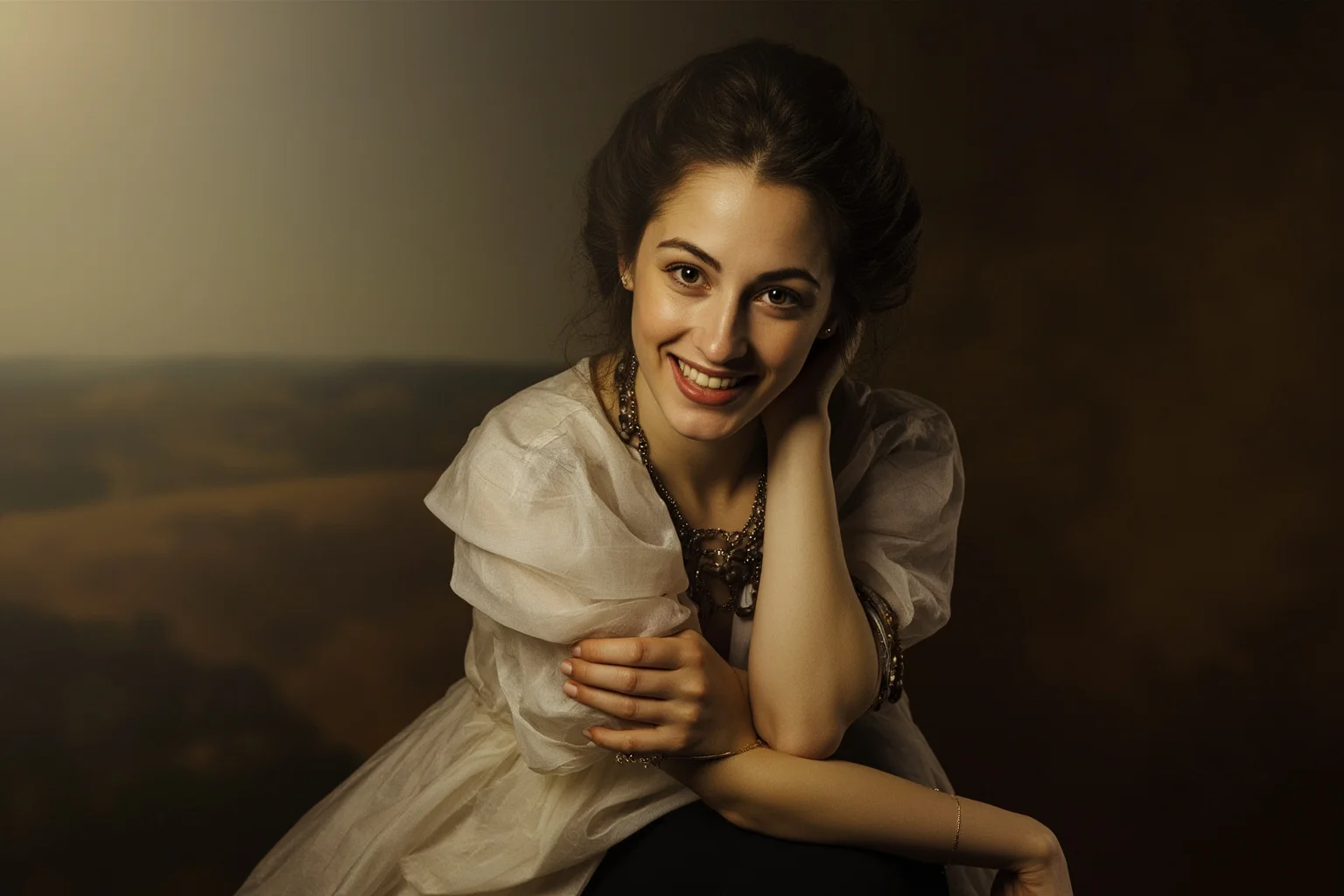
Painted roughly between 1503 and 1517, the Mona Lisa depicts Lisa Gherardini, the wife of a Florentine silk merchant named Francesco del Giocondo. Leonardo used a technique called sfumato, blending tones and edges so gradually that outlines seem to dissolve into shadow, which is part of why her expression looks different depending on the angle you view her from.
The painting’s fame exploded largely after it was stolen from the Louvre in 1911 by an Italian handyman who believed it belonged in Italy. That theft, more than anything painted on the panel itself, turned the Mona Lisa into a global celebrity.
2. The Last Supper
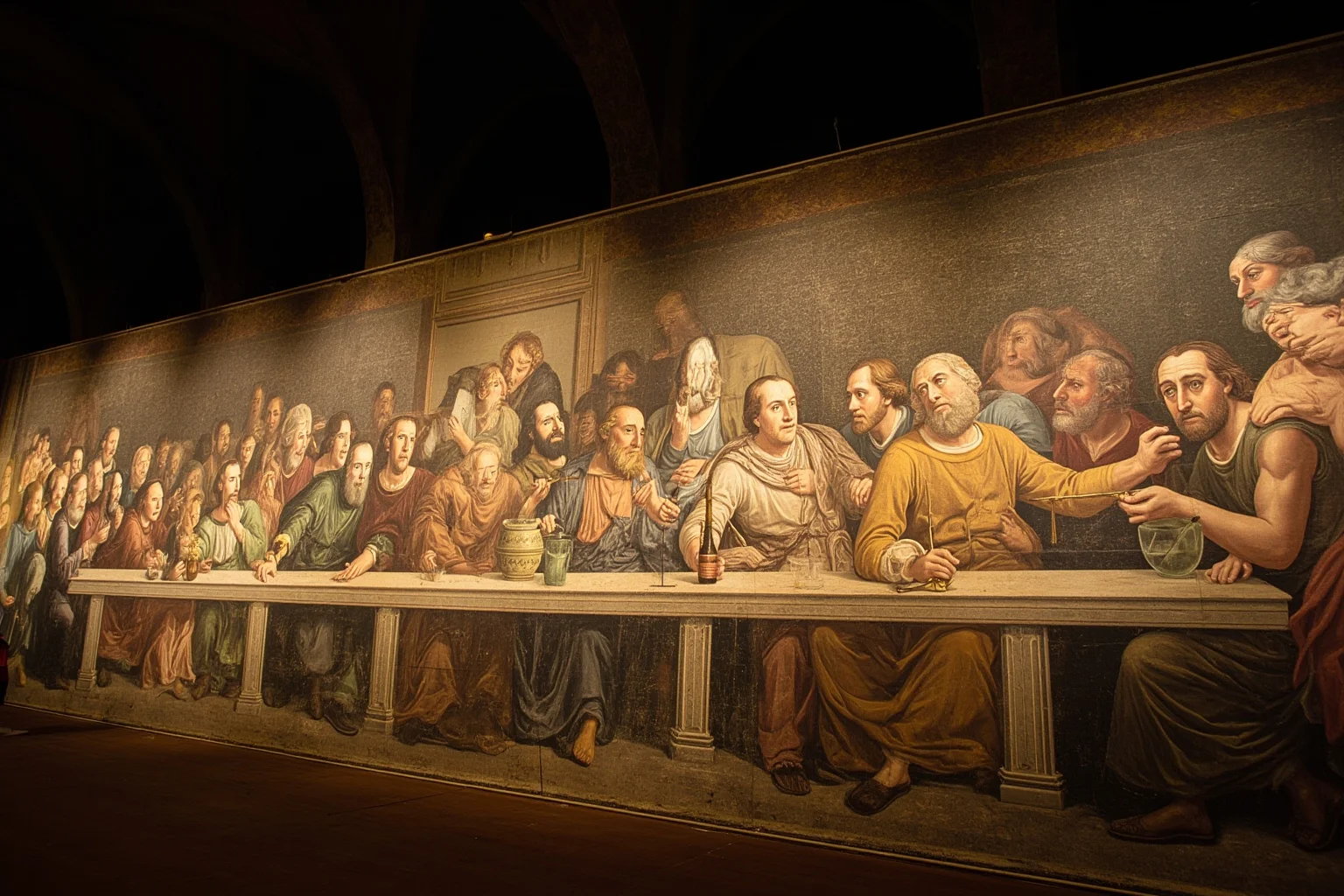
Completed around 1495 to 1498 on the wall of the refectory at Santa Maria delle Grazie in Milan, The Last Supper captures the moment Jesus tells his apostles that one of them will betray him. Leonardo skipped traditional fresco technique in favor of an experimental dry-wall method so he could work slowly and revise details, but the choice backfired badly.
The paint began flaking within decades of its completion, and what visitors see today is the product of multiple restorations rather than Leonardo’s untouched brushwork. It remains one of the most analyzed compositions in Western art, largely for its use of perspective and grouping of the apostles into dramatic clusters of three.
3. Vitruvian Man
Technically a pen-and-ink drawing rather than a painting, Vitruvian Man is included on nearly every list of Leonardo’s most famous works because of its cultural reach. Created around 1490, it illustrates the proportions of the human body described by the ancient Roman architect Vitruvius.
The drawing is held at the Gallerie dell’Accademia in Venice and is rarely displayed publicly because of its fragility. Its image of a man inscribed in a circle and square has become shorthand for Renaissance humanism itself.
4. The Virgin of the Rocks
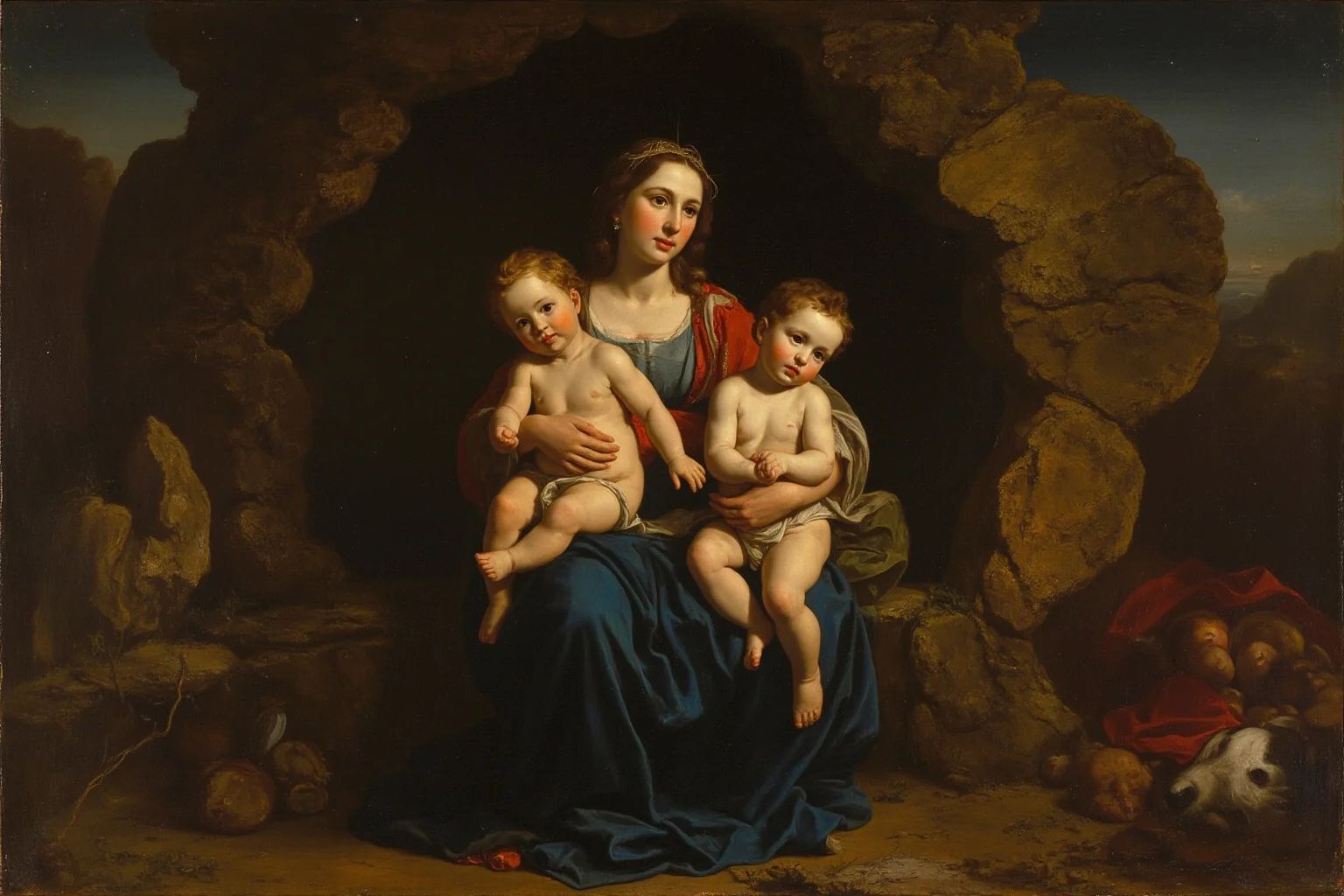
Leonardo painted two versions of this composition, one now in the Louvre (circa 1483–1486) and another in London’s National Gallery (circa 1495–1508). Both depict the Virgin Mary, the infant Jesus, the infant John the Baptist, and an angel in a rocky, grotto-like setting.
The two versions were commissioned for a chapel in Milan, and scholars still debate exactly why Leonardo painted a second copy and how much workshop assistance he had on it. The differences between the two — in color, lighting, and the angel’s pointing gesture — are a favorite subject of art historians.
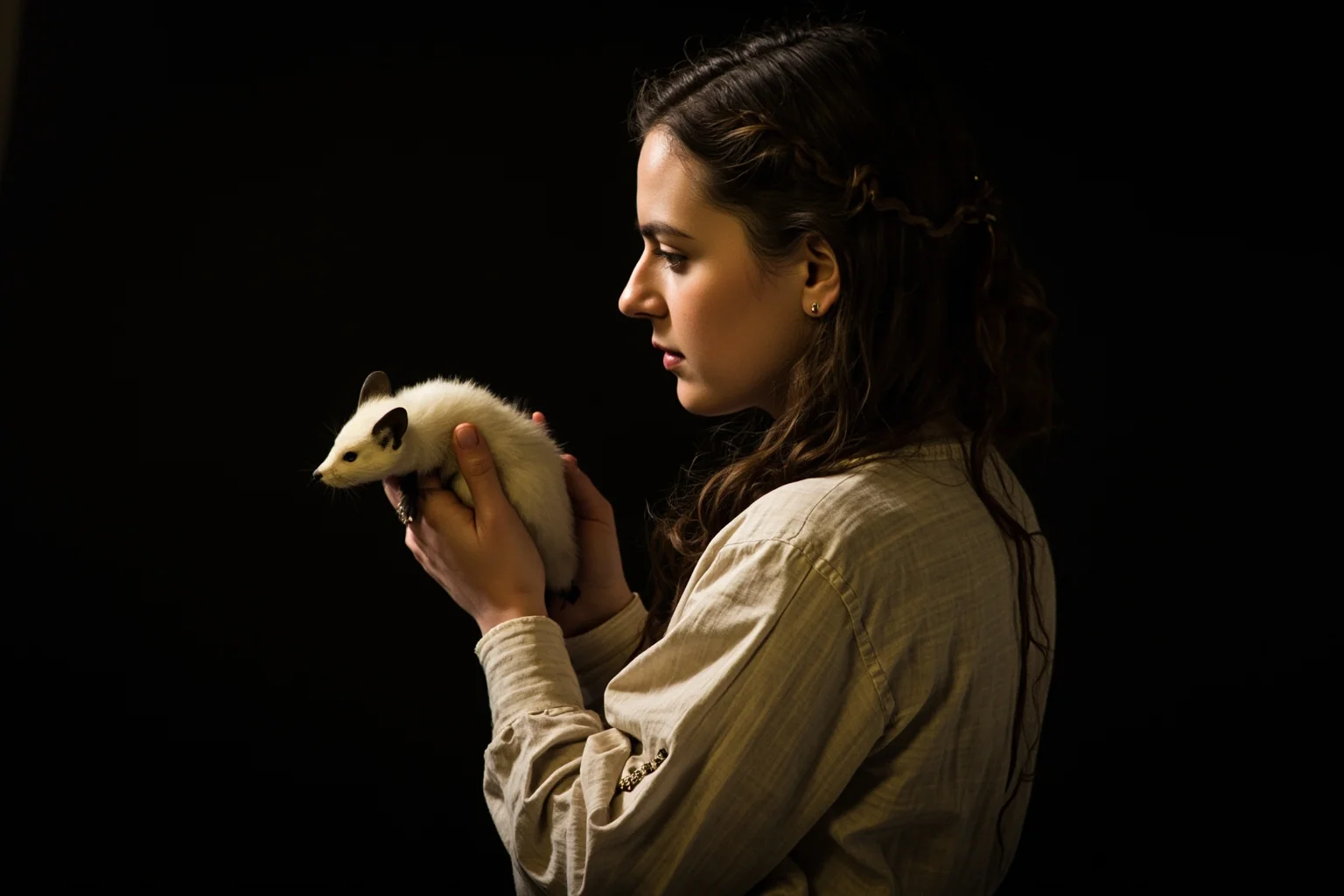
5. Lady with an Ermine
This portrait, painted around 1489 to 1491, shows Cecilia Gallerani, a mistress of Milan’s ruling duke Ludovico Sforza. The ermine she holds may be a nod to the duke’s personal emblem or a play on her surname, though this symbolism is interpretive rather than confirmed.
It now hangs in the Czartoryski Museum in Kraków, Poland, and is considered one of the earliest portraits to show a sitter interacting dynamically with something outside the frame, rather than staring blankly ahead.
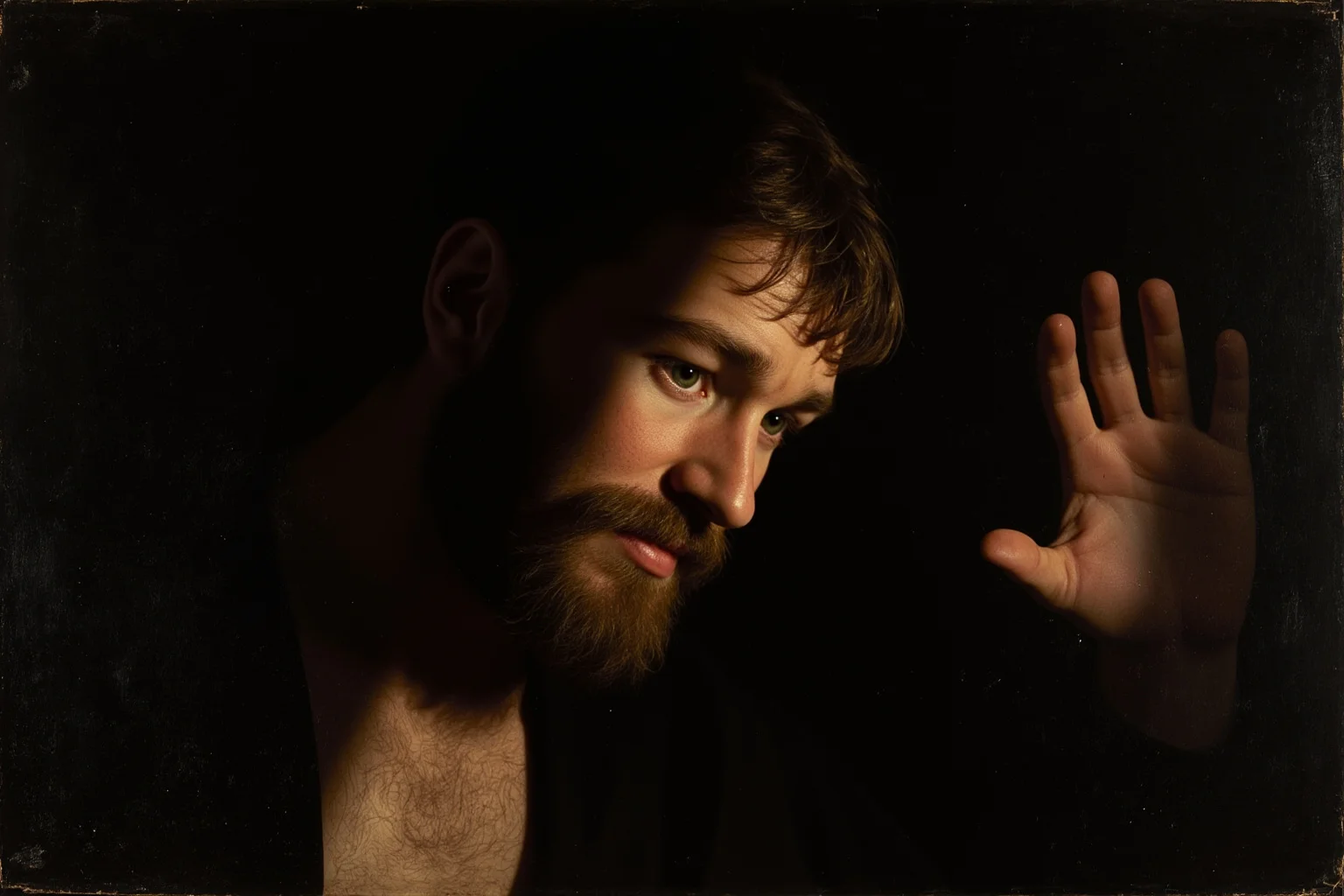
6. Saint John the Baptist
Believed to be among Leonardo’s final paintings, created roughly between 1513 and 1516, this work shows John the Baptist emerging from darkness with an enigmatic smile and a raised finger pointing upward. The heavy sfumato shadow work here is even more pronounced than in the Mona Lisa.
It’s held at the Louvre and often overlooked by visitors rushing toward its more famous neighbor, despite being a technically dazzling late-career piece.
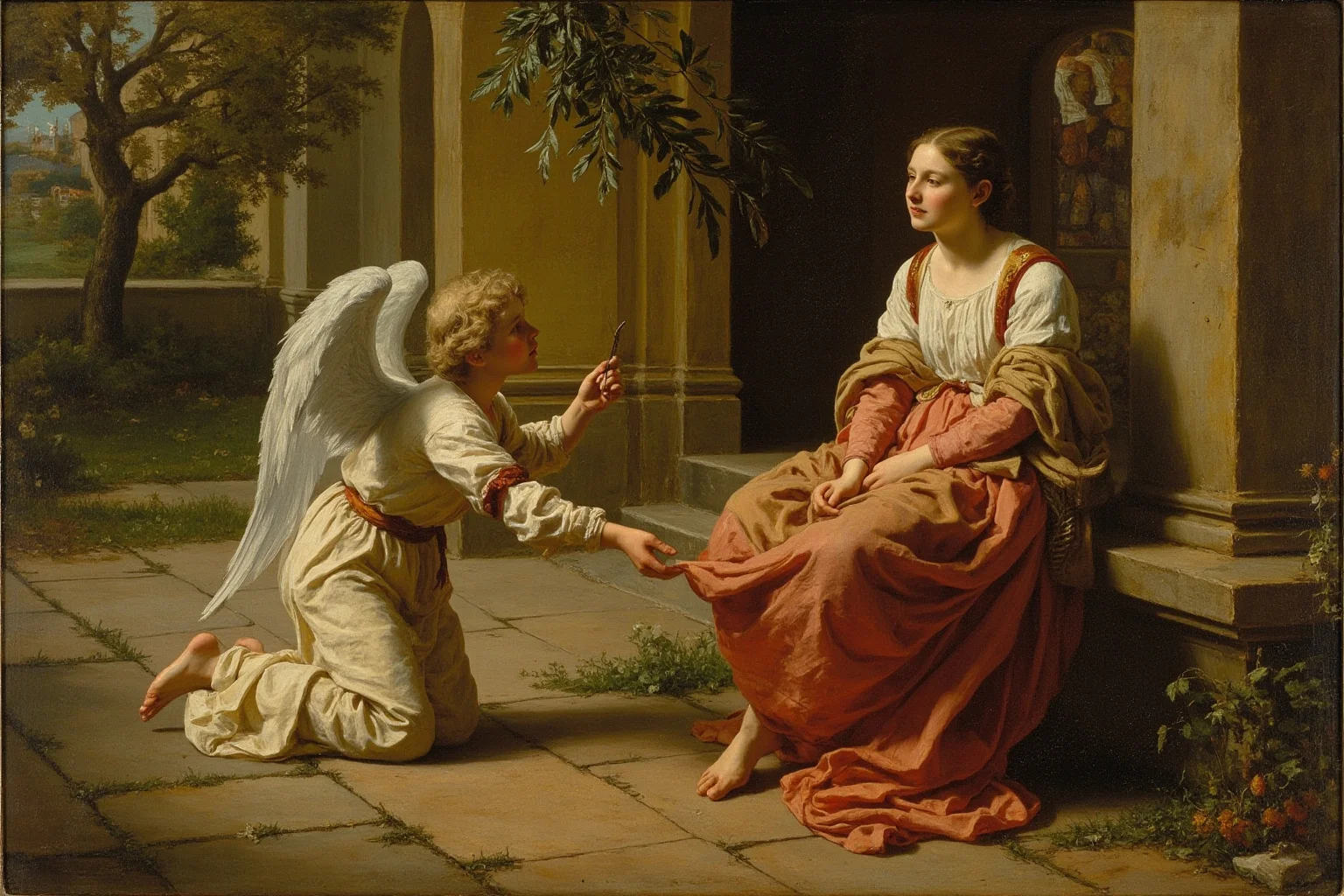
7. Annunciation
Dating from Leonardo’s early career, roughly 1472 to 1476, this painting depicts the angel Gabriel announcing to Mary that she will bear a son. It was likely produced while Leonardo was still associated with the workshop of his teacher, Andrea del Verrocchio.
It hangs today in the Uffizi Gallery in Florence and shows an artist still developing his mastery of perspective, though the botanical detail in the garden already hints at his lifelong scientific curiosity.
8. Salvator Mundi
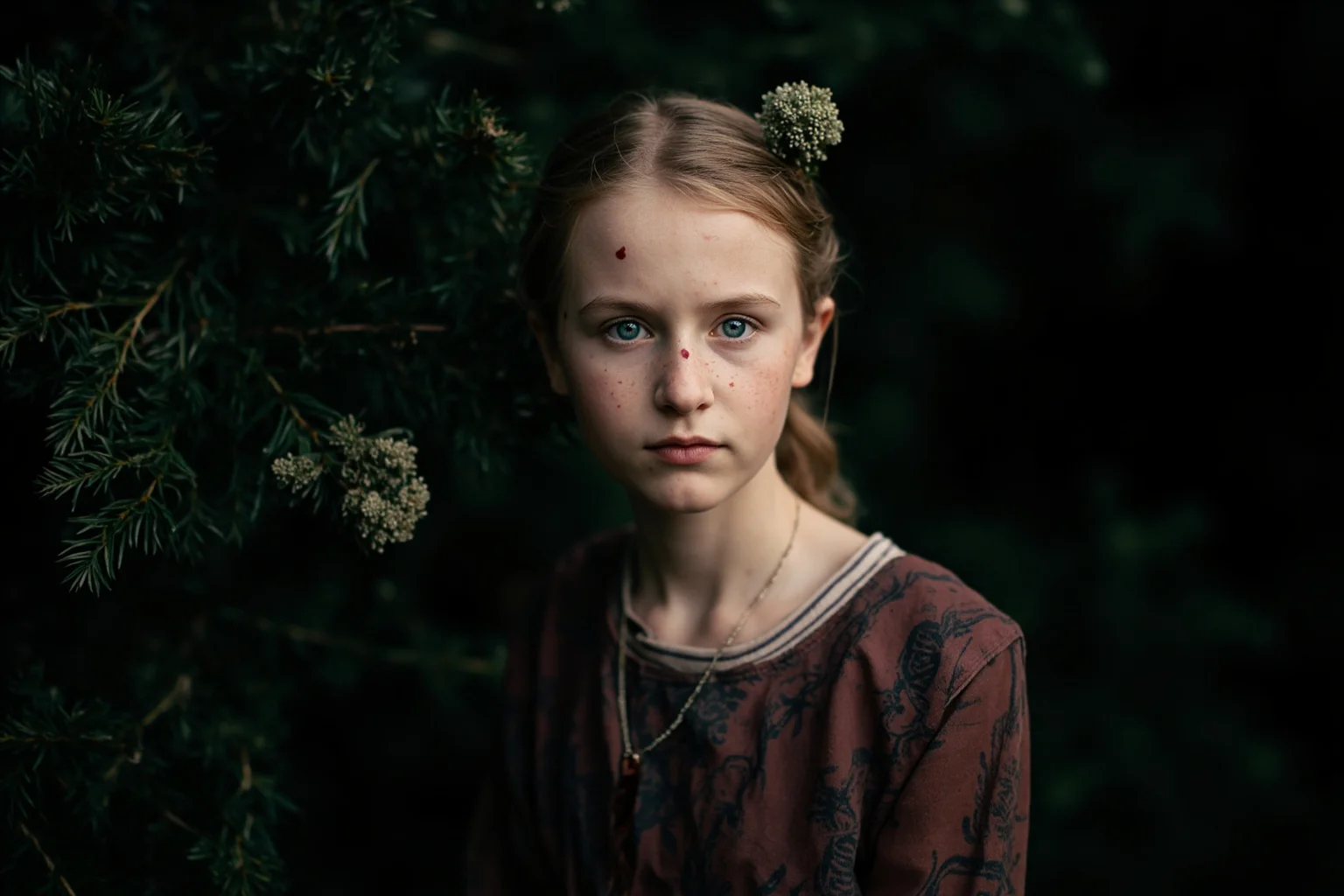
This depiction of Christ as “Savior of the World” became the most expensive painting ever sold at public auction when it fetched $450.3 million in 2017. Its attribution to Leonardo remains genuinely contested among scholars, with some accepting it as largely autograph and others arguing it was primarily produced by workshop assistants or later restorers.
Its current location has been publicly unclear since the sale, and the uncertainty surrounding both its authorship and whereabouts makes it one of the most debated works ever linked to Leonardo’s name.
9. Ginevra de’ Benci
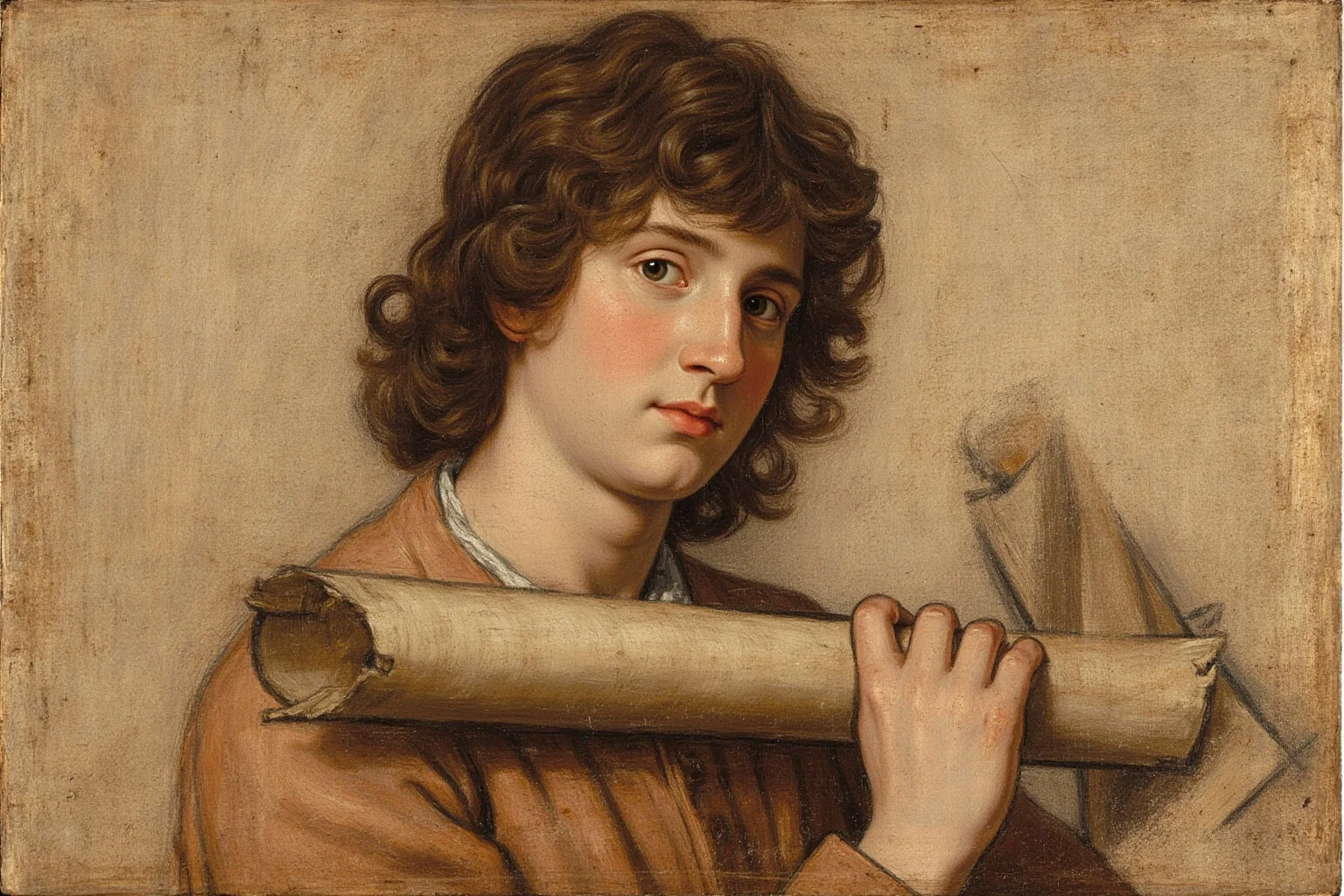
Painted around 1474 to 1478, this portrait of a young Florentine noblewoman is the only Leonardo painting on public display in the Americas, housed at the National Gallery of Art in Washington, D.C. The juniper bush behind her head is a visual pun on her name, since “ginepro” means juniper in Italian.
The panel was cut down at some point in its history, and the original bottom portion showing her hands is lost, known today only through preparatory sketches.
10. Baptism of Christ
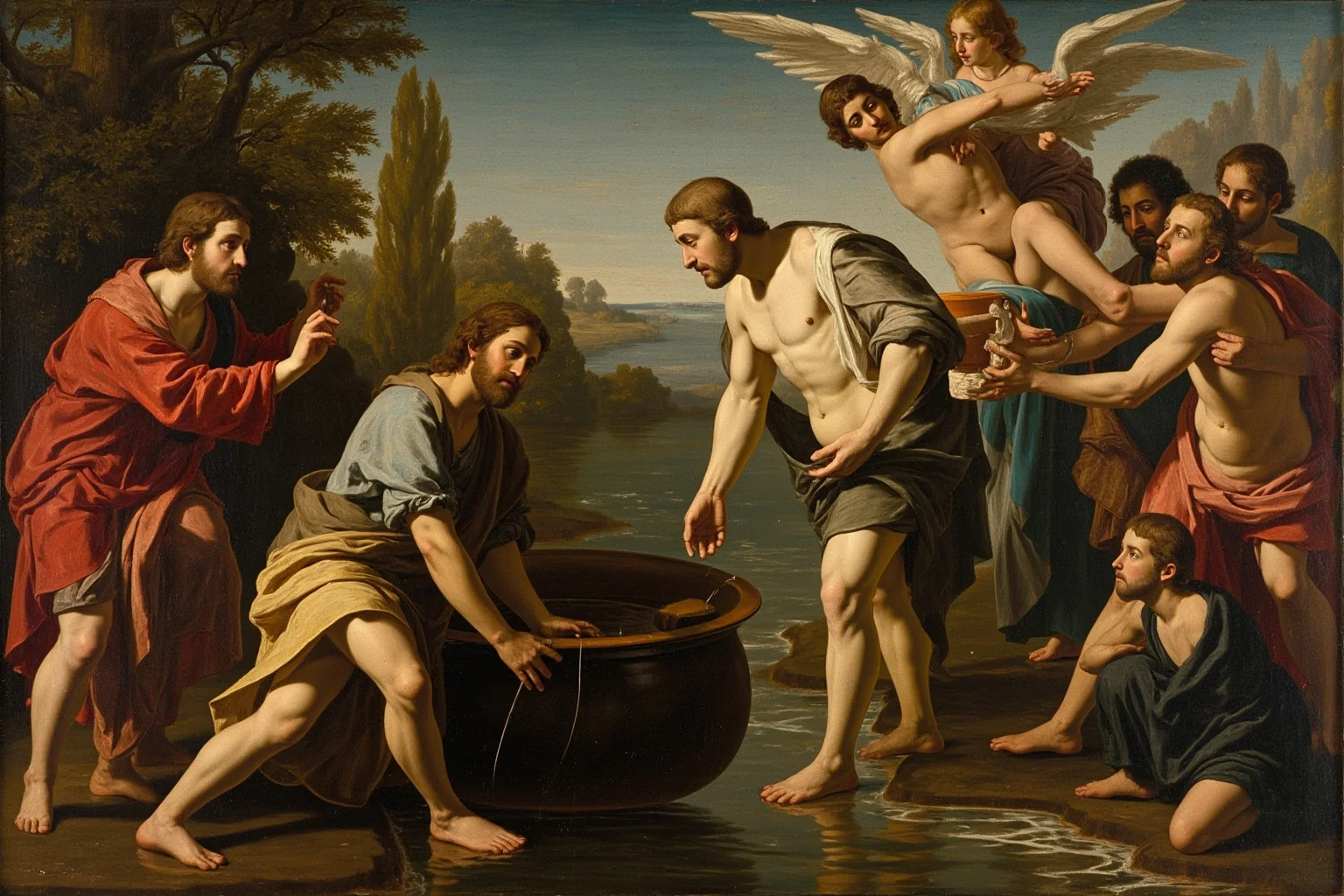
This painting was primarily created by Verrocchio’s workshop around 1475, but Leonardo is traditionally credited with painting one of the kneeling angels and parts of the landscape. According to a story recorded by the biographer Giorgio Vasari, Verrocchio was so struck by his pupil’s superior work that he gave up painting entirely — though, much like many famous quotes and legends that don’t hold up to scrutiny, many historians treat this anecdote with some skepticism rather than settled fact.
It’s held at the Uffizi Gallery and offers a rare chance to see Leonardo’s emerging style directly alongside his teacher’s more traditional technique.
Part 2: 10 Underrated Leonardo da Vinci Paintings Worth Knowing
If you searched for “not famous Leonardo da Vinci paintings” or wondered what else the artist produced beyond the household names, this section is for you. These works are less reproduced, sometimes disputed, and often unfinished, but they round out a much fuller picture of Leonardo’s career.
11. The Benois Madonna
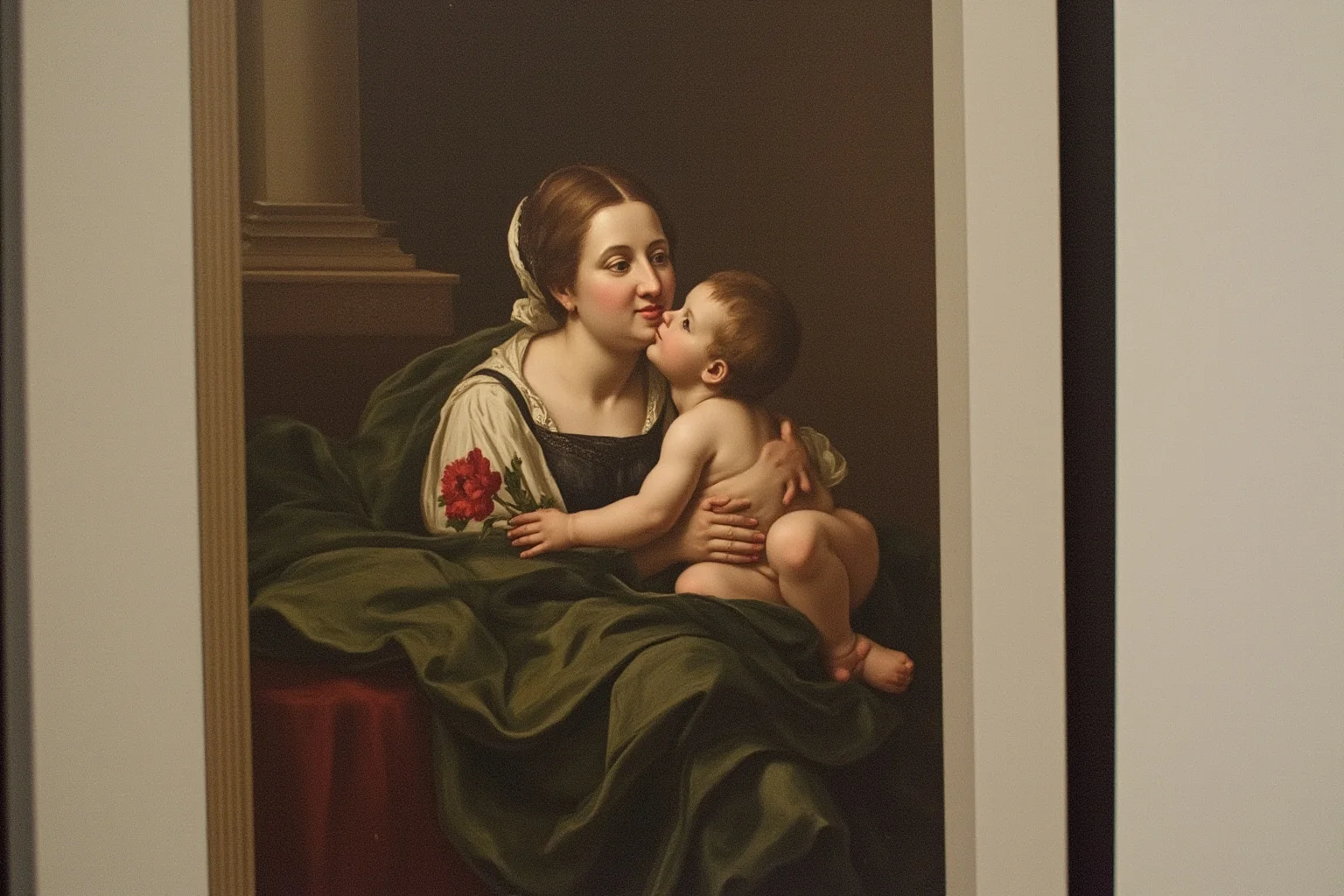
Painted around 1478 to 1480, this small panel shows the Virgin Mary playfully engaging with the infant Christ over a flower. It’s held at the Hermitage Museum in St. Petersburg and is considered one of Leonardo’s earliest independent Madonna compositions.
Its modern name comes from the Benois family, who once owned it privately before it entered the museum’s collection in the early twentieth century.
12. Madonna of the Carnation
This early work, dated to roughly 1472 to 1478, depicts Mary holding a carnation while the infant Jesus reaches toward it. It hangs in Munich’s Alte Pinakothek, and its attribution to Leonardo alone, rather than to his workshop or teacher, has been debated by scholars for decades.
Despite the uncertainty, the painting’s detailed rendering of drapery and light shows techniques Leonardo would refine throughout his career.
13. Portrait of a Musician
This is the only male portrait widely attributed to Leonardo, painted around 1483 to 1487 and held at the Pinacoteca Ambrosiana in Milan. The sitter’s identity remains unconfirmed, though some historians have proposed Milanese composer Franchino Gaffurio as a candidate without firm proof.
The painting was left unfinished, particularly around the hands, which makes it a valuable window into Leonardo’s underdrawing and layering process.
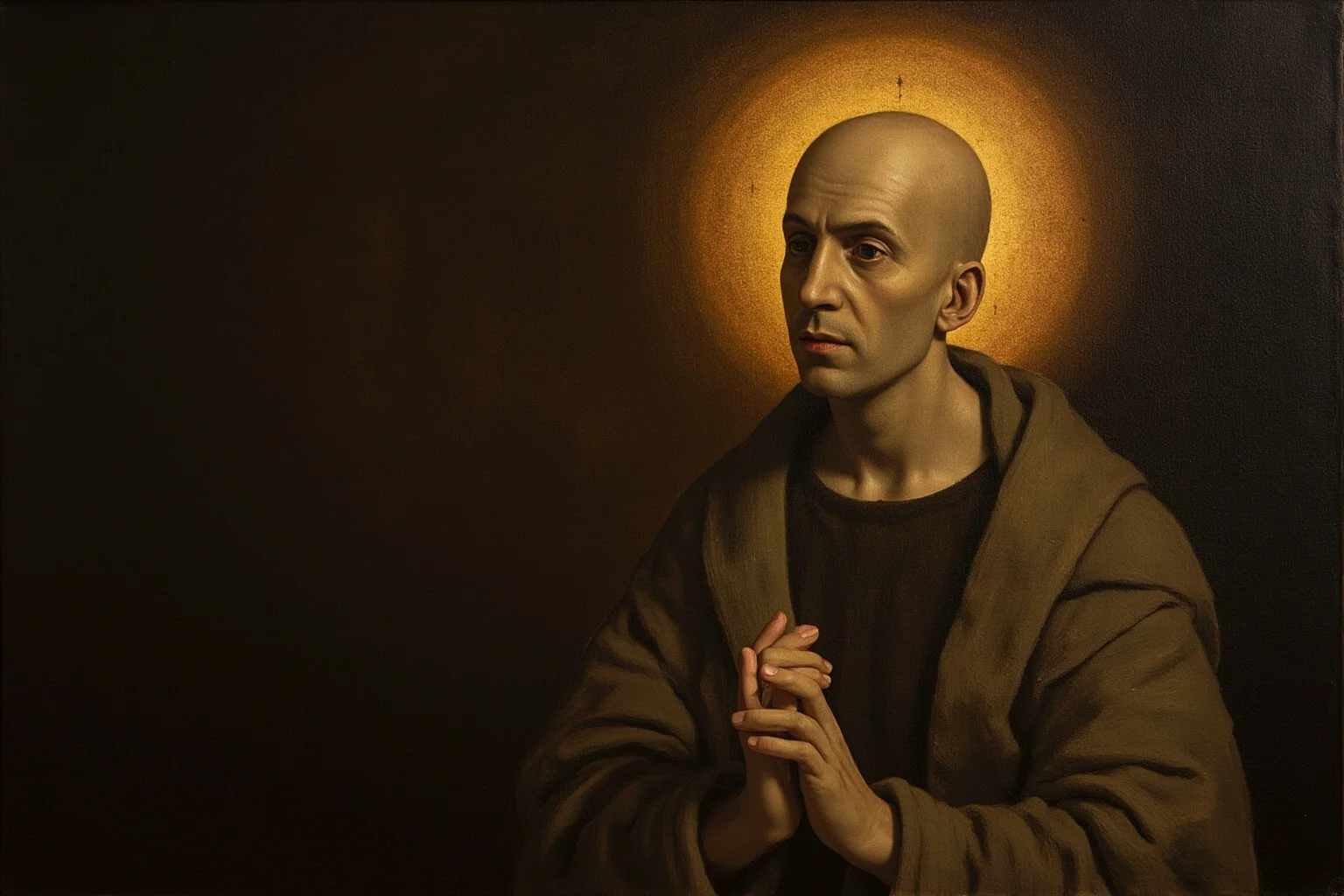
14. Saint Jerome in the Wilderness
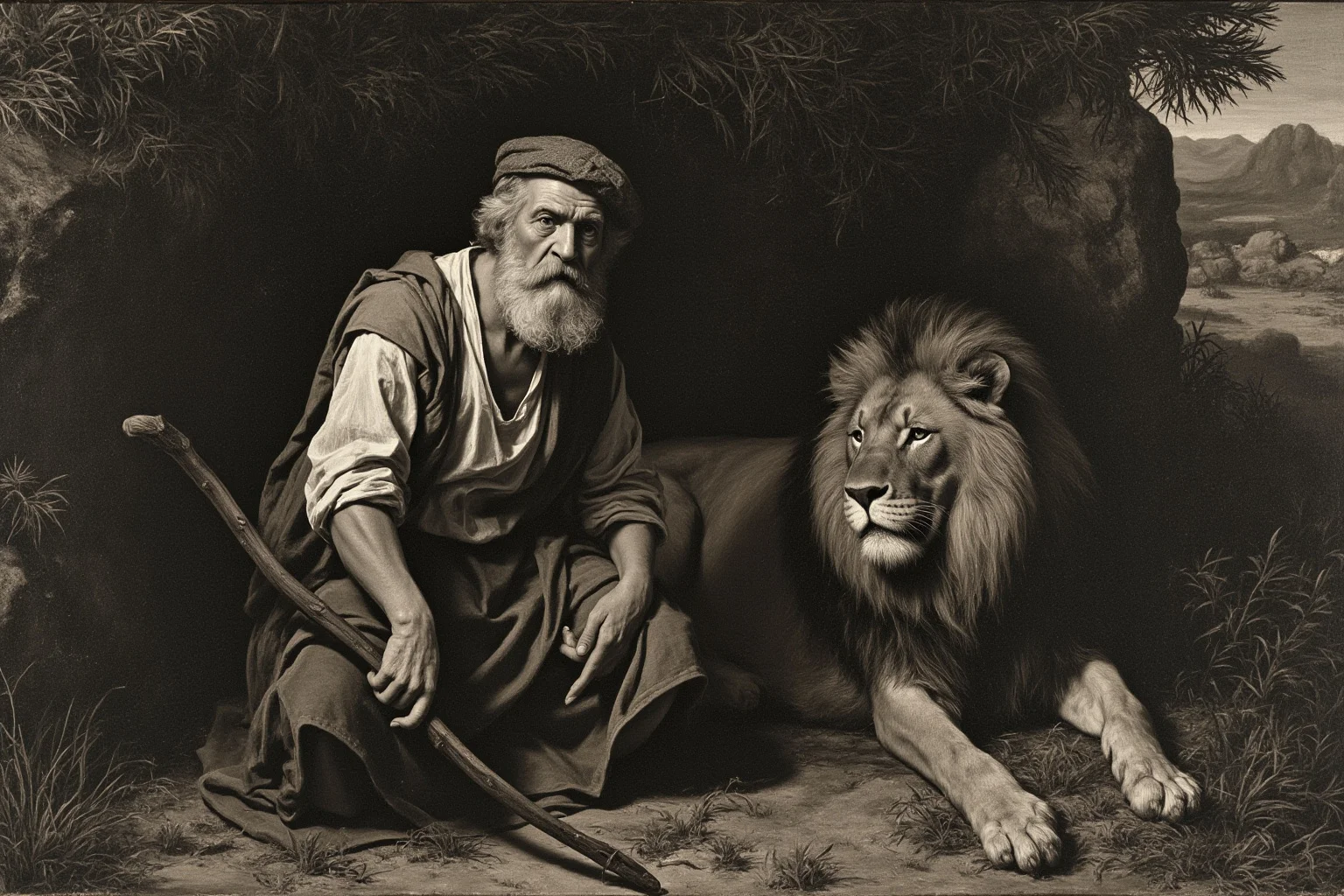
This unfinished panel, likely begun around 1480, shows the elderly saint kneeling in penitence with a lion at his side. Held in the Vatican Museums, it’s painted largely in monochrome underlayers, since Leonardo abandoned it before applying full color.
Its unfinished state actually makes it useful for studying Leonardo’s working method, since visible brush strokes and sketch lines are usually hidden beneath finished paint layers in his completed works.
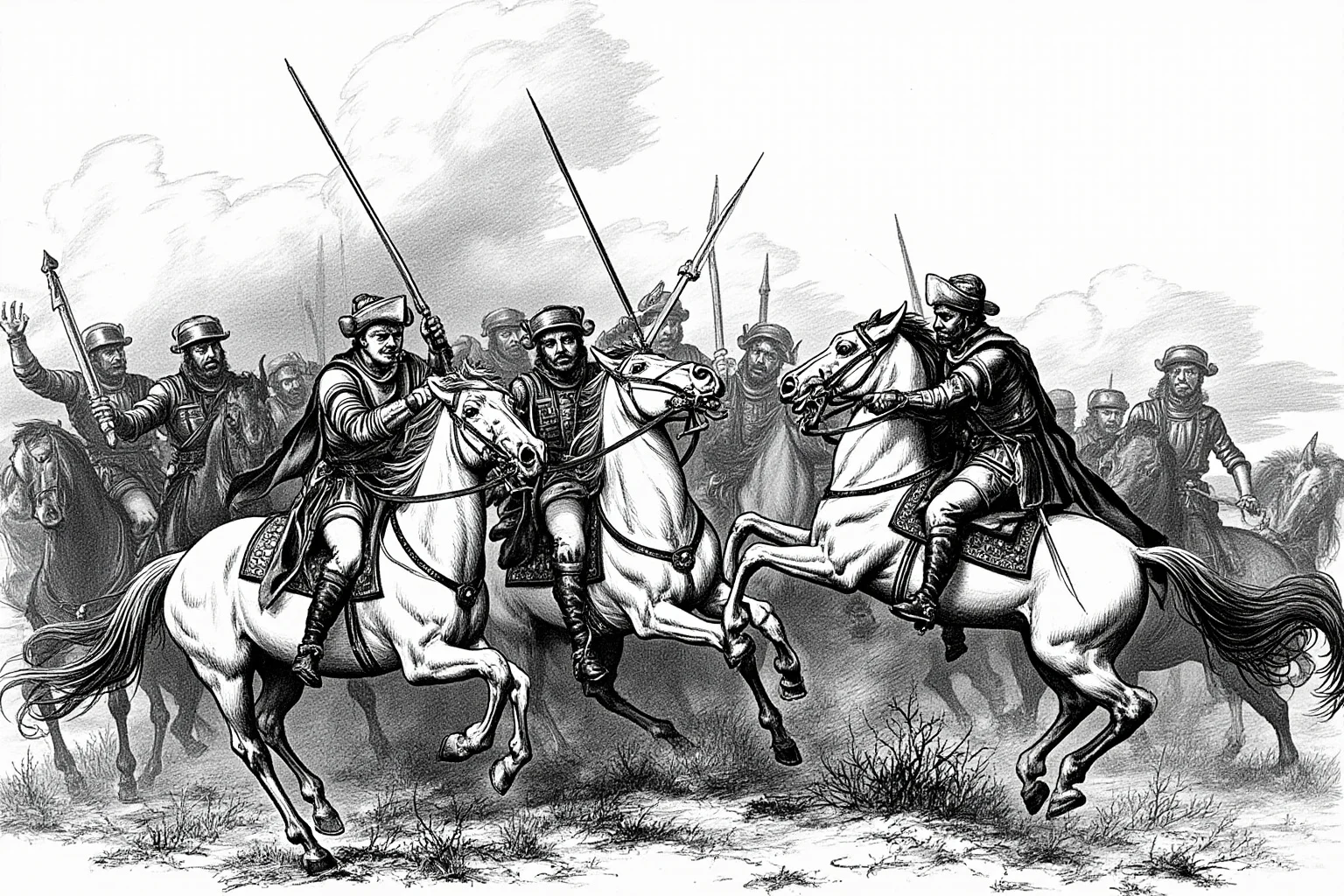
15. The Battle of Anghiari
Commissioned for the Palazzo Vecchio in Florence around 1503, this mural depicting a chaotic cavalry battle was never completed and no longer survives in its original form. Leonardo again experimented with an unstable technique, and the surface reportedly began deteriorating before he even finished it.
What we know of its composition comes largely from copies, most famously one made by Peter Paul Rubens decades later. Some researchers have speculated that fragments of the original might survive behind a later fresco by Giorgio Vasari, but this remains unproven and highly debated.
16. Adoration of the Magi
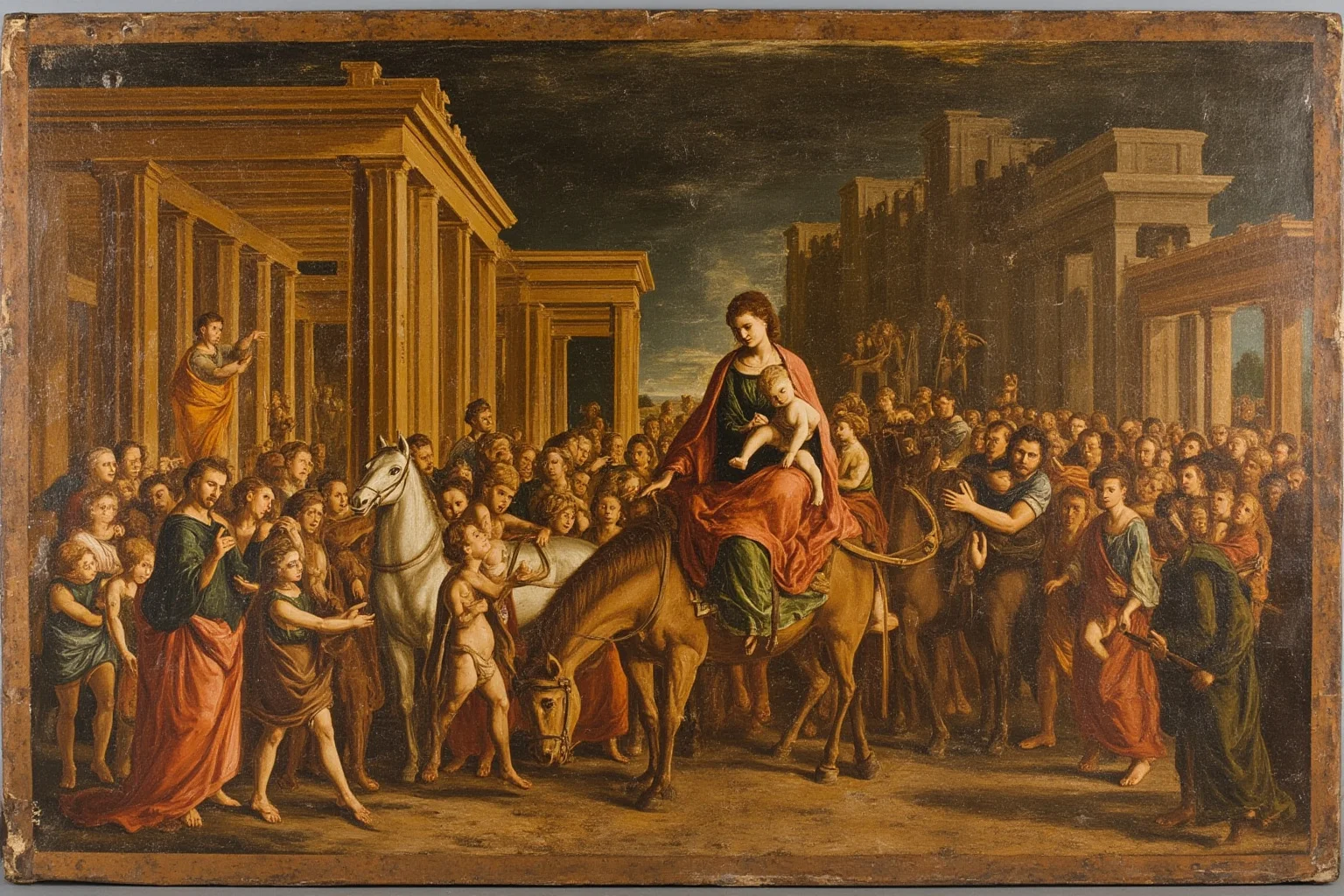
Commissioned by monks at San Donato a Scopeto near Florence around 1481, this large panel shows the Virgin and Child surrounded by a swirling crowd of onlookers, horses, and architectural ruins. Leonardo left it unfinished when he departed for Milan, and it remains in an underpainted, brownish state at the Uffizi Gallery.
Despite being incomplete, it’s considered a landmark for its ambitious, almost chaotic composition, which was unusual for religious paintings of the period.
17. La Bella Principessa
This chalk-and-ink portrait on vellum, possibly depicting Bianca Sforza, is one of the more contested additions to Leonardo’s catalog. Some scholars, including art historian Martin Kemp, have argued strongly for Leonardo’s authorship, while others remain unconvinced, citing its uncertain ownership history before the twenty-first century.
Its story is a useful reminder that attribution debates around Leonardo’s work are ongoing, not settled relics of the past.
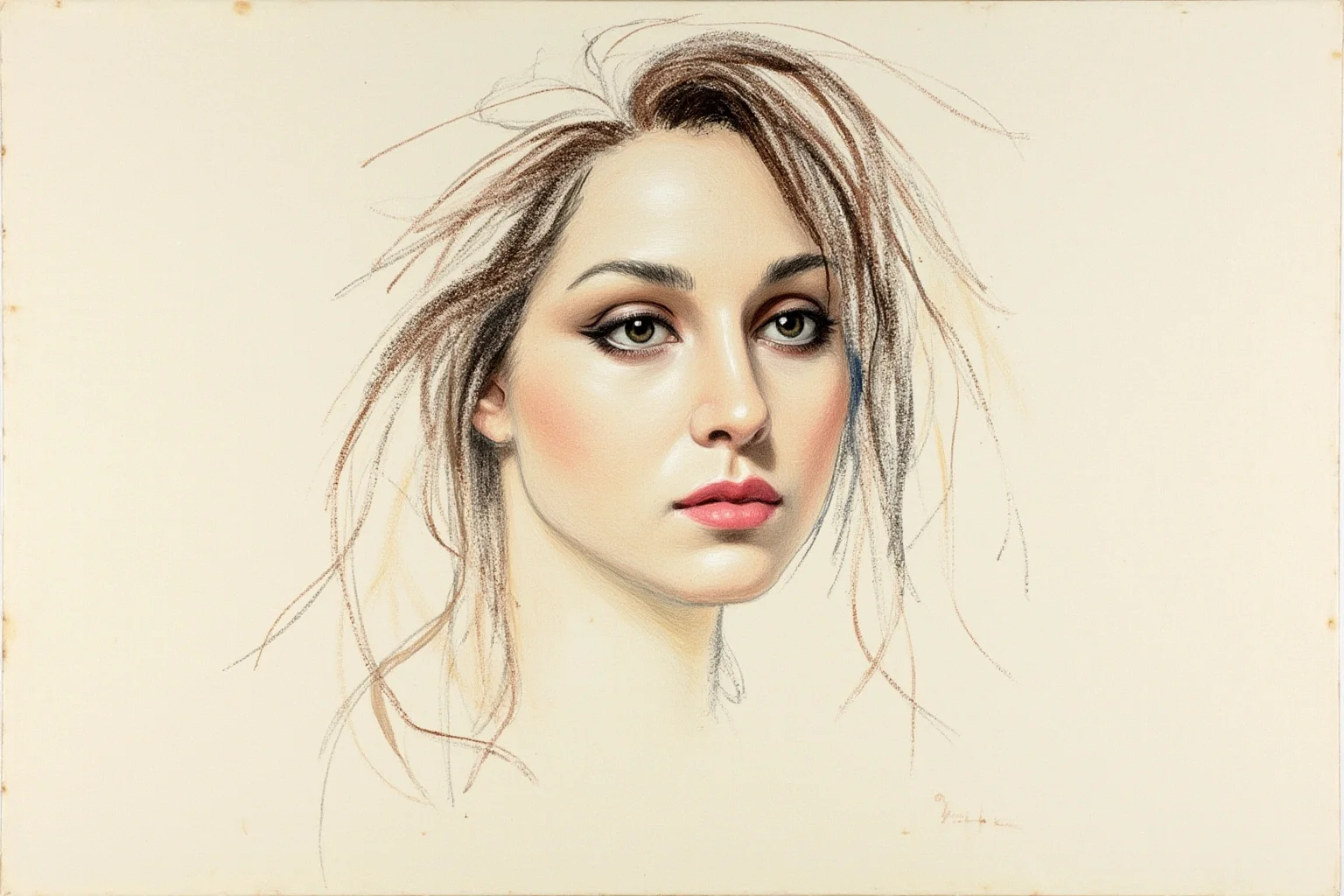
18. Head of a Woman (La Scapigliata)
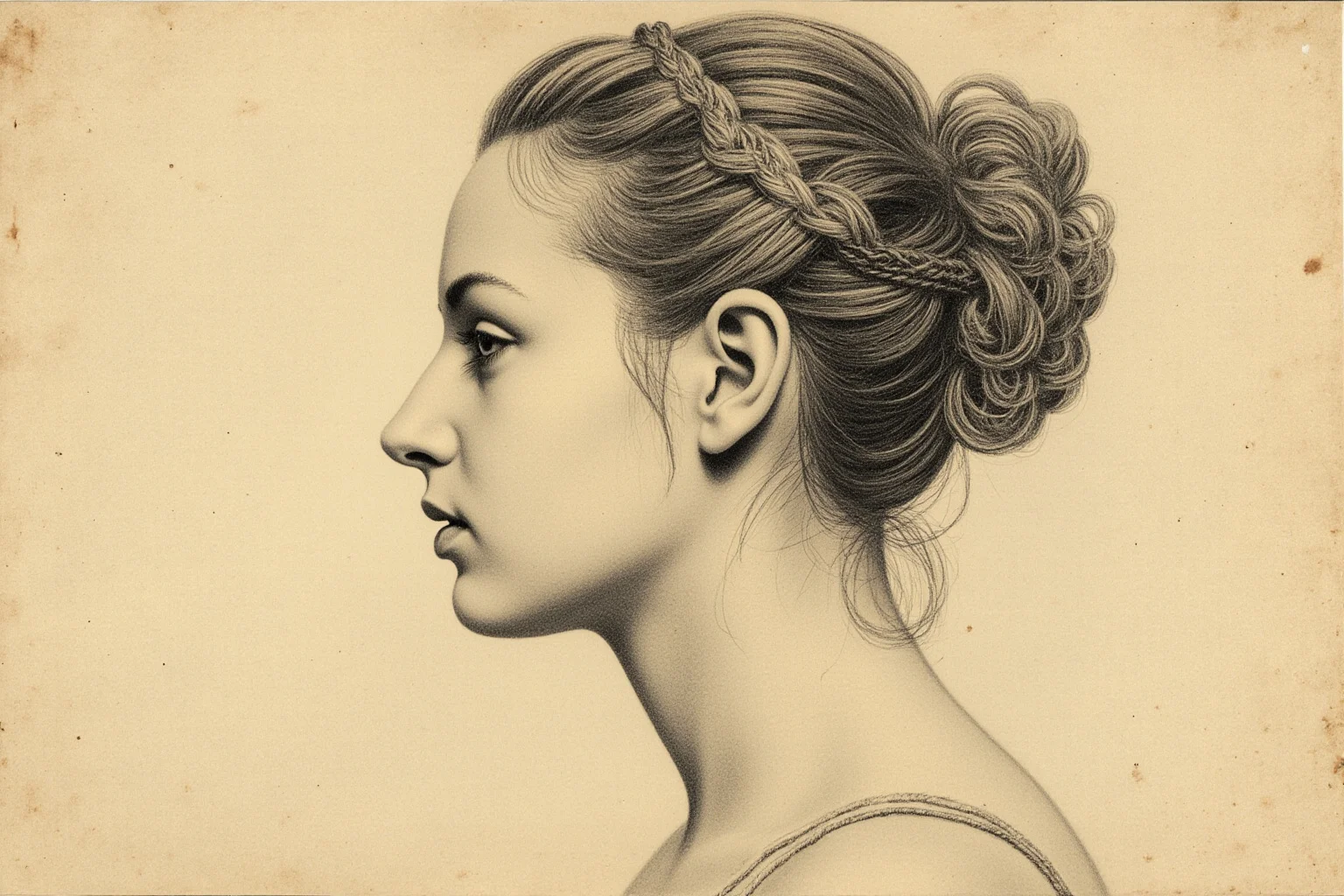
Dated to roughly 1500 to 1510, this small oil-and-umber sketch on panel shows a woman’s face and tousled hair rendered with soft, unfinished brushwork. It’s held at the Galleria Nazionale in Parma, Italy, and its title translates roughly to “the disheveled one.”
Its loose, sketch-like quality offers a striking contrast to the polished finish of the Mona Lisa, showing a more experimental side of Leonardo’s process.
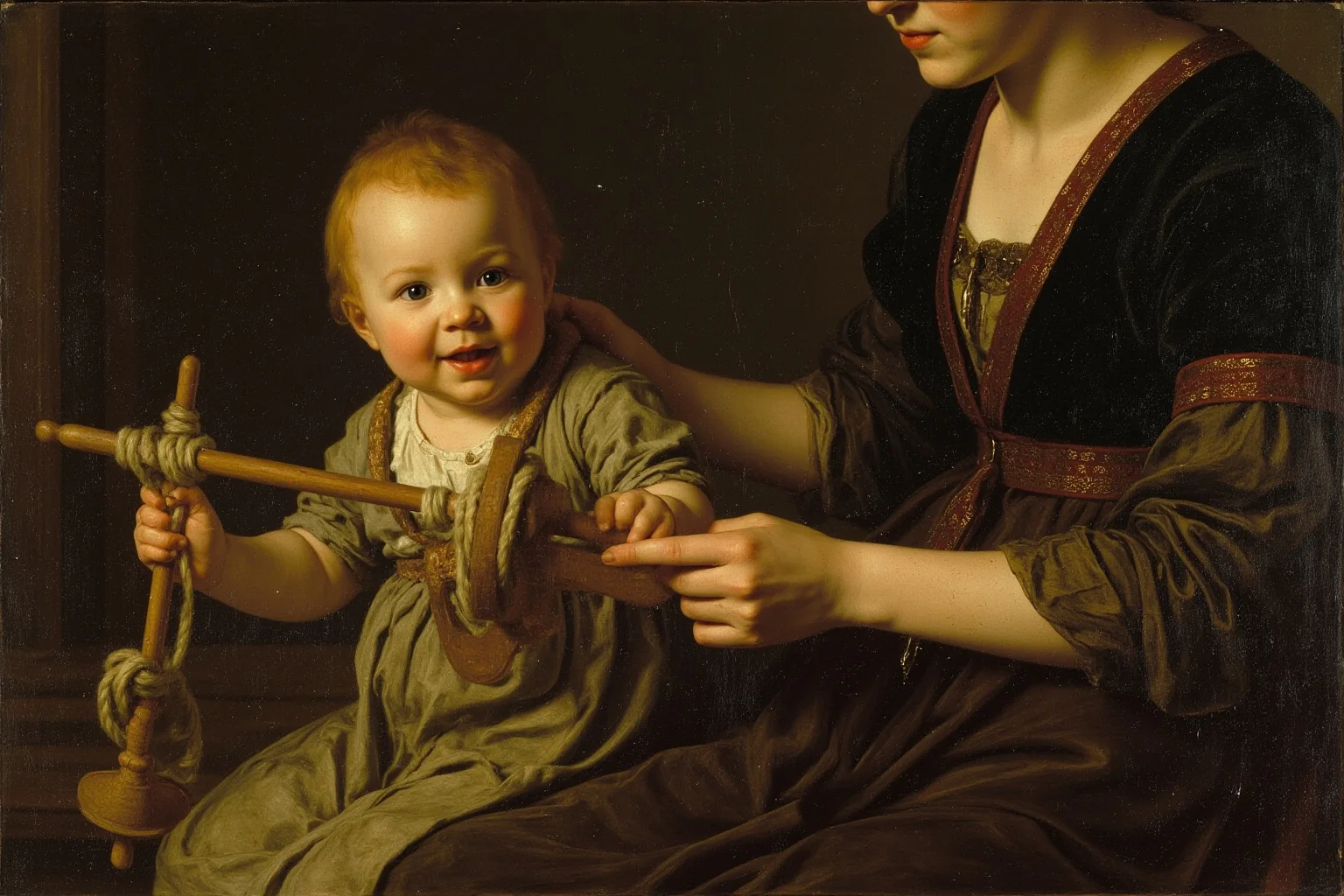
19. Madonna of the Yarnwinder
Leonardo and his workshop produced multiple versions of this composition around 1501, showing the infant Christ playing with a yarnwinder shaped like a cross. One version, once housed at Drumlanrig Castle in Scotland, was famously stolen in 2003 and recovered in a Glasgow law office in 2007 after an undercover police operation.
The theft and recovery added a real, well-documented layer of intrigue to a painting that already sparked debate over how much of it Leonardo painted personally versus his assistants.
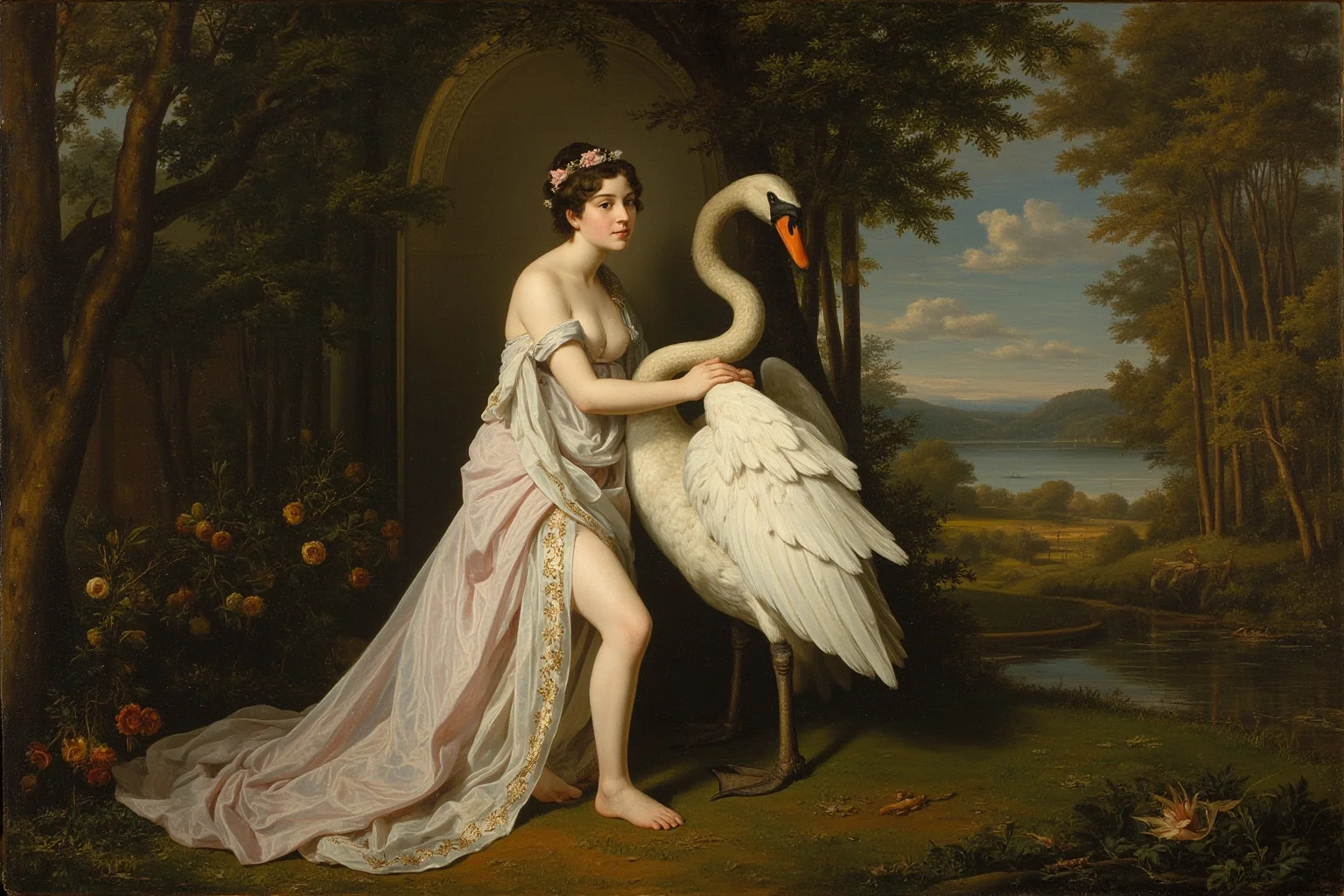
20. Leda and the Swan
Leonardo’s original painting of this mythological subject, showing Leda with the god Jupiter disguised as a swan, is lost entirely. What survives are preparatory drawings and several painted copies produced by other artists who had access to the original before it disappeared.
Its loss is a reminder that our understanding of Leonardo’s most famous works is incomplete, built on documentation, copies, and fragments as much as on surviving originals.
Why So Few of Leonardo’s Paintings Survive
Leonardo was notorious even in his own lifetime for abandoning projects, and contemporary accounts describe patrons growing frustrated waiting for commissions that never arrived. He was constantly pulled toward anatomy studies, engineering sketches, and scientific observation, the kind of restless mind that regularly lands him on lists of historical geniuses with the highest estimated IQs, treating painting as just one of many intellectual pursuits rather than a singular focus.
His habit of experimenting with unstable materials and techniques, seen in both The Last Supper and The Battle of Anghiari, also means some works actively deteriorated or vanished within his own century. Combine that with normal losses from fire, theft, and the passage of five centuries, and it’s easy to see why his surviving catalog is so small compared to contemporaries like Titian or Raphael, who worked faster and more prolifically.
Final Thoughts on Leonardo’s Legacy in Paint
Leonardo da Vinci’s most famous paintings earned their reputation honestly, through genuine technical innovation and centuries of cultural momentum. But the underrated works on this list show a fuller, messier picture of an artist who left things unfinished, experimented recklessly, and produced masterpieces almost as a side effect of a much broader curiosity.
Next time you see the Mona Lisa reproduced on a mug or tote bag, it’s worth remembering that she’s just one piece of a much stranger, more fragmented body of work. The lesser-known paintings on this list are proof that Leonardo’s genius wasn’t confined to a single, famous smile.
Frequently Asked Questions
What is Leonardo da Vinci’s most famous painting?
The Mona Lisa, housed at the Louvre in Paris, is widely considered Leonardo da Vinci's most famous painting. Its fame grew significantly after a high-profile 1911 theft, though its technical innovations, particularly Leonardo's sfumato technique, had already made it celebrated among art historians before that.
What are Leonardo da Vinci’s famous paintings?
Leonardo da Vinci's famous paintings include the Mona Lisa, The Last Supper, The Virgin of the Rocks, Lady with an Ermine, Saint John the Baptist, Ginevra de' Benci, and the disputed Salvator Mundi. He also produced the celebrated drawing Vitruvian Man, which is often grouped with his famous works even though it isn't a painting.
How many paintings did Leonardo da Vinci actually complete?
Scholars generally attribute somewhere between 15 and 20 surviving paintings to Leonardo, and several of those are disputed or only partially his own work. He was known for abandoning commissions, which is why his surviving catalog is small compared to more prolific Renaissance contemporaries.
What are some underrated or lesser-known Leonardo da Vinci paintings?
Lesser-known works include the Benois Madonna, Portrait of a Musician, Saint Jerome in the Wilderness, Head of a Woman (La Scapigliata), and the disputed La Bella Principessa. Several other works, like The Battle of Anghiari and the original Leda and the Swan, no longer survive and are known only through copies and preparatory drawings.
Why are some Leonardo da Vinci paintings disputed or unattributed?
Leonardo often worked alongside teachers, workshop assistants, and collaborators, which makes it difficult to determine how much of a given painting he personally completed. Works like Salvator Mundi, La Bella Principessa, and Madonna of the Carnation remain subjects of ongoing scholarly debate rather than settled attribution.
Is the Salvator Mundi really by Leonardo da Vinci?
The attribution of Salvator Mundi remains genuinely contested among art historians. Some accept it as substantially Leonardo's own work, while others argue it was largely produced by workshop assistants or altered significantly by later restoration, so it should not be treated as a confirmed Leonardo original.

Alex Warren
Related Articles





