

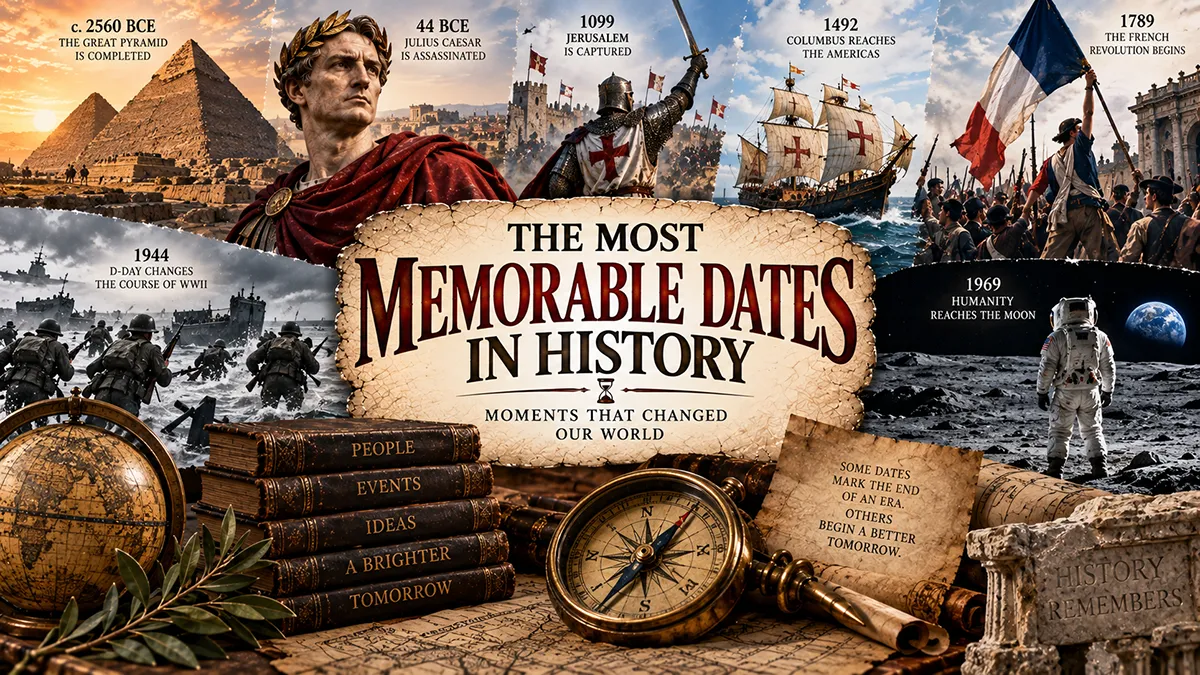
Some days on the calendar are just days. Others split time into a clean “before” and “after,” reshaping borders, beliefs, and the everyday lives of people who had no idea history was happening around them.
Whether you’re a trivia lover, a student cramming for an exam, or just someone who enjoys checking what happened on this day in history, certain dates keep showing up again and again because they genuinely changed the world.
This guide rounds up 25 of the most famous dates in history, arranged in chronological order, along with the context you need to understand why each one still matters.
We’ll also cover how “day in history” features work, how to build your own list of dates to remember, and how historians decide which historical dates in world history actually deserve the spotlight.
TL;DR: From Caesar’s assassination to the 9/11 attacks, these 25 dates mark the turning points that historians and everyday people alike consider the most memorable events in world history.
What Makes a Date “Memorable” in History?
Not every historic date gets remembered for the same reason. Some are memorable because they triggered immediate, visible change, like a war starting or ending. Others are remembered because their consequences unfolded slowly, quietly reshaping politics, technology, or human rights over decades.
Historians generally look for a few things when deciding whether a date belongs on a list of major historical dates: did it alter the course of a nation, did it change how people lived, and did it leave evidence that later generations could verify.
That last point matters. Part of writing honestly about famous dates is admitting when popular memory has exaggerated or oversimplified what actually happened, and we’ll flag a few of those moments below.
It’s also worth noting that “memorable” doesn’t always mean “universally celebrated.” Many of the most iconic dates in this list are remembered because they represent tragedy, upheaval, or loss just as often as triumph. That’s part of what makes them worth studying rather than just memorizing.
How “This Day in History” Actually Works
If you’ve ever searched for what happened on this day in history, you’ve probably noticed the sheer volume of events tied to a single calendar date. That’s because history has been unfolding for thousands of years across every corner of the globe, and any given day of the year has hosted birthdays, battles, treaties, and disasters many times over.
When people ask what is this day known for, they’re usually looking for the single most significant event tied to that date, even though dozens of smaller ones also occurred. Sites and almanacs that track significant events on this day typically rank them by global impact, which is also the approach we’ve used for this list.
If you’re curious what is significant about today in history on any specific date, cross-referencing a couple of reputable sources is always smarter than trusting a single viral post.
The 25 Most Memorable Dates in History
Here are 25 of the most widely cited, well-documented dates in world history, moving chronologically from ancient Rome to the 21st century. Together they cover political revolutions, wars, scientific breakthroughs, and civil rights milestones.
1. March 15, 44 BC – The Assassination of Julius Caesar
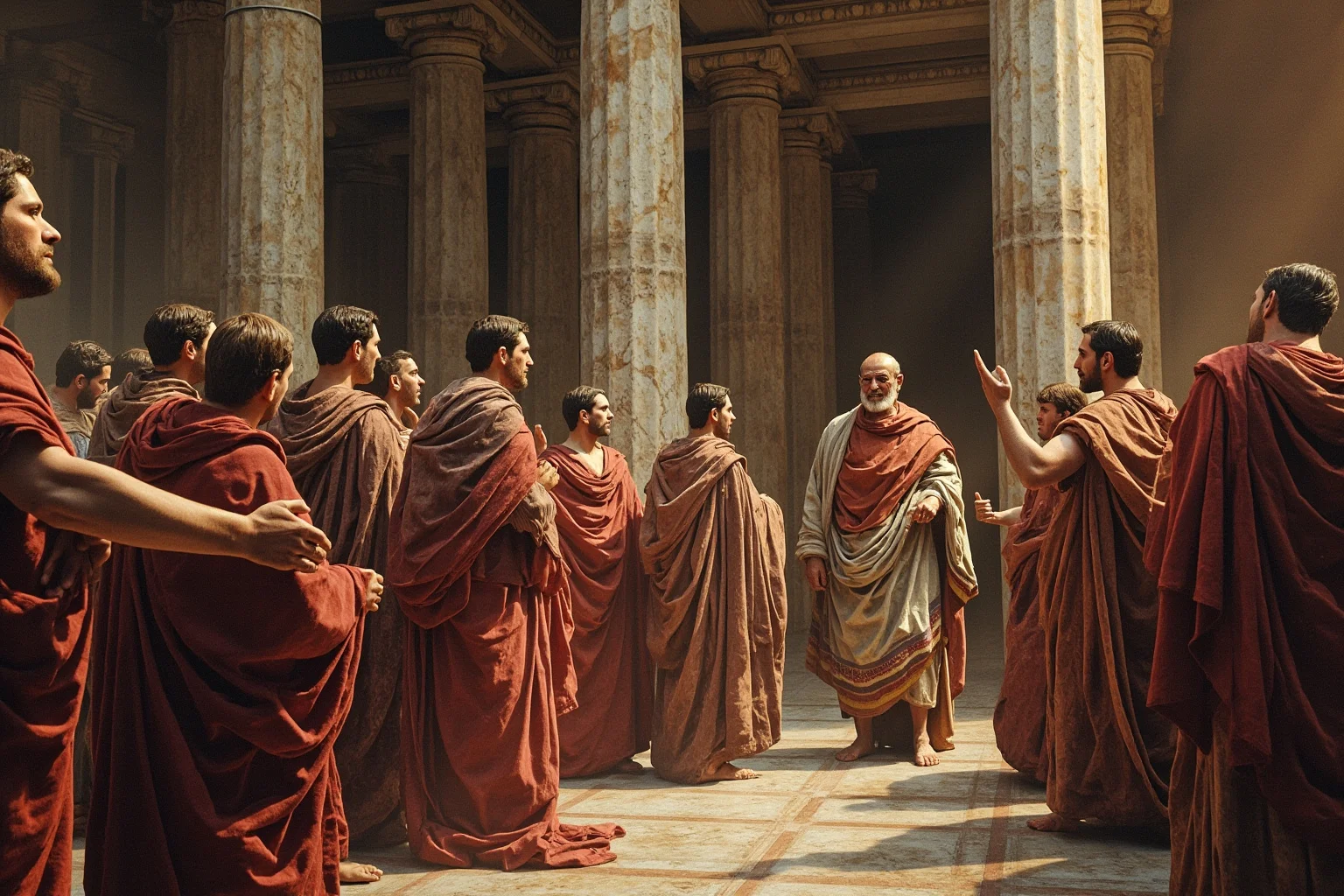
On the Ides of March, a group of Roman senators, including Brutus and Cassius, stabbed Julius Caesar to death in the Theatre of Pompey. They believed they were saving the Roman Republic from one-man rule.
Instead, Caesar’s death triggered years of civil war that ended with the Republic collapsing entirely, replaced by the Roman Empire under his adopted heir, Augustus. It’s a classic example of a historic date whose intended outcome backfired completely.
2. 476 AD – The Fall of the Western Roman Empire
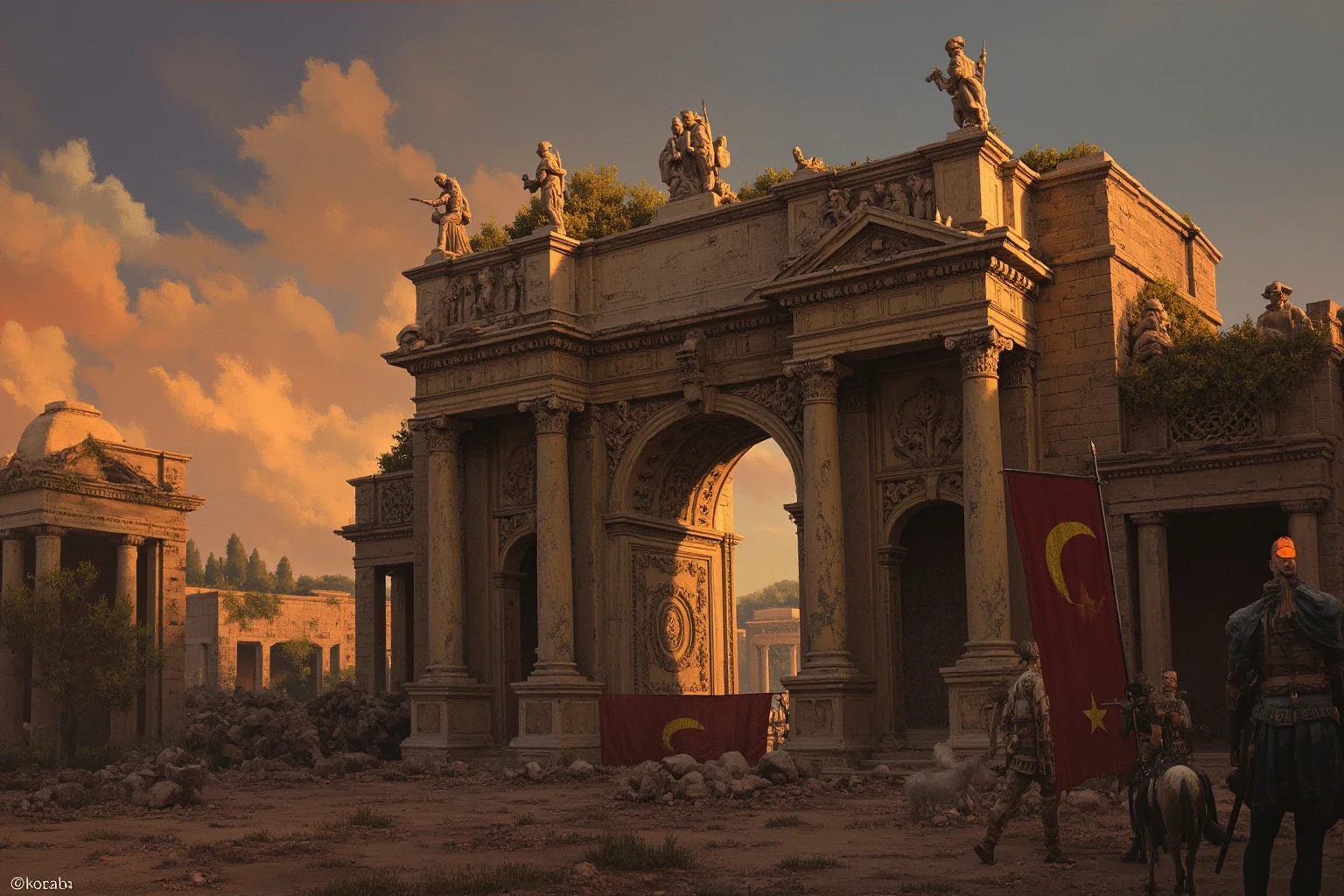
Historians traditionally mark 476 AD as the end of the Western Roman Empire, when the Germanic leader Odoacer deposed the last emperor, Romulus Augustulus. The Eastern half, later known as the Byzantine Empire, continued for another thousand years.
This date is often used as the dividing line between ancient history and the medieval period. In reality, Rome’s decline was a gradual process spanning generations, not a single dramatic collapse.
3. December 25, 800 AD – Charlemagne Is Crowned Emperor
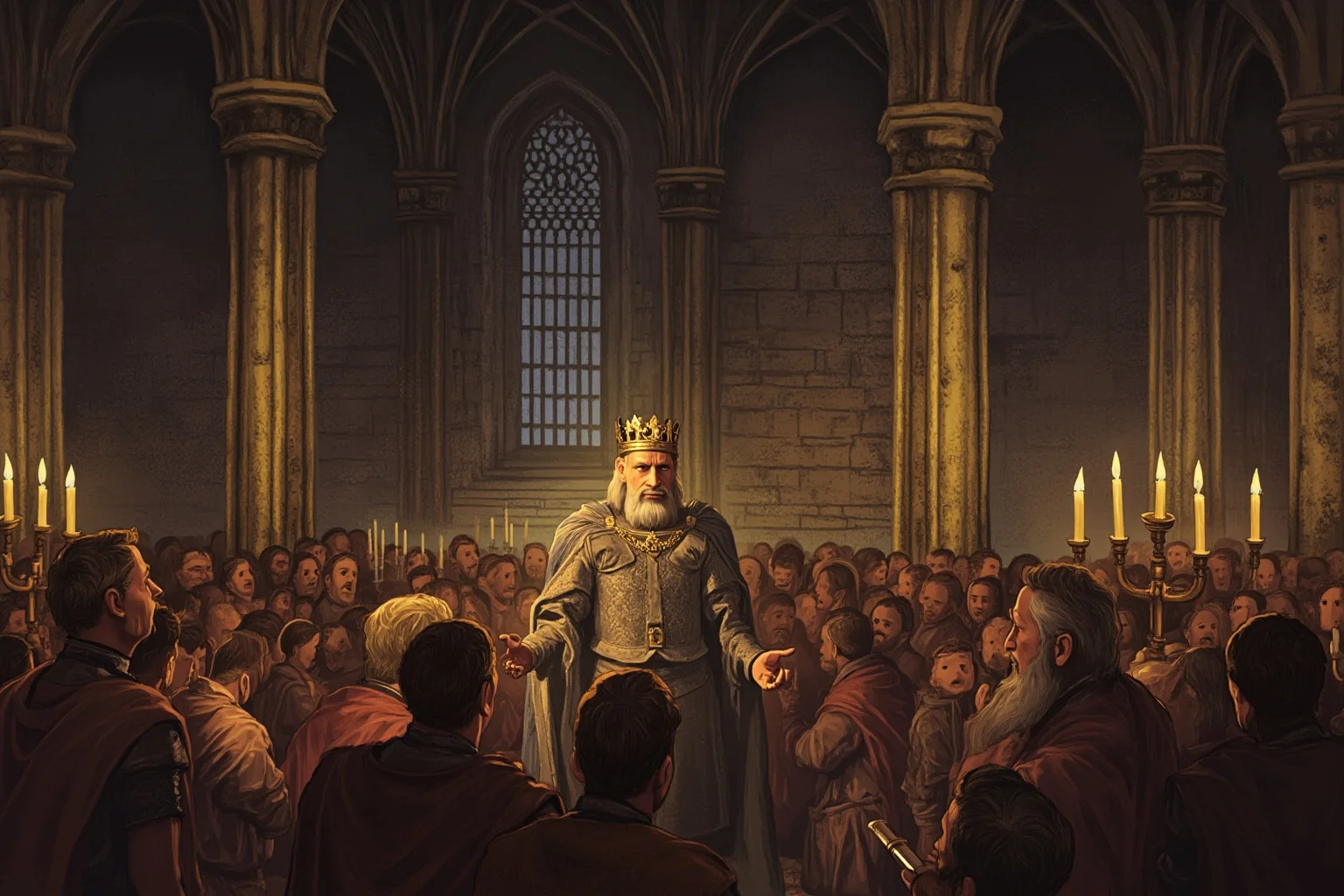
On Christmas Day in Rome, Pope Leo III crowned the Frankish king Charlemagne as Holy Roman Emperor. It was an attempt to revive the idea of a unified Christian empire in Western Europe after Rome’s fall.
The move reshaped European politics for centuries, establishing a precedent for church and monarchy intertwining that would echo through medieval history. It’s one of those years and events combinations students often memorize without realizing how much long-term influence it carried.
4. June 15, 1215 – The Sealing of the Magna Carta
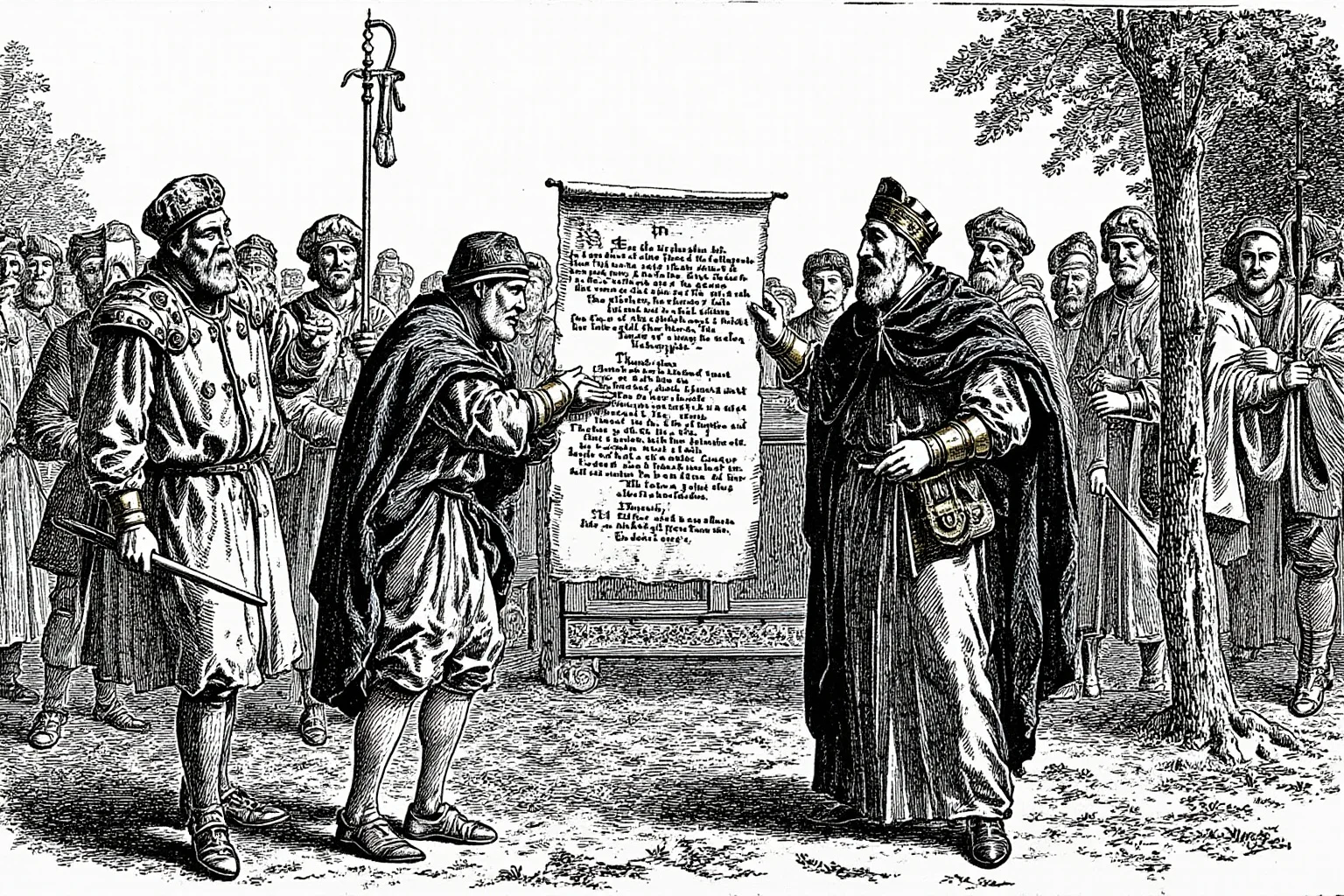
English barons forced King John to seal the Magna Carta at Runnymede, limiting royal power and establishing that even the king was subject to certain laws. Most of its specific clauses dealt with feudal disputes rather than sweeping personal freedoms.
Despite that narrower original purpose, the Magna Carta became a foundational symbol for constitutional law and due process in later centuries. Its legacy shows up in legal systems well beyond England, including influence on American constitutional thought.
5. May 29, 1453 – The Fall of Constantinople
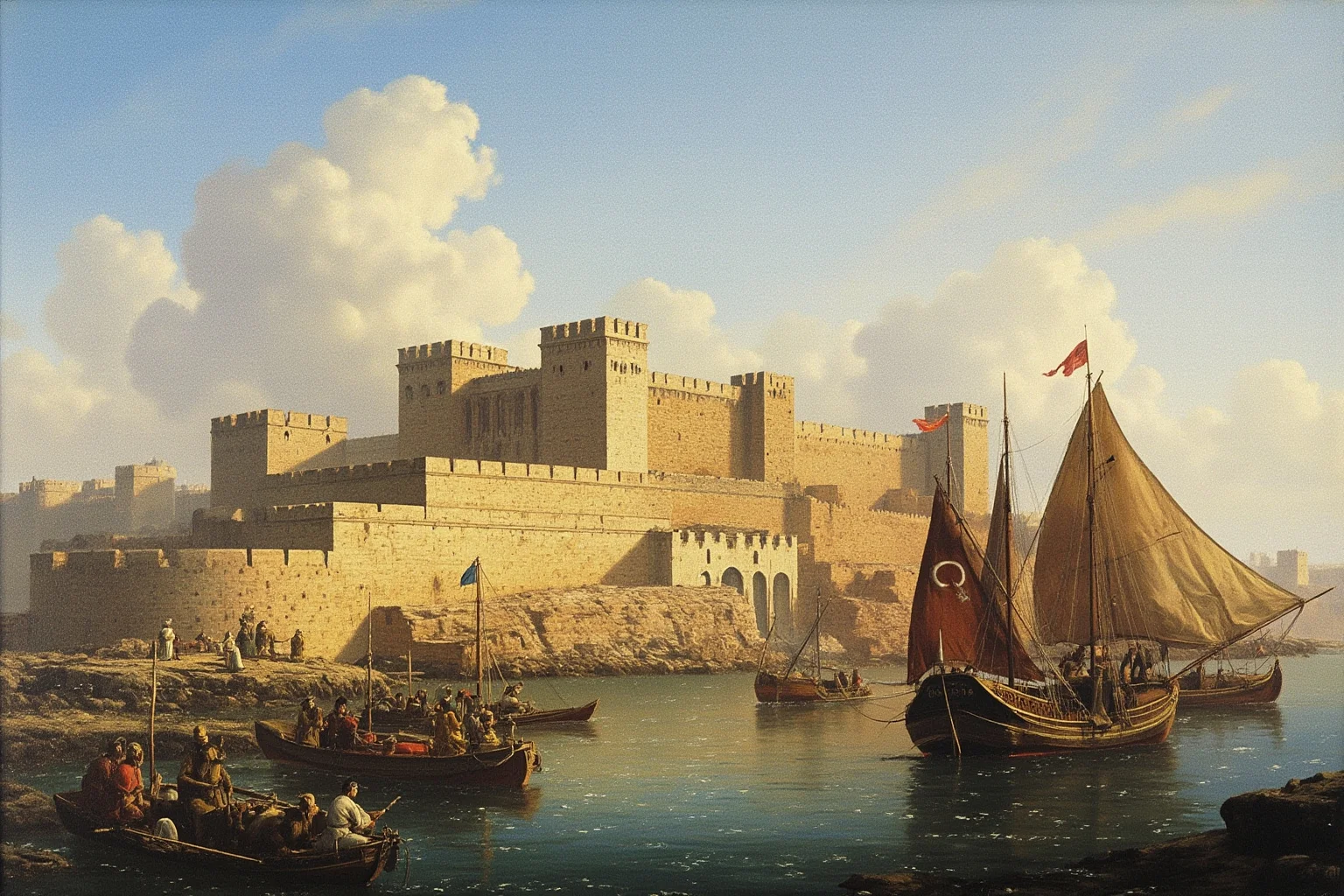
Ottoman forces under Sultan Mehmed II captured Constantinople, ending the Byzantine Empire after more than a thousand years. The city was renamed Istanbul and became the capital of the growing Ottoman Empire.
This date is frequently cited as the symbolic end of the Middle Ages in European history. It also disrupted overland trade routes to Asia, which is part of why European powers began looking for sea routes soon after.
6. October 12, 1492 – Columbus Reaches the Americas
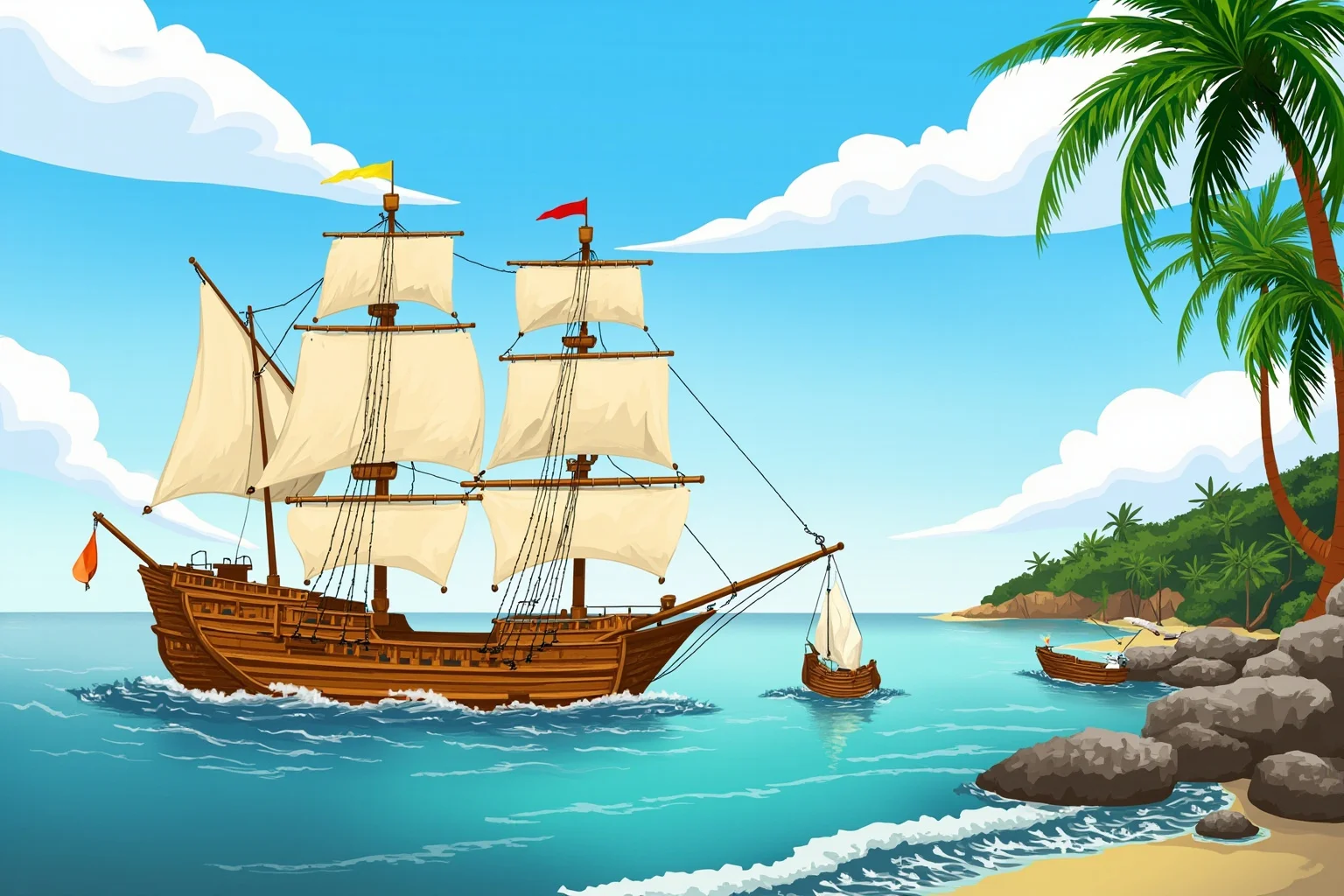
Christopher Columbus and his crew landed in the Bahamas, believing they had reached Asia. It’s important to be clear that Columbus did not “discover” America in any meaningful sense, since millions of Indigenous people already lived there and Norse explorers had reached North America centuries earlier.
What this date did trigger was sustained European contact with the Americas, setting off centuries of colonization, cultural exchange, and immense suffering for Indigenous populations. It remains one of the most debated dates in history precisely because its legacy is so complicated.
7. October 31, 1517 – Martin Luther’s Ninety-Five Theses
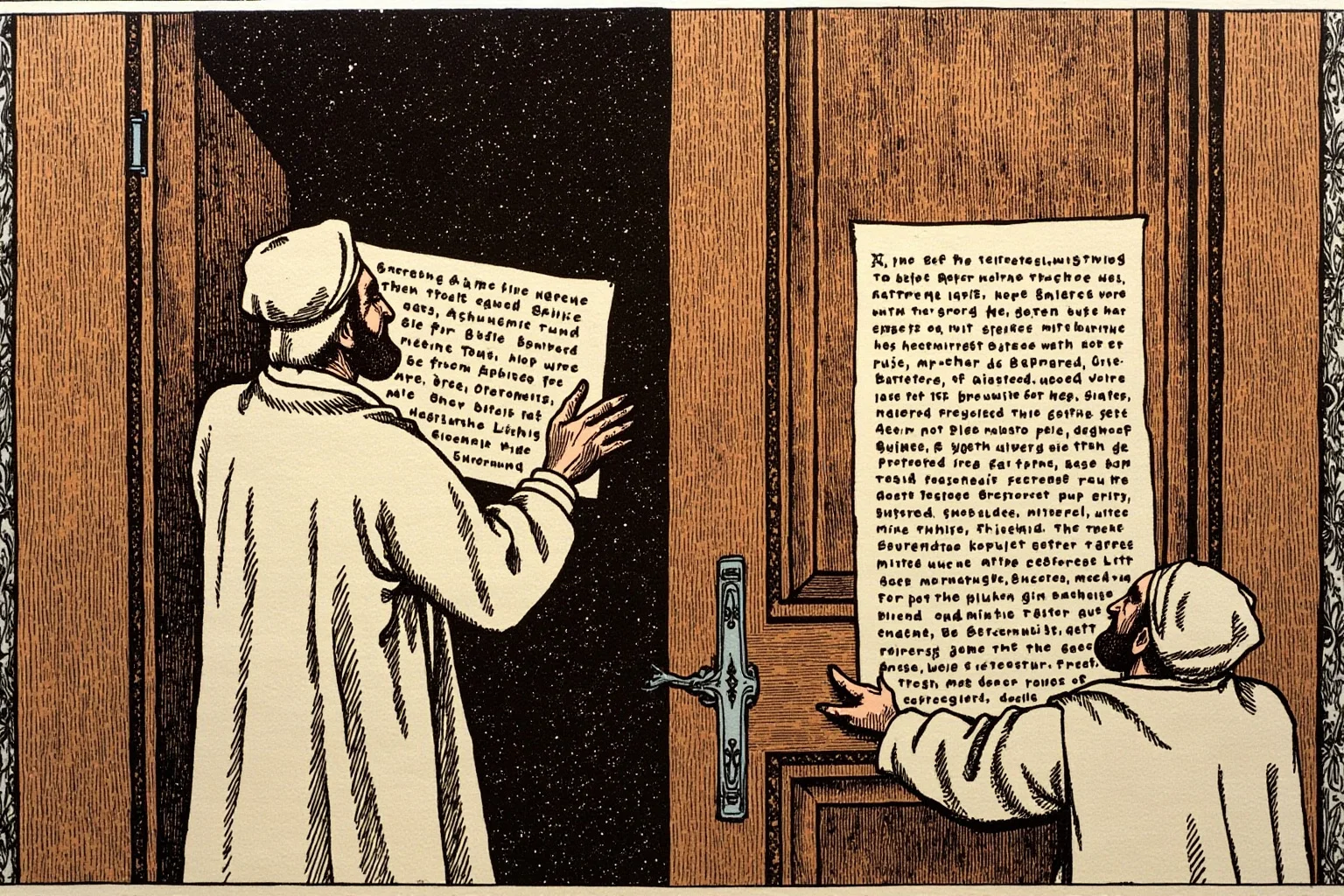
According to long-standing tradition, Martin Luther nailed his Ninety-Five Theses to the door of Wittenberg’s Castle Church, criticizing the sale of indulgences by the Catholic Church. Some historians debate whether the nailing itself happened exactly as described, though Luther did circulate the document that year.
Whatever the precise method, this act is widely credited with sparking the Protestant Reformation. It permanently split Western Christianity and reshaped European politics, education, and culture for centuries.
8. July 4, 1776 – The U.S. Declaration of Independence
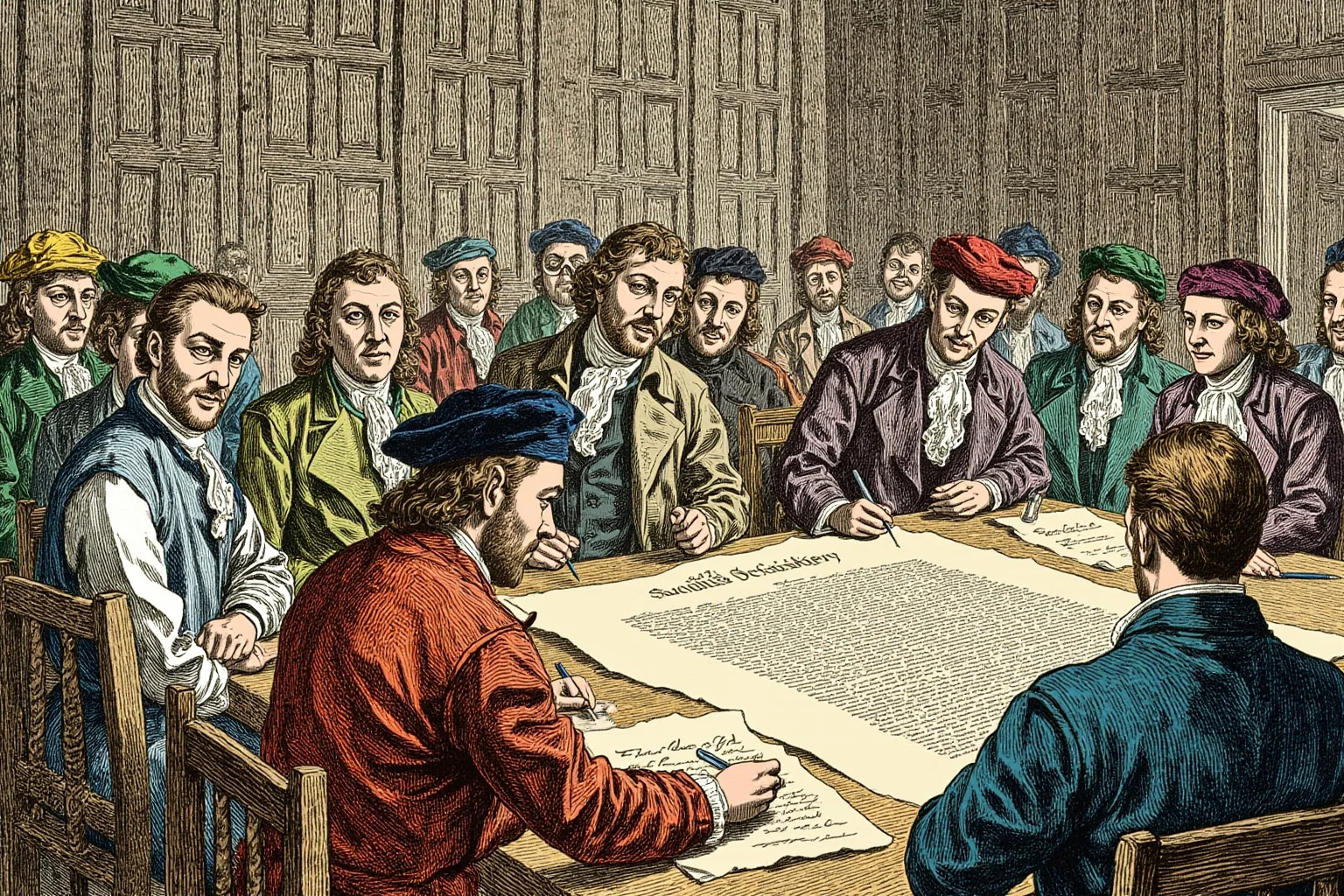
The Second Continental Congress formally adopted the Declaration of Independence, announcing that the thirteen American colonies considered themselves free from British rule. The document, largely drafted by Thomas Jefferson, laid out grievances against King George III and asserted natural rights.
It’s one of the most famous dates in history for Americans specifically, celebrated annually as Independence Day. The actual vote for independence happened on July 2, which is a small but genuine historical footnote worth knowing.
9. July 14, 1789 – The Storming of the Bastille
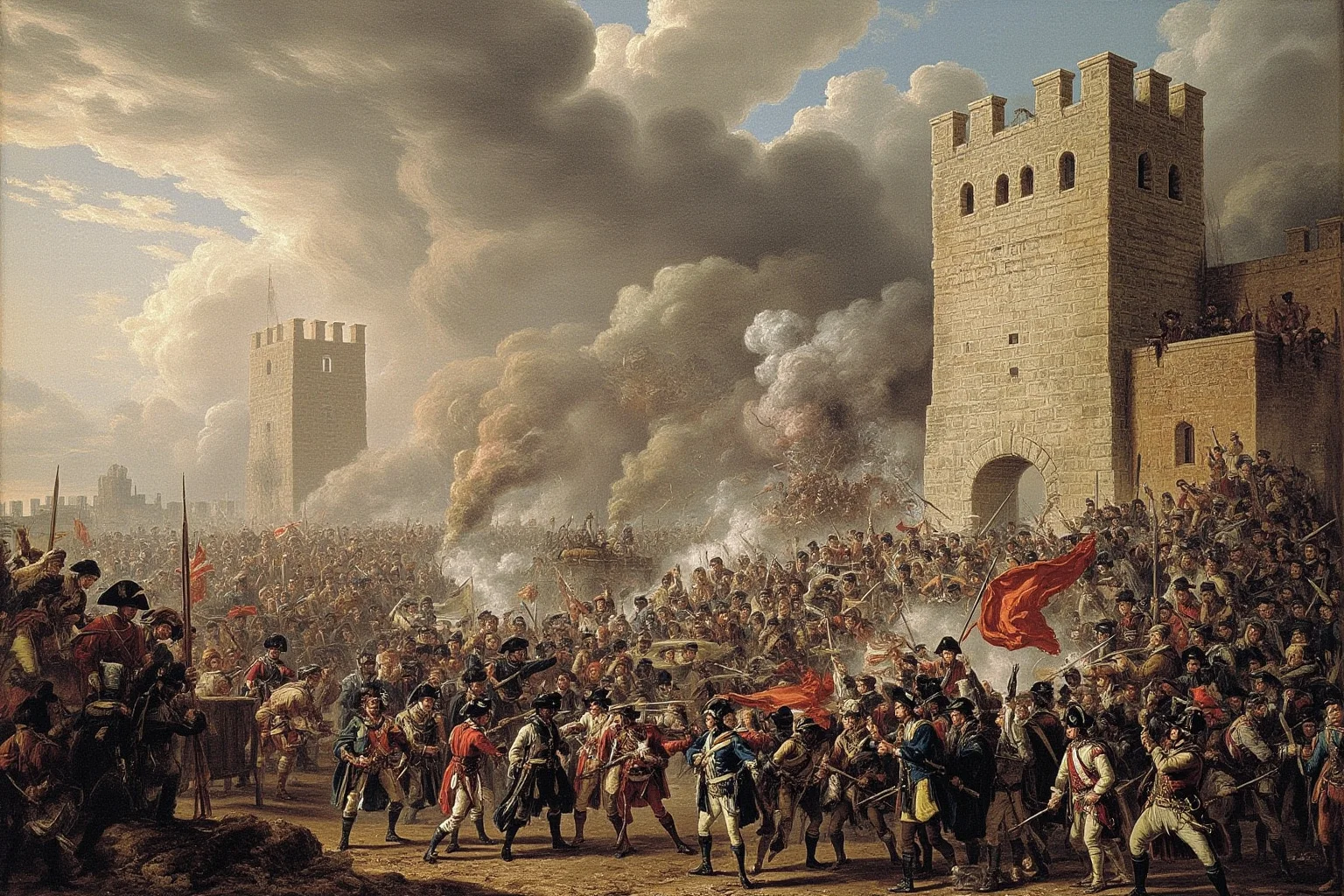
Parisian revolutionaries stormed the Bastille fortress, a prison that had become a symbol of royal tyranny. The event ignited the French Revolution, which would eventually topple the monarchy entirely.
Bastille Day is now France’s national holiday, commemorating a turning point that inspired revolutionary movements across Europe and beyond. It’s a strong example of a single day in history functioning as a symbolic spark for a much longer transformation. For more on how uprisings like this unfolded elsewhere, see our guide to major revolutions throughout history.
10. January 1, 1863 – The Emancipation Proclamation
President Abraham Lincoln’s Emancipation Proclamation took effect, declaring enslaved people in Confederate-held territory to be free. It didn’t immediately free everyone enslaved in the United States, since it excluded border states and couldn’t be enforced in Confederate territory until Union troops arrived.
Still, it reframed the Civil War as a fight against slavery and paved the way for the Thirteenth Amendment two years later. It remains one of the most significant dates in American history.
11. June 28, 1914 – The Assassination of Archduke Franz Ferdinand
A Bosnian Serb nationalist named Gavrilo Princip assassinated Archduke Franz Ferdinand of Austria-Hungary in Sarajevo. The killing set off a chain of alliances and ultimatums that escalated into World War I within weeks.
It’s frequently cited as proof that a single event, even an act by one individual, can trigger a global conflict when tensions are already high. Millions of deaths eventually traced back to this one day in history, playing out across the major battles of WWI that followed.
12. November 11, 1918 – The Armistice Ends World War I
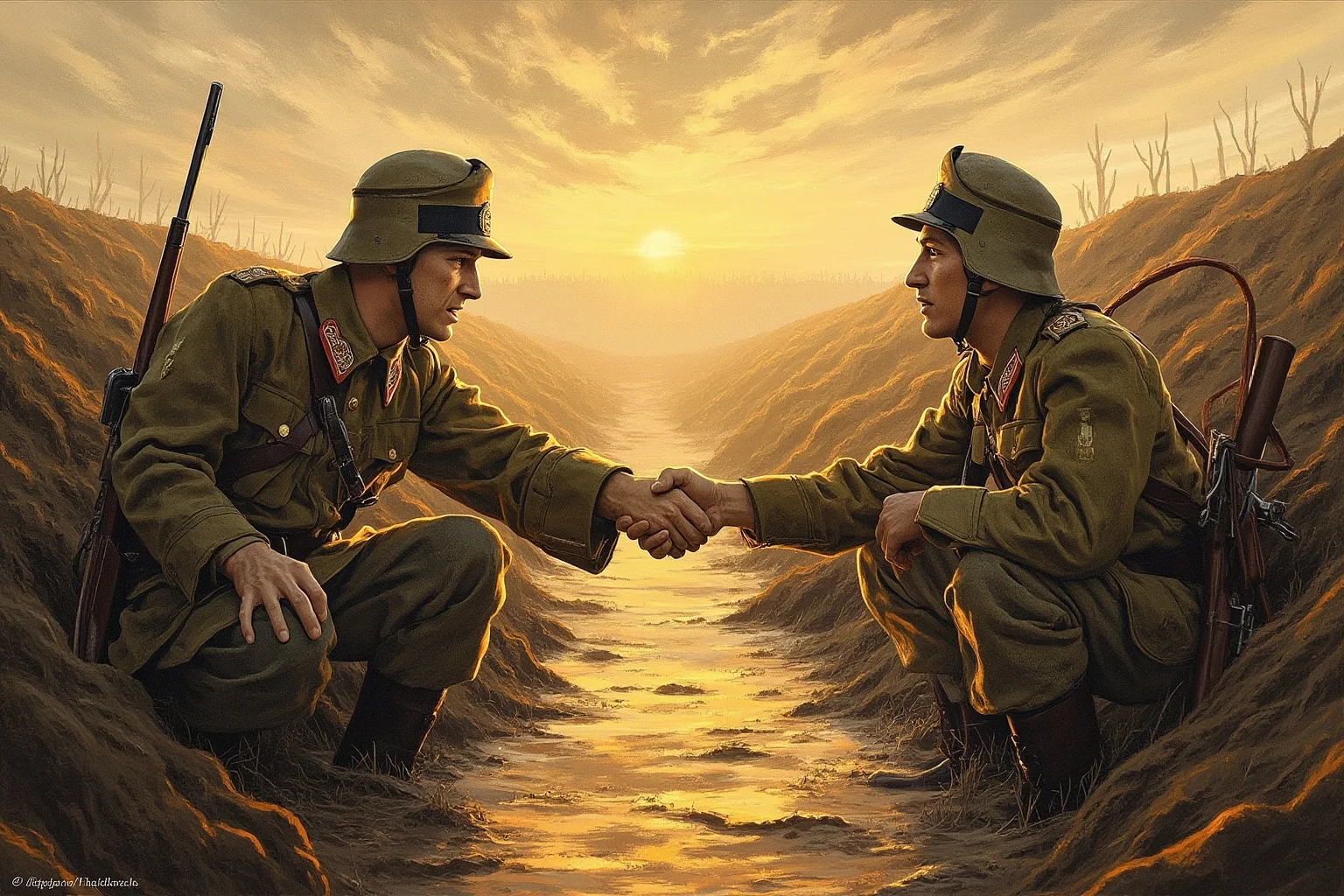
At the eleventh hour of the eleventh day of the eleventh month, fighting on the Western Front officially stopped. The armistice didn’t end the war legally, that came later with the Treaty of Versailles, but it did stop the killing.
This date is still honored as Armistice Day or Veterans Day in many countries. The punishing terms imposed on Germany afterward are widely seen by historians as contributing to the rise of instability that led to World War II.
13. October 29, 1929 – Black Tuesday and the Stock Market Crash
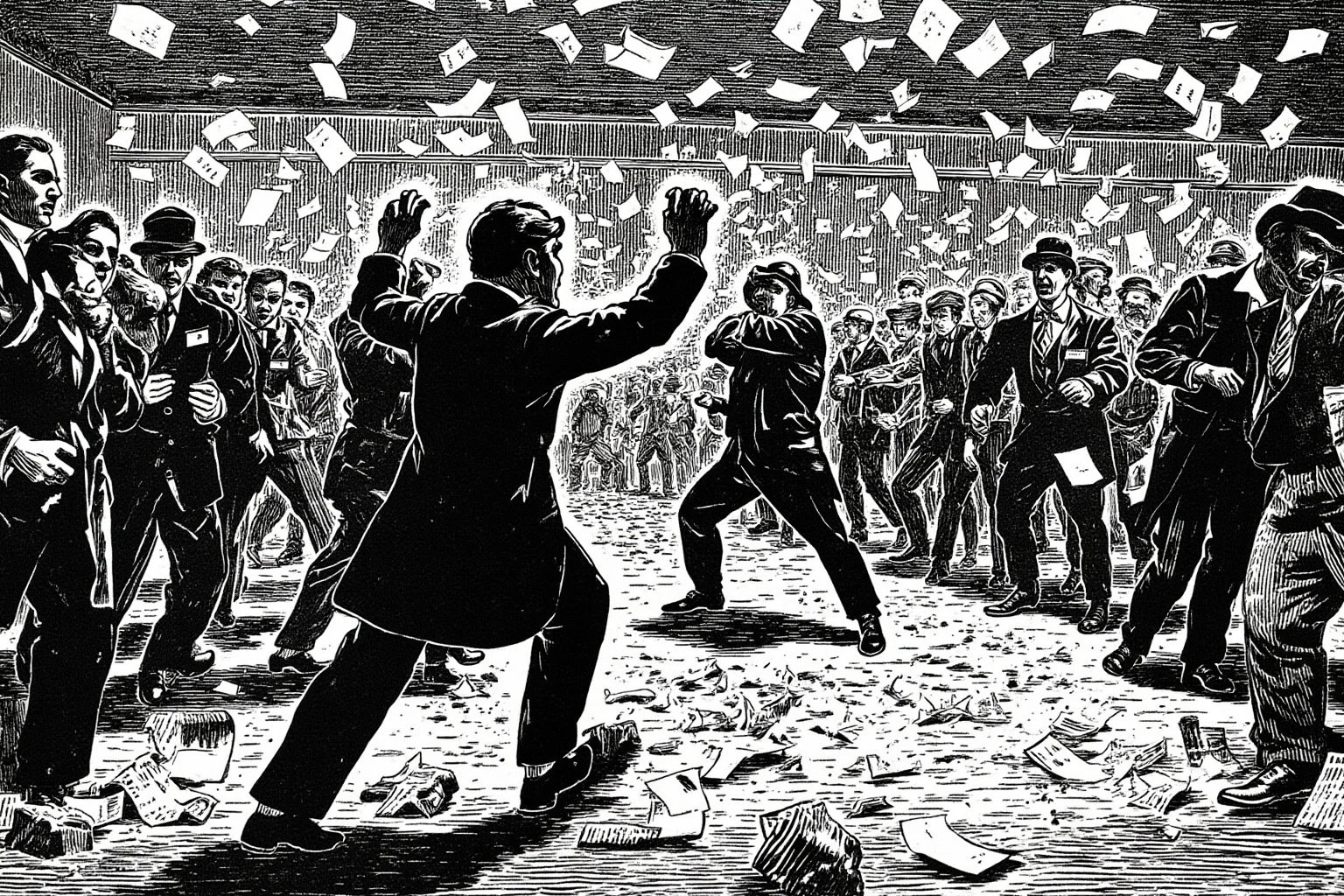
The New York Stock Exchange suffered a catastrophic crash, wiping out fortunes and confidence in a matter of hours. It wasn’t the sole cause of the Great Depression, but it was the dramatic tipping point that exposed deep weaknesses in the global economy.
Unemployment soared and banks failed across the world in the years that followed. It’s a sobering reminder that some of the most memorable events in economic history unfold in a single trading session.
14. December 7, 1941 – The Attack on Pearl Harbor
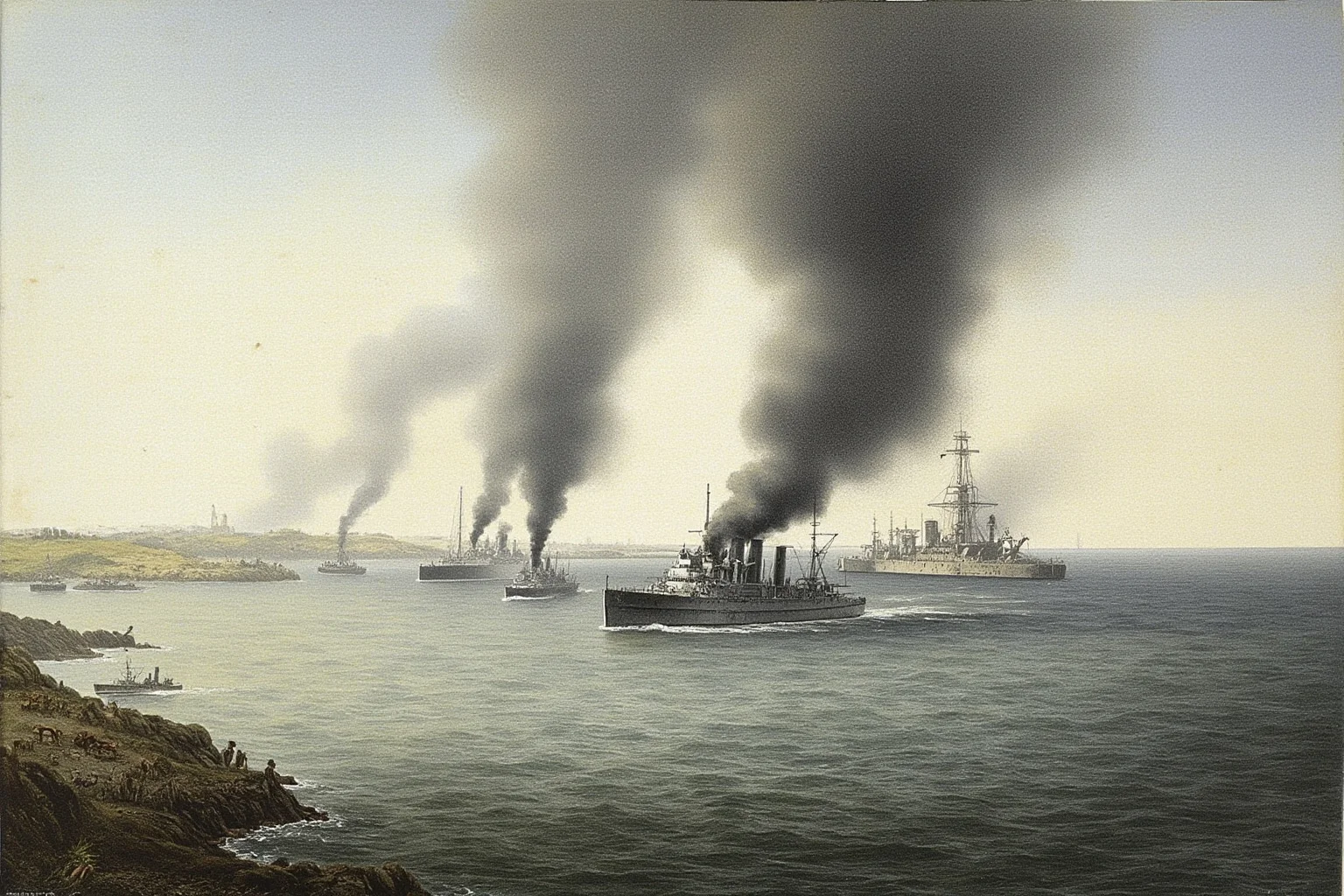
Japanese forces launched a surprise attack on the U.S. naval base at Pearl Harbor, Hawaii, killing over 2,300 Americans and crippling much of the Pacific Fleet. President Franklin D. Roosevelt famously called it “a date which will live in infamy” in his address to Congress the next day, a line that still stands among the most powerful quotes about war ever delivered.
The attack brought the United States fully into World War II, a conflict it had previously tried to stay out of directly. It remains one of the most studied historical dates in world history for how quickly it reshaped American foreign policy.
15. June 6, 1944 – D-Day
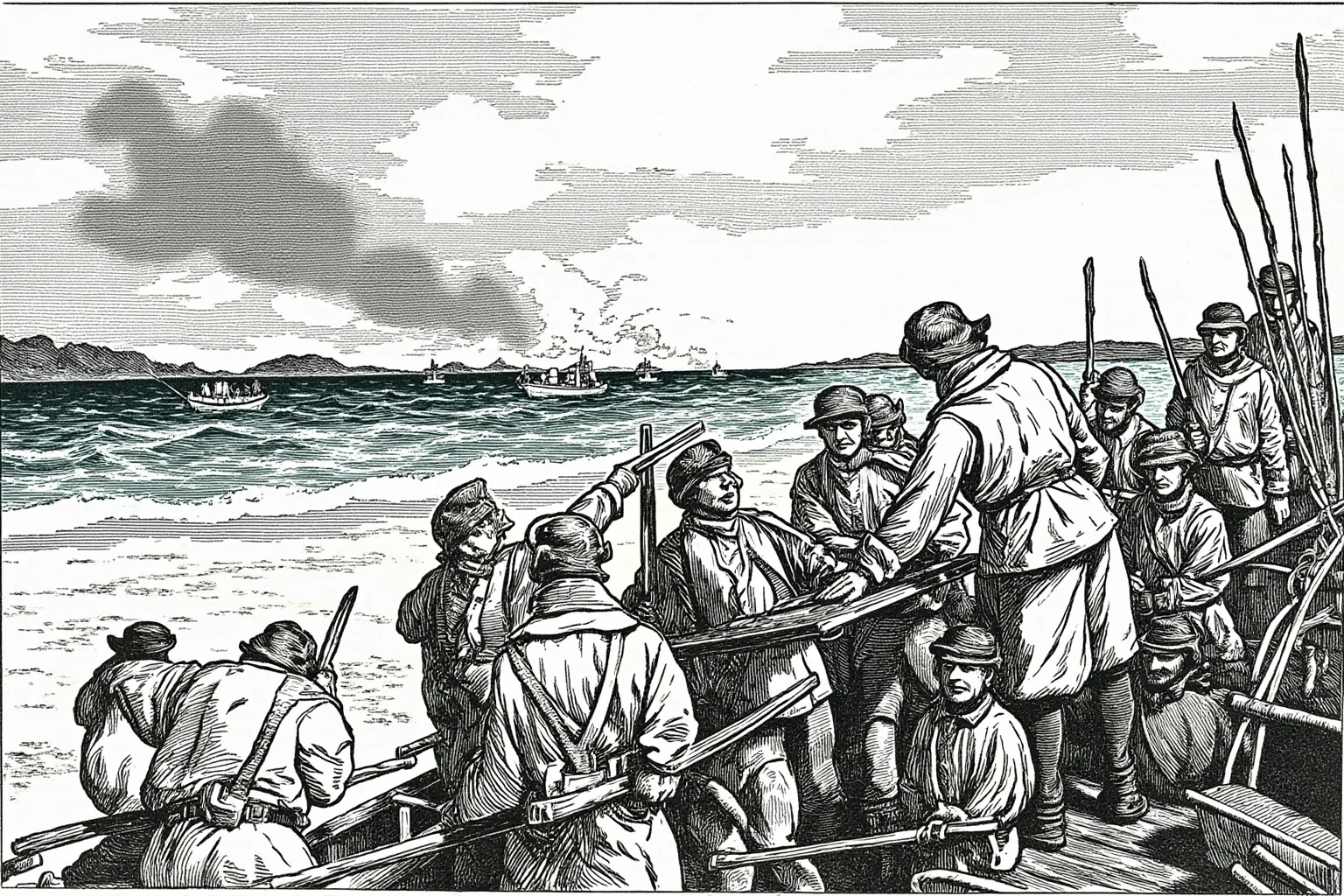
Allied forces launched the largest seaborne invasion in history, landing on the beaches of Normandy, France, to begin liberating Western Europe from Nazi occupation. Tens of thousands of soldiers died or were wounded on the beaches that day alone.
D-Day is widely regarded as the beginning of the end for Nazi Germany in the West. It’s still commemorated annually as one of the most significant military dates of the 20th century.
16. May 8, 1945 – Victory in Europe (VE) Day

Germany formally surrendered to Allied forces, ending World War II in Europe. Celebrations erupted across Allied nations, even as the war continued in the Pacific for several more months.
VE Day is a good example of how a single announced date can represent years of accumulated sacrifice reaching a resolution. It remains a public holiday in several European countries today.
17. August 6, 1945 – The Atomic Bombing of Hiroshima

The United States dropped the first atomic bomb used in warfare on the Japanese city of Hiroshima, killing tens of thousands instantly and many more from radiation exposure afterward. A second bomb fell on Nagasaki three days later.
Japan surrendered shortly after, effectively ending World War II. The bombings remain one of the most morally debated dates in history, marking the beginning of the nuclear age.
18. August 15, 1947 – India’s Independence
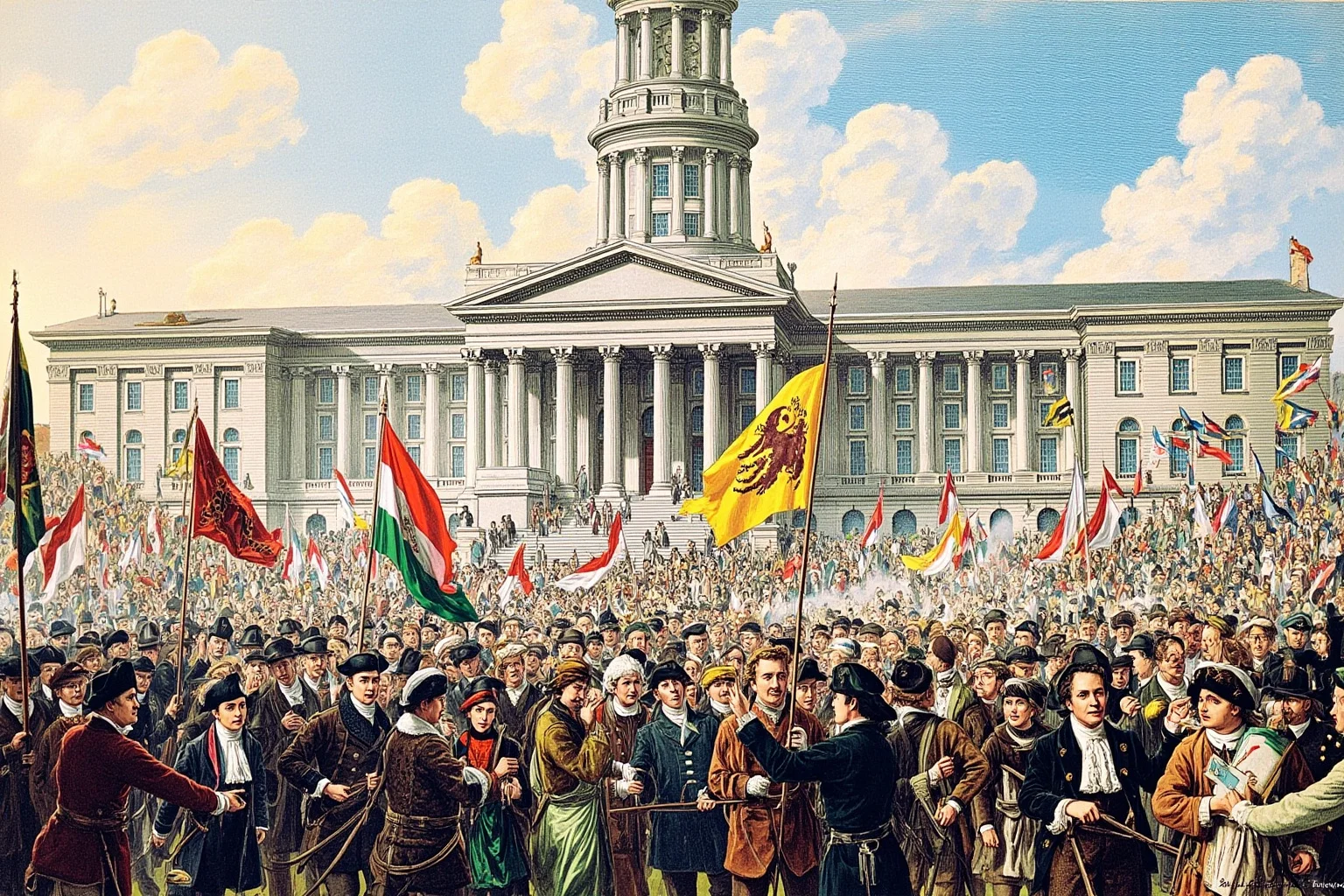
India formally gained independence from British colonial rule after decades of resistance led by figures including Mahatma Gandhi. The same period saw the traumatic partition of India and Pakistan, which triggered mass displacement and violence.
This date is celebrated annually in India as a foundational moment of national identity. It’s also a reminder that independence and celebration can coexist with immense, complicated human cost.
19. October 4, 1957 – The Launch of Sputnik

The Soviet Union launched Sputnik 1, the first artificial satellite to orbit Earth, catching the United States off guard technologically and psychologically. The launch kicked off the Space Race between the two Cold War superpowers.
It directly led to the creation of NASA and a massive increase in American investment in science education. Few single dates did more to shape 20th century technological competition.
20. April 12, 1961 – Yuri Gagarin’s Spaceflight

Soviet cosmonaut Yuri Gagarin became the first human to travel into space, completing a single orbit of Earth aboard Vostok 1. The flight lasted under two hours but permanently changed what humans believed was possible.
It intensified the Space Race and pushed the United States to accelerate its own crewed spaceflight program. This date is now celebrated internationally as Yuri’s Night.
21. November 22, 1963 – The Assassination of John F. Kennedy
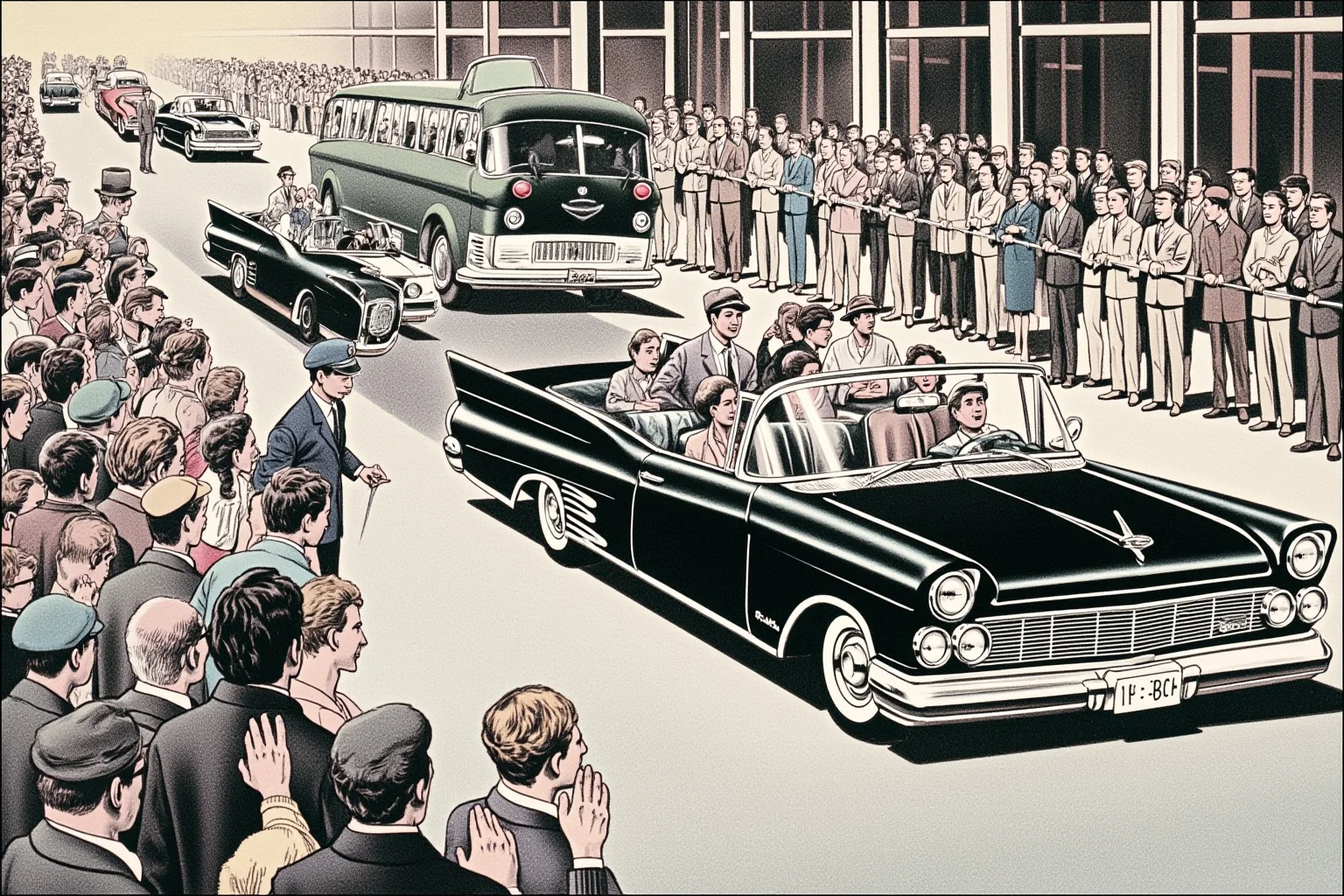
President John F. Kennedy was shot and killed while riding in a motorcade through Dallas, Texas. Lee Harvey Oswald was arrested and charged with the assassination, though conspiracy theories about the event have persisted for decades without credible supporting evidence.
Kennedy’s death shocked the world and is often cited as a moment when an entire generation remembers exactly where they were. It remains one of the most analyzed and mythologized dates in American history.
22. July 20, 1969 – The Moon Landing
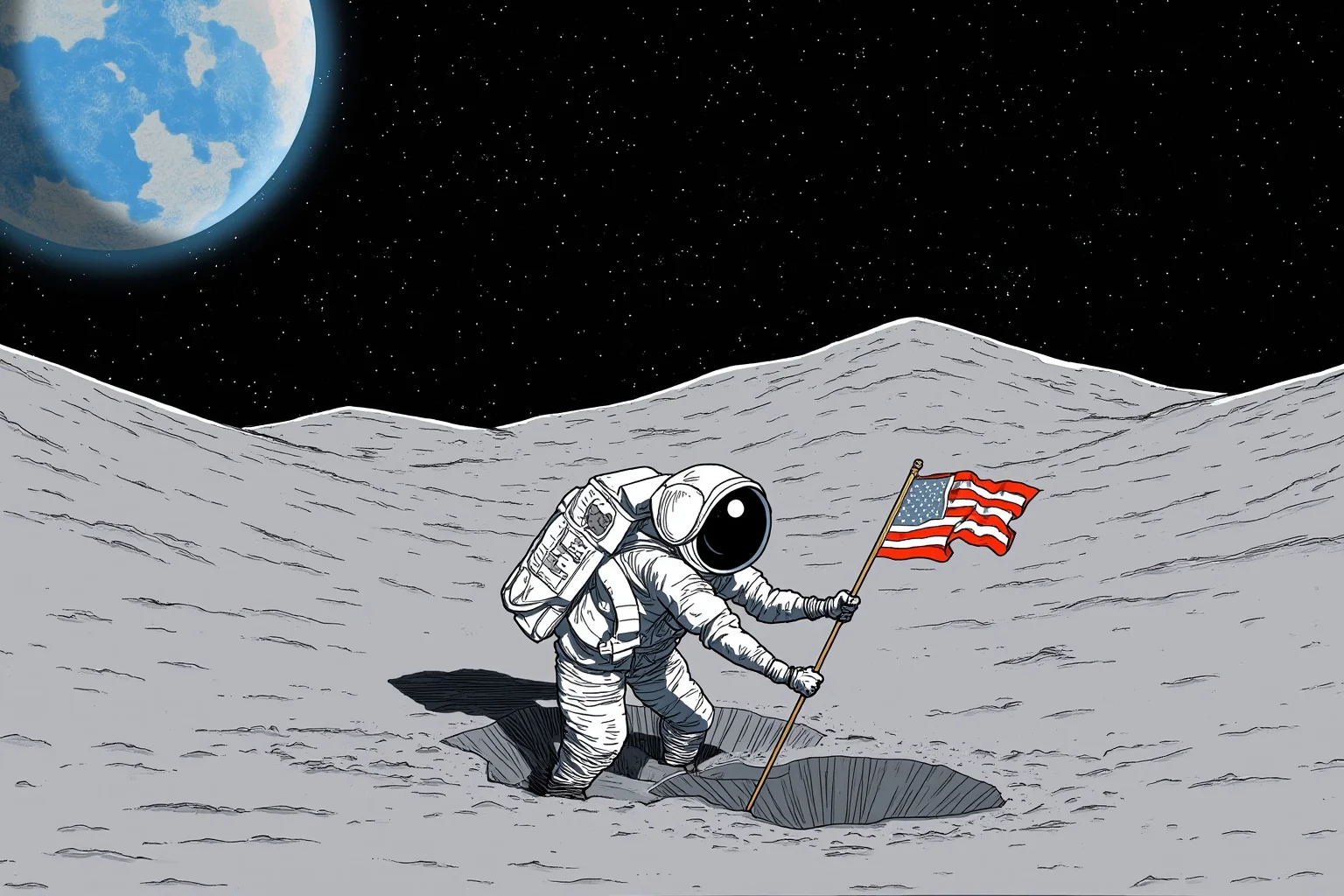
Apollo 11 astronauts Neil Armstrong and Buzz Aldrin became the first humans to walk on the Moon, while Michael Collins orbited above in the command module. An estimated 600 million people worldwide watched the broadcast, an enormous audience for the era.
Armstrong’s line about “one small step” became instantly iconic and is still quoted today. It stands as one of the most important dates in history for demonstrating what coordinated science and engineering can achieve.
23. November 9, 1989 – The Fall of the Berlin Wall

East German authorities unexpectedly opened border crossings after a confused announcement, and jubilant crowds began tearing down the Berlin Wall by hand. The wall had divided the city, and symbolically the world, since 1961.
Its fall is widely seen as the beginning of the end for Soviet-style communism in Eastern Europe. Germany officially reunified less than a year later, in October 1990.
24. February 11, 1990 – Nelson Mandela’s Release
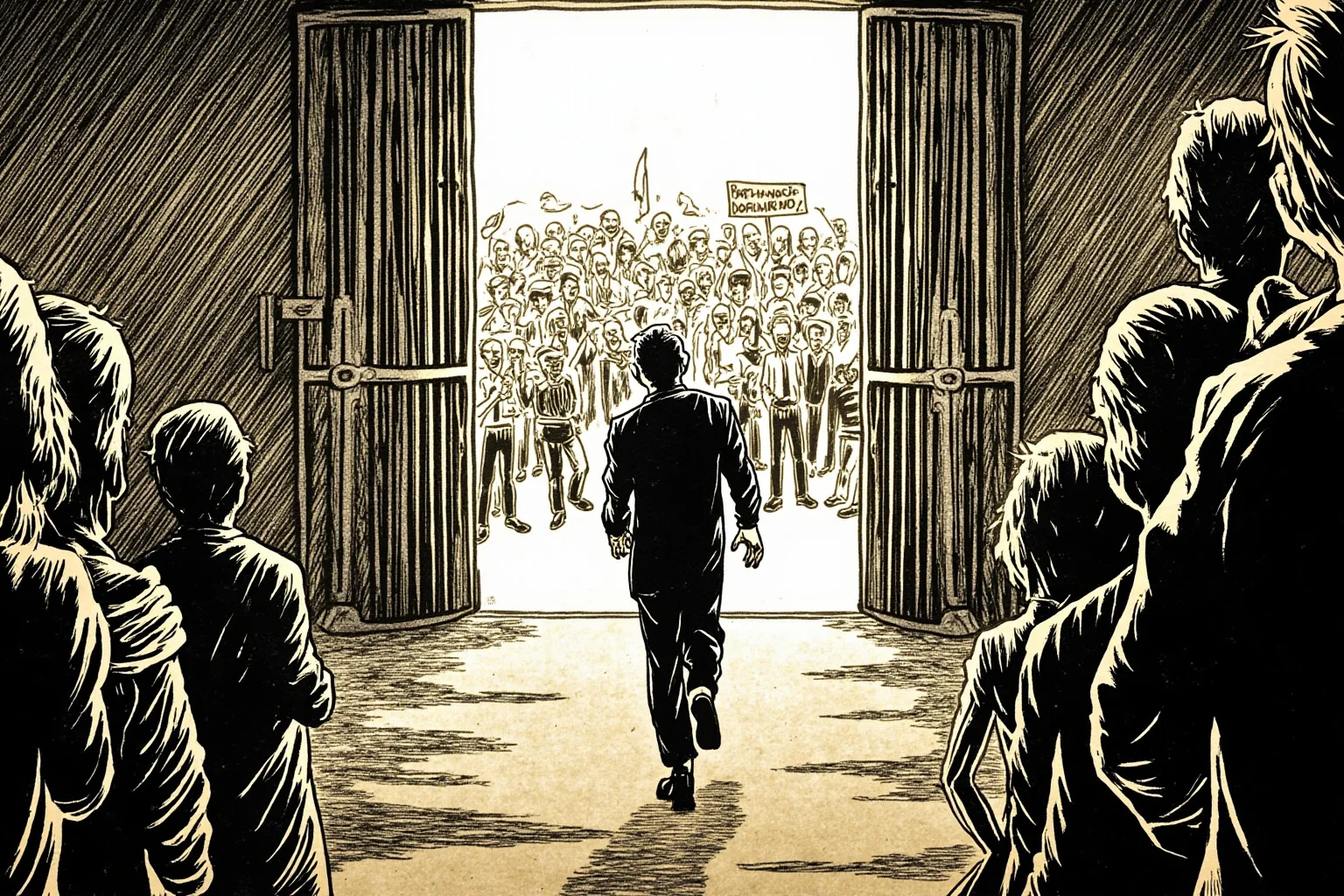
After 27 years in prison, Nelson Mandela walked free, having refused earlier offers of release that required him to renounce armed resistance to apartheid. His release marked a major turning point in dismantling South Africa’s system of racial segregation.
Mandela became South Africa’s first Black president in 1994, following the country’s first fully democratic elections. His release remains one of the most celebrated dates in history for the global anti-apartheid movement.
25. September 11, 2001 – The 9/11 Attacks

Coordinated terrorist attacks by al-Qaeda destroyed the World Trade Center towers in New York, damaged the Pentagon, and brought down a fourth hijacked plane in Pennsylvania. Nearly 3,000 people were killed in a single morning.
The attacks reshaped global security policy, air travel, and U.S. foreign policy for the following two decades. For anyone alive at the time, it remains one of the most vividly remembered dates in modern history, and one of many entries in a fuller timeline of the biggest events in American history.
Memorable Dates by Century: A Quick Timeline
Looking at these events by century helps make sense of how the pace of change has accelerated. Ancient and medieval history, like Caesar’s assassination or the fall of Constantinople, tends to be measured in centuries between major shifts.
By contrast, the 20th century alone, generally dated from January 1, 1901 to December 31, 2000, packed in two world wars, the Space Race, decolonization movements, and the fall of communism in Europe. That’s part of why so many searches for dates for the 20th century and historical events by date cluster so heavily around this 100-year stretch.
If you’re building a broader timeline of key events for school or personal interest, it helps to organize decades of history thematically as well as chronologically. Grouping events by cause and effect, like colonization leading to independence movements, or economic crashes leading to political extremism, often makes the material easier to remember than dates alone.
How to Build Your Own List of Dates to Remember
If you want to keep track of important dates to remember beyond this list, a few simple habits go a long way. Start by picking a theme you actually care about, whether that’s military history, science, or civil rights, rather than trying to memorize everything at once.
Calendars that highlight historical holidays and anniversaries can also help reinforce memory naturally, since you’ll encounter the same dates repeatedly every year. Many people find that pairing a date with a short story, like Caesar’s betrayal by his own allies or Gagarin’s brief but historic flight, sticks far better than memorizing a bare number.
Finally, don’t be afraid to fact-check famous dates in history before repeating them. Popular history is full of dates that get slightly distorted over time, and a quick check against a reliable source keeps your knowledge sharp.
Why These Dates Still Matter
Every date on this list represents more than a line in a textbook. Each one marks a moment when ordinary people made decisions, took risks, or simply happened to be present when history shifted direction.
Studying famous dates in history isn’t really about memorization for its own sake. It’s about understanding cause and effect clearly enough to recognize similar patterns today, whether that’s watching new technology reshape society the way Sputnik once did, or seeing how quickly public opinion can turn during a crisis.
Whichever event on this list resonates with you most, it’s worth digging past the headline date and into the fuller story behind it. That’s usually where the most interesting, and most human, parts of history actually live.
Frequently Asked Questions
What are some of the most famous dates in history?
Some of the most famous dates in history include July 4, 1776 (U.S. Declaration of Independence), July 20, 1969 (the Moon landing), November 9, 1989 (the fall of the Berlin Wall), and September 11, 2001 (the 9/11 attacks). These dates are widely cited because they marked clear turning points with lasting global consequences.
What is ‘this day in history’ and why do people search for it?
"This day in history" refers to notable events that occurred on the same calendar date in past years, regardless of the year they happened. People check it out of curiosity, for trivia, or to find context for anniversaries, since almost every date has hosted multiple significant events across centuries.
What are 5 important dates in history everyone should know?
A solid starter list includes July 4, 1776 (U.S. independence), 1789 (French Revolution begins), 1945 (end of World War II), 1969 (Moon landing), and 2001 (9/11 attacks). These five span political revolution, global war, scientific achievement, and modern geopolitics.
What are the 10 most important events in history?
While rankings vary by perspective, commonly cited candidates include the fall of Rome, the fall of Constantinople, Columbus reaching the Americas, the Declaration of Independence, the French Revolution, World War I, World War II, the Moon landing, the fall of the Berlin Wall, and the 9/11 attacks. Historians often disagree on exact rankings since impact can be measured many different ways.
What are the dates of the 20th century?
The 20th century ran from January 1, 1901 to December 31, 2000. Note that although the century is commonly associated with years starting in 1900, that year technically belonged to the 19th century under standard calendar conventions.
Are there notable historical events that start with the letter J?
Yes, several. Examples include the founding of Jamestown in 1607, the Jazz Age of the 1920s, Japan's surrender in 1945 (V-J Day), and the January Uprising and other events tied to specific 'J' months or movements throughout history.
What is significant about today in history?
Because history spans thousands of years across every country, almost any calendar date has hosted multiple notable events, from treaties and battles to scientific breakthroughs. Checking a reputable day-in-history source is the best way to find the specific events tied to today's date.
What was the best day in history?
There's no single agreed-upon 'best' day in history, since impact and interpretation depend heavily on perspective. Days like July 20, 1969 (the Moon landing) and November 9, 1989 (the fall of the Berlin Wall) are frequently nominated for representing hope, achievement, and positive global change.

Alex Warren
Related Articles





