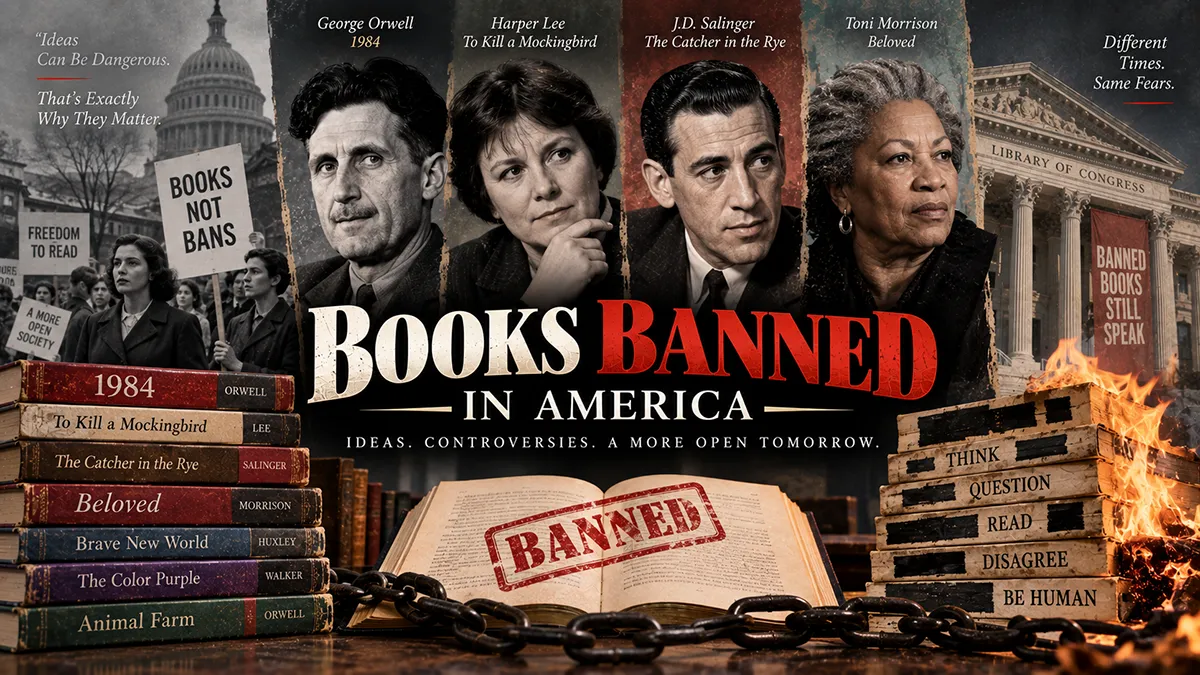
Ask ten people what books are banned in America and you’ll get ten different answers. Some will name classics like Huckleberry Finn. Others will point to recent headlines about school boards pulling graphic novels off library shelves. A few might insist there’s a secret federal list somewhere, locked in a government vault.
The truth is messier and more interesting than any of that. America has a long, tangled history of censorship that runs from 19th-century obscenity trials to today’s school board meetings, and understanding it means separating myth from documented fact.
TL;DR: No book is federally banned in the United States today, but a long history of obscenity trials, postal restrictions, and — especially in recent years — local school and library removals has produced a real and well-documented list of America’s most censored titles.
What “Banned” Really Means in America
Here’s the first myth to bust: there is no federal agency in the United States that maintains an official banned books list. The First Amendment makes broad, nationwide book bans almost impossible to enforce, and courts have repeatedly struck down government attempts to suppress literature outright.
That doesn’t mean censorship hasn’t happened. Historically, the closest the US ever came to federally restricted books was through the Comstock Act of 1873, which allowed customs officials and the postal service to seize “obscene” material, including plenty of now-classic novels, before it ever reached readers.
Today, when people search for “federally banned books” or ask whether there are illegal books in the USA, the honest answer is that almost none exist at the national level. What does exist is a patchwork of local decisions — school boards, library committees, and individual districts — pulling specific titles from shelves, curricula, or classrooms.
A Short History of Book Censorship in the United States
American book censorship didn’t start with school board meetings. It started with obscenity law, and for nearly a century, the biggest battles over banned books in the US played out in courtrooms, not classrooms.
The Comstock Act gave federal officials sweeping power to block “obscene” material from the mail and from import, and it was used against literary works well into the 20th century. Landmark obscenity trials in the 1930s, 1950s, and 1960s eventually narrowed what counted as obscene, giving many banned novels a path back onto American bookshelves.
By the mid-20th century, the fight shifted toward schools and public libraries, driven by parent groups, religious organizations, and local politics rather than federal law. The American Library Association (ALA) began tracking these challenges formally, creating the closest thing America has to an ongoing “banned books in the United States” record.
In the last few years, that tracking has shown a sharp spike. Groups like PEN America and the ALA have reported thousands of book challenges and removals in US schools since 2021, concentrated heavily in a handful of states with new content-review laws. This is the era most people mean when they ask about books banned in America currently.
Banned vs. Challenged vs. Removed: Know the Difference
When you see a headline claiming a book is “banned,” it’s worth asking what actually happened. The terminology matters, and mixing it up is how misinformation spreads.
A challenge means someone — a parent, teacher, or community member — has formally requested that a book be reconsidered, restricted, or removed from a school or library. Most challenges don’t result in permanent removal.
A removal or restriction means a specific school, district, or library has taken a book off shelves or limited who can access it, often pending review. This is what the vast majority of modern “banned books” cases actually look like.
A true ban, in the older legal sense, means a court or government body prohibited a book’s sale, mailing, or import nationwide. That kind of ban is largely a relic of the pre-1970s obscenity era in US legal history.
The Most Banned Books in America: 25 Titles With a History of Censorship
With that context in place, here’s a working list of American banned books — some tied to major historical court cases, others to modern school and library fights, and a few surrounded by rumors that don’t hold up. This list draws on documented court cases, ALA challenge records, and reported school board decisions.
Landmark Obscenity Cases That Shaped Free Speech
1. Ulysses by James Joyce
James Joyce’s Ulysses was seized by US Customs as obscene after being serialized in the early 1920s, effectively banning its import and sale in the country. The ban held until 1933, when Judge John M. Woolsey ruled in United States v. One Book Called Ulysses that the novel was not obscene under the law.
That decision is now considered one of the most important free-speech rulings in American publishing history. It opened the door for modernist literature to be judged on artistic merit rather than isolated passages.
2. Fanny Hill by John Cleland
This 1748 novel has the distinction of being tied to one of the earliest obscenity prosecutions in US history, a Massachusetts case from 1821. It resurfaced in court again in the 1960s after a new edition was published.
The US Supreme Court finally ruled on it in Memoirs v. Massachusetts (1966), deciding the book had enough “social value” to avoid an obscenity conviction. It remains a textbook example in discussions of America’s banned books list from the colonial and early republic eras onward.
3. Tropic of Cancer by Henry Miller
Published in Paris in 1934, Henry Miller’s autobiographical novel was banned from import and sale in the United States for roughly three decades. Grove Press finally published it domestically in 1961, triggering a wave of state-level obscenity trials.
Courts gradually sided with the publisher through the mid-1960s, and the case became a key reference point for later rulings on literary obscenity.
4. Lady Chatterley’s Lover by D.H. Lawrence
D.H. Lawrence’s 1928 novel was blocked from US mail distribution under obscenity statutes for decades. When Grove Press released an unexpurgated edition in 1959, the US Post Office tried to prevent it from being mailed.
A federal court ruled against the Post Office in Grove Press v. Christenberry that same year, allowing the book’s full distribution and marking another step away from Comstock-era restrictions.
American Classics Banned and Challenged for Decades
5. The Adventures of Huckleberry Finn by Mark Twain
Mark Twain’s 1884 novel holds a strange honor: it was banned by the Concord, Massachusetts Public Library within a year of publication, with the library committee calling it “trash.” That was only the beginning.
The novel continues to appear on banned and challenged book lists today, largely due to its use of racial slurs and its depiction of slavery-era relationships, even as many educators defend its anti-racist intent.
6. The Grapes of Wrath by John Steinbeck
Steinbeck’s 1939 novel about Dust Bowl migrants was banned and, in some reported instances, publicly burned in Kern County, California — the very region the book depicts — shortly after publication. Local leaders objected to its portrayal of agricultural labor conditions.
School districts have continued to challenge the book over the decades for its language and political themes, making it a recurring name on lists of censored books in America.
7. Of Mice and Men by John Steinbeck
This Steinbeck novella has been one of the most consistently challenged books in American schools for generations. Objections typically center on racial slurs, profanity, and violence in the text.
Despite the challenges, it remains a staple of high school English curricula, illustrating how a book can be simultaneously widely taught and widely contested.
8. The Catcher in the Rye by J.D. Salinger
Since the 1960s, Salinger’s coming-of-age novel has faced repeated bans and challenges in American schools over profanity, sexual references, and its rebellious protagonist. It has appeared on ALA’s most-challenged lists for decades.
Its persistence on these lists, generation after generation, makes it one of the most reliable answers to “what are the most banned books in America.”
9. To Kill a Mockingbird by Harper Lee
Harper Lee’s 1960 novel about racism in the Jim Crow South has been challenged for its racial slurs and depictions of violence, even though the book itself critiques racism. Some districts have restricted it specifically because of the language used by its characters.
More recent reviews in the 2020s have re-examined the novel in some schools, showing that even canonical, prize-winning literature isn’t immune from renewed scrutiny.
10. Slaughterhouse-Five by Kurt Vonnegut
Vonnegut’s 1969 anti-war novel became the subject of a widely reported 1973 incident in Drake, North Dakota — one of the more unusual memorable events of the 1970s — where a school board reportedly ordered copies burned in the school’s furnace after objecting to its content. The event drew national attention to school censorship.
The book has continued to face challenges since then, usually for language, sexual content, and its unconventional structure.
11. 1984 by George Orwell
Orwell’s dystopian classic has faced challenges in the US on more than one ideological front. In some periods it was flagged for being “pro-communist”; in others, for sexual content or bleak themes unsuitable for younger readers.
The irony of a book about totalitarian censorship being itself challenged is not lost on most readers, and it’s often cited in discussions of America’s banned books list precisely for that reason.
12. Brave New World by Aldous Huxley

Huxley’s 1932 novel has faced bans and challenges abroad and at home, largely over its depictions of sexuality, drug use, and its critique of conformity. American schools have periodically pulled it from required reading lists.
It remains widely taught despite this history, often alongside 1984 as a paired example of banned dystopian literature.
13. Fahrenheit 451 by Ray Bradbury
There’s a particular irony to a novel about book burning being censored itself. In the 1960s and 70s, a publisher released a “Bal-Hi” school edition that quietly removed profanity and other content without Bradbury’s knowledge.
When Bradbury discovered the changes years later, he insisted the original text be restored, and by 1979 unexpurgated editions were back in print. The book has continued to face separate community challenges since, usually over language.
Books Banned for Race, Gender, and Identity
14. Beloved by Toni Morrison
Toni Morrison’s 1987 Pulitzer Prize-winning novel about slavery’s trauma has repeatedly appeared on ALA’s most-challenged lists, typically cited for violence and sexual content. Several school districts have removed it from Advanced Placement or general curricula over the years.
Its recurring presence on banned books lists in America reflects broader debates over how schools teach the history and legacy of slavery.
15. The Bluest Eye by Toni Morrison
Morrison’s 1970 debut novel deals directly with racism, abuse, and trauma, and it has drawn some of the most frequent challenges of any book in the ALA’s records for its explicit content. Many objections focus on scenes depicting sexual abuse.
Supporters argue the discomfort is precisely the point, since the novel confronts, rather than glosses over, the damage caused by racism and abuse.
16. The Color Purple by Alice Walker
Since its 1982 publication, Alice Walker’s novel has faced challenges over sexual content, violence, and language. It has remained on frequently challenged lists well into the 21st century.
It has also faced renewed scrutiny in recent years alongside other titles dealing with race and sexual violence in American classrooms.
17. The Handmaid’s Tale by Margaret Atwood
Atwood’s 1985 dystopian novel has seen a resurgence of challenges in US schools, particularly since the 2010s, often citing sexual content or political themes. Its popularity as a television adaptation has, if anything, increased scrutiny of the source material in some districts.
It’s frequently mentioned by name whenever people search for the most banned books in America today.
18. The House on Mango Street by Sandra Cisneros
Sandra Cisneros’s 1984 coming-of-age novel became entangled in a notable legal fight when it was included among books removed from Tucson Unified School District’s Mexican American Studies program in 2012, under an Arizona law (HB 2281) restricting ethnic studies curricula. A federal court later ruled the law unconstitutional in 2017, and the affected books were restored.
The House on Mango Street being banned in that district became a widely cited example of how curriculum laws, not just individual objections, can pull specific titles from classrooms.
19. And Tango Makes Three by Justin Richardson and Peter Parnell
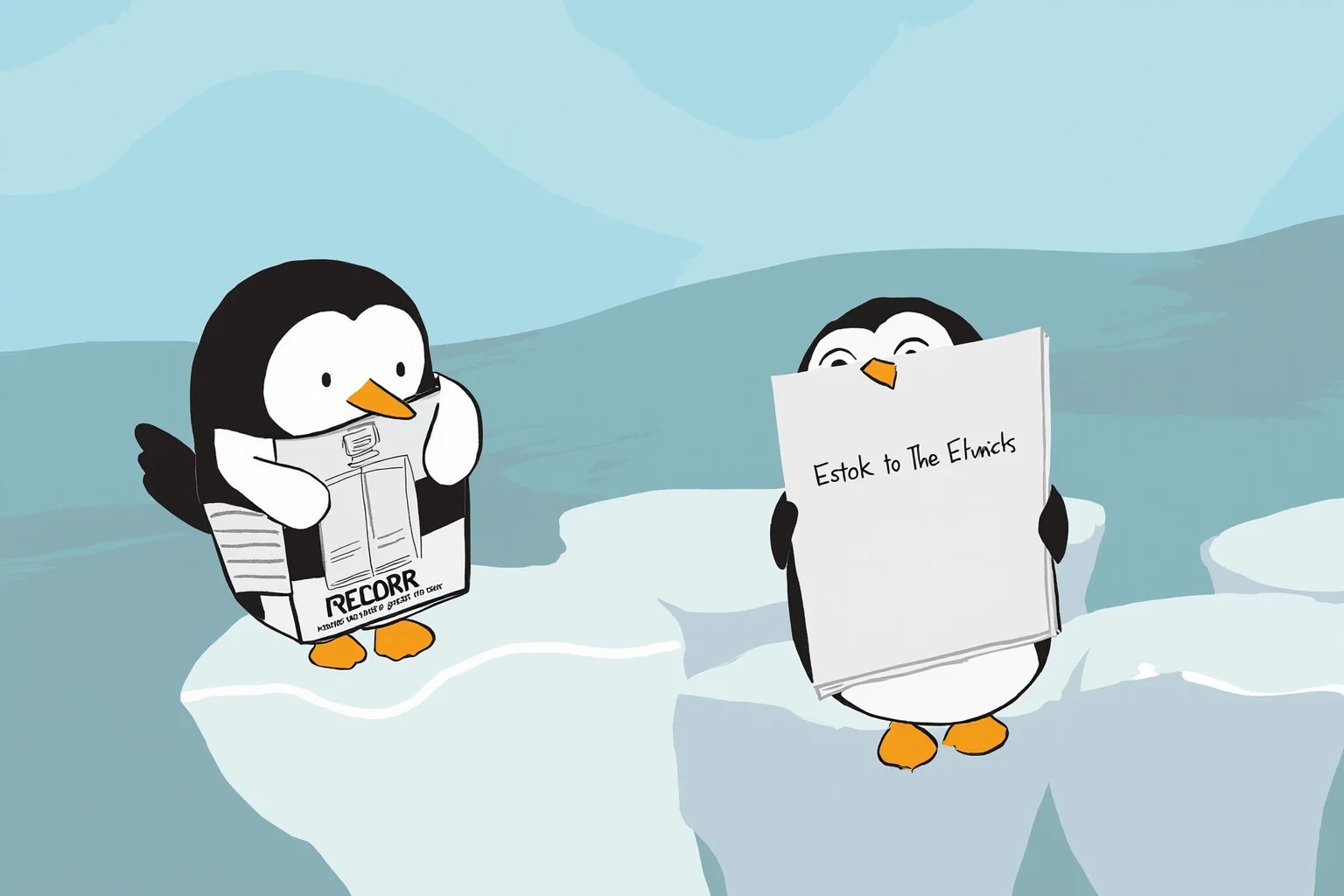
This picture book, based on a real pair of male penguins that raised a chick together at New York’s Central Park Zoo, has topped the ALA’s most-challenged list multiple times since its 2005 release. Objections have consistently centered on its portrayal of a same-sex parenting relationship.
Its long run on challenge lists makes it one of the most enduring examples of LGBTQ-themed content facing removal from children’s sections.
20. Gender Queer: A Memoir by Maia Kobabe
Maia Kobabe’s 2019 graphic memoir about nonbinary and asexual identity became the single most challenged book in America according to ALA data for 2021, 2022, and 2023. Objections typically cite sexually explicit illustrations and content deemed inappropriate for minors.
Its consistent top ranking has made it a central example whenever people ask what books are banned in America right now.
Today’s Battlegrounds: Recent and Ongoing Bans
21. Maus by Art Spiegelman
This Pulitzer Prize-winning graphic novel about the Holocaust made national headlines in January 2022 when the McMinn County, Tennessee school board voted to remove it from its eighth-grade curriculum. The board cited nudity in the illustrations and profanity in the text.
The decision drew widespread criticism and significant media coverage, becoming one of the most widely reported school book removals of the decade.
22. Anne Frank: The Diary of a Young Girl
Anne Frank’s diary has been restricted or challenged in a handful of US school districts over the years, sometimes over passages describing puberty and sexuality that appear in fuller, unabridged editions. A well-known 2013 case in Culpeper County, Virginia, saw the book pulled temporarily before being reinstated after public backlash.
Given the book’s historical importance as a firsthand account of the Holocaust, each new challenge tends to draw significant public attention.
23. Speak by Laurie Halse Anderson
Anderson’s 1999 novel about a teenage sexual assault survivor has faced repeated challenges, most notably after a 2010 op-ed by a Missouri state representative that grouped it with pornographic material. Anderson and other authors publicly pushed back on the comparison.
The book continues to appear on modern challenge lists, often specifically because of its unflinching treatment of sexual assault.
24. The Perks of Being a Wallflower by Stephen Chbosky
Chbosky’s 1999 novel has remained a fixture on the ALA’s most-challenged lists for years, typically flagged for sexual content, drug references, and profanity. Its popularity as both a novel and a film has kept it in ongoing circulation in school debates.
It’s frequently cited alongside Speak and Gender Queer as an example of contemporary YA fiction facing removal.
Myths and Rumors: When “Banned” Isn’t Real
25. Frog and Toad Are Friends by Arnold Lobel
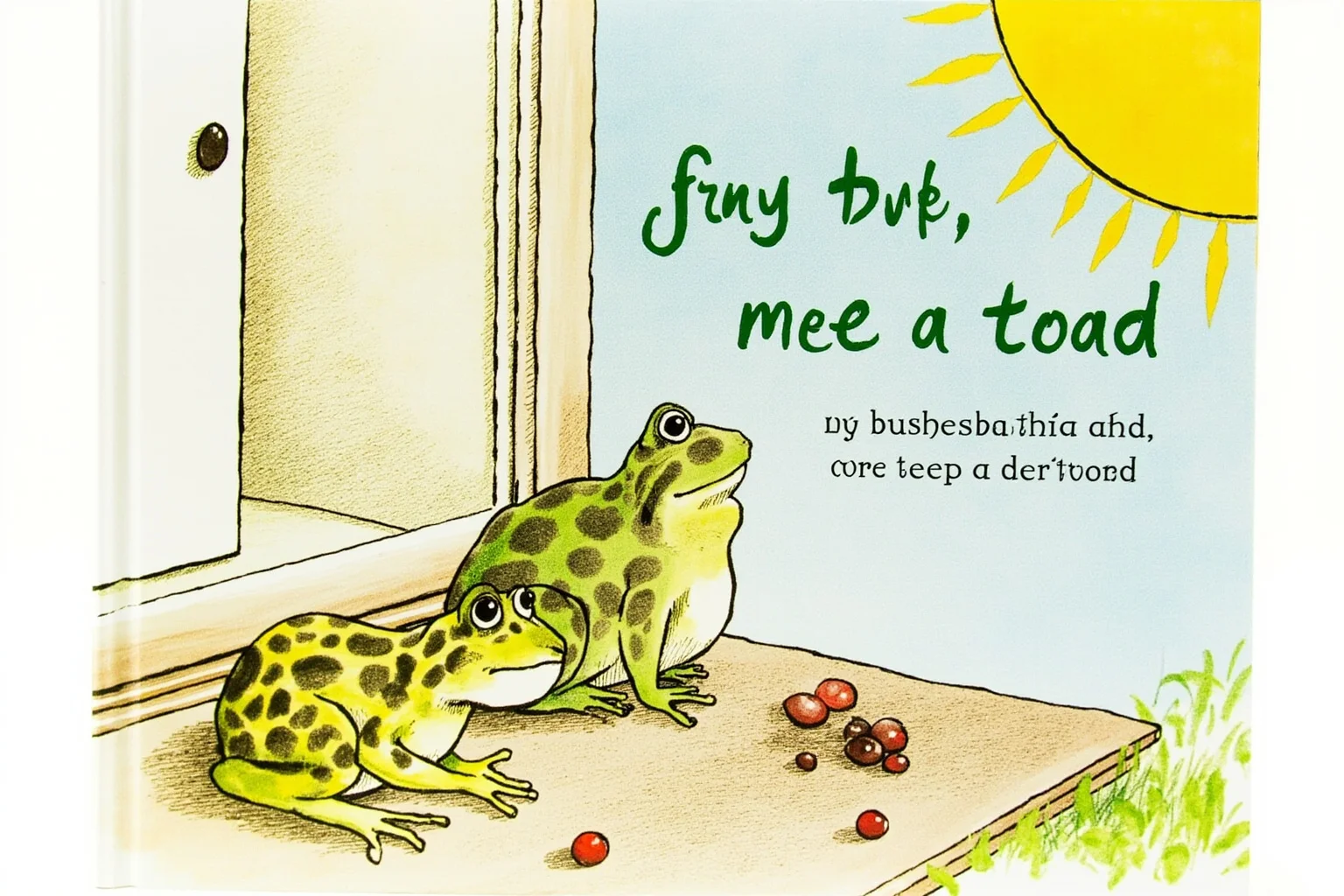
Here’s where myth-busting matters most. Despite “Frog and Toad banned” becoming a notable search query, there’s no credible, documented case of a school district or library formally banning Arnold Lobel’s beloved children’s series.
The rumor appears to have circulated online, possibly from satire or misread social media posts, rather than from any verified school board decision or library record. It’s a useful reminder that not everything trending under “banned books in the US” reflects an actual ban — sometimes it reflects viral misinformation, not unlike the myths behind many of America’s weirdest and dumbest laws.
Where Book Bans Are Happening Now
If you’re wondering whether books are being banned in the US today, the honest answer is: yes, but mostly at the local level, not nationally. PEN America and the ALA have both documented a sharp rise in school book removals and restrictions since 2021, with thousands of individual title bans recorded across public school districts.
A relatively small number of states account for a large share of these actions, often tied to new state laws requiring content reviews of school library materials. Florida and Texas have been particularly prominent in national reporting on this trend, though challenges have occurred in districts across the country.
It’s worth repeating that these are school and library decisions, not nationwide legal bans. A book removed from one district’s middle school library remains fully legal to buy, own, and read anywhere else in the country.
Is It Illegal to Own a Banned Book in the US?
For virtually every title on this list, the answer is no. Adults in the United States can legally buy, own, and read any of these books, regardless of what a particular school district has decided about its own shelves.
The only literature that is genuinely illegal to possess in the US falls into extremely narrow, unrelated legal categories — such as child sexual abuse material — which are not what people mean when they ask about banned novels or classic literature. Historical or classic fiction, memoirs, and YA novels are not illegal books in the USA in any meaningful legal sense today.
This is an important distinction from countries that do maintain government-enforced book bans. In the US, “banned” almost always means removed from a specific shelf, not outlawed nationwide.
Reading the List for Yourself
Every title on this list has survived its censors in one way or another. Some, like Ulysses and Lady Chatterley’s Lover, won landmark court battles that reshaped American publishing law entirely.
Others, like Gender Queer and Maus, are still in the middle of their own chapter, being fought over in real school board meetings happening right now. Each September, the ALA’s Banned Books Week highlights exactly these kinds of titles, encouraging readers to pick up the very books someone, somewhere, tried to take off a shelf.
Whatever your take on any individual title, the broader history is clear: American book censorship has never been about a single federal blacklist. It’s been a long, ongoing, deeply local argument about what belongs on a shelf — and that argument is still being written today.
Frequently Asked Questions
What books are banned in America?
There's no single federal list of banned books in America, since the First Amendment prevents nationwide book bans. Instead, specific titles like Gender Queer, Maus, Beloved, and And Tango Makes Three have been removed or restricted by individual school districts and libraries, which is what most modern 'banned books' actually refers to.
Are there any books currently illegal to own in the United States?
No. Classic and contemporary literature — including every title commonly labeled a 'banned book' — is legal for adults to buy, own, and read in the US. Local school or library removals restrict where a book is shelved, not whether it's legal to possess.
What are the most banned books in America right now?
According to American Library Association challenge data, recent top titles include Gender Queer: A Memoir, Maus, All Boys Aren't Blue, and The Bluest Eye, alongside long-standing entries like The Catcher in the Rye and Of Mice and Men.
Is Frog and Toad actually banned in the US?
No verified school district or library ban of Arnold Lobel's Frog and Toad series has been documented. The claim appears to stem from online rumor or misinformation rather than any confirmed censorship case.
Is The House on Mango Street banned?
The House on Mango Street was removed from Tucson Unified School District's Mexican American Studies curriculum in 2012 under an Arizona ethnic studies law. That law was later ruled unconstitutional in 2017, and the book was restored to the curriculum.
What’s the difference between a banned book and a challenged book?
A 'challenge' is a formal request to remove or restrict a book, while a 'ban' or removal means a school, library, or court actually took action against it. Most books on banned books lists were challenged, and only some were ultimately removed.
Are federally banned books a real thing in the US?
Not in the modern era. The closest historical example is the Comstock Act of 1873, which let federal officials seize 'obscene' books from the mail and customs, but court rulings from the 1930s through 1960s largely dismantled that system for literary works.

Alex Warren
Related Articles