

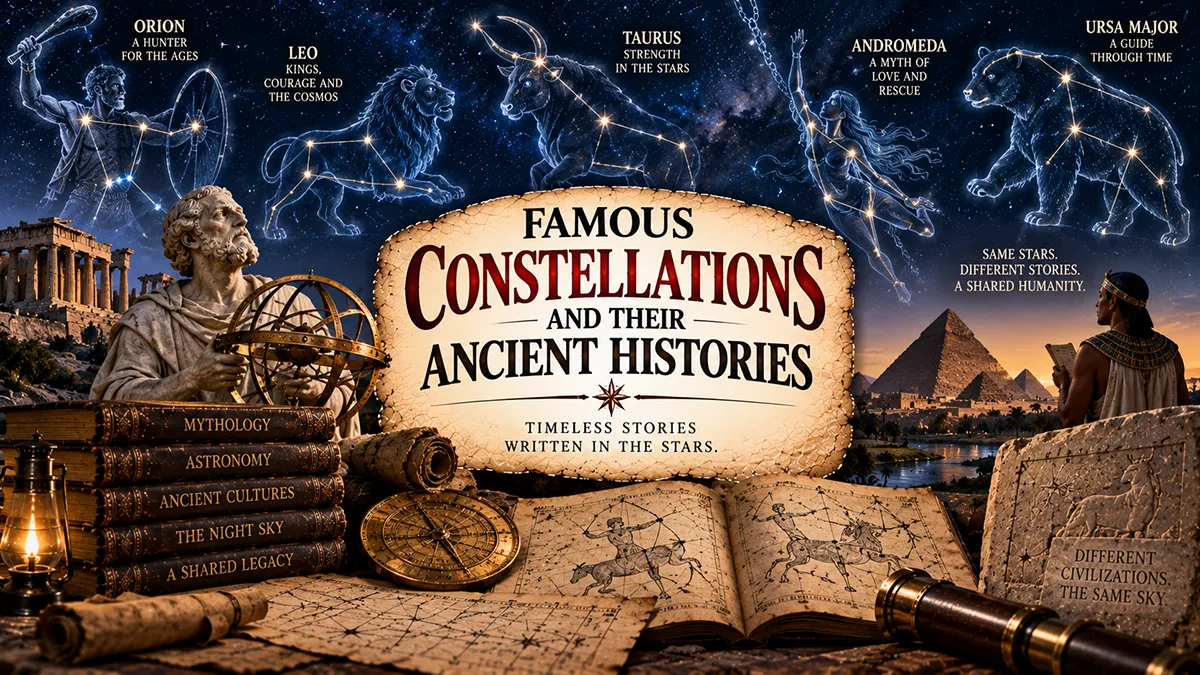
Long before streetlights and screens, people everywhere looked up and told stories about the dots of light scattered across the night sky.
Ancient Greeks, Babylonians, Egyptians, and countless other cultures traced heroes, monsters, and lovers into the stars, and many of those patterns are still the famous constellations we recognize today.
Some of these star pictures carry genuinely romantic myths, some mark pivotal moments in the history of astronomy, and a few were quietly dropped from our maps altogether.
This guide walks through the constellation stories worth knowing: the most famous constellations, a handful of lesser known and lost constellations, and the cool facts about constellations that rarely make it into textbooks. We’ll separate the historically documented parts from the legendary parts, because a good myth-busting approach means being honest about what’s folklore and what’s fact.
TL;DR: The most famous constellations blend genuine ancient astronomy with layers of myth, and tracking down their real history reveals stories stranger and more interesting than the legends alone.
What Makes a Constellation Historical, Mythical, or Just Plain Cool?
Today’s sky is officially divided into 88 constellations, a list finalized by the International Astronomical Union in 1922 and given precise boundaries by 1930.
That number didn’t come from nowhere, though. Roughly 48 of those patterns trace back to the Greek astronomer Ptolemy’s 2nd-century work the Almagest, which itself drew on even older Babylonian sky-watching traditions.
Other cultures mapped completely different pictures onto the same stars. Chinese astronomers tracked their own detailed system of constellations for record-keeping and calendar purposes, Indigenous Australian sky traditions read shapes in both the stars and the dark spaces between them, and Polynesian navigators used star patterns to cross open ocean with remarkable accuracy.
The “official” 88 constellations are really a Greco-Roman-European framework that modern astronomy happened to standardize.
That’s worth remembering as we go through this list. When a constellation story says a hero or monster was “placed in the stars,” that’s a myth explaining a pattern people already saw, not a historical event. With that caveat in mind, here are 22 of the most famous, unique, and historically fascinating constellations in the sky.
1. Orion, the Hunter

Orion is probably the most easily recognized constellation in the sky, visible from nearly everywhere on Earth thanks to its position near the celestial equator. Greek sources don’t agree on a single origin story; in different versions, Orion is a giant hunter, a son of the sea god Poseidon, or a figure killed by a scorpion’s sting or by the goddess Artemis.
Babylonian astronomers had their own name for this pattern, calling it something like “The Heavenly Shepherd” in their records centuries before Greek myths were attached to it. A popular claim that the Egyptian pyramids at Giza were laid out to mirror Orion’s Belt is widely circulated but remains a disputed, unproven theory rather than an established archaeological fact.
2. Ursa Major, the Great Bear
Ursa Major is home to the Big Dipper, technically an asterism (a recognizable star pattern) rather than a constellation in its own right. In Greek myth, the nymph Callisto was transformed into a bear, a story with several conflicting versions involving Zeus and a jealous Hera.
What’s genuinely striking is that several unrelated cultures, including some Native American nations and Siberian peoples, independently saw a bear in this same group of stars. That convergence is one of the coolest facts about constellations: the shapes can suggest similar images to people who never had any contact with each other.
3. Ursa Minor and the North Star

Ursa Minor, the Little Bear, matters mostly because it contains Polaris, the current North Star. Sailors from the Phoenicians to Norse explorers relied on Polaris for navigation, since it sits almost directly above Earth’s rotational axis.
In myth, Ursa Minor is sometimes linked to Arcas, Callisto’s son, completing a family story with Ursa Major. It’s a useful reminder that a constellation’s practical value for navigation and its symbolic myth often developed on completely separate tracks.
4. Cassiopeia, the Vain Queen
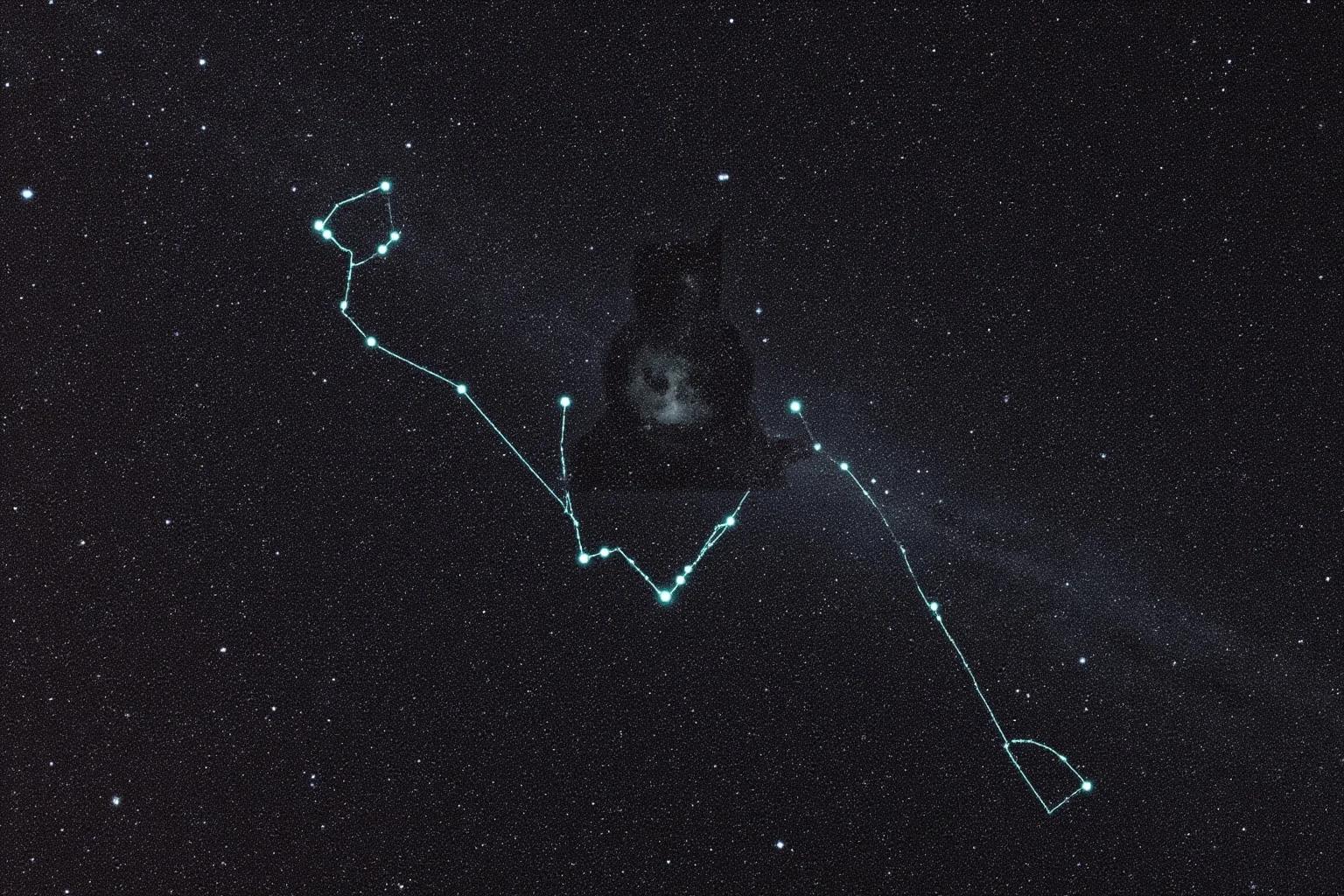
Cassiopeia’s myth casts her as a queen who boasted that her beauty rivaled the sea nymphs, angering Poseidon and setting off the chain of events that led to Andromeda’s ordeal. She’s usually depicted chained to a throne, a fittingly dramatic punishment for the vanity that started it all.
Cassiopeia also has a real place in astronomical history. In 1572, the astronomer Tycho Brahe observed a bright new “star” in this constellation, actually a supernova, that helped overturn the ancient belief that the heavens were fixed and unchanging.
5. Andromeda, the Chained Princess

Andromeda is one of the more genuinely romantic constellations in the sky, telling the story of a princess chained to a rock as a sacrifice and rescued by the hero Perseus. Whatever your view of the older gender politics in the myth, it’s one of the few star stories with a clear rescue-and-romance arc.
The constellation also gives its name to the Andromeda Galaxy, the nearest large spiral galaxy to our own Milky Way. It was one of the first objects that helped astronomers in the 20th century realize the universe contained galaxies far beyond our own.
6. Perseus, the Hero

Perseus is the hero of the Andromeda myth, famous for slaying the snake-haired Medusa and using her severed head as a weapon before rescuing the princess. His constellation sits right next to Andromeda’s in the sky, keeping the story visually intact.
Perseus also gives its name to the Perseid meteor shower, one of the most reliable annual meteor showers, because the shower’s meteors appear to radiate from that part of the sky each August.
7. Pegasus, the Winged Horse

Pegasus, the winged horse, was said to have sprung from Medusa’s blood after Perseus killed her, linking this constellation right back into the same mythic cluster. The horse later carried the hero Bellerophon on his adventures, according to most Greek accounts.
The constellation’s most useful feature isn’t mythological at all: the Great Square of Pegasus, four bright stars forming a large square, is one of the easiest navigation landmarks for beginner stargazers trying to orient themselves in the autumn sky.
8. Leo, the Nemean Lion
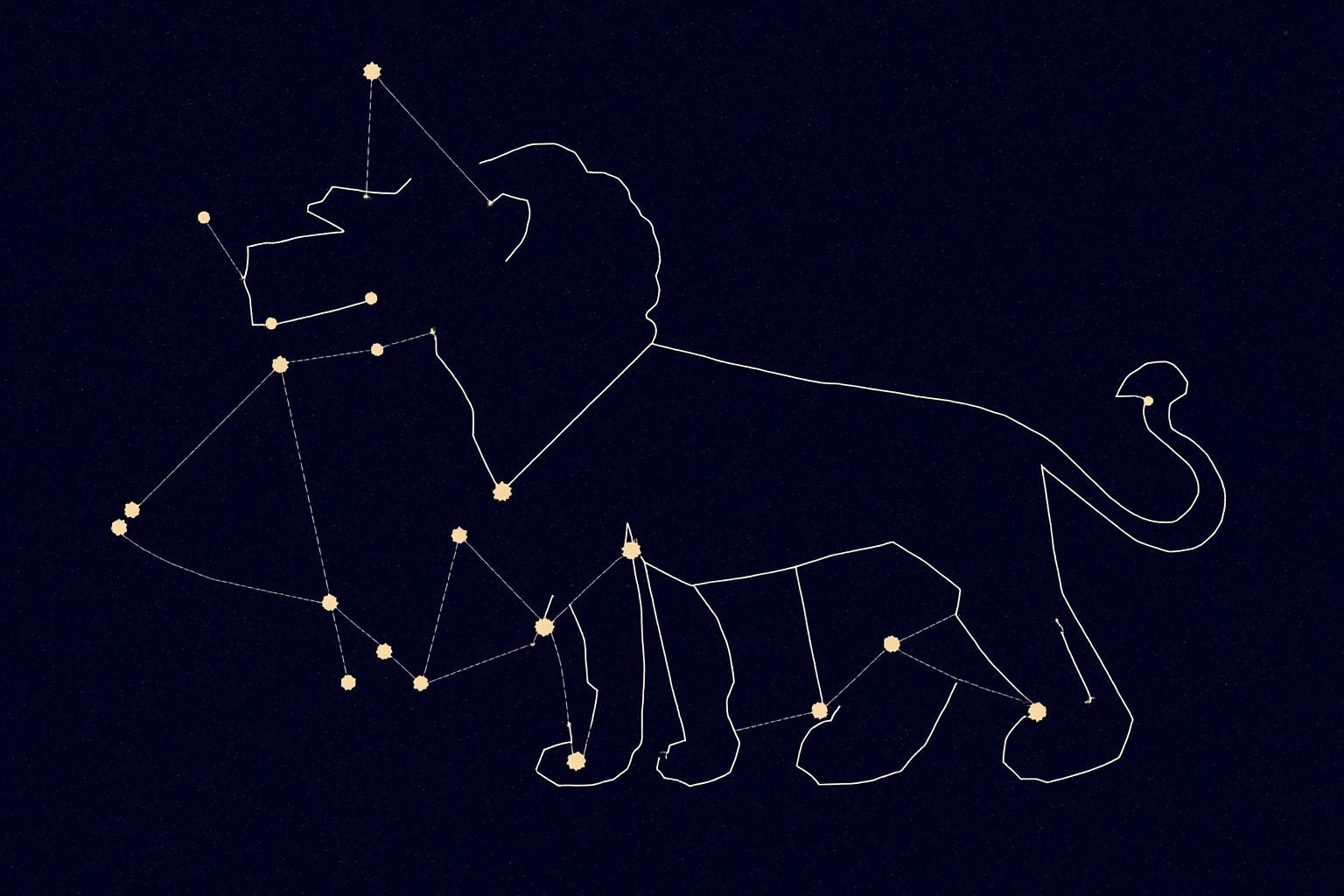
Leo represents the Nemean Lion, the beast Hercules killed with his bare hands as the first of his twelve labors. Leo is also one of the twelve zodiac constellations, patterns the sun appears to pass through over the course of a year.
Some historians believe a lion-shaped constellation appears in Mesopotamian records dating back roughly 4,000 years, making Leo’s basic shape one of the oldest continuously recognized patterns in the sky, even before the Greek myth was attached to it.
9. Scorpius, the Scorpion

Scorpius is a vivid, curling constellation that in Greek myth is the scorpion sent to kill Orion, though ancient sources vary on exactly why. Some tellings place Zeus positioning the two constellations on opposite sides of the sky so the hunter and his killer are never visible at the same time.
Like Leo, Scorpius likely began as a Babylonian zodiac figure well before Greek storytellers folded it into the Orion myth. It remains one of the most visually striking and easily identified constellations for southern-sky observers.
10. Taurus, the Bull
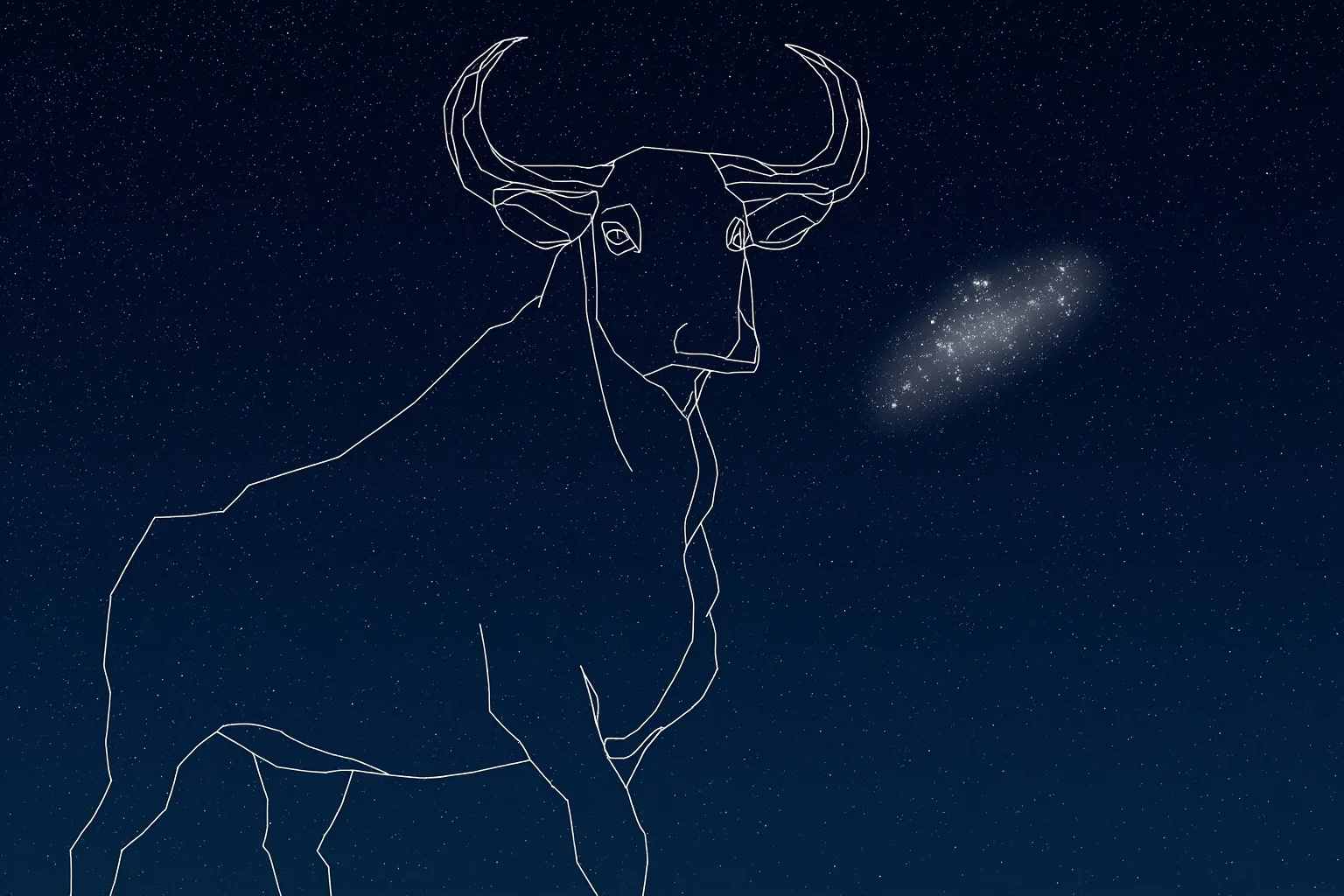
Taurus tells the story of Zeus disguising himself as a magnificent white bull to abduct the princess Europa, a myth referenced across ancient Greek literature. The constellation contains two famous star clusters, the Pleiades and the Hyades, both mentioned in some of the oldest surviving texts, including Homer’s epics.
Some researchers have suggested that Paleolithic cave art, including paintings at Lascaux in France, may depict star clusters resembling Taurus and the Pleiades. That connection is intriguing but remains speculative and isn’t accepted as settled archaeological fact.
11. Gemini, the Twins
Gemini depicts Castor and Pollux, twin brothers in Greek myth who shared an unusually close bond despite one being mortal and the other a demigod son of Zeus. When Castor died, Pollux asked to share his own immortality with his brother, and Zeus honored the request by placing them together in the stars.
It’s a rare constellation story built around loyalty between siblings rather than romance or conquest, which makes Gemini a nice counterpoint on any list of the most famous constellations.
12. Cygnus, the Swan

Cygnus, the Swan, is tied to more than one Greek myth, including the tale of Zeus transforming into a swan and, separately, a story of the musician Orpheus becoming a swan after his death. The constellation forms a distinctive cross shape often called the Northern Cross.
Cygnus sits in a particularly dense, bright stretch of the Milky Way, making it a rewarding target for stargazers even without knowing any of its backstory.
13. Draco, the Dragon
Draco represents the dragon that guarded the golden apples in the Garden of the Hesperides, ultimately slain by Hercules during his labors. It’s a circumpolar constellation from northern latitudes, meaning it never fully sets below the horizon.
Draco has genuine historical significance too: around 3000 BCE, its star Thuban was the closest bright star to Earth’s north celestial pole, making it the “pole star” used by ancient Egyptian astronomers long before Polaris took over that role.
14. Hercules, the Hero
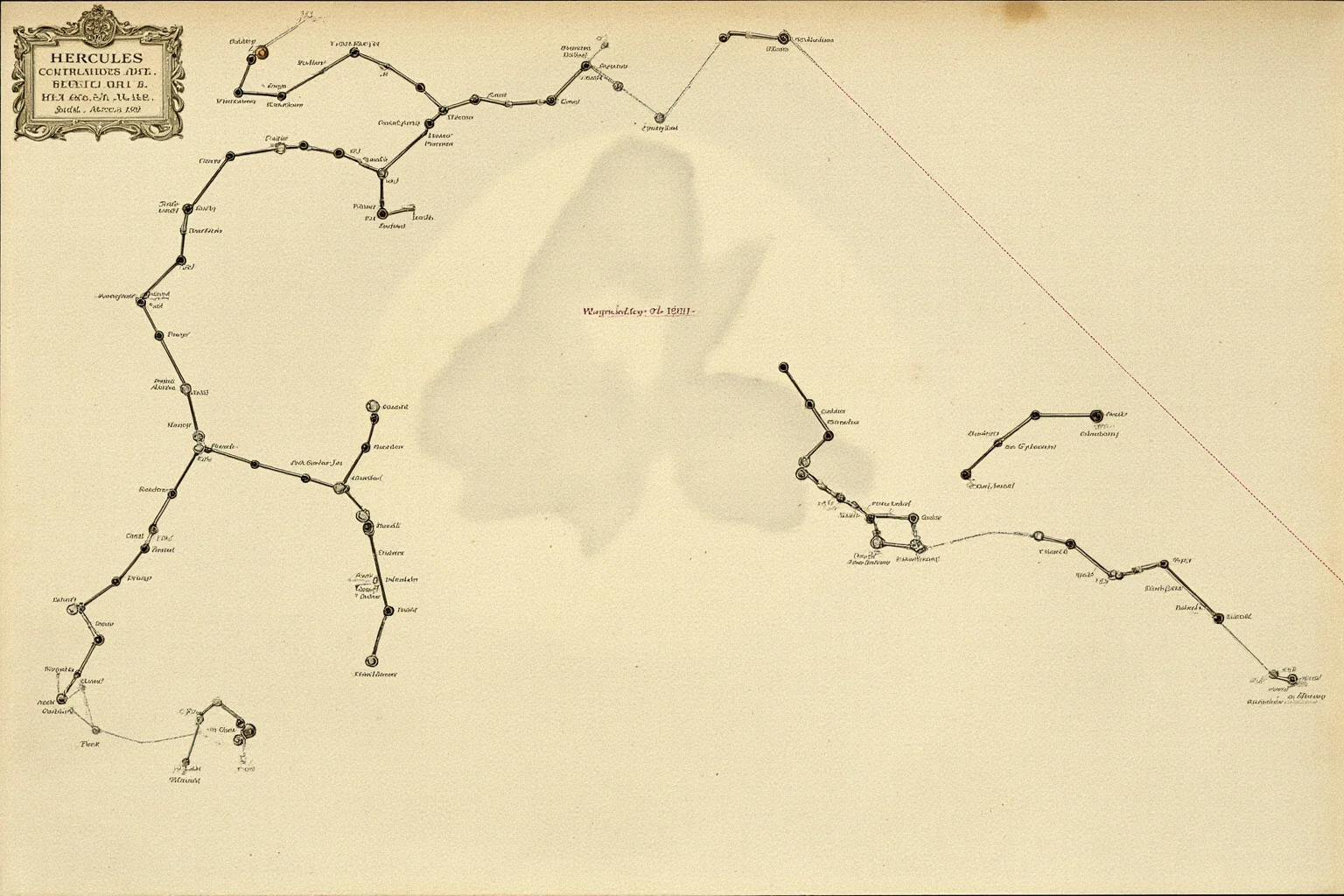
Hercules is named for the Greek hero of the twelve labors, one of mythology’s most famous strongmen. Ironically, despite the larger-than-life myth, the constellation itself is fairly faint and doesn’t contain any especially bright stars.
It does, however, contain the Hercules Globular Cluster (M13), one of the brightest and most studied star clusters visible from the northern hemisphere, and a favorite target for amateur telescopes.
15. Lyra, the Lyre

Lyra represents the lyre of Orpheus, the legendary musician whose playing was said to charm even rocks and rivers. After Orpheus died, the instrument was reportedly thrown into a river, recovered, and placed among the stars by Zeus.
Lyra contains Vega, one of the brightest stars visible from Earth, which briefly served as the northern pole star around 12,000 BCE due to a slow wobble in Earth’s axis called precession. Vega’s brilliance also makes Lyra a strong contender whenever people debate the prettiest constellation in the northern sky.
16. Crux, the Southern Cross
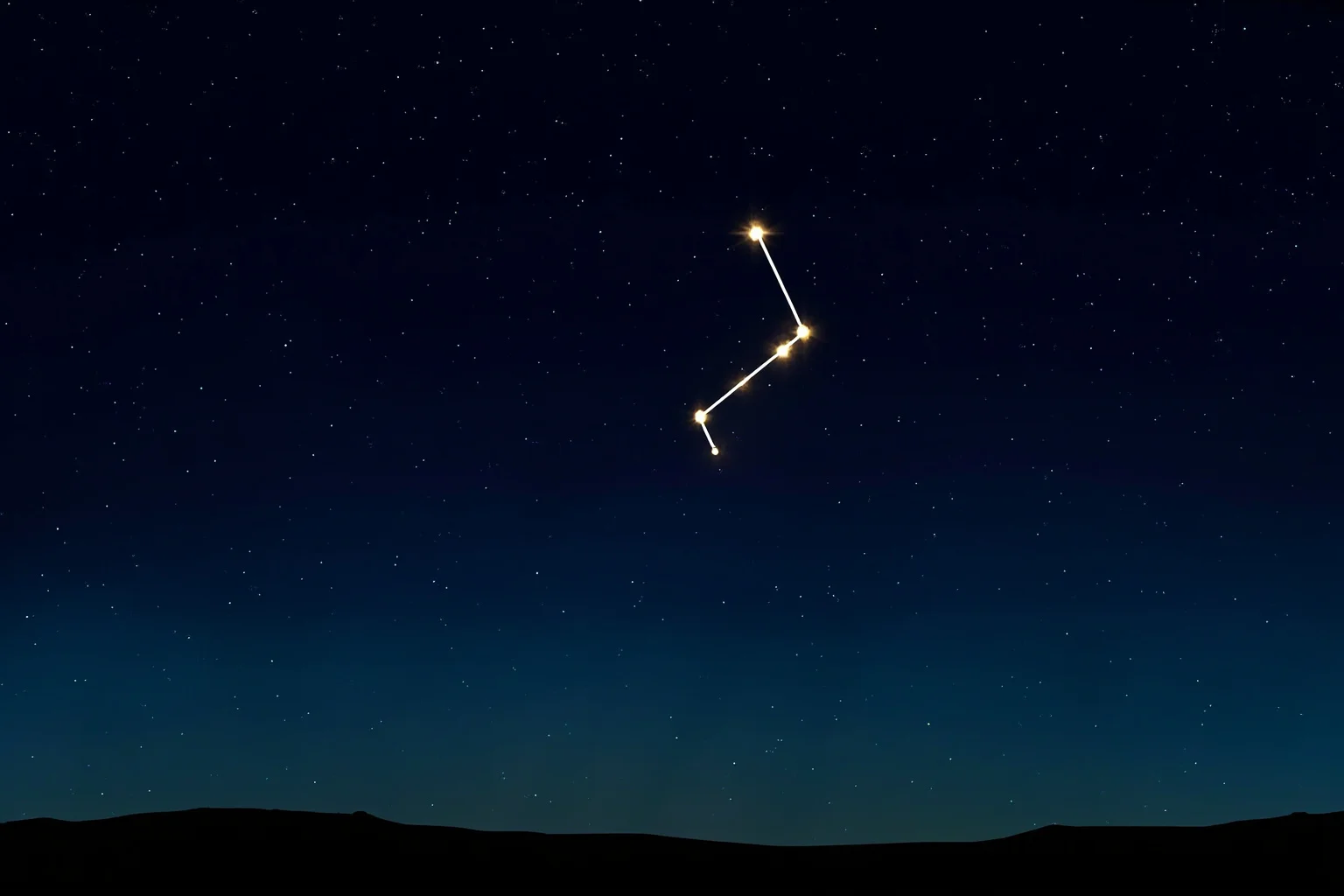
Crux, the Southern Cross, is only visible from the southern hemisphere and parts of the low northern latitudes, and it’s actually the smallest of the 88 modern constellations by area. Ancient Greek astronomers could glimpse it faintly, but the slow shift of Earth’s axis eventually carried it out of view for most of Europe by the Middle Ages.
Crux became essential for southern hemisphere navigation, helping sailors and explorers locate the south celestial pole. Its unmistakable shape now appears on the flags of Australia, New Zealand, Brazil, and Papua New Guinea, among others.
17. Canis Major and Sirius

Canis Major, the Great Dog, is traditionally depicted as one of Orion’s hunting companions. It contains Sirius, the brightest star in the entire night sky, easily outshining every other star visible from Earth.
Ancient Egyptians tracked Sirius’s annual reappearance in the dawn sky to predict the Nile’s flooding season, tying this star directly into their calendar and agricultural planning. That practical astronomy predates most of the Greek mythology now associated with the constellation.
18. Aquarius, the Water Bearer
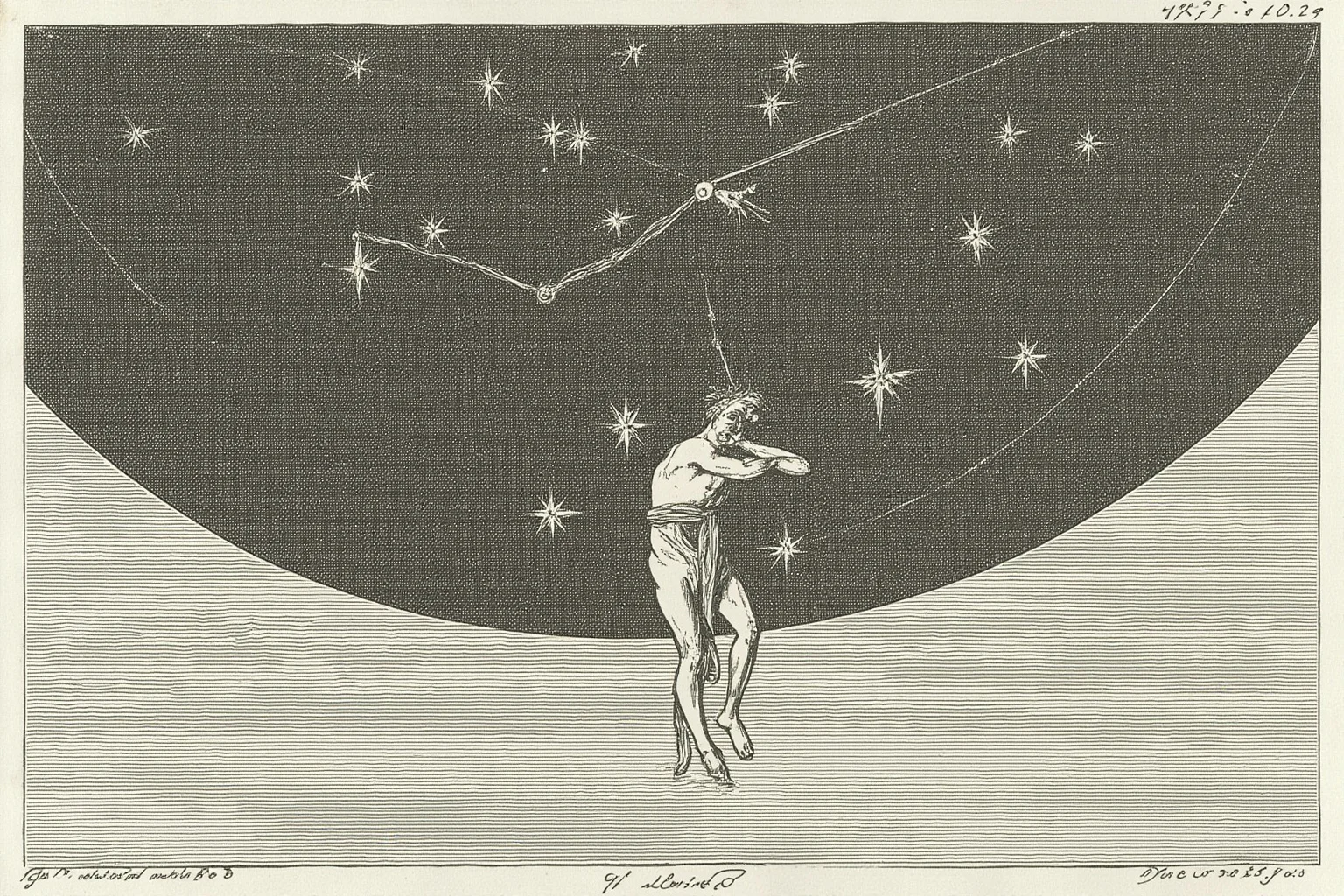
Aquarius, one of the oldest zodiac constellations, is often linked to Ganymede, a youth carried off by Zeus to serve as cupbearer to the gods. Some scholars also connect Aquarius-style water imagery to older Babylonian flood traditions, similar to elements found in the Epic of Gilgamesh.
The constellation is probably better known today through the pop-culture idea of the “Age of Aquarius,” a real astronomical concept tied to precession, though its cultural meaning owes more to astrology than to astronomy.
19. Corona Borealis, the Northern Crown

Corona Borealis is a small, curved arc of stars with a genuinely sweet origin story: in Greek myth, the wine god Dionysus gave the crown to Ariadne, either as a wedding gift or a token of love, and it was later placed in the sky. Of all the entries on this list, it’s one of the clearest examples of romantic constellations built on a gesture rather than a rescue or conquest.
Despite its modest size and brightness, its neat semicircular shape makes it easy to pick out once you know where to look.
20. Argo Navis, the Ship That Got Too Big
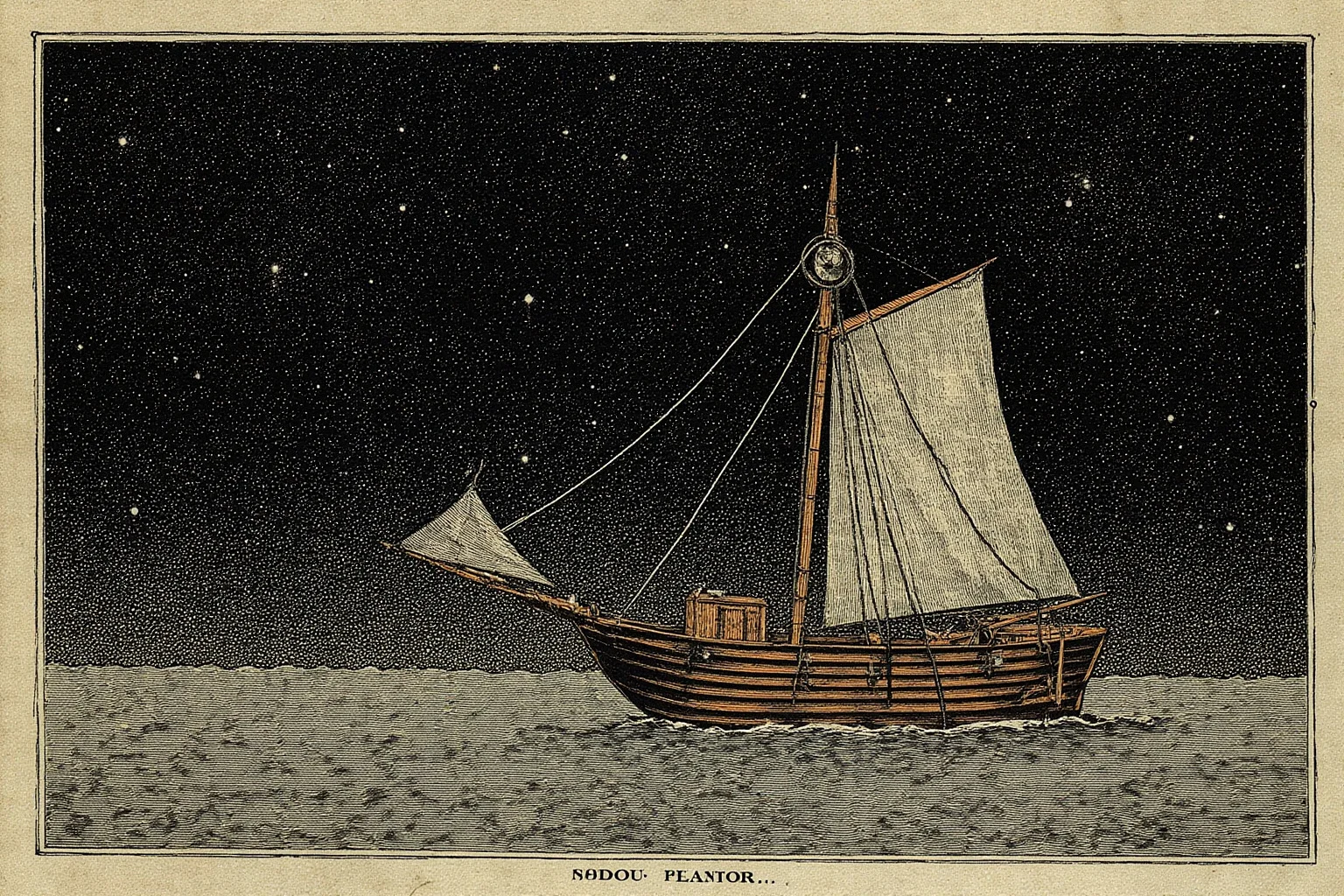
Argo Navis honored the ship Jason and the Argonauts sailed in search of the Golden Fleece, and it was once one of the largest constellations in the ancient sky. It became so unwieldy for astronomers to work with that in the 18th century, French astronomer Nicolas-Louis de Lacaille split it into three (later four) separate constellations: Carina, Vela, Puppis, and Pyxis.
Argo Navis is a great example of a lost constellation that wasn’t erased so much as broken into more manageable pieces, all of which still exist on modern star charts today.
21. Quadrans Muralis, the Vanished Instrument
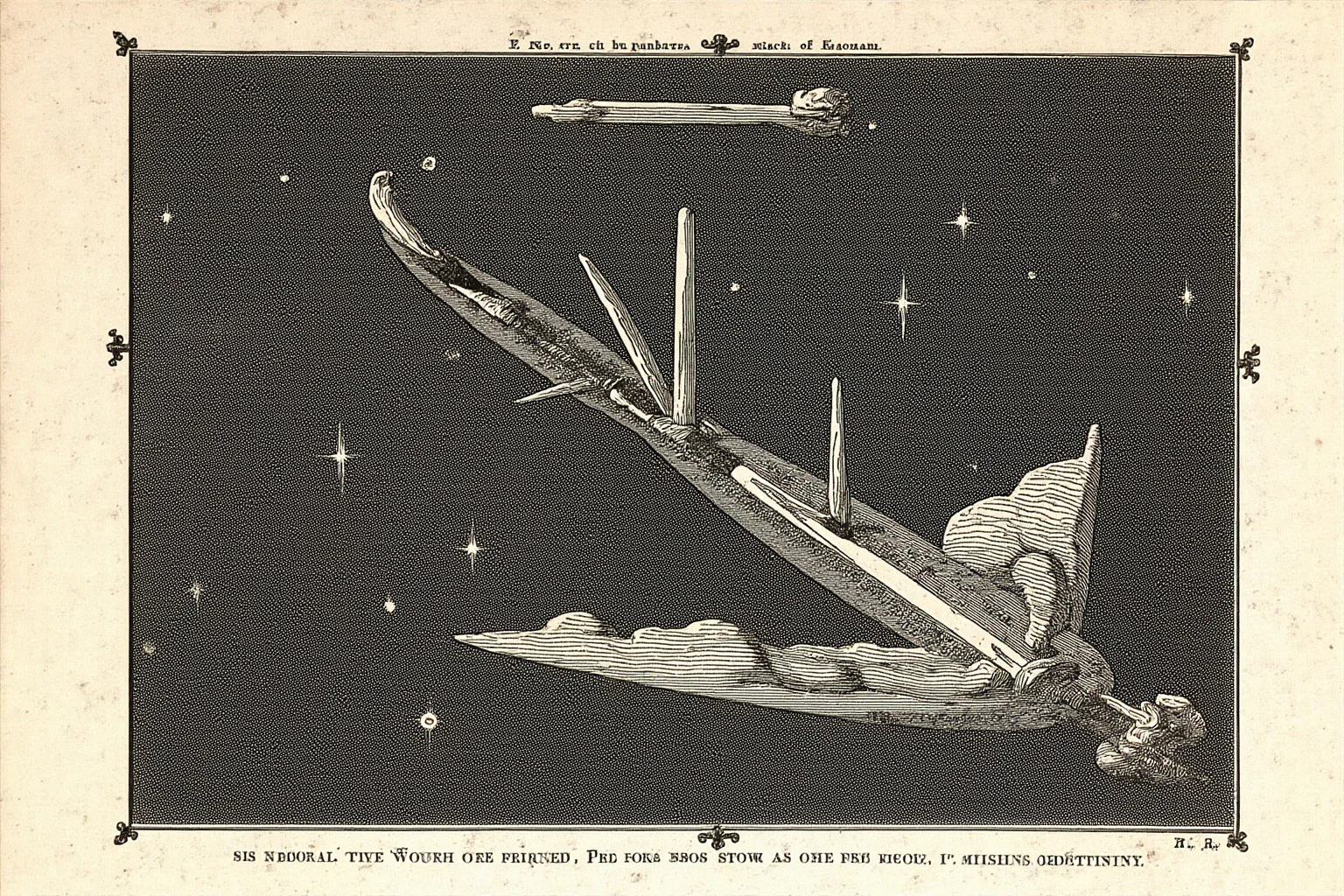
Quadrans Muralis, or the Mural Quadrant, was introduced by French astronomer Jérôme Lalande in 1795 to commemorate a large astronomical instrument used for measuring star positions. It never made the final cut when the IAU standardized the modern list of 88 constellations in the 20th century.
Curiously, its name lives on anyway: the Quadrantid meteor shower, one of the more reliable annual meteor showers, is still named after this constellation even though Quadrans Muralis itself no longer officially exists.
22. Antinous, the Emperor’s Tribute
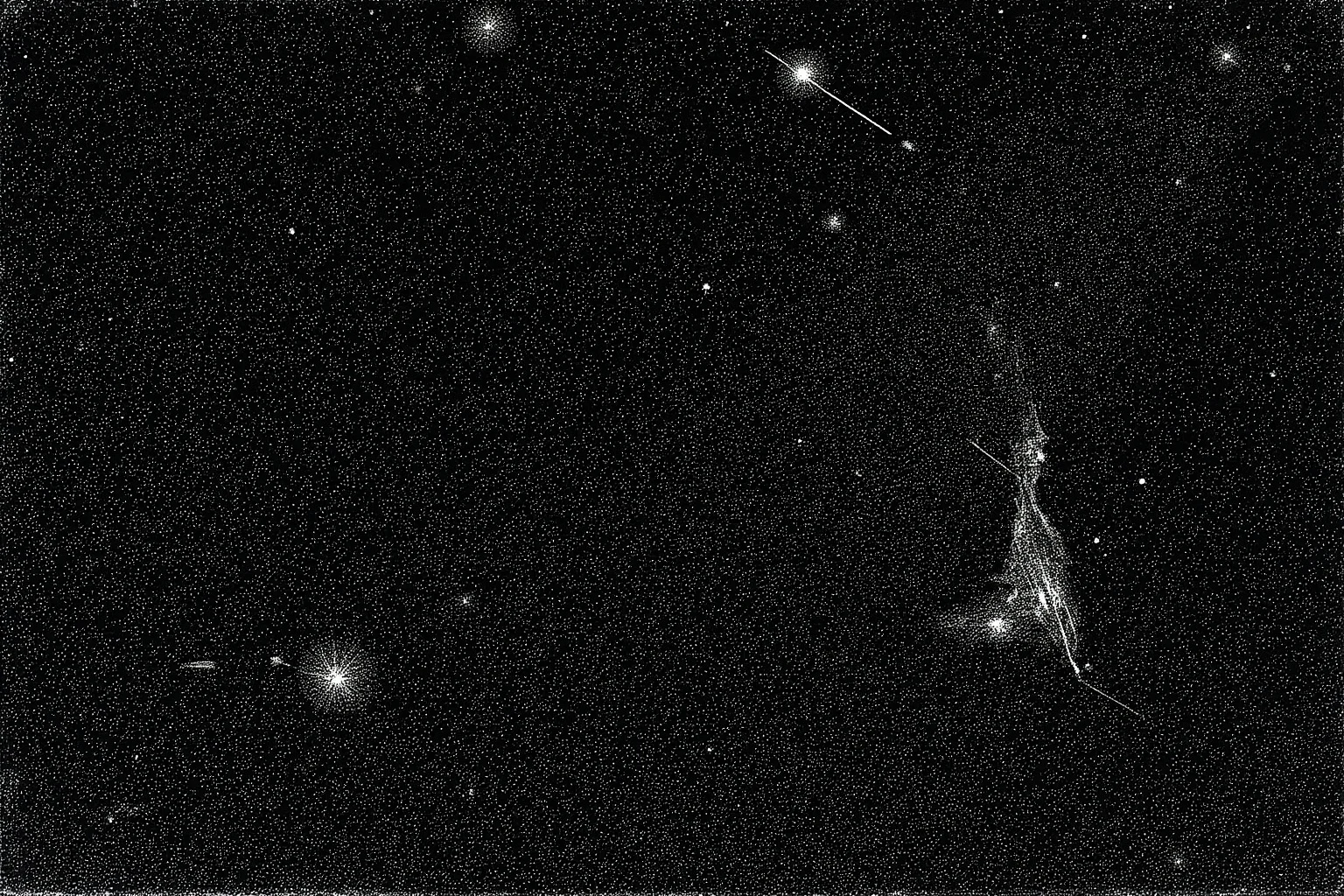
Antinous is one of the more unusual lost constellations because it wasn’t born from ancient Greek myth at all. The Roman Emperor Hadrian created it in the 2nd century CE to honor Antinous, a young companion who drowned in the Nile, placing the new constellation near the eagle-shaped Aquila.
Star charts included Antinous for centuries, but like Quadrans Muralis, it didn’t survive the IAU’s 1930 standardization. It remains one of the clearest examples of a constellation created for real historical and political reasons rather than mythology.
Why These Star Stories Still Matter
Looking across this list, the most famous constellations turn out to be a patchwork of independent traditions rather than one tidy mythology. Babylonian shepherds, Greek poets, Egyptian priests, and 18th-century French astronomers all left fingerprints on the same 88 official patterns we use today.
The lesser known and lost constellations are just as revealing. Antinous shows how personal and political motives could shape ancient star charts, while Quadrans Muralis and Argo Navis show how even well-established constellations could be split, renamed, or quietly dropped as astronomy became more standardized.
Next clear night, it’s worth stepping outside and picking out just one or two of these shapes for yourself. Knowing the real, sometimes messy history behind a constellation story tends to make the sky feel a lot more interesting than the tidy myth alone ever could.
Frequently Asked Questions
What are the most famous constellations?
Orion, Ursa Major, Cassiopeia, Leo, Scorpius, and the zodiac constellations are generally considered the most famous constellations because they're bright, easy to spot, and carry well-documented myths. Their visibility from most inhabited parts of Earth is a big reason they became so widely recognized across ancient cultures.
What are the 7 most popular constellations?
A common shortlist of the most popular constellations includes Orion, Ursa Major, Ursa Minor, Cassiopeia, Leo, Scorpius, and Taurus. These七 show up repeatedly in stargazing guides because they're bright, distinctive, and tied to some of the best-known myths in Greek and Babylonian tradition.
What is the rarest constellation?
If 'rarest' means hardest to see, that title often goes to Crux, the Southern Cross, since it's only visible from the southern hemisphere and low northern latitudes. Crux also happens to be the smallest of the 88 official constellations by area, which adds to its rare, compact reputation.
What are some cool facts about constellations?
A few cool facts about constellations: there are 88 officially recognized today, several constellations like Argo Navis were later split into smaller ones, and a few, such as Antinous and Quadrans Muralis, were dropped entirely when astronomers standardized the sky in the 20th century. The Quadrantid meteor shower is still named after a constellation that no longer officially exists.
What are some lesser known constellations?
Lesser known constellations include Corona Borealis, Lacerta, Sextans, and the now-obsolete Antinous and Quadrans Muralis. Many of these are small, faint, or historically interesting rather than visually striking, which is why they never gained the popularity of constellations like Orion or Leo.
What is the history of constellations?
Constellation history stretches back to Babylonian astronomers who tracked star patterns for calendars and agriculture, followed by Greek astronomers like Ptolemy, who catalogued 48 constellations in his 2nd-century work the Almagest. The modern list of 88 constellations wasn't finalized until the International Astronomical Union standardized their names and boundaries in 1922 and 1930.

Alex Warren
Related Articles





