
Ancient Greece gave the world democracy, theater, the Olympics, and a huge chunk of the vocabulary we still use today. But beyond the marble columns and philosopher busts, ancient Greek civilization was stranger, funnier, and far more human than most textbooks let on.
If you’ve ever searched for fun facts about ancient Greece or wondered what the ancient Greeks actually did for fun, you’re in the right place. Below are 25 fascinating, well-documented, and occasionally jaw-dropping facts about ancient Greece — covering everything from Spartan childhoods to ancient vending machines. We’ve also flagged the popular legends that historians can’t fully confirm, because good history writing means separating the myth from the marble.
TL;DR: Ancient Greece was a patchwork of fiercely independent city-states whose everyday habits — nude athletics, painted statues, urine mouthwash, and all — were often stranger than the myths that followed them.
1. Ancient Greece Wasn’t a Single Country
When people say “ancient Greece,” they usually picture one unified nation, but that’s not quite right. Ancient Greece was actually a collection of independent city-states, or poleis, like Athens, Sparta, Corinth, and Thebes, each with its own government, army, and customs.
These city-states shared a language, religion, and cultural identity, but they frequently went to war with each other. This fragmented structure is one of the more overlooked facts about greek history, and it explains why Greek civilization produced so many different political experiments at once, from Athenian democracy to Spartan militarism.
2. The Original Olympics Were Nude — and Women Couldn’t Compete
The ancient Olympic Games, first recorded in 776 BCE at Olympia, were dedicated to Zeus and open only to free Greek men. Athletes competed completely nude, a practice historians believe was tied to ideals of physical perfection and religious ritual rather than mere practicality.
Women were barred from competing and, in most cases, even from attending as spectators. There was a separate athletic festival for unmarried women, the Heraia, held in honor of the goddess Hera, though it was smaller in scale and less documented.
3. Athenian Democracy Had a Very Small Voter Pool
Athens is often celebrated as the birthplace of democracy, and that reputation is well earned. But “democracy” in Athens only applied to adult male citizens, which historians estimate made up roughly 10–20% of the total population.
Women, enslaved people, and foreign residents (called metics) had no voting rights at all. It’s one of those quick facts about ancient Greece that tends to surprise people who assume Athenian democracy looked anything like a modern one.
4. Spartan Boys Left Home at Age Seven

Spartan society revolved around military readiness, and that training started shockingly early. At age seven, Spartan boys were taken from their families and enrolled in the agoge, a brutal state-run education system focused on discipline, endurance, and combat skills.
They lived in communal barracks, ate simple rationed food, and were encouraged to compete constantly with each other. This system produced some of the most feared soldiers in the ancient world, but it also meant Spartan childhood looked nothing like life in Athens or Corinth.
5. The Marathon Story Is Probably a Legend
One of the most repeated facts about ancient Greeks is the tale of a messenger named Pheidippides running from Marathon to Athens to announce victory over the Persians, then dropping dead from exhaustion. It’s a dramatic story, and it’s why we call long-distance races “marathons” today.
The trouble is, the earliest detailed accounts of this specific run appear centuries after the actual Battle of Marathon in 490 BCE, and the historian Herodotus, writing closer to the event, doesn’t mention it. Most historians treat it as a later embellishment rather than a confirmed historical fact.
6. Greek Doctors Wrote an Oath Still Used Today
Hippocrates of Kos, often called the “father of medicine,” is credited with shifting Greek medical thinking away from superstition and toward observation and natural causes. The Hippocratic Corpus, a collection of medical texts associated with his school, laid groundwork for clinical medicine.
The Hippocratic Oath, a pledge of ethical conduct for physicians, is loosely based on principles from this tradition. Modern versions are still recited in many medical schools today, making it one of the longest-running legacies in all of Greek civilization.
7. The Antikythera Mechanism Was an Ancient Analog Computer
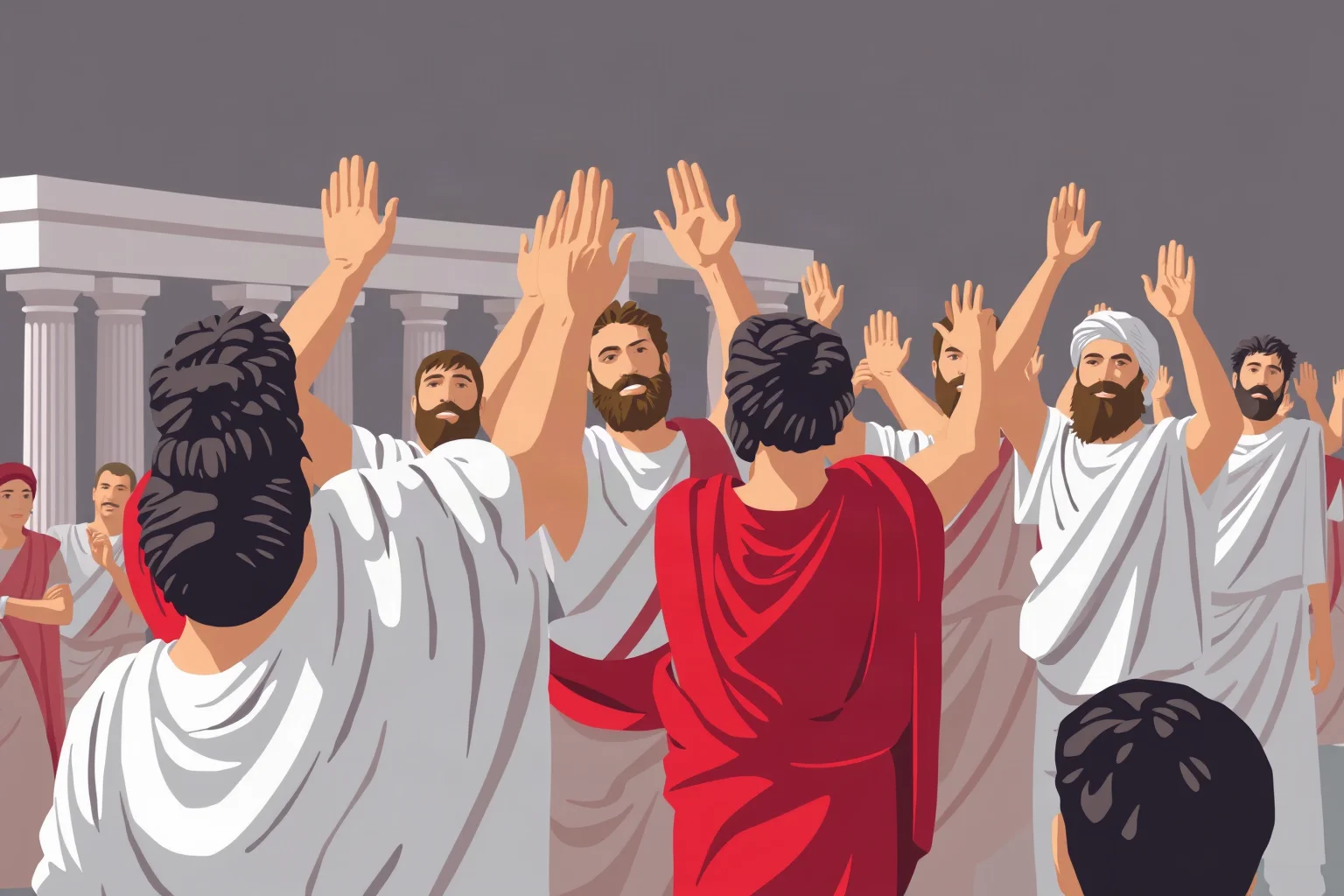
In 1901, divers recovered a corroded bronze device from a shipwreck near the Greek island of Antikythera. Decades of research revealed it was an intricate geared mechanism used to track astronomical positions, predict eclipses, and follow lunar cycles, dating to around the 2nd century BCE.
Its complexity stunned historians because nothing else like it appears in the archaeological record for over a thousand years. It remains one of the most genuinely unusual facts about ancient Greece: they built something resembling a mechanical computer long before the technology to mass-produce one existed.
8. Greek Statues Were Painted in Bright Colors
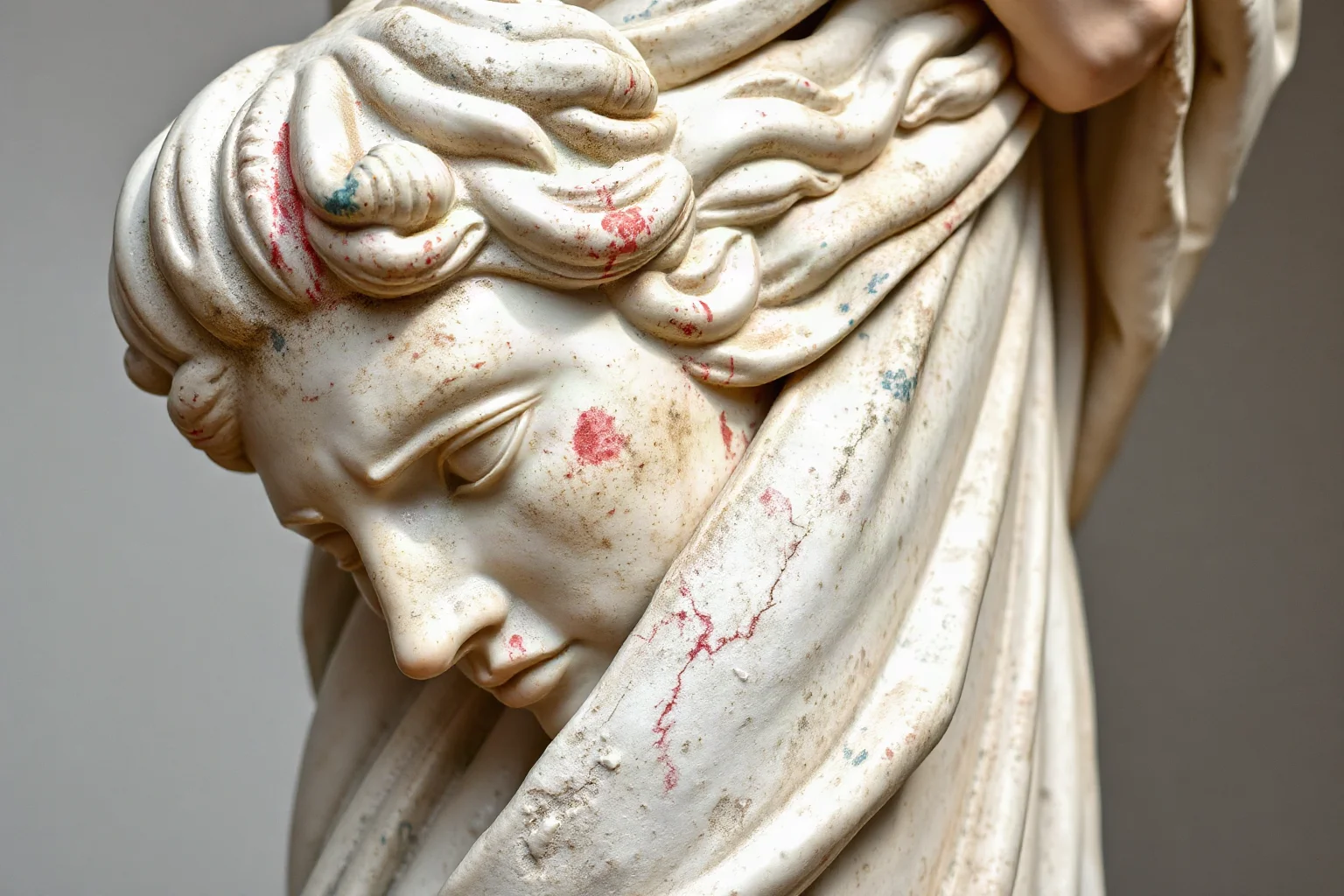
The pure white marble statues in museums today give a misleading impression of ancient Greek art. Pigment traces and modern imaging techniques have shown that most Greek statues and temples were originally painted in vivid colors — reds, blues, yellows, and gold detailing.
Over the centuries, the paint simply wore away, leaving the bare stone we associate with “classical” style. This is one of those weird facts about ancient Greece that genuinely changes how you picture the ancient world.
9. The Oracle at Delphi May Have Inhaled Gas Fumes
The Oracle of Delphi, a priestess known as the Pythia, was consulted by kings and commoners alike for prophecies believed to come from the god Apollo. Ancient writers described her entering a trance-like state before speaking in riddles.
Some modern geologists have proposed that ethylene or similar gases seeping from underground fault lines near the temple could explain her altered state. It’s a compelling theory, but it remains debated among historians and scientists rather than confirmed fact.
10. Ancient Greeks Really Did Use Urine as Mouthwash
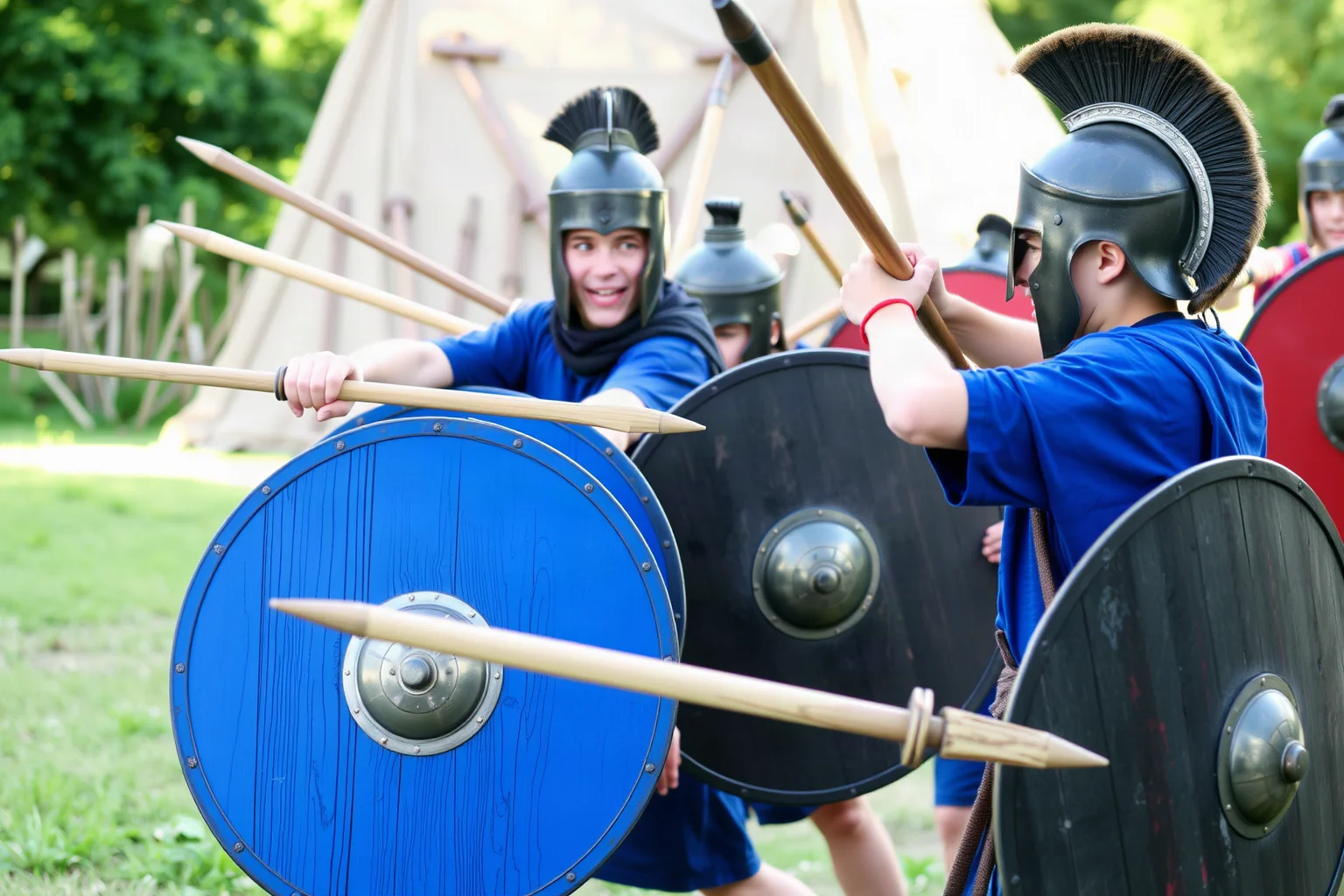
It sounds like a joke, but ancient sources suggest urine, particularly aged or fermented urine, was used in parts of the ancient world for cleaning teeth and even laundering clothes, due to the ammonia it contains. Some Greek and later Roman writers referenced similar hygiene practices.
This is exactly the kind of funny ancient greek fact that goes viral because it’s true, gross, and oddly logical from a chemistry standpoint. Ammonia genuinely has cleaning properties, even if the source was less than pleasant.
11. Spartan Women Had More Freedom Than Most Greek Women
While women across most Greek city-states had limited legal rights and were largely confined to household duties, Spartan women were a notable exception. They could own and manage property, receive physical education, and speak more freely in public.
This relative independence shocked other Greeks, who saw Spartan customs as unusual and even scandalous. It’s a genuinely interesting fact about Greek civilization that challenges the assumption that all Greek women lived identical lives.
12. The Word “Idiot” Comes From Greek Civic Life
In ancient Athens, the word “idiotes” referred to a private citizen who chose not to participate in public affairs or politics. Civic participation was considered a duty and a mark of a good citizen, so opting out was viewed with real disdain.
Over time, the word’s meaning shifted through Latin and English until it became an insult for someone foolish. It’s a small but telling detail about how seriously the Greeks took public life.
13. Greek Symposiums Were Drinking Parties With Rules
A symposium was a formal gathering where Greek men drank wine, discussed philosophy, listened to music, and debated politics. Crucially, the wine was almost always mixed with water, since drinking it undiluted was considered excessive and even barbaric.
There was a designated “symposiarch” who decided the wine-to-water ratio for the evening. These gatherings were as much about intellectual exchange as indulgence, blending what we’d now call fun facts about greeks with genuine philosophical tradition.
14. Athenian Coins Featured an Owl, Not a Ruler’s Face

Unlike many later civilizations that stamped coins with a monarch’s portrait, classical Athens minted its famous silver “owl” coins (tetradrachms) featuring the goddess Athena on one side and her sacred owl on the other. These coins were widely trusted and circulated across the Mediterranean trade world.
Their reliability made them something like an ancient international currency. Merchants from Egypt to the Black Sea accepted Athenian owls because their silver content was consistently trustworthy.
15. Board Games and Dice Were a Favorite Pastime
So, what did the ancient greeks do for fun when they weren’t at the theater or the gymnasium? A lot of them played games. Archaeologists have found dice made from bone, board games similar to backgammon, and knucklebones (astragaloi) used both for gambling and children’s games.
Wealthier households sometimes had elaborately carved game boards. These pastimes show a side of daily life that rarely makes it into history class: ordinary Greeks killing time much the way people do now.
16. The Greeks Built Some of the Earliest Alarm Clocks
Plato is credited with designing a water clock, or clepsydra, modified with a whistling mechanism to signal the start of his lectures at dawn. Water clocks more generally were used across Greece to measure time for speeches, legal proceedings, and even limit how long a person could talk in court.
These devices worked by measuring the steady flow of water from one container to another. It’s a surprisingly practical bit of Greek civilization that predates mechanical clocks by well over a thousand years.
17. Left-Handedness Was Considered a Bad Omen
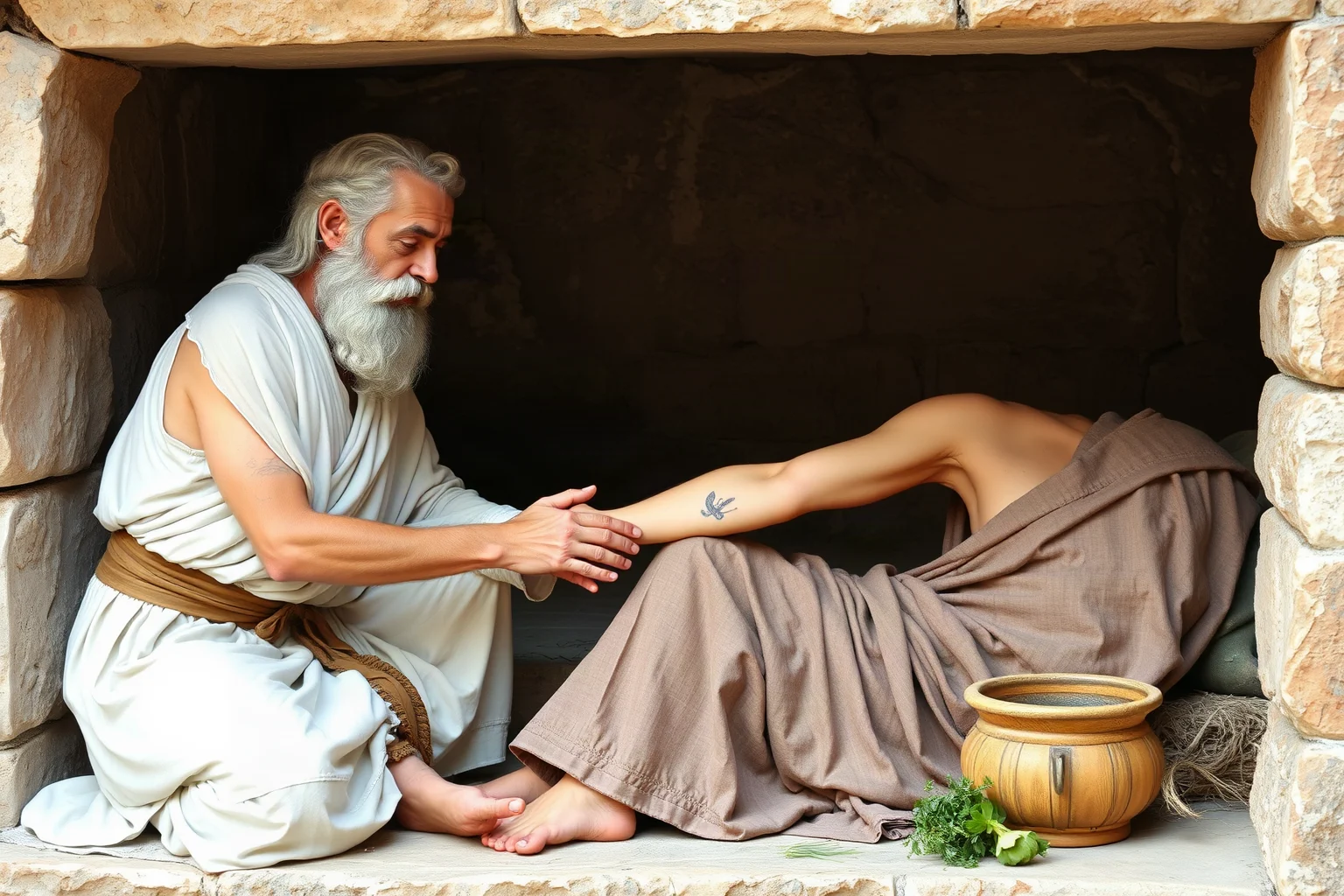
Ancient Greeks generally viewed the right side as favorable and the left side as unlucky or even ominous, a bias reflected in language and religious ritual. The word “sinister” itself descends from the Latin word for “left,” carried through a broader ancient Mediterranean association between left-handedness and misfortune.
This superstition wasn’t unique to Greece, but it shows up repeatedly in Greek writing and ritual practice. It’s a small, strange window into how symbolic the ancient world could be about something as ordinary as which hand you used.
18. Greek Theater Masks Let Actors Play Multiple Roles
Greek theater, performed at massive open-air venues like the Theater of Dionysus in Athens, used large painted masks made of linen, cork, or wood. These masks allowed a small cast of male actors to play multiple characters, including women, within the same performance.
The exaggerated expressions also helped audiences sitting far from the stage read a character’s emotions. Comedy and tragedy were distinct genres with their own competitions, and playwrights like Sophocles, Euripides, and Aristophanes competed for prizes at religious festivals.
19. Hero of Alexandria Built an Early Vending Machine
While Hero of Alexandria worked in the later Hellenistic Greek tradition (Ptolemaic Egypt, 1st century CE), his inventions still count among the most unusual facts about ancient Greece’s engineering legacy. He designed a coin-operated device that dispensed a measured amount of holy water when a coin was dropped in, using simple lever and weight mechanics.
He’s also credited with early experiments in steam power through a device called the aeolipile. None of these ideas led to an industrial revolution in his lifetime, but they show the Greeks were tinkering with automation far earlier than most people assume.
20. Ancient Greek Beauty Standards Favored the Unibrow

In certain periods of ancient Greek culture, particularly among women, a single continuous eyebrow was considered attractive and was even associated with intelligence and modesty. Some women reportedly used dark powders or even applied soot to darken the brow and create the look artificially.
It’s a genuinely funny ancient greek fact precisely because it’s the opposite of many modern beauty standards. Ideals of beauty, it turns out, have always been culturally specific and prone to change.
21. Archimedes and the (Possibly Exaggerated) “Eureka” Moment
Archimedes of Syracuse was a brilliant mathematician and inventor credited with foundational work in geometry, physics, and engineering. According to a popular legend recorded centuries later, he discovered the principle of buoyancy while sitting in a bathtub and ran through the streets naked shouting “Eureka!” (“I have found it!”).
The story is beloved, but like the marathon legend, it appears in later Roman-era retellings rather than contemporary sources. Whether or not the naked sprint really happened, Archimedes’ actual scientific contributions were very real and hugely influential.
22. The Greek Alphabet Gave Us the Word “Alphabet” Itself
The Greek alphabet, developed around the 8th century BCE by adapting the Phoenician writing system, was the first in history to include distinct vowel letters. Its first two letters, alpha and beta, are literally where the English word “alphabet” comes from.
Greek letters also went on to directly shape the Latin alphabet used in English today, as well as the Cyrillic alphabet used in Russian and other Slavic languages. It’s one of the most far-reaching, least flashy facts about Greek history you’ll find.
23. Greek City-States Founded Colonies All Over the Mediterranean
Starting around the 8th century BCE, Greek city-states sent out waves of settlers to found colonies across the Mediterranean and Black Sea coastlines, from southern Italy and Sicily to the shores of modern-day Turkey, France, and Libya. Cities like Naples (originally Neapolis) and Marseille (originally Massalia) began as Greek settlements.
This expansion spread Greek language, religion, and architecture far beyond the Greek mainland. It’s a major reason Greek civilization influenced so much of the ancient Mediterranean world, not just the region we now call Greece.
24. Slavery Was Widespread and Economically Essential
It’s easy to romanticize ancient Greek civilization, but enslaved people were a fundamental part of its economy and society, working in households, mines, farms, and workshops. In Athens, historians estimate enslaved people may have made up a substantial portion of the total population, though exact figures are debated.
Even democratic Athens, celebrated for its political innovation, depended heavily on enslaved labor. Any honest list of facts about ancient greeks has to include this uncomfortable reality alongside the philosophy and art.
25. Greek Philosophy Still Shapes How We Think Today
Figures like Socrates, Plato, and Aristotle didn’t just influence ancient thought — their methods of questioning, logic, and ethics remain foundational to Western philosophy, science, and education. The Socratic method, for instance, is still used in law schools and classrooms today.
Aristotle’s work on biology, logic, and politics influenced scholars for nearly two thousand years after his death. Of all the facts about greek civilization on this list, this one might have the longest-lasting, most tangible impact on daily modern life.
The Bigger Picture
Ancient Greece wasn’t a tidy, marble-white world of togas and solemn philosophers. It was messy, inventive, occasionally brutal, and often surprisingly funny, full of drinking parties with strict etiquette, painted statues, and superstitions about which hand you used.
That mix of brilliance and weirdness is exactly why ancient Greek civilization still fascinates historians and casual readers alike thousands of years later. The next time someone asks for a quick fact about ancient Greece, you’ll have twenty-five to choose from — and a few myths you can politely correct along the way.
Frequently Asked Questions
What are some good facts for ancient Greece beginners should know?
A great starting point is that ancient Greece wasn't one nation but a collection of independent city-states like Athens and Sparta, each with its own laws and customs. Other solid basics include that the Olympics began as a religious festival around 776 BCE, and that Greek philosophy, theater, and democracy still influence modern life.
What did the ancient Greeks do for fun?
Ancient Greeks enjoyed theater festivals, athletic competitions, and symposiums (structured social gatherings involving wine, music, and conversation). They also played board games and dice games, including one called knucklebones, much like people play games and watch entertainment today.
What is one weird fact about ancient Greece?
One of the strangest verified facts is that ancient Greek statues were originally painted in bright colors, not the plain white marble we see in museums today. The paint simply faded or wore away over the centuries, leaving a misleading impression of ancient Greek art.
How many city-states existed in ancient Greece?
Historians estimate there were hundreds of Greek city-states (poleis) scattered across the mainland, islands, and Mediterranean coastline, though the exact number is debated and changed over time. Athens, Sparta, Corinth, and Thebes were among the most powerful and well-documented.
Did women have rights in ancient Greece?
Women's rights varied significantly between city-states and were generally limited compared to men, especially regarding voting and property ownership. Sparta was a notable exception, where women had more legal and social freedoms than women in Athens or most other Greek city-states.
Why is ancient Greek civilization still important today?
Ancient Greek civilization laid foundations for Western democracy, philosophy, medicine, theater, and mathematics that are still in use today. Concepts like the Hippocratic Oath, the Socratic method, and democratic voting all trace their roots back to ancient Greece.

Alex Warren
Related Articles