The 1920s gave us jazz, Art Deco, and a faster celebrity culture. It also gave us birth certificates full of 20s names that mixed old-fashioned seriousness with fresh, clipped nicknames.
These names of the 1920s can seem surprisingly traditional today. Behind the flapper dresses and speakeasies, most parents still leaned toward biblical, royal, and family names while new influences crept in at the edges.
TL;DR: The most irresistible 1920s baby names blended old biblical and royal favorites with rising nickname-names, proving the decade was more traditional at heart than its glamorous image suggests.
How Parents Actually Chose 20s Names
The Social Security Administration's baby-name data, available from 1880 onward, reveals a clear pattern. The top 20s names were not jazz-age inventions; many were older names riding decades of momentum.
Parents often named babies after grandparents, aunts, and uncles. That custom kept names like Mary, John, and William at the top even as fashion, music, and technology changed quickly.
At the same time, movie magazines and newspapers made star names more visible. A popular actress or screen character could give a name a temporary boost without displacing the classics.
Immigration also shaped the ranking of names of the 1920s. Families often chose names that worked in English and in another language, which helped classics like Anna and Joseph stay strong.
What Counted as a Unique Name from the 1920s?
A unique name from the 1920s rarely meant a made-up spelling or an invented sound. It was more likely a nickname like Betty, a surname-style choice like Evelyn, or a revived ancient name like Doris that felt fresh compared with the older Marys and Margarets.
Some of these names look ordinary now, but in the 1920s they signaled modern taste. The decade quietly expanded what a formal name could be, especially for girls, by letting shorter and softer forms stand on their own.
The term 'unique names from the 1920s' can be misleading because few parents wanted to be completely original. Even a fresh-sounding choice usually had older roots or a familiar nickname buried inside it.
Why the Flapper Myth Doesn't Explain the Name Charts
The flapper image of the 1920s is strong, but it did not dominate birth certificates. Even as hemlines rose and jazz spread, most parents wanted names that would wear well in a small town, a parish, or a schoolroom.
Star power gave certain names a push, but it rarely unseated the biblical and family names at the top. The decade's naming story is less about rebellion and more about slow adjustment.
How Historians Read 1920s Name Data
Social Security data covers most American births, but early records have gaps. Some states were slower to report, and spelling variations could split a name's total into several lines.
Historians treat the exact rankings as strong evidence of broad patterns, not as a perfect census. That means a name like Mary was undeniably dominant, while smaller differences between lower-ranked names deserve caution.
That caution matters when discussing unique names from the 1920s. A name could be regionally common even if it never cracked the national top twenty.
The Girls' Names Parents Couldn't Resist
1. Mary
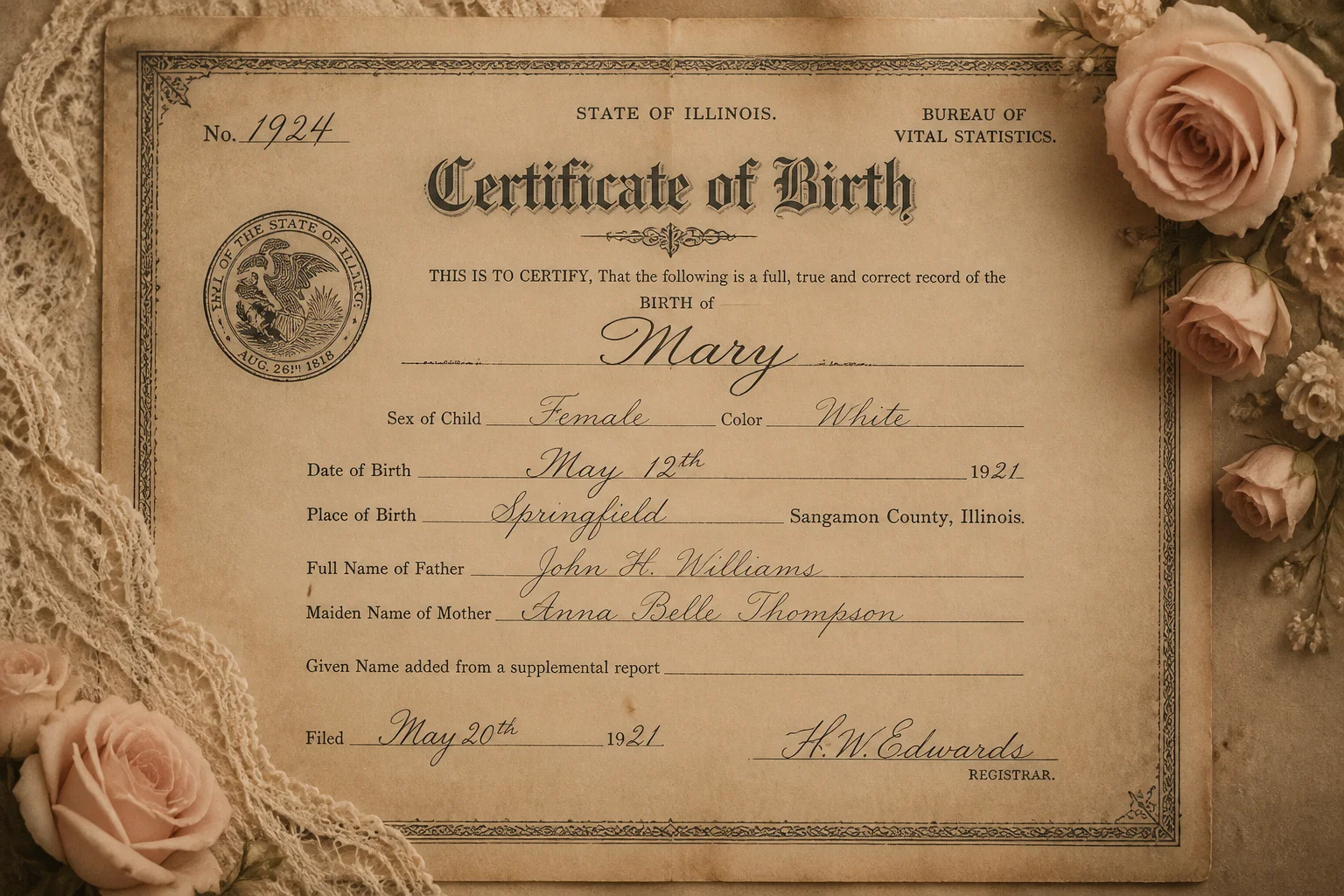
Mary was the defining girls' name of the decade, holding the number-one spot in the United States throughout the 1920s. Its appeal came from the New Testament, centuries of royal use, and a strong pattern of naming daughters after mothers and grandmothers. Parents who wanted a name that felt holy and socially safe rarely looked further.
That dominance is easy to miss today because Mary later declined, but in its own era it was not considered boring. For millions of families, Mary was simply the name you chose when nothing else felt right.
2. Dorothy
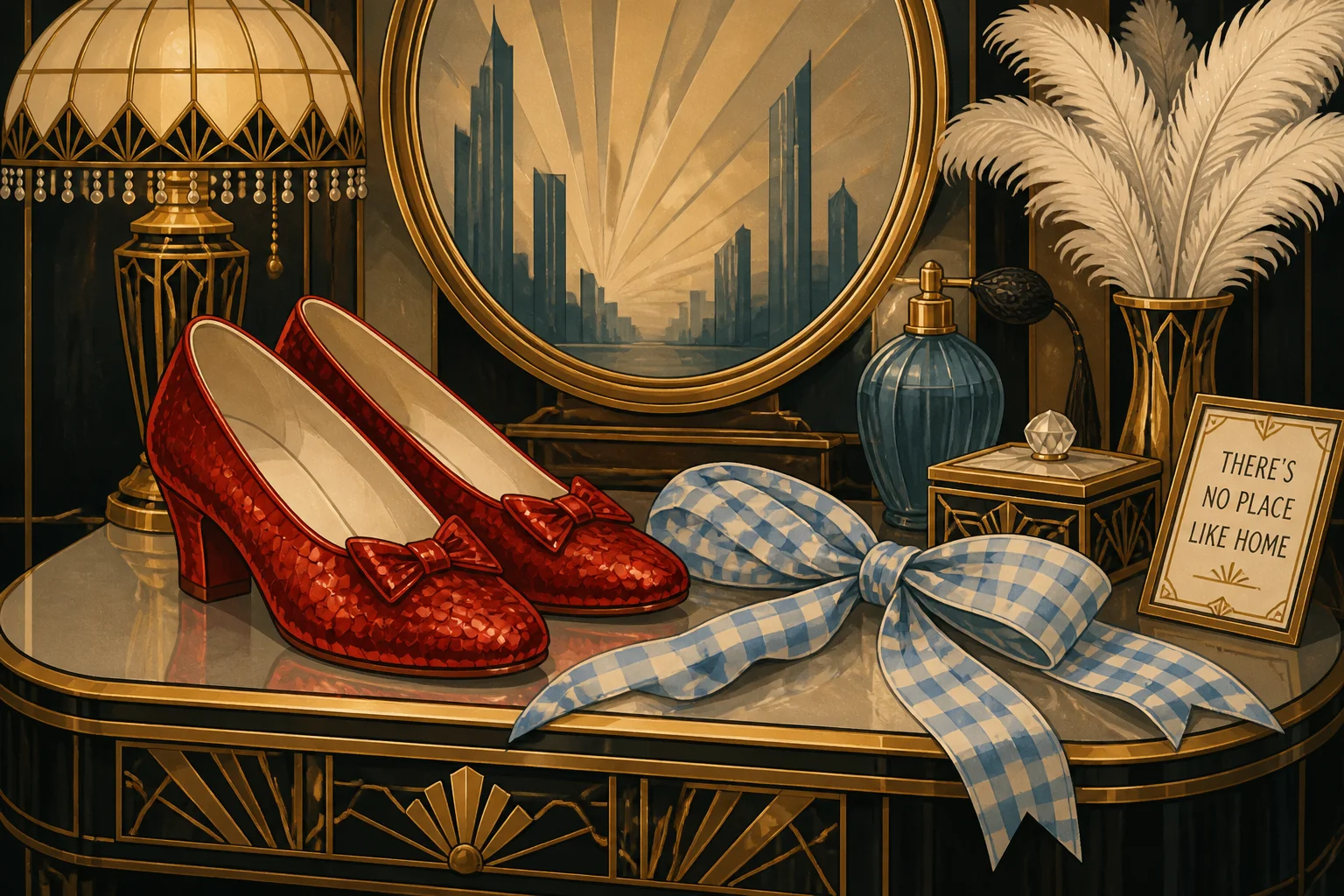
Dorothy spent much of the 1920s as the second most popular girls' name in the country. The name carried a soft literary glow from L. Frank Baum's Oz books, and silent-film actresses like Dorothy Gish kept it visible in fan magazines. Its old Greek meaning, 'gift of God,' added traditional weight behind the modern spotlight.
Parents got a name that could sound storybook and respectful at the same time. That combination helped Dorothy become one of the most recognizable names of the 1920s.
3. Helen
Helen drew from ancient Greek legend, but the 1920s gave it a more personal heroine in Helen Keller, whose story was widely known. The name had ranked among the top five American girls' names for years, and its popularity showed how much parents valued classical dignity. It also traveled easily across immigrant communities, which helped it stay near the top.
Unlike flashier coinages, Helen needed no explanation. That clarity made it one of the steadiest names of the 1920s.
4. Margaret
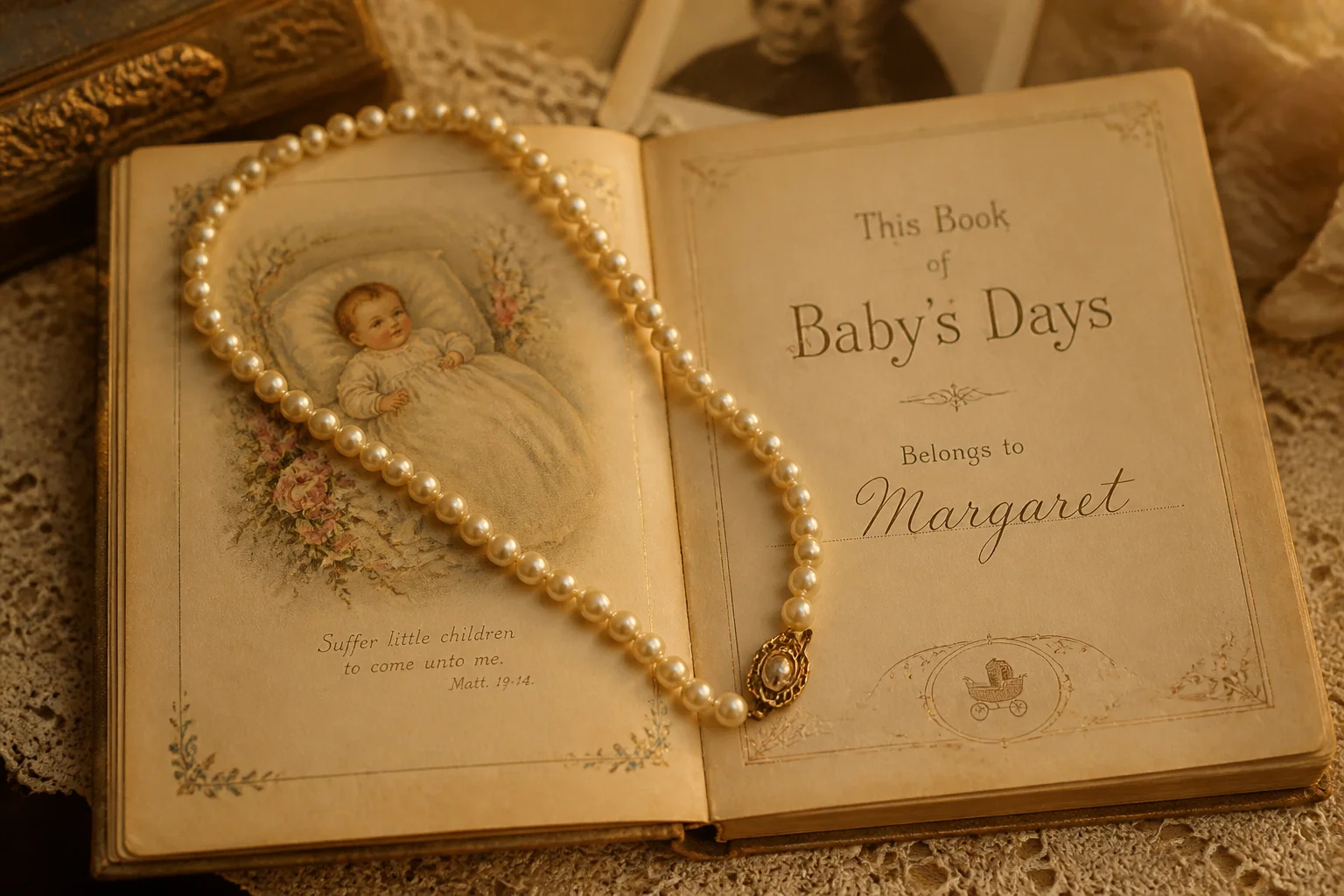
Margaret means 'pearl,' and parents in the 1920s clearly thought the name was a gem. It was already a long-running favorite in the English-speaking world, with royal and saintly associations. The name's flexibility also helped: a formal Margaret could easily become Maggie, Meg, or Marge.
That built-in variety gave families a traditional christening name and a modern-sounding everyday option. Few names of the 1920s offered the same range.
5. Ruth
Ruth was a compact Old Testament name that carried a story of loyalty and devotion. It had been rising since the late nineteenth century and peaked as one of the top five American girls' names in the 1920s. Parents liked that it was easy to spell, pronounce, and translate.
Its brevity made Ruth feel modern at a time when many girls' names were long and elaborate. That mix of biblical depth and modern simplicity kept it a favorite.
6. Virginia
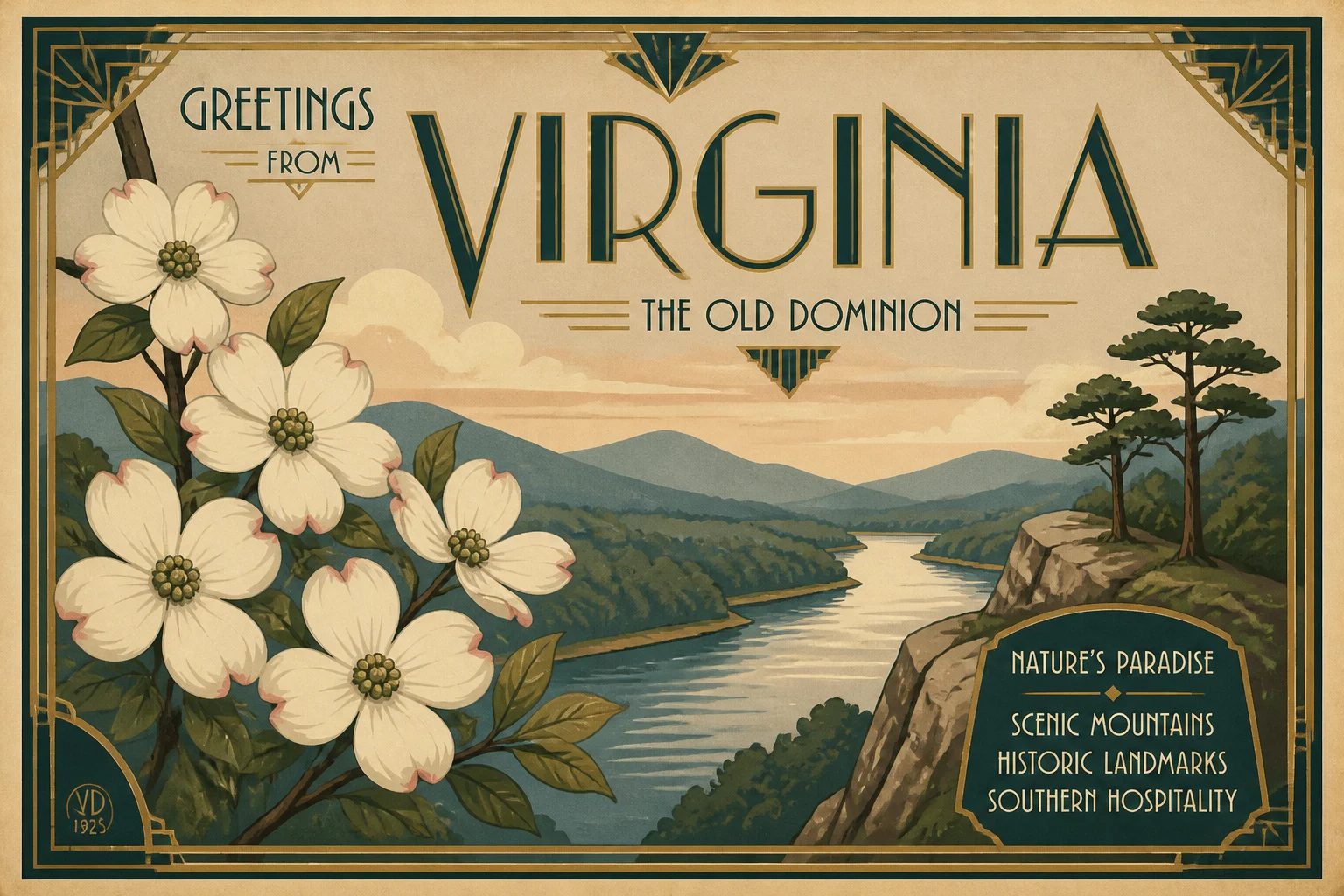
Virginia gave parents a way to name a daughter after a place without sounding invented. The state name had a romantic, old-south elegance that appealed far beyond the region. It also carried a subtle patriotic note during a decade shaped by World War I memory and national pride.
The name supported short forms like Ginny, which gave it a lively, modern edge. Virginia showed that the names of the 1920s could be geographically rooted and fashionable at the same time.
7. Mildred
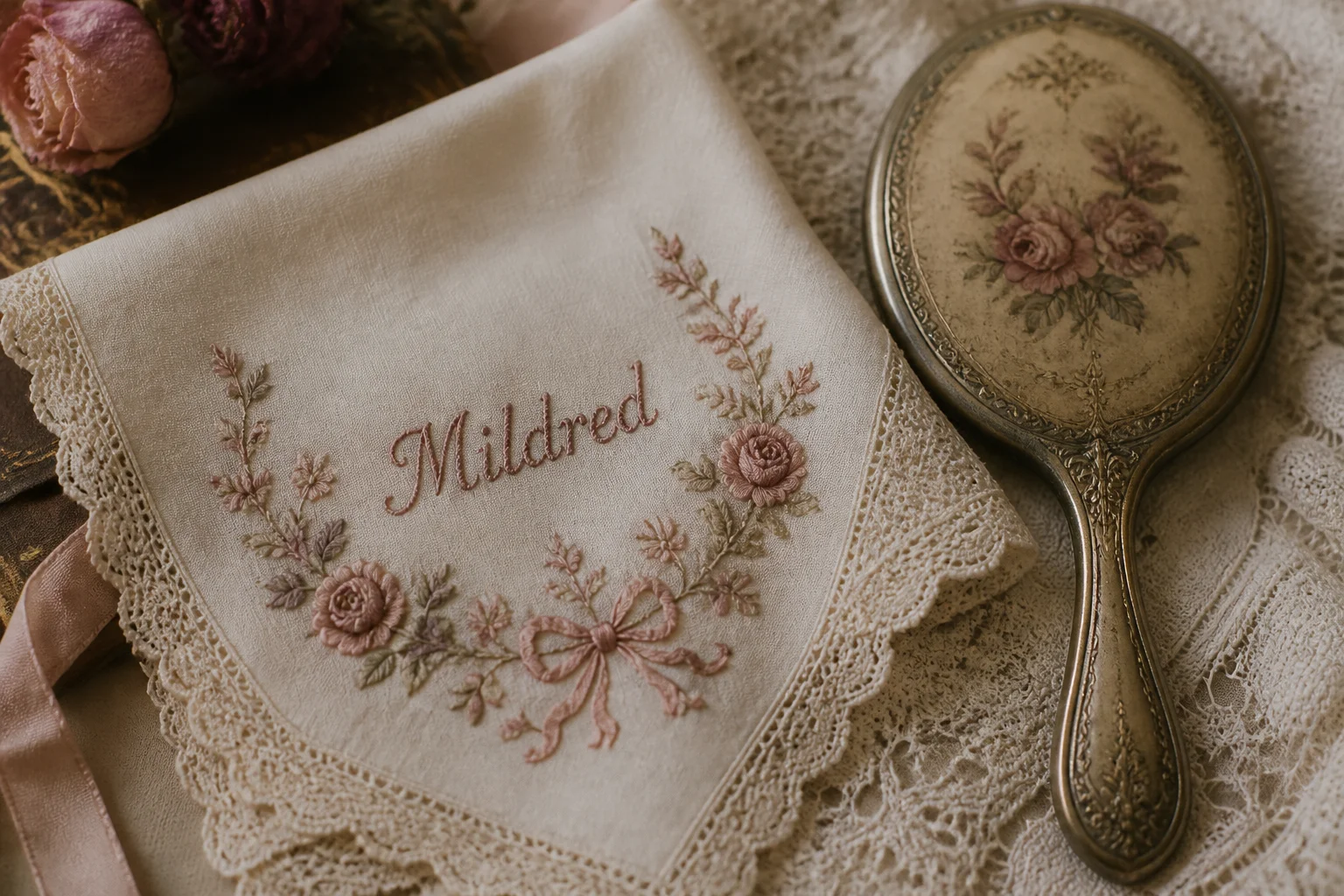
Mildred was one of the top ten girls' names for most of the 1920s, though it sounds like a period piece today. Its Old English origins meant 'gentle strength,' a virtue Victorian parents had loved. By the 1920s, that Victorian momentum was still strong enough to keep it near the top.
Mildred later became one of the clearest examples of a once-trusted name aging out of favor. In its own time, however, it was simply a mainstream and respectable choice.
8. Frances
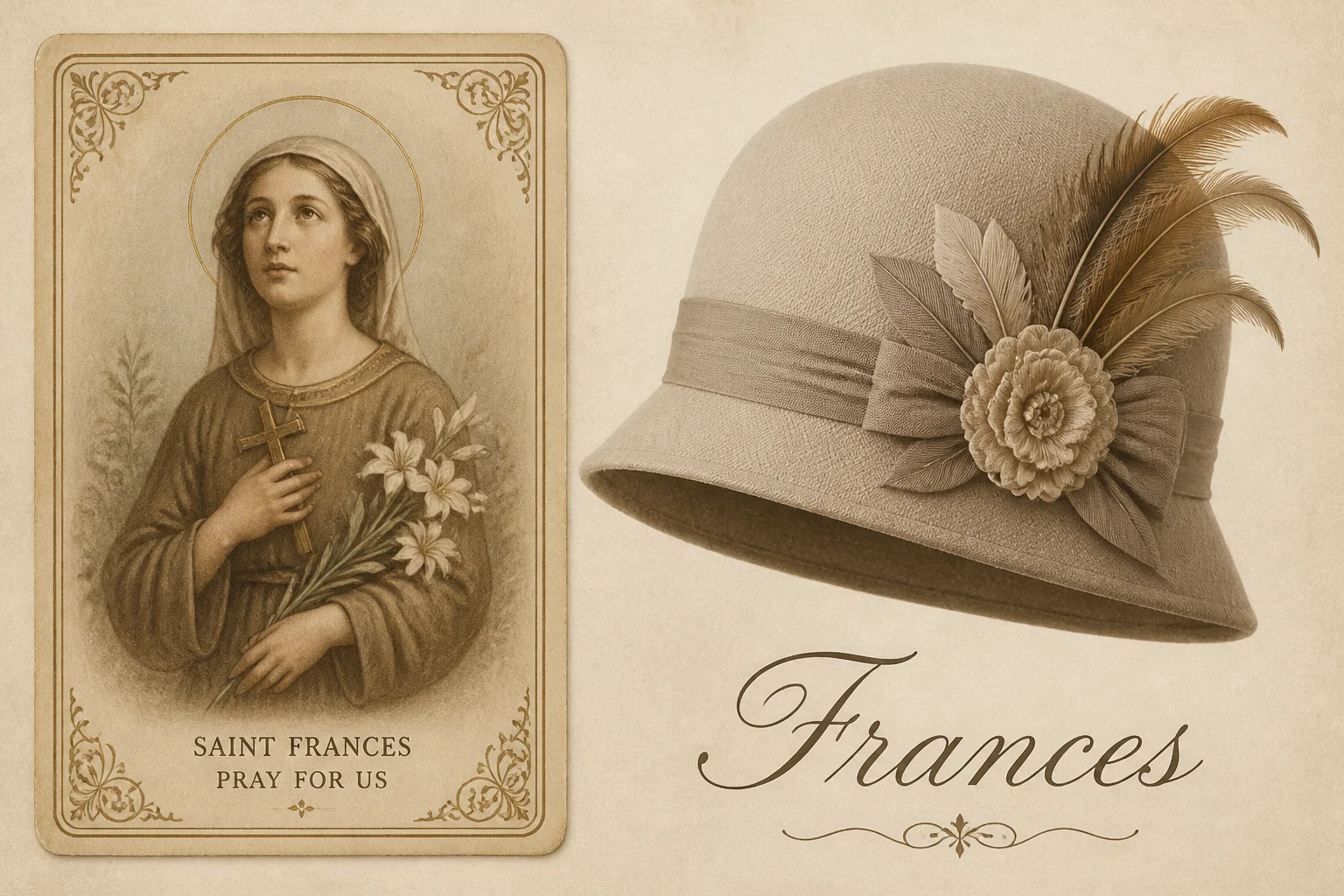
Frances was the feminine form of Francis, a name with deep Catholic roots through Saint Francis of Assisi. The 1920s version was often softened with nicknames like Fran, Franny, or Frankie, which gave it a playful side. That flexibility helped the name cross religious and regional lines.
Frances never relied on a single celebrity or fad, which is why it remained a steady presence. It was a formal name that could bend toward the decade's love of casual nicknames.
9. Evelyn
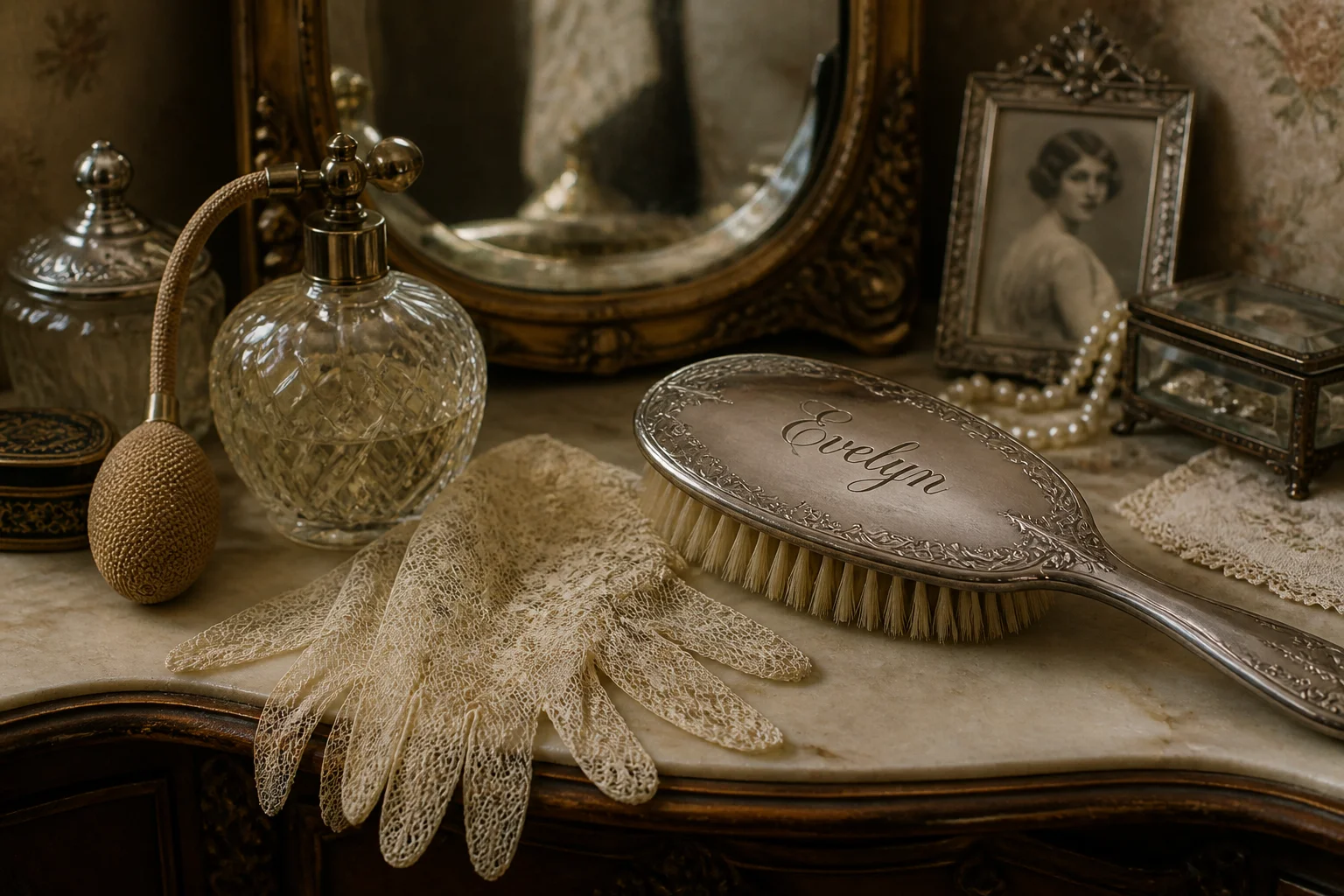
Evelyn began as a surname and had earlier been used for boys, but the 1920s pushed it firmly toward girls. Its three-syllable elegance fit the decade's taste for refined yet soft-sounding names. Parents who wanted something less common than Mary or Helen often found it in Evelyn.
The name would climb even higher in later decades, but its 1920s rise shows the beginning of a shift. Surname-style names for girls were becoming a recognizable trend.
10. Betty
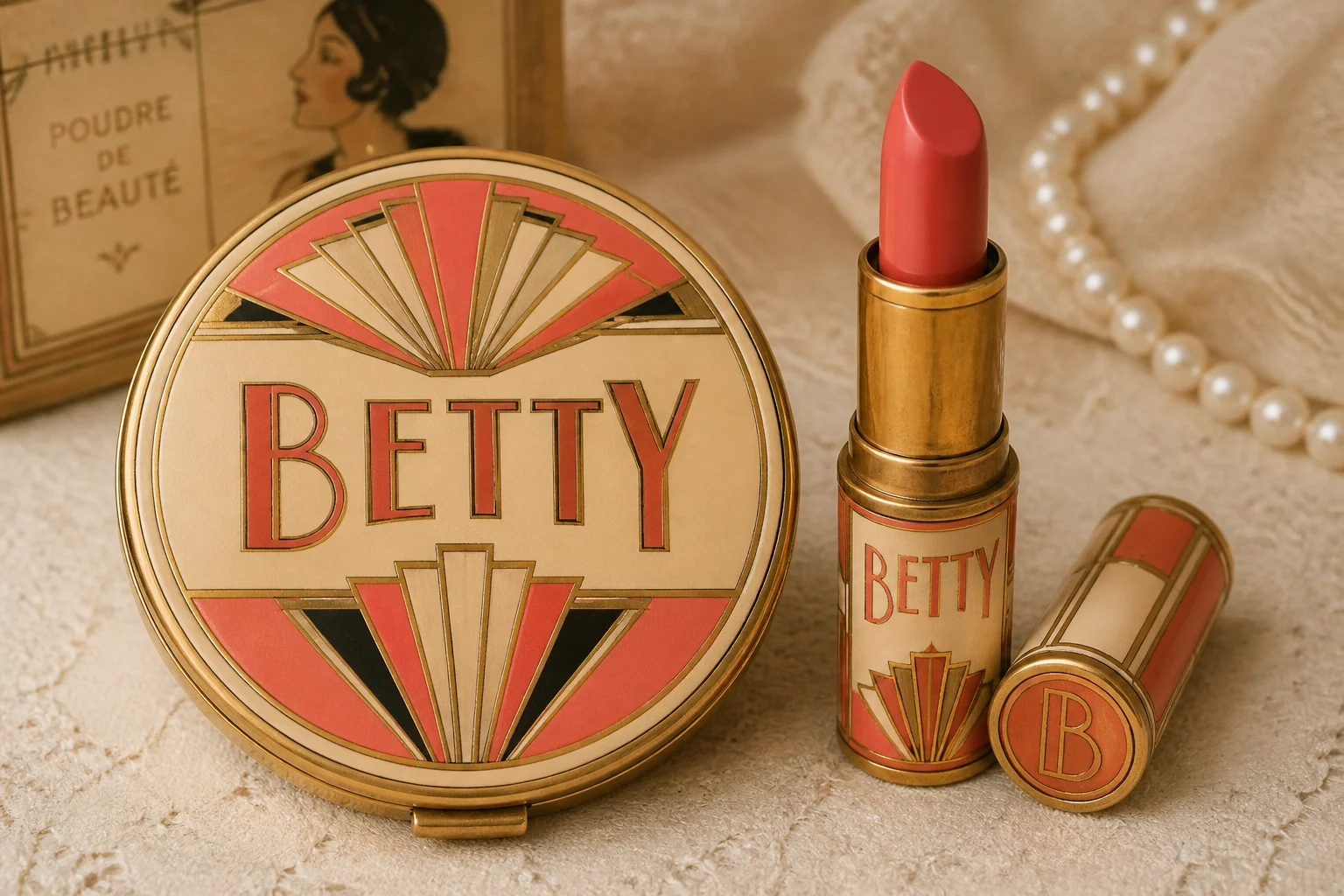
Betty was originally a pet form of Elizabeth, but in the 1920s it became a given name in its own right. It entered the top ten for American girls by the late 1920s, a sign that parents were embracing shorter and bouncier names. The sound was friendly, youthful, and easy to say.
Betty Boop would not appear until 1930, so the 1920s rise happened first. Betty is a perfect example of a 20s name that felt modern because it was basically a nickname.
11. Doris
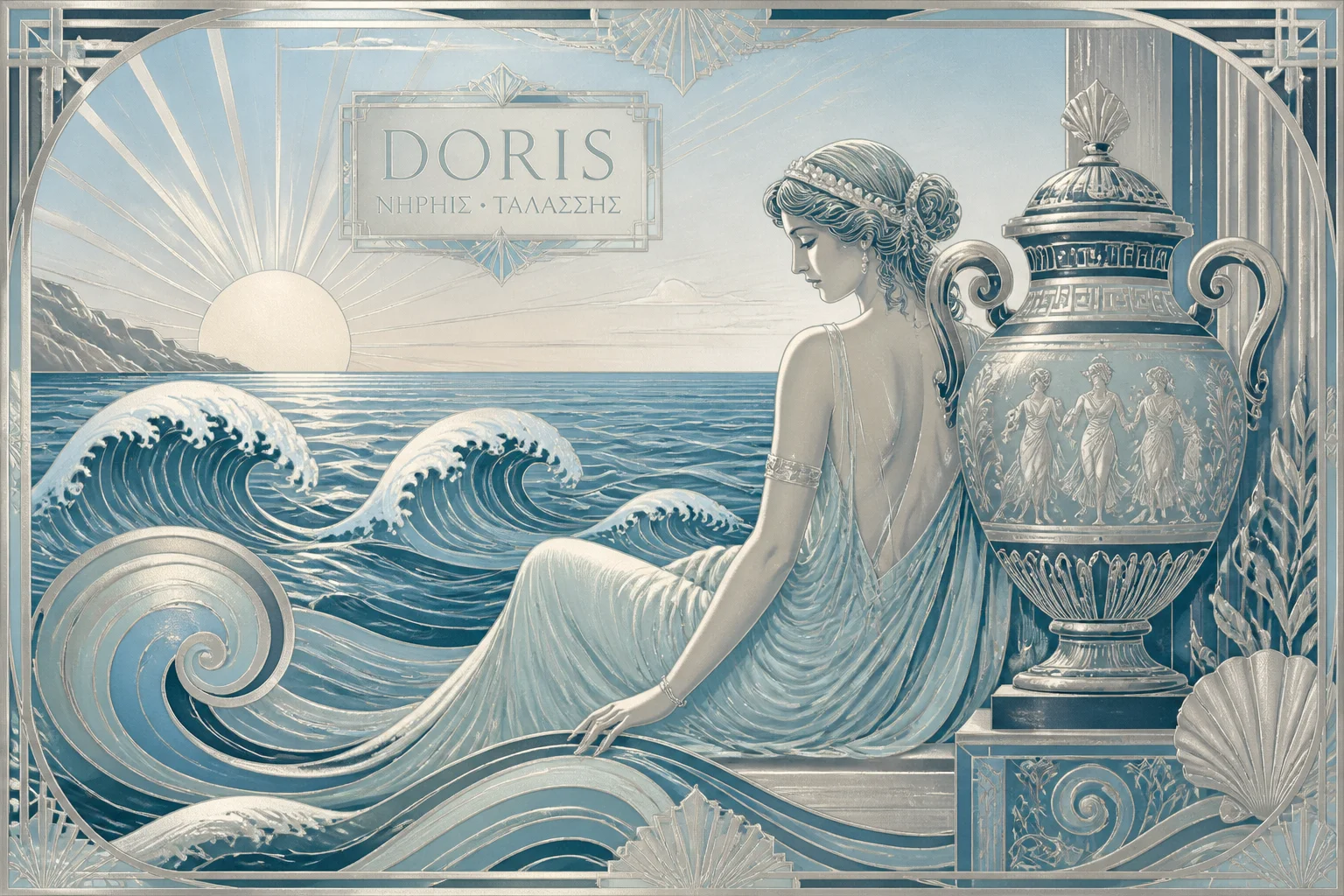
Doris came from Greek mythology, where it referred to a sea nymph and the daughter of Oceanus. That classical background made it respectable, while its short, bright sound made it feel modern. It was one of the top ten girls' names for much of the decade, especially in the mid-1920s.
Doris demonstrates that unique names from the 1920s did not need to be invented. A revived ancient name could feel just as fresh as a brand-new one.
12. Anna
Anna was the rare name that needed no nickname, no explanation, and no translation. Its biblical roots and international presence made it a safe choice for immigrant families and old-stock Americans alike. It remained near the top of the charts throughout the decade without ever seeming flashy.
The name's simplicity is exactly what made it irresistible. In an era of rising nickname-names, Anna proved that short and classic could still hold its own.
The Boys' Names Parents Couldn't Resist
13. Robert
Robert became the top boys' name in the United States during the 1920s, overtaking John by the middle of the decade. Its old Germanic roots meant 'bright fame,' but American parents mostly heard it as solid, friendly, and versatile. Nicknames like Bob, Bobby, and Rob gave the formal name a relaxed everyday face.
That mix of strength and warmth made Robert one of the most popular names of the 1920s. It would go on to dominate the following decades as well.
14. John
John entered the 1920s as the long-reigning number-one boys' name, and it gave up the top spot only gradually. Its biblical foundation and use by kings, saints, and presidents made it the ultimate safe choice. Parents in nearly every ethnic and religious community could use John without hesitation.
The name's simplicity was a feature, not a flaw. For parents who wanted no risk, no trend, and no mispronunciation, John was the obvious answer.
15. James
James was a royal name through Britain's King James tradition and a biblical name through the New Testament. It had been a top American choice for generations, and the 1920s kept it securely near the top. Short forms like Jim and Jimmy made it flexible for everyday use.
Unlike some buttoned-up classics, James could sound both dignified and approachable. That balance kept it a constant among the names of the 1920s.
16. William
William had deep royal roots and a long American history, but parents in the 1920s often reached for its many nicknames. Bill, Billy, Will, and Willie meant the same infant could have a formal name and a casual identity. The name's old Germanic meaning, 'resolute protection,' added a sense of dependable strength.
Because William crossed class, region, and background, it was everywhere. Few boys' names of the era felt as complete.
17. Charles
Charles was a classic associated with kings, saints, and statesmen, but the 1920s gave it an extra glow from Charlie Chaplin's enormous fame. The name's meaning, 'free man,' was less important to most parents than its polished sound. Charlie worked as an affectionate nickname that softened the formality.
Charles shows how an older name could absorb a modern celebrity influence without becoming a fad. It stayed near the top of the boys' charts all decade.
18. George
George carried strong royal associations in the 1920s because Britain's King George V was on the throne, and the name had long been a staple in the American colonies and early United States. A patriotic generation could also think of George Washington, giving it a double layer of respectability. The name was short, strong, and impossible to misspell.
George was one of the most reliable names of the 1920s for boys. It was traditional without feeling stuffy to American ears.
19. Joseph
Joseph drew its power from the Old Testament story of the dreamer and the New Testament figure of Saint Joseph. Catholic families in particular kept the name strong, but it crossed religious boundaries easily. The 1920s also liked the friendly short forms Joe and Joey, which made the formal name feel warmer.
Joseph was a top-ten regular for boys throughout the decade. Its biblical weight and built-in nicknames gave parents the best of both worlds.
20. Richard
Richard was already climbing in the 1920s, and its old Germanic meaning, 'brave ruler,' gave it a serious and aspirational feel. It did not yet carry the nickname-heavy informality of some other boys' names, though Rich and Dick were available. Parents who wanted a strong name with a long history found it attractive.
Richard would peak even higher in the 1930s and 1940s, but the 1920s set the stage. It was one of the era's quieter risers.
21. Edward
Edward was a royal name with centuries of English history behind it, and it stayed a top American boys' choice in the 1920s. The name's meaning, 'wealthy guard,' mattered less than its dignified and familiar sound. Nicknames like Ed, Eddie, and Ted gave it an approachable side.
For parents who wanted a name that sounded established but not severe, Edward was a natural fit. It was one of the most enduring names of the 1920s.
22. Donald
Donald came from Scottish Gaelic roots meaning 'world ruler,' and the 1920s was the decade when it rose into wider American use. It still had a distinctly Scottish flavor, but that did not stop parents from embracing its strong two-syllable rhythm. The name would become far more famous through the Disney character Donald Duck, who arrived in 1934.
In the 1920s, however, Donald was simply a rising classic with Celtic energy. It closed the decade with momentum that would carry into the next generation.
Four More Names That Kept Climbing
23. Lillian
Lillian was a late Victorian favorite that carried a soft floral association through the lily. In the 1920s, it remained a top-twenty choice, offering parents an alternative to the harder sounds of the decade's other classics. Its nicknames, Lily and Lillie, made it feel gentle and modern.
The name also had literary echoes, but most parents simply liked its feminine rhythm. Lillian was one of those 20s names that felt decorative without being fussy.
24. Florence
Florence had a Renaissance glow from the Italian city and a modern association with Florence Nightingale. It was already well established by the 1920s and stayed a top-thirty favorite throughout the decade. Parents liked that it sounded cultured and worldly without being difficult to say.
The nickname Flo gave it a casual side, while the full form could appear on formal documents. Florence was a bridge between old-world elegance and the decade's love of shorter names.
25. Irene
Irene came from the Greek word for peace, a meaning that resonated after World War I. It had been rising since the late nineteenth century and remained one of the most familiar names of the 1920s. The three-syllable pronunciation varied, but the name's classical calm kept it popular.
Irene was especially strong in communities with Greek, Russian, or eastern European heritage. That cross-cultural reach helped it hold a steady place on the charts.
26. Louise
Louise was the feminine form of Louis, a name with deep French and Germanic royal roots. In the 1920s, it sat comfortably below the top ten but was widely used across the country. Parents valued its soft, dignified sound and its easy short form, Lou.
Louise was one of those names that appeared everywhere without ever seeming trendy. It gave families a quiet compromise between formality and warmth.
The Names That Stayed and the Names That Faded
Some of the decade's favorites never really recovered after mid-century. Mildred, Doris, and Donald fell hard once they began to sound like the previous generation's choices.
Others, especially Mary, James, William, and Anna, were so deeply rooted that they simply carried on. A 1920s name's survival often depended on how easily it crossed into the next cultural era.
That cycle is not unique to the 1920s, but the contrast is especially sharp because the decade feels so distant. A name that was ordinary in 1925 can now read as a costume piece, while a few survivors still feel completely current.
The Legacy of 20s Names in Modern Nurseries
Today's parents still mine the 1920s for vintage baby names, though they often choose the softest survivors. Names like Evelyn, Anna, James, and William remain popular, while once-common choices like Mildred and Donald wait for a revival.
The lesson from the 1920s is that a name can be both a family heirloom and a snapshot of its decade. Those old birth certificates still tell the story of what parents could not resist.
The 1920s did not invent the idea of the baby name trend, but it modernized it. Mass media, immigration, and a growing middle class all helped make name choices more visible than ever before.
Frequently Asked Questions
What were the most popular names of the 1920s?
According to Social Security Administration data, Mary, Dorothy, Helen, Margaret, and Ruth led for girls. For boys, the top names included Robert, John, James, William, and Charles.
Why did so many 1920s baby names sound traditional?
Most parents still named children after family members, biblical figures, or royal names rather than chasing trends. The decade's flashier pop culture existed alongside a strong preference for familiar and respectable names.
What were some unique names from the 1920s?
Nickname-style names like Betty, surname-style names like Evelyn, and revived classical names like Doris stood out. They were unique mostly because they departed from the older Mary-and-John pattern, not because they were invented.
Did movie stars influence baby names in the 1920s?
Yes, but usually as a temporary nudge. Celebrity and film culture helped keep names like Dorothy and Charles visible, while traditional family and religious names still dominated the top of the charts.

Alex Warren
Related Articles