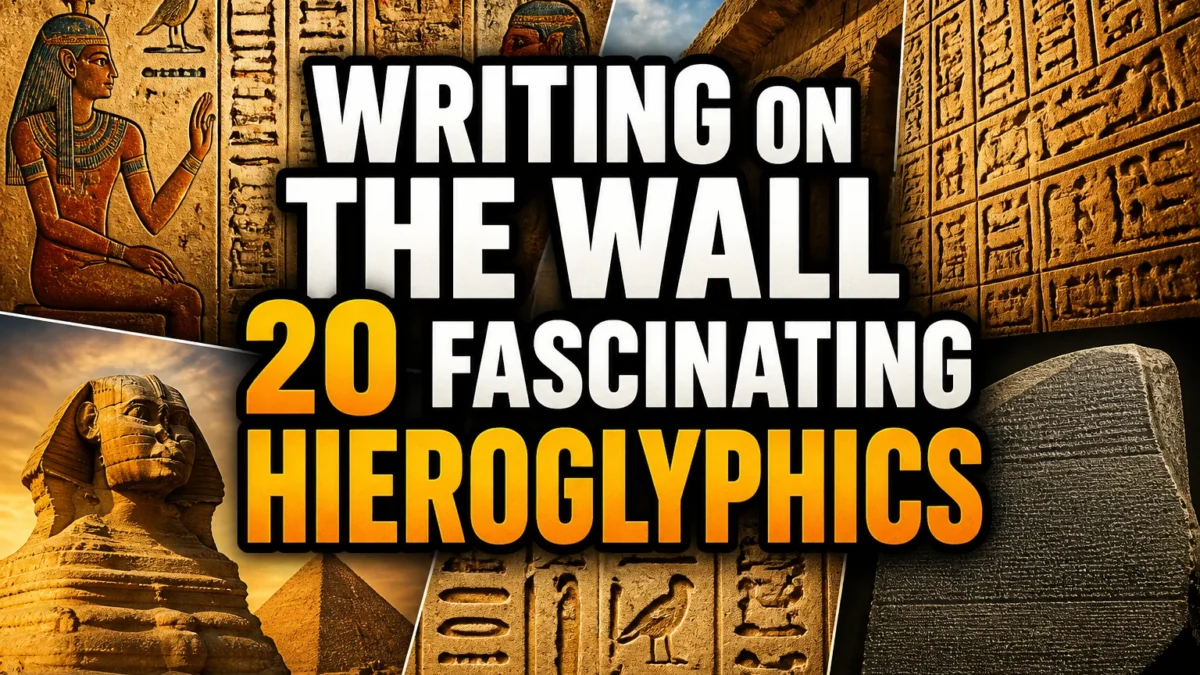
Ancient Egyptian hieroglyphs are often treated like a secret code, but they were a living writing system used for everything from royal decrees to religious spells. A closer look at real hieroglyphs examples shows a mix of pictures that could stand for objects, sounds, or ideas. This post explores twenty of the most fascinating hieroglyphs and hieroglyphic texts from ancient history.
Some signs are instantly recognizable, while others belong among the weird Egyptian hieroglyphics that still puzzle newcomers. We will look at famous Egyptian hieroglyphs, unpack a few strange signs, and answer the question people ask most often: can you turn your name into hieroglyphics? If you only need three examples of hieroglyphics, the ankh, the Eye of Horus, and the cartouche are a perfect starting trio.
TL;DR: Hieroglyphs were a flexible blend of picture signs and sound signs, and the best way to understand them is through real hieroglyphs examples like the ankh, the Rosetta Stone, and the Book of the Dead.
What Are Hieroglyphs, Really?
The word “hieroglyph” comes from Greek for “sacred carving.” Egyptian scribes called their script medu netjer, often translated as “words of the god,” and used it for more than three thousand years. Many online beginners also search for “ancient heiroglyphics,” but the correct spelling is ancient hieroglyphics.
A single hieroglyph could work as a picture of what it showed, as a sound sign, or as an ideogram. For example, the water ripple sign could represent water or the n sound depending on context. That flexibility is why a beginner-friendly hieroglyph list can feel strange at first.
The full inventory included hundreds of signs, though only a smaller core appears frequently in most texts. Animal and human signs could face left or right, and the direction they faced told readers where to begin. This combination of logic and visual rhythm is part of what makes ancient hieroglyphics so distinctive.
A Quick Primer: Sound Signs, Determinatives, and Royal Names
Most Egyptian words included a determinative, an unspoken sign placed at the end to classify the word's meaning. A verb of motion might end with walking legs, while an abstract idea might end with a rolled papyrus. Determinatives helped readers separate words that had similar sound sequences.
Royal names sat inside cartouches, elongated loops that marked the name as special and protected. Because these names were often known from Greek and other external sources, cartouches became a breakthrough tool for decipherment. If you have ever tried to turn your name into hieroglyphics, you have probably used a modern version of that same cartouche convention.
20 Fascinating Hieroglyphs and Hieroglyphic Texts
The following twenty examples mix individual signs with famous inscribed objects. They are not a complete catalog, but they give a working view of how Egyptian writing looked, changed, and functioned. Each one also shows why the script still fascinates readers thousands of years later.
1. The Ankh: The Sign of Life
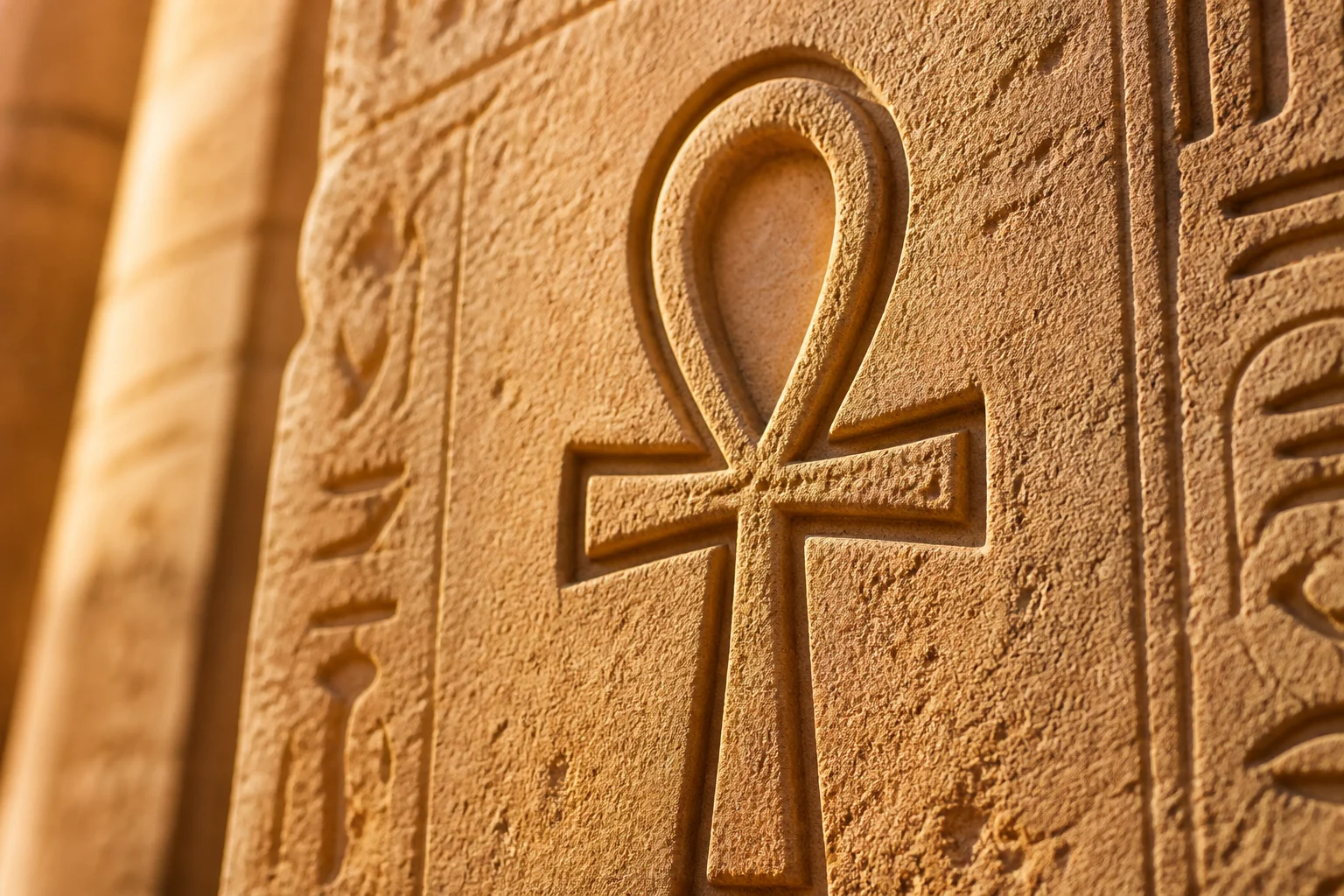
The ankh is one of the most famous Egyptian hieroglyphs, instantly recognizable as a cross with a loop at the top. Egyptian texts use it for the word “life,” and it appears constantly in tomb and temple scenes. Gods often hold the ankh to a king's nose, a gesture of granting breath and existence.
Its exact origin is debated, but the ankh became a broad symbol of life and vitality across ancient Egyptian culture. It later traveled into Coptic Christian art, where it overlapped with the cross in popular imagery. As an example of how a single sign could carry both sound and symbol, the ankh is hard to beat.
2. The Eye of Horus: Protection, Healing, and Math
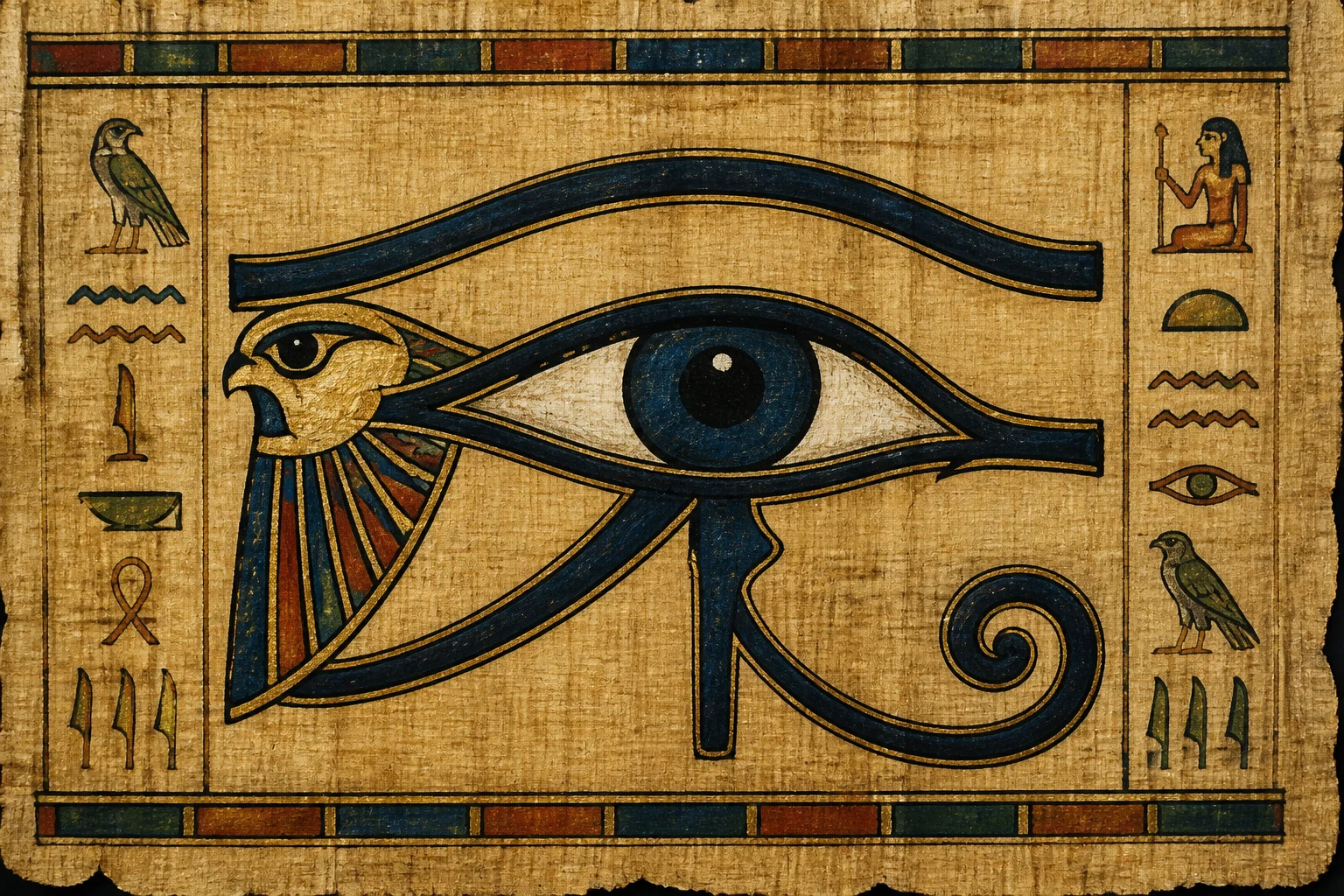
The Eye of Horus, called the wedjat, represents the eye of the falcon god Horus. In myth, the eye was damaged in the struggle between Horus and Set and later restored, making it a powerful symbol of healing and wholeness. Amulets shaped like the eye were worn for protection and placed among mummy wrappings.
The sign also turns up in scribal and mathematical contexts, where parts of the eye were associated with fractions. That connection made it one of the more surprising examples of hieroglyphics crossing from religion into practical record-keeping. It remains one of the best-known protective symbols from the ancient world.
3. The Scarab: Becoming and Rebirth
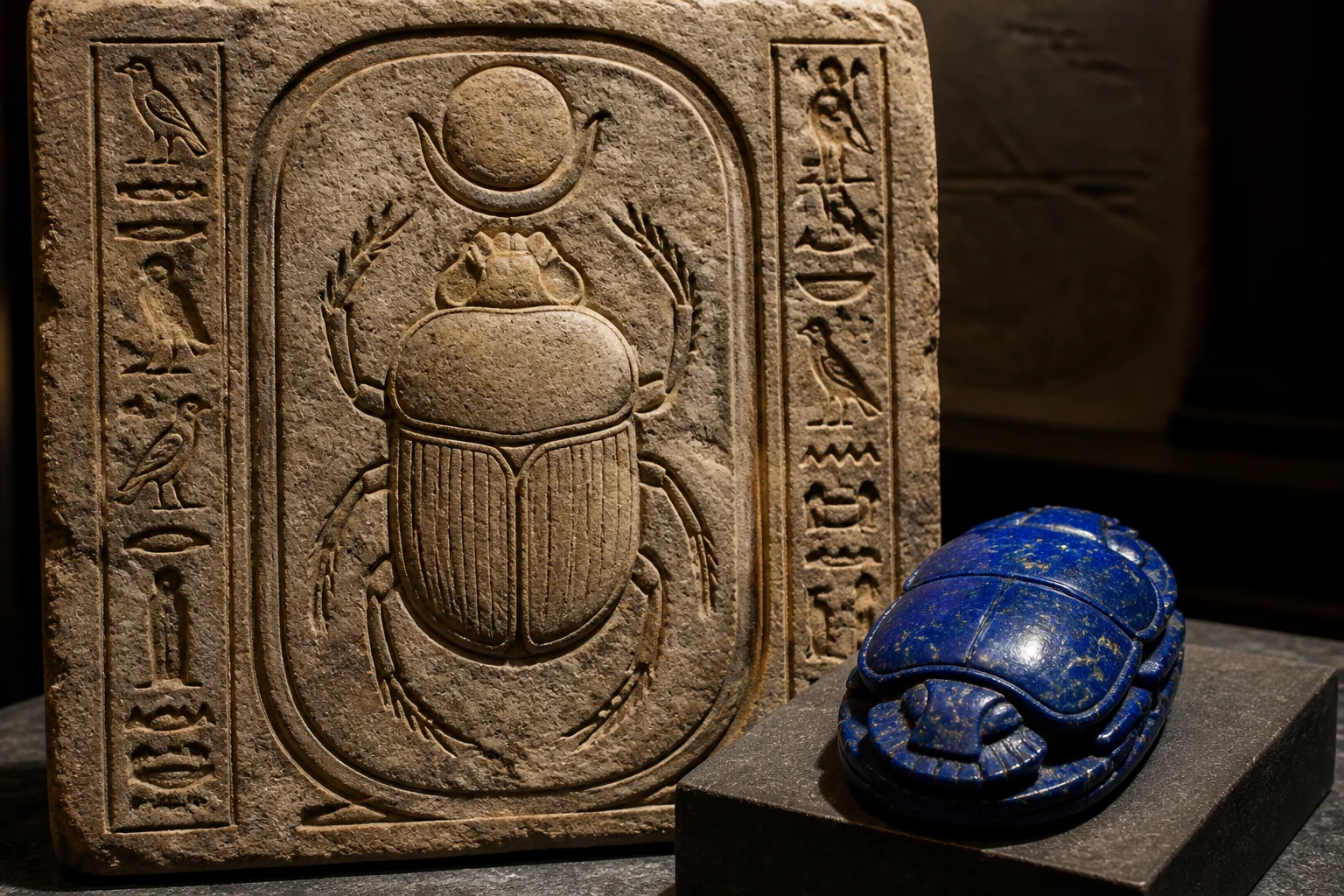
The scarab beetle hieroglyph represented the word kheper, meaning “to become” or “to come into being.” It was linked to the god Khepri, who was imagined as the morning sun rolling across the sky like a dung beetle. This made the scarab a natural emblem of transformation and renewal.
Scarabs appear as small amulets, seal impressions, and large inscribed heart scarabs placed over the chest of the deceased. A famous group of spells from the Book of the Dead was meant to stop the heart from testifying against its owner. The scarab's popularity is one reason it appears in almost every popular hieroglyph list.
4. The Djed Pillar: Stability and Osiris
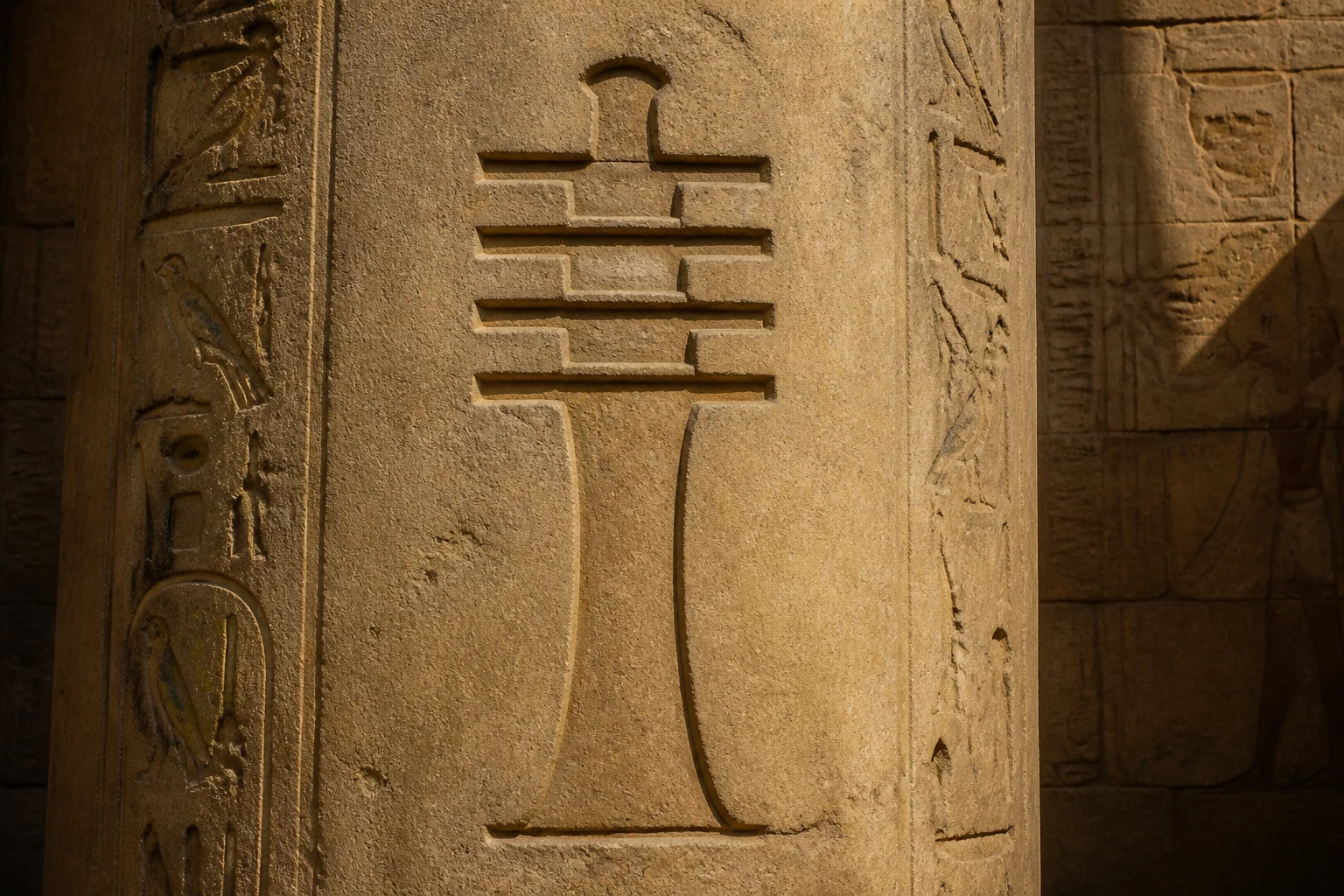
The djed pillar looks like a column with broad horizontal bands near the top. It wrote the word “stability” or “endurance” and was closely tied to Osiris, the god of the dead and regeneration. In later tradition, the djed could represent Osiris's backbone.
An important ritual called “raising the djed” was performed at festivals to renew royal and cosmic order. Images of the pillar appear in tombs, temples, and amulets from many periods. Its message of permanence made it one of the most common symbolic hieroglyphs in religious art.
5. The Cartouche: A Royal Name in a Protective Loop
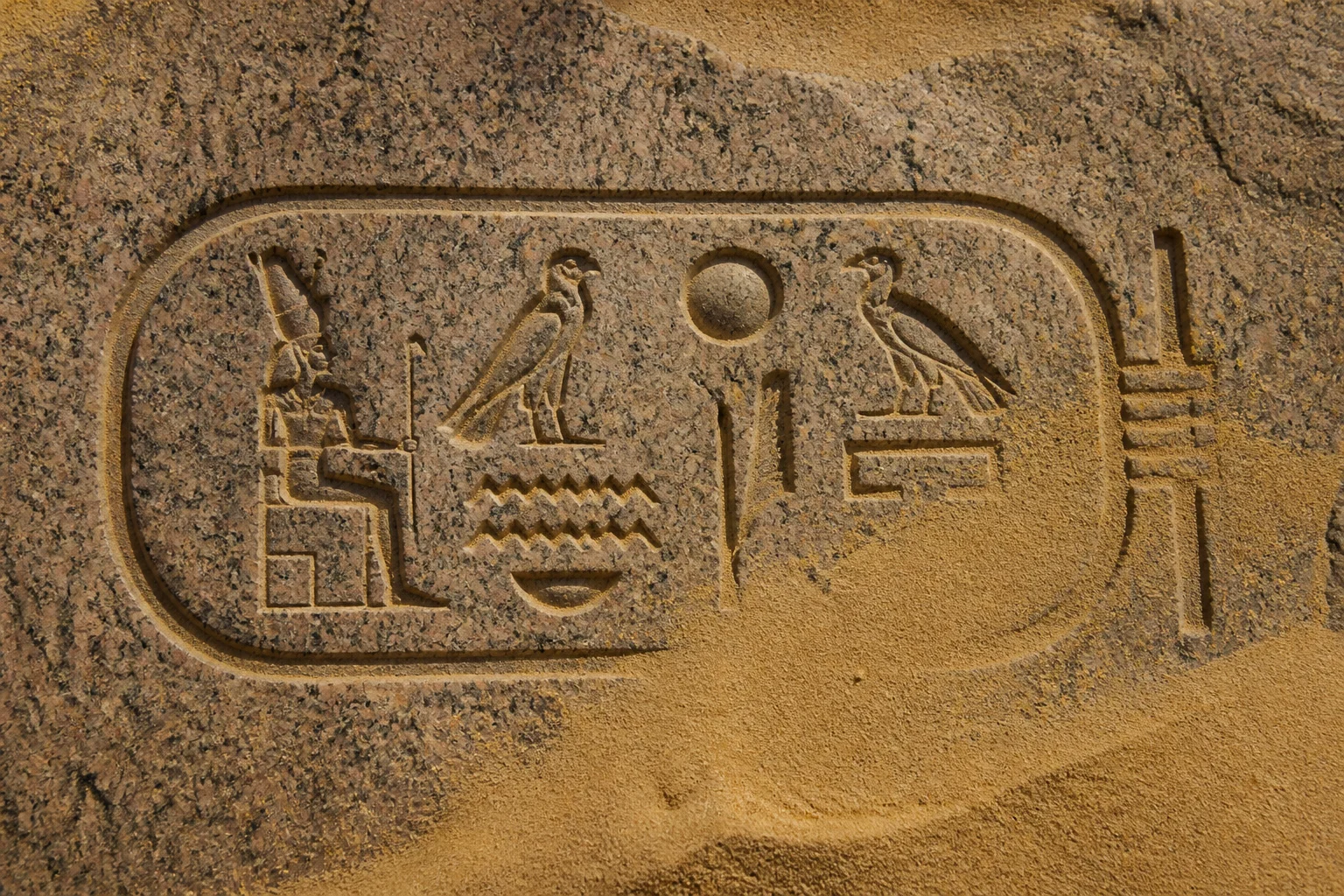
A cartouche is an elongated loop of rope that encloses a king's name. The sign grew out of the shen ring, a symbol of encircling protection, and it announced that the enclosed name belonged to royalty. Because cartouches contain known royal names, they were crucial to early decipherment.
The Ptolemy and Cleopatra cartouches on the Rosetta Stone gave scholars a clear comparison point between Greek and Egyptian names. That work helped unlock the entire script. For modern readers, the cartouche is still the go-to format when people want to turn their name into hieroglyphics.
6. The Horned Viper: A Common Sign with a Dangerous Side
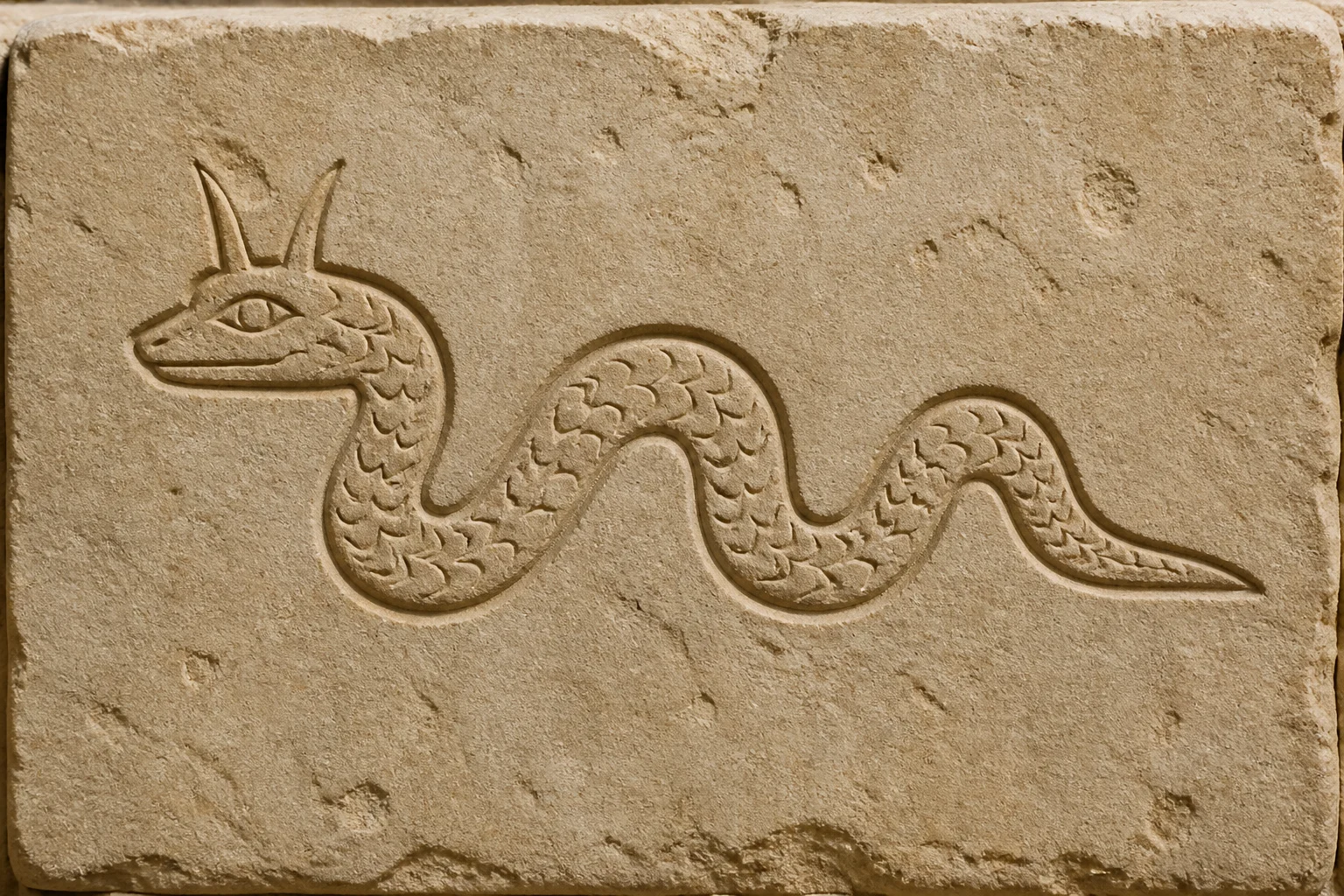
The horned viper is one of the most frequent single-sound signs in Egyptian writing, usually representing the f sound. It is a striking example of how Egyptian scribes borrowed directly from the natural world. Because it showed a venomous snake, the sign also illustrates how hieroglyphs could carry an aura of danger.
In some funerary texts, scribes modified or truncated potentially harmful animal signs, including snakes, to stop them from magically harming the deceased. That practice gives us a window into how Egyptians saw written signs as living and powerful. Modern readers often group such practices among the weird Egyptian hieroglyphics they encounter online.
7. The Owl: The Little Bird That Pops Up Everywhere
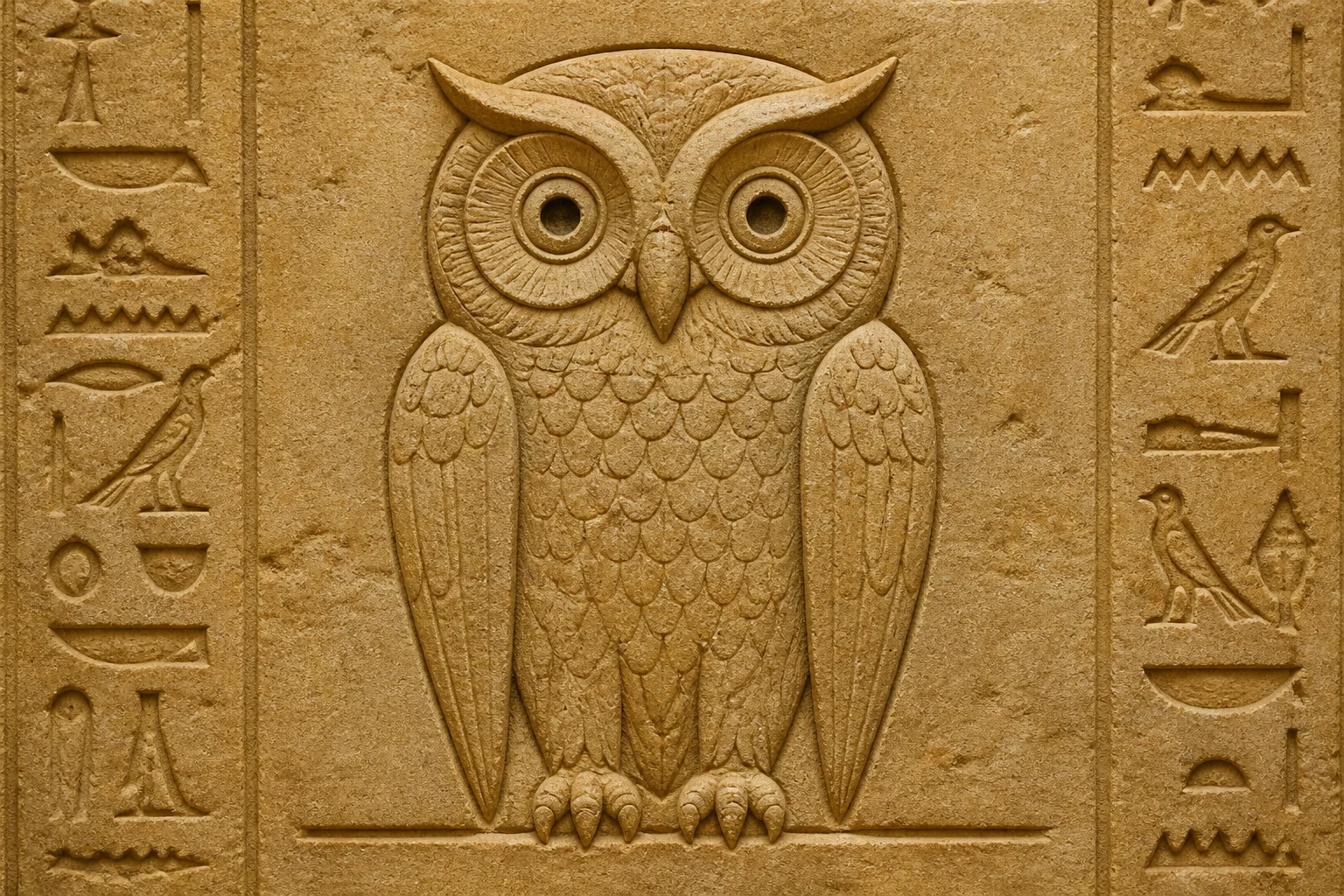
The owl hieroglyph is one of the most visually recognizable signs in the writing system and commonly stood for the m sound. It appears constantly in temple inscriptions and funerary texts, which makes it a useful starting point for anyone learning to recognize sign patterns. Unlike modern owl symbolism, its ancient Egyptian role was mainly phonetic.
Scribes drew the owl frontally, a rare choice in Egyptian art, while many other animal signs appear in profile. That flat, forward-facing look makes the owl easy to spot in a crowded wall of carvings. It is a small reminder that even very ordinary signs could be repeated thousands of times across a monument.
8. The Water Ripple: A Zigzag of Sound and Meaning
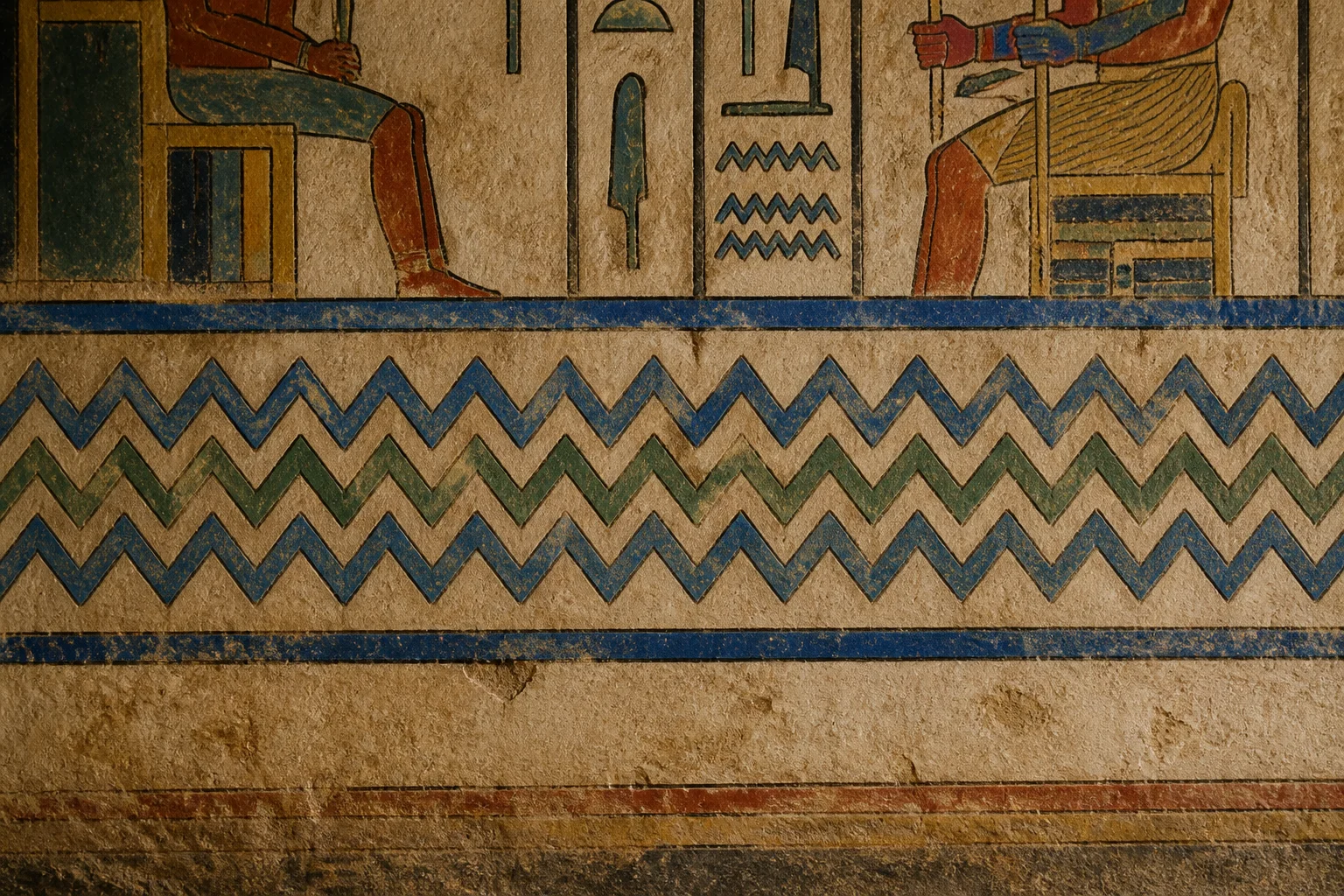
The water ripple sign, a horizontal zigzag, could write the sound n and also appeared in words connected to water. Its simple shape made it one of the most efficient signs in the Egyptian script. Because it is so common, it appears in countless hieroglyphic texts from different periods.
Even a sign this basic could carry multiple jobs, which shows why Egyptian writing is not a simple picture dictionary. The same zigzag might be phonetic in one word and a water-related determinative in another. That flexibility is one of the first surprises in any serious study of examples of hieroglyphics.
9. The Bee: Lower Egypt's Royal Insect
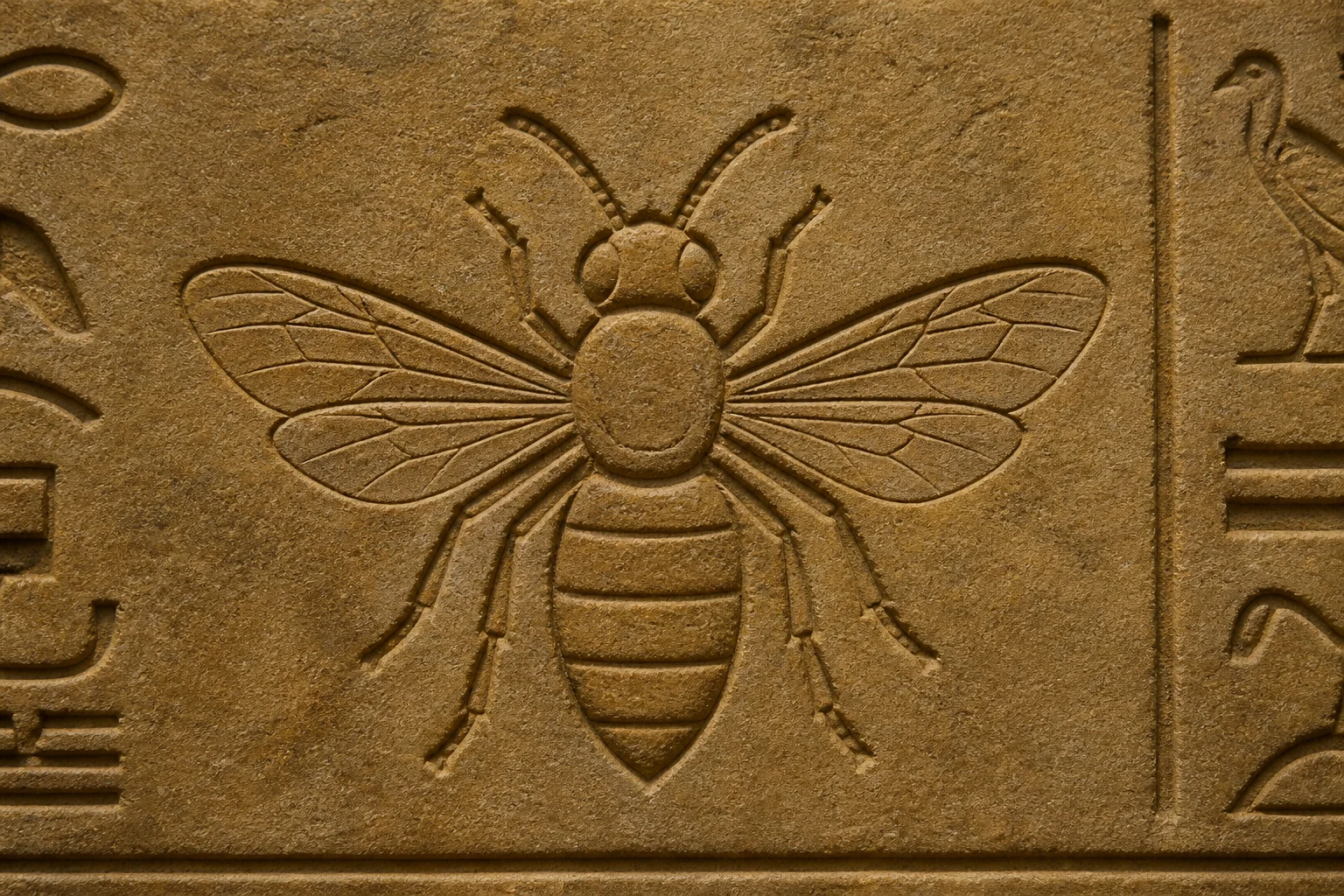
The bee hieroglyph symbolized Lower Egypt, the northern region of the Nile valley and delta. It appears in the royal title nesut-bity, often translated as “He of the Sedge and the Bee,” which expressed the king's rule over Upper and Lower Egypt. The bee therefore packed a massive amount of political meaning into one small sign.
The title appears in royal names, temple dedications, and ceremonial inscriptions across Egyptian history. It is a good example of a hieroglyph whose meaning was more regional and symbolic than purely phonetic. Seeing it on a monument is a clue that the text is talking about unified kingship.
10. The Set Animal: An Unidentified Creature
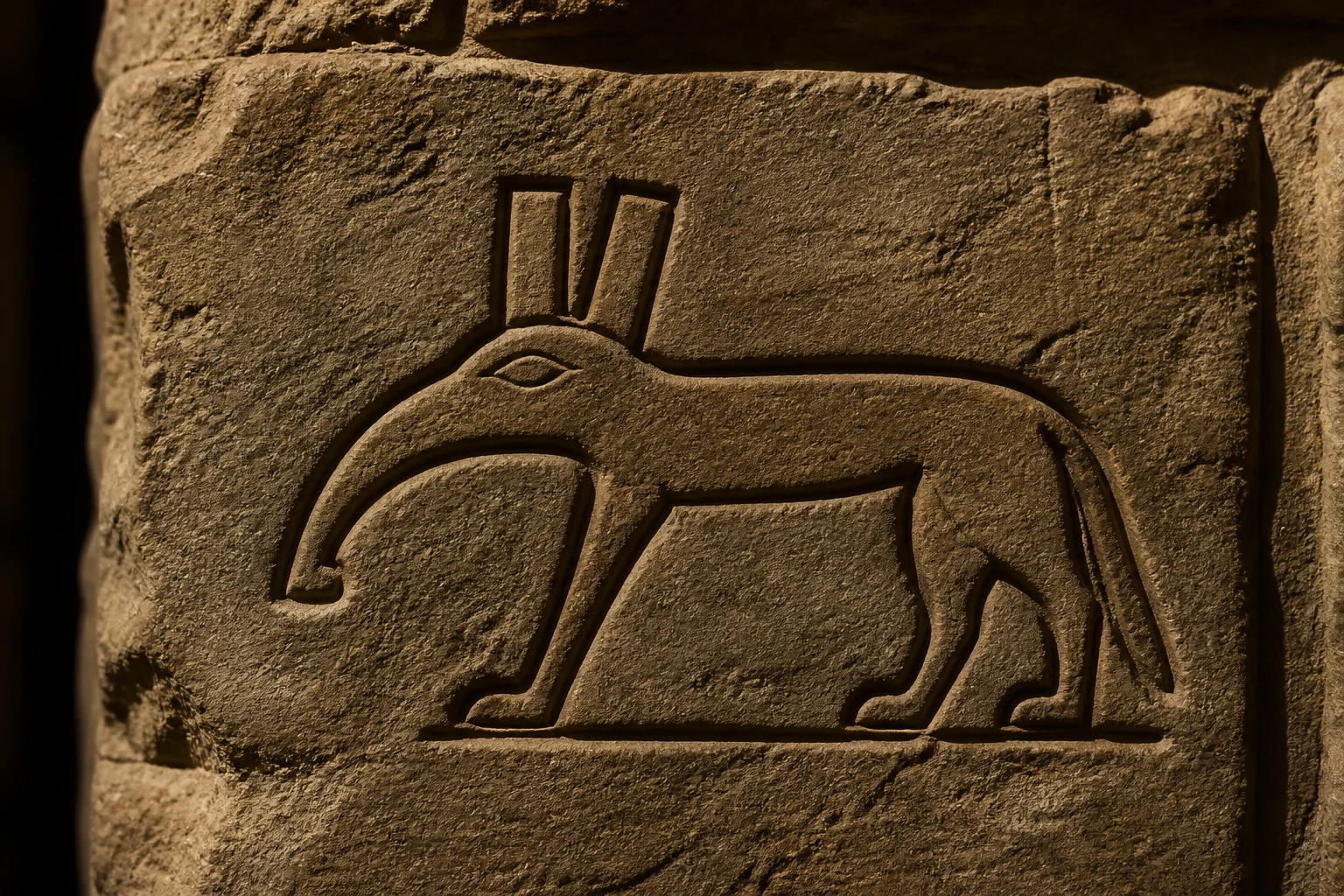
One of the weird hieroglyphics in the Egyptian script is the so-called Set animal, a creature with a curved snout, squared-off ears, and a forked tail. It served as the determinative for the god Set, the chaotic and often hostile figure in the Osiris myth. Scholars still cannot identify the animal with any living species.
The sign appears in royal names, religious texts, and mythological scenes, but its exact origin remains uncertain. That mix of familiarity and strangeness makes it a favorite in discussions of weird Egyptian hieroglyphics. It also reminds us that Egyptian scribes did not always draw from ordinary nature.
11. The Ba Bird: A Soul with a Human Head
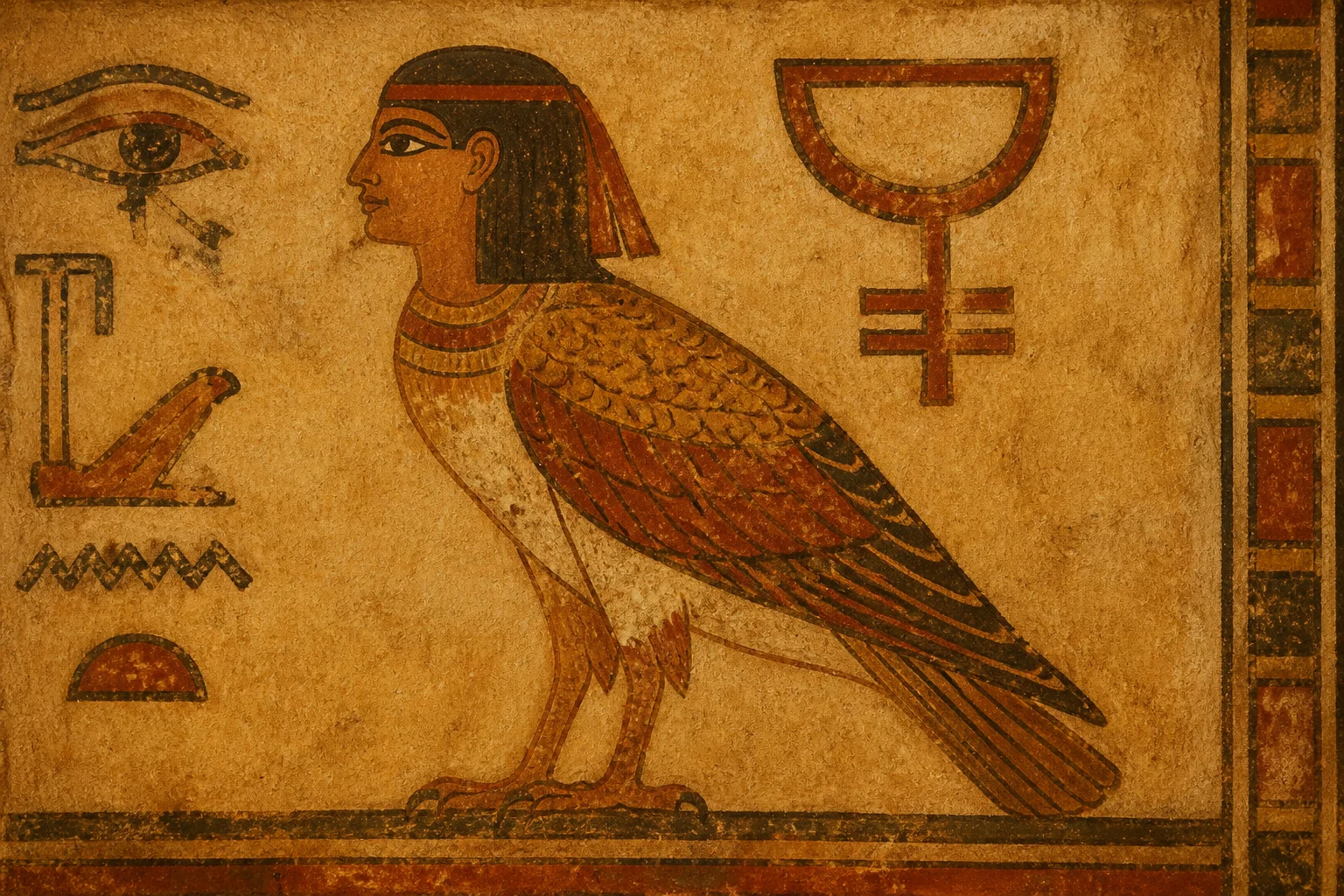
The ba is often depicted as a bird with a human head and sometimes human arms. It represented one aspect of the deceased's spirit that could travel between the tomb and the living world. In tomb paintings, the ba bird often perches on the mummy or flies up to greet the sun.
This sign blurs the line between writing and religious art, since it appears both as a hieroglyph and as a full illustration. It also shows how Egyptian scribes combined human and animal features to describe invisible spiritual ideas. For modern viewers, the ba bird is one of the most haunting images in ancient Egyptian funerary art.
12. The Sun Disk: Ra and the Daily Cycle
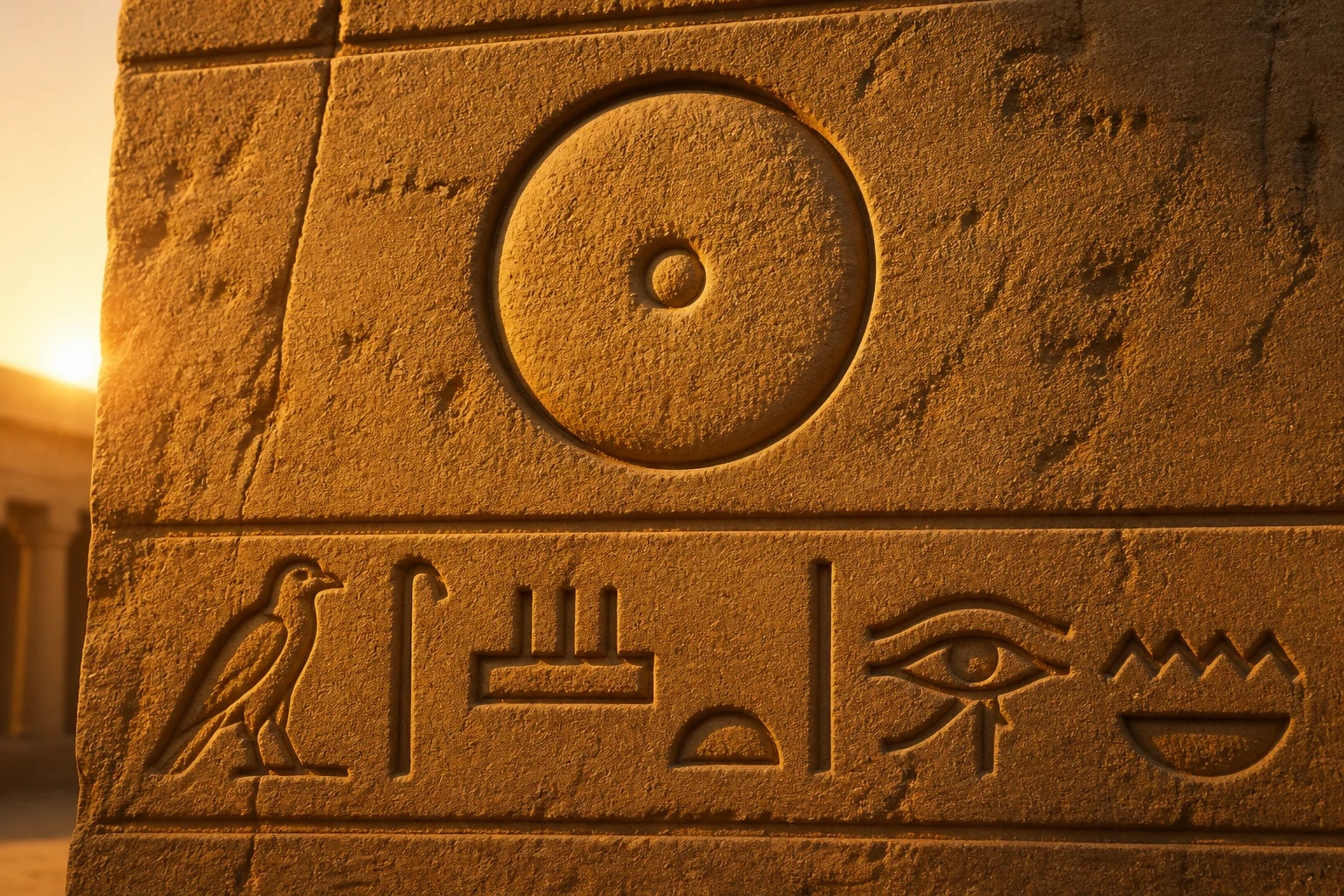
The sun disk hieroglyph is a simple circle, often with a dot in the center, and it stands for the sun or the god Ra. It appears in the names of kings, temples, and solar hymns, making it one of the most politically and religiously charged signs in Egypt. The sun disk could also be combined with other signs to form new divine names.
During the Amarna period, Akhenaten elevated the sun disk, the Aten, to unusual prominence in royal art and inscriptions. That moment produced some of the most distinctive hieroglyphic texts and reliefs in Egyptian history. The sign's simplicity masks a long and changing religious story.
13. The Rosetta Stone: The Key to Decipherment
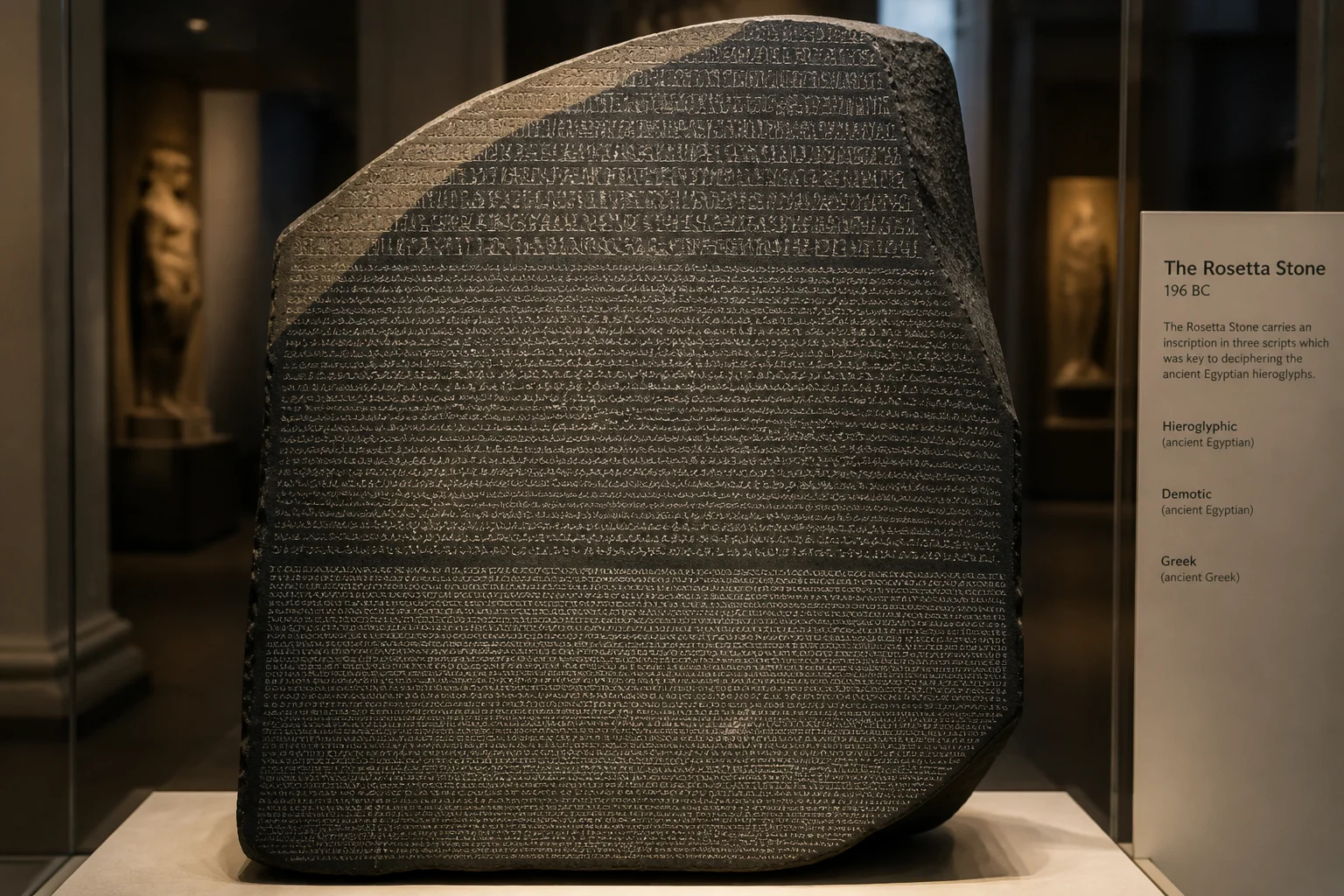
The Rosetta Stone is not a single glyph but one of the most important hieroglyphic texts ever found. It carries a decree from 196 BCE written in three scripts: hieroglyphic, Demotic, and Greek. Because the same message appeared in Greek, scholars could compare the scripts and begin cracking Egyptian.
The stone was discovered in 1799 at Rosetta and became central to the work of Jean-François Champollion and others. It now sits in the British Museum and remains a symbol of decipherment. As an artifact, it turns the abstract story of Egyptian writing into a concrete historical event.
14. The Pyramid Texts of Unas: The Oldest Surviving Collection
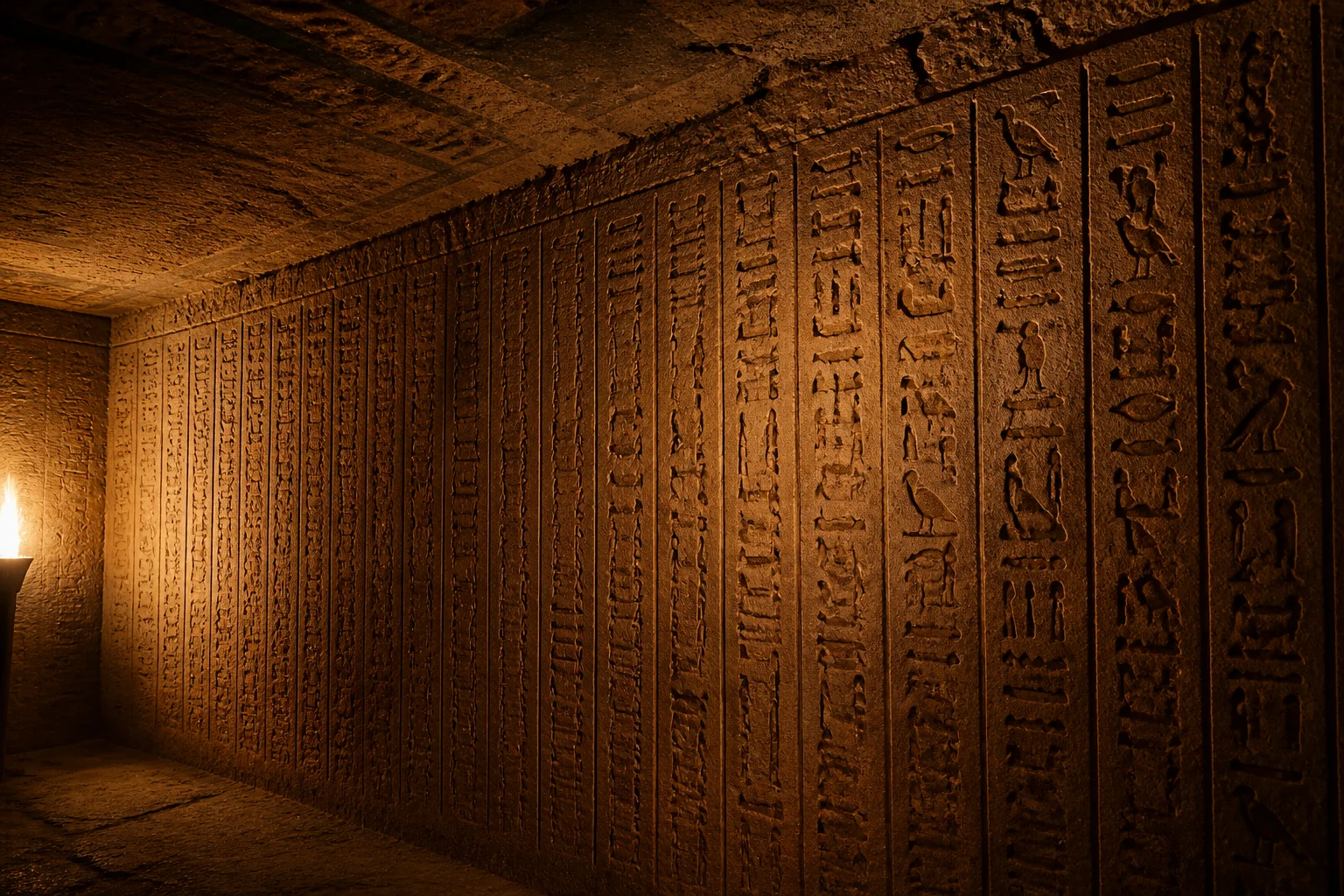
The Pyramid Texts in the pyramid of Unas at Saqqara are among the oldest known religious texts from ancient Egypt. Carved in columns on the walls of the burial chamber, they contain spells meant to protect and empower the king in the afterlife. These inscriptions date to the late Old Kingdom and show hieroglyphic writing fully formed.
The texts include rituals, offerings, and spells to help the king ascend to the sky and join the gods. Their placement inside the pyramid was not public display but magical equipment for the tomb. Studying them gives scholars a close look at early Egyptian beliefs about death and divine kingship.
15. The Coffin Texts: Spells for More People
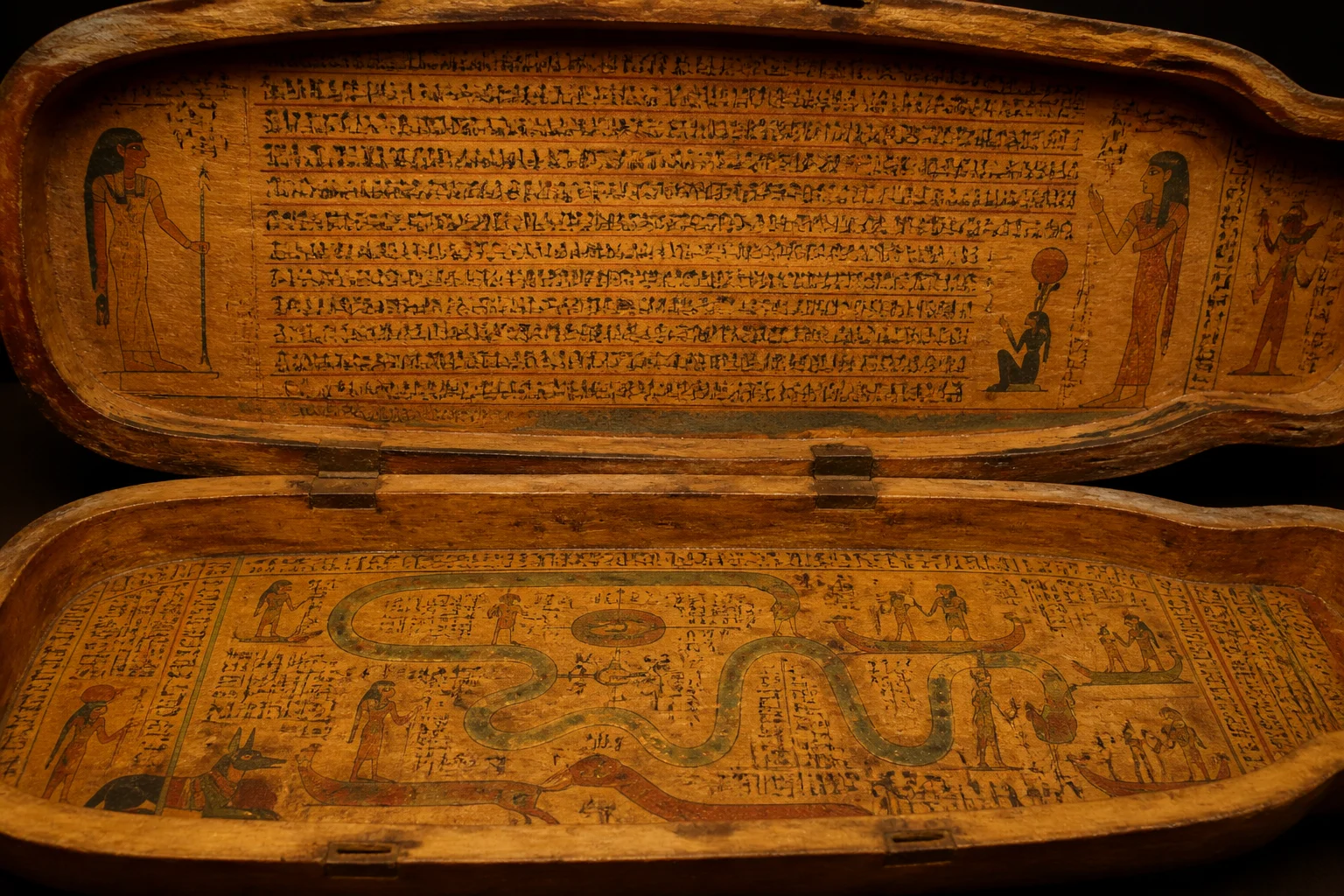
During the Middle Kingdom, spells that had once been reserved for royalty spread to non-royal elites. The Coffin Texts were written on wooden coffins, mummy masks, and tomb objects in cursive hieroglyphs and hieratic. They adapted earlier traditions into a more accessible set of afterlife instructions.
These texts include maps and spells known as the Book of Two Ways, which guided the dead through a complicated underworld landscape. They demonstrate how Egyptian funerary religion gradually opened up beyond the king. The Coffin Texts are a major bridge between the Pyramid Texts and the later Book of the Dead.
16. The Book of the Dead of Ani: Weighing the Heart
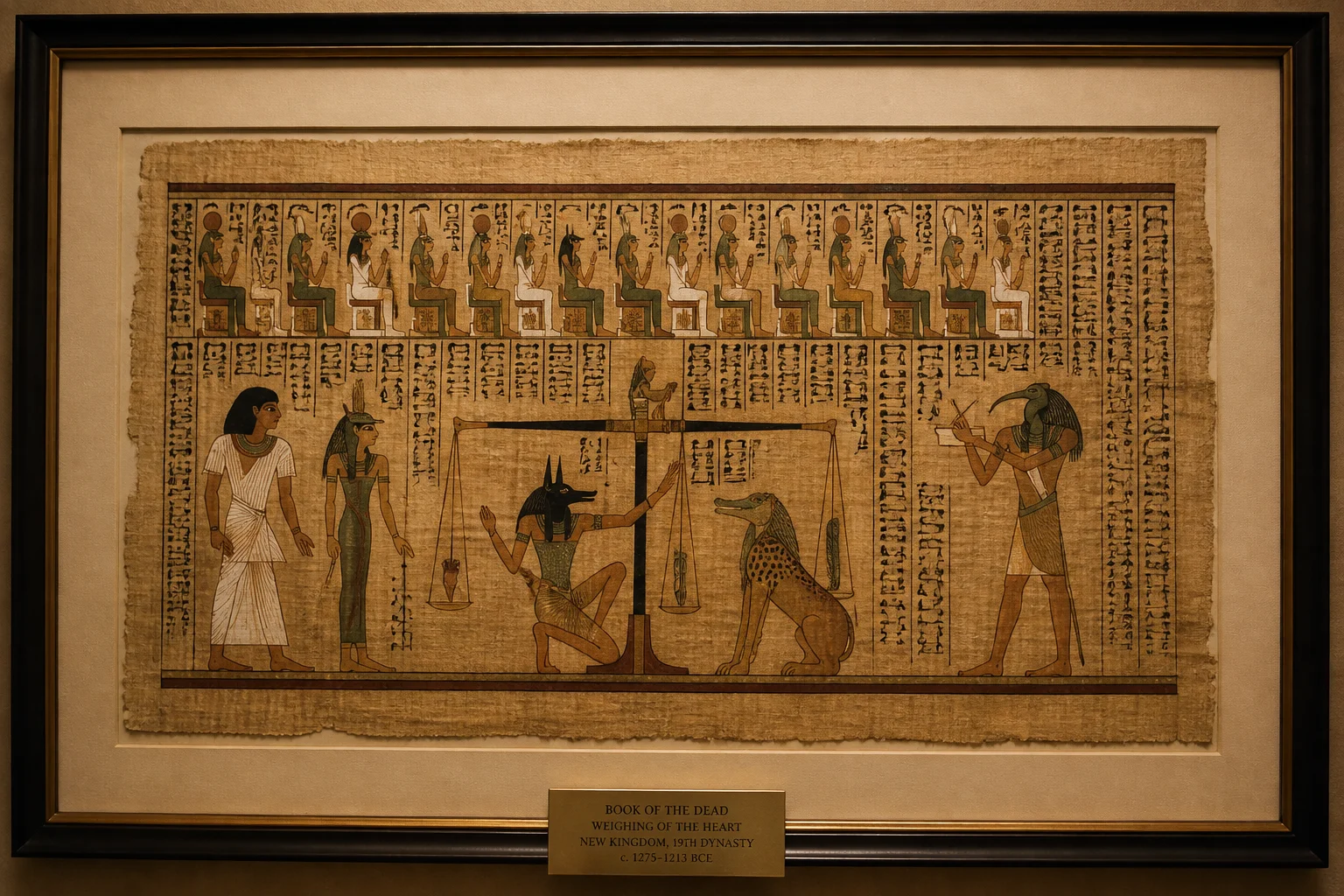
The Book of the Dead of Ani is a beautifully illustrated papyrus from the New Kingdom, now kept in the British Museum. It contains spells to guide the scribe Ani through the afterlife, including the famous weighing of the heart scene. In that scene, the deceased's heart is balanced against the feather of Maat, the principle of truth and order.
The papyrus is not a single fixed book but a collection of spells tailored to Ani's needs. It is one of the most complete and famous Egyptian hieroglyphic texts available to modern viewers. Its vivid vignettes make it a favorite introduction to ancient Egyptian religion.
17. The Abydos King List: An Idealized Royal Record
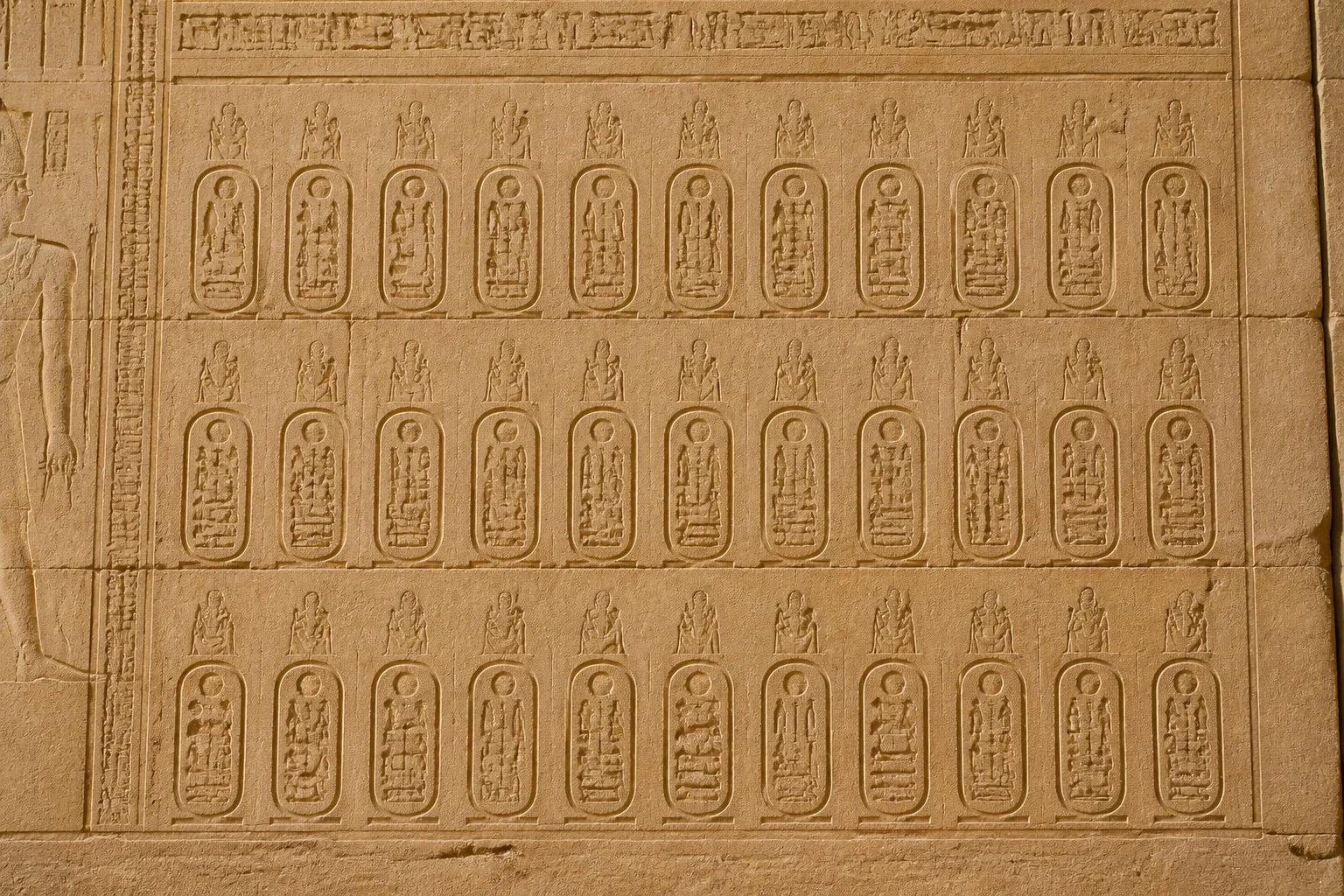
The Abydos King List is a wall inscription in the temple of Seti I at Abydos. It shows Seti I and the young Ramesses II honoring a long line of royal ancestors, with dozens of royal names written inside cartouches. The list is a key source for reconstructing Egyptian chronology.
However, it is not a straightforward historical record, because it omits rulers and periods that did not fit the temple's idealized picture of kingship. Scholars read it as a ritual and political document rather than a complete king list. That makes it a useful reminder to approach hieroglyphic texts with context and caution.
18. The Story of Sinuhe: Literature in a Cursive Age
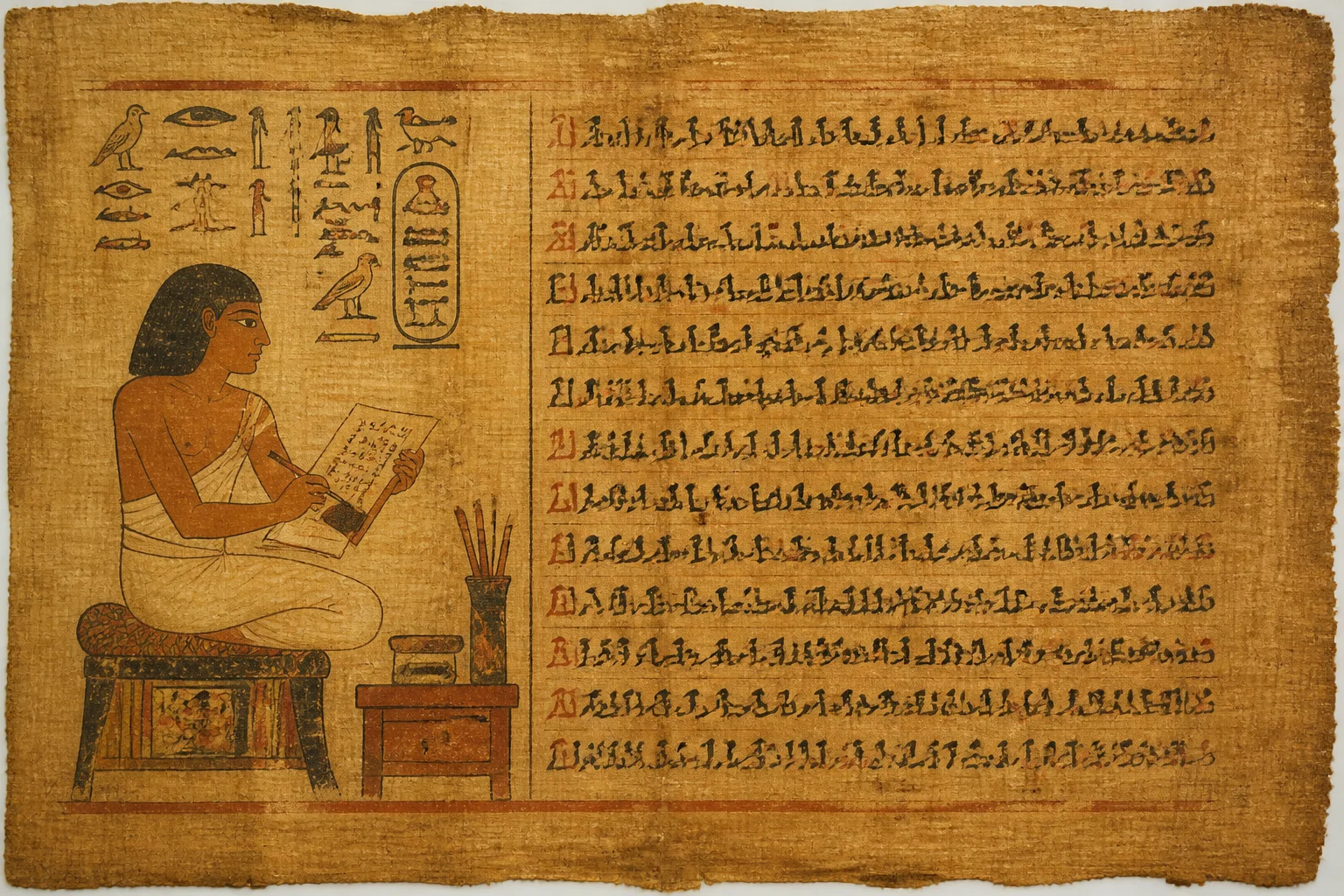
The Story of Sinuhe is one of ancient Egypt's most copied literary works, telling the tale of a courtier who flees Egypt after a royal death. Many surviving copies are written in hieratic, the cursive script that developed alongside monumental hieroglyphs. The story shows how Egyptian literature circulated in more everyday formats.
Even though the most familiar manuscripts are not carved temple hieroglyphs, the tale's themes and vocabulary connect directly to the same written culture. It reveals a sophisticated tradition of storytelling, psychological reflection, and political loyalty. Sinuhe's story remains a gateway to ancient Egyptian literature.
19. The Edfu Temple Inscriptions: A Late Flourishing
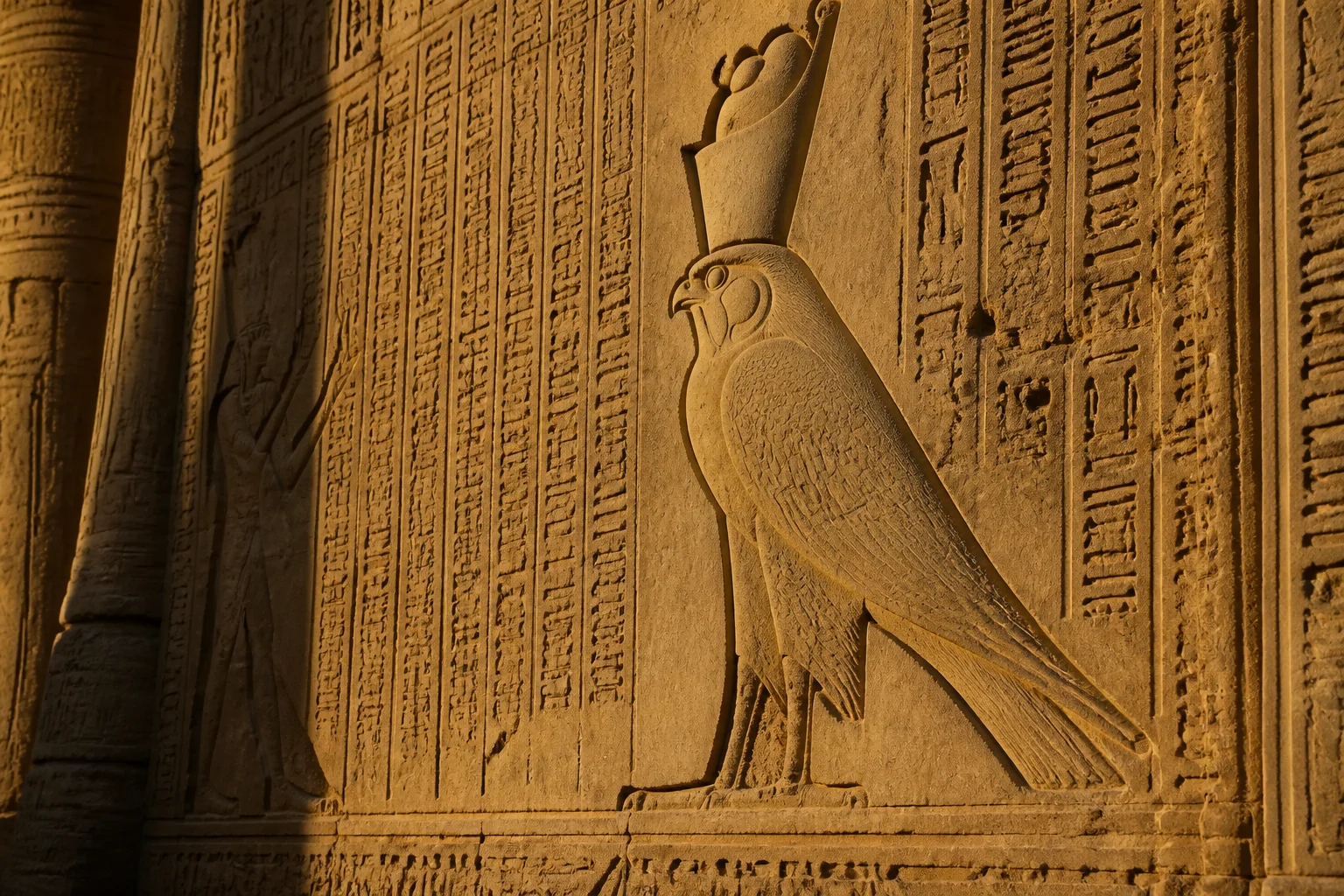
The temple of Horus at Edfu, built largely in the Ptolemaic period, is covered with dense hieroglyphic texts and reliefs. These inscriptions preserve ritual texts, festival records, and mythological stories about Horus and his enemies. They show that hieroglyphic writing remained highly productive long after the age of the great pharaohs.
Because the temple is unusually well preserved, Edfu offers one of the richest collections of late hieroglyphic texts in Egypt. Scholars still mine its walls for details about temples, priesthood, and regional myth. It is a strong counterpoint to the idea that hieroglyphs died out after the New Kingdom.
20. The Merneptah Stele: History and Politics in Stone
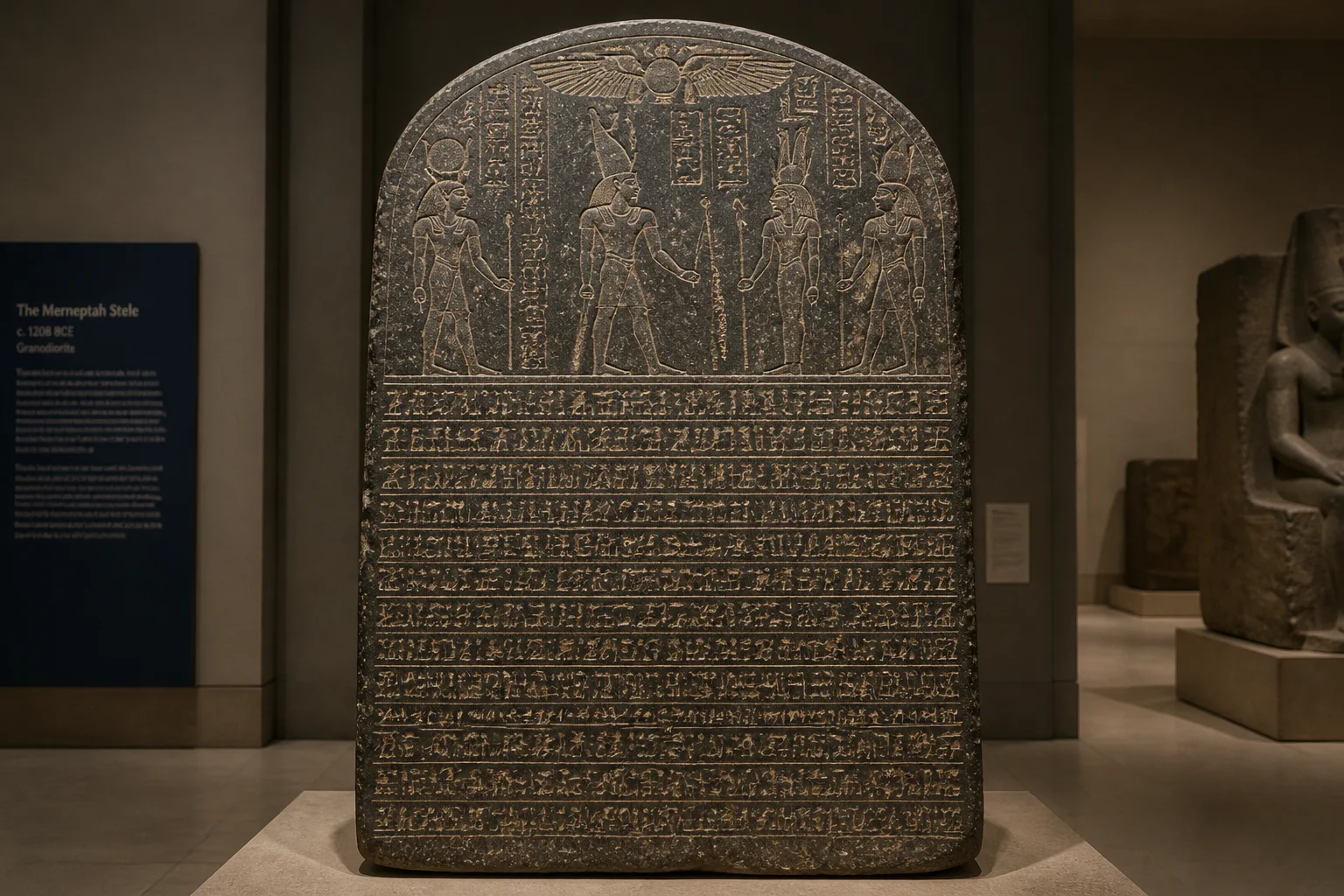
The Merneptah Stele is a monumental inscription of Pharaoh Merneptah from the late 13th century BCE. It records military campaigns and includes one of the earliest known non-biblical references to a people called Israel in ancient records. The stele is written in hieroglyphs and follows a well-established royal propaganda formula.
Its mention of Israel is short and poetic, embedded in a longer list of defeated groups. Scholars still debate the exact historical circumstances behind it, so it is best read as royal ideology rather than a neutral report. The stele shows how hieroglyphic texts could serve state power and collective memory.
Why Some Egyptian Hieroglyphics Look Weird
Modern viewers often call certain signs weird hieroglyphics because they mix animal parts, human features, or unrecognizable creatures. The Set animal and the ba bird are classic examples, but there are also signs for body parts, tools, and abstract shapes that look foreign to us. The strangeness usually comes from a modern mismatch, not from ancient confusion.
Egyptian artists had clear conventions for drawing each sign, even when the animal was mythical or hard to identify. In many periods, scribes stacked signs into tight square groups, which can make a wall of writing look like a maze. Reading direction also shifts depending on which way the human and animal faces point.
Turn Your Name into Hieroglyphics: What You Need to Know
Plenty of museum websites and educational tools now let you turn your name into hieroglyphics online. These generators usually map each letter of a modern name to a matching single-sound Egyptian sign, then wrap the result in a cartouche. That makes a fun souvenir or classroom activity.
The result is approximate, because Egyptian wrote a different language with sounds that do not match English perfectly. There was no fixed spelling for modern names, and the order of signs could change for visual balance. Treat the output as a respectful modern adaptation, not a historically attested inscription.
If you want a more accurate approach, look for resources from major museums or university Egyptology departments. They often explain which signs they use and why. That context turns a simple name ornament into a real lesson in how hieroglyphic writing worked.
Conclusion: The Writing on the Wall
From the ankh to the Merneptah Stele, these twenty examples show that Egyptian hieroglyphs were far more than a curiosity. They were an adaptable script that could spell sounds, classify meanings, and carry religious and political messages across centuries. A closer look at famous Egyptian hieroglyphs and lesser-known signs reveals both order and imagination.
Whether you are drawn to clean royal cartouches or the genuinely weird hieroglyphics, the writing rewards patience. The next time you see a carved wall or a papyrus page, look for the signs that recur and the direction the animals face. You will start to see ancient Egypt's writing as a living system, not a dead code.
Frequently Asked Questions
Can you turn your name into hieroglyphics?
Yes, many online tools and museum websites let you turn your name into hieroglyphics by mapping English letters to Egyptian single-sound signs and placing the result inside a cartouche. These conversions are modern adaptations, not historically attested spellings, because ancient Egyptian sounds and spelling rules differ from English. For the most reliable result, use a resource from a respected museum or university Egyptology department.
What are three examples of hieroglyphics?
Three famous examples of hieroglyphics are the ankh, which means “life”; the Eye of Horus, a symbol of protection and healing; and the scarab beetle, which represented coming into being and rebirth. Each of these signs could work phonetically or symbolically depending on context. They are common in tombs, temples, and amulets.
Is hieroglyphic writing just pictures?
No, hieroglyphic writing is not a simple picture dictionary. A sign could stand for an object, a sound, or a category of meaning, and many words combined sound signs with unspoken determinatives. That combination made the script flexible enough to express complex ideas, poetry, rituals, and administrative records.
What is the most famous Egyptian hieroglyph?
There is no single answer, but the ankh and the Eye of Horus are probably the most recognized Egyptian hieroglyphs today. The Rosetta Stone is the most famous hieroglyphic text because it helped scholars decipher the script. The cartouche is also widely known because it enclosed royal names and is popular in modern name-to-hieroglyph converters.

Alex Warren
Related Articles